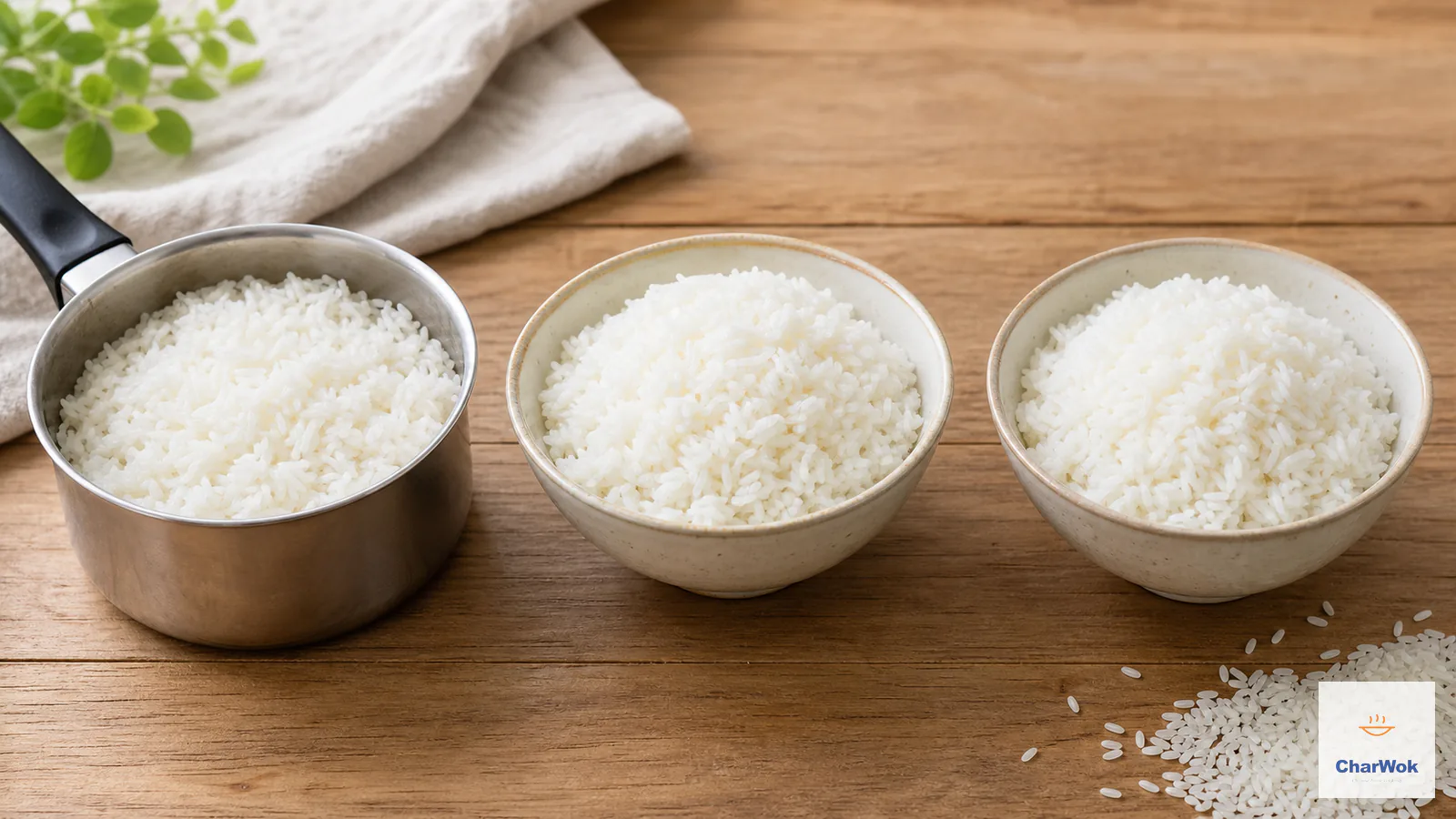
Jasmine rice is the one grain I cook more than any other, and the dish I have failed at most often. Burned at the bottom, gummy in the middle, crunchy in the center while the edges turn to paste. If you have stood over a pot wondering why your rice never matches the loose, fragrant bowls at a good Chinese restaurant, the problem is almost never the rice. It is the water level and the lid, in that order.
This guide gives you three stovetop methods for jasmine rice that do not need a measuring cup or a rice cooker. The first, a simple covered pot, is the one I use on an ordinary Tuesday. The other two, a suspended strainer and a cloth-lined steamer, are the ones I reach for when the rice is destined for fried rice, because they produce grains that stay separate no matter how heavy-handed you are with the wok. All three rely on the same physical fact: jasmine rice finishes cooking in trapped steam, not in a flood of boiling water.
At a glance: Cook 330 g (1½ cups) jasmine rice for four. For the pot method, cover dry rice with cold water to your first knuckle, boil uncovered until the water level drops to the rice, then cover and steam 10 minutes over the lowest heat plus 5 minutes off the heat, lid on. If you want firm grains for frying, use the strainer or steamer route, which skips the measured water entirely.
What jasmine rice actually is
Jasmine is a long-grain aromatic rice, originally from Thailand, that sits between fluffy basmati and sticky short-grain on the texture spectrum. Cooked right, each grain is tender and slightly clingy, the kind of cling that lets chopsticks pick up a clump without the bowl turning to paste. The aroma is faintly floral and grassy, and it fades fast, which is why jasmine rice is best eaten the day it is cooked.
In a northern Chinese household the daily starch is more often wheat, things like hand-pulled noodles, dumplings, or steamed mantou buns. But rice bowls still show up at most dinners, and jasmine is the long-grain many families prefer for its balance of fragrance and bite. You cook it in water alone. Salt and oil are optional; for a plain Chinese meal, plain rice is the correct choice, because its job is to absorb the sauce of the dishes around it.
One cup of raw jasmine rice, about 220 g (8 oz), swells to roughly three cups cooked. I cook 330 g (1½ cups) raw for four adults with moderate appetites. Scale up or down freely; the knuckle method below adjusts itself.
To rinse or not to rinse
Rinsing is optional for modern, factory-processed rice sold in sealed bags. The milling step has already removed the surface starch and debris that older recipes worried about. If the package says "no rinse" or "musenmai," skip it. If the package tells you to rinse, rinse.
I rinse anyway, out of habit, two or three quick changes of cold water until the water runs only lightly cloudy. It does not change the finished texture in any way you will notice with jasmine. What you should never do is soak it. A long soak lets the grains absorb water unevenly before cooking and the result trends gummy. Rinse, drain, cook.
Method 1: The everyday covered pot
Ingredients at a glance
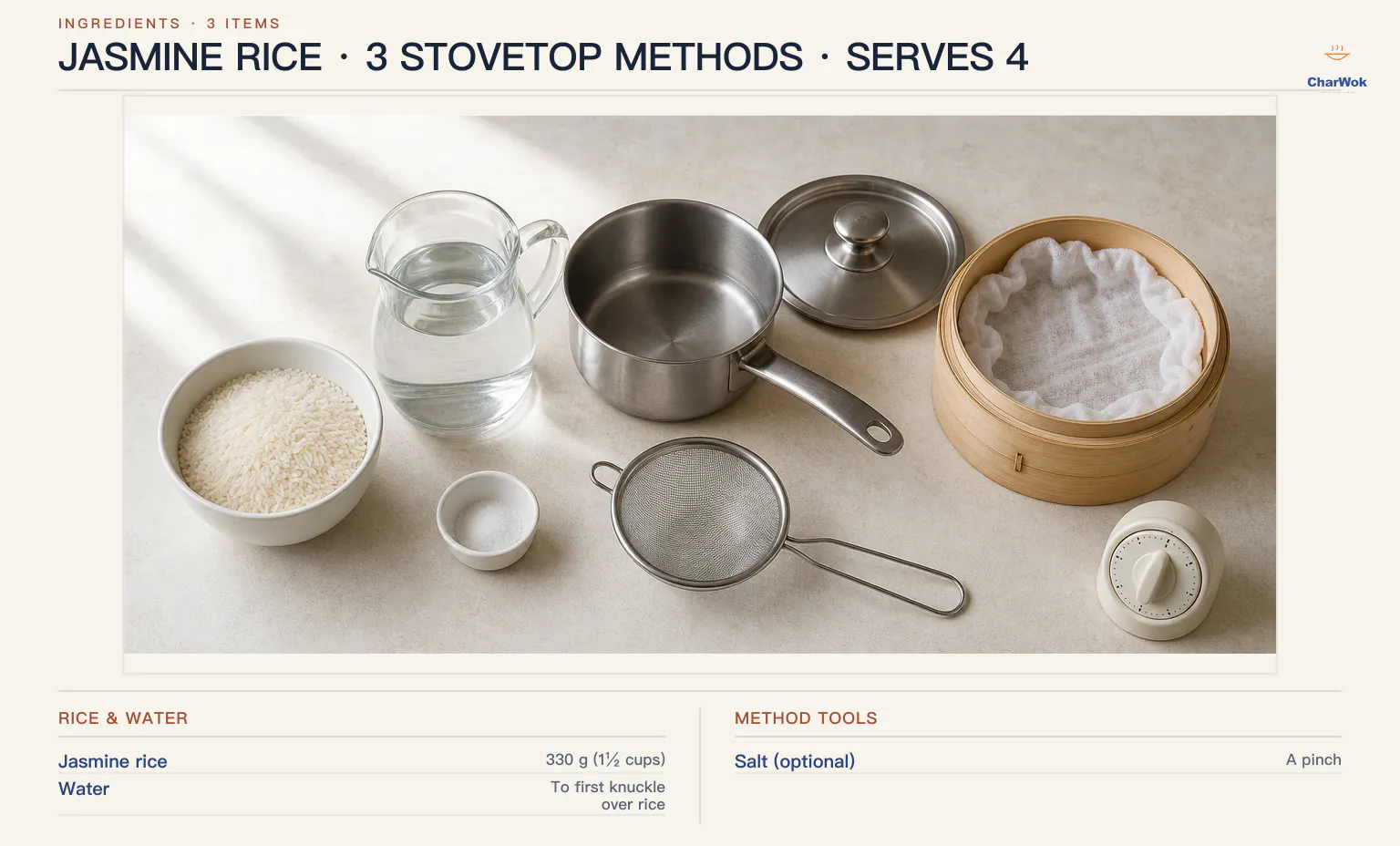
This is the method for rice you want to eat as a side, soft and a little sticky, the kind that holds together under a ladle of soy-sauce rice pilaf or beside a stir-fry. Use a heavy-bottomed saucepan or pot with a tight lid. A thin pot scorches; a loose lid lets the steam escape and the rice cooks unevenly. You also need a timer.
Ingredients
| Ingredient | Amount | Notes / substitute |
|---|---|---|
| Jasmine rice | 330 g (1½ cups) | About 4 servings; scale freely |
| Water | To first knuckle over rice | No measuring cup needed |
| Salt (optional) | A pinch | Omit for traditional Chinese serving |
- Put the rinsed, drained rice into the saucepan. Add cold water until it sits about 2 cm (¾ inch) above the rice. The old trick: stand your index finger in so the tip just touches the rice, and let the water come up to your first knuckle. Short finger or long, small batch or large, this works because the rice only absorbs a fixed amount of water; the depth ratio stays close enough across pot sizes.
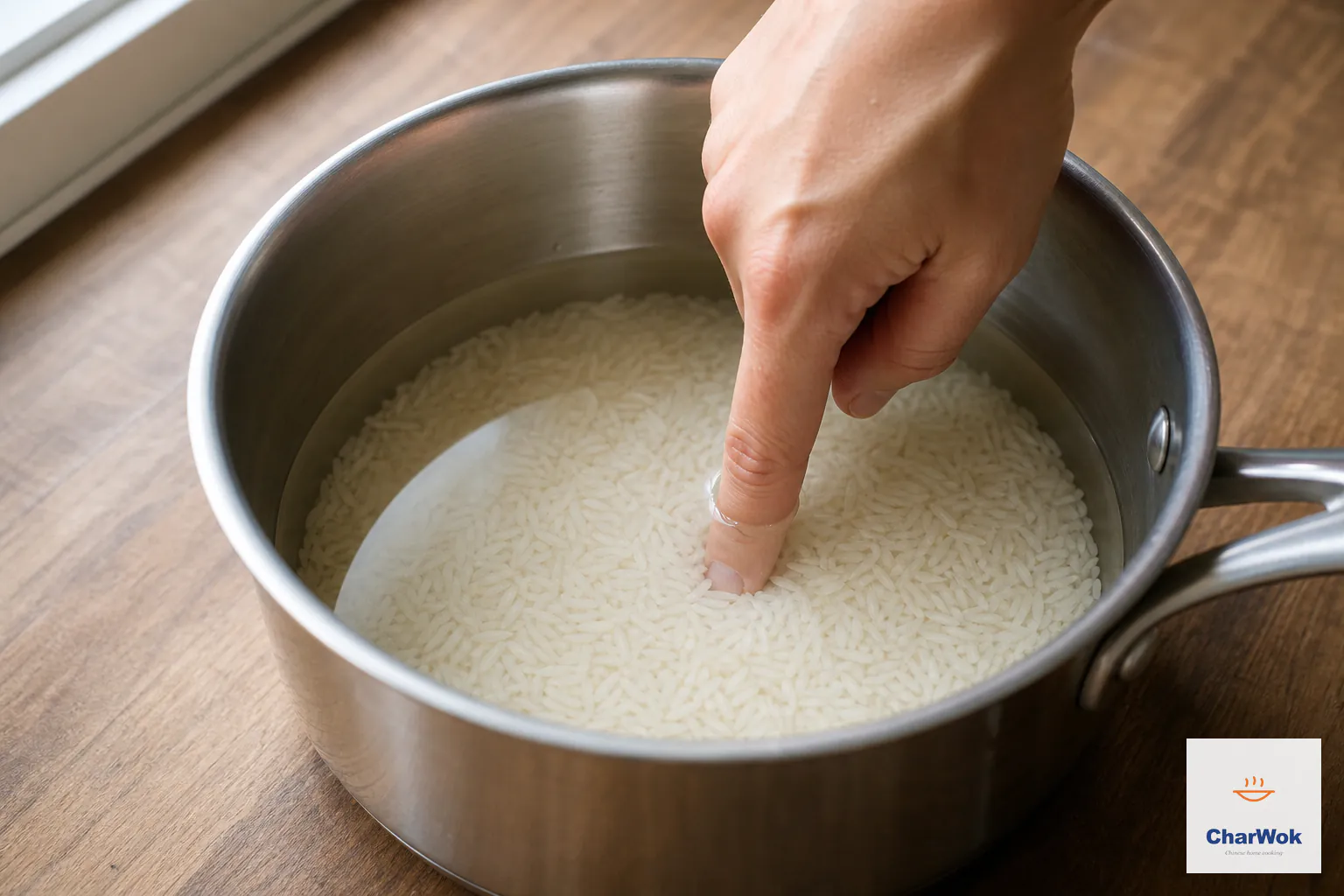
Level the rice and add cold water to the first knuckle above its surface.
- Set the pot uncovered over medium heat and let it come to a boil. Keep watching. As the water level drops to the surface of the rice you will see steam holes pocking through and bubbles rising through them. This is the gelatinization front moving through the grains; the starch is grabbing the water it needs.
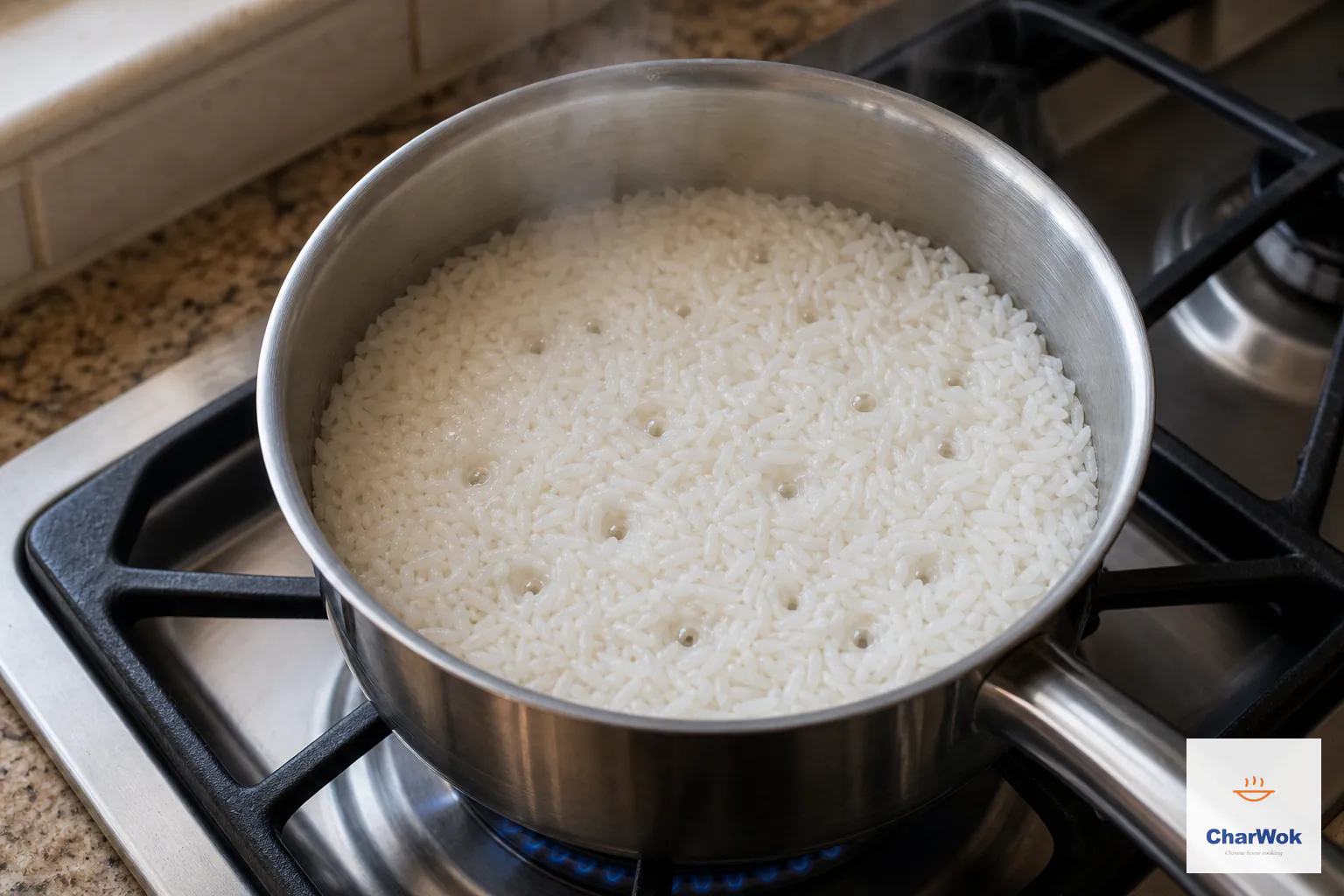
Cook uncovered until the water is level with the rice and steam holes appear.
- The moment the water is level with the rice, drop the heat to its lowest setting and clap on the lid. Set a timer for 10 minutes. Do not lift the lid. The trapped steam finishes the grains; opening the pot vents that steam and you will never get it back.
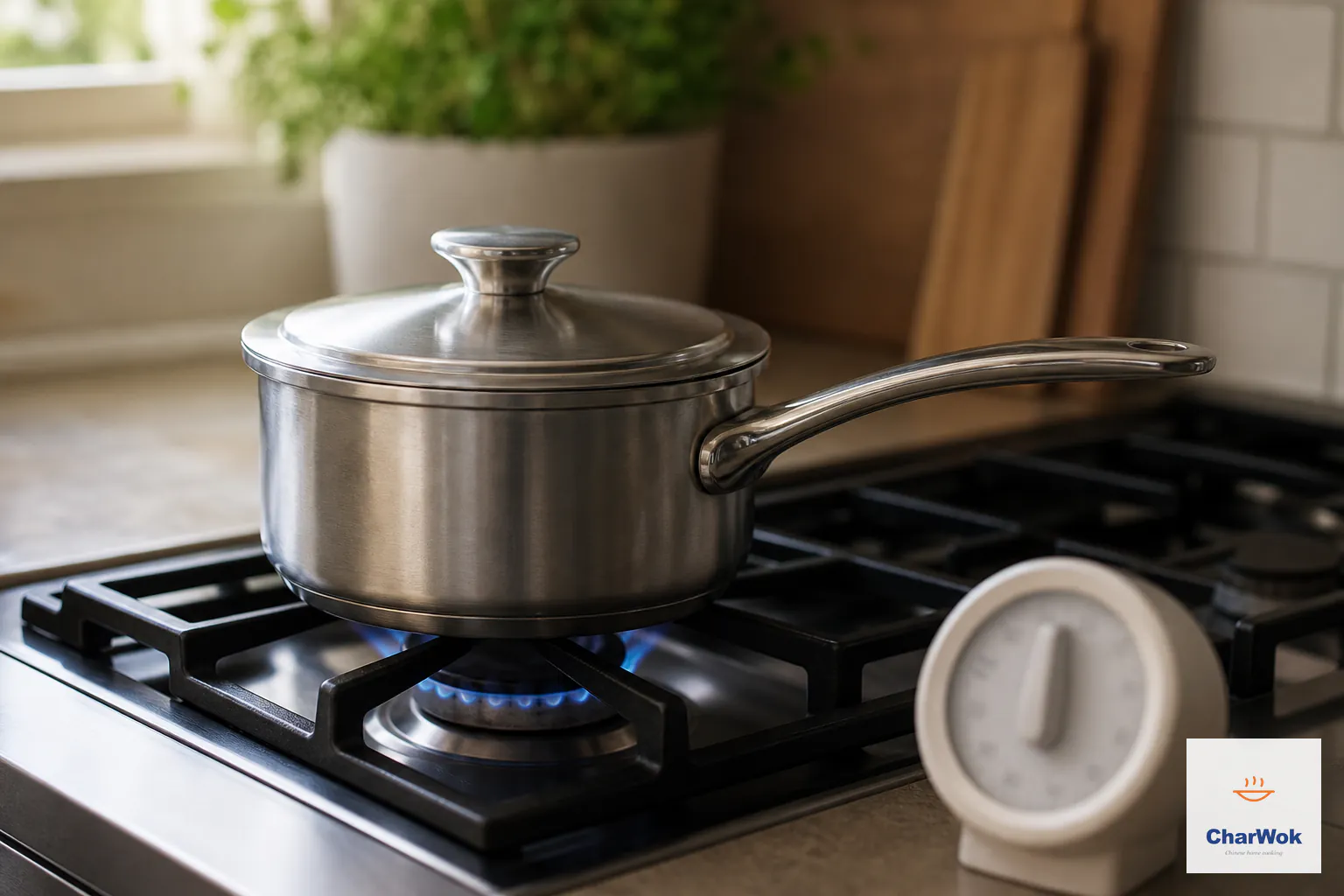
Cover immediately, turn to the lowest heat and cook for 10 minutes.
- When the timer sounds, move the pot off the burner entirely and let it rest, still covered, for 5 minutes. This resting step redistributes moisture from the wetter bottom grains to the drier top ones. Fluff with a paddle before serving.
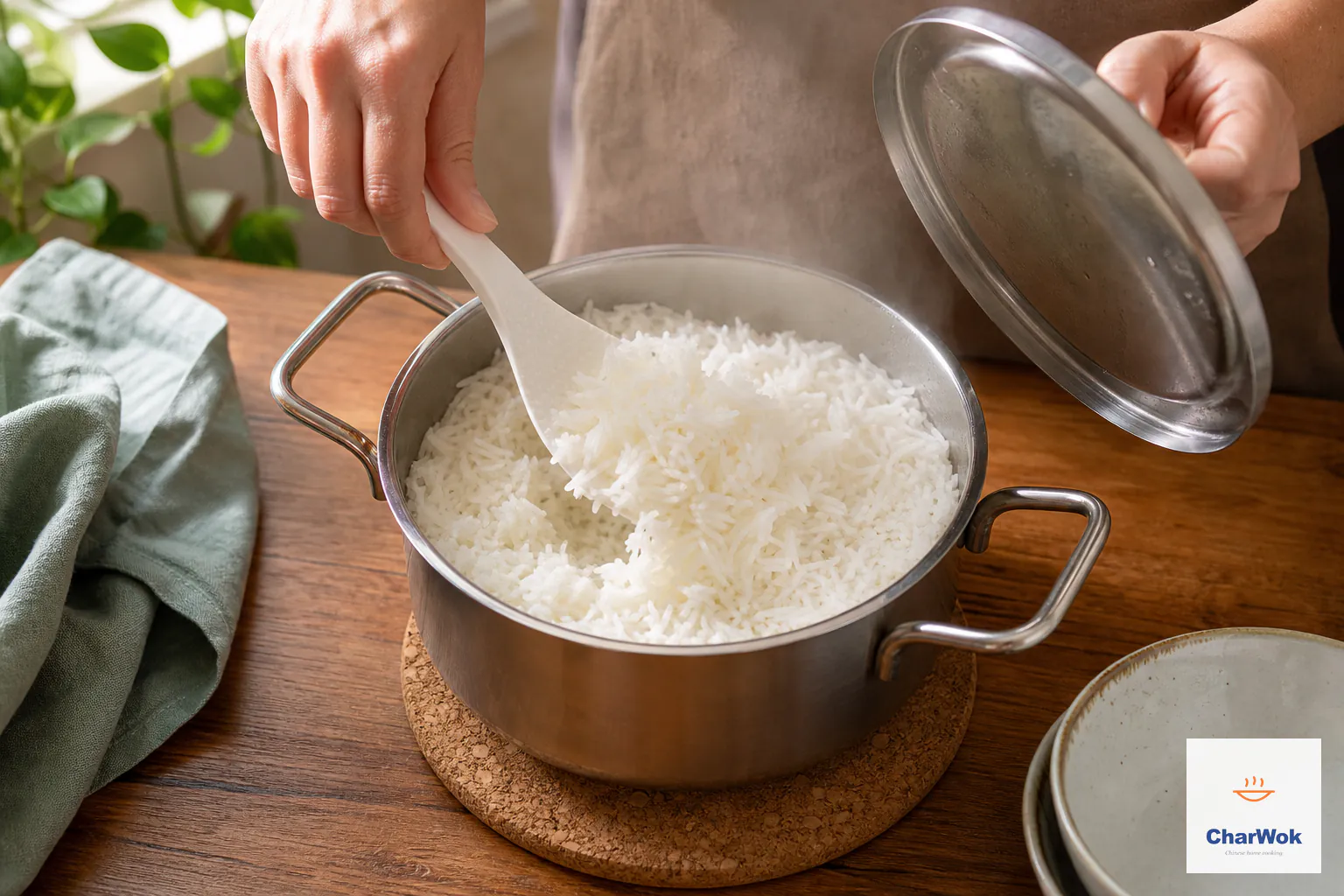
Rest covered off the heat for 5 minutes, then fluff without crushing the grains.
Want it firmer or drier? Stretch the covered steaming time to 12 minutes instead of 10. Every stove and every pot behaves a little differently, so make a note of your preferred number after one or two tries. My own pot lands at 11 minutes for the texture I like.
Why a separate method for fried rice
Fried rice fails for one main reason: wet, soft, freshly cooked grains that mash into paste the moment they hit the wok. Restaurants solve this by using day-old rice that has dried out in the fridge. You can also solve it at the source by cooking the rice in a way that produces firm, distinct grains from the start. That is what the next two methods do, and it is why I cook rice specifically for egg fried rice or Yangzhou fried rice with the strainer, not the pot.
Because these grains come out firm, you can even skip the overnight chill. Let the rice cool to room temperature and you can stir-fry it straight away, which matters when you did not plan ahead. Try this for pork fried rice, shrimp fried rice, soy sauce fried rice, or the sweeter beef and pineapple fried rice; the texture holds up to aggressive tossing.
Method 2: The suspended strainer
You need a saucepan and a heatproof fine-mesh strainer or colander that sits across the top of the pan without falling in, with room underneath for boiling water. The rice never touches the cooking water during the steam phase, so the grains cannot over-absorb and clump.
- Fill the saucepan with plenty of water and bring it to a full rolling boil. Add the rice and parboil over medium heat for 4 minutes. Drain through the strainer. This brief boil kick-starts gelatinization at the surface of each grain so the steam can finish the inside.
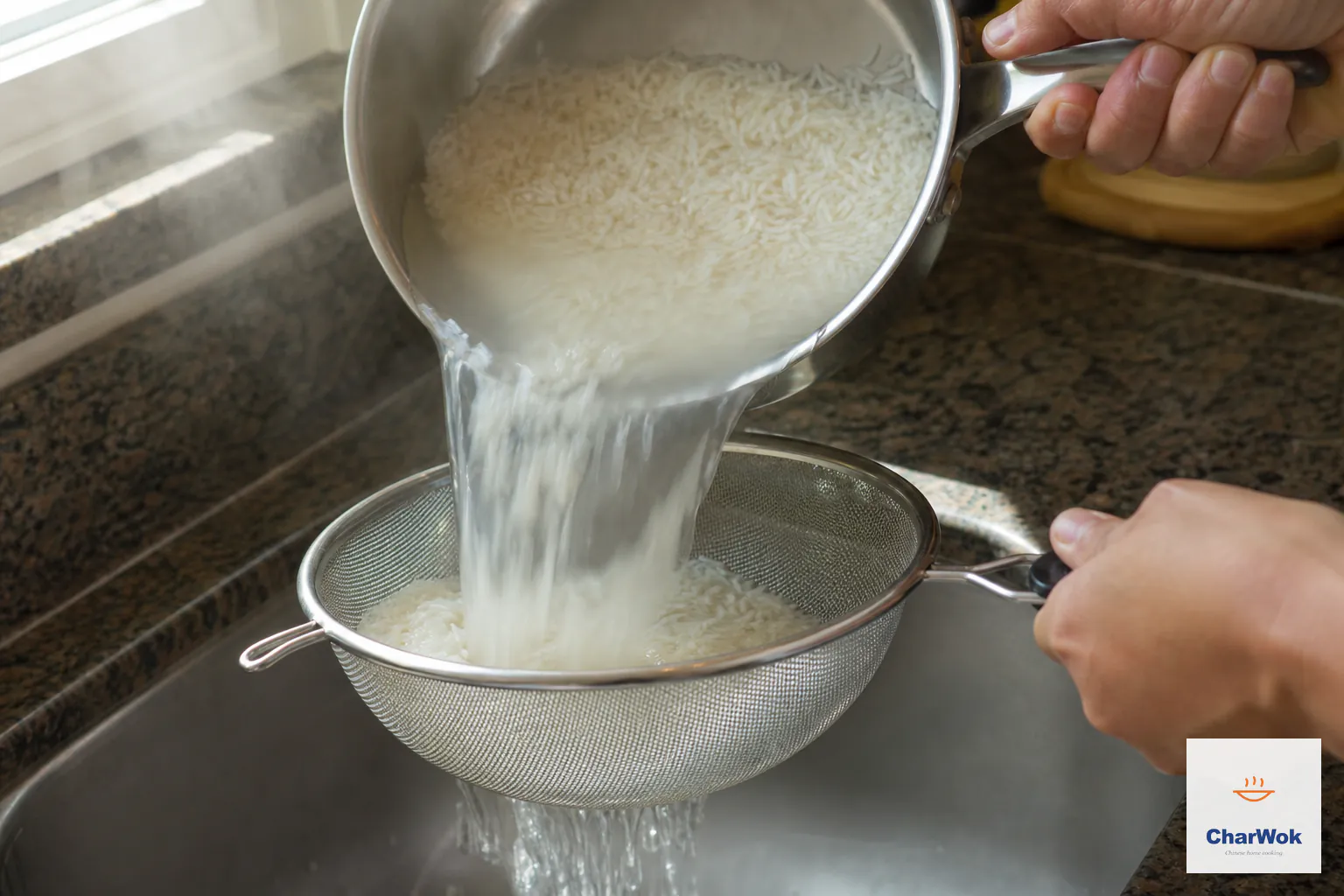
Parboil for 4 minutes and drain well through the heatproof strainer.
- Dump the starchy water, refill the pan with fresh water, and bring it back to a boil. Set the strainer of rice over the pan. The water must not touch the rice, but there must be enough that it will not boil dry during steaming; an inch or two is usually plenty. Poke a few holes down through the rice with a chopstick so steam can travel up through the bed.
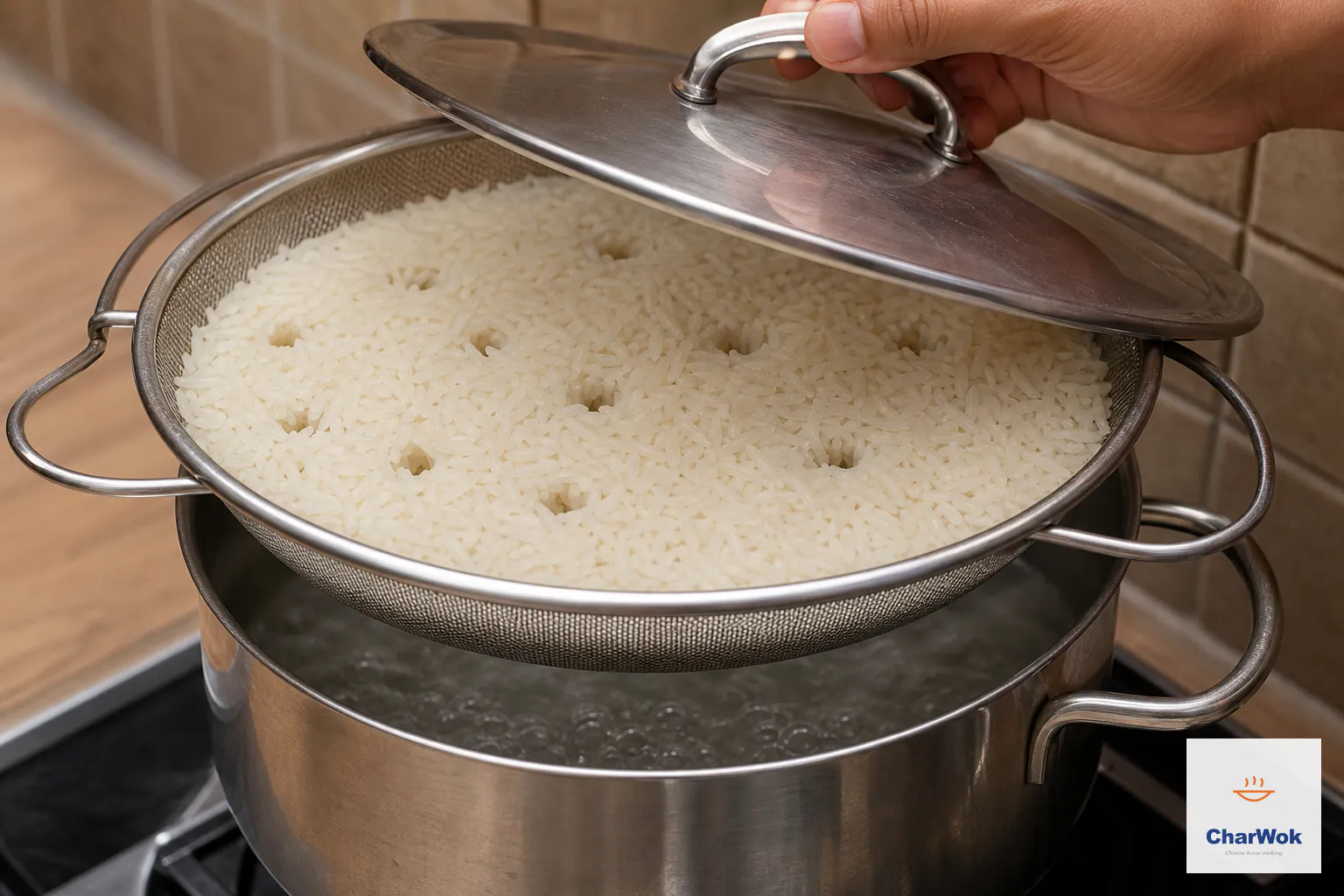
Suspend the rice above fresh boiling water and poke holes so steam can pass through.
- Cover with a lid and steam over medium heat for 10 minutes. Pull off the heat and rest, covered, another 5 minutes. For softer rice, parboil 5 minutes instead of 4, or steam 12 minutes instead of 10.
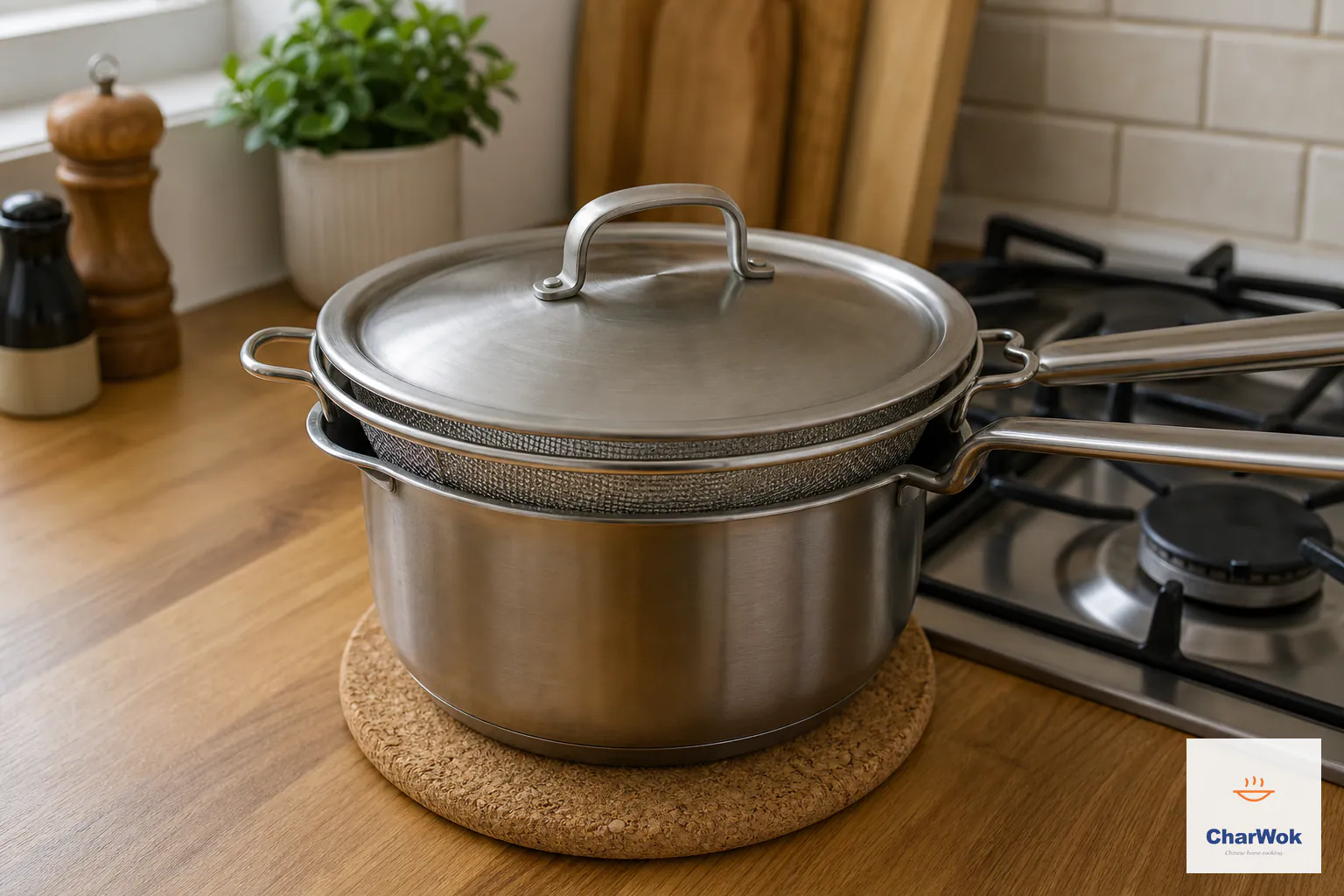
Steam covered for 10 minutes, then rest off the heat for another 5 minutes.
I like this method because the result is identical every time regardless of how weak your burner is or how cheap your pot is. The steam does the work, and steam is always roughly 100°C (212°F).
Method 3: The cloth-lined steamer
The principle is the same as the strainer, only the tool changes. You need a steamer basket, bamboo or metal, a wok or pot it sits over, and a piece of muslin or a clean thin tea towel. Wet the cloth first; a dry cloth will steal moisture from the rice and stick to it.
- Bring a generous amount of water to a full boil in the wok or pot. Add the rice and parboil over medium heat for 4 minutes, then drain well.
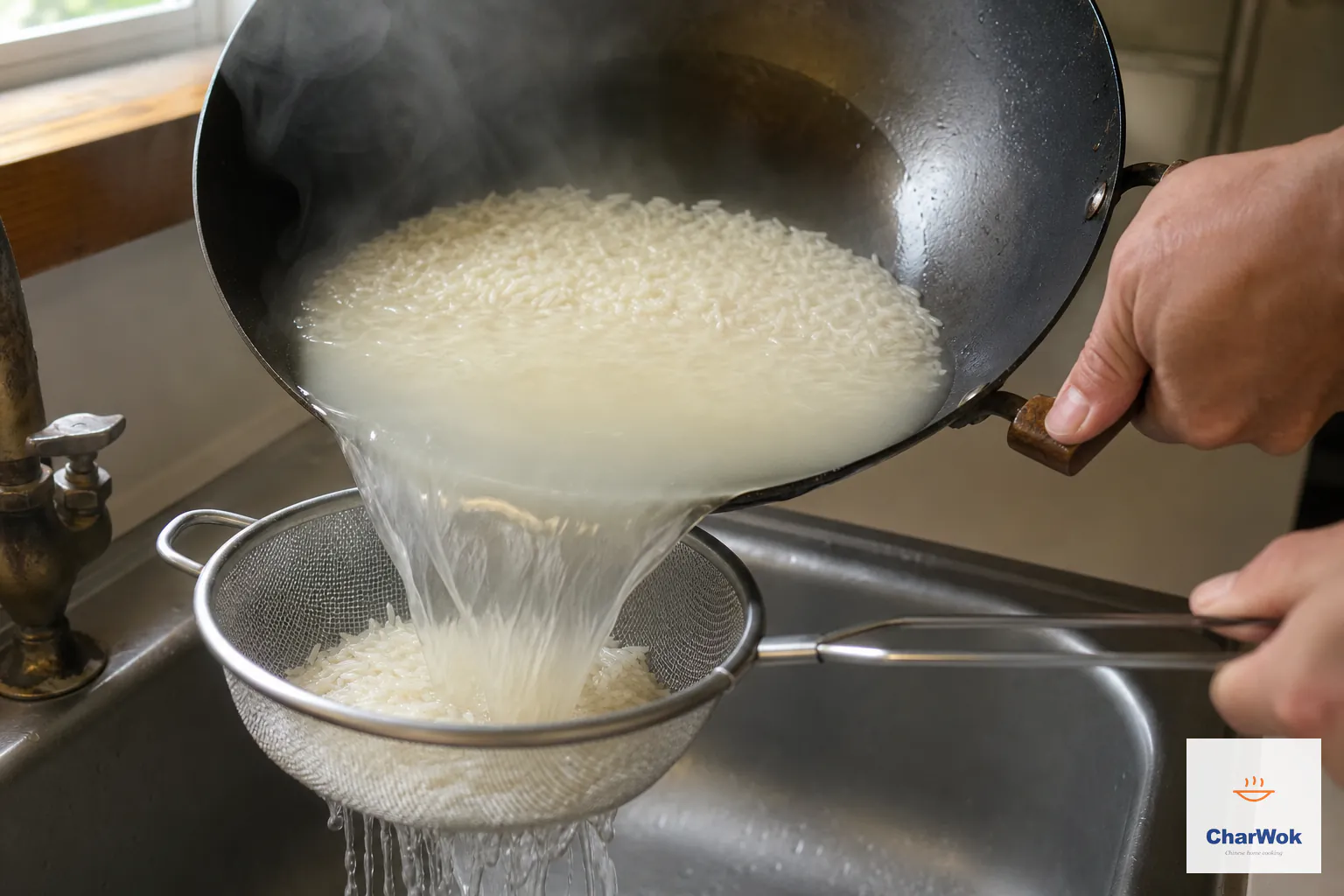
Parboil for 4 minutes and drain thoroughly before filling the steamer.
- Spread the rice in the wet cloth-lined basket to an even layer and poke steam holes through it. Refill the wok with fresh water, bring it to a full boil, and set the basket over it. Cover and steam over medium heat for 10 minutes.
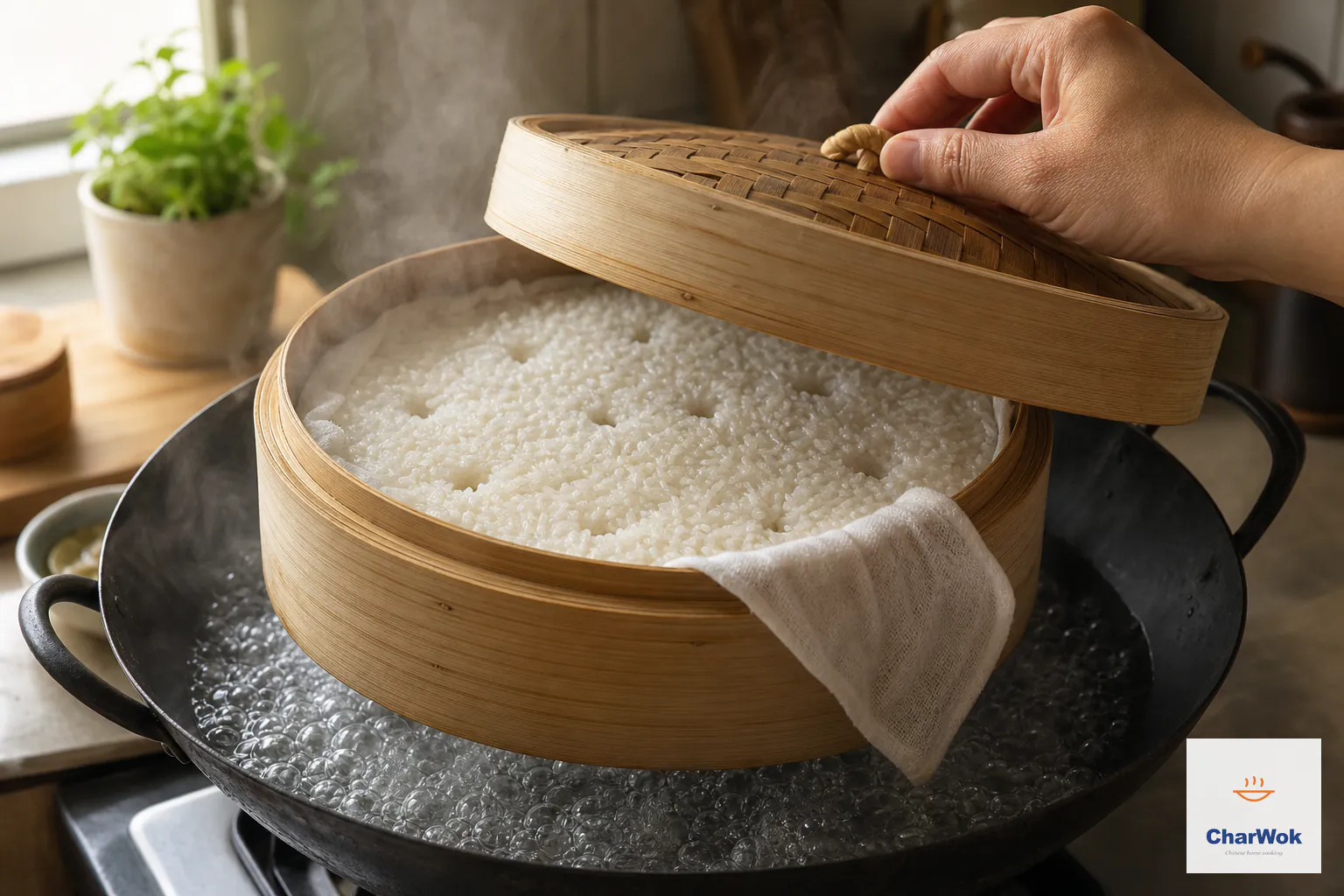
Line with a wet cloth, spread the rice evenly and poke holes before covering.
- Turn off the heat and let it rest, covered, for 5 minutes. Lift the basket out by the cloth corners. Adjust exactly as in the strainer method.
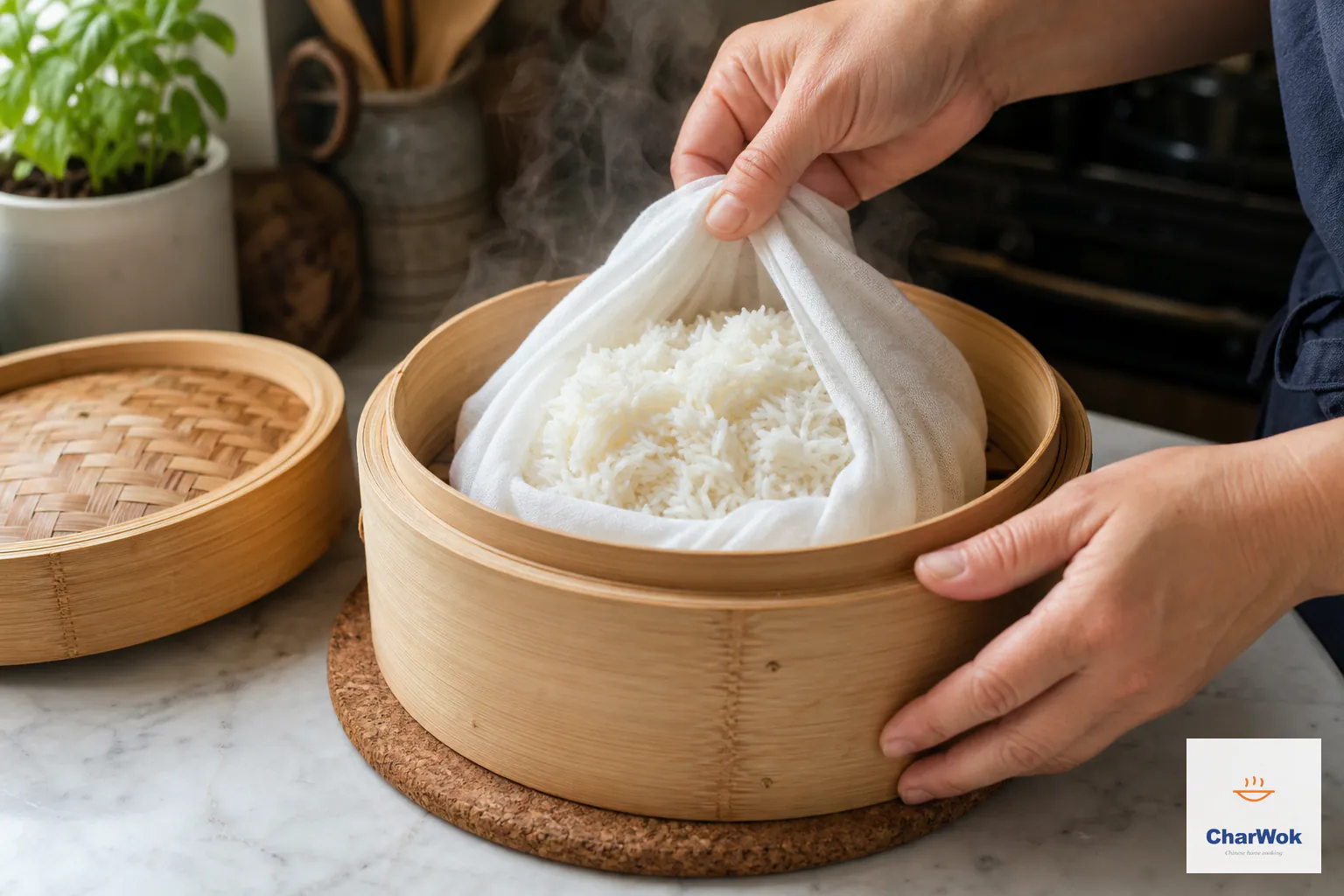
Steam for 10 minutes, rest covered for 5, then lift the cloth carefully to serve.
If you want to go deeper on the equipment, the bamboo steamer guide covers basket sizes, lid fit, and how to keep the bottom layer from getting soggy.
When the rice goes wrong
Most stovetop rice failures fall into four boxes, and all four are fixable.
Crunchy center, done edges. The water was too low to begin with, or the lid leaked steam. Next time add a touch more water and check the lid seal. To rescue this batch, sprinkle a tablespoon of water over the top, cover tightly, and steam 3 to 4 more minutes over low heat.
Soggy, wet rice. Too much water or too short a steam. Pour off any standing water if there is any, then leave the pot on the warm (off) burner, lid off, for a few minutes to let excess moisture evaporate. Next time use a hair less water and trust the resting step.
Scorched bottom, raw top. Your heat was too high during the covered phase, or your pot is too thin. The lowest setting really means the lowest. A heavy-bottomed pot, or a flame tamer under a thin one, fixes this. Do not stir; loosening the burned layer spreads the char flavor through the whole pot. Save the intact top rice and scrape the crust separately if you like the chewy guoba.
Gummy, paste-like texture. Usually the rice was soaked too long before cooking, or it is old rice that has gone stale and starchy. Buy jasmine in smaller bags and use it within a few months. Rinsing does not cause gumminess; soaking does.
How to serve it
The classic Chinese pattern is plain rice in individual bowls with several savory dishes shared from the center of the table. You alternate: a bite of a saucy dish, then a plain mouthful of rice to reset. For quick weeknight cooking, a single stir-fry over rice is plenty. A bowl of rice under tomato and egg, mapo tofu, or black pepper beef is a complete meal in under thirty minutes.
There is also the one-dish rice bowl, gai fan, where a single saucy topping is poured over the rice. The classic is lu rou fan, the Taiwanese braised pork rice bowl. You can build your own with almost anything that finishes in a glossy sauce. For a broader set of ideas, the Chinese rice recipes by cooking method collection pulls together the reliably good pairings.
Variations and cousins
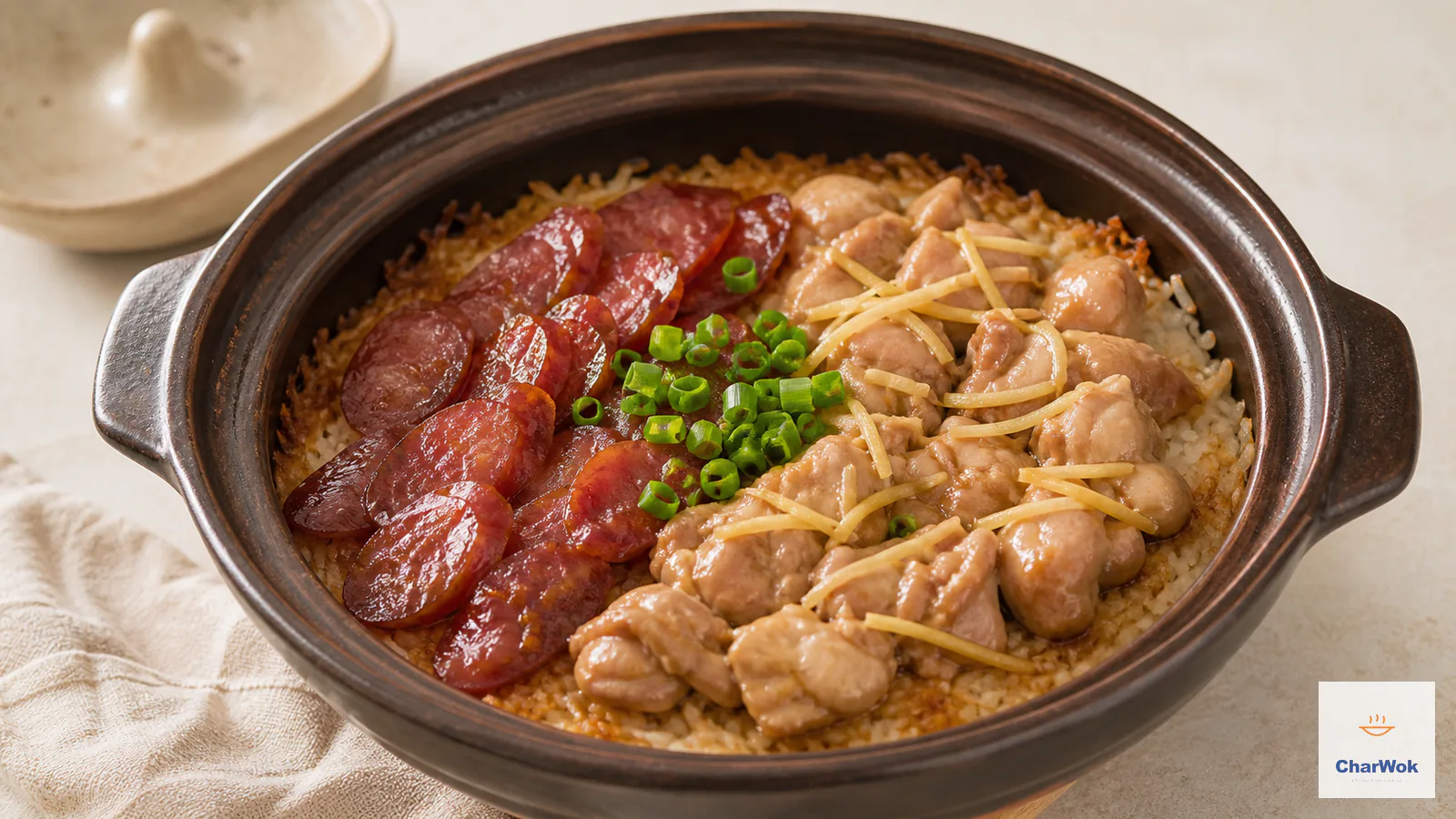
Jasmine is only one branch of the rice family. Chinese sticky rice (lo mai fan) uses glutinous rice for a chewy, clumping texture, great with cured meats and mushrooms. Clay pot rice cooks the raw rice and its toppings together so the bottom forms a crackling crust. Chinese sausage rice is the simplest one-pot version, the cured sausage flavoring the grains as they steam. For breakfast, the same rice turns into congee, cooked long with extra water until it collapses into porridge, or it gets wrapped around a fried cruller to make fan tuan, the stuffed sticky rice roll.
Storage and reheating
Jasmine rice is best fresh; the aroma dims within hours. But cooked rice keeps in the fridge for up to three days, sealed, or in the freezer for three months in an airtight container. Reheat from fridge with a sprinkle of water, covered, in the microwave or steamer until hot through. Reheated rice is never as good as fresh, but it is exactly what you want for fried rice, where firm, dry grains are an asset rather than a flaw.
A few questions I get often
The pot method is the place to start. It is the most forgiving and produces the texture most people want for everyday eating. Use the strainer or steamer only when you are cooking rice specifically for fried rice.
If you take one thing from this, it is that good jasmine rice is mostly about restraint: the right depth of water, the lowest possible flame, and a lid you do not lift. Get those three habits down and the rice stops being a thing you worry about.