The reason your homemade chicken with black bean sauce tastes flat while the takeout version sings has nothing to do with a secret ingredient. It almost always comes down to two moves the restaurant line cook does on autopilot and the home cook skips: velveting the meat, and pulling it off the heat before it's fully done. Skip the first and the chicken turns stringy. Skip the second and by the time the peppers soften, the chicken has cooked twice as long as it should and gone dry.
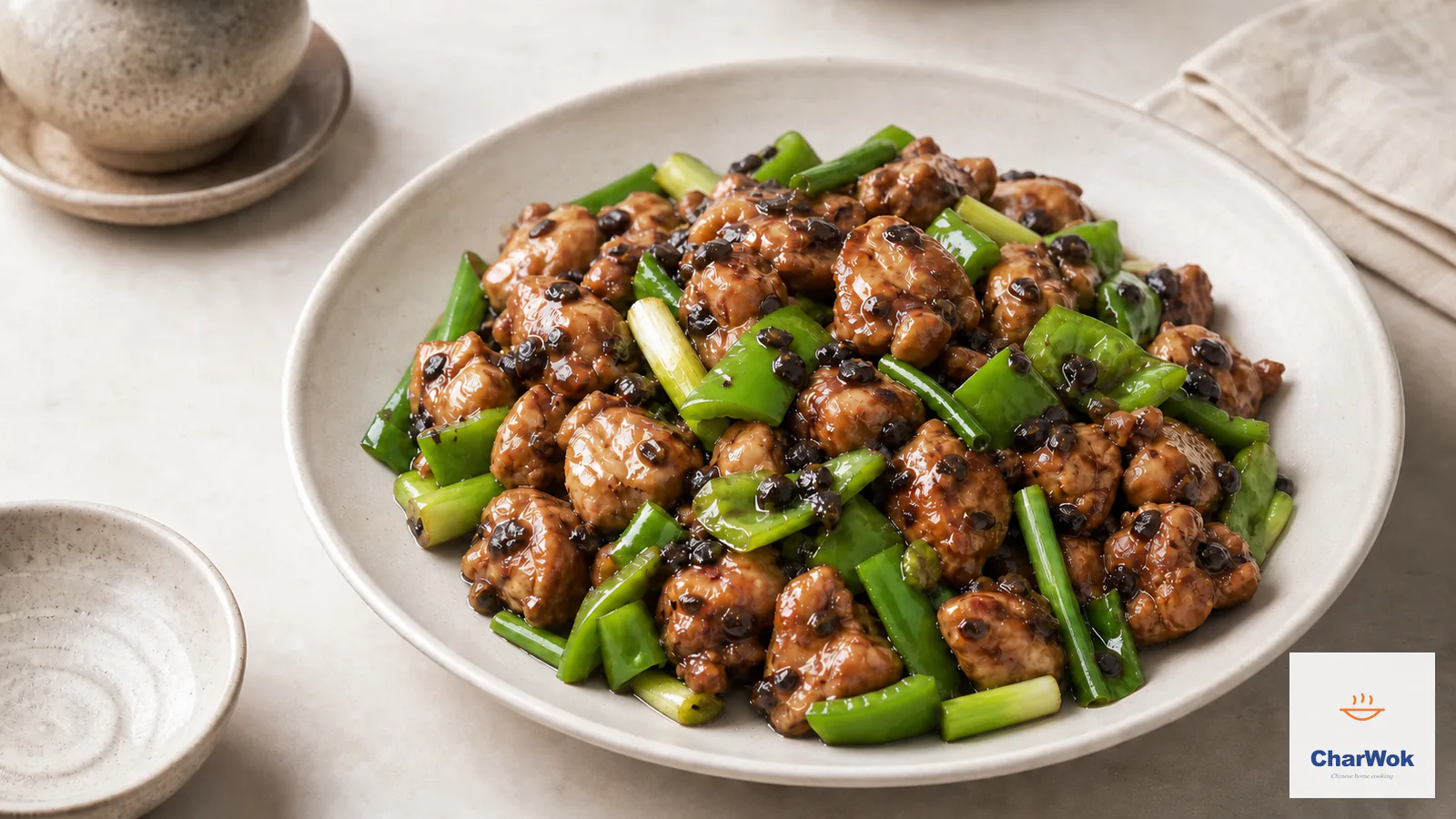
This is a Cantonese stir-fry the menus call Chǐ Jiāo Jī Qiú (豉椒鸡球), literally "black bean and pepper chicken balls." The "balls" are just rounded, generously cut pieces of chicken, and the pepper is a fresh chili, not the dried sort you'd find in Kung Pao Chicken. What you're after is the pungent, salty funk of fermented black soybeans meeting sweet, juicy chicken and the bright bite of a barely-cooked green pepper. Five real ingredients, a wok hot enough to make the oil shimmer, and roughly five minutes at the stove once the chicken has rested in its coating.
At a glance: Cube the chicken, velvet it with cornstarch, water, and a teaspoon of oil, then rest 10 minutes. Give it a brief first sear and move the still-undercooked pieces to a clean plate. Fry the scallions and chili, return the chicken with the black bean sauce, and cook until the thickest pieces reach 74°C (165°F). The first sear builds texture; the thermometer determines when the final stage is done.
What this dish actually is
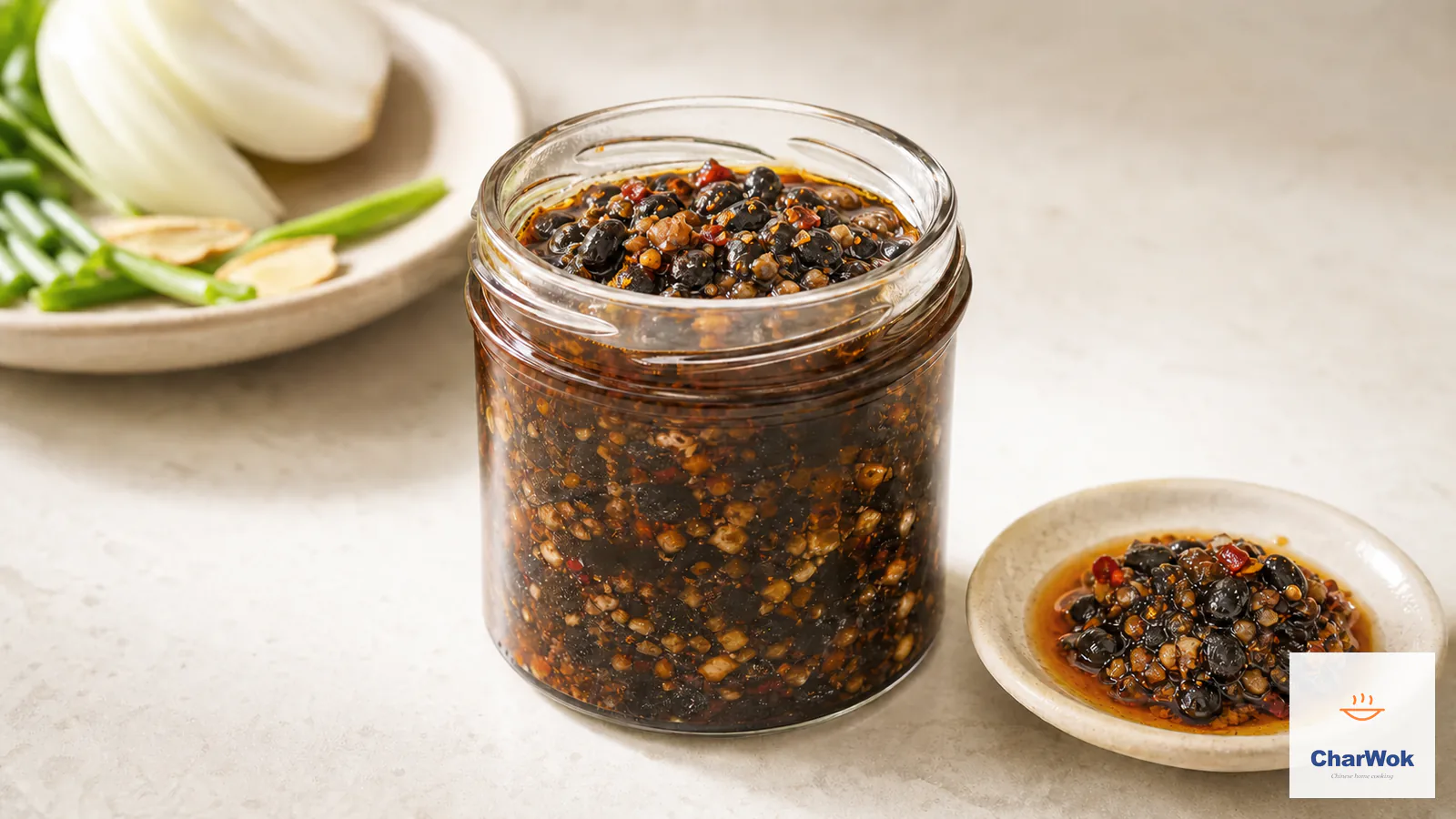
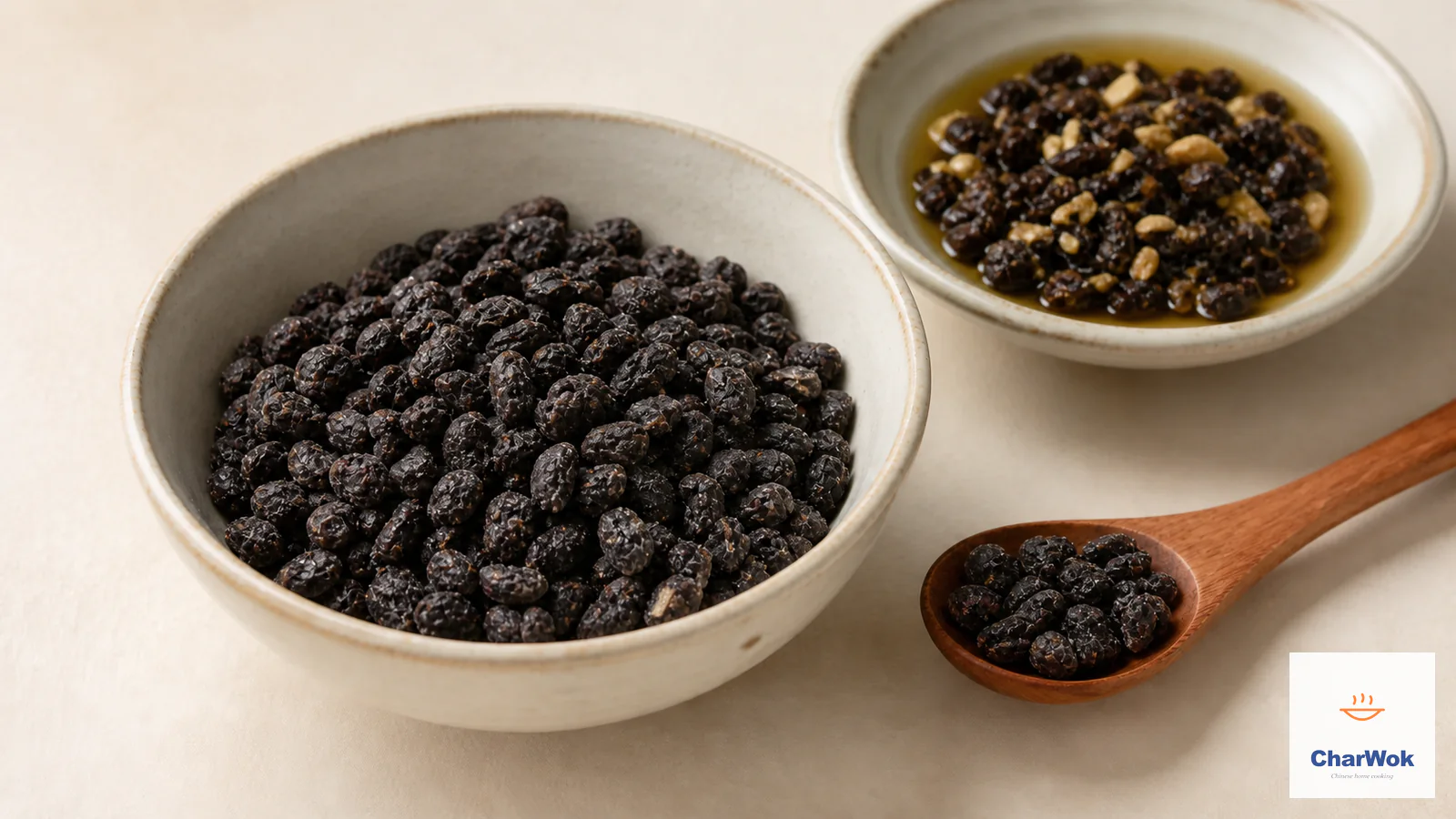
Black bean and chicken is a staple of Cantonese chao cai, the quick stir-fries that anchor a weeknight dinner in southern China. The namesake seasoning is fermented black beans (douchi), salt-cured black soybeans that smell aggressive in the jar but mellow into a deep, savory backbone once they hit hot oil. Most home cooks keep a jar of ready-made black bean sauce in the door of the fridge precisely for nights like this, when you want the flavor without mincing garlic, ginger, and beans separately.
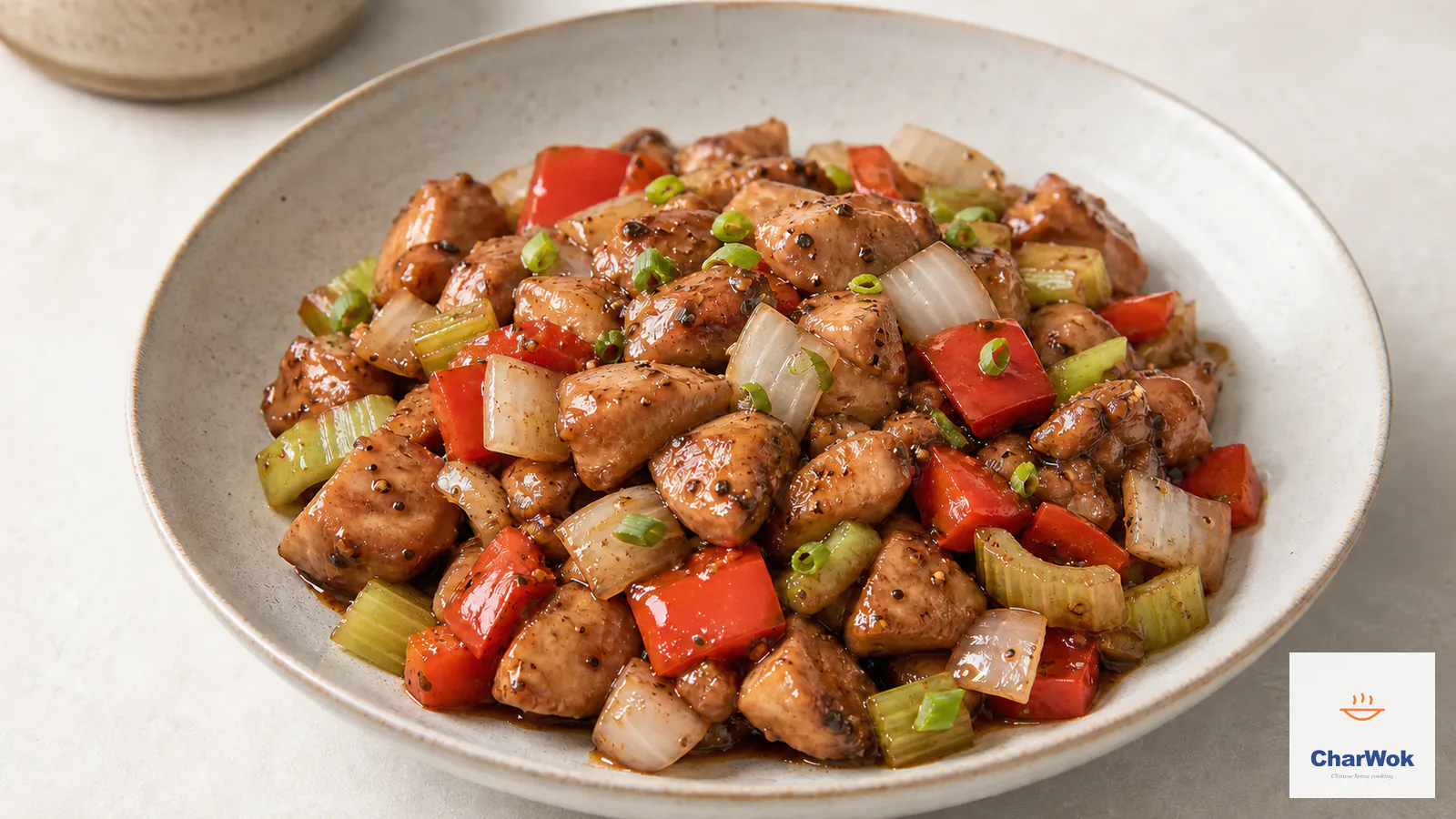
The dish travels well, reheats without complaining, and plays nicely as one plate in a larger spread. I lean on it the way I lean on black pepper chicken or cashew chicken when I want protein on the table fast and I don't want to think very hard.
The ingredient list
Ingredients at a glance
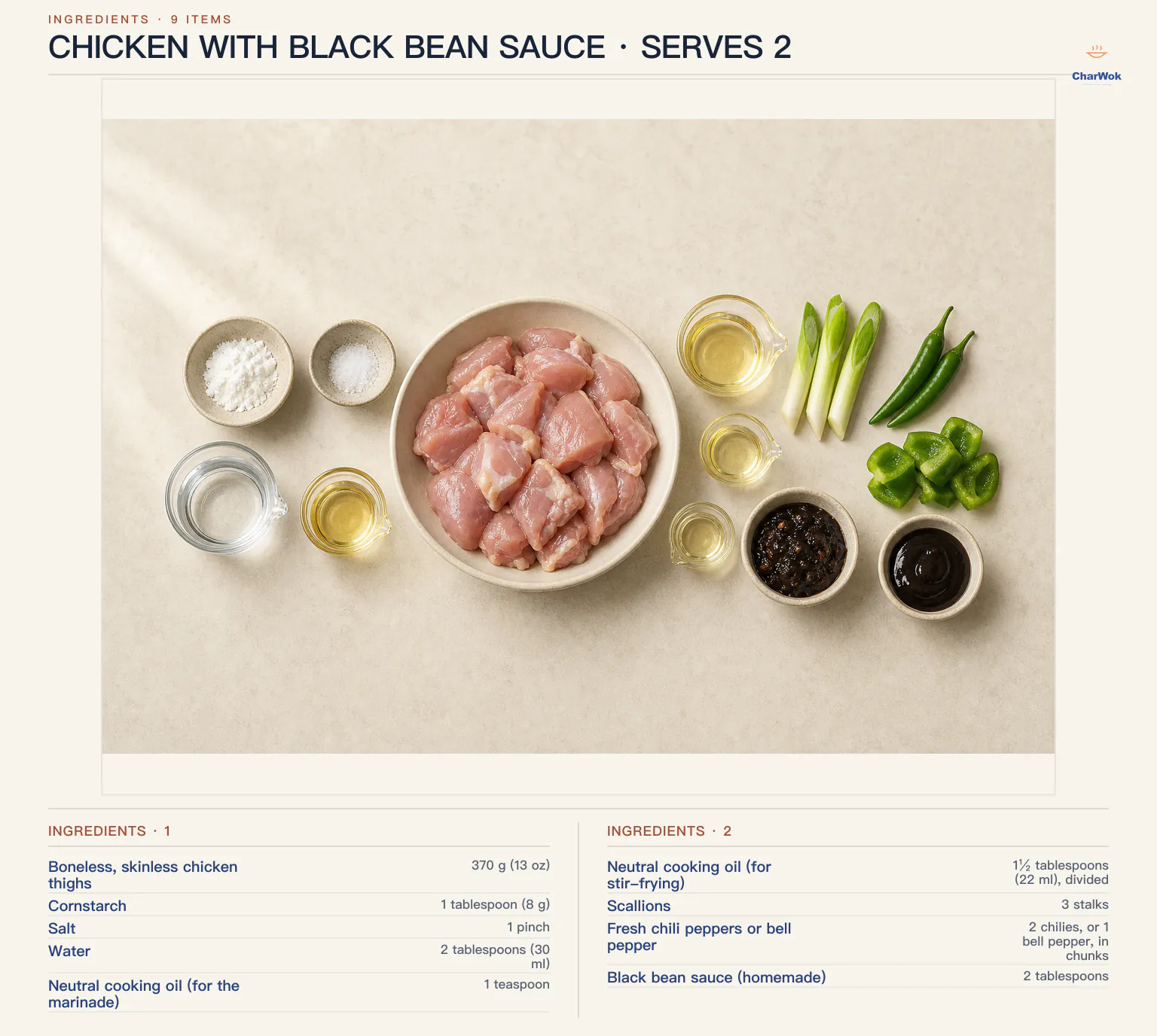
| Ingredient | Amount | Notes / substitute |
|---|---|---|
| Boneless, skinless chicken thighs | 370 g (13 oz) | Thighs stay juicier. Breasts work but need the velveting more than ever. |
| Cornstarch | 1 tablespoon (8 g) | Potato starch or tapioca starch work equally well for velveting. |
| Salt | 1 pinch | The black bean sauce carries most of the seasoning; do not over-salt here. |
| Water | 2 tablespoons (30 ml) | Cold tap water is fine. |
| Neutral cooking oil (for the marinade) | 1 teaspoon | Grapeseed, canola, or peanut. |
| Neutral cooking oil (for stir-frying) | 1½ tablespoons (22 ml), divided | Peanut is ideal for high heat. |
| Scallions | 3 stalks | Cut into 5 cm (2 inch) diagonal sections. |
| Fresh chili peppers or bell pepper | 2 chilies, or 1 bell pepper, in chunks | Use green chilies for heat; a bell pepper if you want zero spice. |
| Black bean sauce (homemade) | 2 tablespoons | If using a store-bought jar, start with 1 tablespoon; commercial versions run much saltier. |
Why velvet the chicken (and why ten minutes is enough)
Cornstarch plus a little water is the home version of a technique restaurants call velveting. The starch coats each piece of chicken in a thin gel that sets when it hits the pan, forming a barrier between the protein and the direct heat. The practical effect: moisture stays inside the meat, and the surface holds together instead of turning gray, ragged, and dry. The teaspoon of oil mixed in at the end keeps the pieces from clumping together the moment they touch the wok.
Ten minutes is plenty. Longer doesn't tenderize chicken further; the salt in the marinade has already done what little work it can do, and the cornstarch coating starts to weep if it sits. I have left it for an hour in the fridge and the result was no better, sometimes worse.
The method
Have everything cut and measured before the wok goes on the flame. Once the pan is hot, this dish moves in under three minutes, and there is no time to hunt for the soy sauce.
- Build the protective coating first. The whole texture of the dish depends on what happens in the bowl, so start here. Cut the thighs into roughly 2.5 cm (1 inch) cubes and drop them in with the cornstarch, the pinch of salt, and the 2 tablespoons of water. Work the liquid through the meat with your hand until it has all been taken up and the pieces feel slightly gummy to the touch, then run a teaspoon of oil over the top so they will release from the pan later. Give it 10 minutes to sit. That slightly gummy film is the coating doing its job; if water is still pooling at the bottom, the chicken was damp, so pat the pieces dry and try again.
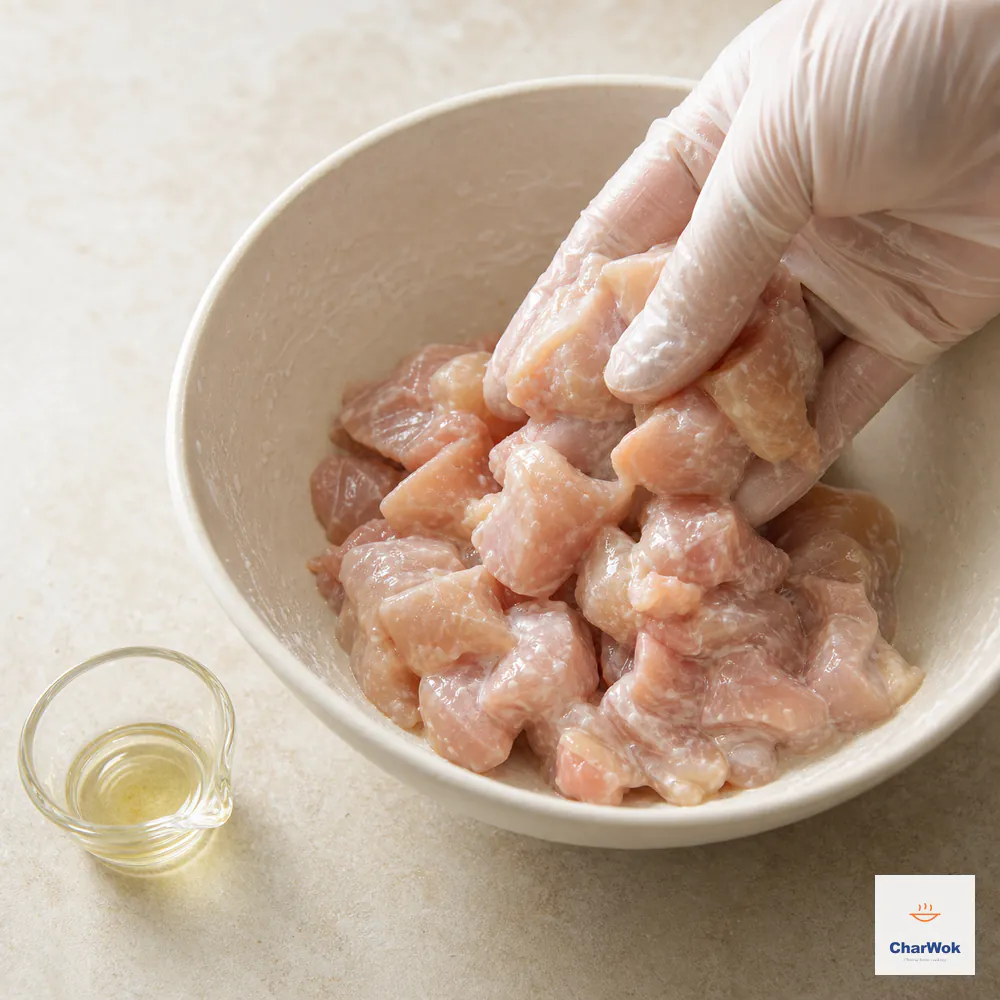
Mix the chicken, cornstarch, salt, and water until every piece feels sticky and the bowl has no free liquid; only then mix in the teaspoon of oil and rest for 10 minutes.
- Preheat without visible smoke. For carbon steel or stainless steel, preheat over medium-high until a water droplet glides across the surface, then wipe the pan completely dry. Add 1 tablespoon oil and heat it to about 175–180°C (347–356°F), shimmering but not smoking. For nonstick, add the oil before heating and stay within the maker’s heat limit. If the pan smokes, remove it from the burner and let it cool.
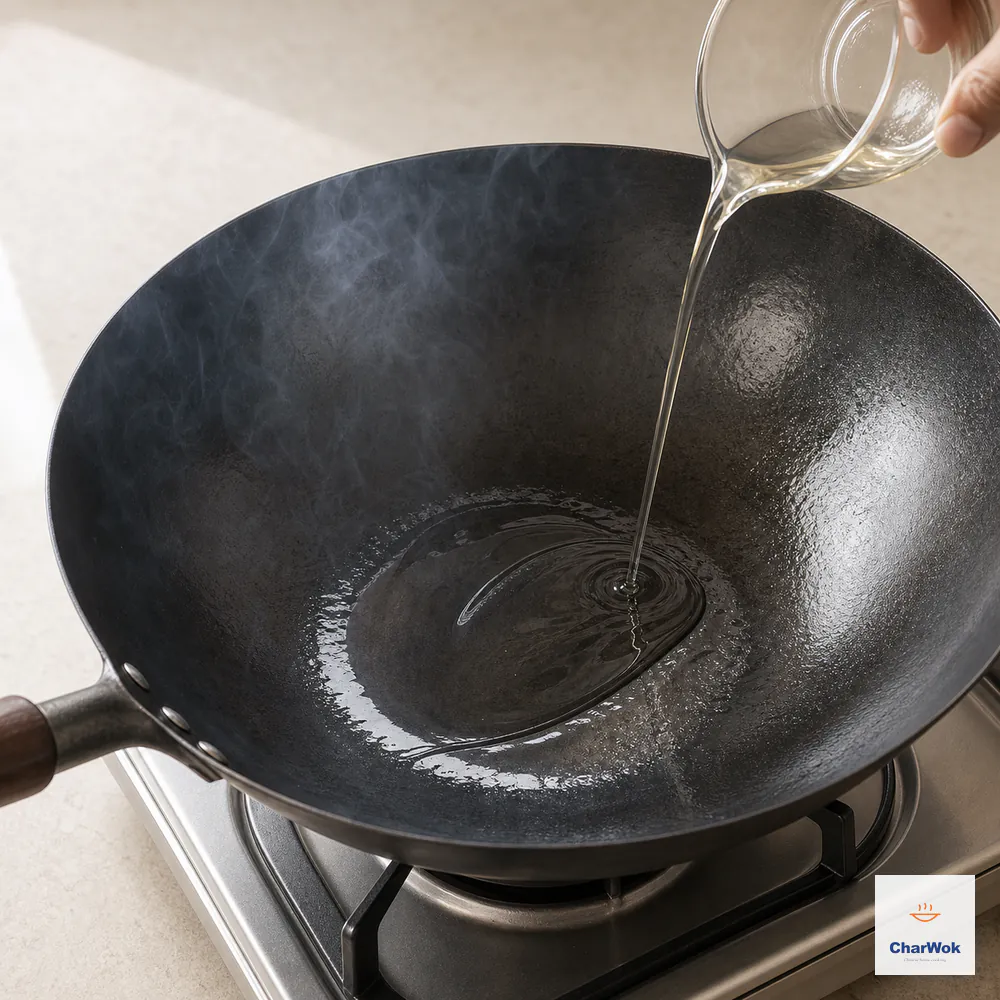
Preheat uncoated metal evenly, wipe it dry, then add 1 tablespoon oil and heat to 175–180°C (347–356°F), shimmering without visible smoke.
- Give the chicken a partial first sear. Lay the pieces in one layer and leave them for 20 to 30 seconds so the coating can set. Turn them briefly to expose the other sides, then transfer the still-undercooked chicken to a clean plate. This stage is only for surface texture; exterior color is not a doneness test, and the chicken must reach 74°C (165°F) after it returns to the wok.
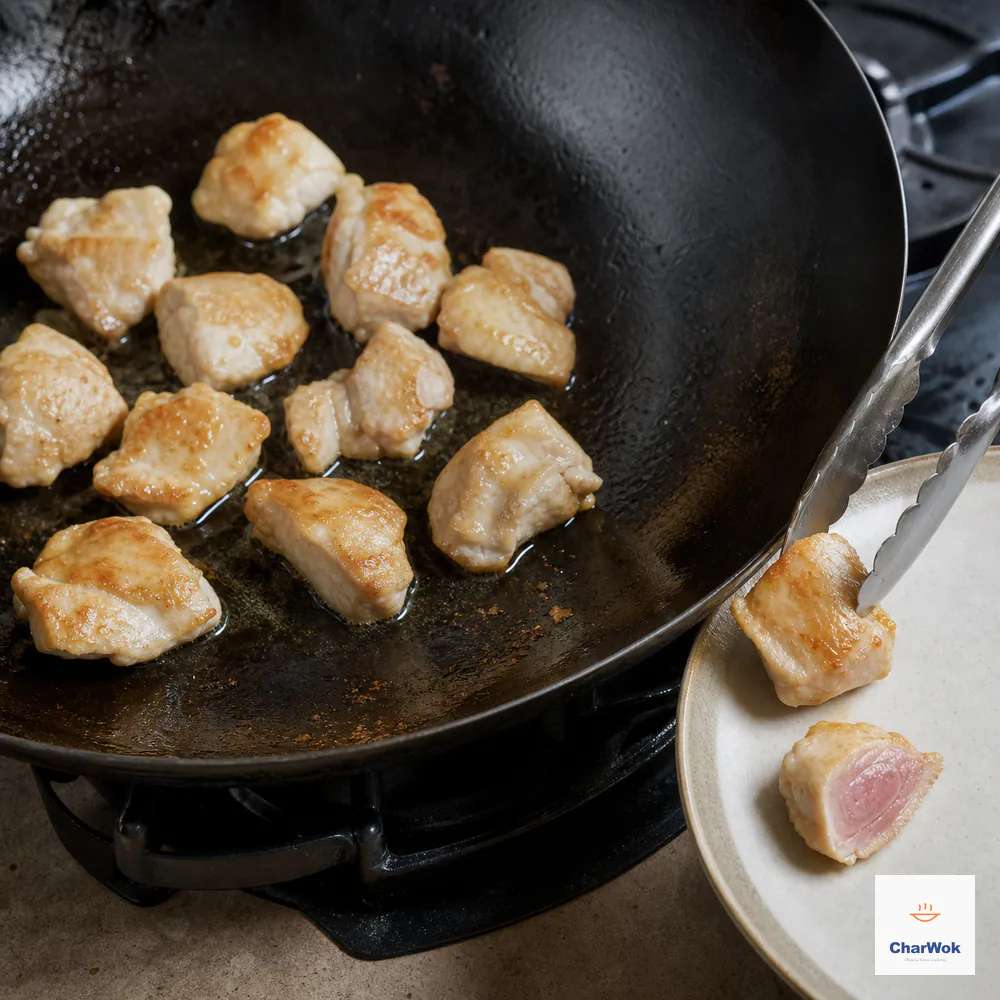
The first sear only sets the exterior; transfer the still-undercooked chicken to a clean plate and verify 74°C (165°F) after it returns to the sauce.
- Wake up the aromatics. With the heat still high, add the remaining ½ tablespoon of oil, then the scallion sections and the chili or bell pepper. Keep everything moving hard for roughly 30 seconds. The scallion greens should look glossy and just soft enough to bend around the spoon, the chili skins blistering here and there; the pepper itself must still have a snap when you bite it. Soft, collapsed pepper is the failure mode.
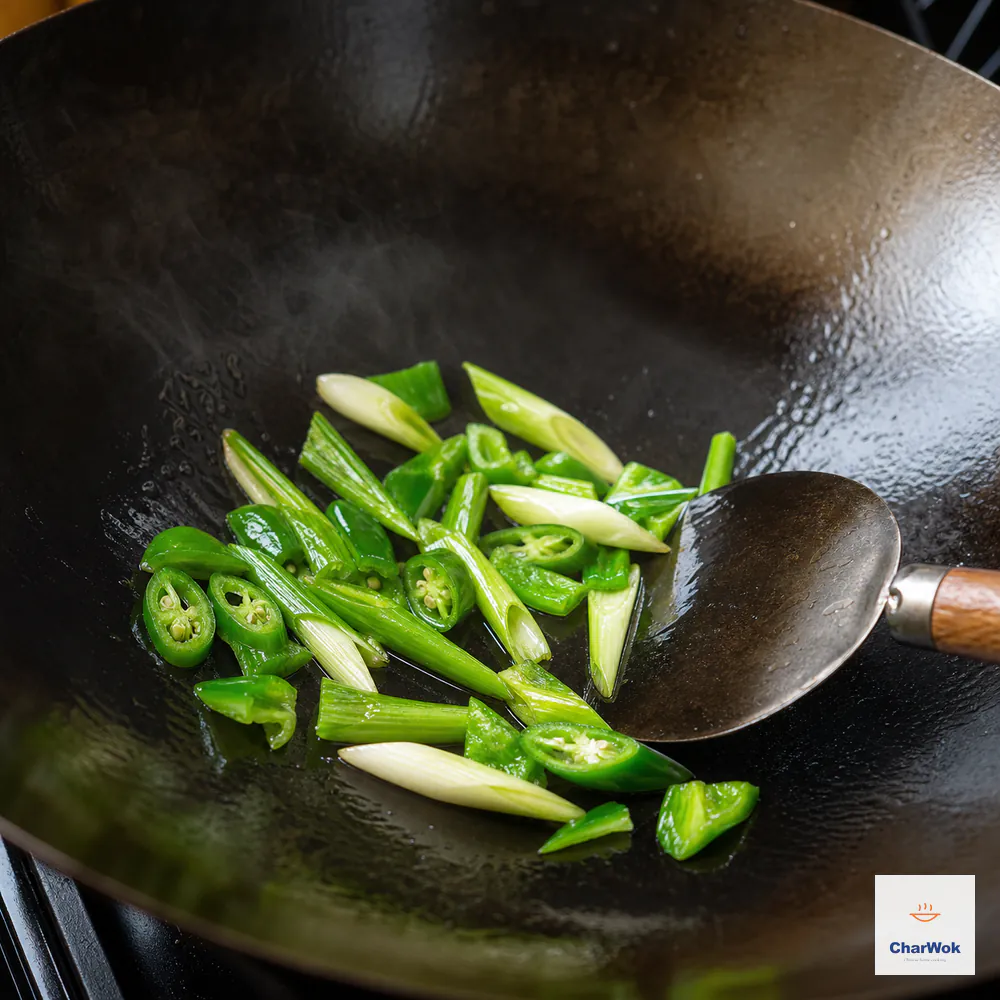
Add the remaining half tablespoon oil and stir-fry the scallions and green chili or bell pepper for about 30 seconds, stopping as they begin to wilt but remain crisp.
- Bring it together and finish the chicken. Tip the chicken and any juices from the clean plate back into the wok, add the black bean sauce, and keep everything moving as the sauce forms a thin glaze. Cook until an instant-read thermometer inserted into the thickest pieces reads 74°C (165°F); do not rely on one minute, firmness, or color. If the glaze tightens before the chicken reaches temperature, add 1 tablespoon water and continue tossing. Serve at once over steamed rice.
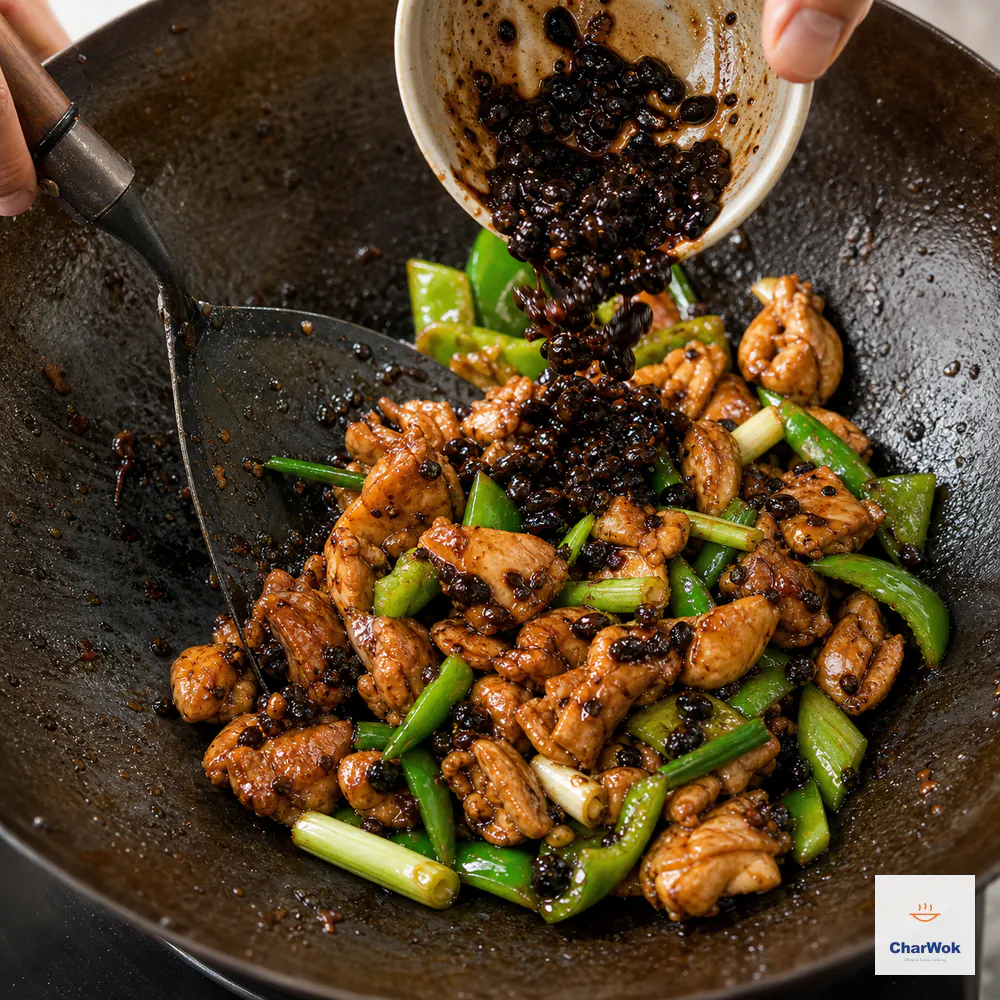
Return the chicken with the black bean sauce and toss until the thickest pieces reach 74°C (165°F); add water if the glaze tightens before the temperature check.
Food-safety sources: the U.S. Fire Administration cooking-fire guidance, the U.S. government’s safe minimum internal temperature chart, and FoodSafety.gov leftover guidance.
When it goes wrong
The chicken is tough and dry. Either you skipped the cornstarch, crowded the pan, or extended the first sear too long. Keep that stage brief, then use a thermometer in the final glaze step so you do not add extra time “just to be safe.” Thigh is also more forgiving than breast.
The sauce is pooling and the dish looks watery. The wok wasn't hot enough, or you crowded it. A wok full of chicken drops the pan temperature, the meat sweats instead of searing, and you end up braising. Cook in two batches for anything over 400 g (14 oz) of meat, and let the pan come back to fierce heat before the second batch goes in.
It's too salty. Store-bought black bean sauce is the usual suspect. Homemade keeps the salt in check because you control it; a commercial jar can be twice as salty. Start with one tablespoon, taste at the end, and add more only if it genuinely needs it. If you've already overdone it, a splash of water and a pinch of sugar will take the edge off.
The pepper collapsed into mush. It spent too long in the pan, or the heat was too low. Thirty seconds of hard tossing is the ceiling. The pepper should still have a snap when you bite it.
Variations and what to serve it with
Swap the chicken for thin-sliced pork or firm tofu and the method is unchanged. If you want to lean into the black bean flavor, the same seasoning does beautiful things for pork ribs in steamed ribs with black beans, a dim sum classic. A splash of Shaoxing rice wine added with the sauce lifts the dish; a teaspoon of sugar rounds the salt. For a deeper color and a more savory edge, a few drops of dark soy sauce will glaze the chicken without making it noticeably saltier.
If heat isn't your thing, swap the chili for a green bell pepper and you have something close to scallion oil chicken's gentle cousin. For a full plate of vegetables alongside, an eggplant with garlic sauce or a simple stir-fried green balances the meal, and a bowl of egg drop soup opens the table.
Storing and reheating
Refrigerate leftovers in shallow airtight containers within 2 hours, or within 1 hour when the room or outdoor temperature is above 32°C (90°F). Use within 3 to 4 days. Reheat in a pan with a splash of water, or in the microwave, until the thickest chicken pieces reach 74°C (165°F). The pepper will lose some crunch, but either reheating method is safe when the food reaches temperature.
Frequently asked questions
Can I use chicken breast instead of thigh?
Yes. Cut the pieces slightly smaller and velvet for the full ten minutes. Keep the first sear brief, then finish the thickest pieces to 74°C (165°F) in the sauce. Breast is leaner than thigh, so checking the final temperature prevents both undercooking and unnecessary extra cooking.
Do I have to use a wok?
No. A large cast-iron or heavy-bottomed stainless skillet holds heat well enough. What you cannot substitute away is the heat itself; a pan that never gets fierce enough will steam the chicken instead of searing it. Read more in our guide to choosing and seasoning a wok if you're on the fence.
How do I know the chicken is done?
Insert an instant-read thermometer into the thickest piece during the final sauce step. The chicken is ready at 74°C (165°F). Color, clear juices, firmness, and a fixed one-minute toss can all mislead, so use them only as visual context, not as the safety check.
Can I make this without black bean sauce?
You can build the flavor from scratch with a tablespoon of rinsed fermented black beans minced with garlic and ginger, a tablespoon of light soy sauce, a teaspoon of sugar, and a splash of Shaoxing wine. It's more work and worth it. Black bean sauce is just that mix, made ahead, and it keeps for weeks in the fridge, which is why it belongs among our must-have Chinese condiments.
Is this a good recipe for a beginner?
It is one of the better entries into weeknight Chinese cooking. The ingredient list is short, the steps are forgiving once you trust the "pull it early" instruction, and the result is forgiving of small mistakes. The one thing to take seriously is pan temperature.