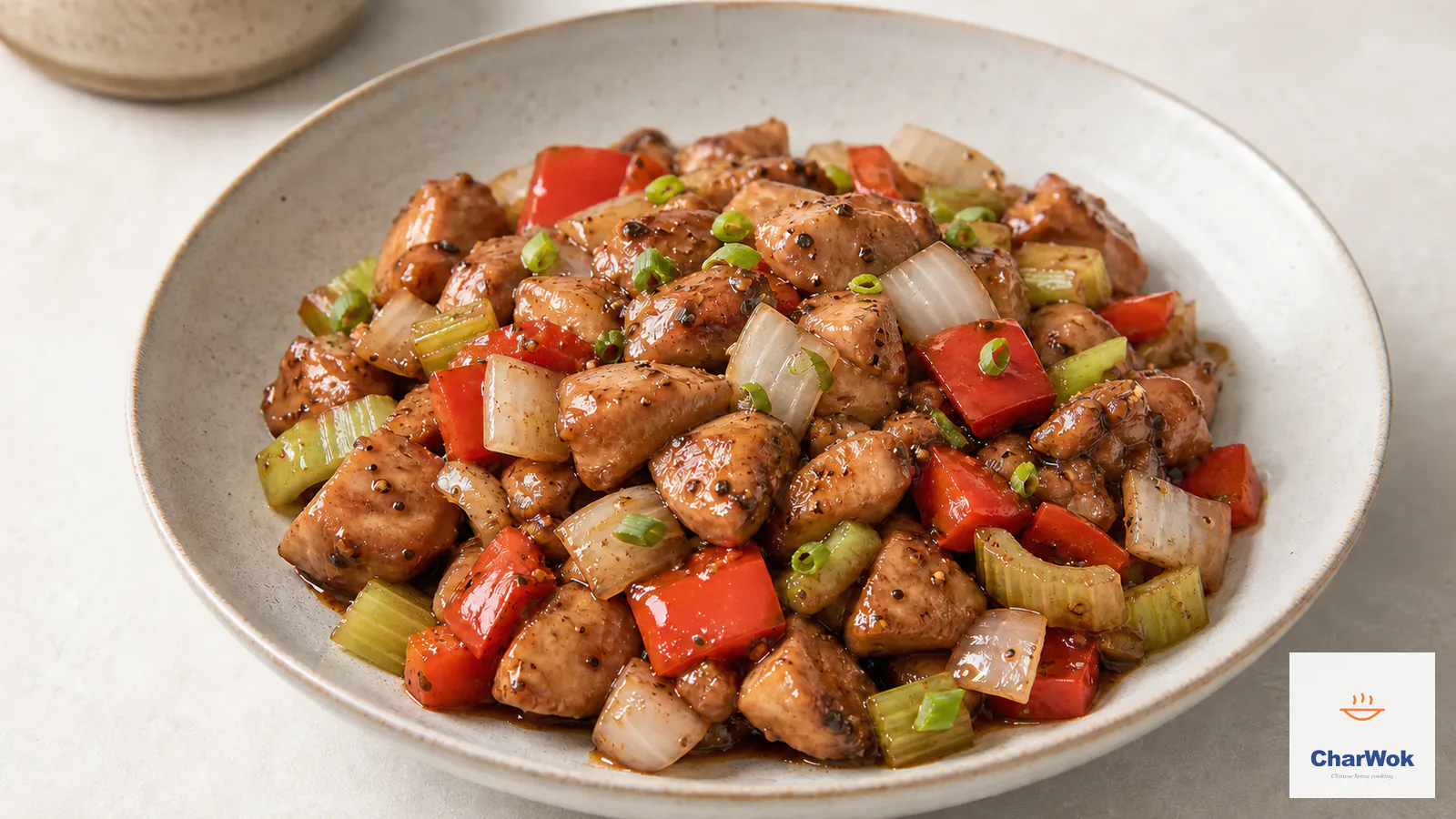
Black pepper chicken is a ten-minute stir-fry that lives or dies on two things: whether the pepper actually tastes like pepper, and whether the chicken went into the wok with a thin starch coat or naked. Do those two right and you get glossy, tender cubes in a sauce that bites back. Get them wrong and you have a pile of beige meat in salty brown gravy, which is what most home versions of this dish turn into.
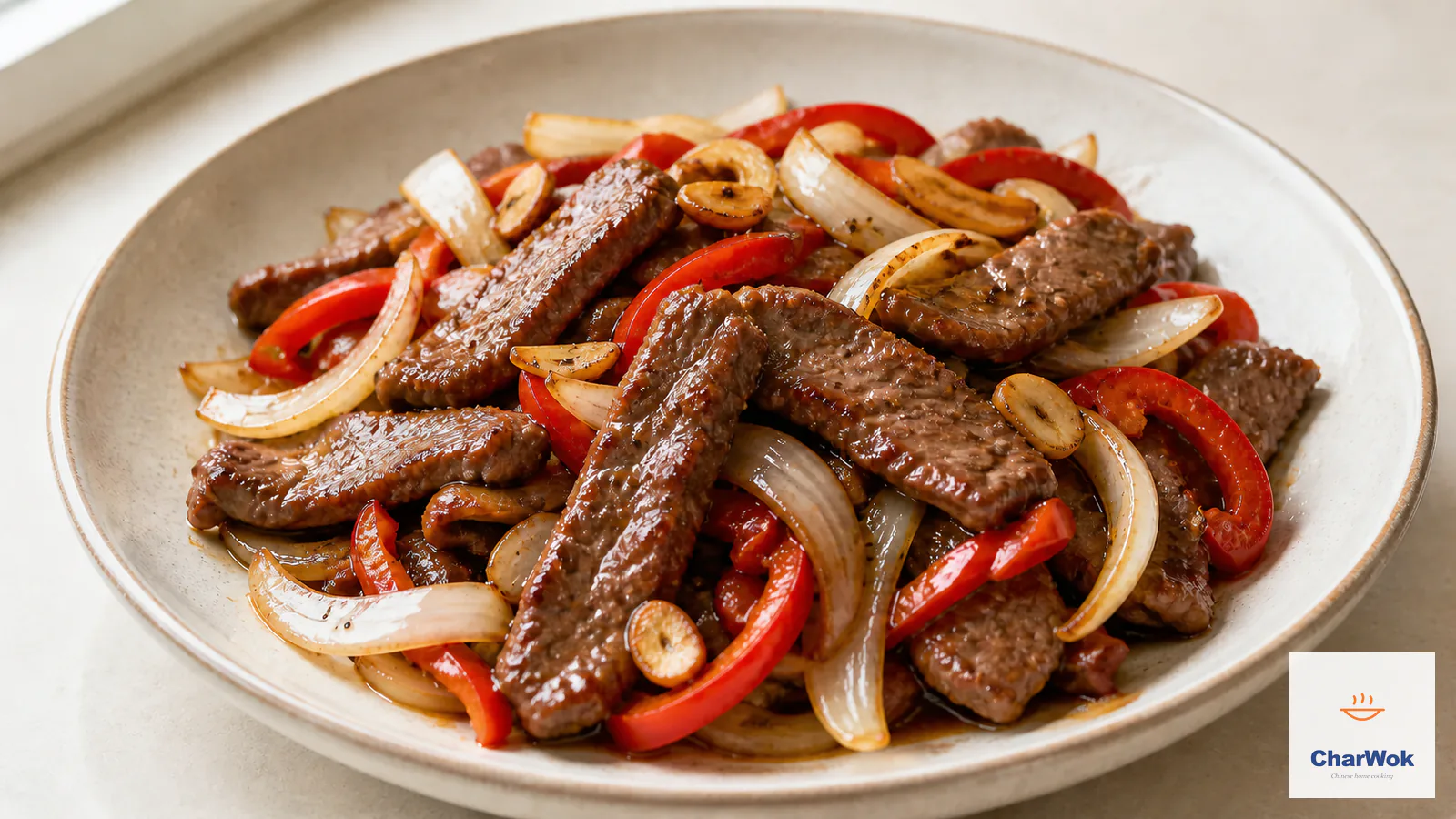
This weeknight recipe has more backbone than a plain oyster-sauce braise but less setup than Kung Pao chicken with its fried chilies and peanuts. It is in the same family as black pepper beef, with chicken in place of beef and the same fast sear and glossy finish.
Velvet the chicken in cornstarch and water for ten minutes, grind the pepper fresh, and heat the oil to 350–355°F (175–180°C) without smoking. The dish takes about ten minutes; verify the thickest chicken cube reaches 165°F (74°C) before adding the finishing sauce.
What the dish is, and where it sits
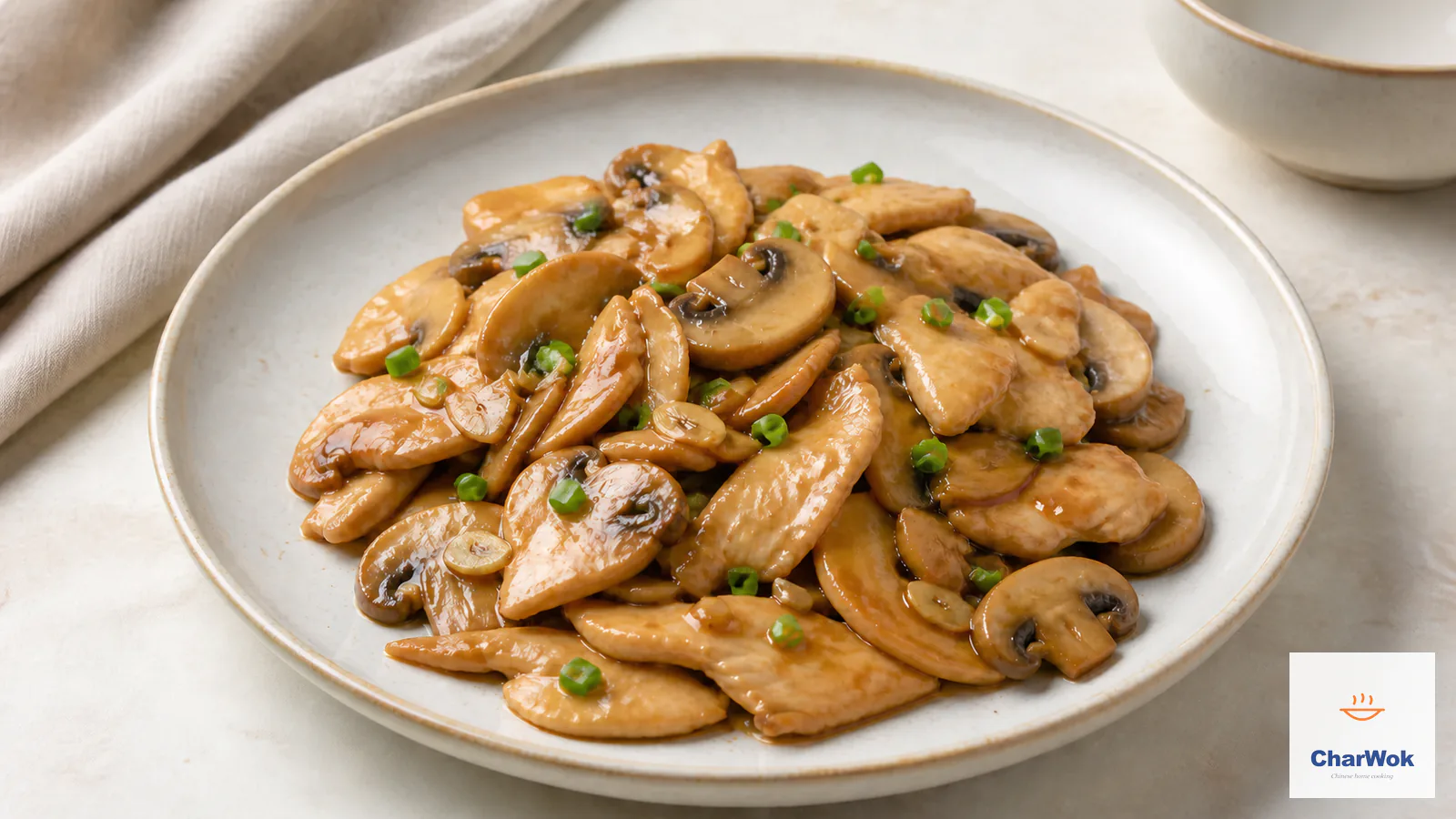
Black pepper chicken (Hei Jiao Ji Ding) is a Cantonese-style quick stir-fry: boneless chicken cut into small cubes, briefly marinated, seared hot, then folded with crunchy vegetables and a sauce built on oyster sauce, soy sauce, and a serious dose of freshly ground black pepper. It is cousin to cashew chicken and chicken and mushroom stir-fry in structure, and it shares the pepper-forward logic of pepper steak. What separates it from those is that the pepper is not a seasoning here. It is the point.
Two techniques that decide whether this works
Before the ingredient list, two things deserve their own air, because they are where this dish fails at home.
1. Velveting, not marinating. Tossing the chicken with cornstarch and a little water is not about flavor. It is a technique called velveting, also used for chicken with black bean sauce. The starch forms a thin gel around each cube when it hits the hot oil. That gel buffers the meat from direct heat and gives the sauce a surface to cling to later. Skip it and the chicken can weep water into the wok, thinning the sauce and tightening the meat. Ten minutes is enough; an hour covered in the fridge also works for breast meat.
2. Fresh-ground pepper, added twice. Pre-ground pepper loses aroma after grinding. A pepper mill makes the biggest difference here: put half the pepper into the sauce and crack the other half over the dish off the heat. The first addition rounds into the sauce; the second keeps its sharper aroma.
Ingredients
Ingredients at a glance
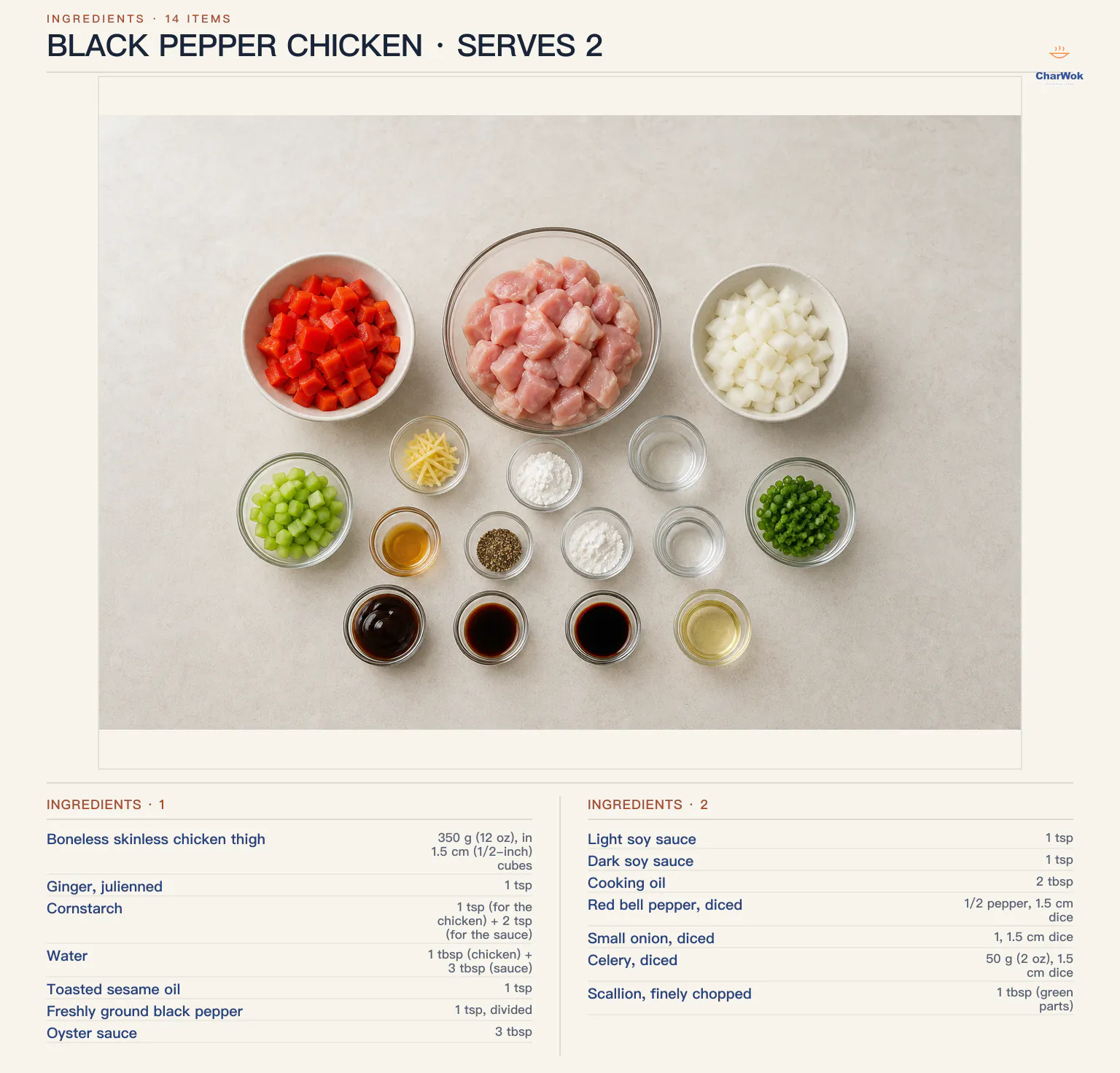
Serves 2, ready in about 10 minutes once the prep is done. Metric first; the cup and ounce equivalents are what most US kitchens actually use.
| Ingredient | Amount | Notes / substitute |
|---|---|---|
| Boneless skinless chicken thigh | 350 g (12 oz), in 1.5 cm (1/2-inch) cubes | Thighs stay juicier than breast over high heat. Breast also works; velvet it for an hour in the fridge and still cook the thickest cube to 165°F (74°C). |
| Ginger, julienned | 1 tsp | About a 1 cm nub, cut into fine matchsticks so it perfumes the oil without becoming chunks to bite. |
| Cornstarch | 1 tsp (for the chicken) + 2 tsp (for the sauce) | Potato starch works; arrowroot is fine but the sauce will be looser. |
| Water | 1 tbsp (chicken) + 3 tbsp (sauce) | — |
| Toasted sesame oil | 1 tsp | Added to the chicken after the starch so the cubes separate and do not clump. A little toasted sesame oil goes a long way; do not double it. |
| Freshly ground black pepper | 1 tsp, divided | Half into the sauce, half cracked over at the end. Tellicherry or Malabar for classic warmth; Sichuan-style or Kampot if you want more floral heat. |
| Oyster sauce | 3 tbsp | The umami backbone. Vegetarian mushroom oyster sauce is a clean 1:1 substitute. |
| Light soy sauce | 1 tsp | For salt and depth. If you only have one soy, see the note below on light vs. dark soy sauce. |
| Dark soy sauce | 1 tsp | For the mahogany color. Optional; if skipping, use 2 tsp light soy total. |
| Cooking oil | 2 tbsp | Neutral, high-smoke: avocado, peanut, or canola. |
| Red bell pepper, diced | 1/2 pepper, 1.5 cm dice | Match the chicken cube size for a tidy look. Snap peas or snow peas are a good swap. |
| Small onion, diced | 1, 1.5 cm dice | Shallot works and is sweeter. |
| Celery, diced | 50 g (2 oz), 1.5 cm dice | The divisive one. If you hate celery, use water chestnut or jicama for the same crunch without the flavor. |
| Scallion, finely chopped | 1 tbsp (green parts) | Stirred in off the heat so it stays bright. |
Mise en place first, wok second
Stir-frying happens in minutes, and none of those minutes belong to chopping. Prep in this order so the chicken can rest while the vegetables are cut:
- Velvet the chicken. Put the cubed chicken, ginger, 1 tsp cornstarch, and 1 tbsp water in a bowl. Toss with your fingers until no liquid pools at the bottom. Add the sesame oil and toss again so the pieces separate and glisten. Let it sit at least 10 minutes, or up to an hour covered in the fridge. The starch needs that time to hydrate and coat evenly; skipping the rest is the most common reason the coating slides off in the wok.
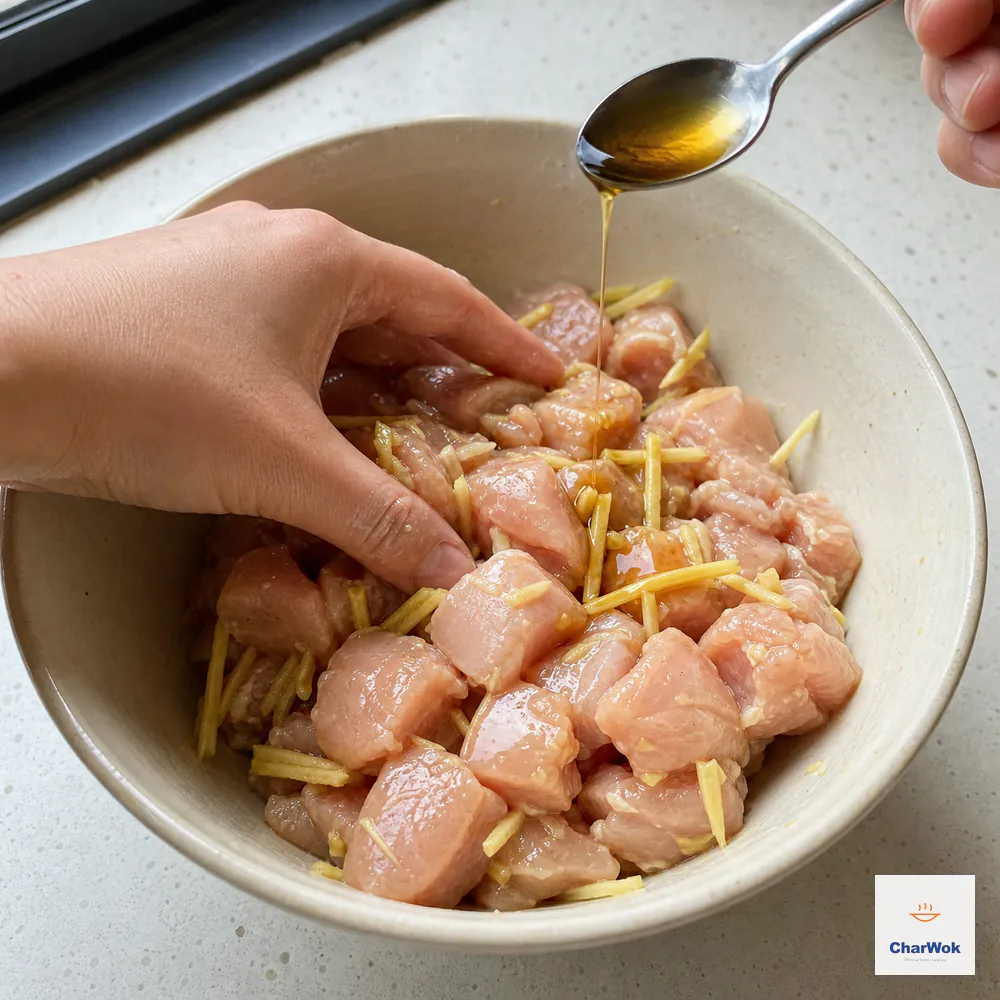
Work the cornstarch and water into the chicken and ginger until no liquid pools, then add sesame oil, separate the cubes, and rest them for at least 10 minutes
- Mix the sauce. In a small bowl, stir 2 tsp cornstarch into 3 tbsp water until smooth, then add the oyster sauce, light soy, dark soy, and half the black pepper. Stir again right before you pour it in. Cornstarch settles fast, and a settled layer is what gives you a gummy lump instead of an even glaze.
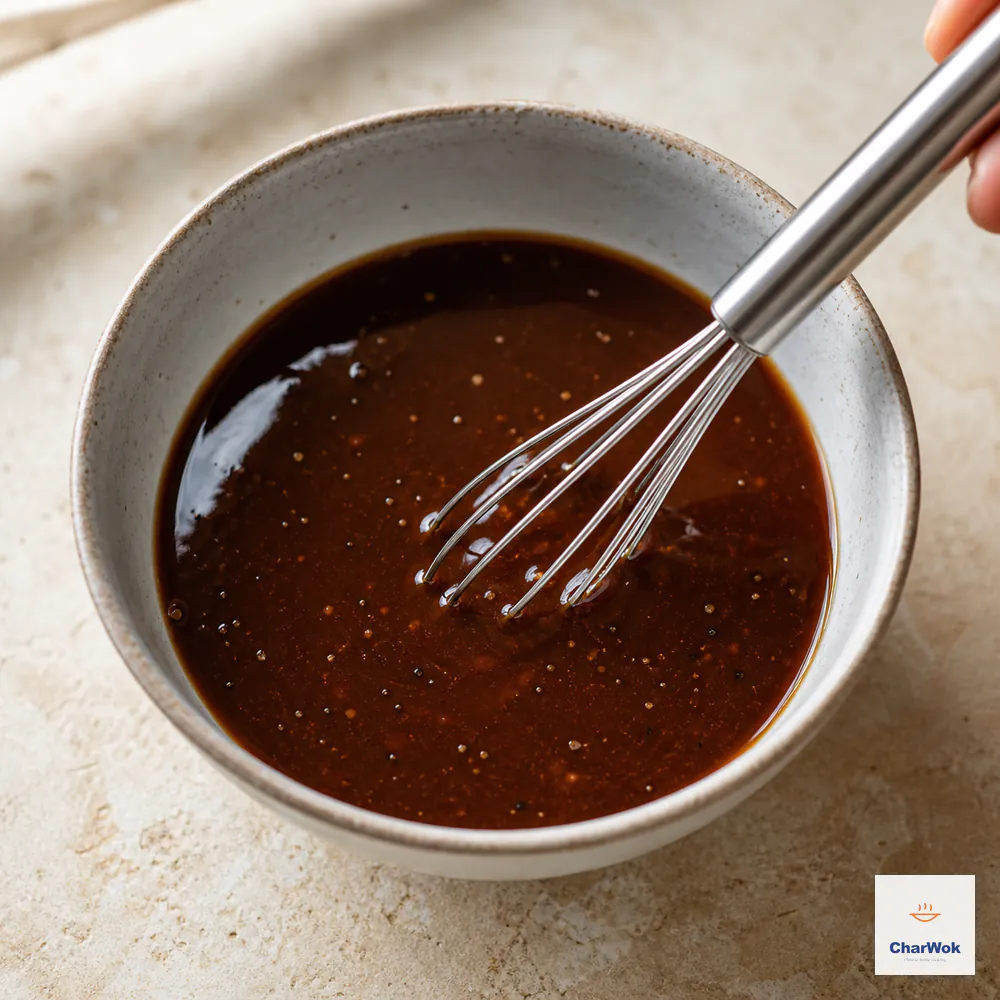
Mix the sauce until smooth and stir it again immediately before pouring because settled cornstarch would thicken in lumps instead of forming an even glaze
- Prep the vegetables and aromatics. Dice the bell pepper, onion, and celery to match the chicken. Chop the scallion greens. Have everything within arm's reach of the stove.
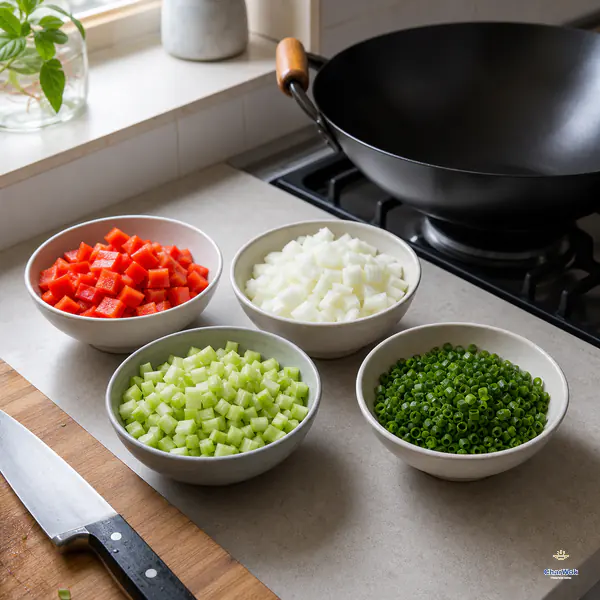
Dice the bell pepper, onion and celery to match the chicken, chop the scallion greens separately, and keep everything within reach before heating the wok.
Cooking the stir-fry
Use a carbon steel wok if you have one. A wide skillet works but loses heat faster, so do not crowd it; cook in two batches if your pan is under 30 cm (12 inches). For carbon steel, preheat until a water droplet beads and glides, then wipe the wok completely dry before adding oil. For nonstick, add oil before heating and stay within the maker’s heat limit.
- Give the chicken a brief first sear. Heat the oil to 350–355°F (175–180°C), shimmering but not smoking, then add the chicken in a single layer. Let it sit for 15 to 20 seconds before tossing so the underside colors. Stir-fry briefly, breaking the cubes apart. This stage sets the coating; the chicken is still undercooked, and surface color is not a doneness test.
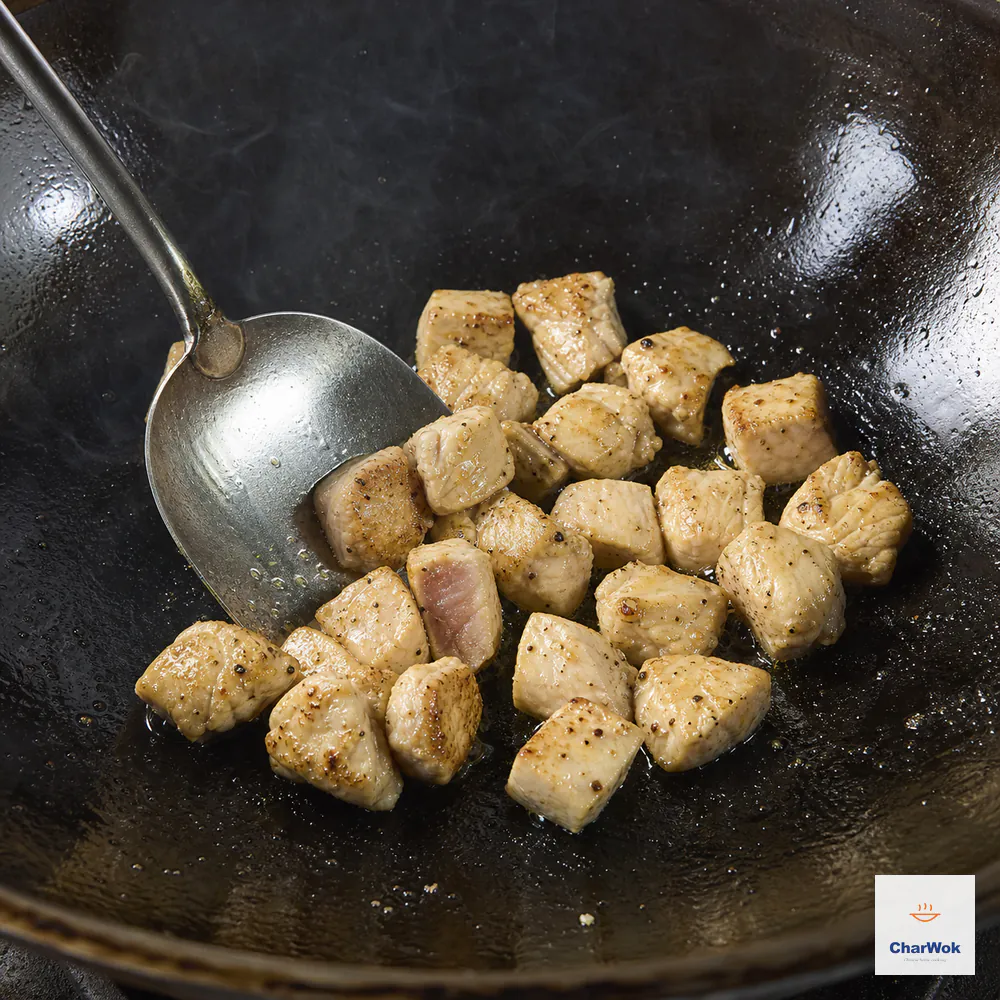
Let the single layer sit for 15 to 20 seconds, then toss briefly; this stage only sets the coating, the chicken remains undercooked, and surface color is not a doneness test
- Add the vegetables and finish the chicken. Toss in the onion, bell pepper, and celery. Keep stir-frying until the vegetables are bright and the thickest chicken cube reaches 165°F (74°C) on an instant-read thermometer. The usual two-minute timing is only an estimate; temperature decides when the chicken is safe.
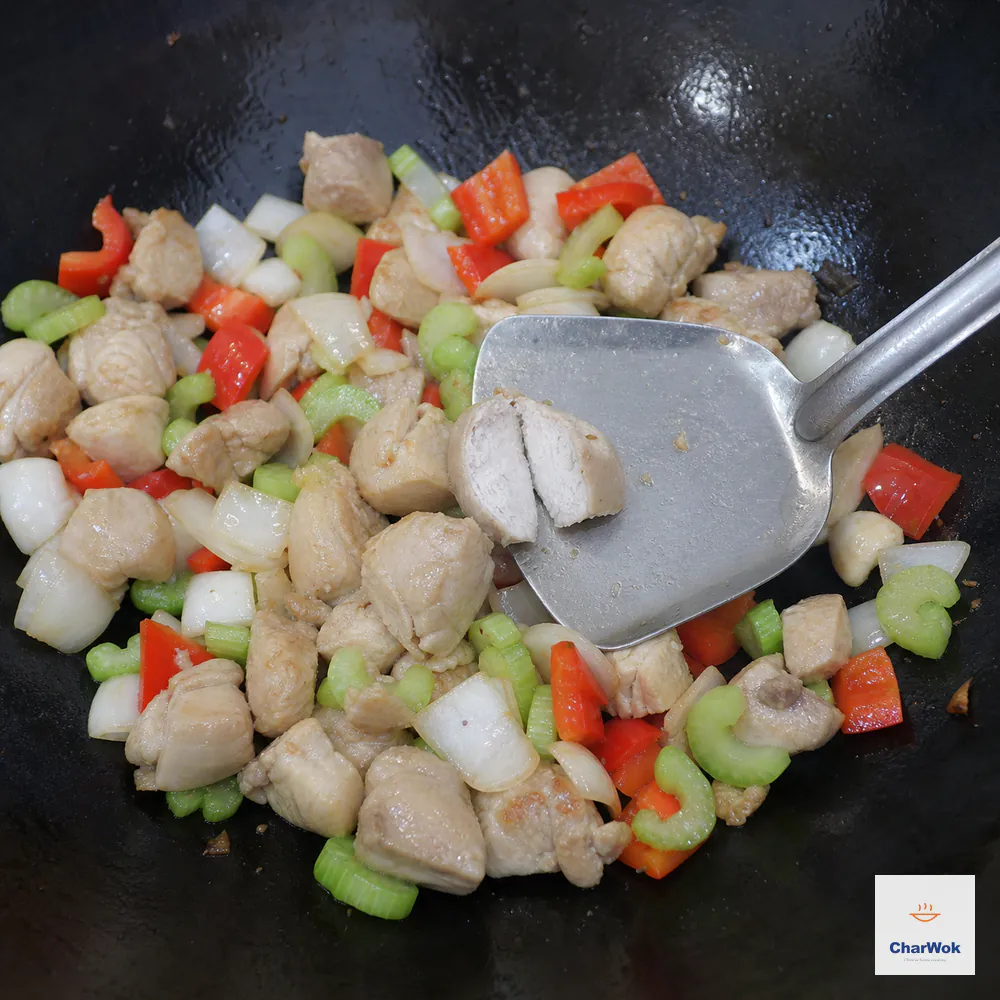
Add the onion, red pepper, and celery and keep tossing until the vegetables stay bright and the thickest chicken cube reaches 165°F (74°C); two minutes is only an estimate
- Glaze with the sauce. Give the sauce bowl a final stir and pour it around the edge of the wok, not directly on the meat. The hot metal flash-cooks the sauce and starts the starch gelatinizing immediately. Toss constantly for 30 to 60 seconds. The liquid will turn glossy and thick and cling to every cube. Stop the moment it coats; cornstarch-thickened sauce turns pasty if you keep cooking it.
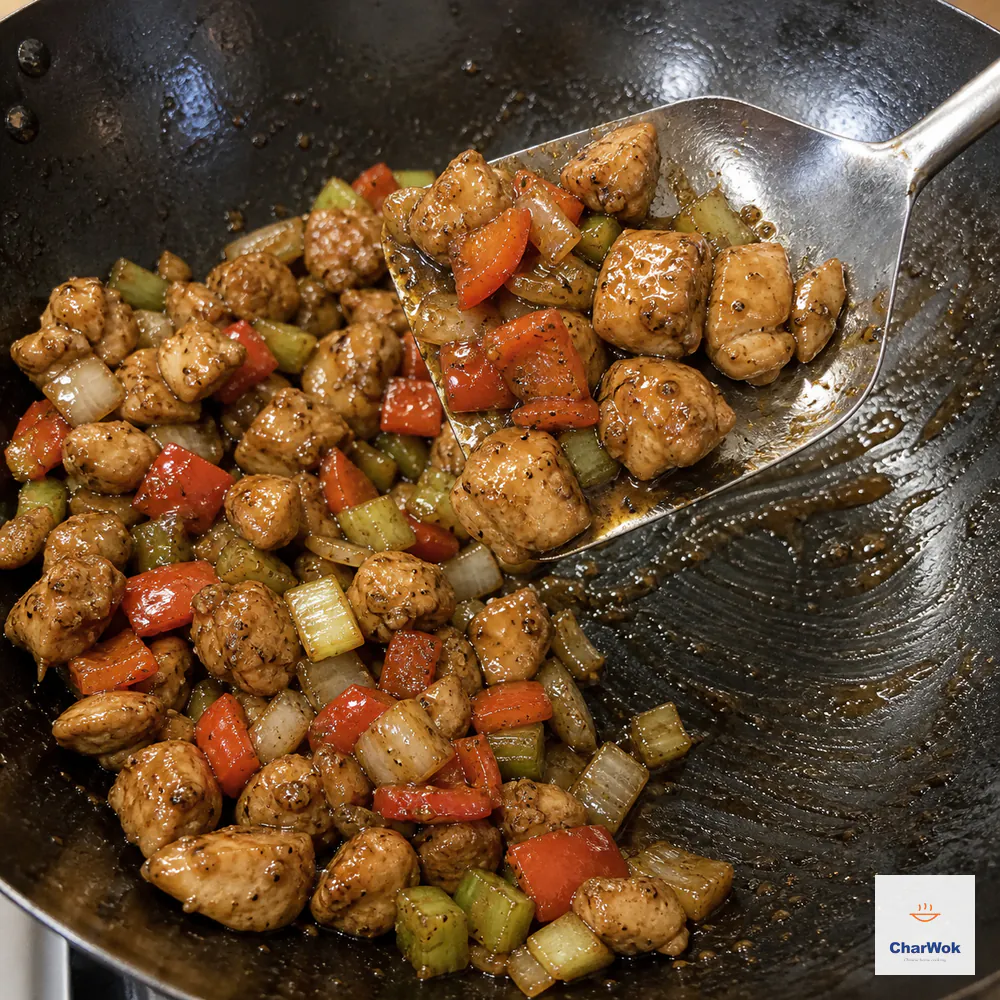
After the chicken reaches 165°F (74°C), stir and pour in the sauce, then toss just until a thin glossy film clings; add 1 tablespoon water if it tightens too quickly
- Finish off the heat. Kill the burner. Crack the rest of the black pepper over the top, scatter the scallion greens, and toss twice. Serve immediately over plain rice.
Food-safety sources: the U.S. Fire Administration cooking-fire guidance, the U.S. government’s safe minimum internal temperature chart, and FoodSafety.gov leftover guidance.
When it goes wrong, here is why
Most failures come from low pan heat, uneven chicken cubes, or sauce that stays on the heat too long.
- The chicken is dry and stringy. The breast was not velveted, the cubes were uneven, or the chicken went far beyond 165°F (74°C). Keep the first sear brief and check one of the thickest cubes during the vegetable stage.
- The sauce is thin and watery. The chicken released its juice because it was not coated, or the wok was not hot enough to reduce. Fix: velvet the meat, preheat carbon steel with the water-droplet check, wipe it dry, and heat the oil until shimmering without smoke. Make sure the sauce has its full 2 tsp of starch. If the sauce is still thin, dissolve an extra 1/2 tsp cornstarch in 1 tbsp cold water and pour it in.
- The sauce is a gummy paste. Too much starch, or you cooked it too long after it thickened. The glaze should be loose enough to pour, not stand up on a spoon. Fix: add a tablespoon of hot water and toss off the heat to loosen it.
- It tastes salty, not peppery. You used pre-ground pepper, or the grind was too fine and it disappeared into the sauce. Fix: grind coarser and add the second half at the very end. If your oyster sauce is very salty, cut the soy sauce by half.
- The vegetables are soft. The pan was crowded or not hot enough, so they steamed instead of searing. Fix: fewer vegetables in the pan, or cook them in their own batch and add back at the end.
- The starch coating slid off the chicken. You did not let the velveted meat rest, or the pan and oil were not hot enough. Rest the meat ten minutes and heat the oil until it shimmers without smoking.
Variations and what to serve with it
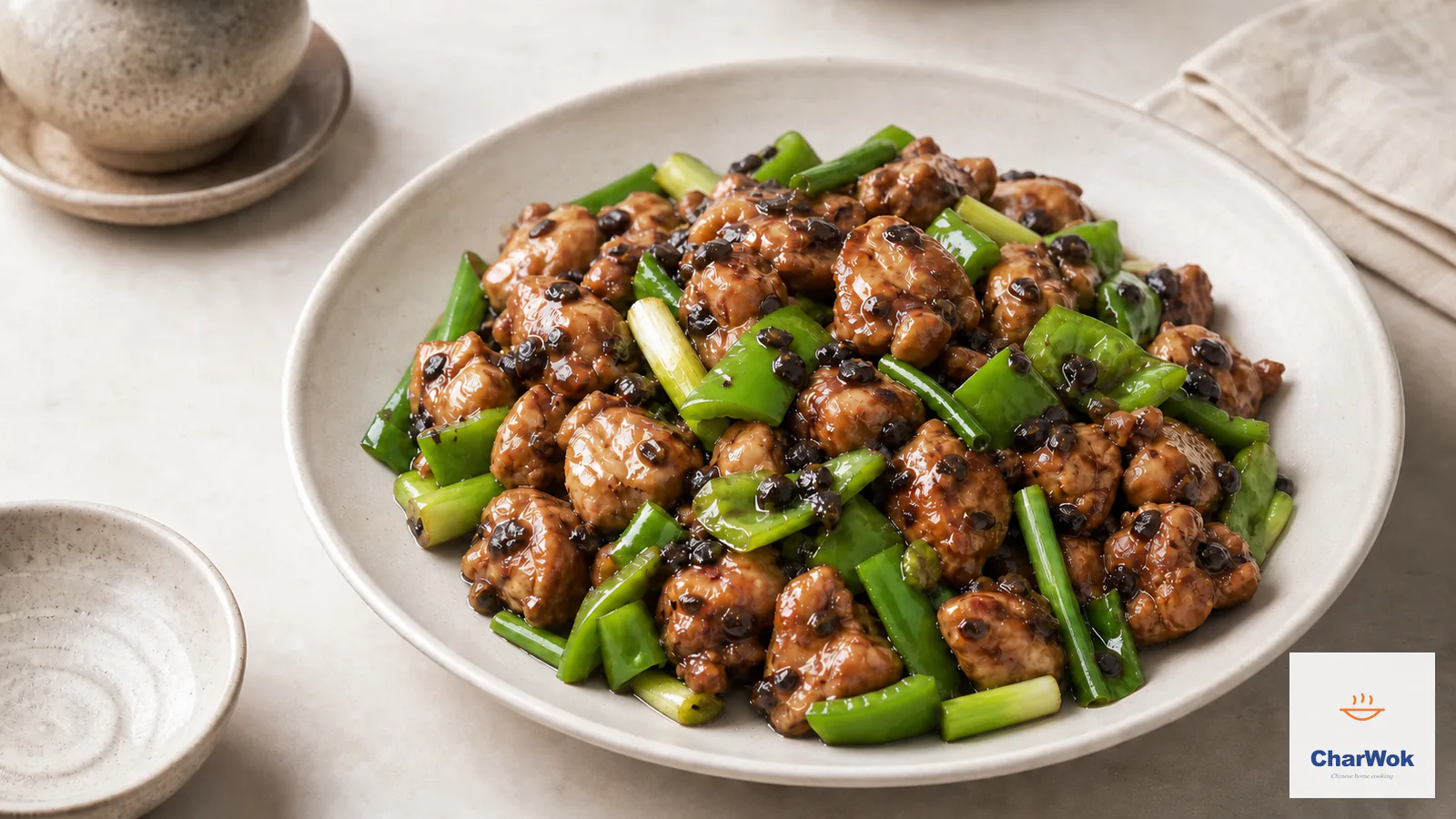
The base recipe bends easily. Swap the chicken for thinly sliced beef and you have something close to black pepper beef. Add a spoon of fermented black beans and you drift toward chicken with black bean sauce. For more crunch, throw in a handful of wood ear mushroom or cashews at the end; for heat, a teaspoon of chopped dried chili cooked into the oil with the ginger. If you want a pepper flavor with more depth than heat, toast whole peppercorns in a dry pan for a minute before grinding.
Keep the sides simple so the pepper stays prominent: steamed jasmine rice and a quick vegetable like broccoli with garlic sauce or a plain stir-fried green. This dish also fits a rotation of easy weeknight chicken recipes alongside more assertive options like Hunan chicken.
Storing and reheating
Refrigerate leftovers in a shallow container within 2 hours, or within 1 hour when the room is hotter than 90°F (32°C). Keep for 3 to 4 days and reheat the thickest chicken pieces to 165°F (74°C). A covered skillet with a spoonful of water protects the glaze; a microwave also works when the food is covered and stirred or rotated partway through. Freezing is safe, but the vegetables and cornstarch glaze lose quality after thawing.
Common questions
The questions below come up most often. The answers are short by design.
Can I use chicken breast instead of thigh? Yes. Velvet it for an hour in the fridge, keep the first sear brief, and finish the thickest cube at 165°F (74°C). Breast has less fat than thigh and dries out faster when cooked far beyond that temperature.
Do I have to use a wok? No. A heavy 30 cm (12-inch) skillet works. Preheat uncoated metal, then add oil and stop before it smokes; with nonstick, add oil first and follow the maker’s heat limit.
How do I make it spicier? More pepper helps only up to a point; past a certain dose it turns bitter. For real heat, add a teaspoon of chopped dried chili or a pinch of chili flakes to the oil with the ginger, and keep the pepper at the recipe amount.
Can I prep it the night before? Keep the velveted raw chicken covered on a low refrigerator shelf, separate from the sauce, vegetables, cooked food, and ready-to-eat ingredients. The sauce can be mixed ahead; cut the vegetables the same day for better texture.
Is it gluten-free? Not as written, because regular soy sauce and most oyster sauce contain wheat. Use tamari or a gluten-free soy and a gluten-free oyster sauce and the rest of the recipe is fine.