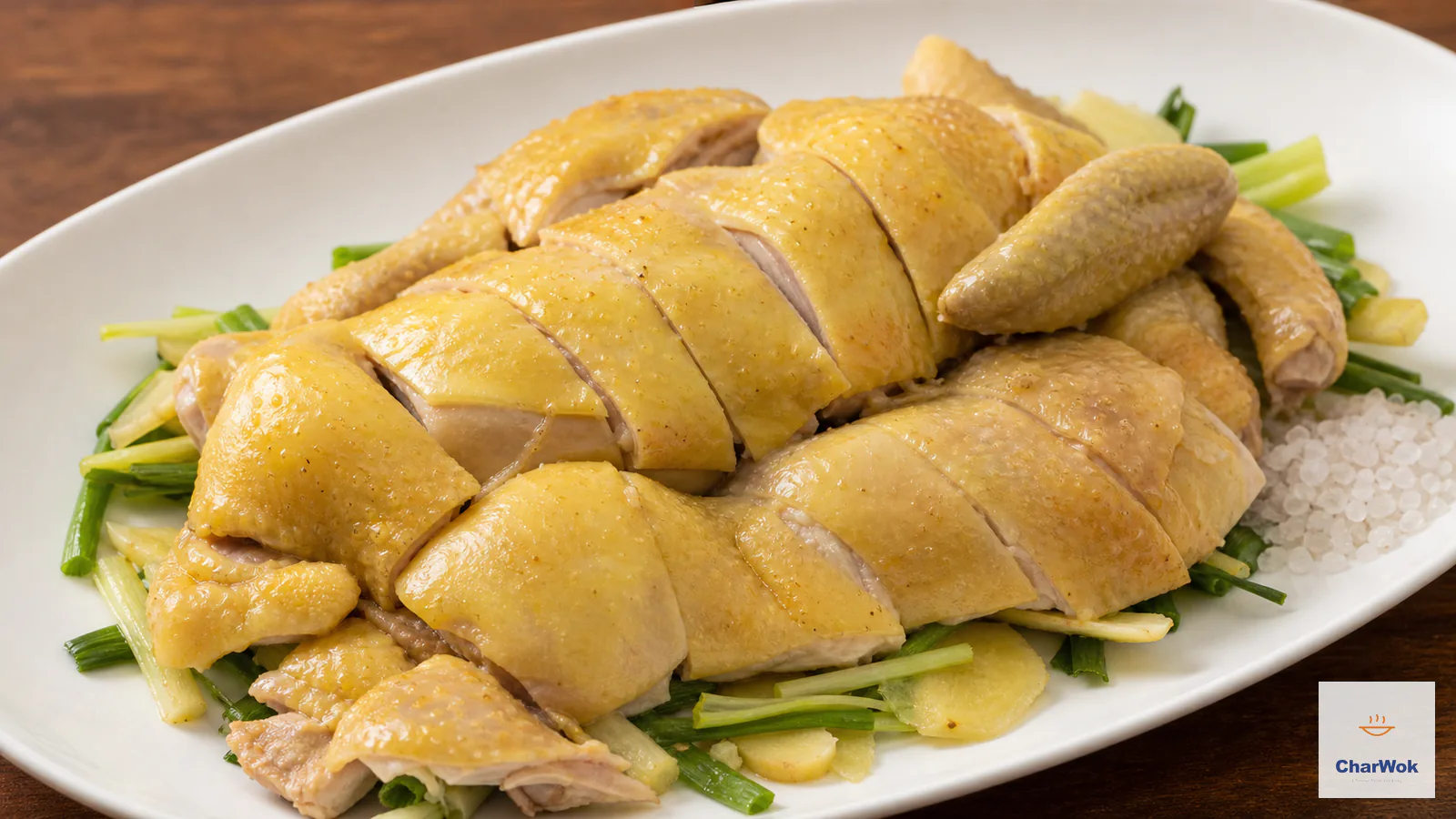
This oven version of Hakka salt-baked chicken uses a whole bird, a sand-ginger seasoning paste, and a covered pot. It keeps the enclosed cooking method while avoiding the traditional bed of heated coarse salt.
Sand ginger (sha jiang) gives the dish its distinctive peppery, earthy aroma. The covered pot retains steam, but neither the lid nor a fixed roasting time can establish doneness; a food thermometer still decides when the chicken is ready.
At a glance: Rub a 1.5 kg (3.3 lb) whole chicken with the sand-ginger paste, seal it in a lidded pot, and roast at 200°C/390°F. Begin checking after 1 hour. The innermost thigh and wing and the thickest breast must each reach at least 165°F (74°C), without the probe touching bone. Re-cover and continue roasting if any site is cooler; only then rest it covered.
What salt-baked chicken actually is
Salt-baked chicken, yan ju ji in Mandarin, is associated with Hakka cooking. In the traditional method, a wrapped chicken is buried in heated coarse salt, which transfers heat without directly seasoning the meat.
A lidded cast-iron pot or tightly covered deep tray provides a practical oven adaptation. The chicken cooks in enclosed heat and its released juices, so the skin stays soft rather than crisp.
The two ingredients that make or break it
Sand ginger powder, and why regular ginger will not substitute
Sand ginger (kaempferia galanga, sold as sha jiang or shan nai) is a flat, rounded rhizome in the ginger family. Dried and ground, it smells somewhere between white pepper, cardamom, and a damp forest floor. It is what separates this dish from a plain salted roast. Regular ginger is sharper, hotter, more fibrous; galangal is piney; both will give you a recognizable chicken but not a salt-baked one. If you cannot find sand ginger powder at your local Chinese market, order it online, or pivot to a different whole-chicken recipe like five-spice roasted chicken or wok-smoked chicken that does not depend on it.
Turmeric, standing in for a traditional dye
Some versions use dried cape jasmine fruit (huang zhi zi) for a warm yellow color. This recipe uses ¼ teaspoon turmeric as an optional, easier-to-find colorant; omit it if color is not important.
Ingredients
Ingredients at a glance
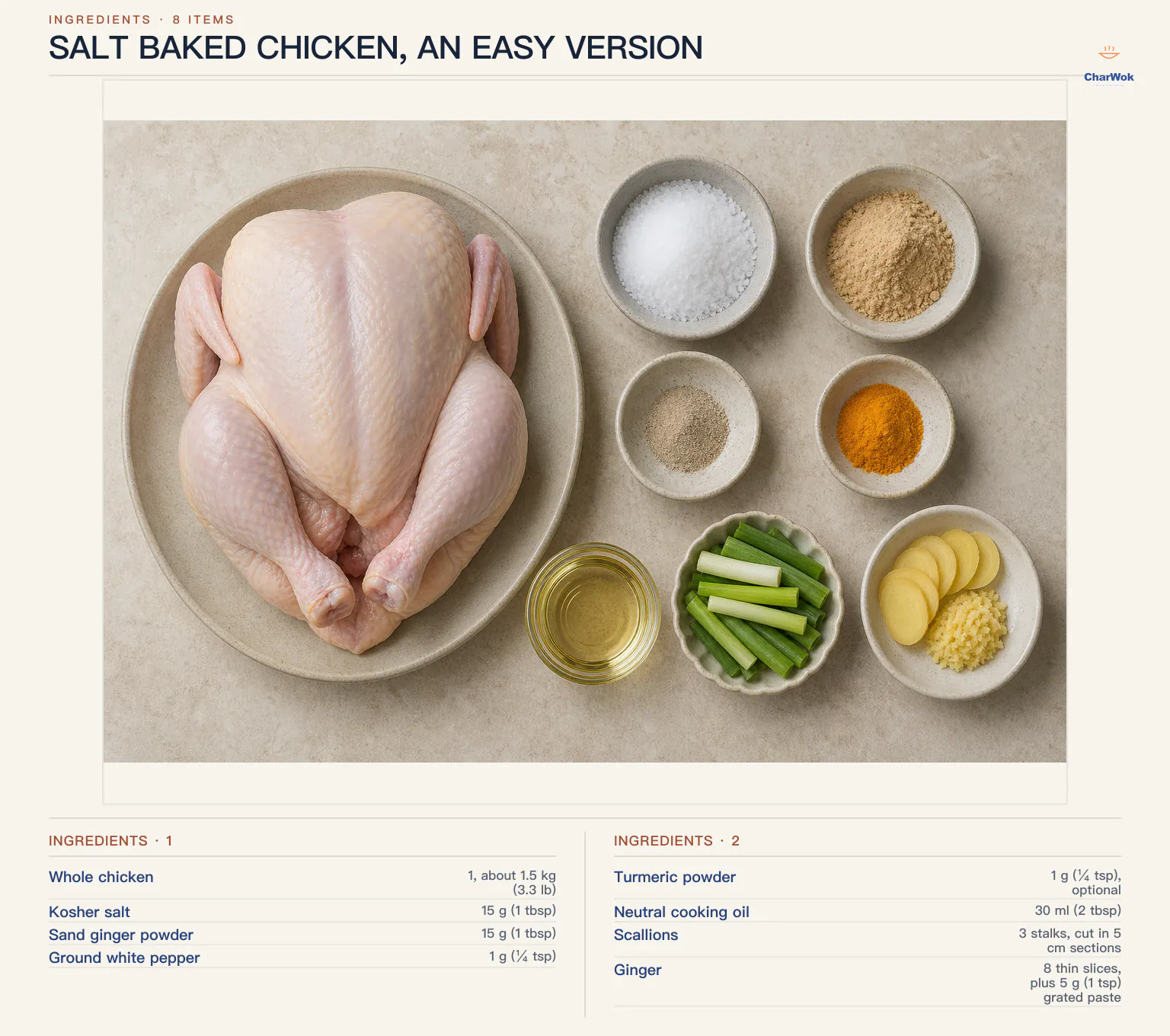
| Ingredient | Amount | Notes / substitute |
|---|---|---|
| Whole chicken | 1, about 1.5 kg (3.3 lb) | Remove the giblets if included; a larger bird will need additional cooking verified by temperature |
| Kosher salt | 15 g (1 tbsp) | Use a flaky kosher salt. If using fine table salt, reduce to 2 teaspoons because it packs more densely. |
| Sand ginger powder | 15 g (1 tbsp) | Provides the defining aroma; found in Chinese grocers and online |
| Ground white pepper | 1 g (¼ tsp) | Black pepper can be used, but changes the appearance and flavor |
| Turmeric powder | 1 g (¼ tsp), optional | For color; omit if unavailable |
| Neutral cooking oil | 30 ml (2 tbsp) | Grapeseed, canola, or peanut; binds the spices into a paste |
| Scallions | 3 stalks, cut in 5 cm sections | For the cavity. Plus 1 stalk, finely chopped, for the sauce. |
| Ginger | 8 thin slices, plus 5 g (1 tsp) grated paste | Slices go inside the bird; paste goes into the dipping sauce. |
Method
- Dry the bird thoroughly. Unwrap the chicken and pat the skin and the inside of the cavity dry with paper towels, then pat again. Wet skin will not absorb the paste and will weep more in the pot, which dilutes the seasoning. This step looks fussy and matters more than any other.
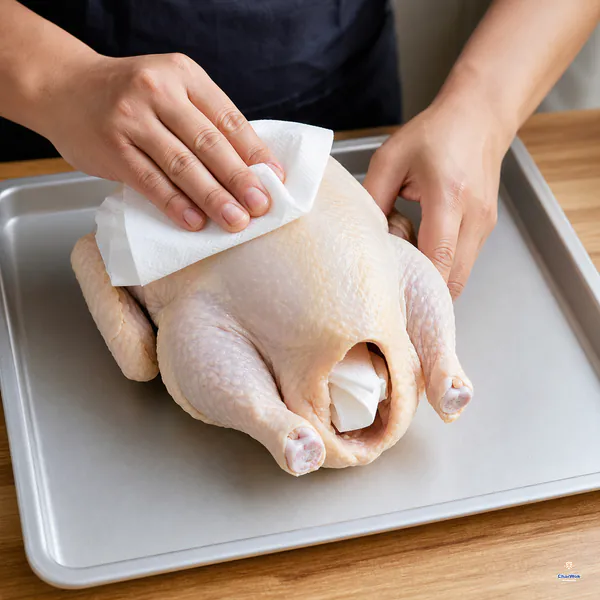
Pat the chicken dry all over, including inside the cavity, so the seasoning paste can cling evenly.
- Build the paste. In a small bowl, stir the salt, sand ginger powder, white pepper, and turmeric into the oil until you have a wet, grainy paste. Adding oil rather than water does two things: it carries the fat-soluble aromas into the skin, and it stops the salt from drawing moisture out too aggressively during the marination.
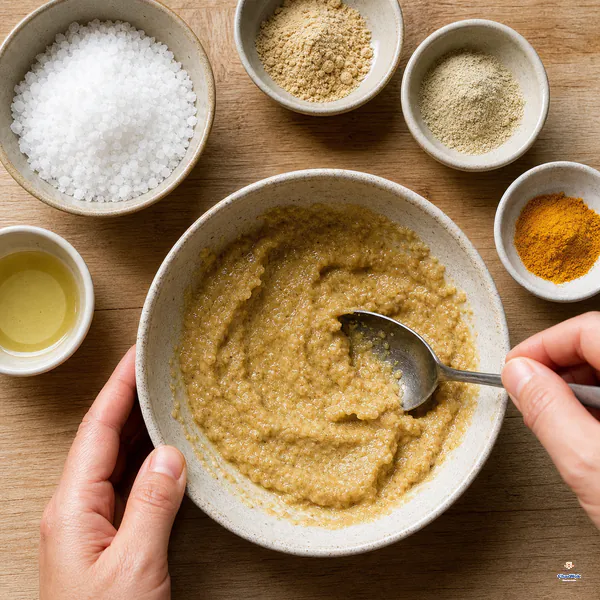
Mix the salt, sand ginger, white pepper, optional turmeric and oil into a thick, spreadable paste.
- Rub it everywhere, inside included. Wearing gloves (turmeric will stain your hands for a day), work the paste over the entire skin and deep into the cavity. Slip a little under the skin over the breast if you can loosen it with your fingers; that is where the flavor is thinnest and most needed.
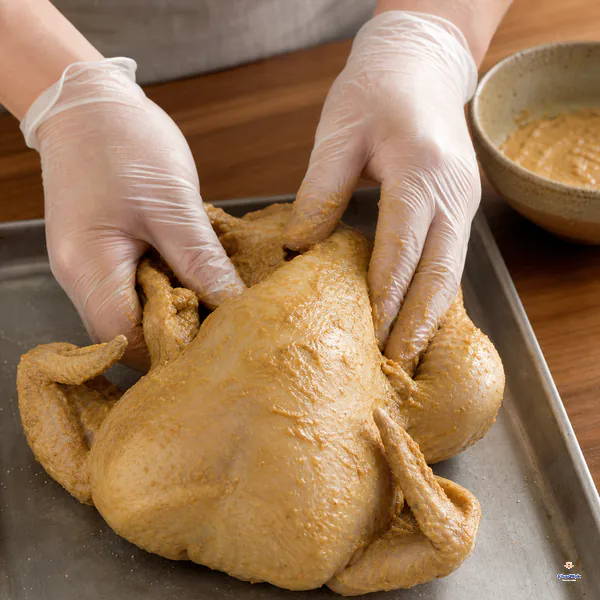
Rub the paste over every surface and inside the cavity, keeping the coating thin and even.
- Marinate under refrigeration. Refrigerate uncovered for at least 4 hours or overnight for deeper seasoning. Keep the raw chicken cold until the oven and pot are ready; differences in starting temperature are handled by checking doneness, not by holding poultry on the counter.
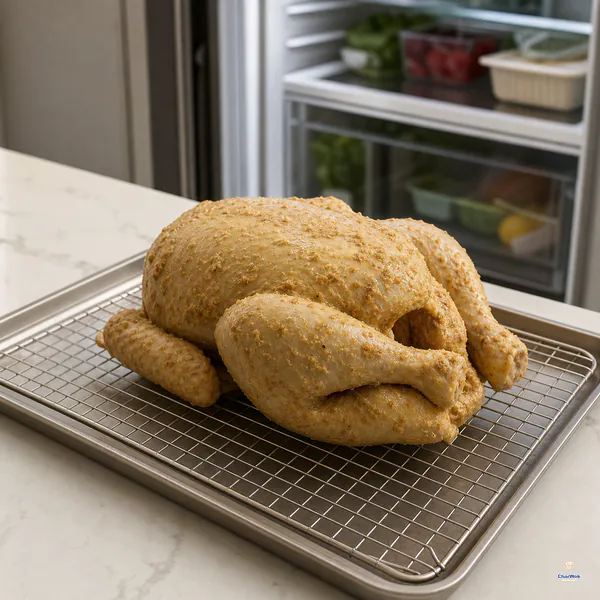
Refrigerate for at least 4 hours or overnight, and keep the raw chicken cold until the oven and pot are ready.
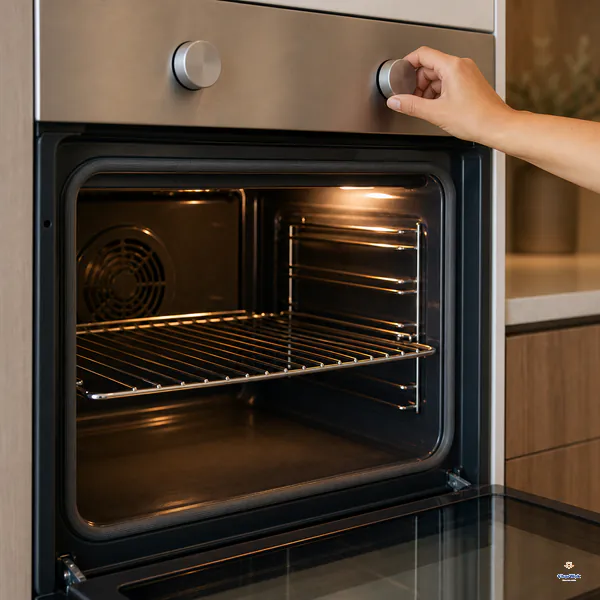
Preheat to 390°F or 200°C, or 360°F or 180°C for a fan oven, with the rack in the middle.
- Stuff the cavity and seal the pot. Heat the oven to 200°C/390°F (180°C/360°F fan). Tuck the scallion sections and ginger slices inside the bird. Settle it breast-up in a lidded cast-iron pot or Dutch oven. If you only have a baking tray, use one with high sides and crimp heavy-duty foil over the top, twice, folded tight at the corners. A leaky seal is the single most common failure and it ruins the dish.
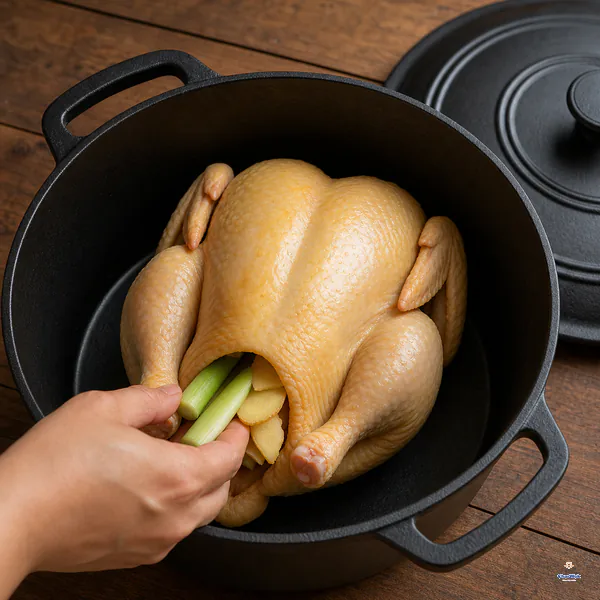
Fill the cavity with scallion and ginger, set the chicken breast-up in a lidded pot or tightly foil-covered deep tray, and seal it.
- Roast covered, then check. Roast on the middle rack for 1 hour as a starting estimate. Open the lid away from your face and insert a food thermometer, avoiding bone, into the innermost thigh and wing and the thickest breast. Each site must reach at least 165°F (74°C). If any reading is lower, re-cover the pot and continue roasting, checking again after 10 minutes.
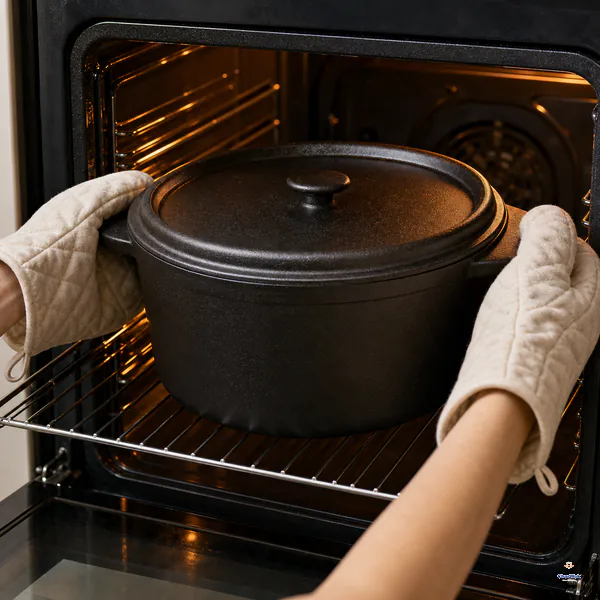
Roast covered for 1 hour as a starting estimate, then check the innermost thigh and wing and the thickest breast; each must reach 165°F (74°C).
- Rest only after the chicken is fully cooked. Once all three sites reach 165°F (74°C), re-cover and rest the chicken off the heat for up to 30 minutes. The rest can help retain juices, but it does not replace the temperature checks.
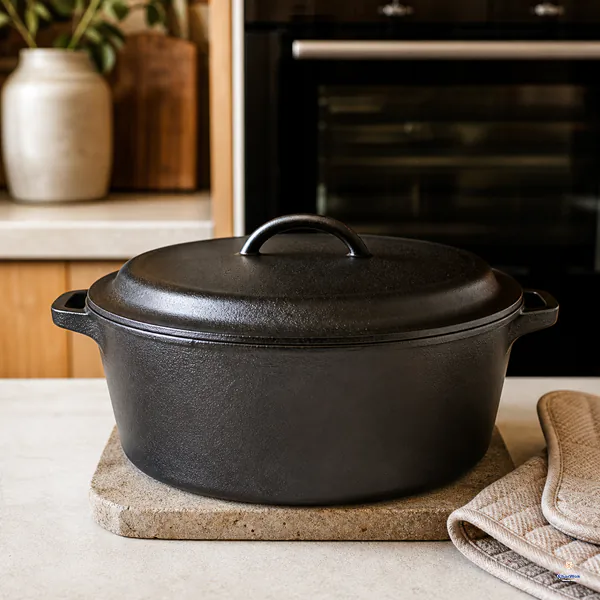
Only after all three sites reach 165°F (74°C), re-cover and rest off heat for up to 30 minutes; resting does not replace the checks.
- Carve and save every drop of liquid. Lift the chicken to a board. Pour the amber liquid pooled in the pot into a bowl; this is gold. Cut the bird into chunks, or tear it along the grain into shreds the way you would for cold Sichuan bang bang chicken.
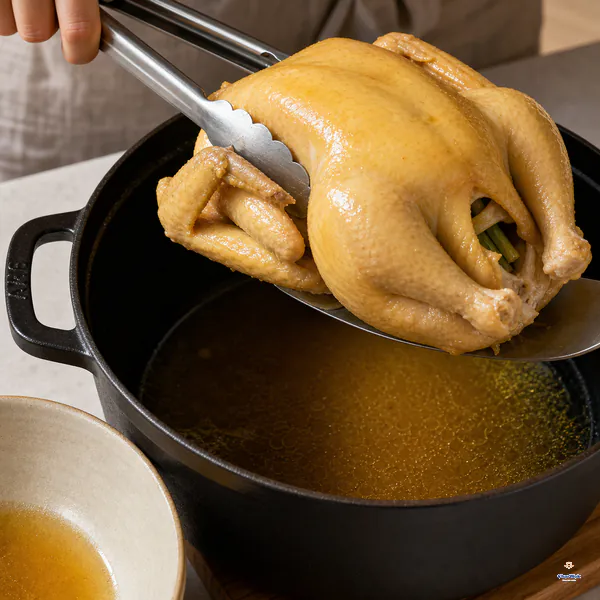
Lift out the chicken and keep the aromatic amber cooking liquid in the pot.
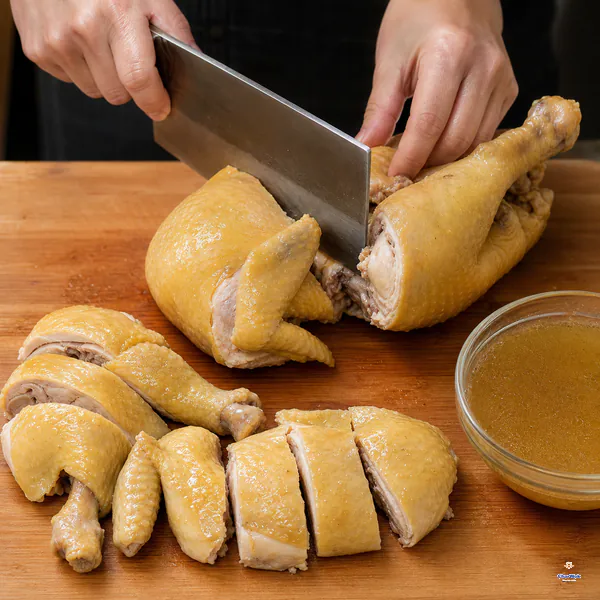
Let the chicken cool just enough to handle, then cut it into chunks or shred it while keeping the juice nearby.
- Make the ginger-scallion sauce. Put the finely chopped scallion and grated ginger paste in a small heatproof bowl. Bring 2 to 3 tablespoons of the reserved chicken liquid to a bubbling simmer and pour it over the aromatics. The same hot-liquid bloom is used for scallion-ginger salmon. Spoon the sauce over the meat, or serve it alongside for dipping.
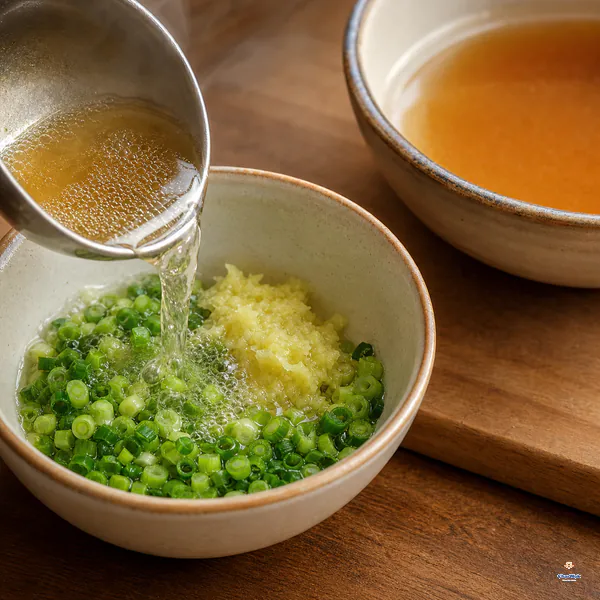
Combine chopped scallion and grated ginger, then stir in 2 to 3 tablespoons of the hot chicken juice.
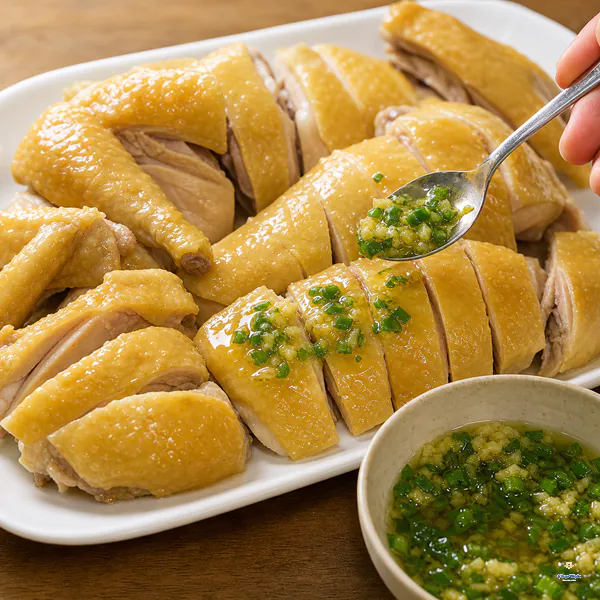
Serve the ginger-scallion sauce as a dip or spoon it over the carved chicken.
When things go wrong
The chicken is too salty. You almost certainly used fine table salt measured by the tablespoon, or you served the concentrated pot liquid straight without tasting. Fine salt packs roughly twice the salinity of flaky kosher salt per spoon. Next time, weigh it. To rescue the current bird, serve the meat plain, stretch the sauce with hot water or stock, and offer steamed rice to absorb the salt.
The skin is pale and wet, not golden. This is normal and expected in a sealed pot; the dish is not a roast chicken and was never meant to crisp. If you want color, lift the lid for the final 8 to 10 minutes and raise the heat to 230°C/450°F. You will trade a little juiciness for a tanner skin, which is a fair swap.
The breast is ready but another site is still below temperature. Re-cover the pot and continue roasting. Check the innermost thigh and wing and the thickest breast again; every site must reach at least 165°F (74°C). Avoid touching bone with the probe, which can distort the reading. For a larger bird, allow more time rather than extending the off-heat rest.
There is barely any liquid in the pot. Either the seal leaked (check your foil), or you skimped on drying the bird and the marinade ran off instead of sticking. A properly sealed, well-pasted bird yields 4 to 6 tablespoons of deeply flavored juice. Less than that and the dish still works, just skip the sauce and serve with a dab of homemade chili oil instead.
Variations and what to serve it with
Cold-torn style. Chill the cooked chicken promptly, then tear the cold meat off the bone into rough shreds. Dress it just before serving with refrigerated reserved liquid, a few drops of sesame oil, and cilantro. It can be served alongside another Sichuan cold chicken dish such as kou shui ji.
Reuse the cooking liquid. Refrigerate the leftover liquid promptly in a shallow container. If it sets into a firm gel, it can be used in fillings for xiao long bao or sheng jian bao; keep it cold while preparing the filling and cook the dumplings thoroughly.
Build a meal around it. The bird is rich and gently salty, so balance it with clean, bitter, or acidic sides. Plain steamed jasmine rice and a plate of blanched gai lan with oyster sauce is the classic pairing. For a fuller spread, add a cool smashed cucumber salad and a bowl of clear soup. It also earns a place at a Chinese New Year table alongside Peking duck and soy-sauce-poached chicken, where the three chickens on one table is a deliberate show of abundance.
Storage and reheating
Remove the meat from the carcass and refrigerate the chicken and cooking liquid in shallow containers within 2 hours, or within 1 hour when the surrounding temperature is above 90°F (32°C). Keep at 40°F (4°C) or below and use within 3 to 4 days; freeze within that period for longer storage. Reheat leftovers to 165°F (74°C), checking several places. Use the carcass promptly or keep it refrigerated before making chicken stock. See the official whole-chicken temperature guidance, cold storage chart, and leftover handling guidance.
Frequently asked questions
Can I use chicken parts instead of a whole bird? Yes. Bone-in, skin-on thighs work well, but size and starting temperature change the cooking time. Begin checking around 35 minutes and continue until every thickest piece reaches at least 165°F (74°C).
Do I really need to marinate overnight? Four hours is the minimum for flavor to penetrate. Overnight gives a deeper, more even seasoning. Anything longer than 24 hours starts to cure the meat and make it firm.
Can I cook this on the stovetop instead? This version is written for an oven, where heat surrounds the covered pot. A dry lidded pot over direct flame can scorch and heat unevenly, so use a separately tested stovetop salt-baking method rather than transferring these oven times.
Is the dish very salty given the name? No. The "salt-baked" name refers to the salt bed used in the traditional method, not the seasoning level. This easy version is seasoned like a good roast chicken, not a cured one.