The first time I cooked with Sichuan pepper, I hated it. I'd dumped in twice what the recipe asked for, ground it badly, and spent the meal picking gritty husks off my tongue and wondering why anyone would voluntarily eat something that made their mouth feel like a dying cell phone. That was twenty years ago. Now there's a jar of it next to my stove, and the dish I cook most often for guests is Mapo Tofu — a dish that simply does not exist without this spice.
Here is the thing most English-language writing about Sichuan pepper gets wrong: it treats the numbing as a gimmick, a dare, a novelty to be survived. It isn't. The numbing is the point, and once you understand why a cook reaches for it, you stop fearing it and start relying on it. This guide is built around that single idea: what the spice is actually doing in the pan and on your tongue, and how to make it work for you instead of against you.
At a glance: Sichuan pepper is the dried husk of a prickly-ash berry, unrelated to chili or black pepper, and its job is numbing (麻, má), not heat. Toast whole husks in a dry pan until fragrant, pick out the black seeds, then grind. For a two-serving dish, start with ½ teaspoon whole or ¼ teaspoon ground. Store airtight, away from light; whole husks keep about a year, ground loses punch in a month or two.
What this spice actually is (and why the name lies)
Sichuan pepper guide at a glance
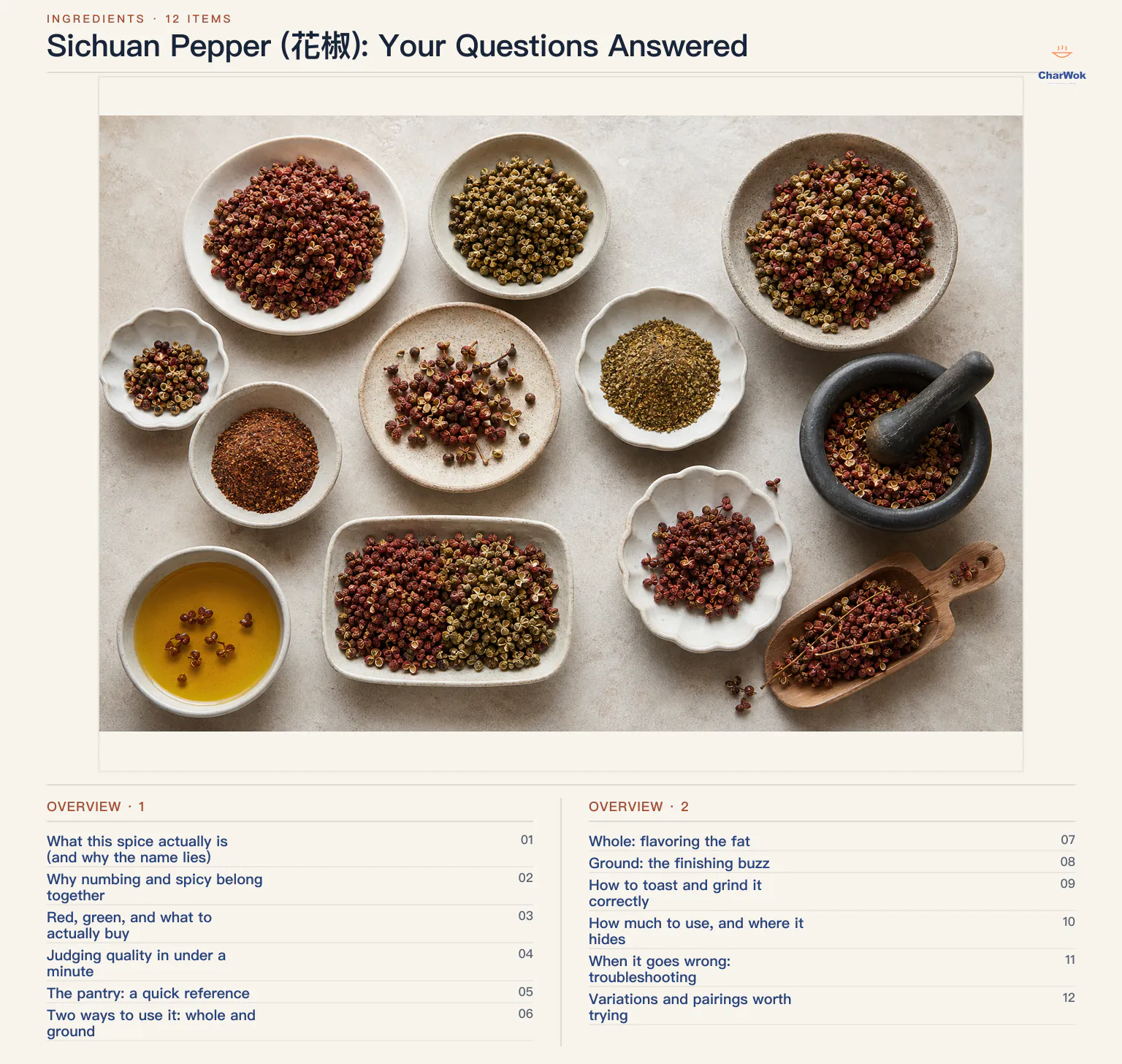
Sichuan pepper is the dried, split-open husk of a berry from a thorny shrub in the genus Zanthoxylum, a cousin of citrus and rue, not a cousin of black pepper, and not a cousin of chili. The name is a Western convenience. In Chinese it's just huā jiāo (花椒, "flower pepper"), a name that predates the modern spice trade by centuries and refers to the way the ripe husks crack open and flare outward as they dry. The word "Sichuan" attaches itself only in English; the spice grows wild and cultivated across a wide belt of western China and the Himalayan foothills, and different regions prize different varieties, but they're all doing the same chemical job.
That job is to stimulate the tactile nerve endings in your mouth with a molecule called hydroxy-alpha-sanshool. It isn't taste and it isn't smell. It's touch: a fine, rapid vibration across your lips and tongue, more like the prickling when a limb wakes from going to sleep than anything you'd normally associate with eating. The food writer Harold McGee placed it in the same odd family of sensations as the tingle of a carbonated drink — a category scientists now call "chemesthesis," in which your nerves are fooled into reporting a physical event that isn't actually happening. Mint's coolness and chili's burn belong to the same family.
Why numbing and spicy belong together
Cook a Sichuan dish and you almost always pair the husks with dried chilies. The Chinese have a word for the combined effect: málà (麻辣), "numbing-spicy." People assume this is just a flavor preference. It's also a piece of biochemistry fighting in your favor. Capsaicin triggers heat and pain receptors; sanshool triggers touch receptors in a way that tends to mute the perception of pain. The two sensations partially cancel each other out, which is why a properly made Sichuan boiled fish or a bowl of Dan Dan Noodles can be drenched in chili oil and still feel balanced, even pleasant, rather than punishing. Take the husk away and the same amount of chili just burns. I've tested this side by side more times than I can count. The husk is doing real work.
This is also why there is no real substitute. Black pepper, coriander seed, Tasmanian pepperberry: none of them produce the tactile numbing, so none of them do the job the recipe is asking for. If a dish is built around málà, leaving the husk out just gives you a different, thinner dish. If the husk is only a background note (say, two or three whole ones bloomed in oil for a stir-fry), you can skip it and lose only a little perfume. But "swap in black pepper" is bad advice I'd ignore.
Red, green, and what to actually buy
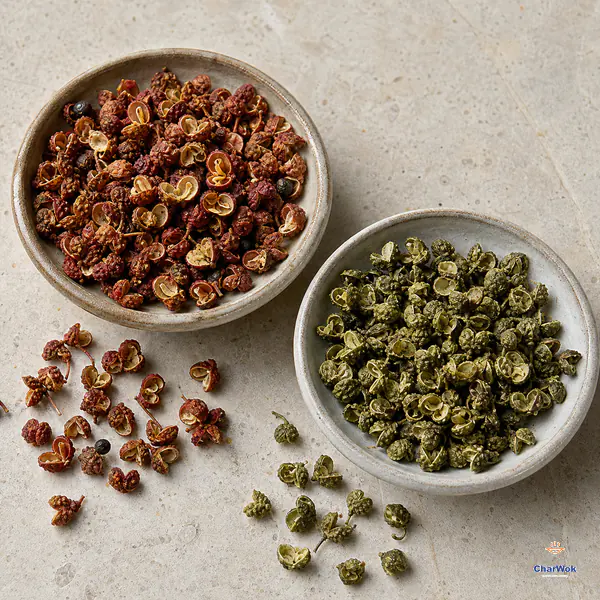
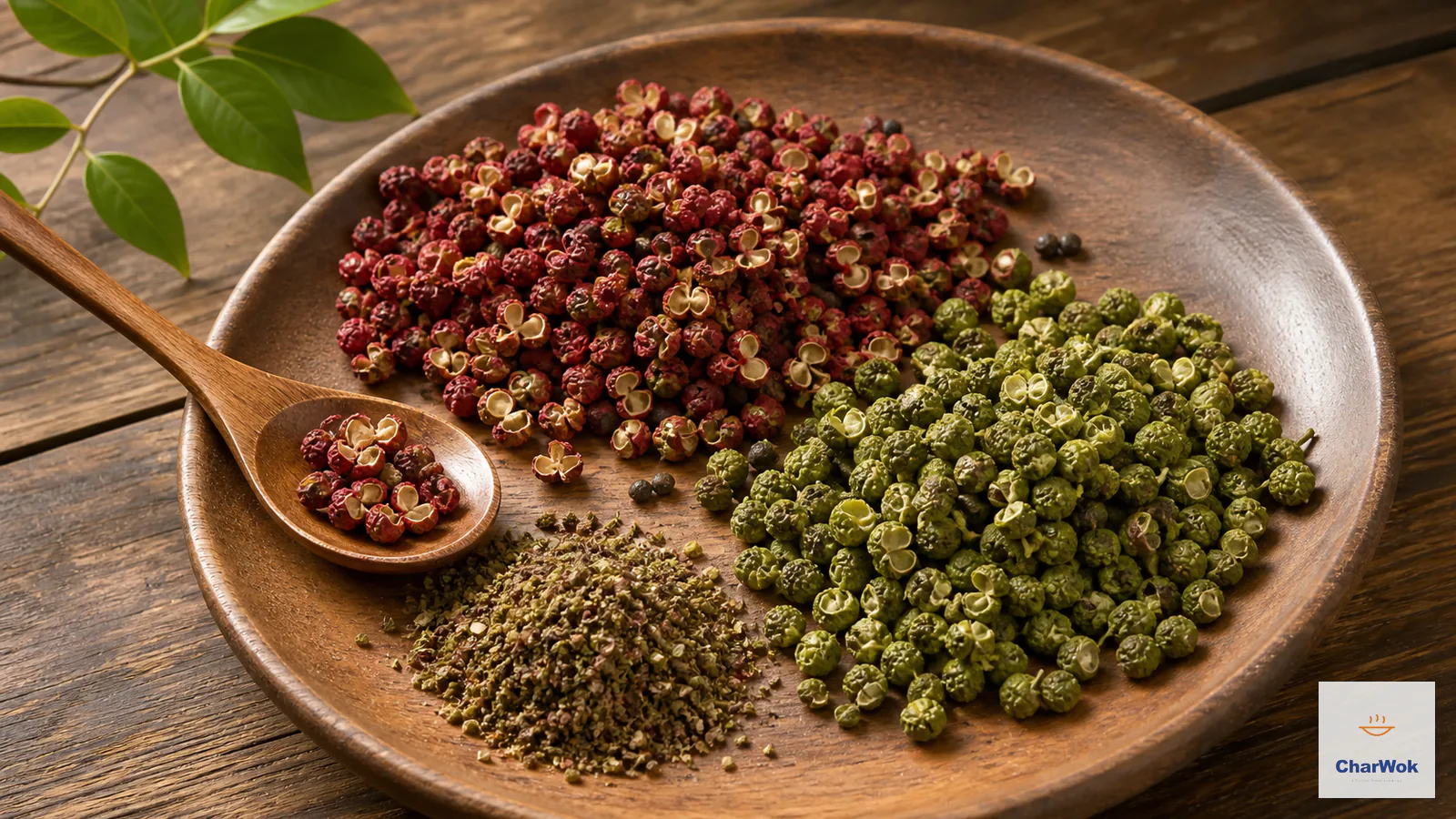
Red Sichuan pepper is warmer, citrus-forward and the versatile choice for everyday cooking; green pepper is fresher, more herbal and especially suited to broths and infused oil.
Two forms show up in shops. Red Sichuan pepper (the classic, rust-pink husks) is what most recipes mean. Green Sichuan pepper (a different variety, not an unripe red one) arrived in Sichuan kitchens in the 1990s and leans hard into a sharp, grapefruit-like top note where red goes deeper and woodier, with a slightly softer, more floral numbing. For a household starting out, buy red first. You can find it labeled "Szechuan pepper," "Chinese prickly ash," or "hua jiao"; it's all the same thing.
Within red, the two names worth knowing are Hàn Yuán (from Hanyuan County in Sichuan, smaller, deeply aromatic, the traditional darling) and Dà Hóng Páo ("big red robe," from Wudu in Gansu, larger husks, bolder and more bitter-numbing). You do not need to be precious about this. A fresh, fragrant bag from any good Chinese or Asian grocer beats a stale "premium" jar every time. My own rule is to buy from a store with turnover, in a sealed bag. Husks that have been sitting under a supermarket spotlight for months rarely have much punch left in them by the time they reach you.
Judging quality in under a minute
You can grade a bag before you've paid for it. The label tells you almost nothing useful; the husks tell you everything. I run the same quick read on every new purchase.
Start with the bag's overall face. What you want is mostly open, split husks, with the dark seeds already gone, because those seeds are what make a finished powder gritty, and a vendor who left them in probably cut corners elsewhere too. A warm, rusty-red color is healthy; a flat brown or gray powderiness means the oils have aged off. Stems should be few. This thirty-second glance is often enough to walk away from a bad bag.
If the bag passes the eye, crush a couple of husks between your fingers and bring your hand up. Fresh pepper announces itself: bright, citric, a little resinous, with a faint sweet edge underneath. When you have to concentrate to find the smell, the husks are already tired; put them back. Last, bite one husk and hold it on your tongue. Good pepper lights up within seconds and keeps building past the point you'd expect, holding its buzz long after you've swallowed. A prickling that comes and goes quickly is the signature of dead stock. One warning sign to know: a sharp, metallic edge riding underneath the numbing means either a low-grade harvest or a rancid bag, and neither is worth taking home.
The pantry: a quick reference
For a guide like this there's no single recipe to scale, so here's a working pantry list instead: what to keep on hand, what each is for, and a realistic swap when you can't find something.
| Item | Keep on hand | What it's for / substitute |
|---|---|---|
| Red Sichuan pepper, whole husks | 100 g (about 1 cup) | The everyday workhorse: blooming in oil, grinding to powder. No true substitute. |
| Green Sichuan pepper | 50 g (optional) | Bright, citrusy numbing for fish and chicken. Omit if unavailable; don't swap for red 1:1, it reads harsher. |
| Ground Sichuan pepper | Make fresh, 1–2 tablespoons at a time | Finishing sprinkle, dressings, noodle seasoning. Loses aroma fast, so grind small. |
| Dried red chilies (facing-heaven or er jing tiao) | 50 g | Provides the là (heat) half of málà. If you can't find Sichuan chilies, a mild dried chili like guajillo works for color and gentle heat. |
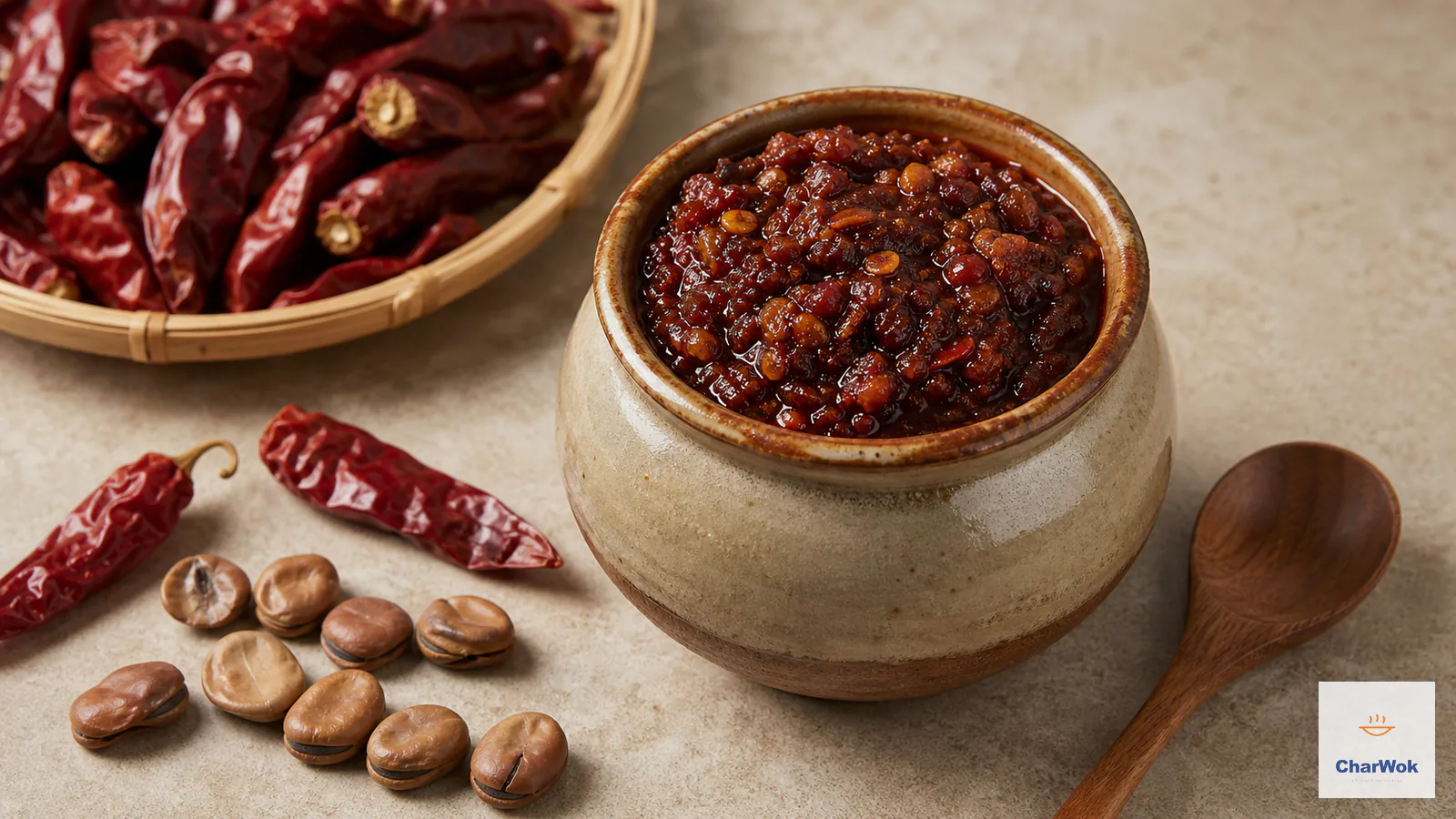
| Sichuan chili bean paste (doubanjiang) | 1 jar | The fermented base of countless Sichuan dishes. See my notes on Sichuan chili bean paste. |
| Neutral oil for infusing | 250 ml (1 cup) | For pepper oil and chili oil. Use a clean, flavorless oil; peanut or canola both work. |
Two ways to use it: whole and ground
Nearly every Sichuan pepper technique falls into one of two buckets, and the choice changes what you get. Used whole, the spice perfumes a cooking medium and is mostly discarded before serving; it's a marinade for the oil, not the plate. Used ground, it lands on the finished dish as a direct hit of aroma and buzz. Most great Sichuan cooking uses both.
Whole: flavoring the fat
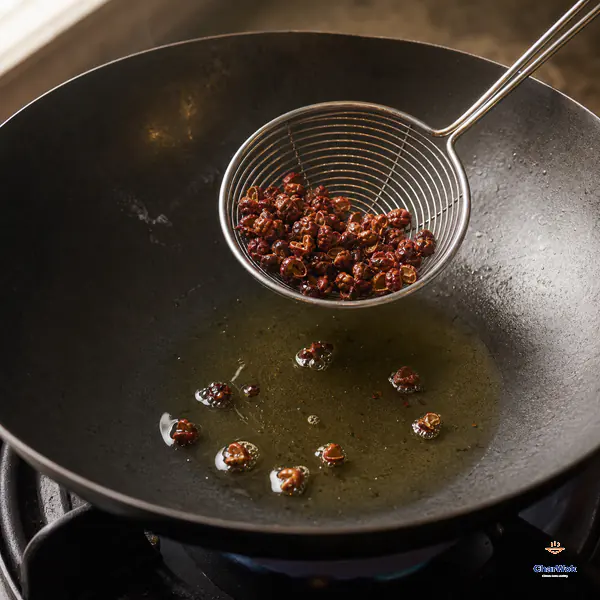
Warm a small quantity of whole husks gently in oil until fragrant, then strain them out before they darken; low heat preserves the citrus aroma and removes the hard shells from the finished dish.
This is how the husk flavors hot pot broth, braises, and the oil that starts a stir-fry. You drop a small handful into warm oil or broth along with other aromatics (star anise, cassia, ginger) and let them give up their oils into the surrounding liquid, then fish them out (or leave them in, knowing diners will push them aside). It's also the foundation of a proper chili oil, where the husks mellow the chili's bite.
Ground: the finishing buzz
Ground pepper is what you dust over Mapo Tofu at the last second, stir into the dressing for mouth-watering chicken, or fold into the seasoning paste for Dan Dan Noodles. Because it hits the tongue directly, freshness matters enormously; a month-old grind is a shadow of a fresh one.
How to toast and grind it correctly
This is the step people skip, and it's the step that decides whether your dish tastes like perfume or like cardboard. Raw husks ground straight from the bag are flat and slightly bitter. A brief toast wakes up the volatile oils. Here is the method I use every time.
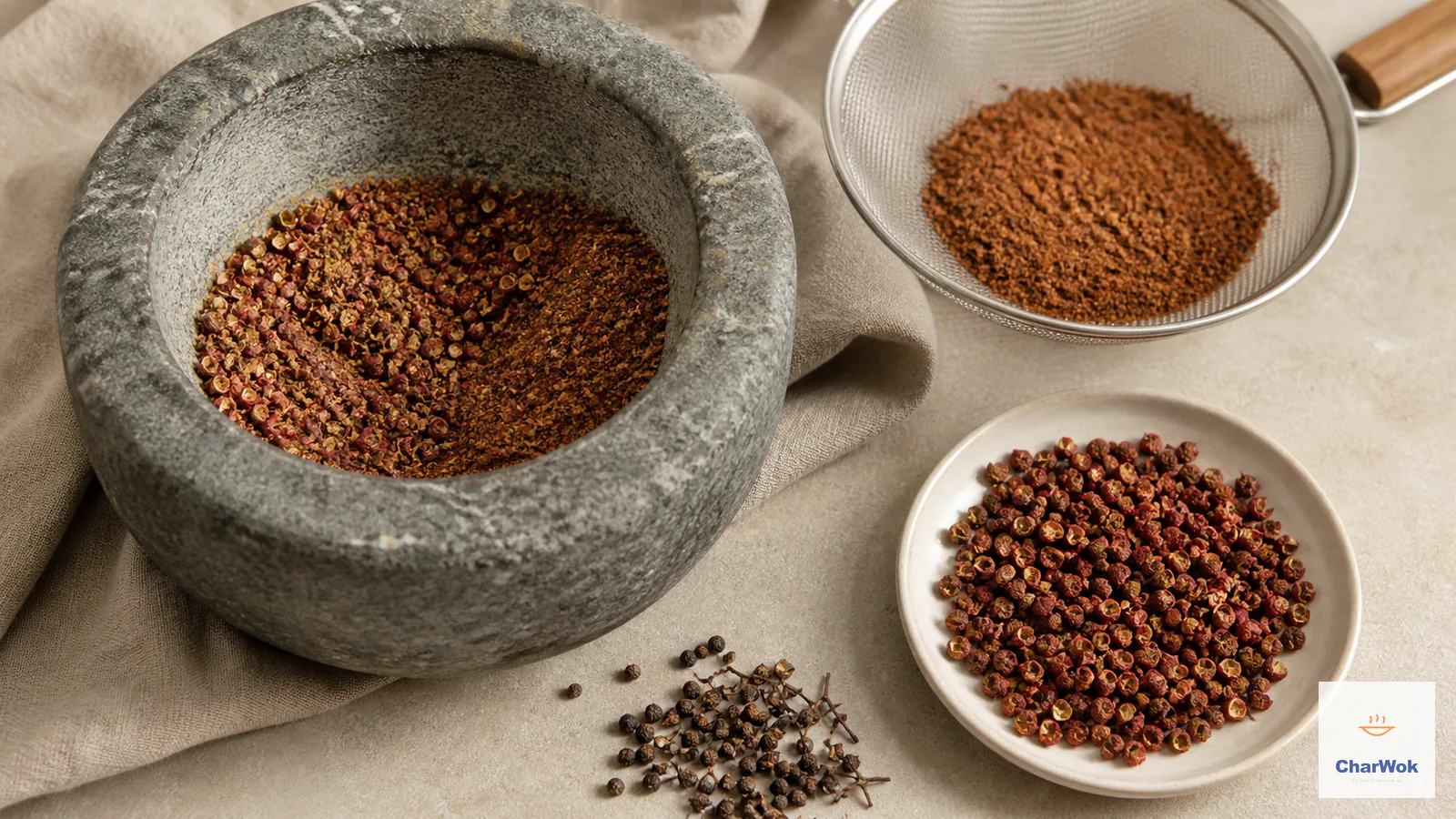
- Pick over the husks. Spread them on a plate and flick out as many of the hard black seeds and little stems as you have patience for. The seeds carry almost none of the aroma (all of that lives in the husk), and they grind into a sand-like grit that ruins the texture. This is the one tedious step that's genuinely worth doing. You don't need to be perfect; aim to remove most of them.
- Toast dry, medium-low. Put a dry skillet over medium-low heat and add the husks in a single layer. Keep them moving. You're after two to three minutes, just until the aroma rises sharply and the husks darken a shade and look slightly puffy. Pull the pan the instant you smell them. Thirty seconds too long and they go bitter and acrid, and there's no rescuing that batch. Better underdone than burnt.
- Cool completely. Pour them onto a plate and wait. Grinding warm husks just smears the oils around instead of producing a clean powder.
- Grind, then sift. A spice grinder or a mortar both work. Pulse to a coarse powder, then push it through a fine mesh strainer. What passes through is your finished pepper; what stays in the sieve is mostly seed and stem; toss it. The sifting is what separates a silky finish from a gritty one.
I grind no more than two tablespoons at a time. It takes five minutes and keeps the powder at full strength. If you want a deeper walk-through, I keep a separate, more detailed page on how to grind Sichuan pepper for the days you want to get obsessive about it.
How much to use, and where it hides
For most dishes serving two, ½ teaspoon of whole husks or ¼ teaspoon of ground is a sane starting dose. Err low the first time you cook a recipe; you can always add more at the end, but you cannot take it back. Note that pepper loses potency as it ages, so an old bag will quietly need a heavier hand than a fresh one, another reason to buy small and often.
Sichuan pepper also shows up where you might not expect it. A pinch stirred into dumpling filling cleans up the gaminess of lamb or beef. A little goes into homemade five-spice powder, and it's half of jiāo yán (椒盐), the salt-and-pepper mix that seasons salt and pepper shrimp, salt and pepper wings, and salt and pepper tofu. It's a quiet ingredient in a lot of northern layered breads, too. A whisper of it in a scallion pancake is a move I'd recommend trying once.
When it goes wrong: troubleshooting
Most Sichuan pepper failures cluster into a few familiar problems. Here's how I diagnose and fix them.
- Your dish feels gritty, like fine sand between your teeth. That's seed and stem you didn't sift out. Next time, pick over more carefully before grinding and always push the powder through a fine sieve. For the current batch, there's no fix. Strain the sauce or just push through it.
- The numbing is overwhelming, almost medical. You used too much ground pepper, or you added it too early and it soaked in. Dilute with more of the dish's base (broth, oil, or sauce), add a touch of sugar and a squeeze of acidity, and finish. Acid and a little sweetness tame the buzz faster than anything else.
- It tastes bitter and soapy, not citrusy. The husks were over-toasted, or the bag is old and oxidized. Throw it out and start fresh. There's no rescuing burnt or rancid pepper.
- There's no numbing at all, just a faint herbal note. The pepper is stale. Toast a fresh batch, or increase the quantity by half and see if it comes back. If a fresh bag also reads flat, you bought a low-quality product; find a store with faster turnover.
- Whole husks in the finished dish keep biting surprised guests. This is normal but worth managing. Either fish the whole husks out before serving (the classic move for "water-boiled" dishes like Sichuan boiled beef), or warn people, the way you'd warn about bay leaves. They're not dangerous, just intense.
Variations and pairings worth trying
Once you're comfortable with the basic toast-and-grind rhythm, a few directions are worth exploring. Each reframes the spice in a different dish.
- Pepper oil (huā jiāo yóu). Warm a tablespoon of husks in 125 ml (½ cup) of neutral oil over very low heat for ten minutes, then strain. Drizzle it on cold dishes, dumplings, or noodles for a clean, bright numbing without the grit of powder. It keeps a month in the fridge.
- Green pepper for fish. The citrusy green variety pairs beautifully with delicate proteins. A spoonful of ground green pepper over a steamed fish, or infused into the oil for suan cai yu (fish with sour vegetable), is more elegant than red would be.
- Sweet experiments. Sichuan pepper in sweets sounds like a stunt until you try a small pinch in dark chocolate or a lemon shortbread. The numbing reads as a cool, citrus hum in the background. Start tiny (a quarter-teaspoon in a batch of dough) and taste as you go.
- Pairings on the plate. A numbing main wants contrast: something clean and cold alongside. I'd serve a mala dish with a smashed cucumber salad and steamed rice, and pour something off-dry and slightly sweet. The goal is relief between bites.
Keeping it fresh
Sichuan pepper doesn't spoil in any dangerous sense, but it does fade. Whole husks, sealed airtight and kept away from heat and light, hold their character for about a year; the fridge extends this a little. Ground pepper is the real perishable. Figure one to two months at full strength, then a slow decline. Because the aroma is so assertive, keep the jar away from tea, coffee, and anything fat-soluble that will absorb it. I once ruined a bag of good coffee this way; learn from my mistake and use a separate cupboard.
If you cook Sichuan food even once a month, buy small bags, grind to order, and toast fresh each time. That single habit does more for your food than any premium variety or expensive brand ever will.
A few honest limitations
I want to be straight about the edges of this spice. The numbing is genuinely not for everyone; I have friends who find it unpleasant in the same way some people can't stand cilantro, and no amount of "you'll get used to it" will change a strong negative reaction. Start small if you're cooking for others. Also, the traditional-medicine claims around Sichuan pepper (toothache remedy, digestive aid) are interesting folklore, but in the quantities you actually eat, it contributes essentially nothing nutritionally. Enjoy it for what it does to flavor, not for what it might do to your health.
And finally: don't expect to nail the balance on the first try. The line between "brightly numbing" and "medical disaster" is thin, and the only way to find it is to cook the same dish a few times. The good news is that the failures are edible and the successes are some of the most rewarding food in the Chinese kitchen.
Frequently asked questions
A short roundup of the questions I get most often, answered tighter than the sections above.
Is Sichuan pepper spicy hot? No. It produces a tingling numbness, not heat. Any burn in a Sichuan dish comes from the dried chilies cooked alongside it.
Can I substitute black pepper? Not really. They aren't botanically related and taste nothing alike. If a dish only uses a little Sichuan pepper as background, you can leave it out; if the dish is built on málà, just make something else.
Do I eat the whole husks left in the dish? Generally no. Push them aside the way you would a bay leaf. One won't hurt you, but a mouthful of them is unpleasant.
What's the black seed inside, and do I use it? Discard it. The aroma and numbing oils live entirely in the husk; the seed just adds grit and nothing worth keeping.
How long does it stay good? Whole husks about a year, sealed and dark. Ground pepper one to two months before it goes flat, so grind in small batches.