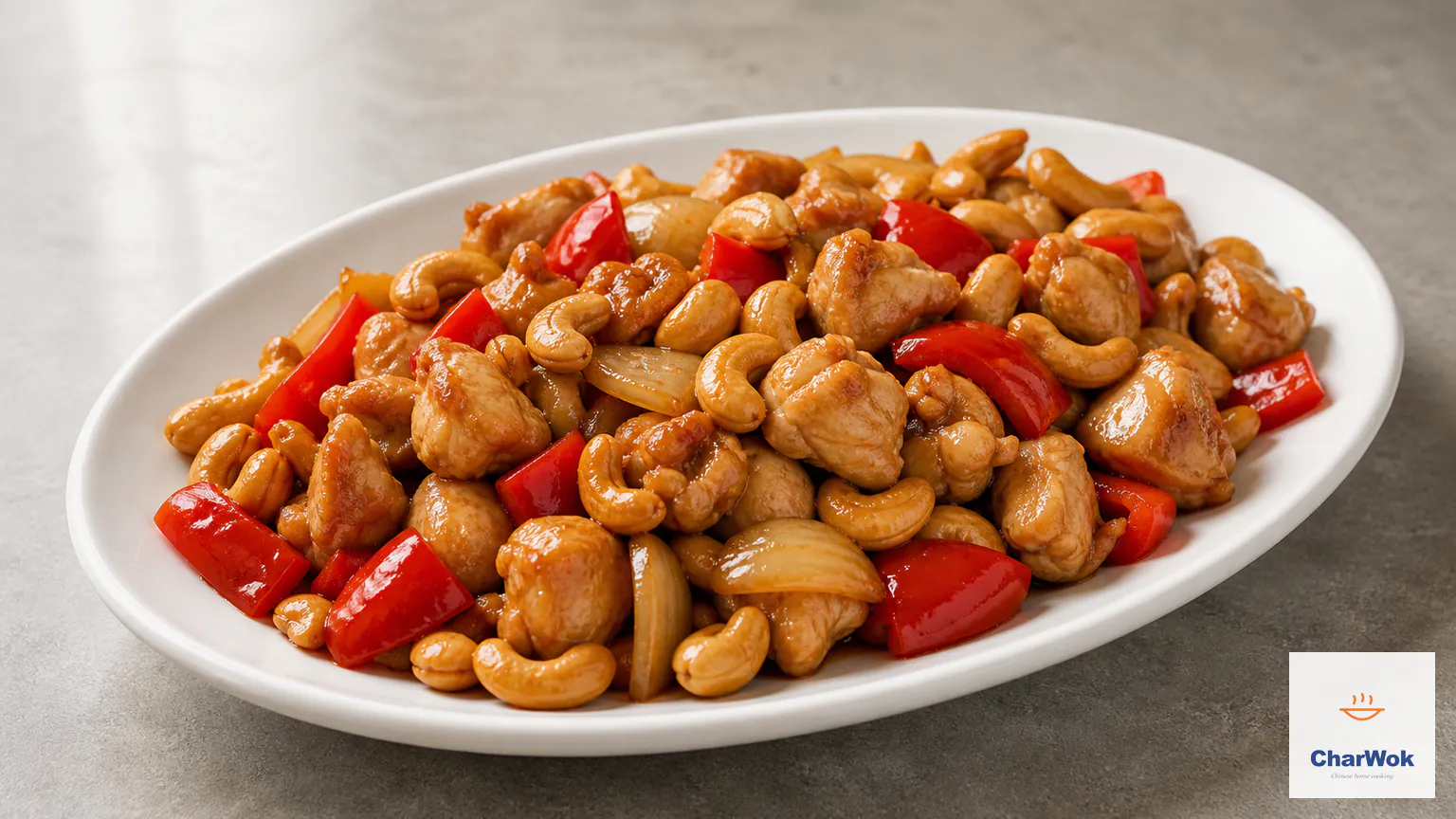
Cashew chicken is a dish that lives or dies on contrast. The chicken has to be soft and slippery, the cashews deep gold and loud when you bite them, the peppers still standing up. Get the contrast right and it tastes like a restaurant that knows what it is doing. Get it wrong and you have rubbery meat in a pool of thin sauce with pale, chalky nuts floating on top. I have produced that second plate more times than I want to admit, and almost every failure traces back to two moves: how the nuts were toasted, and whether the chicken was given a cornstarch coat before it hit the pan.
This is a Cantonese-rooted stir-fry that traveled through Hong Kong and the overseas-Chinese kitchen, picking up oyster sauce along the way. It is a cousin of Kung Pao chicken in spirit, sharing the same bones of meat, nuts, and a quick glossy sauce, but quieter, sweeter, with no dried chilies and no Sichuan peppercorn buzz. Think of it as the gentle version you cook when you want something fragrant and brown rather than blazing red. The whole thing is done in under twenty minutes if your knife work is ready before the burner turns on.
At a glance: 340 g (12 oz) chicken thigh, raw cashews started in a cold wok over low heat until deep gold (about 4–6 minutes), and a cornstarch marinade on the meat that is the only thing standing between you and tough chicken. Cook the cashews gently, fry the chicken hot, fold the nuts in off the heat. That is the entire dish.
Why a cornstarch coat, and why cold-pan cashews
Two techniques carry this recipe, and neither is negotiable if you want restaurant texture at home.
The first is the cornstarch slurry on the chicken. A thin film of starch mixed with a little water and oil does two things in a hot wok: it buffers the meat surface from the fierce heat so the proteins do not seize and squeeze out their juice, and it gelatinizes into a slippery layer that later grabs the sauce. This is the home-cook version of the velveting idea you see in restaurant kitchens, where meat is blanched in warm oil or water first. Without the coat, bite-sized chicken pieces cooked over high heat turn stringy and dry in thirty seconds. With it, the same pieces stay tender even if you overshoot the cook by a few seconds.
The second is starting the raw cashews in a cold wok with the oil already in it, then bringing the heat up slowly. Nuts are dense with fat and they hold heat badly, which is exactly why they scorch: the outside is black before the inside is warm. A cold start lets the whole nut warm through as the oil climbs in temperature, so it colors evenly and toasts all the way to the center. Roasted cashews from a can look the part but taste flat and one-dimensional next to a nut you have fried yourself, which is the single biggest upgrade you can make to this dish.
Ingredients
Ingredients at a glance
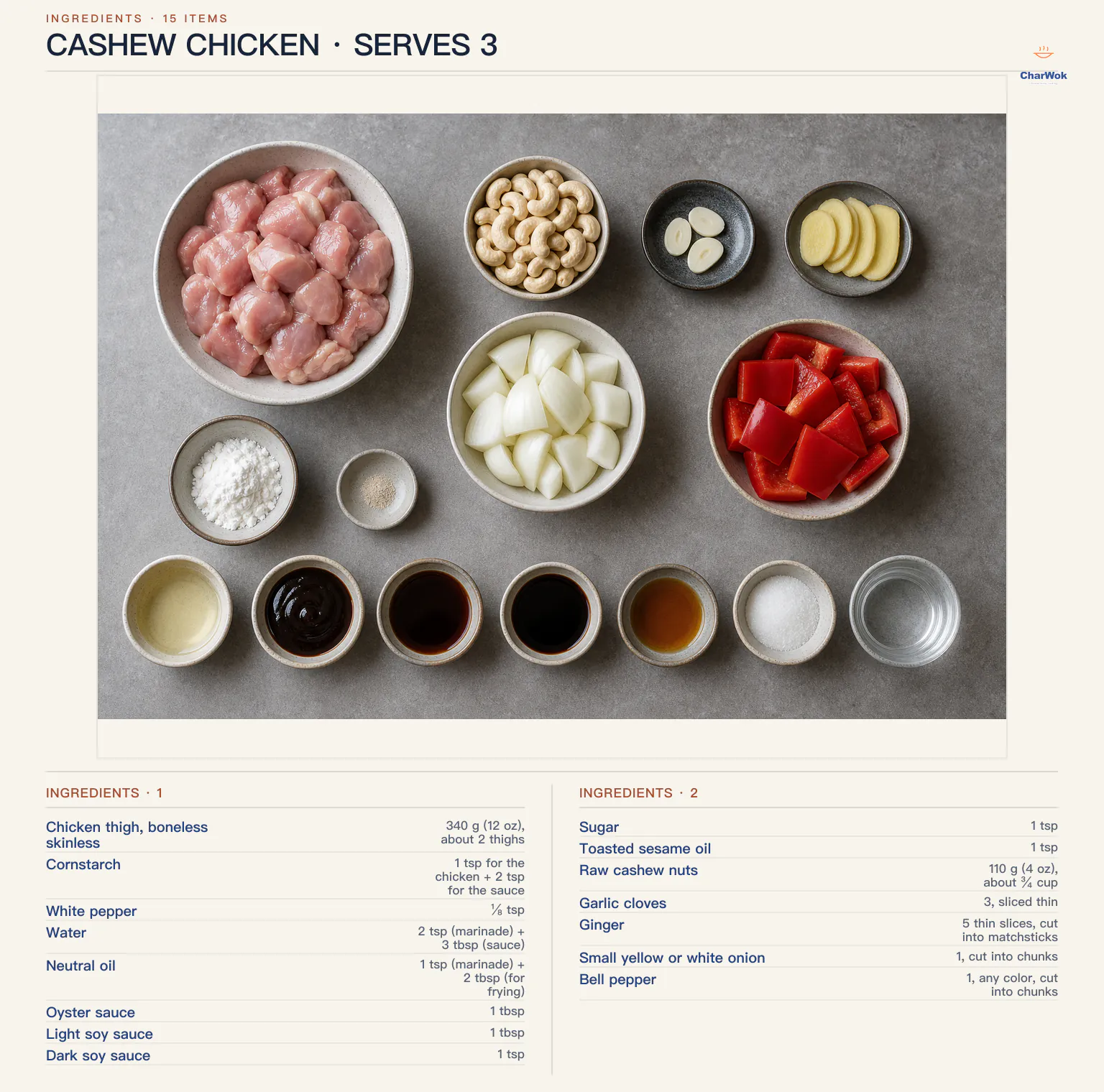
This serves three as a main alongside rice, or four if you are running two other dishes. Boneless, skinless chicken thigh has more internal fat and is more forgiving than breast through the two-stage cook. If you use breast, cut it slightly larger, sear it only partway in the first pass, then verify the thickest pieces reach 74°C (165°F) during the final saucing step.
| Ingredient | Amount | Notes / substitute |
|---|---|---|
| Chicken thigh, boneless skinless | 340 g (12 oz), about 2 thighs | Breast works if you slice it thicker and watch it closely; pork tenderloin cubes are a fine substitute |
| Cornstarch | 1 tsp for the chicken + 2 tsp for the sauce | Potato starch behaves almost identically; arrowroot works but thickens less |
| White pepper | ⅛ tsp | Black pepper is acceptable if that is what you have; white pepper keeps the sauce pale and glossy |
| Water | 2 tsp (marinade) + 3 tbsp (sauce) | Divide as listed |
| Neutral oil | 1 tsp (marinade) + 2 tbsp (for frying) | Grapeseed, canola, avocado, or peanut; avoid olive oil, which burns at wok heat |
| Oyster sauce | 1 tbsp | The backbone of the sauce; a vegetarian oyster sauce (mushroom-based) is a reasonable swap |
| Light soy sauce | 1 tbsp | Provides salt and umami; see the difference between light and dark soy |
| Dark soy sauce | 1 tsp | Mainly for color; omit if unavailable, the dish will be paler but still good |
| Sugar | 1 tsp | Balances the oyster sauce; use rock sugar, brown sugar, or regular white |
| Toasted sesame oil | 1 tsp | Stirred into the sauce for fragrance; a little goes far |
| Raw cashew nuts | 110 g (4 oz), about ¾ cup | Raw, unsalted; do not use pre-roasted/salted, see troubleshooting |
| Garlic cloves | 3, sliced thin | Crushed and chopped is fine; slice if you want golden edges |
| Ginger | 5 thin slices, cut into matchsticks | Peeled; about a 2 cm coin |
| Small yellow or white onion | 1, cut into chunks | Cut so the layers stay in bite-sized petals |
| Bell pepper | 1, any color, cut into chunks | Red or yellow look best against the brown sauce; shredded for a finer texture if you prefer |
The method, step by step
- Cube and coat the chicken. Cut the thigh into pieces roughly the size of a cashew. Uniform size matters more than the exact dimension, because uneven pieces cook unevenly. In a bowl, massage in the 1 tsp cornstarch, ⅛ tsp white pepper, and 2 tsp water until the meat looks glazed and there is no dry powder left. Finish with 1 tsp neutral oil and toss; the oil seals the coat on and stops the pieces sticking to each other. Rest at least ten minutes; thirty is better. The rest lets the starch hydrate fully so it does not flake off in the wok.
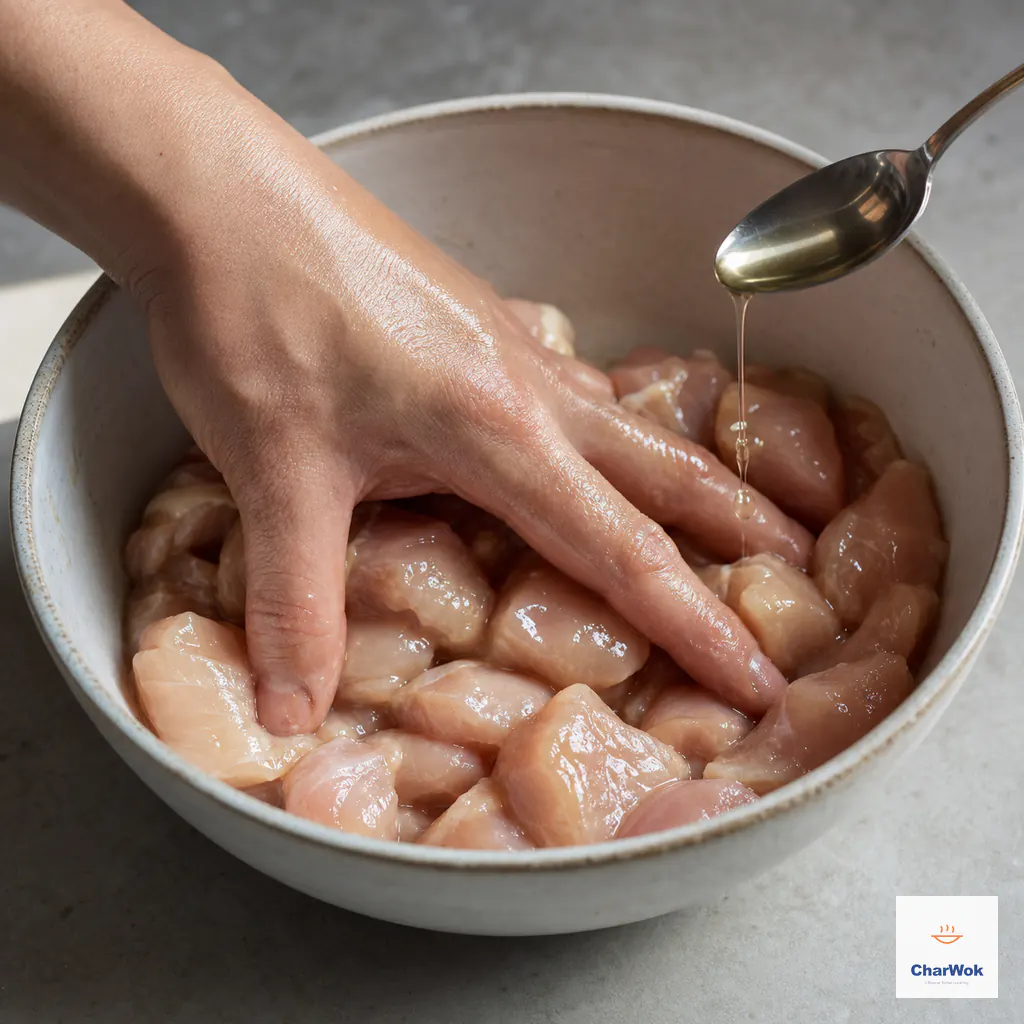
Massage the cornstarch, white pepper, water, and oil into the chicken until the coating is smooth and glossy with no dry clumps
- Mix the sauce in one bowl. Combine the oyster sauce, light soy, dark soy, 2 tsp cornstarch, sugar, 3 tbsp water, and sesame oil. Stir until the cornstarch is fully dispersed, with no lumps at the bottom. Set it within arm's reach of the stove. You will not have time to hunt for it later.
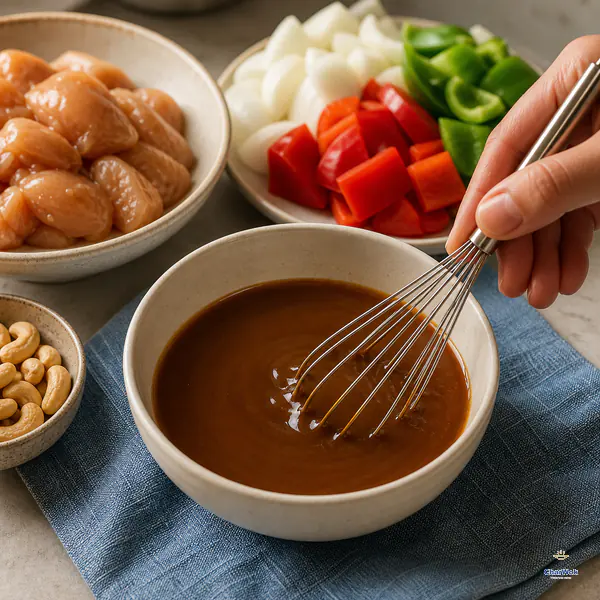
Whisk all sauce ingredients until smooth with no starch at the bottom, then keep the bowl within reach and stir it again just before pouring
- Fry the cashews from cold. Put the wok or a wide skillet on the stove before turning on the heat. Add the 2 tbsp oil and the raw cashews, then set the heat to medium-low. Stir almost constantly. As the oil warms, the nuts will slowly deepen from cream to pale gold to a warm amber; pull them when they are one shade lighter than you think is done, because residual heat keeps cooking them in the bowl. Expect 4 to 6 minutes. Lift them out and leave the oil behind; that oil is now cashew-scented and will flavor the rest of the dish.
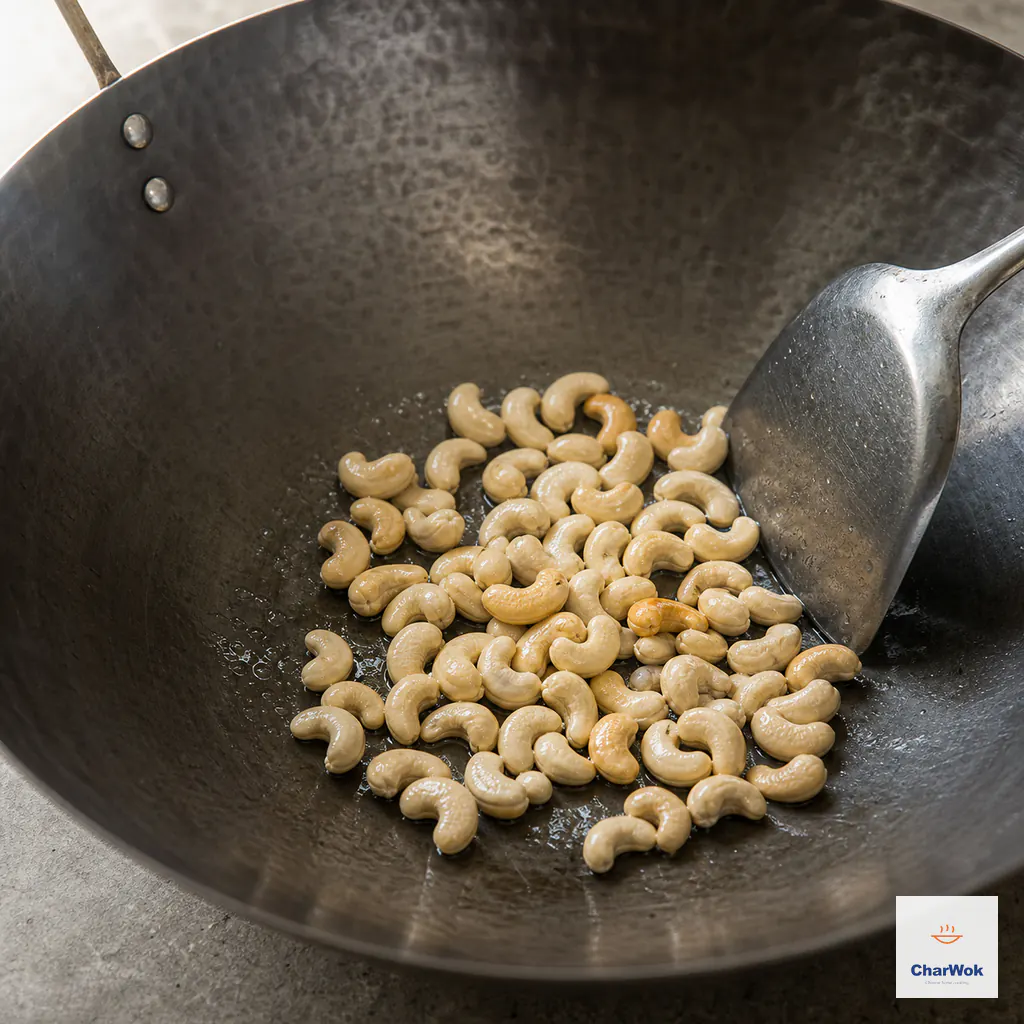
Start the raw cashews in a cold wok with cold oil over low heat, and lift them out when only a few have turned pale gold
- Sear the chicken in the first stage. Turn the heat to medium-high. The oil should be about 175–180°C (347–356°F), shimmering but not smoking; if it smokes, take the wok off the heat and let it cool. Add the chicken in a loose single layer and leave it for 15 to 20 seconds so the underside can brown. Stir-fry for about 90 seconds, only until the exterior turns opaque while the center is still undercooked. Transfer it to a clean plate. This is a partial cook, not a doneness test.
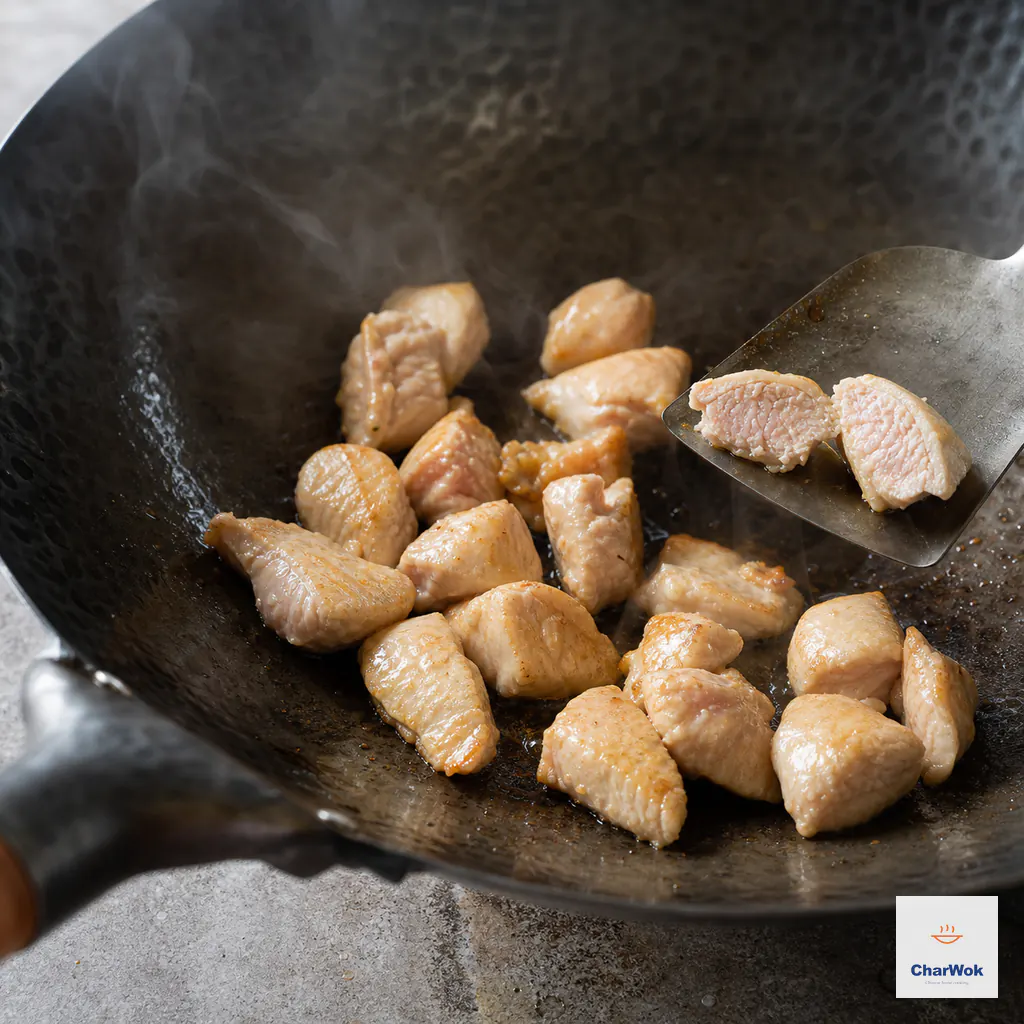
This first sear only browns the exterior; transfer the still-undercooked chicken to a clean plate and verify 74°C (165°F) after it returns to the sauce
- Bloom the aromatics and soften the onion. With the heat still high, add the garlic, ginger, and onion. Toss for about a minute until the onion petals soften at the edges and take on a few char spots. This is where the dish builds its savory base; the aromatics should be fragrant but not browned past gold. This is also the window where the dish starts to smell unmistakably like itself.
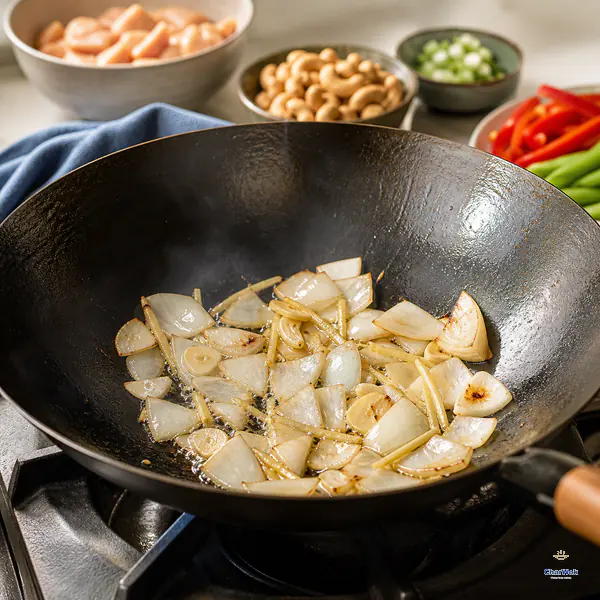
Keep the wok hot and stir-fry the garlic, ginger, and onion for about 1 minute, stopping when the onion edges soften and lightly char
- Add the pepper and return the chicken. Throw in the bell pepper and fry for roughly a minute; it should soften slightly but keep its crunch and its structure. Tip the chicken (and any juices on the plate) back into the wok and toss to combine for another 30 to 60 seconds.
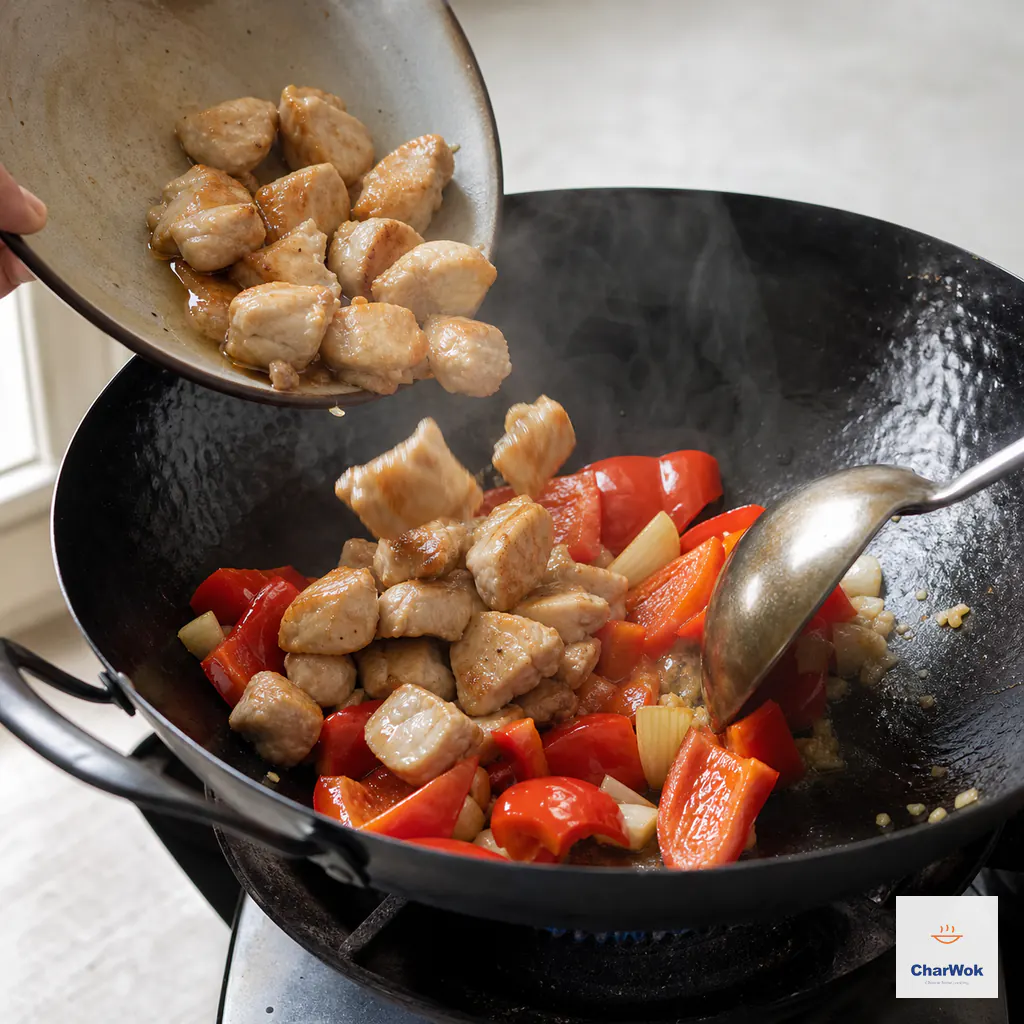
Stir-fry the bell pepper only until bright and crisp, then return the partially cooked chicken to finish in the sauce
- Thicken the sauce and finish the chicken. Give the sauce bowl one more stir to lift any cornstarch that settled, then pour it around the hot edge of the wok rather than straight onto the meat. Stir and fold continuously as the sauce changes from loose to glossy and clingy. Keep cooking until an instant-read thermometer inserted into the thickest chicken pieces reads 74°C (165°F); color and elapsed time are not reliable doneness tests. If the sauce tightens before the chicken reaches temperature, add 1 tablespoon water and keep stirring.
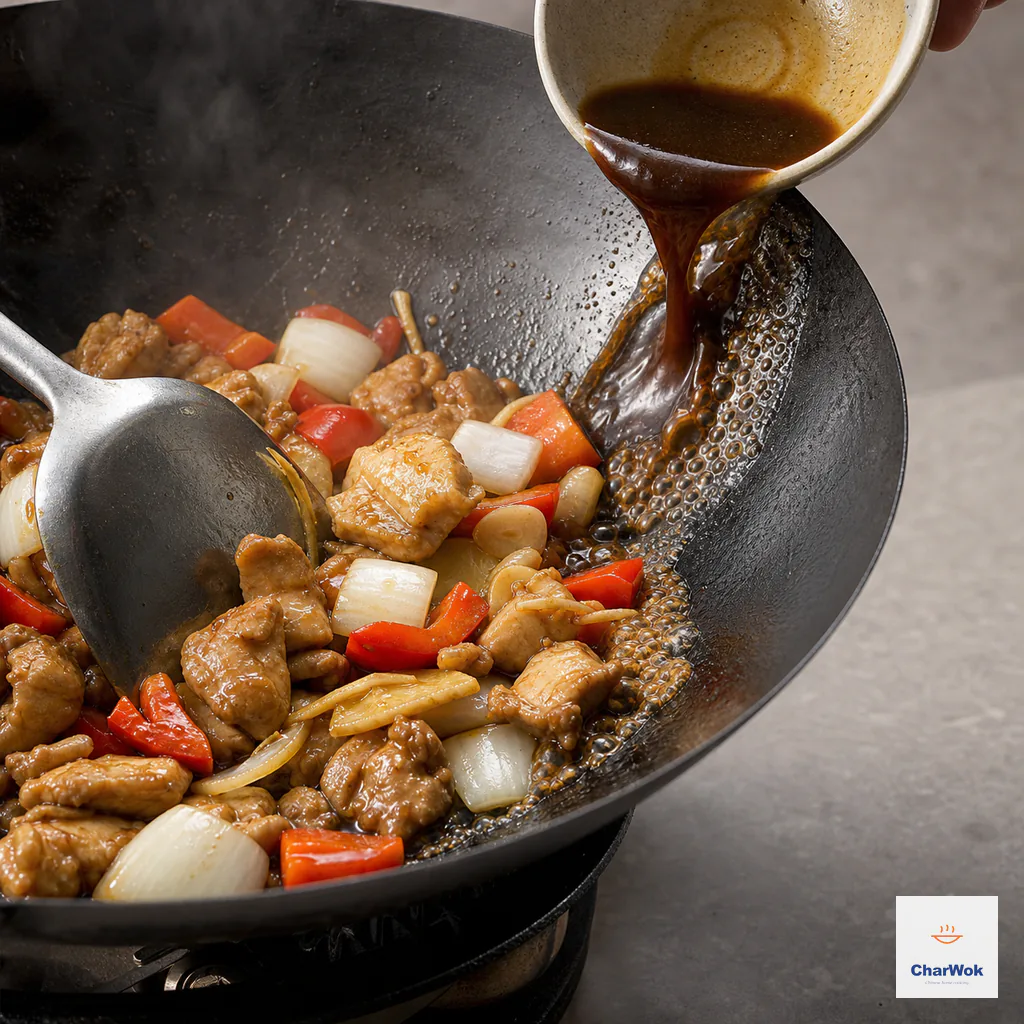
Toss with the sauce until the thickest chicken pieces reach 74°C (165°F), then turn off the heat and fold in the cashews
- Fold in the cashews off the heat. Kill the burner, add the toasted cashews, and toss two or three times only. They go in last so they stay loud and crisp, because sustained heat in a wet sauce softens them within a minute or two. Serve straight away over rice.
Food-safety sources: the U.S. Fire Administration cooking-fire guidance, the U.S. government’s safe minimum internal temperature chart, and FoodSafety.gov leftover guidance.
When it goes wrong, and how to fix it
This is the section I wish someone had handed me the first dozen times I made this. Most failures are predictable, and most fixes happen before the wok, not after.
- Pale, soft cashews. Almost always the result of using pre-roasted, salted nuts from a tin and then soaking them in sauce. They have no crunch left to give. Start from raw cashews and toast them yourself. If your only option is roasted, add them to the dish raw; do not fry them again, or they will turn bitter.
- Blackened, bitter cashews. You started the nuts in a hot pan. They scorch because the outside races ahead of the inside. Next time, pan and oil go in cold, then heat climbs slowly. Burned ones cannot be rescued; pick them out and start over or the bitterness will infect the whole dish.
- Tough, dry chicken. Three usual suspects: you used breast and overcooked it, you skipped the cornstarch coat, or you crowded the pan so the meat stewed in its own juice. Use thigh or slightly larger breast pieces, keep the chicken in one layer, and treat the first sear as only a partial cook; finish every piece to 74°C (165°F) in the sauce.
- The cornstarch coat flaked off into white threads. You did not let the marinade hydrate, or you added the chicken before the oil was shimmering. Rest the coated meat at least ten minutes, and make sure the wok is properly hot before the chicken goes in.
- Sauce will not thicken, or thickens into lumps. If it stays thin, the cornstarch settled, so always re-stir the bowl right before pouring, and pour around the pan edge, not onto cold meat. If it lumps, lower the heat, add 1 tablespoon water, and stir until smooth; visible smoke is unnecessary and means the pan is too hot.
- Sauce is too salty. Your soy sauce or oyster sauce is saltier than mine. Dilute with another tablespoon of water and a pinch more sugar; do not add more cornstarch without more liquid or it will turn to paste.
- Everything steamed instead of fried, and pooled in liquid. You crowded the pan or the chicken was wet when it went in. Pat the meat dry after marinating, and sear in two batches if your wok is small. A properly seasoned carbon-steel wok helps a lot here.
Variations and what to serve it with
The bones of this recipe take substitutions well once you trust the technique. Cubed pork tenderloin swaps in for the chicken with no other change and makes a respectable Hunan-style relative of the dish. Shrimp works too. Pull them out the instant they curl opaque, because shrimp punishes overcooking harder than any other protein.
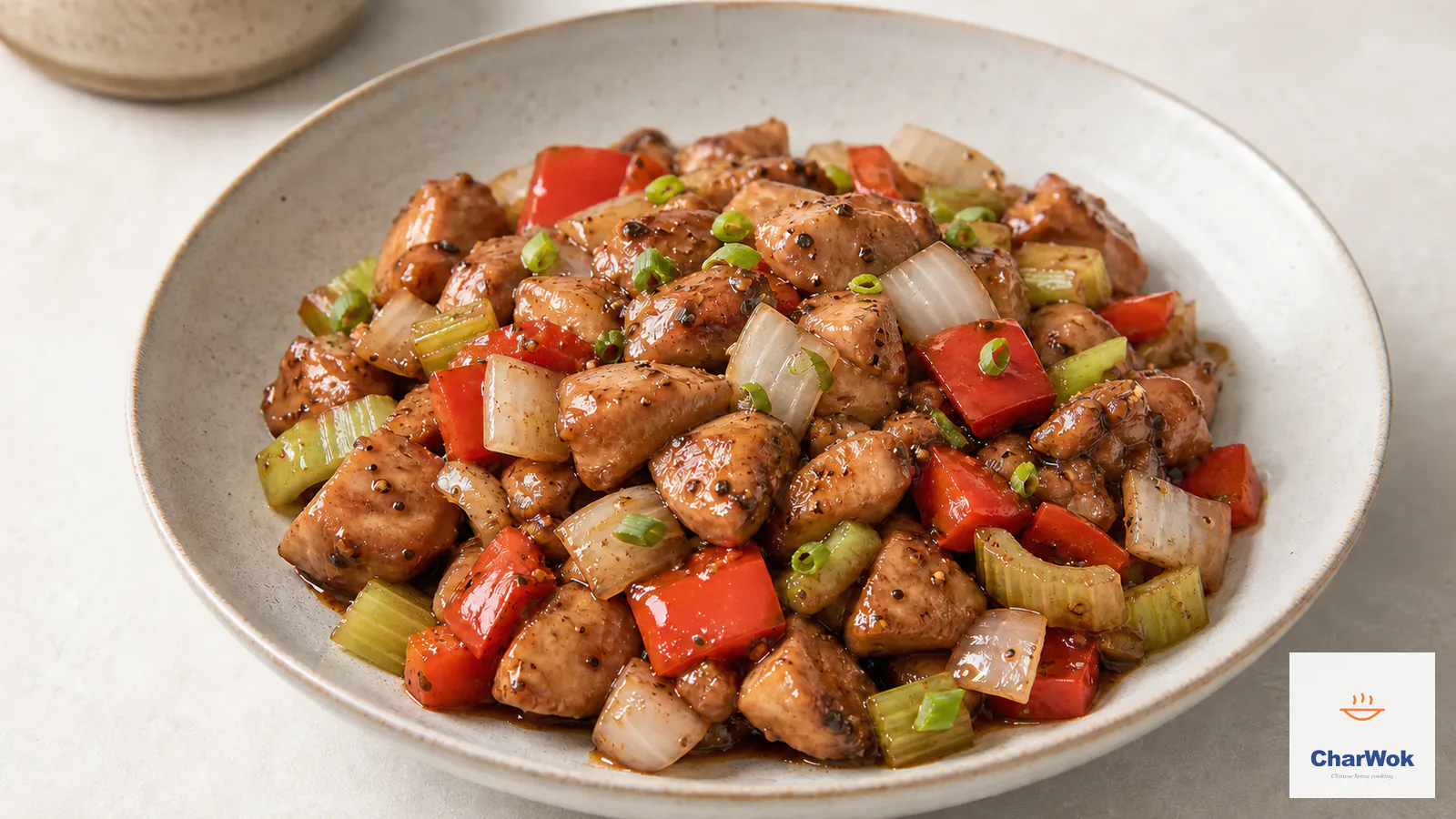
For heat, add 4 to 6 dried red chilies into the oil with the aromatics, the way you would for a black pepper chicken or a milder Kung Pao. For a brighter, more aromatic version, finish with a handful of scallion greens rather than (or in addition to) the cashews. Cubed water chestnuts or jicama add a different crunch that plays well in winter when peppers are expensive.
Plate this over plain steamed rice, or alongside a simpler fried rice if you are feeding a crowd. For a multi-dish Chinese meal I would pair it with a soup, like a quick chicken and corn soup or a light stock-based broth, and one green vegetable like garlic bok choy or broccoli with garlic sauce. The cashew chicken is the rich, brown anchor; the greens and soup keep the table from feeling heavy.
Storage and reheating
Cashew chicken is best eaten as soon as it is plated because the nuts soften in the sauce. Refrigerate leftovers in shallow airtight containers within 2 hours, or within 1 hour when the room or outdoor temperature is above 32°C (90°F), and use them within 3 to 4 days. Reheat the chicken and vegetables in a skillet or microwave until the thickest pieces reach 74°C (165°F), then add separately stored cashews. Holding back some toasted cashews preserves more crunch.
Questions that come up
These are the practical questions that matter most when adapting the recipe to a home kitchen.
Can I use roasted cashews instead of raw?
You can, but skip the frying step entirely and add them at the very end. Frying already-roasted nuts a second time makes them bitter. Raw cashews toasted slowly from a cold pan give a deeper, sweeter flavor than anything from a can, which is the whole reason to bother.
Is chicken breast okay?
Yes. Cut the cubes slightly larger and marinate for the full thirty minutes. During the first sear, remove them while the center is still undercooked; after they return to the sauce, cook the thickest pieces to 74°C (165°F). Breast is leaner and less forgiving than thigh, so the thermometer prevents both undercooking and unnecessary extra cooking.
Do I really need a wok?
No. A 30 cm (12 inch) stainless or carbon-steel skillet works; its shallower sides may mean searing the chicken in two batches. A nonstick skillet also works if you add oil before heating, stay within the maker’s heat limit, and use smaller batches. The sauce only needs a steady bubble to thicken; visible smoke is not required.
Why does the sauce go in around the edge of the pan?
Pouring onto the hot metal instead of onto the food flash-cooks the cornstarch so it thickens into a glaze instead of settling as a starchy film on the meat. It also deglazes the fond — those brown bits stuck to the pan — straight into the sauce, which is where a lot of the flavor lives.
If you take only two ideas from this recipe, take these: velvet the chicken with cornstarch, and start the raw cashews in a cold pan. Nearly every other detail flexes around your kitchen and your taste. Get those two right and the rest of the dish tends to fall into place, even on a weeknight when you are tired and improvising.
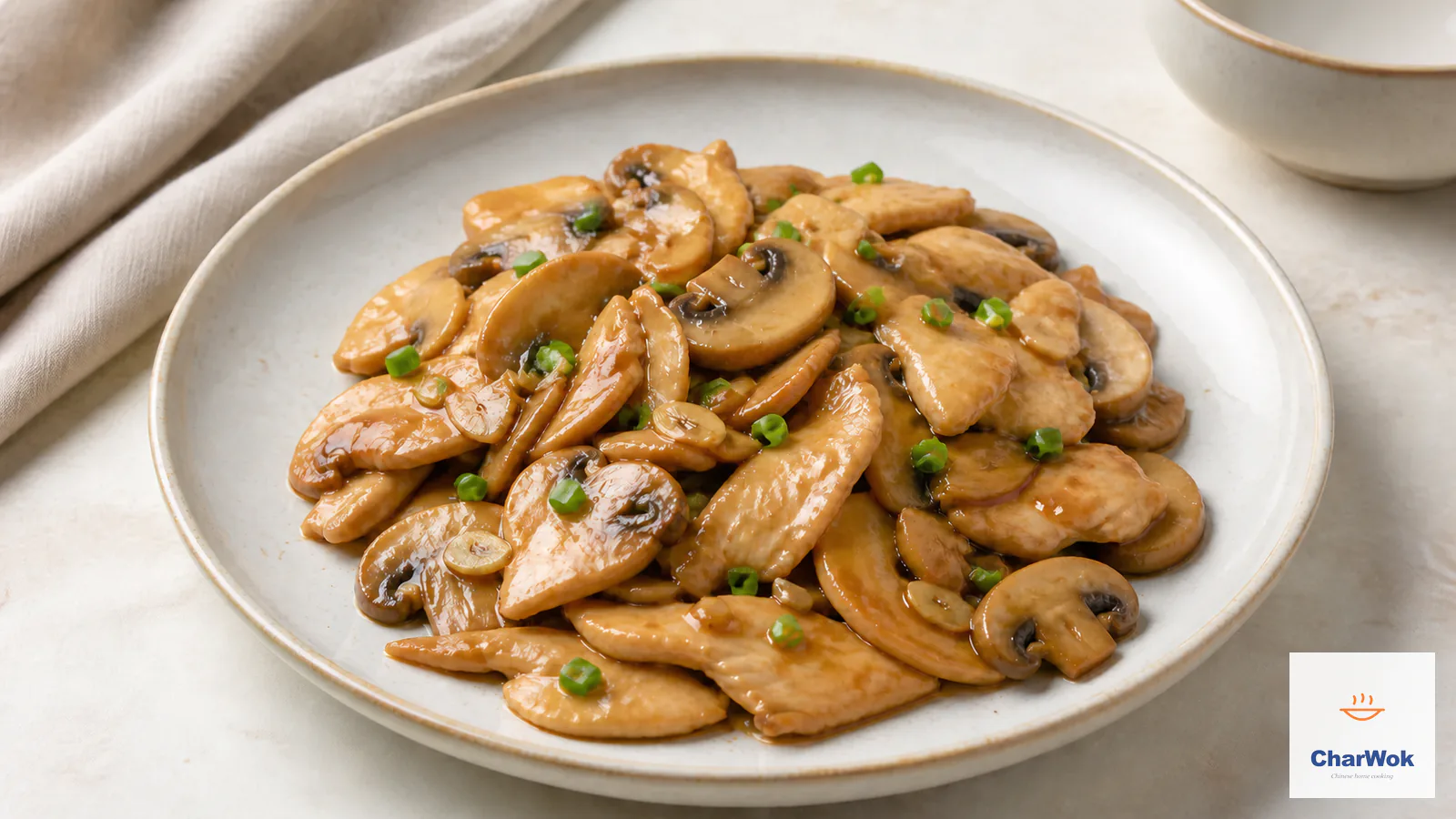
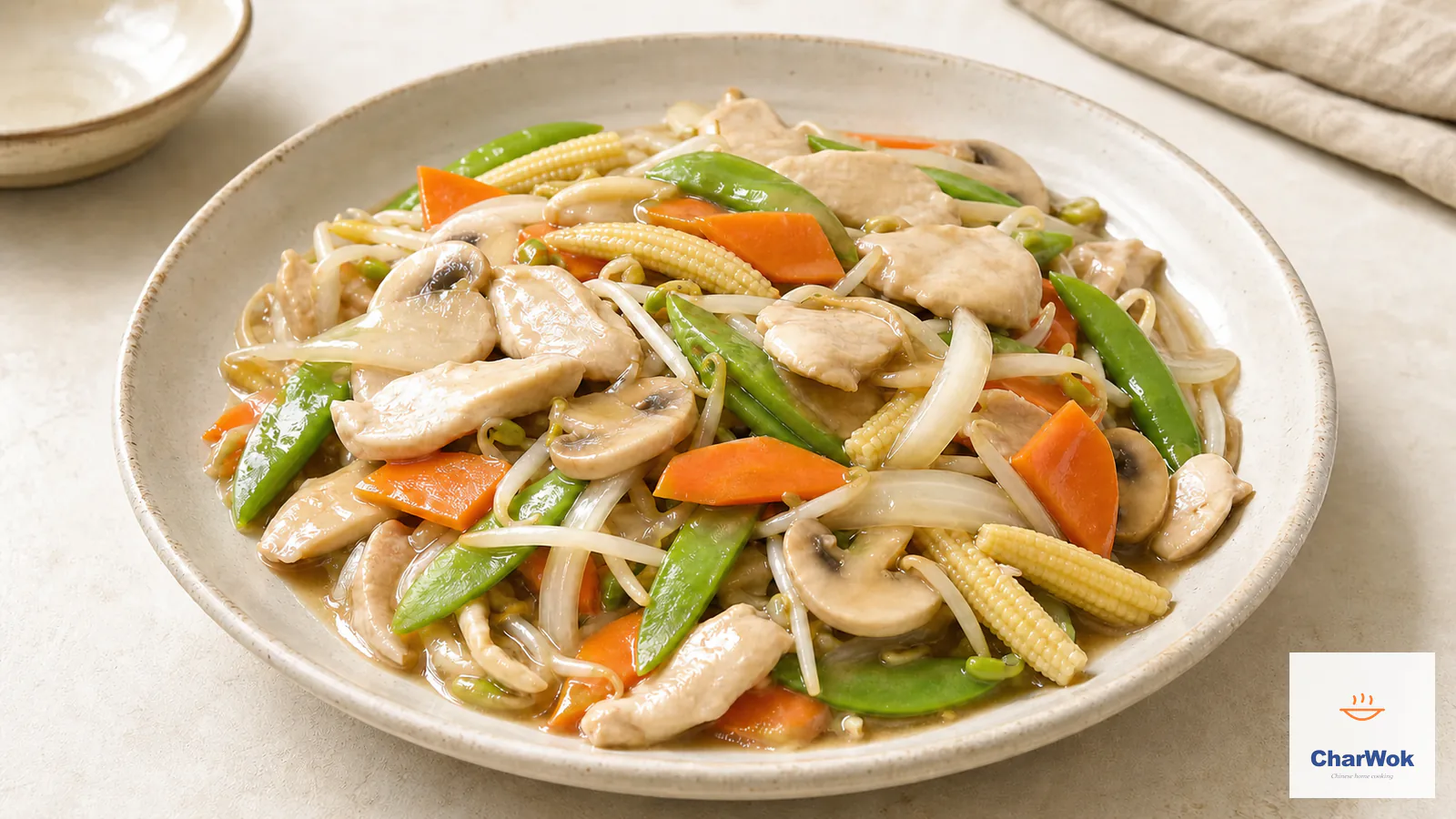
For more dishes built on the same stir-fry logic, the guide to Chinese chicken recipes by cooking method is a good next stop, and chicken and mushroom stir-fry uses the same velvet-and-glaze method with a quieter, earthier finish.