The reason your homemade version of a takeout dish falls short is almost never the recipe. It's a technique the menu never mentions. Restaurants velvet their meat in cornstarch and water before it ever touches oil, so a stir-fry comes out slippery and soft instead of tough. They build sauce in a separate bowl to a measured ratio, then add it in one shot instead of dribbling condiments in. They run a wok hot enough that fried rice toasts in ninety seconds rather than steaming into paste. Get those three ideas straight and the twenty takeout dishes below stop being twenty sets of instructions and become four or five techniques you can point at any protein in your fridge.
These are the dishes the American takeout box was built on, the ones that traveled from immigrant kitchens into corner-store menus and then into the national appetite. Some are faithful to a Chinese original; others, like chop suey, were invented for the customers out front. I've grouped them by the method that defines them, because a list of names teaches you nothing the second time you cook. Start with the stir-fries if you want dinner in twenty minutes, the soy-braises if you're feeding a crowd, the noodle and rice dishes if you have day-old leftovers to use up.
At a glance: Chinese takeout cooking comes down to a handful of moves — velveting the protein in cornstarch and liquid for 10 minutes, mixing the sauce separately to a 2:2:1 soy-to-vinegar-to-sugar ratio before it goes near the heat, and preheating the wok until a water drop dances. Do those three and you've closed most of the gap between your stove and a restaurant line.
Why takeout tastes like takeout
Five materials-and-prep foundations behind the twenty takeout dishes
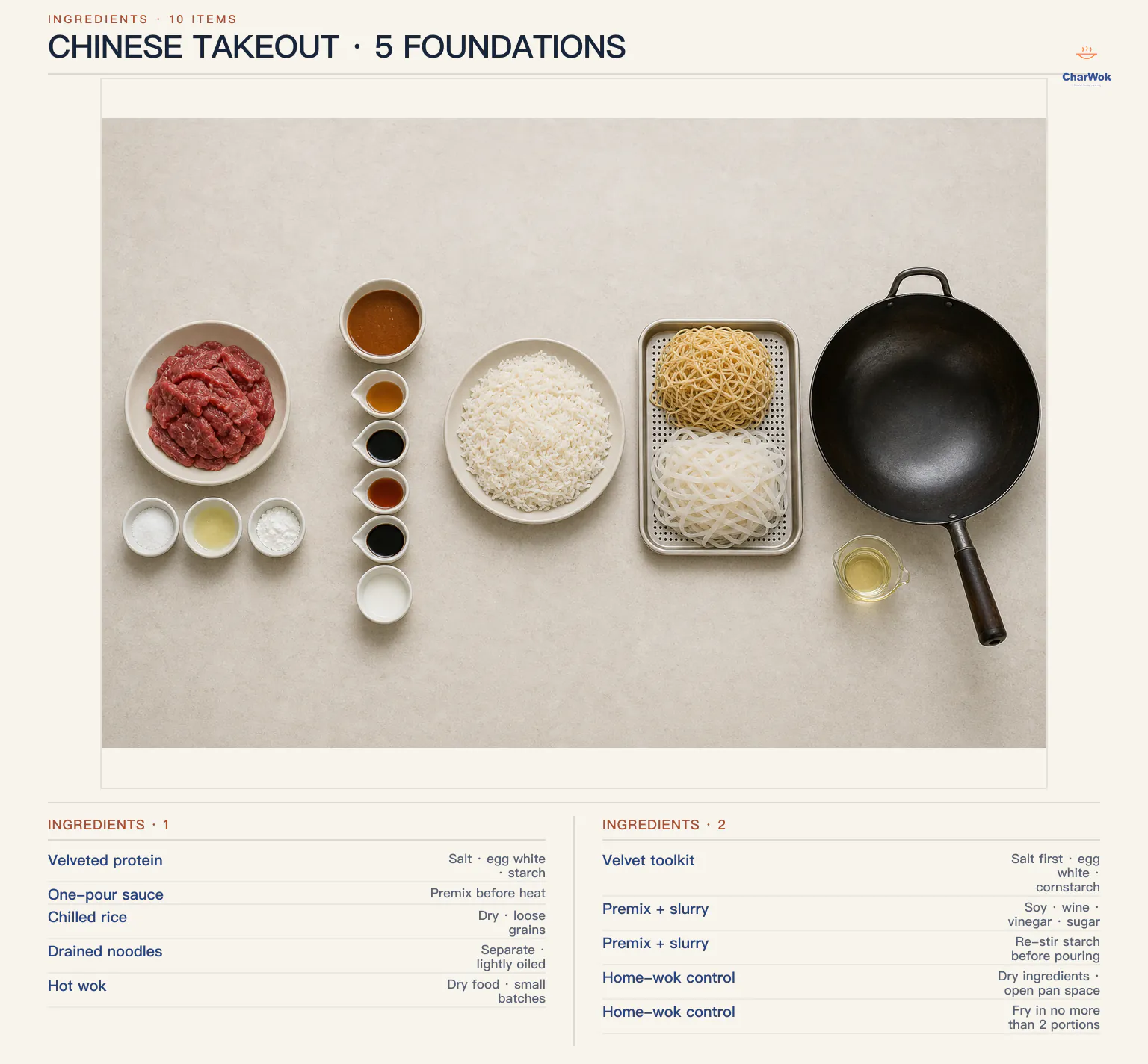
Three things separate a restaurant stir-fry from a home one, and none of them is a secret ingredient. First, the meat is velveted: a brief marinade of cornstarch, a splash of Shaoxing rice wine or water, and sometimes oil. The starch gelatinizes the instant it hits hot oil or water, forming a thin film around the protein that traps moisture and gives that slick, slippery mouthfeel you associate with restaurant chicken. Skip it and the same cut cooks up gray and tight.
Second, the sauce is assembled in a bowl before cooking, not added from bottles mid-stir. This sounds trivial. It isn't. A Kung Pao sauce lives or dies on the balance of black vinegar, soy, and sugar, and if you pour them in one at a time while the pan is screaming you'll never reproduce it twice. Measure into a ramekin, hit it with the cornstarch slurry, and add the whole thing in one pour. Third, the heat. A home burner tops out around 12,000 BTU; a Cantonese wok stove runs past 100,000. You can't close that gap, but you can fake it by drying your ingredients thoroughly, preheating the pan hard, and cooking in batches so nothing boils in its own juice.
The pantry behind every dish here
| Item | Why it matters | Substitute if you don't have it |
|---|---|---|
| Light soy sauce | Salt and seasoning; the workhorse. | Standard supermarket "soy sauce" (Japanese-style usukuchi is close enough). |
| Dark soy sauce | Color and a molasses-y sweetness; use sparingly. | Read up on light vs. dark soy first; molasses thinned with water in a true pinch. |
| Shaoxing rice wine | Removes gaminess from meat; rounds sauces. | Dry sherry is the closest match; skip rather than use cooking wine. |
| Cornstarch | Velveting marinade and sauce thickener. | Potato starch is the Chinese-kitchen original and behaves identically. |
| Oyster sauce | Savory depth for stir-fries and braises. | Mushroom stir-fry sauce for a vegetarian version. |
| Black rice vinegar (Chinkiang) | The sour note in Kung Pao and sweet-and-sour. | Balsamic thinned with a little water. |
| Neutral cooking oil | High smoke point for the wok. | Peanut, canola, or grapeseed; never extra-virgin olive oil. |
The stir-fries: where most weeknights live
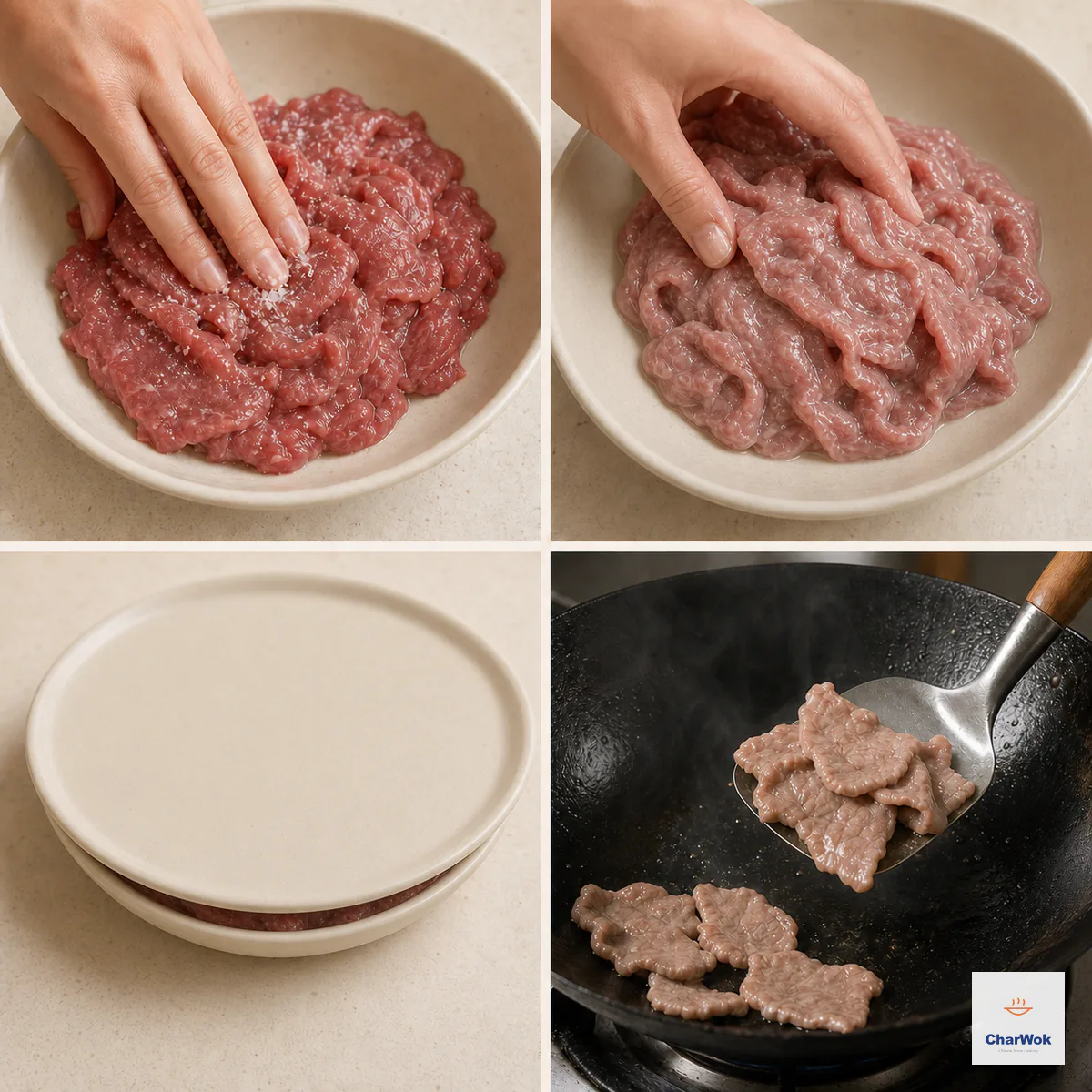
Salt the slices first until the surface turns tacky, fold in egg white and cornstarch as a thin film, rest briefly, then sear a single layer and pull it before it overcooks.
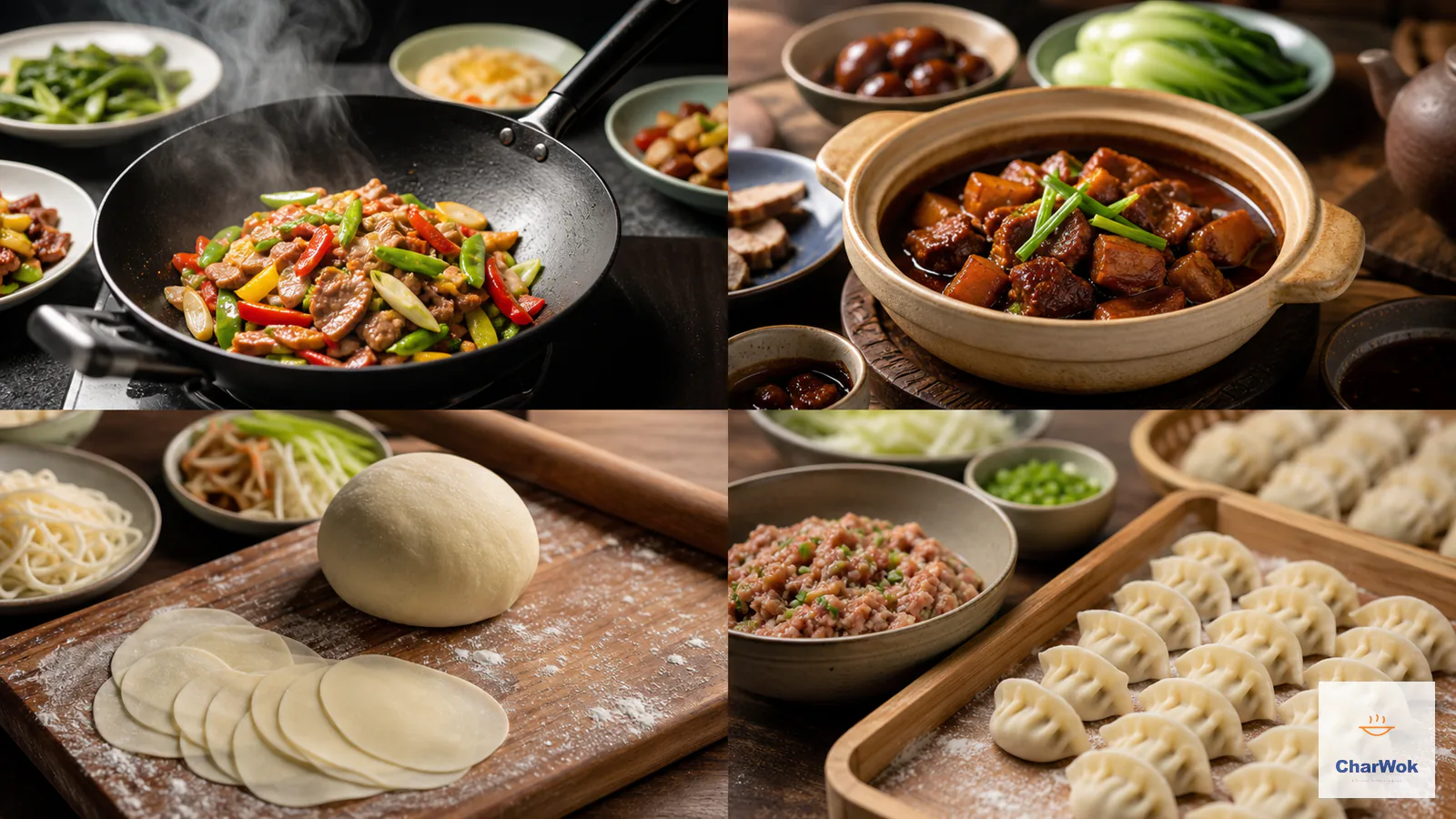
The stir-fry cluster is the backbone of the takeout menu, and it's also where the technique pays off most visibly. The shared move is always the same: velvet the protein, cook it alone and pull it out, hit the aromatics, return everything with a pre-mixed sauce that reduces onto the food instead of pooling. These dishes are variations on that one idea.
Kung Pao chicken is the textbook Sichuan stir-fry and the one I'd learn before any other. The signature isn't the dried chilies, which contribute aroma more than burn; it's the sauce ratio, roughly equal parts black vinegar, light soy, and sugar, finished with toasted Sichuan peppercorn and peanuts stirred in off the heat so they stay crunchy. Cube the thigh small, around 1.5 cm, and it cooks in under a minute once it lands in the pan.
Chicken chop suey is the gentlest entry point and the dish I'd hand a beginner. Tender chicken and crisp vegetables in a glossy cornstarch-thickened sauce, Chinese-American in spirit, but the method (velvet, cook alone, set aside, fry the veg, reunite with sauce) is exactly what you'll repeat for every stir-fry after it. Master chop suey and the rest get easier.
Pepper steak takes the same logic and points it at beef. The make-or-break detail here is slicing the beef thinly across the grain and giving it a full velvet; flank and sirloin both work, but without that cornstarch coating they seize up and turn chewy the moment they hit the wok. The sauce is little more than soy, oyster sauce, and cracked pepper, which is the whole appeal.
Beef and broccoli is pepper steak's heavier cousin, and the one people are most disappointed by at home because their broccoli turns olive and limp. Blanch the florets in boiling water for thirty seconds, shock them in cold water, and add them only at the very end. That keeps them bright green and snappy. The beef and broccoli recipe walks through the velveting in detail.
Sha Cha chicken is the unsung one. It leans on sha cha sauce, a fragrant Taiwanese condiment built from dried fish, shrimp, and spices, and it's nearly impossible to get wrong because the sauce does the work. If you keep a jar in the fridge, sha cha chicken is a fifteen-minute dinner with almost no knife work.
Hunan pork stir-fry goes in a louder direction: thin slices of fatty pork with fresh chilies and fermented black beans, cooked fast and hot. The beans are the soul of it; they bring a deep, funky saltiness that soy alone can't fake. If you've never cooked with them, the Hunan pork recipe is a good first use.
Moo shu, and why scrambled eggs belong in a stir-fry
Moo shu pork deserves its own mention because it confuses people. The dish is pork, scrambled egg, wood-ear mushroom, day lily bud, and cabbage, and the trick is cooking each component separately and combining them at the end so nothing overcooks. Push everything to the side, scramble the egg in the cleared space, break it up, then fold it back through. The egg should stay in soft curds, not a rubbery sheet. Done right, moo shu pork is one of the most balanced things you can make in a wok.
The sweet-and-sour family
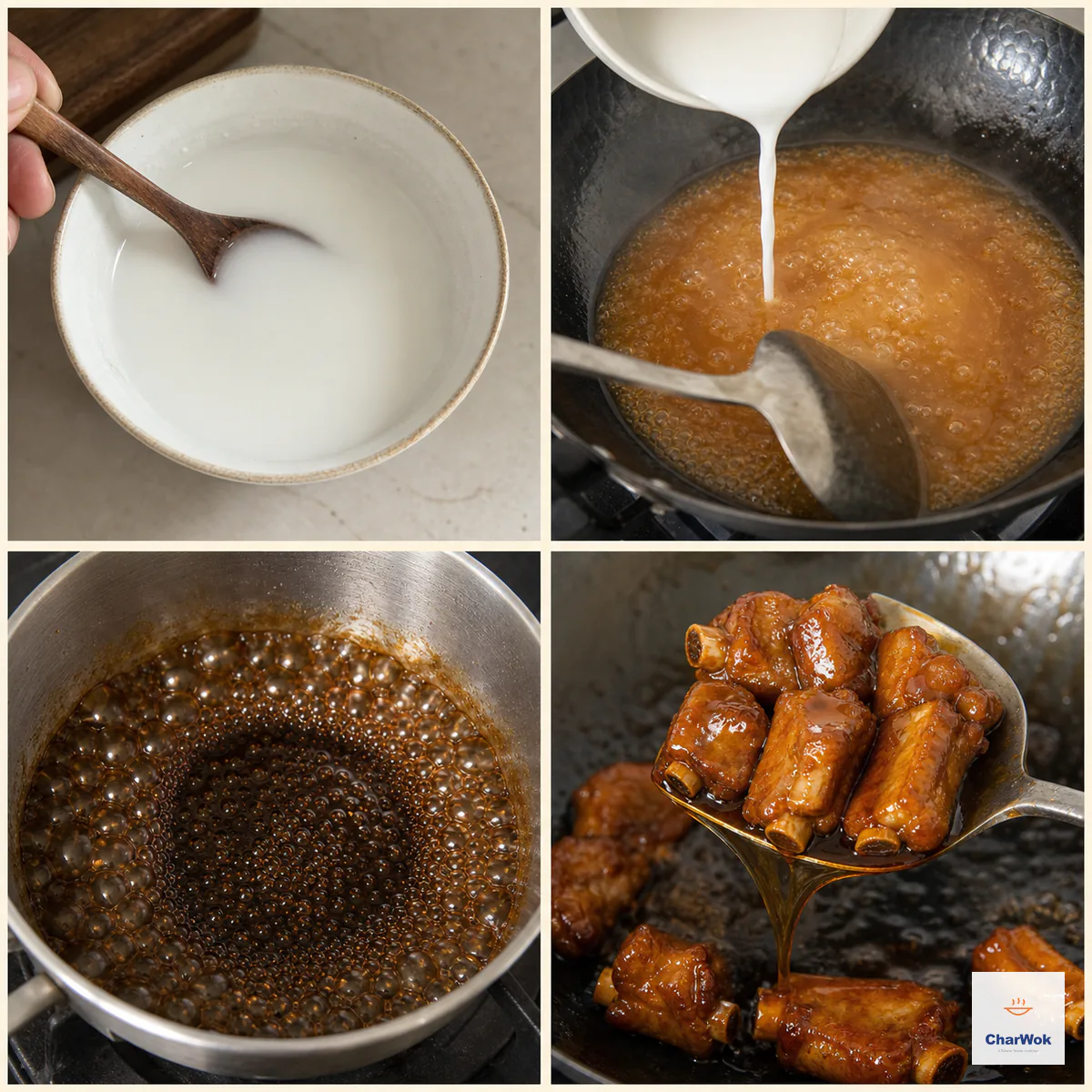
Re-stir slurry before it reaches a simmering sauce, and reduce the sweet-and-sour glaze until large watery bubbles tighten into small glossy ones that cling instead of pooling.
Sweet and sour is where takeout reputation and Chinese tradition diverge most. The fluorescent-red takeout version is a 20th-century invention; the original is a delicate balance of vinegar and sugar, with color coming from the ingredients, not food coloring. Two dishes here show both ends.
Sweet and sour ribs (tang cu pai gu) are the authentic expression. The ribs are braised in water until tender, then the liquid is reduced with rock sugar and black rice vinegar until it coats each bone in a glossy amber glaze. No ketchup, no red dye; the caramel comes from the sugar alone. The sweet and sour ribs recipe gives the exact ratio, and once you nail it you'll understand why this is a banquet dish in northern China.
Egg foo young is the American-diner cousin: puffy oyster-shaped omelets filled with vegetables and protein, served with a brown gravy thickened with cornstarch. The common failure is a tough, flat egg. The fix is a hot pan, a quick cook, and not overfilling: too much filling and the egg never sets in the middle. The egg foo young recipe includes the classic gravy formula plus a no-gravy seasoning alternative.
Soy-braised showpieces
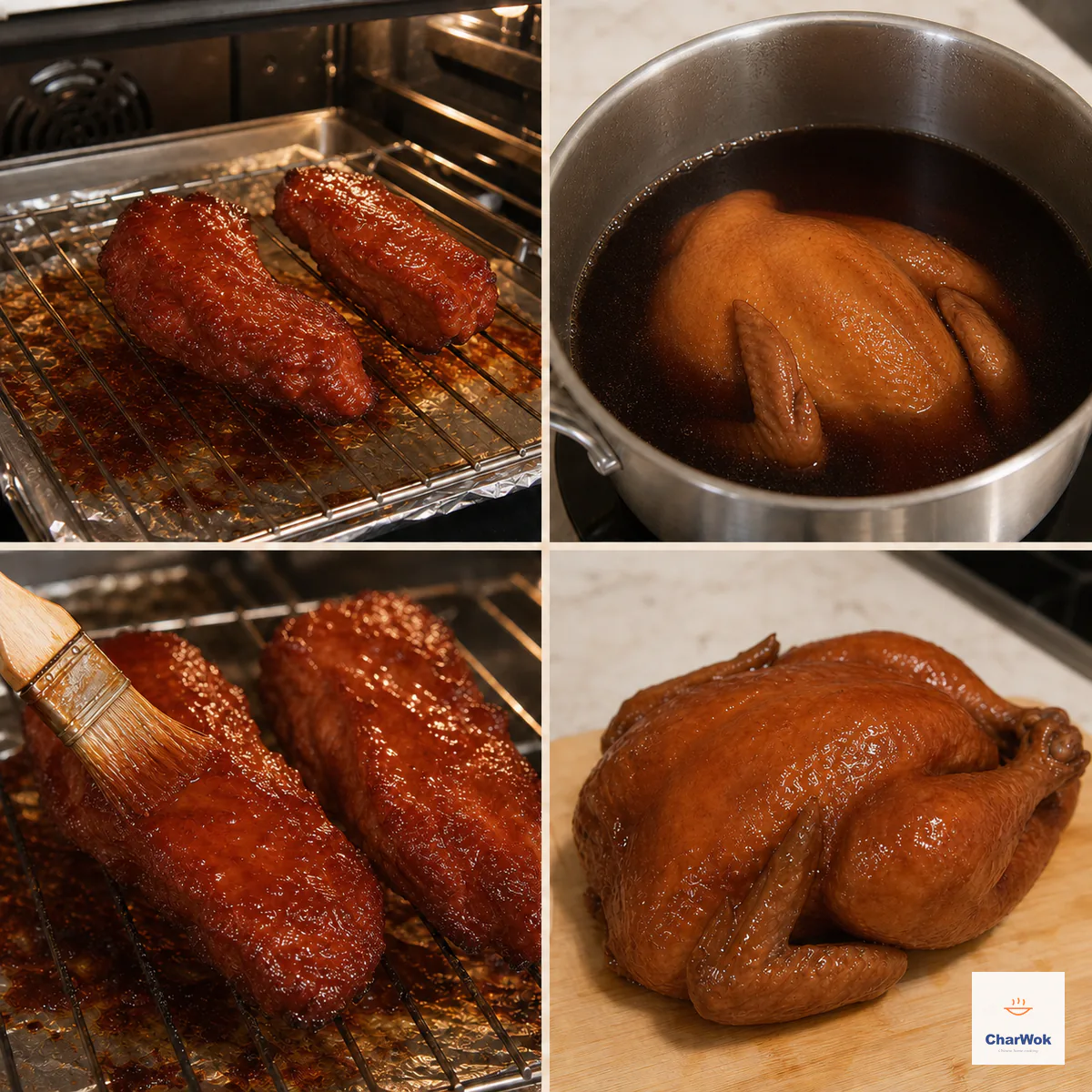
Build char siu colour through repeated thin glazing at the end of roasting; keep soy sauce chicken at a bare murmur so the meat stays tender and the skin remains whole.
Braising is patient cooking: a dark, slightly sweet soy liquid reduced until it lacquers the protein. Two takeout classics live here, and the method is the same master-stock logic (light and dark soy, rock sugar, ginger, scallion, aromatics) applied to different cuts.
Char siu, Cantonese BBQ pork, is the dish most people picture when they think "red Chinese pork." That color should come from a marinade of fermented red bean curd, hoisin, honey, and five spice, not from dye. The shoulder is roasted hot, glazed repeatedly in the last ten minutes so the sugars caramelize into a sticky crust, then rested before slicing so the juices redistribute. The char siu recipe is approachable for a home oven; the repeated glazing is the step people skip and the reason theirs turns dry.
Soy sauce chicken is a whole bird simmered in a master stock at a bare murmur, around 85°C (185°F), never a rolling boil. A boil tightens the fibers and turns the breast cottony. I've wrecked this dish by letting the temperature climb, and a clip-on thermometer is worth the ten dollars. The stock is meant to be saved, re-boiled, and reused; it deepens with every batch. The soy sauce chicken method is less labor than you'd expect for a dish this celebrated.
The fried-rice triumvirate
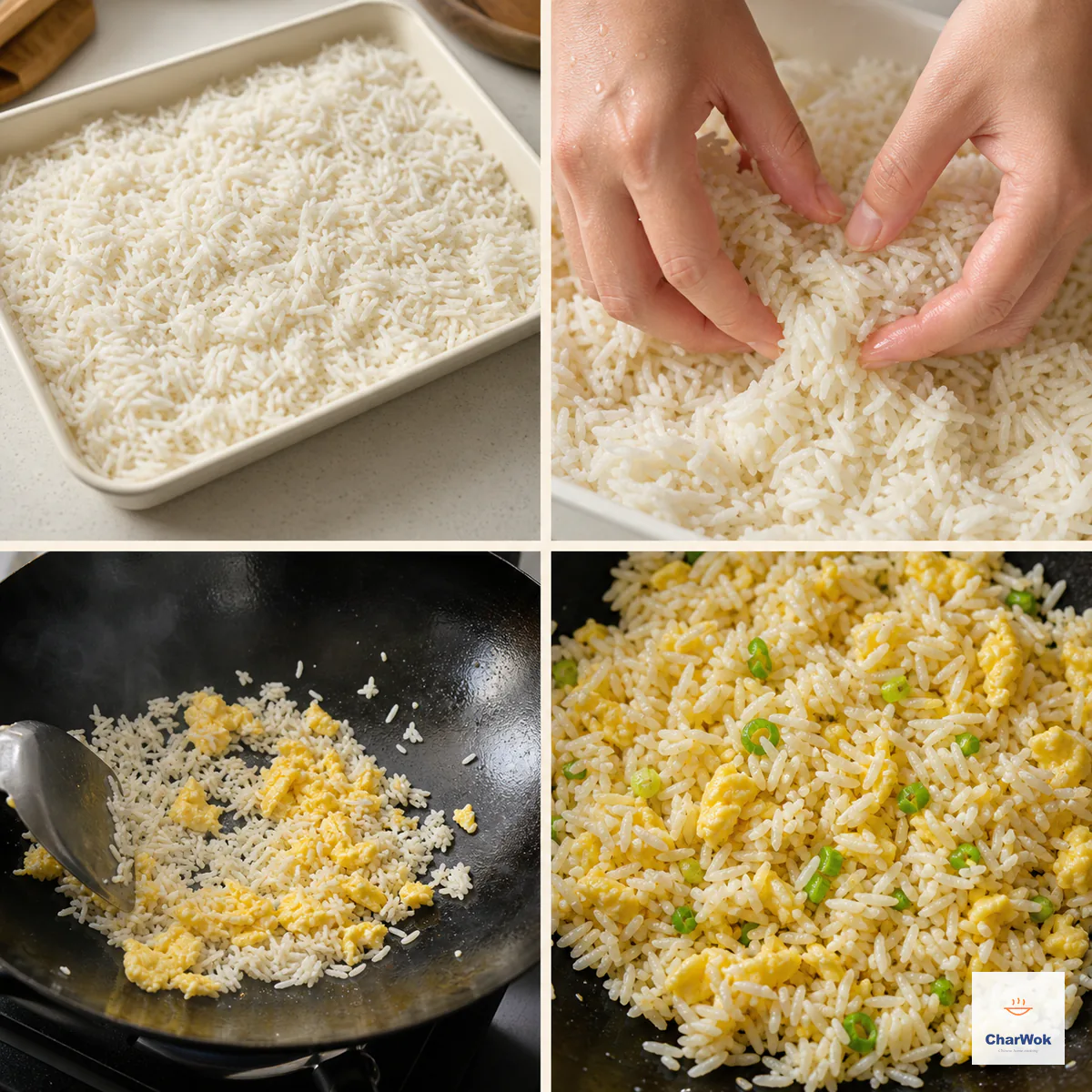
Chill rice until the surface dries, separate every cold clump before the burner goes on, and fry no more than two portions so the grains sear instead of steaming.
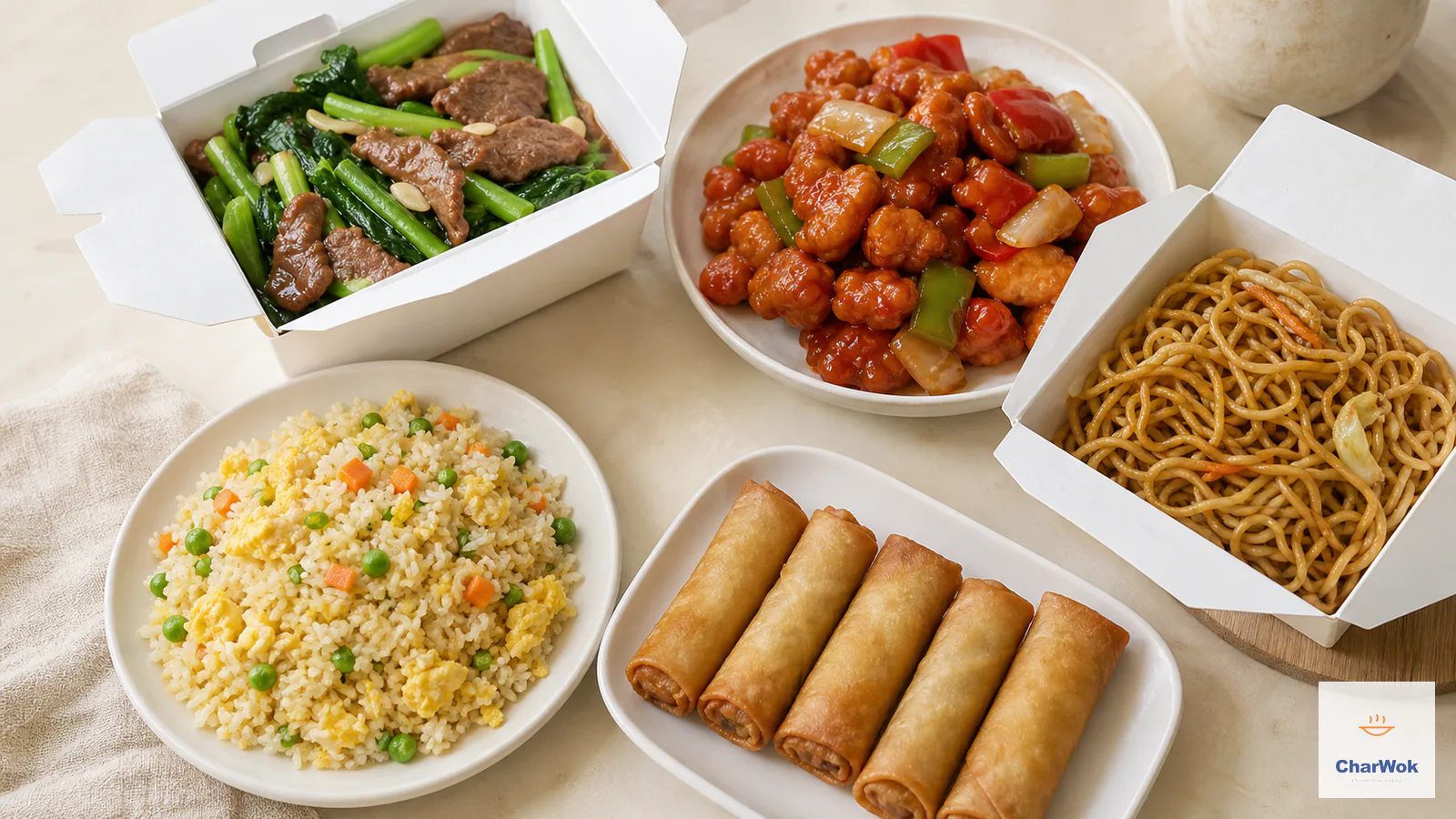
Fried rice is the single most ordered takeout dish and the one most often butchered at home. The failure is always the same: wet, sticky rice that steams instead of frying. Three rules fix it. Use rice cooked the day before and chilled uncovered in the fridge, so the surface dries out. Break the cold clumps apart with wet fingers before they hit the pan. And run the wok hot enough that each grain sears in seconds. Beyond that, the variations are endless.
Egg fried rice is the pure version: rice, egg, scallion, a little soy. It's the best place to learn the technique because nothing hides a mistake. The egg fried rice recipe is the one I'd cook first if you've never made fried rice.
Yangzhou fried rice layers in shrimp, char siu, peas, and egg for the classic banquet version. The bar is higher: each add-in is cooked separately so the shrimp stays tender and the char siu warms through without overcooking. Make Yangzhou fried rice in under fifteen minutes once your prep is lined up.
Pork fried rice is the everyday one, and a great use for leftover roast pork or ground pork browned in the wok first. The pork fried rice version seasons assertively, which is what you want when fried rice is the whole meal rather than a side.
Noodles, and the one rule that governs them
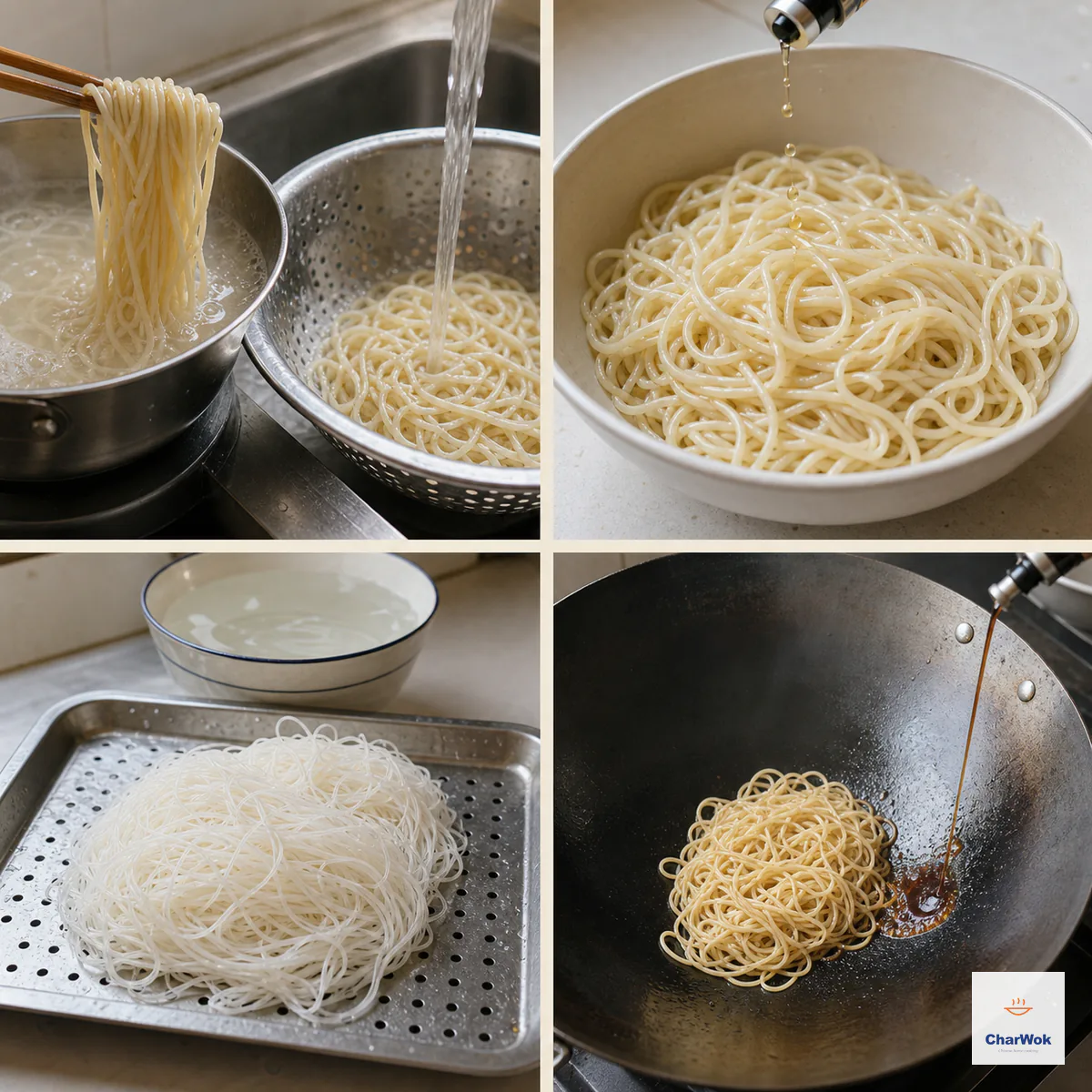
Stop wheat noodles while still firm, rinse, drain, and oil only lightly; soak rice vermicelli just until pliable, then keep the wok batch small and pour sauce along the exposed hot wall.
Every noodle stir-fry below rises or falls on the same detail: the noodles must be dry and separate before they meet the wok. Wet noodles drop the pan temperature and steam into a clump. Drain them well, rinse off surface starch if they're freshly cooked, and toss with a little oil so they don't stick.
Chow mein is the wheat-noodle stir-fry most Americans know, and the version worth making crisps the noodles on one side before you toss in the sauce. That contrast, soft on top and crackly underneath, is what separates a good chow mein from a pile of damp noodles. The chow mein guide covers noodle choice, sauce, and the crisping step.
Beef chow fun uses wide rice noodles and is the true test of wok hei, that smoky breath a Cantonese wok imparts at full heat. The noodles are fragile, so handle them gently and don't over-soak; a broken noodle turns the dish to mush. The beef chow fun recipe calls for a quick beef velvet and a soy-forward sauce added in one pour.
Singapore mei fun swaps in thin rice vermicelli, curry powder, and a mix of proteins. The vermicelli is the trap. It drinks liquid greedily, so the dish dries out fast if you don't move quickly. Soak the noodles just until pliable, drain hard, and have every ingredient prepped before the burner goes on. The Singapore mei fun recipe is generous with substitution ideas.
The soups and the dumplings
Two takeout favorites round out the list, and both reward understanding a single principle.
Hot and sour soup is built on a glossy, cornstarch-thickened broth (what the Chinese call "geng") loaded with tofu, wood-ear mushroom, bamboo, egg, and pork. The acid is black rice vinegar; the heat is white pepper, not chili. The balance is the whole dish, and most versions get it wrong by over-thickening. Add the slurry in a thin stream while stirring, stop the moment it coats a spoon, and finish with the vinegar off the heat so the sourness stays bright. The authentic hot and sour soup is hearty enough to be a meal.
Wonton soup is two things done well: a delicate pork-and-shrimp wonton in a thin wrapper, and a clear broth that tastes of chicken and dried shrimp. The common mistake is overfilling the wonton, which makes the wrapper tear and the filling dense. A teaspoon of filling per wrapper is plenty. The wonton soup recipe keeps the broth simple so the dumpling stays the star.
The fried one
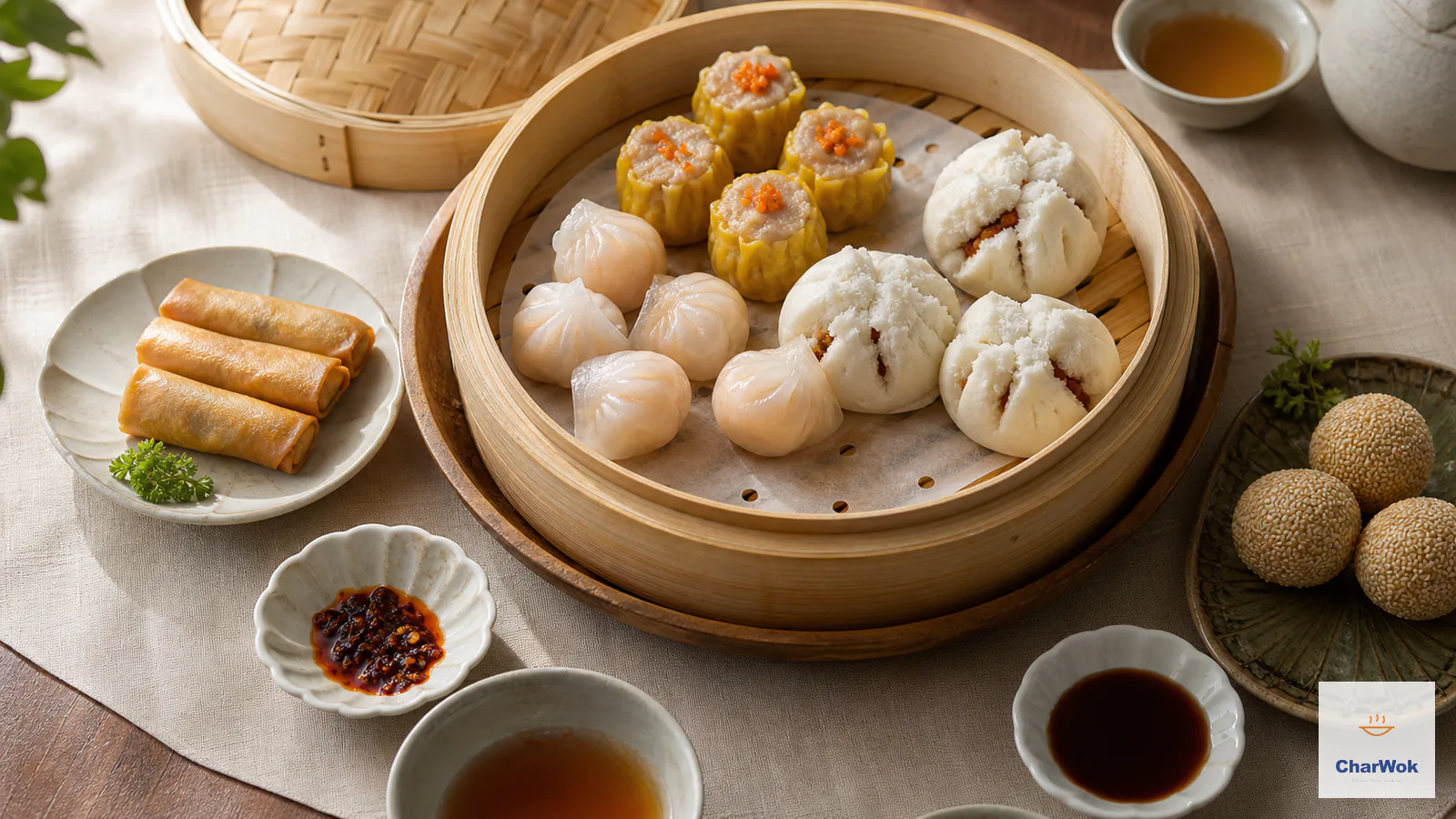
Spring rolls are the only deep-fried dish on this list, and the reason most people's come out greasy is oil temperature, not the recipe. Fry at 170°C (340°F) and the wrapper absorbs oil before it crisps; fry at 190°C (375°F) and the skin blisters golden in under two minutes with barely any uptake. The other rule: don't overfill, and roll them tight so there's no air pocket to hold oil. The spring rolls recipe needs no pre-cooked filling and includes an air-fryer option.
When things go wrong
This is the section the menu never gives you. These are the failures I've made and watched others make, with the fix.
The meat is tough and dry. You skipped the velvet. A ten-minute cornstarch-and-liquid marinade is not optional for stir-fried protein; it is the difference between restaurant texture and home texture. Slice across the grain, not with it.
The stir-fry is watery and the sauce won't cling. Two causes. You crowded the pan and the food boiled instead of fried; cook in two batches. Or you added the sauce ingredients one at a time from bottles instead of mixing them first; pre-mix with the cornstarch so it reduces into a glaze in seconds.
The fried rice is gummy and pale. The rice was too wet or too fresh. Use day-old chilled rice, break the clumps apart before frying, and get the wok genuinely hot. If yours is steamy and grey, the pan wasn't ready.
The broccoli (or greens) are olive and limp. You skipped the blanch-and-shock. Thirty seconds in boiling water, then ice water, locks the color and stops the carryover cooking that turns them drab.
The sauce broke or looks oily. You added cornstarch slurry to a pan that wasn't simmering, or you didn't stir while pouring. Slurry only thickens at a simmer, and it must hit moving liquid or it clots.
The noodles are a broken, starchy mess. You over-soaked them or manhandled them wet. Rice noodles are fragile; drain them the instant they bend, and toss with oil before they hit the wok.
Building a takeout dinner
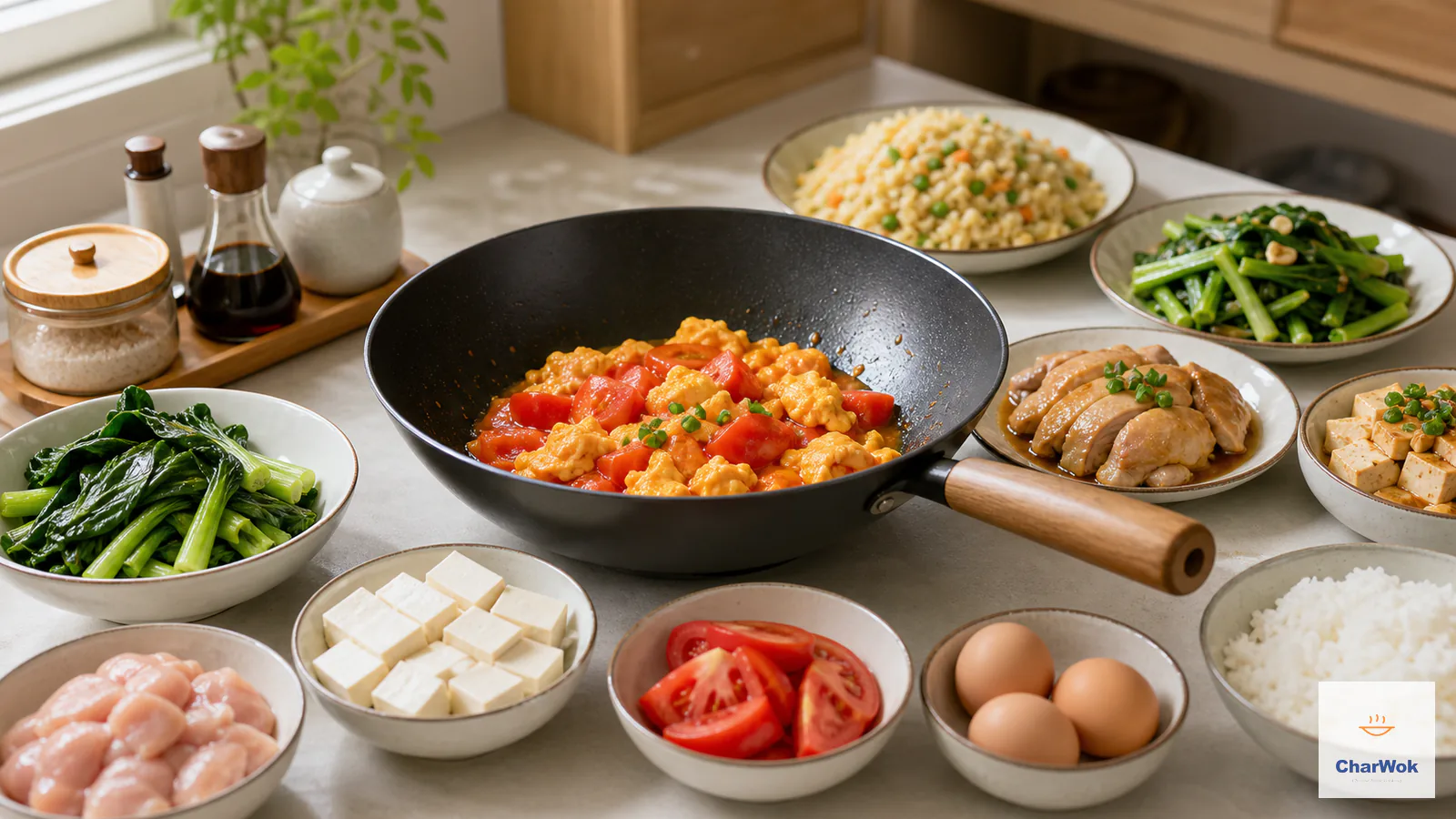
If you're cooking for four, pick one protein stir-fry, one rice or noodle, and one vegetable or soup. That structure, a main plus a starch plus a vegetable, is how a Chinese meal is built, and it scales better than a single large dish. A reliable combo: Kung Pao chicken over egg fried rice with a side of quick-cooked greens, or soy sauce chicken with congee and a cold cucumber salad to cut the richness. For a crowd, the braises scale effortlessly because they hold warm; the stir-fries do not, so cook those last and serve immediately.
Storage and reheating
Stir-fries keep three days in the fridge and reheat best in a dry skillet over medium-high heat; the microwave turns the velvet coating gummy. Fried rice reheats beautifully in a hot wok with a teaspoon of oil; this is arguably the one dish that's better on day two. Braised dishes like soy sauce chicken and char siu keep four days and the master stock improves with age. Spring rolls do not reheat well; fry only what you'll eat. Wontons can be frozen raw on a tray, then bagged, and boiled straight from frozen with an extra minute of cook time.
Related recipes & further reading
Once the core techniques click, the same moves carry over to dozens of dishes built on the same logic. These are natural next steps, grouped by where you might want to go after the list above.
- For a beef stir-fry with a brighter edge, spicy orange beef uses the same velveting and one-pour sauce method with citrus in the glaze.
- If pepper steak was your entry point, black pepper beef stir-fry takes that idea further with a heavier cracked-pepper finish.
- The Sichuan cousin to Kung Pao chicken is Hunan chicken stir-fry, louder and fresher-chili driven, built on identical wok moves.
- A lighter protein that reheats just as well the next day, shrimp and broccoli swaps the beef for shellfish while keeping the blanch-and-shock step.
- When you want the noodle bowl rather than the stir-fry, lo mein is the soft-wheat counterpart to the crispy chow mein above.
- For another rice-noodle dish that rewards a hot wok, chicken chow fun uses wide rice noodles with a soy-forward finish.
- A takeout-style gravy dish that pairs with the egg foo young method, sweet and sour meatballs covers the glossy-sauce family in pork form.
- To round out the soup chapter, classic egg drop soup is the simplest broth in the same family as hot and sour.
- If the soy-braised chicken left you with extra master stock, soy sauce rice pilaf puts that liquid to work as a side.
- To see how the broader takeout canon is curated, 12 must-try authentic Chinese recipes collects the foundational dishes behind these flavors.
- For a technique-first path across the same stir-fry and braised categories, use the core Chinese cooking skills guide.
- For the cultural backdrop behind how these dishes traveled from regional kitchens to the takeout box, a culinary tour of China walks through the regional roots.
Questions I get asked
If you take one thing from this list, let it be the velvet. Nearly every stir-fry above either succeeds or stalls on whether you gave the protein its ten minutes of cornstarch and liquid first, and nearly every sauce lives or dies on whether you measured it into a bowl before the heat went on. Get those two habits and the twenty dishes stop being twenty recipes and start being one cooking style wearing different flavors, which is, in the end, how the takeout menu itself was built.