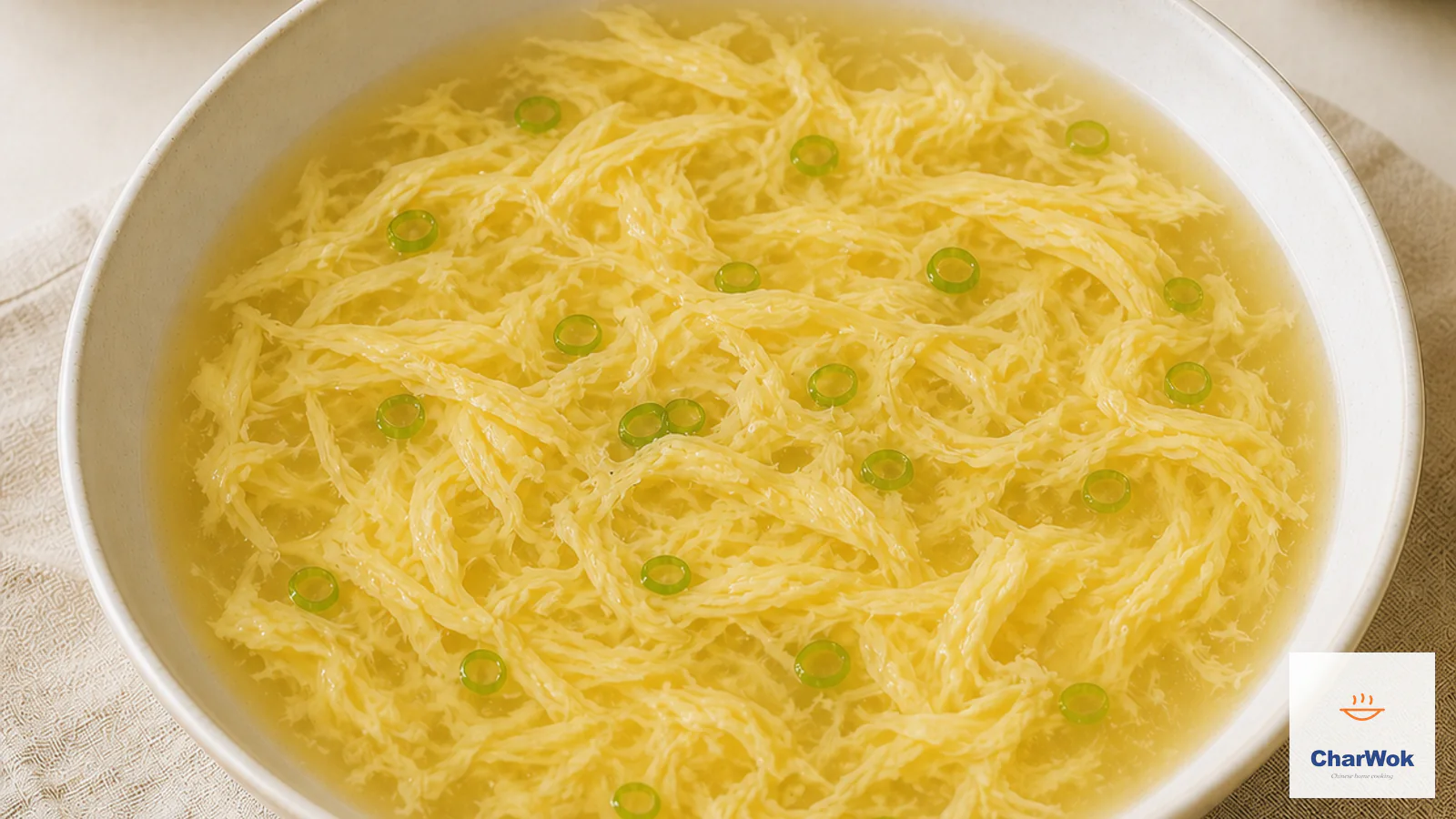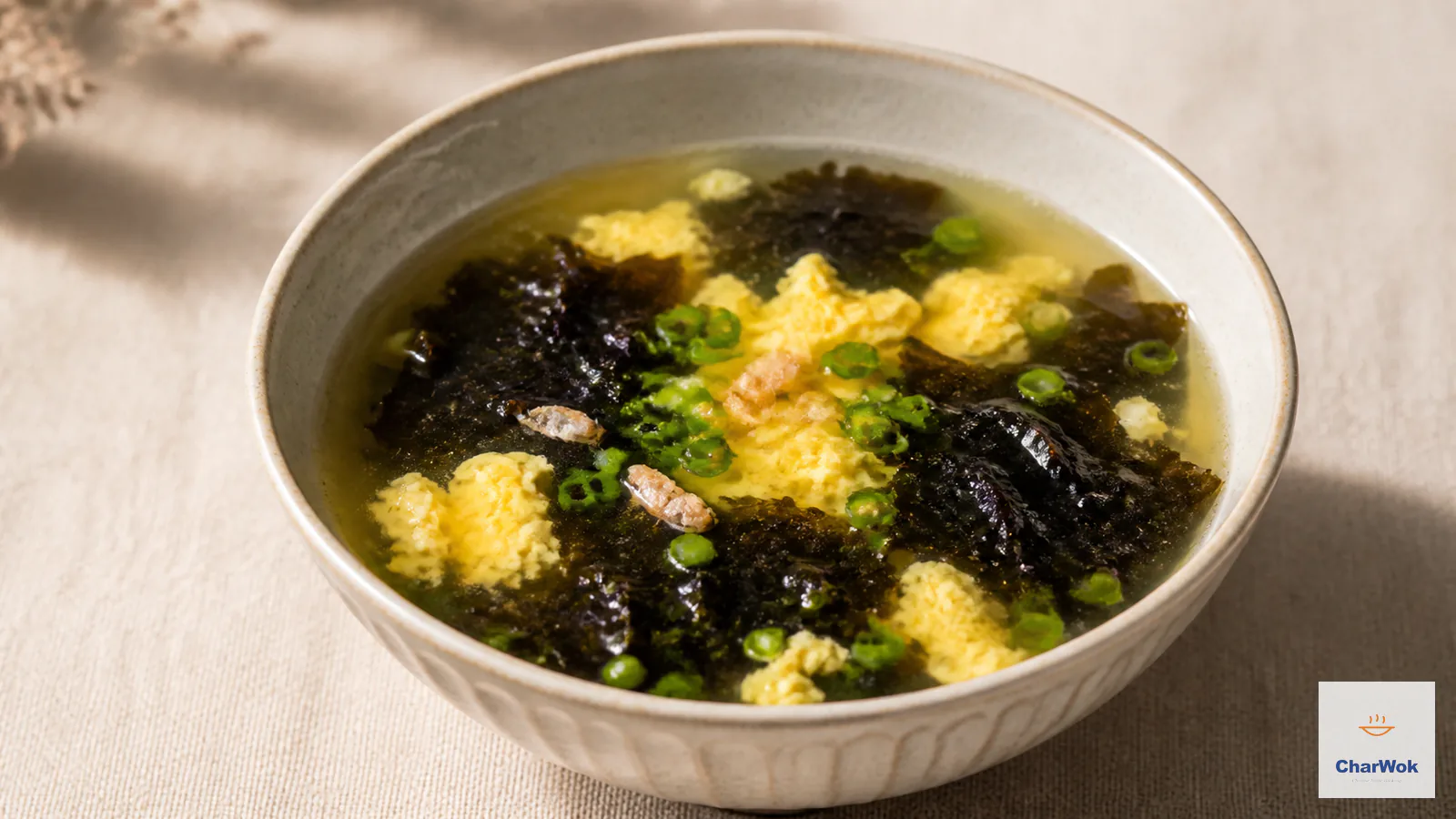
The soul of seaweed egg drop soup is in the egg ribbons: silken threads that drift in a clear, mineral-sweet broth instead of clumping into one sad scramble. Most home versions fail on this single point. You pour, the egg puffs into a cloud, and ten seconds later you are staring at a bowl of egg drop porridge. The good news is that the fix is almost entirely about timing and motion, not ingredients.
This is one of the first hot dishes I remember making on my own, and the one I still default to on a night when the fridge is nearly empty and I want something warm in front of me in under ten minutes. Dried laver, an egg, water, a few seasonings. The broth tastes richer than the effort it took, because the seaweed and the toasted dried shrimp do most of the flavor work for you.
At a glance. Three eggs into 1000 ml (about 4 cups) of barely boiling liquid, poured in a thin stream while you swirl the pot one-handed. Add the seaweed only after the strands set. Total active cooking: roughly three minutes. The whole thing rises or falls on whether you swirl and hold back the boil long enough for the egg to ribbon instead of curdle.
What this soup actually is
Seaweed egg drop soup (zi cai dan hua tang, 紫菜蛋花汤) is a coastal-Chinese home soup, fast and unfussy, built around two ingredients that punch well above their weight: dried purple laver and a small handful of dried shrimp. It is a cousin of the plain classic egg drop soup, with the seaweed adding a clean ocean note and the shrimp adding a savory depth you cannot fake from a bottle.
Northern and southern Chinese households both make a version of this. Up north it is often a finishing soup at the end of a heavy meal, thin and brothy, meant to settle the stomach. Down south, near the coast, it leans more luxurious and you sometimes see it thickened with a cornstarch slurry. I keep mine unthickened. The broth should be light enough that you can drink a full bowl and still want dinner.
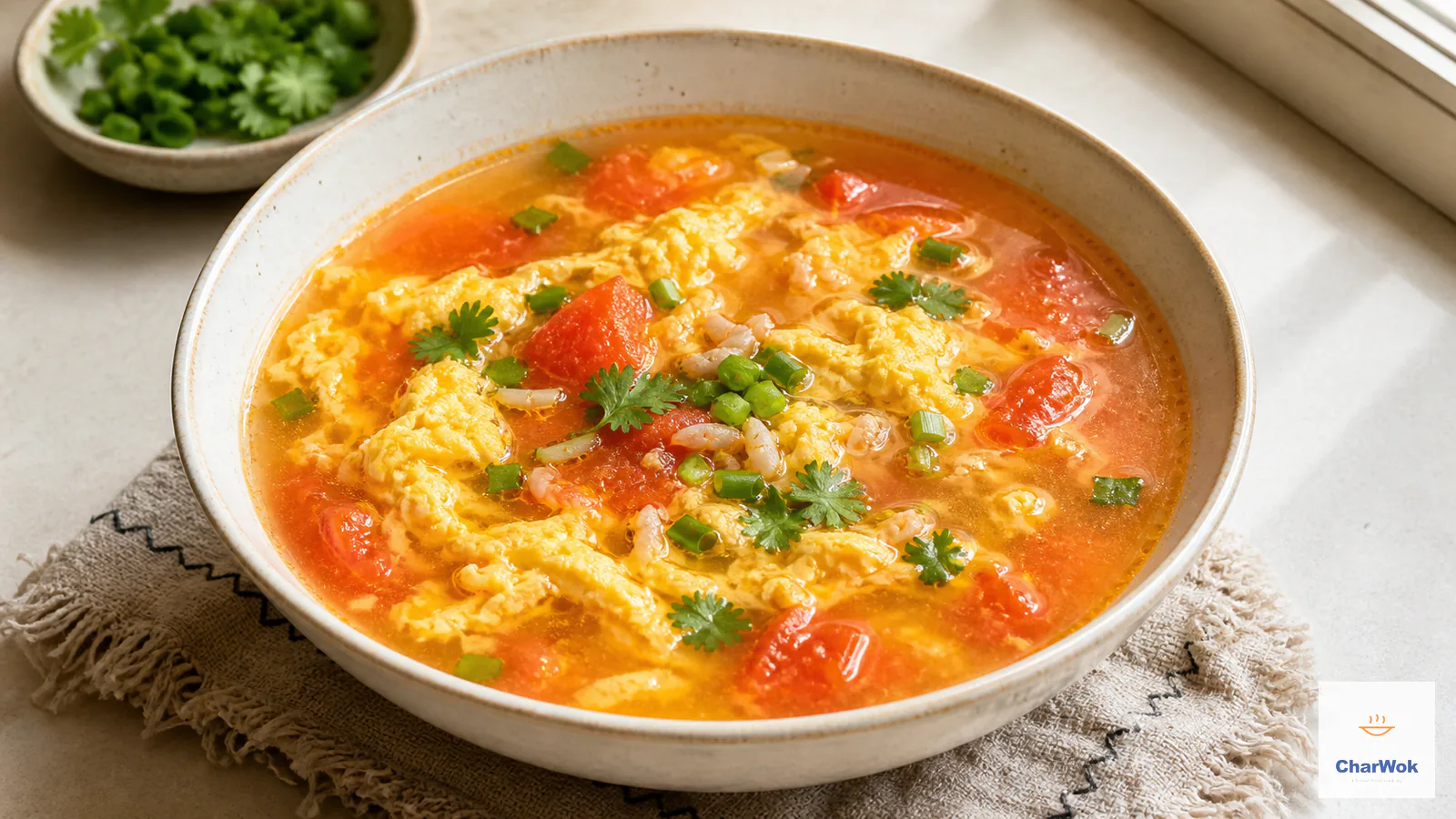
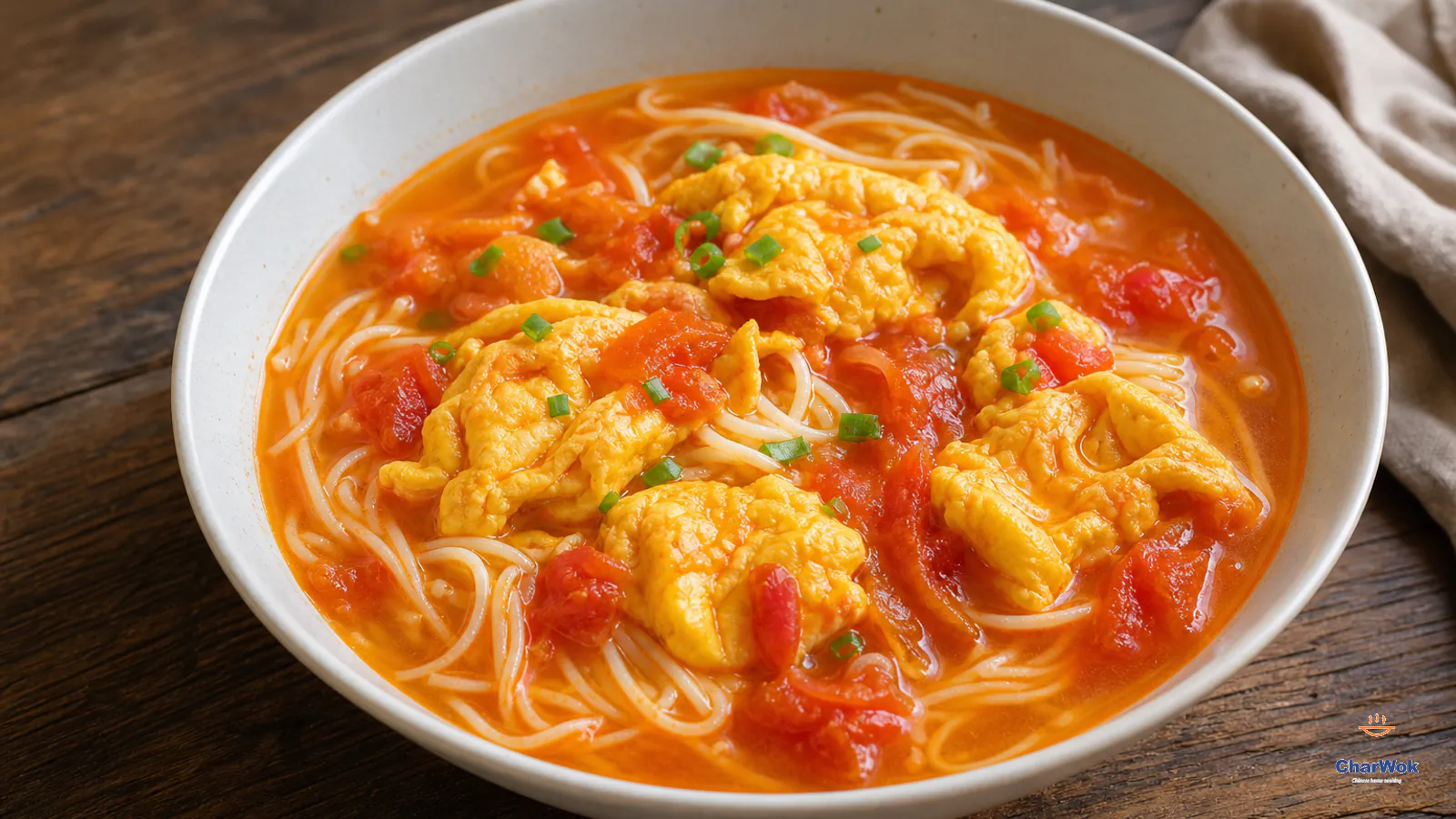
If you are new to egg-drop soups generally, this is the friendliest place to start. The seaweed gives you a visual anchor, so even if your ribbons are uneven the bowl still reads as a finished dish rather than a near miss. For a tomato-bright sibling, see tomato egg drop soup; for something with more body and tang, hot and sour soup uses the same egg-ribbon technique on a heartier base.
The two ingredients people get wrong
Dried laver, not kelp, and not sushi nori
The seaweed here is dried purple laver, sold in Chinese and Korean groceries as a thin, almost-black disk compressed under plastic wrap. It is the same species as the nori sheets you roll sushi with, but it is not pressed flat. It looks like crumpled tissue paper and rehydrates in seconds.
People make two mistakes with it. First, they buy the roasted sushi nori instead, which has already been toasted and will taste flat and papery in soup. Buy the raw compressed laver, usually labeled zi cai or simply "dried seaweed for soup." Second, they confuse it with dried kelp (hai dai), which is thick, leathery, and needs a long simmer. Laver goes in at the end. Kelp would still be tough. If you want to read more on the pantry side, the dried shrimp guide and the light vs. dark soy sauce breakdown cover the other players here.
Papery dried shrimp, or the regular kind handled right
"Papery" dried shrimp are the smallest grade, sun-dried until they are crisp enough to crumble. They are barely there in the bowl, but the oil picks up their fragrance and carries it through the whole pot. If you can only find regular dried shrimp, soak them in warm water for ten minutes and mince them fine before they hit the oil. Whole, they stay chewy and announce themselves too loudly.
One real warning: papery shrimp burn fast. The moment they darken past pale gold they turn bitter and that bitterness will not cook out. Pull the pan off the heat if you are unsure.
Ingredients
Ingredients at a glance
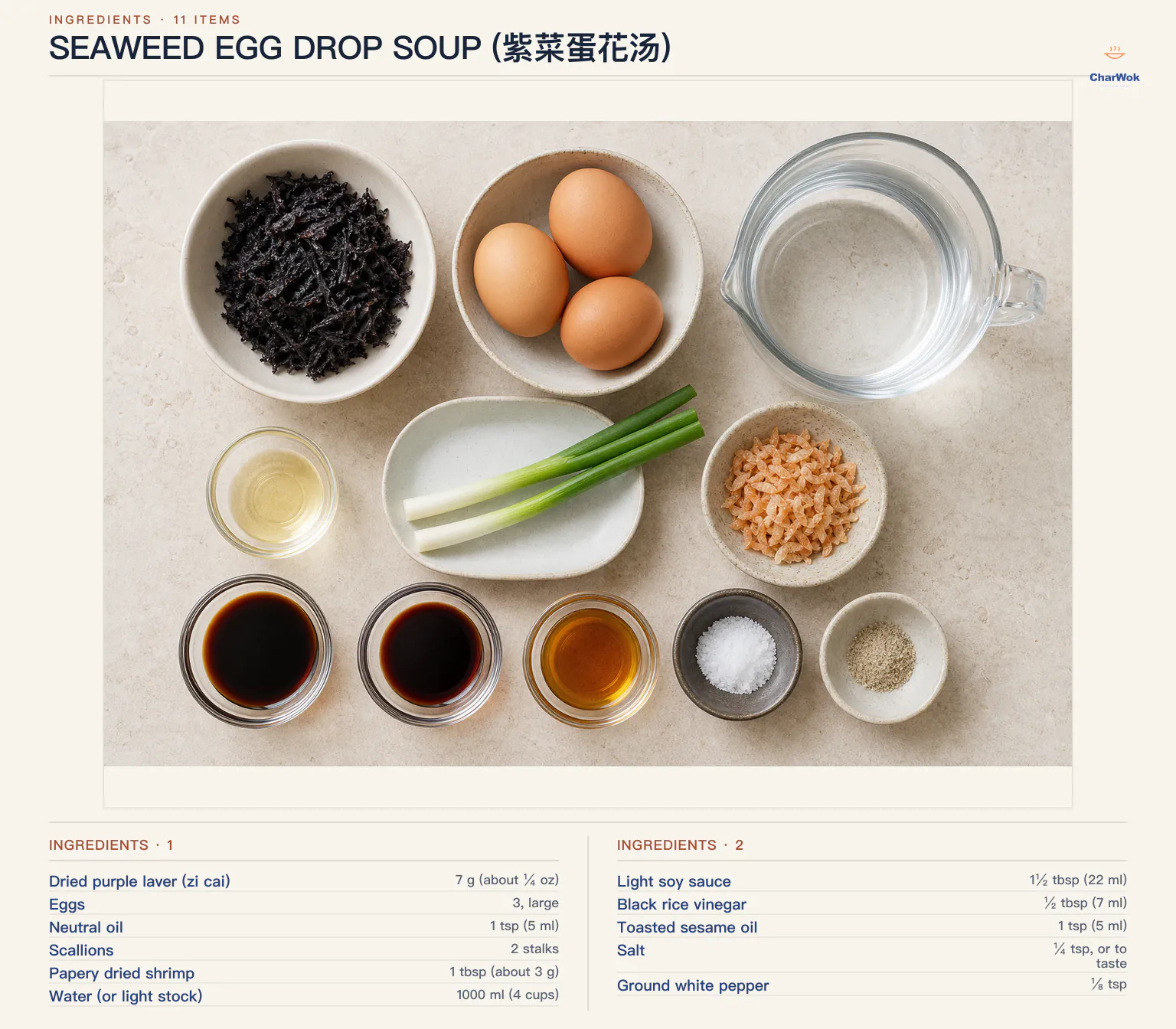
| Ingredient | Amount | Notes / substitute |
|---|---|---|
| Dried purple laver (zi cai) | 7 g (about ¼ oz) | One compressed disk, or a small handful of the loose form. Not sushi nori, not kelp. |
| Eggs | 3, large | Beat lightly until evenly yellow, no foam. Farm eggs give a deeper color. |
| Neutral oil | 1 tsp (5 ml) | Grapeseed, canola, or peanut. Avoid olive oil. |
| Scallions | 2 stalks | Split into white/light-green (for the oil) and dark-green (for garnish). |
| Papery dried shrimp | 1 tbsp (about 3 g) | Or 1 tbsp regular dried shrimp, soaked and minced fine. |
| Water (or light stock) | 1000 ml (4 cups) | A mild homemade chicken stock deepens the bowl; water keeps it cleaner. |
| Light soy sauce | 1½ tbsp (22 ml) | Adds salt and savoriness. Adjust down if your stock is salted. |
| Black rice vinegar | ½ tbsp (7 ml) | A back-note of acid. See the black rice vinegar primer; Chinkiang is the standard. |
| Toasted sesame oil | 1 tsp (5 ml) | Stirred in off the heat so the aroma survives. The toasted sesame oil guide explains why toasting matters. |
| Salt | ¼ tsp, or to taste | The shrimp and soy sauce are salty; taste before adding more. |
| Ground white pepper | ⅛ tsp | White over black here for a cleaner color. A pinch more if you like warmth. |
How to make it, and why each step matters
- Bloom the aromatics in oil. Heat the oil in a saucepan over medium. When it shimmers, add the papery shrimp and the white and light-green scallion parts. Stir for 20 to 30 seconds, until the kitchen smells toasty and the scallions soften. This step fat-solubilizes the shrimp's flavor compounds so they spread through the broth later instead of staying trapped in the shrimp itself.
- Pour in the liquid and bring to a rolling boil. Add the water (or stock) carefully; it will hiss against the hot oil. Crank the heat and let it come to a full, vigorous boil. The eggs need genuine turbulence to ribbon. A lazy simmer makes clumps.
- Drop the heat one notch, then pour and swirl. This is the make-or-break moment. Reduce the heat just enough that the boil drops from volcanic to lively. With one hand, pour the beaten egg in a thin, steady stream from about 20 cm (8 in) above the surface; with the other, swirl the broth in one direction with a spoon or chopsticks. The egg hits moving water, sets into long ribbons on contact, and the swirl lays them out instead of letting them pile up. Stop pouring while a little egg is still left in the bowl if the strands look thick enough.
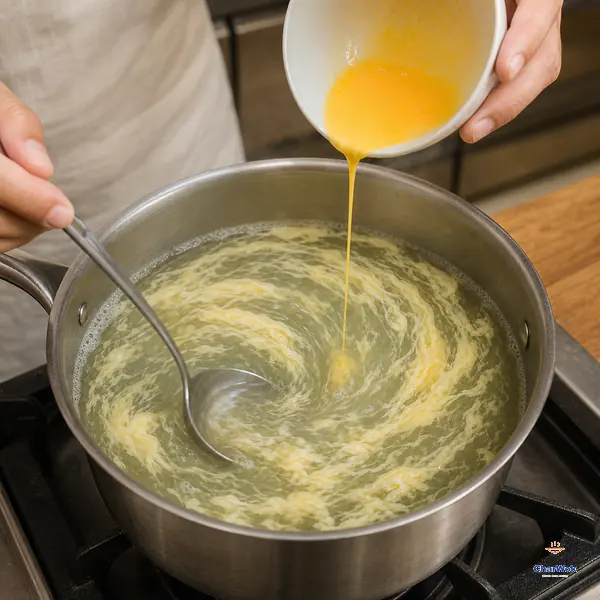
Lower the boil from violent to lively, pour the egg in a very thin stream and move the broth slowly in one direction to stretch distinct ribbons.
- Add the seaweed. Tear the laver into rough pieces and drop it in once the ribbons have set but before they overcook, about 10 seconds after you finish pouring. Simmer 30 seconds, no more. Laver rehydrates almost instantly and turns from black to dark green; left too long it gets slimy and tints the broth muddy.
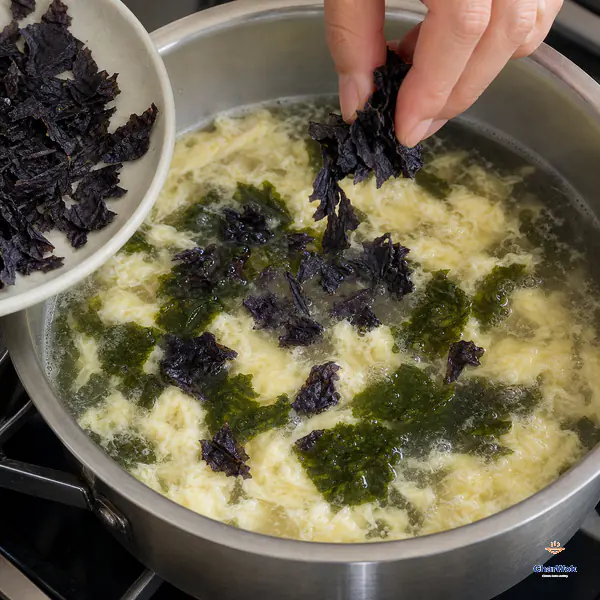
Once the ribbons set, tear in Chinese dried laver and simmer gently for only 30 seconds, just until it softens and turns dark green.
- Kill the heat, then season. Turn the burner off. Stir in the soy sauce, vinegar, sesame oil, salt, and white pepper. Seasoning off the heat keeps the sesame oil fragrant and stops the soy sauce from scorching onto the pan base.
- Finish and serve. Ladle into bowls and scatter the dark-green scallion on top. Eat it now, while the ribbons are still distinct and the broth is clear.
A note on the famous "starch-thickened" egg drop soup: that is a different dish, with a glossy, slightly viscous broth that suspends the egg in long feathery strands. If that is the texture you remember from a restaurant, you want the classic version with a cornstarch slurry, not this one. This soup is meant to be thin and brothy.
When good plans go wrong
| What happened | Why | The fix |
|---|---|---|
| Egg turned into one cloudy clump | You poured while the boil was too gentle, or poured in a fat stream instead of a thin one. | Keep a lively boil, pour from height in a thin stream, and swirl the pot the whole time. Leftover egg in the bowl is fine. |
| Egg dispersed into invisible flecks | You poured into a too-violent boil; the turbulence shredded the curds before they could set. | Drop the heat one notch before pouring. You want movement, not a geyser. |
| Broth tastes flat | Skipped the shrimp-and-scallion oil bloom, or used water with no stock. | Do not skip the oil bloom; it is the base layer. Or swap half the water for stock. |
| Seaweed is slimy and the broth is cloudy | Laver simmered too long or was over-rinsed. | 30 seconds is the limit. Skip rinsing unless the package warns of grit, and drain it fast. |
| Bitter aftertaste | The papery shrimp darkened past pale gold. | Stand over the pan for those 20 seconds. Off the heat the moment the color shifts. |
| Soup is too salty | Salted stock plus full soy sauce plus the shrimp's own salt. | Cut the soy to 1 tbsp if using salted stock, and add salt only after tasting. |
My own recurring failure is impatience on step two. I try to pour the egg the instant the water boils, before the heat is dialed back, and I get shreds instead of ribbons. A five-second pause to tame the boil is the entire difference.
Variations and what to serve it with
The soup is a quiet team player. As a starter it pairs with almost any main. I like it before dumplings, especially pan-fried ones like pork and chive potstickers, or alongside steamed dumplings; the steamed dumpling method works if you are making your own. With a noodle main it disappears fast next to beef chow fun. And on a cold morning, a small bowl with a soft chicken and mushroom congee or even just rice and a vegetable is the kind of breakfast that feels like care.
For variations: drop a handful of thin wontons in for the last few minutes and you have a quick wonton soup. Stir in a tablespoon of beaten minced pork at the oil stage for a meatier version, similar in spirit to winter melon soup with meatballs. A pinch of toasted sesame seeds or a few extra drops of rice vinegar at the table are both honest additions. A spoon of chili crisp turns it into a different, equally good soup for cold nights.
Storage and reheating
This soup is best the minute it is made. The egg continues to cook in the residual heat and the ribbons toughen as they sit, so I cook only what we will eat. If you must hold it, cool it fast and refrigerate up to a day. Reheat gently on the stove to just below a simmer; a hard boil will rubberize the egg. Do not freeze it, the texture does not come back.
FAQ
Can I use sushi nori sheets instead of dried laver?
Not really. Sushi nori is pre-roasted, so it tastes flat and slightly cardboard-y in broth. Buy raw compressed purple laver, labeled zi cai, for soup.
Why did my egg turn into a fluffy cloud instead of ribbons?
Two causes: the boil was too gentle when you poured, or you dumped the egg in instead of streaming it thin. Keep a lively boil, pour from height in a narrow stream, and swirl the pot the whole time.
Is it vegetarian without the dried shrimp?
Without the shrimp it is vegetarian, but you lose the savoriness. Compensate with mushroom soaking liquid or a light vegetable stock, and a few extra drops of soy sauce. Do not try to replace it with fish sauce, which overwhelms the seaweed.
Can I thicken it like restaurant egg drop soup?
Yes, but you are really making the classic thickened version at that point. Add a cornstarch slurry (1 tsp starch to 2 tbsp cold water) before the egg, let it return to a boil, then pour the egg. The viscosity is what suspends those long feathery strands.