Open any well-stocked Chinese pantry and you will find dried shrimp hiding in a jar at the back, looking unimpressive. They are the reason a plain bowl of congee tastes like it simmered all day, the reason fried rice from a takeout box has that "I can't place it" depth. The ingredient is small. The payoff is not.
The hard part for most home cooks is not buying dried shrimp. It is buying the right kind, knowing whether to soak, and learning to toast them in oil before anything else goes into the pan. Skip that last step and you have spent money on something that tastes like salty cardboard with a chewy center.
Dried shrimp are a concentrated umami ingredient, not a protein. A heaping tablespoon, bloomed in hot water for 10 minutes or toasted in oil for 30 seconds, is enough to season a stir-fry or a pot of soup for four. Buy two kinds: firm orange ones for depth, papery beige ones for sweetness.
What you are actually buying
Chinese cooks use two distinct products, and confusing them is the single most common mistake I see. They are not interchangeable, and they behave differently in the pan.
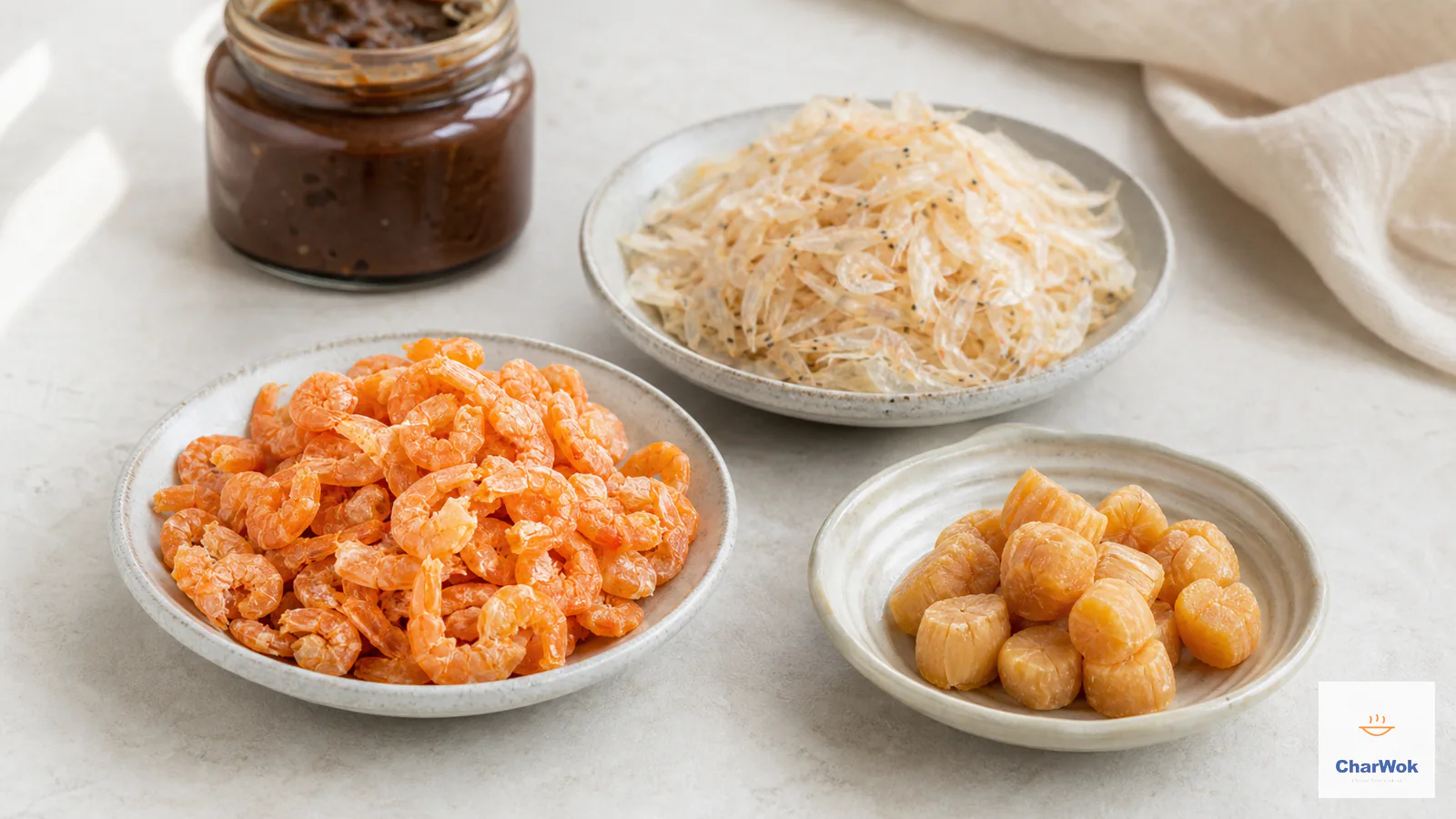
Regular dried shrimp (xiā mǐ or hǎi mǐ) are boiled, then sun-dried or baked until most of their moisture is gone. Heads and shells are removed. They come out firm, translucent-orange, and intensely savory. This is the version that carries a dish, the one you mince into dumpling fillings or fold into turnip cake to give a vegetarian-leaning mixture backbone. Sizes run from roughly 1 cm to 2.5 cm (about ⅓ to 1 inch). The large ones look impressive and cost more. I keep buying the small ones anyway, because flavor is identical and I am usually mincing them.
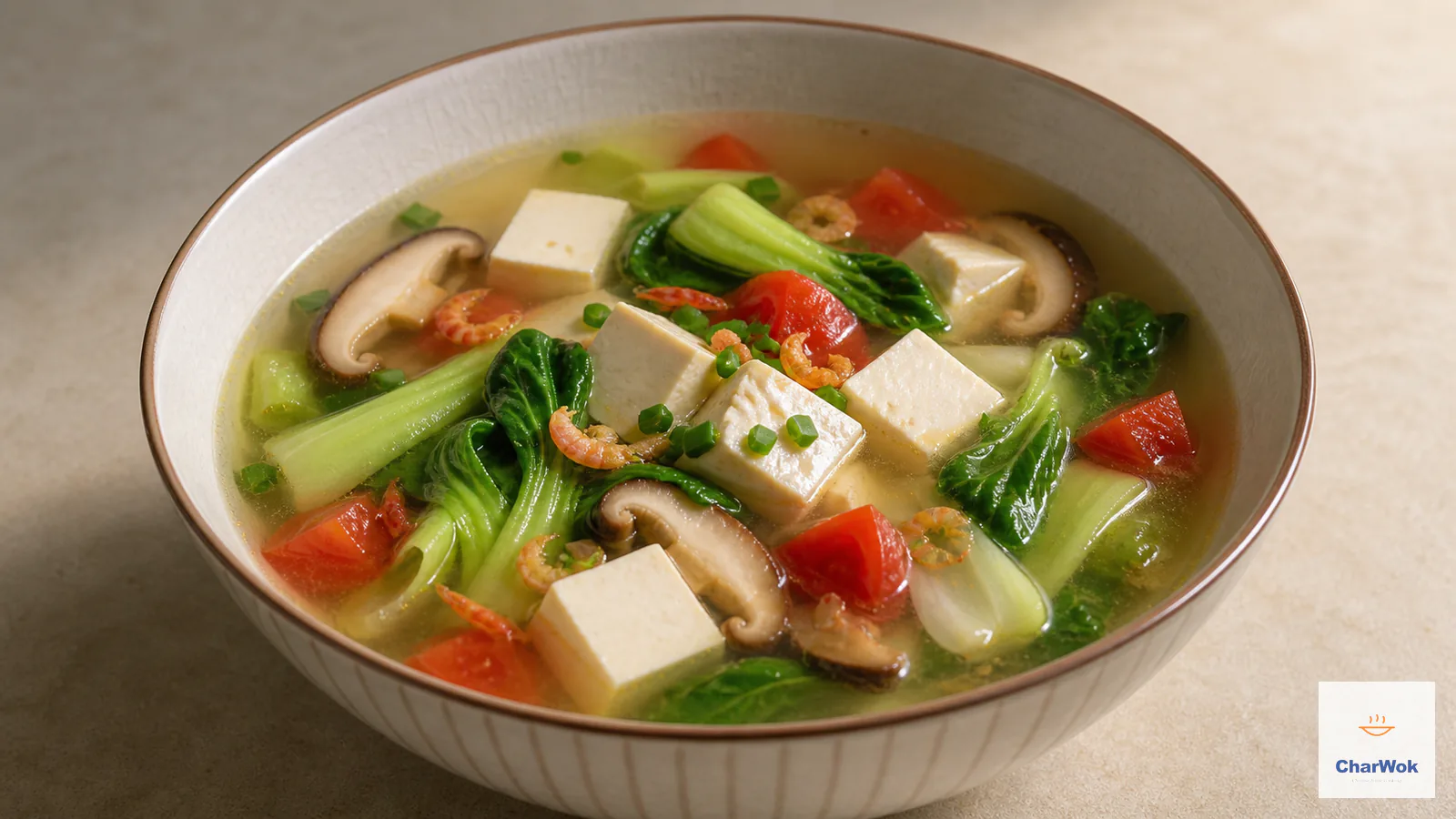
Papery dried shrimp (xiā pí, literally "shrimp skin") are a different animal entirely. They are tiny, pale, slightly translucent, with heads and tails still attached and a crisp, almost flaky texture. The taste is milder than the regular kind, with a clean sweetness that I really like in delicate dishes. A handful dropped straight into seaweed egg drop soup or a tofu and vegetable soup is the move here. They do not need soaking.
If your pantry can only hold one, make it the regular orange kind. It is more versatile.
Why a handful matters so much
Dried shrimp work the same way Shaoxing rice wine or aged soy sauce do: they are a flavor amplifier, not a main ingredient. The drying process concentrates the free glutamate already present in the shrimp muscle. Glutamate is the compound your tongue reads as savoriness, the same signal you get from parmesan, tomatoes, or mushrooms. Rehydrating the shrimp releases that glutamate into the surrounding liquid, which is why the soaking water is worth more than the shrimp themselves in some recipes. The same logic applies to rehydrated dried shiitake mushrooms; the liquid is the prize.
This is also why dried shrimp rescue dishes that would otherwise taste thin. A bowl of egg drop soup built on water, not stock, turns genuinely good with a tablespoon of dried shrimp steeped in it. I have made plenty of dull weeknight soups respectable this way.
Stocking the pantry
Ingredients at a glance
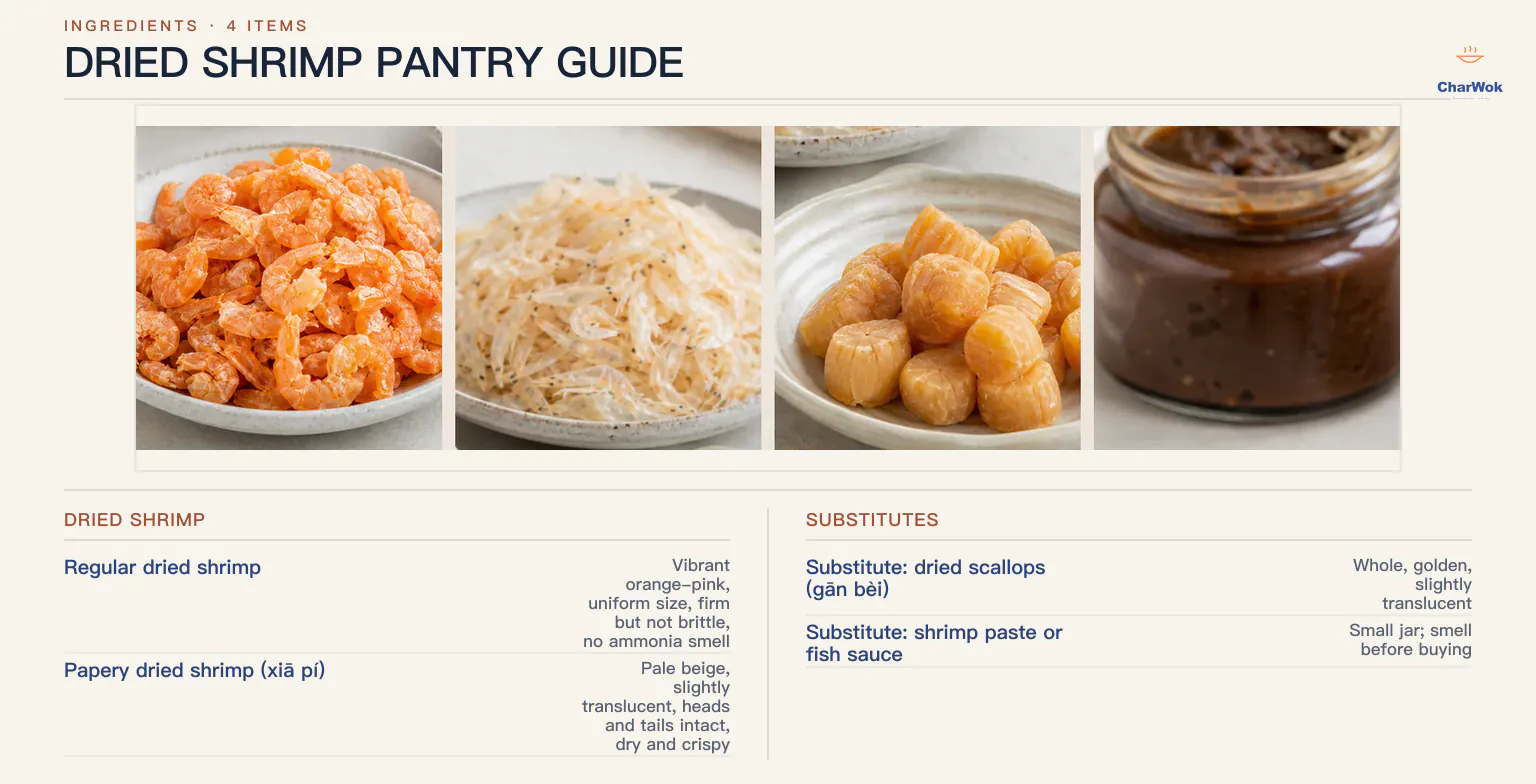
| Item | What to look for | Notes |
|---|---|---|
| Regular dried shrimp | Vibrant orange-pink, uniform size, firm but not brittle, no ammonia smell | Heads and shells removed. Smaller is cheaper and equally flavorful. |
| Papery dried shrimp (xiā pí) | Pale beige, slightly translucent, heads and tails intact, dry and crispy | Avoid chalky, dusty, or gray-looking stock. |
| Substitute: dried scallops (gān bèi) | Whole, golden, slightly translucent | For soups and braises. More delicate, less brash. Rehydrate 20–30 min. |
| Substitute: shrimp paste or fish sauce | Small jar; smell before buying | Use sparingly. Much saltier and funkier. Half a teaspoon often does the work of a tablespoon of dried shrimp. |
A note on quality that nobody tells you: smell the bag before you commit. Good dried shrimp smell like the ocean, clean and a little sweet. Bad ones smell sharp, like ammonia, or flat like old paper. Ammonia means the shrimp were not dried fast enough and are turning. I once bought a beautiful-looking bag from a discount bin and had to throw the whole thing out. Looks are not enough. Trust your nose.
How to prepare them
The method splits along the line between the two types. Regular shrimp need rehydrating. Papery ones usually do not.
- Rinse the regular shrimp. Put them in a fine strainer and run cold water over them for a few seconds. Dried seafood picks up surface dust and grit in storage, and a quick rinse keeps that out of your finished dish.
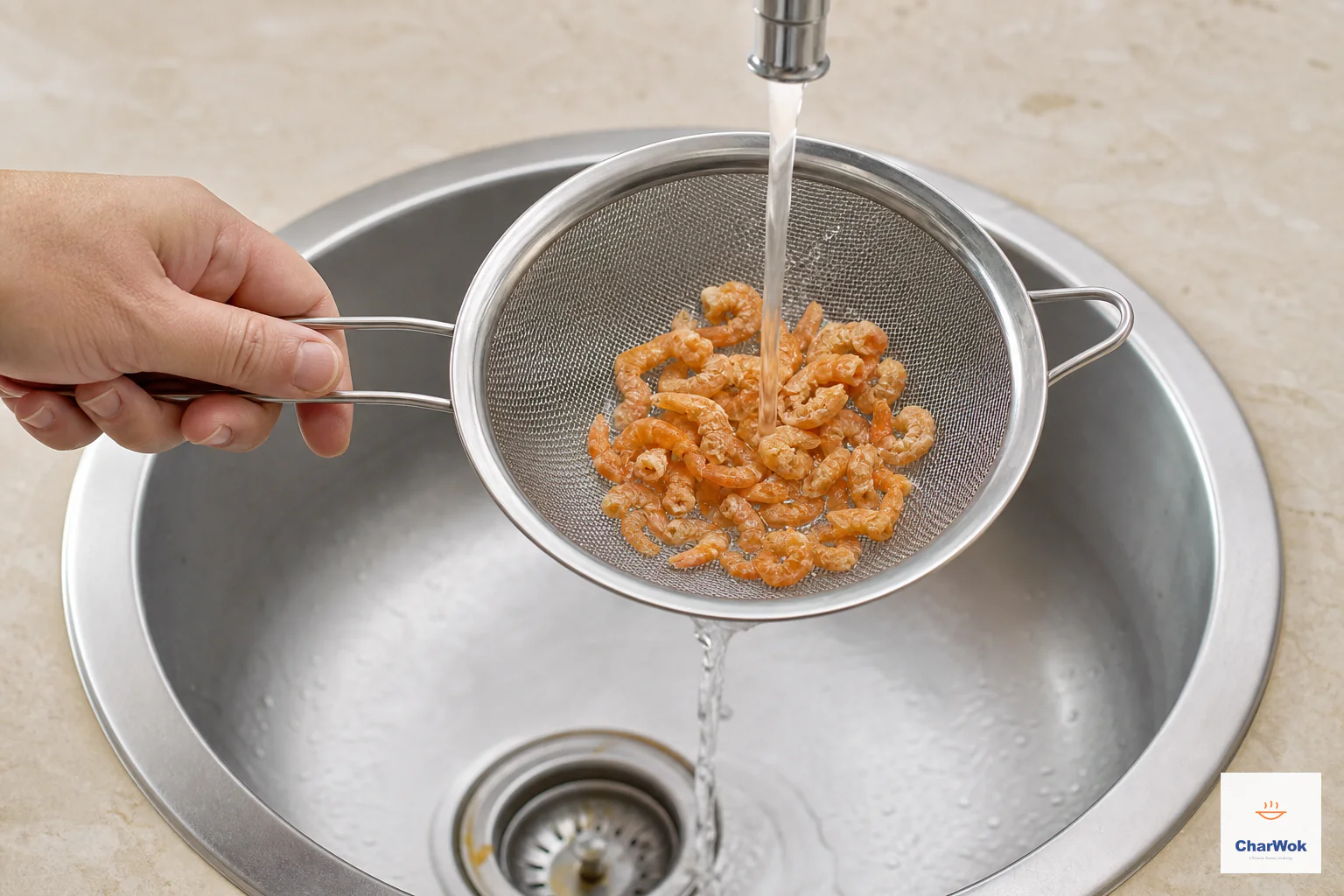
Rinse regular dried shrimp for only a few seconds in a fine strainer, then drain; the Recipe image pairs this rinse with adding just enough hot water to submerge them.
- Cover with hot water and soak. Transfer to a small bowl. Pour in just-boiled water to fully submerge them, then walk away. Small shrimp need about 10 minutes; large ones up to 20. You are not trying to cook them, only to soften the flesh and release the glutamate into the water. They should feel plump and yield slightly when squeezed, not rubbery.
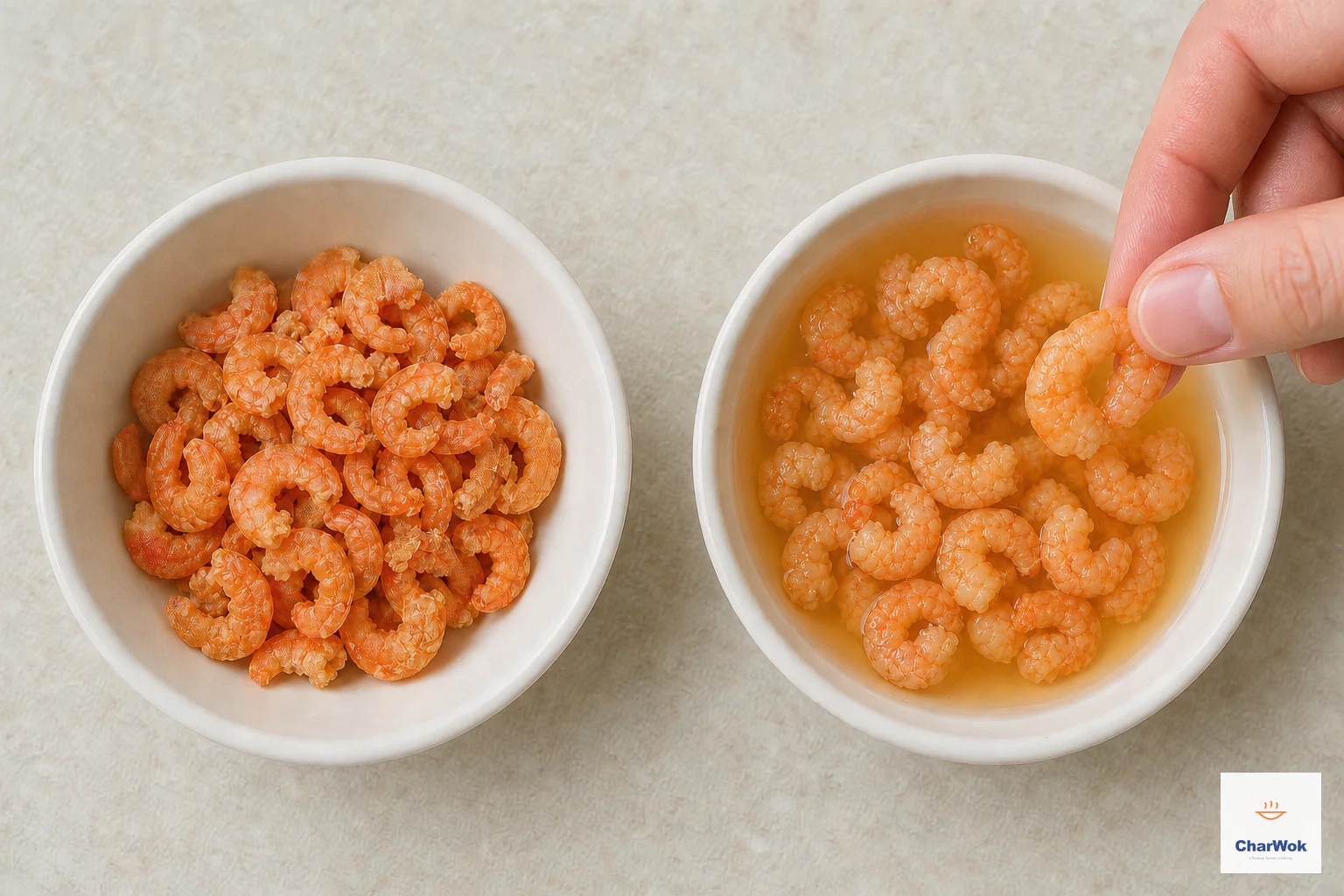
Cover with just-boiled water and soak small shrimp for about 10 minutes or large shrimp for up to 20, stopping when plump and yielding rather than rubbery.
- Save the soaking liquid. Pour it through a strainer to catch any grit and add it to whatever you are cooking. In a soup or braise this is free stock. The same trick makes winter melon soup with meatballs taste like it was built on a long-simmered broth.
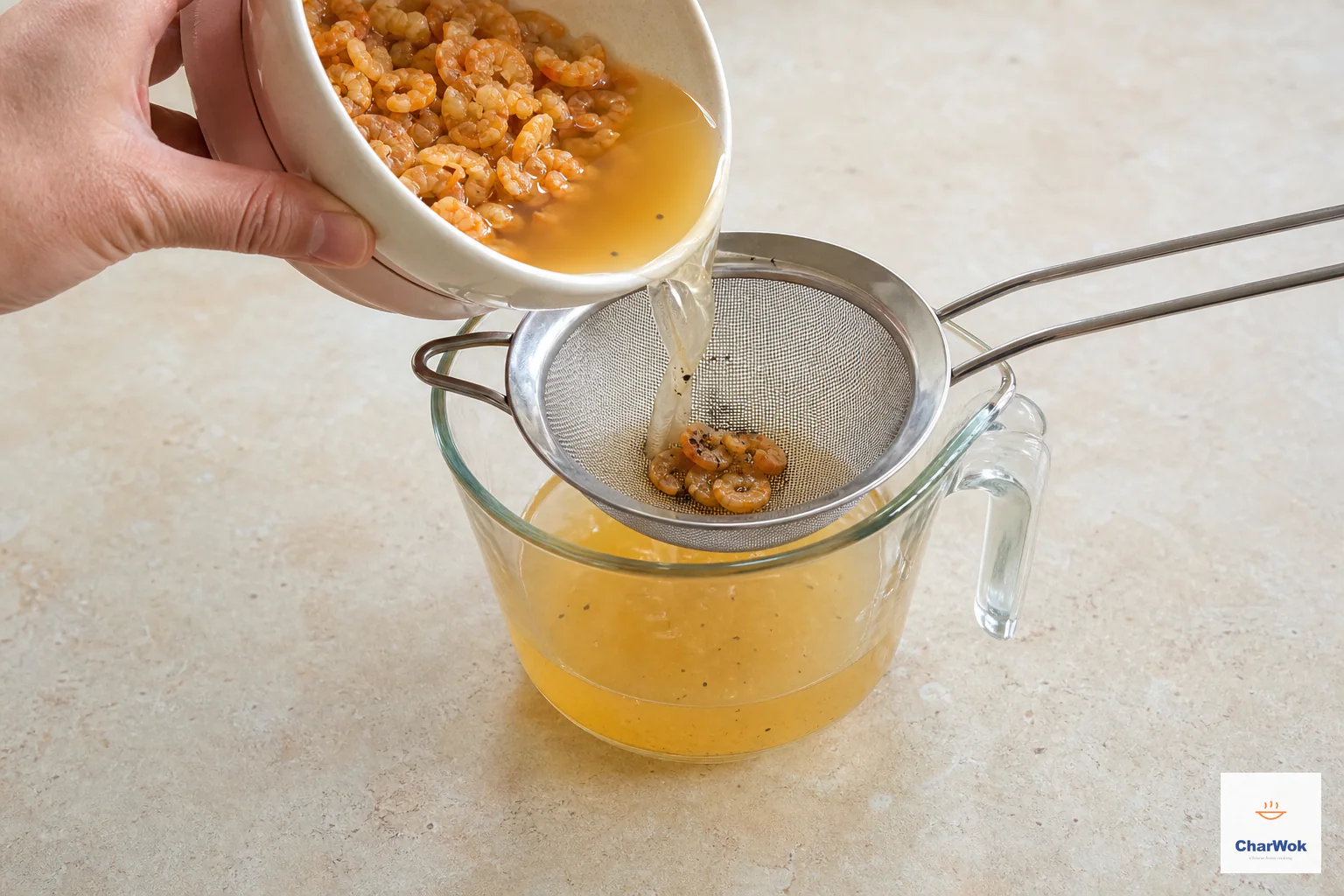
Strain and keep the soaking liquid for soup, braise or rice; discard only the fine grit caught by the mesh.
- Cut to match the dish. For fillings and pastes, mince the rehydrated shrimp very fine or pound it in a mortar. For stir-fries and fried rice, a rough chop gives you little bursts of flavor and texture. Use them whole only if they are quite small, otherwise the texture is distracting.
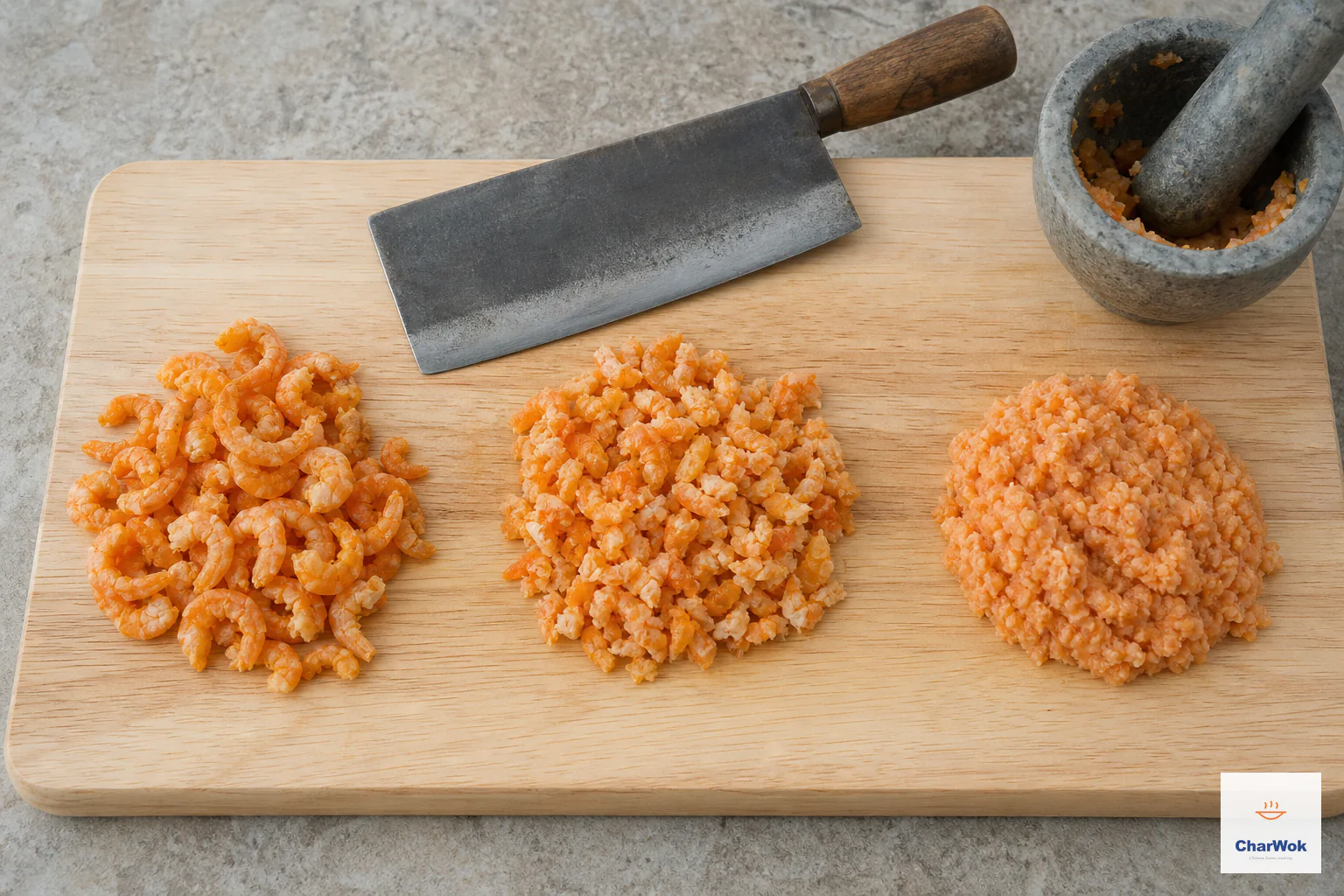
Leave small shrimp whole, rough-chop them for stir-fries, or mince or pound them for fillings and pastes.
- Toast in oil first when you can. This is the step that separates a good cook from someone following a recipe. Before adding aromatics to your wok, warm a tablespoon of oil over medium-low heat and tumble in the minced dried shrimp. Stir for 20 to 30 seconds, just until they smell nutty and the oil turns faintly orange. The heat drives off the raw, slightly fishy edge and replaces it with a roasted, almost bacon-like savoriness. Do this for egg fried rice, chow mein, and most stir-fries. Do not do it for delicate soups, where the raw sweetness is what you want.
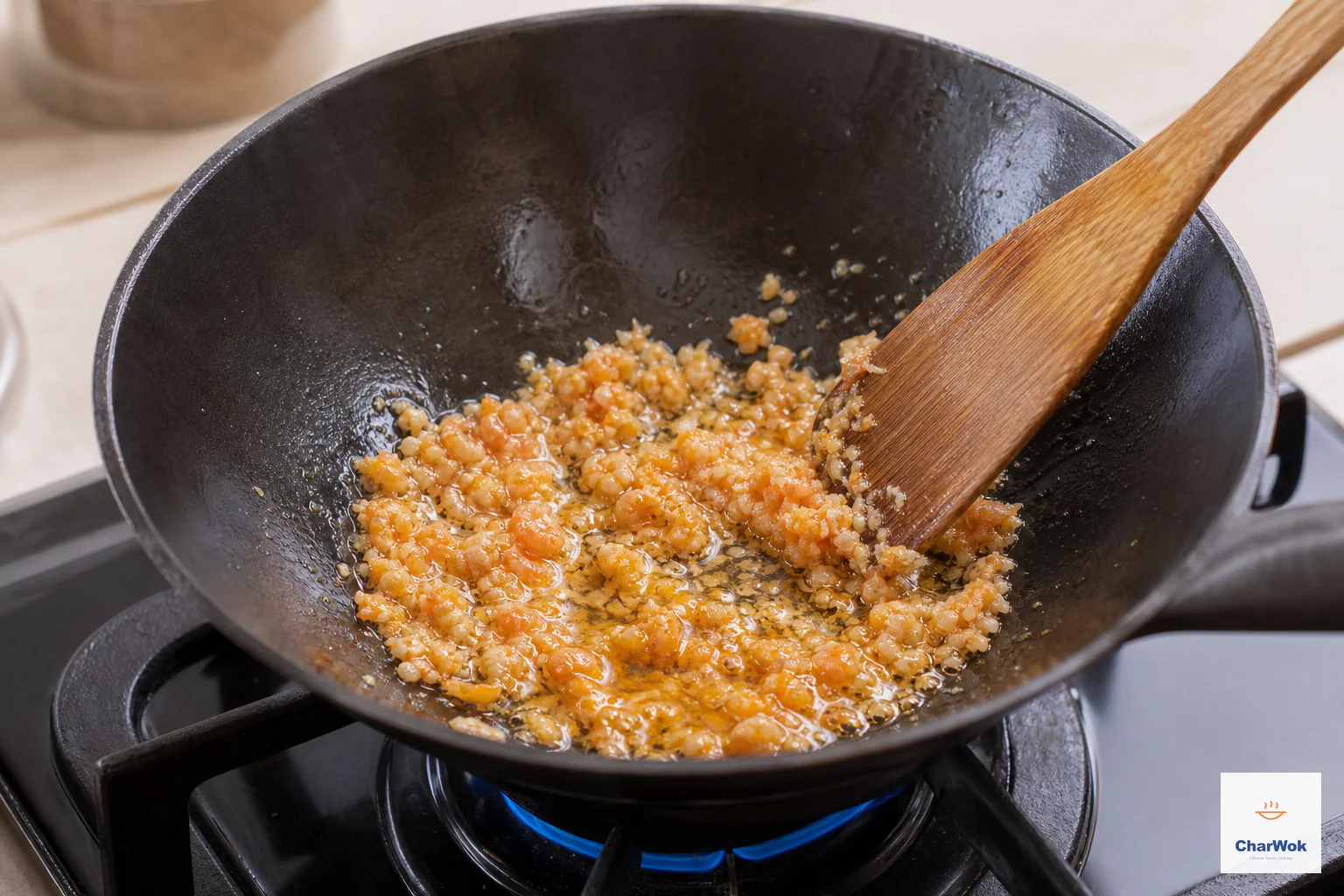
For dishes that benefit from a nutty base, toast the mince in 1 tablespoon oil over medium-low heat for only 20 to 30 seconds; skip this for delicate soup.
For papery dried shrimp, skip everything above. Add them straight to the dish. They rehydrate in the cooking liquid within a minute or two. If you are folding them into a cold salad or a filling and want them softer, a 5-minute soak in warm water is plenty.
Where they earn their place
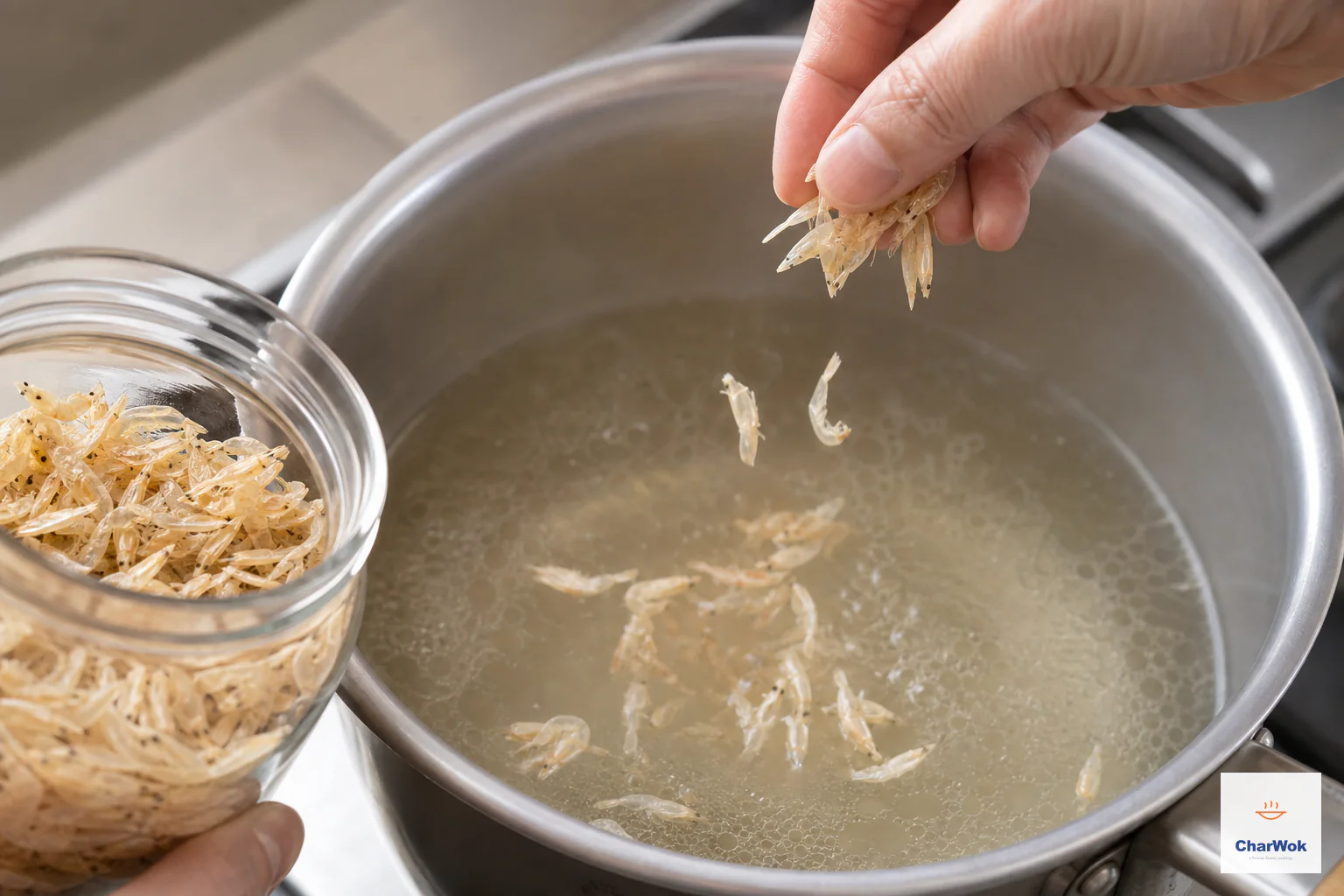
Papery shrimp usually need no soak: add a small dry pinch directly to a delicate soup or chop or mince them as the dish requires.
Dried shrimp are at their best in dishes that lean vegetarian or bland. A pot of plain rice porridge becomes breakfast food with a spoonful stirred in. Steamed rice noodle rolls like cheung fun get a savory top note. Dim sum sticky rice in lotus leaf would taste hollow without them. Even something as rich as Lion's Head meatballs benefits from a little minced dried shrimp folded through the pork to lift the fat.
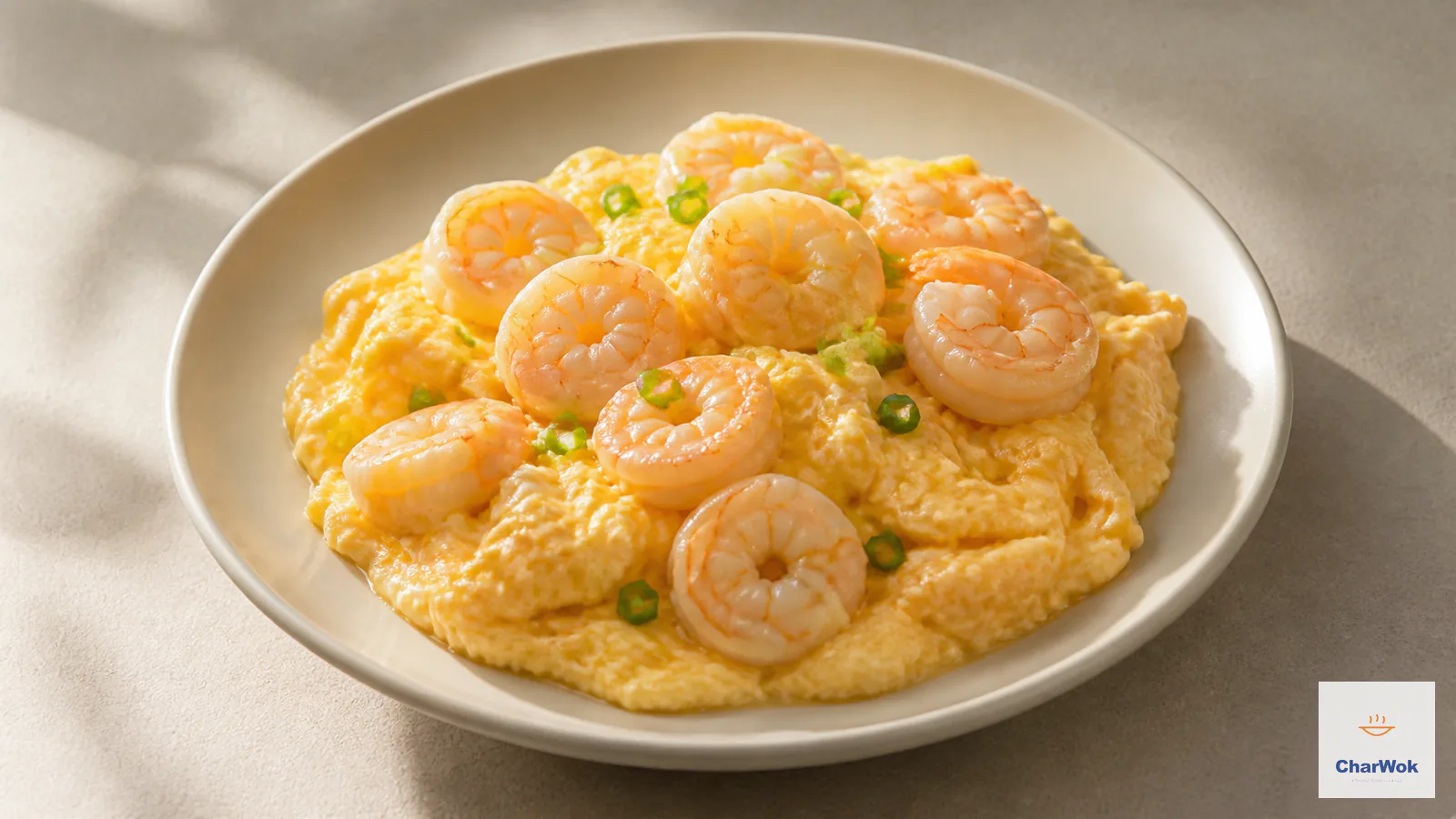
The one place to be careful is with seafood-forward dishes. Dried shrimp in a stir-fry of fresh shrimp is usually too much of a good thing; the dried notes fight the fresh ones. Keep them for vegetable, egg, tofu, pork, and rice dishes, and let fresh shrimp star on their own.
When things go wrong
A few failures come up over and over. Here is how I handle them.
The dish tastes fishy, not savory. You either used too much, skipped the oil-toasting step, or both. A tablespoon of regular dried shrimp seasons a stir-fry for four. More is not better; it is metallic. Next time, halve the amount and toast in oil before adding aromatics. To rescue the current batch, a splash of rice wine or a teaspoon of sugar will mask the edge.
The shrimp are chewy or gritty in the finished dish. They were not soaked long enough, or they were not cut small. Large shrimp need the full 20 minutes, and anything bigger than a fingernail should be chopped. A gritty texture usually means you skipped the rinse or poured the soaking liquid in without straining.
The soaking liquid smells off. Trust that smell and throw it out, along with the shrimp. Dried seafood that has gone bad is not worth salvaging. This is why I buy in small quantities and use the freezer.
You cannot find dried shrimp at all. Dried scallops work in soups and braises but are milder and pricier. A small smear of shrimp paste or a dash of fish sauce gets you partway in a pinch, but use far less. These substitutes are covered in the table above, and they all share the same rule: less is more.
Variations worth trying
Once you understand the basic move, mince and toast, the door opens. Combine toasted dried shrimp with an equal amount of toasted dried shiitake for a filling that punches above its weight in dumplings and steamed buns. Pulverize toasted dried shrimp with a little sugar and salt to make a sprinkle for plain rice porridge, a Chinese answer to furikake. For a southern Chinese touch, blend toasted dried shrimp with fermented black beans to season steamed spareribs.
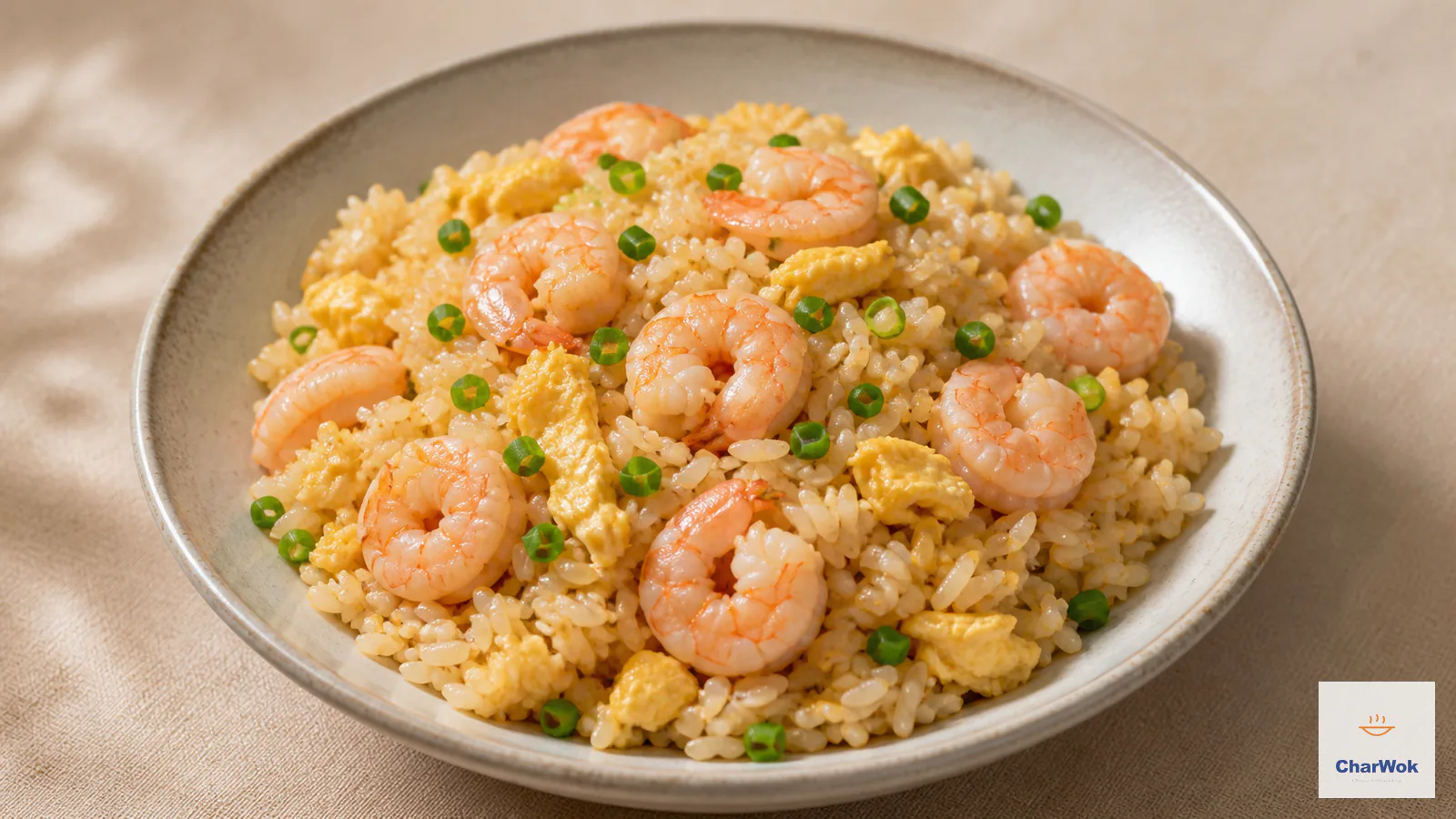
My favorite quick application is fried rice. Toast the minced shrimp, then proceed as you would for shrimp fried rice or a plain egg version. The dried shrimp do the work a stock would, without the extra liquid.
Storage
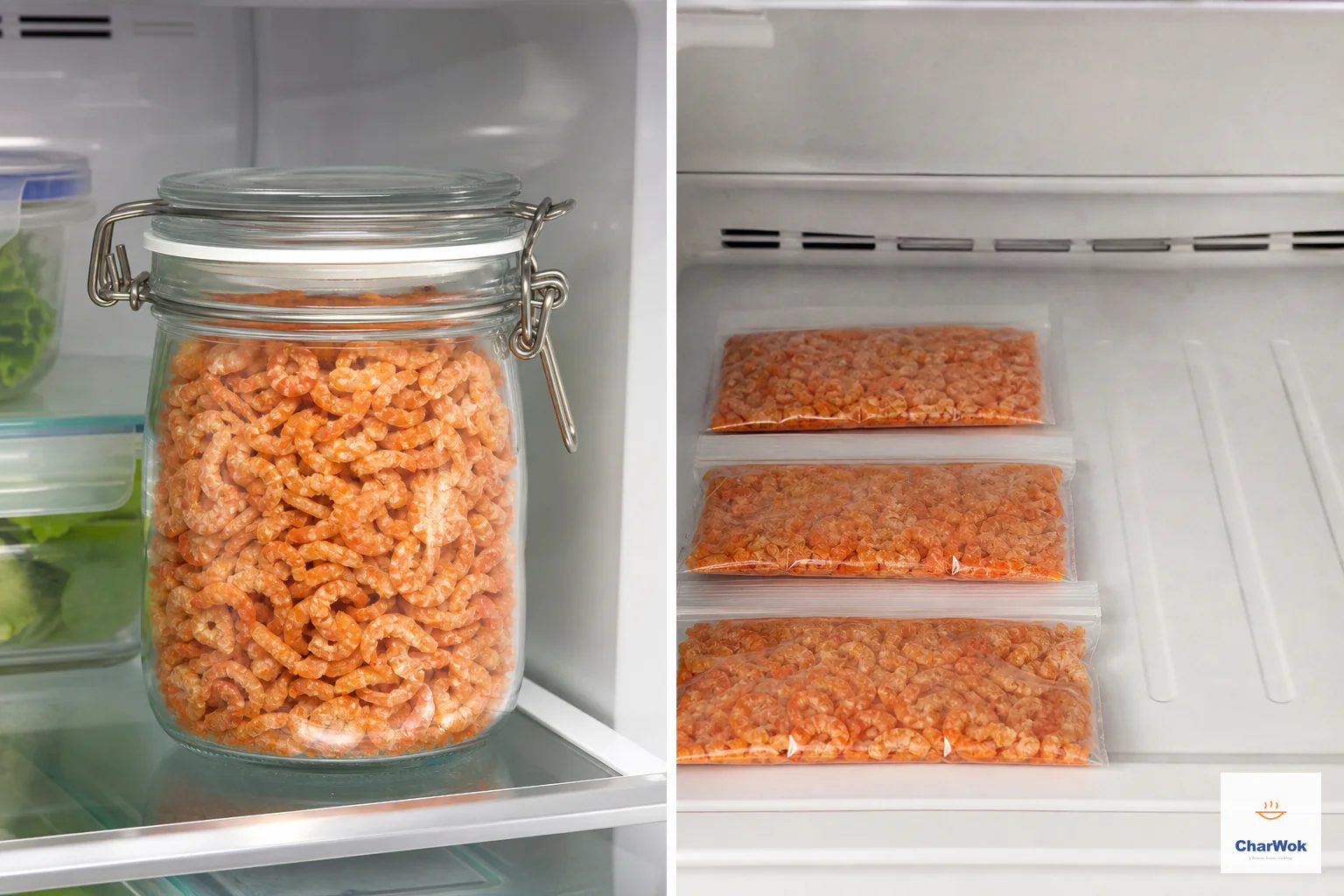
Keep opened dried shrimp airtight in the refrigerator for up to 2 months, or freeze small sealed portions and thaw them in the refrigerator.
Once the package is open, dried shrimp are not shelf-stable for long in a warm kitchen. The oils in them go rancid, and the texture turns leathery. Transfer them to an airtight container and keep it in the refrigerator, where they will hold for about two months. For anything beyond that, divide into small portions and freeze. Frozen dried shrimp keep their quality for six months or more. Defrost in the fridge, never at room temperature, and never refreeze.
I keep mine in two spots: a small jar in the fridge for the week's cooking and a bag in the freezer for backup. If dried shrimp are part of your regular rotation, this is the system I would copy. They belong alongside the other core Chinese condiments that earn their shelf space by showing up in dish after dish.
Frequently asked questions
Do I need to soak papery dried shrimp?
No. They are thin enough to soften during cooking. A five-minute warm-water soak only helps if you are using them raw in a salad or filling.
Can I substitute dried shrimp with something easier to find?
Yes, partially. Dried scallops work in soups and braises but cost more. Shrimp paste or fish sauce add savoriness in a pinch, though they are saltier and funkier, so use about a quarter of the quantity.
Why toast dried shrimp in oil first?
Brief toasting drives off the raw, slightly fishy smell and brings up a roasted, savory note. It matters most in stir-fries and fried rice, and not at all in delicate soups.
How long do dried shrimp keep?
About two months refrigerated in an airtight container, six months or more portioned and frozen. Discard any that smell of ammonia.
Should I throw out the soaking water?
No. It holds much of the glutamate you paid for. Strain it to remove grit, then add it to soups, braises, or rice.