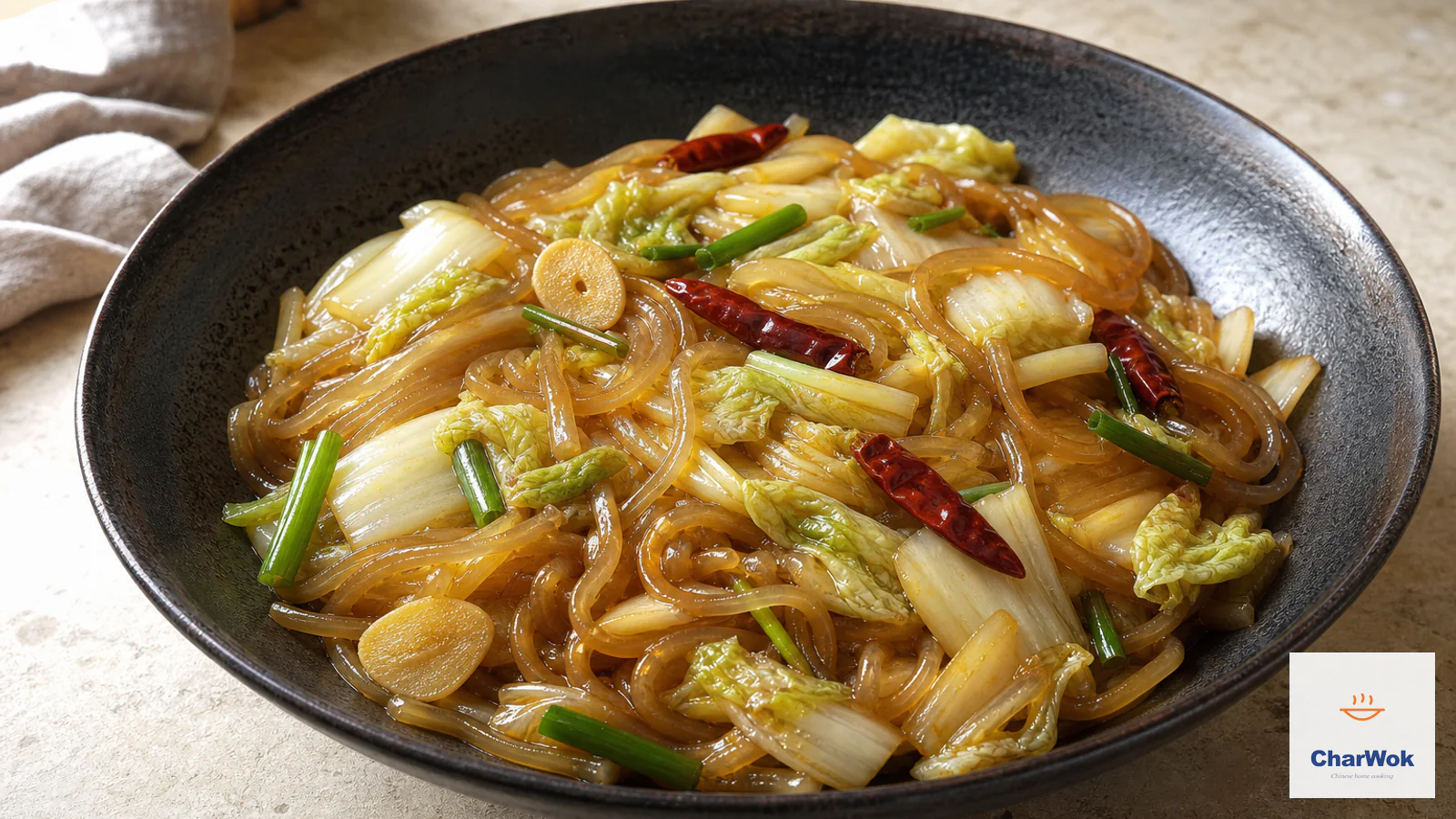
The first time I made this dish, I tossed fully softened glass noodles into the wok with a splash of water and ended up with a stiff, sticky clump that one of my guests politely described as "filling." That was the day I learned what northern Chinese home cooks have known for generations: glass noodles braised with napa cabbage is not a stir-fry. It is a four-minute negotiation between starch and broth, and the noodles are supposed to finish the cooking for you.
Done right, you get two textures in one bowl: translucent, bouncy noodles that have drunk up a savory soy-oyster broth, and napa cabbage that still snaps. The dish is northern Chinese through and through, the kind of thing that shows up on cold-weather tables from Shandong to the northeast, where cabbage was the winter vegetable and a pot of bai cai dun fen tiao could feed a family cheaply. It belongs on any honest list of classic Chinese noodle dishes, and it is one of the most forgiving things you can cook on a weeknight.
At a glance. 80 g of dried sweet-potato noodles braised with half a head of napa cabbage in 120 ml of broth for about 4 minutes covered. The noodles do the last stretch of cooking by absorbing the liquid, so leave them slightly under-soaked. Total active time under 20 minutes for two generous servings.
Why this dish works (and where it usually fails)
Three things make or break it, and they all come down to starch. Sweet-potato noodles (fen tiao) are almost pure starch, which means they behave the opposite of wheat noodles. Boil them to death and they turn to paste. Under-soak them and the center stays chalky. The trick is to rehydrate them just to the point of bendy, then let the covered braise gelatinize the core. That is the whole technique, and it is the same one I rely on for hot and sour glass noodle soup, where the noodles finish in a spicy broth instead of a wok.
The second lever is the cabbage. Napa has two distinct parts, and they cook at different speeds. The thick white ribs need a head start in the hot oil so they soften and pick up a little char. The leafy green tops collapse in seconds, so they go in at the end. If you dump everything in at once, you get raw ribs and overcooked greens. I treat it the same way as a quick hot and sour napa cabbage stir-fry: separate the parts, add them in two waves.
The third is the pepper oil. Whole Sichuan peppercorns are toasted in cold oil over low heat to release their citric, mouth-tingling aroma, then fished out and discarded. What stays behind is fragrant oil, not gritty bits you bite into. It is the foundation of a lot of Sichuan-style cooking, and skipping it is the most common reason home versions of this dish taste flat.
Ingredients
Ingredients at a glance
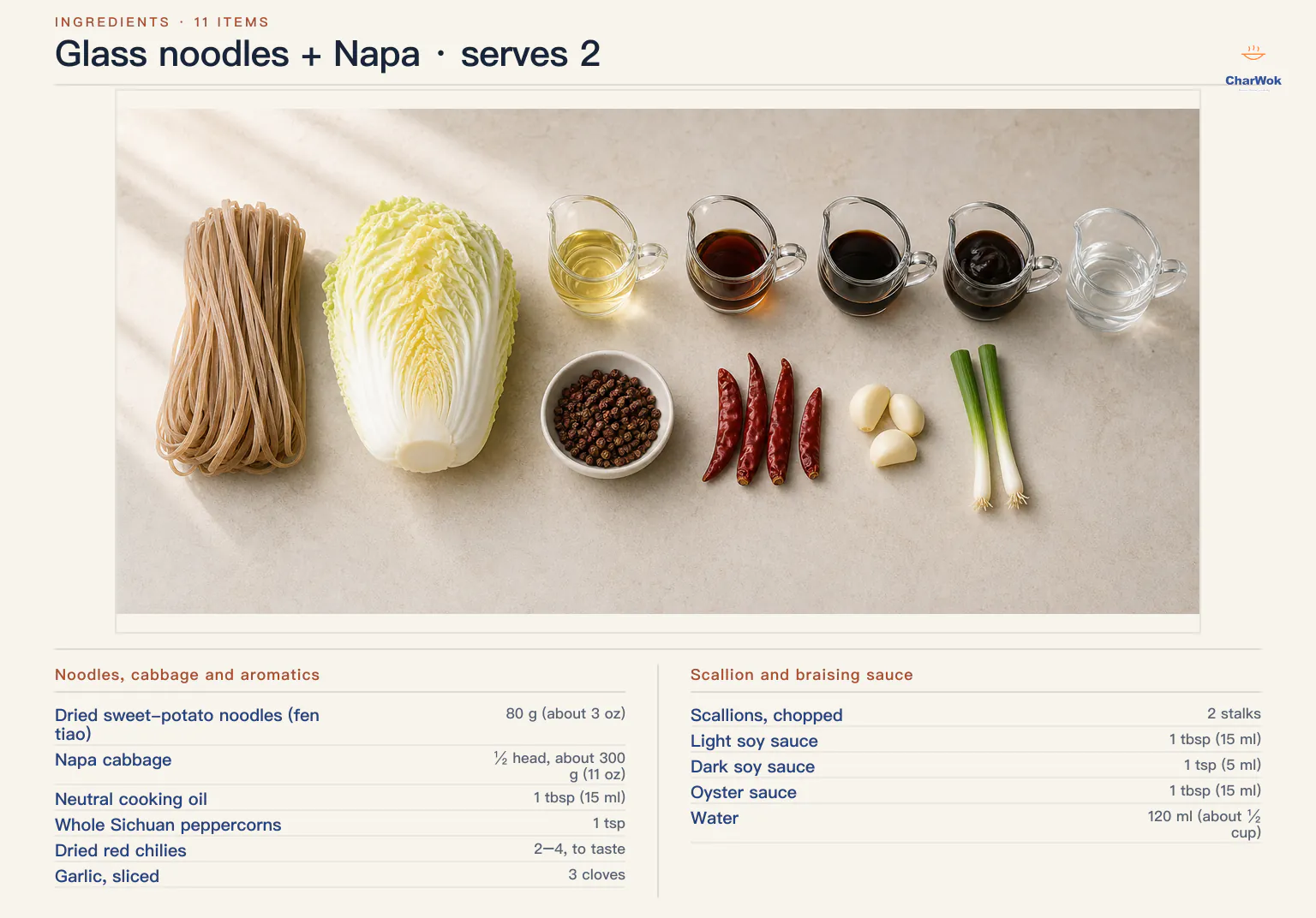
This is a five-ingredient pantry dish dressed up with a few aromatics. Round or flat dried sweet-potato noodles are what you want, usually sold in 200–400 g bags at any Asian market. If you cannot find them, mung-bean vermicelli works but behaves differently, so see the substitute notes.
| Ingredient | Amount | Notes / substitute |
|---|---|---|
| Dried sweet-potato noodles (fen tiao) | 80 g (about 3 oz) | Potato noodles work too. Mung-bean vermicelli can sub but needs less cooking time. |
| Napa cabbage | ½ head, about 300 g (11 oz) | Savoy or baby bok choy in a pinch; separate ribs from leaves. |
| Neutral cooking oil | 1 tbsp (15 ml) | Peanut, canola, or grapeseed. |
| Whole Sichuan peppercorns | 1 tsp | Toast and remove. Skip for a non-numbing version. |
| Dried red chilies | 2–4, to taste | Whole, snipped in half, seeds in for heat. Fresh red chilies also work. |
| Garlic, sliced | 3 cloves | Minced garlic burns faster; slices hold up in hot oil. |
| Scallions, chopped | 2 stalks | Reserve some green for garnish. |
| Light soy sauce | 1 tbsp (15 ml) | The salt and umami backbone. See light vs. dark soy sauce. |
| Dark soy sauce | 1 tsp (5 ml) | For color; omit if you only have light. |
| Oyster sauce | 1 tbsp (15 ml) | Mushroom stir-fry sauce for a vegan version. |
| Water | 120 ml (about ½ cup) | Hot water or unsalted stock for more flavor. |
Method
- Under-soak the noodles. Put the dried noodles in a heatproof bowl and cover with just-boiled water. Soak round noodles about 5 minutes and flat ones about 10, until they are pale, pliable, and bend easily but still resist when you try to snap one with a fingernail. That faint resistance is exactly what you want, because the braise will cook it the rest of the way. Drain, rinse under cold tap water to stop the softening and wash off surface starch, and set aside. (For mung-bean vermicelli, soak in cool water instead and drain the moment they turn flexible.)
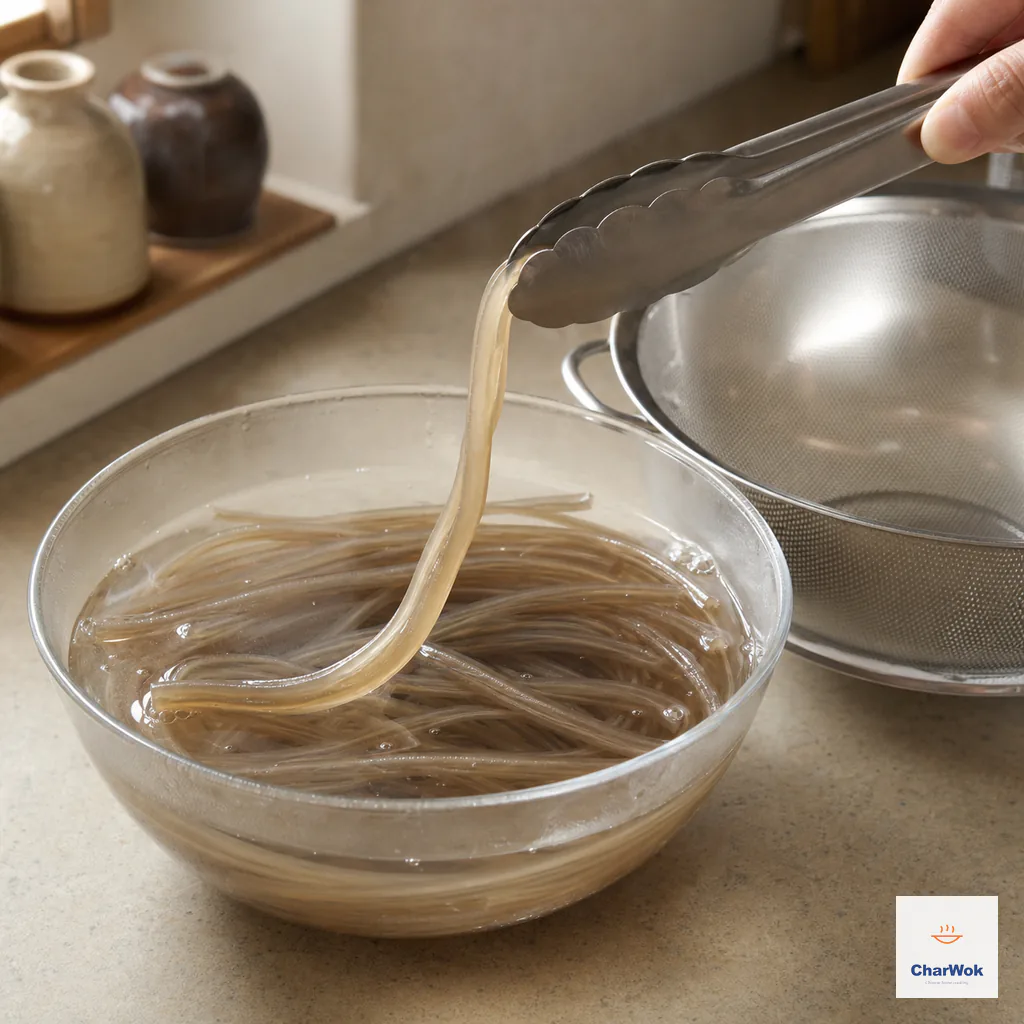
Soak round noodles about 5 minutes or flat noodles about 10, stopping while they still resist a fingernail; rinse cold and drain well.
- Split the cabbage. Cut the half head of napa lengthwise, then slice the firm white ribs into 5 cm strips. Tear the leafy green tops into bite-sized pieces by hand. Tearing along the veins keeps the leaves from bruising into mush and helps them absorb sauce the way tearing does in hand-torn cabbage stir-fry.
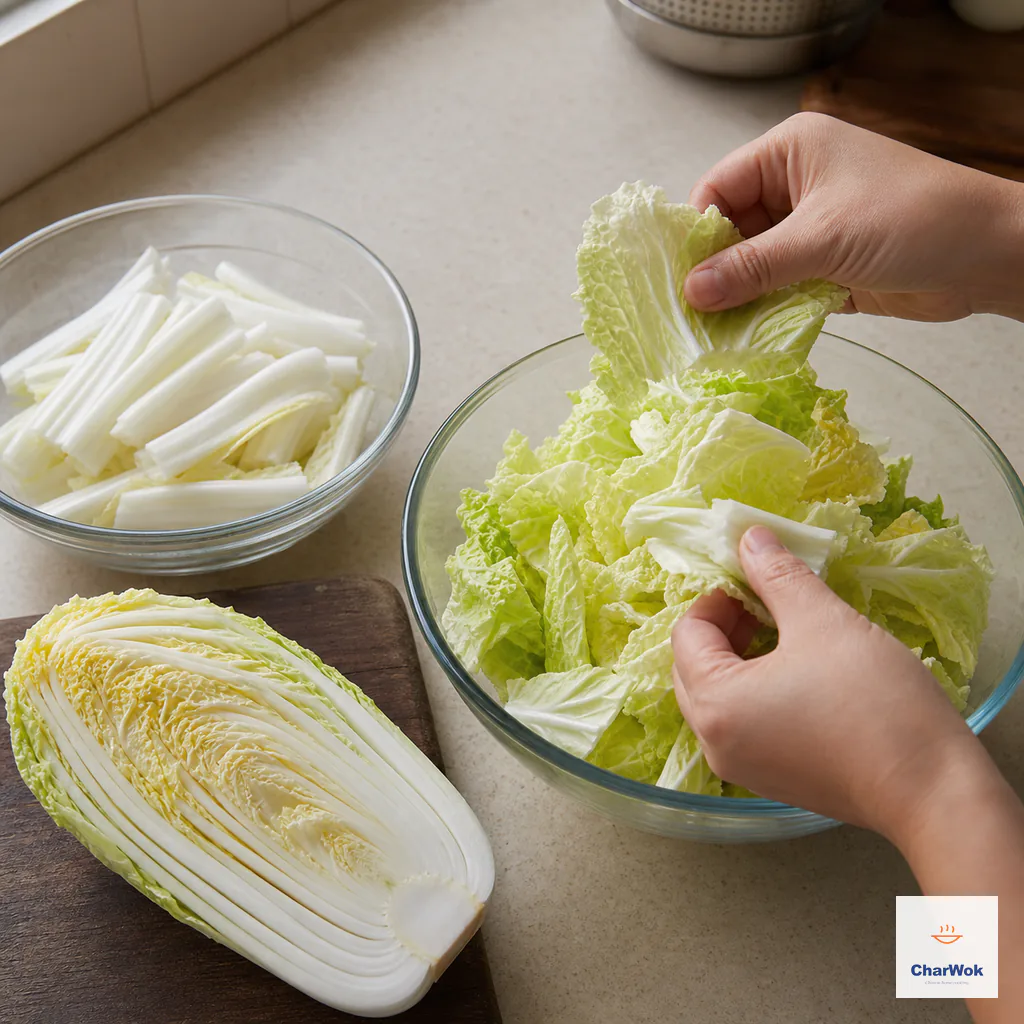
Tear the tender leaves and cut the firm white ribs into 5-centimetre strips so the two textures can enter the wok separately.
- Build pepper oil from cold. Put the oil and whole Sichuan peppercorns into a cold wok or wide skillet, then set it over low heat. Cold-oil starts are how you extract fragrance without scorching. Watch for tiny bubbles clustering around the peppercorns and a clear, citrusy smell after about a minute. Scoop the peppercorns out with a slotted spoon and discard, leaving the flavored oil behind.
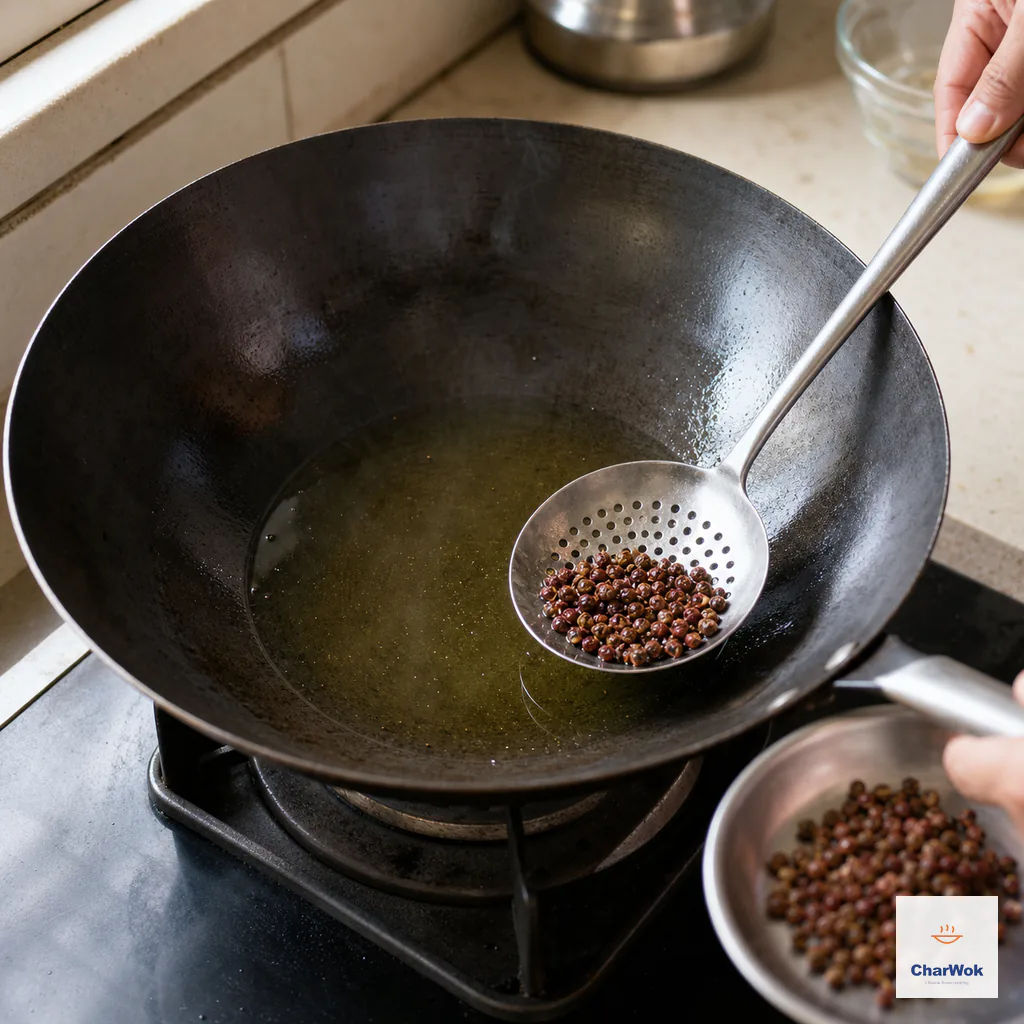
Start the oil and peppercorns cold over low heat; when dense tiny bubbles and citrusy fragrance appear, remove every peppercorn.
- Fry the aromatics hot. Raise the heat to medium-high. Add the dried chilies, the sliced garlic, and most of the scallions, keeping a pinch of green for garnish. Toss for 20–30 seconds, just until the garlic edges turn pale gold. Pull the pan off the heat the instant you smell toasted garlic, because garlic goes from golden to bitter in a few seconds.
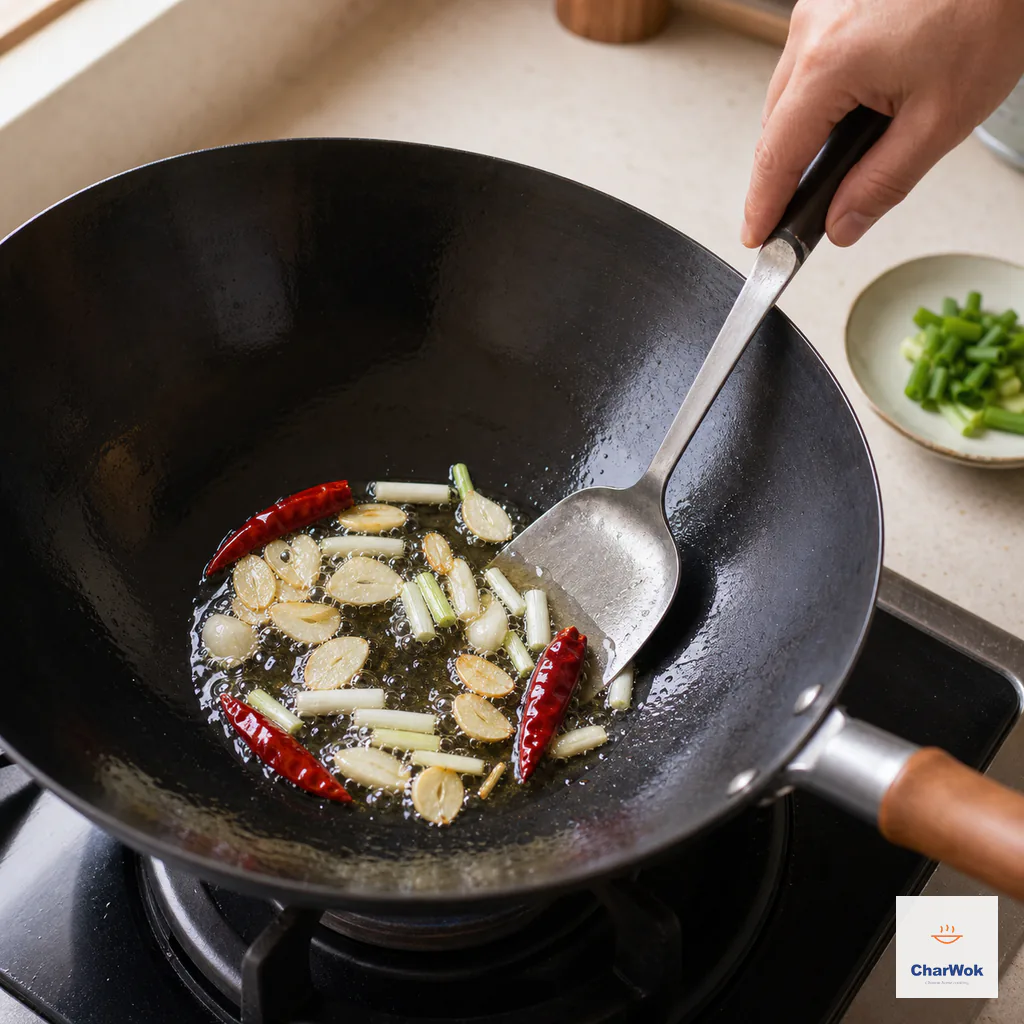
Fry the chilies, garlic and scallion whites for 20 to 30 seconds, stopping as soon as the garlic edges turn pale gold.
- Sweat the ribs. Add the white cabbage ribs and stir-fry about 30 seconds. They will not soften fully here; you are just coating them in flavored oil and starting the breakdown of the cell walls so they braise evenly.
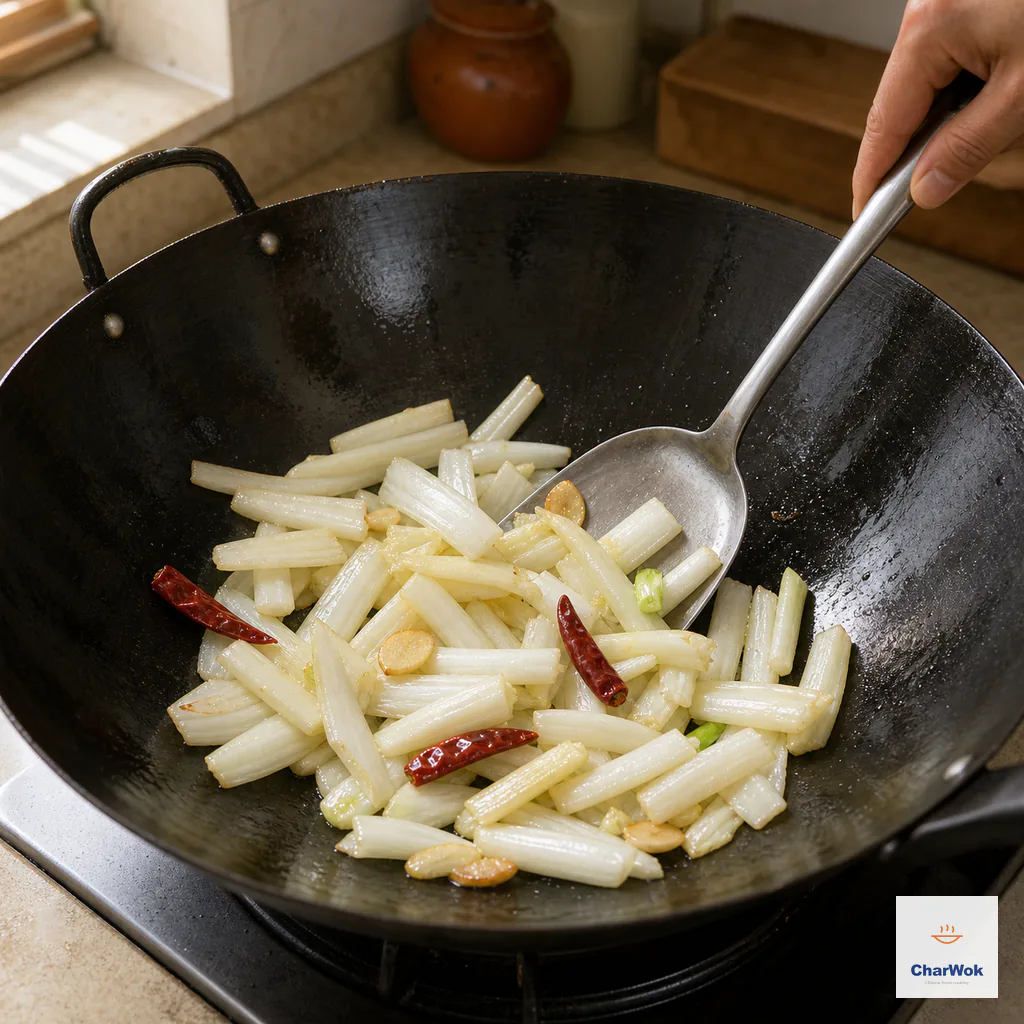
Stir-fry only the white ribs for about 30 seconds so they begin to soften without losing their crisp structure.
- Build the broth in the pan. Pour in the light soy, dark soy, oyster sauce, and water. Toss to coat the ribs. The liquid will deglaze the pan and pick up every bit of toasted flavor. This little in-pan sauce is the backbone of the whole dish and a clean example of the basic Chinese condiments doing real work.
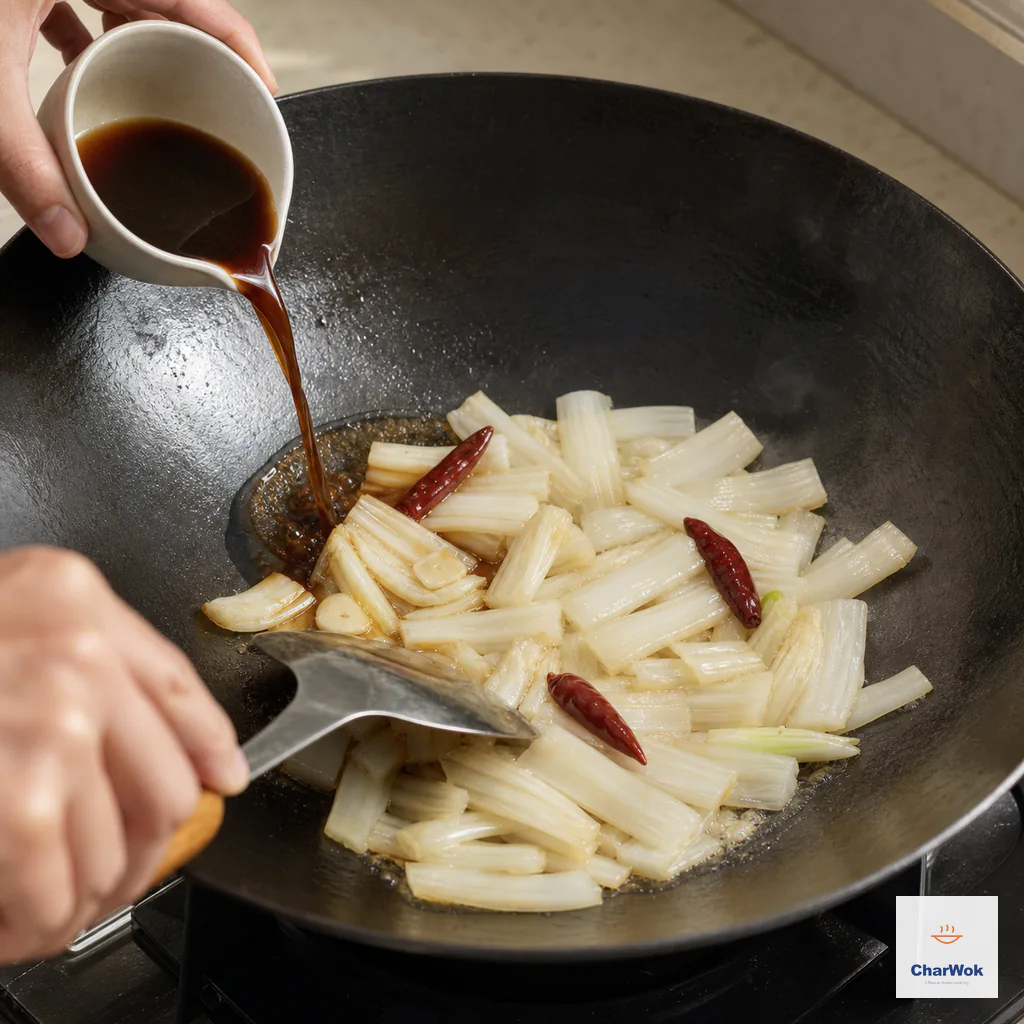
Add light soy, dark soy, oyster sauce and 120 millilitres water, tossing the ribs before any noodles or leaves enter.
- Add leaves and noodles, then cover. Pile in the green cabbage leaves and the drained noodles. Toss once to tuck everything under the liquid, then put on a tight lid. Cook over medium heat about 4 minutes. The goal is for the noodles to absorb nearly all the broth as their starch gelatinizes, leaving just a glossy film.
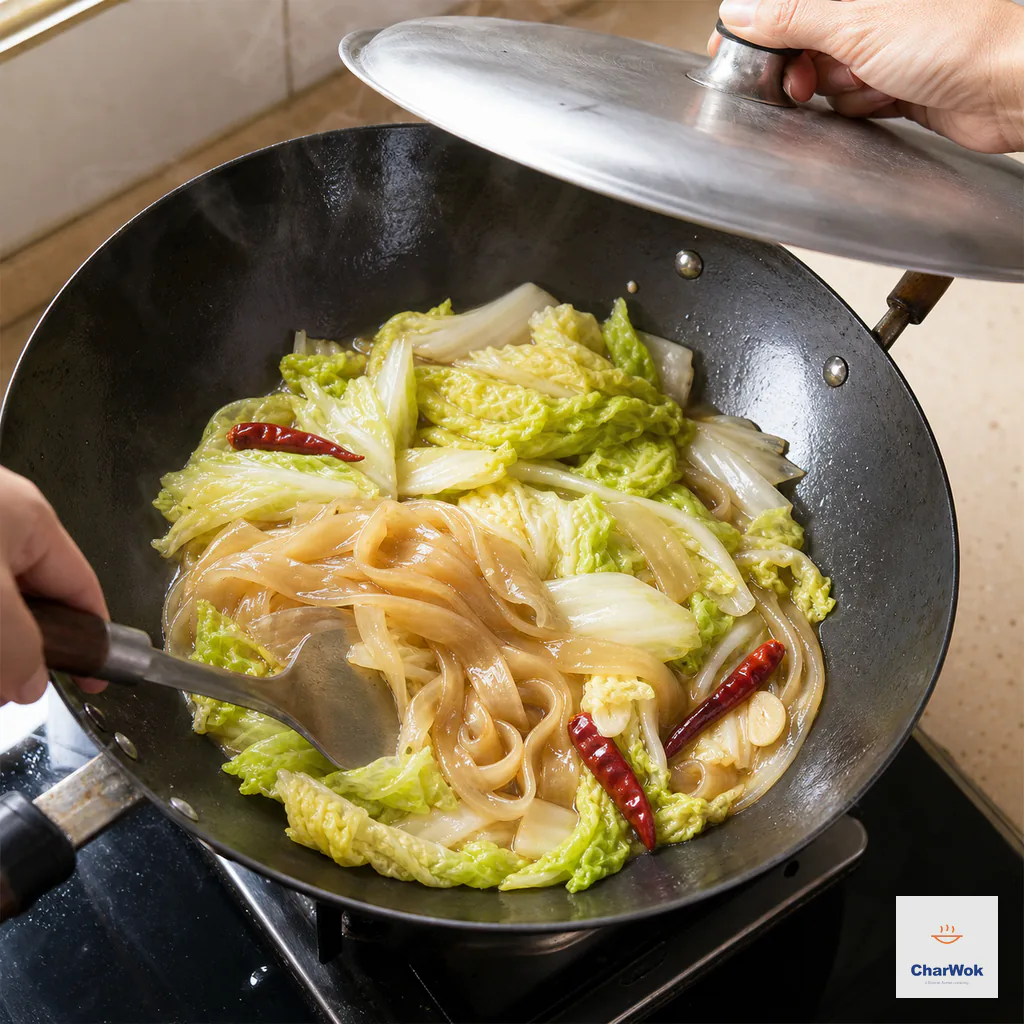
Tuck in the leaves and drained noodles, cover tightly and braise over medium heat about 4 minutes so the noodles absorb the broth.
- Check and finish. Lift the lid and stir from the bottom. If a pool of liquid remains, boil it off uncovered for another minute. If the pan is dry and the noodles look tight, splash in a tablespoon of hot water and toss. Taste a noodle: it should be tender all the way through with a gentle chew. Scatter the reserved scallions on top and serve immediately.
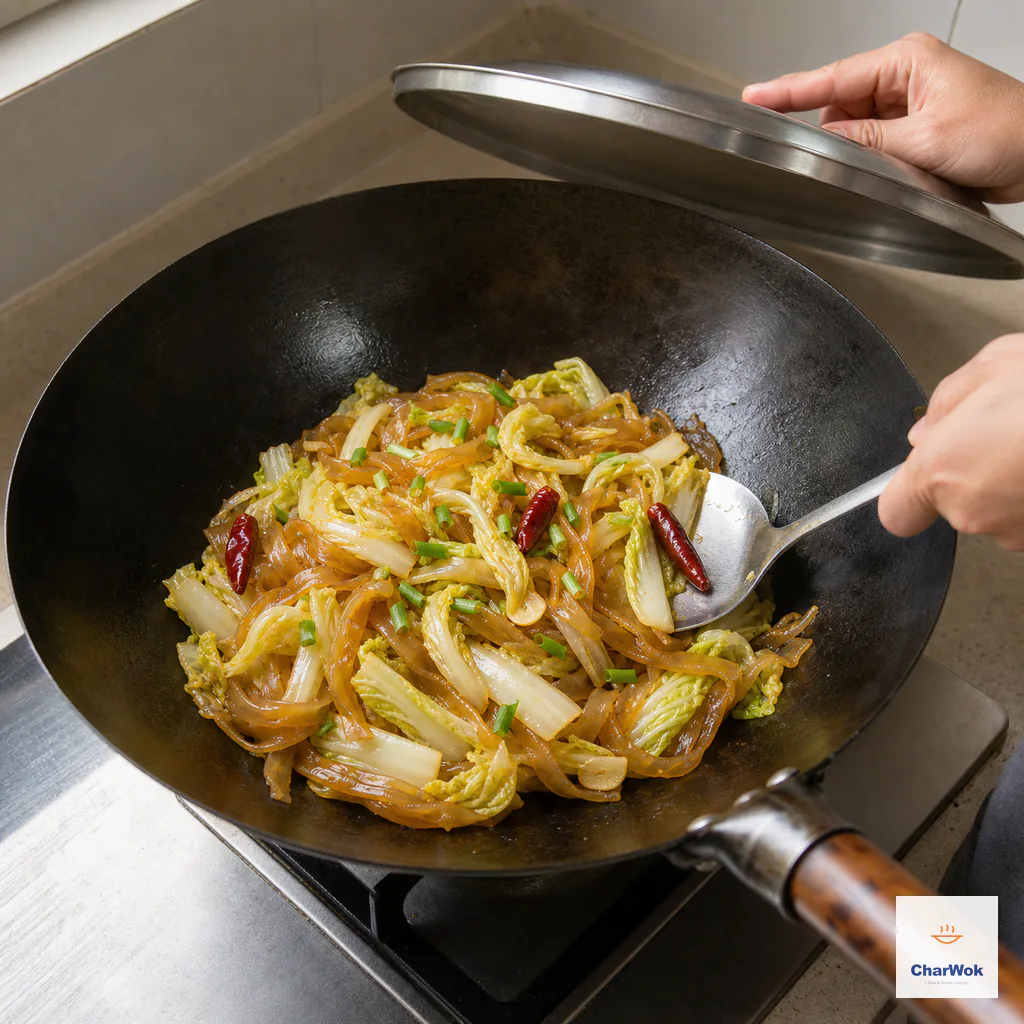
Lift from the bottom, reduce any remaining pool uncovered or add a little hot water if tight, then finish with the reserved scallion greens.
When it goes wrong
Most failures fall into one of three buckets, and they are all fixable next time.
Gummy, stuck-together noodles. You over-soaked them, or you skipped the cold rinse. The surface starch on sweet-potato noodles turns to glue unless you rinse it off. Rehydrate only to the bendy-but-fingernail-resistant stage, and always rinse. If they are already clumping in the pan, add a splash of hot water and toss hard with chopsticks to separate.
Chalky or hard center. The opposite problem. The noodles were under-soaked and the 4-minute braise was not enough. Next time soak a minute longer. To rescue the current batch, add 2–3 tablespoons of hot water, cover, and steam another 2 minutes before checking again.
Soapy, numbing, gritty flavor. The peppercorns were left in, or toasted too dark. Whole Sichuan peppercorns are for infusing, not eating. Toast only until fragrant, never brown, and remove them before the next step. Burnt pepper tastes medicinal and will dominate the whole dish.
Watery, pale result. The liquid ratio looks low on paper but the noodles are sponges. If yours came out soupy, you either used a wider pan that let water evaporate too fast and burned the bottom, or you added the noodles before the broth. Always build the broth first, then submerge the noodles, then cover. For a deliberately saucier version, bump the water to 180 ml and serve it in shallow bowls like a dry noodle soup, closer in spirit to hot and sour noodles.
Cabbage gone limp and gray. You braised the leaves the whole time. Leaves need under a minute; only the ribs get the long cook.
Variations and what to serve it with
This is a clean canvas. A few directions I rotate through:
- Add protein. Thinly sliced pork belly or ground pork is the classic addition in many northern households. Brown it right after the aromatics, before the cabbage, so it renders its fat into the pepper oil. Dried shrimp adds a different, older flavor if you keep them in the pantry.
- Swap the greens. Bok choy, savoy cabbage, or even shredded winter melon all braise nicely. Treat firm parts like ribs and soft parts like leaves.
- Make it saucier. Increase the water and serve over freshly steamed jasmine rice, or alongside a bowl of yang chun mian for a noodle-on-noodle carb fest I will not judge.
- Heat it up. A spoonful of chili oil at the end, or a teaspoon of chili bean paste fried with the aromatics, turns this toward ants climbing a tree territory. A drizzle of homemade chili oil over the finished bowl is my favorite finish.
As a meal, I usually serve this as one plate among two or three. It sits well next to a simple braised green like mushrooms with baby bok choy or a bold dry stir-fry such as dry pot cauliflower, and a bowl of chow mein on the table never hurts. It also lands on my short list of cold-weather Chinese recipes because the warm, saucy noodles are exactly what a January evening calls for.
Storage and reheating
Leftovers keep in the fridge for up to two days, but the noodles will have absorbed everything and gone firmer, which is fine. To reheat, put them in a pan with a tablespoon or two of water, cover, and warm gently until the noodles soften again. Microwaving dry makes them tough and rubbery. I do not recommend freezing; the starch texture breaks down and turns grainy on thaw.
Honestly, this is one to cook to order. The whole thing takes less time than waiting for delivery, and freshly braised noodles are dramatically better than reheated ones. It earns its place among my go-to weeknight recipes precisely because the payoff is so high for so little effort.
Common questions
Can I use mung-bean vermicelli instead?
Yes, but adjust the timing. Vermicelli hydrates much faster and overcooks in seconds, so soak in cool water until just flexible and cut the covered braise to about 2 minutes. The finished texture will be more slippery and less chewy than sweet-potato noodles.
Are glass noodles the same as rice vermicelli?
No. Glass noodles are starch noodles, made from sweet potato, potato, or mung bean, and they cook up glassy and elastic. Rice vermicelli, the kind used in Singapore mei fun, is made from rice flour and turns soft and opaque. They are not interchangeable here.
Is this dish gluten-free?
The noodles are naturally gluten-free, but standard soy sauce and oyster sauce contain wheat. Use tamari or a gluten-free soy sauce and a certified gluten-free oyster sauce, and the rest of the recipe works as written.
Do I have to remove the Sichuan peppercorns?
I strongly recommend it. Biting into a whole toasted peppercorn is an unpleasant soapy shock that overwhelms the dish. Infusing the oil and straining the peppercorns out gives you the fragrance without the ambush.
What if I do not own a wok?
A wide skillet works, ideally one with a lid. You lose a little of the high-heat toss of a wok, but this is a covered braise, not a screaming-hot stir-fry, so a flat pan is more than adequate. Just pick the widest one you have, because the raw cabbage takes up surprising space before it collapses.