Open any Chinese home cook's cabinet and you will find a small bottle of dark, amber oil that smells like toasted nuts and warm bread. That is toasted sesame oil, and a few drops of it are how a bowl of congee, a plate of cold noodles, or a plain steamed egg suddenly taste finished. Most cooks own it. Many misuse it, pouring it into a smoking wok the way they would peanut oil, then wonder why their stir-fry tastes burnt and bitter. This guide is about not making that mistake.
Toasted sesame oil is a seasoning, not a cooking fat. Heat it gently and add it at the end; 5 ml (1 teaspoon) is usually a whole dish's worth. If your recipe says "sesame oil" with no qualifier, it means this toasted, aromatic version.
Why this oil behaves differently from every other bottle in your pantry
Chinese sesame oil guide at a glance
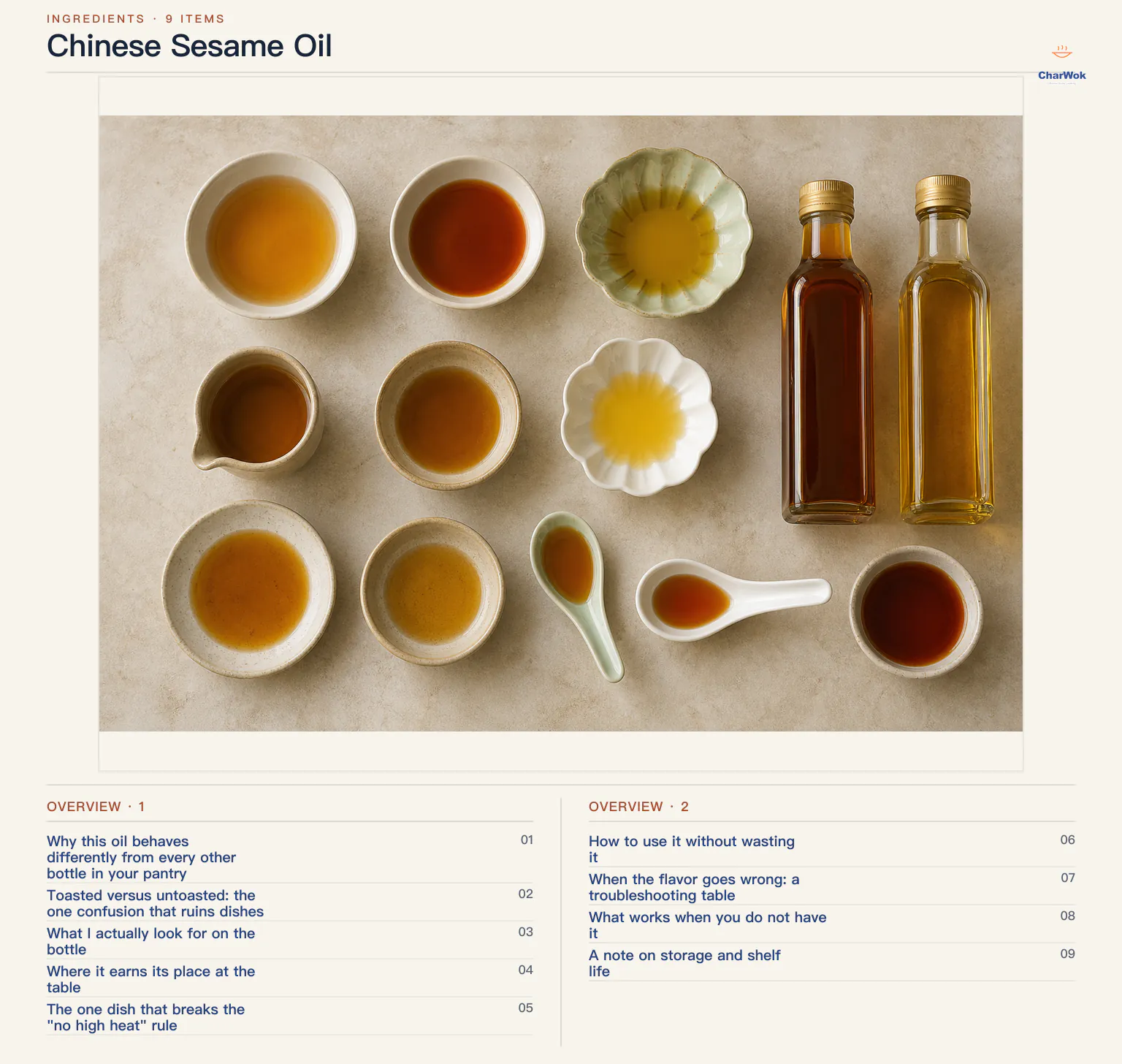
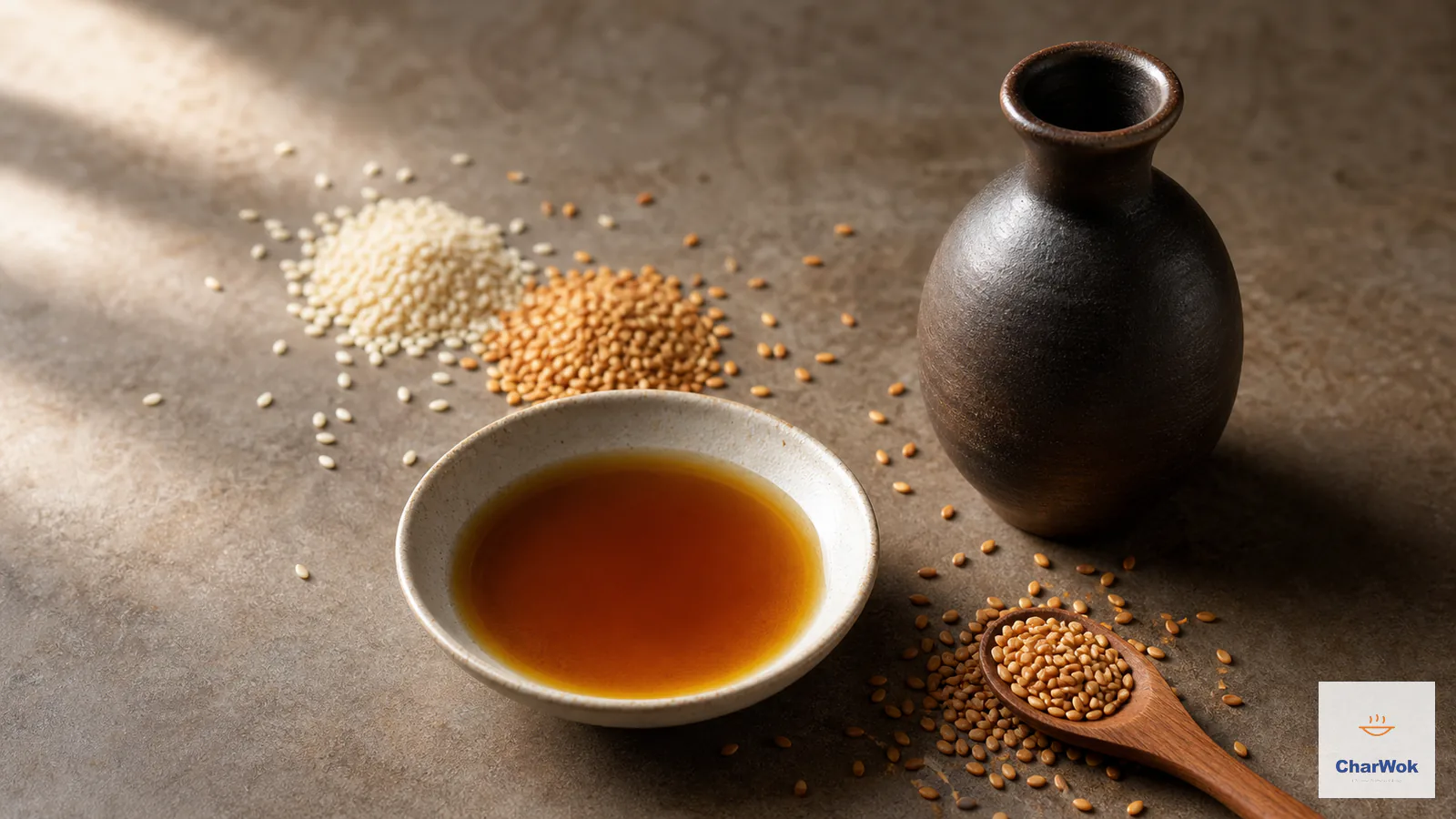
Sesame seeds are roughly half oil by weight. To make the toasted version, the seeds are roasted first, then pressed. The roasting is where the character comes from: heat drives the Maillard reaction between the seed proteins and natural sugars, generating hundreds of new aroma compounds, the same family of reactions that browns bread crust and coffee beans. What you taste is not "sesame" in the raw sense. It is the cooked, toasted version of it, concentrated into a liquid.
That roasting is also why the oil has a low smoke point, around 177°C (350°F) for a good bottle, and why the flavor is fragile. The aromatic molecules you want are exactly the ones that vaporize and burn first. So the rule writes itself: if you heat this oil hard, you destroy the thing you bought it for. It belongs at the end, off the heat, or in a raw dressing. Think of it the way you think of chili oil or a finishing olive oil, not the way you think of neutral cooking oil.
In Mandarin it goes by several names you will see on labels and in recipes: 香油 (xiāng yóu, literally "fragrant oil"), 芝麻油 (zhī ma yóu, "sesame oil"), and 麻油 (má yóu, "numbing-sesame oil"). They all point to the same toasted bottle. It sits in most Chinese kitchens next to the soy sauce and black rice vinegar, used in smaller quantities than either but doing a disproportionate share of the work.
Toasted versus untoasted: the one confusion that ruins dishes
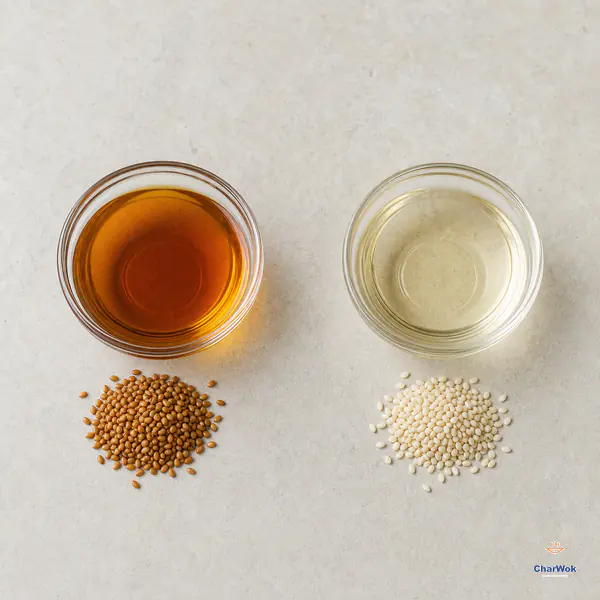
Dark toasted sesame oil is the aromatic finishing oil used in most Chinese dishes; pale untoasted oil is milder and behaves more like a cooking oil.
There are two sesame oils on a well-stocked shelf, and they are not interchangeable. Buying the wrong one is the most common mistake I see.
| Type | Color | Aroma | How it is used |
|---|---|---|---|
| Toasted (pressed from roasted seeds) | Deep amber to dark brown | Intense, roasted, nutty | Seasoning and finishing only; raw or low heat |
| Untoasted (pressed from raw seeds) | Pale straw yellow | Faint, neutral, slightly sweet | High-heat cooking in some South Asian and Korean kitchens |
Untoasted sesame oil does exist and has its place, but that place is rarely a Chinese recipe. When you see it in a supermarket beside the toasted bottle, read the label: the untoasted version is usually called "sesame oil" or "light sesame oil," while the toasted one is marked "pure toasted sesame oil," "roasted sesame oil," or "pure sesame oil" with a dark color visible through the bottle. The color is your fastest tell. If it looks like vegetable oil, it is not what you want for Chinese cooking.
What I actually look for on the bottle
I have no loyalty to a brand or a country of origin. Japanese, Korean, and Chinese bottles can all be excellent; what matters is the ingredient line. The only ingredient should be sesame seeds. If the label lists soybean oil, canola oil, sunflower oil, or "sesame-flavored oil," put it back. Blends are cheaper for a reason, and the reason is that you are buying mostly neutral oil with a whisper of sesame aroma. A pure bottle costs more per ounce but you use so little that a small one lasts months.
Cold-pressed after roasting is the traditional method and still the best indicator of quality. Some modern producers use solvent extraction or add refined oil to standardize the flavor; both dull the aroma. A good bottle smells unmistakably toasted the instant you open it, and the aroma fills the room when you pour a few drops onto a finished dish. If the smell is thin or flat, the oil is either old or diluted.
Where it earns its place at the table
Toasted sesame oil shows up almost everywhere in the Chinese kitchen, but always in a supporting role. You will find it stirred into dumpling fillings to round out the meat, drizzled over silky steamed eggs alongside soy sauce, folded into the dressing for smashed cucumber salad and other cold dishes, and swirled into a bowl of wonton noodle soup at the very end. A few drops on top of congee is a childhood comfort I still reach for on cold mornings.
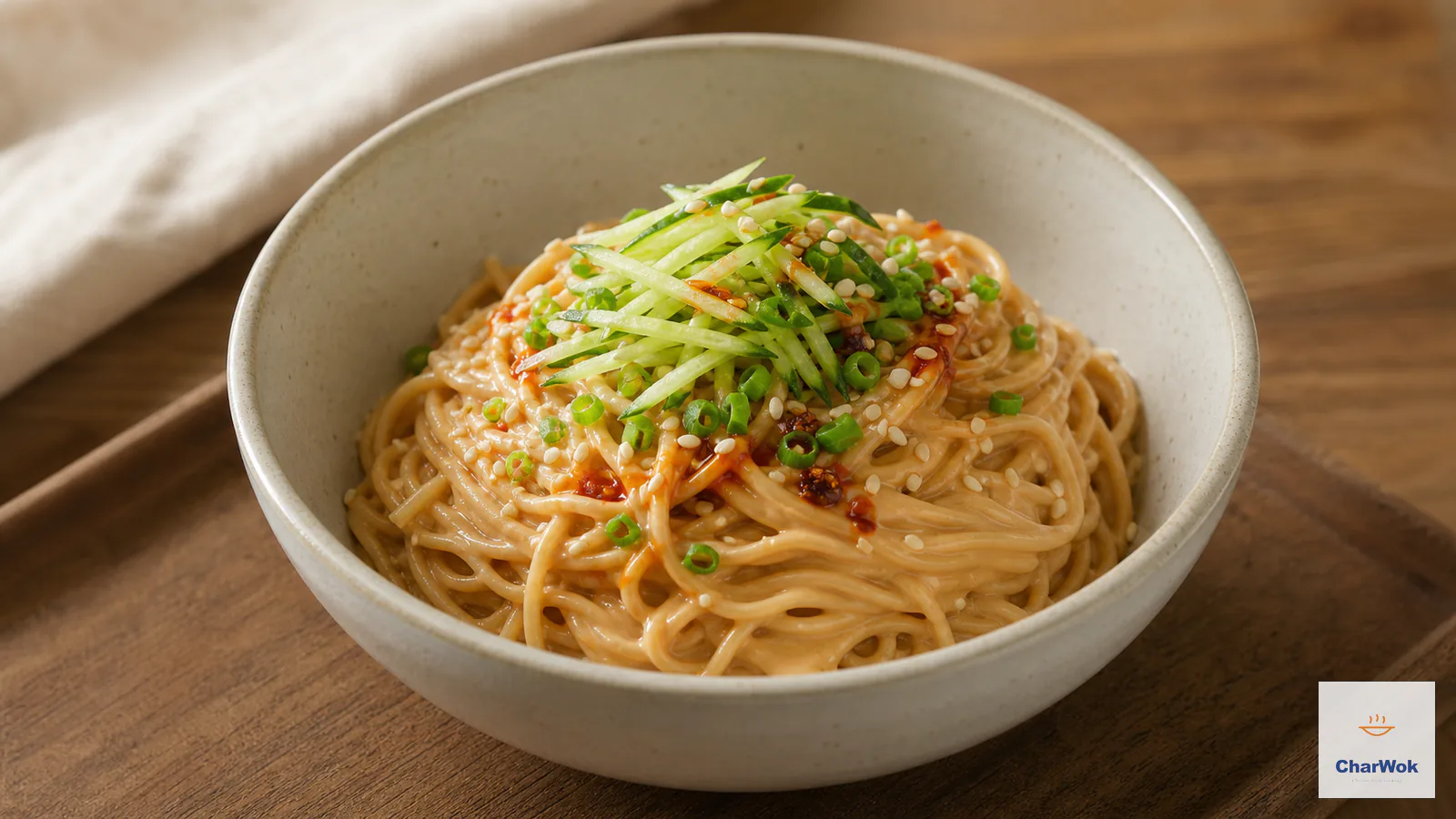
It is also the finishing note in many cold noodle dishes. Try a teaspoon in the sauce for cold Sichuan noodles or stirred into sesame noodles, where it deepens the roasted flavor of the sesame paste. In black pepper beef and other quick stir-fries, a few drops off the heat add a back-note that soy sauce alone cannot give.
The one dish that breaks the "no high heat" rule
Every rule has an exception, and for sesame oil it is Taiwanese Three-Cup Chicken, which uses a generous pour of sesame oil as the braising medium. Even there, the trick is restraint with temperature. The oil is heated gently with ginger and garlic over low to medium heat, never taken to a smoke. If your sesame oil is smoking in that pan, you have already gone too far and the flavor will turn harsh. The lesson holds: this oil can carry a dish, but it cannot take abuse.
How to use it without wasting it
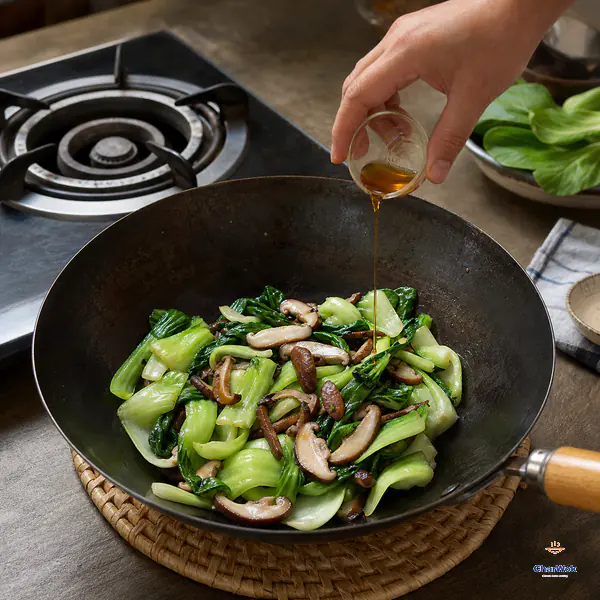
Move the finished dish off the heat, then add only a small measured amount of toasted sesame oil so its aroma stays vivid instead of cooking away.
- Add it last, off the heat. Stir it into a finished stir-fry, fold it into a filling, or whisk it into a cold dressing. Heat kills the aroma, so the later it goes in, the more you taste it.
- Measure by the teaspoon, not the tablespoon. Five to ten milliliters is a full dish's worth for most recipes. More than that and the oil turns from seasoning into a heavy, cloying layer that masks everything else.
- Pair it with soy sauce and vinegar, not against them. Sesame oil is a bridge, not a soloist. A classic finishing trio for cold dishes is 1 part sesame oil, 2 parts light soy sauce, and 2 parts black rice vinegar, adjusted to taste.
- Combine it with a neutral oil when you want both aroma and heat. For a stir-fry that needs real pan heat, fry in peanut or vegetable oil, then finish with half a teaspoon of sesame oil after you pull the pan off the burner. You get browning from the one and fragrance from the other.
- Store it dark and cool, and buy small. Light and oxygen fade the aroma within a few months of opening. A 150 ml bottle in a closed cabinet will taste better in month four than a 500 ml bottle on a sunny counter. Rancid sesame oil smells like old crayons; if yours does, throw it out.
When the flavor goes wrong: a troubleshooting table
| Problem | What happened | The fix |
|---|---|---|
| Bitter, acrid taste in a stir-fry | The oil was heated past its smoke point | Add it off the heat next time; for this batch, dilute with more of the dish or start over |
| Dish tastes flat despite adding oil | The oil is old, diluted, or stored in light | Smell the bottle straight; replace if the aroma is faint or smells stale |
| Greasy, heavy mouthfeel | Too much oil, or added early so it absorbed into the food | Cut the quantity to 5 ml per serving and add at the very end |
| Confusing, muddled flavor | Used untoasted sesame oil where toasted was meant, or vice versa | Check the bottle color; toasted is amber-brown, untoasted is pale yellow |
| Fishy or paint-like odor | Rancidity from heat and oxygen exposure | Discard the bottle; store the replacement cool and dark |
What works when you do not have it
There is no true substitute, and I will not pretend otherwise. The roasted aroma is unique to toasted sesame. What you can do is work around its absence depending on how the recipe uses it.
- If the recipe uses under 5 ml, leave it out. The dish loses a layer of aroma but stays sound. Most stir-fries and soups fall here.
- For a sesame flavor without the oil, a spoonful of toasted sesame seeds, crushed lightly, gives some of the same roasted note in salads and fillings, though without the oily richness.
- For a different kind of finishing aroma, Sichuan pepper oil is another late-addition oil, but its flavor is citrusy and numbing, not nutty, so it changes the dish rather than standing in for sesame. Reach for it only when you welcome that swap.
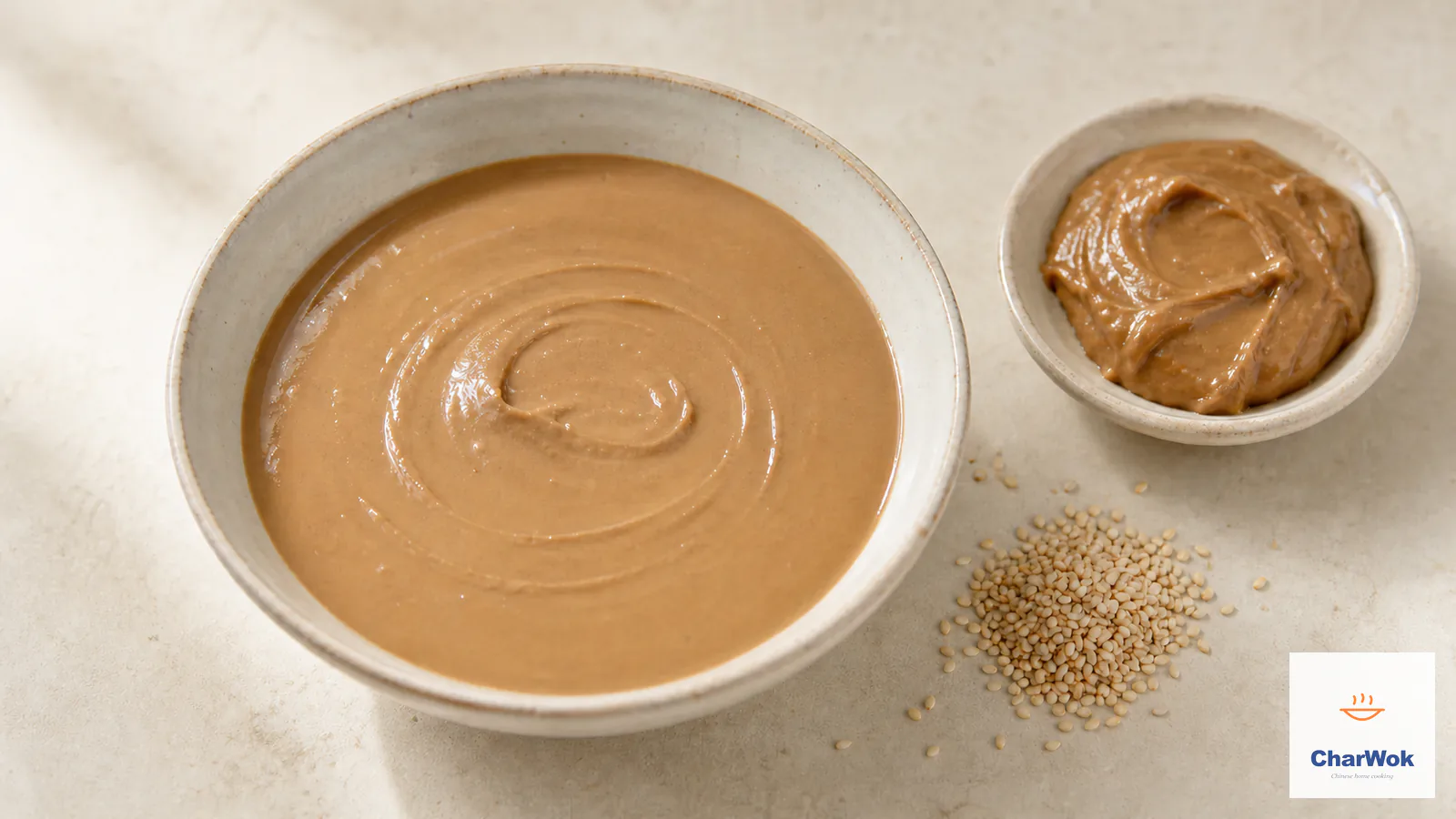
- For body in a sauce or paste-based dish, a little sesame paste thinned with warm water can carry a related roasted character, especially in noodle sauces.
A note on storage and shelf life
Keep the bottle sealed, in a closed cabinet away from the stove and away from sunlight. Toasted sesame oil is best within six months of opening and within a year of production. If you cook Chinese food only occasionally, buy the smallest bottle you can find; a 100 ml bottle used up fresh beats a bargain liter gone stale. Refrigeration extends the life but thickens the oil and dulls the aroma while cold; if you refrigerate, let it come to room temperature before measuring so it pours cleanly.
FAQ
Can I stir-fry with toasted sesame oil? Not as your main cooking fat. Its smoke point is low and its aromas burn fast. Use a neutral oil for the frying and add a few drops of sesame oil once the pan is off the heat.
Why does my bottle say "sesame oil" but look pale? It is the untoasted, raw-pressed version, which is light in color and mild in flavor. Chinese recipes want the dark, toasted type; check the color through the bottle before buying.
How long does sesame oil last after opening? Plan to finish it within six months for full aroma. Keep it sealed, dark, and away from heat. Sniff before each use; a stale, crayon-like smell means it is rancid and should be discarded.
Is toasted sesame oil healthy? It is high in unsaturated fats and antioxidants from the roasting, but you use it in such small amounts that its health impact is minor. Think of it as flavor, not medicine.
Can I substitute toasted sesame seeds? Partly. Crushed toasted seeds add roasted sesame flavor to salads and fillings but lack the oil's liquid richness. For a true substitute, there is none.