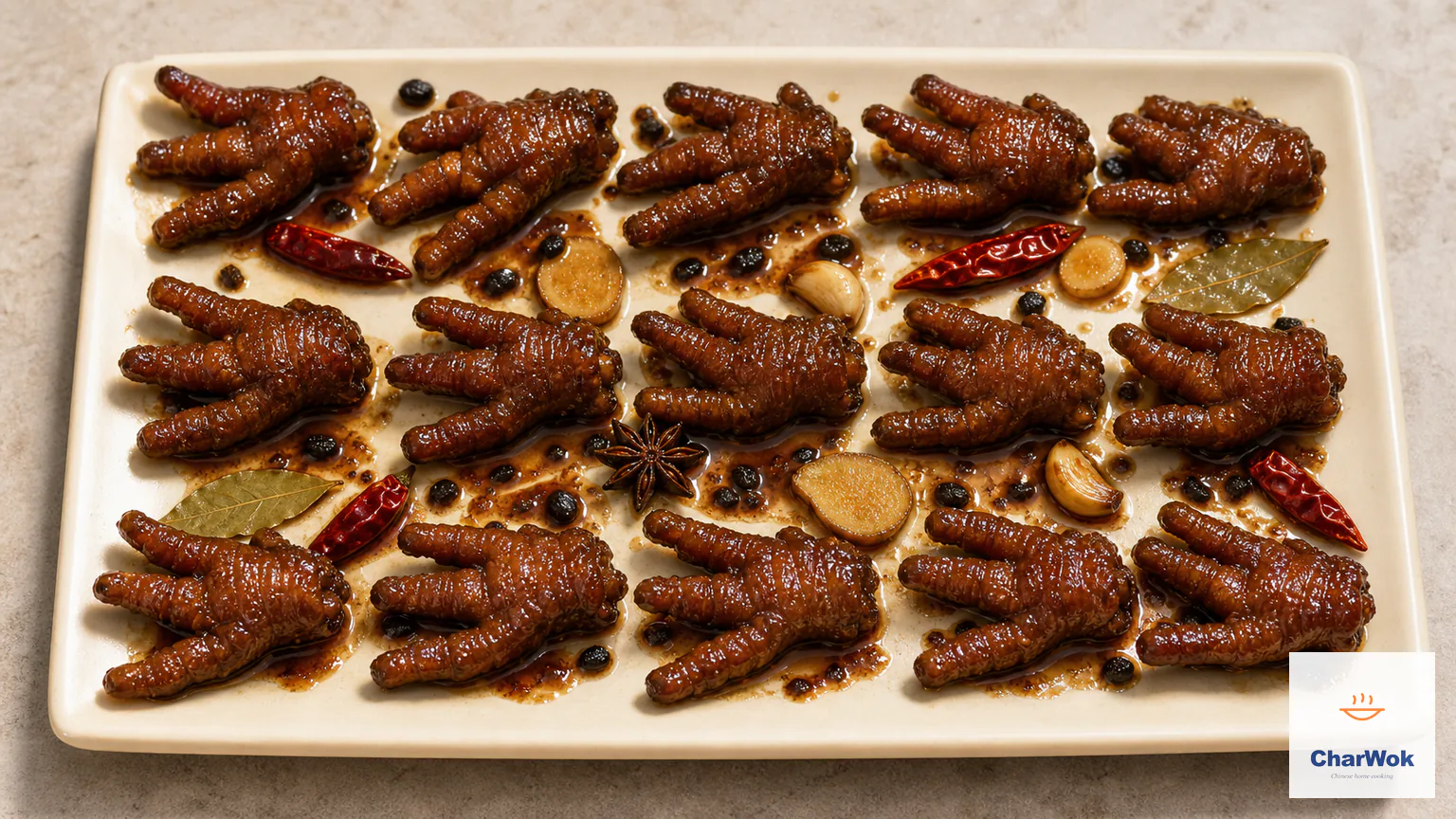
The first time I ordered chicken feet at a dim sum cart, my dining companion pushed back from the table. That reaction is the dish's whole reputation problem in one gesture: it sounds strange, looks stranger, and rewards you with the most luxurious texture in the entire chicken. Forget the meaty breast or the tidy thigh. The prize here is collagen, the stuff that turns a bony claw into something between a tender rib and savory jelly after a long, slow bath in black bean and soy.
The home cook's pain point is simpler. Restaurant chicken feet arrive with that wrinkled, blistered skin and a deep mahogany glaze, and most recipes tell you the secret is deep-frying first, then soaking in ice water for hours. I tried that route twice, splattered oil across the stovetop, and decided there had to be a cleaner way. There is. An air fryer gives you the same blistered skin with none of the splatter, and if you don't own one, you can skip the pre-cooking entirely and just braise a little longer. Either path gets you to the same tender, glossy plate.
At a glance: 500 g (about 1.1 lb, 14 to 16 feet) feeds 4 as a dim sum plate. The whole dish rests on one judgment — blister the skin first if you want that restaurant wrinkled look, or skip it and braise 40 minutes instead of 30. The braising liquid is 400 ml (1¾ cups) hot water to roughly 3½ tablespoons of combined soy, oyster, and wine. Reduce that liquid at the end; it becomes the glaze.
What you're actually eating
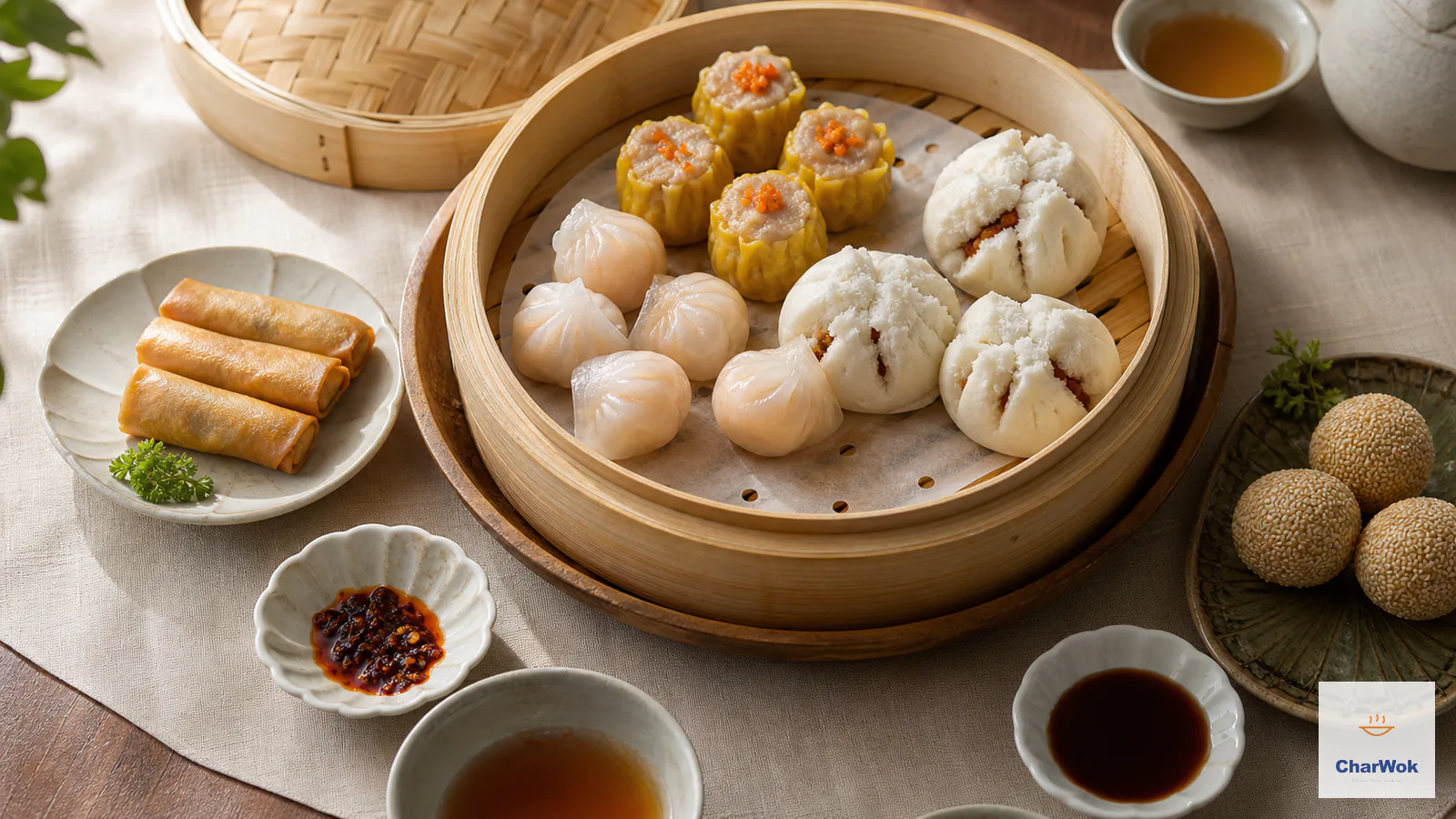
The Cantonese call this dish Chi Zhi Feng Zhao (豉汁凤爪), literally "black bean sauce phoenix claws," a romantic name for what is plainly chicken feet. It sits alongside Har Gow, Cheung Fun, and Char Siu Bao on nearly every authentic dim sum cart, and it belongs in any serious lineup if you're building a dim sum spread at home.
A foot is mostly soft bone, cartilage, tendons, and skin, with very little muscle. That sounds like a liability, but it's exactly why the texture is so good. The high collagen content dissolves during a long, moist braise, and the skin, which is mostly connective tissue, turns silky and gelatinous rather than flabby. You also get more calcium per bite than from any other cut, though no one eats this for the nutrition label.
That same collagen is why feet are valuable beyond this dish. Drop a few into a long-simmered homemade chicken stock and it will set like jelly in the fridge, which is exactly the property you want if you ever make the aspic filling for xiao long bao or the jellied salad in Chinese pork rind jelly.
Buying and cleaning them
Frozen chicken feet are easy to find in any Chinese or Asian grocery, and most are sold already peeled, with the tough yellow outer skin removed. If yours still have that yellow cuticle, dunk them in boiling water for thirty seconds, plunge into ice water, and the skin peels off in strips. I won't pretend it's a fun job. When it's done, scrub the pads and between the toes under running water, then snip the claw tips off with kitchen shears or a heavy knife. Those tips are sharp enough to puncture a finger while you're handling them.
No Asian market nearby? Ask a conventional butcher to save feet for you. Many throw them away and will hand them over cheap or free, especially if you become a regular.
Ingredients
Ingredients at a glance
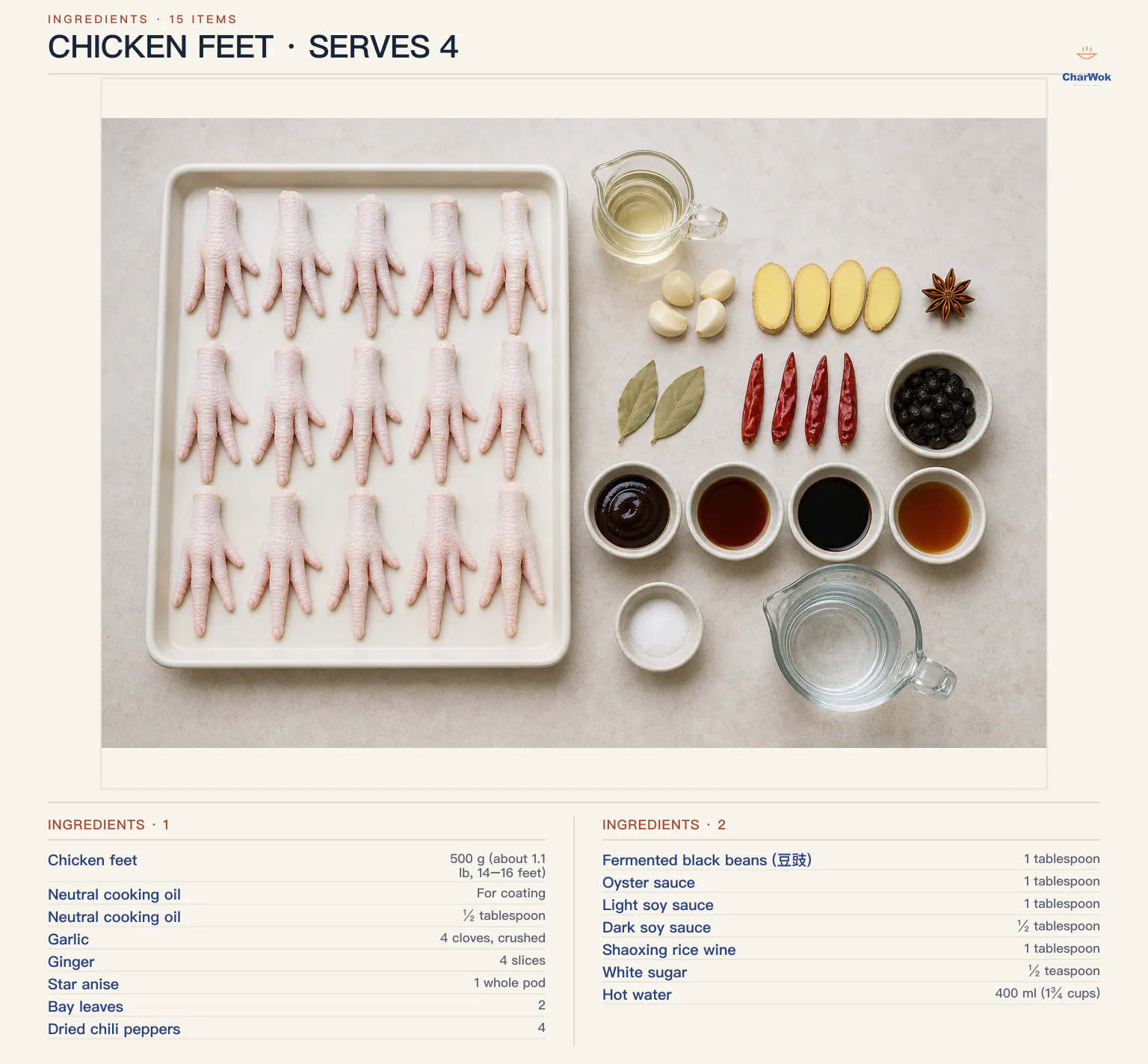
| Ingredient | Amount | Notes / substitute |
|---|---|---|
| Chicken feet | 500 g (about 1.1 lb, 14–16 feet) | Pre-peeled if possible |
| Neutral cooking oil | For coating | Canola, peanut, or grapeseed; only for the air-fry step |
| Neutral cooking oil | ½ tablespoon | For the braise |
| Garlic | 4 cloves, crushed | Keep them whole so they don't scorch |
| Ginger | 4 slices | A coin the width of a quarter each |
| Star anise | 1 whole pod | Warm, licorice backbone; do not add a second, it dominates |
| Bay leaves | 2 | Standard dried Turkish bay |
| Dried chili peppers | 4 | Optional but recommended; mild heat, easy to leave out |
| Fermented black beans (豆豉) | 1 tablespoon | Traditional; omit if unavailable, see fermented black beans |
| Oyster sauce | 1 tablespoon | Body and depth; vegetarian mushroom oyster sauce works |
| Light soy sauce | 1 tablespoon | Salt and umami; see light vs. dark soy |
| Dark soy sauce | ½ tablespoon | Color, not salt; gives the mahogany finish |
| Shaoxing rice wine | 1 tablespoon | Cuts gamey notes; dry sherry is the closest substitute (see Shaoxing rice wine) |
| White sugar | ½ teaspoon | Rounds the salt; don't be tempted to add more |
| Hot water | 400 ml (1¾ cups) | Hot, not cold, so the braise doesn't stall |
Method
The dish runs in three stages: a blanch to clean and set the skin, an optional air-fry-and-soak to blister the skin for that restaurant look, and a braise that does the real tenderizing. Read the steps once before you start, because the timing on the glaze matters.
- Blanch. Put the trimmed feet in a pot, cover generously with cold water, and bring to a full boil. Skim the grey foam that rises, then drop to a gentle simmer for five minutes. This isn't cooking them through; it's tightening the skin and flushing out the bone scent that ruins the braise. Drain and shake off as much water as you can, because water is the enemy of the next step.
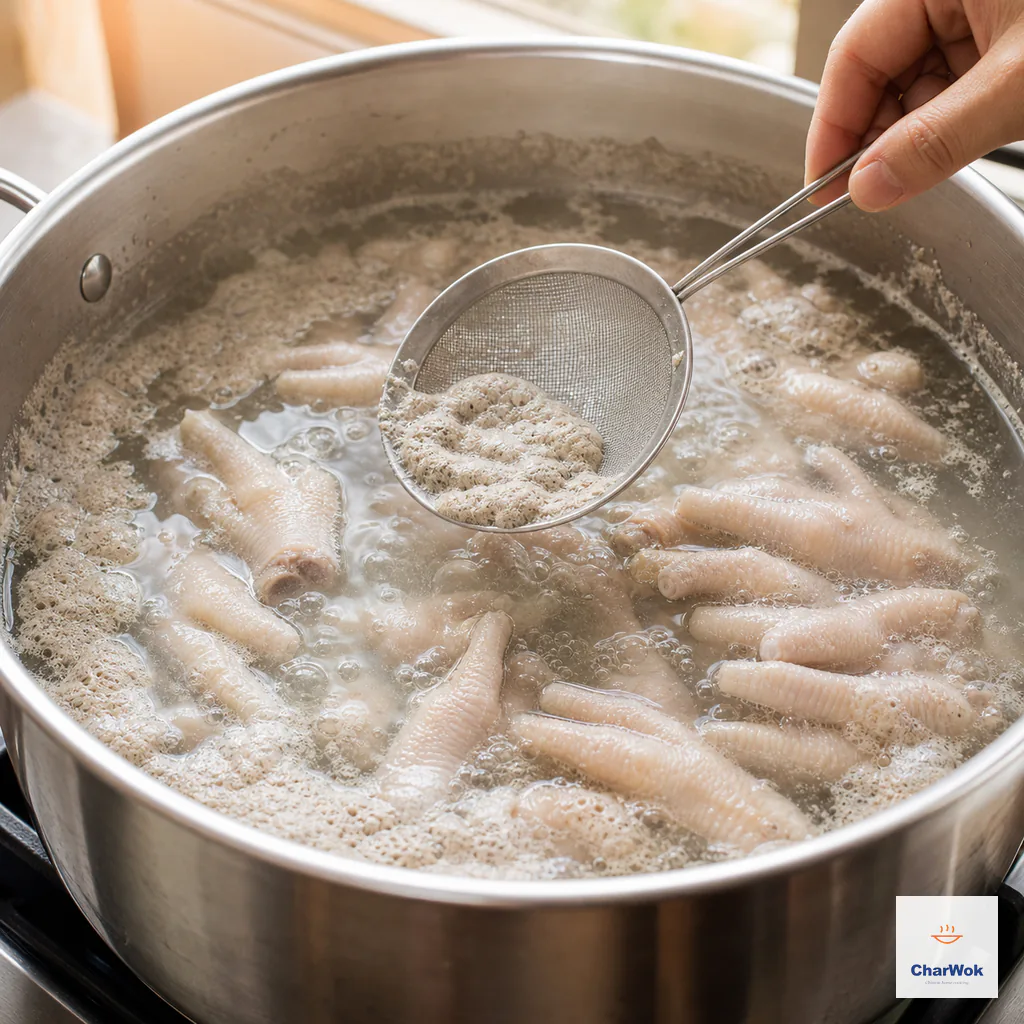
Blanch the trimmed feet for five minutes at a gentle simmer, skimming away the grey foam so the braising sauce stays clean
- Blister the skin (optional). If you want the wrinkled, dim-sum-cart appearance, coat the drained feet in a thin film of oil and air-fry at 200°C (390°F) for about ten minutes, shaking the basket twice, until the skin puffs and blisters. Then drop them straight into a bowl of cold water and soak in the fridge for two hours. The shock of hot oil followed by cold water ruptures the collagen sheath and makes it swell and wrinkle, which is what soaks up sauce later. Skipped this step? Add ten minutes to the braise and move on; you'll lose the wrinkles but not the tenderness.
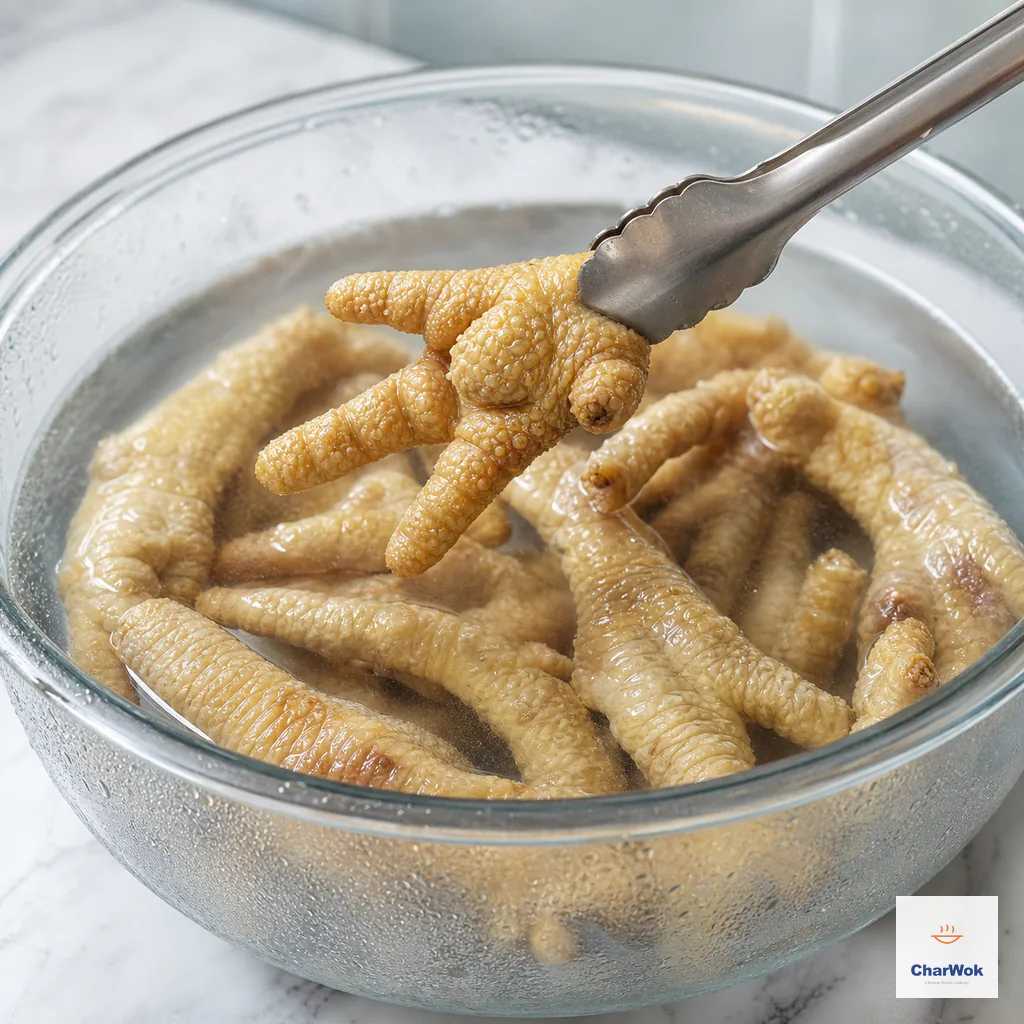
After the optional 200°C air-fry, chill the feet in cold water for two hours; the skin should look deeply wrinkled and puffed before braising
- Build the aromatic base. Heat ½ tablespoon of oil in a heavy pot or wok over low heat. Add the garlic, ginger, star anise, bay leaves, dried chilies, and black beans. Move them gently until the garlic is pale gold and smells sweet, not brown. Burnt garlic turns bitter and there is no rescue; if it goes dark, start over.
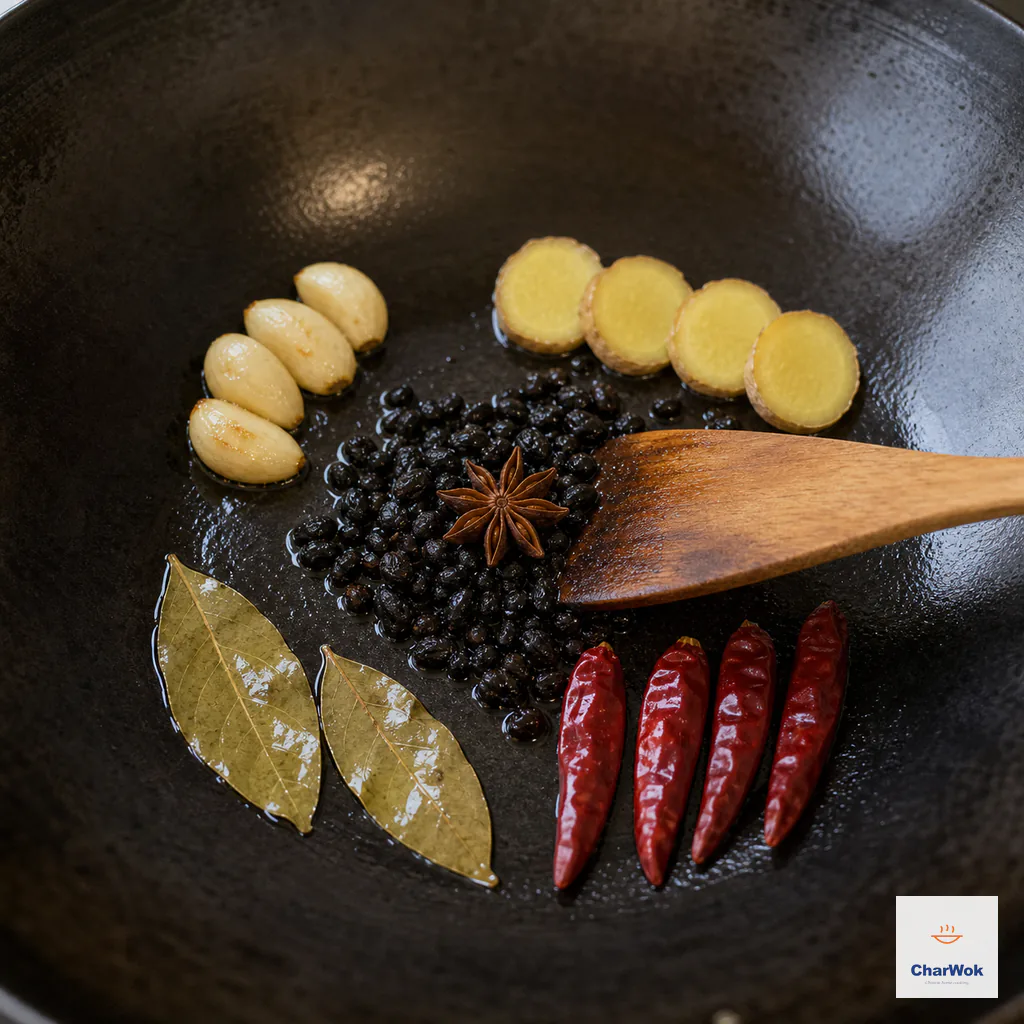
Fry the exact aromatics over low heat only until the garlic turns pale gold and fragrant; darker garlic will make the finished sauce bitter
- Braise. Add the feet, then the oyster sauce, both soy sauces, the wine, and the sugar. Pour in the 400 ml of hot water. Bring to a boil, cover, and simmer on low for 30 minutes if you blistered the skin, or 40 minutes if you did not. The goal is skin that yields to a chopstick but still holds its shape; if it slides off the bone entirely, you've gone too far.
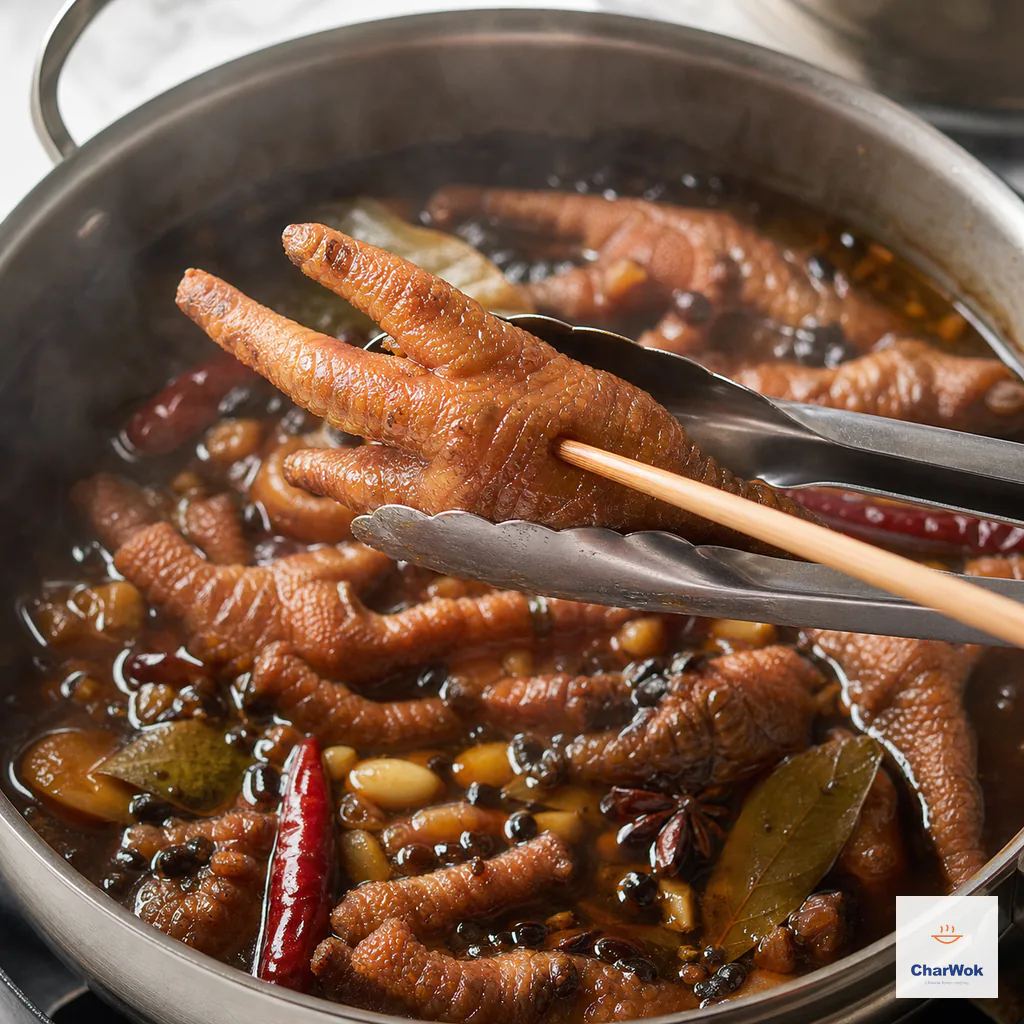
Braise for 30 minutes, or 40 without blistering, until a chopstick passes easily through the palm pad and the skin is soft and semi-translucent
- Reduce to a glaze. Take the lid off and raise the heat to high. Boil the liquid, stirring and spooning it over the feet, until it coats a spoon and turns glossy. This is where the dish becomes itself. Walk away now and you'll have tender feet floating in soup; stay and watch the last three minutes. Serve warm or at room temperature.
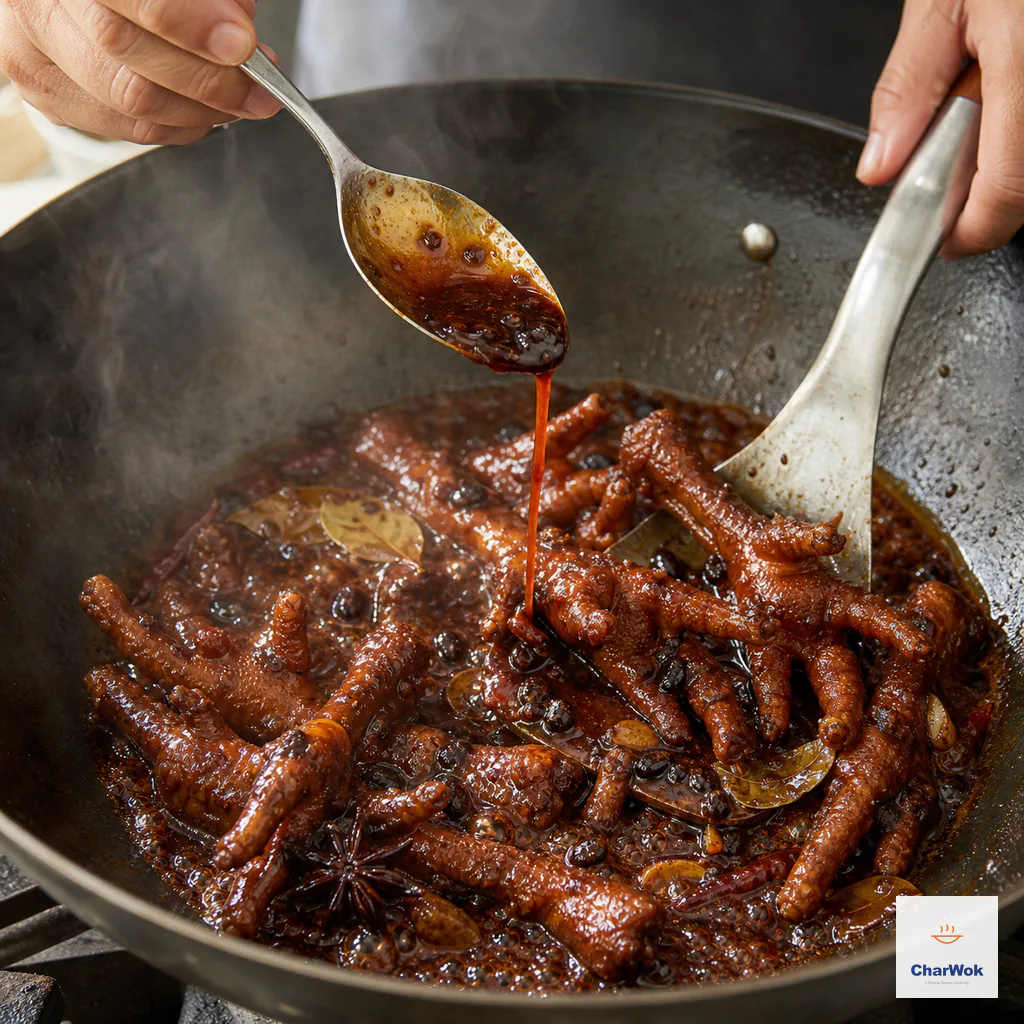
Reduce over high heat until the sauce looks glossy and clings to a spoon in a slow ribbon, but leave enough sauce to coat every foot
When things go wrong
I've wrecked this dish in every way that matters. Here are the failures I see most, and what to do about them.
- The skin won't blister in the air fryer. Almost always because the feet are still wet. Pat them bone-dry and use a real coating of oil, not a token spray. Wet skin steams instead of blistering.
- The braise tastes flat. You forgot to reduce. A thin liquid never clings to the skin, so each bite tastes like boiled chicken. Boil it down until it's syrupy; the salt and umami concentrate at the same time.
- The garlic burned and now everything is bitter. Your heat was too high or the pot too thin. There's no fix in the pot; fish out the scorched bits, dump the oil, and rebuild the aromatic base on lower heat.
- The skin slid off the bone. You over-braised. Next time pull five minutes earlier; the carryover heat finishes them. For this batch, treat them gently so they hold together for serving.
- The liquid is too salty. The dark soy is doing too much work, or you reduced too far. Add a splash of hot water and a few grains of sugar to soften it.
Variations and pairings
Swap the spice drawer and the dish travels. Skip the black beans and add a tablespoon of chili oil or a spoon of doubanjiang for a spicier, Sichuan-leaning version, closer in spirit to chicken with black bean sauce than to dim sum. A whole star anise plus a stick of cinnamon pushes it toward the deep red-cooked profile of braised chicken wings. The bones also love the company of steamed ribs with black beans, which share the same fermented-bean backbone.
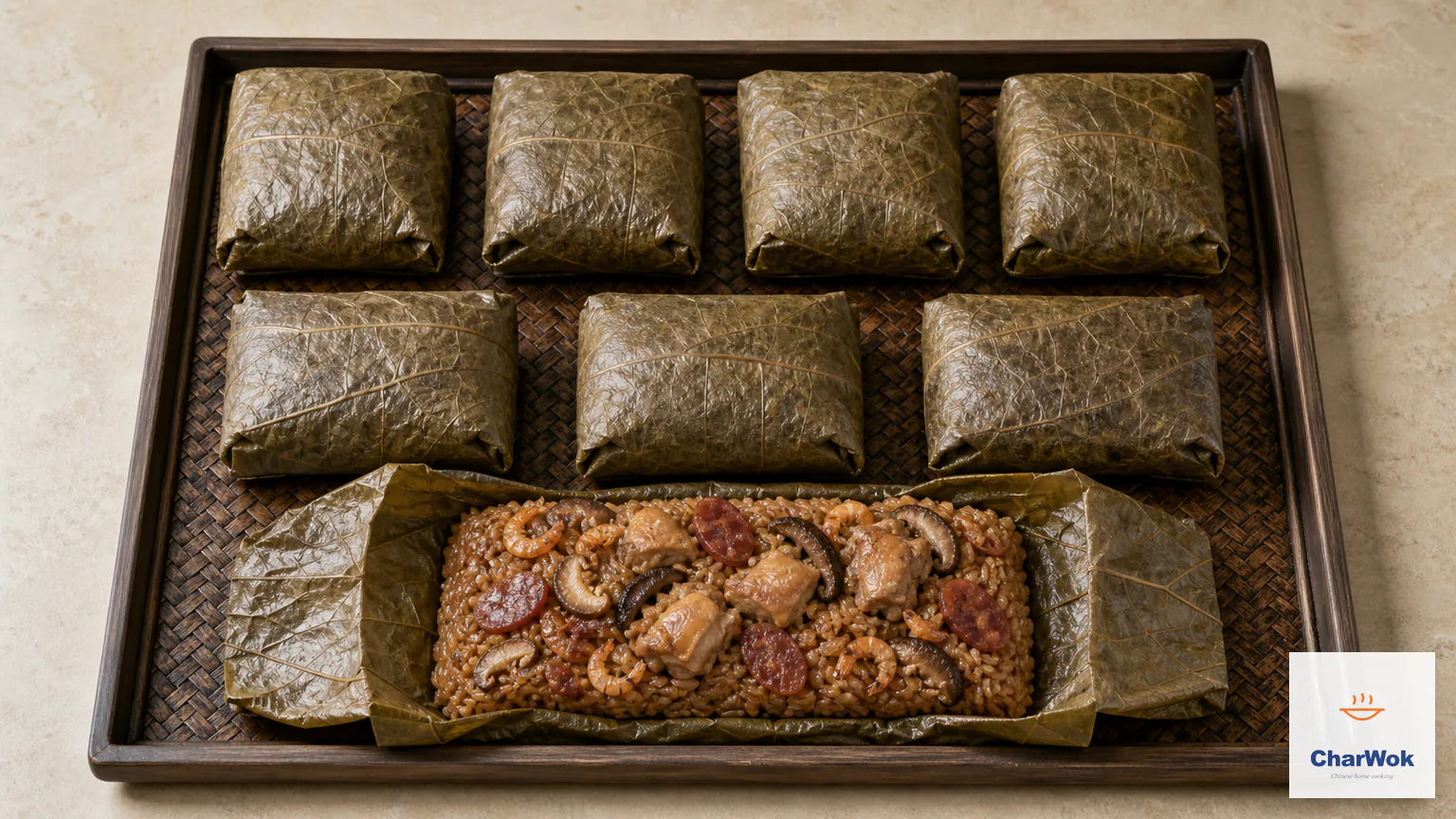
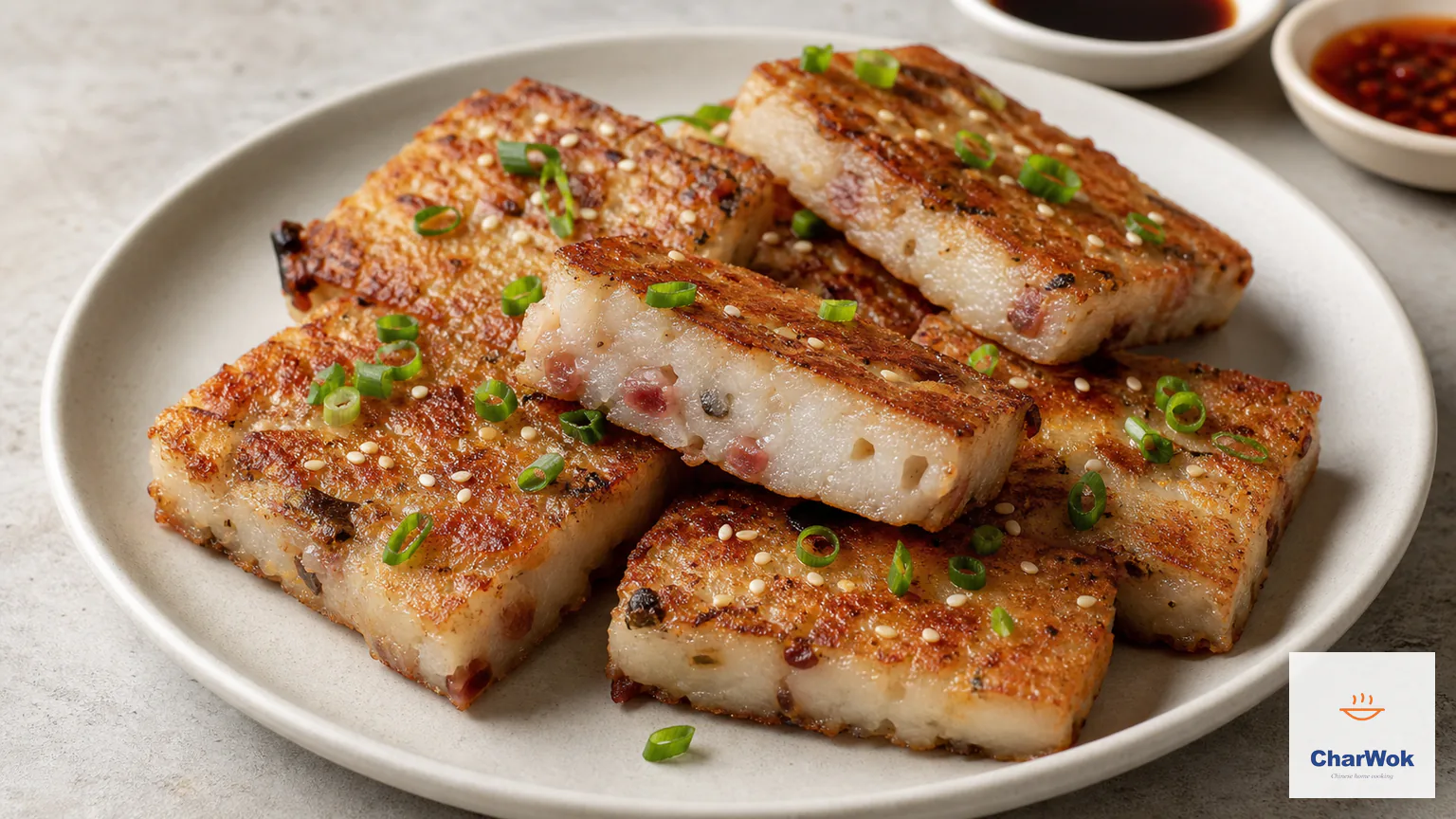
For a full dim sum brunch, plate these next to siu mai, lo mai gai sticky rice, and turnip cake, with a bowl of steamed jasmine rice on the side to soak up the glaze. They also stand alone as a cold snack with a beer, eaten with your hands, which is honestly how most of my test batches disappeared.
Storage and reheating
Keep leftovers in the fridge for up to three days, or freeze for two months. The flavor actually deepens overnight as the skin continues to absorb the sauce, which is why I often make them a day ahead. To serve cold, just let them come to room temperature. To serve warm, steam them gently for a few minutes rather than microwaving, which toughens the skin and can split the glaze. Cooking a double batch and freezing is the smart move for anyone building a multi-dish Chinese feast on a tight schedule.
How to eat them if it's your first time
Grip a foot with chopsticks, toes pointing toward you. Bite between the joints rather than across them, chew the skin and the soft tendon off, and discreetly drop the clean bones. Work from the main pad down through each toe. You're after the skin and cartilage, not the bone, so if you find yourself gnawing on something hard, you've reached the part you spit out. The whole affair is a little messy and a lot satisfying.
Common questions
A few things readers ask again and again.
Do I have to air-fry first? No. The air-fry-and-soak step only creates the wrinkled, restaurant-style skin. Skip it and braise for 40 minutes instead of 30 and you'll get tenderness without the extra step.
Can I use a pressure cooker? Yes. Run the braised stage on high pressure for about 12 minutes with a natural release, then reduce the liquid uncovered on sauté. Watch closely, because pressure-cooked collagen turns to mush fast.
Are fermented black beans essential? They're traditional and add depth, but the dish is still good without them. If you skip them, add a small extra splash of soy to replace the salt.
Why are mine tough? The braise was too short, or you reduced the liquid before the feet were tender. Always test doneness before glazing; the skin should yield to a chopstick with light pressure.
If you've never cooked feet before, expect the first try to feel a little fussy. The trimming is the slow part; everything after the blanch is mostly waiting. Get the glaze right at the end, serve them warm with rice or cold with a beer, and you'll understand why this dish outlives every trend that rolls through the dim sum cart. For a broader lineup, these feet also sit comfortably among the Chinese chicken recipes by cooking method and the wider takeout favorites you can make at home.