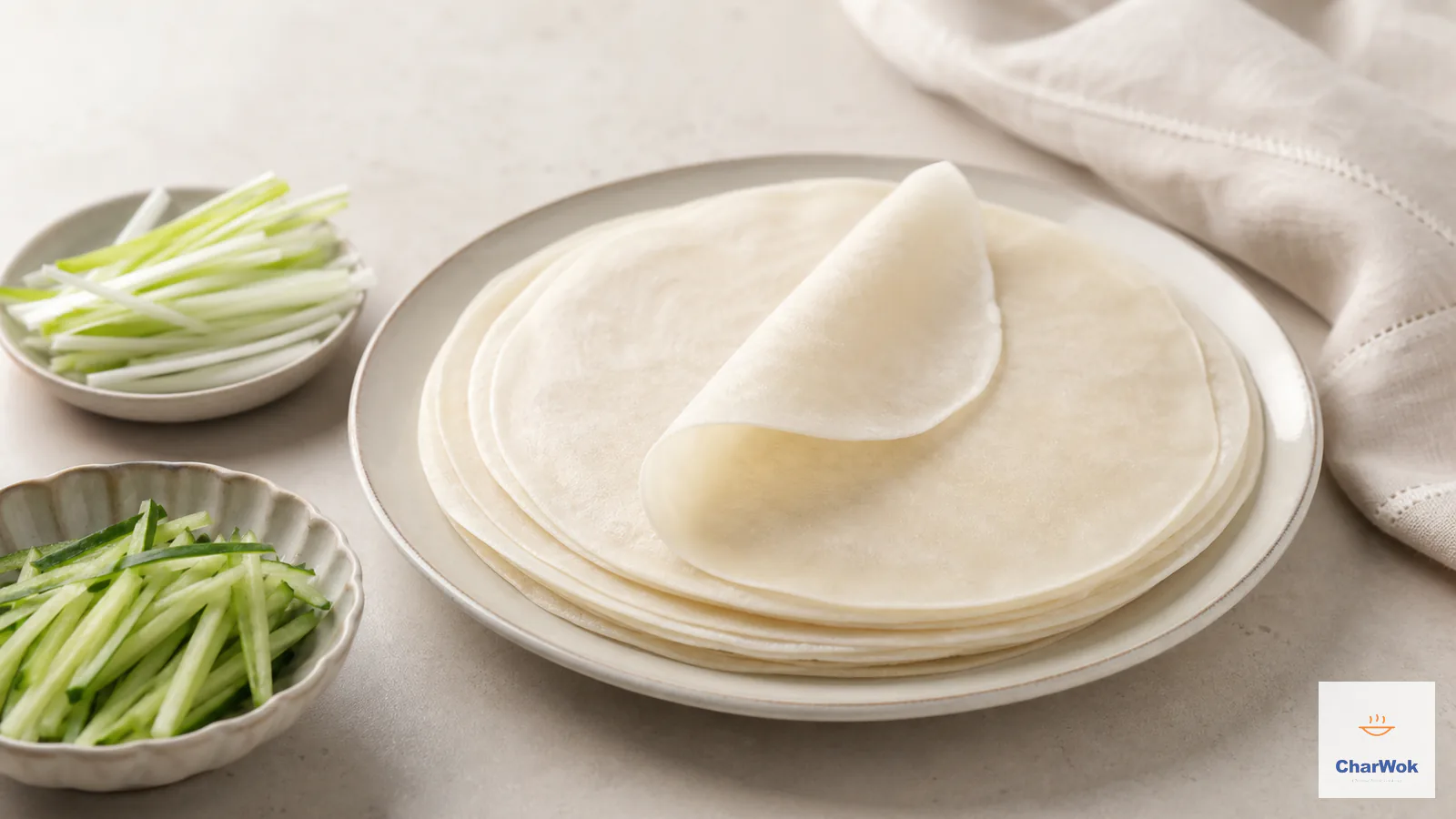
The thing that ruins most home-cooked Peking duck night is not the duck. It is the pancakes. You spend hours on the bird, then pull a packet of store wrappers from the fridge, and they come out torn, brittle, or stuck together in one gummy block. The fix is genuinely small: a hot-water wheat dough, rolled in pairs and cooked dry in a skillet, turns out wrappers so thin and soft you will stop buying them.
These are Mandarin pancakes, known in Mandarin as chun bing (spring pancakes). Same family as the wrappers folded around roast Peking duck or aromatic crispy duck, and the same pliable bread a northern family tears into at the spring festival. They have nothing to do with corn tortillas despite the name you sometimes see online; they are a wheat-flour flatbread cooked from a partially gelatinized dough, closer in spirit to a scallion pancake without the oil layers.
At a glance. Flour and just-boiled water at roughly a 3-to-2 ratio by weight (360 g flour to 230 g water makes 16 thin wrappers). The whole trick is the boiling water: it gelatinizes the starch so the dough rolls paper-thin and stays tender after cooking. Cook dry, in a covered skillet, under two minutes a pair, and split them apart while they are still warm.
What these actually are
Across northern China, chun bing predates the duck restaurant by centuries. Families eat them on Li Chun, the first day of spring on the traditional calendar, as a kind of edible promise of the growing season. Each diner builds their own bundle from a spread of fillings: stir-fried meat, scrambled egg, julienned raw vegetables, pickles. The duck-house version is a refined descendant, the same wrapper sized down to cradle crisp skin and scallion.
So you are learning two things at once: the festive family meal and the restaurant wrapper. They are the same bread. What changes is only what you put inside.
Why boiling water is the whole recipe
If you mix wheat flour with cold water you get the elastic dough used for boiled dumpling wrappers or a flaky scallion pancake. That dough is strong, sometimes chewy, and it wants a rest before it will roll thin.
Pour in water just off the boil and the flour behaves differently. The heat swells and bursts the starch granules so they gel into a paste, a process called starch gelatinization. Two things follow. First, the dough is already half-cooked, so it needs only seconds in the pan to finish. Second, the cooked starch stays soft and pliable instead of snapping back. This is the same reason the dough for stuffed meat pies and many steamed breads calls for hot water. You are not making a stretchy bread dough. You are making a tender starch paste held together with a little gluten.
A note on the word hot. I mean water that has just come to a rolling boil, poured immediately. Warm tap water will not gelatinize the starch and you will get a tough, dry wrapper. If your kettle clicks off and you wander off for five minutes, reboil it.
Ingredients
Ingredients for 16 Peking duck pancakes
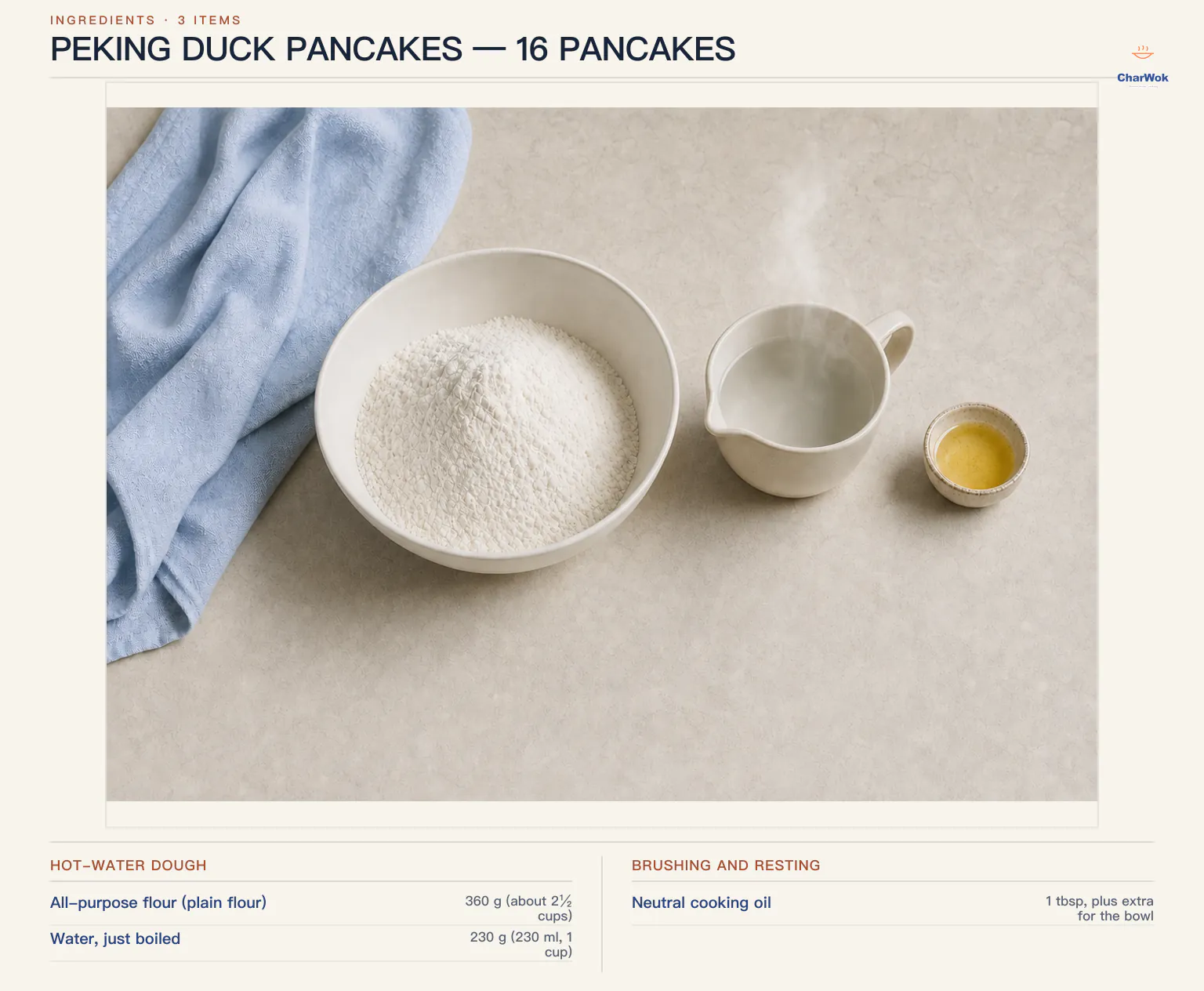
| Ingredient | Amount | Notes / substitute |
|---|---|---|
| All-purpose flour (plain flour) | 360 g (about 2½ cups) | 10 to 12% protein is ideal. Bread flour makes them tough; cake flour is too weak. |
| Water, just boiled | 230 g (230 ml, 1 cup) | Must be poured straight off the boil. Reboil if it has sat. |
| Neutral cooking oil | 1 tbsp, plus extra for the bowl | Any neutral oil: canola, grapeseed, sunflower. Used only to brush and prevent sticking, not in the dough. |
That is the entire ingredient list. Three things. No salt, no egg, no baking powder. A traditional chun bing is plain so it can carry a salty, saucy filling without competing.
Making the dough
- Heatproof bowl, then pour. Put the flour in a heatproof bowl and pour the just-boiled water over it in a steady stream while you stir with chopsticks or a fork. Do not try to form a dough yet. You are only looking for the flour to absorb the water into shaggy flakes and small lumps, with no dry flour left in the bowl. The starch is gelatinizing as you stir.
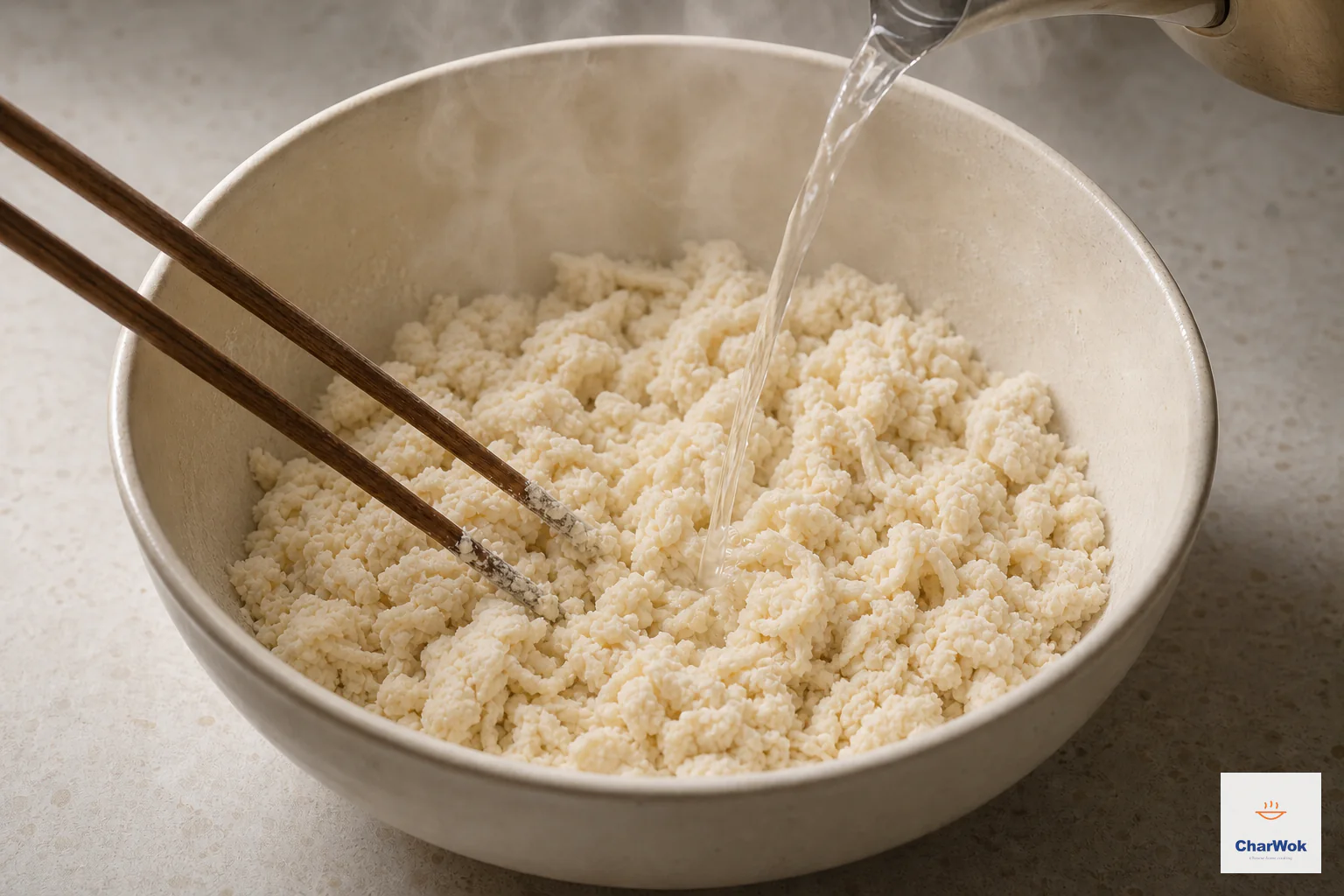
Stir while adding the just-boiled water until almost no dry flour remains, but stop before the dough becomes smooth.
- Knead once it is cool enough to touch. Wait a minute or two, then knead the lumps into a single soft, smooth ball. This takes about five minutes by hand. The dough should feel tacky but not leave sticky residue on your fingers. If it is too wet, dust a teaspoon of flour; if too dry and cracking, wet your hand under the tap and knead that in. A stand mixer with a dough hook works too, but cut the water back to about 215 g, because the machine develops the dough more efficiently than your hands and a wet machine dough turns slack.
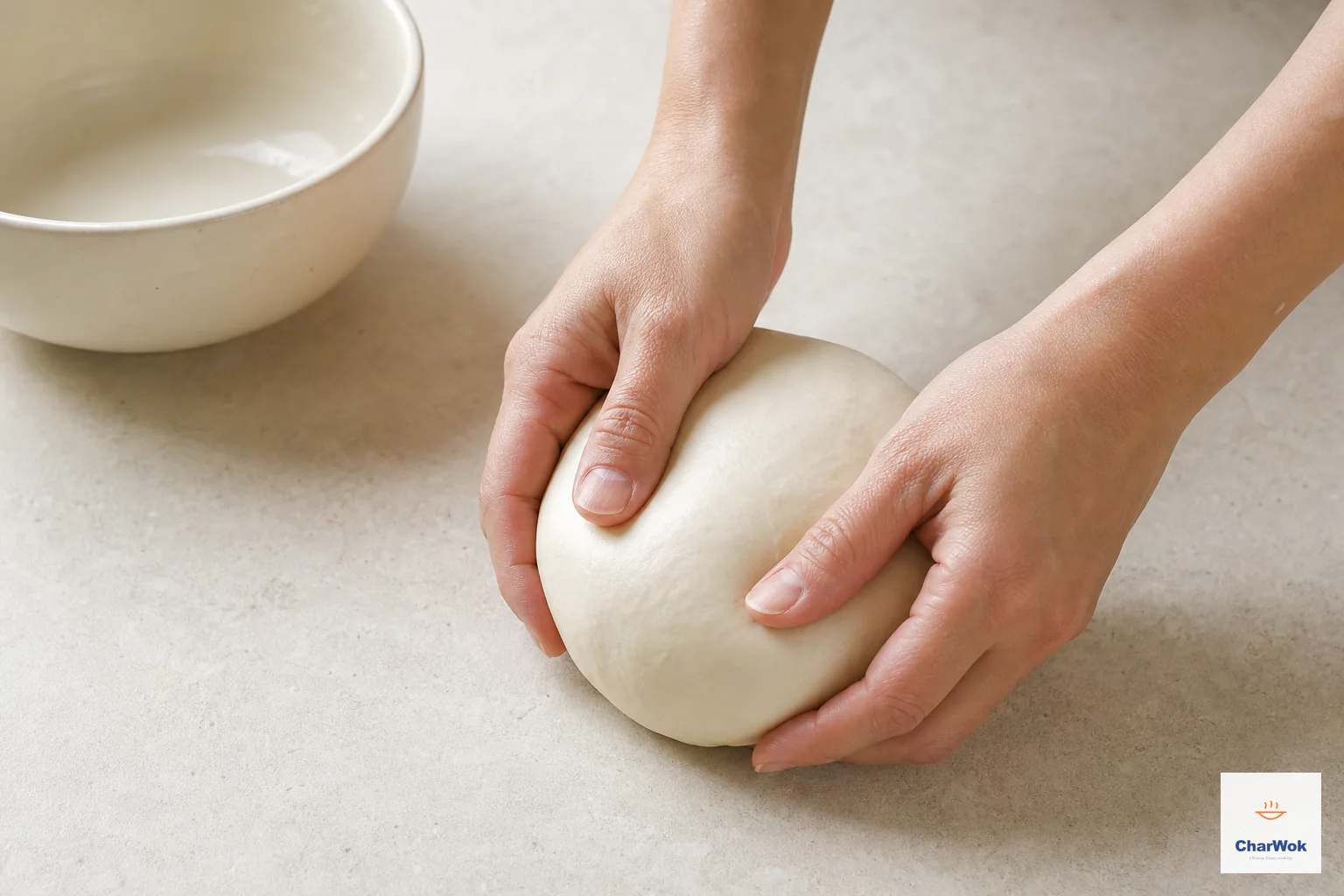
Knead the warm shaggy dough until it becomes soft and smooth and no longer leaves paste on your fingers.
- Oil, cover, rest 30 minutes. Brush the dough with a thin film of oil so it does not skin over, then cover the bowl and leave it at room temperature for half an hour. The rest is not optional. It lets the gluten relax so the dough will roll thin without springing back, and it gives the starch time to fully hydrate. Skipping it is the single most common reason wrappers shrink and refuse to thin out.
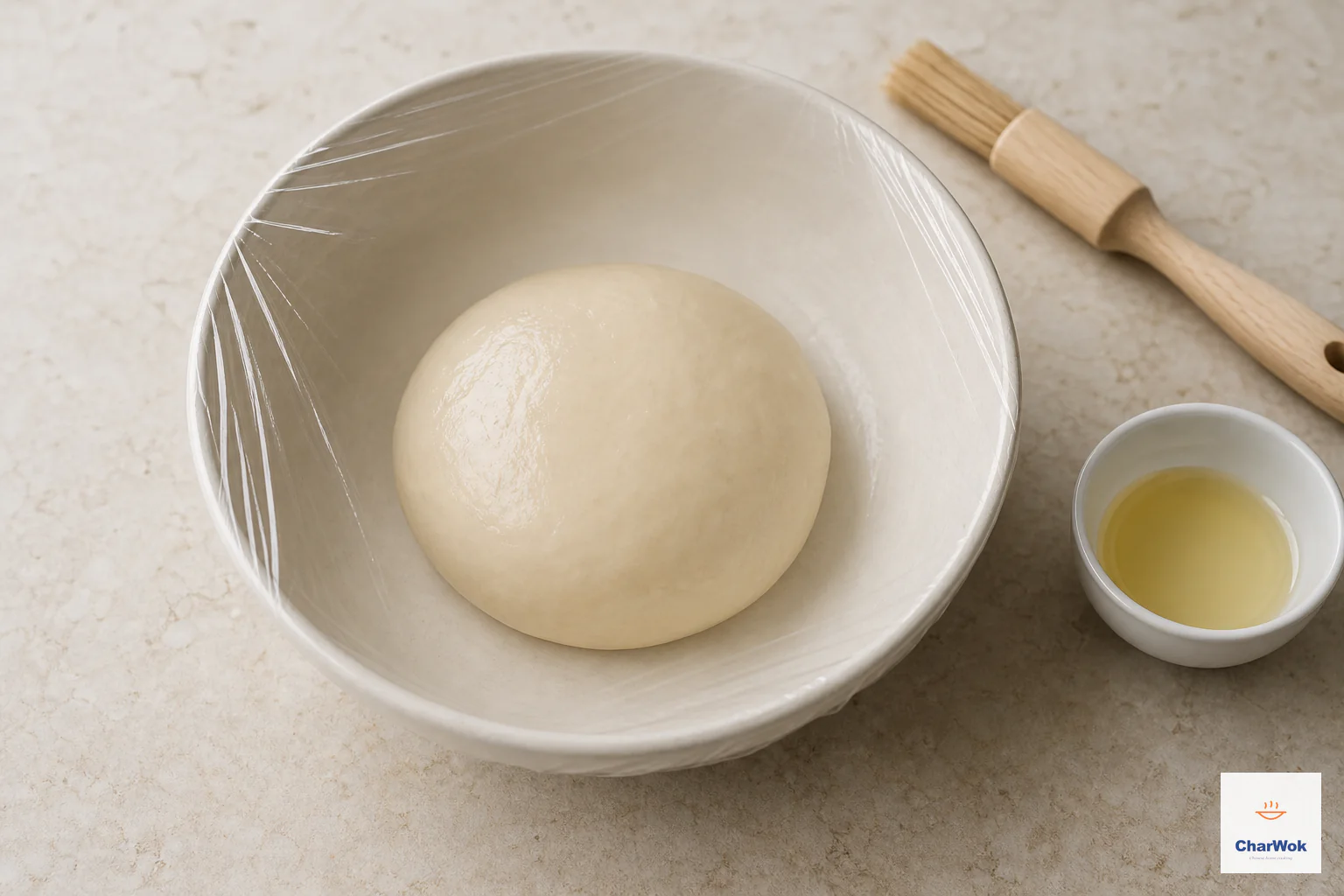
Brush the bowl and dough lightly with neutral oil, cover tightly, and rest so the gluten relaxes without rising.
Dividing and pairing the dough
This is where the recipe earns its reputation for being clever. You could roll sixteen individual wrappers and cook them one at a time, but they would curl and dry at the edges and you would be at the stove forever. Instead you make eight pairs.
- Cut into 16 even pieces. Knead the dough briefly, then quarter it. Roll each quarter into a log and cut the log into four equal pieces so you end up with sixteen. Weighing them on a kitchen scale (each about 37 g) is worth the thirty seconds, because uneven pieces cook at different rates.
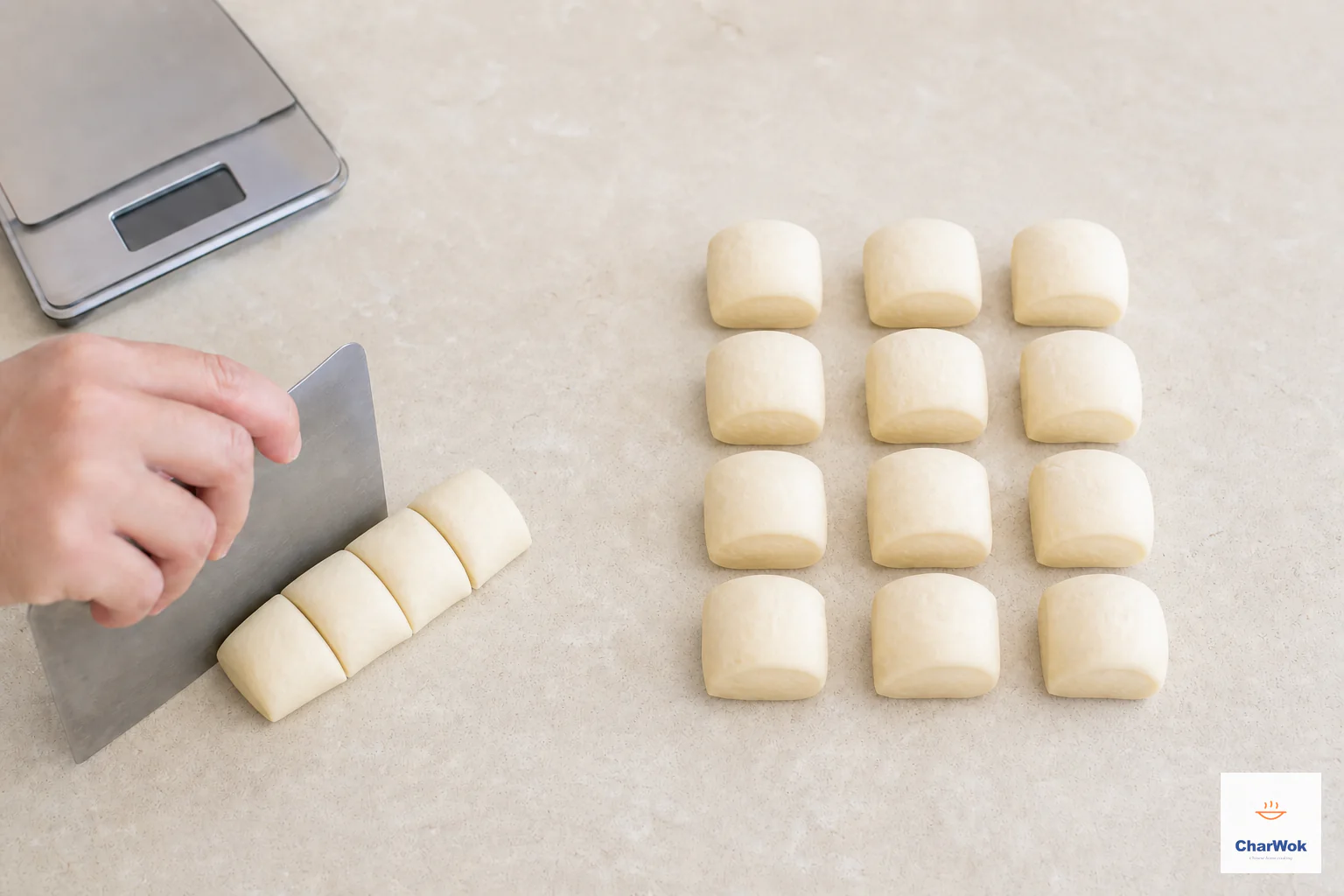
Divide the rested dough evenly into 16 pieces; the scale is useful because equal pieces cook and split consistently.
- Shape into flat disks. Press each piece under your palm into a small puck about 5 cm (2 in) across.
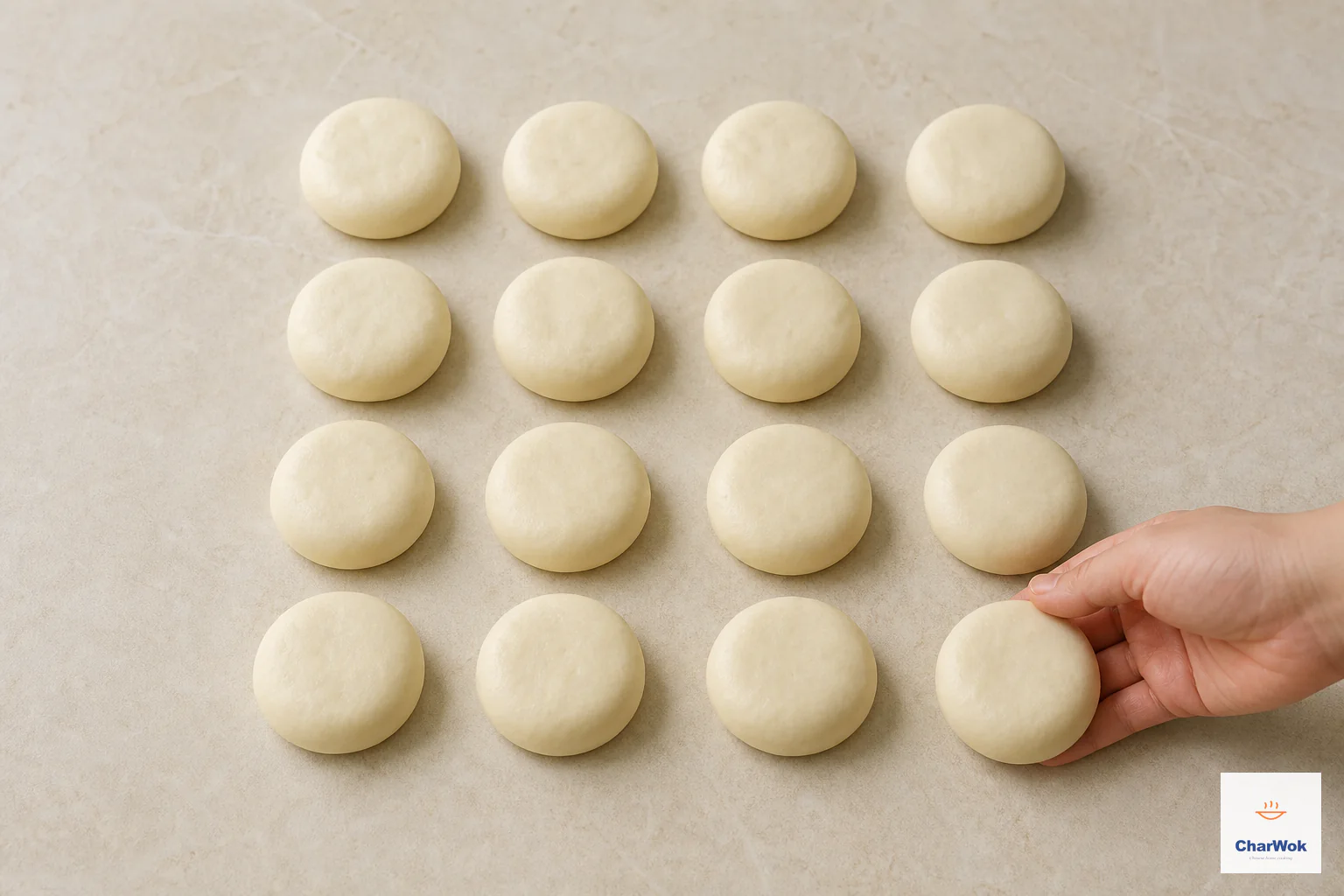
Press every portion into a small round puck about 5 centimetres wide before adding any oil or pairing the disks.
- Brush and stack. Brush the top of one disk with a thin, even layer of oil, then set a second disk on top, oiled side down. Press them together gently. The oil is the release agent. Without it the two layers fuse and you will never get them apart. Repeat with the rest so you have eight pairs.
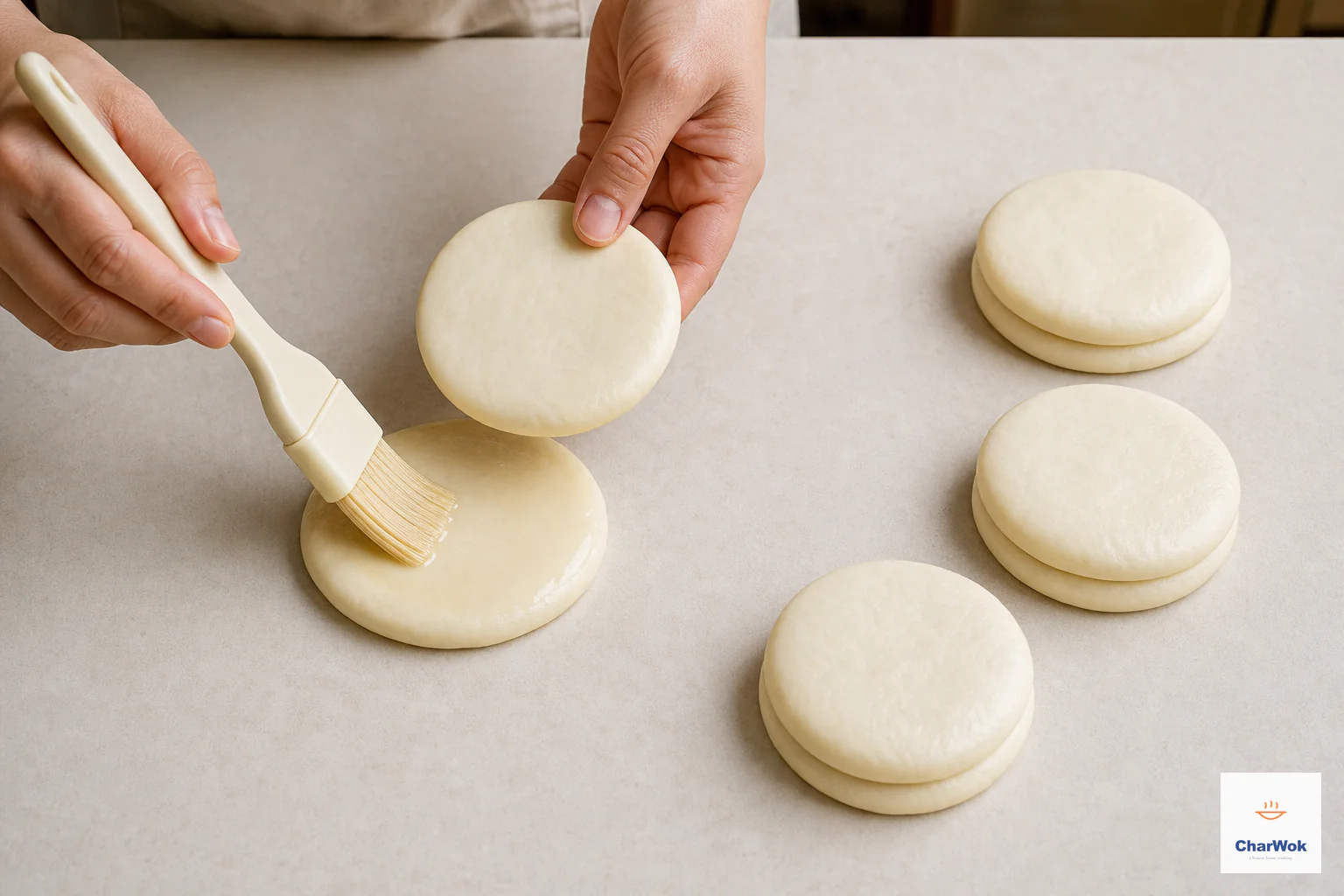
Brush one face thinly and stack a second disk directly over it, oiled faces together; keep every stack to exactly two layers.
Rolling and cooking
- Roll a pair thin. Take one pair and roll it out with a rolling pin into a circle about 18 cm (7 in) across. Flip the pair over every few strokes so both disks stretch evenly, otherwise the top one ends up bigger than the bottom. Lightly oil the pin and counter if anything sticks; do not add flour, which dries the dough.
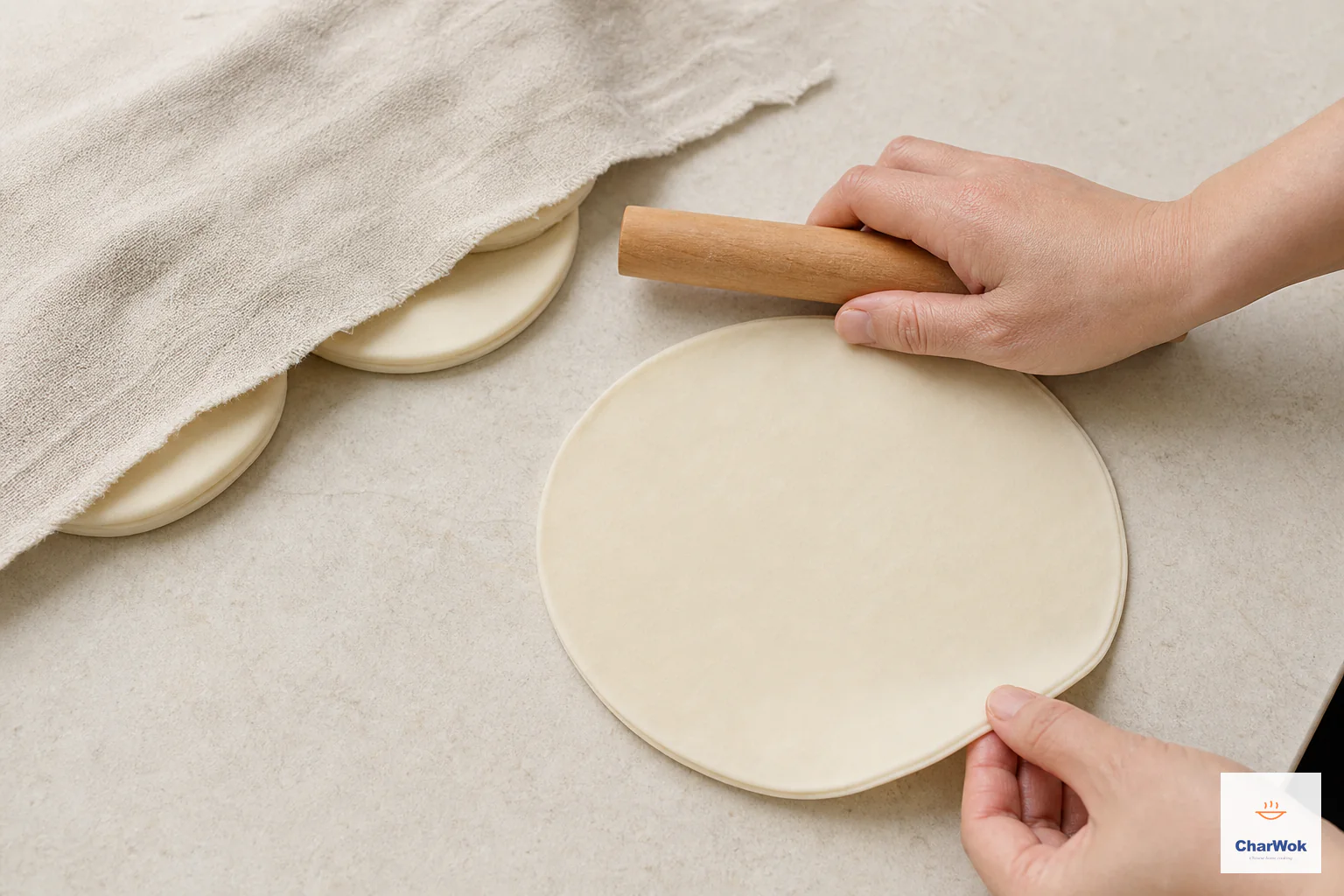
Roll each pair evenly to about 18 centimetres, turning it as needed and avoiding extra flour that would dry the surface.
- Dry skillet, medium heat, covered. Heat a nonstick or well-seasoned skillet over medium heat and lay the pair in. Cover with a lid. No oil in the pan. Within 20 to 40 seconds you will see the top puff into bubbles and air pockets. That puffing is the trapped moisture between the two layers turning to steam and pushing them apart. As soon as you see it, flip, cover again, and cook the second side until it shows light brown spots. The whole pair takes well under two minutes.
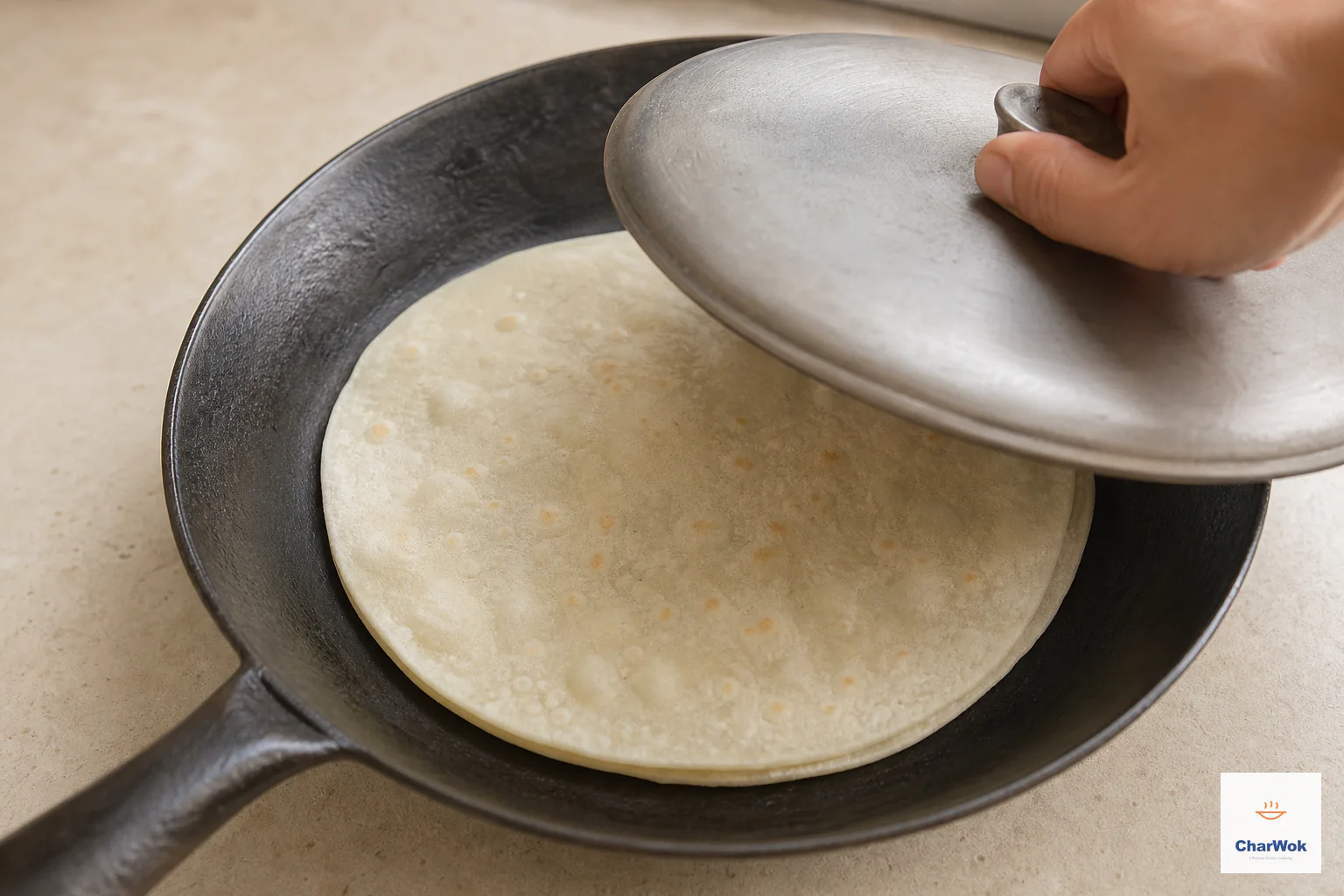
Cook the paired pancake in a dry covered skillet just until small bubbles and pale tan freckles appear, then flip briefly.
- Stack under a cloth. Slide the cooked pair onto a plate and cover immediately with a clean kitchen towel. Every pair goes under the same cloth. Uncovered, the edges turn crisp in seconds and will never soften again.
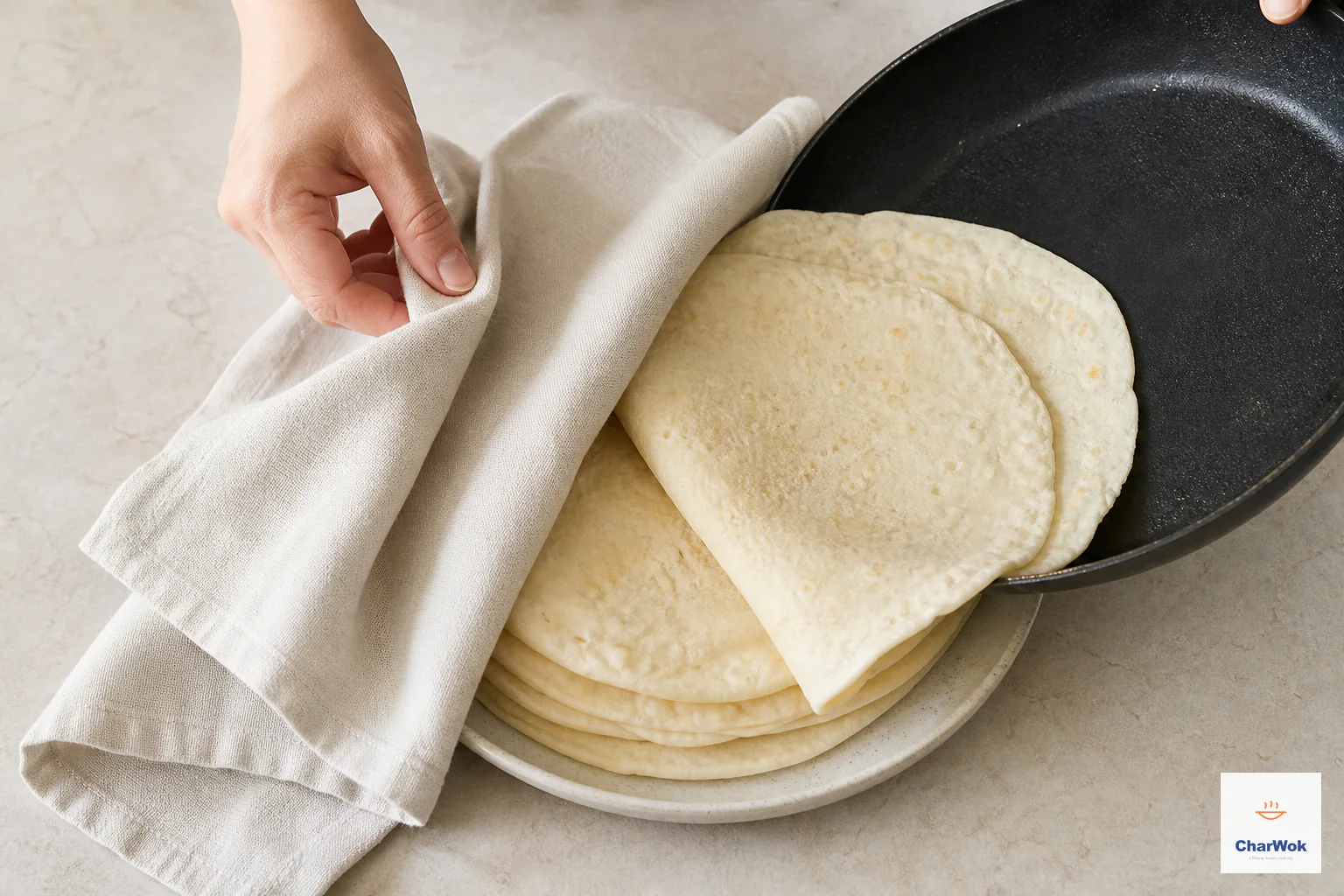
Move every cooked pair straight under a clean cloth so the trapped warmth keeps the thin edges pliable.
- Pipeline the rest. While one pair cooks, roll the next. By the time a pair leaves the pan, the next is ready to go in. You finish all eight in about ten minutes.
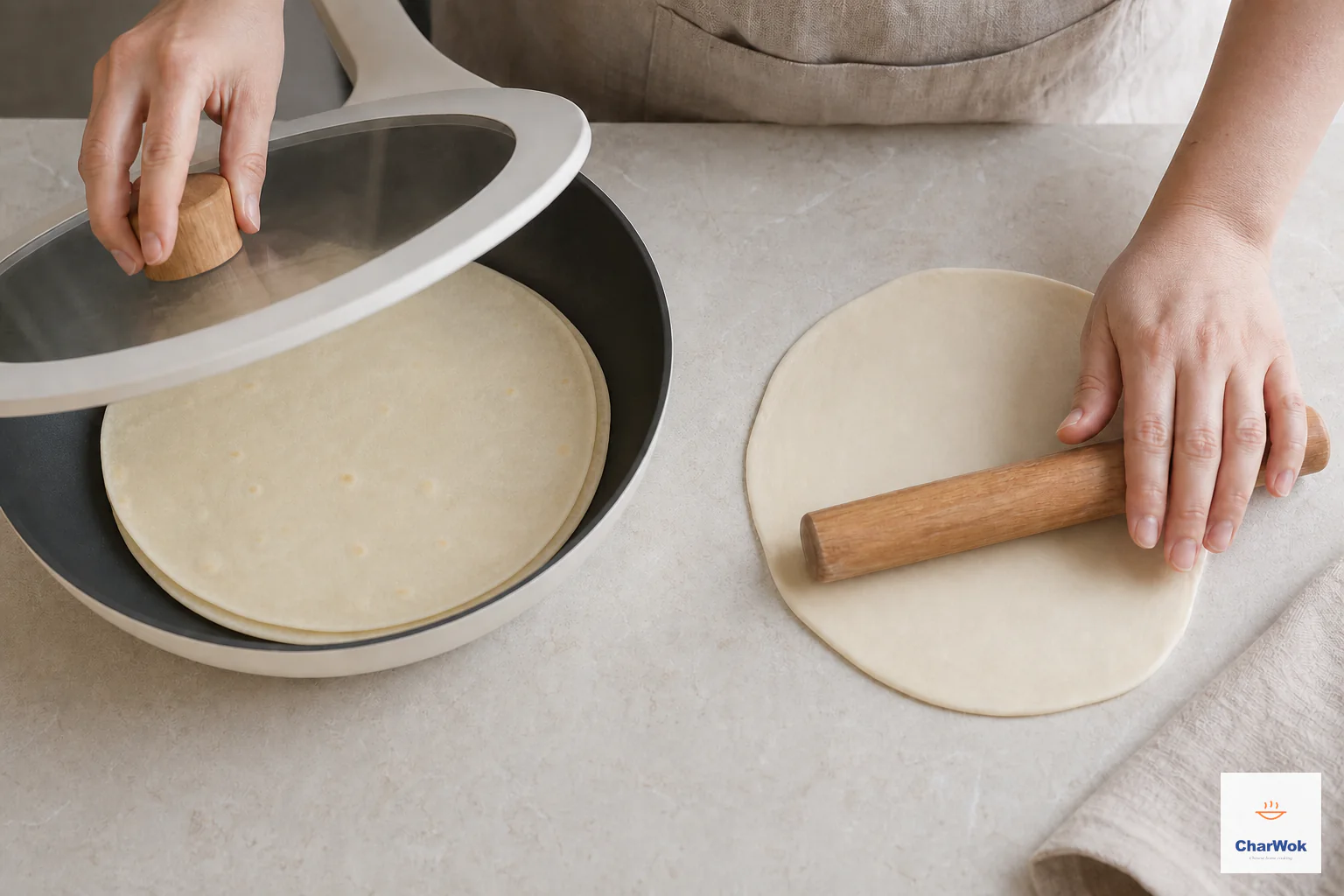
Keep a steady rhythm: roll the next pair while the current one cooks, without leaving either stage unattended.
Splitting them apart
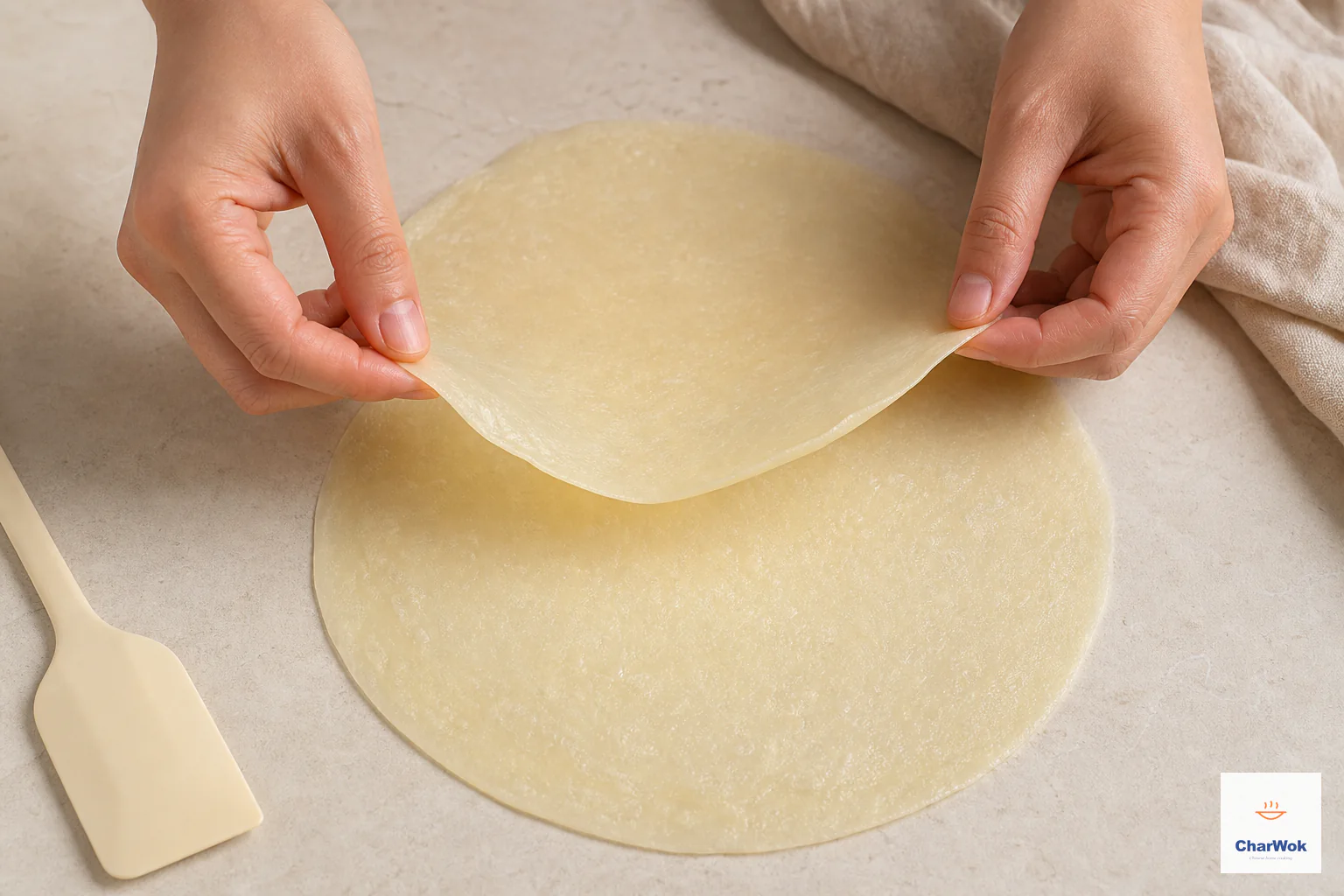
Separate each pair while it is still warm, easing apart the oiled edge so both thin rounds remain intact.
Do this while the pancakes are still warm, not after they cool. Run a thin knife or the edge of a spatula between the layers at one point, then peel them apart gently. They should separate cleanly thanks to the oil. Once cold, the starch sets and the layers lock together; a cold pair will tear rather than split. If that happens, do not fight it. Briefly steam the pair for 30 seconds to soften the starch, then peel.
When the pancakes go wrong
I have wrecked this dough every way it can be wrecked. Here are the failures I see most often and what actually fixes them.
- Dough too sticky to knead. Either the water was not quite boiling so the starch did not set, or you used a stand mixer with the full 230 g of water. Knead in a teaspoon of flour at a time. Next time, reboil the water, or cut machine-mixed water to 215 g.
- Dough too dry, cracking when rolled. Too little water or the dough skinned over during the rest. Wet your hands and knead the moisture in, then rest it ten more minutes under a damp cloth. Hot-water dough should feel softer than a dumpling dough, almost like playdough.
- Wrappers shrink back when rolled. The gluten has not relaxed. Rest the remaining dough another 15 minutes, covered, before rolling.
- Pairs will not puff in the pan. The pan is too cool, or you left the lid off. The steam that puffs them has to be trapped. Cover the pan and nudge the heat up slightly.
- Cooked pancakes are dry and stiff. Two usual causes: you cooked them uncovered (moisture escaped), or you left them sitting in the open air. The recovery is the same either way. Pile them in a steamer for two minutes and they turn soft again. They will not be as good as fresh, but they will be servable.
- Layers fused together after cooking. You forgot the oil between the disks, or used too little. Nothing to do now except call it a single thick pancake. For the next batch, brush a real, visible film of oil across the whole disk, edge to edge.
- Uneven browning, scorched spots. The pan is too hot. Drop to medium-low; these cook on gentle heat, and a scorched pancake tastes bitter.
What to fold inside
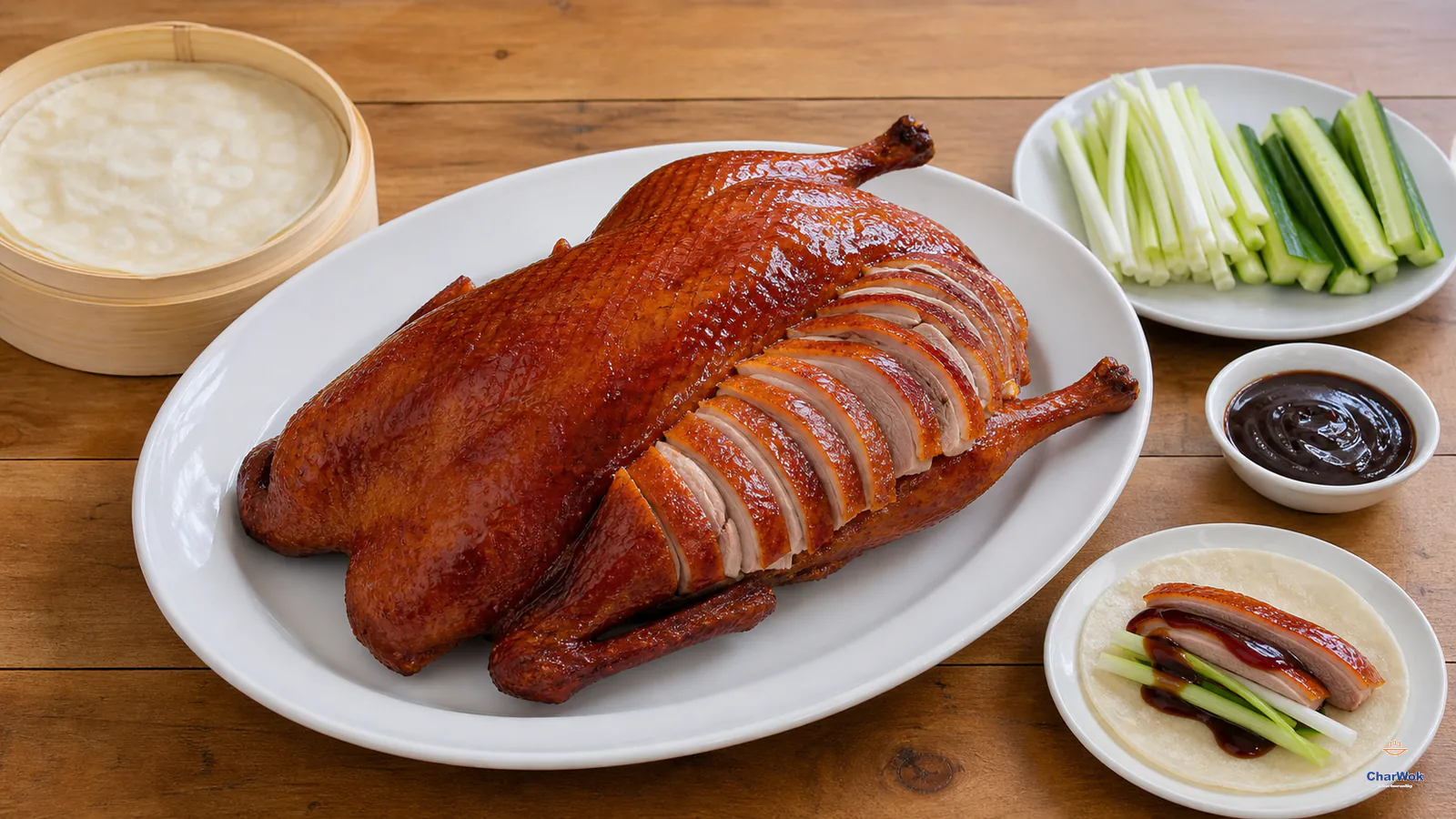
The duck-house filling is the famous one: slices of crisp-skinned roast Peking duck, a cucumber baton, a scallion brush, a smear of sweet bean or hoisin sauce. If you have not made the duck at home, aromatic crispy duck is an easier route to the same kind of shredded, fragrant meat for wrapping.
For the festive spring-table spread, set out a few stir-fries and let people build their own. A mu shu pork style stir-fry of shredded pork, egg, and wood-ear was practically invented for these wrappers. Sichuan fish-fragrant shredded pork brings a sweet-tart-salty sauce that soaks into the bread. A plate of Hunan stir-fried pork adds chili heat. For contrast, include something fresh and crisp: a quick hot-and-sour potato stir-fry, or a bowl of flash-fried mung bean sprouts. A humble egg and pickled chili stir-fry is the kind of filling northerners actually eat on a weeknight, and on a cookout night, leftover cumin lamb skewers pulled off the stick make an unexpectedly good wrap.
Variations and pairings
The dough is a blank canvas. Knead a teaspoon of toasted sesame oil into the finished dough for a faint nutty note that suits a duck filling. Swap a quarter of the flour for finely ground toasted sesame seeds or chickpea flour for a more substantial, slightly sweet wrapper that stands up to spicy fillings.
For the sauce, sweet bean sauce (tian mian jiang) is the classic. Hoisin is the common supermarket stand-in and works fine, though it is sweeter and less savory; cut it with a few drops of soy sauce and sesame oil to bring it back into balance. A spoonful of cumin-chili skewer seasoning dusted into a wrap of plain scrambled egg is a snack I make from leftover wrappers more often than I admit.
Storing and reheating
Once split and cooled, stack the single pancakes with a small square of parchment or a light brush of oil between each so they do not re-fuse, then seal in a bag. They keep three days in the fridge and about a month in the freezer.
To reheat, steaming is the most forgiving method: 3 minutes from chilled, about 6 from frozen, no need to thaw. For an oven, defrost first, sprinkle a few drops of water between each pancake, wrap the stack in foil, and warm at 180°C (350°F) for roughly 6 minutes. The microwave works in a pinch but toughens the edges; cover the stack with a damp paper towel and go in short 15-second bursts.
Related recipes & further reading
Once you can roll a hot-water dough, the same instinct carries into the rest of the Chinese bread and flatbread family. The wheat staples here all start from a similar flour-and-water base, and several of them are what a northern cook would set on the table alongside a stack of chun bing. A few roundups are included for nights you want a whole menu rather than one bread.
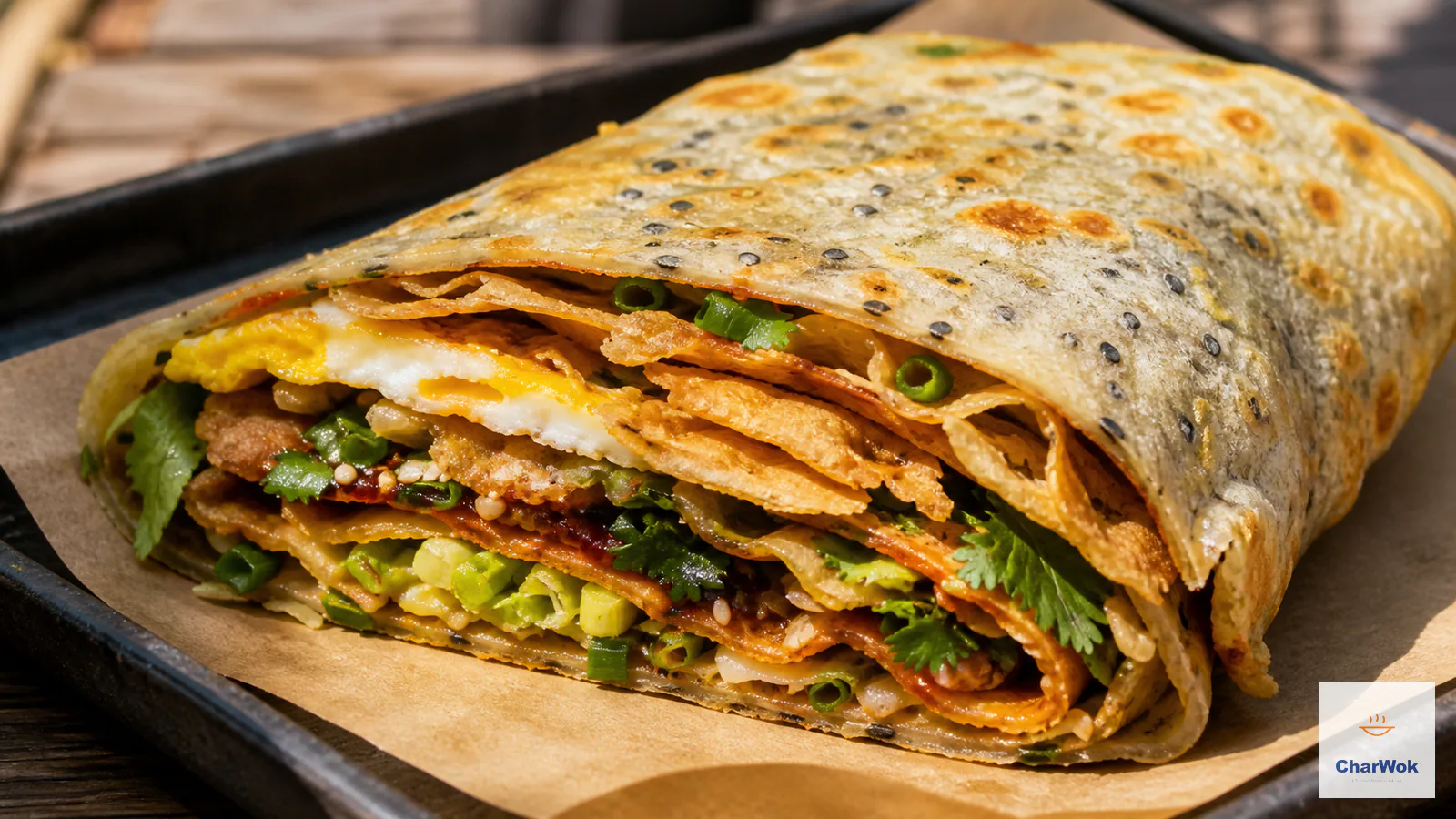
- If you enjoy folding a soft bread around a savory filling, the street-stall classic jian bing crepes use a similar thin-cooked batter wrapper.
- The egg and scallion crepe (ji dan bing) is the quick breakfast cousin, cooked in a single layer with egg brushed on top.
- For an unsweetened steamed bread to serve with saucy dishes, mantou steamed buns are the soft wheat counterpart to these pan-cooked wrappers.
- A Chinese pork burger (rou jia mo) shows the same bread-plus-filling thinking baked into a split bun.
- The crispy stuffed flatbread (guo kui) takes a wheat dough and fills it before pan-frying, a heartier sibling to a plain pancake.
- Oven-baked scallion bread leans on the same hot-water technique for a tender crumb.
- For a deep-fried breakfast bread often torn into congee, youtiao doughnut sticks round out the morning table.
- When you want a saucy stir-fry to spoon into the wrappers, spicy orange beef brings a sweet-tangy glaze that soaks into the bread.
- For a broader starting point, the must-try authentic Chinese recipes list includes several dishes built to be wrapped or scooped with bread.
- The core cooking skills guide includes several fillings that pair with a fresh stack of pancakes.
- A guided culinary tour of China traces where flatbreads like chun bing fit in the regional table.
- And for a wider spread of morning dishes that share the dough, the Chinese breakfast recipes roundup collects several bread-and-crepe staples.
Frequently asked questions
Can I use cold water instead of hot? You can make a wrapper with cold water, but it will be a different product: chewier, thicker, closer to a boiled-dumpling skin. The boiling water is what gives the Mandarin pancake its softness and lets it roll thin. Use water straight off the boil.
Do I really need to rest the dough? Yes. The gluten needs time to relax or the dough snaps back when you roll. Thirty minutes at room temperature is the minimum; an hour is even better if you have it.
Why cook them in pairs? Speed and moisture. Two thin layers cook faster and more evenly than one thick one, and the steam trapped between the layers keeps the bread soft. It also halves your time at the stove.
Can I freeze the cooked pancakes? Yes, for about a month. Separate them with parchment and freeze flat in a bag, then reheat from frozen by steaming.
My pancakes came out dry. Is the recipe wrong? Almost certainly not. Dry pancakes usually mean an uncovered pan or uncovered cooked stack. Steam them for two minutes and they recover, and cover the pan and the plate next time.
The recipe comes down to two judgments. Pour the water in boiling, and cover everything: the dough as it rests, the pan as it cooks, the plate as the stack grows. Get those two habits right and the rest takes care of itself. Make the wrappers once and you will not bother with the packet again.