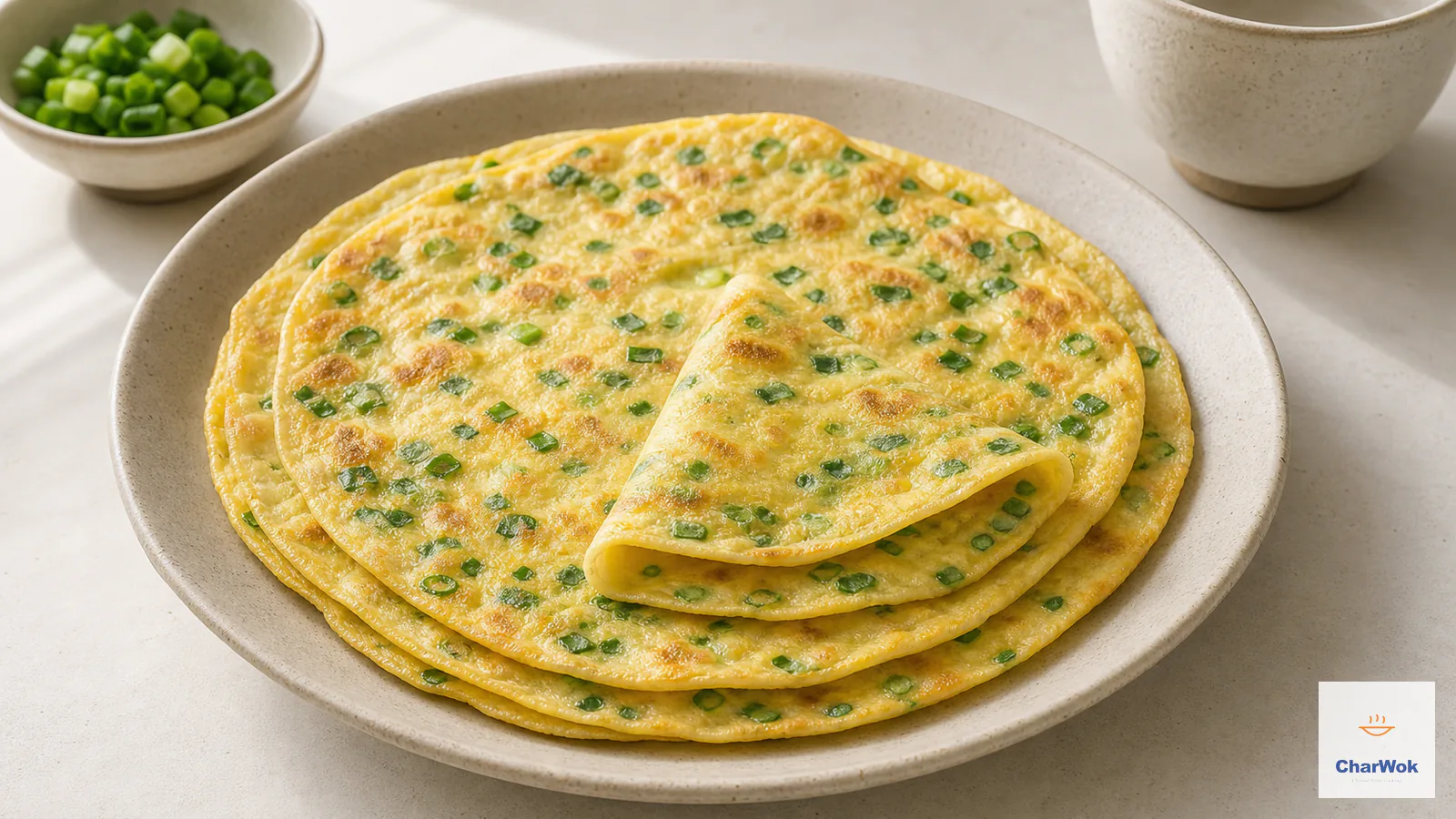
The whole of ji dan bing (鸡蛋饼) lives in a five-ingredient batter and a hot pan. There is no dough to rest, no filling to fold, no sauce to build. And yet most home versions come out either rubbery, lumpy, or torn to rags on the flip. The split between a crepe that flops onto the plate pale and sad and one with lacy crisp edges and a tender, almost custardy middle is not about the recipe. It is about two moments: how you combine the flour with the liquid, and when you decide the first side is done.
I have wrecked plenty of these. The worst batch came the morning I dumped eggs straight onto dry flour and tried to whisk my way out of it. Flour loves to grab egg protein and roll itself into rubbery little balls that no amount of stirring will dissolve. You end up straining them out, or worse, eating them. So before we get to the pan, let's settle the one technique that decides whether this recipe is a five-minute breakfast or a ten-minute cleanup.
At a glance: 100 g flour to 240 ml water to 3 eggs, whisked in that order. Pour about 4 tablespoons of batter per 18 cm (7 inch) crepe into a non-stick pan over medium-high. The first side is ready the instant the crepe slides freely when you shake the pan, roughly 40 seconds. Flip, finish 40 seconds more. Total cook time per crepe: about 80 seconds.
What this crepe actually is
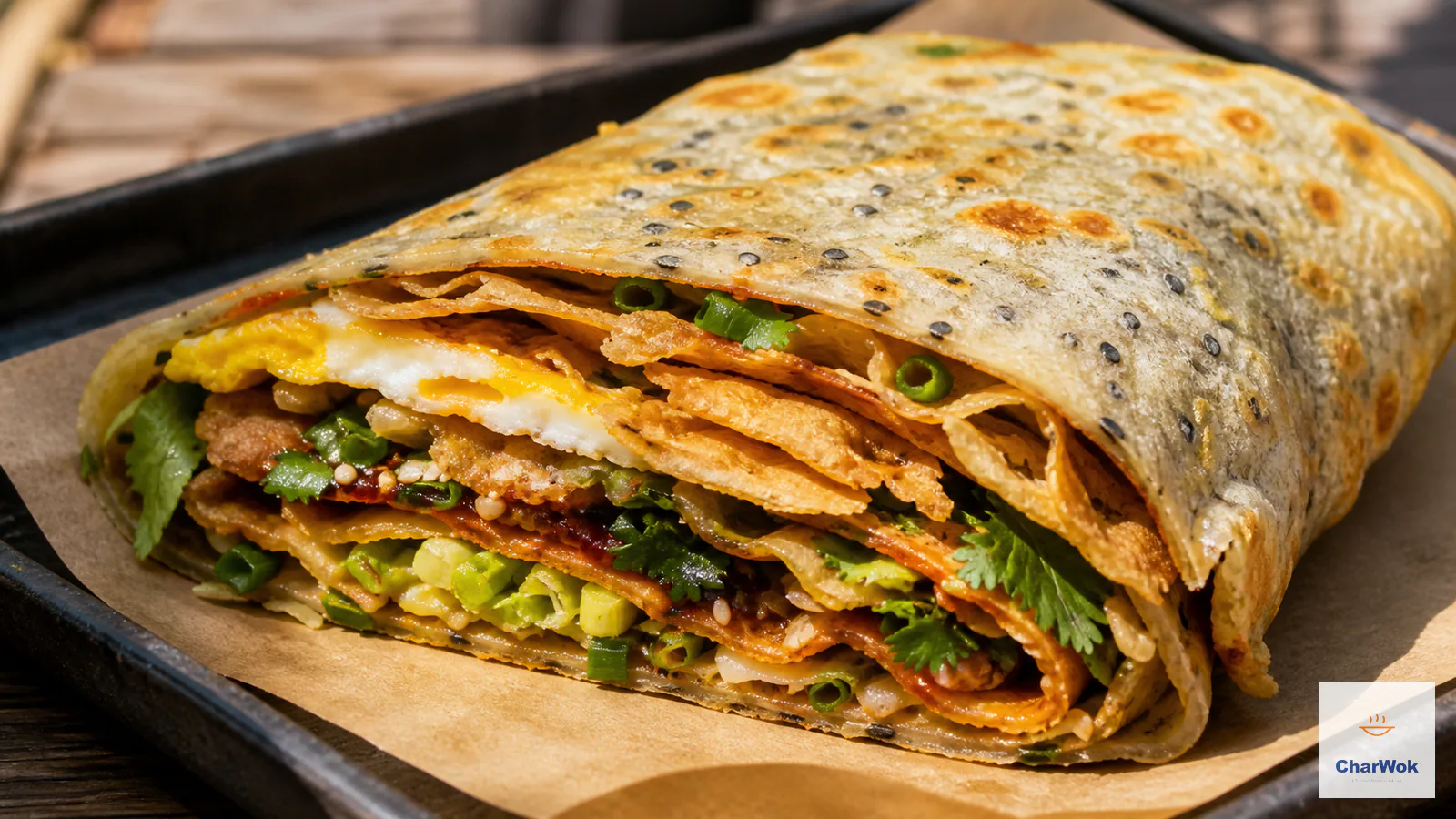
This is a northern Chinese breakfast staple, eaten folded or rolled, plain or dunked in something salty and spicy. Think of it as the lazy cousin of jian bing, the street-stall crepe built on a wheat-and-grain batter with crispy fillings and eggs cracked on top. Ji dan bing skips all of that: the egg goes into the batter, the scallion goes in with it, and the whole thing cooks in one pour. It belongs in the same family of quick morning batters and doughs as youtiao and a bowl of chicken and mushroom congee, the kind of weekday breakfast that appears on the table in under twenty minutes. If you are working through the broader spread of Chinese breakfast dishes, this is the one you make on the morning you have no plan.
Why the mixing order matters more than the ratio
The ratio itself is forgiving. A little more water, a little less, and you land somewhere reasonable. The order is not forgiving. Flour whisked into water hydrates evenly because water has no protein to clump. Flour whisked into egg forms paste islands instantly, because egg proteins coagulate around the starch granules and trap them in pockets the whisk cannot reach. This is the same reason a roux starts with fat, not milk. You are managing how starch meets liquid.
So: flour and water first, whisked until you see no dry streaks. Then the eggs, salt, pepper, and scallion go in together. The eggs are the structure here, not just flavor. Their proteins set in the pan and give the crepe enough backbone to flip without tearing, which a flour-and-water-only batter cannot do. This is the same protein-setting logic behind steamed eggs or a proper egg foo young, just at a much lower egg-to-starch ratio.
The ingredients
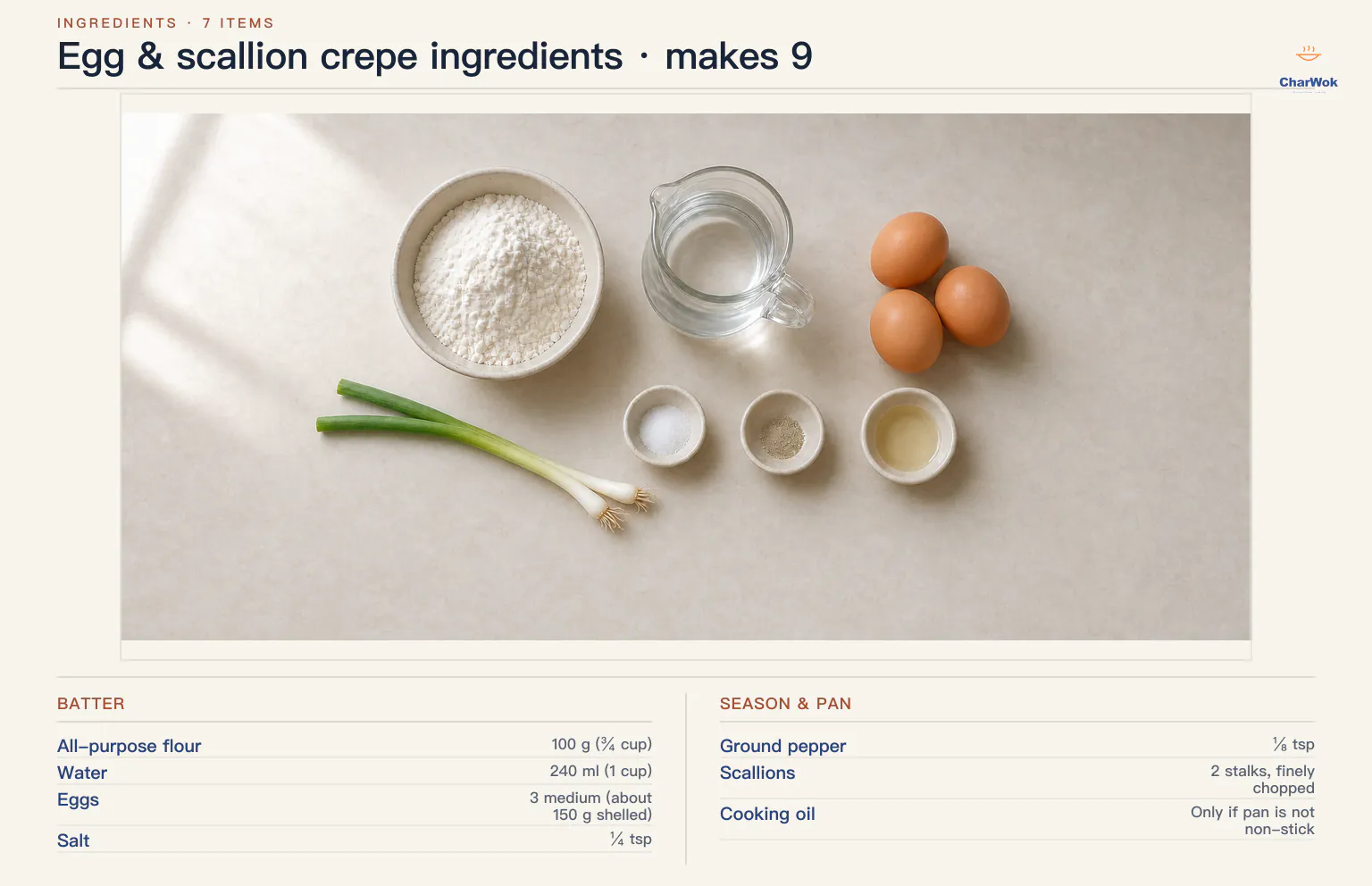
Ingredients at a glance
| Ingredient | Amount | Notes / substitute |
|---|---|---|
| All-purpose flour | 100 g (¾ cup) | Bread flour works; texture change is small. Avoid cake flour, too weak. |
| Water | 240 ml (1 cup) | Room temperature. Swap 40 ml out if adding a 4th egg. |
| Eggs | 3 medium (about 150 g shelled) | Large eggs fine; treat 3 large as roughly equivalent. |
| Salt | ¼ tsp | kosher or fine sea salt. |
| Ground pepper | ⅛ tsp | Ground Sichuan pepper for the classic numbing note, or white / black pepper. |
| Scallions | 2 stalks, finely chopped | Green parts preferred. Chinese chives are an excellent swap. |
| Cooking oil | Only if pan is not non-stick | Neutral oil, brushed on thin. |
Making the batter
- Whisk flour into the water first. Put the water in a bowl, add the flour, and whisk until completely smooth with no white lumps. The slurry should pour like heavy cream. This is the step that decides everything; do it before the eggs touch the bowl.
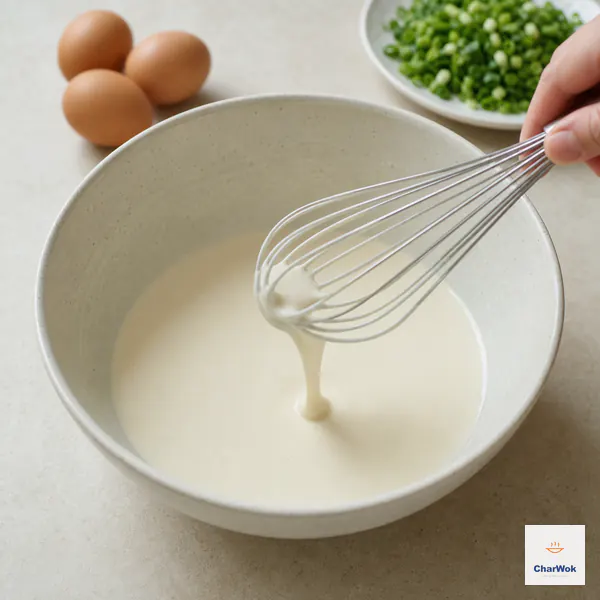
Whisk flour into water first until no dry streaks or white lumps remain; eggs and seasonings enter only after this smooth base forms
- Add the eggs and seasonings. Crack in the eggs, then the salt, pepper, and chopped scallion. Whisk only until uniformly combined. Over-whisking at this stage does nothing useful and can foam the egg; a few strokes is enough.
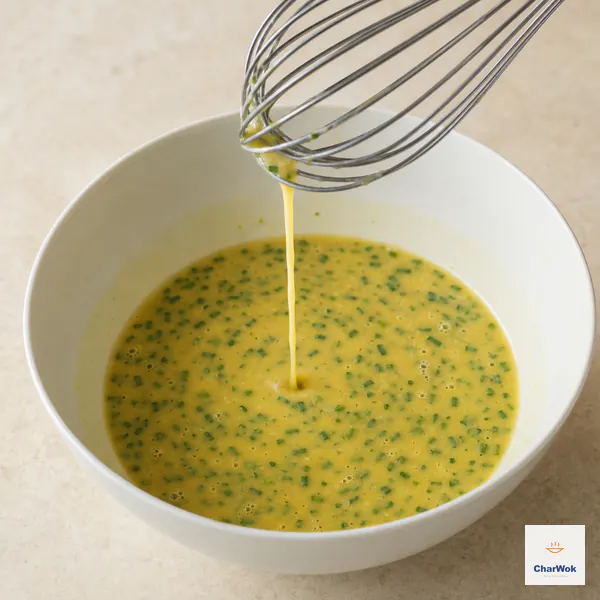
The finished batter should pour in a thin stream that vanishes back into the surface within one or two seconds
- Check the consistency. The batter should run off the whisk in a thin stream that disappears back into the surface within a second or two. If it mounds briefly before settling, add water a tablespoon at a time. If it is watery and translucent, whisk in another teaspoon of flour.
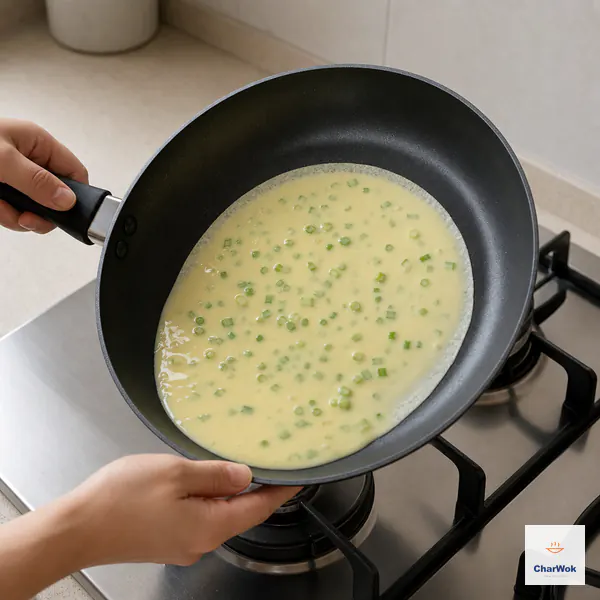
Pour about 4 tablespoons into the hot pan and rotate it at once, before the batter sets too thick
- Let it sit five minutes if you have them. This is optional but real. A short rest lets the flour fully hydrate and the gluten relax, which means fewer tough spots and a more even pour. While it rests, heat the pan.
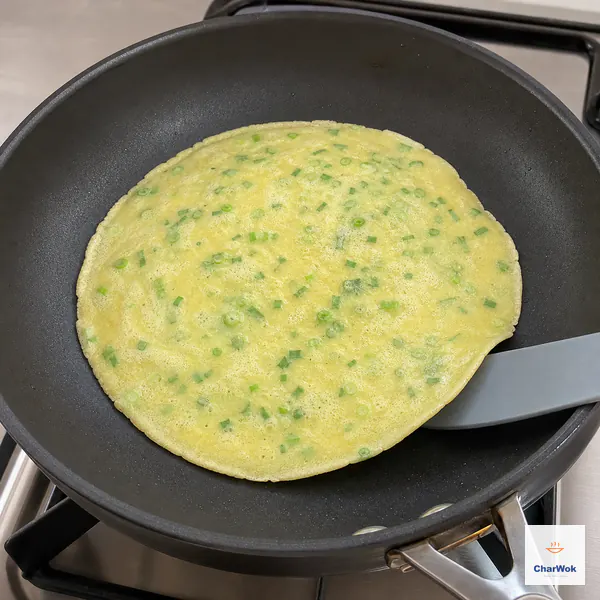
Flip only when the wet shine has gone, the edge lifts and the whole crepe moves freely with a gentle shake
Cooking, and the moment that decides the flip
- Heat a non-stick pan over medium-high until a drop of batter sizzles and sets in two seconds. Too hot and the batter seizes the instant it lands, so you cannot swirl it into a circle; it cooks into a thick puck. Too cool and the crepe never firms up, sticking and tearing. That sizzle test is more reliable than any dial setting, because every stove and every pan differ.
- Pour about 4 tablespoons of batter and immediately tilt and rotate the pan to spread it into a thin even round. Work fast; the batter starts setting on contact. If you want a perfectly even circle, use the back of a ladle in a spiral, the way you would for a French crêpe.
- Watch for the slide. The first side is done when the surface loses its wet shine, the edges curl slightly, and the whole crepe moves freely when you shake the pan. That free slide is the only signal that matters. If it is still glued in places, the bottom is not set and a flip will fold it onto itself.
- Flip and finish. Use a spatula if you are not confident; there is no prize for the wrist-flip. The second side needs only 30 to 40 seconds, just enough to set and lightly brown. Overcooking the second side is what makes these turn leathery.
- Stack under a clean towel. As each crepe comes off, lay it on a plate and cover with a folded kitchen towel. The trapped steam keeps them soft and warm until you sit down. Naked on a plate, they dry out and curl at the edges within minutes.
When the crepe goes wrong
Most failures fall into four boxes. Here is what each one looks like and the single fix that resolves it.
- Lumps in the batter that will not whisk out. You added eggs before the flour fully hydrated. Pour the batter through a fine strainer and press the lumps through with the back of a spoon. Next time, flour-to-water first.
- Crepe tears on the flip. Either the first side was not set, or the pan was too cool. Wait for the free-slide signal. If the pan runs cool, let it reheat between crepes rather than rushing the next pour.
- Thick, puffy, uneven discs instead of thin crepes. The pan was too hot, so the batter set before it could spread. Drop the heat a notch and pour the next one the instant the batter leaves the ladle.
- Pale, gummy crepes that taste raw. Undercooked second side, or the batter was too wet. Hold the second side another ten seconds, and check the batter consistency reads like heavy cream, not milk.
- Brown specks that look burnt but taste fine. Those are scallion pieces catching direct heat. Chop the scallion finer, or stir the batter before each pour so the scallion is suspended rather than floating on top.
One more honest note: ji dan bing does not crisp the way a scallion pancake does. It is a soft, foldable crepe, not a flaky one. If you are chasing crunch, you want a different recipe. This one wins on speed and tenderness.
Variations and what to serve alongside
Once the base batter works, it bends easily. Fold in 60 g of grated, squeezed-dry zucchini and you have something close to zucchini pancakes. Grated carrot or a handful of chopped baby spinach go in the same way; salt the grated vegetable first and squeeze out the water, or the batter thins out and the crepes tear. A pinch of five-spice or a teaspoon of sesame oil changes the character without breaking the structure. If you love the allium, swap the scallion for chopped Chinese chives, the same way you would in chive and egg stir-fry.
Serve these rolled and dunked. The classic partners are a spoonful of chili oil, a dab of pickled chili garlic sauce, or a smear of black bean sauce. Sweet soy sauce works if you want something milder. On the side, a quick tomato egg stir-fry turns the meal into a proper brunch plate, and a bowl of congee makes it a full northern-style breakfast.
Make-ahead and reheating
The batter keeps overnight in the fridge, covered. Stir it well before using, because the flour settles into a dense layer at the bottom. Cooked crepes freeze well for up to three months in an airtight container, separated by parchment so they do not freeze into a single block. Defrost overnight in the fridge and reheat briefly in a dry pan over medium heat, about twenty seconds per side. The microwave works in a pinch but toughens the texture; the pan is worth the extra minute.
Frequently asked questions
Can I make the batter the night before? Yes, refrigerate it covered and stir thoroughly before cooking, since the flour settles out as it sits.
My batter has lumps I can't whisk out, is it ruined? No. Strain it through a fine mesh and press the lumps through with a spoon. To prevent it next time, whisk the flour into the water before adding the eggs.
Do I need oil in the pan? Not with a non-stick pan. For uncoated pans, brush on a thin film of neutral oil before each crepe.
Can I use bread flour or a gluten-free blend? Bread flour works with only a slightly chewier result. A one-to-one gluten-free blend works if it contains a binder like xanthan; expect a more fragile crepe that flips best with a spatula.
How do I know when to flip? Shake the pan. The moment the crepe slides freely and its surface has lost its wet shine, it is ready to turn.