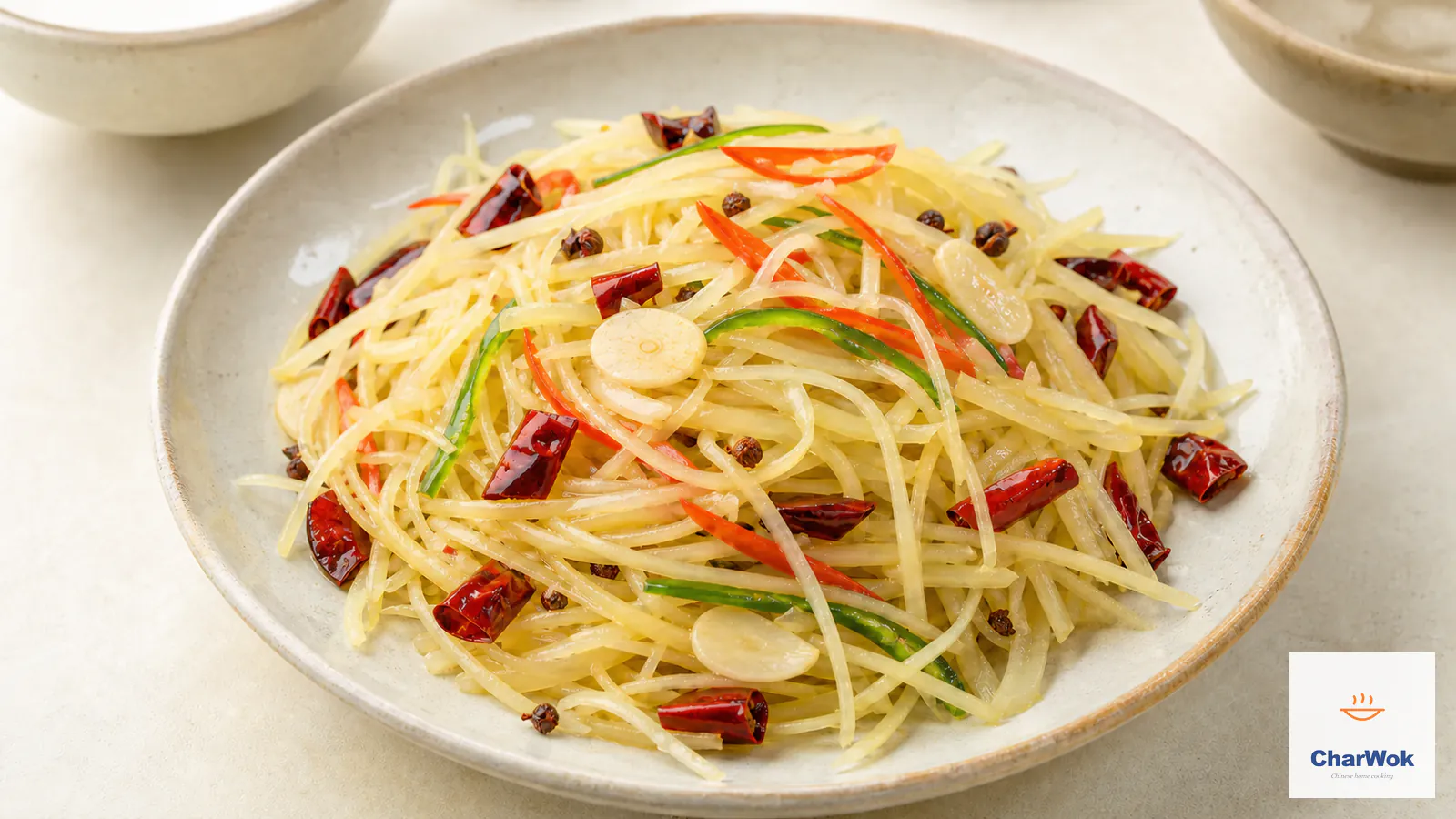
The first time I overcooked this dish, the julienned potato collapsed into a sticky, translucent pile that tasted like glue with chili. That is the failure mode every cook hits once, and it is the whole reason 酸辣土豆丝 (hot and sour potato stir-fry) earns its reputation: it looks like nothing, four ingredients in a wok for three minutes, but the gap between a crisp, bright plate and a gummy one comes down to two decisions you make before the heat even goes on. Get those right and the dish is one of the fastest, cheapest vegetable sides in the repertoire.
At a glance: 450 g potato (about 2 medium), julienned to matchstick thickness, rinsed until the water runs clear, then stir-fried over high heat for about 3 minutes. The two non-negotiables: wash off the surface starch so the strips stay separate, and add the vinegar in the final 20 seconds so its tang survives. Crunch, not softness, is the goal.
What this dish is, and where it sits on the table
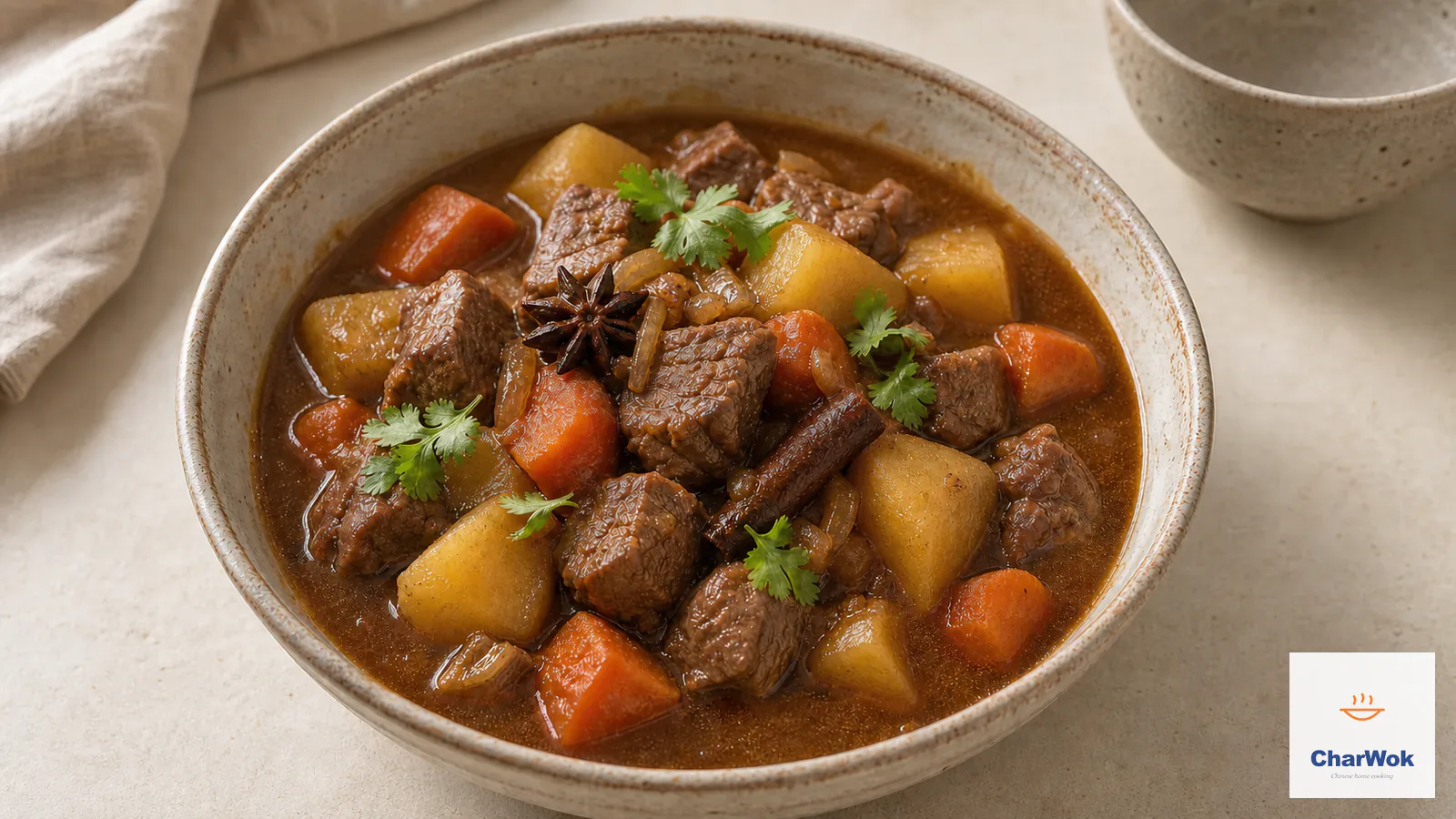
In northern and western Chinese home cooking, potato is a vegetable, not a starch. It shows up julienned, sliced, or stewed alongside rice rather than replacing it, the way a Western cook would treat broccoli or green beans. Di San Xian, the northeastern eggplant-potato-pepper stir-fry, plays the same role; so does the potato that turns up inside a long-simmered beef and potato stew. Hot and sour potato is the lightest member of that family, built for speed.
The flavor name is honest: 酸辣 means sour and hot. The sourness comes from black rice vinegar, the heat from dried chilies, and a third sensation, the buzzing numbing tingle of Sichuan peppercorns, rides underneath. Despite the Sichuan ingredients, this is eaten all over China, not only in Sichuan, and every household has its own ratio. Mine leans a little heavier on the vinegar than most because I want that brightness to cut through a starchy main.
Why the potato behaves the way it does
A raw potato is packed with starch granules suspended in water-filled cells. The moment those granules heat up past about 60°C (140°F), they swell, burst, and leak sticky amylose and amylopectin into the pan. That is exactly what you want in mashed potatoes and exactly what ruins this dish. Two things hold the leak in check.
First, surface starch. The starch sitting on the outside of a freshly cut strip is the loose, free-flowing kind, the stuff that turns into paste the second it hits hot oil. Rinsing the strips under cold water and agitating them washes most of it away, which is why the rinse bowl water turns milky white and then, after two or three changes, runs nearly clear. Stop rinsing too early and the dish will clump no matter how hot your wok is.
Second, heat and time. A high flame plus constant tossing cooks the cell walls through before the interior starch has time to fully gelatinize and soften. Three minutes of aggressive stirring leaves the center of each strip still firm, almost al dente. Drop the heat to medium and wander off, and within a minute the strips turn from crisp to limp to mushy. There is no halfway setting here.
The cutting, and what to do if you hate it
Knife-cut julienne is the traditional method, and there is a quiet status game in Chinese kitchens over who can produce the thinnest, most uniform strands. I will be honest: uniformity matters more than thinness. If half your strips are hair-thin and half are matchstick-thick, the thin ones will disintegrate before the thick ones are cooked through, and you get a plate of mixed textures that feels wrong even if nothing is technically burnt.
The method is to slice a thin slice off one side of the peeled potato so it sits flat and stable, then cut even planks about 2 mm thick, stack a few planks, and cut them into 2 mm strands. Aim for the thickness of a wooden matchstick, roughly 2 mm by 2 mm, and accept that yours will look rougher than a restaurant's. A well-seasoned carbon steel wok forgives a lot, but uneven cutting it cannot hide.
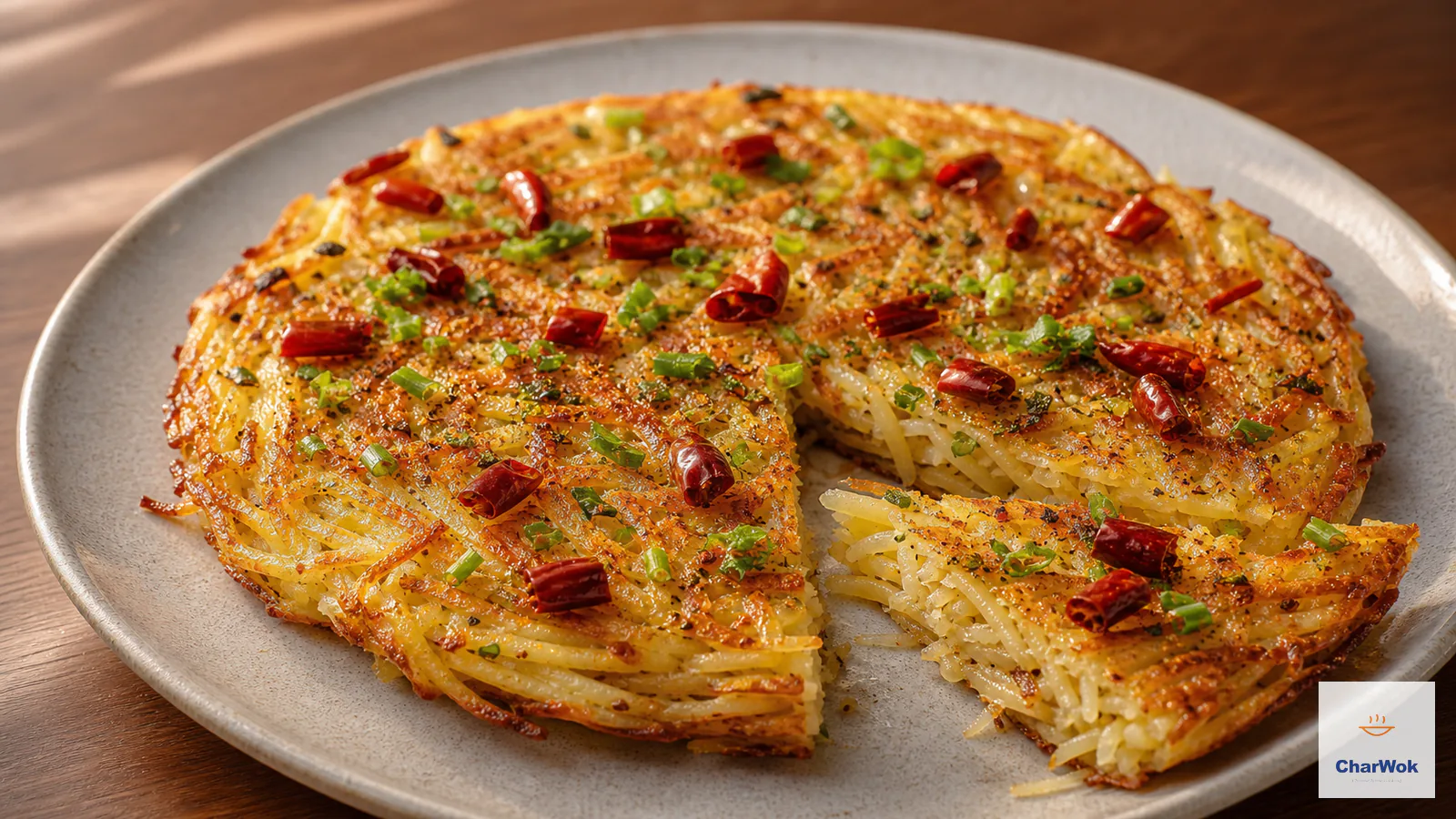
If you do not want to knife-cut, a julienne peeler or the julienne disk of a food processor both work. I would avoid a box grater. Its holes tear the potato rather than slicing it, leaving ragged, starchy strands that release far more surface starch and turn mushy fast. The spicy potato rösti on this site deliberately leans into that starchy breakdown for a pancake, which is the opposite of what we want here.
Ingredients
Ingredients at a glance
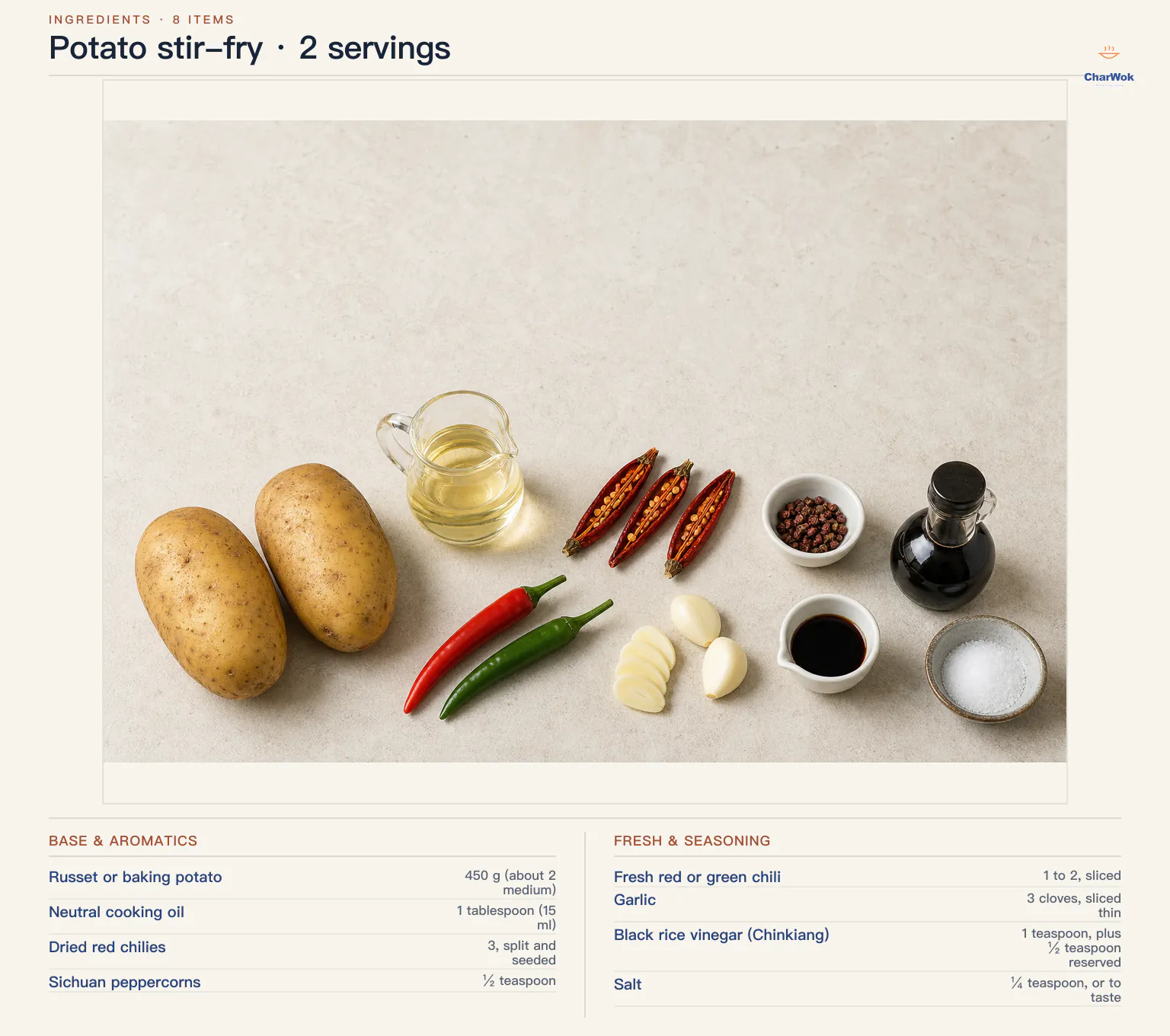
| Ingredient | Amount | Notes / substitute |
|---|---|---|
| Russet or baking potato | 450 g (about 2 medium) | A starchy russet gives the cleanest bite. Yukon Gold works and holds its shape well; avoid waxy red potatoes, they stay dense and never get that slip-apart texture. |
| Neutral cooking oil | 1 tablespoon (15 ml) | Peanut, canola, or grapeseed. Not olive oil, its flavor fights the vinegar. |
| Dried red chilies | 3, split and seeded | Er jing tiao or facing-heaven chilies are ideal. Any dried red chili works; remove the seeds if you want fragrance without much heat. |
| Sichuan peppercorns | ½ teaspoon | Red Sichuan peppercorns, toasted and ground fresh, give the best aroma. Substitute a pinch of store-bought ground Sichuan pepper in a pinch. |
| Fresh red or green chili | 1 to 2, sliced | Optional but I always add it for color and a sharper, fresher heat. A Fresno or jalapeño is a fine substitute. |
| Garlic | 3 cloves, sliced thin | Sliced, not minced. Minced garlic burns in the time the potato needs and turns bitter. |
| Black rice vinegar (Chinkiang) | 1 teaspoon, plus ½ teaspoon reserved | This dark, malty vinegar is the soul of the dish. If you cannot find it, a 50/50 mix of balsamic and rice vinegar gets close; plain rice vinegar alone is too thin. |
| Salt | ¼ teaspoon, or to taste | Adjust at the end. The potato soaks up salt, so taste before adding more. |
Method
- Julienne and rinse. Peel the potatoes and cut them into 2 mm matchsticks. Drop them into a bowl of cold water and swish hard. Pour off the cloudy water, refill, and repeat until the water stays nearly clear, usually three changes. This single step determines whether the finished dish is separate strands or a paste. Drain in a colander and shake off as much water as you can; wet strips will spit in the oil and steam instead of fry.
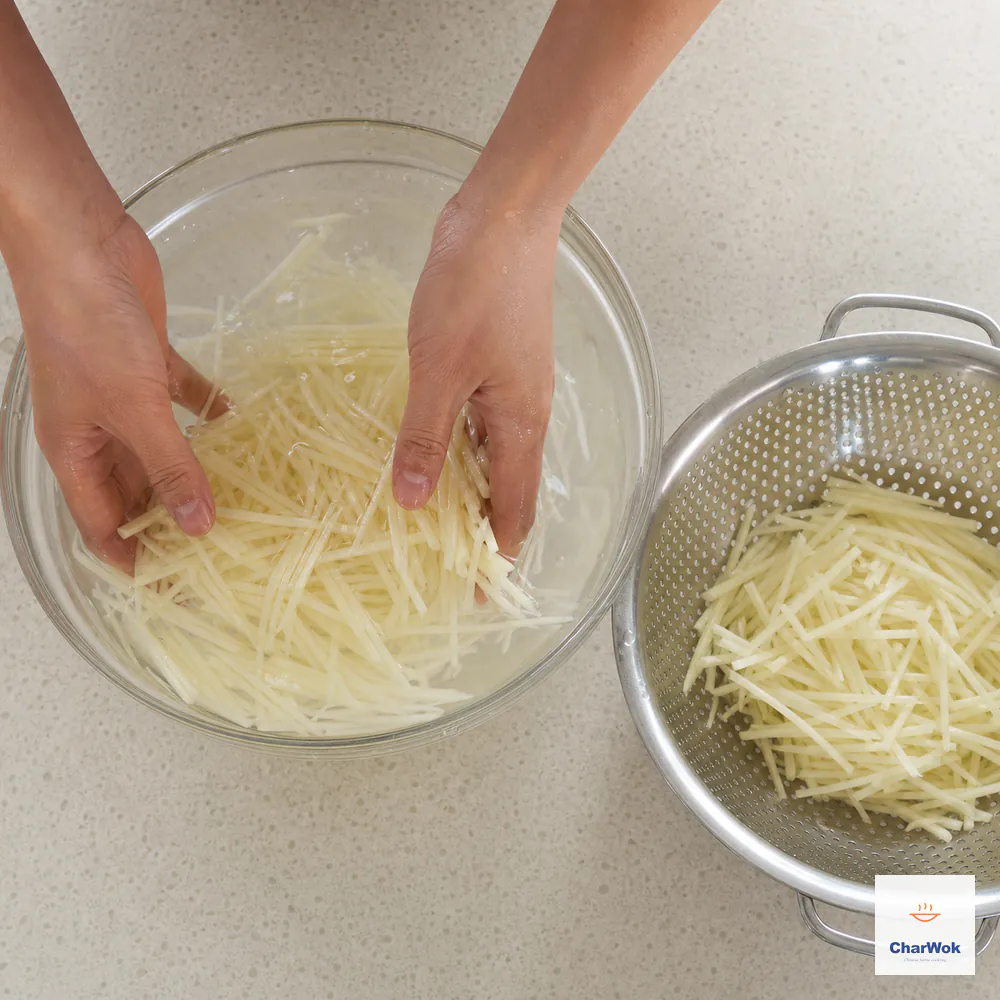
Rinse hard and change the water until it stays nearly clear, then drain and shake dry; free starch and surface water would otherwise make the strands clump and steam.
- Bloom the aromatics. Set the wok over high heat until it just starts to smoke, then add the oil and swirl. Drop in the dried chilies and Sichuan peppercorns. Keep them moving. After 10 to 15 seconds the chilies darken a shade and release a toasty, smoky smell; pull them off the heat the instant the chili skins start to blacken, because burnt Sichuan pepper turns acrid and coats the whole dish in bitterness. This is the most common way to wreck the flavor even when the potato is perfect.
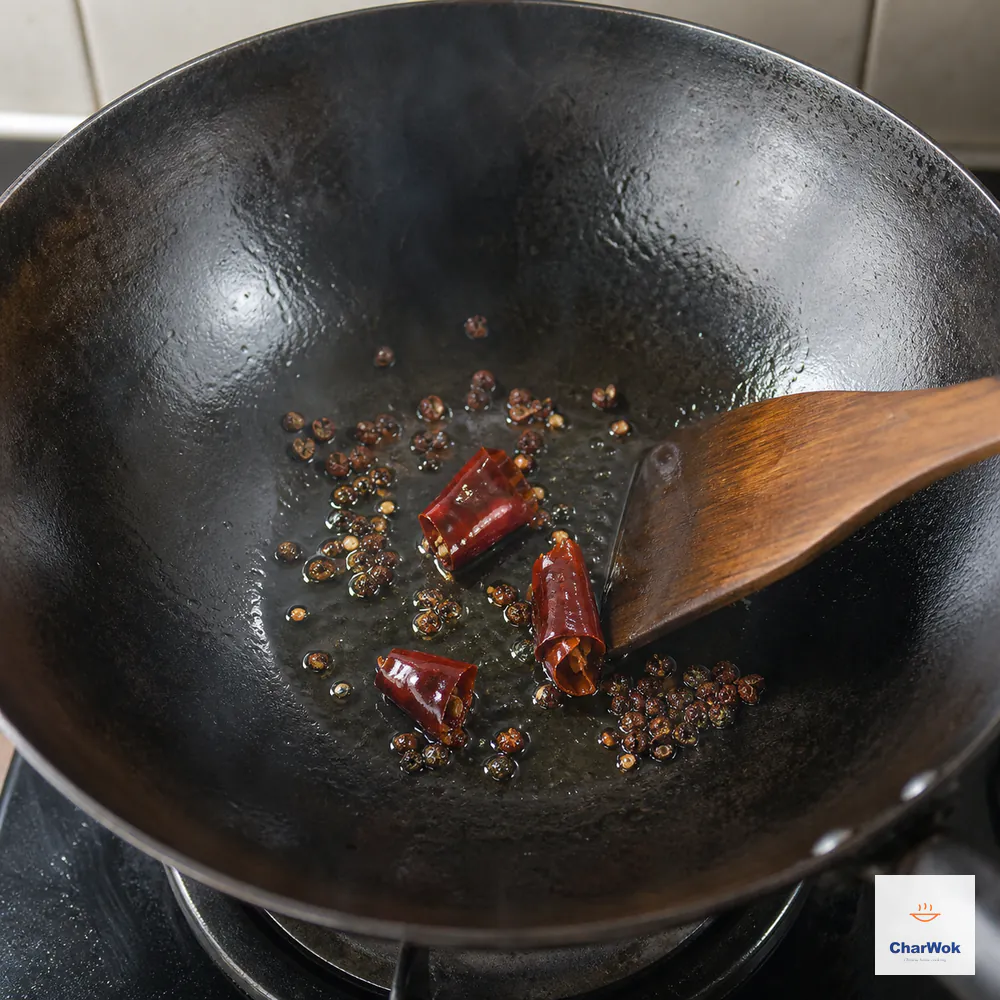
Bloom the dried chilies and peppercorns for only 10 to 15 seconds, stopping when the chilies darken one shade and smell toasted but before either spice turns black.
- Fry the potato. Add the sliced garlic and fresh chili, toss for 5 seconds, then the drained potato strips all at once. Spread them up the sides of the wok to maximize contact with the hot metal, then toss and spread again. Keep everything moving. The goal is to cook the strips through while the center still has bite, about 2 minutes. If the wok runs dry and the potato threatens to color, a few drops of water dashed in will calm it down without killing the heat.
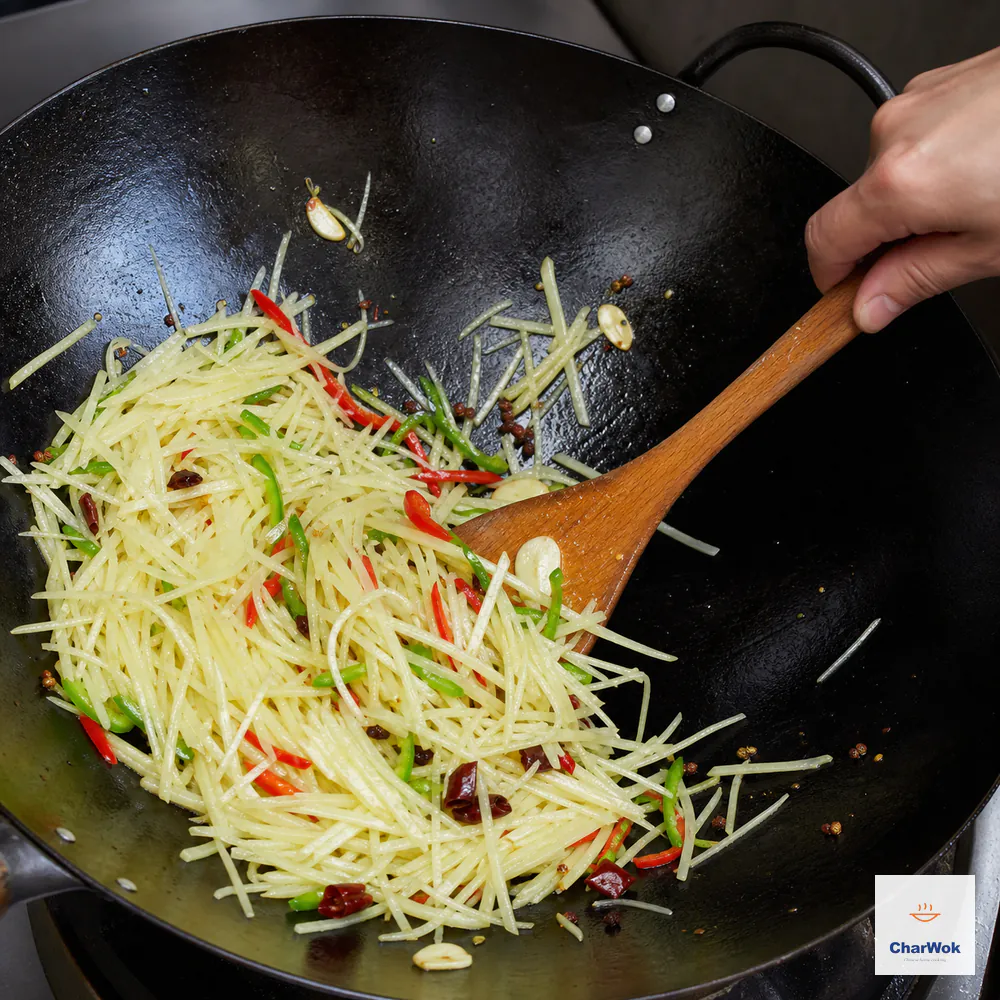
Add garlic and fresh chili, then the well-drained potato; toss and spread continuously for about 2 minutes until the edges turn slightly translucent while the centers still resist.
- Season at the edge. Pour the 1 teaspoon of vinegar around the hot rim of the wok, not directly onto the potato. The metal flash-evaporates the alcohol and sharp volatiles and leaves the round, malty tang behind. Add the salt, toss once more, and taste a strand. It should be tender on the outside, resistant in the center, and bright with acid.
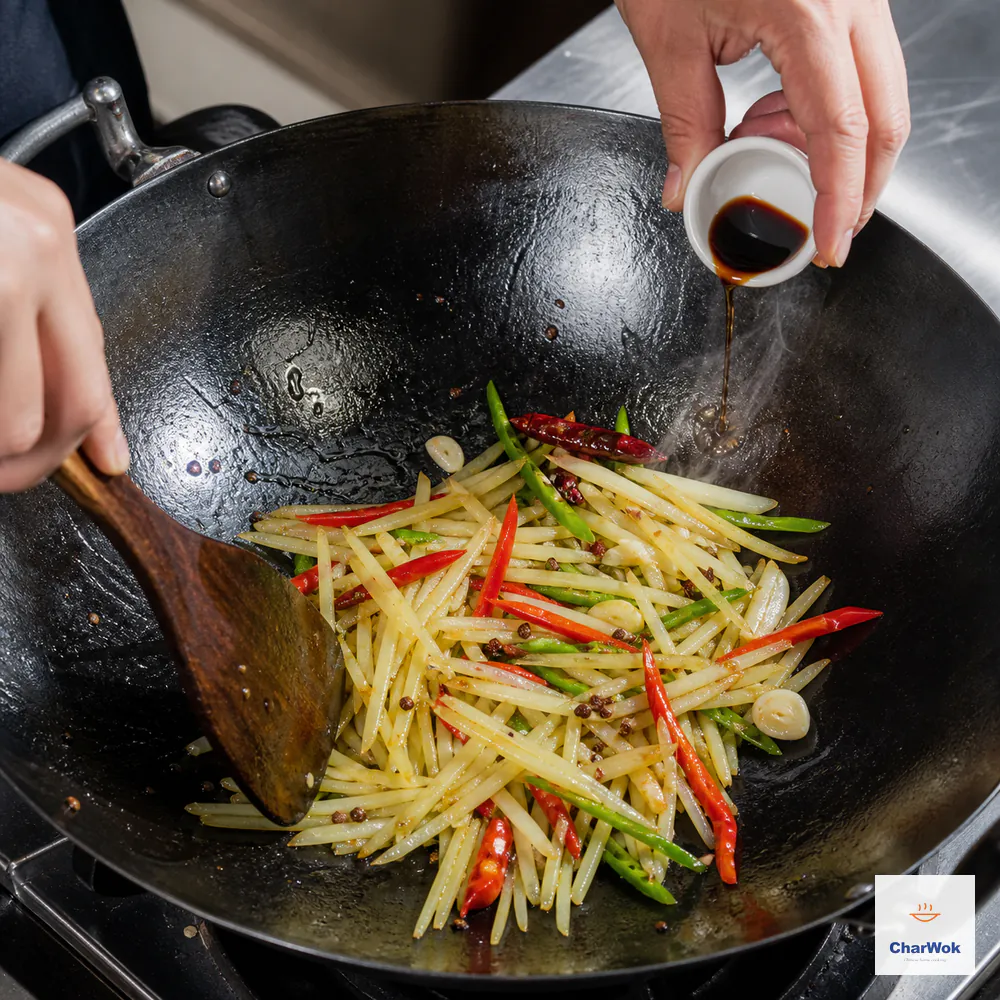
Pour the first teaspoon around the exposed hot rim rather than onto the center; the quick flash softens the harsh volatile edge while preserving the malty acidity.
- Finish and serve. Pull off the heat, drizzle the reserved ½ teaspoon of vinegar over the top so its raw brightness survives, and tip onto a plate immediately. Do not leave it in the wok; residual heat will keep softening the potato for as long as it sits there.
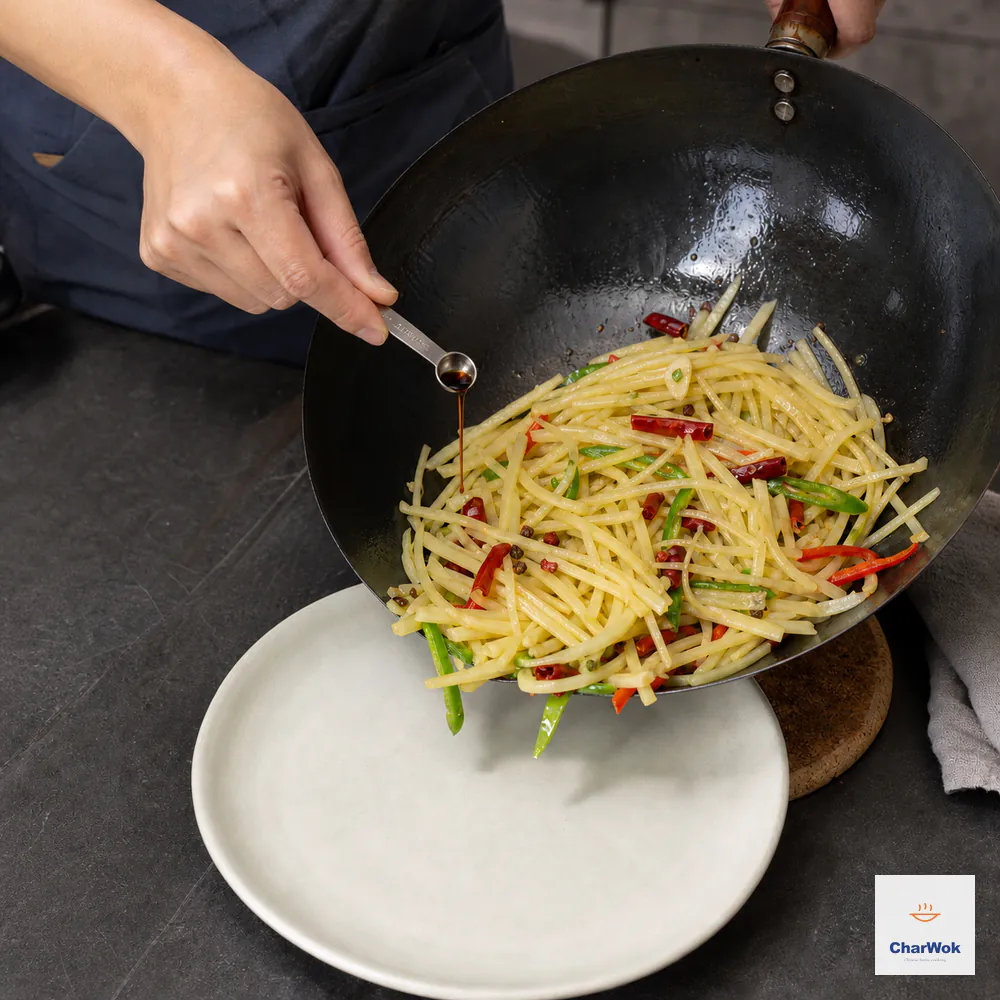
Take the wok off the burner, add the reserved half teaspoon for a bright raw finish, and plate immediately before residual heat can soften the strands.
Serve warm with plain rice. It earns its place next to a saucy main like mapo tofu or a quick garlic bok choy, where its snap and acid cut through the richness.
When it goes wrong
The strips clump into a sticky mass. You skipped the rinse, or did not change the water enough. Next time, rinse until the water is almost clear and drain thoroughly. You can partly rescue a gluey batch by adding a splash of vinegar and a few drops of water and tossing hard over high heat to re-separate, but the texture will never fully recover.
The potato is soft all the way through, no snap. Either the heat was too low, the strips sat in the wok after cooking, or you cooked too long. The fix is a hotter wok and a shorter cook. If you genuinely prefer a softer potato (I grew up eating it that way and still sometimes do), cook for another 60 to 90 seconds and add a teaspoon of water, but know you have left the classic version behind.
The dish tastes bitter, not fragrant. The dried chilies or Sichuan pepper scorched. Bloom them for less time, keep the pan moving, and if your wok runs very hot, drop the oil temperature by a few seconds before adding them. Burnt aromatics cannot be fixed; start the oil over.
The strips break and look ragged. You used a grater, or cut them unevenly. Knife-cut or julienne-peeler strands hold their shape; torn strands do not.
Variations and pairings
The most common variation adds a small handful of thinly sliced cucumber or carrot at the end for color and a different crunch, tossed in just long enough to warm through. Slivered bell pepper works the same way and is what turns this into the base for Di San Xian if you also add eggplant.
For a richer, more northern version, fry 50 g of finely diced pan-fried pork belly or Chinese sausage in the oil before the aromatics; the rendered fat carries the chili and pepper into every strand. A vegetarian umami lift comes from a few drops of chili oil stirred in at the end, or a teaspoon of light soy sauce, though soy will dull the bright vinegar edge and turn the dish brown.
As part of a meal, this belongs with other quick, contrasting sides. The vinegar-and-chili profile echoes a bowl of hot and sour soup, and a plate of cold smashed cucumber with garlic or dry-fried green beans rounds out the table without competing for the same flavor slot. A tomato egg stir-fry beside it makes a two-dish vegetarian dinner over freshly steamed jasmine rice.
Storage and reheating
This is a cook-and-eat dish. Leftovers keep in the fridge for a day but lose their crunch as the starch continues to soften, and no reheating brings it back. If you must reheat, use a dry pan over high heat for 60 seconds, never a microwave, which steams the potato into sadness. For a five-spice potato kind of second life, cold leftovers can be pan-fried flat the next morning until the edges crisp, which is honestly almost as good as the original.
Frequently asked questions
Do I have to rinse the potato? Yes, if you want the classic crisp texture. Rinsing removes the loose surface starch that otherwise turns the dish gummy. One quick rinse is not enough; change the water two or three times until it stays nearly clear.
Can I use a regular grater? I would not. A grater tears the strands and releases far more starch than slicing, so the potato turns mushy fast. Use a knife, a julienne peeler, or a food processor with a julienne disk.
What if I cannot find black rice vinegar? Substitute a half-and-half blend of balsamic vinegar and plain rice vinegar. It will not be identical, but it gets the dark, malty sweetness close. Plain rice vinegar or distilled white vinegar alone is too sharp and thin for this dish.
Why add the vinegar at the end? Vinegar's bright acids evaporate quickly under heat. Adding most of it onto the hot wok rim and the rest off the heat keeps the tanginess intact, which is the whole point of a hot-and-sour dish.
Is this dish from Sichuan? The Sichuan peppercorn and dried chili give it a Sichuan accent, but it is cooked in home kitchens across China, especially in the north and west. Recipes and ratios vary widely by region and family.