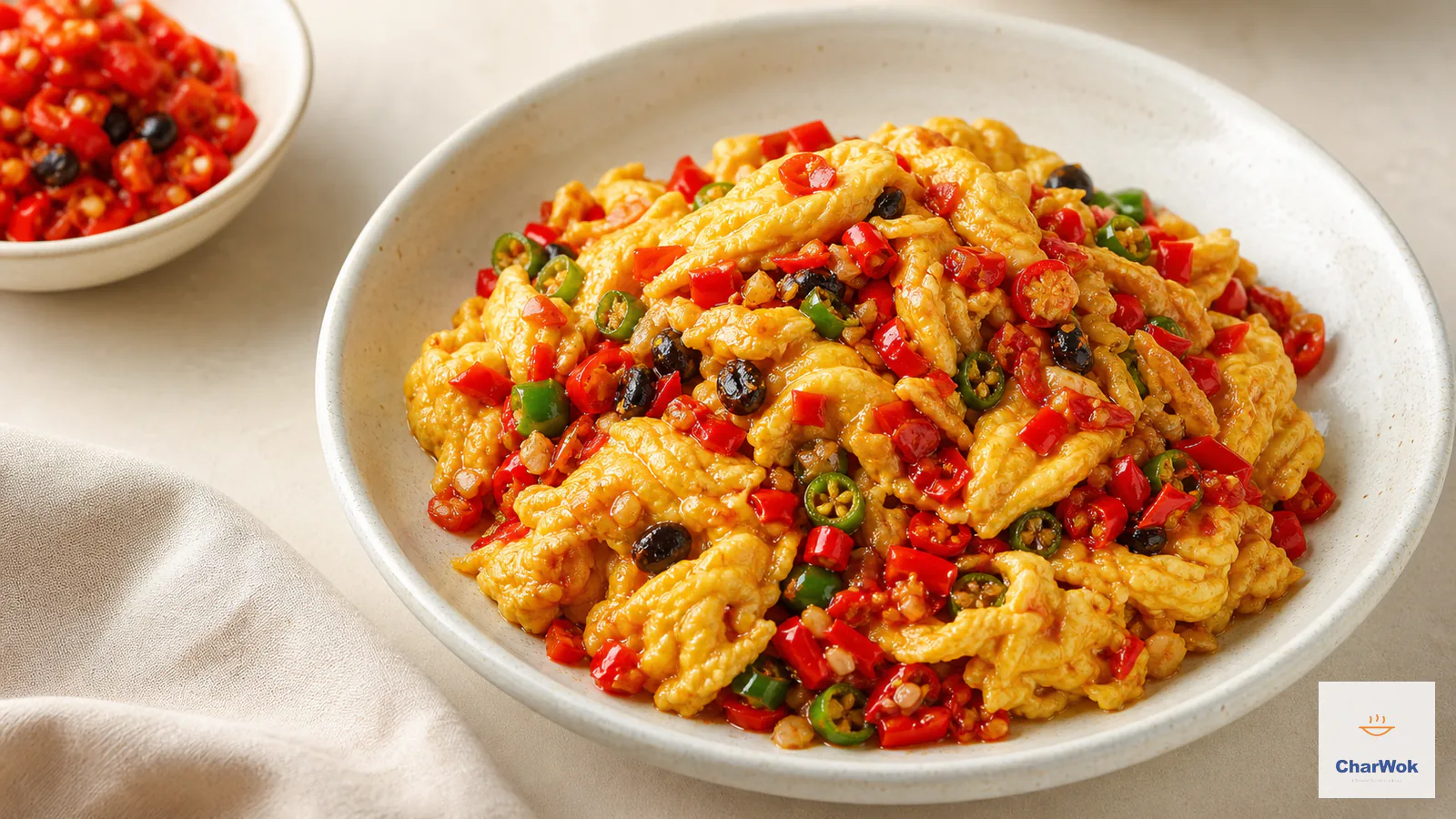
The first time someone handed me a plate of scrambled eggs folded with Hunan pickled chilies, I was suspicious. Eggs for dinner? With rice? It sounded like a breakfast that had wandered into the wrong meal. Then I took a bite, and the plate was gone before the rice was. The trick of this dish is not the eggs and not really the chilies, it is the contrast: soft, almost custardy curds carrying a bright, sour, garlicky heat that makes you reach for the rice bowl again and again.
This is home cooking from Hunan, the province south of Hubei that cooks love to pit against Sichuan. Both regions burn your tongue, but they do it with different tools. Sichuan leans on doubanjiang and numbing peppercorns; Hunan leans on fermented, pickled fresh chilies that hit sour first and hot second. Egg and pickled chili stir-fry is the most stripped-down expression of that style I know. Six ingredients, eight minutes, and it tastes like something that took an hour.
At a glance: Cook the eggs in plenty of hot oil and pull them off while still glossy, never dry. Then bloom 2 tablespoons of pickled chili garlic sauce with garlic and a few fermented black beans in the same pan, return the eggs, and toss for ten seconds. The whole thing is done in about 5 minutes of cooking. Hot oil, loose curds, don't overcook, serve immediately with rice.
What this dish is, and where it comes from
Duo Jiao Ji Dan (剁椒鸡蛋) belongs to a family of Hunan stir-fries built on the region's signature pickled red chilies, duo jiao. Those chilies are salted and fermented for days or weeks until they turn a brilliant orange-red and develop a clean, vinegary brightness that fresh chilies never have. In Hunan they show up on steamed fish heads, stirred into pork mince, and, for the simplest possible dinner, scrambled into eggs.
It is a textbook xia fan cai dish, a "rice-down-the-hatch" plate engineered to make plain rice disappear. The same impulse drives Hunan pork stir-fry and Hunan chicken, but those need slicing, marinating, and a longer stint at the stove. The egg version exists for the night you want Hunan heat with breakfast-level effort.
The ingredients, and the ones that actually matter
Ingredients for two servings of egg and pickled chilli stir-fry
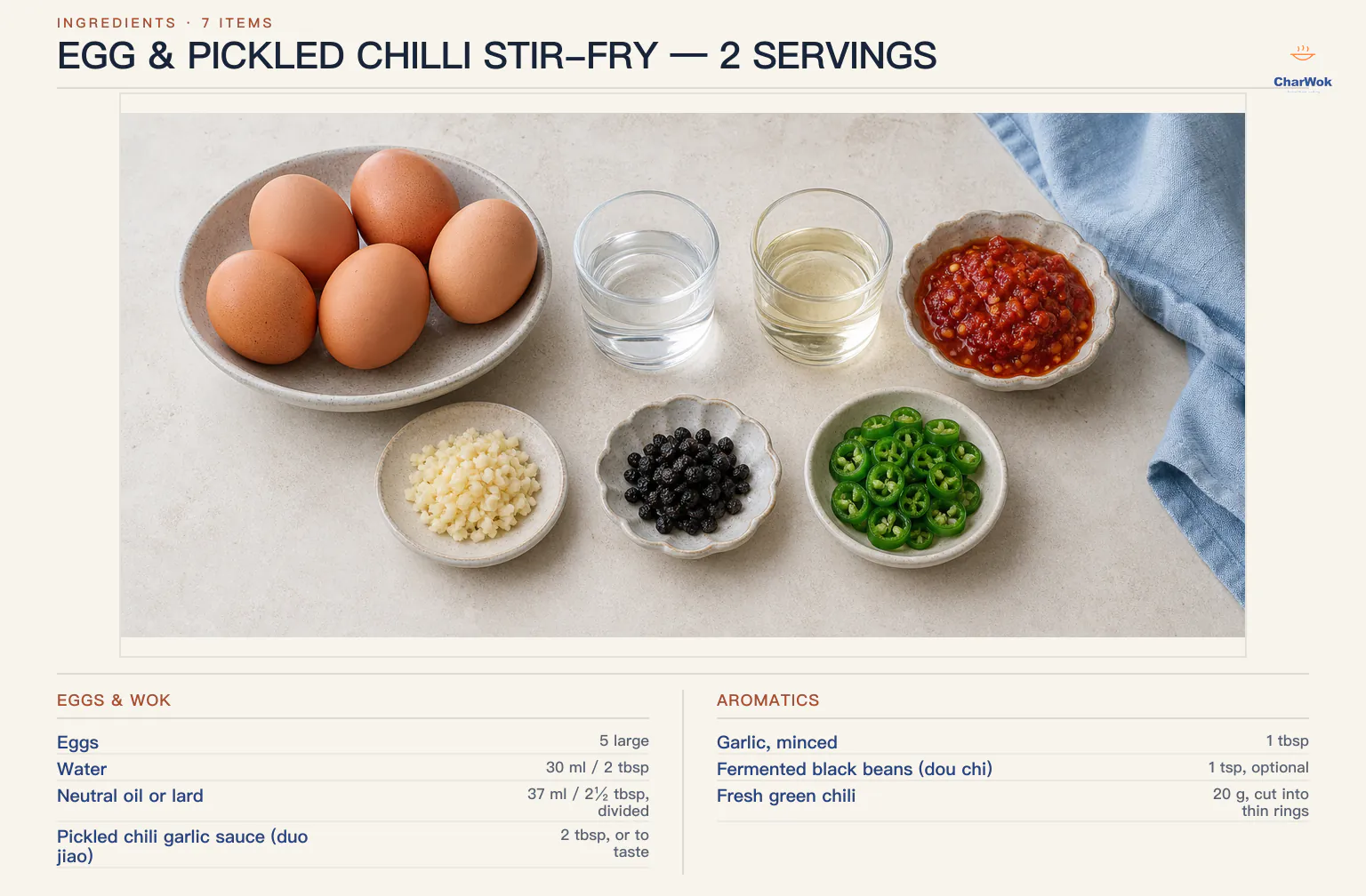
| Ingredient | Amount (for 2) | Notes / substitute |
|---|---|---|
| Eggs | 5 large | Standard US large eggs (~50 g each). Older eggs fluff up more than very fresh ones. |
| Water | 30 ml / 2 tbsp | Loosens the curds. Stock or a splash of Shaoxing wine works too. |
| Neutral oil or lard | 37 ml / 2½ tbsp, divided | Lard is the traditional choice and tastes noticeably richer. Peanut, canola, or grapeseed oil are fine. Avoid olive oil, the flavor fights the chilies. |
| Pickled chili garlic sauce (duo jiao) | 2 tbsp, or to taste | See below. Adjust by how salty and how hot your jar is. |
| Garlic, minced | 1 tbsp | About 3 medium cloves. Don't skimp, it carries the aromatics. |
| Fermented black beans (dou chi) | 1 tsp, optional | Rinse lightly, then chop. Adds a deep, earthy umami that plain chili sauce lacks. |
| Fresh green chili | 20 g, cut into thin rings | Jalapeño or serrano work well. For milder heat, seed them; for the real thing, leave the seeds in. |
On the pickled chili sauce
This is the one ingredient you cannot fake. The dish's character comes from the fermented funk of duo jiao, which is sharper and more acidic than fresh chilies and rounder than dried chili flakes. If you can, make a jar of pickled chili garlic sauce yourself; it keeps for months in the fridge and is the gift that keeps giving to scrambled eggs, steamed fish, and noodle bowls.
Store-bought works, with a caveat. Brands vary wildly in salt and heat, so taste a half-teaspoon before you commit to the full two tablespoons. Whole pickled red chilies in brine, the kind sold in jars at Chinese grocers, are a fine substitute, just drain them well and mince finely. Hot sauce like Sriracha or sambal is not a substitute here; they bring vinegar and sugar, not fermented depth, and the dish will read as the wrong cuisine.
On the fermented black beans
Fermented black beans, dou chi, are the optional ingredient that quietly does a lot of work. They show up in Mapo Tofu, tiger skin pepper, and countless Cantonese and Hunan stir-fries, lending a savory depth that anchors the chilies' brightness. If your pantry doesn't have them, a teaspoon of jarred black bean sauce or a small spoonful of Lao Gan Ma chili oil with black beans will cover the gap. Skip them entirely if you must, the dish still stands, just thinner in the back of the palate.
Equipment: why a wok wins, but a skillet will do
A carbon-steel wok is the right tool here for one reason: heat recovery. You're going to dump cold eggs into screaming-hot oil, and you want the pan to snap back to temperature fast so the curds puff rather than weep. A heavy 30 cm / 12-inch skillet works as a stand-in if you let it preheat an extra minute. Avoid nonstick for this particular dish, you want a little of that fried, almost-lacy edge on the egg that only bare metal gives you.
Method, step by step
- Beat the eggs loose, not airy. Crack the eggs into a bowl, add the 30 ml of water, and beat just until the yolks and whites are one even yellow. You are not making a meringue. Over-beating whips in air that collapses the moment it hits the oil, leaving flat, rubbery curds. The water is the real tenderizer; it becomes steam in the pan and lifts the protein into soft folds.
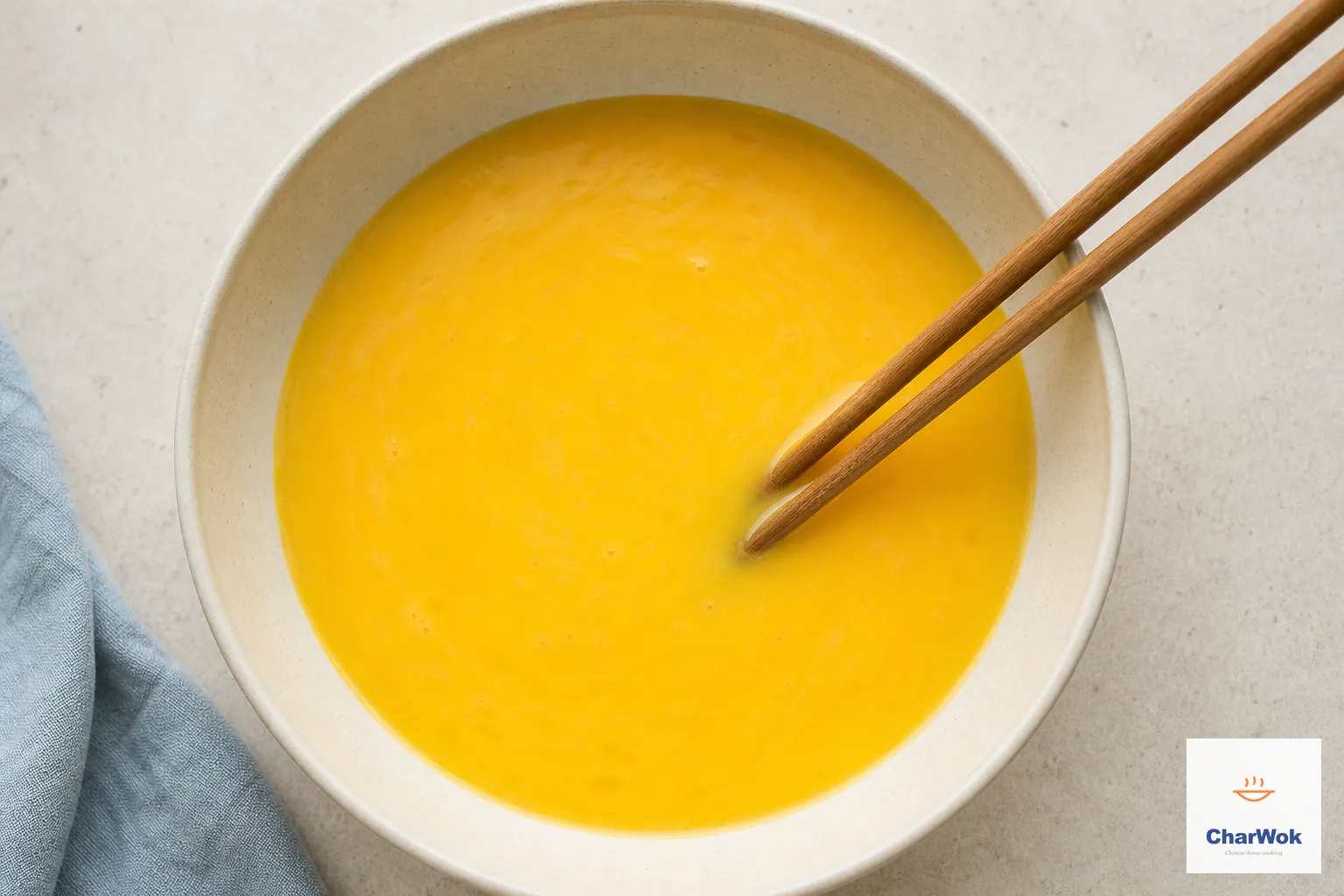
Beat the five eggs with 30 ml water only until the mixture is one even yellow, keeping it fluid rather than airy.
- Get the oil genuinely hot. Set the wok over high heat with 2 tablespoons of the oil. Wait until the surface shimmers and a drop of egg dropped in puffs and bubbles within a second. This is the whole game. If the oil is merely warm, the egg spreads, weeps water, and steams into a flat omelet. You want it to seize on contact and billow.
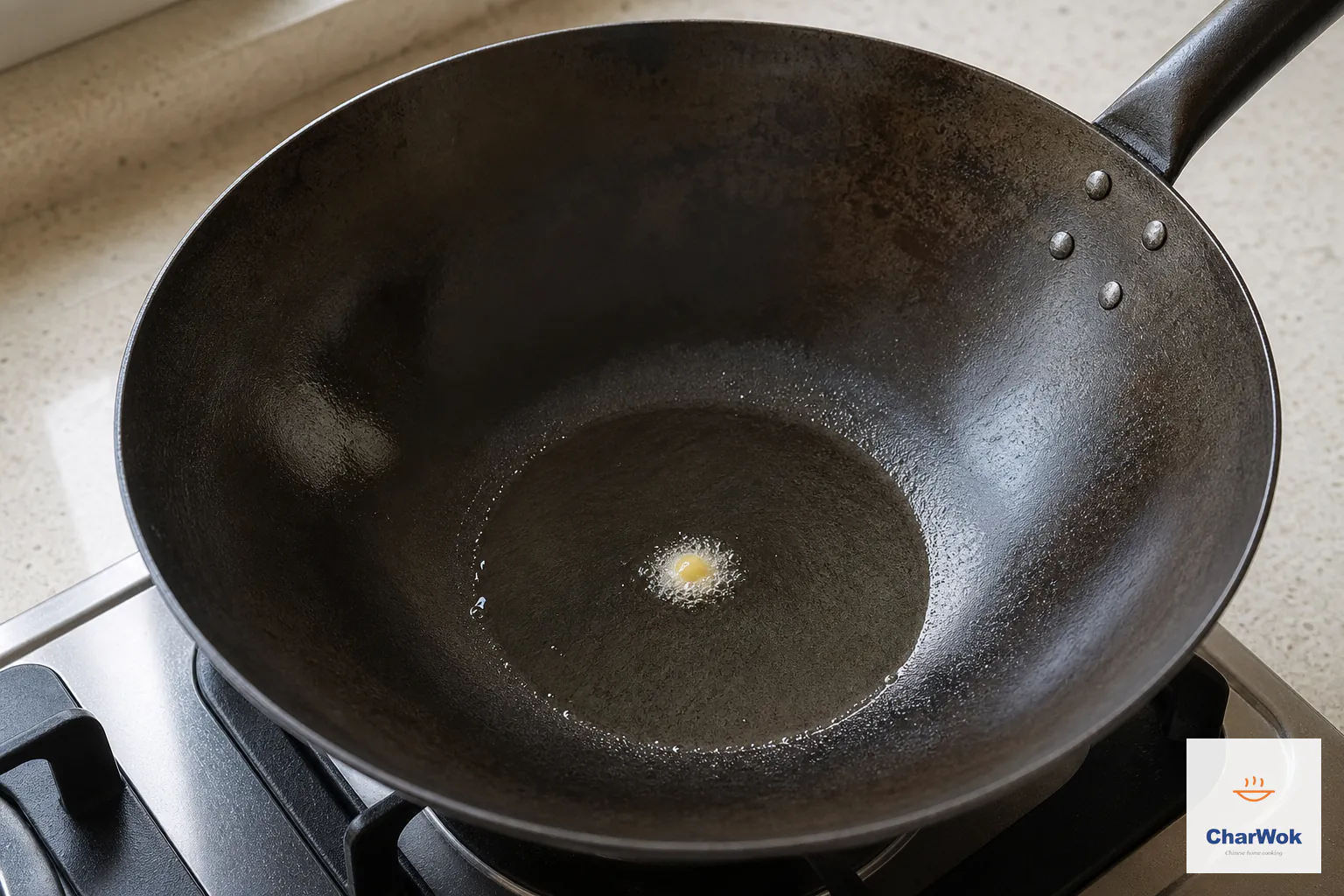
Heat 2 tablespoons oil until it shimmers and a tiny test drop of egg puffs and bubbles within a second.
- Pour, push, and pull the pan off early. Pour in the egg and immediately start pushing the set curds toward the center with a spatula so liquid egg runs to the hot edges. Keep the curds in large, uneven pieces. The moment no raw liquid pools remain but the curds still look wet and glossy, dish them out onto a plate. They will keep cooking from residual heat. If you wait until they look fully done in the pan, they will be dry by the time they reach the table. This is the single most common way this dish fails.
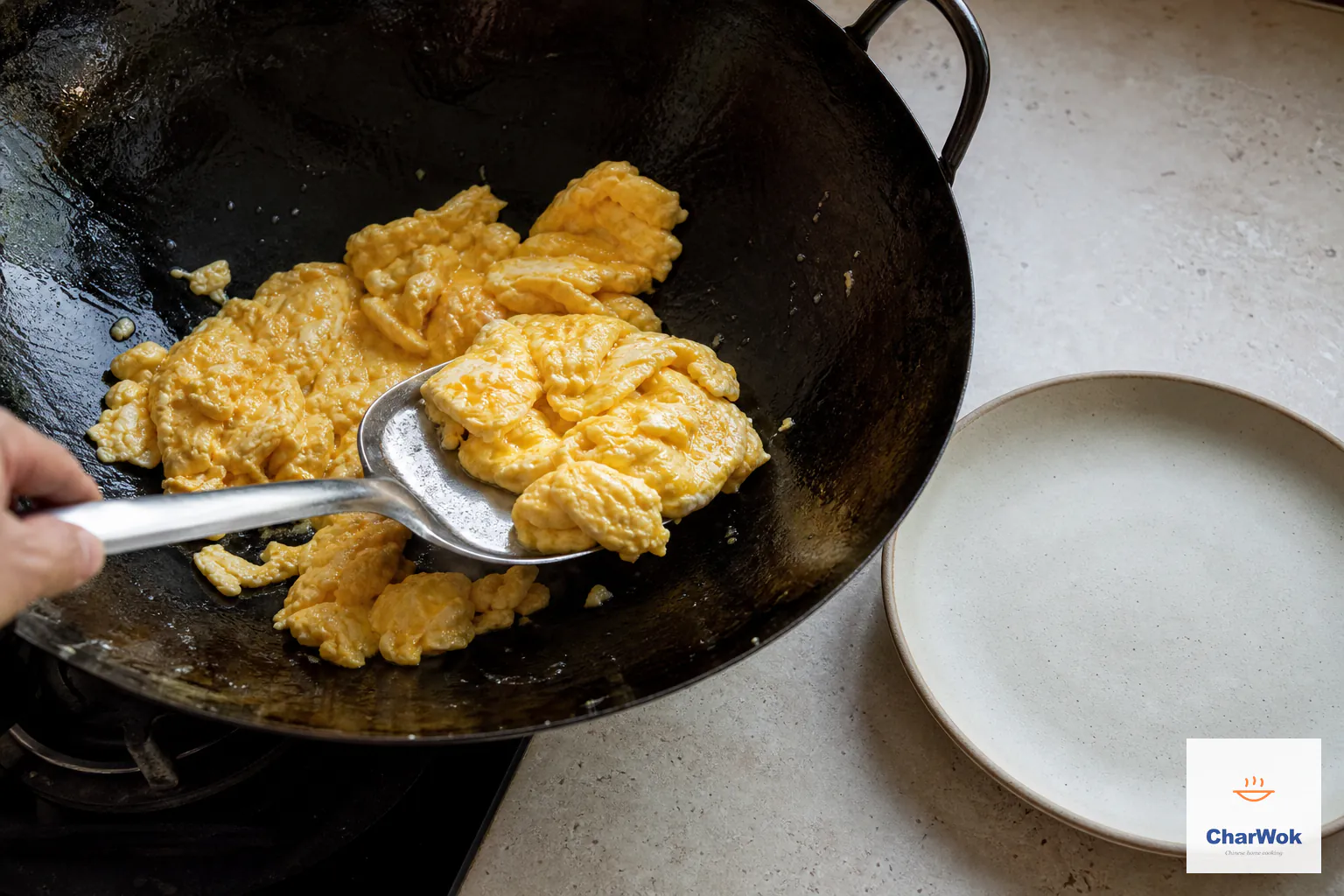
Push the setting egg into large uneven curds, then remove it while still wet and glossy as soon as no raw pools remain.
- Bloom the aromatics in the same pan. Lower the heat to medium, add the remaining ½ tablespoon of oil, and tip in the duo jiao, garlic, and fermented black beans. Stir for about 15 to 20 seconds, until the smell hits you and the oil turns orange. You are extracting the chilies' flavor compounds into the fat; this flavored oil is what will coat the eggs. If the pan is too hot the garlic will scorch bitter, so watch the heat.
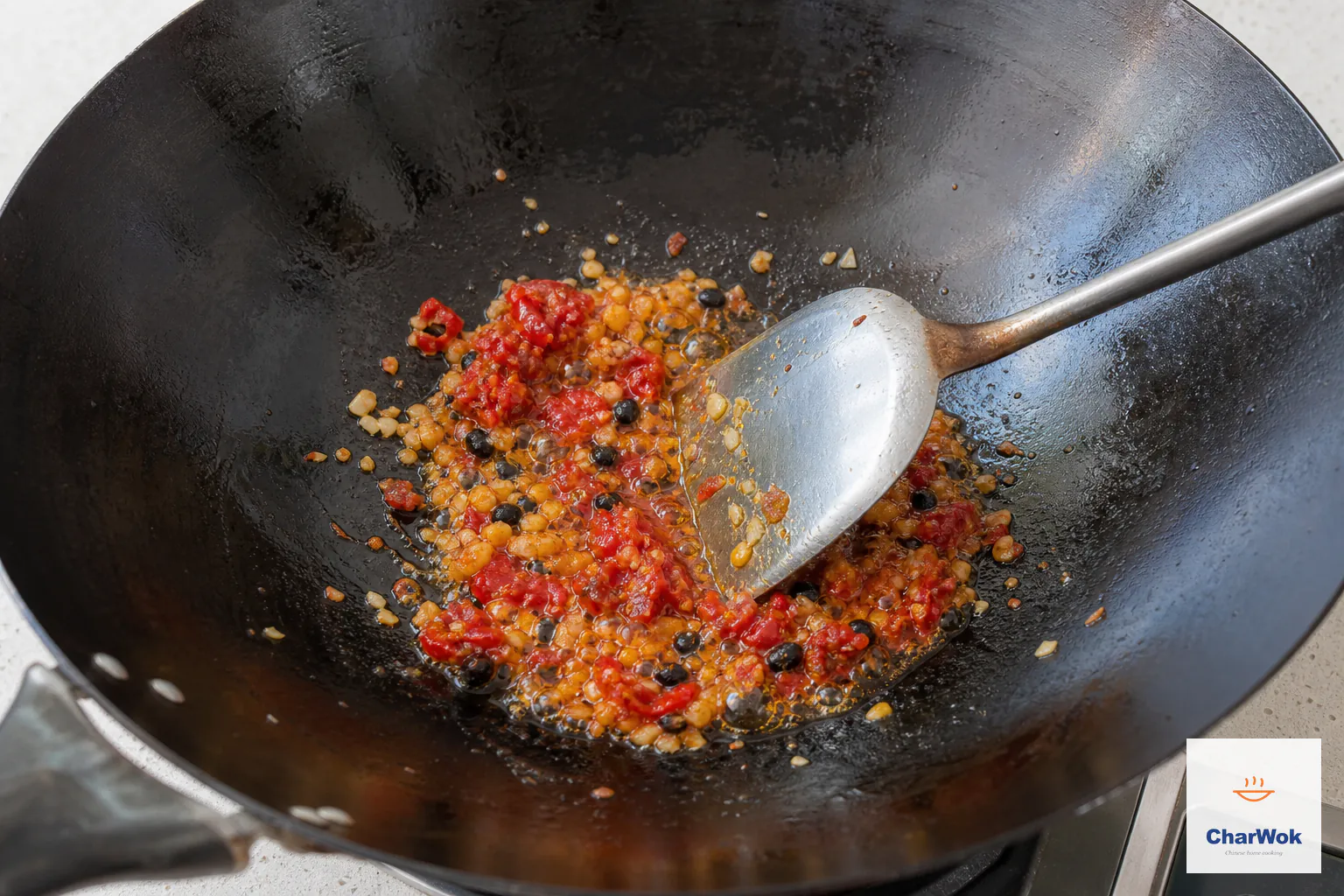
Fry the duo jiao, garlic and optional black beans over medium heat for 15 to 20 seconds, stopping before the garlic scorches.
- Reunite and finish in ten seconds. Add the fresh chili rings and the cooked egg back to the pan. Toss hard and fast for about ten seconds, just long enough to coat every curd in the chili oil and warm the eggs through. Kill the heat immediately and serve. Anything more and the eggs toughen.
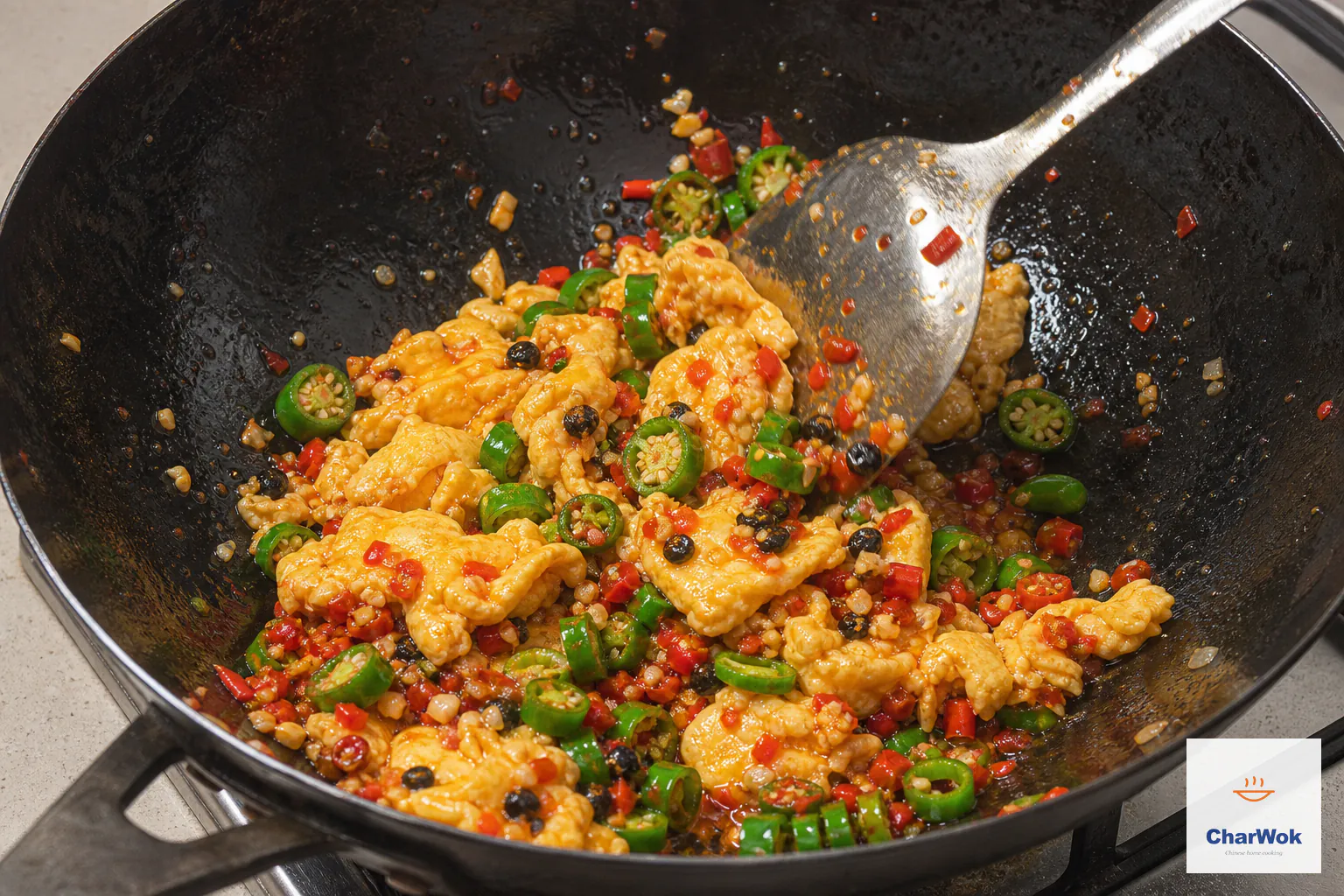
Return the egg with the fresh green chilli, toss hard for about 10 seconds to coat and warm through, then turn off the heat.
Serve straight onto freshly steamed jasmine rice. The rice is not an afterthought, it is the cooling counterweight that lets you keep eating the spicy eggs without flinching.
Why the dish works: a quick word on the science
Two things are doing more than they look like they're doing. The water in the eggs turns to steam the instant it hits 200°C oil, and that steam physically leavens the coagulating protein, which is why loose, wet curds beat dense dry ones. And the lard or neutral oil isn't just a cooking medium. Fat dissolves and carries the capsaicin and the garlic's sulfur compounds, so the heat and aroma land evenly across the curds instead of sitting in sharp pockets. This is also why you bloom the aromatics in oil before the eggs go back in, you're building the flavor delivery system first.
When it goes wrong, and how to fix it
The eggs came out dry and rubbery. You pulled them too late, or the oil wasn't hot enough so they cooked slowly. Next time, hotter oil, bigger curds, and pull them when they still look slightly wet. They finish cooking on the plate.
The eggs wept water into a puddle. The pan lost its heat when the cold egg hit it, usually because the pan was too small, not hot enough, or you crowded it. Use a bigger pan, preheat longer, and don't double the recipe into one wok. Cook in two batches if you're feeding more than three.
The dish is too salty. Store-bought duo jiao is often aggressively salted. Taste your sauce first, and if it's very salty, cut the quantity to 1 tablespoon and add an extra pinch of sugar to round it out. Rinsing fermented black beans before chopping also helps.
It's not spicy enough, or it's a one-note burn. If you want more heat, add a split fresh red chili to the aromatic bloom and fish it out before serving. If the heat is all front and no back, you're probably missing the dou chi; that earthy bass note is what turns "hot" into "complex."
The garlic burned and turned bitter. The pan was too hot when the aromatics went in, or you left them too long. Duo jiao and garlic fry in 15 to 20 seconds, not a minute. Drop the heat to medium before they go in.
Variations and what to serve alongside
The bones of this recipe, hot oil, soft egg, fermented chili, adapt well. A few directions worth trying:
- Add pork. Brown 50 g of ground pork in the oil before the aromatics go in. The rendered fat deepens the whole dish and turns it from a side into a one-bowl meal.
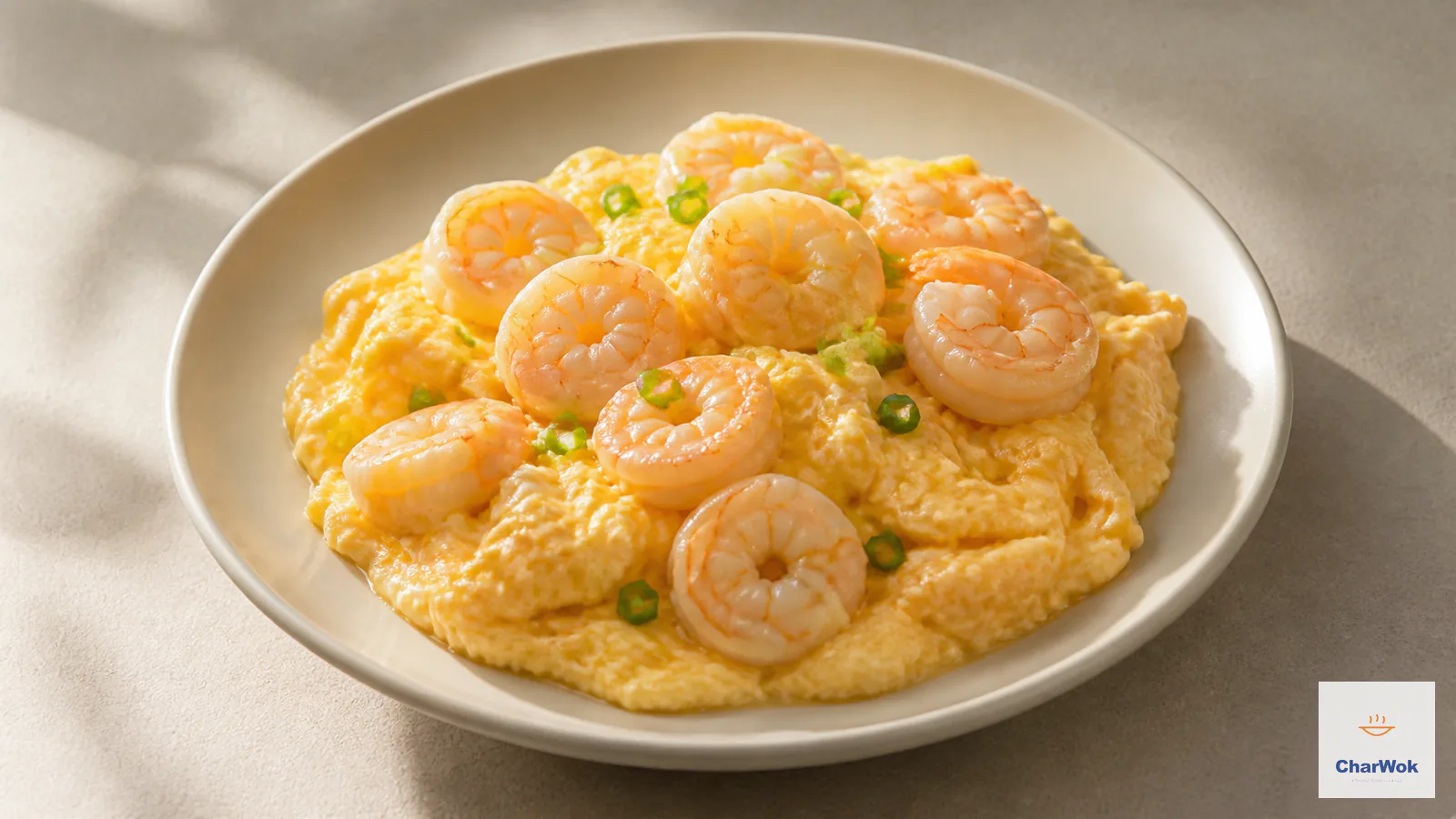
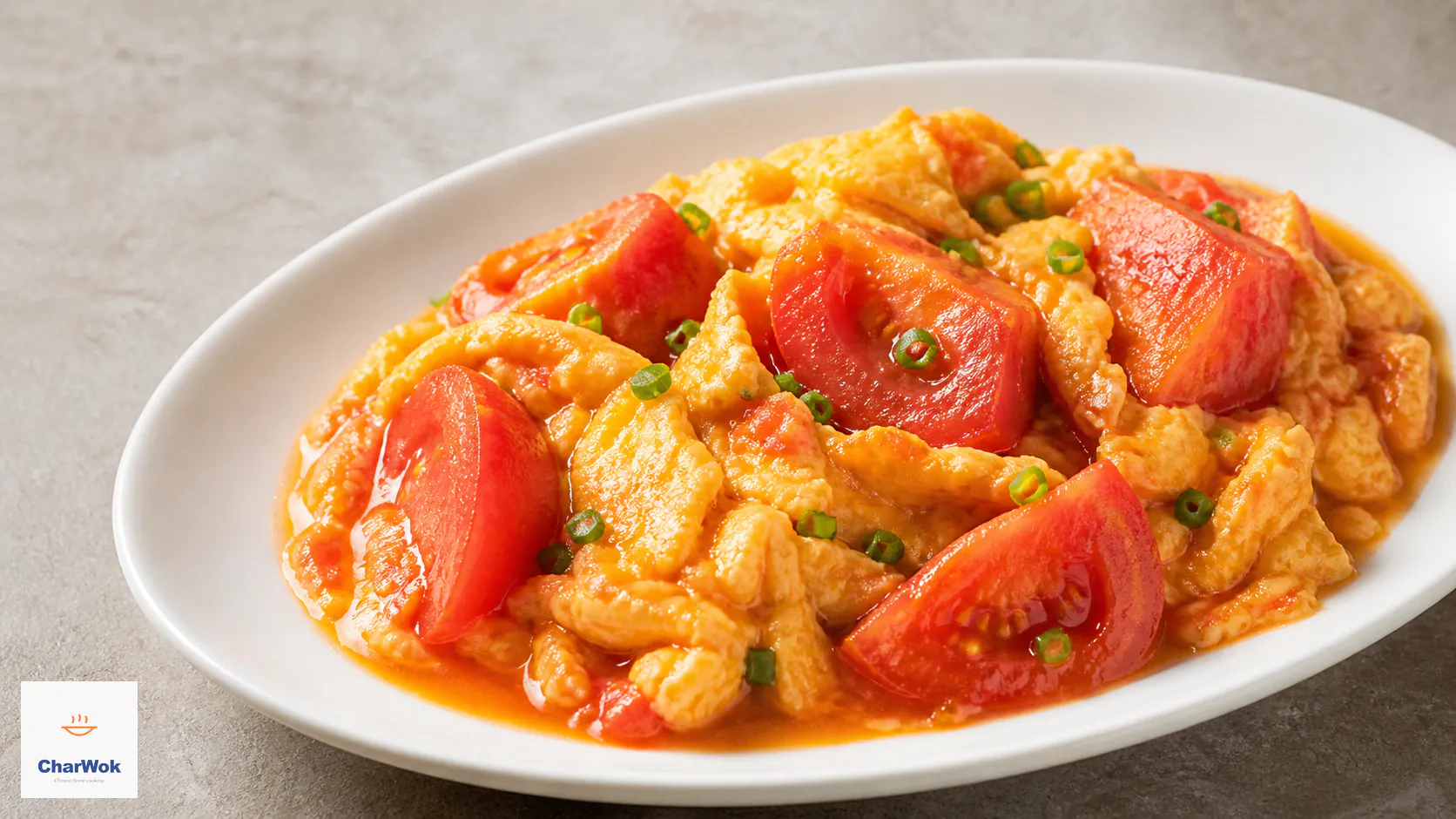
- Swap the base egg dish. The same chili-and-black-bean treatment works on tomato egg stir-fry for a sweet-and-sour-hot hybrid, or fold the aromatics into shrimp and egg for something richer.
- Go all-green. Replace the duo jiao with a generous handful of sliced jalapeños and a pinch of salt for a milder, fresher cousin closer to chive and egg stir-fry.
- Make it breakfast. Skip the rice and pile the eggs onto toast, or fold them into a warm egg foo young style pancake.
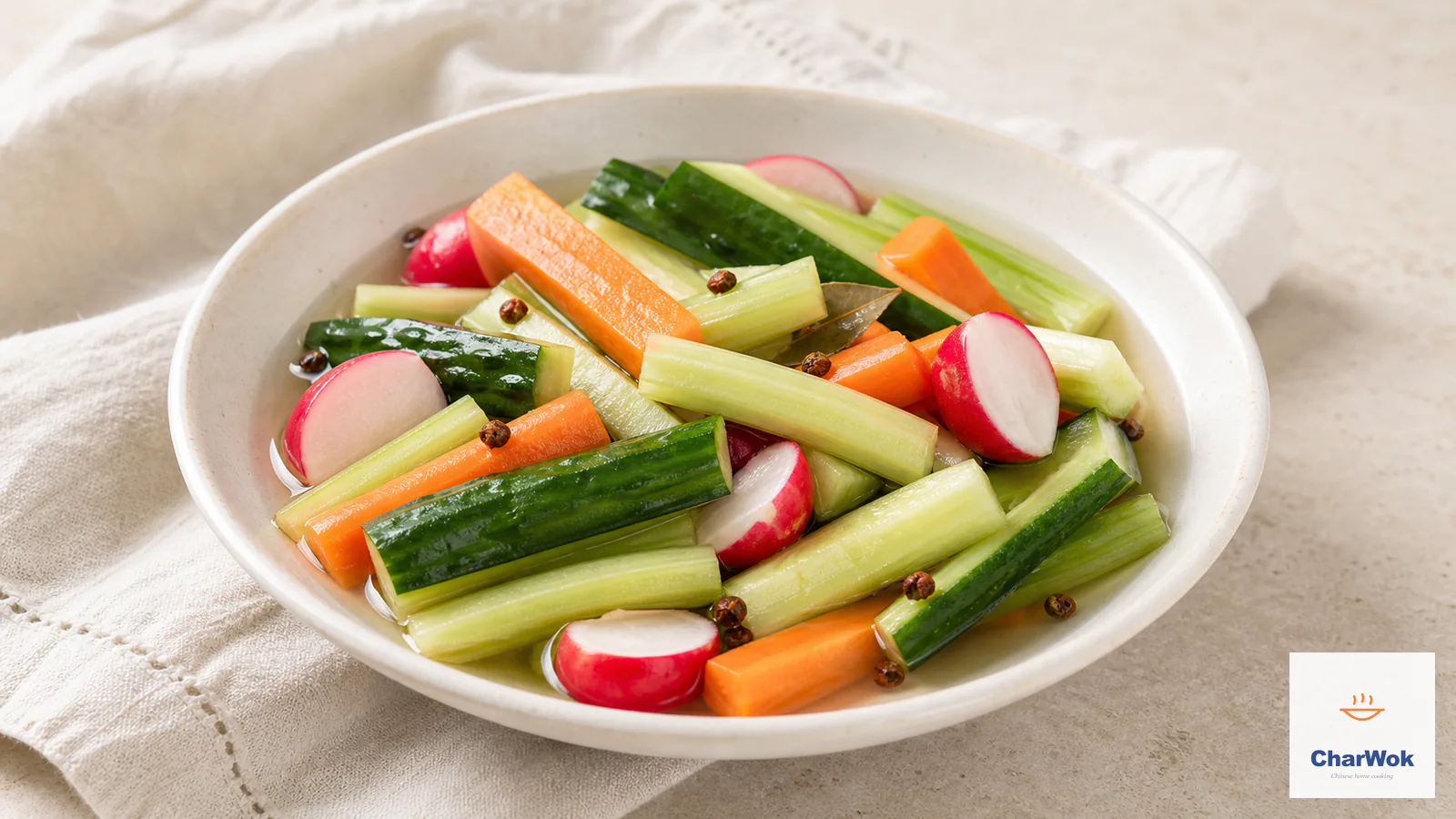
For a full Hunan-ish table, pair it with a vegetable that can stand up to the heat: blistered tiger skin peppers, a crunchy cucumber salad, or simply a bowl of silky steamed eggs to cool the burn. If you want meat on the table too, Hunan beef or twice-cooked pork round it out without competing.
Storing and reheating
This dish is at its best the second it leaves the pan, and I'll be honest about the limits: reheated scrambled eggs are never as good as fresh ones. If you must, keep leftovers covered in the fridge for up to a day and reheat gently in a pan over low heat with a teaspoon of water, just until warm. The microwave will toughen the curds and dull the chili aroma, so use it only as a last resort. I don't recommend freezing it; the texture turns grainy and sad.
Common questions
Can I make this less spicy for kids? Yes. Drop the duo jiao to 1 teaspoon, skip the fresh chili entirely, and add an extra ½ teaspoon of sugar. You'll keep the fermented aroma without the burn.
What if I can't find duo jiao at all? Use a tablespoon of sambal oelek plus a teaspoon of rice vinegar as the closest supermarket approximation. The flavor won't be identical, but you'll get the sour-hot profile. Sriracha alone is too sweet and thin.
Is lard really worth it? For this dish, yes. Lard adds a savory richness that vegetable oil can't, and it's the traditional cooking fat in Hunan. If you render your own from pork belly, even better. If you'd rather not, a neutral oil with a few drops of toasted sesame oil at the end is a reasonable compromise.
Why pull the eggs out before adding the chili? Cooking them together from raw overcooks the egg while you wait for the aromatics to bloom. Two quick stages keep the curds soft and the chili oil bright.