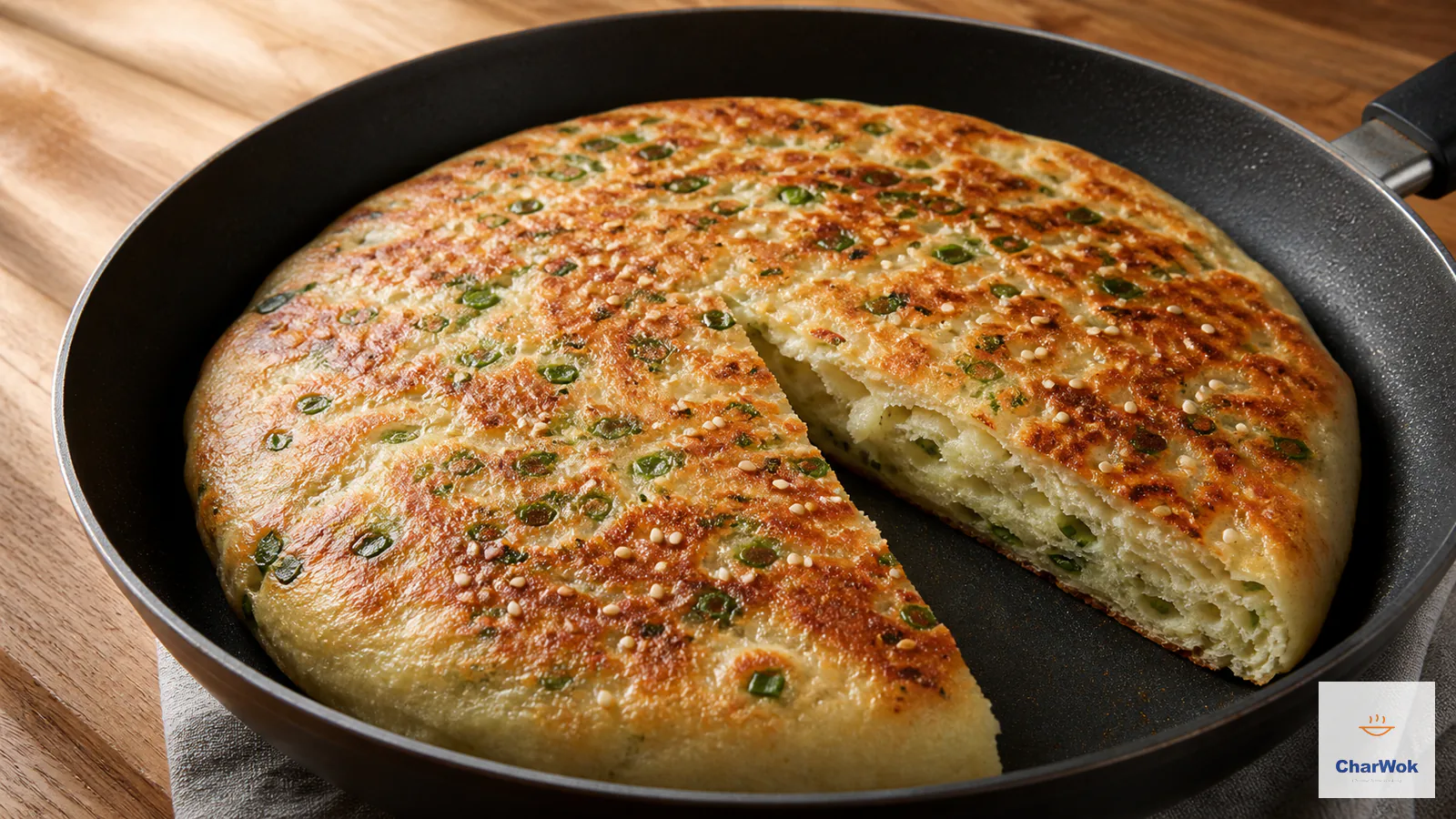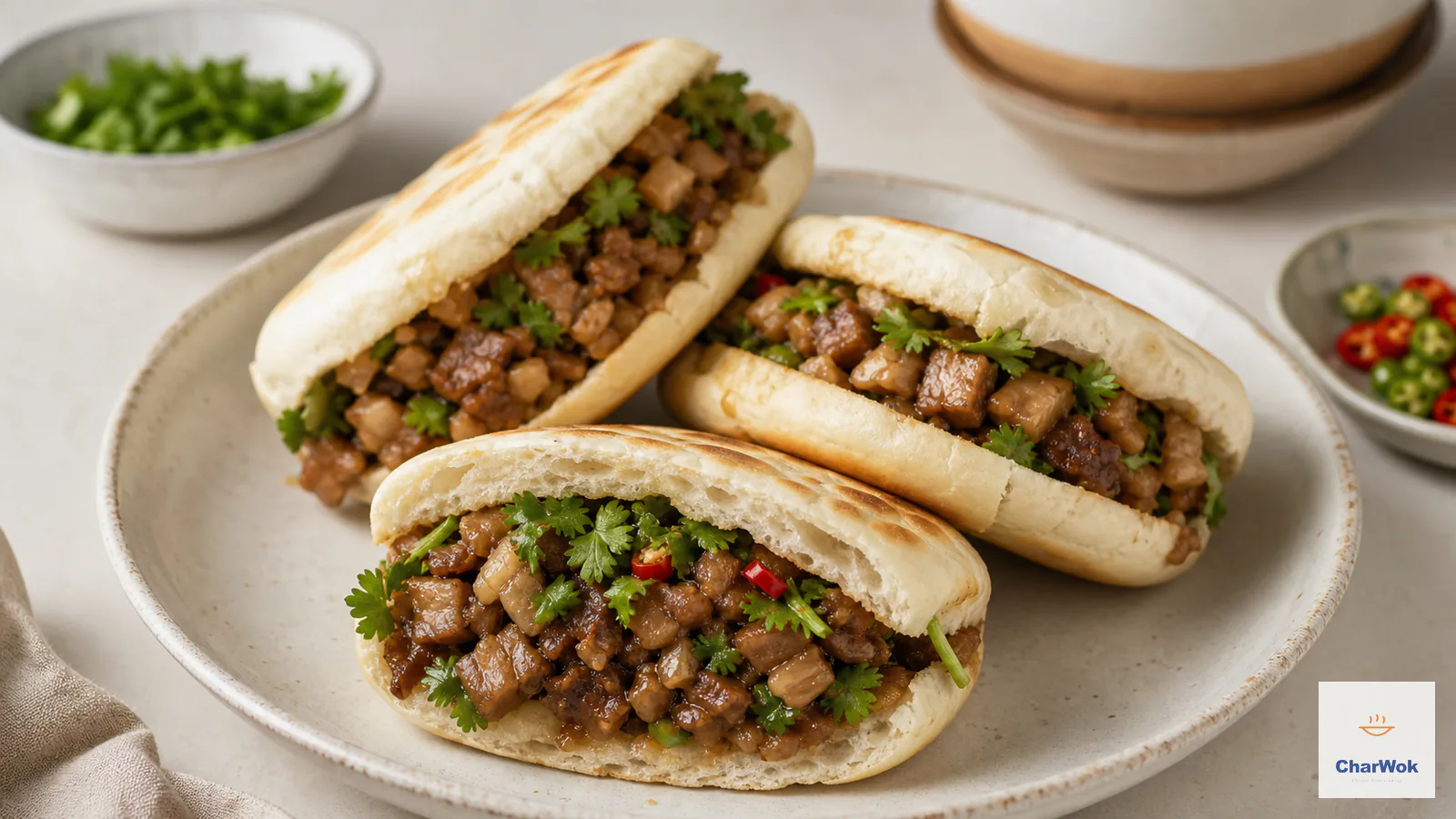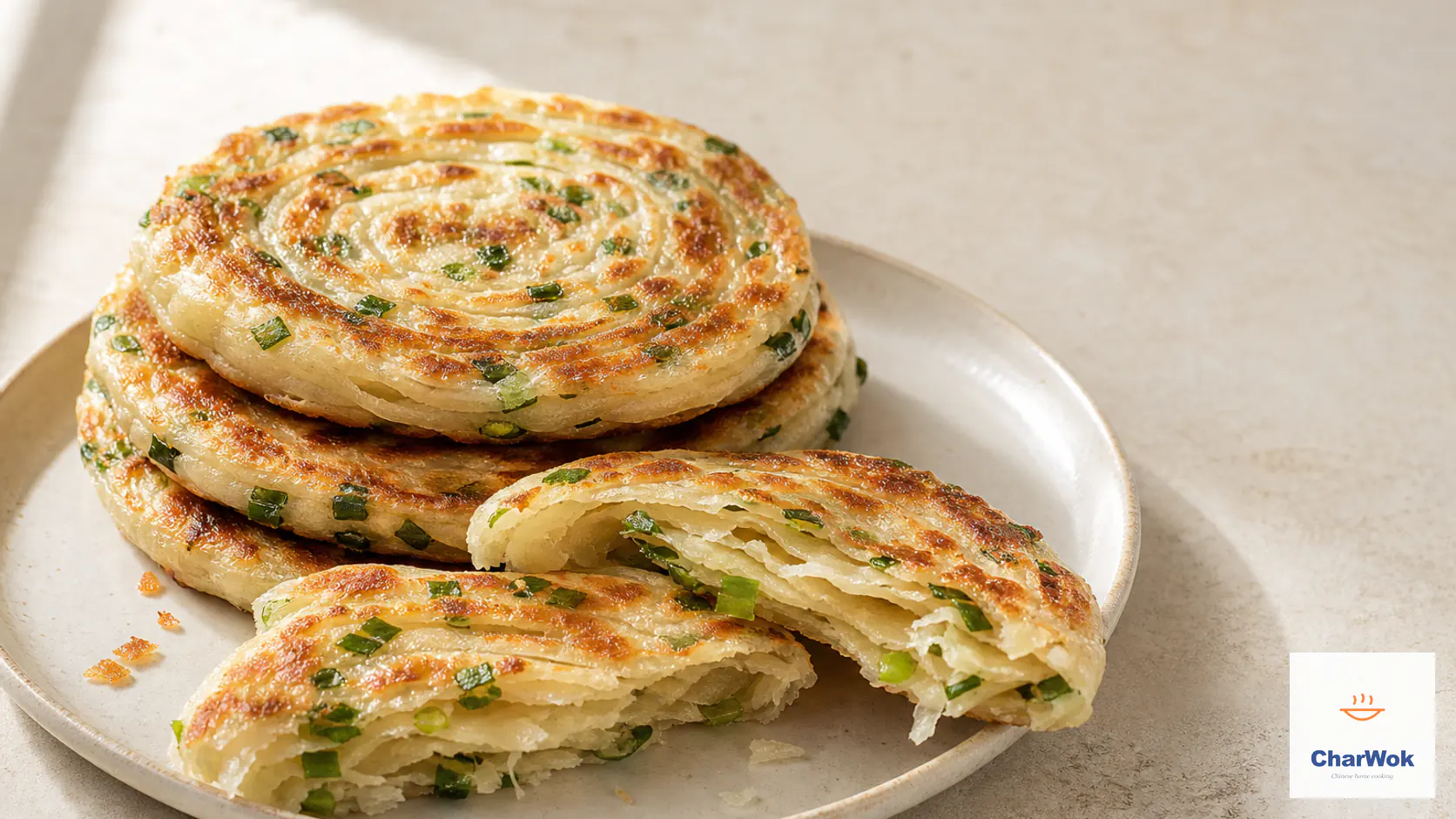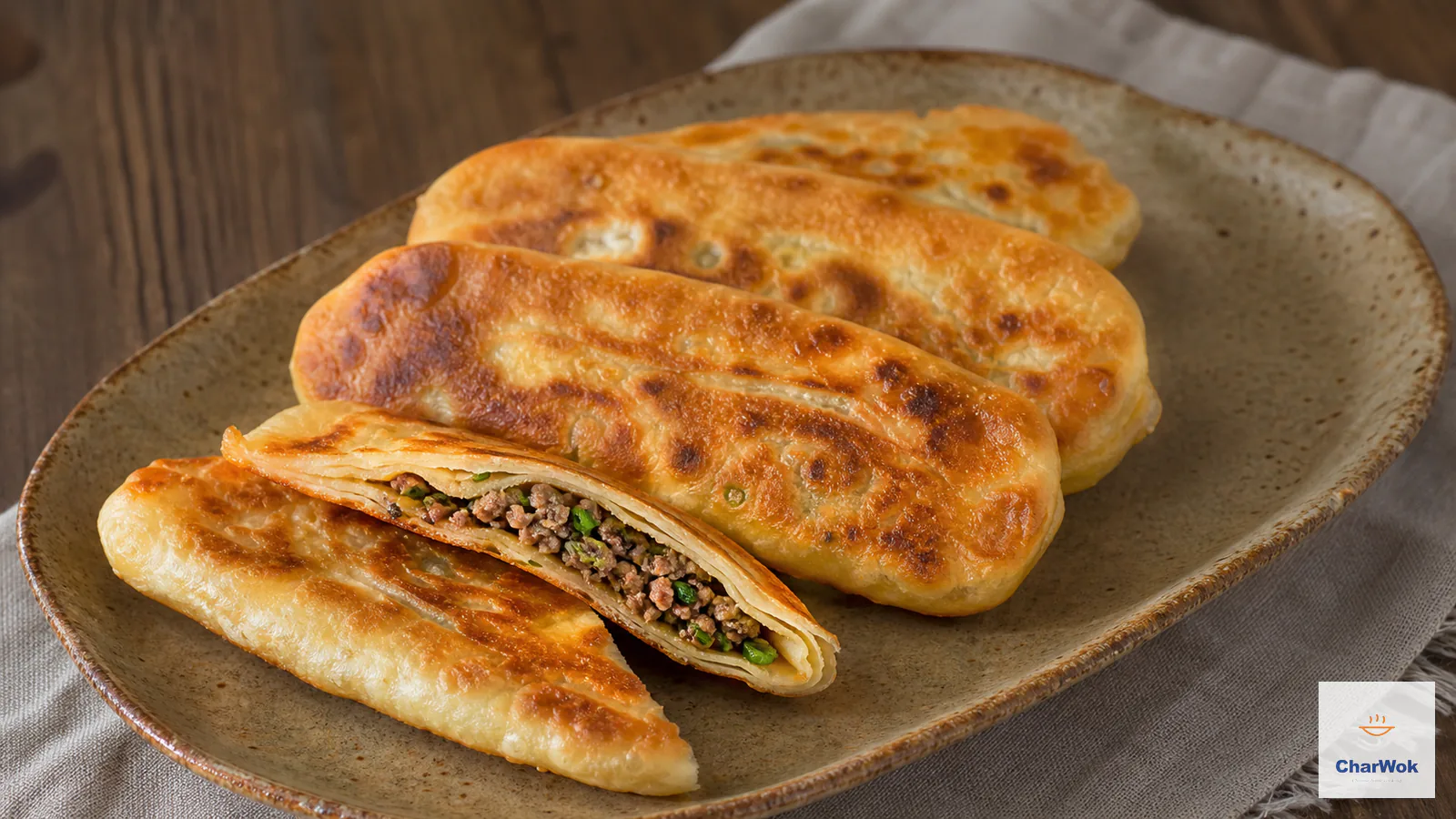
The first time I made these stuffed flatbreads, the outside crisped up beautifully and the inside was a dense, sad wedge of dough. I had skipped the resting. I had brushed on the oil paste cold. I had shrugged off the "stretch it thin" instruction because the dough felt fragile. Every one of those choices cost me, and the loaf told on me with every bite. This is the dish that punishes shortcuts and rewards patience: a thin, flaky shell wrapped around spiced ground beef and scallion, fried until the crust shatters. Get the dough right and the rest follows.
What you are building is a northern Chinese street snack that goes by many names. In Sichuan it shows up as a beef-stuffed disc the size of a salad plate, blistered and crackling. In Shaanxi the same family of breads feeds travelers and night markets, cousins to the broader world of Chinese breads that stretches from soft mantou to crisp scallion pancakes. The version here is the crispy, stuffed one: a hot-water dough, a flour-and-oil layering paste, a peppery beef filling. It is closer in spirit to a scallion pancake than to a steamed bun, but the filling makes it a meal on its own.
One flatbread per person, pan-fried about 4 minutes per side over medium-low heat. The make-or-break step is the oil-flour paste: spread it thin, stretch the dough thinner, and rest the dough 30 minutes before shaping or it will fight you and the layers will collapse into a brick.
What makes the crust flaky (and why mine wasn't)
Two things create the layers, and skipping either one turns the bread into a hockey puck. The first is the oil-flour paste, what Chinese cooks call youxiao. Spread between sheets of dough, it is the same principle that lifts a scallion flatbread or a Western laminated pastry: fat keeps the dough layers from fusing, so they slide apart as they cook and steam pushes them apart. The second is heat. Hot water in the dough partially gelatinizes the starch, which softens the gluten and gives you a dough you can stretch paper-thin without it snapping back. Cold-water dough resists you. Hot-water dough obeys.
My first failed batch skipped the rest after portioning. Even a hot-water dough tightens up as it cools and the gluten reorganizes. Thirty minutes under oiled plastic lets it relax so you can pull it into that long, thin tongue of dough without tearing. If you rush this, you get a thick, chewy disc. The flake lives in the thinness.
Ingredients
Ingredients at a glance
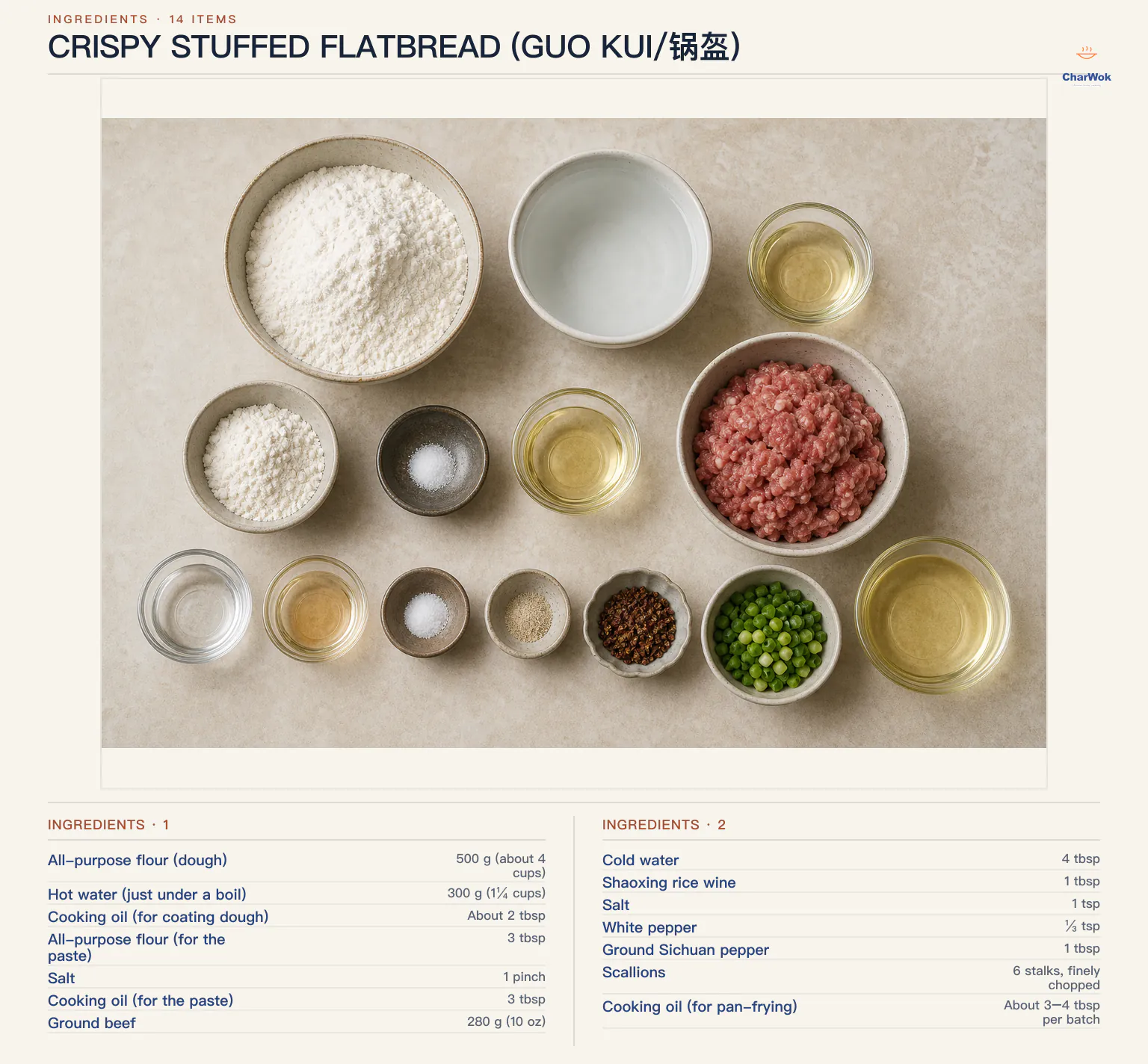
| Ingredient | Amount | Notes / substitute |
|---|---|---|
| All-purpose flour (dough) | 500 g (about 4 cups) | Plain flour. Bread flour works but fights you more; stick with AP for a tender crust. |
| Hot water (just under a boil) | 300 g (1¼ cups) | About 80–90°C / 175–195°F. Hot enough to partially cook the starch. |
| Cooking oil (for coating dough) | About 2 tbsp | Neutral oil: canola, vegetable, or peanut. |
| All-purpose flour (for the paste) | 3 tbsp | Same AP flour, measured level. |
| Salt | 1 pinch | |
| Cooking oil (for the paste) | 3 tbsp | Heat to 175–180°C / 350–355°F, shimmering but not smoking, then pour over the flour. |
| Ground beef | 280 g (10 oz) | 80/85% lean. Pork or dark-meat chicken work; beef gives the most flavor. |
| Cold water | 4 tbsp | Helps the meat hold moisture so it stays juicy inside the bread. |
| Shaoxing rice wine | 1 tbsp | See the Shaoxing rice wine guide; dry sherry is the usual substitute. |
| Salt | 1 tsp | |
| White pepper | ⅓ tsp | Ground. Black pepper is fine if that is what you have. |
| Ground Sichuan pepper | 1 tbsp | Freshly ground from whole peppercorns for real aroma; see below. |
| Scallions | 6 stalks, finely chopped | Green and pale parts. Add at the last second or they weep. |
| Cooking oil (for pan-frying) | About 3–4 tbsp per batch | Enough to film the pan; not a deep fry. |
The Sichuan pepper question
This filling leans on a generous tablespoon of ground Sichuan pepper, and that is not a typo. The spice here is not heat; it is the tingling, citrusy hum that makes northern and Sichuan beef dishes sing. For the best result, buy whole red Sichuan peppercorns and grind them yourself, because the pre-ground stuff smells like cardboard and tastes like dust. The correct way to grind Sichuan pepper is to toast the whole peppercorns dry, sieve out the gritty black seeds, then pulse what is left to a fine powder. If you are new to the flavor, start with half the amount and build up. There is a full Sichuan pepper guide if you want to go deeper, and it explains why the same pepper makes a Sichuan boiled beef or a bowl of beef dumpling soup taste the way they do.
Mixing the filling so it stays juicy
Ground beef inside a sealed dough has nowhere for its juices to go except into the bread, which is the point, but only if the meat actually holds on to them. Stirring in a few tablespoons of cold water and working the meat in one direction until it turns sticky is the same trick that keeps a good dumpling filling from going dry. The salt dissolves a bit of the muscle protein, the water gets absorbed into that sticky matrix, and the meat cooks up tender instead of crumbly. Add the Shaoxing wine and white pepper at the same time, then portion the meat into 10 loose balls. Hold off on the scallions until you are assembling, or they will leach green water into everything.
Making the dough and the oil paste
- Pour the flour into a wide bowl. Add the hot water in three splashes, stirring with chopsticks or a fork between each. The dough will look ragged and that is correct; hot water dough never looks smooth at this stage. When it is cool enough to handle, gather it into a ball and knead briefly, then cover and let it sit for 10 minutes. That short rest lets the gluten relax so the second knead goes fast.
- Knead again until the dough is smooth and soft, like an earlobe. This is the texture you want, not firm. Coat the whole ball lightly with oil, flatten it, and cut into 10 even pieces. Roll each into a ball, cover with plastic, and rest 30 minutes. Do not skip this rest.
- While the dough rests, make the oil paste. Put the 3 tablespoons of flour and a pinch of salt in a heatproof bowl. Heat the 3 tablespoons of oil gradually to about 175–180°C / 350–355°F, fluid and shimmering but not smoking, then pour it over the flour and stir until smooth. If smoke appears, turn off the burner and let the oil cool before pouring. The controlled hot oil toasts the raw flour and removes its cereal taste; let the paste cool to a spreadable consistency.
Shaping and filling
- Working one piece at a time and keeping the rest covered, press a dough ball into an oval. Using your fingers, push and stretch it into a long tongue, roughly the shape of a tennis racket: a wide rounded end and a narrower strip trailing off. The dough should be thin enough that you can almost see your fingers through it, especially along the narrow strip. If it tears, patch it; small holes are fine, big ones are not.
- Spread a thin layer of the cooled oil paste over the whole surface, then dust generously with ground Sichuan pepper. This paste is what will lift into flakes later, so do not be stingy, but a thick glob will leak out and burn.
- Place one portion of beef on the wide rounded end. Pile a generous handful of chopped scallion on top of the beef. The scallion goes in now, not earlier, so it stays bright.
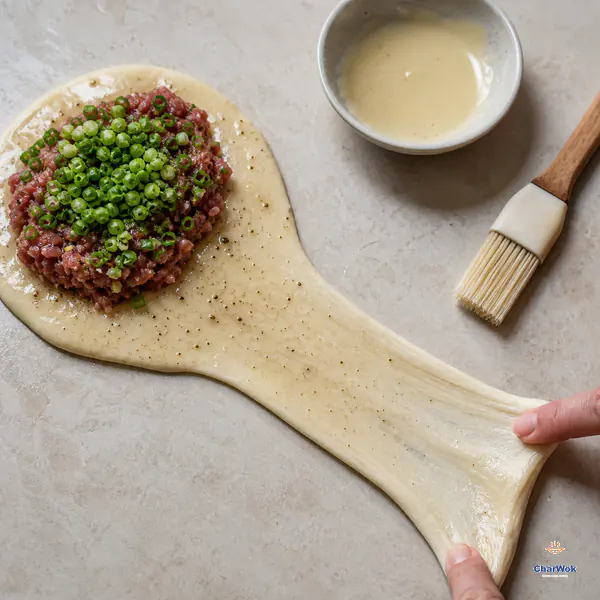
Stretch one rested piece into a broad head and narrow tail, brush on a thin even layer of oil paste, add Sichuan pepper, then keep all the beef and scallion on the wide end so the clean tail can wrap the packet.
- Wrap the edges of the wide end up and over the filling to seal it into a packet, then roll the packet toward the narrow strip, winding the thin dough around it like a bandage. You are building a layered cylinder. Stretch gently as you roll; the tighter and thinner you wind, the more layers you get.
- Stand the cylinder on one cut end and press straight down with your fingers until it flattens into a disc about 1.3 cm (½ inch) thick. Do not use a rolling pin here, because it will squeeze the filling out the sides. Repeat with the rest.
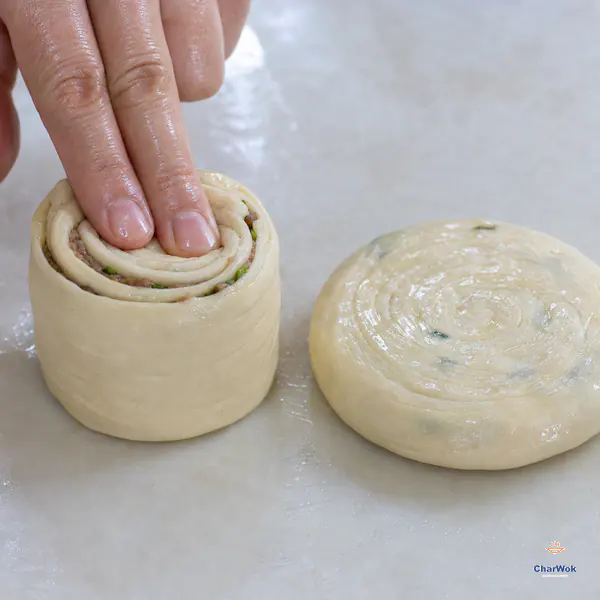
After wrapping the thin tail around the sealed filling, stand the layered cylinder on one end and press straight down with your fingers to about 1.3 cm thick; a rolling pin would force the filling out.
Pan-frying
- Heat a heavy skillet over high heat with enough oil to coat the bottom. When the oil shimmers, lay in one or two flatbreads. You want a strong sizzle on contact so the crust sets before it can soak up grease.
- Drop the heat to medium-low right away. High heat will scorch the outside before the filling cooks through. Cook about 4 minutes on the first side, until deeply golden, then flip and do the same on the second side. Press lightly with a spatula now and then so the bread browns evenly and does not dome. Check the thickest filling with an instant-read thermometer: ground beef, pork, or lamb must reach 71°C / 160°F; ground chicken must reach 74°C / 165°F.
- Lift onto a plate lined with paper towel to drain. Eat them hot. The crust is at its best in the first ten minutes; after that it softens, and you will need to re-crisp it.
Oil handling follows the U.S. Fire Administration cooking guidance. The filling temperatures follow the FoodSafety.gov safe minimum temperature chart; time and crust color alone cannot confirm that ground meat is safe.
When things go wrong
The bread is thick and dense, not flaky. This is almost always the dough. Either you did not rest it long enough after portioning, so you could not stretch it thin, or you pressed the disc out too thick. Next time, rest a full 30 minutes and stretch the tongue until it is nearly translucent before rolling.
The filling leaks out and burns in the pan. You overfilled, or you used a rolling pin on the disc instead of your fingers, or the oil paste pooled in one spot and ruptured the seam. Use a modest ball of meat per bread, seal the top of the cylinder well before standing it up, and spread the paste thin and even.
The outside browns too fast while the middle is still raw. Your heat is too high. These need medium-low and patience; the dough is thick enough at the center that it usually needs about 4 minutes per side. Lower the flame, then verify the thickest filling reaches 71°C / 160°F for ground beef, pork, or lamb, or 74°C / 165°F for ground chicken.
The crust is greasy. The oil was not hot enough when the bread went in, so it soaked in instead of frying. Preheat properly, and do not crowd the pan; cold dough dropped into a crowded pan drags the oil temperature down.
The meat is dry and crumbly. You did not work in the water, or you used very lean beef. Stir the cold water in until the meat is visibly sticky and a little lighter in color, and aim for 80/85% lean rather than extra-lean.
Ways to change it up
Swap the filling, keep the technique. Ground lamb with cumin and a little chili flake turns this into something close to a baked lamb bun in flatbread form. Minced pork with napa cabbage follows the same logic as a Chinese meat pie. For a vegetarian version, skip the meat and use a thick layer of seasoned scallion, which pushes the bread toward an oven-baked scallion bread. A spoonful of the beef mixture also folds neatly into a quick egg and scallion crepe if you have leftovers.
The dough itself is flexible. The same hot-water base wraps around other street foods; once you trust it, you can use it for a stuffed jian bing-style fold or fold the spiced beef into something resembling a small Chinese pork burger. And if you want the same peppery beef in a softer package, the filling transfers straight into Sichuan dumplings.
Storage and reheating
Cooked flatbreads keep in the fridge, covered, for two days, and freeze well for a month, layered with parchment. Re-crisp them from cold in a dry skillet over medium-low heat for a few minutes per side; the microwave will turn the crust to rubber and I do not recommend it. You can also freeze the shaped, uncooked discs on a tray, then bag them, and fry straight from frozen with an extra minute per side and the lid on for the first minute to help them thaw through.
Frequently asked questions
Can I make the dough ahead? Yes. Once portioned and oiled, the dough balls keep in the fridge overnight, well covered. Bring them back to room temperature for 20 minutes before stretching, or they will tear.
Do I have to use hot water? For this texture, yes. Hot water softens the gluten and lets you stretch the dough thin, which is what creates the flaky layers. Cold water gives you a chewier, more bread-like result.
Can I bake instead of fry? You can, at 220°C / 425°F for about 15 minutes, but the crust will be drier and less shattery. Pan-frying in a film of oil is what gives the characteristic blistered, crackling surface.
Is the Sichuan pepper amount a mistake? No. A tablespoon is the intended flavor, but you can start with a teaspoon. To adjust the seasoning safely, pan-fry a teaspoon of filling until fully cooked, taste that sample, then add more ground pepper to the raw mixture if needed.