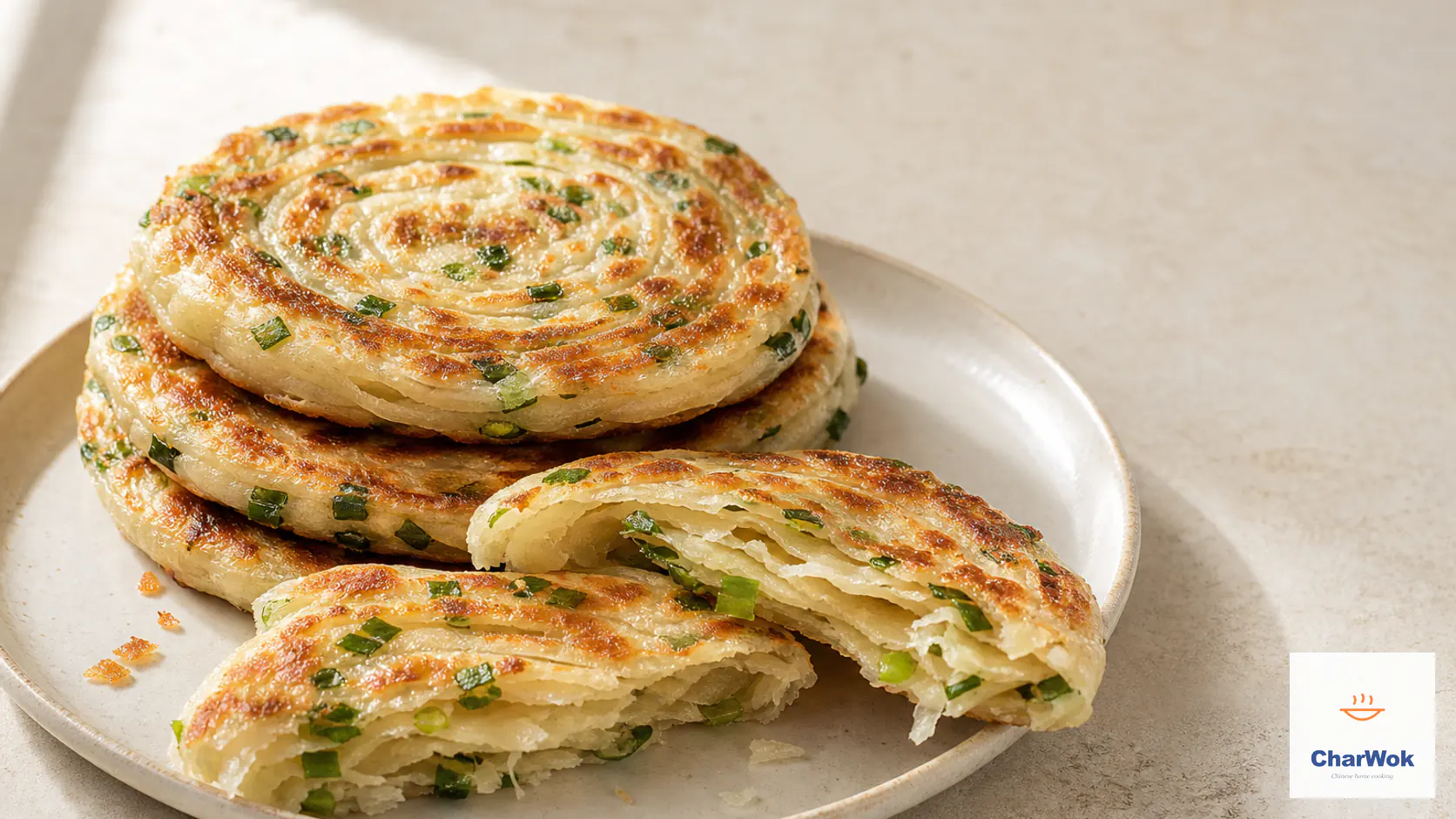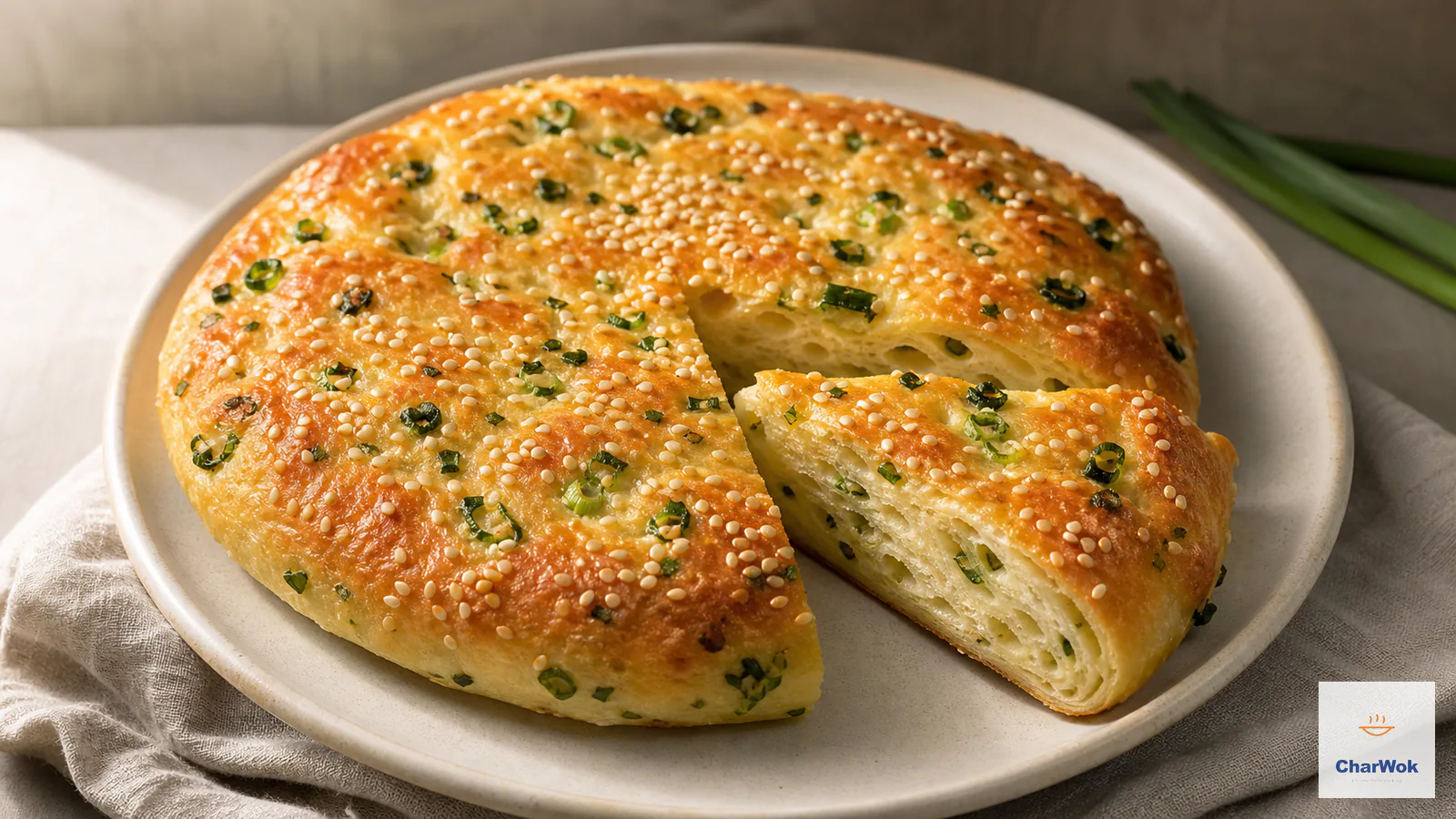
There is a moment, right out of the oven, when this bread pays you back for every minute of waiting: a crackling sesame crust that resists the first tear, then gives way to a soft, steamy crumb threaded with scallion and toasted spice. Most home attempts at Chinese scallion bread fall short in one of two ways. The crust goes pale and tough, or the inside bakes up dense and gummy because the dough was rushed and the layers never separated. Both failures come from misunderstanding one thing: this is a bread about gluten timing and fat barriers, not about how hard you knead.
What follows is an oven-baked, yeast-raised take on the layered flatbread family most people meet as Cong You Bing, the pan-fried scallion pancake. The pancake version is unleavened and chewy. This one is lighter, taller, and develops a deeper crust in dry oven heat than it ever could in a skillet. Think of it as the soft, pull-apart cousin of the unleavened original, and as a sibling to the leavened scallion flatbread that gets browned in a pan. Same scallion-and-spice soul, different texture entirely.
One loaf, about 500 g of dough, baked at 190°C (375°F) for 30 to 35 minutes. The single biggest decision is the rest: skip the 10-minute relax after the first mix and the dough will fight you on every fold. Bake it the day you mix it, serve warm, and accept that it will not be as good cold.
Where this bread comes from
Layered, scallion-studded dough is a northern Chinese everyday food, not a banquet piece. The wheat belt of the north, from Shandong through Shanxi, built its diet around flour and oil because rice was scarce and wheat grew readily. The classic unleavened scallion pancake belongs to that tradition; so does youtiao, the breakfast fried-dough stick, and the stuffed Guo Kui flatbread. What changed with this recipe is the leavening. Adding yeast turns a chewy, dense flatbread into something that puffs and tears like a soft dinner roll, while the oil-and-flour layering technique still gives you the pull-apart structure. If you want the wider context of how Chinese cooks work flour, the overview of Chinese bread on this site walks through the main families.
What actually makes the layers separate
The layers are not magic. They are two physical effects working together.
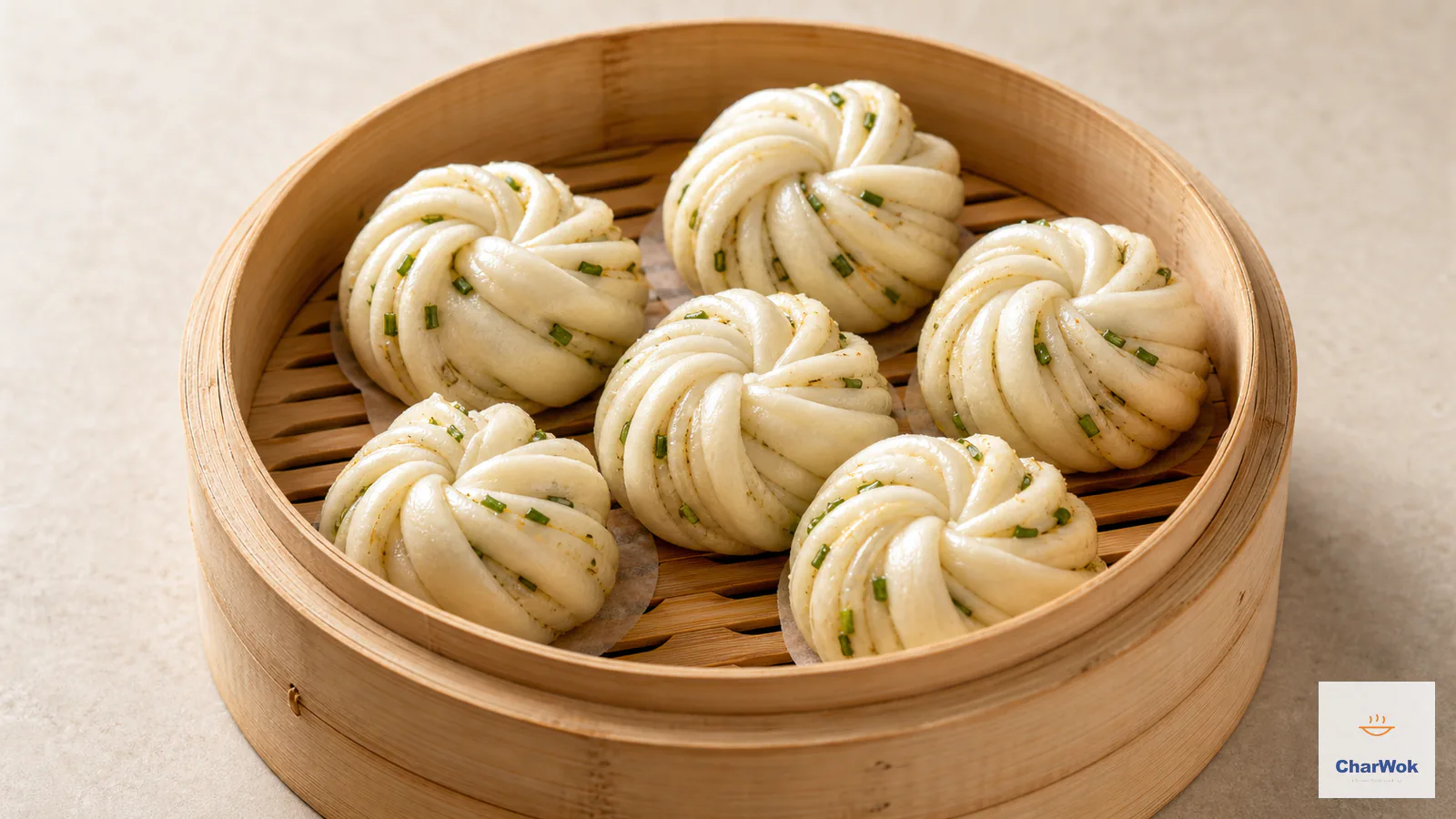
First, a fat barrier. You brush the rolled-out dough with oil before folding it. That oil film physically blocks the two dough surfaces from welding back together during baking. As the loaf heats, water in the dough turns to steam, the steam pushes against the trapped oil layer, and the two sheets lift apart. This is the same mechanism that opens the layers of a croissant or of hua juan flower rolls, just with yeast dough and cooking oil instead of butter and laminations.
Second, the cut-and-swirl. After you roll the sheet into a rope, you slice the rope open along its length so the spiral of dough layers faces up, then coil the split rope into a round. That lengthwise cut exposes the layers and stacks them vertically instead of winding them tight. Skip the cut and you get a tight, blurry spiral. Make the cut and the finished loaf reads as a clear crown of layers when you pull it apart. I have done it both ways; the cut is the whole reason this loaf looks like bread and not like a fat pancake.
The flour and yeast question, answered plainly
Use all-purpose flour. That is my recommendation, not a default. All-purpose (around 10 to 11 percent protein) gives a soft crumb that still has enough gluten to hold the layers open against the steam. Bread flour will make the loaf chewier and taller, closer to mantou in bite; some people prefer that, but it is harder to roll thin without springback. Cake flour or a low-protein bao flour will give a finer, more tender crumb at the cost of structure, and the layers tend to merge a little. For a first attempt, all-purpose is the right call.
For yeast, use instant dry yeast and mix it straight into the flour. Instant yeast is reliable and skips the proofing step. If you only have active dry yeast, dissolve it first in the lukewarm water with the sugar and wait five minutes until it foams; if it does not foam, the yeast is dead and you need a new packet. The sugar is not there for sweetness. It is a small amount of ready food for the yeast so fermentation starts promptly even in a cool kitchen.
Ingredients
Ingredients at a glance
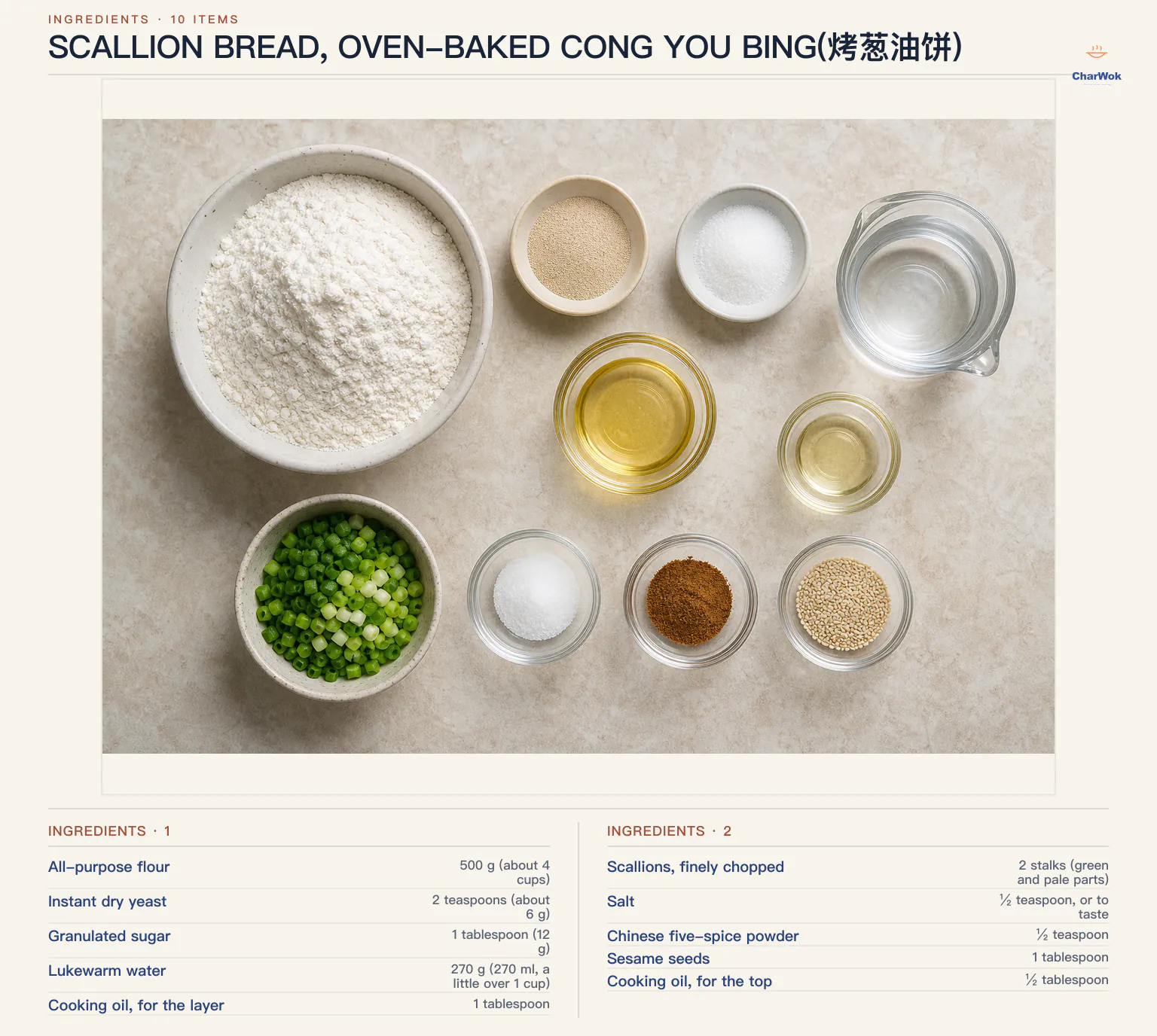
| Ingredient | Amount | Notes / substitute |
|---|---|---|
| All-purpose flour | 500 g (about 4 cups) | Bread flour for a chewier loaf; cake or bao flour for a softer one. Swap up to 150 g for whole wheat, no more, or the crumb tightens. |
| Instant dry yeast | 2 teaspoons (about 6 g) | Active dry: dissolve in the water first. Fresh yeast: roughly 12 g, crumbled. |
| Granulated sugar | 1 tablespoon (12 g) | Feeds the yeast. Honey works; reduce water by 1 tablespoon. |
| Lukewarm water | 270 g (270 ml, a little over 1 cup) | About 35°C / 95°F. Too hot kills yeast; too cold slows it. |
| Cooking oil, for the layer | 1 tablespoon | Neutral oil is standard. Melted butter or toasted sesame oil blended half-and-half with a neutral oil adds aroma; straight sesame oil is too strong. |
| Scallions, finely chopped | 2 stalks (green and pale parts) | About 30 g. Pat dry before sprinkling; wet scallions bleed water into the layers and make them merge. |
| Salt | ½ teaspoon, or to taste | Fine sea salt. Flake salt on top after baking is a nice touch. |
| Chinese five-spice powder | ½ teaspoon | Or ½ teaspoon ground Sichuan peppercorn for a tingly, numbing note. A homemade five-spice blend is far more fragrant than the bottled kind. |
| Sesame seeds | 1 tablespoon | Toasted white sesame. Leave them on; they are the whole point of the crust. |
| Cooking oil, for the top | ½ tablespoon | Brushed on before baking so the seeds stick and the crust colors. |
Mix and rest the dough
You do not need to knead this dough into submission. The goal of the first mix is only to bring everything together into a rough, shaggy ball. Combine the flour, instant yeast, and sugar in a bowl, then add the water and stir with chopsticks or a stiff spatula until no dry flour remains. Cover and walk away for ten minutes.
That short rest does more work than ten minutes of aggressive kneading. Flour hydrates slowly; given time, water migrates into the starch and protein on its own, and the gluten strands begin to align without any help from your hands. When you come back, the same dough that looked lumpy and hopeless will knead smooth in two or three minutes. This is autolyse in miniature, and it is the reason this recipe is genuinely easy. A stand mixer does the whole thing in about eight minutes on low, but I usually mix by hand because the rest does half the work for free.
Cover the smooth dough and let it rise somewhere warm until it has roughly doubled, 40 to 90 minutes depending on your kitchen. In a cool room, heat your oven to its lowest setting for one minute, switch it off, and put the bowl inside with the door closed. The dough is ready when you press a fingertip in and the indentation springs back slowly instead of filling straight in. If it fills in instantly, give it another fifteen minutes.
Shape, fill, and coil
- Deflate gently. Press the risen dough down to push out the big bubbles. Do not punch it; you want to keep some of the gas structure so the final crumb is open, not dense like a cracker.
- Roll into a rectangle. On a lightly floured surface, roll the dough out to a rectangle roughly 5 mm (about ¼ inch) thick. If the dough snaps back and refuses to stay stretched, cover it loosely and wait five minutes. That is the gluten tightening up, and fighting it only tears the sheet.
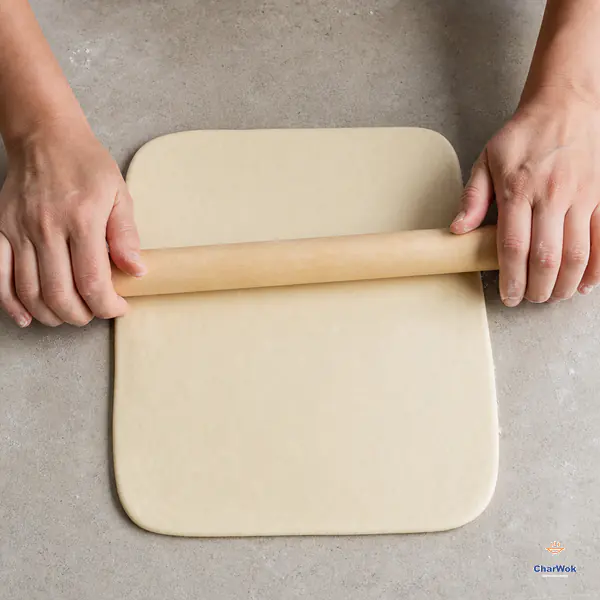
Roll to an even rectangle about 5 mm thick; if it keeps springing back, cover it and wait five minutes instead of tearing the tightened dough.
- Brush the oil. Spread a thin, even layer of oil over the surface, leaving a 1 cm border dry so the roll seals. The oil is your layer-separating barrier; too little and the sheets fuse, too much and it squirts out when you roll.
- Scatter the filling. Sprinkle the chopped scallion, salt, and five-spice or Sichuan pepper evenly. Uneven seasoning means bites of plain dough next to bites of salt, so take the ten seconds to spread it.
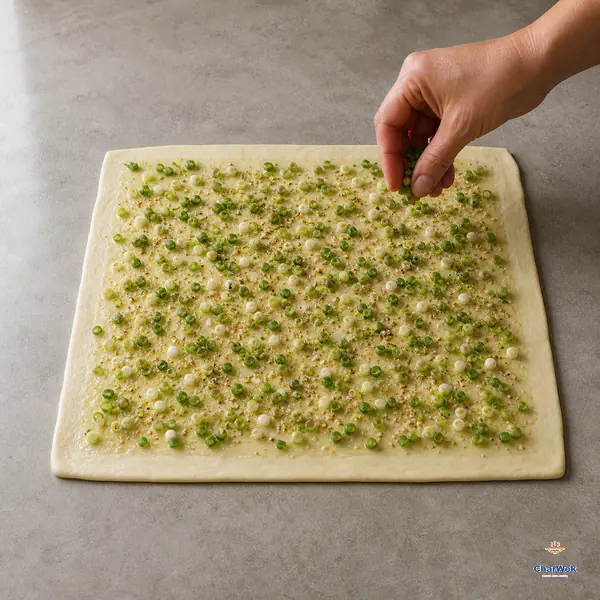
Spread a very thin oil film and distribute the scallion, salt and spice evenly, keeping a dry 1 cm border so the roll can seal.
- Roll into a rope. Starting from a short side, roll the sheet up into a snug log. Snug, not tight; over-tension squeezes the oil out and compresses the layers before they ever bake.
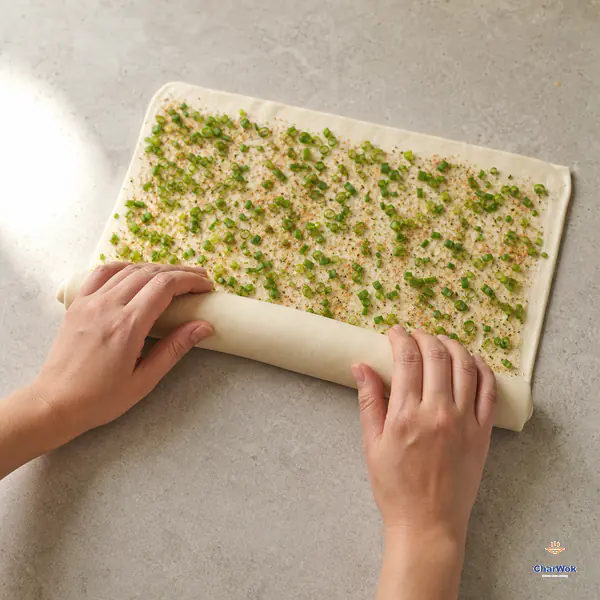
Roll from the short side until snug but not compressed; the layers need contact without forcing the oil and scallion out.
- Cut and coil. With a sharp knife or bench scraper, cut the log open lengthwise straight down the middle so you have two long half-rounds with the layers facing up. Lay one half cut-side-up, coil it into a loose round, and set the second half cut-side-up on top, pressing gently to merge them into one fat disc. The exposed layers are what create the visible crown.
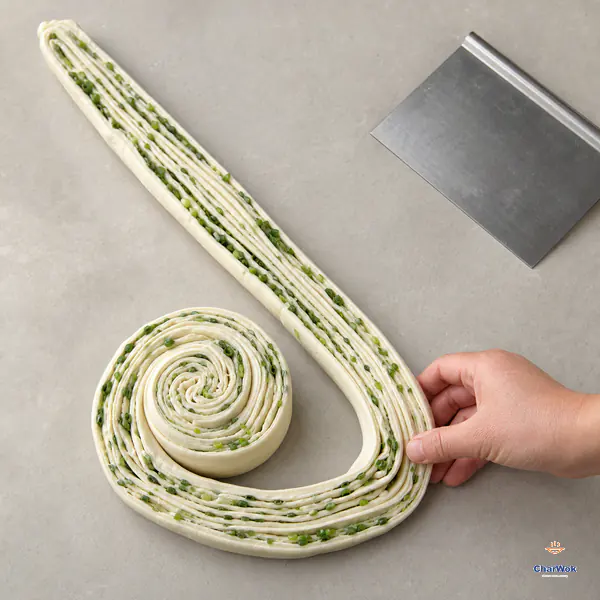
Cut the log lengthwise into exactly two half-round ropes, keep every cut face upward and coil loosely so the laminated edges form the crown.
- Rest again. Put the disc on a parchment-lined tray, flatten it slightly with your palm until it is about 3 cm thick, brush the top with oil, and scatter the sesame seeds. Let it rest ten minutes. This second relax is non-negotiable; baking immediately gives you a tight, shrunken loaf.
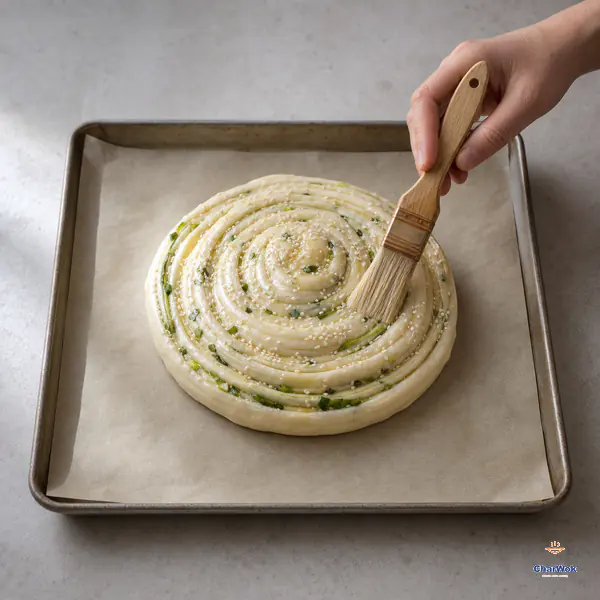
Flatten the coiled disc gently to about 3 cm, brush with a thin oil film, scatter the sesame and let the shaped dough relax for ten minutes before baking.
Baking: temperature and judgment
Heat the oven to 190°C (375°F), or 170°C on a fan-forced setting. Bake on the middle rack. The target is an even deep-gold color across the whole top, not just the raised swirl, and a hollow sound when you tap the underside. Start checking at 25 minutes and expect 30 to 35 total. Color is a more honest signal than the clock: a loaf that still looks pale at 30 minutes needs more time, and a loaf that hits deep gold at 28 minutes is done.
Two things drive the crust. The oil brushed on top lets the surface brown evenly through the Maillard reaction, the same browning that colors a steak or a loaf of bread. Without it, the top dries pale and chalky. The sesame seeds toast in that oil and add both crunch and a nutty aroma that the dough alone cannot produce. If your oven has hot spots, rotate the tray once at the halfway mark.
Pull the loaf when the center reads at least 90°C (195°F) on an instant-read thermometer if you use one. Let it rest five minutes on a rack before cutting so the steam settles; slicing into it immediately releases moisture and the crumb collapses slightly.
When something goes wrong
The dough is too sticky to handle. You added water too fast or your flour runs soft. Dust your hands and the counter, not the dough, and knead in flour one tablespoon at a time. Stop the moment it is only tacky. Over-flouring kills the soft texture you want.
The loaf baked up pale and dense. Either the yeast was inactive, the first rise was too short, or the oven ran cool. Check your oven with a cheap oven thermometer; home ovens lie by 15 to 25 degrees regularly. Next time, proof the yeast in the water first and let the dough rise until genuinely doubled, not just until you got tired of waiting.
The layers did not separate. The oil layer was too thin, the dough was rolled too thin and tore, or the scallions were wet and washed the oil away. Pat the scallions dry, brush a confident layer of oil, and roll to a uniform 5 mm so no thin spots fuse shut.
The top burned before the center cooked. Your oven runs hot or the loaf sat too high. Drop one rack position, tent loosely with foil at the 20-minute mark, and bake to temperature rather than color alone.
The scallions taste raw and sharp. Use the green and pale parts, not the tough dark-green tips, and chop fine. Coarse chunks steam instead of softening and read as raw onion.
Variations and what to serve it with
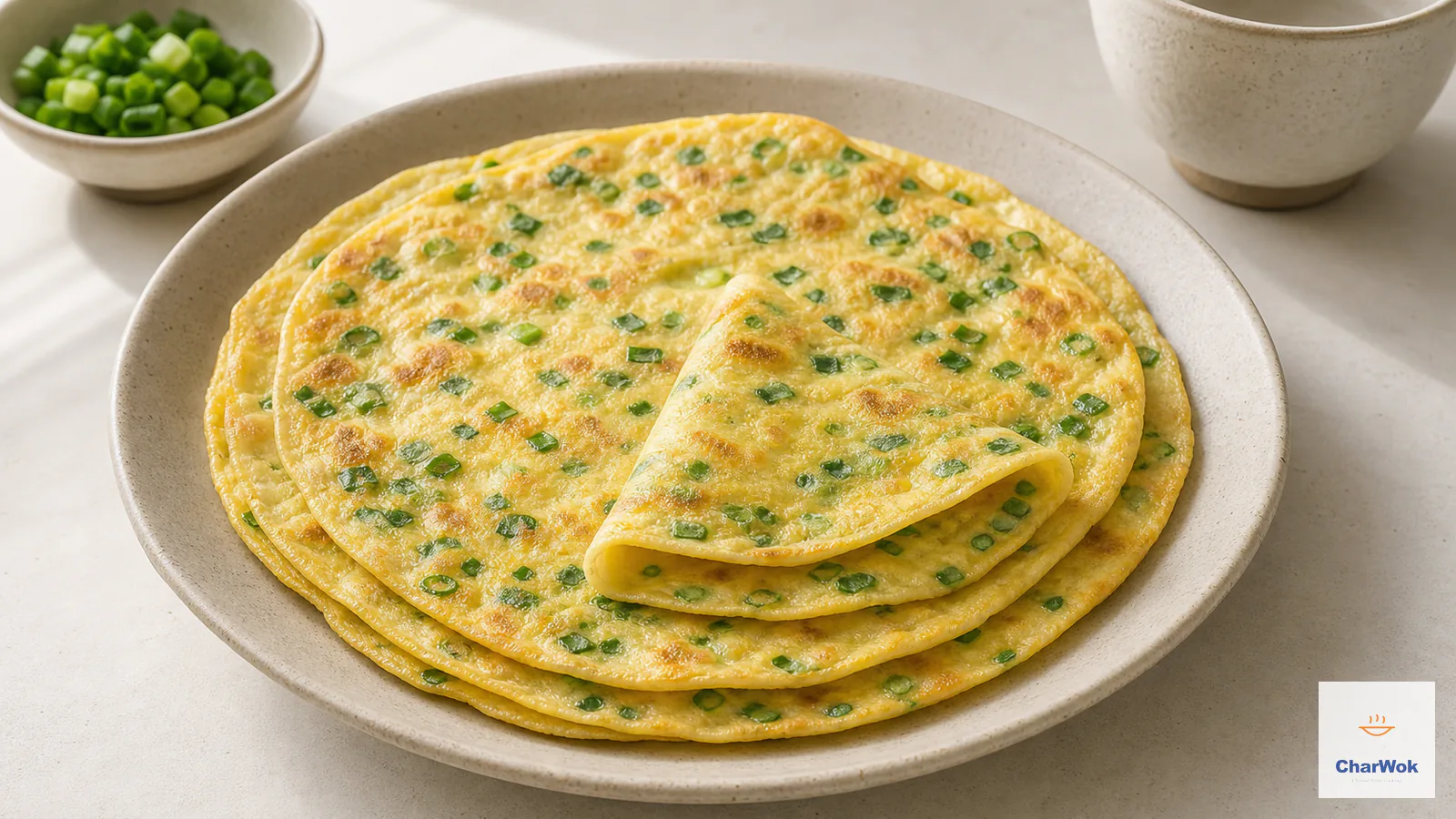
The filling is flexible. Skip the five-spice and use a teaspoon of homemade scallion oil in place of the plain oil for a deeper allium flavor. Add a pinch of toasted sesame paste to the oil for richness, or fold in a half cup of finely chopped napa cabbage or raw greens for a stuffed-flatbread feel closer to a quick scallion egg crepe. Cumin and chili powder in place of five-spice pulls the loaf toward Xinjiang flavors and is excellent with lamb.
For a meal, serve warm wedges alongside a saucy braise so the bread can soak up the juices, or split a wedge and tuck in leftover meat the way you would fill a rou jia mo bun. It also stands in for the wrap on a jian bing-style breakfast when you want something heartier than a crepe. Leftover wedges re-crisp in a dry skillet better than they do in the microwave.
Storage and reheating
This bread is best the day it is baked. If you must hold it, cool completely, wrap airtight, and keep at room temperature for up to two days. To bring back the crust, slice and reheat in a dry skillet over medium heat for a minute or two per side, or in a 180°C (350°F) oven for about eight minutes. The microwave will turn the crust to rubber; do not use it. You can freeze the baked loaf, well wrapped, for a month and re-crisp straight from frozen in a moderate oven, adding a few extra minutes.
Frequently asked questions
Can I make the dough the night before? Yes, and it actually improves. Mix and knead, then refrigerate the covered dough for a slow cold rise of 8 to 16 hours. Let it sit at room temperature for 30 minutes before shaping so it warms up and rolls easily.
Do I really need to cut the rope open? Only if you want the layered crown look. The cut is what stacks the layers vertically. Without it you still get a tasty spiral, just tighter and less dramatic.
Why is my dough fighting me when I roll it? The gluten is tense. Cover it and rest five to ten minutes; it will relax and stretch without tearing. Forcing it tears the sheet and ruins the layers.
Can I skip the yeast and make it unleavened? You can, but you are then making a different dish, the pan-fried scallion pancake. The yeast is what gives this loaf its soft, pull-apart crumb rather than a chewy flatbread texture.
Is the bread vegan? As written, yes. The only animal product to watch for is if you swap the oil for butter or lard, which are optional and called out in the ingredient notes.