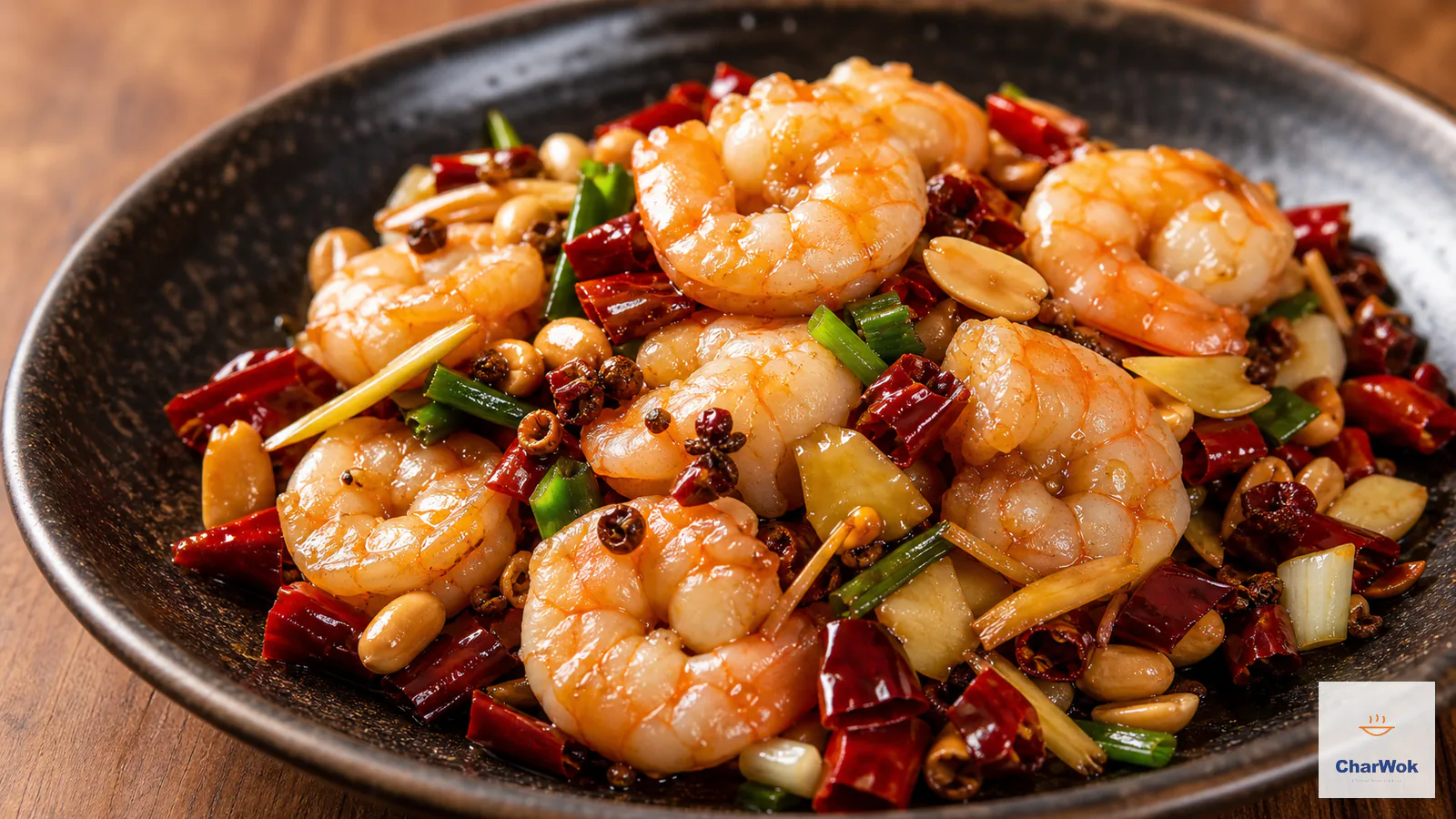
Kung Pao shrimp is what I cook when I want a stir-fry that tastes like a restaurant in under fifteen minutes but still rewards actual technique. The soul of the dish is a three-way fight on your tongue: the dry, numbing buzz of Sichuan peppercorn, the slow sweetness of caramelized sugar in the sauce, and the sharp, smoky vinegar that cleans it all up. The shrimp are just the vehicle.
The pain point home cooks hit is almost always the same. You follow the recipe, you add the sauce, and thirty seconds later you are staring at a pan full of glue. I have done this. The reviewer who said the sauce "turned to glue" the night before a dinner party was not making a rookie mistake; they were hitting the single most common failure of cornstarch-thickened stir-fries, and the fix is not what most people reach for.
At a glance. Marinate the shrimp five minutes in wine and cornstarch, sear fast and pull them out before they are fully done, bloom dried chilies and Sichuan peppercorn in oil off the heat, then return everything and add a sweet-and-sour sauce where black rice vinegar is the lead ingredient and sugar and light soy play supporting roles. The make-or-break move: pour the sauce around the hot edge of the wok, never into the center, and have the pan off high heat for the three seconds it takes the cornstarch to set. Total active cooking is about three minutes; the whole dish is thirteen.
What Kung Pao actually is
Kung Pao (gōng bǎo, 宫保) is a Sichuan dish family named after a Qing-era official, Ding Baozhen, whose title was Gong Bao. The canon is chicken, but the flavor logic, called lychee flavor (荔枝味) in Sichuan kitchens, is what matters: a sauce that reads sweet and sour first, then a lingering numbing heat from the peppercorn, with toasted peanuts for crunch. If you want the original, my Kung Pao chicken walks through the full tradition. Shrimp is a modern, faster cousin that leans on the same sauce template.
Because shrimp cook in under a minute, the dish is more forgiving on timing than chicken and more punishing on overcooking. There is no rescue for a rubbery shrimp. That tension, speed versus control, is the whole craft of this recipe.
Ingredients
Ingredients at a glance
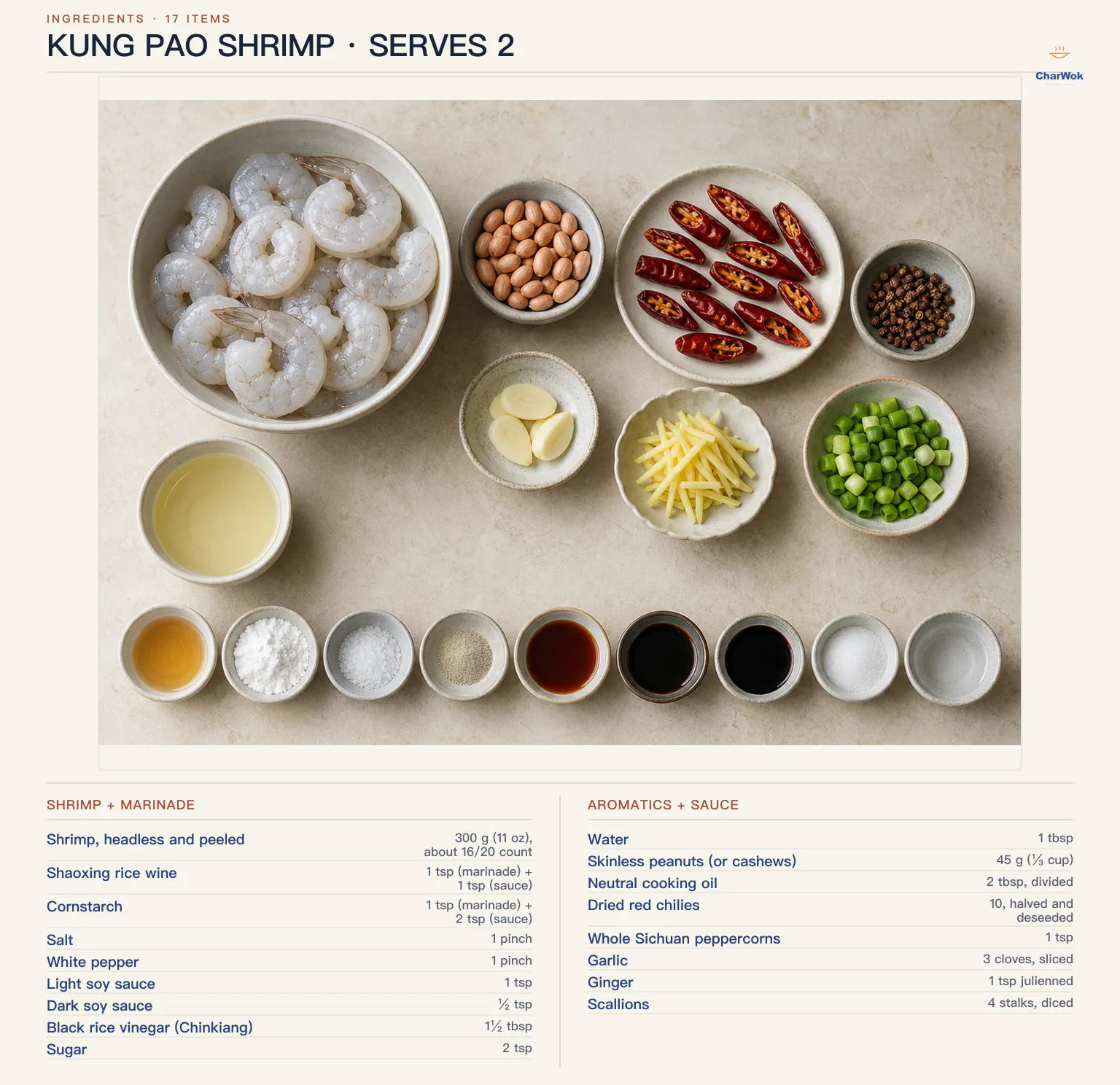
This serves two as a main with rice. I have grouped the items by job, because in a stir-fry the marinade, the sauce, and the aromatics are three separate things you handle in sequence.
| Ingredient | Amount | Notes / substitute |
|---|---|---|
| Shrimp, headless and peeled | 300 g (11 oz), about 16/20 count | Leave tails on if you like the look. Thawed frozen works; pat very dry. |
| Shaoxing rice wine | 1 tsp (marinade) + 1 tsp (sauce) | Dry sherry is the closest Western sub. See Shaoxing rice wine. |
| Cornstarch | 1 tsp (marinade) + 2 tsp (sauce) | Potato starch works but thickens more abruptly. |
| Salt | 1 pinch | |
| White pepper | 1 pinch | Black pepper is fine if that is what you have. |
| Light soy sauce | 1 tsp | Sets the salty base. Light vs. dark soy explains the split. |
| Dark soy sauce | ½ tsp | For color only; it is less salty than it looks. |
| Black rice vinegar (Chinkiang) | 1½ tbsp | The sour backbone. Black rice vinegar is the right one, not white or cider. |
| Sugar | 2 tsp | White is fine; a little brown adds depth. |
| Water | 1 tbsp | Just enough to loosen the sauce. |
| Skinless peanuts (or cashews) | 45 g (⅓ cup) | Raw peanuts toasted fresh beat pre-roasted by a wide margin. Spicy Sichuan peanuts are a great upgrade. |
| Neutral cooking oil | 2 tbsp, divided | Peanut, canola, or grapeseed. Not olive oil. |
| Dried red chilies | 10, halved and deseeded | Erjingtiao or facing-heaven chilies. Adjust to taste; they perfume more than they burn once deseeded. |
| Whole Sichuan peppercorns | 1 tsp | The numbing agent. Toast briefly to wake them up. |
| Garlic | 3 cloves, sliced | Slice, do not mince; minced burns. |
| Ginger | 1 tsp julienned | Matchstick cuts release flavor slowly. |
| Scallions | 4 stalks, diced | White and green parts both go in. |
Why each step matters
- Marinate the shrimp for five minutes, no longer. Toss the shrimp with 1 tsp Shaoxing wine, 1 tsp cornstarch, a pinch of salt, and a pinch of white pepper. The cornstarch does two things here: it seals in moisture by coating the protein, and it gives the surface a slightly velvet texture that grabs the sauce later. This is the home-kitchen version of velveting. Skip the five minutes and the starch has not hydrated; go past ten and the wine starts to break down the flesh and turn it mushy. Five is the sweet spot.
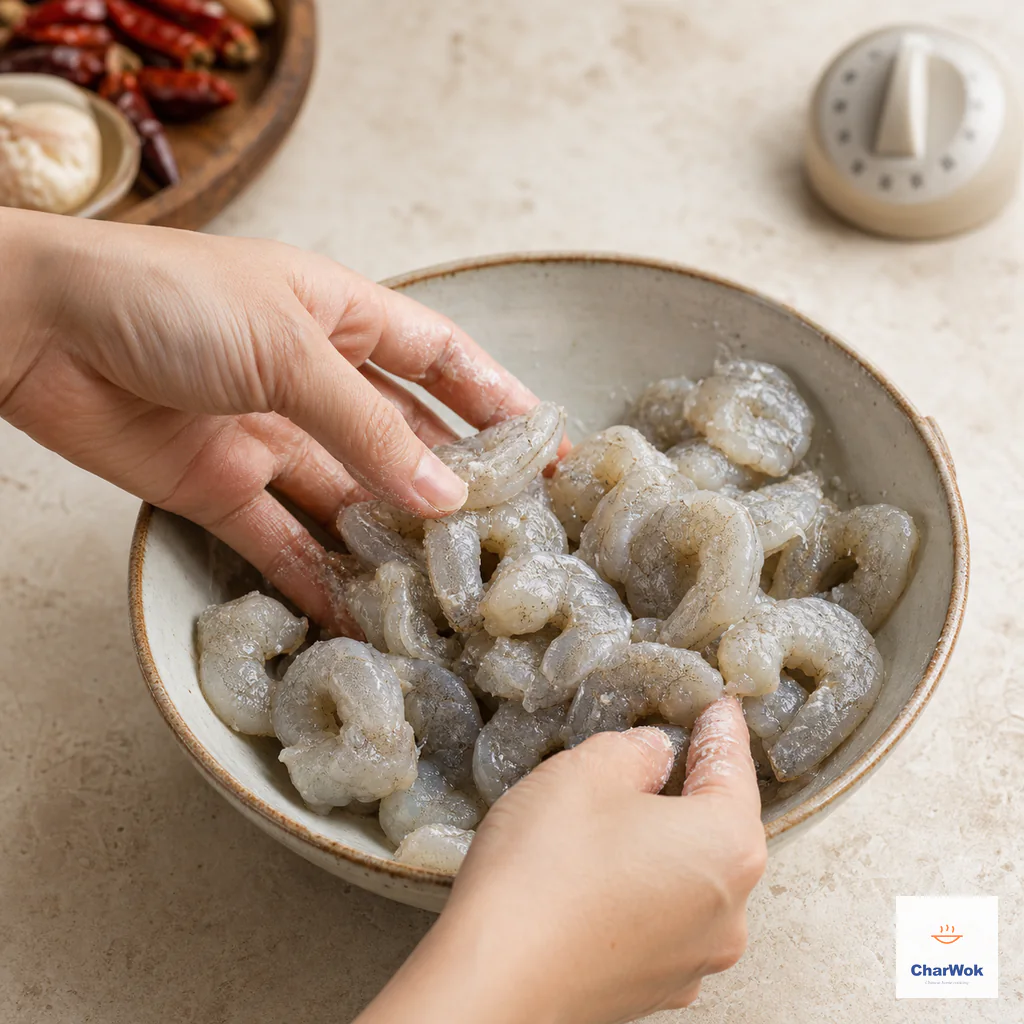
Mix the shrimp just until the light marinade disappears onto the surface, then rest for only five minutes while preparing the sauce.
- Mix the sauce in one bowl and leave it alone. Combine the light soy, dark soy, black rice vinegar, the second teaspoon of Shaoxing, sugar, the remaining 2 tsp cornstarch, and 1 tbsp water. Stir until you cannot feel sugar grit on the bottom of the bowl. The cornstarch will settle as it sits, which is fine, you will stir again right before pouring. Do not be tempted to add more water; the shrimp will release juice in the pan and thin the sauce for you.
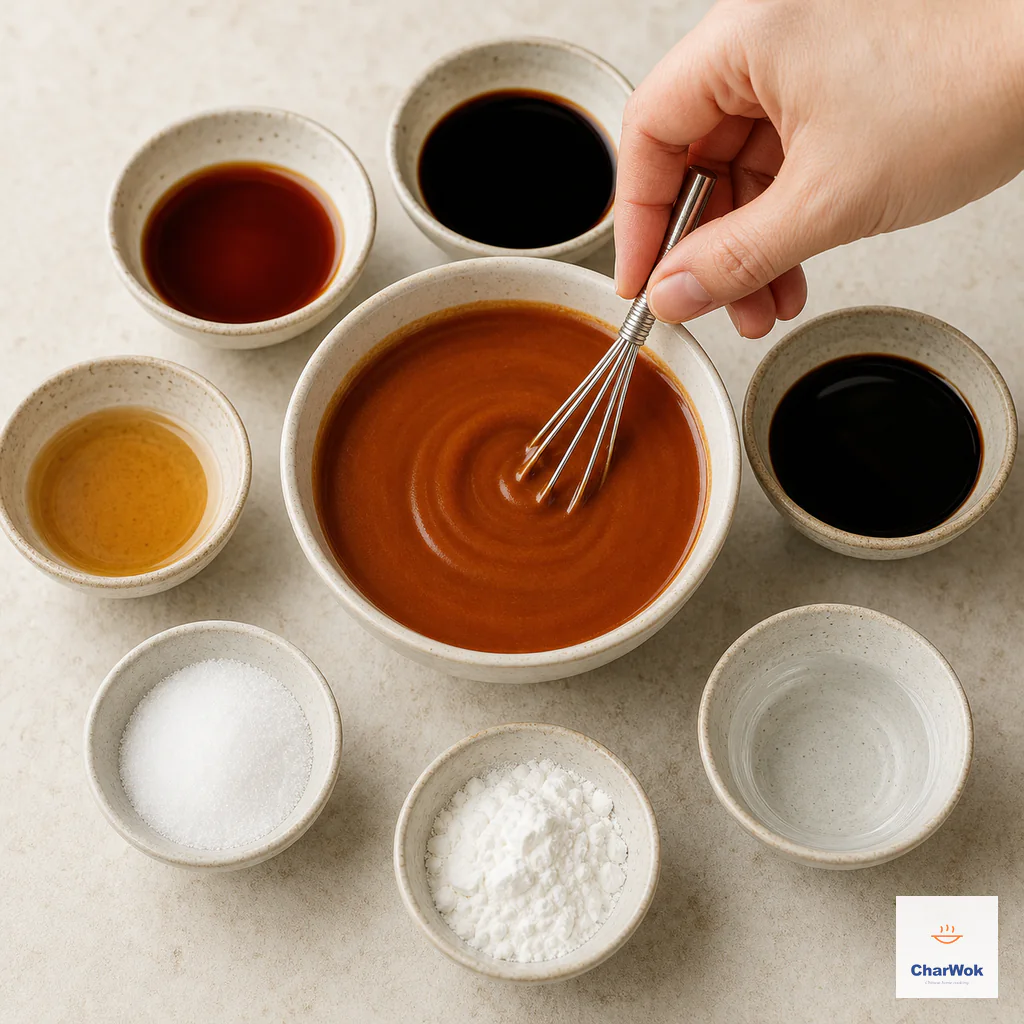
Whisk the sauce until no starch remains on the bottom, and stir it again immediately before it meets the wok.
- Toast the peanuts from cold. If your peanuts are already roasted, skip this. If they are raw, put them in a dry wok or skillet, then turn the heat to medium-low. Starting cold lets the heat penetrate to the center before the outside scorches. Shake the pan. The moment you smell toasted peanut and see a few darken, pull them out onto a plate. They keep cooking on the retained heat, so take them off a shade lighter than your final target.
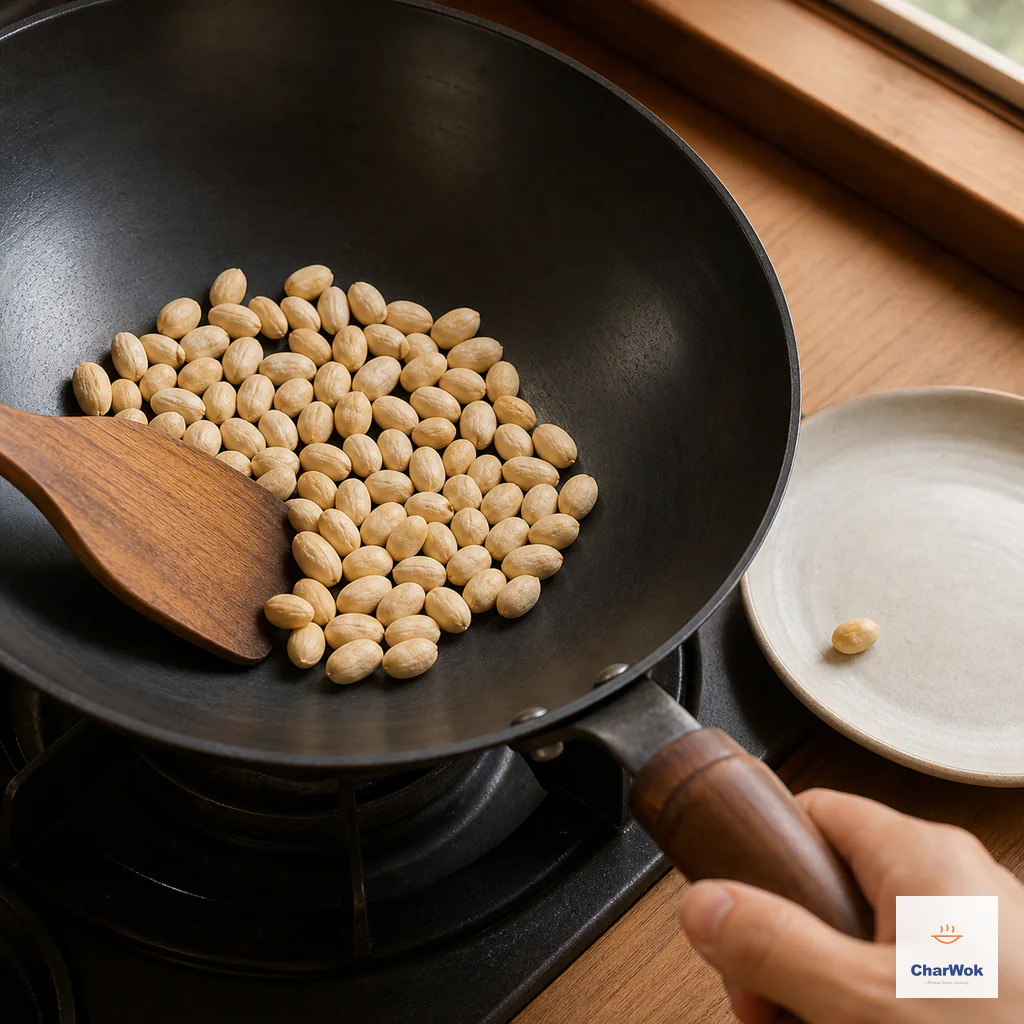
Start the nuts in a cold dry wok and stir over low heat until fragrant and only pale gold; remove them before carryover heat darkens them.
- Sear the shrimp hard and pull them early. Get the wok ripping hot with 1 tbsp oil. Add the shrimp in one layer and let them sit for ten seconds before stirring, you want some browning. The moment the bodies curl tight into a comma and the surface blushes from grey to coral but the center still looks slightly translucent, out they go onto a plate. They will finish cooking in the sauce. If you wait until they are fully opaque in the pan, they will be overcooked by the time you serve.
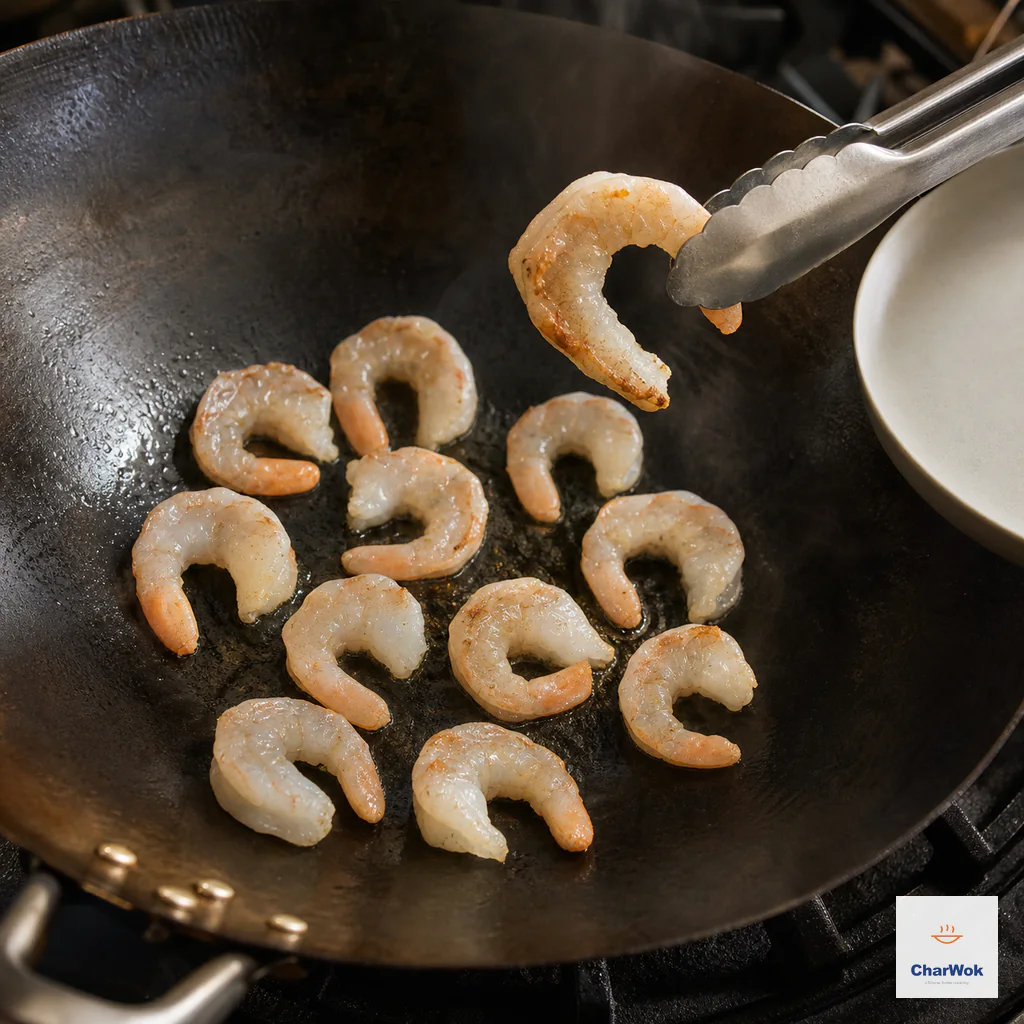
Sear the shrimp in one layer and pull them while their edges are coral but the centers remain slightly translucent; they finish cooking later.
- Bloom the aromatics gently, not violently. Wipe the wok clean, add the remaining 1 tbsp oil, and keep the heat at medium, not high. Add the dried chilies and Sichuan peppercorns first. The goal is to toast them until the chilies darken a shade and the peppercorns smell intensely citrusy, about fifteen seconds. If the chilies blacken, you have burned them and the whole dish will taste bitter; start over. Push the heat down if your burner runs hot. Add the garlic and ginger and stir for another ten seconds. This low-and-slow bloom is what restaurant cooks do that most home recipes skip.
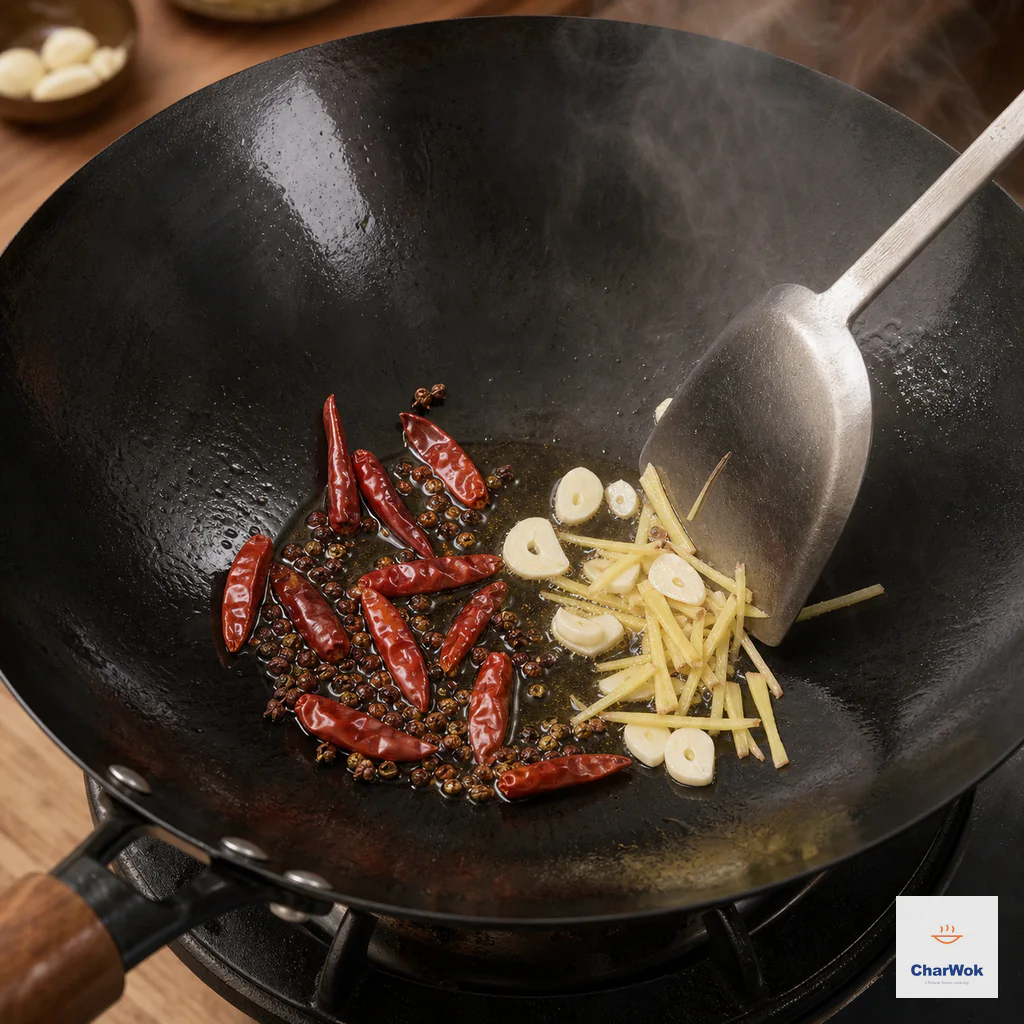
Bloom the chilies and peppercorns just until fragrant, then add the garlic and ginger and keep everything moving before the garlic colors.
- Add the scallions, then everything comes back together. Toss in the scallions and fry about thirty seconds, just to soften their bite. Return the shrimp and the peanuts to the wok. Give the sauce bowl one final stir, then pour it down the side of the wok, not onto the shrimp. As it hits the hot metal it boils instantly, gelatinizing the cornstarch evenly. Stir once or twice. The sauce will go from cloudy to glossy and cling to the shrimp in about fifteen seconds. Pull the wok off the heat the instant it looks right, cornstarch sauces over-thicken fast.
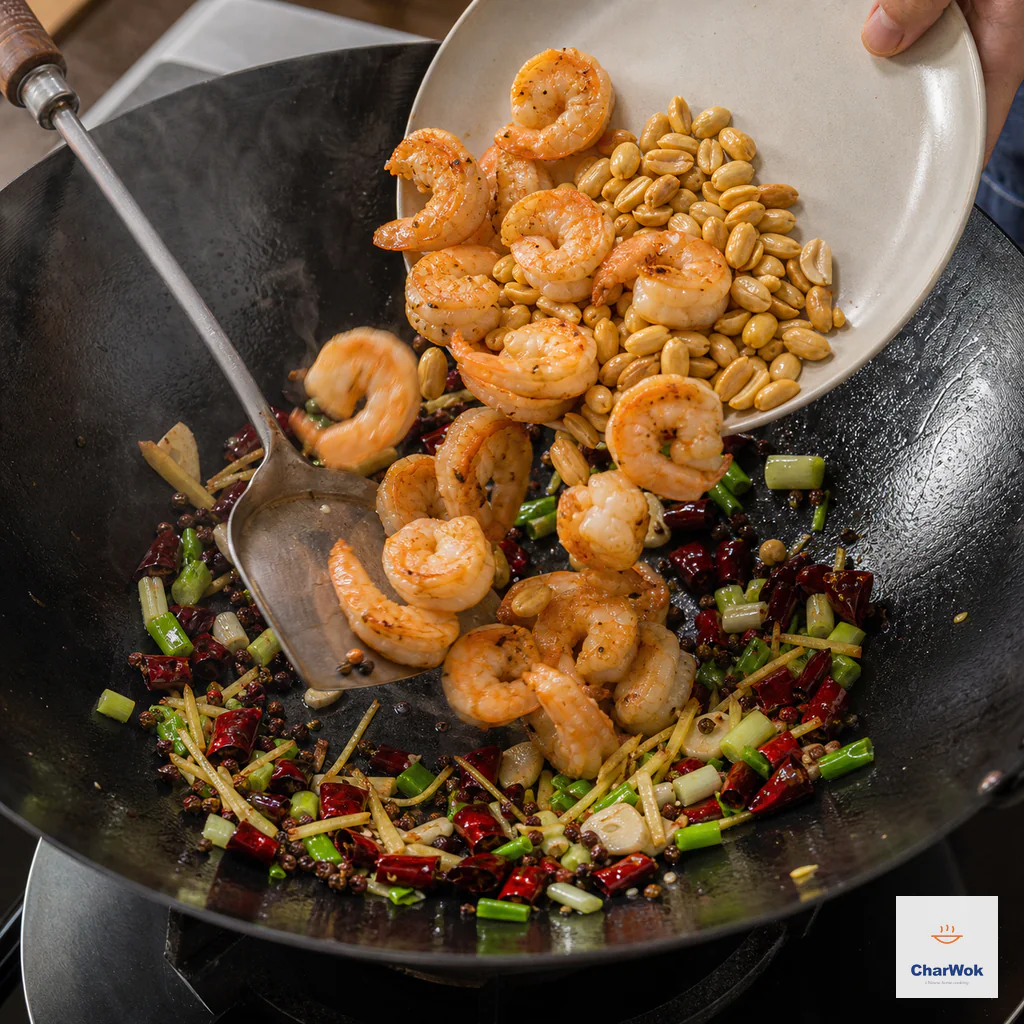
Return the shrimp and nuts with the scallions, tossing only long enough to distribute the aromatics before adding the sauce.
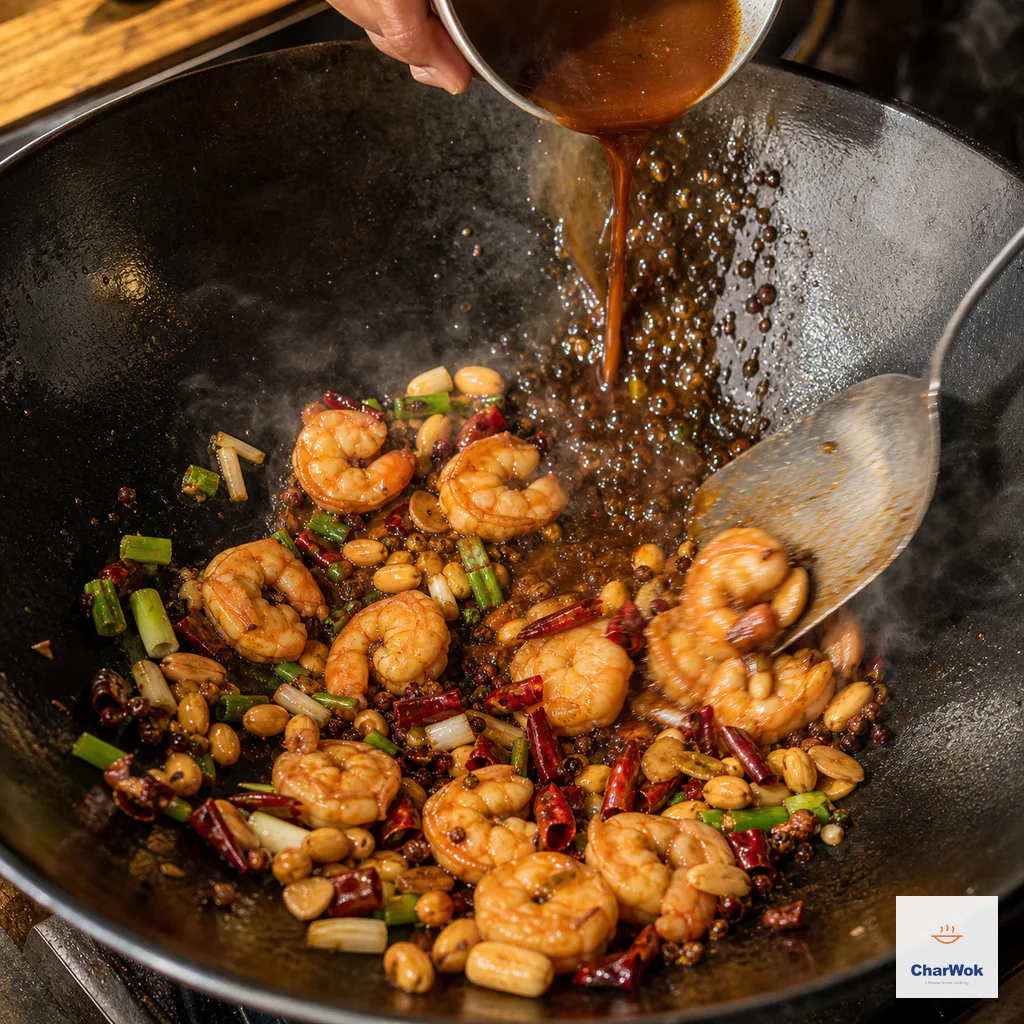
Pour the re-stirred sauce around the hot wok edge and toss just until it turns clear and glossy enough to cling without pooling.
When the sauce turns to glue
This is the failure mode worth stopping for. A cornstarch-thickened sauce seizes into a paste when the starch gets too hot too fast or when there is too little liquid to disperse it. There are three real causes, and lowering the heat when adding the sauce is only the right answer for one of them.
- The wok was at maximum heat when you poured the sauce in. Cornstarch starts to gelatinize around 60-70°C (140-160°F) and is fully thickened by the time it nears a boil. On a screaming-hot burner the sauce hits that zone in a flash, and if the slurry was even slightly concentrated it seizes into a gummy paste before the rest of the liquid can catch up. Fix: pull the wok off the flame for two seconds before pouring, then back on. The pan edge trick in step 6 does this for you.
- The cornstarch had not fully dispersed. If it settled and you did not restir, you poured a concentrated slurry into the pan. Fix: always stir the sauce bowl immediately before pouring; a small whisk helps.
- Too much cornstarch or too little liquid for the amount of shrimp. If you scaled the recipe down for one person but kept the full 2 tsp cornstarch, the ratio breaks. Fix: scale the starch and water together, not just the shrimp.
If you are already in glue territory, you can sometimes save it: add a tablespoon of hot water or stock off the heat and toss vigorously. It will not be perfect, but it loosens things enough to serve. Better to nail it the first time.
Other things that go wrong
- Shrimp are rubbery. You cooked them through twice. Sear to barely pink, finish in the sauce for seconds, not minutes.
- The dish is not spicy enough but smells great. The dried chilies, once deseeded, are mostly aroma. For real heat, leave a few seeds in, or finish with a spoon of chili oil. A teaspoon of Sichuan chili bean paste bloomed with the aromatics adds depth and heat the dried chilies cannot.
- The peppercorn numbing is missing. Your peppercorns were stale. They lose potency fast; buy small quantities and toast them for ten seconds before using.
- Peanuts went soft in the sauce. You added them too early. Peanuts go in at the very end, with the shrimp, so they stay crunchy.
- Everything sticks to a stainless pan. This dish wants a seasoned carbon-steel or cast-iron wok. If you only have stainless, it will work, but you need the pan properly hot before the oil goes in. My wok guide covers seasoning and heat control.
Variations and pairings
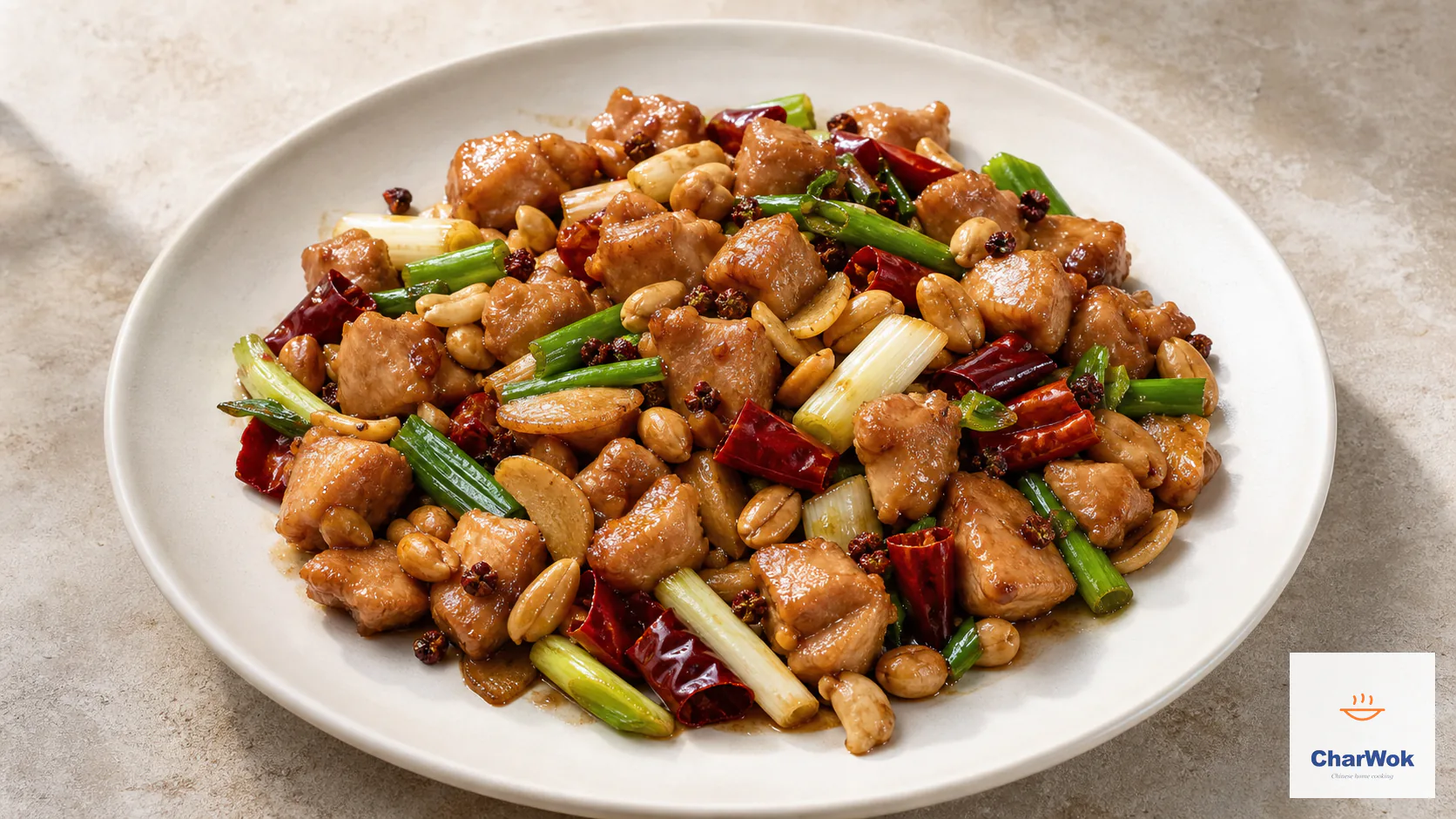
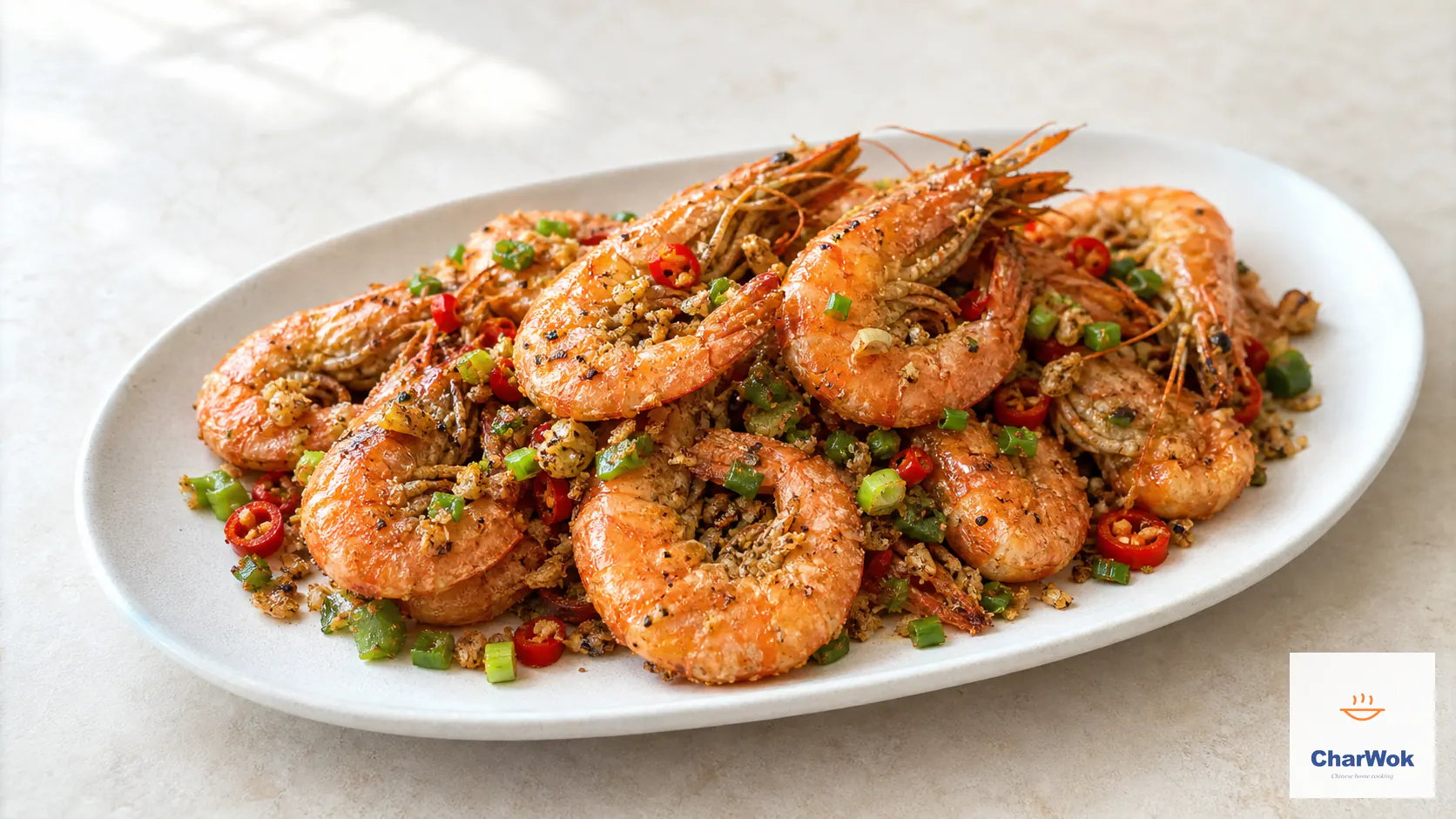
The Kung Pao flavor template is portable. The same sauce and aromatics work over cubed chicken thighs, scallops, or firm tofu. For a vegetarian version, pan-fried tofu or extra peanuts and water chestnuts carry the dish well. If you like the protein-seafood angle, shrimp and broccoli or salt and pepper shrimp are different moods from the same ingredient.
For heat that builds, swap half the dried chilies for a teaspoon of chili bean paste fried into the oil before the aromatics. For a sweeter, less numbing version closer to American-Chinese takeout, drop the peppercorns to ½ tsp and bump the sugar to 1 tbsp.
Serve over plain jasmine rice, or with egg fried rice if you want a starchier plate. For a full Sichuan dinner, I would put this next to a milder vegetable like stir-fried greens and one of the dishes from my roundup of Sichuan recipes. A bowl of shrimp fried rice the next day uses up any leftover shrimp beautifully.
Storage and reheating
Kung Pao shrimp is best cooked to order. Leftovers keep one day in the fridge, but the shrimp toughen and the peanuts soften on reheating. If you must reheat, do it gently in a dry skillet over low heat just until warm; microwaving turns the shrimp rubbery. The sauce can be made a day ahead and held in the fridge, which actually helps the flavors meld, just restir before using.
Frequently asked questions
Can I use frozen shrimp?
Yes. Thaw them in cold water for twenty minutes, then pat completely dry with paper towels before marinating. Wet shrimp will steam instead of sear and dump water into your sauce.
Is Kung Pao shrimp very spicy?
Moderately. With deseeded chilies it is more aromatic than hot; the real bite is the numbing from the peppercorn. Drop the peppercorns to ½ tsp and use fewer chilies for a mild version.
What can I use instead of black rice vinegar?
Balsamic vinegar cut with an equal part of water is the closest substitute. Plain white or cider vinegar is too sharp and one-note for this sauce.
Do I have to use a wok?
No. A large cast-iron or heavy-bottomed skillet works. The key is a pan that holds heat, so the temperature does not crash when the shrimp go in.
Can I make it without peanuts?
Yes. Cashews are the classic swap, and water chestnuts give crunch without nuts. The dish is still good with no nuts at all, though you lose the textural contrast that defines it.