The first time I tried to make hot pot broth at home, I dumped chili flakes into hot oil and filled the kitchen with smoke that hung in the curtains for three days. The broth tasted like the bottom of an ashtray. What I had missed is the one thing that separates a restaurant-quality Sichuan spicy pot from a scalded, bitter mess: the oil does almost none of its work while you are standing at the stove. It does its work overnight, in the fridge, after the fat has gone solid. Once I understood that, the whole dish clicked, and it is the single detail I want you to take from this page.
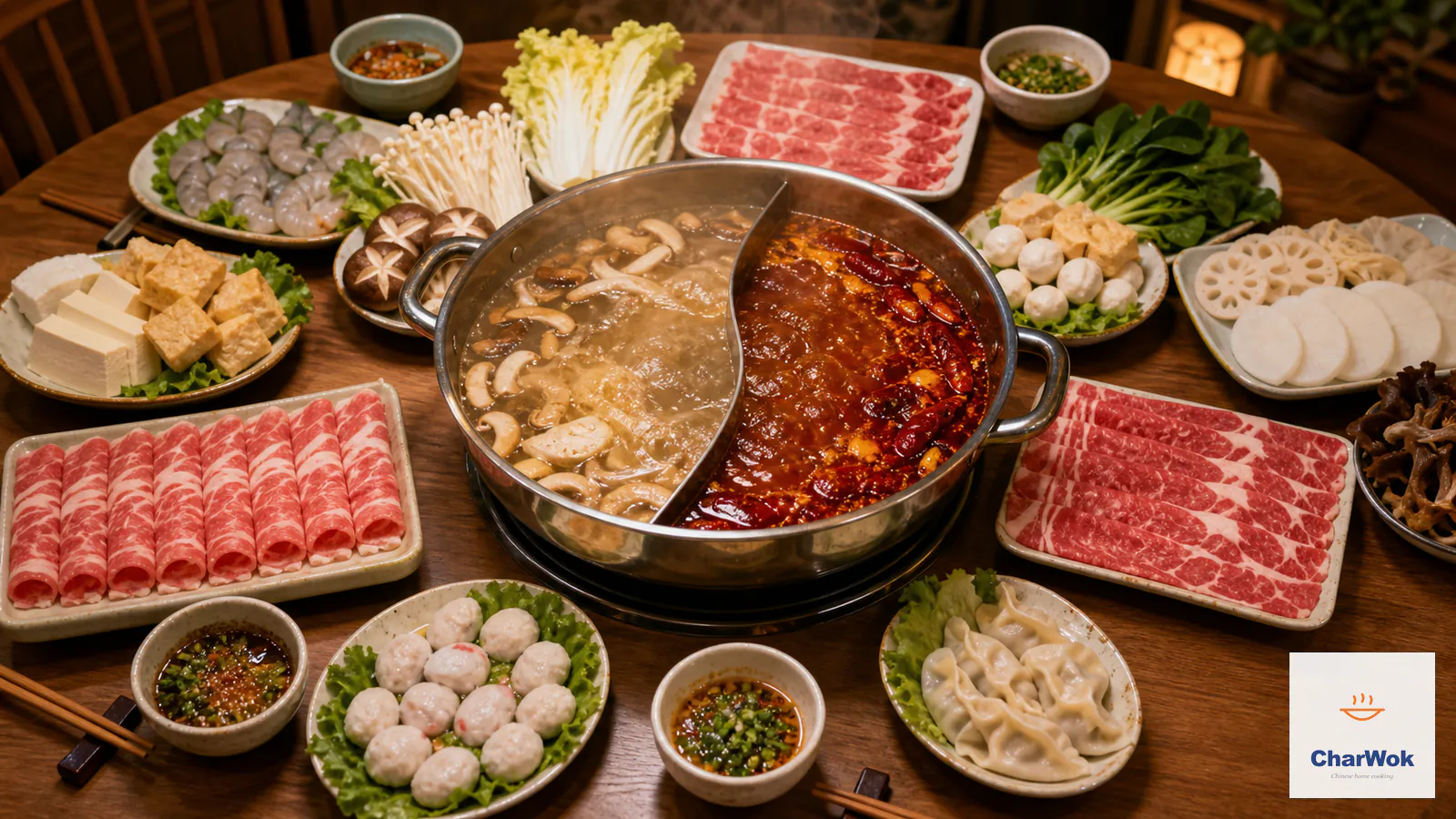
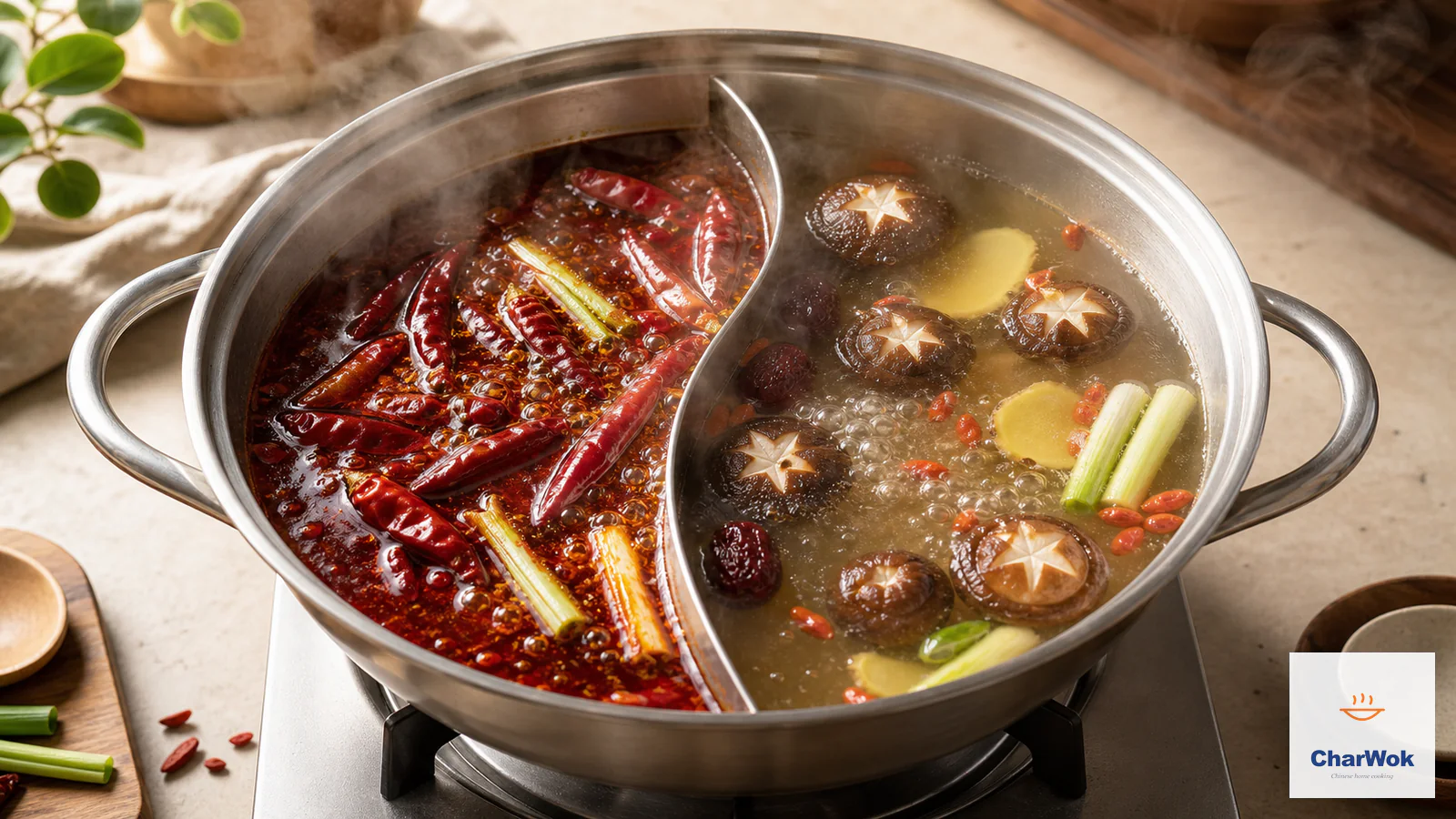
Hot pot at home is really two broths in one pot. A divided yin-yang pot gives you a fiery red side built on rendered beef fat and a quiet, golden chicken side for the cooks who cannot take the heat (and for the children, and for the greens). This guide walks through both, with the science behind each step, the failures I have personally committed, and the substitutions that actually work in a US grocery store. If you want the full meal-planning picture, my complete guide to hot pot at home covers equipment, dipping ingredients, and sequencing.
Make the spicy base a full day ahead and refrigerate it overnight. The fat solidifies and pulls flavor out of the aromatics in a way 30 minutes of simmering never will. One block of base plus about 1.5 L of liquid serves a 4-person pot; the recipe below makes four blocks.
What this broth actually is
The spicy side is a Chongqing-style hongyou, a flavored fat. You are not making a soup from scratch at the table. You are making a concentrated, shelf-stable flavor bomb, cutting it into blocks, and dissolving one block into hot liquid when you sit down to eat. Think of it as a bouillon cube, except the cube is mostly beef tallow and ground chilies. The mild side is the opposite: a clear, long-simmered chicken stock that does its work slowly, with nothing to hide behind.
Culturally, the dual-pot setup is a Sichuan and Chongqing convention. The spicy broth traces back to the dockworkers of Chongqing in the early twentieth century, who used cheap off-cuts of beef and the fat that butchers did not want, then drowned it all in numbing peppercorns to mask anything questionable. The mild broth is the Cantonese and northern Chinese concession, a clean poultry stock in the same family as the broths used for wonton noodle soup. Put them in one divided pot and you have the compromise most families actually eat.
Ingredients
The spicy base has a lot of moving parts, so I have split the table. Read the Notes column carefully; that is where the make-or-break substitutions live.
Spicy broth base (makes 4 blocks)
Ingredients at a glance
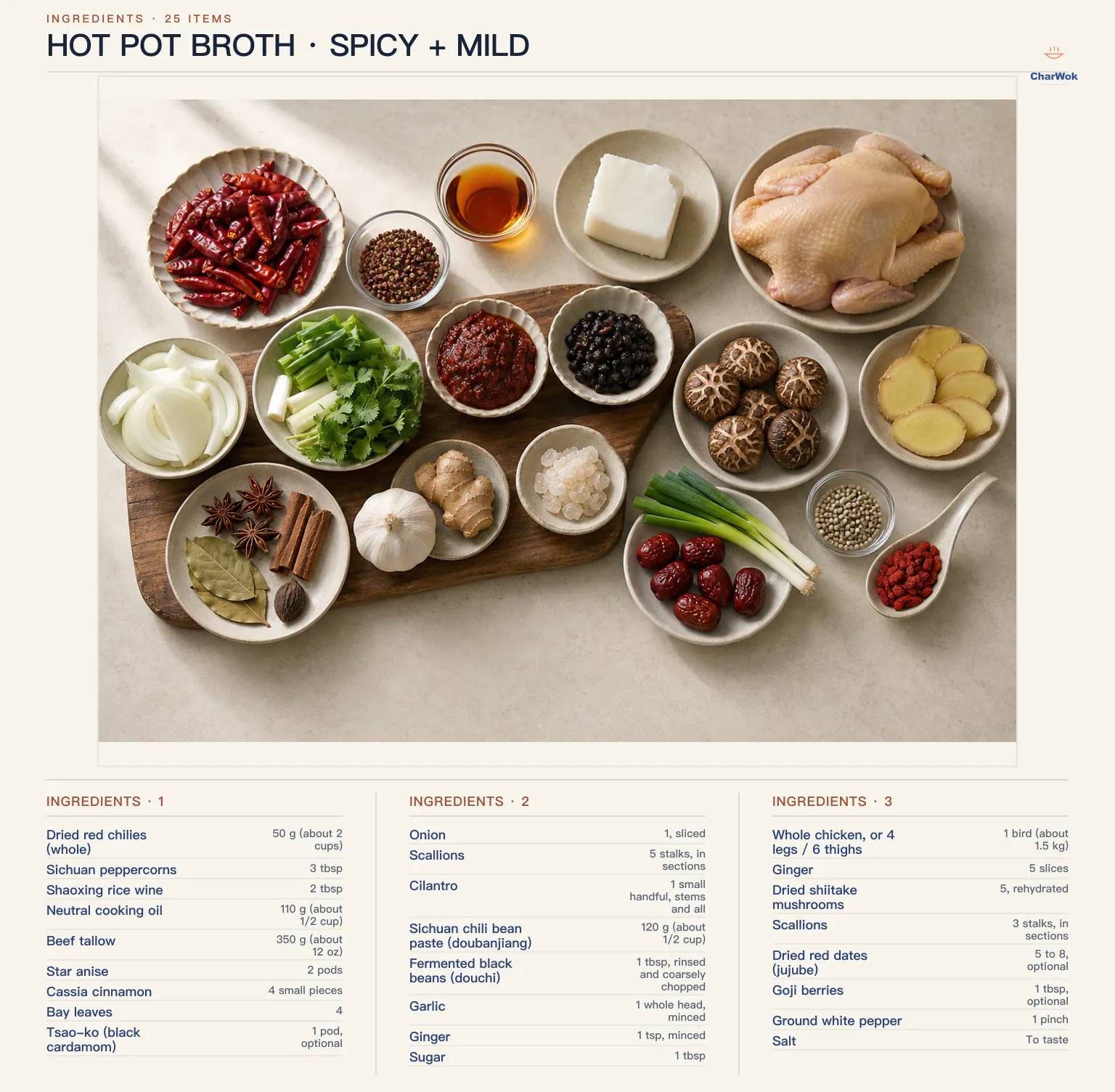
| Ingredient | Amount | Notes / substitute |
|---|---|---|
| Dried red chilies (whole) | 50 g (about 2 cups) | Er jing tiao for color and fruitiness; facing-heaven for heat. A 50/50 blend is what I use. Guajillo from a Latin market works if you cannot find Chinese chilies. |
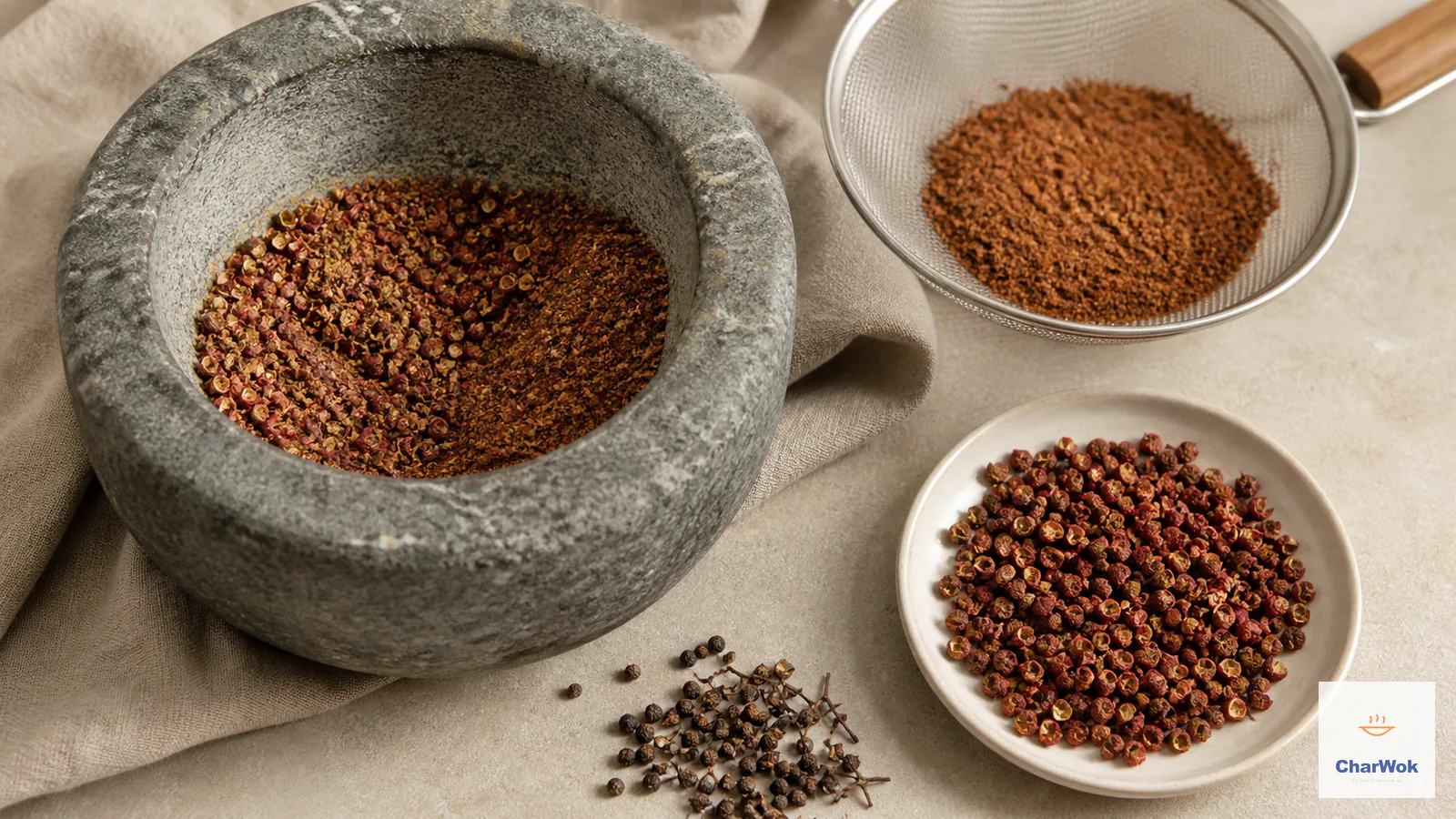
| Sichuan peppercorns | 3 tbsp | Red, green, or a mix. Green is more floral and numbing. See my guide to Sichuan pepper for sourcing and freshness. |
| Shaoxing rice wine | 2 tbsp | Soaks the peppercorns and releases their aroma into the fat. Dry sherry is the standard substitute. |
| Neutral cooking oil | 110 g (about 1/2 cup) | Grapeseed, canola, or avocado. Not olive oil. |
| Beef tallow | 350 g (about 12 oz) | This is the soul. See note below on substitutes; you can go vegetarian, but the flavor changes. |
| Star anise | 2 pods | Whole. Ground will turn the oil gritty. |
| Cassia cinnamon | 4 small pieces | Cassia is the rough Chinese bark; regular cinnamon sticks are close enough. |
| Bay leaves | 4 | Standard Turkish bay is fine. |
| Tsao-ko (black cardamom) | 1 pod, optional | Adds a smoky, clove-ish depth. Omit if you cannot find it; do not substitute green cardamom. |
| Onion | 1, sliced | Yellow or white. |
| Scallions | 5 stalks, in sections | Use the whole stalk, white and green. |
| Cilantro | 1 small handful, stems and all | The stems hold more flavor than the leaves; do not trim them off. |
| Sichuan chili bean paste (doubanjiang) | 120 g (about 1/2 cup) | Pixian is the gold standard. See my notes on doubanjiang for brands and why the fermentation matters. |
| Fermented black beans (douchi) | 1 tbsp, rinsed and coarsely chopped | Salt-packed, not the black bean garlic sauce in a jar. |
| Garlic | 1 whole head, minced | Yes, a whole head. This is not a typo. |
| Ginger | 1 tsp, minced | A little goes a long way here; too much makes the broth sharp. |
| Sugar | 1 tbsp | Rock sugar is traditional (it melts evenly). See notes on rock sugar; plain sugar works. |
Mild broth (clear chicken stock)
| Ingredient | Amount | Notes / substitute |
|---|---|---|
| Whole chicken, or 4 legs / 6 thighs | 1 bird (about 1.5 kg) | Free-range birds give a cleaner stock. Bones are what you want, so legs and thighs beat breast. |
| Ginger | 5 slices | Smash them lightly to release flavor. |
| Dried shiitake mushrooms | 5, rehydrated | Add umami and a deep brown color. My shiitake guide covers rehydrating; never use the stems. |
| Scallions | 3 stalks, in sections | Optional but recommended. |
| Dried red dates (jujube) | 5 to 8, optional | For a faint sweetness and a home-style look. Err on the low side; too many make the stock cloying. |
| Goji berries | 1 tbsp, optional | Soak in warm water 10 minutes first; they cloud the stock if added dry. |
| Ground white pepper | 1 pinch | White, not black. Black pepper leaves visible flecks. |
| Salt | To taste | Add at the very end. Salting early concentrates as the stock reduces. |
How to make the spicy base
- Soak the chilies. Pull out 8 whole dried chilies and set them aside for garnish. Put the rest in a bowl, cover with just-boiled water, and soak 30 minutes. If you want less heat, split them and shake out the seeds first; the seeds and the inner ribs carry most of the capsaicin. Why soak rather than fry dry? Rehydrated chilies grind into a paste instead of a powder, and a paste releases its color and flavor into oil slowly rather than scorching.
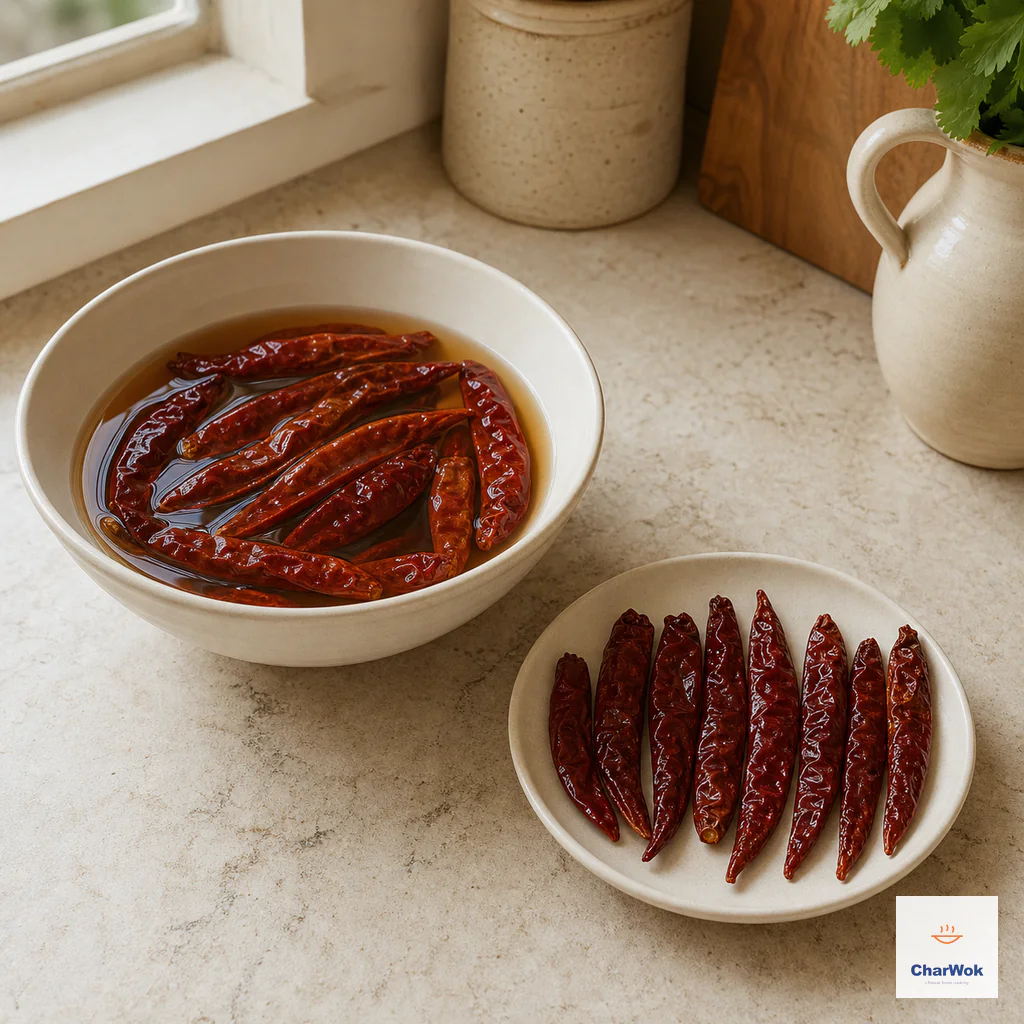
Soak the chilies for 30 minutes, but keep eight whole chilies dry for the finished blocks.
- Make the chili paste. Drain the chilies and blitz them in a blender or spice grinder to a coarse paste. You can also mince them fine with a cleaver, but wear gloves. The point is a paste, not a puree; visible flecks of skin are correct and will float in the finished broth.
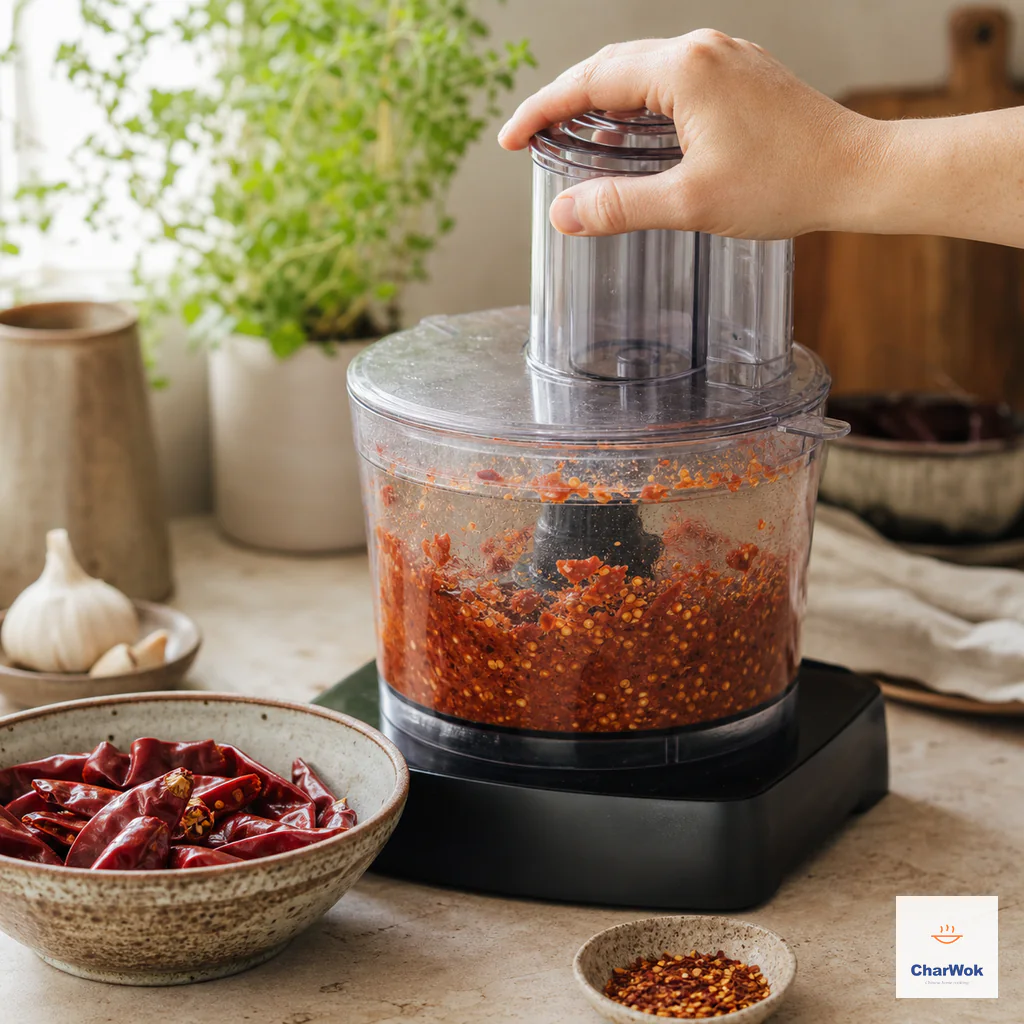
Drain thoroughly and pulse to a coarse paste; a perfectly smooth puree will scorch more easily.
- Steep the peppercorns. Stir the Sichuan peppercorns into the Shaoxing wine in a small bowl and set aside. The alcohol pulls out the hydroxy-alpha-sanshool, the compound that produces the numbing tingle. Adding them in wine, rather than dry, delivers the numb more evenly into the fat later.
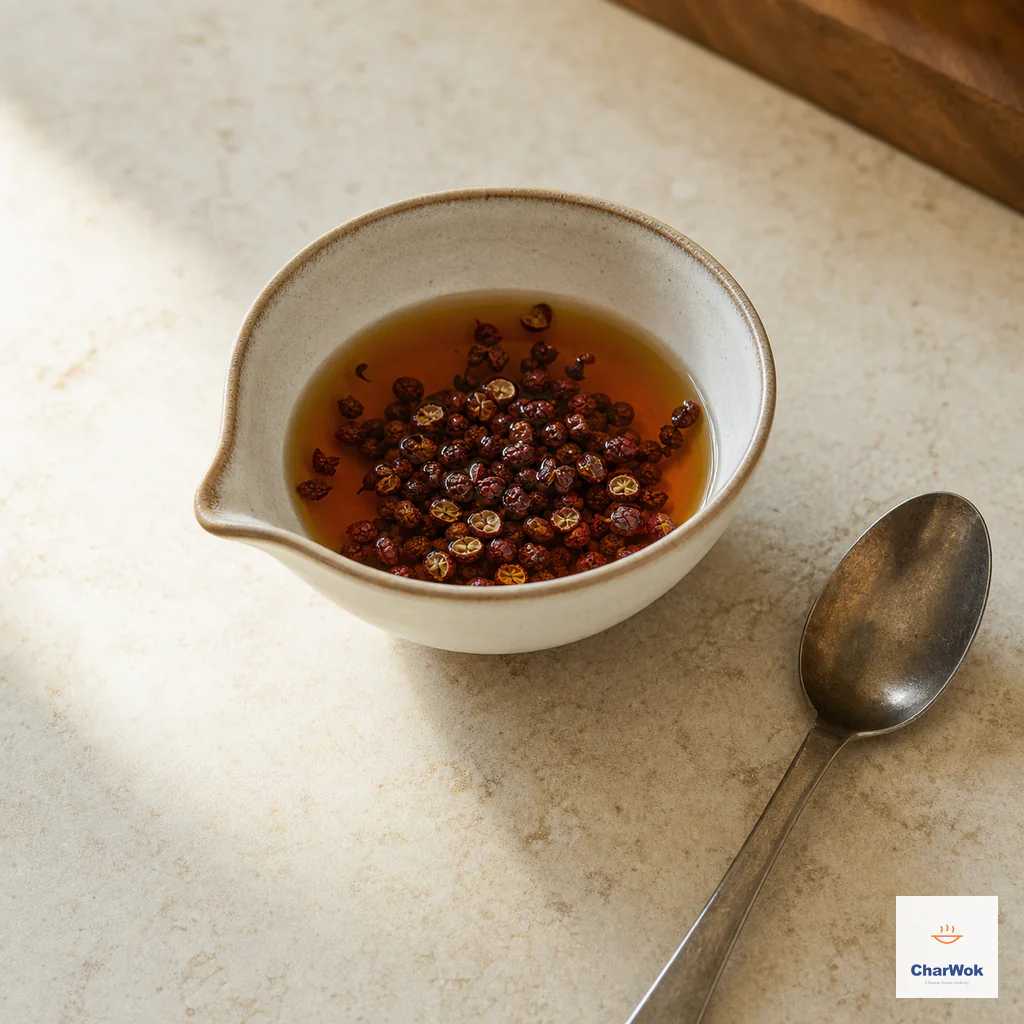
Crush the peppercorns lightly and let them steep in the Shaoxing wine while the fats infuse.
- Flavor the fat with whole spices. Combine the oil, beef tallow, star anise, cassia, bay leaves, and tsao-ko in a wok or heavy pot. Heat over medium until the bay leaves just start to brown at the edges, about 5 minutes. Bay leaves are your thermometer here; they brown before the others, so when they darken, the fat is hot enough to have extracted the aromatic oils without burning them. Fish out and discard all the whole spices.
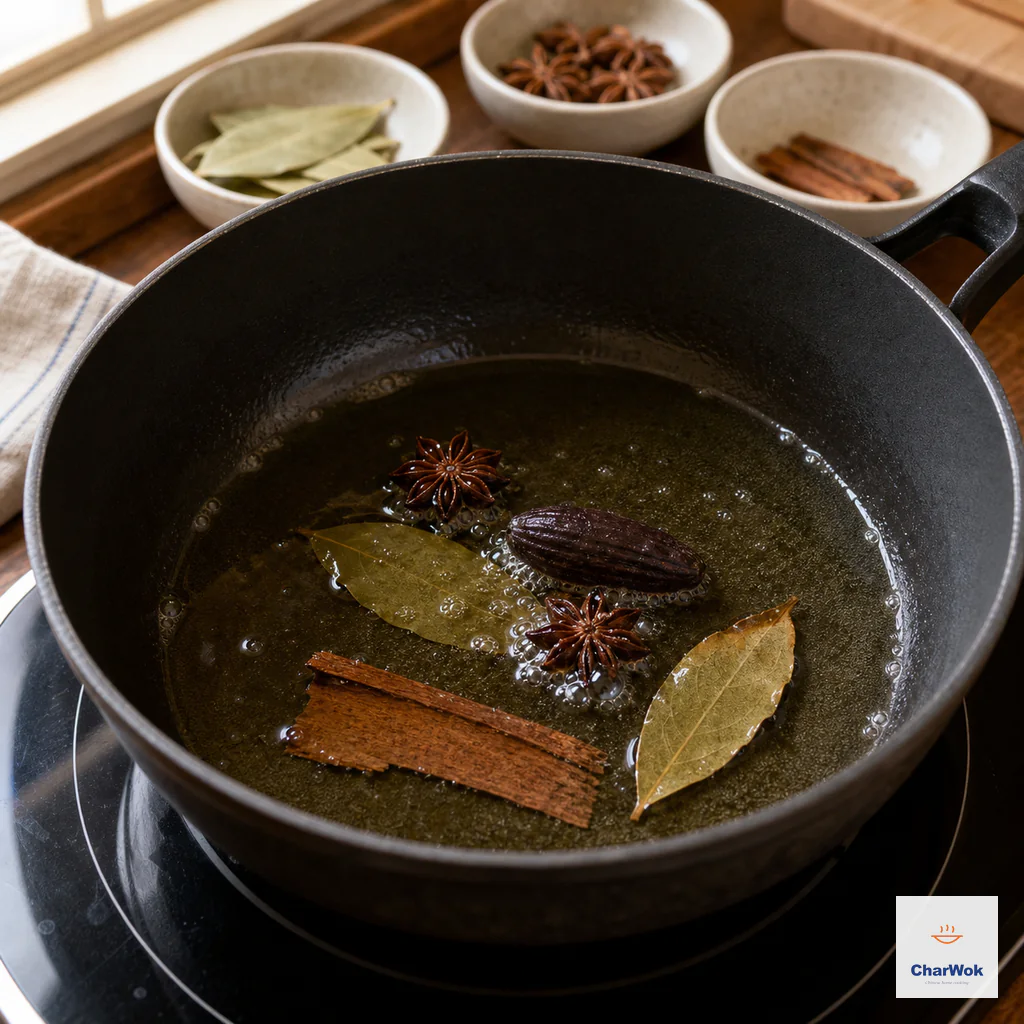
Keep the heat low and remove all the whole spices as soon as the bay-leaf edge begins to brown.
- Bloom the alliums, then remove them. Kill the heat for one minute so the fat cools slightly (this prevents scorching). Add the onion, scallions, and cilantro, then return to medium heat. Fry until the onion edges brown but do not let anything blacken. Scoop all the alliums out. Why remove them? They have already given up their flavor to the fat; leaving them in would make the broth cloudy and turn bitter during the overnight rest.
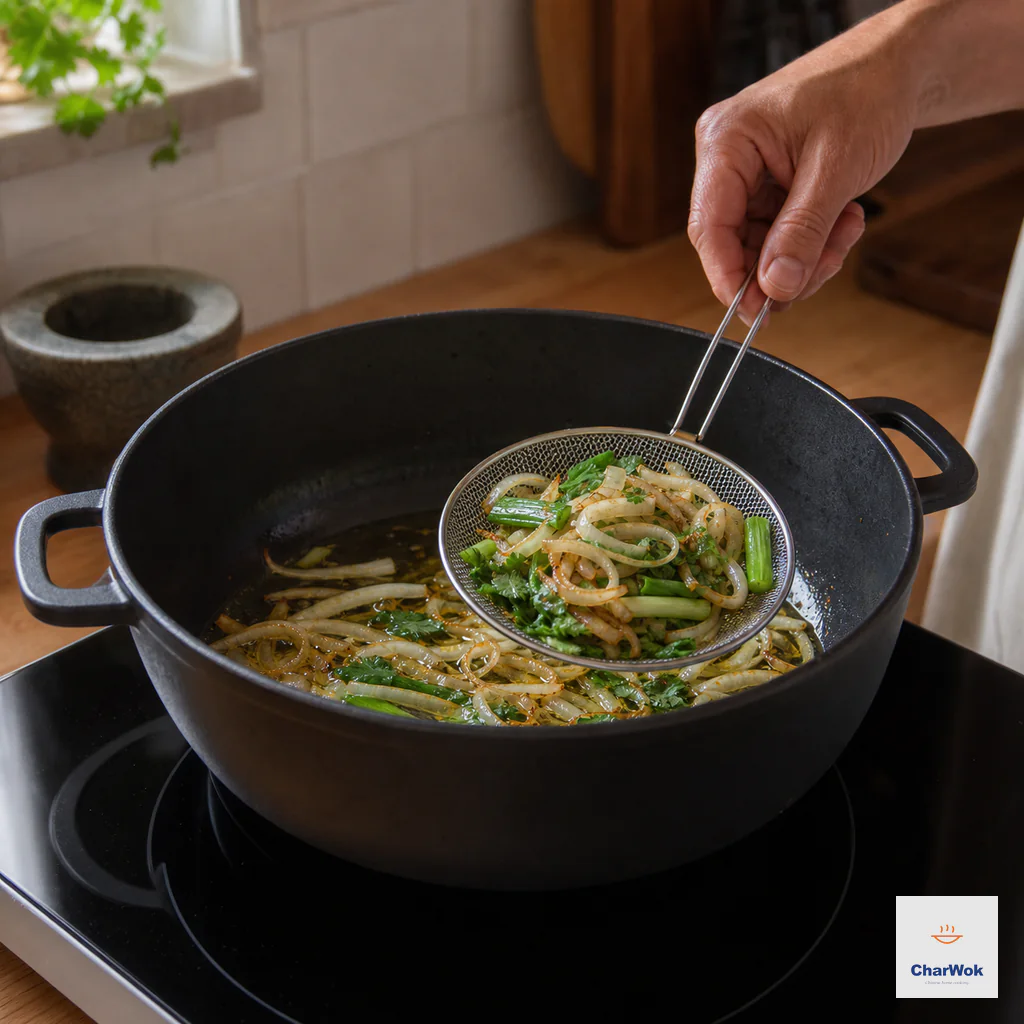
Cool the fat briefly, fry the onion, scallions and cilantro until the onion edges brown, then remove them completely.
- Fry the paste low and slow. Carefully add the chili paste, doubanjiang, fermented black beans, garlic, and ginger. The fat will spit; add the paste gently and stand back. Lower the heat and simmer the paste in the fat for 8 minutes, stirring so it does not stick. This step is not about browning; it is about driving off the raw chili harshness and caramelizing the doubanjiang, which is what gives a great hot pot its savory, almost chocolatey depth. If your fermented black beans are very salty, rinse them an extra time.
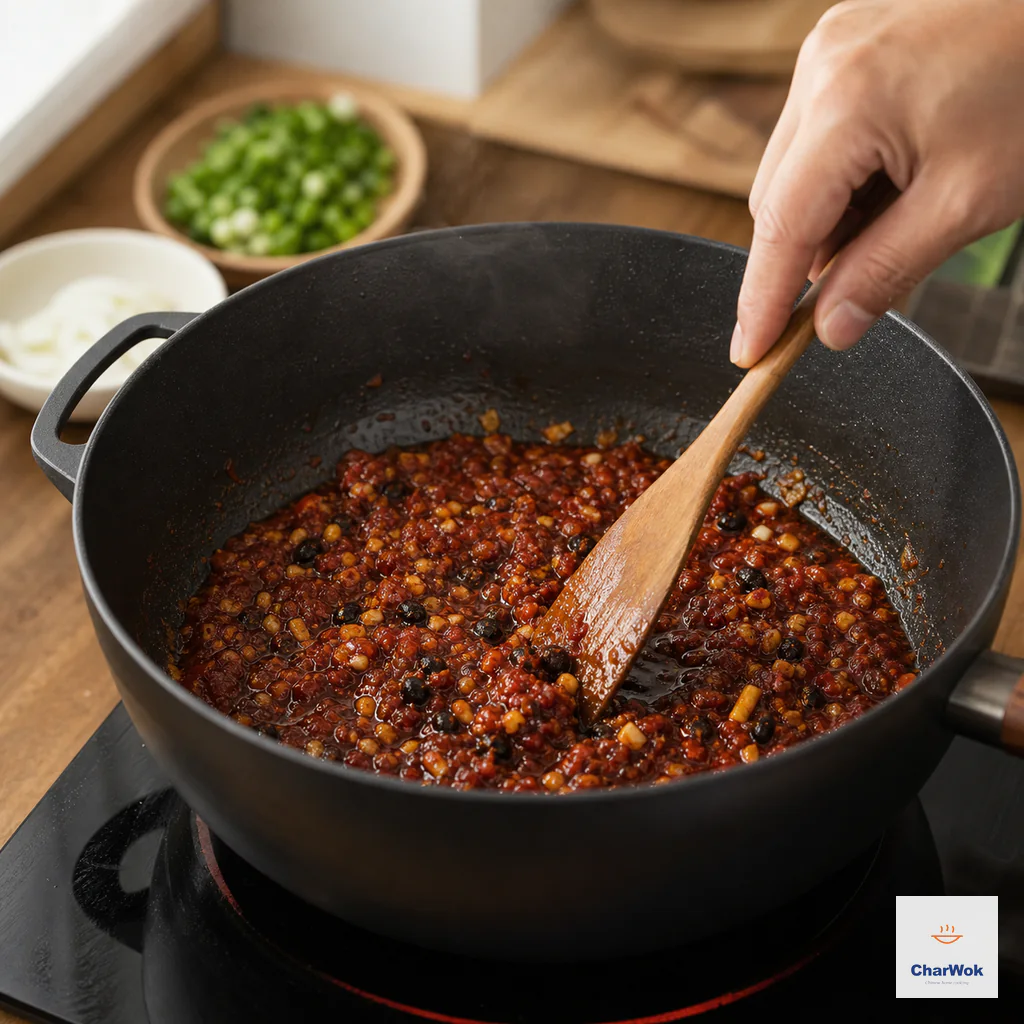
Fry the chili paste, doubanjiang, black beans, garlic and ginger over low heat for about 8 minutes without scorching.
- Finish with sugar and pepper-wine. Add the sugar and the peppercorn-wine slurry. Cook 2 more minutes. The sugar balances the chili heat and rounds the edges of the doubanjiang. Turn off the heat.
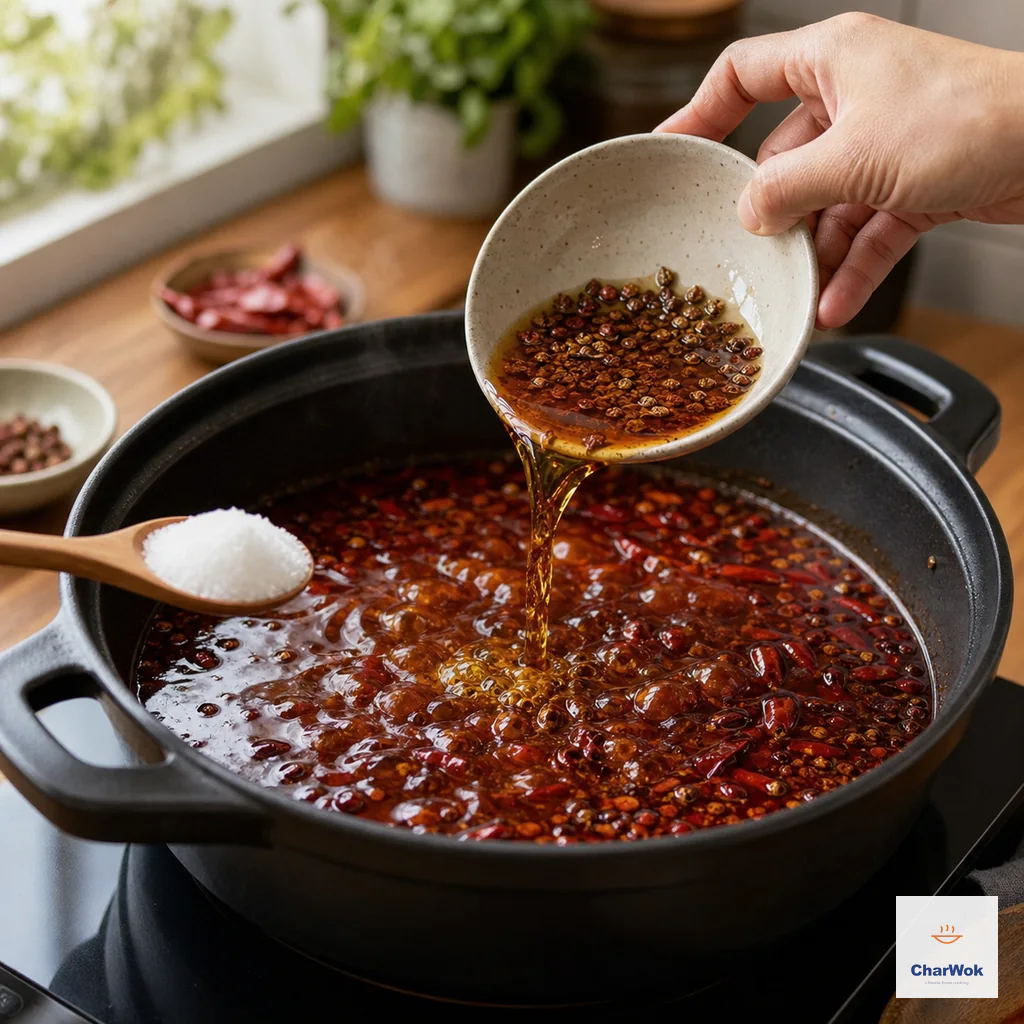
Add the sugar and peppercorn wine, then stir for 2 minutes so the alcohol cooks off without burning the base.
- Pour, garnish, and rest. Pour the fat and all the solids into a heatproof container. Drop in the 8 reserved whole chilies; they will float on top and look beautiful later. Let it cool completely, then refrigerate at least 24 hours. This is the step everyone skips and it is the one that matters most. As the tallow solidifies, it acts like a sponge, drawing the fat-soluble flavor compounds out of the chilies and aromatics. A broth made and used the same day is flat; one that has rested is layered and complex.
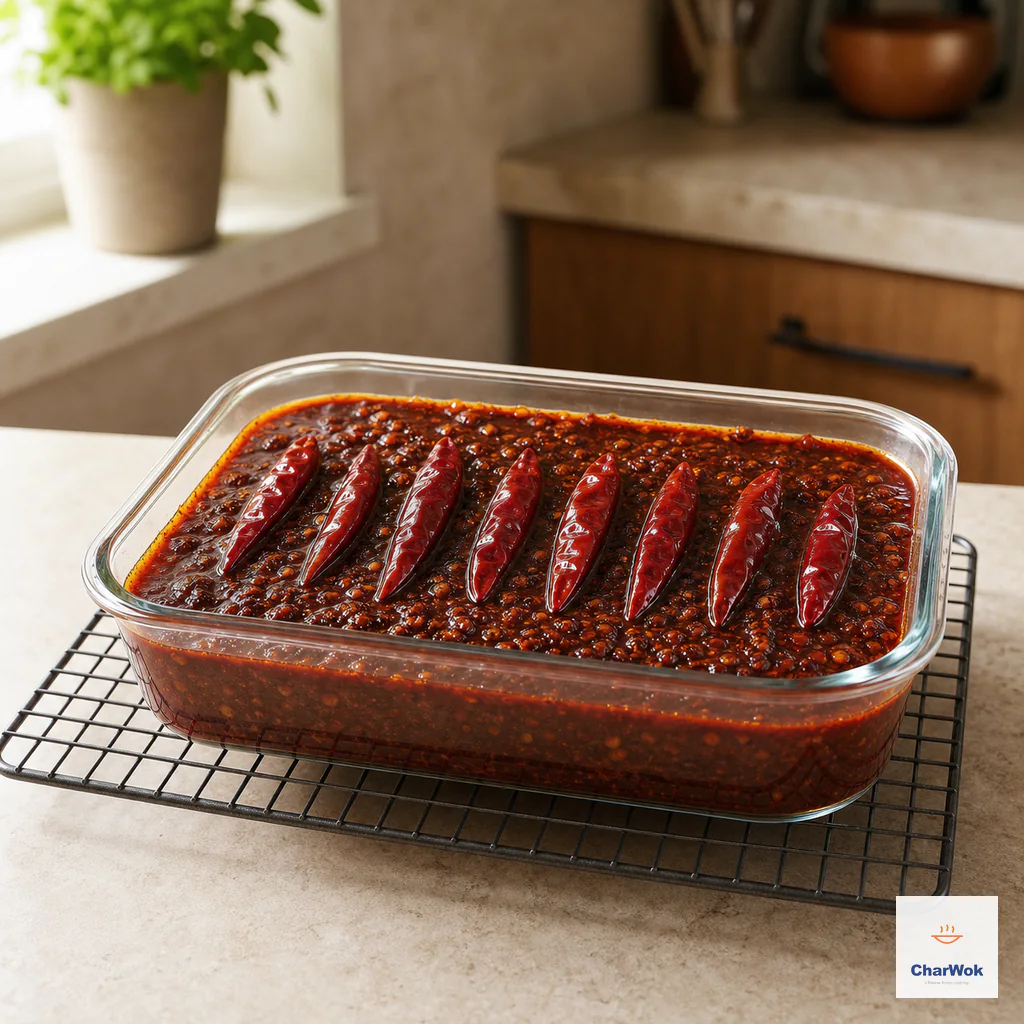
Pour into a heatproof container, add the eight reserved chilies, cool completely and refrigerate for at least 24 hours.
- Portion into blocks. Once solid, cut the base into four roughly equal blocks. One block plus about 1.5 L (6 cups) of hot water or stock fills a small or divided pot. For a large single pot, use two blocks and 3 L of liquid.
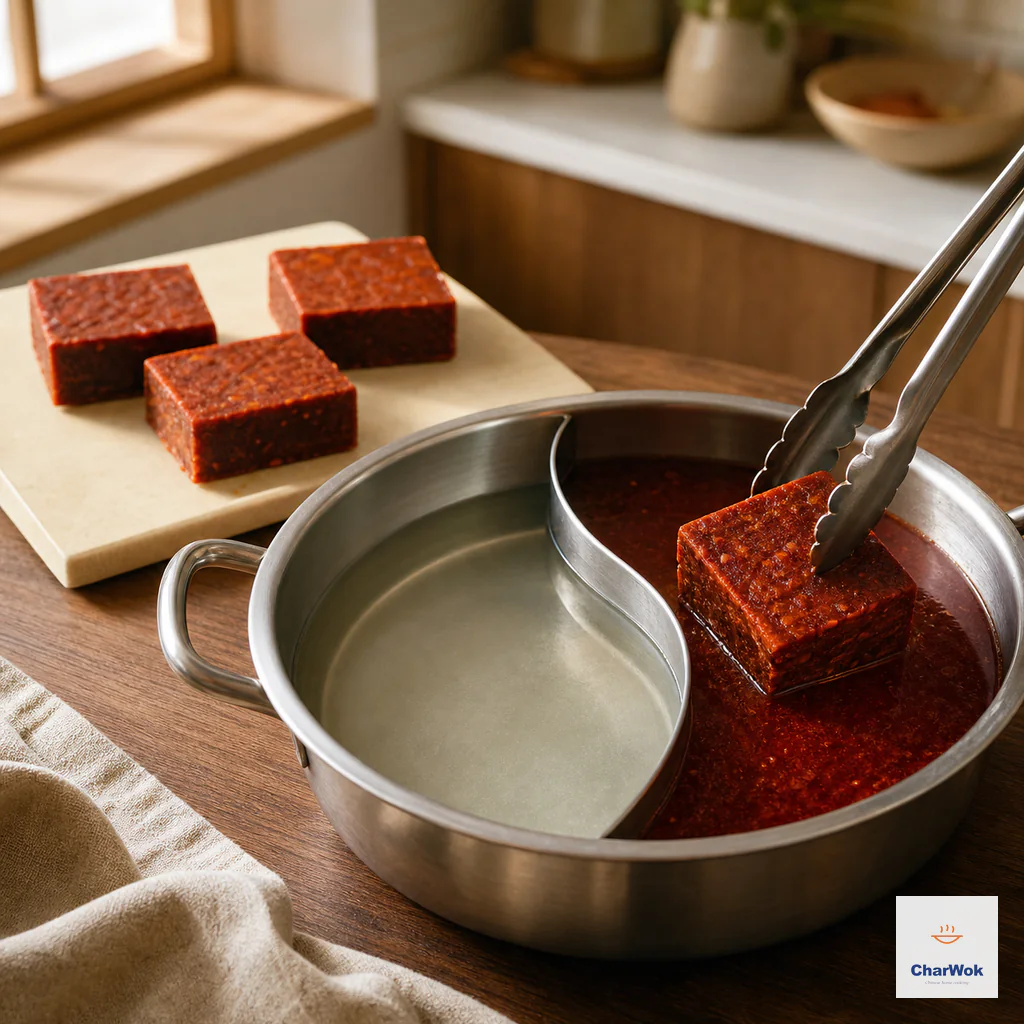
Cut the chilled slab into four blocks; use one with 1.5 litres of liquid for a small or divided pot, or two with 3 litres for a large pot.
How to make the mild broth
- Blanch and skim. Put the chicken in a stockpot and cover with cold water by an inch. Bring to a full rolling boil. Grey foam will rise; skim it off with a spoon and discard. This foam is coagulated blood protein, and leaving it turns the stock murky and slightly metallic. For the same reason, start in cold water; the proteins rise gradually instead of locking into the meat.
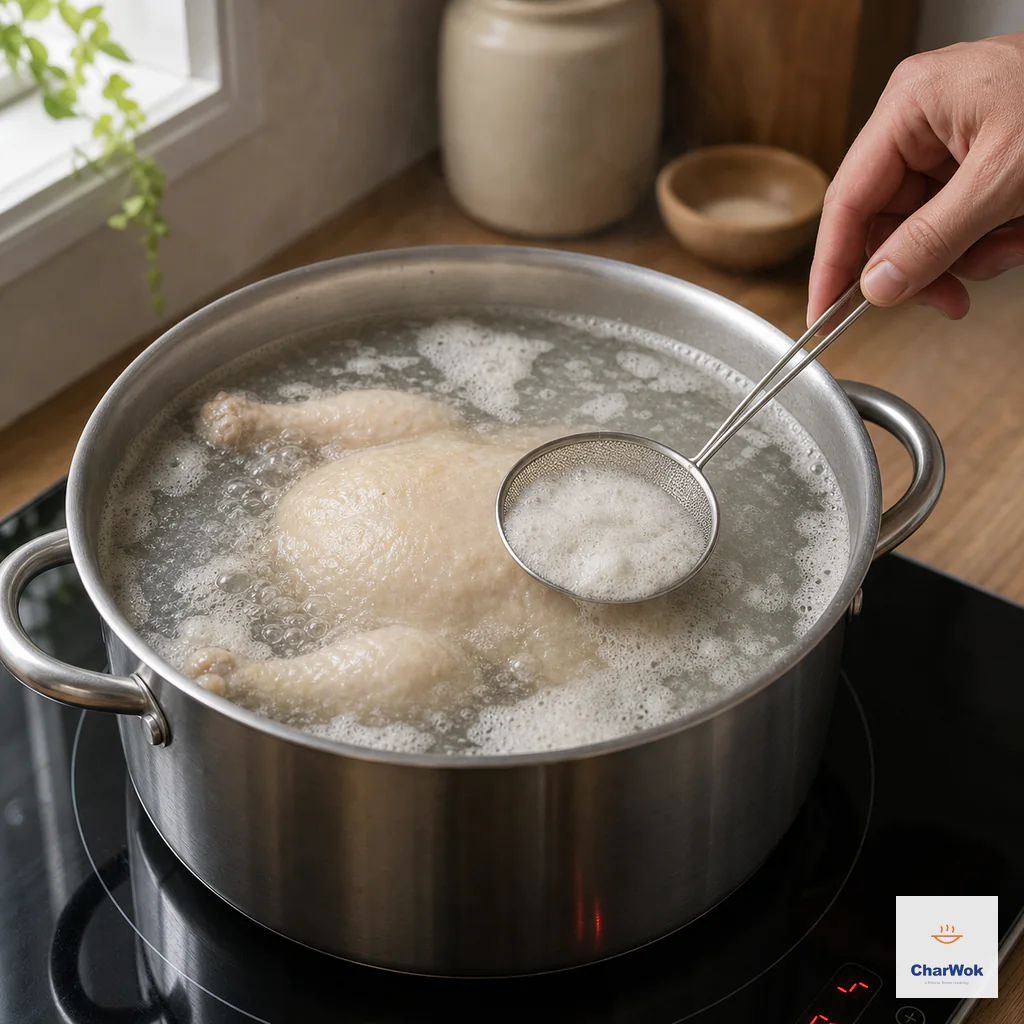
Cover the chicken with cold water, bring it to a full boil and skim the foam thoroughly.
- Simmer, do not boil. Add the ginger slices, drop the heat to the lowest flame that holds a bare tremble at the surface, and cook 1.5 to 2 hours. A boil emulsifies fat into the water and gives you a cloudy, greasy stock. A bare simmer keeps the fat on top and the liquid below clear. If you have a pressure cooker or Instant Pot, 40 minutes at high pressure gets you 90 percent of the way there; I use mine on weeknights.
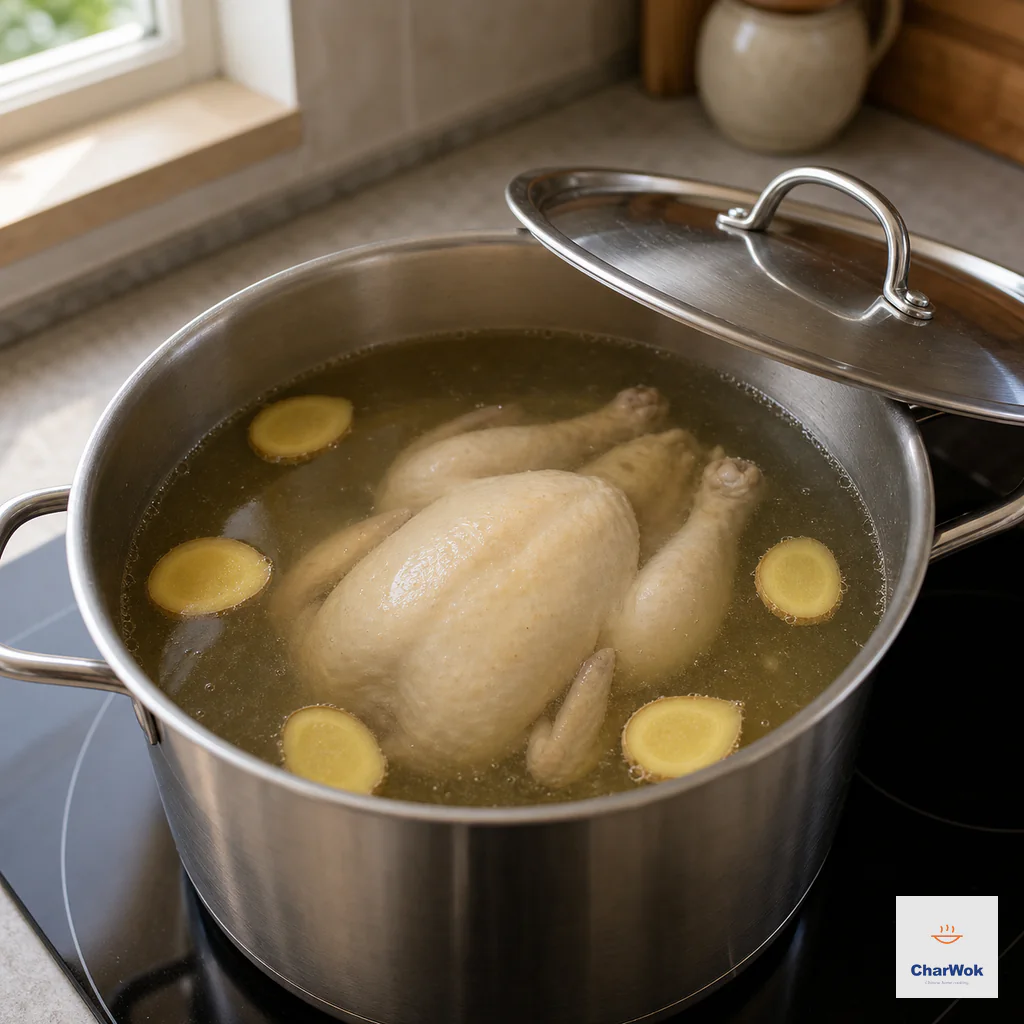
Add five ginger slices and hold a bare simmer for 1½ to 2 hours with the lid slightly ajar.
- Strain and adjust. Lift out the chicken (save the meat for fried rice, congee, or chicken salad; it is spent but still edible). Pour the stock through a fine sieve into your hot pot vessel and top up with hot water if needed to reach the pot's fill line.
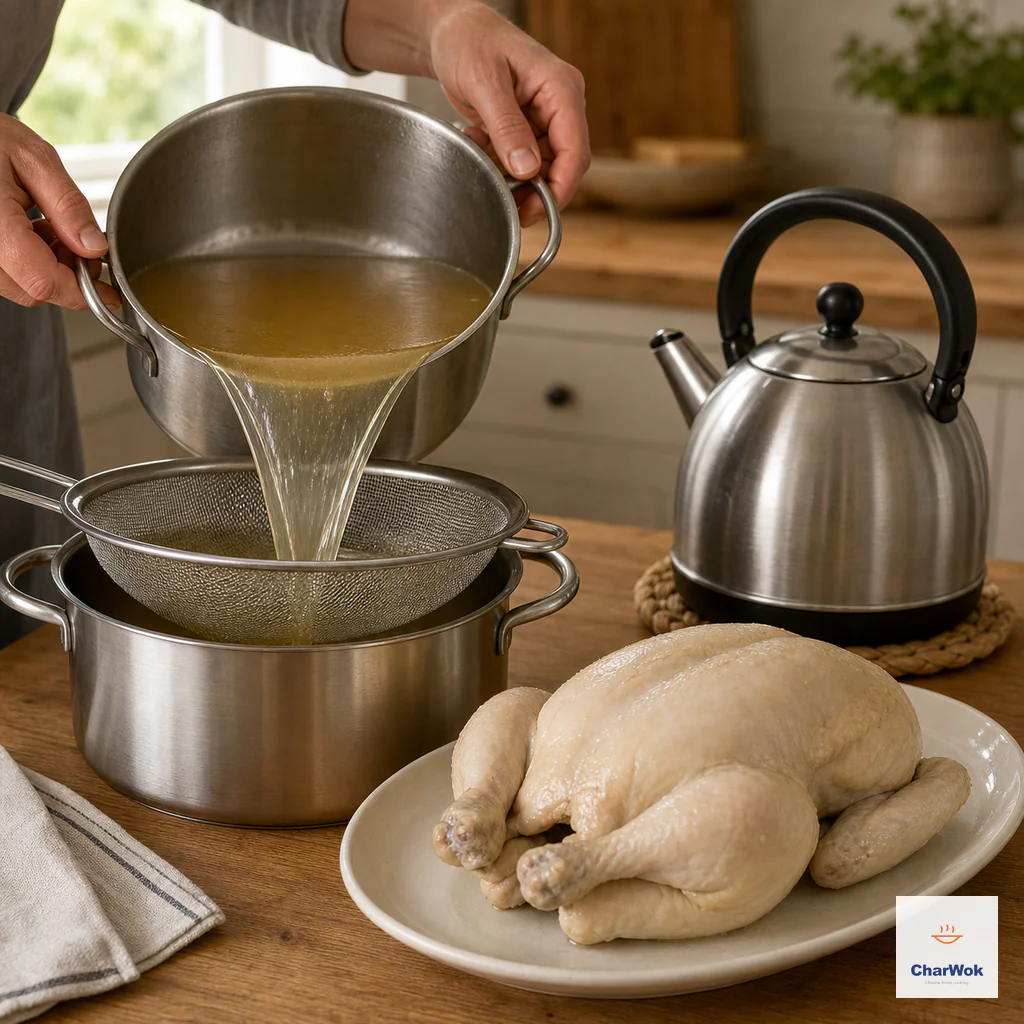
Remove the chicken, strain the broth into a clean pot and use hot water only if the level needs topping up.
- Season at the table. Add the scallions, rehydrated shiitakes, dates, and goji berries. Season with salt and white pepper to taste. Bring back to a full boil and start cooking. The shiitakes and dates do double duty as flavoring and as something to fish out and eat.
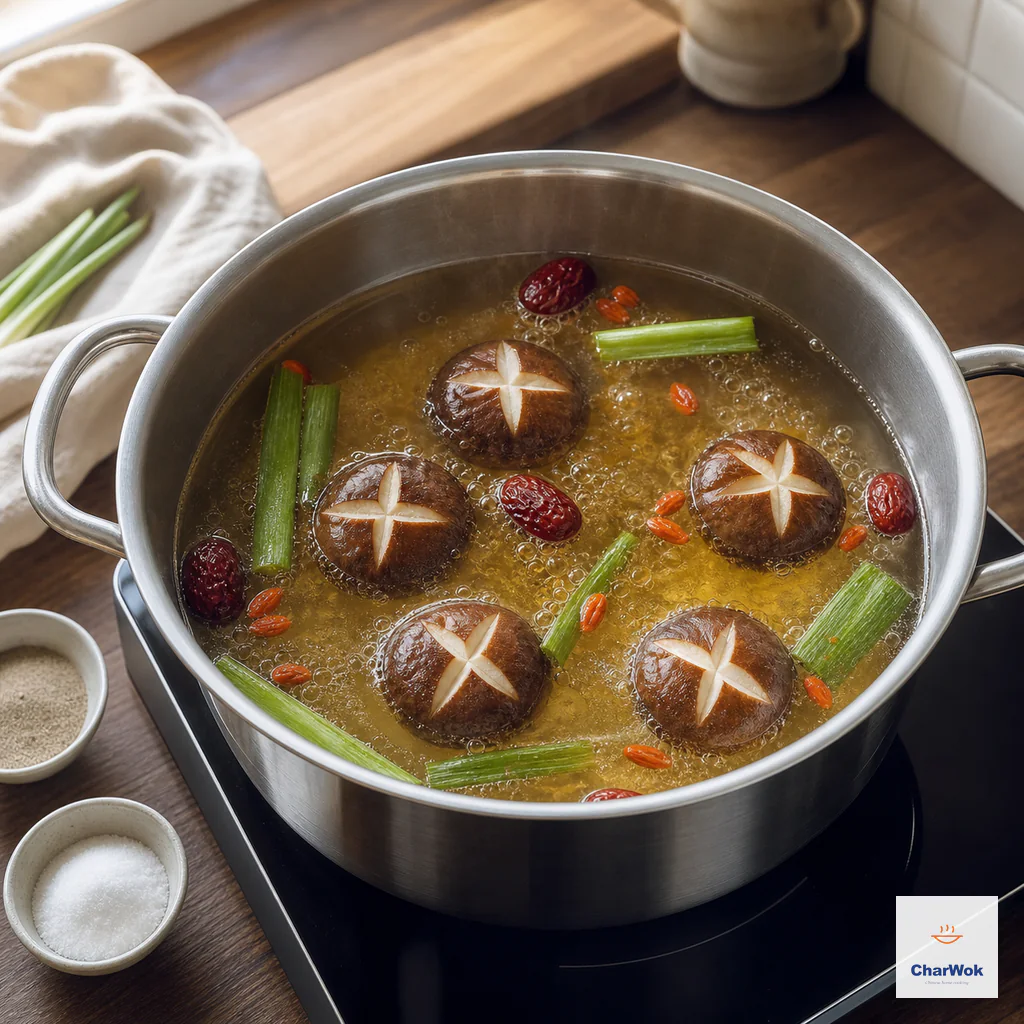
Add the scallions, shiitake, optional dates and goji berries, season with salt and white pepper, then return the broth to a boil.
When the broth goes wrong
I have ruined this dish in almost every way possible. Here is what usually fails and how to fix it.
The spicy broth is bitter, not hot. You scorched the chilies or the doubanjiang. Once chili paste blackens, no amount of sugar or stock will save it; the bitterness is permanent. Next time, lower the heat for the 8-minute simmer and stir more often. The fat should barely bubble, not roll. If your burner's lowest setting is still too hot, move the wok off-center.
The broth is greasy and heavy on the tongue. Two likely causes. Either you skipped the overnight rest, so the fat has not absorbed the flavor and just sits on top, or you used too much tallow per block. The fix for the first is patience. For the second, taste a block diluted before the meal; if it reads as pure fat, cut the next block with an extra cup of hot stock.
The numbing sensation is missing. Your Sichuan peppercorns are stale. Sanshool degrades fast; peppercorns older than six months barely tingle. Buy from a shop with turnover and store them airtight in the freezer. Toasting them dry for 30 seconds before the wine soak also wakes them up.
The mild broth is cloudy, not clear. You let it boil, or you skipped the initial blanch. You cannot un-cloud a stock, but you can rescue the next one: keep the surface at a shiver, skim relentlessly in the first ten minutes, and never stir once the chicken is in. For a really clear stock, do a second 20-minute blanch in fresh water before the long simmer.
The broth is too salty. The doubanjiang, douchi, and any commercial stock you dilute with all carry salt. Always dilute with unsalted water or homemade stock, taste before serving, and hold back salt from the mild side until the very end. If a pot is already too salty, add a quartered tomato or a chunk of daikon to the broth for 15 minutes; both pull salt out.
Variations and pairings
The spicy base is a building block, not a one-trick recipe. Thinned with less liquid, it becomes the foundation for mapo tofu or Sichuan boiled beef; a spoonful straight from the jar will lift a bowl of dan dan noodles or a plate of twice-cooked pork. I keep a jar in the freezer year-round for exactly these rescue missions.
For dipping, the classic pairings split into two camps. The spicy side wants hearty, flavor-absorbing ingredients: thinly sliced beef, the kind of dark-meat chicken you would use for mala chicken, lotus root, and glass noodles that soak up the red oil. The mild side is where you cook the delicate things: shrimp, fish balls, leafy greens, and tofu. If you want a full Sichuan-themed dinner around the pot, follow it with a round of Sichuan spicy wontons in chili oil or a plate of garlic pork slices; both use flavors that echo the broth without repeating it.
For dipping sauces, skip the bottled stuff. Set out homemade chili oil, toasted sesame oil, minced garlic in vinegar, and Shaoxing wine-based sauces, and let each diner build their own. A raw egg yolk in the bowl is a Chongqing touch worth trying once; it coats the cooked meat and tames the burn.
Storage and reheating
The spicy base keeps two weeks in the fridge and up to six months in the freezer. Freeze it in portioned blocks so you can thaw exactly what you need. The mild stock keeps four days refrigerated or three months frozen; keep it unsalted until you serve, since salted stock breaks down faster. To reheat, melt a block of spicy base in the pot with a splash of hot water, then add the rest of the liquid. Never microwave a frozen block of tallow in its container; it will melt unevenly and spit. Leftover broth from a finished meal will be salty and cloudy from the cooked ingredients; strain it and use it within two days for noodle soup, similar to how I treat the leftover liquid from spicy beef noodle soup.
Frequently asked questions
Can I make this vegetarian or vegan?
Yes. Swap the beef tallow for refined coconut oil (it solidifies the same way) and the doubanjiang for a vegetarian variety. Skip the chicken stock on the mild side and use a dried mushroom and kombu stock instead. The result lacks the beefy depth but still hits the numbing-spicy notes.
How spicy is the broth, and can I dial it down?
As written, the spicy side is genuinely hot. To lower the burn, deseed all the dried chilies before soaking, use the milder er jing tiao variety alone, and reduce the facing-heaven chilies. Keeping the Sichuan peppercorn amount steady preserves the numbing tingle even as the heat drops, which is the balance most people actually want.
Do I really need to rest the base overnight?
If you want the full flavor, yes. The tallow solidifies and draws fat-soluble compounds out of the chilies and aromatics; that simply cannot happen in an hour. If you are truly pressed for time, make the base and freeze it, then thaw a block when you are ready; the freezer rest works the same way.
What if I cannot find beef tallow?
Ask a butcher for beef suet and render it yourself, or buy rendered tallow online. The closest vegetarian substitute is refined coconut oil. Plain vegetable oil will work for flavor but the base will not solidify into blocks, so portion it by the tablespoon instead.
Can I use a pressure cooker for the chicken stock?
Yes, and I often do. Forty minutes at high pressure with a natural release gives a stock about as good as a two-hour stovetop simmer. Skim the foam after the initial boil, before sealing the lid, for the clearest result.
My final judgment: this dish lives or dies on two things. Rest the spicy base overnight, and keep the chicken stock at a shiver, never a boil. Get those right and the rest is improvisation. The first time you scoop red oil over a piece of just-cooked beef in your own kitchen, you will understand why people build whole evenings around this pot.