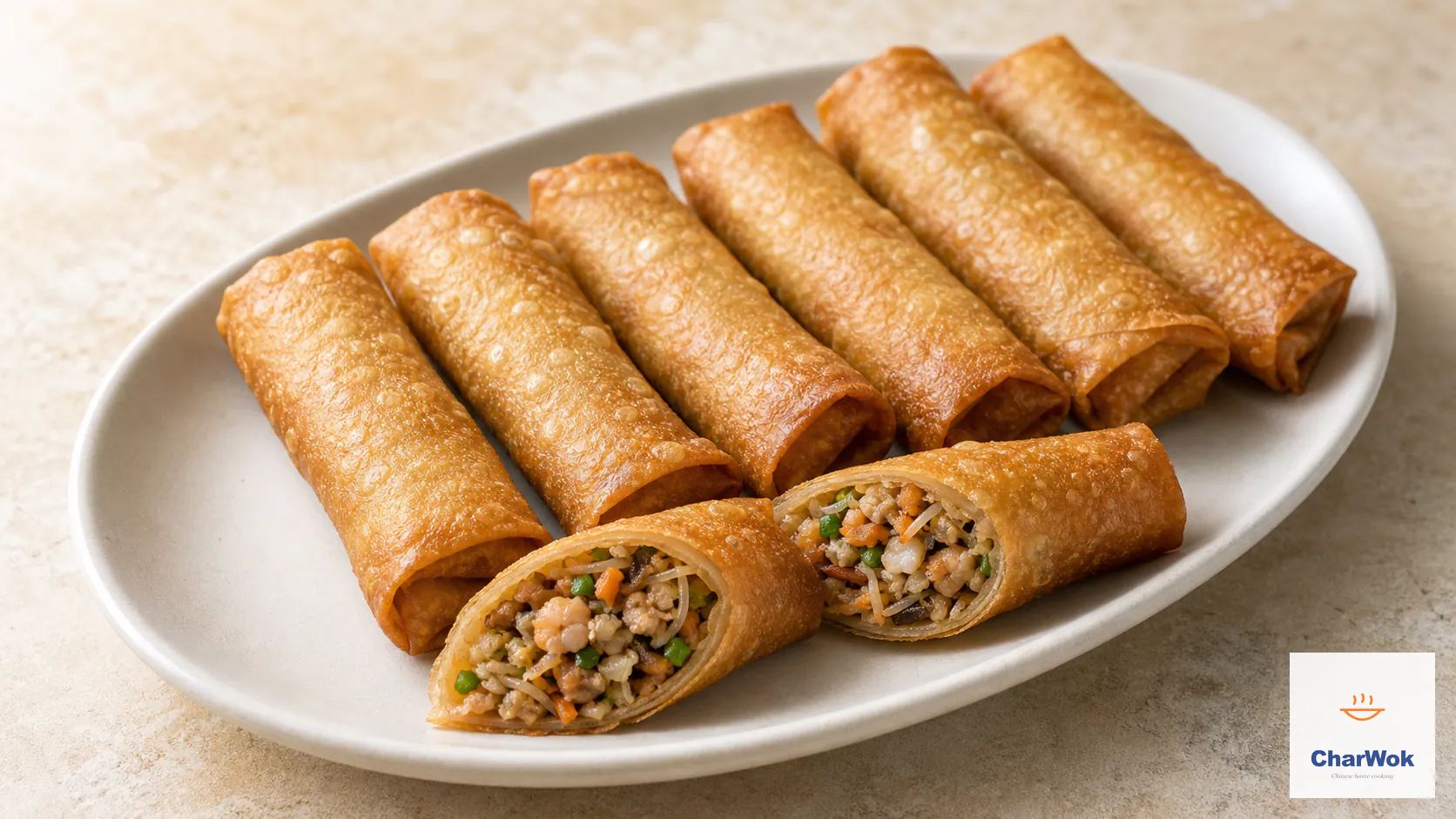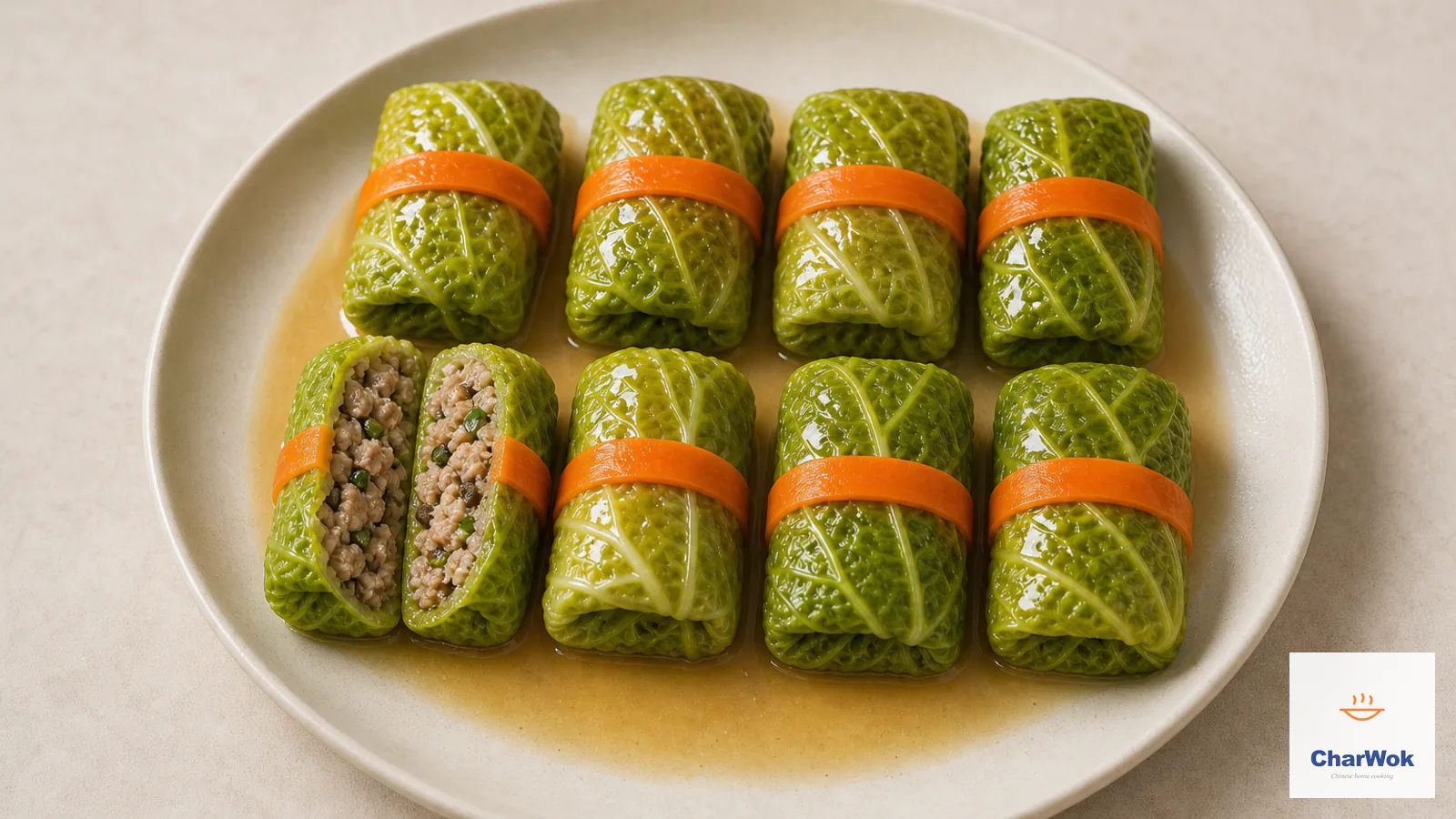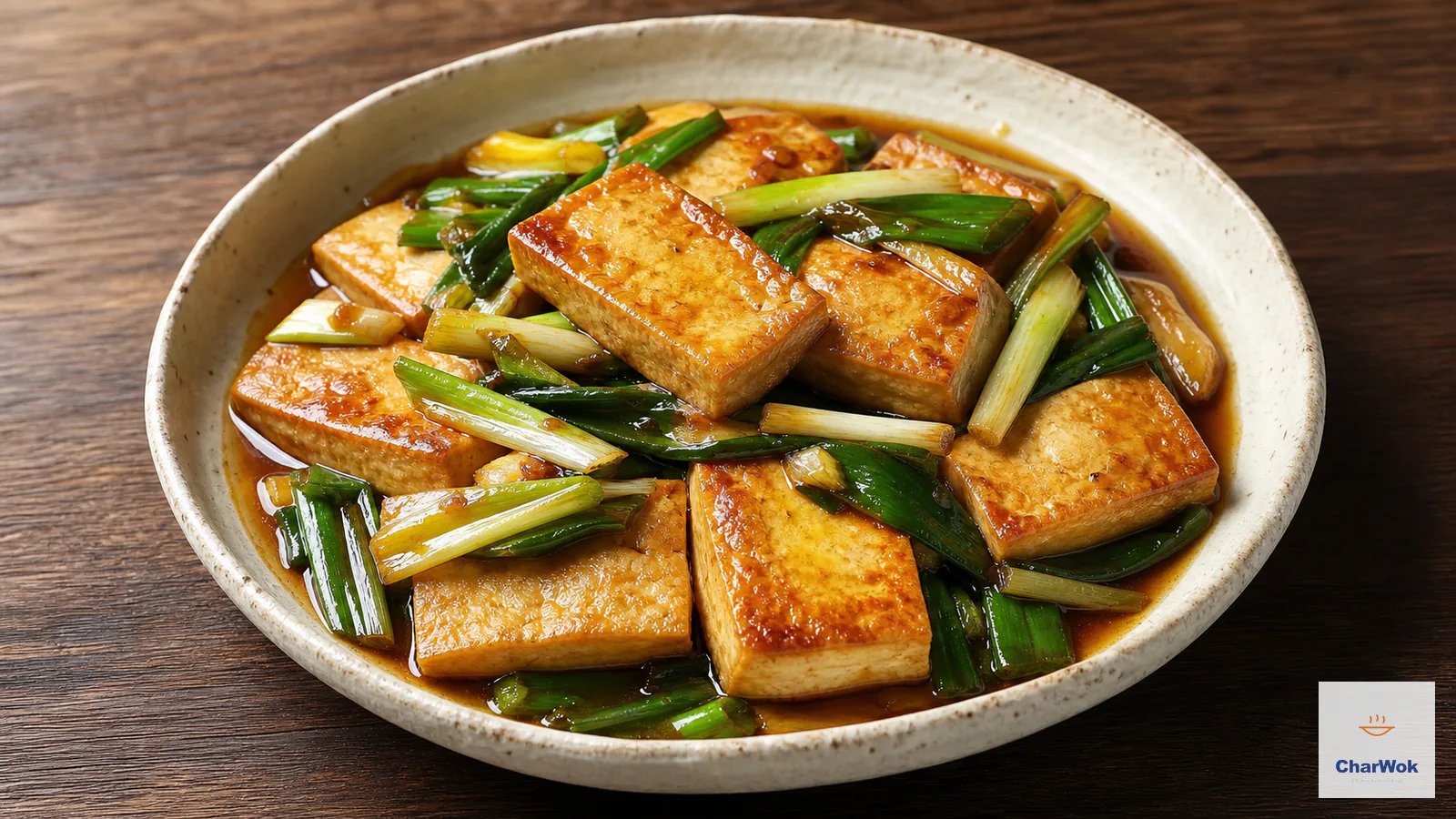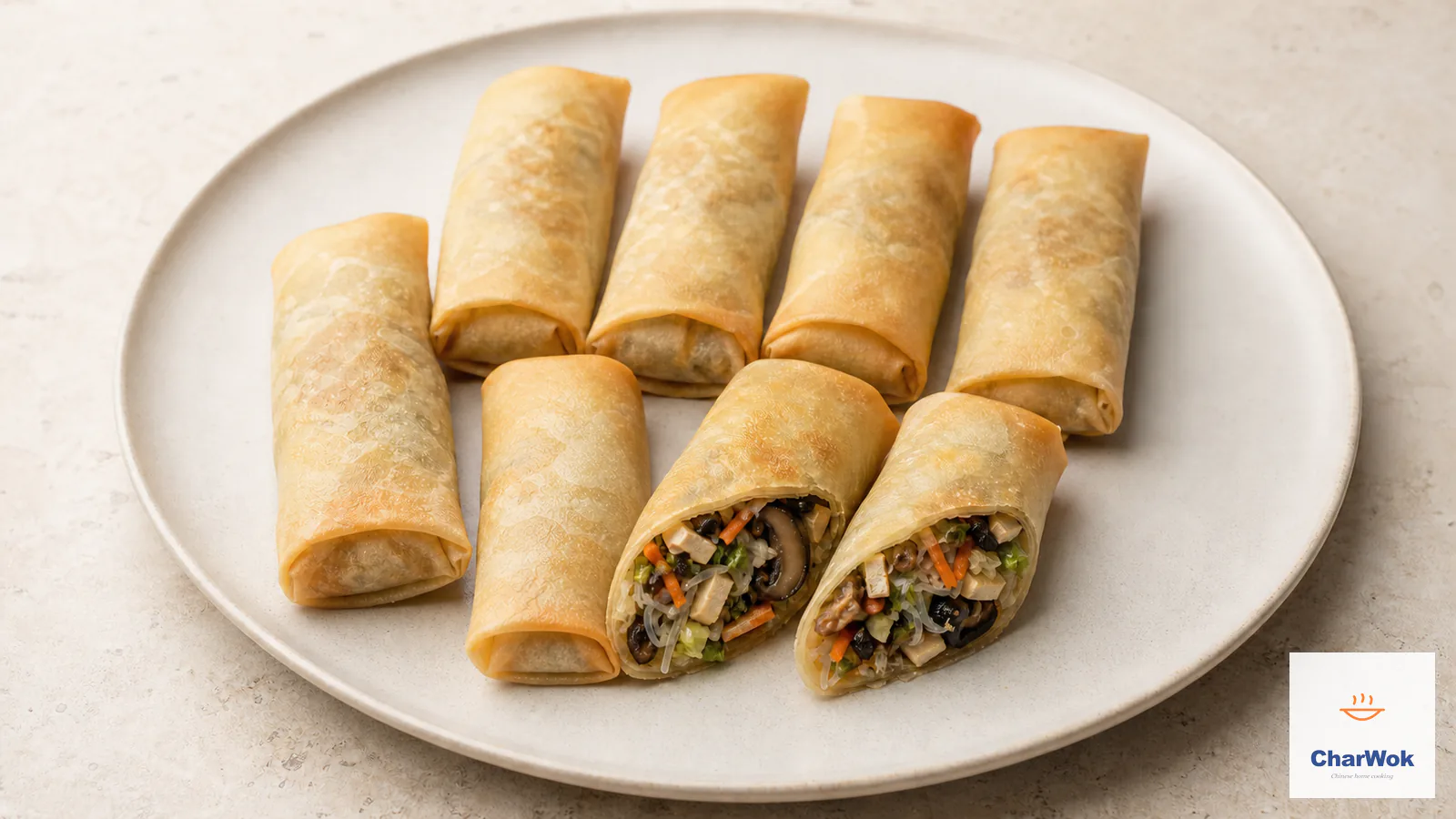
A great vegetarian spring roll is a study in two textures: a brittle, blistered shell and a filling that is firm enough to slice cleanly but still juicy. Most home versions fail on the second part. The filling weeps, the wrapper sogs through at the seam, and the whole thing collapses the moment it hits the oil. The fix is not in the wrapper. It is in how you handle moisture before the roll ever sees heat.
This is a vegan version built around pressed tofu, rehydrated shiitake, wood ear, carrot, bok choy, and a single bundle of mung bean vermicelli. The vermicelli is the secret ingredient. It drinks up the liquid the vegetables release and turns what would be a wet mess into a filling that holds its shape. Once you understand that one job, the rest of the recipe falls into place.
At a glance: 20 rolls. The make-or-break detail is filling moisture: salt the greens lightly, cook the aromatics first, and let the vermicelli absorb everything. Deep-fry at 180°C / 350°F, or air-fry at 200°C / 390°F for a lighter shell. Assemble all rolls before you fry; once oil is hot, there is no pausing.
What makes a spring roll a spring roll
The confusion between spring rolls and egg rolls is mostly an American menu problem. A true Chinese spring roll (chun juan) uses a thin wheat wrapper with no egg in the dough, fries up pale gold and shatter-crisp, and carries a filling of cooked vegetables, sometimes with shredded meat or shrimp. The thicker, doughy, blistered "egg roll" served in takeout shops is a Chinese-American creation with a sturdier wrapper. Both have their place, but they are different beasts.
The classic pork version is a Lunar New Year staple because the name sounds like "spring" and the golden cylinder is said to resemble a gold bar. The vegetarian version on this page exists for two reasons: it suits Buddhist vegetarian home cooking, where meatless dishes are eaten on the first and fifteenth of the lunar month, and it is genuinely better for freezing ahead. Meat fillings reheat with a slightly grainier texture after freezing; a vegetable and tofu filling does not. If you want to compare it with the traditional pork-filled version, see my general guide to Chinese spring rolls.
Ingredients
Ingredients at a glance
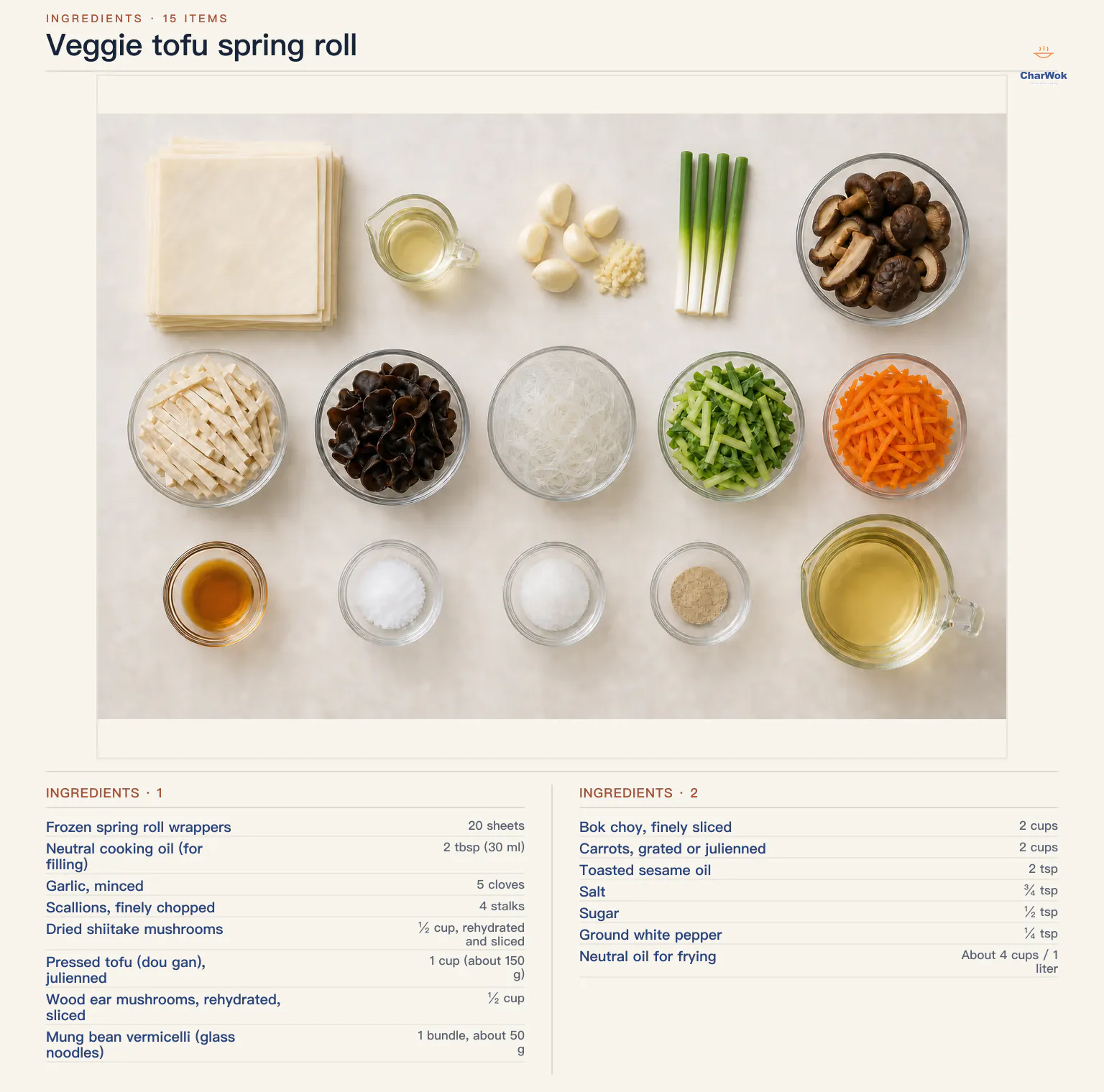
Use frozen square spring roll wrappers, not round dumpling or wonton skins. The square wheat wrapper is what gives you the long, slim cylinder. If you have only made round wrappers from scratch before, know that these commercial spring roll wrappers are a different product, egg-free and stretchier; do not try to substitute wonton skins, they fry up leathery.
| Ingredient | Amount | Notes / substitute |
|---|---|---|
| Frozen spring roll wrappers | 20 sheets | Thaw overnight in the fridge, unopened. TYJ Spring Roll Pastry is the standard brand in Asian markets. |
| Neutral cooking oil (for filling) | 2 tbsp (30 ml) | Canola, grapeseed, or peanut. Not olive oil. |
| Garlic, minced | 5 cloves | Reduce to 3 if your garlic is fierce. |
| Scallions, finely chopped | 4 stalks | Use both white and pale green; save dark green for garnish. |
| Dried shiitake mushrooms | ½ cup, rehydrated and sliced | About 8 medium. See the dried shiitake guide for soaking times. Fresh shiitake works but is blander. |
| Pressed tofu (dou gan), julienned | 1 cup (about 150 g) | Firm or extra-firm tofu, pressed and pan-dried, is the substitute. Silken will fall apart. |
| Wood ear mushrooms, rehydrated, sliced | ½ cup | Optional but worth it for the snap. How to rehydrate wood ear covers the safety rules (never soak overnight at room temp). |
| Mung bean vermicelli (glass noodles) | 1 bundle, about 50 g | Soaked in hot water 5 min, drained, snipped into short strands. The vermicelli's main role across Chinese cooking is to absorb liquid, and that is exactly its job here. |
| Bok choy, finely sliced | 2 cups | Napa cabbage works too; either way, see the note on salting below. |
| Carrots, grated or julienned | 2 cups | Julienned holds more bite; grated is faster and softer. |
| Toasted sesame oil | 2 tsp | For finishing the filling only. Do not fry in it; it burns. |
| Salt | ¾ tsp | Kosher or fine sea salt. |
| Sugar | ½ tsp | Balances the bitterness dried mushrooms can carry. |
| Ground white pepper | ¼ tsp | White, not black; black pepper leaves visible flecks and a harsher heat. |
| Neutral oil for frying | About 4 cups / 1 liter | Depth only needs to be twice the thickness of a roll. |
The method, step by step
Read this whole section before you start. The single most common failure I see is people cooking the filling while the wrappers are still thawing, then rushing the assembly. Give yourself a clean, dry workspace and stack the filled rolls under a damp towel as you go.
- Thaw the wrappers fully, in their packet. Frozen wrappers left out on the counter will stick together and tear; thawing them slowly in the fridge, still sealed, lets the sheets separate cleanly. Once thawed, peel them apart one at a time and cover the stack with a barely damp cloth. A dry wrapper cracks at the fold; a wet one slides and will not seal.
- Cook the aromatics first, then cool. Heat the 2 tbsp neutral oil in a wok over medium-high. Add the garlic, scallion whites, and drained shiitake. Sizzle about 90 seconds, just until the garlic smells sweet and the mushrooms have given up their moisture. You are building the flavor base here; the rest of the vegetables are added raw. Scrape the hot mixture into a large bowl and let it cool to lukewarm. If you fold hot filling into the wrapper, it softens the dough and you get blowouts in the fryer.
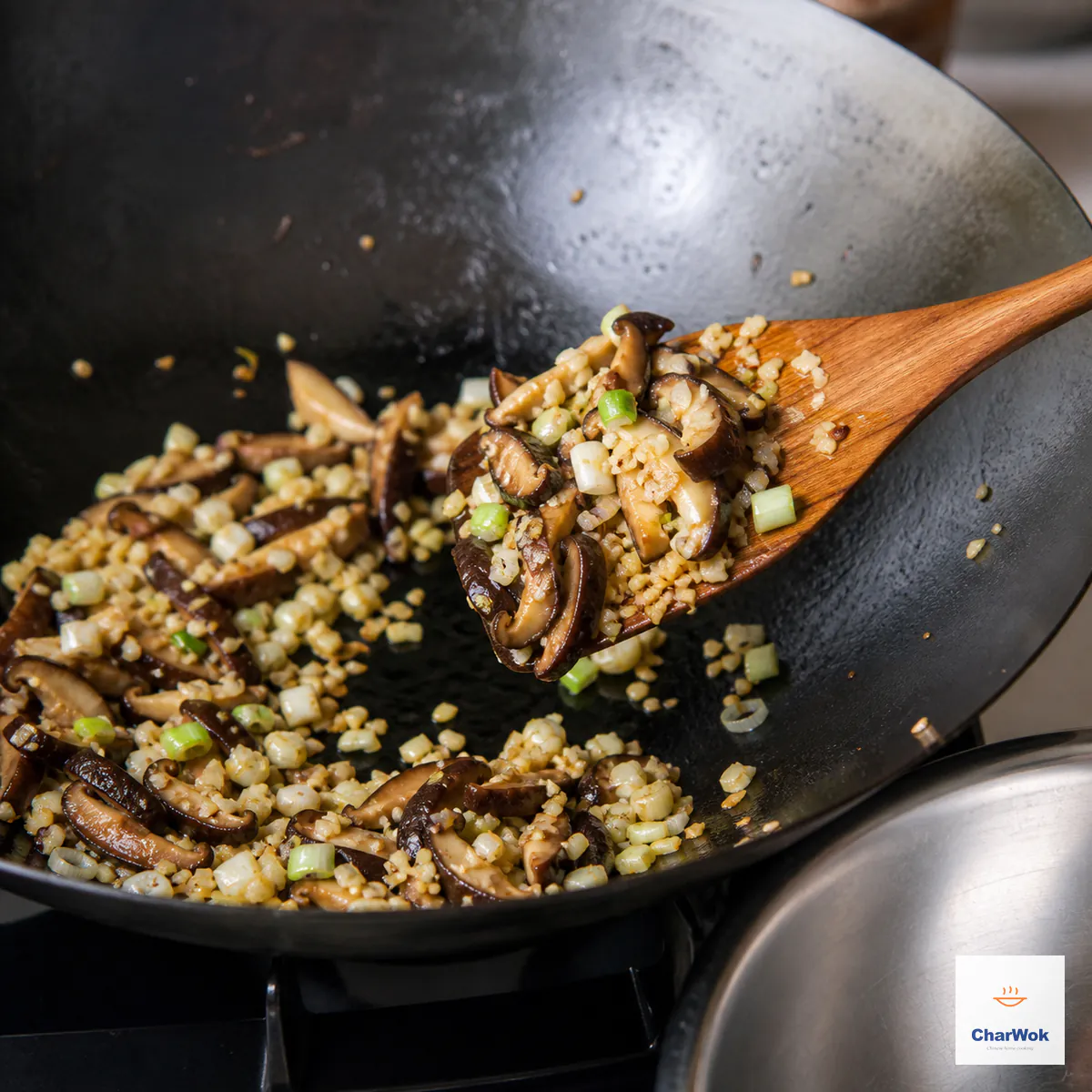
Cook only the garlic, pale scallion, and drained shiitake for about 90 seconds, then move the dry aromatic base to a large bowl and cool it to lukewarm
- Manage the moisture from the greens. This is the step the source treats as optional and I will not. Toss the sliced bok choy (or napa) with a pinch of salt and let it sit 10 minutes, then squeeze it firmly in your fist. You will be shocked how much water comes out. Skip this and your rolls split open during frying as the steam forces its way out. The carrots need no such treatment. For more on this technique, see how bok choy is handled in stir-fries.
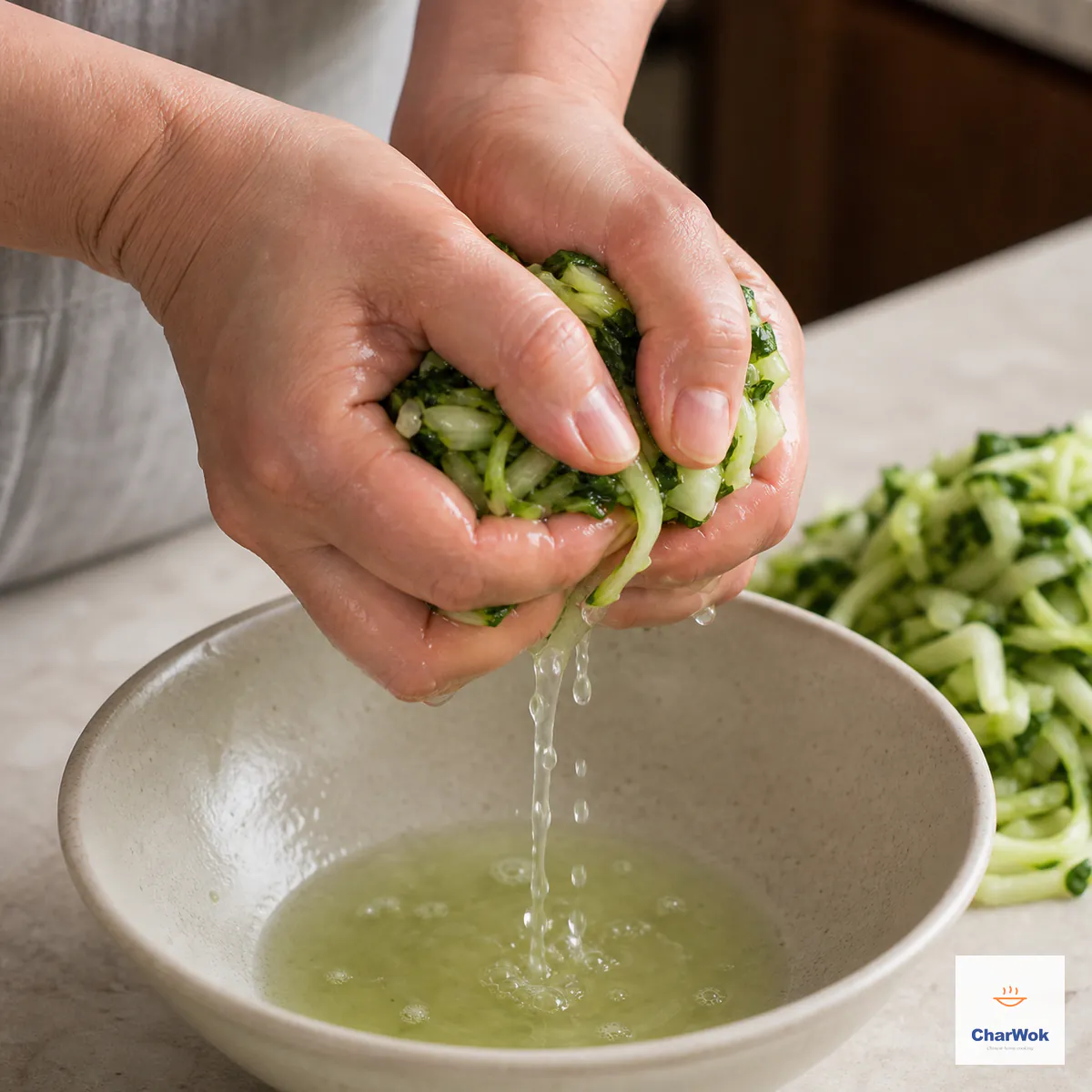
Salt the sliced bok choy for 10 minutes, then squeeze firmly until the water stops streaming; this English-only step prevents steam from splitting the wrappers
- Combine everything with the vermicelli last. Add the squeezed greens, carrots, pressed tofu, wood ear, vermicelli, sesame oil, salt, sugar, and white pepper to the cooled aromatics. Mix with your hands so the vermicelli strands distribute evenly. Taste a small clump now and adjust salt; once it is wrapped and fried, it is too late.
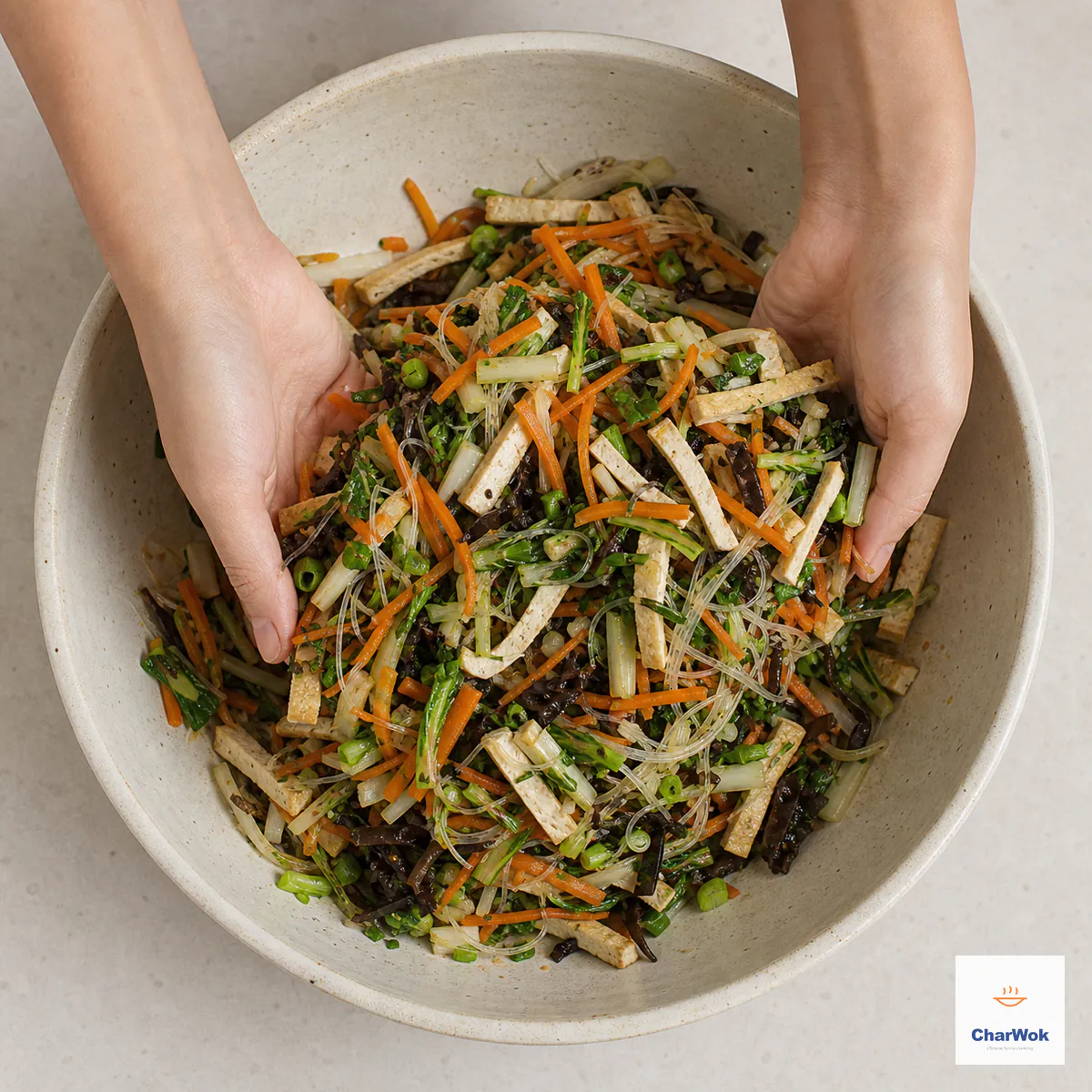
Add the short glass noodles last and mix until every strand is distributed; the finished filling should stay loose and dry rather than clump or weep
- Roll tight, seal with water. Lay a wrapper as a diamond, point toward you. Put about 2 tablespoons of filling in a loose log across the lower third. Fold the bottom point over the filling and tuck it under, pulling back gently to tighten. Roll once. Fold both side points in to enclose the ends. Roll to the last inch, brush the top point with a little water, and finish rolling. The seam should sit underneath. Tight rolls fry evenly; loose rolls trap air and burst. Resist the urge to overfill; 2 tablespoons is enough.
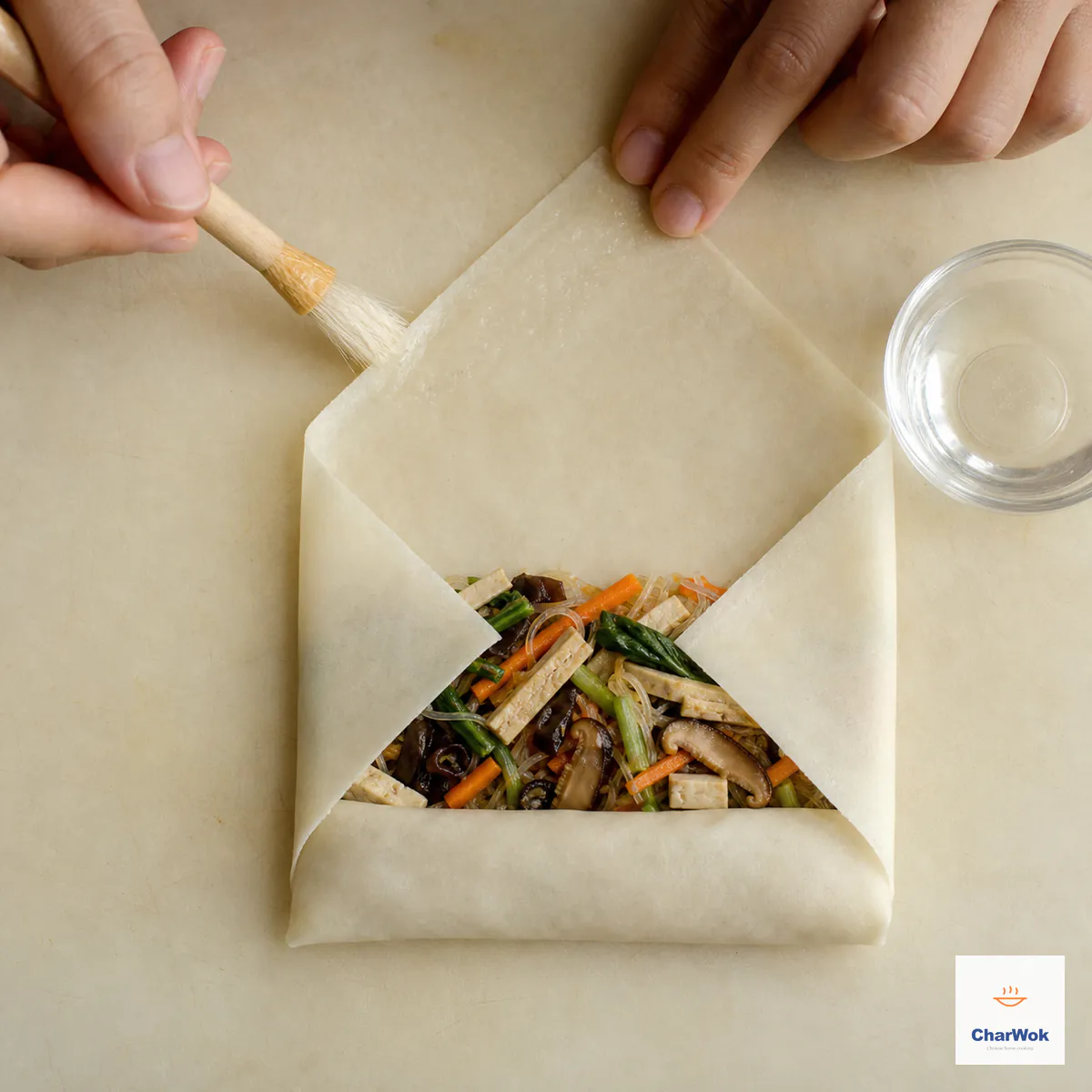
Use about 2 tablespoons of filling, tuck the bottom point snugly, fold both sides inward, then wet only the last tip and finish with the seam underneath
- Hold the assembled rolls under a damp cloth. Stack them on a tray, not touching, and keep them covered. Exposed wrappers dry to the consistency of paper and crack when fried.
- Fry: deep-fry (best texture) or air-fry (lighter). For deep-frying, heat the oil to 180°C / 350°F. Test with a wooden chopstick: steady small bubbles mean ready, violent bubbles mean too hot, no bubbles means too cool. Slide in 4 to 5 rolls, seam down, do not crowd. Fry 4 to 6 minutes, turning once or twice, until evenly pale gold. Drain on paper. For air-frying, preheat to 200°C / 390°F, brush the rolls lightly with oil, and cook 8 to 10 minutes, flip, then 5 minutes more. Air-fried rolls are good but never quite as blistered; if you want that authentic crackle, deep-fry.
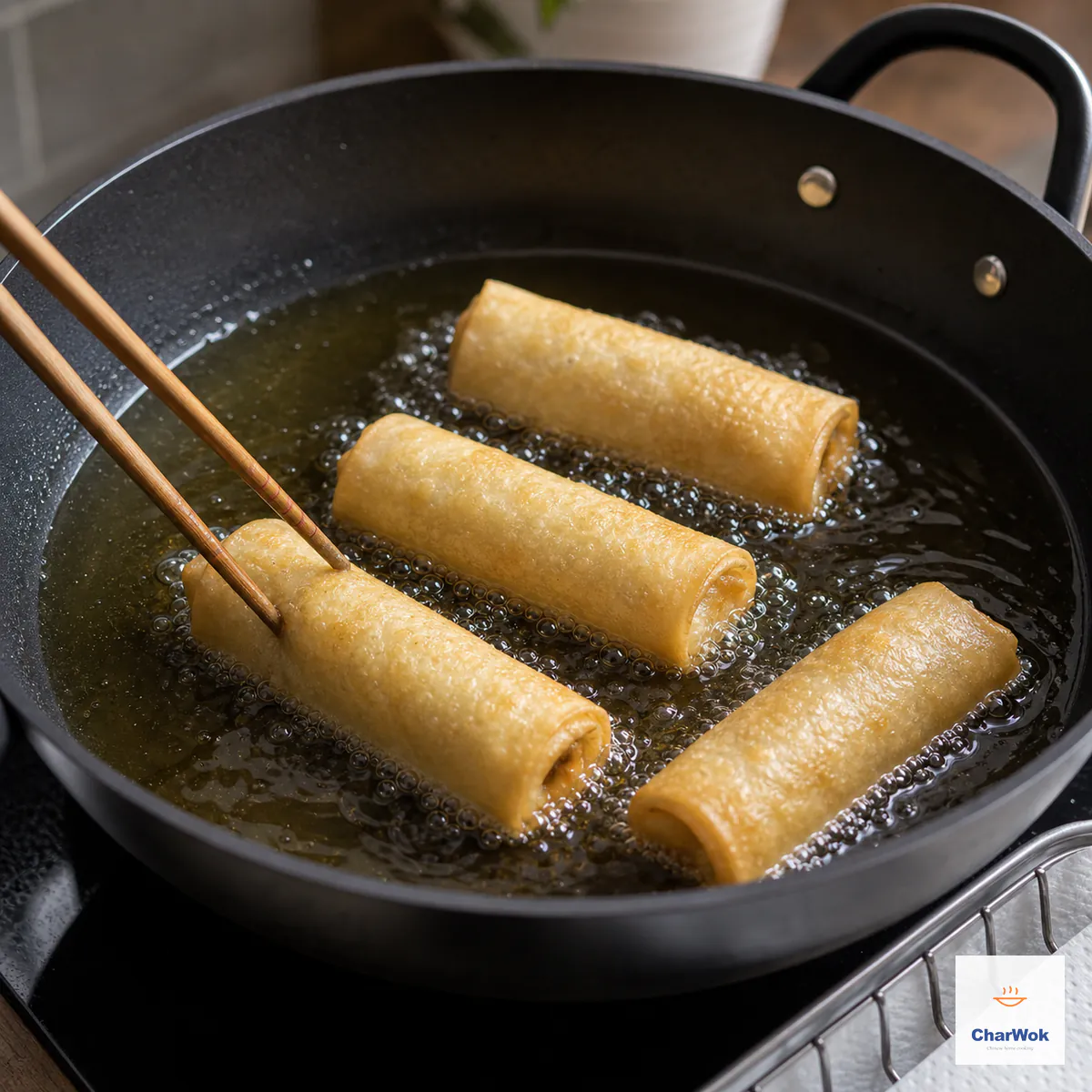
At 180°C / 350°F the oil should make steady small bubbles; fry 4 to 5 rolls without crowding and remove them when evenly pale gold
When things go wrong
I have wrecked a lot of spring rolls. Here is what each failure looks like and how to fix it on the next batch.
- Rolls burst open in the oil. Either the filling was too wet (you skipped the salting step), the rolls were overfilled, or the oil was too hot and the trapped steam blew out the seam. Drop the temperature to 170°C / 340°F and use less filling next time.
- Wrapper softens and tears during assembly. The filling was still warm, or your hands were wet. Let the filling cool fully and keep your fingers dry.
- Uneven browning, pale patches. The oil temperature dropped because you added too many rolls at once. Fry in smaller batches and let the oil reheat between them.
- Soggy, greasy rolls. Oil was too cool; the wrapper drank oil instead of crisping. Aim for a true 180°C / 350°F, and do not crowd the pan.
- Filling tastes bland. You did not taste it before wrapping. The raw garlic and mushroom mixture needs that final seasoning check, same as you would for a good dumpling filling.
- The vermicelli is gummy. It was over-soaked. Five minutes in just-boiled water is enough; longer and it collapses to paste inside the roll.
Dipping sauces and what to serve alongside
A vegetarian spring roll needs a bright, slightly sharp dip to cut the richness of the fried shell. My default is a simple mix of black rice vinegar, light soy, a pinch of sugar, and a little grated ginger. If you want heat, a spoonful of homemade chili oil does more than store-bought sriracha ever will. For a full lineup, the six dipping sauces I keep on rotation all work here, especially the sweet-and-sour and the garlic-vinegar.
To turn this into a meal rather than a snack, serve two or three rolls per person with a cooling side. Smacked cucumber salad is the classic foil, and a bowl of egg drop soup rounds it out without competing. If you are feeding vegetarians and omnivores at the same table, a second plate of pan-fried tofu with garlic sauce or cold silken tofu with scallions keeps everyone happy.
Variations worth trying
- Add cellophane noodles and egg. A pinch of beaten, thin-cooked egg scattered through the filling adds richness without breaking the vegan rule if you leave it out; with it, the rolls become vegetarian rather than vegan.
- Swap the greens. Finely shredded napa cabbage, bean sprouts, or water chestnuts all work. Bean sprouts add a different crunch but release more water, so salt and squeeze them harder.
- Spicy filling. A teaspoon of doubanjiang or a spoonful of Chiu Chow chili oil cooked into the aromatics turns this into something closer to a Sichuan snack bar roll.
- Make it a full vegetarian spread. Pair with pan-fried vegetarian potstickers or vegan dumplings with spicy dip for a meat-free dumplings-and-rolls night.
Make ahead and store
Assembled, uncooked rolls freeze beautifully. This is the real reason to make a full batch of 20 even if you only want six tonight. Arrange the raw rolls in a single layer on a tray, freeze solid, then transfer to a bag. They keep two months. Cook from frozen; do not thaw, or the wrappers crack and the filling weeps. Deep-fry frozen rolls at 190°C / 375°F, adding about 2 minutes to the time. Air-fry frozen rolls at 200°C / 390°F, adding roughly 5 minutes.
Cooked rolls reheat best in a 200°C / 400°F oven or air fryer for 6 to 8 minutes; the microwave turns the shell rubbery, so avoid it. Leftover cooked filling, on its own, is excellent stirred into congee the next morning, or folded into fried rice. These rolls are also a natural fit for a larger batch-cooking session; see my make-ahead Chinese recipes for how to slot them into a week of meals.
Frequently asked questions
Can I bake these instead of frying? Yes, but expect a noticeably different result. Baking at 220°C / 425°F with an oil brushing gives a dry, crackly shell that never quite matches deep-fried. Air-frying is the closest low-oil option.
Why did my wrappers tear when I tried to separate them? They were not fully thawed, or they thawed unevenly on the counter. Thaw frozen wrappers overnight in the fridge while still sealed, then peel gently from the corner.
Can I make these gluten-free? Partly. Rice-paper wrappers work for a fresh-style roll but will not fry up crispy. For a fried spring roll, you need a wheat wrapper, so a fully gluten-free fried version is not really achievable without a specialty wrapper.
What can I use instead of pressed tofu? Firm or extra-firm tofu, pressed between paper towels and pan-dried until firm. Avoid silken tofu; it turns to mush inside the roll.
Do I have to fry all 20 at once? No. Fry what you will eat and freeze the rest raw. Frying twice is worse than frying once; reheated cooked rolls never crisp as well as cooking a frozen raw roll fresh.
The whole recipe comes down to one judgment: respect the water. Salt and squeeze the greens, let the filling cool, and let the vermicelli do its job. Do that, and the frying is almost an afterthought.