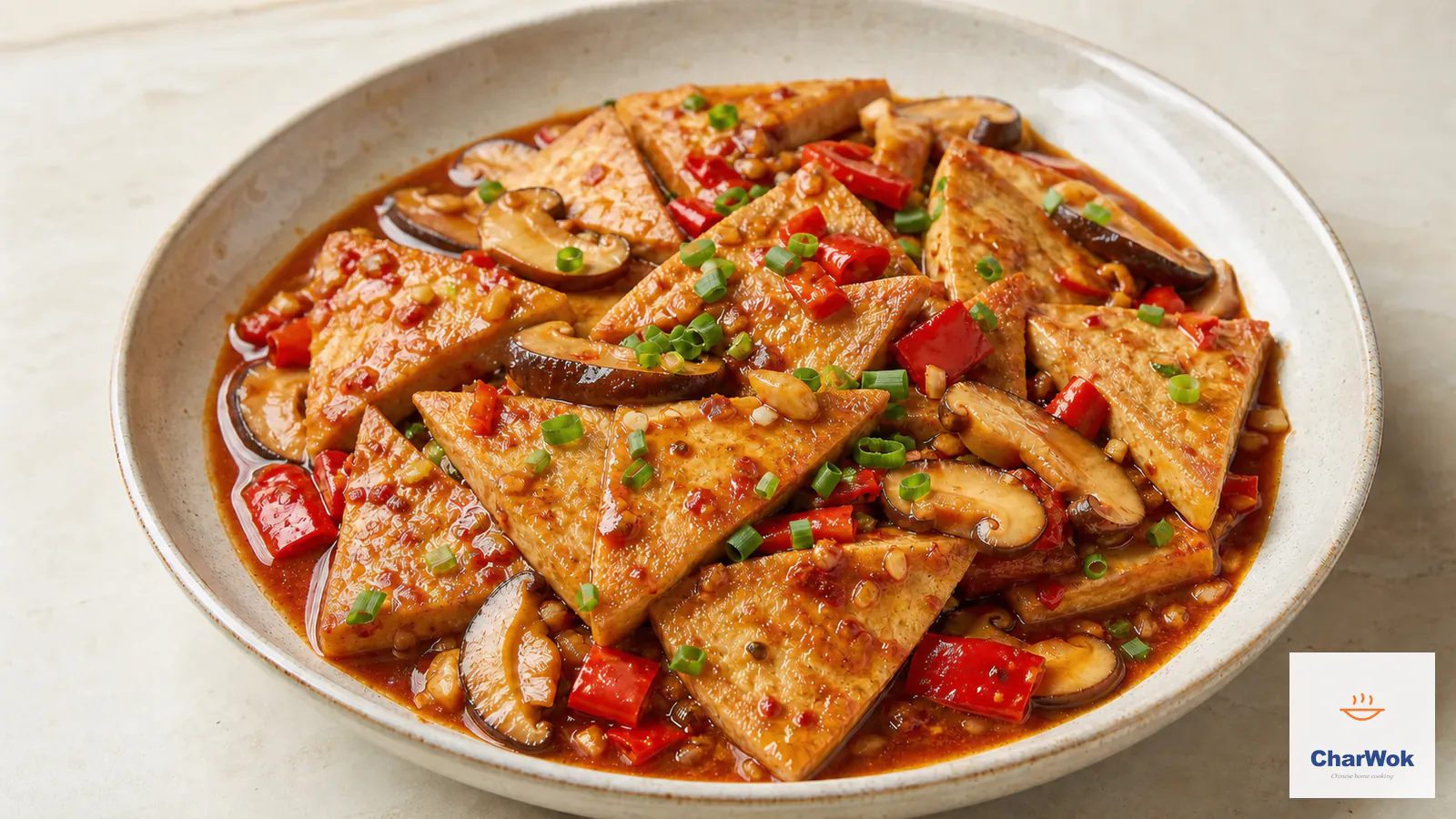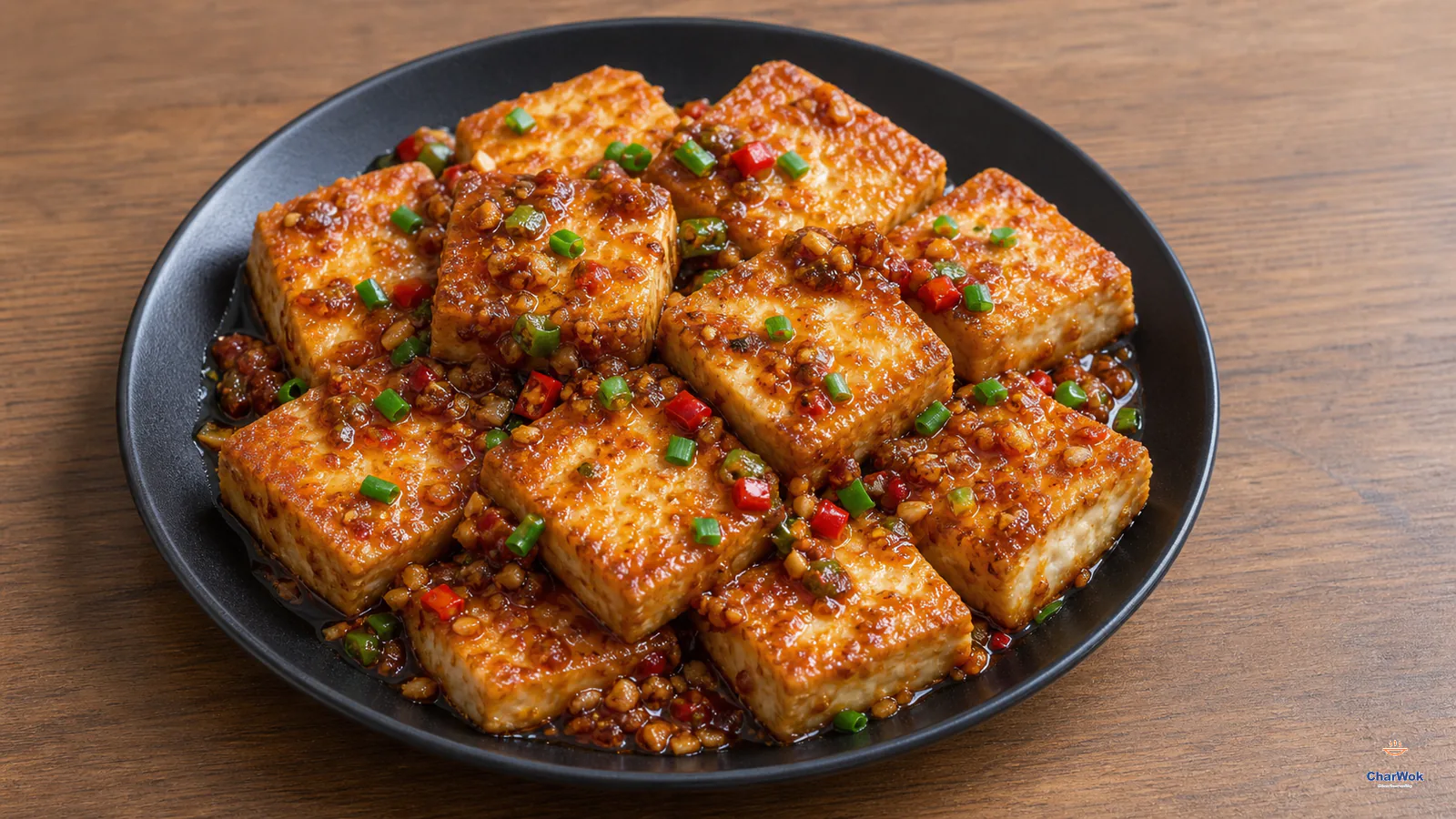
The trick to tofu nobody complains about is texture, not seasoning. Sear a slab until the outside turns to a thin, almost leathery crust, and you have something to chew against the custardy middle. Drown that in yu xiang, the famous Sichuan "fish-fragrant" sauce built on pickled chili and broad-bean paste, and the blandness of soy becomes the whole point. The dish is called Yu Xiang Dou Fu, and it is the tofu equivalent of pork in fish-fragrant sauce, the same sauce family doing the heavy lifting.
Home cooks fail this dish in two predictable ways. They crowd cold tofu into a lukewarm pan and watch it stick and shatter. Or they skimp on the starch and end up with sad gray squares that drink the sauce instead of carrying it. Both are avoidable. What follows is the version I cook on a weeknight, with the science behind each move and the calls I make on flour, oil, and heat.
At a glance
600 g medium-firm tofu, cut 1.5 cm thick, dusted in cornstarch and seared two minutes a side in a hot pan. The sauce is a fixed ratio: equal Shaoxing wine and black rice vinegar (1.5 Tbsp each) against 1 Tbsp sugar and 1 Tbsp starch, loosened with 3 Tbsp water. Hot pan, cold tofu, don't touch it until it releases. The whole thing is on the table in twenty minutes.
What "fish-fragrant" actually means
There is no fish in yu xiang. The name refers to the seasoning blend Sichuan cooks traditionally used for river fish: pickled chilies, garlic, ginger, a splash of cooking wine, dark vinegar, and sugar, finished with a glossy starch slick. Somewhere along the way they realized the same seasoning was even better on ingredients with no flavor of their own. Eggplant is the famous example, in Yu Xiang Qie Zi, and mushrooms get the same treatment in king oyster mushroom with garlic sauce. Tofu fits the family because, like eggplant, it is a sponge that needs a loud sauce to mean anything.
The balance you are aiming for is the classic Sichuan quartet: salty from the bean paste, sour from the vinegar, sweet from the sugar, and a low hum of heat from the fresh chili and the doubanjiang. No single note should win. If you taste it and the vinegar hits first and last, you have too much; reach for a little more sugar and water. If it reads flat and salty, the chili paste is doing all the talking and the sugar needs to catch up.
Choosing the tofu
Use medium-firm tofu, the kind sold in plastic tubs in the refrigerated section of any Asian grocer. Not silken, which will collapse the moment it meets oil, and not the extra-firm block, which fries up nicely but eats dense and dry inside. Medium-firm has enough water to stay tender and enough structure to survive a flip. If you want to explore the other end of the firmness scale another night, silken tofu with a soy dressing is its own pleasure, but it is a cold dish and not in play here.
Ingredients
Pan-fried tofu with garlic sauce ingredients at a glance
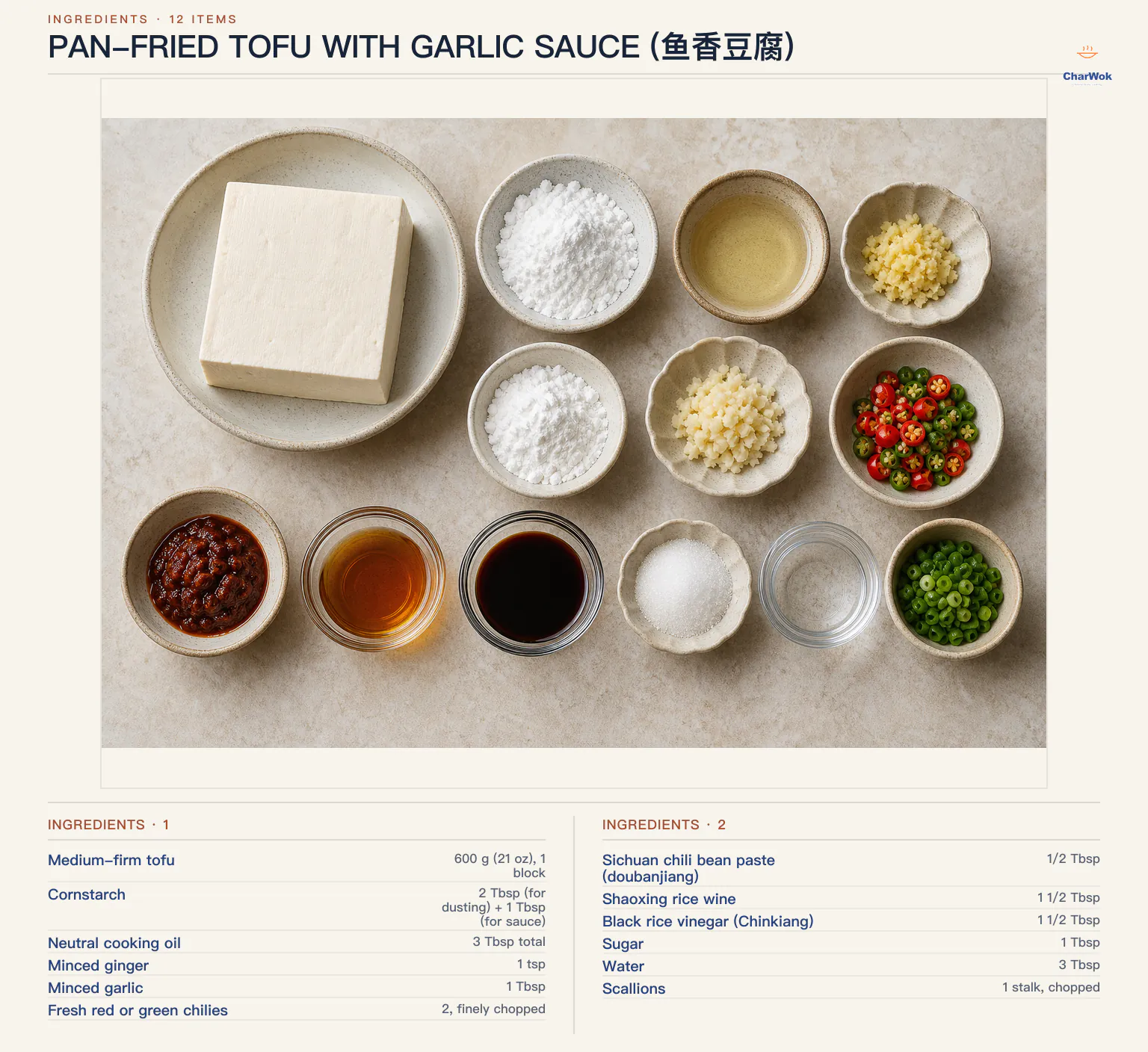
| Ingredient | Amount | Notes / substitute |
|---|---|---|
| Medium-firm tofu | 600 g (21 oz), 1 block | Firm works; avoid silken. Press lightly if very wet. |
| Cornstarch | 2 Tbsp (for dusting) + 1 Tbsp (for sauce) | Potato starch or tapioca starch give a slightly chewier, clearer crust. |
| Neutral cooking oil | 3 Tbsp total | Peanut, canola, or grapeseed. Not olive oil. |
| Minced ginger | 1 tsp | Finely grated is fine. |
| Minced garlic | 1 Tbsp | About 4 cloves. |
| Fresh red or green chilies | 2, finely chopped | Thai bird's-eye or serrano; seeds in for heat, out for mild. |
| Sichuan chili bean paste (doubanjiang) | 1/2 Tbsp | Pixian douban is best. Avoid the sugary supermarket jars. See the pantry guide. |
| Shaoxing rice wine | 1 1/2 Tbsp | Dry sherry substitutes cleanly. |
| Black rice vinegar (Chinkiang) | 1 1/2 Tbsp | Balsamic cut 1:1 with water in a pinch; flavor is fruitier. |
| Sugar | 1 Tbsp | Granulated or rock sugar crushed. |
| Water | 3 Tbsp | Stock is welcome if you have it open. |
| Scallions | 1 stalk, chopped | Green parts for garnish, white parts into the aromatics if you like. |
Method, with the reasoning behind each step
- Cut and dry the tofu. Slice the block into squares about 1.5 cm (just over 1/2 inch) thick, then lay them on a clean towel or paper and pat every surface dry. Wet tofu throws water into hot oil and shatters on contact; dry tofu crisps. The thickness matters: thinner and the center overcooks before the crust sets, thicker and the middle stays cold. A short rest on the towel for ten minutes draws out even more moisture.
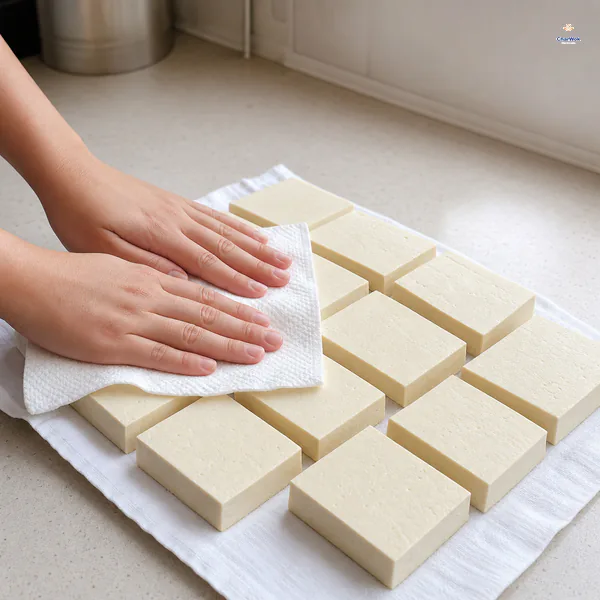
Cut the tofu into squares about 1.5 centimeters thick, spread them on a clean towel and press every surface dry; a 10-minute rest on the towel removes still more moisture.
- Dust with cornstarch. Put the starch in a fine sieve and tap it over both sides of the tofu for an even, thin film. You want a dusting, not breading. The starch gelatinizes in the oil into a thin, flexible skin that browns evenly and gives the sauce something to cling to. Tapioca starch, if that is what you have, makes a slightly chewier, more translucent crust I actually prefer for leftovers.
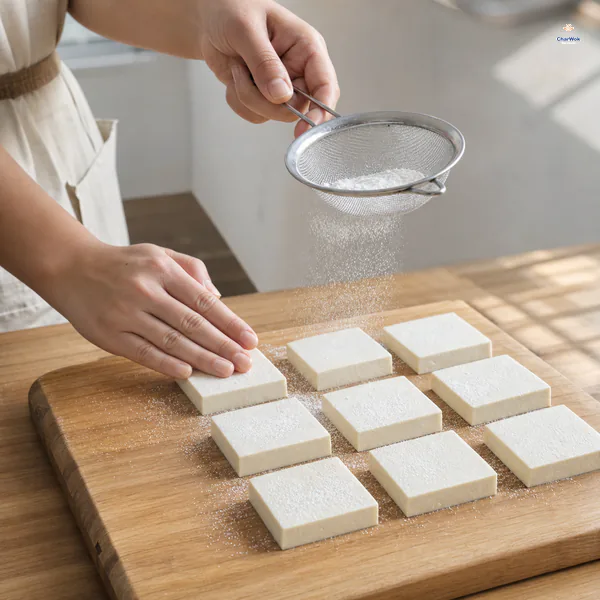
Sift cornstarch lightly over both sides and tap off the excess—the goal is a flexible film, not a thick breaded coating.
- Mix the sauce in advance. In a small bowl, stir together the Shaoxing wine, black rice vinegar, water, sugar, and 1 Tbsp cornstarch until smooth. Do this now, before the stove gets frantic. The starch will settle to the bottom within a minute, so give it another stir right before you pour. For more on the wine, see the Shaoxing rice wine guide, and for the vinegar, the black rice vinegar page.
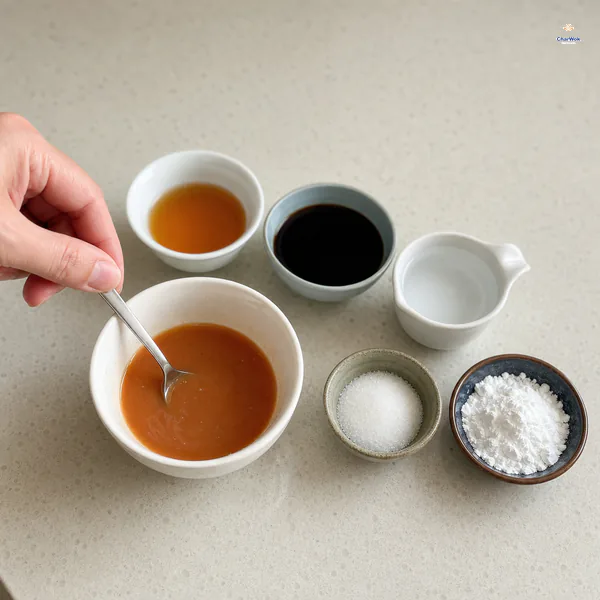
Mix the Shaoxing wine, black rice vinegar, 3 tablespoons water, sugar and 1 tablespoon cornstarch until smooth, then stir again immediately before pouring because the starch settles quickly.
- Heat the pan properly. Put a carbon-steel wok or a heavy skillet over high heat with 2 Tbsp of oil and let it get genuinely hot, shimmering but not smoking hard. The single biggest mistake I see is sliding tofu into oil that is only warm. Cold oil plus wet starch equals glue, and the tofu welds itself to the metal. Hot oil sets the starch instantly and the tofu floats free.
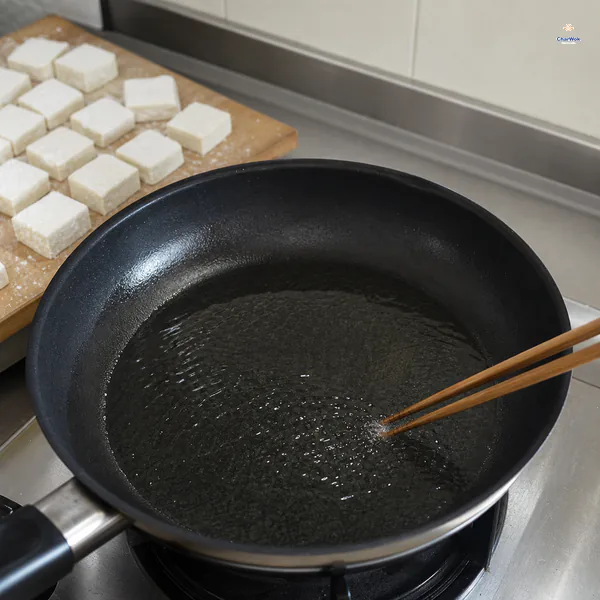
Heat 2 tablespoons neutral oil over high heat until it shimmers and fine bubbles form around a chopstick tip; the oil should be hot but remain a shallow film, not a deep-fry bath.
- Lay the tofu in, then leave it alone. Lower the heat to medium the moment the tofu is in, and do not crowd the pan, fry in two batches if you must. Resist every urge to peek, poke, or nudge for a full ninety seconds. The crust needs uninterrupted heat to form. If you try to lift a piece and it resists, it is not stuck, it is not done. Wait thirty seconds and try again. It will release the moment it is ready. Flip when the underside is a deep amber. Repeat on the second side, then transfer to a plate.
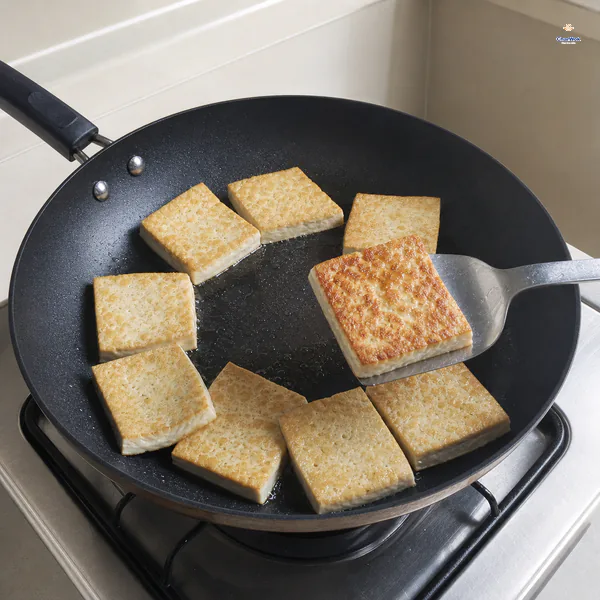
Lower the heat to medium and leave the tofu untouched for 90 seconds; if a piece resists, wait another 30 seconds, then flip only after it releases with a deep-amber underside and brown the second side.
- Bloom the aromatics. In the same pan, add the remaining 1 Tbsp oil over medium heat. Add the ginger, garlic, fresh chili, and doubanjiang. Stir for twenty to thirty seconds, pressing the bean paste against the oil so its red color and fermented depth bleed out. You are not browning the garlic, you are waking it up. Burnt garlic turns bitter and there is no rescue.
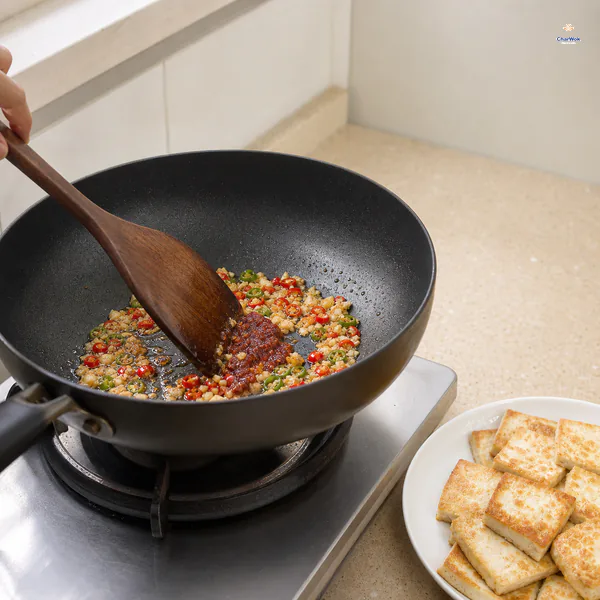
In the same pan, bloom ginger, garlic, fresh chili and doubanjiang in the remaining tablespoon of oil for 20 to 30 seconds, pressing out the red oil while the garlic is still pale.
- Glaze the tofu. Stir the sauce bowl one last time and pour it in. It will bubble and thicken almost immediately as the starch hits the heat. Return the tofu to the pan and gently turn the pieces so each one is glazed. The dish is done the moment the sauce is glossy and clings, about thirty seconds. Pull it off the heat before the sauce reduces to paste.
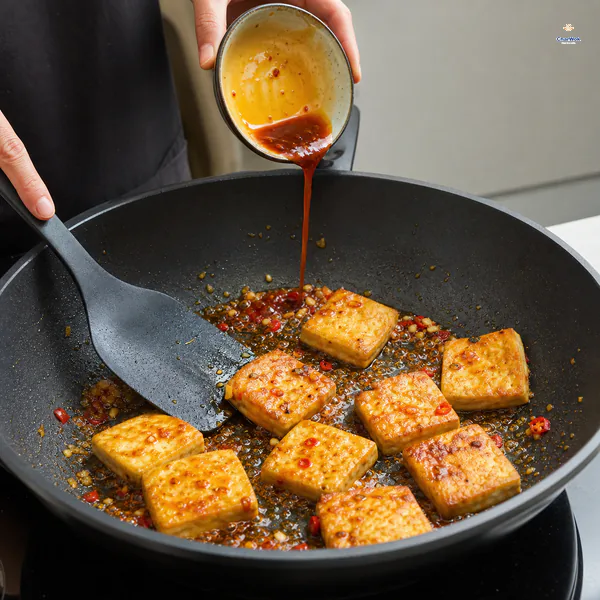
Stir and pour in the sauce, return the tofu and turn it gently; stop after about 30 seconds as soon as the thin glossy glaze clings, before it reduces to a paste.
- Finish and serve. Scatter the scallion greens over the top and bring it straight to the table with rice. The crust softens fast once it sits in the sauce, so the window between perfect and merely good is short.
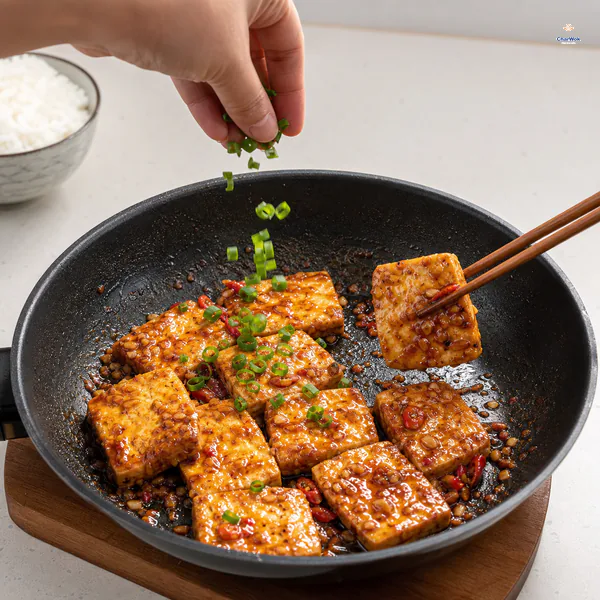
Turn off the heat when a lifted piece still carries a thin bright glaze, scatter over the scallion greens and serve immediately with rice before the crust softens.
When things go wrong
The tofu stuck and broke
Either the oil was not hot enough when the tofu went in, or you tried to move it before the crust had set. For the next batch, wait longer, and trust the release test. A piece that fights the spatula is telling you it needs another thirty seconds. If half the pan is already stuck, stop prodding, add a teaspoon of water, and cover for a minute to steam it loose; the crust suffers but the tofu survives.
The crust is pale and soft
Two usual causes: too little starch, or a pan that was overloaded so the oil temperature crashed. Dust more generously next time, and fry in smaller batches. A wet block also steams instead of sears; if your tofu was weeping in the tub, press it under a plate and a can for fifteen minutes first.
The sauce broke or went lumpy
That is starch that was not stirred before pouring, or a sauce added to a pan that was too cool. Whisk it smooth before it ever touches heat, and pour it into a hot pan so it gels instantly and evenly. If it is already lumpy, a splash of water and a hard stir over high heat usually smooths it out.
The sauce tastes one-note
One-note salty means the doubanjiang dominates; add sugar and a splash of vinegar. One-note sour means too much vinegar; balance with sugar. The dish should read sweet-sour-salty-spicy in roughly equal measure. Taste the sauce in the pan before the tofu goes back in, because that is your last easy chance to fix it.
Variations and pairings
Once the sauce is in your head, it travels. Pan-fried eggplant is the classic sibling, and yu xiang eggplant uses the same logic on a softer vegetable. For a meat version, shredded pork in garlic sauce is the canonical one. If you want tofu in a darker, deeper mood another night, braised Sichuan tofu or a proper mapo tofu take the bean in different directions.
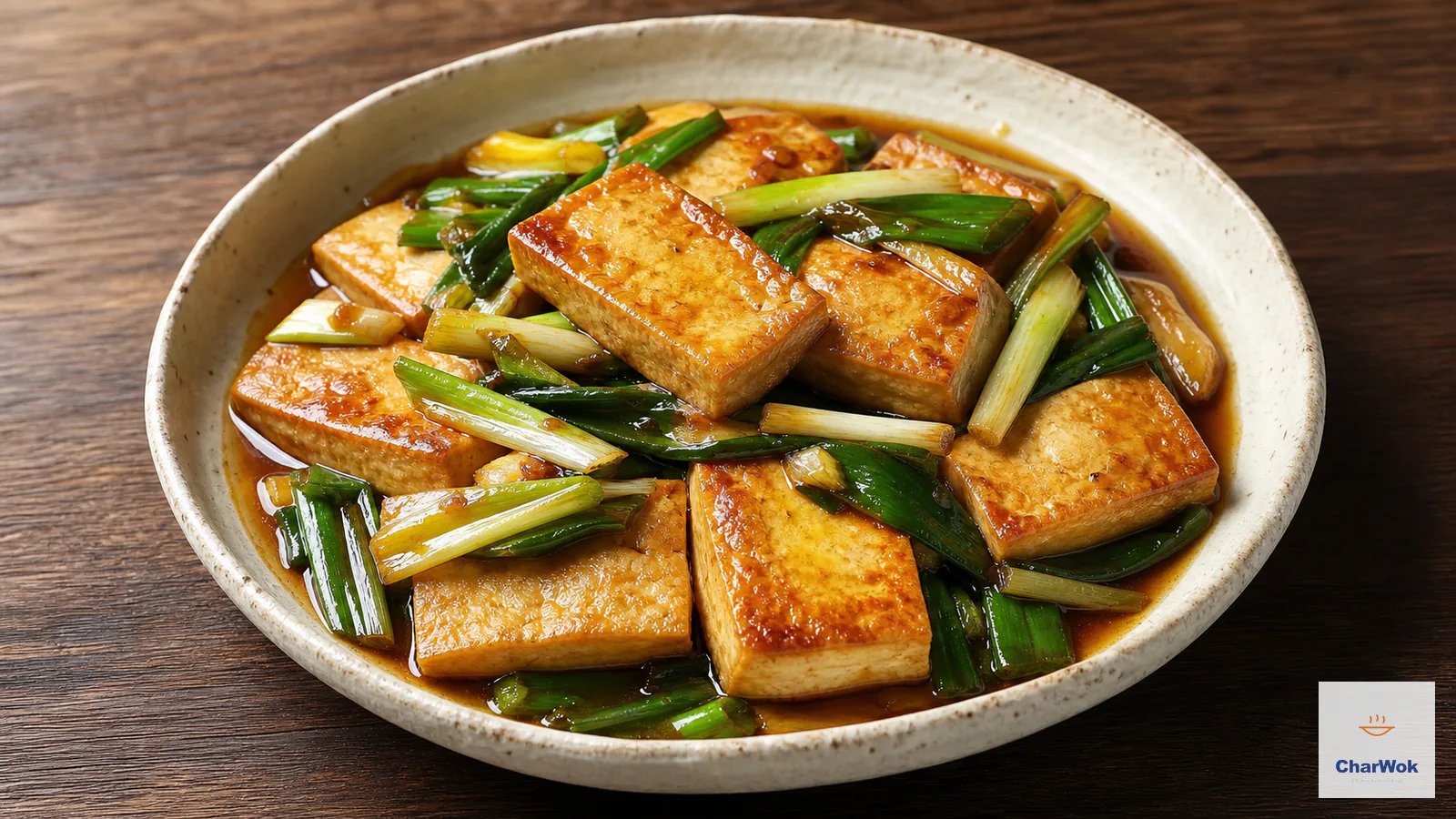
For texture contrast, fold a handful of minced vegetables into the sauce at the end, or take it in the drier direction with salt and pepper tofu, which skips the sauce and leans on a chili-salt dust. A simpler weeknight cousin is scallion tofu, which uses no starch at all and a lighter hand.
On the table, this is a saucy main that wants plain rice and one or two clean-tasting sides. A quick bok choy stir-fry or steamed enoki mushrooms keep the meal from feeling heavy, and a tomato and egg stir-fry adds the soft, sweet note the meal needs. If you are building a full Sichuan spread, it slots in alongside any of the dishes in the Sichuan recipes collection.
Storing and reheating
Leftovers keep in the fridge for two days, but the crust will soften, and that is the trade-off. Reheat in a pan over medium heat with a tablespoon of water to loosen the sauce, not in the microwave, which turns the tofu rubbery. I do not recommend freezing; the tofu's texture goes spongy and strange on thawing. Honest answer: this is best cooked to order, in the quantity you will eat.
Frequently asked questions
Can I bake or air-fry the tofu instead of pan-frying? Yes, a 220 C (425 F) oven or air fryer for about twenty minutes, flipped once, gives a decent crust with less oil. Toss the pieces in a tablespoon of oil and the starch first. The crust is drier and less flexible than pan-fried, but the sauce rescues it.
Is there a good substitute for doubanjiang? A mix of gochujang with a little extra fresh chili and a pinch of sugar gets close in heat and funk. Plain sweet chili sauce does not, it is too sugary and lacks the fermented depth.
Why does my sauce taste flat even though I followed the recipe? Doubanjiang varies wildly in salt and intensity by brand, so a "correct" amount in one jar overpowers the dish in another. Taste the raw sauce (a tiny dab on a spoon) before cooking and trust your own palate over any recipe's measurement.
Can I make it ahead for guests? Fry the tofu and mix the sauce a few hours in advance, then hold both separately at room temperature. Reheat the pan, bloom the aromatics, add the sauce, and toss the tofu back in right before serving. Do not combine them early or the crust dissolves.