The first few times I made scallion tofu, I ended up with something closer to scrambled tofu in soy broth. The crust washed off, the scallions went limp, and the sauce pooled at the bottom of the bowl. The fix was not a better recipe. It was learning that the dish has two separate jobs, done in the same pan: build a scallion-perfumed oil, then let that oil finish a tofu that has already crisped on its own. Once I stopped trying to do everything at once, the dish became the twenty-minute weeknight dinner I reach for when the fridge is almost empty.
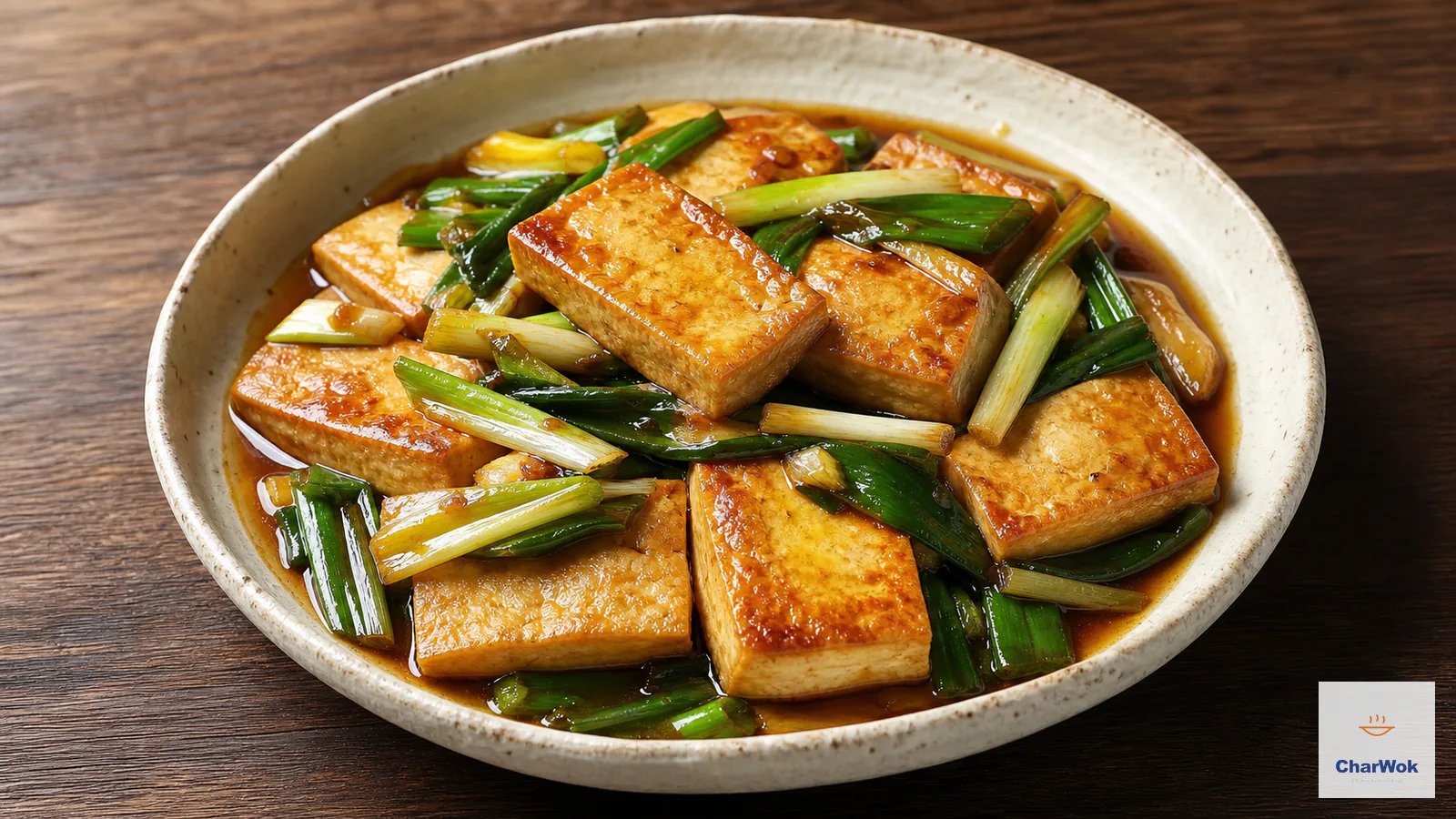
Crispy slices of firm tofu braised in a glossy, scallion-heavy sauce, this is a Shandong-rooted homestyle dish that runs on technique rather than shopping. The whole point is the oil that the scallion whites give up as they fry, which then carries the soy sauce and sugar deep into the crust. It is vegan by accident, not by design. If you have ever wished Mapo Tofu came without the chili oil, this is its milder, Northern cousin.
At a glance: About 2 cm (¾ inch) slabs of firm tofu, shallow-fried to a crust, then braised for roughly two minutes in scallion-scented soy sauce, finished with a light cornstarch glaze. The make-or-break detail is patience at the fry: leave the tofu alone until it releases itself from the pan. Serves 2; start to finish under 15 minutes.
What the dish actually is
Scallion tofu, cong shao dou fu, belongs to the broad family of shao (烧) dishes from Shandong and the north, where "to braise" means to reduce a small amount of seasoned liquid down until it clings. Think of the same verb in scallion-braised pork chops or scallion chicken chops, where the scallion is the headline flavor, not a garnish. The tofu version is the lightest of the set: no meat to render, no long stew, no chili. It gets its depth from two things, the Maillard crust on the tofu and the allium oil from the whites.
Because the flavor leans on the scallions, this is not the moment to use three sad stalks from the back of the drawer. I use eight generous ones for a pound of tofu, and I separate the whites from the greens because they do opposite things. The whites fry hard and give up their aroma to the oil; the greens go in late and stay bright, the way they do in scallion oil noodles. If you have ever made scallion oil from scratch, you already know how much fragrance a slowly fried scallion white carries.
The right tofu (and the ones to avoid)
Firm tofu is the correct choice here. In Chinese groceries it is labeled lao dou fu (老豆腐, "old tofu") or bei dou fu (北豆腐, "northern tofu"). It has been pressed enough to hold its shape under a spatula and to brown rather than shatter. I use the same block for salt and pepper tofu and Hakka stuffed tofu, and it is what makes a clean tofu omelet possible.
A few cautions born of wasted blocks. Soft tofu (nen dou fu) will work if you are gentle and pat it very dry, but expect some breakage and a paler crust; it is the right choice for cold silken tofu salad, not for this. Silken tofu, the kind that comes in an aseptic box and has never been pressed, is a hard no, it will collapse the moment it meets oil. And skip the "extra firm" supermarket block in the plastic tub. It is so dry and crumbly that it fries into gravel with none of the custardy center you want. If your only option is a mainstream supermarket, buy the plain firm block, not the extra-firm one labeled for grilling.
Ingredients
Ingredients at a glance
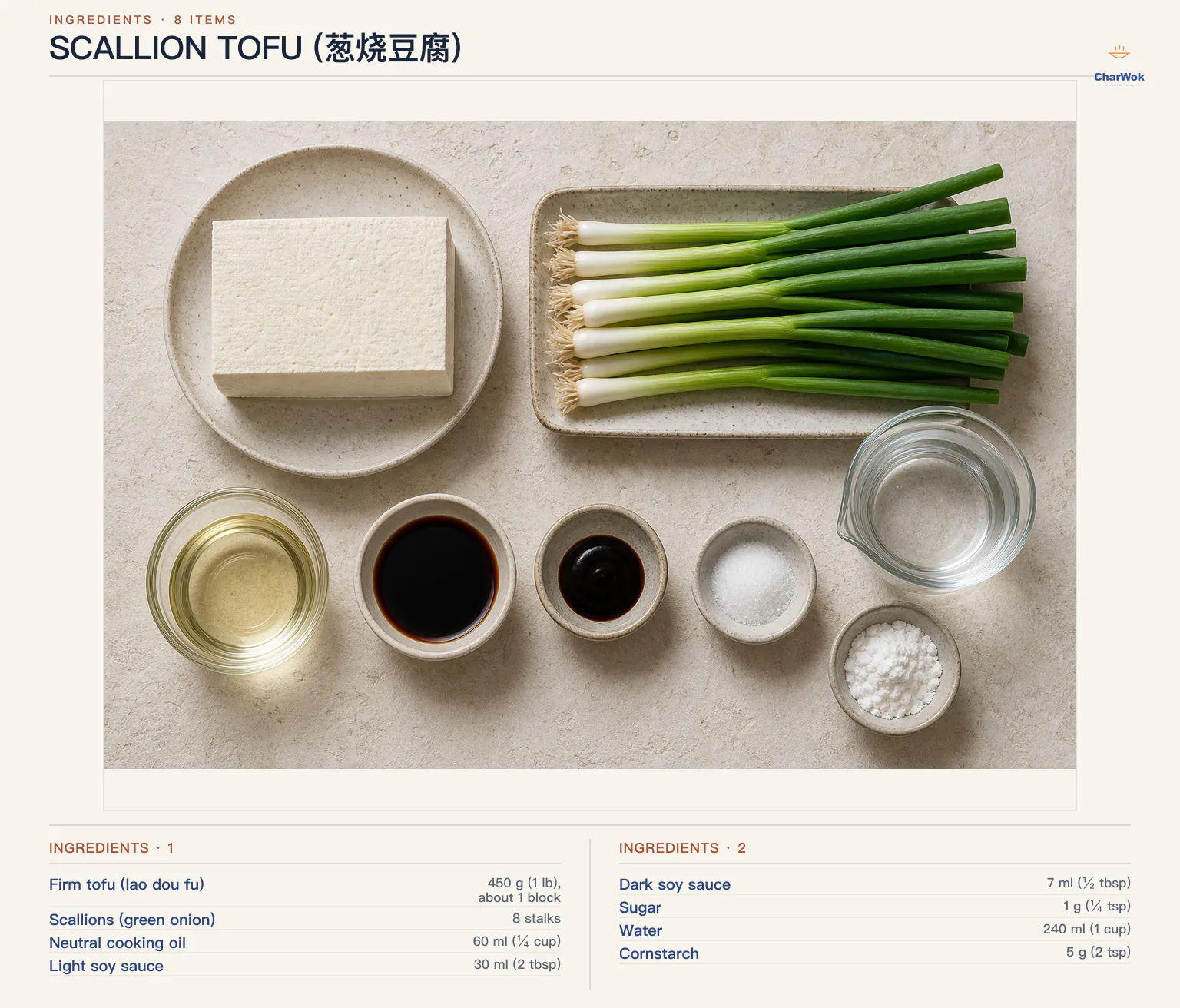
| Ingredient | Amount | Notes / substitute |
|---|---|---|
| Firm tofu (lao dou fu) | 450 g (1 lb), about 1 block | Soft tofu works with care; do not use silken or extra-firm |
| Scallions (green onion) | 8 stalks | Separate whites from greens; do not skimp |
| Neutral cooking oil | 60 ml (¼ cup) | Canola, peanut, or sunflower; adjust to just cover the pan bottom |
| Light soy sauce | 30 ml (2 tbsp) | For salt and umami; see my light vs. dark soy sauce breakdown |
| Dark soy sauce | 7 ml (½ tbsp) | For color only; add a little water if yours is very dark |
| Sugar | 1 g (¼ tsp) | Balances salt; use rock sugar or regular white sugar |
| Water | 240 ml (1 cup) | Hot water from the kettle keeps the fry going |
| Cornstarch | 5 g (2 tsp) | Mix with 15 ml (3 tsp) water just before use; potato or tapioca starch also work |
Method
- Cut and dry the tofu. Slice the block into slabs roughly 2 cm (¾ inch) thick; squares or triangles both work. Lay the pieces on a folded paper towel and press another on top. Surface moisture is the enemy of the crust and the main reason the oil spits. Ten seconds of pressing saves you a splattered stovetop.
- Split the scallions. Chop the whites finely; they will fry down and flavor the oil. Halve the greens lengthwise, then cut into 5 cm (2 inch) lengths so they keep some presence in the finished dish rather than disappearing into threads.
- Fry the tofu in one layer. Heat the oil in a skillet or flat-bottomed wok over medium until a chopstick tip dropped in trails small bubbles. Lay the slabs in without crowding. Now the hard part: do not touch them. A properly heated pan and a dry surface let the tofu release on its own once the crust sets, usually three to four minutes. If you pry early, you tear the crust and the job is lost. Flip, brown the second side, then lift the tofu out and leave the oil behind. If sticking is a chronic problem for you, the pan, not the recipe, is at fault; the principles in my wok guide apply to any skillet.
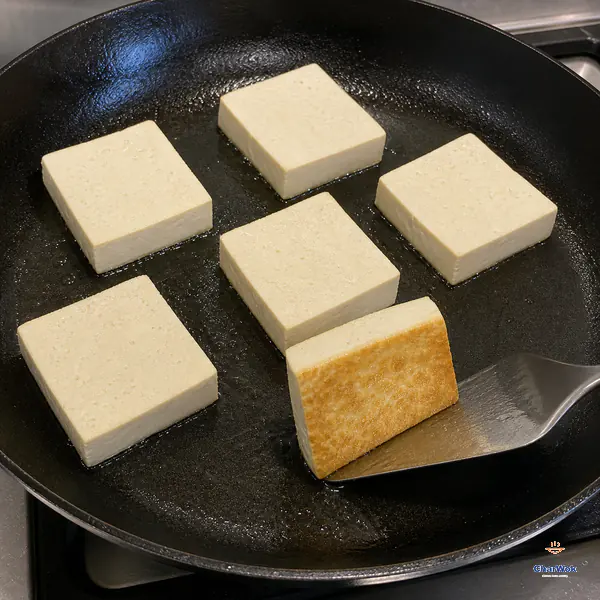
Leave the dry tofu untouched until it slides freely, then check for an even golden crust before turning it.
- Build the scallion oil. With the tofu resting on a plate, drop the chopped whites into the same oil. Fry over medium until the edges turn pale gold and the kitchen smells unmistakably of toasted allium, about one minute. This is the flavor base of the entire dish. Let the whites go blond, not dark; burnt scallion whites taste bitter and flat.
- Deglaze and braise. Pour in the light soy, dark soy, sugar, and hot water. It will hiss and lift the browned bits off the pan, those are pure flavor. Bring to a full boil, return the tofu, and add the scallion greens. Braise uncovered over high heat for about two minutes, flipping once if you used a skillet so both sides drink the sauce. Uncovered matters: a lid traps steam and softens the crust you just built.
- Glaze with the slurry. Turn the heat to low. Stir the cornstarch water until evenly milky (it settles fast), then pour it in while pushing the tofu gently through the sauce. Within twenty seconds the liquid turns glossy and clings. Stop when it coats a spoon lightly; it will tighten further off the heat. Serve immediately over rice.
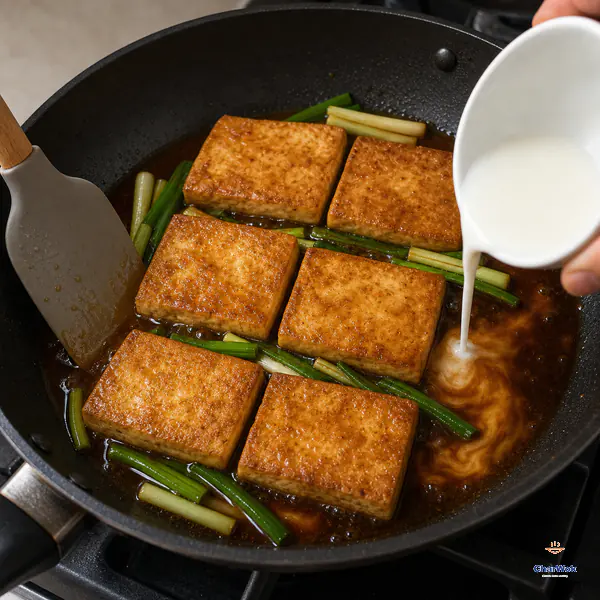
Restir the settled slurry, pour it into the sauce at low heat and push gently only until a thin glossy coat clings to the tofu.
When it goes wrong
The tofu falls apart in the pan. Almost always one of three things: you flipped before the crust set, the oil was not hot enough when the tofu went in, or you used a soft or silken block. Next time, wait longer on the first side and test the oil with a chopstick before adding the tofu. The tofu should hiss, not whisper.
The sauce refuses to thicken, or turns gummy. Cornstarch needs a full boil to gel, and it loses that power if held at a simmer too long or reheated repeatedly. If the sauce stays thin, bring it back to a hard roll for a few seconds. If it goes pasty and stiff, you cooked the starch too long or used too much; thin it with a splash of hot water and pull the pan off the heat the instant it coats the spoon.
The dish tastes flat despite all the scallions. The whites were probably not fried long enough, or the oil was too cool. Pale, steamed scallion whites taste of raw onion; gold-fried ones taste of toasted allium. A tiny pinch more sugar also helps the soy sauce read as savory rather than just salty.
The crust washes off during the braise. The braise ran too long or the liquid was too aggressive a boil. Two minutes uncovered is the ceiling. Anything more and the sauce eats the crust. The crust is a means to an end, it is there to hold the tofu together and soak up flavor, not to stay crunchy. But you still want some textural contrast when the fork goes in.
Variations and what to serve it with
Air-fryer tofu. To cut the oil, mist the slabs and air-fry at 200°C (390°F) for 10 to 12 minutes, flipping once, until gold. Build the scallion oil and sauce in a skillet with just a tablespoon of oil, then fold the air-fried slabs in for the glaze. You lose a little of the fried flavor but keep the structure.
Garlic and ginger backbone. Two cloves of smashed garlic and three thin ginger coins fried with the scallion whites round out the aroma. This nudges the dish toward the garlic-sauce tofu family without changing its identity. Skip the ginger if you want the pure scallion note.
Spicy version. A teaspoon of doubanjiang or a chopped dried red chili in the scallion oil takes this toward Sichuan braised territory, a gentler relative of Sichuan-style braised tofu. Add the paste before the soy sauce so it fries a few seconds and loses its raw edge.
Pairings. Steamed rice is non-negotiable for mopping the glaze. For a full plate, add a quick stir-fried green and a soup; a clear tofu and vegetable soup makes the meal feel complete without doubling the cooking time. Leftover cold tofu also shines the next day in a soy sauce fried rice.
Storage and reheating
Scallion tofu is best the day it is made, but it keeps, covered, in the fridge for up to two days. The cornstarch glaze will set into a jelly overnight; that is normal. To reheat, put the tofu and sauce in a pan with a tablespoon of water and warm gently over low heat until the sauce loosens and the tofu is hot through. Avoid the microwave if you can, it toughens the tofu and leaves the sauce uneven. I do not recommend freezing; the texture of firm tofu turns spongy on thaw, fine for soups, unpleasant here.
Frequently asked questions
Can I use soft tofu instead? Yes, if you pat it dry and flip very gently. Expect a paler crust and a higher breakage rate. Skip silken entirely.
Do I need a wok? No. A heavy skillet works better for beginners because the flat surface browns the slabs evenly. A wok is fine if yours is seasoned; see the wok guide linked above for avoiding sticking.
Why separate the scallion whites and greens? Whites fry well and flavor the oil; greens scorch and lose color if added early. They go in at the braise so they stay bright.
Is it gluten-free? Not as written, because soy sauce contains wheat. Swap in tamari or a gluten-free soy sauce and the dish becomes fully gluten-free with no other changes.