Open a bag of fermented black beans and the smell hits you first: a deep, funky, salt-warm aroma somewhere between aged cheese, dark soy, and roasted nuts. That smell is the whole point. In Cantonese it answers to douchi (豆豉); in Sichuan and Hunan kitchens it is the invisible hand behind a huge share of the dishes you order at a restaurant. Drop a teaspoon of chopped beans into hot oil with garlic and your stir-fry suddenly has a backbone it did not have before.
Here is the pain point most home cooks hit. You buy a pouch, use two tablespoons for one recipe, and the rest sits in the back of the pantry going stale. Or worse, you grab the wrong kind, the dish comes out harsh and one-note salty, and you blame yourself. Neither is the bean's fault. The beans are forgiving once you understand a few things: which type to buy, how to prep them so they taste complex instead of aggressive, and which dishes they actually belong in.
At a glance: These are black soybeans fermented with salt until their proteins break down into savory amino acids. Buy the dry Yang Jiang style, rinse and chop before using, and aim for about 1 tablespoon of beans per 2 servings. They are salty enough that you usually cut back on soy sauce in the same dish.
What they actually are
The small prep set that keeps douchi savory instead of harsh
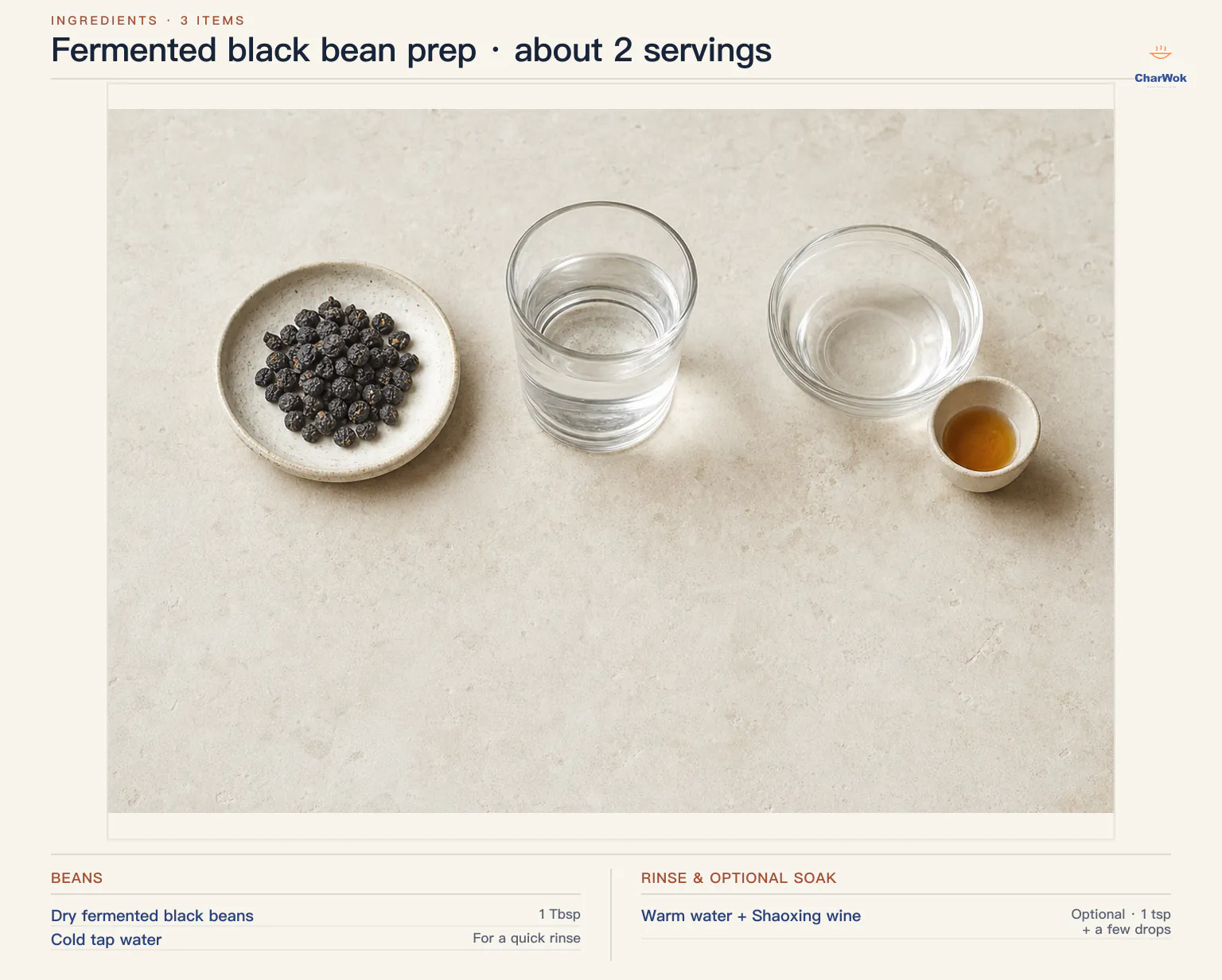
Start with the bean itself. The raw material is the black soybean, not the black turtle bean you find canned alongside the kidney beans in an American supermarket. During fermentation the beans are cooked, inoculated, salted, and aged. The salt does two jobs at once: it keeps the wrong microbes out, and it pulls moisture and proteins to the surface so enzymes can dismantle them.
What you taste as "umami" is largely free amino acids, the same family of compounds that gives Parmesan and aged ham their depth. That is why a small quantity carries a whole wok of food. It is also why no real substitute exists. Miso and fermented black garlic each share one note with douchi but neither reproduces the full profile. If a recipe calls for fermented black beans and you leave them out, the dish will be thinner and more one-dimensional, and you should not pretend otherwise.
Regionally, the beans show up everywhere but carry different roles. In Cantonese cooking they are the base of chi zhi (black bean sauce) and show up steamed with fish, prawns, and ribs. In Sichuan they team up with chili bean paste to build the layered heat in classics like Mapo Tofu. In Hunan and home-style northern stir-fries they ride along with pickled chilies and garlic. Pair them with soy sauce, Shaoxing wine, and a touch of sugar and you have the seasoning spine of a lot of Chinese cooking.
Buying: the one decision that matters most
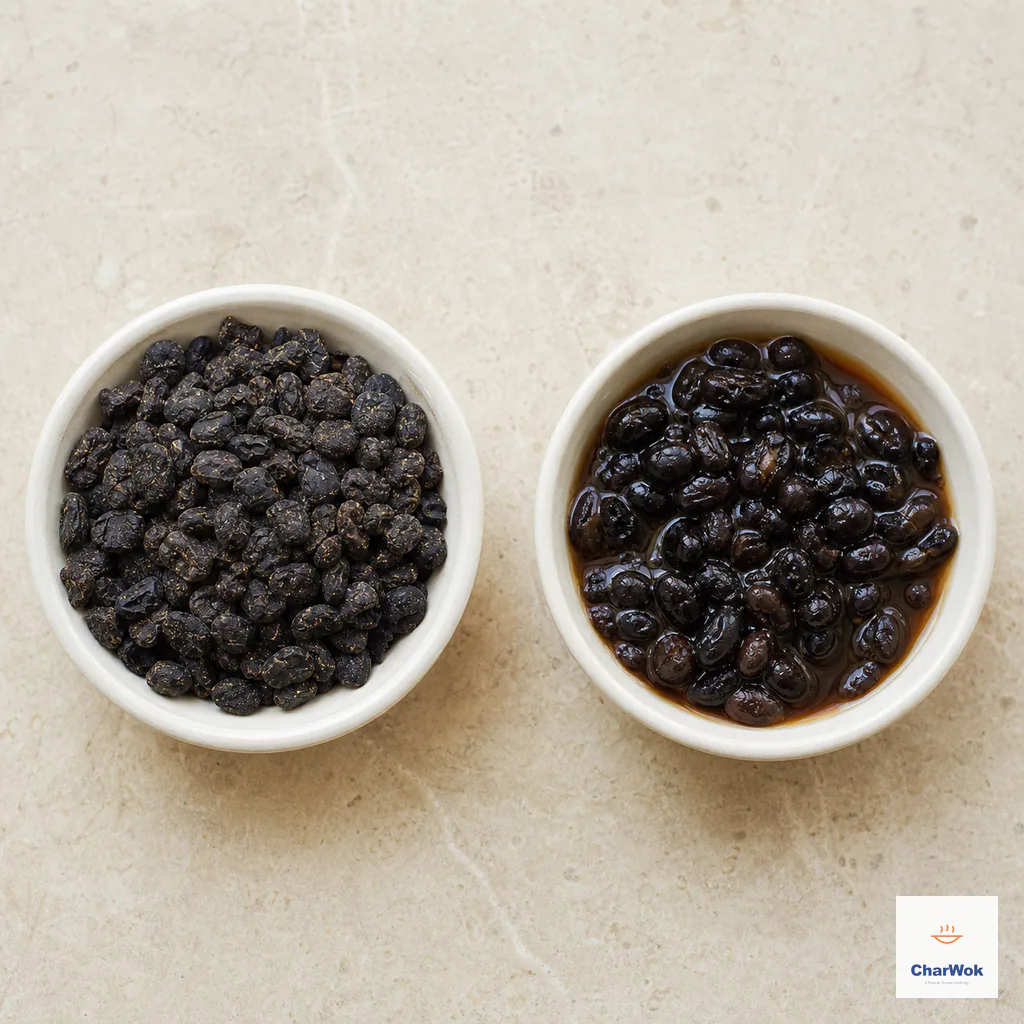
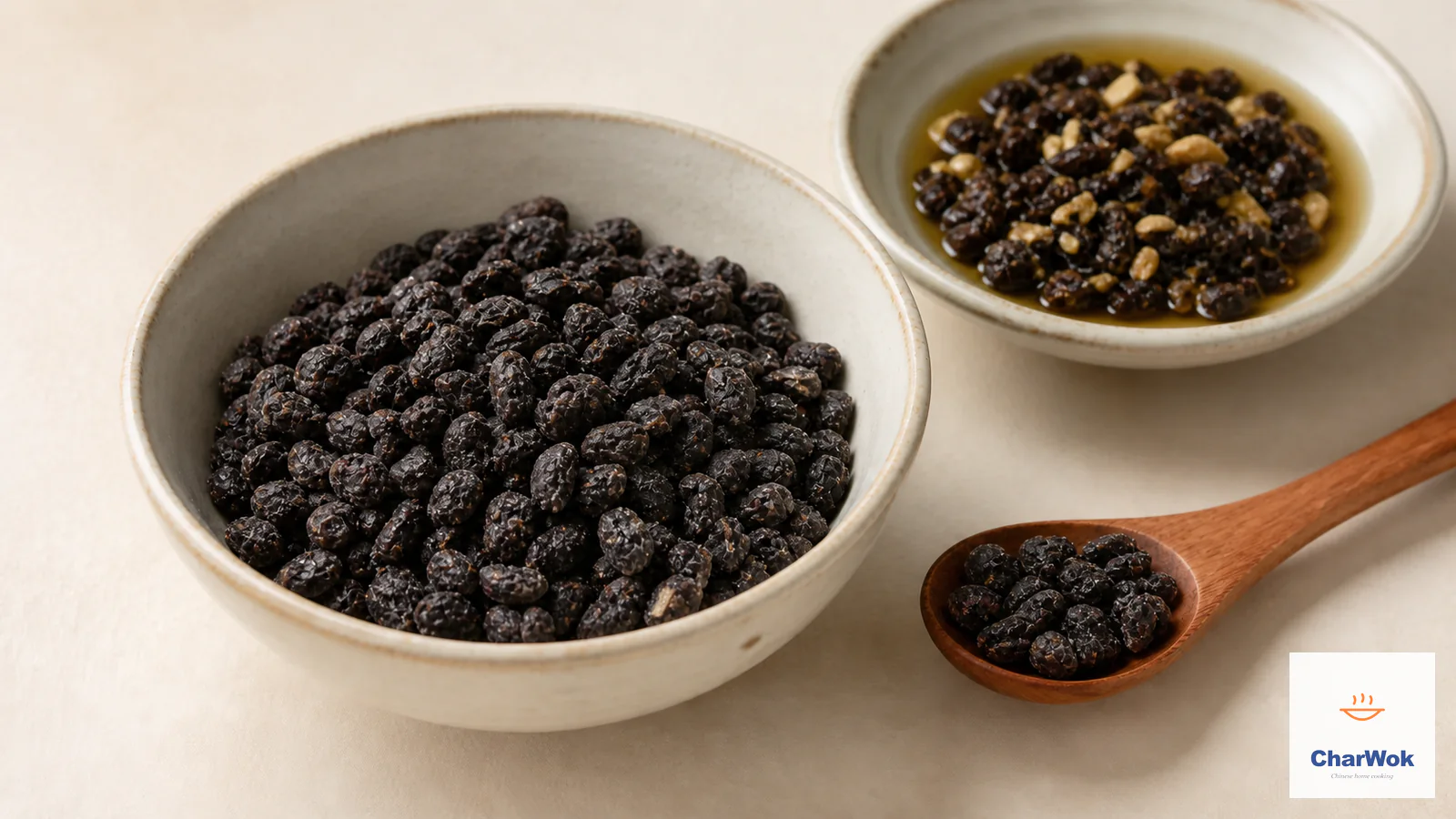
Choose loose dry Yang Jiang-style beans for the cleanest, most controllable flavor; wet brined beans are plumper, saltier and flatter.
There are two main forms on the shelf, and choosing between them changes your cooking more than any other step.
| Type | What it is | My take |
|---|---|---|
| Dry (Yang Jiang style, often with ginger) | Beans dried after fermentation, wrinkled, loose in a bag | The one to buy. Deeper, more layered flavor; behaves well in stir-fries and steamed dishes. |
| Wet / salted black beans in liquid | Beans packed in a sweet-salty brine, plumper and firmer | Saltier and flatter. I avoid these for home cooking. |
| Black bean garlic sauce in a jar | Ready-made condiment, beans minced with oil and garlic | Convenient shortcut, but it is a finished product, not the raw ingredient this guide is about. |
If your local shop only stocks the wet kind, rinse it longer in the next step and accept that the flavor will be a little sharper. It will still work in a steamed ribs or steamed prawns dish where steam dilutes the brine.
Storage
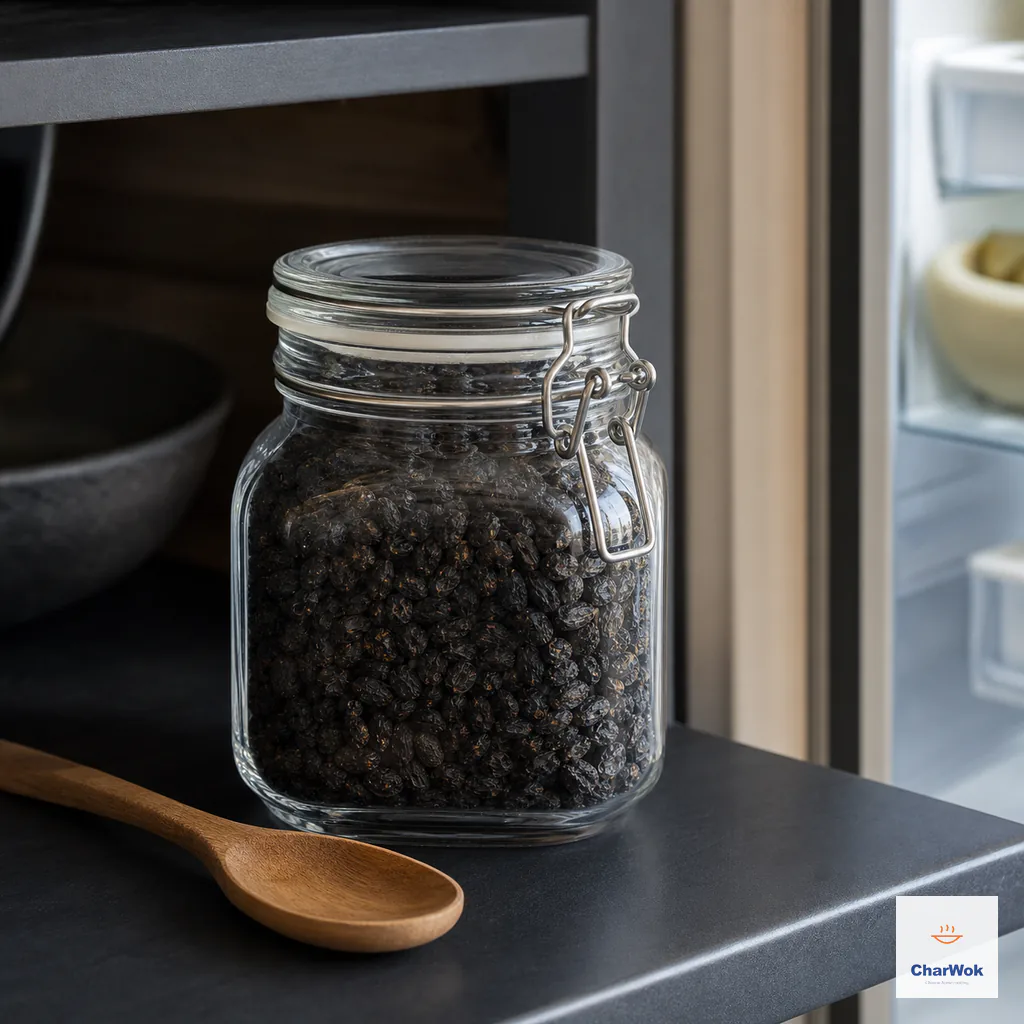
Move opened beans to a dry sealed jar, keep moisture out and store them cool and dark; refrigeration slows oxidation further.
Keep the dry beans in a sealed jar in a cool, dark cupboard and they hold their character for at least a year. Once opened I move them to the fridge in an airtight container; the cold slows oxidation and stops them from darkening further and turning bitter. If they develop a hard, dusty surface and smell flat instead of funky, they are past their best and should be replaced. They do not become unsafe, just dull, which defeats the purpose.
How to prep a handful of beans
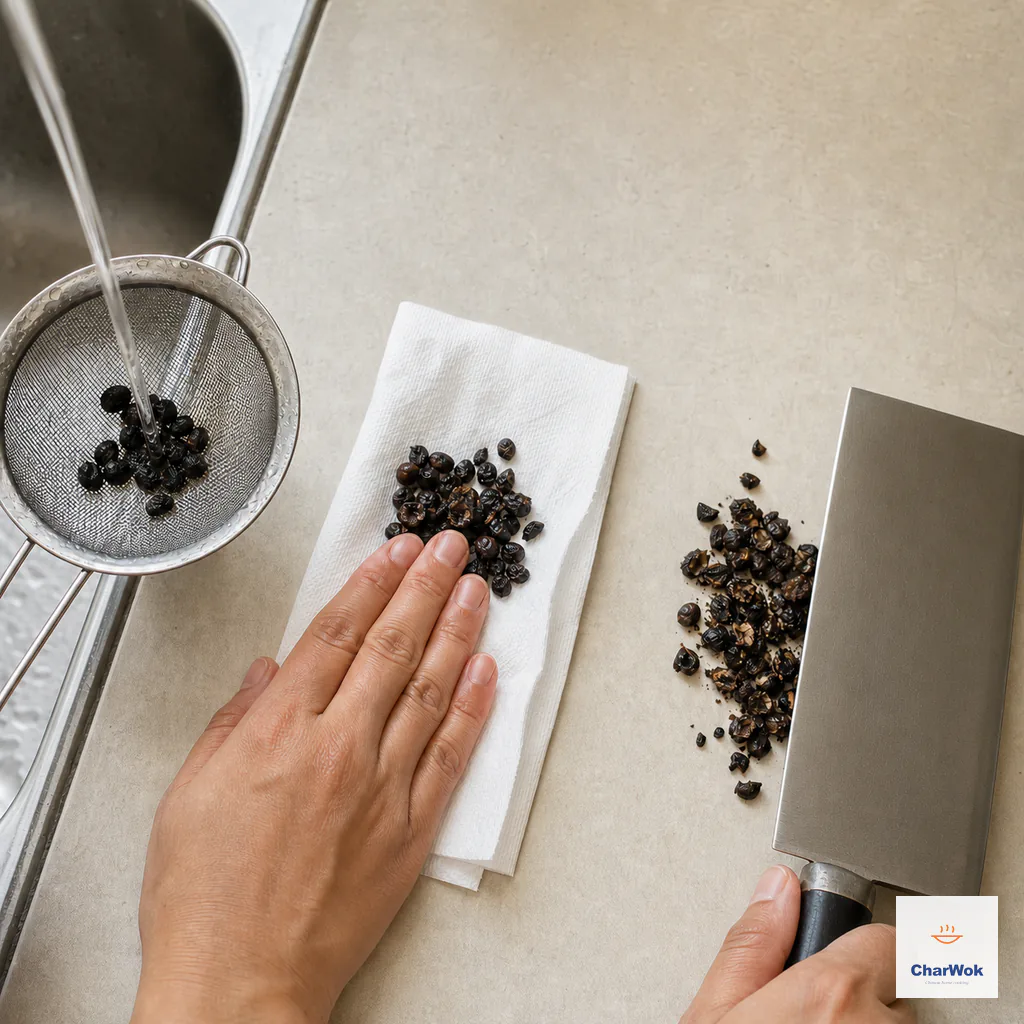
Rinse only until the water clears, dry thoroughly before oil and crush or coarse-chop so the flavor can spread through the dish.
This is the step people skip and then wonder why their dish tastes harsh. The beans come out of the bag coated in surface salt and fine residue. Used straight, that salt dominates and the deeper flavors never get a chance.
Ingredients for prep
- 1 tablespoon dry fermented black beans
- Cold tap water for rinsing
- Optional: 1 teaspoon warm water plus a few drops of Shaoxing wine for a quick soak
The method, and why each step exists
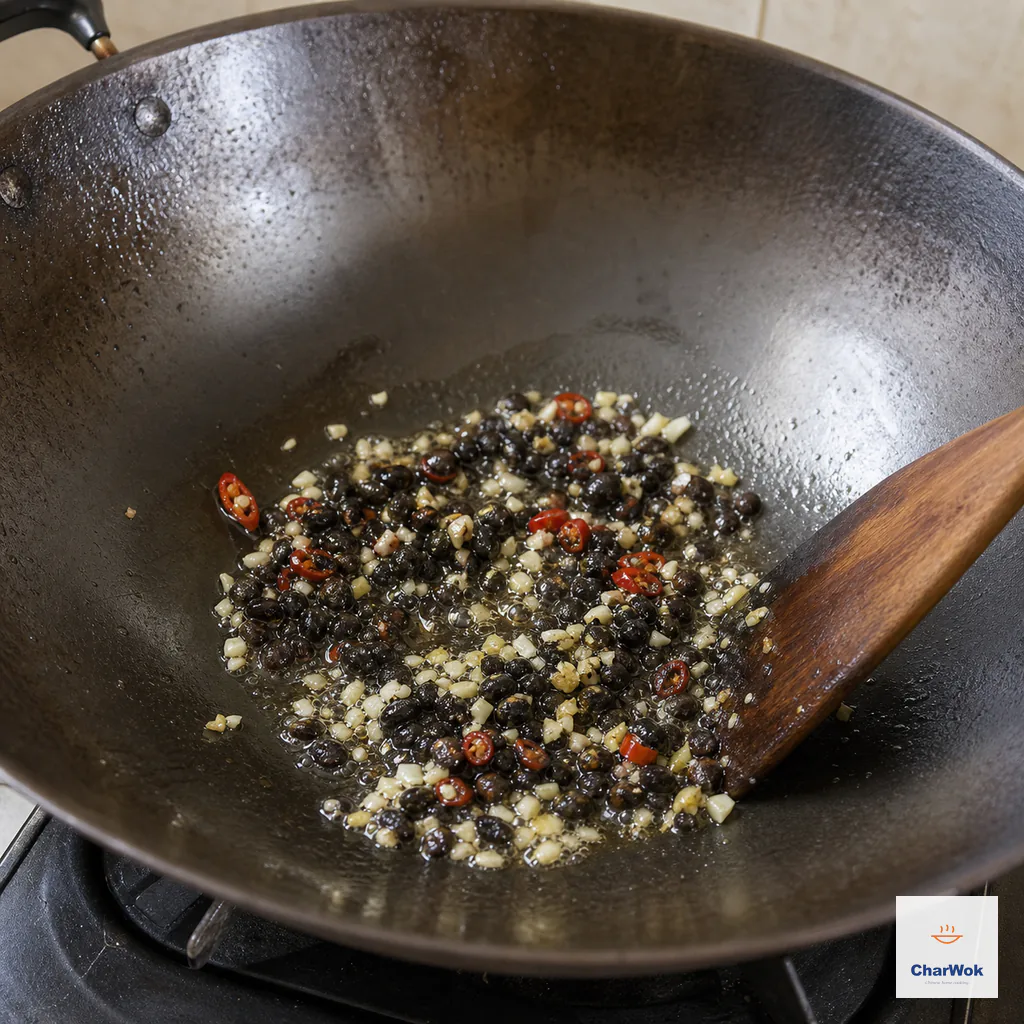
Start in barely warm oil over medium-low heat and move on as soon as the aroma rises; smoking oil scorches douchi into bitterness.
- Rinse under a thin stream of cold water. Put the beans in a fine strainer and run water over them, tossing, until it runs clear instead of gray. You are removing loose salt and starch dust, not soaking the flavor out. Ten seconds is plenty.
- Pat them dry on paper towel. Surface water spatters in hot oil and stops the beans from frying properly. Dry beans hit the oil and release their aroma into the fat, which is exactly what you want.
- Chop coarsely, or crush lightly with the side of a knife. Whole beans give you a clean bite of fermented flavor but only release it slowly. Chopping ruptures more cells and exposes more surface area to the oil, so the seasoning permeates the dish instead of sitting in pockets. I chop for stir-fries and leave them whole for steamed dishes where I want texture.
- Bloom in warm oil over medium-low heat before the main ingredients go in. Thirty seconds with garlic and maybe ginger is enough. The oil should barely shimmer; if it smokes the beans scorch and turn bitter. You will smell the moment they wake up.
- Taste the dish before adding more soy sauce or salt. The beans have already contributed salt and umami. Adding the usual amount of soy on top is the most common reason a douchi dish comes out too salty.
That prep takes under two minutes and it is the difference between a dish that tastes like the beans and one that tastes seasoned by them.
Where to put them: dishes that earn their keep
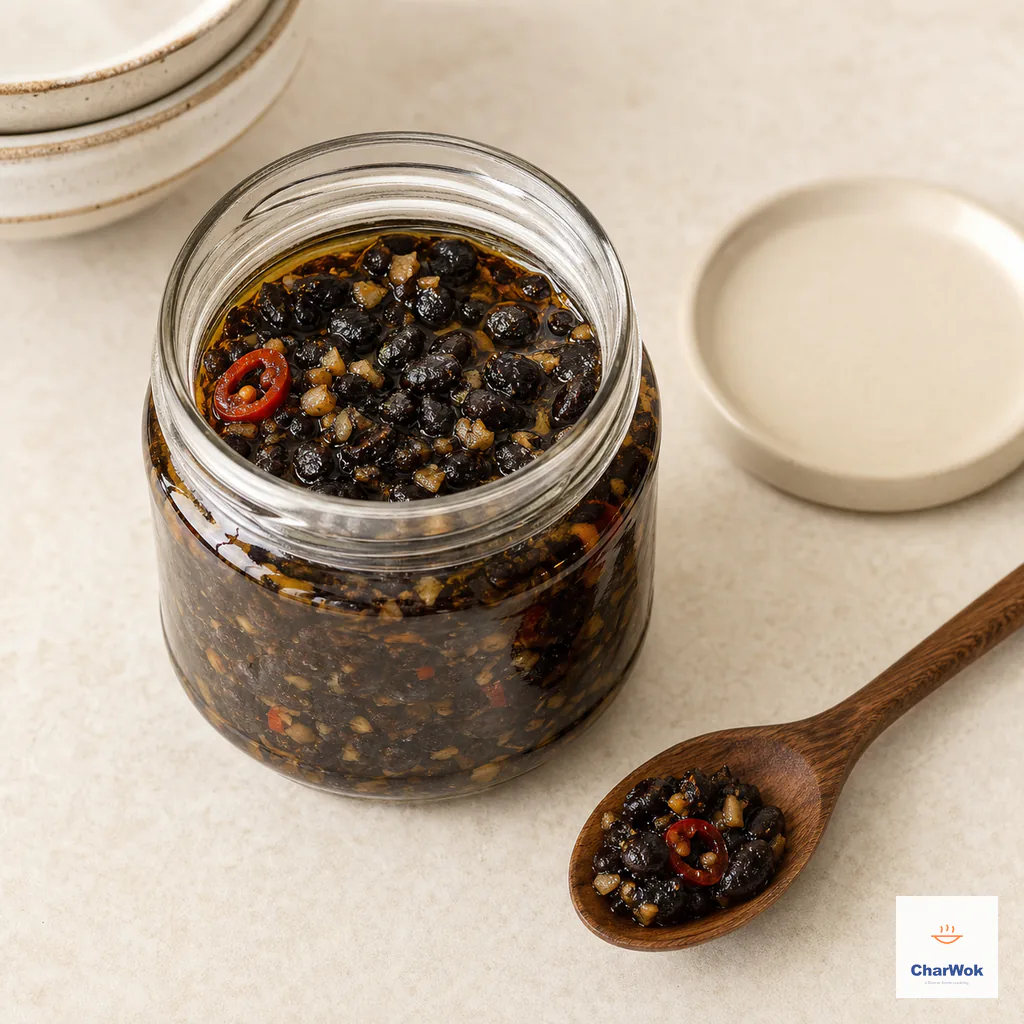
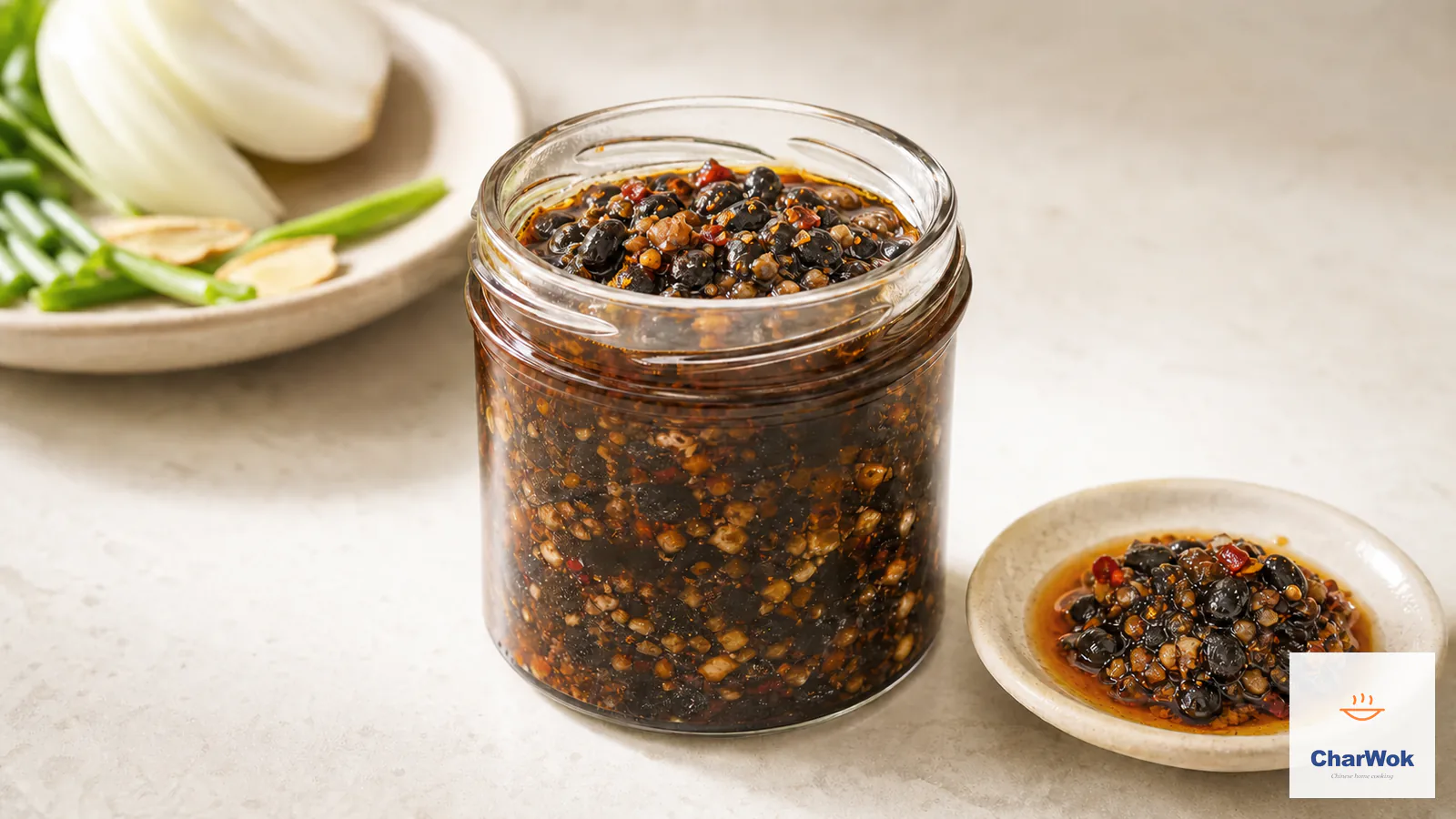
A ready jar keeps the beans textured under clear oil and turns stir-fries, steamed dishes and noodles into quick douchi meals.
The beans shine in three cooking modes, and matching the bean to the mode is half the skill.
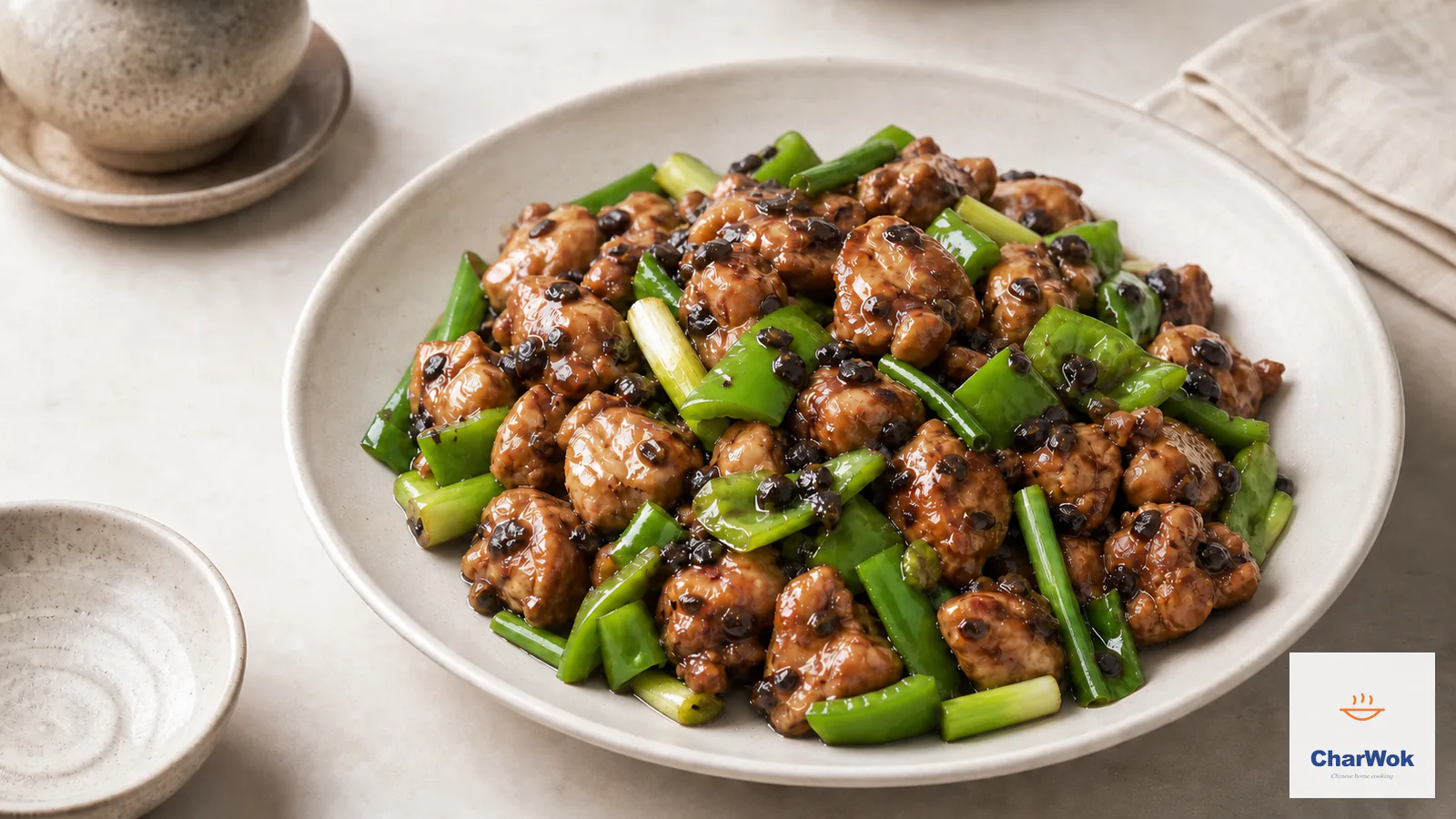
Stir-fries. Chop the beans and bloom them with garlic before the protein goes in. They love pork, chicken, and beef, and they are the quiet seasoning behind a lot of Hunan food. Try them in Hunan pork stir-fry, in Hunan chicken, or folded through a quick egg and pickled chili stir-fry where their salt balances the bright chili heat.
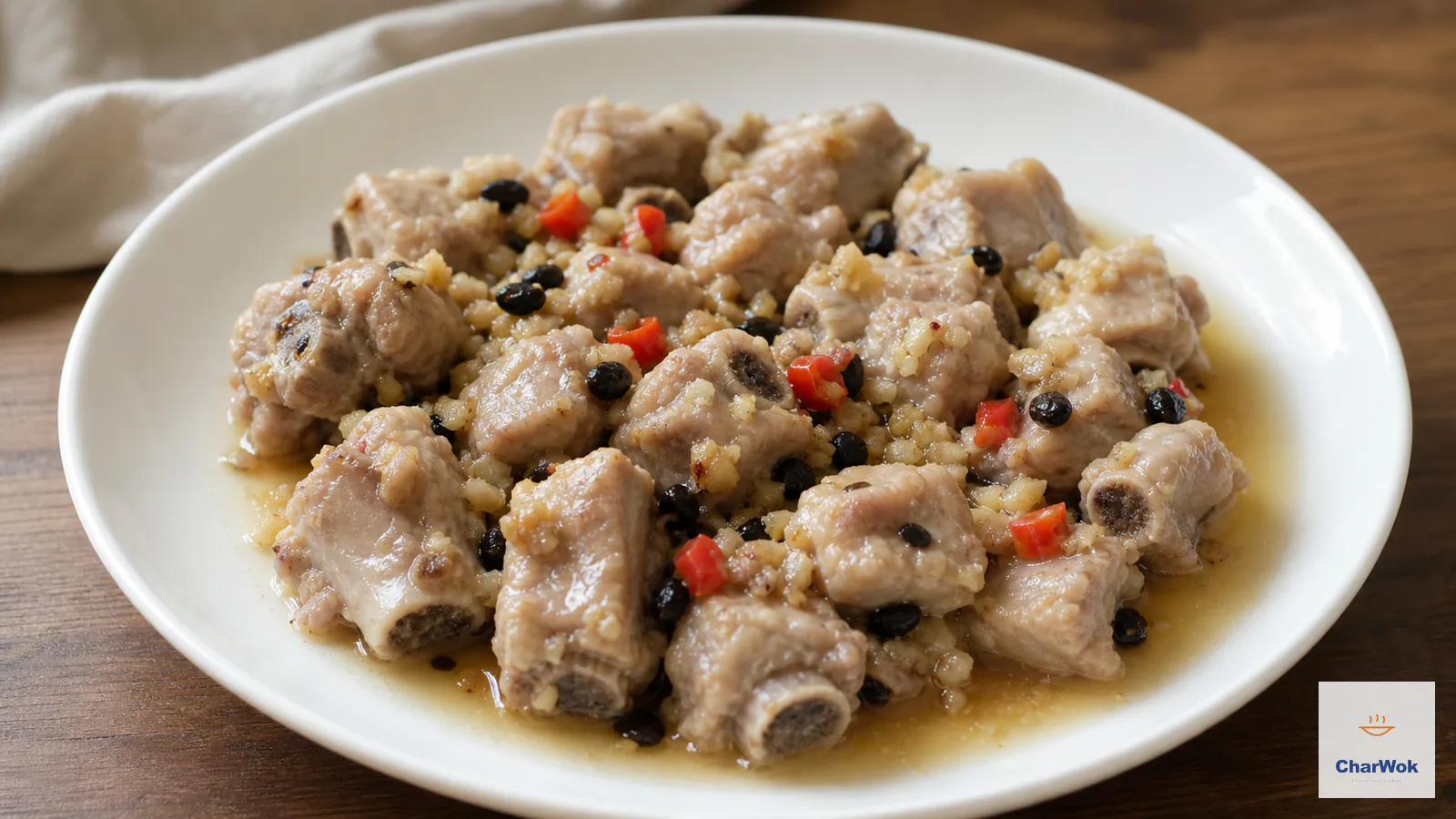
Steamed dishes. This is the Cantonese move and it is where the wet-style beans are most forgivable. The steam draws the flavor out gently and the beans soften into the sauce. The classics are whole steamed fish, steamed garlic prawns, and steamed pork ribs with black beans. Dim sum relies on the same idea for its chicken feet in black bean sauce.
Braised and twice-cooked dishes. Here the beans melt into a long-cooked sauce and add a bass note underneath sweeter or spicier elements. Twice-cooked pork and an authentic Mapo Tofu both use them this way, often alongside doubanjiang and a pinch of ground Sichuan pepper.
If you want a ready-to-use form, simmer chopped beans with garlic, oil, and a little sugar into a homemade black bean sauce. Kept in a jar in the fridge, that sauce turns a plain chicken stir-fry into chicken with black bean sauce on a weeknight with almost no thought.
When things go wrong
I have ruined enough batches to know the failure modes by heart. Here are the common ones and the fix for each.
- The dish is too salty. Almost always because you added the full amount of soy sauce on top of the beans. Next time, halve the soy and taste at the end. To rescue the current batch, dilute with a splash of stock or water and add a small pinch of sugar to round the edge.
- The beans taste burnt and bitter. The oil was too hot when you bloomed them, or they sat in the pan too long alone. Keep the heat medium-low and move on to the next ingredient the moment the aroma rises. Burnt douchi cannot be saved; start the aromatics over.
- The flavor is harsh and one-note. You skipped the rinse, or you bought the wet style and did not rinse long enough. A 20-second rinse plus a 5-minute soak in warm water with a few drops of wine softens the sharpest notes.
- The beans are gritty or sandy in the finished dish. Fine dust from the bag was not rinsed away. Run them under water a few seconds longer next time.
- Nothing tastes like the beans at all. You added them too late. They need a few seconds in hot oil or a few minutes of steaming to release their compounds; dropped in at the end with the sauce they stay mute.
Variations and pairings
The beans play well with a short list of partners and you can build whole meals around those pairings.
- With garlic and ginger. The classic trio. Roughly two parts garlic to one part ginger for every tablespoon of beans. This is the base for almost every stir-fry above.
- With chilies. Fermented beans and chili balance each other: the salt tames raw heat, the heat lifts the funk. Combine with pickled chili garlic sauce for a quick Hunan-style seasoning, or scatter over tiger skin peppers.
- With dried seafood. A small amount of dried shrimp ground with the beans adds a sweet, oceanic top note. This is a Cantonese steamed-fish trick worth stealing.
- With a finish of toasted sesame oil and scallion. A few drops off the heat rounds the dish and adds aroma the beans lack on their own.
For acidity, a few drops of black rice vinegar at the end of a stir-fry brightens the whole pan without competing with the beans. Use it sparingly; you want a whisper, not a sour dish.
A note on what these beans are not
A quick disambiguation, because the naming collides. Fermented black beans are not the salted black beans used in some Mexican cooking, not the black beans in a Caribbean rice pot, and not black bean sauce in a can (though that sauce is made from them). They are also distinct from fermented black garlic, which is a bulb, not a bean, and tastes sweet and balsamic rather than salty and savory. If the ingredient on your label reads "black bean sauce" and lists beans as already processed, you are holding a finished condiment, not the raw material this guide covers.
Questions home cooks actually ask
The short answers, kept separate from the long explanations above.
Do I need to soak fermented black beans? A quick rinse is enough for the dry kind. A short 5-minute soak in warm water with a few drops of wine helps only if you find them too salty or harsh; soaking too long washes out the flavor you bought them for.
Can I substitute miso? Not really. Miso shares the fermented, savory character but reads as Japanese and lacks the specific earthy funk of douchi. The dish will be good in a different way, not the same way.
How long do they keep? A year in a sealed jar in a cool cupboard, longer in the fridge. They are safe well past that, but the flavor flattens and you will need to use more to get the same effect.
Are they spicy? No. The beans themselves are salty and savory, not hot. Any heat in a douchi dish comes from chilies added alongside them.
Are fermented black beans the same as black soybeans? They start as black soybeans, but the raw bean is not interchangeable. The fermentation is where the flavor comes from; a raw black soybean will not do what a fermented one does.
Bottom line: buy the dry Yang Jiang style, rinse and chop, bloom gently in oil, and pull back the soy sauce. Get those four things right and the beans stop being a one-off purchase and start being the seasoning you reach for whenever a stir-fry needs more weight than salt alone can give.