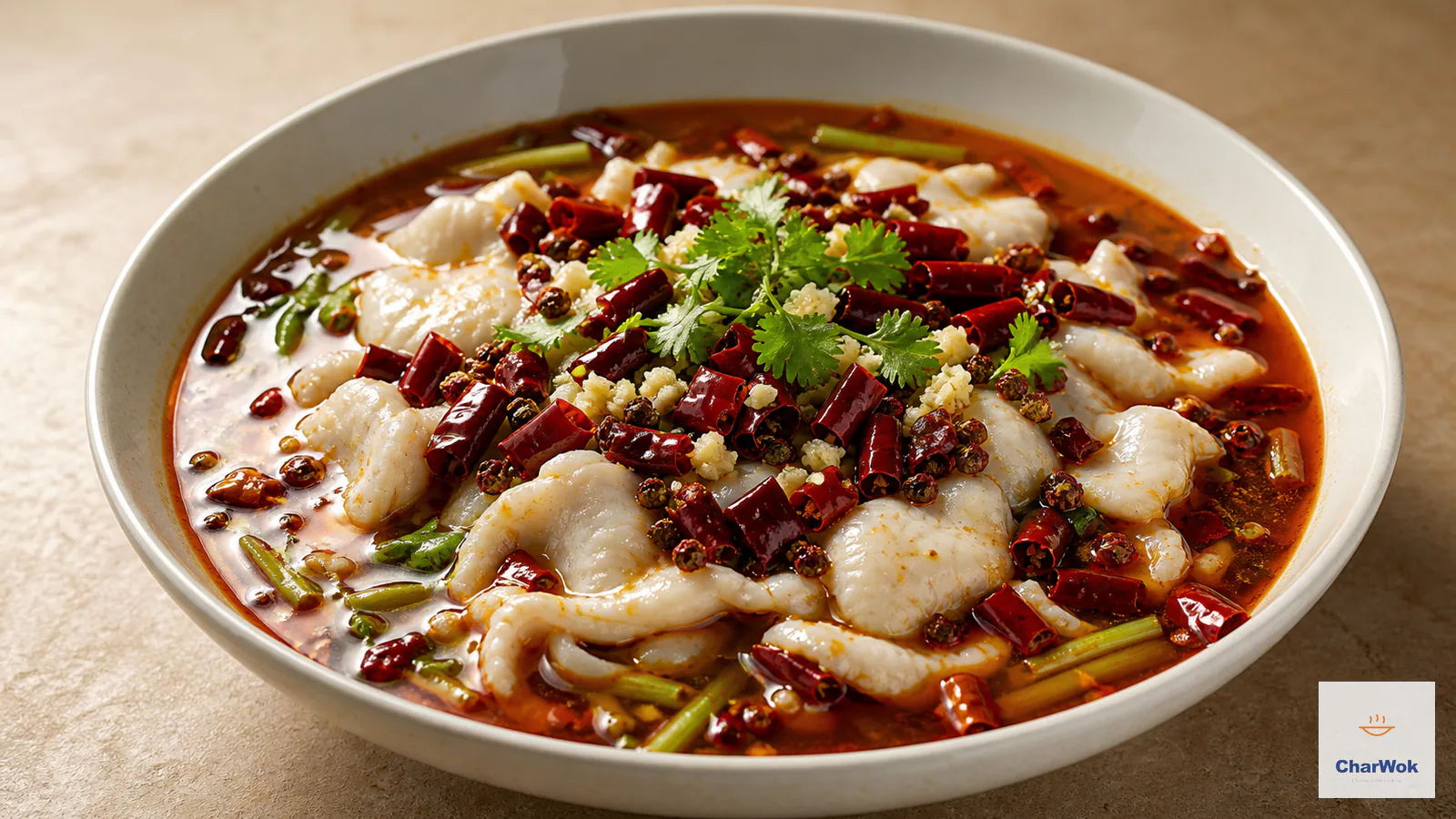
Shui Zhu Yu depends on two things: a well-seasoned broth and fish that is cooked through without turning dry. The final pour of hot, shimmering oil blooms the crushed chilies and Sichuan peppercorns without requiring the oil to smoke.
The name Shui Zhu Yu (水煮鱼) literally means "water-boiled fish," which is a small lie the dish tells to seem humble. There is no plain water involved. The fish swims in a slick, rust-red broth built from doubanjiang, dried chilies, and Sichuan peppercorn, then gets finished under a pour of oil so hot it flash-fries the aromatics on contact. It is one of the defining dishes of post-1980s Sichuan cooking, born in Chongqing restaurant kitchens and now on nearly every Sichuan menu worth its salt.
At a glance
Slice the fish about 5 mm thick and poach it at a gentle simmer until fully opaque and easy to separate with a fork. Sixty to 90 seconds is a guide, not a doneness test. The cornstarch-and-oil coating protects the surface, and keeping the broth below a hard boil prevents the pieces from shredding.
What this dish is, and what it is not
Shui Zhu Yu belongs to the same mala (numbing-spicy) family as mapo tofu and Chongqing laziji, but its texture goal is opposite to most stir-fries. The fish should be fully opaque yet glossy and tender. The oil on top is for aroma, not for finishing undercooked fish, which is why doneness must be reached in the broth.
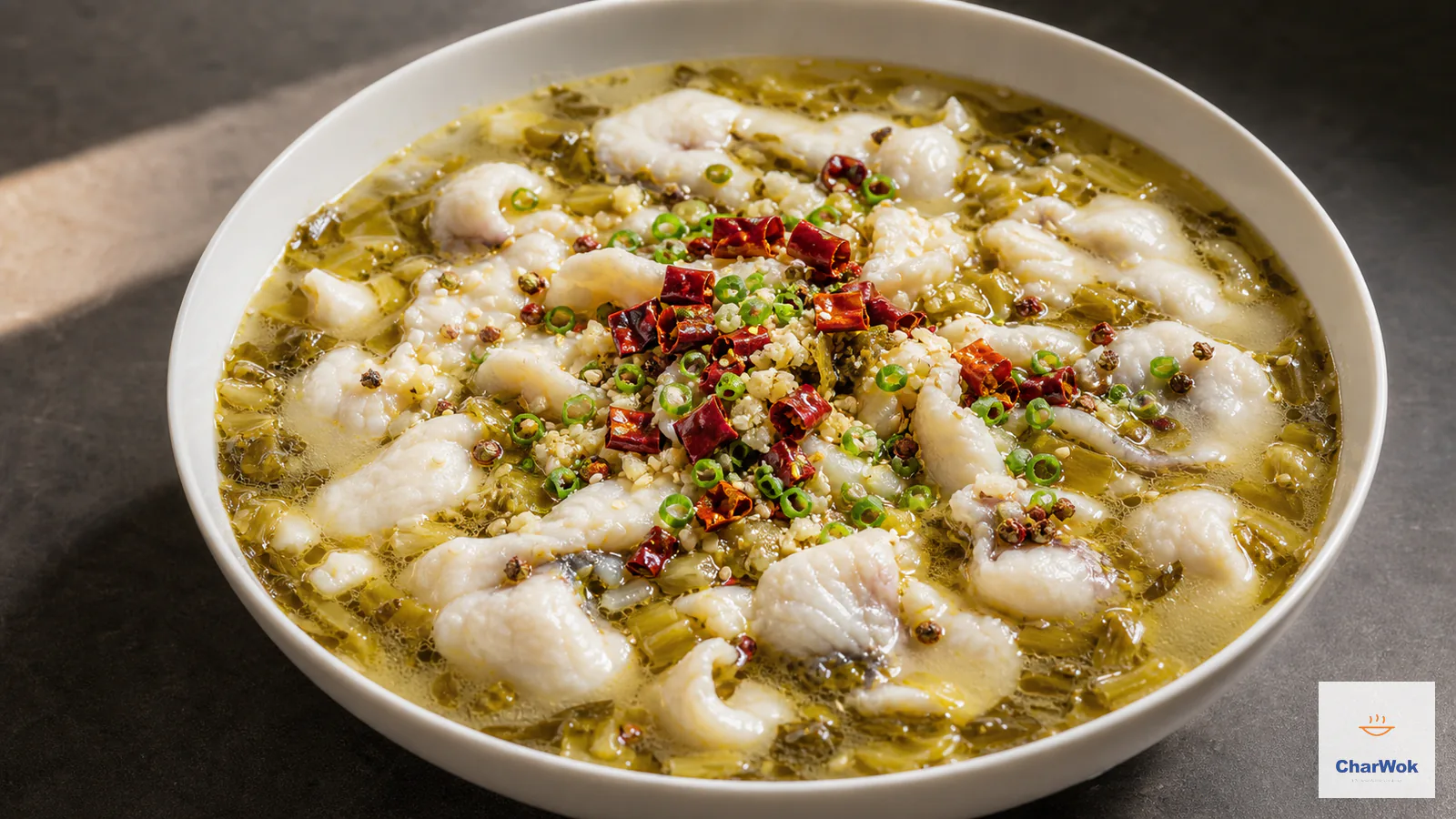
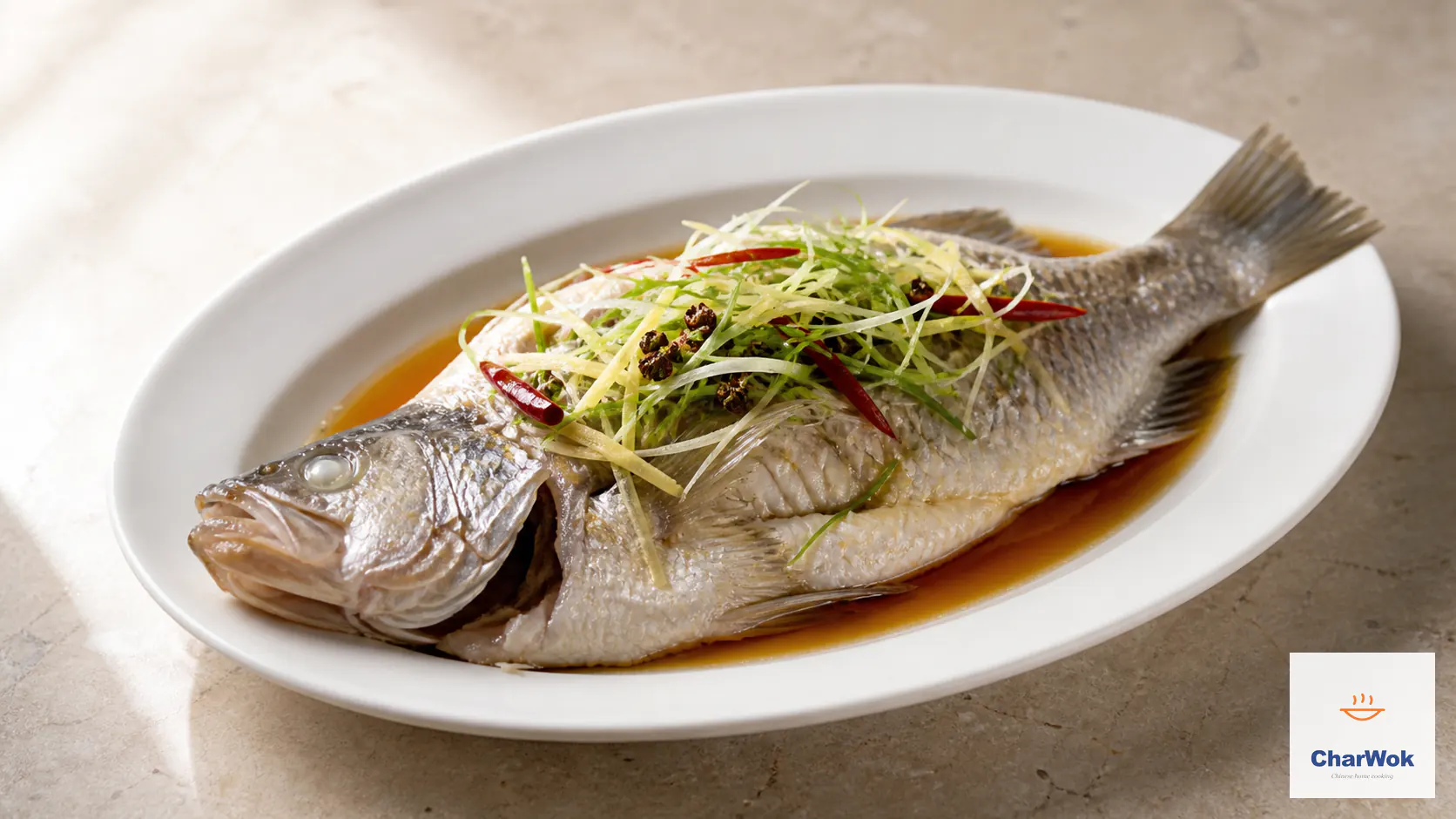
Do not confuse this with Suan Cai Yu, the Sichuan fish soup soured with pickled mustard greens. That one is brothy and tangy and you drink the liquid like soup. Shui Zhu Yu is tighter and oilier; the broth is more of a sauce you drag rice through. And it is nothing like Cantonese steamed fish, where the goal is purity. Here the fish is a stage for the spices.
The fish you choose decides everything
Use a firm, lean, mild white fish. Grass carp is traditional in Sichuan but is bony and harder to find as a clean fillet in the US. Practical options include:
- Basa or swai fillets: inexpensive, boneless, and forgiving during poaching.
- Cod or lingcod: firmer flakes, holds its shape beautifully, pricier.
- Tilapia or flounder: fine, just milder; lean on the marinade a little harder.
- Snapper or halibut: firm texture, though usually more expensive than this heavily seasoned dish requires.
Skin off, always. The skin shrinks and curls and ruins the look. Buy skinless boneless fillets and run your fingers along the flesh to check for pin bones; pull any you find with fish tweezers or clean pliers.
Ingredients
Ingredients at a glance
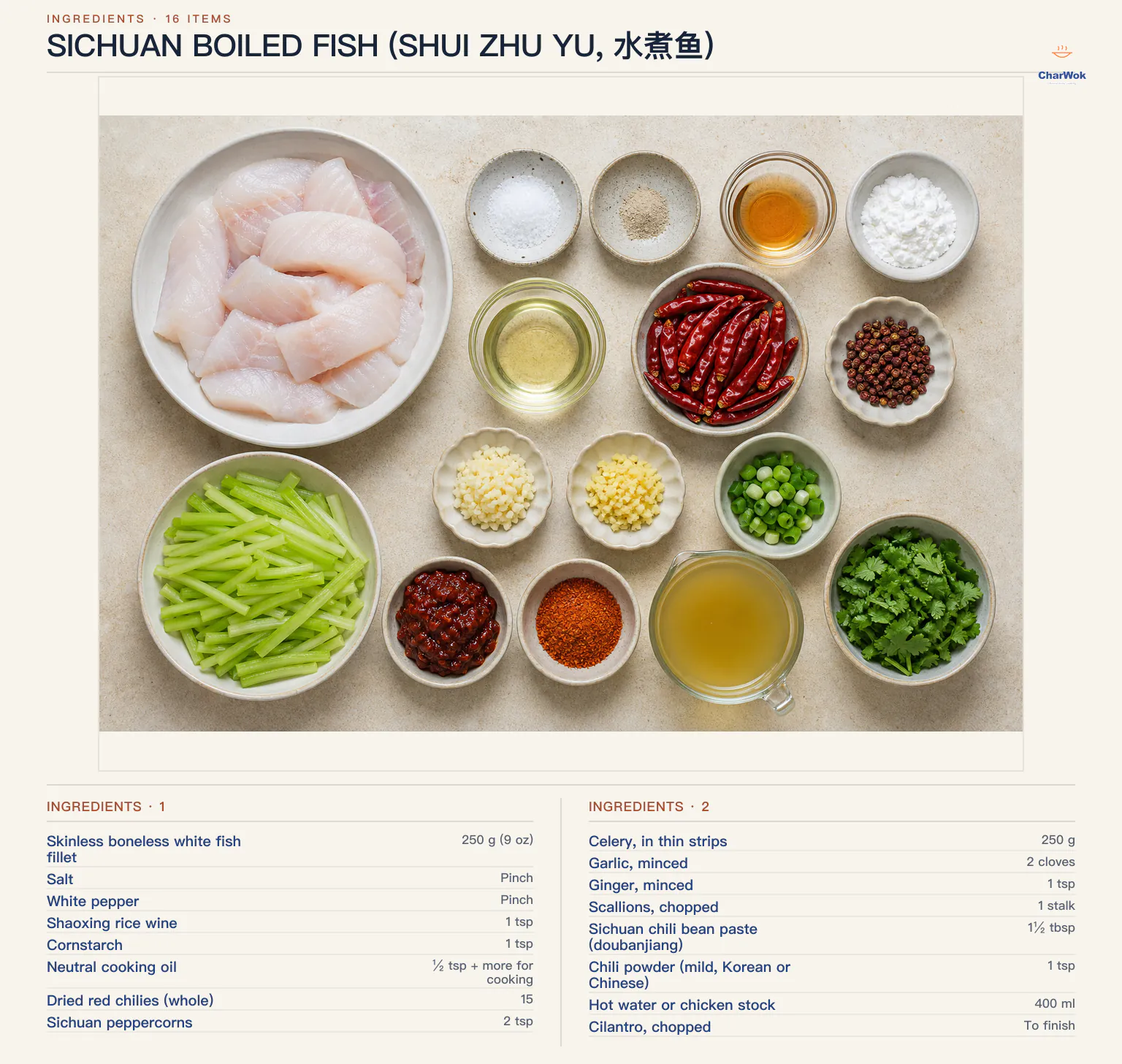
Serves 2 as a main with rice, 3 to 4 as part of a spread. Active time about 15 minutes; the whole thing is done in under 30.
| Ingredient | Amount | Notes / substitute |
|---|---|---|
| Skinless boneless white fish fillet | 250 g (9 oz) | Basa, cod, lingcod, or tilapia |
| Salt | Pinch | For the marinade |
| White pepper | Pinch | Black pepper works in a pinch |
| Shaoxing rice wine | 1 tsp | Dry sherry substitutes; see the rice wine guide |
| Cornstarch | 1 tsp | The protective coating, non-negotiable |
| Neutral cooking oil | ½ tsp + more for cooking | Grapeseed, canola, or peanut |
| Dried red chilies (whole) | 15 | Er jing tiao for mild heat; facing-heaven for more fire |
| Sichuan peppercorns | 2 tsp | Red, for the numbing note; see the peppercorn guide |
| Celery, in thin strips | 250 g | Or bean sprouts, napa cabbage, or enoki mushrooms |
| Garlic, minced | 2 cloves | |
| Ginger, minced | 1 tsp | |
| Scallions, chopped | 1 stalk | White and green parts separated |
| Sichuan chili bean paste (doubanjiang) | 1½ tbsp | Pixian is the gold standard; see the doubanjiang guide |
| Chili powder (mild, Korean or Chinese) | 1 tsp | For color in the oil, not raw heat |
| Hot water or chicken stock | 400 ml | Stock gives a rounder broth; homemade is best (chicken stock recipe) |
| Cilantro, chopped | To finish |
The method, step by step
Read the whole sequence once before you turn on the stove. Once the broth is going the dish moves fast, and the fish should not be waiting.
- Slice the fish on a shallow diagonal. Aim for pieces about 5 mm (just under ¼ inch) thick and roughly bite-sized. A too-thick slice cannot cook through in the brief poach; a too-thin one falls apart. Cutting on the bias gives a wider, prettier face than a straight cut.
- Marinate, briefly. Toss the slices with the salt, white pepper, Shaoxing, cornstarch, and ½ tsp oil. The cornstarch hydrates into a thin slurry that will set into a glossy skin the moment it hits hot liquid, sealing the flakes. The oil keeps the pieces from clumping. Let it sit 5 to 10 minutes while you prep everything else; longer does not help.
- Toast the dried chilies and peppercorns. Heat 1 tsp oil in a wok over low heat. Add the dried chilies and Sichuan peppercorns and move them constantly for 30 to 60 seconds, until the chilies deepen in color and smell toasted rather than raw. Pull them out before they char; burnt peppercorns turn bitter and grainy. Let cool, chop coarsely, and reserve.
- Quick-cook the vegetable base. Wipe the wok, add 1 tbsp oil over medium heat, and stir in the celery strips. Cook about 90 seconds, just until they lose their raw edge but still have bite; if you are using bean sprouts or enoki, 30 seconds is plenty. Dump them into your serving bowl and spread them out. They become the bed the fish lands on.
- Build the broth. Back in the wok, 1 tbsp oil over medium heat. Add the garlic, ginger, and scallion whites and stir until fragrant, 20 to 30 seconds. Add the doubanjiang and chili powder and fry them in the oil for another 30 seconds, pressing and stirring so the paste toasts rather than sits wet. This step is where the broth gets its color and depth; raw doubanjiang tastes flat and slightly metallic, so do not rush it. Pour in the hot water (or stock), bring to a full rolling boil, then drop the heat to a gentle simmer and taste. Add salt only if needed; doubanjiang is salty.
- Poach the fish, gently. Turn the heat down so the broth is shimmering, not erupting. Slide the fish slices in one at a time so they do not stick together, and nudge gently rather than stirring. Start checking at 60 to 90 seconds, but continue until the flesh is no longer translucent and separates easily with a fork; a thermometer in the thickest slice should read 63°C / 145°F. Pour the fish and broth over the vegetables only after reaching that doneness.
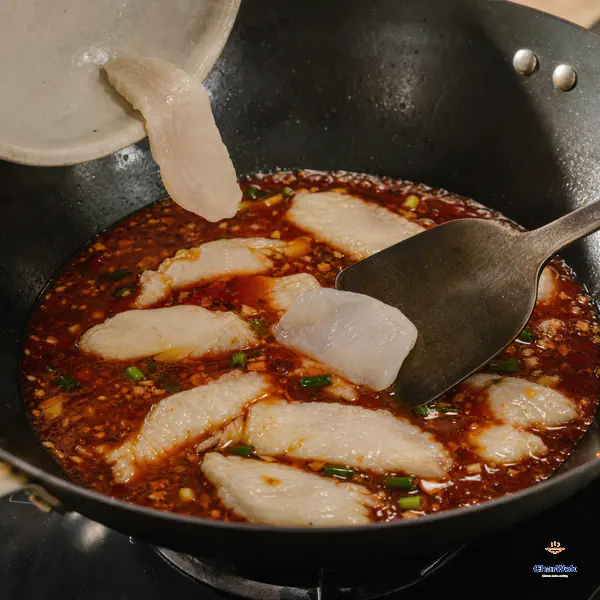
Slide the coated fish in one piece at a time and nudge gently rather than stirring. Cook until the flesh is no longer translucent and separates easily with a fork; a thermometer in the thickest slice should read 63°C / 145°F.
- The sizzle finish. Scatter the chopped chili-peppercorn mixture and the scallion greens over the top. Heat 2 tbsp oil gradually in a small pan until it shimmers, around 180 °C / 350 °F, then pour it straight onto the dry spices. Stay beside the stove; if the oil smokes, turn off the burner and let it cool briefly before pouring. Scatter cilantro over and bring the bowl to the table immediately.
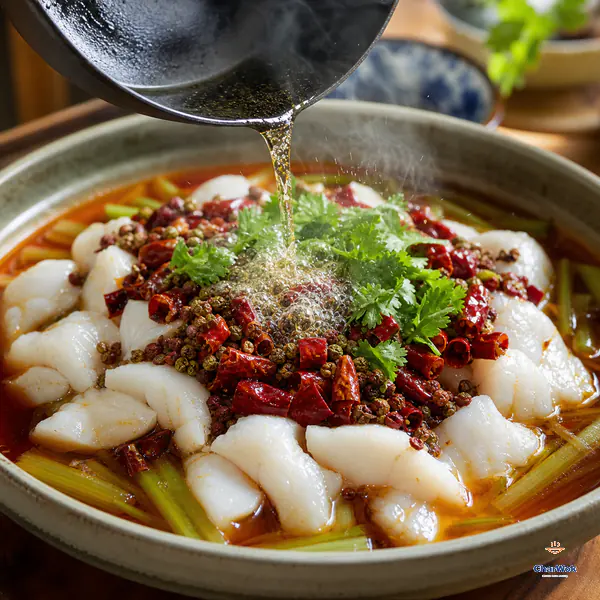
Heat the oil gradually to about 180°C / 350°F, when it is fluid and shimmering but not smoking, then pour it over the dry chilli-and-peppercorn topping. If smoke appears, turn off the burner and let the oil cool briefly before pouring.
Fish safety: FoodSafety.gov recommends cooking fish to 63°C / 145°F, or until the flesh is no longer translucent and separates easily with a fork. Do not rely on the final oil pour to cook translucent fish.
When it goes wrong, and how to fix it
This is a forgiving dish with three common failure modes. Use the symptoms below to identify the stage that needs adjusting.
The fish fell apart in the broth. Two causes, and they often stack. Either the slices were too thin or you let the broth boil hard after the fish went in. A rolling boil tosses the fragile pieces against each other and the starch skin cannot hold. Next time cut a touch thicker, drop the heat to a bare simmer, and trust that thin slices cook through at low heat. Also check that you actually used the full teaspoon of cornstarch; a scant coating will not gelatinize enough to protect the flesh.
The broth tastes thin or one-dimensional. You skipped toasting the doubanjiang, or you used water instead of stock. Fried doubanjiang is the difference between a sauce and tinted water. If you are stuck with a thin broth, reduce it by a quarter before adding the fish, and stir in an extra ½ tsp of doubanjiang fried in oil. A spoon of chili oil with the sediment stirred in also rescues a flat bowl.
The numbing-spice hit never lands. Sichuan peppercorns lose their buzz with age and with burning. If yours have been open in the cupboard for over a year, they will taste woody and barely tingle; buy fresh and store them airtight. And watch the toast step: the moment the peppercorns smoke they go bitter. The classic way to grind Sichuan pepper is to toast gently, cool, then grind only what you need.
The vegetables went soggy. You overcooked them in the wok or left them sitting in hot broth too long before serving. Cut celery thin and pull it while it still has crunch; it will soften slightly from the poured broth at the end, which is the texture you want.
Variations and pairings
The bed of vegetables is the most flexible part of the recipe. Napa cabbage cut in ribbons is my favorite; it soaks up broth without collapsing the way celery can. Enoki mushrooms, separated into bundles, are a restaurant touch worth stealing. Bean sprouts give a cleaner, juicier crunch. Lotus root slices hold up beautifully and add their own sweetness. Avoid anything that leaches water fast, like raw zucchini.
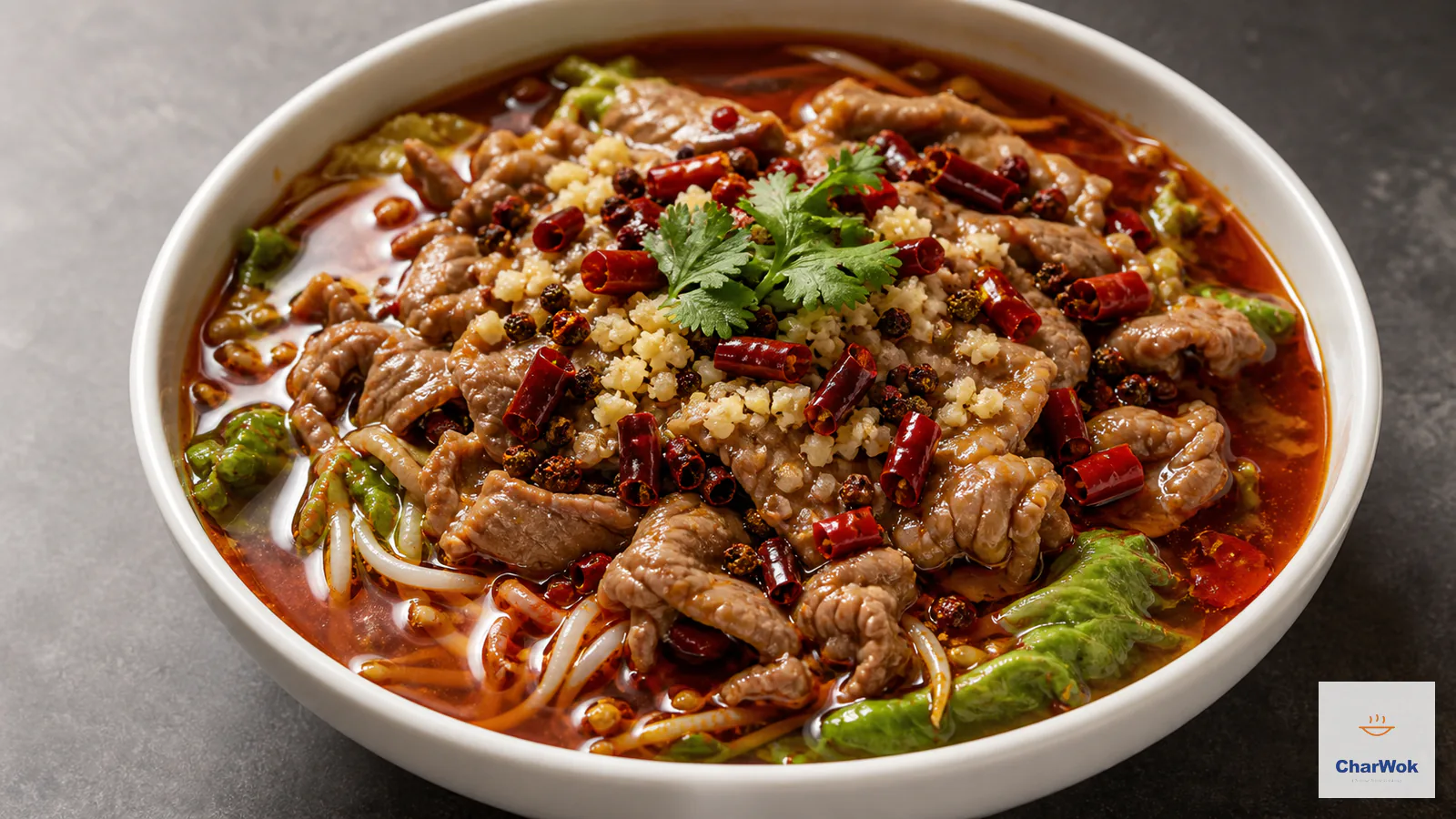
You can run the same technique on other proteins. The sibling dish Shui Zhu Niu Rou, Sichuan boiled beef, uses thin-sliced beef shank or sirloin with the exact same starch-and-poach method; beef takes a slightly harder simmer and a minute longer. Sliced chicken thigh works too, though I prefer it cut paper-thin and frozen firm first so it shaves cleanly.
For the table, serve over plain jasmine rice to soak up the slick, and add a cooling contrast. A smashed cucumber salad with garlic and vinegar is the classic reset between bites; cold liang pi noodles in a sesame dressing work the same way. If you want a bigger Sichuan spread, pair it with kung pao chicken for crunch and a milder dish like kou shui ji (mouth-watering chicken) so the table is not all fire. The broth here is a near-cousin of a spicy hot pot broth, so if you love that flavor, you will recognize the bones of it.
Storage and reheating
This is a cook-and-eat-now dish. The fish overcooks on a reheat and the chili oil loses its aroma as it sits. If you must hold it, refrigerate the broth and fish together, then warm gently in a pan just until steam rises, never to a boil, and pour fresh hot oil over new aromatics to bring back the sizzle. The leftover broth, strained, makes a fantastic base for a quick noodle bowl the next day; drop in cooked noodles and a handful of greens.
Frequently asked questions
Can I use frozen fish? Yes, thaw it fully in the fridge and pat the fillets dry before slicing. Wet fish will not take the cornstarch coating and the slices clump.
Is it very spicy? Moderately, and adjustable. The dried chilies mostly lend aroma and color; the real heat comes from the doubanjiang and chili powder. Cut the doubanjiang to 1 tbsp and skip the chili powder for a milder bowl, or add a spoon of chili oil at the end for more.
Do I have to do the final oil pour? No, but it blooms the aromatics and gives the dish its characteristic finish. Use a neutral oil and heat it gradually until shimmering, not smoking. If smoke appears, turn off the burner and let it cool briefly.
Can I make it without a wok? A wide, shallow skillet or Dutch oven works. Avoid deep narrow pots, which make it hard to poach the fish in a single even layer.
What if I cannot find Pixian doubanjiang? Any Sichuan chili bean paste will do; taste it first, since salt and fermented depth vary a lot between brands. A chunkier, darker paste will give a richer broth than a smooth bright-red one.
A last word on the dish
Success here comes down to two judgment calls: slice thickness and poaching heat. Cut the fish about 5 mm thick, marinate it in cornstarch so it wears a skin, and keep the broth at a whisper of a simmer once the slices go in. Toast the spices gently, fry the doubanjiang until it smells sweet, and pour the oil hot enough to make the aromatics sing. Get those moves right and you have a dish that tastes like far more work than twenty-five minutes' worth. The leftover broth, spooned over rice the next morning, is the cook's reward.