The trick to a great Sichuan braised tofu is not the sauce. It is the crust you build on the tofu first. Get that right and the slices drink up the chili-oil broth like a sponge; get it wrong and you end up with bland rubber floating in a perfectly good sauce, which is exactly the disappointment that turns people off tofu for years.
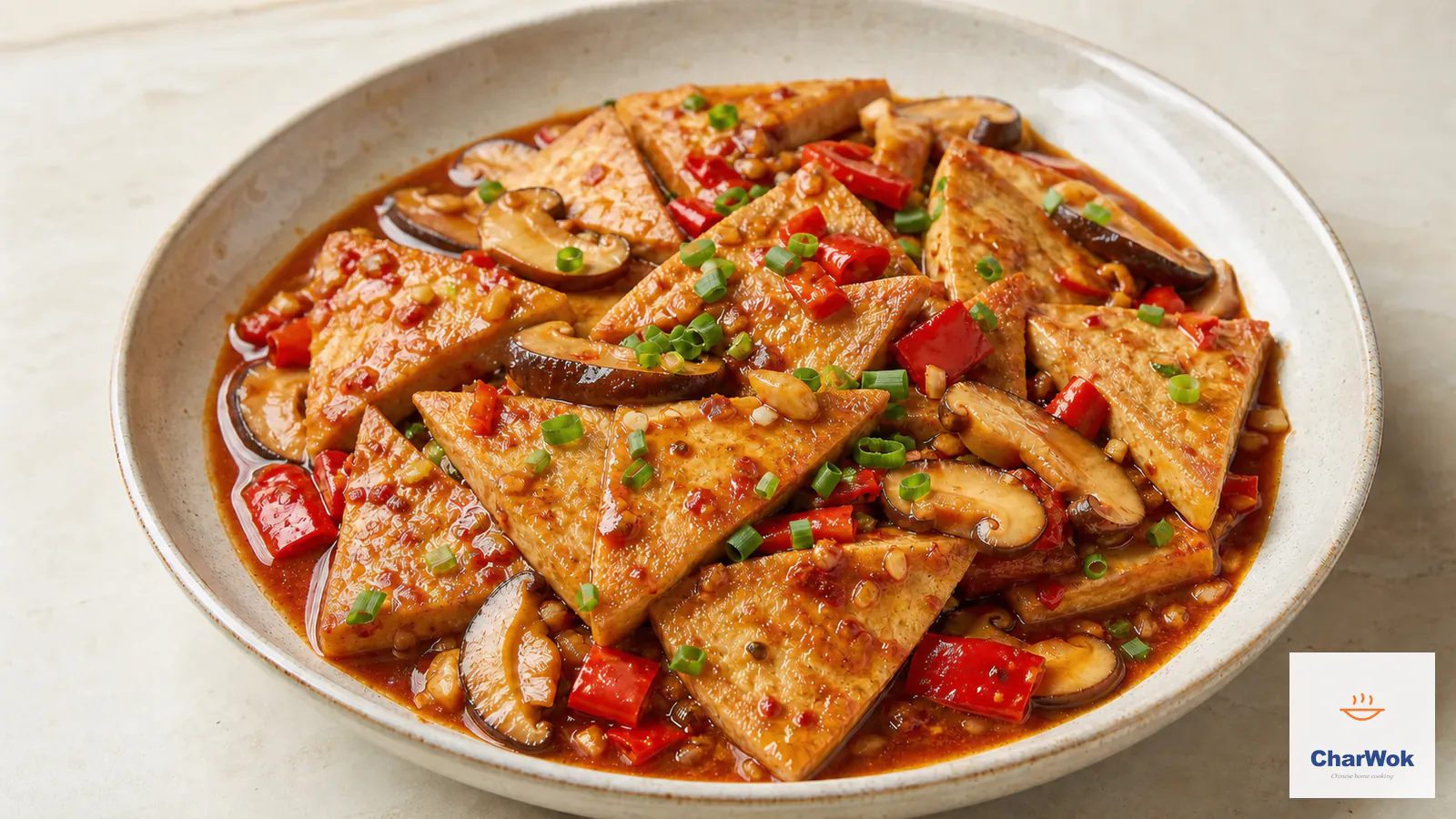
This is Jia Chang Dou Fu (家常豆腐), "home-style tofu," a dish that sounds humble and then punches well above its weight on a Sichuan restaurant menu. The classic version deep-fries the tofu in a lake of oil, then braises it with fatty pork. I avoid both at home. Shallow-frying (or air-frying) gives you the same golden, blistered skin without a grease-splattered kitchen, and dried shiitake stands in for the pork with no loss of umami. Below I will walk you through the two things that actually decide whether the dish works: which tofu to buy, and how to read the oil.
Two steps, one decision: fry the tofu until deeply golden and a little blistered, then simmer it in chili-bean broth for just 2 minutes so it absorbs flavor without going soft. Use firm (not extra-firm) tofu, about 2 cm (¾ inch) thick per slice, and the crust will hold its sponge-like texture through the braise. Total active time is under 20 minutes for two servings.
What this dish is, and where it comes from
Sichuan cooking is famous for its numbers: the counted flavors, the named knife cuts, the seven "boiled" dishes. Home-style tofu sits in a quieter corner of that tradition. It is a stir-and-braise built around pantry staples, garlic, fermented chili paste, soy, and whatever vegetable or meat you have around. You will see close cousins across the region: the pork-and-tofu versions, the ones loaded with wood-ear mushroom, and the Buddhist-restaurant take that leans hard on mushrooms and bamboo shoots.
The unifying idea is texture engineering. Plain tofu is smooth and mild. Fry it and the surface dehydrates into a chewy, pockmarked skin while the interior stays soft. That skin is what grabs the sauce and holds it. This is the same logic behind twice-cooked dishes like twice-cooked pork, and it shows up all over Sichuan: Sichuan boiled beef, the various "fish-fragrant" dishes such as fish-fragrant shredded pork and eggplant with garlic sauce, and quick vegetable stir-fries like dry-fried green beans. If you want a tour of the category, start with a roundup of favorite Sichuan recipes and work outward.
Choosing the tofu (this is the make-or-break step)
Buy firm tofu, the kind labeled "firm" or "extra firm" in the refrigerated section of an Asian grocery. Not silken, not medium. Firm tofu has visibly coarse pores when you cut it and barely gives when you press it. Those pores are what you want: they are the channels the braise will travel through. This is the opposite advice from dishes like mapo tofu, which wants soft tofu because it is meant to break into the sauce rather than hold its shape.
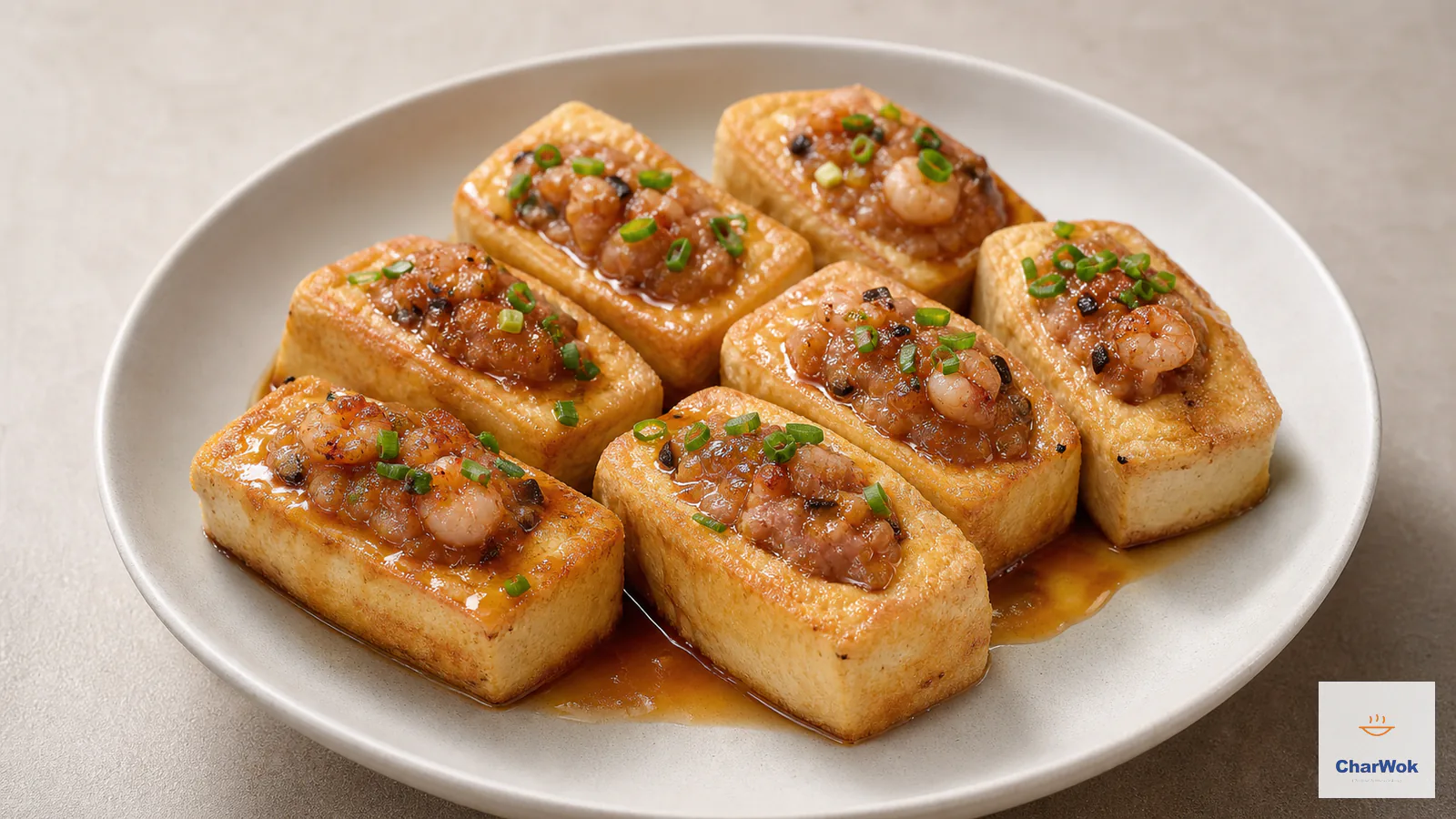
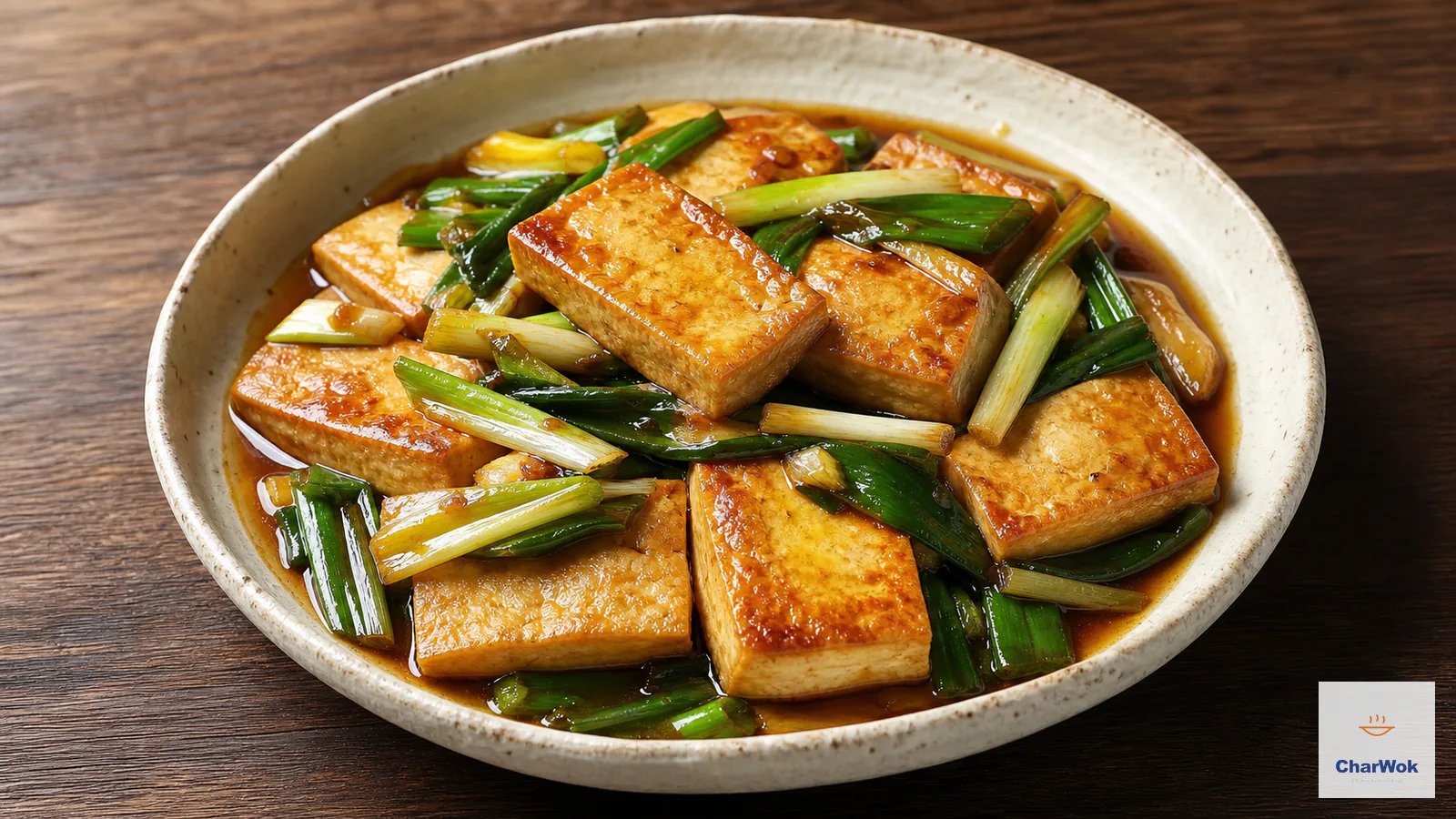
A warning about the "super-firm" vacuum-packed tofu sold in mainstream US groceries. It is too dry and dense, and it crumbles into gravel instead of forming a crust. If that is all you can find, it will still taste fine, but the texture will read as heavy. The same firm-tofu logic applies to other pan-fried and braised tofu dishes: pan-fried tofu with garlic sauce, salt and pepper tofu, scallion tofu, and the stuffed version, Hakka stuffed tofu.
The pantry ingredients that do the heavy lifting
Three things carry the flavor here, and it is worth understanding what each one actually does rather than measuring them blindly.
Sichuan chili bean paste (spicy doubanjiang, ideally aged Pixian douban) is the soul of the dish. It is fermented broad beans and chilies, and it is the same paste behind the chili-oil red of so many Sichuan classics. Read up on how Sichuan chili bean paste is made and graded if you want to choose a good jar. If you cannot find it, the closest workable swaps for this recipe are a spoon of pickled chili garlic sauce (duo jiao) or spicy black bean sauce. Neither is identical, both are good, and you will need to taste for salt because every brand differs.
Dried shiitake mushrooms replace the pork in the traditional recipe, and they earn their place rather than just filling in. Rehydrating dried shiitake pulls out the guanylate that makes the soaking water a near-magical stock. I use that liquid as the braise base instead of plain water, which is why this vegetarian version does not taste thin. A proper guide to dried shiitake covers rehydrating times; the short version is hot water for 20 minutes, cool water for an hour if you have it. If you only have fresh shiitake, swap the soaking liquid for vegetable broth.
Dark soy sauce is here for color, not salt. It is the molasses-adjacent, lower-sodium cousin of light soy that stains the broth mahogany. Read up on the difference between light and dark soy sauce if you only own one bottle; in this dish, light soy alone will leave the broth pale and one-note.
Ingredients
Ingredients at a glance
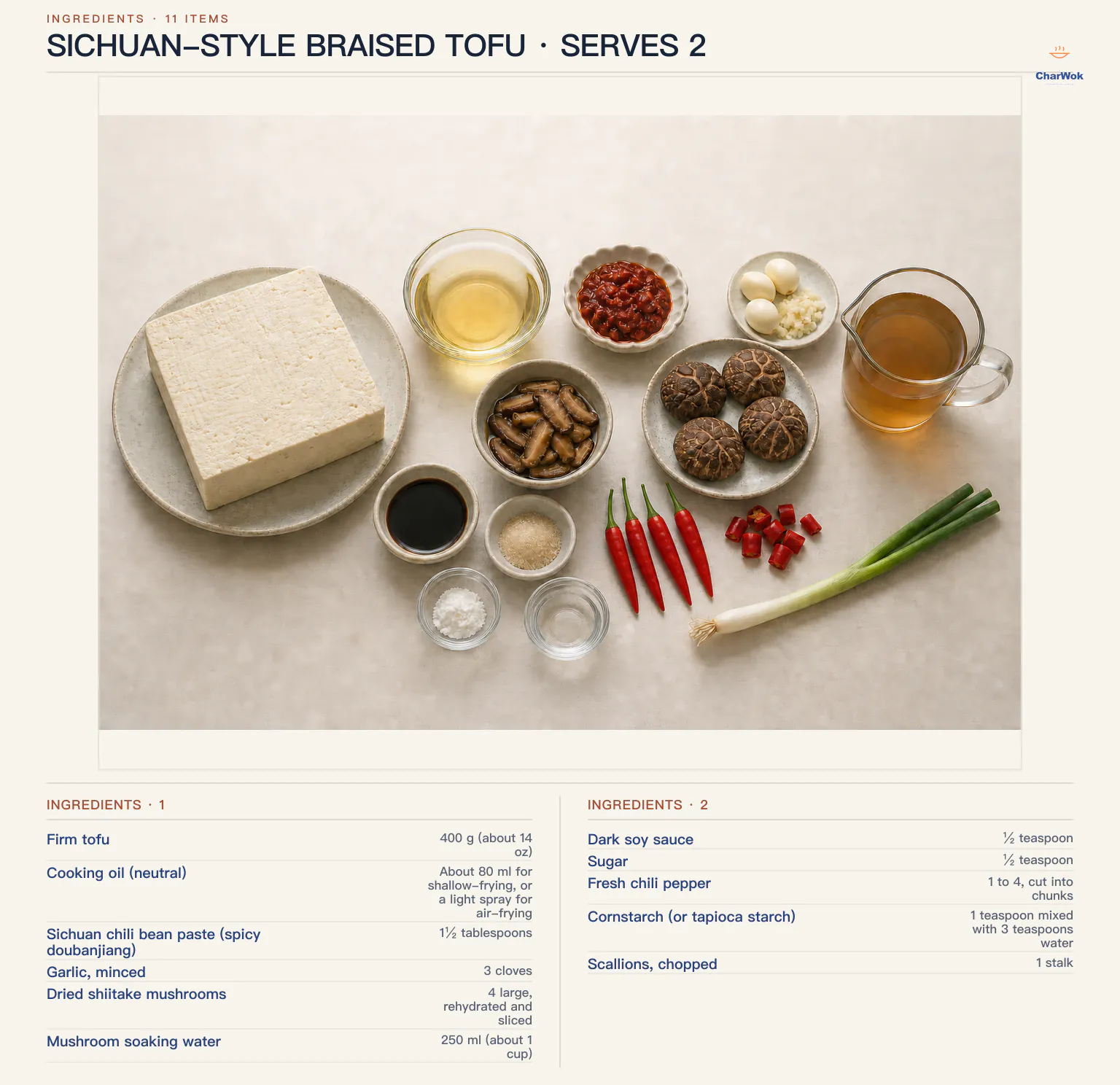
| Ingredient | Amount | Notes / substitute |
|---|---|---|
| Firm tofu | 400 g (about 14 oz) | Not silken, not super-firm vacuum-pack. Press lightly if very wet. |
| Cooking oil (neutral) | About 80 ml for shallow-frying, or a light spray for air-frying | Peanut, canola, or sunflower. |
| Sichuan chili bean paste (spicy doubanjiang) | 1½ tablespoons | Pickled chili garlic sauce or spicy black bean sauce if unavailable; adjust to taste. |
| Garlic, minced | 3 cloves | About 1 tablespoon minced. |
| Dried shiitake mushrooms | 4 large, rehydrated and sliced | Reserve the soaking liquid. Fresh shiitake works but use broth in place of the liquid. |
| Mushroom soaking water | 250 ml (about 1 cup) | Or vegetable broth. Pour off the top and leave any grit behind. |
| Dark soy sauce | ½ teaspoon | For color. Add a few drops of light soy if you want more salt. |
| Sugar | ½ teaspoon | Balances the chili paste; do not skip. |
| Fresh chili pepper | 1 to 4, cut into chunks | Jalapeño, Fresno, or mild red pepper. Deseed for less heat. |
| Cornstarch (or tapioca starch) | 1 teaspoon mixed with 3 teaspoons water | The slurry that finishes the sauce. |
| Scallions, chopped | 1 stalk | Green parts for garnish, white parts fried with the garlic if you like. |
Step-by-step method
- Cut and dry the tofu. Slice the block into slabs about 2 cm (¾ inch) thick, then halve each slab on the diagonal into triangles. Lay the pieces on paper towels and pat both sides dry. Wet tofu hits hot oil and throws it; a dry surface also browns faster and more evenly. This 30-second step is the difference between a calm kitchen and a dangerous one.
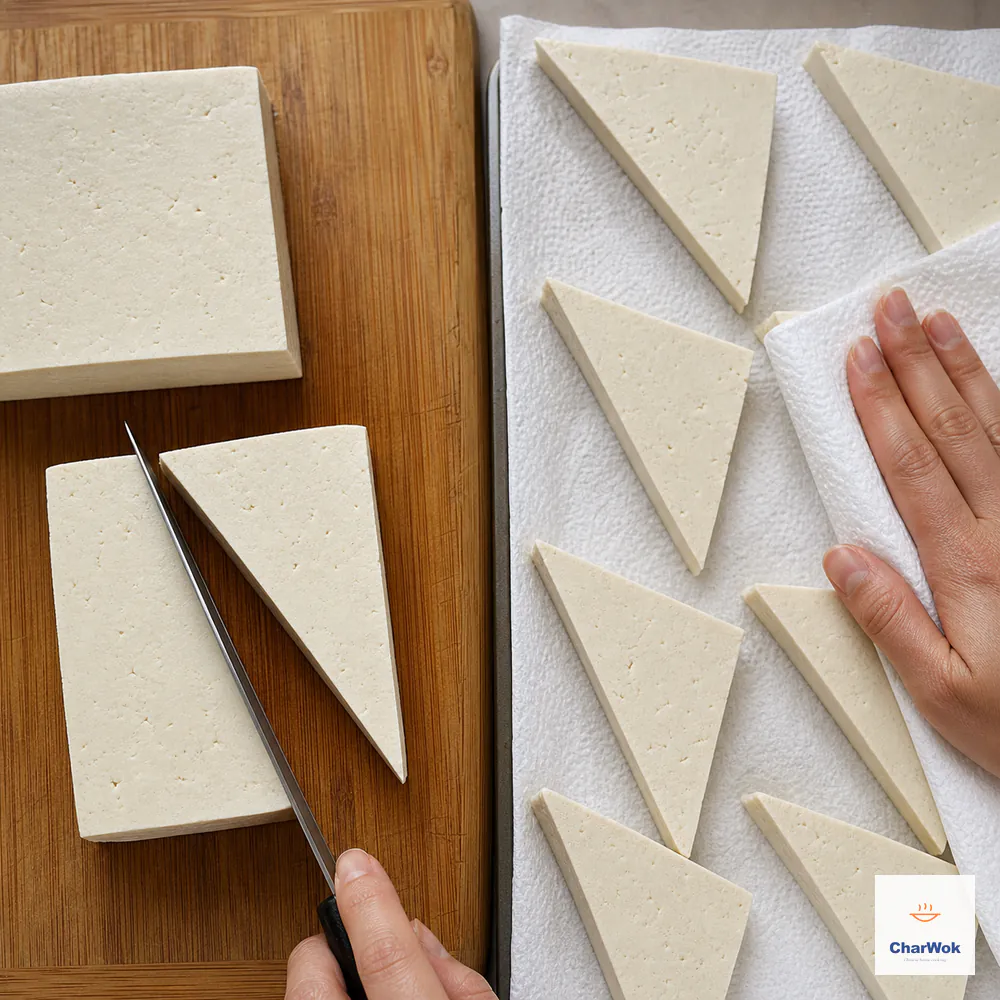
Cut the firm tofu into 2 cm slabs, halve each diagonally, and pat every face completely dry for safer oil and faster even browning.
- Fry the tofu (stovetop) or air-fry it. For shallow-frying, pour oil into a flat-bottomed wok or deep frying pan to a depth that reaches halfway up the tofu. Heat it over medium-high and test with the tip of a chopstick: when bubbles stream steadily from the wood, the oil is ready (around 180°C / 350°F). Slide the triangles in one at a face, not a pile, and drop the heat to medium. Let the first side go golden before flipping, about 3 to 4 minutes per side. Move them to paper towels. For air-frying, preheat to 200°C / 390°F, mist both sides with oil, arrange in a single layer, and cook about 12 minutes, checking at 10. Either way you want a deep gold color and a noticeably firmer, slightly blistered surface. Pale tofu will turn sodden in the braise.
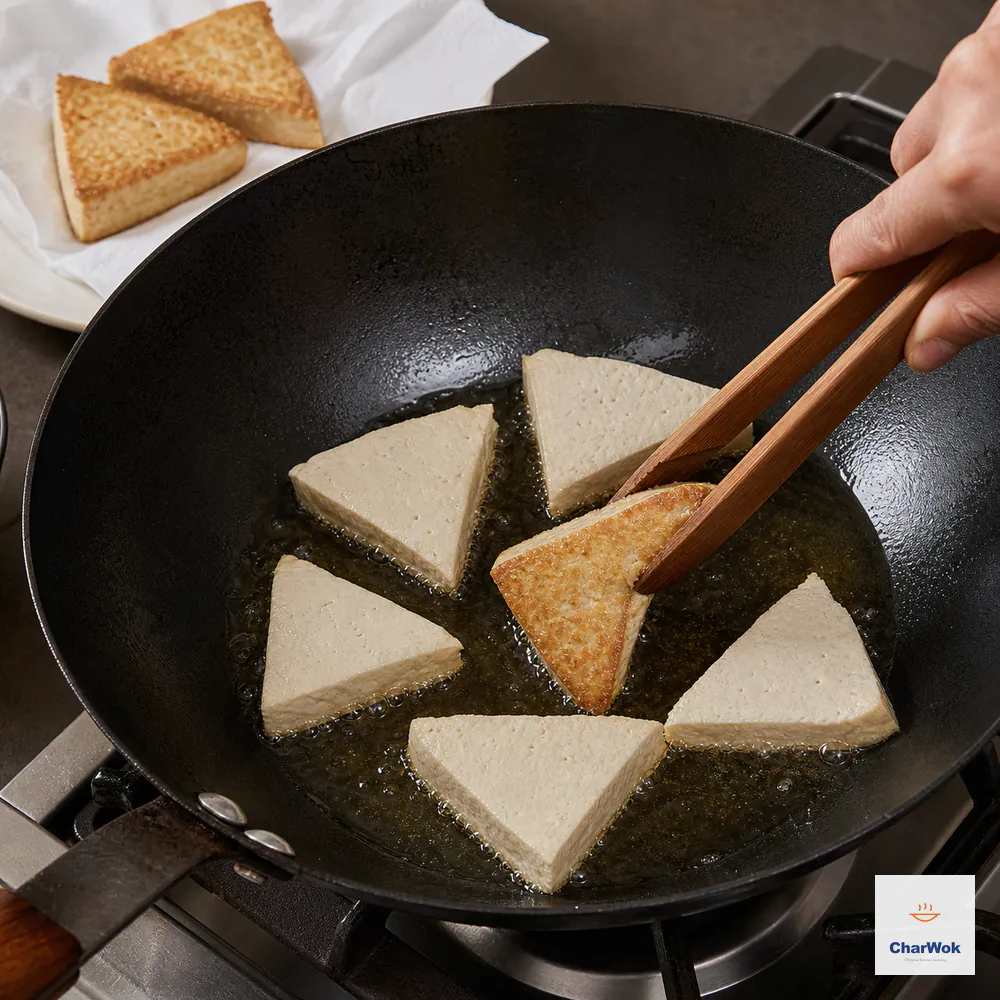
Shallow-fry over medium heat without crowding, leaving each face for 3 to 4 minutes until deep golden and firm before draining.
- Bloom the chili paste. Pour off all but a thin film of oil from the pan (or add 2 teaspoons fresh oil if you air-fried). Over medium heat, fry the minced garlic and the chili bean paste for 30 to 60 seconds, pressing and stirring until the paste's red oil separates and the kitchen smells deeply of chili and fermented bean. This step is the flavor foundation: the Maillard and fat-soluble compounds need oil and gentle heat to develop, and you are not done until you see that red oil ring the paste. Burn it (high heat, no stirring) and the whole dish turns bitter.
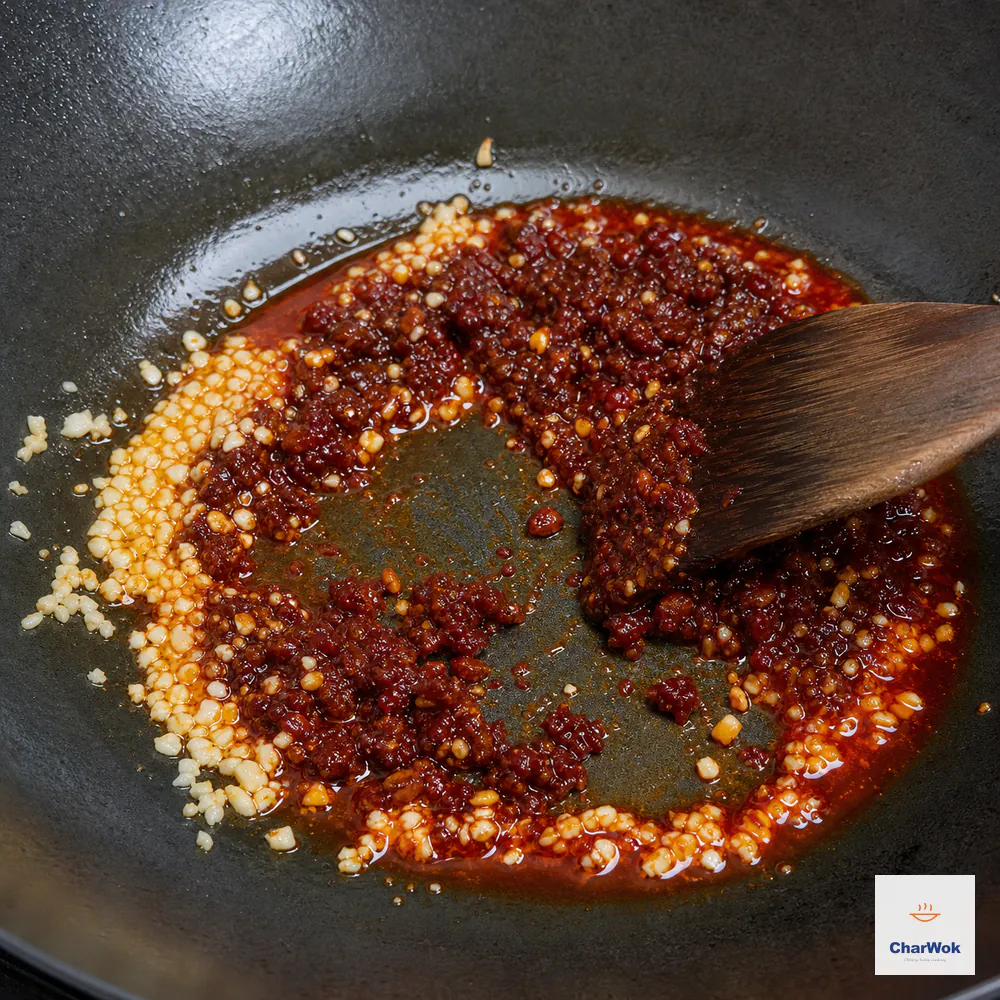
Fry the garlic and chili bean paste over medium heat for 30 to 60 seconds, stirring until the red oil separates without scorching.
- Build the braise. Add the sliced rehydrated shiitake and stir to coat. Pour in the 250 ml mushroom soaking water, the dark soy sauce, and the sugar. Bring it to a full boil, then nestle in the fried tofu and the fresh chili chunks. Stir gently so the tofu is half-submerged, cover, and drop the heat to low. Braise for 2 minutes. That short simmer is deliberate: long enough for the pockmarked crust to wick up the seasoned liquid, short enough that the interior stays tender and the crust does not collapse.
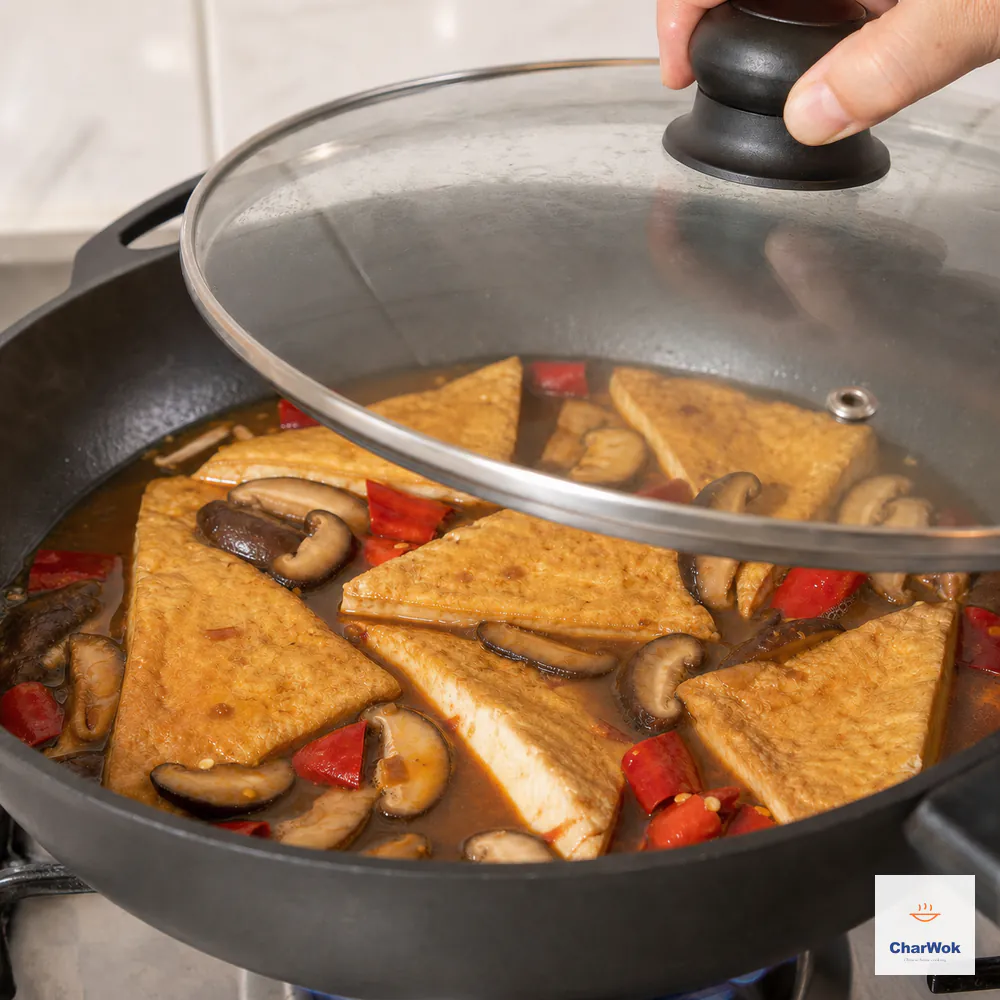
Add the fried tofu and chili to the seasoned mushroom broth, cover, and braise over low heat for only 2 minutes so the crust absorbs sauce without collapsing.
- Thicken and finish. Stir the cornstarch slurry to resuspend the starch, then pour it in while stirring. The broth will cloud and then turn glossy in about 20 seconds. Pull the pan off the heat the moment it coats a spoon; overcooked cornstarch thins back out. Scatter the scallions over the top and serve immediately, over rice, spooning the sauce over everything.
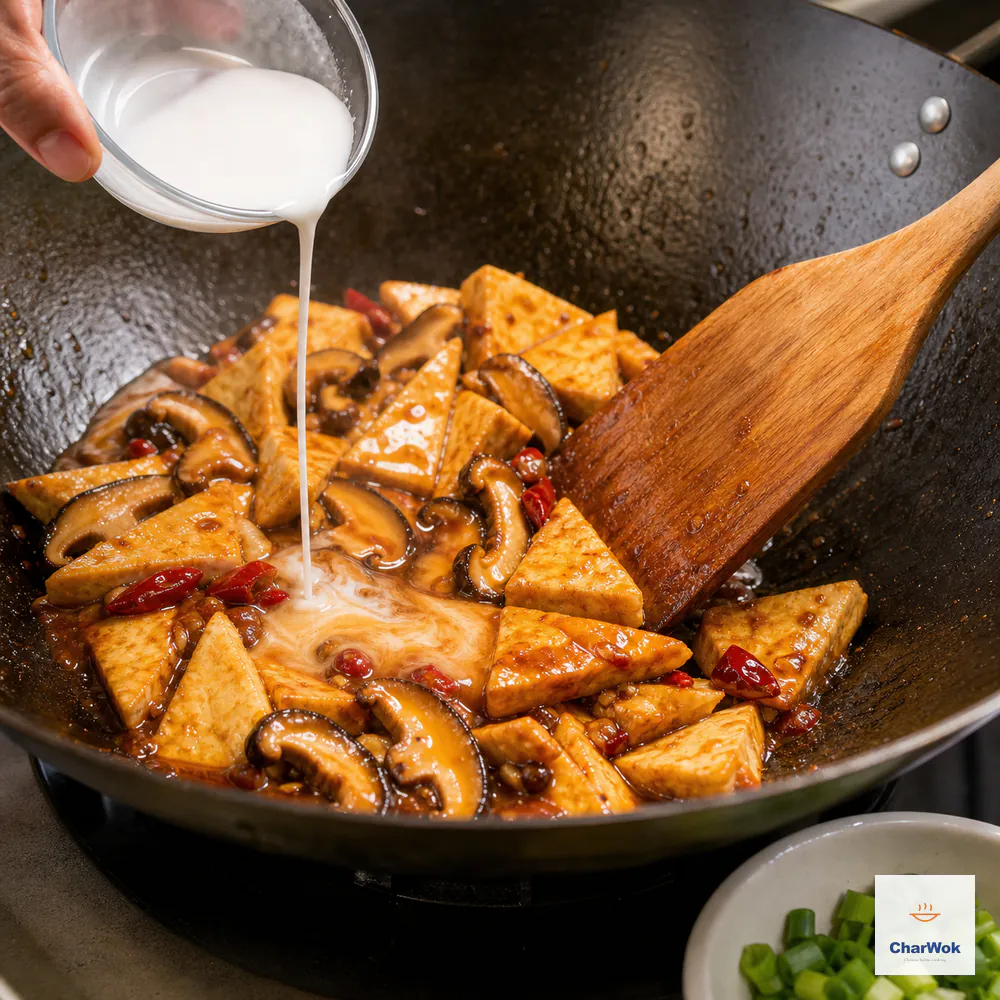
Re-stir the slurry, pour while folding gently, and pull the pan from the heat as soon as the sauce turns glossy and coats the spatula; finish with scallion.
When it goes wrong (and how to fix it)
I have made every mistake below at least once. Most of them are fixable.
The tofu sticks to the pan and tears. Two causes: the oil was not hot enough when the tofu went in, or you tried to flip too early. Cold-pan tofu welds itself down; properly hot oil releases it once the crust sets. Wait until the edges look golden and the piece lifts with a gentle nudge before turning. If it resists, give it another minute.
The crust goes soggy in the sauce. Either the tofu was under-fried (still pale) or the braise ran too long. There is no rescue for collapsed texture, only prevention: fry darker than you think you need to, and keep the covered simmer to 2 minutes. If you want more sauce for rice, add an extra splash of broth and thicken it more rather than simmering the tofu longer.
The dish tastes flat despite all that chili paste. Usually a salt-and-sugar problem. Chili bean paste is salty but the tofu dilutes it heavily, so taste the braising liquid before the slurry goes in and adjust with a few drops of light soy or a pinch more sugar. The sugar is not for sweetness; it rounds the chili and brings the fermented notes forward. Skip it and the dish reads as one-dimensional heat.
The sauce is thin or, the opposite, a gluey paste. Slurry ratios are sensitive. For this volume of liquid, 1 teaspoon cornstarch in 3 teaspoons water is the target. Too thin? Whisk a sliver more starch into cold water and add it off the heat. Too thick? Splash in hot broth. Always add slurry to a simmering liquid, never to a cold pan, and stop cooking the moment it glosses.
Oil spits violently when the tofu goes in. The tofu surface was wet. Next time, pat dry and let the pieces air-dry on paper towels for 5 minutes before frying. A small splash guard is a reasonable investment if you cook tofu often.
Variations and pairings
The shell of this recipe is sturdy enough to take changes. Add 80 g of ground pork after blooming the chili paste, fry it until it loses its pink, and you have the traditional meaty version. A handful of braised shiitake or sliced bamboo shoots bulks it out for a vegetarian spread. Thinly sliced green or red bell pepper is a common restaurant addition; serve it with a crunchy vegetable side to balance the soft texture.
For a full meal I serve this over plain jasmine rice with a quick soup on the side. A light tofu and vegetable soup doubles down on the theme without repeating flavors, and a simple smashed cucumber salad cuts the richness. Leftovers reheat well the next day; the tofu actually improves overnight as it keeps drinking the sauce.
Storage and reheating
Fry the tofu ahead and the dish is a 5-minute dinner. Cooked tofu keeps in the fridge, covered, for up to 3 days, and raw fried tofu can be frozen for up to 3 months; thaw it overnight in the fridge before braising. Reheat the finished dish gently in a covered pan with a tablespoon of water to loosen the sauce. Microwaving works but tends to toughen the crust, so use 50% power and stop to stir halfway.
FAQ
Can I make this without frying the tofu first?
You can, but you will lose the dish. Plain simmered tofu has no crust to hold the sauce, so the result is closer to a soft tofu stew. If you want to skip frying for time, pan-sear the slices hard on one side in a dry nonstick pan, about 4 minutes, to build at least a partial skin.
Is there a non-spicy version?
Yes. Drop the chili bean paste and fresh chilies and use a tablespoon of regular (sweet) doubanjiang or a mix of miso and a little fermented black bean. The broth will be brown rather than red, the technique identical.
Why mushroom water instead of plain water or stock?
Rehydrating dried shiitake pulls guanylate into the water, a nucleotide that works with the soy and chili paste to amplify umami. It is essentially free mushroom broth. Plain water makes a duller dish; vegetable stock is the best substitute if you have no dried mushrooms on hand.
Can I use soft or silken tofu?
No. It will fall apart the moment it hits the oil. Soft tofu belongs in dishes designed to break it down, like mapo tofu. For this technique you need firm tofu that holds a crust.
How do I control the heat level?
Two levers. Reduce the chili bean paste to 1 tablespoon for a milder dish, and always deseed and devein the fresh chilies, since the seeds carry most of the capsaicin. Taste the diluted braising liquid before adding the tofu and adjust.