The first bite of tiger salad is a small ambush. Raw alliums and green chile hit the back of your throat, vinegar sharpens everything, and then the tomato and cilantro roll in to cool it off. Five minutes later you reach for more. That whiplash is the whole point. It is the cold dish you eat beside a pile of cumin-dusted lamb, the thing that resets your palate so the next skewer tastes as good as the first.
This is the version from Xinjiang, the northwest region whose grilling tradition gave us lamb skewers seasoned with chili and cumin. It comes together in the time it takes to set the table, uses no oil, and depends entirely on how you cut the vegetables and how aggressive you are with the chile. Get those two things right and the dish is better than anything you can order.
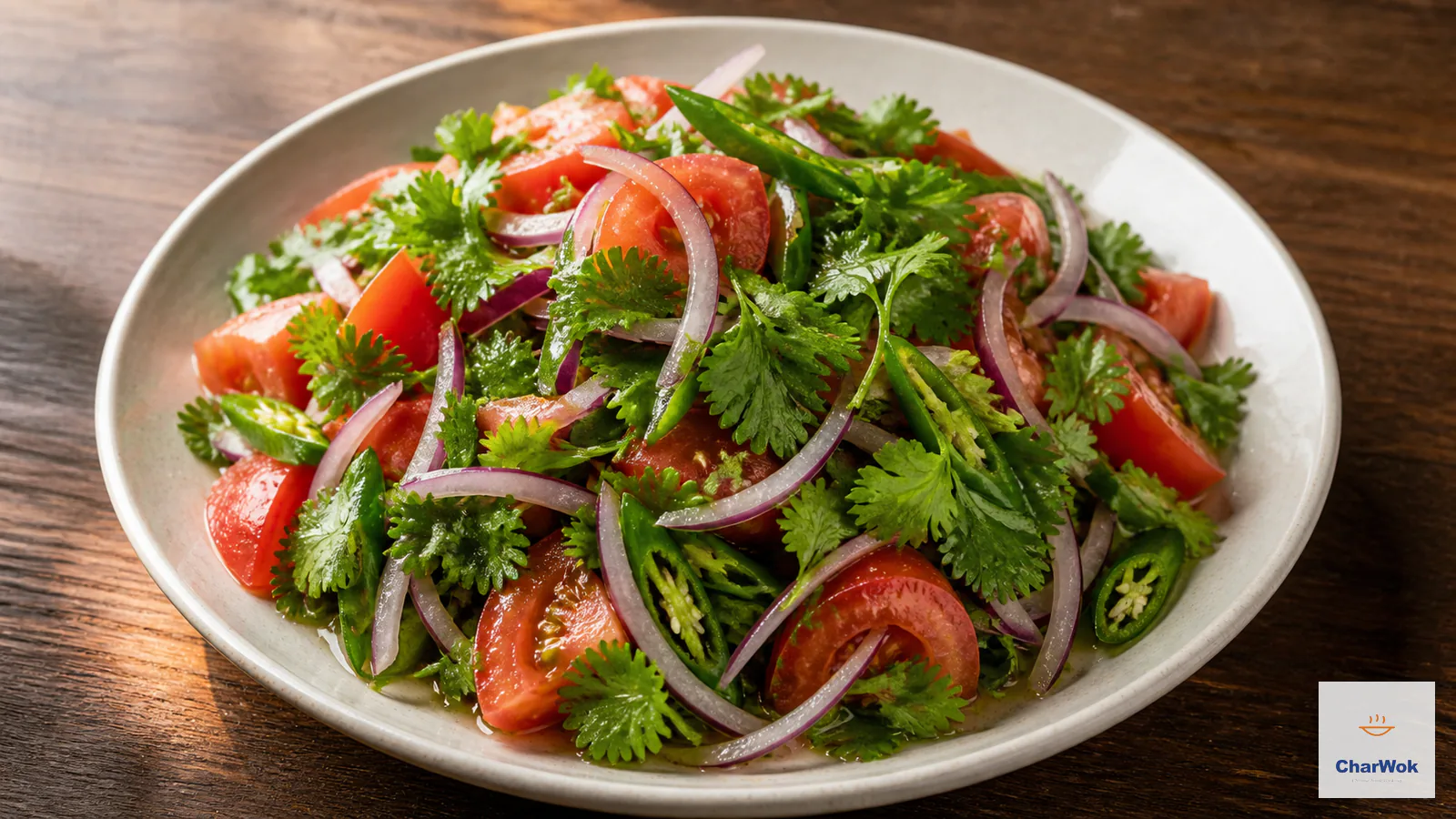
A no-cook salad built on raw red onion, tomato, green chile, and cilantro dressed with black rice vinegar. Plan on roughly 1 part onion to 2 parts tomato by volume, salt the onion first to take the burn off, and dress only the moment you serve. It is meant to sting a little.
What tiger salad actually is
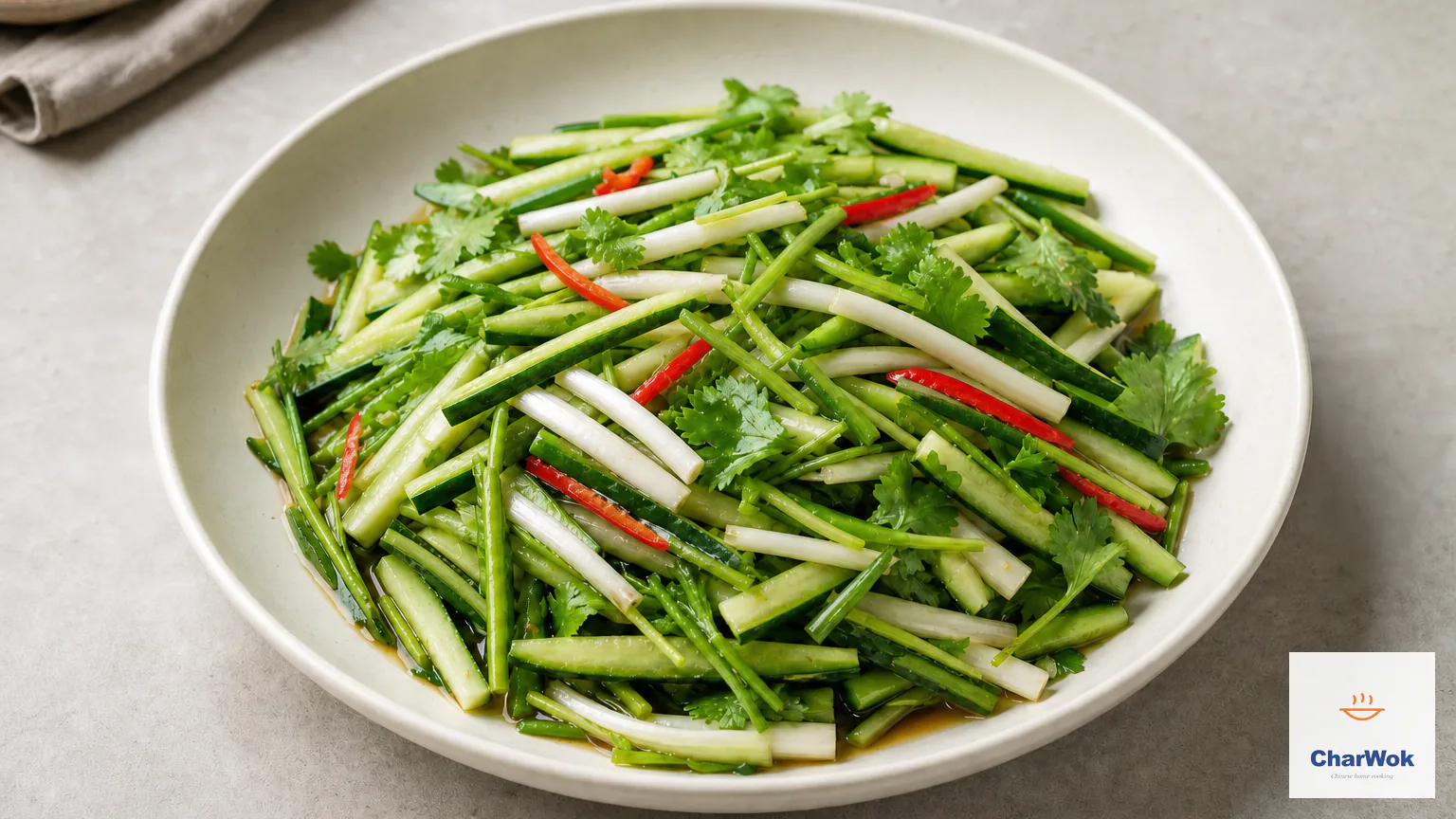
The name "tiger" has nothing to do with the ingredients and everything to do with the sensation. Raw onion and green chile land hard on the first taste, the way a sudden fright would, and Chinese home cooks nicknamed the dish for that jolt. It belongs to the same family of sharp, vinegar-led cold plates you see across northern and western China, like the crunchier Northeast tiger salad built on cilantro stems and peppers or the simpler smashed cucumber with garlic. Where those lean cool and garlicky, this one leans bright and pungent, with tomato carrying water and sweetness into the mix.
It is a salad in the loosest sense. There is no lettuce, no oil, no mayonnaise-style dressing. The liquid comes from the tomato and from the vinegar, and the texture is all about thin slices that have been barely broken down. Think of it as a salsa that eats like a salad, and you have the right mental model.
Why this salad works the way it does
Three things are doing real work here, and understanding them is what separates a flat bowl of chopped vegetables from a tiger salad worth remembering.
The first is allium chemistry. Cutting an onion ruptures cells and releases sulfurous compounds that did not exist in the whole onion. Left alone, they are aggressive and lingering. Salt them early and you do two things: you draw out water (and with it a share of those sulfur compounds), and you soften the cell walls so the onion turns pliable instead of crunchy-hard. This is the single step most home cooks skip, and it is the reason their version tastes harsh.
The second is acid. Black rice vinegar is darker, smokier, and rounder than clear rice vinegar, and it carries enough depth to stand up to raw alliums without tasting thin. If you want to understand why this pantry staple matters across cold dishes, the guide to black rice vinegar breaks down the differences. Here the vinegar does triple duty: it brightens, it suppresses the raw-onion burn further, and it pulls juice out of the tomato so the whole bowl gets a light dressing without any oil.
The third is texture contrast. Tomato is soft and wet; onion is crisp and sharp; green chile adds a snappy, slightly grassy bite; cilantro brings an herbal top note. Every forkful shifts the ratio a little, which is why the dish never gets boring even though it has four ingredients.
Ingredients
Ingredients at a glance
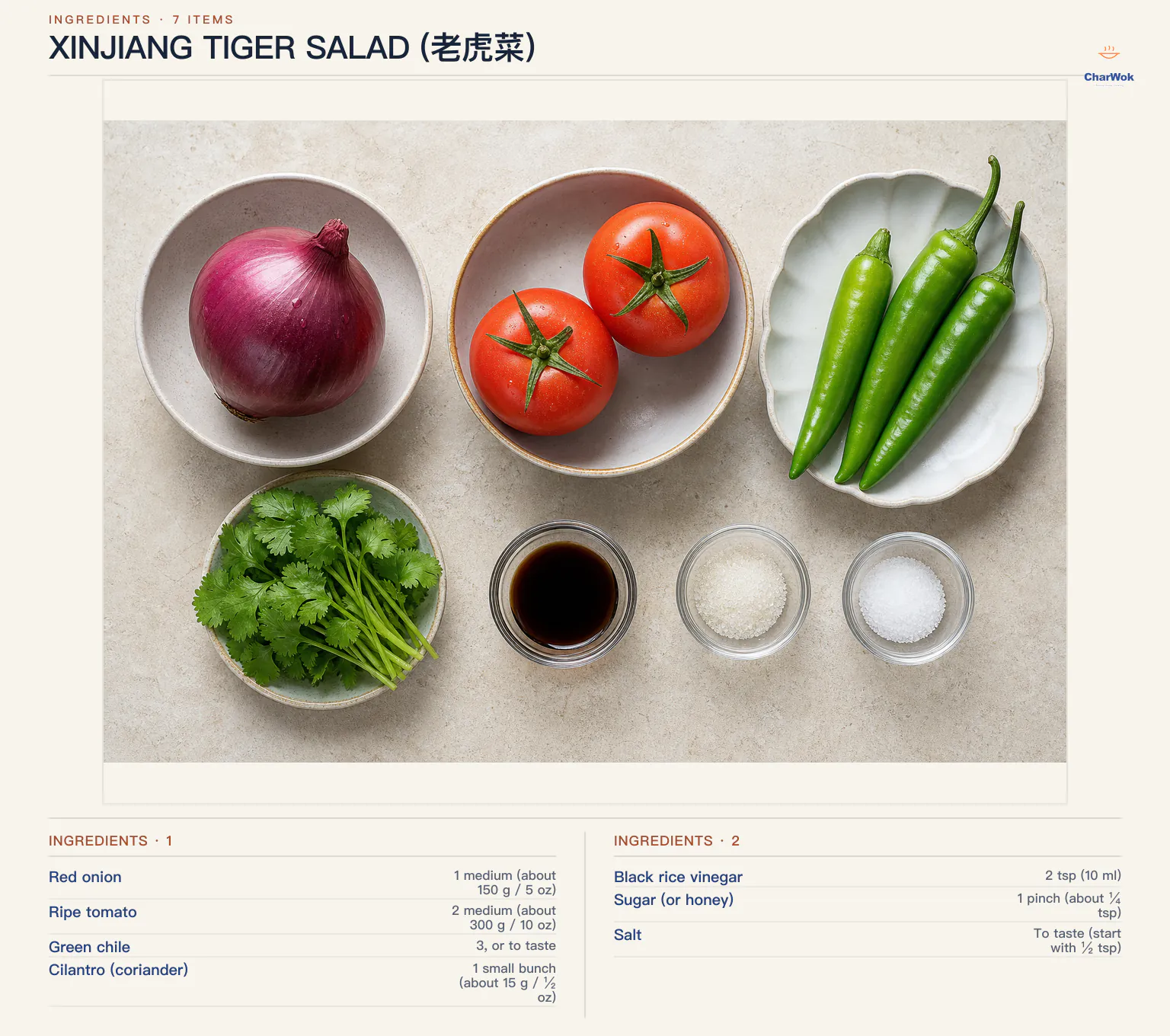
The amounts below serve two as a side. This is forgiving by nature, so trust your palate on the chile and the vinegar more than any number.
| Ingredient | Amount | Notes / substitute |
|---|---|---|
| Red onion | 1 medium (about 150 g / 5 oz) | Red onion is milder and prettier than yellow. White onion works if that is what you have; it will just be sharper. |
| Ripe tomato | 2 medium (about 300 g / 10 oz) | Vine-ripe or on-the-vine, never refrigerated. Plum tomatoes work if fully ripe. |
| Green chile | 3, or to taste | Jalapeño or serrano are the easiest US stand-ins. See the chile note below. |
| Cilantro (coriander) | 1 small bunch (about 15 g / ½ oz) | Stems and leaves both go in. If you hate cilantro, flat-leaf parsley is a calmer substitute. |
| Black rice vinegar | 2 tsp (10 ml) | Look for Chinkiang vinegar. Aged balsamic mixed with a splash of rice vinegar is a workable substitute. |
| Sugar (or honey) | 1 pinch (about ¼ tsp) | Just enough to round the vinegar. Honey dissolves more easily. |
| Salt | To taste (start with ½ tsp) | Kosher or fine sea salt. |
Choosing and prepping the chile
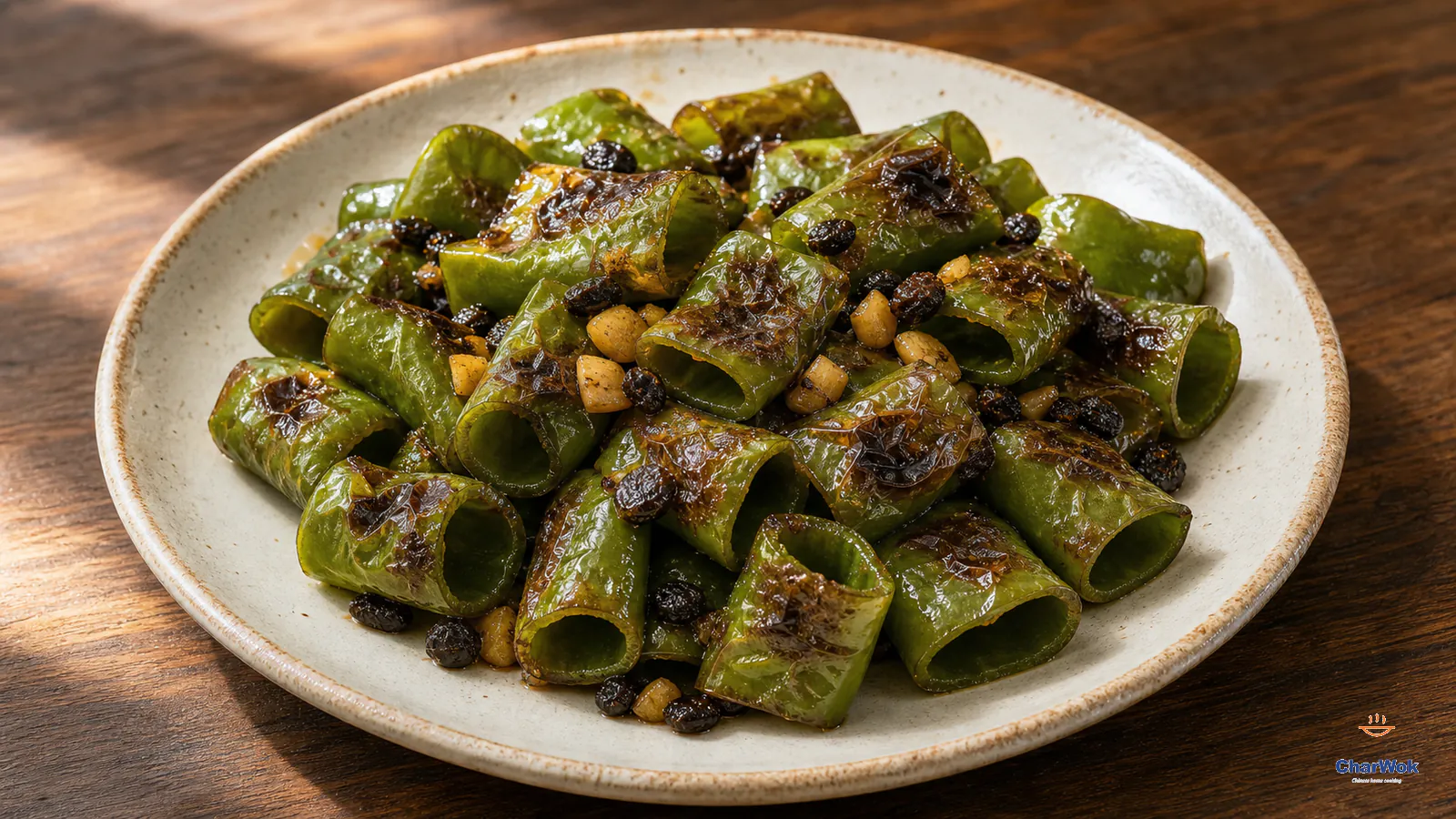
The original uses long, mild-to-medium green chiles common in Chinese markets, the kind you also see charred in tiger skin peppers. In a standard American supermarket, jalapeños are your reliable floor and serranos your reliable ceiling. If you want the dish authentic in spirit, mix the two: jalapeños for bulk and one serrano for sharpness. Seed them if you want to keep the heat predictable, leave the seeds in if you want the full jolt that earns the name.
Cut the chiles into thin rings, not a rough chop. Rings distribute the heat evenly so no single bite is overwhelming, and they look right in the bowl alongside the onion slices.
How to make it
- Halve and slice the onion. Cut the onion in half through the root end, peel it, and slice each half into thin half-moons, about 2 mm (a scant ⅛ inch) thick. Drop the slices into a bowl of cold water while you prep everything else. A ten-minute soak does what salt alone does, only gentler, and it makes the onion noticeably sweeter.
- Seed and slice the chiles. Trim the stems, split the chiles lengthwise, and scrape out the seeds and ribs if you want milder heat. Slice crosswise into thin rings.
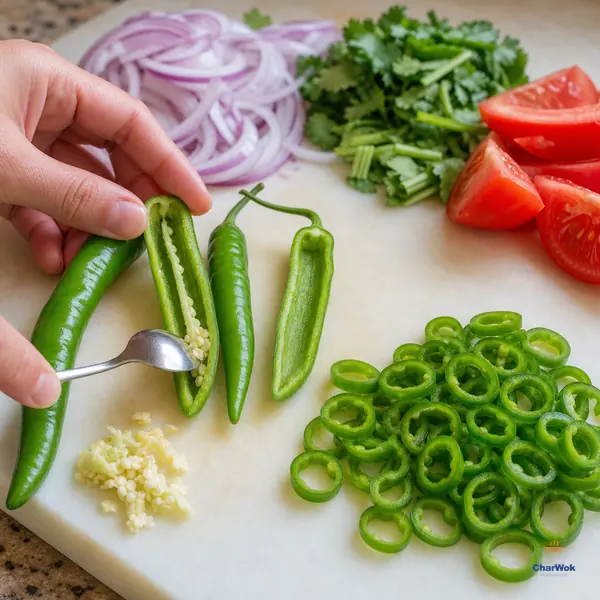
For a milder salad, split each green chilli lengthwise and scrape out the pale ribs and seeds before slicing it crosswise. The finished rings should have clean hollow centres; keep the onion half-moons, intact tomato wedges and roughly chopped cilantro separate until the last moment.
- Cut the tomato. Core the tomatoes and cut them into wedges or half-wedges of roughly equal size so they release juice evenly. Avoid dicing them small; you want pieces with some structure.
- Chop the cilantro. Bunch the cilantro and chop it coarsely, stems and all. The stems have more flavor than the leaves and a pleasant crunch, so do not trim them off.
- Drain and salt the onion. Drain the onion well, then toss it with a pinch of salt in your serving bowl. Give it two minutes. You will see a little liquid pool at the bottom; that is the harshness leaving.
- Add the rest of the vegetables. Pile in the chile rings, tomato wedges, and cilantro.
- Make the dressing in a small bowl. Stir the black rice vinegar, sugar (or honey), and ½ tsp salt together until the sugar dissolves. Taste it. It should read tangy and a little sweet, not puckering; adjust before you commit it to the salad.
- Dress and toss at the last second. Pour the dressing over the vegetables and toss gently with your hands or tongs, lifting from the bottom. The tomato will start releasing juice and the whole bowl will turn into its own light vinaigrette. Serve immediately.
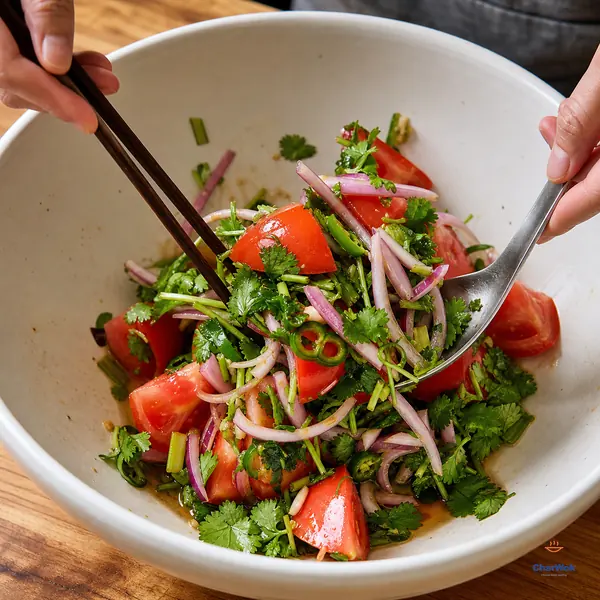
Add the dissolved vinegar dressing only when the salad is ready to serve, then lift the vegetables gently from the bottom a few times and stop. The tomato wedges should remain intact, the onion and chilli crisp, and only a small amount of fresh juice should collect below.
That final step is the one people get wrong. Once the salt and vinegar meet the tomato, the clock starts. After about fifteen minutes the tomato goes mealy and the cilantro wilts, so this is a dress-and-serve dish, not a make-ahead dish. If you need to prep ahead, slice everything and keep the components separate in the fridge, then combine in the last five minutes.
When it goes wrong, and how to fix it
The onion tastes too harsh. You skipped the soak or the salt, or you used an old, pungent onion. Fix it now by adding a teaspoon more vinegar and another pinch of sugar and letting it sit five minutes longer; the acid and sugar will pull it back. For next time, soak the sliced onion in cold water for ten minutes before salting.
The salad is watery and bland. Two likely causes. Either your tomato was refrigerated and mealy, or you dressed too early and the salt pulled all the juice out before serving. Use room-temperature, ripe tomatoes and dress at the table.
It is violently hot. You left the seeds and ribs in serranos. Pull out the chile rings you can see, add an extra tomato wedge or two, and a touch more sugar. Heat lives in the white ribs, not the flesh, so seeding carefully is the real fix.
It tastes flat. The vinegar is doing nothing because the dish is under-salted. Salt is what makes acid readable; add a small pinch, toss, and taste again before reaching for more vinegar. I have made this mistake with cheap vinegar more than once and the salt fixed it both times.
The cilantro tastes soapy. That is genetic, not your fault. Swap in flat-leaf parsley and a few mint leaves and you get a cleaner, cooler version that still works beside grilled meat.
Variations and what to serve it with
Tiger salad is built to sit next to rich, smoky, cumin-heavy food. Its natural partner is grilled lamb, so lay it alongside cumin lamb done in a wok or the baked lamb-filled buns from the same region. For a bigger northwest spread, add a plate of chicken and belt noodles and let the salad do the refreshing. The skewers-and-salad pairing is the same logic behind the dishes you find in classic Xi'an restaurant lineups: one cold sharp plate to cut through a table of grilled and braised meats.
For a vegetarian meal, spoon it over cold noodles or scoop it up with flatbread. It is excellent folded into a warm pita with yogurt, which is closer to how Xinjiang food actually borrows from its Central Asian neighbors.
If you want to push the dish in new directions, try one of these:
- Add cucumber. A handful of smashed cucumber pieces turns it into a wetter, crunchier salad that holds longer.
- Swap in eggplant. For a cooked counterpart with the same garlic-and-vinegar backbone, try a steamed eggplant with chili garlic dressing on the same table.
- Add a jelly or glass noodle. Fold in cold mung bean jelly or a glass noodle salad to turn the side into a light main.
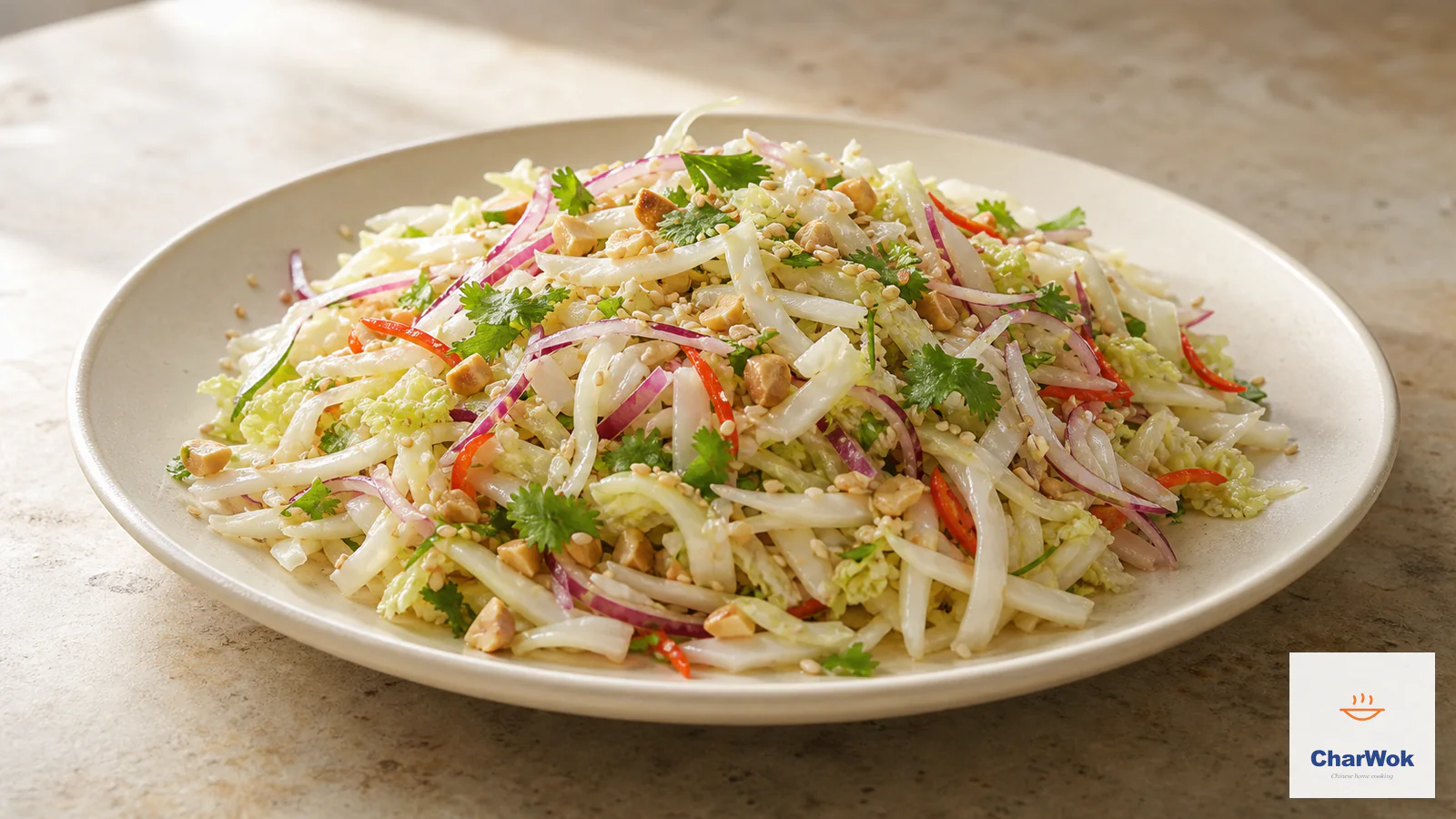
- Use napa cabbage as a base. Shredded napa cabbage salad underneath gives the dish more body and a longer window before it wilts.
- Add quick pickles. A spoonful of overnight pickled vegetables on top doubles down on the sour-crisp thing this salad already does.
It belongs in any summer recipe rotation precisely because the stove stays off. On a hot night, that is the whole appeal.
Storage and leftovers
Honestly, do not store it. Once dressed, the salad declines fast, and after a night in the fridge the tomato turns to mush and the cilantro goes dark. If you must keep leftovers, drain off the pooled liquid and use the vegetables as a relish on a sandwich or a taco the next day. The undressed, prepped components will hold separately in the fridge for a day, covered; just dress when you are ready to eat.
A note on the name
There is a sibling dish from the northeast that shares the tiger name and almost nothing else, built around raw peppers and a different aromatic base. If you have tried wood ear mushroom salad or a ginger-dressed spinach salad and liked their clean cold-plate logic, the tiger family will feel familiar. The Xinjiang version is just the loudest one in the group.
Frequently asked questions
Can I make tiger salad ahead of time? Only the prep. Slice and soak the onion, chop the chile and cilantro, and wedge the tomato, then keep them separate and dress in the last five minutes. Once salt and vinegar hit the tomato, the texture drops off within about fifteen minutes.
What is the best substitute for black rice vinegar? Aged balsamic thinned with a little clear rice vinegar gets close. Plain white vinegar is too sharp and one-note for this, so avoid it.
How spicy is this supposed to be? Loud enough to feel like a tiger on the first bite, then mellow. Three jalapeños give a comfortable warmth; one serrano added in brings real heat. Seed the chiles first and you can always dial it up.
Can I add oil? You can, but it stops being tiger salad and becomes a generic tossed salad. A few drops of toasted sesame oil are the most defensible addition if you want richness.
Why soak the onion instead of just salting it? Soaking pulls out sulfur compounds faster and more gently than salt alone, and it keeps the slices crisp. If you are short on time, a five-minute salt-and-rinse will do the job.