The first time a friend handed me a slice of century egg, I almost said no. The white was the color of tea-stained glass, the yolk was a muted sage and faintly glossy, and the smell hit a note I had no category for. Then I ate it with vinegar and ginger, on cold silken tofu, and I understood why Chinese home cooks have kept a jar of these in the fridge for centuries. The flavor lands somewhere between a pungent blue cheese and a very ripe brie (funky, savory, almost too much on its own), and the texture of a properly cured yolk, soft and almost custardy, is something no fresh egg can fake.
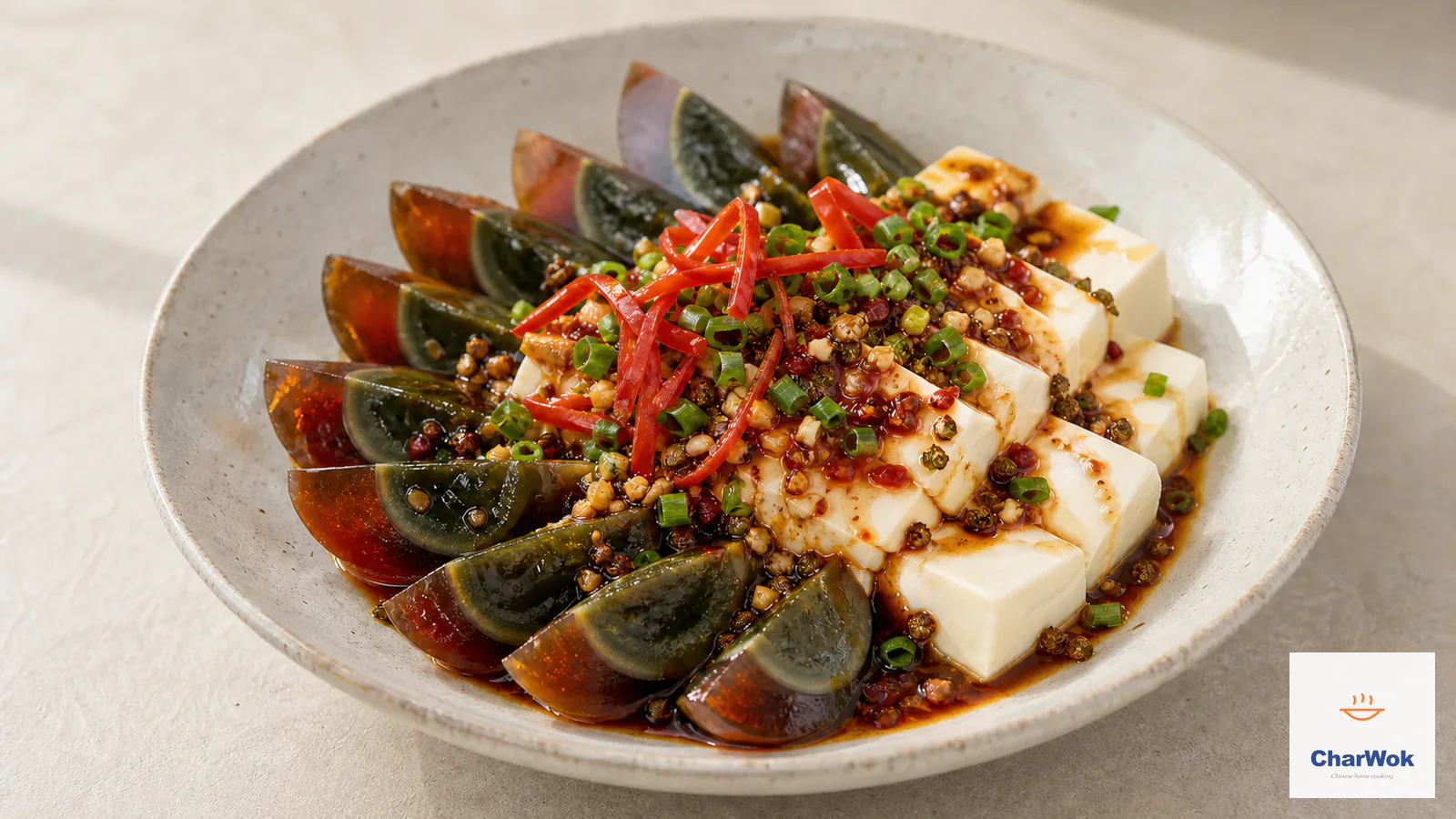
This recipe pairs century eggs with two things that make them sing: charred sweet peppers and the softest silken tofu you can find, all under a hot-oil dressing scented with garlic, ginger, and Sichuan pepper. It is a cold dish built from contrasts, creamy against smoky and alkaline against acid, and it lands on the table in under fifteen minutes once you stop being nervous about the eggs.
At a glance: A no-cook cold salad of 3 century eggs, 100 g silken tofu, and one charred sweet pepper, dressed with hot oil poured over garlic, ginger, chili flakes, and Sichuan pepper, then loosened with light soy sauce and black rice vinegar. About 10 minutes total. The whole dish hinges on one judgment: pour the oil hot enough to sizzle loud, but stop the moment the aromatics brighten.
What a century egg actually is (and what it is not)
The English labels (century egg, hundred-year egg, thousand-year egg) are a marketing accident, and the Chinese names point the same way: they describe appearance, not age. A duck egg (most commonly; chicken, quail, and goose versions exist) is coated in an alkaline paste built from mud, wood ash, salt, and slaked lime bound with water, then left for a few weeks. That is it. The shell stays intact; nothing rots.
What does the work is pH. The alkaline coating slowly raises the egg's pH to around 9 or higher. At that level the proteins in the white denature and re-set into a firm, see-through, tea-brown gel, while the fats and proteins in the yolk break into smaller, more flavorful compounds. The reaction is a chemical one (hydroxide and salts doing the work, not microbes), so it is not really the same mechanism as aging cheese (which relies on enzymes and live cultures). But the end result rhymes: a long, slow breakdown that trades blandness for intensity. The frosty, branching pattern some eggs show on the surface comes from salts that crystallize as the cure progresses (a mix of inorganic mineral salts together with amino acid salts), and eggs left to cure longer tend to show more of it.
So no, you do not need to cook them. They are ready to eat straight from the shell. The only real question is what to put next to them. If you are new to preserved eggs in general, the same logic that makes Chinese tea eggs or silky steamed eggs work, where heat and time transform texture, applies here, except the transformation already happened in the jar.
Why this combination tastes better than any one part alone
A preserved egg on its own is a lot to take. Across China it tends to show up on one of two cold plates: blistered under charred green peppers, the bar-food style the southwest loves, or settled onto chilled silken tofu, the gentler home version. This recipe brings both ideas onto one plate and lets the soft tofu and the smoky pepper share the job of balancing the egg.
The egg, eaten alone, is dense and alkaline, almost too much. The tofu dilutes that intensity with cool, clean dairy-fat-like richness. The charred pepper adds smoke and a little sweetness to cut through both. And the dressing is where the acid earns its place: black rice vinegar (read about why black rice vinegar is the right vinegar here) rides over the egg's sharper, pungent top notes so the savory, umami depth comes forward instead. It is the same reason a cold northeast tiger salad or a plate of scallion tofu leans hard on vinegar; acid is the only thing that keeps a rich cold dish from tasting flat.
Ingredients
Ingredients at a glance
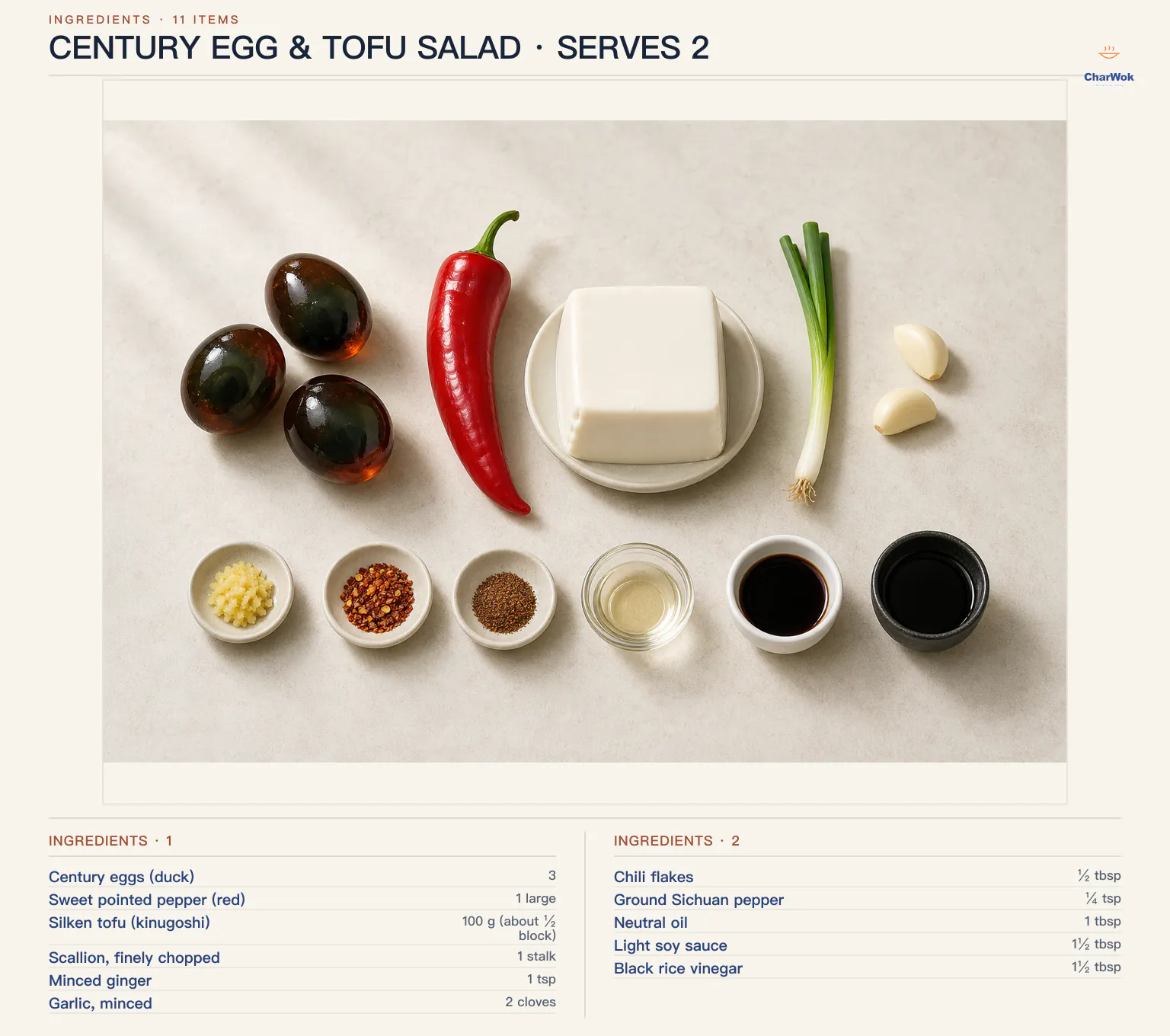
Serves 2 as part of a multi-dish meal. The quantities are forgiving; this is a salad, not a bake.
| Ingredient | Amount | Notes / substitute |
|---|---|---|
| Century eggs (duck) | 3 | Look for intact shells and a pine-pattern jelly when cut; chicken-egg versions are paler yellow and milder |
| Sweet pointed pepper (red) | 1 large | Any sweet pepper works; avoid fresh hot chilies here unless you want real heat; use blistered green peppers style instead |
| Silken tofu (kinugoshi) | 100 g (about ½ block) | The softest type; see notes below on handling |
| Scallion, finely chopped | 1 stalk | Green part only for color, white and green for flavor |
| Minced ginger | 1 tsp | Fresh; ginger is the classic foil to the egg's ammonia note |
| Garlic, minced | 2 cloves | Crush then mince so it releases juice into the oil |
| Chili flakes | ½ tbsp | Chinese-style coarse flakes, not fine powder; or a spoon of chili oil with the solids |
| Ground Sichuan pepper | ¼ tsp | Freshly ground from whole peppercorns; grind your own, since pre-ground loses its citrusy buzz fast |
| Neutral oil | 1 tbsp | Grapeseed, canola, or peanut; not olive |
| Light soy sauce | 1½ tbsp | Light, not dark; dark will muddy the color and read as too sweet |
| Black rice vinegar | 1½ tbsp | Chinkiang style; if unavailable, use mature balsamic cut with a splash of water |
Method
- Blacken the pepper first. Get a dry pan or wok good and hot (skip the non-stick here, you want bare metal on the flame) and lay the whole pepper in. Turn it every minute or so until the skin is mostly charred and blistered and the flesh gives when you squeeze it, about 6 minutes. The blackening does double duty: it loosens the skin so it slips off, and it builds smoky, sweet notes in the flesh below. Drop it into a bowl, clamp a plate on top for 3 minutes to let the steam finish the job, then scrape the skin away with the back of a spoon and slice the flesh into thin ribbons.
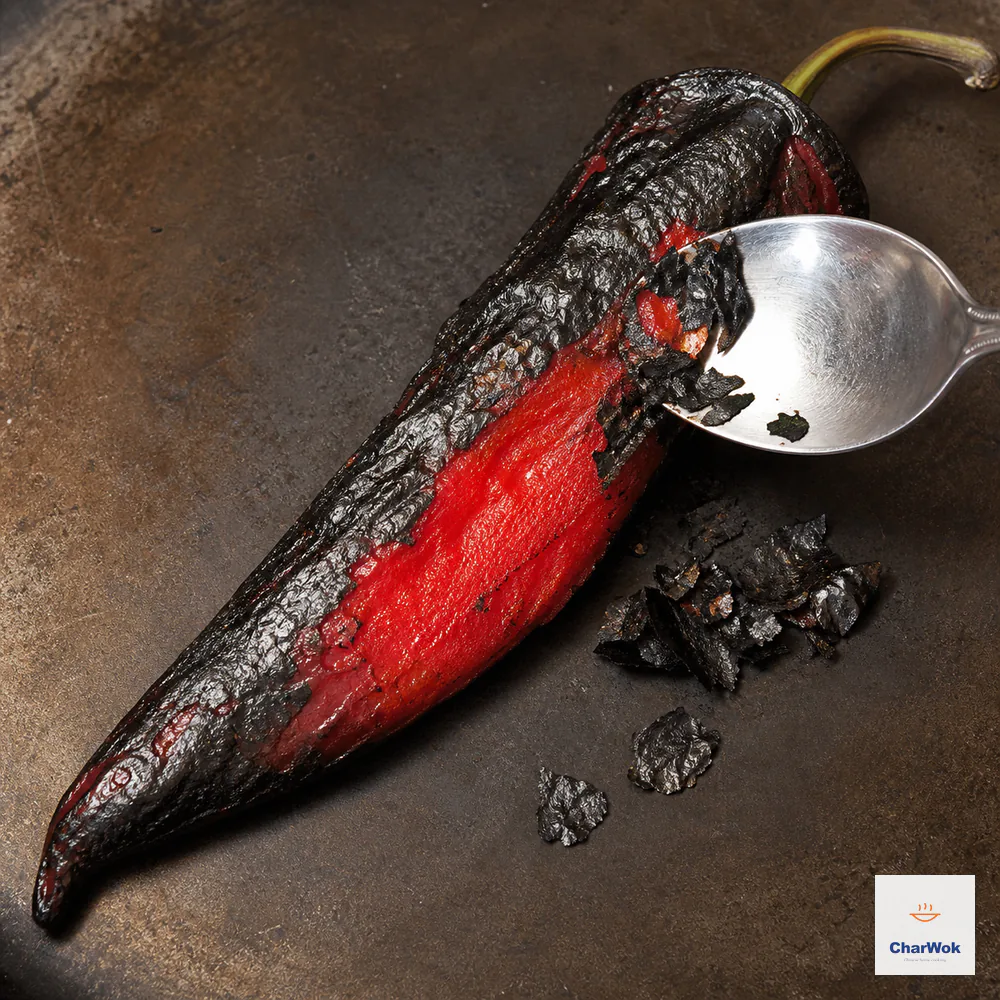
Dry-char the whole pepper until most of the skin is black and blistered and the flesh is soft, cover for 3 minutes, then scrape off the loose skin and slice it into thin ribbons.
- Bloom the dressing while the pan is still hot. Pile the minced ginger, garlic, chili flakes, and ground Sichuan pepper together in a small heatproof bowl on a stable trivet. Heat the neutral oil gradually to about 180°C / 356°F, when it is fluid and shimmering but not smoking, then pour it steadily onto the spice mound. You are after an immediate sizzle without browning the garlic. If the oil smokes, turn off the burner and let it cool before continuing. Off the heat, stir in the light soy sauce and black rice vinegar. Taste: it should read salty, tart, and lightly smoky from the charred pepper.
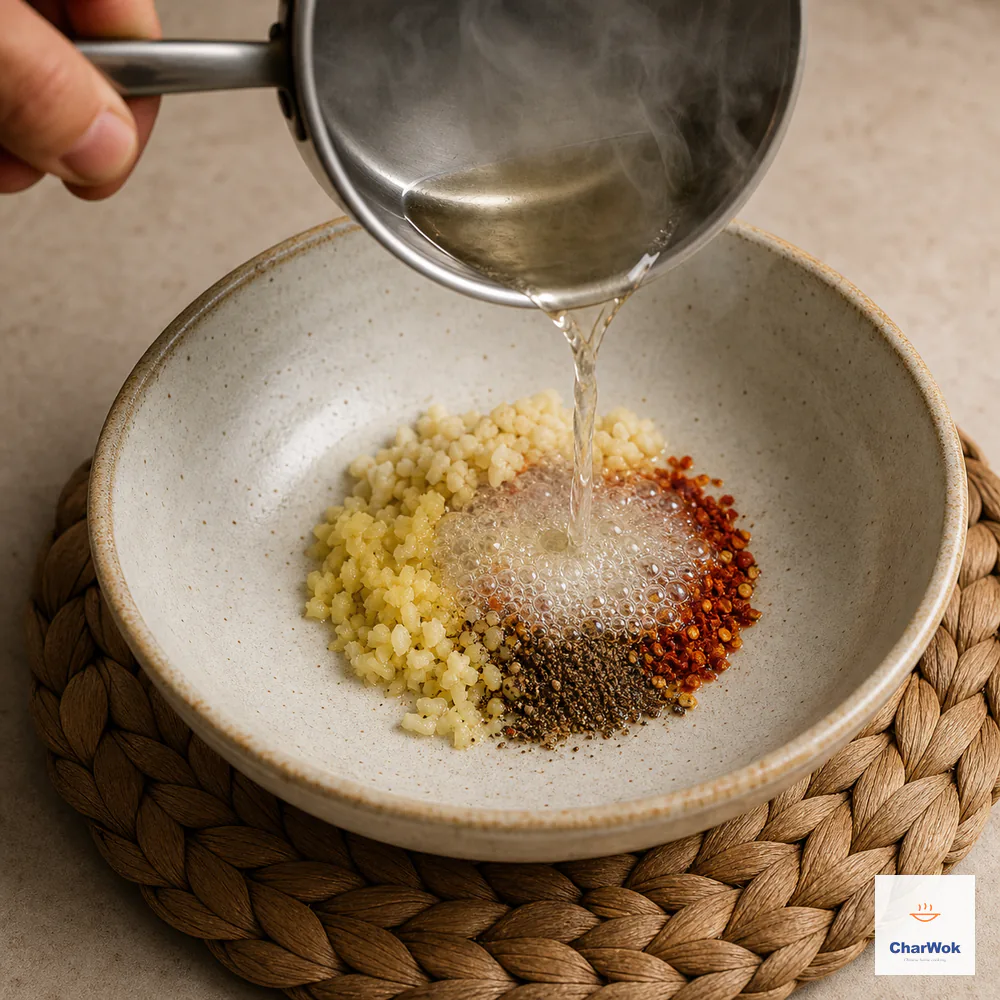
Heat the neutral oil gradually to about 180°C, fluid and shimmering but not smoking, then pour it steadily over the dry aromatics; if it smokes, turn off the burner and let it cool before continuing.
- Peel and portion the eggs. Crack the century eggs and remove the shells with wet hands, dipping into a bowl of cold water as you go; a little water between the membrane and the set white keeps it from tearing. Cut each egg into 6 wedges. A soft, runny yolk will drag on the blade, so warm the knife in hot water between cuts so each wedge comes away clean.
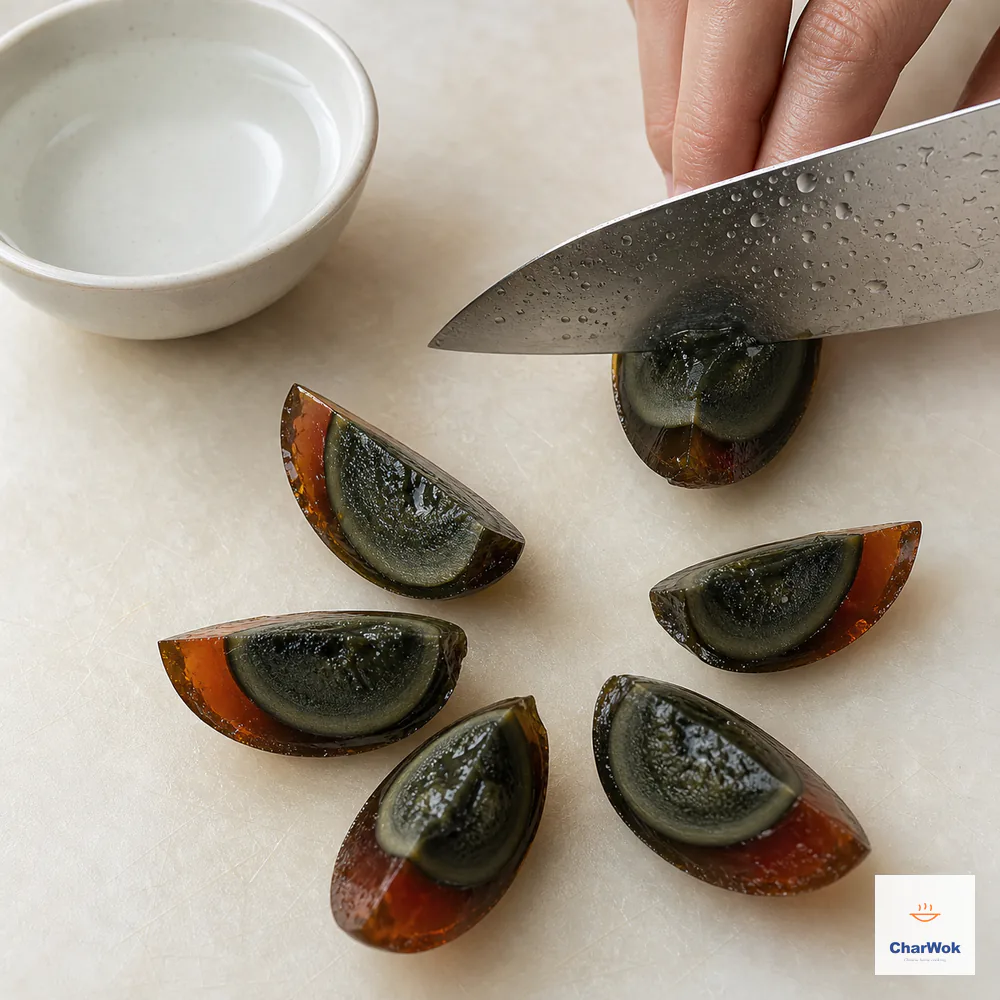
Peel the 3 century eggs under cold water, then wet or warm the knife between cuts and divide each egg into 6 clean wedges without dragging the soft yolk.
- Plate the tofu. Drain the silken tofu. You can cut it into neat cubes, but the easier, more forgiving move is to set the whole block on the plate and break it into rough chunks with a spoon. Silken tofu is fragile by design; a knife usually makes a worse mess than the spoon.
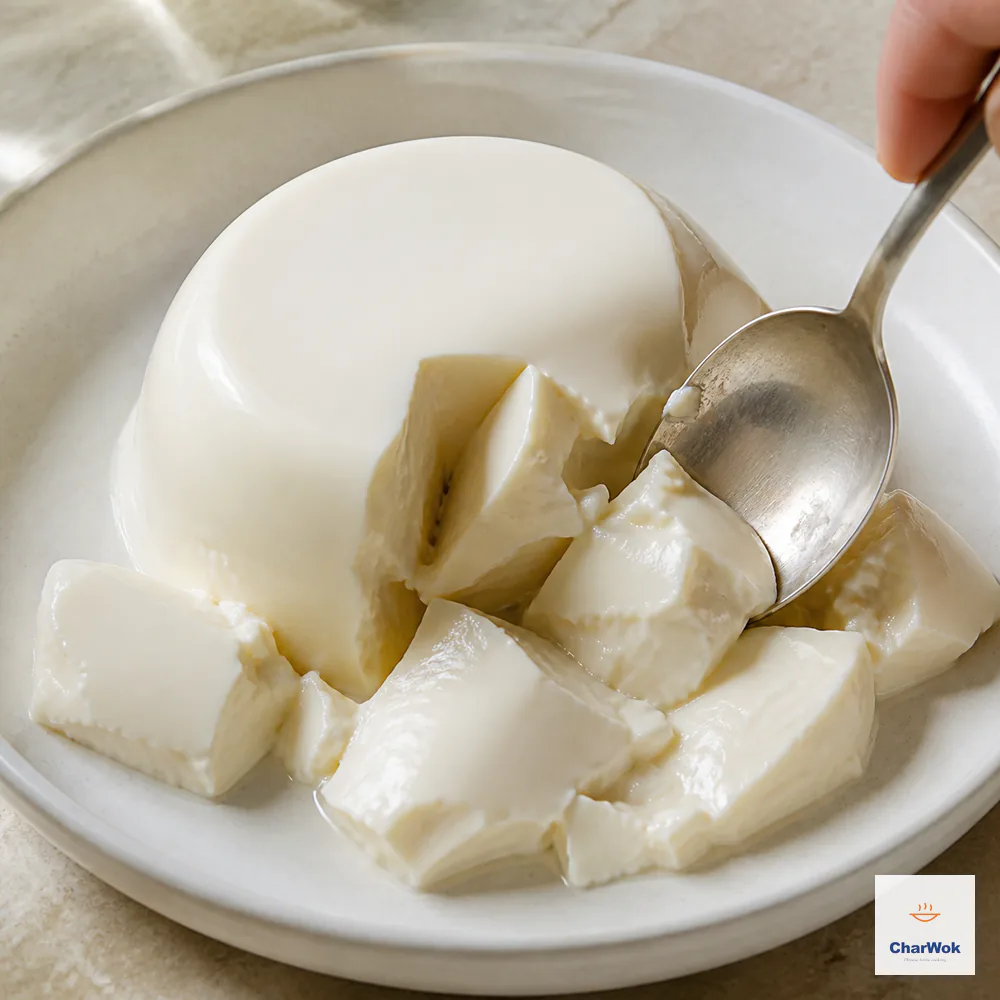
Drain and invert the silken tofu onto the plate, then use a spoon rather than a knife to break it into rough chunks so the delicate texture stays intact.
- Assemble and dress at the last moment. Lay the egg wedges over and around the tofu, scatter the pepper ribbons and scallion on top, and keep the plate cold — this dish is best straight from the fridge. Spoon the dressing over everything right before you bring it to the table, and let plain steamed rice sit alongside to soak up whatever pools at the bottom.
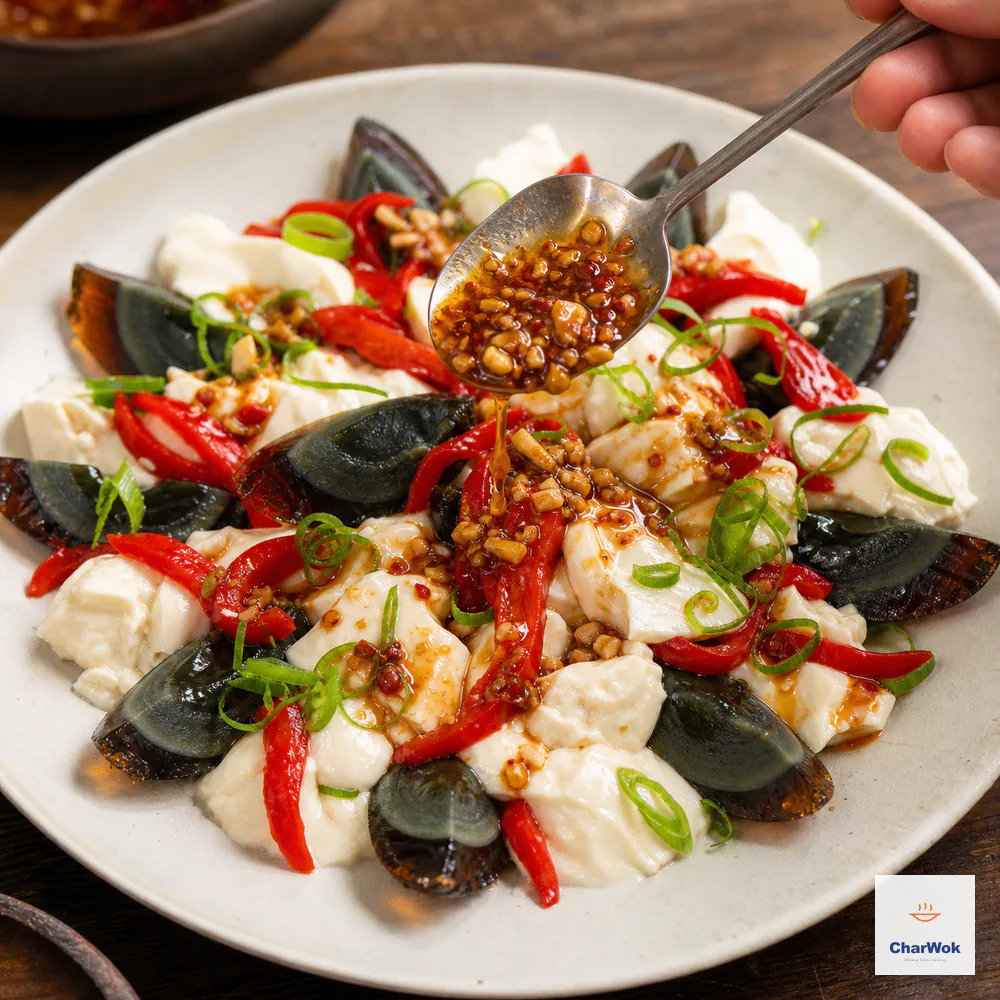
Keep the arranged century eggs, tofu, pepper ribbons, and scallion cold, then spoon over the dressing only at the last moment so the salad stays fresh rather than waterlogged.
Hot-oil safety: Stay beside the pan and use a dry, stable, heatproof bowl. The U.S. Fire Administration advises turning off the burner if cooking oil starts to smoke.
When it goes wrong (and how to save it)
The egg smells aggressively of ammonia. This is usually two things: a lower-quality egg cured too fast, or an egg that has been sitting open too long. Some cooks like to give the wedges a quick 30-second dip in rice vinegar, then a rinse, to mellow the top notes — worth a try, though a heavy hand in the dressing will do similar work. Long-term, buy eggs with intact shells and the pine pattern visible, and keep them in the fridge once peeled. The vinegar in the dressing also does this work, which is why a more pungent egg benefits from a slightly heavier pour.
The yolk is runny and smears everywhere when you cut. Some eggs are cured softer than others, and that is a feature, not a flaw; the runny center is prized. To get clean wedges, chill the egg well first and dip the knife in hot water between cuts, wiping the blade each time. Do not try to saw; one clean downward stroke per wedge.
The tofu collapses into slurry when sliced. Silken tofu holds together better when it is very cold and fully drained. Tip the block out onto a paper towel for five minutes before plating. If it still fights you, abandon the cubes and go with the spoon-break method; nobody at the table can tell the difference once the dressing is on.
The chili flakes burn to black when the oil hits them. The oil was too hot. Discard the scorched batch; next time heat fresh oil gradually to about 180°C / 356°F and pour as soon as it shimmers. Keep the bowl and aromatics dry to reduce splatter, then add soy sauce and vinegar only after the oil pour.
The pepper will not peel cleanly. It was not charred enough, or you did not steam it under a cover. The skin needs to be mostly black before the bowl-and-plate steam trick works. A few charred flecks left on are fine and add flavor, so do not chase perfection.
Variations and what to serve with it
Drop the heat, keep the smoke. For a version with no chili at all, pour the hot oil over just the ginger and garlic, then finish with toasted sesame oil and a pinch of salt. This is the classic silken tofu with soy dressing direction and is the one to make for anyone who finds Sichuan pepper numbing.
Lean into the Sichuan angle. Add a teaspoon of finely ground roasted Sichuan pepper to the dressing and a spoon of chili oil solids. It then sits next to a plate of mapo tofu or a bowl of dan dan noodles without apology.
Add it to congee. The other canonical home for century eggs is rice porridge. Chop one egg and stir it into a bowl of plain congee in the last minute of cooking; the heat softens the yolk further and it melts into the rice in streaks. My quick route is the 15-minute chicken and mushroom congee, with the egg going in alongside the meat.
Build a cold plate around it. On a hot night this salad belongs with other no-cook dishes: a summer-recipe lineup of smashed cucumber, a glass-noodle salad, and steamed rice is a full meal that never turns the stove on for more than the dressing oil.
Storing and using leftovers
Unpeeled century eggs keep in the fridge for weeks. They are already preserved, that is the whole point. Once peeled, wrap them and use within two days. The assembled salad is best eaten immediately; once dressed, the tofu weeps water and the chili darkens, and after a night in the fridge it reads as tired. If you must hold it, keep the dressing separate and dress at the table.
One practical note on buying: in most Chinese grocery stores the eggs live in the chilled section, sometimes still coated in the clay-and-husk mix, sometimes bare. Pass on any with hairline splits in the shell, since a broken seal lets the cure leak and the egg can dry out hollow. A sound egg, tapped gently, should feel solid all the way through.
Frequently asked questions
Do I need to cook century eggs before eating? No. The alkaline cure makes them ready to eat as-is. Peel, rinse, slice, and serve.
Are they actually a hundred years old? No. The cure takes a few weeks. The English name is misleading; the Chinese names refer to appearance, not age.
What do they taste like? The white is mild and jelly-like; the yolk is dense and savory, with a funky depth similar to a ripe blue cheese and a faint pungent top note. The vinegar in the dressing rounds off that sharpness.
Can I use chicken or quail century eggs instead? Yes. Chicken-egg versions are paler yellow and milder; quail eggs are a common bar snack. Adjust the count to roughly the same total volume.
Is the ammonia smell safe? A faint whiff when you first open one is normal. A strong, sharp smell from a cracked or long-open egg means it has degraded, so discard it.
Where do I buy them? Chinese and Asian grocery stores, in the chilled section, sometimes in the clay coating and sometimes bare. Look for whole, uncracked shells.