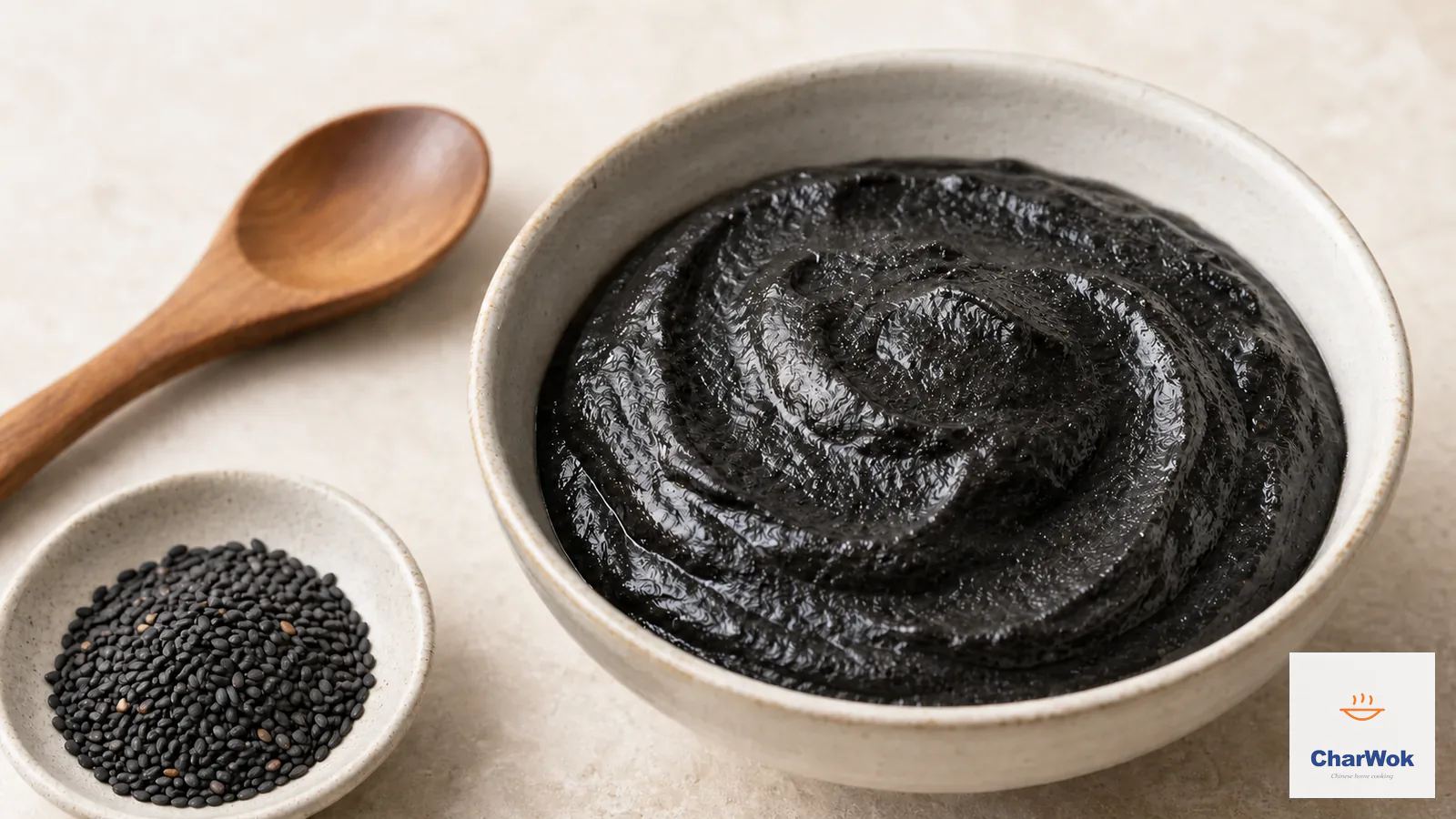
Homemade black sesame paste is one of those recipes that looks like a two-ingredient afterthought until you actually make it. You dump toasted seeds into a food processor, hit the button, and for a long minute nothing happens. Just black sand spinning around. Then the seeds crack, their oil seeps out, and the whole thing turns glossy and dark in front of your eyes. That moment is the entire reason to make it at home.
The trouble is the texture. Buy a jar and it's either bone-dry or swimming in neutral oil. Make it yourself and you control everything, including the one decision the jar never lets you make: whether you want a dense, sliceable filling that stands up to a mooncake mold without slumping, or a soft, flowing one that pours out of a warm glutinous rice ball. This guide walks through both, plus the three places most home cooks slip up.
Toast raw seeds until they crack open easily between your fingers (about 6 minutes over low heat), then grind in pulses until the seeds sweat their own fat and turn glossy. Two real ingredients, about 14 minutes of work, and the sweetener you pick, honey versus sugar, decides whether the paste sets firmly enough to mold or stays loose enough to pour.
What black sesame paste actually is
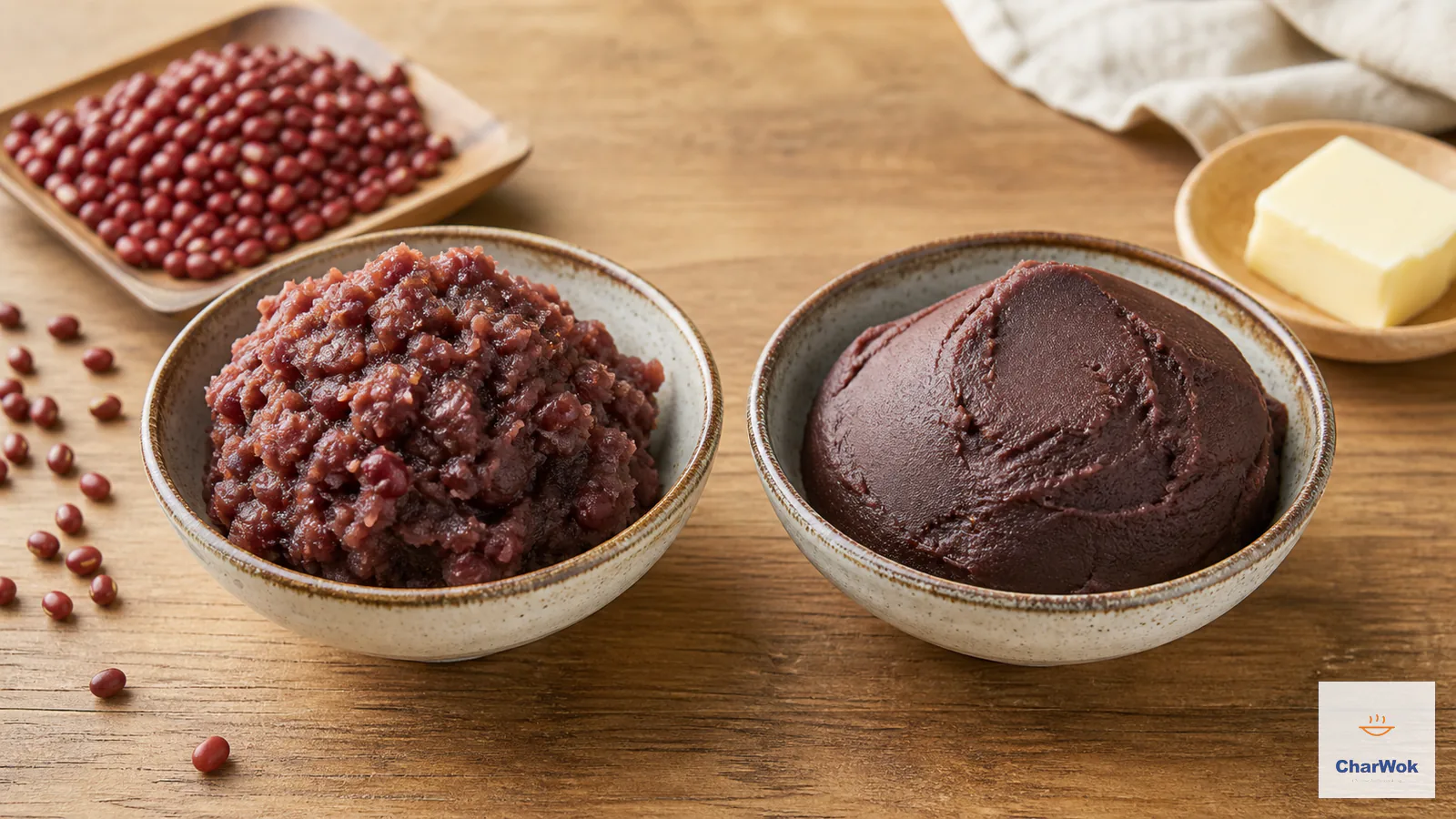
Black sesame paste (Hēi Zhī Má Xiàn, 黑芝麻馅) is a sweet filling built from unhulled black sesame seeds, a sweetener, and sometimes a solid fat. Think of it as the dark, toasty answer to the bean-based fillings that crowd a Chinese pastry case: where red bean paste leans milky and legume-sweet, this one runs toward coffee and char, the kind of depth you only get from seeds that have spent real time in a hot pan.
The bitterness is the point. It's why the filling tastes grown-up rather than cloying, and it's the reason a sweetener is non-negotiable. Without one, the paste reads as flat. The traditional sweetener in northern Chinese kitchens was lard-bound sugar; modern home cooks reach for honey, which doubles as a texture modifier.
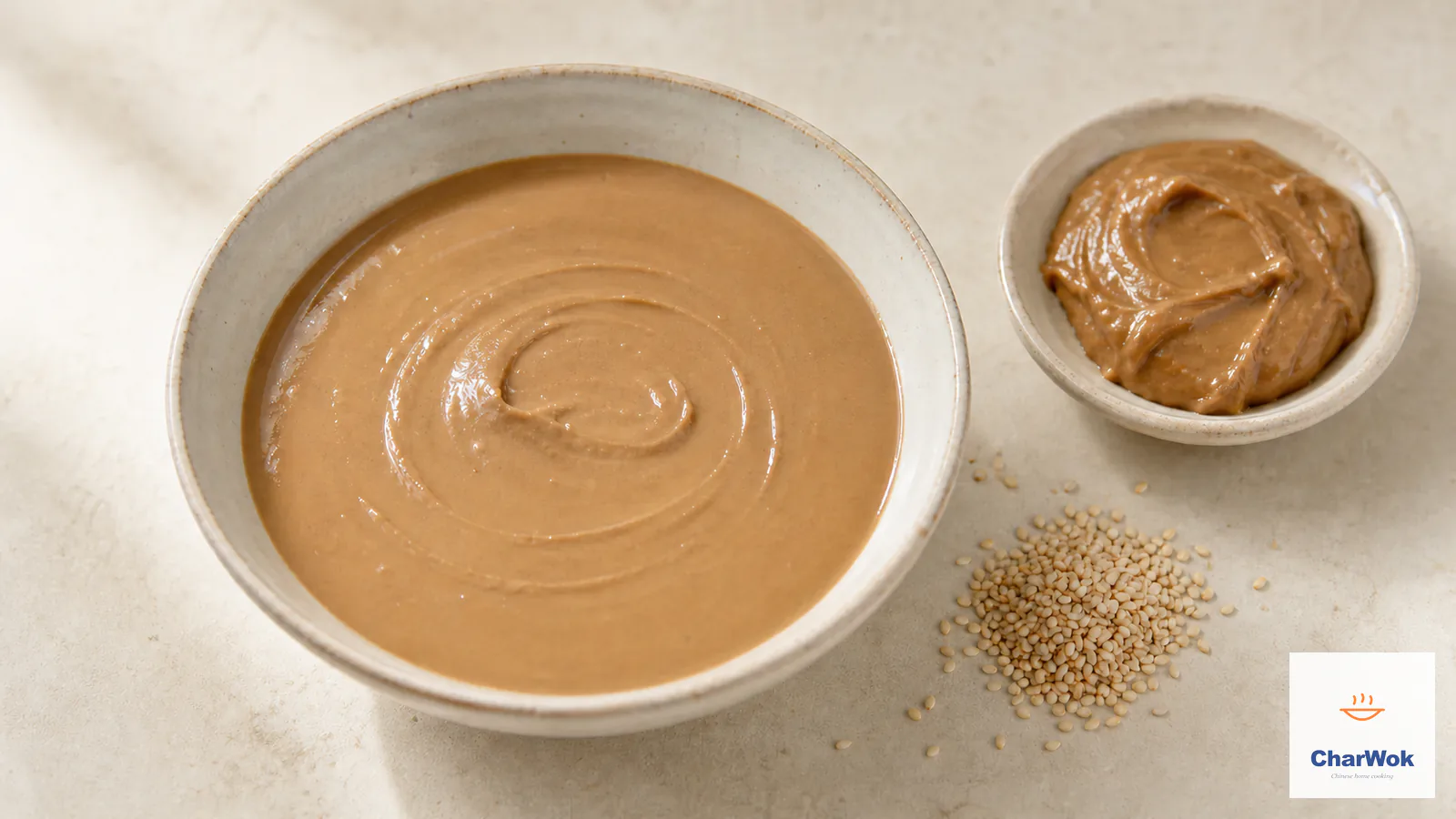
Keep it separate from the savory cousin on the shelf. Chinese sesame paste (Zhī Má Jiàng, 芝麻酱) is milled from pale unhulled sesame and left unsweetened, so it belongs in a sauce bowl rather than a dumpling. It is what gives Dan Dan Noodles and cold sesame noodles their clinging, nutty coat. Reach for the sweet dark paste when you are filling a pastry, the pale paste when you are dressing noodles.
The science of the grind
Every seed is a tiny package of oil and protein locked inside a hard hull. Grinding cold just fractures the seed into grit. The trick is that friction warms the seeds, softens the cell walls, and persuades the fat stored inside to weep out and coat the particles. Once enough fat is free, the grit collapses into a smooth, shiny paste. This is the same physics behind making nut butter, and it's why patience matters more than machine power.
Heat is a double-edged blade here. You need enough warmth to release the oil, but if the bowl runs hot the fragile aromatics cook off and you lose the roasted scent you worked for in the pan. Pulse in short bursts, scrape the sides, and let the machine rest. If the bowl is too hot to hold, it's too hot for the paste.
Ingredients
Ingredients at a glance
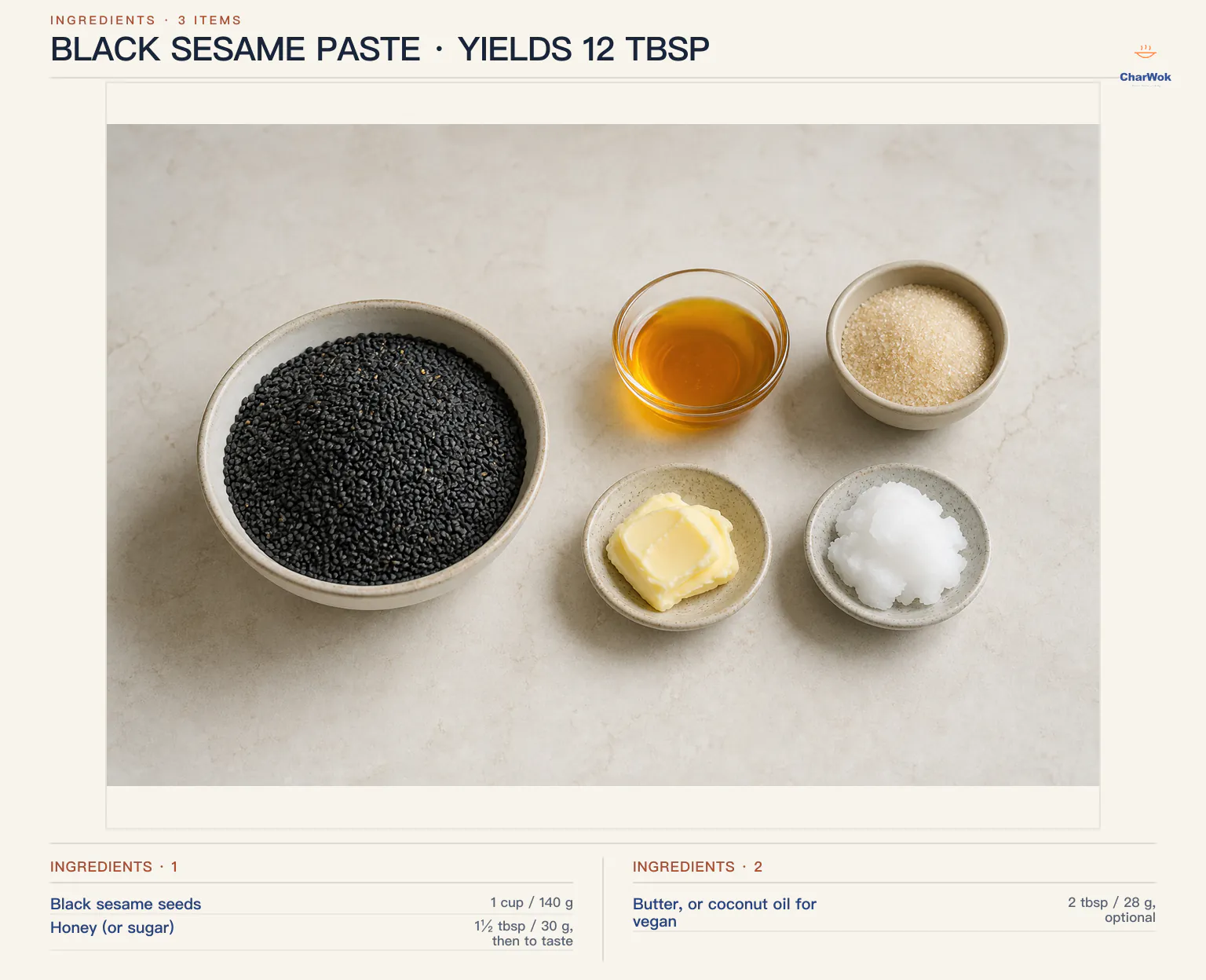
Quantities below are a starting point, not a law. The sweetener especially is a matter of taste and texture, so build up to it.
| Ingredient | Amount | Notes / substitute |
|---|---|---|
| Black sesame seeds | 1 cup / 140 g | Raw or pre-toasted. Unhulled black sesame is the traditional choice; the hull is what gives the deep color and slight bitterness. |
| Honey (or sugar) | 1½ tbsp / 30 g, then to taste | Honey firms the paste; granulated white or brown sugar loosens it. Maple syrup, golden syrup, or brown rice syrup also work. |
| Butter, or coconut oil for vegan | 2 tbsp / 28 g, optional | Adds richness and a runny, melt-in-the-mouth center when the paste is served warm. Lard is the traditional Chinese choice. Avoid liquid oils. |
Equipment
A food processor, a high-powered blender, or a dedicated spice grinder all work. A mortar and pestle will get you there too, but plan on twenty minutes of arm work and a coarser result. Whatever you use, fill it deep enough that the seeds crowd the blade zone. A shallow scattering just skitters around and never builds the friction it needs.
How to make it
The whole job comes down to three beats: warm the seeds, mill them, then sweeten. Skip the warming if you bought pre-toasted seeds, though I still prefer the aroma of seeds toasted the same day.
- Toast the seeds. Spread raw seeds in a dry, clean pan over low heat and stir constantly with a spatula so they heat evenly. The goal is to round out the hulls and wake the aroma, not to brown them. Around the 6-minute mark the seeds puff, shed a faint oil sheen, and the smell turns from raw and grassy to deep and roasted; the moment that shift hits, pull the pan off the heat. Seeds go from done to burnt in under a minute, and burnt sesame tastes acrid through any amount of sweetener.
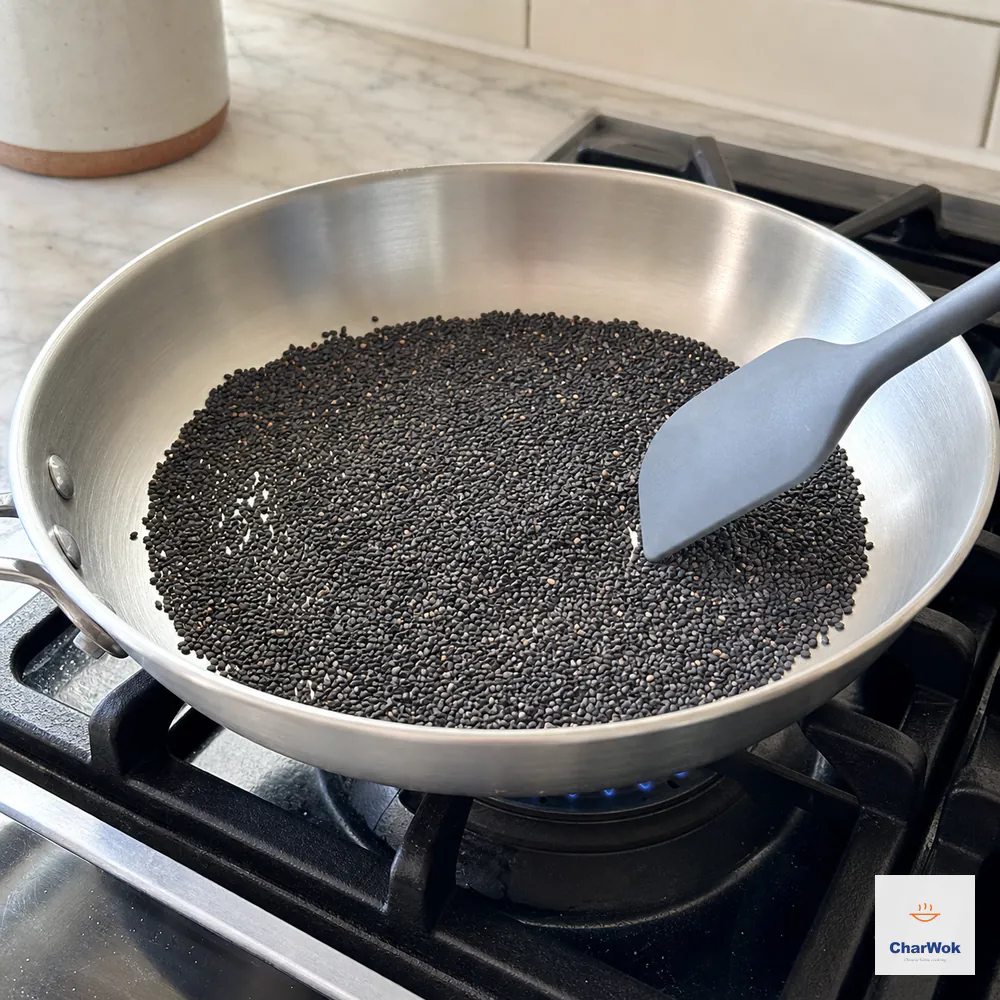
Toast over low heat while stirring for about 6 minutes, keeping the seeds in a thin even layer and stopping before they smoke or scorch.
- Cool briefly, then grind in pulses. Transfer the seeds while still warm to the food processor. Run for 5 to 10 seconds, stop, scrape the sides and under the blade with a flexible spatula, and repeat. For the first minute you'll see only dark sand. Keep going. Somewhere around the 2 to 4 minute mark the seeds give up their fat all at once and the powder clumps into a glossy, dark paste. Stop the moment it looks smooth and wet, because over-grinding after that point just heats the paste and dulls the flavor.
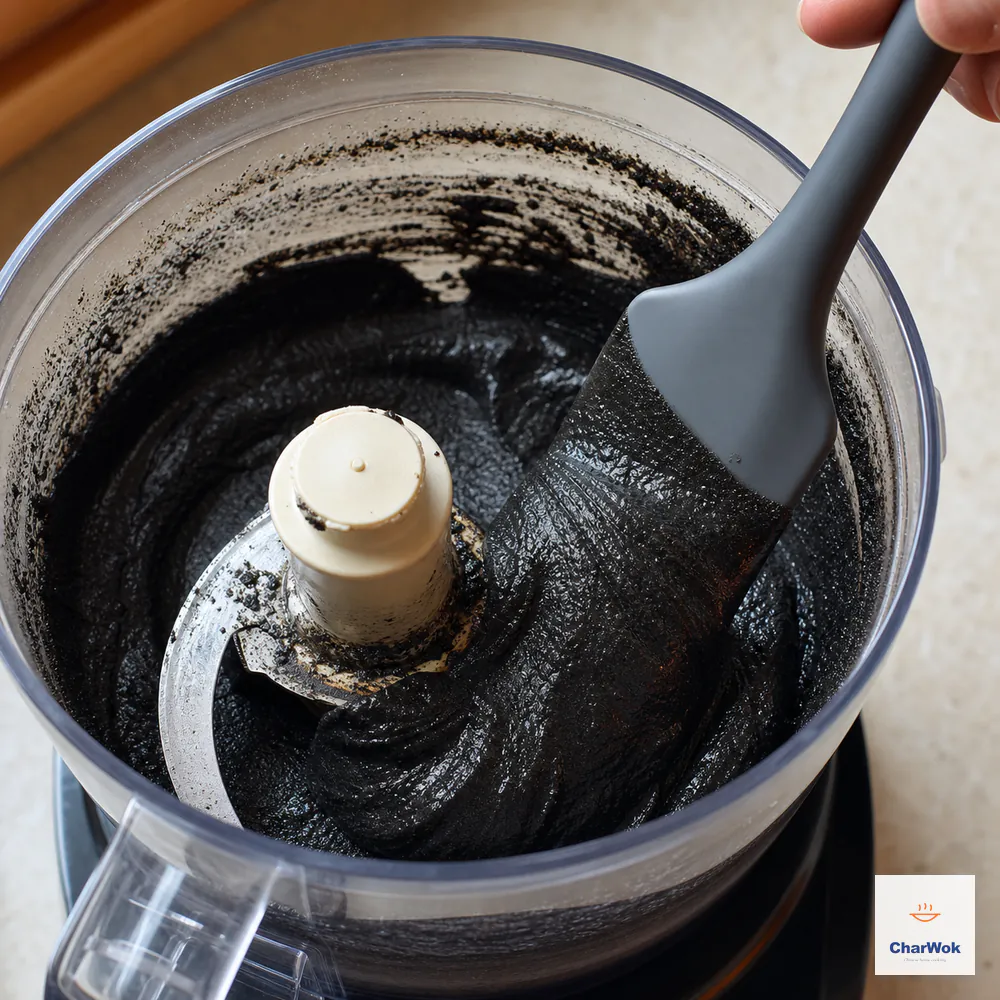
Transfer the still-warm seeds and pulse, scraping as needed, until the dry meal becomes a cohesive, glossy paste that moves slowly.
- Sweeten to taste, choosing your texture. Move the paste to a bowl. If you want a filling that sets firmly enough to mold (for mooncakes, for example), drizzle in honey or syrup and fold through. If you want a softer, spreadable paste, add granulated sugar a spoonful at a time and taste as you go. There's no fixed ratio. I usually land around 1½ tablespoons of honey per cup of seeds, but yours may be a full tablespoon more or less depending on how bitter the batch is.
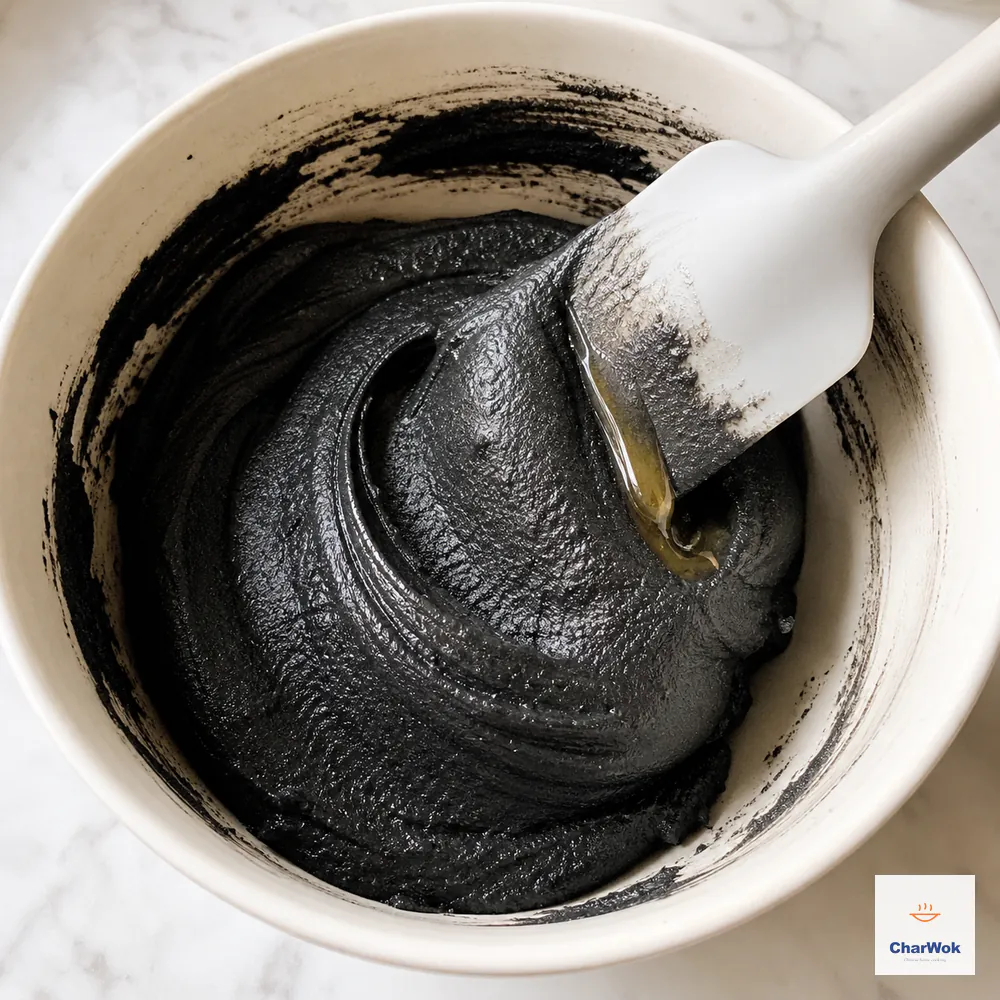
Fold in honey or syrup for a firmer, more cohesive filling; granulated sugar makes the paste softer, so adjust sweetness and texture to use.
- Add fat if the filling will be served warm. For tang yuan, steamed buns, or anything eaten hot, beat in softened butter, coconut oil, or lard. The fat melts when reheated and turns the center molten, so a warm dumpling weeps dark filling when you break it open. This is optional, but it's the difference between a paste that sits inert and one that runs.
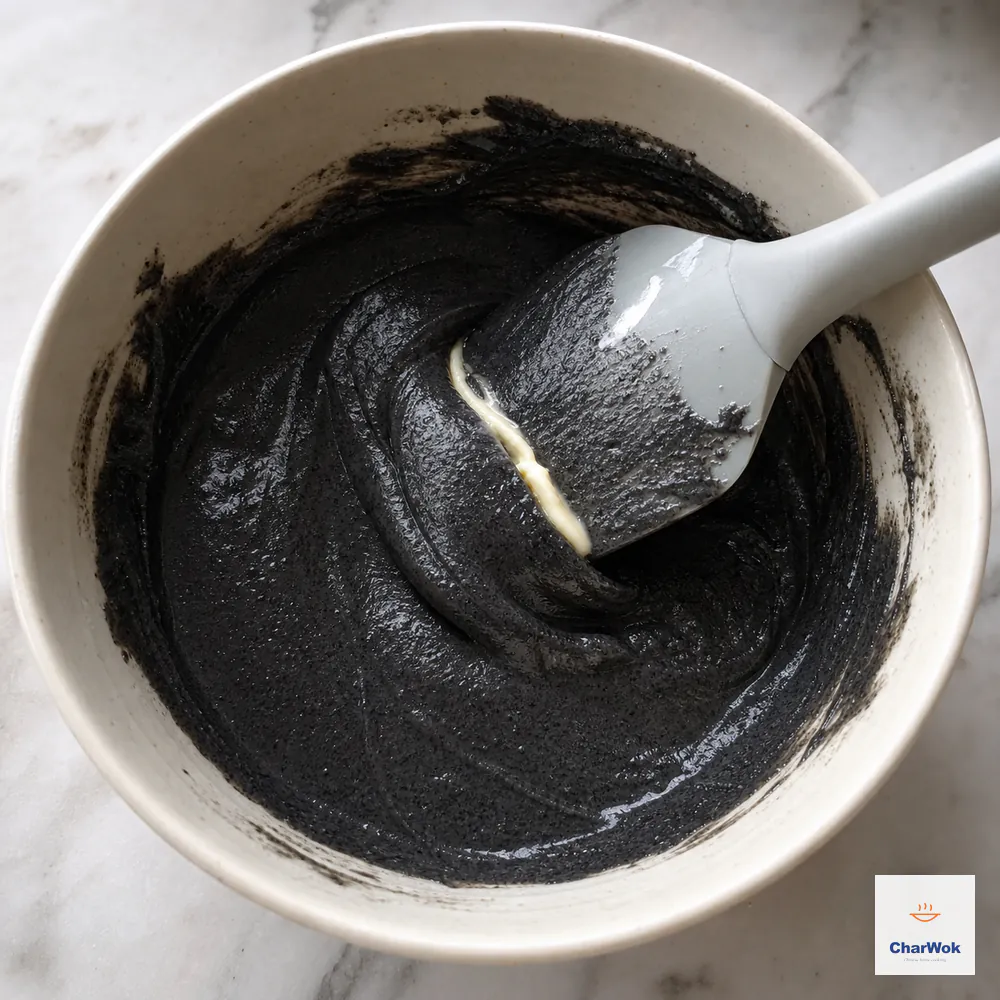
For a richer filling, fold in softened butter or solid coconut oil until no pale streaks remain; the optional fat should not be melted.
- Chill before filling. Whatever texture you've built, the paste firms up in the fridge. Chill it for at least 30 minutes before stuffing wrappers or pressing into molds; cold paste is far easier to portion and shape.
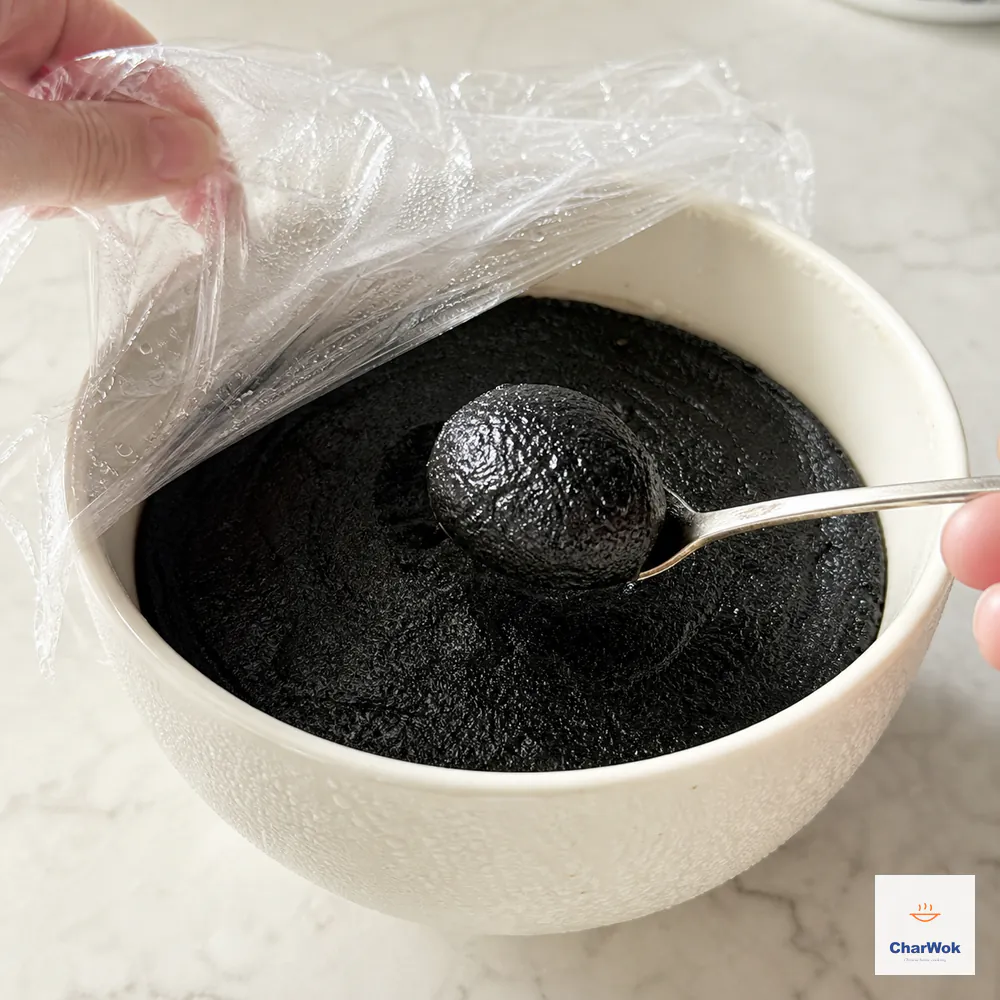
Press wrap directly onto the surface and chill for at least 30 minutes, until the paste is firm enough to scoop and shape cleanly.
When the paste goes wrong
Most failures trace back to one of three mistakes. Here's how to read and fix each one.
- It stays a dry powder and never turns glossy. Either the layer of seeds was too thin to build friction, or the seeds weren't warm enough going in. Top it up so the seeds sit deep around the blades, toast a touch longer next time, or drop in half a teaspoon of neutral oil just to kick-start the release. Be patient. The flip from sand to paste happens suddenly, often right when you're about to give up.
- The paste tastes burnt or harsh. The seeds spent too long in the pan. There's no rescue for burnt sesame; start over and pull the pan off the heat the moment the seeds puff and the aroma deepens, before they ever brown. Use a lower flame than feels necessary.
- It's too runny to wrap. You used sugar instead of honey, or added too much fat. Switch to honey or syrup on the next batch, or chill this batch until it firms up. A short stint in the freezer before assembly works in a pinch, but the texture resets as soon as it warms.
- It's too stiff and crumbly. Honey-bound paste can tighten up too much, especially cold. Let it come to room temperature, or fold in a teaspoon of melted butter to loosen it.
- The machine smells hot. Stop and let it rest for two minutes. Pulse grinding protects both the motor and the paste's aroma. A burned-out motor is the one failure I've personally achieved, so I speak from regret.
Where to use it
The filling's job changes with the dish. Match the texture to the vehicle.
For tang yuan, the glutinous rice balls served at Winter Solstice and Lunar New Year, add butter or coconut oil. You want the filling to liquefy in the hot dumpling and pour out when you break it open. A fat-free paste sits clumped and disappoints everyone.
For mooncakes, go the other direction. Both baked Cantonese mooncakes and no-bake snow skin mooncakes need a firm, honey-sweetened paste that takes a clean mold pattern and keeps it through the bake. A runny filling leaks and ruins the pattern.
For steamed bao and filled buns, the fat-enriched version is ideal. Swap it into the filling of red bean buns or pair it with a custard bun dough for a black-sesame twist. Tear a warm bun open and the paste should stretch and flow.
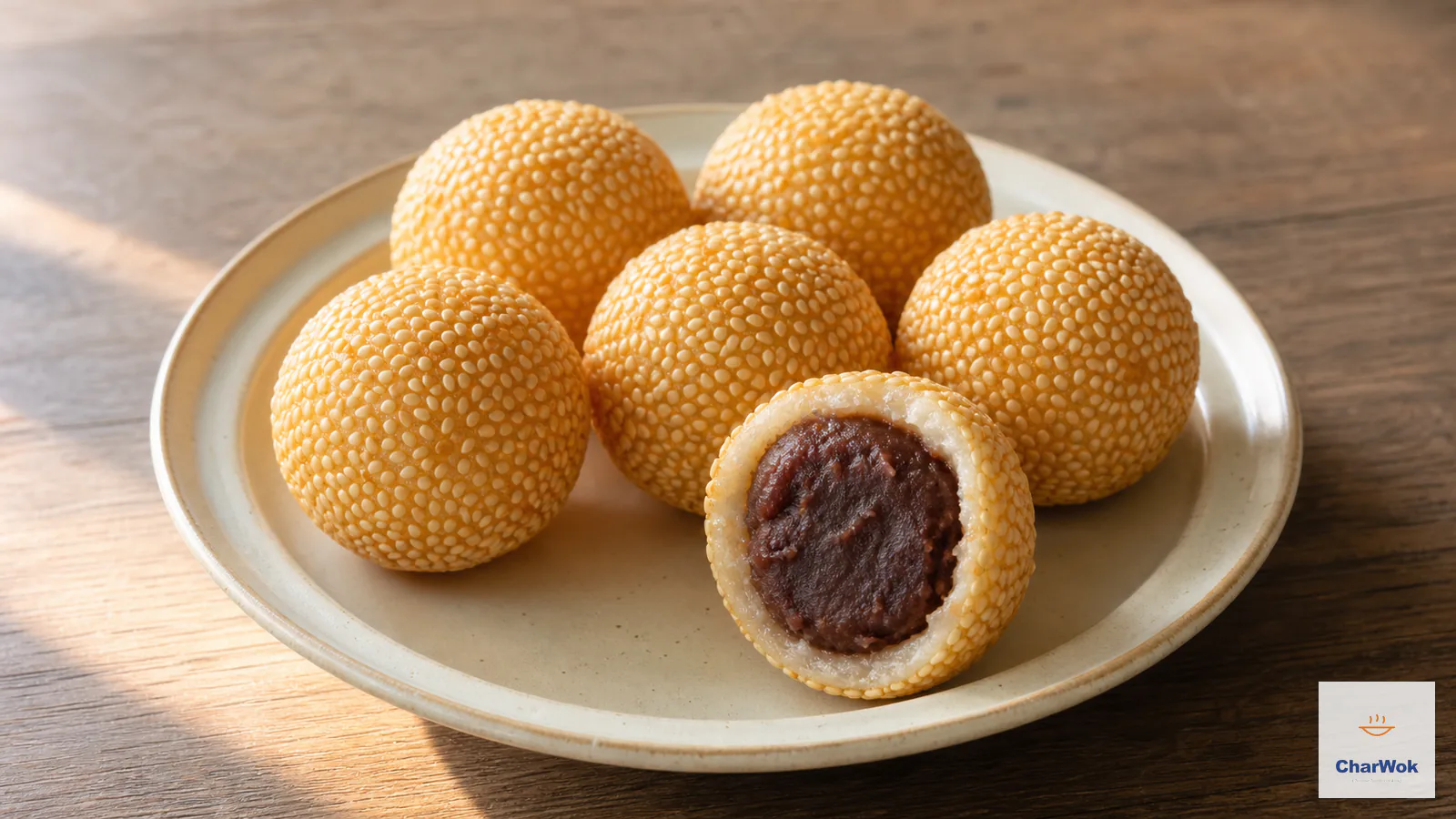
It also folds into sesame balls (jian dui), pumpkin mochi, or nian gao style rice cakes. And stirred into plain rice porridge or warm soy milk, a spoonful turns a breakfast bowl into something quietly luxurious.
Flavor variations
- Toasted walnut or peanut blend. Swap up to a quarter of the sesame seeds for toasted walnuts or peanuts for a rounder, less bitter filling. This is a nod to peanut sesame brittle territory, where the two nuts always travel together.
- Brown sugar and ginger. Use dark muscovado or Chinese brown sugar (hóng táng, 红糖) and add a pinch of ground ginger. The molasses note rounds out the roasted seeds and the ginger warms the finish, a combination that pairs naturally with sweet red bean soup or other warm, gently sweet desserts. If you prefer a cleaner, more neutral sweetness, clear Chinese rock sugar (bīng táng, 冰糖) works too, though it carries none of the molasses depth.
- Coconut. Replace the butter with coconut oil and add a tablespoon of dried unsweetened coconut. Lovely inside soft mochi.
- Matcha or hojicha dust. Fold in half a teaspoon at the end for color contrast and a green-tea edge. Keep it subtle; too much and it turns chalky.
Storing and reheating
Keep the paste in a clean, airtight jar. Sealed and chilled it stays good for roughly four weeks, and the freezer will hold it for half a year. Because there's no egg or dairy unless you added butter, it freezes cleanly without separating.
Before using, bring the paste back to room temperature, or warm it gently in a bowl over hot water if you need it fluid. Avoid the microwave for honey-bound paste; it scorches in spots and turns grainy. Fat-enriched paste will firm up solid when cold and soften again as it warms, which is exactly the behavior you want inside a hot dumpling.
Frequently asked questions
Can I use white sesame seeds instead?
Yes, though the result looks paler and reads slightly sweeter with less of that dark, bitter edge. White and black sesame come from the same plant family, so the method is identical.
My food processor won't turn the seeds into paste. What am I missing?
Usually it's volume. The seeds need to sit deep enough to crowd the blade zone, or they just spin as grit. Add more seeds, grind in short pulses, and give it time. The flip from sand to paste happens in a single moment, not gradually.
How do I make the filling runnier?
Three levers, in roughly the order they pay off: switch from honey to granulated sugar, work in a spoonful of softened butter or coconut oil, and keep grinding past the glossy stage so the seeds give up still more fat. Honey and syrup pull in the opposite direction and set the paste firm.
Can I make it ahead and freeze it?
Yes. Sealed airtight, it keeps about four weeks in the fridge and roughly half a year in the freezer. Thaw overnight in the fridge, then bring to room temperature before using.