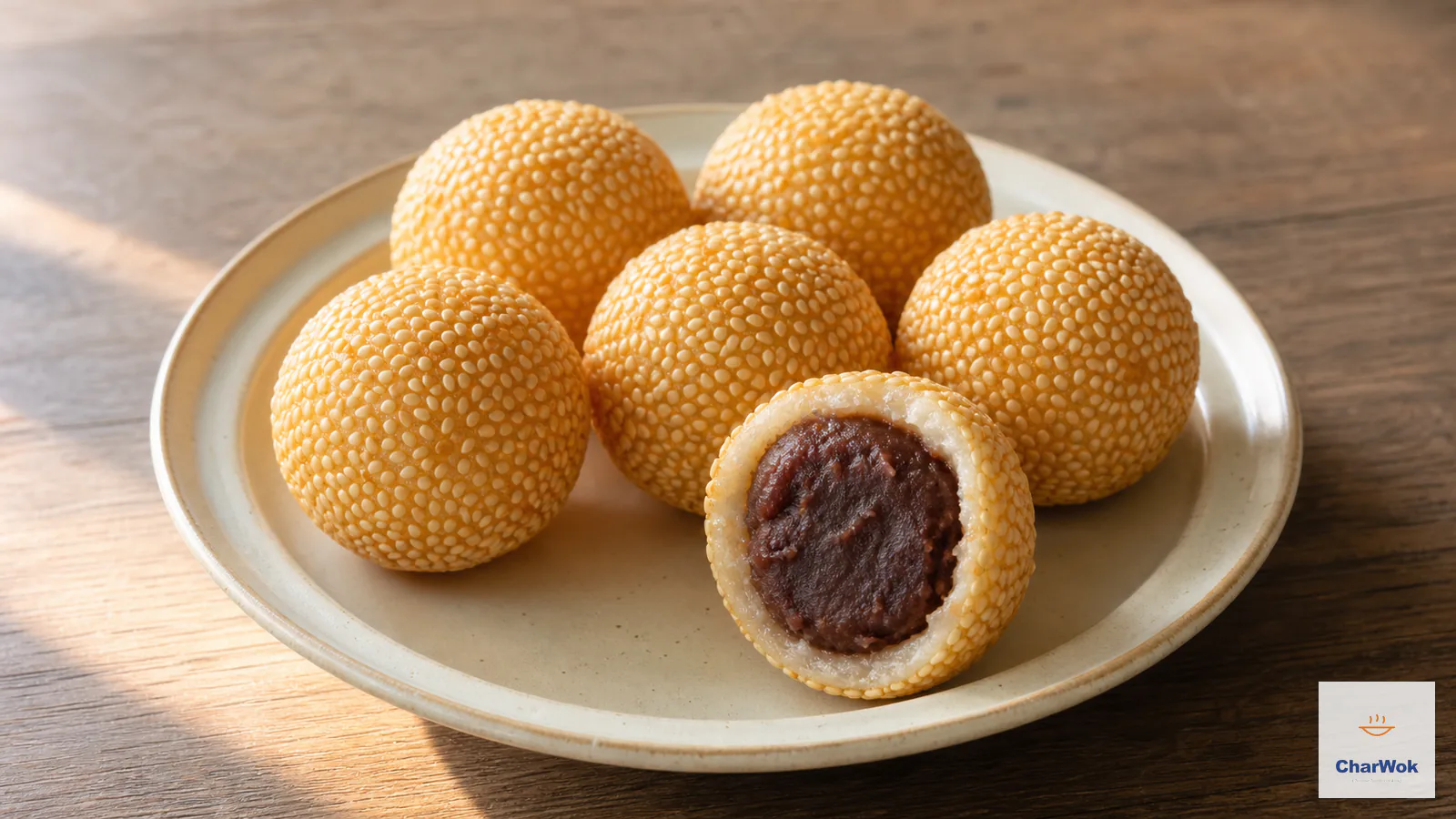
A good sesame ball is two textures at once: a shell of sesame that shatters when you bite, and a chewy, almost custardy glutinous layer just behind it. That contrast is the whole reason the snack exists. The filling, usually sweet red bean paste, is almost secondary.
The dish most home cooks hit a wall on is not the dough. It is the frying. Drop the balls into hot oil the way you would fry, say, fried wontons, and half of them will split open in the pan, leaking red bean into the oil and leaving you with bald, greasy lumps. I have done this. Most people who give up on sesame balls give up right there. The fix is counterintuitive: you start the oil cool, on purpose, and you keep pressing the balls underwater like they are trying to escape. We will get to why.
At a glance. Two-thirds of the glutinous rice flour is cooked with just-boiled water to gelatinize the starch; the remaining third is kneaded in raw. Fry at 120 °C (250 °F) first so the balls expand slowly, then push to 160 °C (320 °F) at the end to set the crust and brown the seeds. Press them under the oil the whole time they float. That pressure, plus the low start, is what makes them puff instead of burst.
What jian dūi are, and where they come from
Jian dui (煎堆, sometimes matuan in the north) are fried glutinous rice balls rolled in sesame. They turn up across Cantonese dim sum, Hong Kong bakeries, and northern Chinese street stalls, with regional differences in size and filling. The Cantonese version, the one most readers will recognize from yum cha, is the largest and showiest — puffed until it is nearly hollow inside, a trick that depends entirely on a wet dough and patient frying. Northern versions tend to be smaller and denser. This recipe sits in the middle: enough filling to taste, enough puff to feel airy.
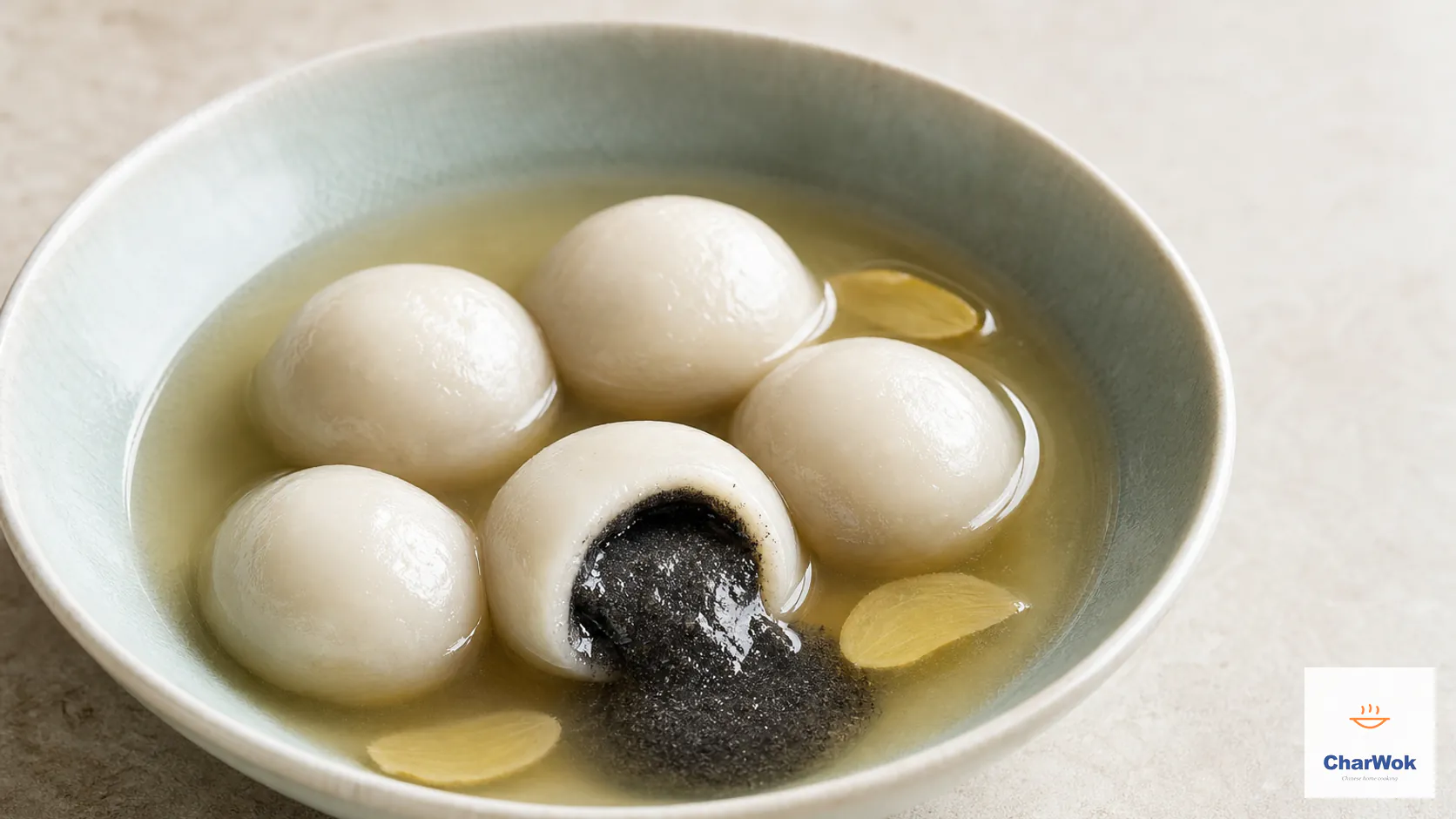
Symbolically these are a prosperity food. The name dui (堆, "pile") and the way the balls swell in the oil read as growth and abundance, which is why you see platters of them at Lunar New Year and at weddings. If you have made tang yuan, the boiled glutinous rice balls served at the winter festival, you already know the dough; jian dui are essentially that same dough, dried out slightly, coated, and fried instead of poached.
The science, before the steps
Three things have to happen for a sesame ball to work, and understanding them makes every step below obvious instead of arbitrary.
1. Gelatinization is why the dough stretches instead of tearing. Glutinous rice flour is almost pure starch with no gluten-forming protein. Mix it with cold water and you get a crumbly paste that cracks when you bend it. Pour near-boiling water over it instead and the starch granules swell, burst, and leak their contents into a stretchy, cohesive mass. That is the same principle behind nian gao and pumpkin mochi with red bean. This is why the recipe splits the flour: cook two-thirds to build the stretchy scaffold, then knead in the last third raw for body and a firmer chew once fried.
2. The filling is the bomb inside the ball. Red bean paste is mostly sugar and water. Sugar syrup expands fast and violently when it gets hot. If a ball bursts, it is almost always because either the seal was imperfect or the oil climbed too fast and the filling boiled before the dough had set enough to hold it. The answer is a slow start.
3. Water inside the dough becomes the steam that puffs the ball. The dough is roughly half water by weight. Heat it gently and that water turns to steam gradually, inflating the ball from within and stretching the cooked starch like a balloon. Heat it too fast and the steam blows out through a weak spot before the starch can stretch. Low-then-high heat is not a preference. It is the only schedule that lets the structure form before the pressure peaks.
Ingredients
Ingredients at a glance
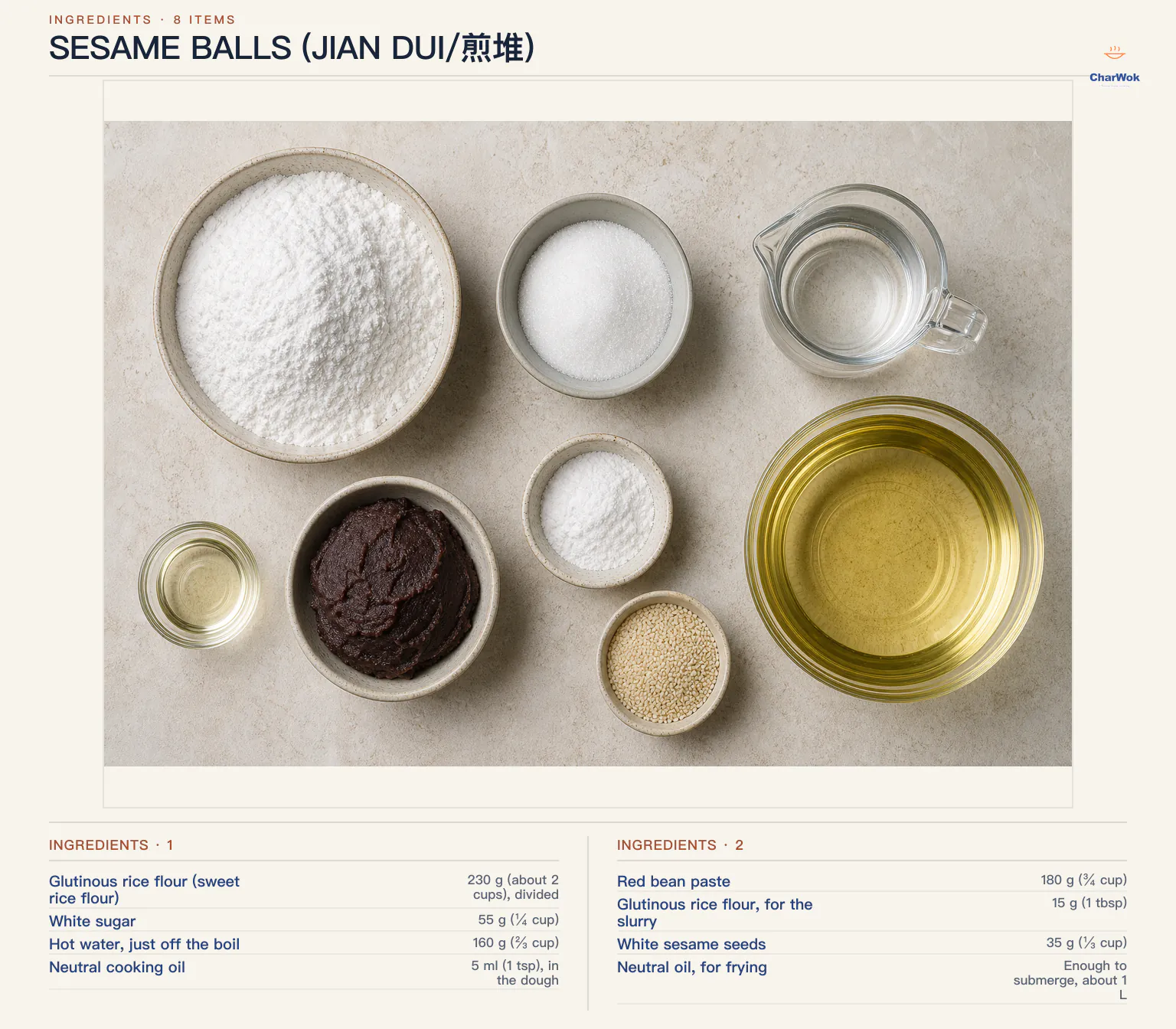
The quantities below make 12 balls. Scaling is linear up to about a double batch; beyond that, fry in more batches rather than crowding the pot.
| Ingredient | Amount | Notes / substitute |
|---|---|---|
| Glutinous rice flour (sweet rice flour) | 230 g (about 2 cups), divided | Use 150 g for the hot-water dough, 80 g kneaded in raw. Mochiko or Shiratamako both work. Do not substitute regular rice flour; it will not stretch and the balls will crack. |
| White sugar | 55 g (¼ cup) | Dissolves into the dough and keeps it soft after frying. Cutting it below 40 g makes the dough tear more easily. |
| Hot water, just off the boil | 160 g (⅔ cup) | Must be hot enough to gelatinize starch, 90 °C / 195 °F or above. Measure by weight if you can; the ratio is what makes the dough forgiving. |
| Neutral cooking oil | 5 ml (1 tsp), in the dough | Plus plenty for frying. Canola, grapeseed, or peanut all work. The oil in the dough coats the starch and stops sticking. |
| Red bean paste | 180 g (¾ cup) | Homemade red bean paste is smoother and less sweet than canned. Canned lotus paste, black sesame paste, or a cube of cream cheese all work as fillings. |
| Glutinous rice flour, for the slurry | 15 g (1 tbsp) | Whisked with 120 ml (½ cup) water to make the glue that holds the seeds. |
| White sesame seeds | 35 g (⅓ cup) | Raw or lightly toasted. Toasted gives a head start on color and a deeper flavor. See the troubleshooting note on seeds falling off. |
| Neutral oil, for frying | Enough to submerge, about 1 L | Use a narrow, deep saucepan rather than a wide wok so you need less oil to cover the balls. |
Making the dough
- Cook two-thirds of the flour. Put 150 g of the glutinous rice flour and all the sugar in a heatproof bowl and stir to combine. Pour the 160 g of just-boiled water straight over it and stir with chopsticks or a spatula. Do not use your hand yet: the water is genuinely hot. You are looking for a wet, lumpy, translucent paste. The translucence is the starch gelatinizing in real time; that is the stretch you are building.
- Knead in the remaining raw flour. Add the last 80 g of flour in two additions, mixing between each. Now go in with your hand and knead for about a minute. The dough should feel soft, pliable, and only lightly tacky, closer to playdough than to batter. If it is still very sticky after the second addition, dust in another teaspoon of flour. If it cracks when you fold it, wet your hand and knead again. Touch is the only reliable gauge here.
- Work in the oil. Drizzle the teaspoon of oil over the dough and knead it in until the surface goes from dull to slightly glossy and stops sticking to your fingers entirely. The oil also slows the dough from drying out while you shape. Cover the bowl with a damp cloth or plate so it does not skin over.
Shaping and filling
- Portion everything before you start shaping. Roll the dough into a log and cut it into 12 equal pieces (about 33 g each). Divide the red bean paste into 12 portions of about 15 g and roll each into a ball. Having everything pre-portioned matters because the dough is easiest to work at room temperature; if you stop to portion mid-shape, the last balls will be greasy and slack from your warm hands.
- Form a bowl, not a pancake. Take one dough piece, roll it smooth, then press your thumb into the center and rotate to open it into a small, thick-edged bowl. You want the walls thin enough to hold a lot of filling but thick enough at the base that the bean paste never sits against a thin spot. A common failure is flattening the dough into a disc and wrapping like a dumpling; the center goes thin and blows out in the oil. The bowl shape keeps the base thick.
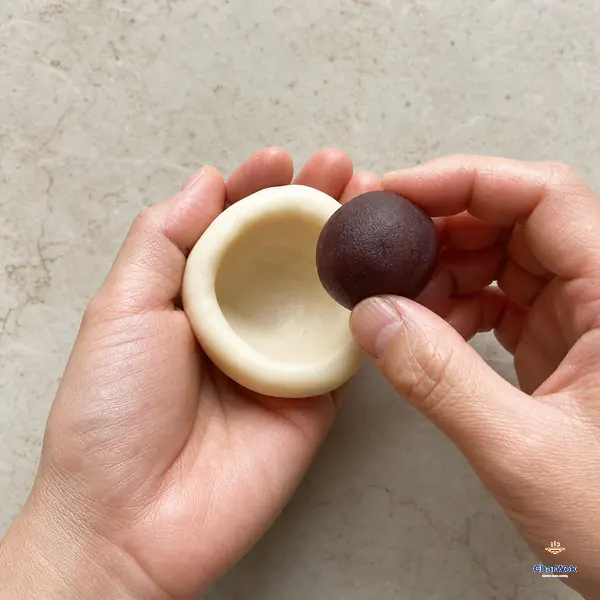
Press and rotate the dough into a deep bowl with an even, substantial base before setting the bean-paste ball inside; do not flatten it like a wrapper.
- Push the dough up the filling, do not pull the filling down. Drop a bean ball in, then use your thumbs to ease the dough upward and over the filling, turning constantly. The motion is upward pressure on the dough, not downward pull on the paste. Pinch the top closed, roll briefly between your palms to seal and even out, and set on a plate. Check the seam by pressing it flat with a finger; a ridge there is fine, a gap is not.
If you want to try a different filling, the technique is identical. Black sesame paste is a classic alternative and a little less sweet than red bean; the same pastes that fill steamed red bean buns all work here. Just keep each portion around 15 g so the dough-to-filling ratio stays balanced.
Coating with sesame
- Make a slurry, not plain water. Whisk the remaining 15 g of glutinous rice flour into 120 ml of water. Plain water would bead off the oily dough and the seeds would not stick. The starch in the slurry is the actual glue; once it hits hot oil it gelatinizes and cements the seeds to the surface.
- Wet, then roll. Drop one ball into the slurry and roll it around for two seconds, long enough to wet the whole surface, short enough that it does not soak and soften. Lift it out, let the excess drip, and drop it into a shallow bowl of sesame seeds. Shake the bowl in a circle so the ball rolls and picks up seeds on every side. This rolling trick coats evenly where pressing would crush the soft dough.
- Press the seeds in. Cup the ball in your palm and roll it under gentle pressure for a few seconds, then repeat once more with fresh seeds for any bare patches. Pressing matters: loose seeds fall off in the oil, sink, and burn, leaving dark specks on every subsequent ball. If your seeds are not sticking, the dough is either too dry (dab with water) or you skipped the press.
The fry, step by step
This is the section that decides whether the recipe works. Read it once before you turn on the stove.
- Fill a deep, narrow pan and heat to 120 °C (250 °F). You want the oil deep enough that the balls float freely, at least 6 cm. Use a thermometer for the first batch; once you know the visual cues you can manage by eye, but do not skip the thermometer while learning. 120 °C is a low fry: the oil will barely shimmer, and a wooden chopstick held in it gives off a lazy trickle of bubbles.
- Slide the balls in, a few at a time. Lower them gently with a slotted spoon so they do not splash. Six at a time is the practical maximum in a home pan; they will roughly double in volume and you need room to move them. They will sink, then slowly rise over the first two to three minutes.
- Keep them moving and keep them down. As soon as a ball floats, start pressing it gently back under the surface with your spoon, and roll it so it browns evenly. This is the part that feels odd. Pressing does two things: it keeps the hot oil in contact with the top hemisphere so it cooks at the same rate as the bottom, and the constant gentle pressure helps the steam stretch the dough evenly instead of bulging one side. Stop pressing and the ball develops a thin pale top and a thick overcooked bottom. Keep nudging and dunking for the whole low-temperature phase, about 6 to 8 minutes, until the balls have clearly puffed up, roughly one and a half times their original size.
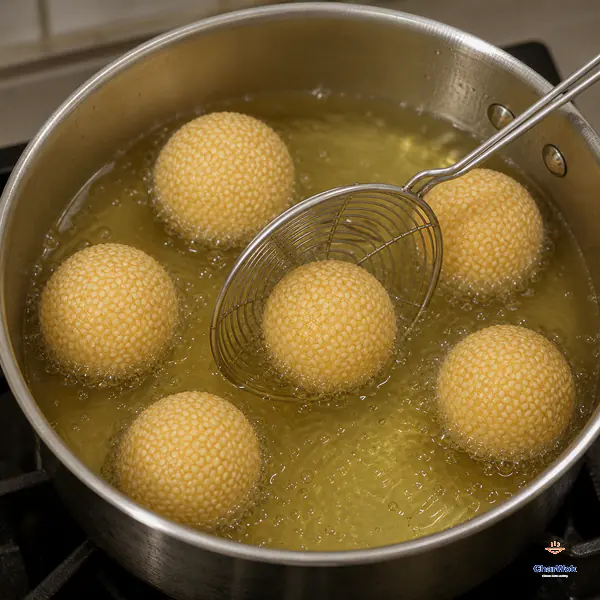
At the low-temperature stage, gently press and roll every floating ball under the oil until each expands evenly to about one and a half times its raw size.
- Raise the heat to finish. Once the balls are visibly larger and feel lighter when you nudge them, turn the heat up so the oil climbs to about 160 °C (320 °F). Keep pressing and rolling. This final minute or two sets the crust and colors the sesame. Pull them out the moment the seeds turn deep golden, because they move from golden to burnt quickly, and burnt sesame is genuinely bitter. Drain on paper towel.
- Let them rest two minutes before eating. The inside is hotter than it looks, and the steam needs a moment to redistribute so the chew sets properly.
When things go wrong
| Problem | What caused it | How to fix it |
|---|---|---|
| Ball split open and leaked filling | Oil too hot at the start, or a thin spot in the dough where the seam sat on the base | Drop the start temperature to 110–115 °C next time. Shape the dough as a bowl, not a disc, and pinch the seam shut then re-roll to even the wall. |
| Seeds fell off into the oil | Slurry too thin, dough too dry, or no pressing step | Use the glutinous-rice-flour slurry (not water), wet the ball fully, and press the seeds in with your palm. Re-coat bare patches before frying. |
| Balls did not puff, stayed dense | Oil too hot from the start (set the crust before steam could inflate), or dough too dry | The low start is non-negotiable. Also check your water ratio; a dough that cracks when folded needs more water, not more flour. |
| Balls browned too fast, raw inside | Skipped the low-temperature phase and went straight to 160 °C | Always do the slow 120 °C phase first. The high heat at the end is only for the last 60–90 seconds. |
| Dough cracked while shaping | Water too cool when mixing, or dough dried out while resting | Re-boil the water before pouring. Keep the unused dough covered with a damp cloth at all times. |
| One side pale, one side dark | You stopped rolling and pressing once they floated | Keep them submerged and turning for the entire fry. The floating top is the part that needs the most attention. |
| Sesame tastes bitter | Seeds toasted too dark before frying, or fried past golden | Use raw or only lightly toasted seeds, and pull the balls at deep golden, not brown. |
Filling and flavor variations
Red bean is the default because it pairs the sweetness of the dough with an earthy counterweight, but the dough is a blank canvas.
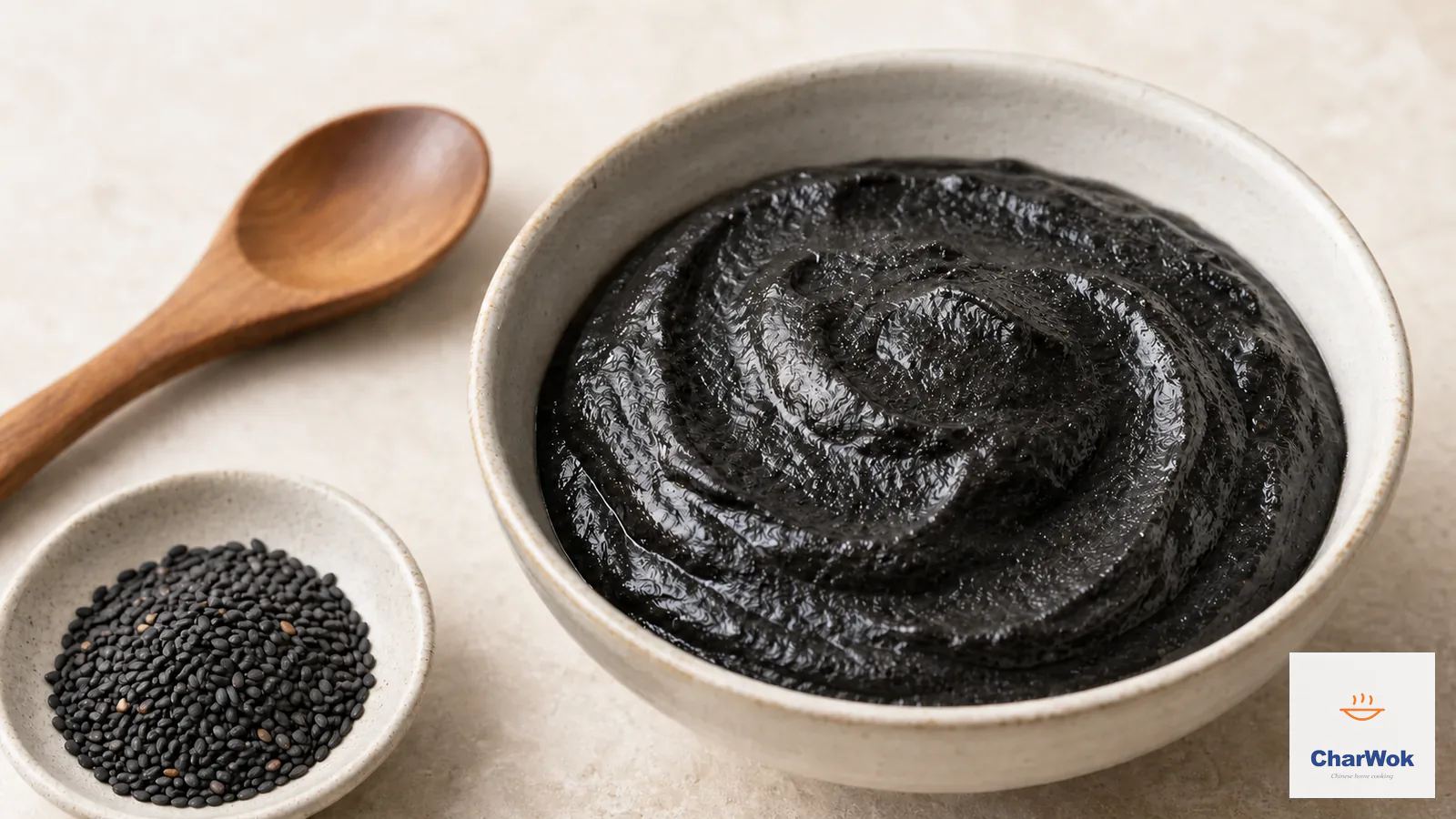
- Black sesame paste. Nuttier and a touch less sweet than red bean. Use the same 15 g per ball. It is also lovely stirred into bubble tea if you have paste left over.
- Lotus seed paste. The classic Cantonese bakery filling, smoother and lighter in color than red bean.
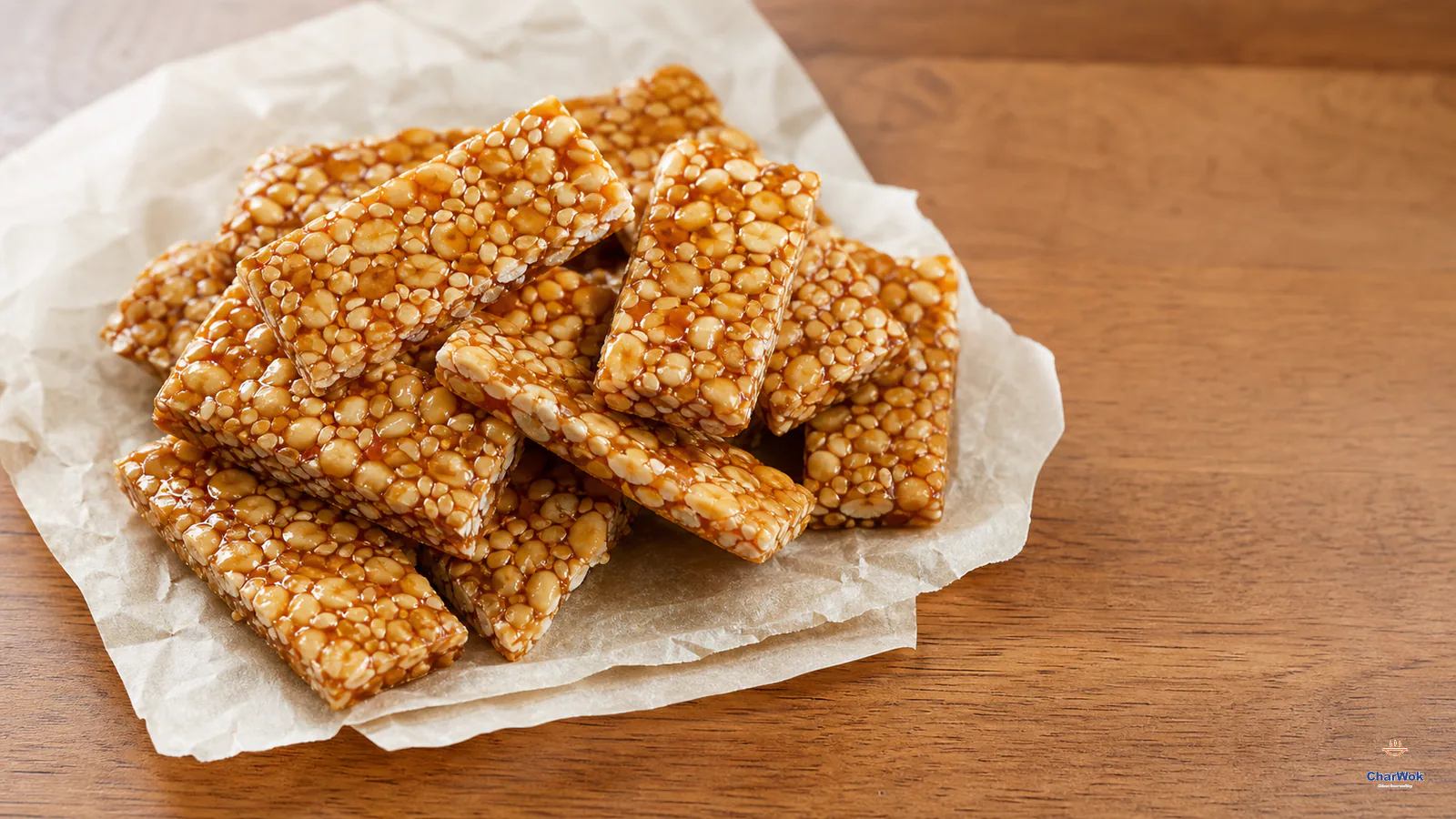
- Crushed peanuts and sugar. A coarser, more rustic filling, closer to what you find inside peanut sesame brittle. Mix finely crushed roasted peanuts with an equal weight of sugar and a knob of butter.
- Cube of cream cheese. Not traditional at all, but a small cube (about 8 g) melts into a tangy center that cuts the sweetness. Popular in modern Korean and Taiwanese bakeries.
For a savory turn, you can drop the sugar in the dough to a pinch and fill the balls with a spoonful of cooked, well-drained filling from your favorite dumpling filling. The texture is unusual but good, and it sidesteps the sweetness that puts some people off jian dui.
Pairings and what to serve them with
Sesame balls are rich and sweet, so they want something clean and unsweetened alongside. Strong brewed tea is the default: pu-er, jasmine, or a roasted oolong all cut the oil and reset the palate between pieces. If you would rather lean into the dessert course, pair them with a lighter, milkier sweet like mango sago or a delicate ginger milk curd; the contrast between the crisp, hot sesame ball and a cool, soft pudding is worth planning a meal around.
For a larger dessert spread, jian dui sit happily next to other red-bean sweets like sweet red bean soup or alongside festive items such as Cantonese mooncakes and eight treasure rice at a New Year or Mid-Autumn table.
Storage and reheating
Sesame balls are at their best within an hour of frying, when the shell is still crisp. Once they cool fully the shell softens and the chew firms up, which is still pleasant in its own way but a different food. To store, let them cool uncovered on a rack (never sealed warm, or the steam turns the seeds soggy) and keep them at room temperature in an airtight container for up to two days.
To bring back the crispness, reheat in a 180 °C (350 °F) oven or air fryer for about 5 minutes, until the surface is hot and crackly again. The microwave will turn the shell rubbery; avoid it. You can also freeze raw, assembled, coated balls on a tray, then bag them, and fry straight from frozen. Add about two minutes to the low-temperature phase and watch that they do not crowd the pan.
Frequently asked questions
Can I bake or air-fry these instead of deep-frying?
You can, but they will be a different snack. Baking gives a dry, cracker-like shell and little of the dramatic puff, because without submersion in hot oil the starch never gelatinizes and stretches the same way. If oil is a hard no, brush the coated balls generously with oil and bake at 200 °C (400 °F) for 15 minutes, turning once. Expect a flatter, denser result.
Why do my sesame balls burst in the oil?
Almost always the oil was too hot when the balls went in. A hot start sets the outside before the inside can expand, so the steam blows out through the weakest point, usually the seam. Start at 120 °C and never higher, and double-check that every ball is fully sealed.
Can I make the dough ahead?
You can make and fill the dough a few hours ahead and keep the coated balls, covered loosely, in the fridge. Bring them back to room temperature before frying; cold dough dropped into oil drops the oil temperature sharply and the balls fry unevenly. I would not hold the raw dough overnight, as it weeps water and gets sticky.
Is glutinous rice flour the same as regular rice flour?
No, and they are not interchangeable here. Glutinous rice flour (also labeled sweet rice flour or mochiko) is high-amylopectin starch that gelatinizes into a stretchy mass; regular rice flour has none of that elasticity and will crack and split. If the bag does not say glutinous or sweet, do not use it.
Why press the balls under the oil while they fry?
It keeps the floating top in contact with hot oil so it cooks and browns at the same rate as the submerged bottom, and the gentle pressure helps the steam inflate the dough evenly. Skip it and you get a pale, undercooked top and an overdone base.