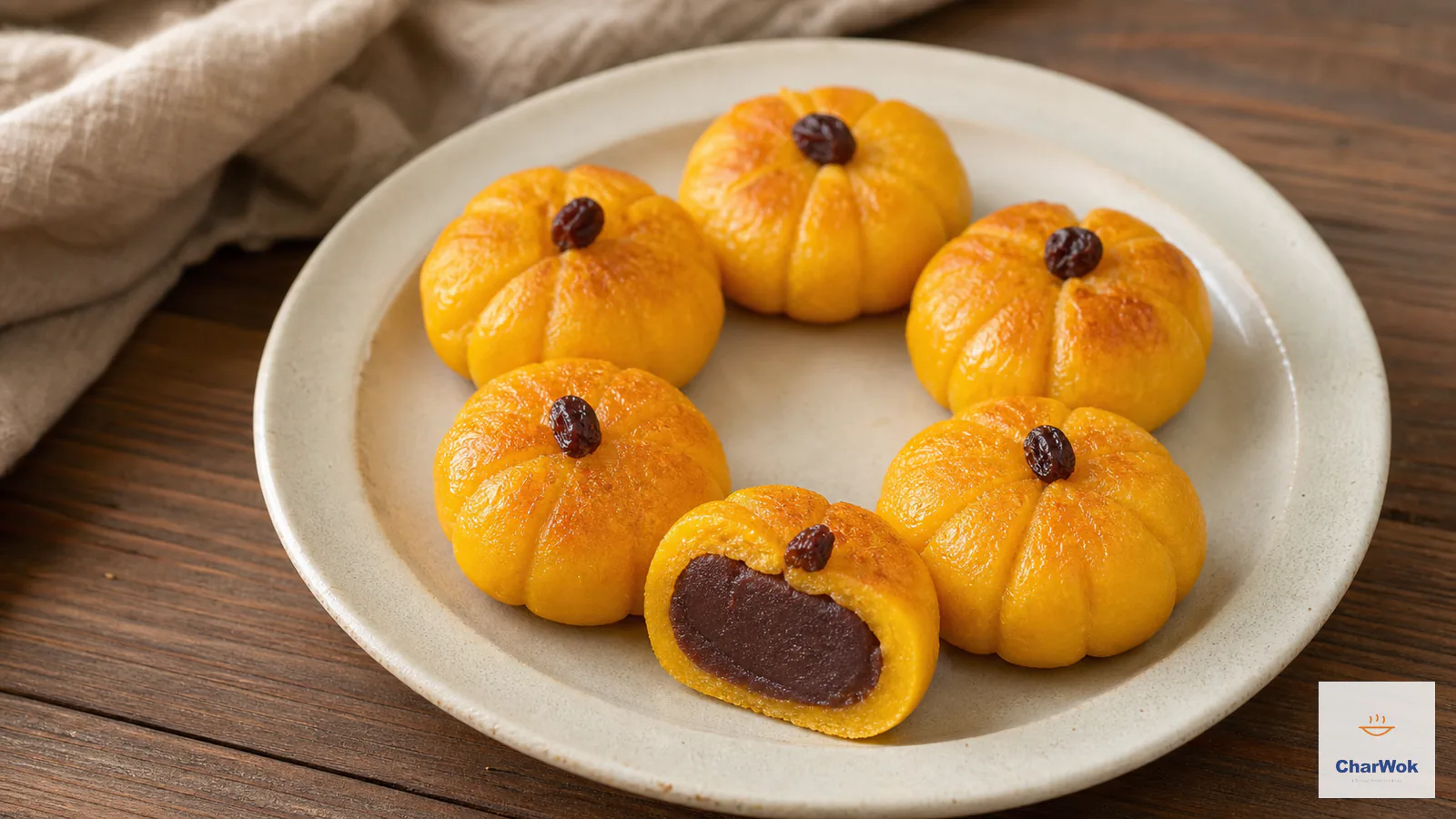
The first time I served these little golden pumpkins at a dinner, a guest refused to bite into hers because they looked "too cute to eat." That is the whole appeal of hong dou nan gua bing (红豆南瓜饼), steamed squash-and-glutinous-rice cakes hiding a core of sweet red bean paste. One bite and the shell gives way with that distinctive mochi pull, then the earthy bean filling rounds it out.
What trips people up is the dough. They follow a ratio, dump in all the flour at once, and end up with a cracked, crumbly shell that splits open during steaming. The truth is that no fixed ratio works, because every squash holds a different amount of water. I will show you how to read the dough by feel, which is the one skill that separates a clean batch from a leaky one.
Aim for about 320 g glutinous rice flour to 350 g cooked squash, but add it in three additions and stop the moment the dough feels like soft Play-Doh that releases cleanly from your fingers. Steam for exactly 10 minutes over medium-high heat, then let them sit five minutes before touching; that rest sets the surface so they do not stick to everything.
What you are actually making
This is a northern Chinese home-style sweet, the kind of thing that shows up on an autumn table when squash is cheap and red bean paste is sitting in the fridge from some other project. It belongs to the wider family of glutinous rice treats that run through Chinese dessert making, cousins to nian gao, sesame balls, and the festive eight treasure rice. What sets this one apart is that the squash does double duty: it supplies the liquid to bind the flour, and it gives the dough a color bright enough that the pumpkin shaping actually reads as a pumpkin rather than a pale blob.
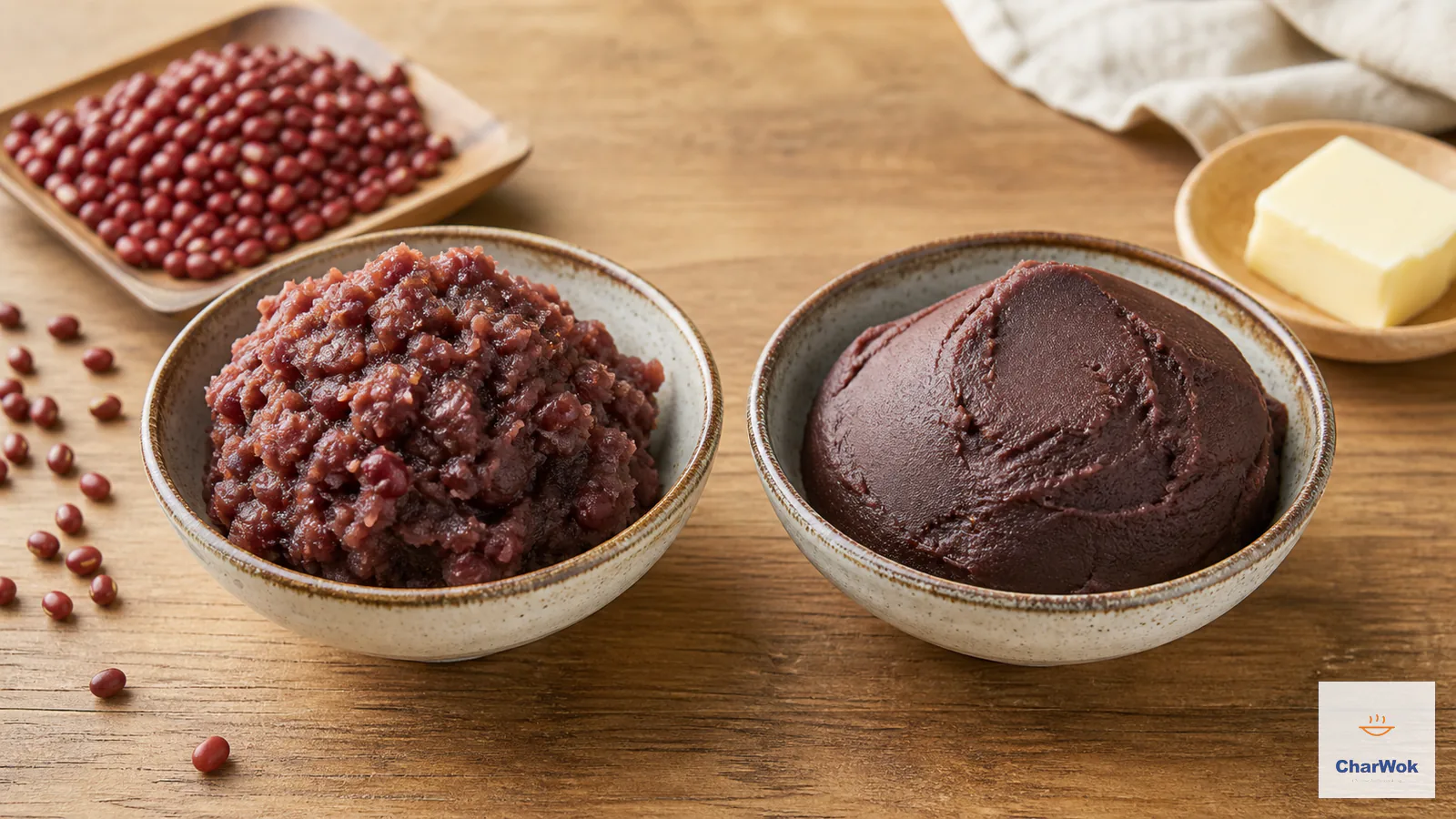
The filling is sweet red bean paste, the workhorse of Chinese sweets. You will find it inside red bean buns, folded into snow skin mooncakes, and stuffed into Sichuan leaf-wrapped sticky rice cakes. Making it from scratch takes time but costs almost nothing, and you control the sweetness. The canned and vacuum-packed versions from a Chinese grocery are perfectly usable shortcuts if you want to skip ahead.
Ingredients
Ingredients at a glance
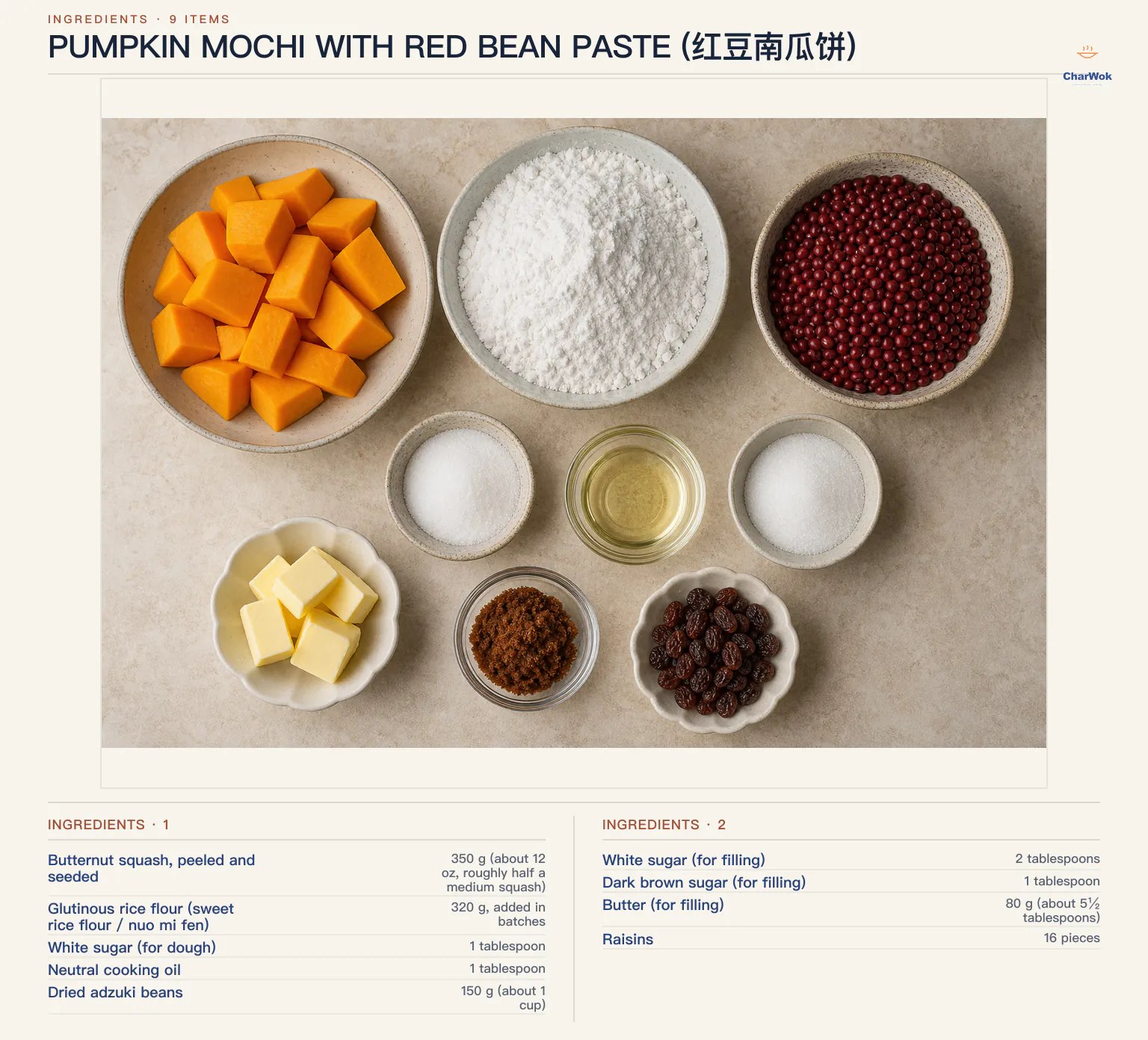
The recipe makes 16 cakes. I split it into two parts because the dough and the filling are independent projects you can tackle on different days.
| Ingredient | Amount | Notes / substitute |
|---|---|---|
| Butternut squash, peeled and seeded | 350 g (about 12 oz, roughly half a medium squash) | Pie pumpkin or kabocha work; color will be paler. Canned pumpkin puree (not pie filling) works measure-for-measure and skips steaming. |
| Glutinous rice flour (sweet rice flour / nuo mi fen) | 320 g, added in batches | Mochiko or Shiratamako brands. Do not substitute regular rice flour or wheat flour; both fail. Despite the name, it is gluten-free. |
| White sugar (for dough) | 1 tablespoon | The squash is already sweet; this is just to round it off. |
| Neutral cooking oil | 1 tablespoon | Canola, grapeseed, or corn. Helps the dough stay supple and not crack. |
| Dried adzuki beans | 150 g (about 1 cup) | Or 350 g drained canned adzuki to skip cooking entirely. |
| White sugar (for filling) | 2 tablespoons | Adjust to taste. I like the paste on the less-sweet side so it cuts the dough. |
| Dark brown sugar (for filling) | 1 tablespoon | Adds molasses depth and a darker color. Swap for all white if you prefer. |
| Butter (for filling) | 80 g (about 5½ tablespoons) | Lard or coconut oil work. For coconut oil, use half the amount; the flavor takes over fast. |
| Raisins | 16 pieces | Used as the "stem." A sliver of dried apricot or a pine nut works too. |
The bean paste, done right
Soak the adzuki overnight in water that covers them by a couple of inches. The next day, drain them, put them in a pot with 500 ml fresh water, bring it to a boil, then drop to a simmer. Cook until a bean squeezes to mush between your fingers, roughly 90 minutes. A pressure cooker cuts this to about 25 minutes under high pressure. If you are using canned beans, rinse them well and skip straight to the next step.
Drain the cooked beans and transfer them hot to a food processor. Add both sugars and the butter, then blitz to as fine a paste as your machine will manage. Add water only a tablespoon at a time if the blades stall; the wetter the paste goes in, the longer you will cook it back out.
Now the step most recipes underplay. Push the loose paste into a non-stick pan and cook it over medium-high heat, stirring and folding constantly. You are not just heating it; you are driving off water so the starch firms into something you can roll into a ball that holds its shape. Expect about 6 minutes. The color will darken noticeably and the paste will pull away from the pan as a single mass. Scrape it onto a plate to cool. If you want the full manual method or a smoother result, the technique in my red bean paste guide goes deeper.
Building the squash dough
Steam the peeled, seeded squash in chunks for about 15 minutes, until a fork slides through easily. Do not overcook to the point of collapse; waterlogged squash means you will need a lot more flour. Transfer the hot squash to the food processor with the tablespoon of sugar and the oil, and blend to a smooth puree. Let it cool until just warm, not cold.
Here is where the dough lives or dies. Add the glutinous rice flour in three additions, pulsing on medium between each, and stop adding the moment the mass comes together into a soft ball that clears the side of the bowl. You may use 280 g, you may use all 320 g, and on a wet squash day you might need 340 g. The goal is a dough that feels like a soft earlobe when you press it, smooth and a little tacky but not transferring sticky goo to your fingers. Turn it out, knead for a minute, and you are ready to shape. Unlike wheat dough, there is no gluten to relax, so no resting is needed.
This is the same forgiving material behind tang yuan and other glutinous-rice sweets, and the squash dough is close kin to what I use for sweet lotus root with sticky rice. Once you trust your hands over the recipe, you can bend it endlessly.
Shaping the little pumpkins
Divide both the dough and the cooled bean paste into 16 equal pieces and roll each into a ball. Keep whatever you are not currently working with under a damp towel; glutinous rice dough skins over and cracks fast in open air.
- Flatten one dough ball between your palms into a disc roughly 7 cm (3 inches) across, thicker in the middle than at the edge.
- Set a bean paste ball in the center. Working in a circle, push the dough up and over the filling with your thumbs, pinching it closed at the top. Press the gathered dough together firmly and roll the sealed ball gently between your palms to smooth it. The tighter the dough hugs the filling, with no air pocket, the less likely it is to burst in the steamer.
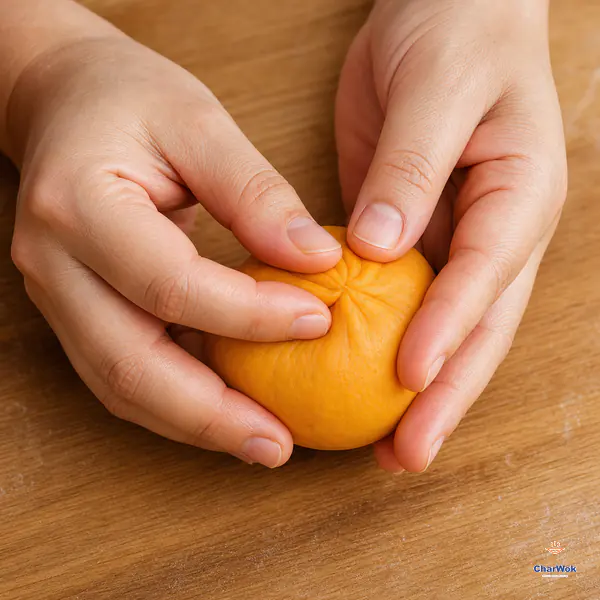
Flatten a dough ball to about 7 cm with a thicker center and thinner edge, set the firm red bean ball in the middle, then push the dough upward while expelling trapped air. Pinch the top completely closed and smooth the seam so it cannot burst in the steamer.
- Roll the ball into a slight oval, then press the spine of a butter knife or the back of a paring knife straight down into the dough to make five or six vertical grooves from top to bottom. Press firmly enough that the groove holds its line but not so hard you cut through to the filling.
- Poke a raisin into the very top as the stem. A tiny dab of water helps it seat.
Lay the finished cakes on parchment punched with a few steam holes (or cabbage leaves, or a lightly oiled metal rack) in your steamer baskets, leaving space between them. They will spread a touch as they cook.
Steaming without a disaster
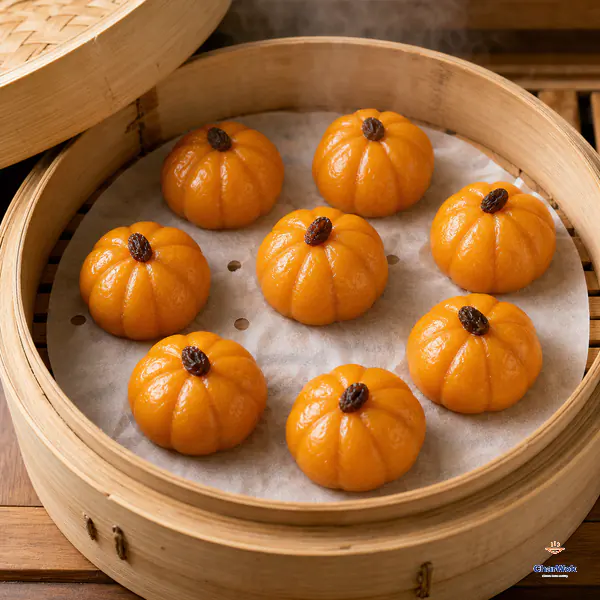
Steam over medium-high heat for 10 minutes, then leave the cakes untouched in the covered basket for 5 minutes. This short rest lets the soft glutinous rice skin set before you lift or move it.
Get the water to a full boil in your wok or pot first, then set the baskets in, cover, and steam 10 minutes over medium-high heat. If you want the background on baskets, liners, and the wok-and-plate trick for people without a dedicated steamer, my bamboo steamer guide covers it. The short version: you need live steam hitting the cakes, not a slow simmer, and you need a liner or they weld themselves to whatever they sit on.
When the time is up, take the baskets off the heat but leave the cakes undisturbed for about 5 minutes. Fresh out of the steamer they are molten inside and the surface is aggressively sticky; that short rest lets the starch set up so you can lift them cleanly. Serve warm or at room temperature. They are at their best within a few hours of cooking.
When things go wrong
This dough frustrates people because it does not behave like any wheat dough they know. Here are the failures I see most often, and what to do about each.
- The dough cracks while you are wrapping. It is too dry, which usually means too much flour. Wet your hands and knead the moisture in, or add a teaspoon of water at a time. A few fine cracks on the surface are fine; they close up during steaming. Deep cracks that gape open will leak filling.
- The dough is a sticky, coating mess. Too wet. Dust with glutinous rice flour a tablespoon at a time and knead until it releases your fingers. Resist the urge to flour your work surface heavily; that just hides the problem and leaves you with a tough skin.
- Cakes split open during steaming. Either you trapped an air pocket when sealing, the dough was rolled too thin at the seam, or you overfilled. Use less paste next time, about 15 g per cake, and pinch the seal twice.
- The shell is dense and heavy rather than chewy. You packed in too much flour chasing a "not sticky" dough. The line between supple and over-floured is narrow; stop the moment the dough is workable, even if it is still a little soft.
- The pumpkin grooves vanished after steaming. You pressed too lightly, or the dough was on the soft side. Press deeper next time, and chill the shaped cakes for ten minutes before steaming so the grooves set.
- The color came out dull. Probably pie pumpkin or kabocha instead of butternut, or squash that was pale to begin with. Canned pumpkin puree gives the most consistent bright color if appearance matters to you.
The honest limitation: even a well-made batch loses its ideal texture after a day. Glutinous rice dough stiffens and goes leathery as it sits. This is a make-and-eat-today kind of treat, or a freeze-uncooked-and-steam-to-order treat, not something that improves with time.
Variations and pairings
Swapping the filling is the easiest way to refresh this recipe once you have the dough down. Black sesame paste gives a nuttier, more adult sweetness. A walnut-and-sesame mix like the one in those leaf-wrapped sticky rice cakes is excellent. For something creamier, a cooked egg-custard filling works, though it softens more than the bean paste does.
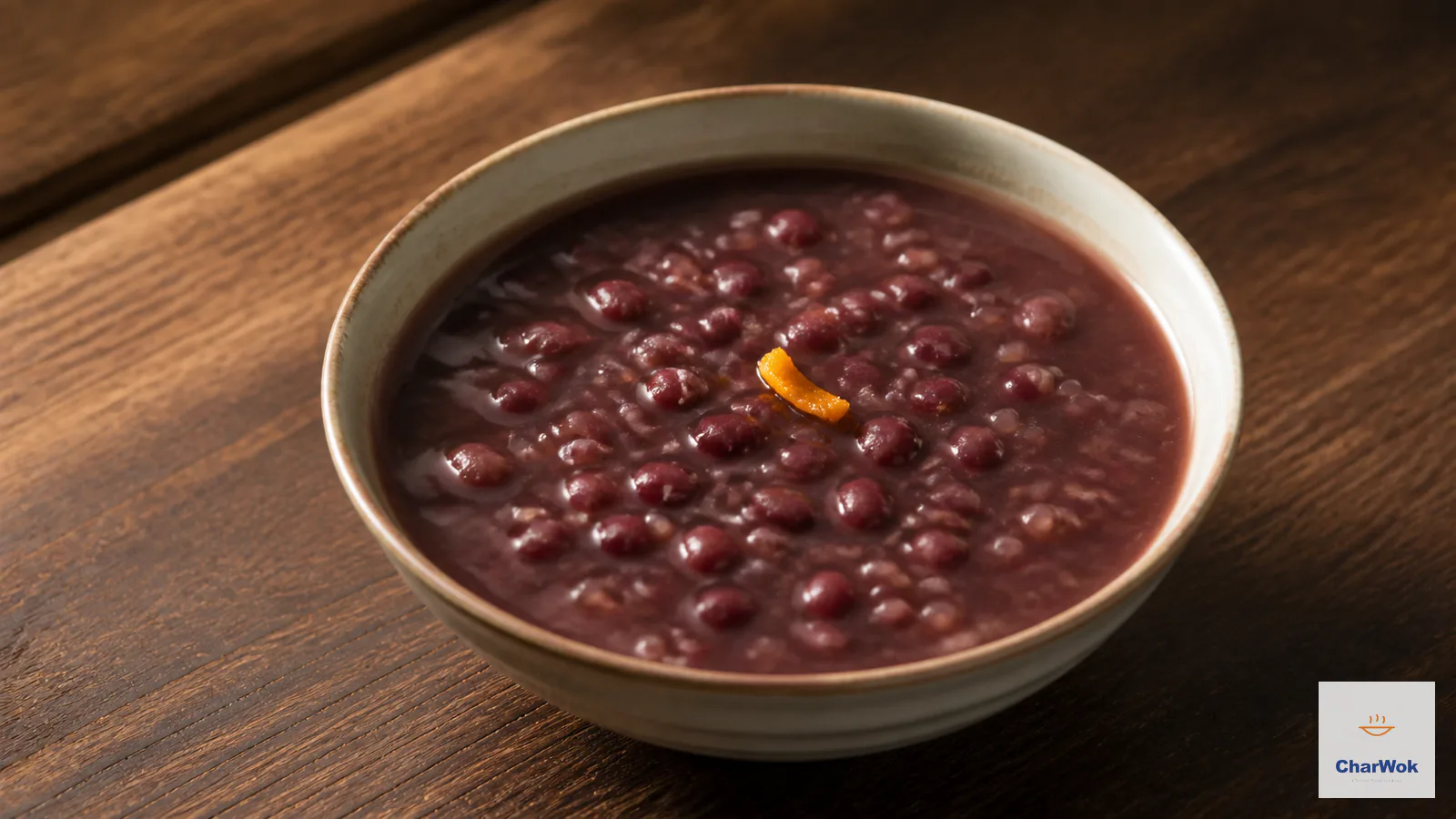
If you want the squash flavor itself to lead, drop the sugar in the dough to a teaspoon and serve the cakes with a drizzle of sweetened soy-ginger syrup. They also pair well as a closing sweet after a savory glutinous-rice main like lo mai fan. And if you end up with extra bean paste, thin it with water and warm it into a bowl of sweet red bean soup, or freeze it in portions for red bean popsicles come summer.
Storage and reheating
Cooked leftovers keep in the fridge, covered, for up to 3 days, though the texture will firm up. Reheat them in a steamer for about 3 minutes until they turn soft and translucent again. The microwave works in a pinch but makes the skin rubbery and prone to bursting; cover them and use 50% power.
The better move is to freeze them uncooked. Arrange the shaped, raw cakes on a parchment-lined tray so none touch, freeze until solid, then transfer to an airtight bag for up to 2 months. Steam straight from frozen for 15 minutes. This way you get the fresh texture on demand, which is really the only way these cakes are worth eating.
Common questions
Can I skip the food processor? Yes. Mash the steamed squash very fine with a fork or potato masher, then knead in the flour by hand. The dough will be slightly less smooth and you may see faint flecks of squash, but the finished cakes taste identical.
Why is my dough so different from the recipe ratio? Squash water content varies by 20% or more depending on variety and how long it steamed, so the flour amount has to flex. Trust the texture test over the gram count.
Can I pan-fry instead of steam? You can, and they get a lovely crisp bottom, but the shell seizes and turns firm rather than stretchy. If you want that effect, pan-fry in a little oil over medium-low for a few minutes per side after a short steam. Steaming alone gives the classic mochi chew.
Is glutinous rice flour the same as rice flour? No, and the swap will fail. Glutinous rice flour (also called sweet rice flour) comes from short-grain sticky rice and is what creates the chew. Regular rice flour produces a crumbly, gritty dough.
Read the dough, not the recipe. That is the whole skill here, and once it clicks these cakes become a half-hour project you can throw together whenever squash turns up in the kitchen.