The jar that sits at the back of every Hunan grandmother's fridge is not chili oil. It is something sharper, wetter, and more alive: chopped fresh chilies mellowed by salt and time until they turn funky-sweet and bright red. That jar is duo jiao (剁椒), and once you make it yourself, the store-bought version tastes flat and sour in a way you cannot un-taste.
Traditional duo jiao can be made through controlled fermentation, but safe fermentation depends on a tested formula and monitored conditions. The salt and acid mixture below has not been validated for shelf stability or room-temperature fermentation. Treat this version as a fresh refrigerator chili-garlic relish: mix it, chill it immediately, use it within 4 days, or freeze small portions for longer storage.
At a glance: Combine 450 g (1 lb) fresh red chilies with 115 g (4 oz) garlic, 1½ tablespoons salt, ½ tablespoon sugar, and lime, lemon, or rice vinegar for brightness. Transfer it to clean containers and refrigerate immediately at 4°C/40°F or colder. This is not a tested ferment or canned preserve; use within 4 days or freeze portions promptly.
What duo jiao actually is
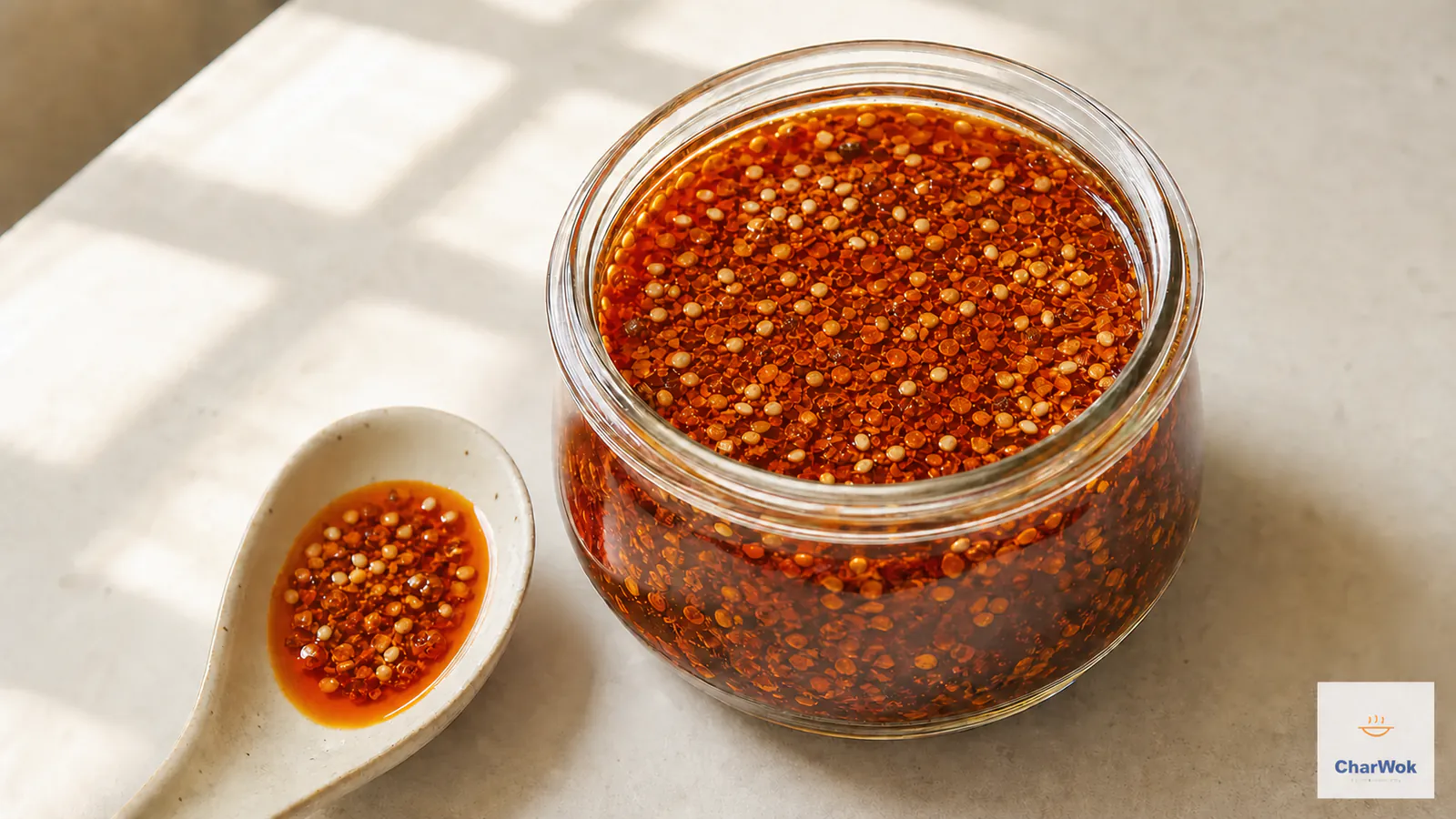
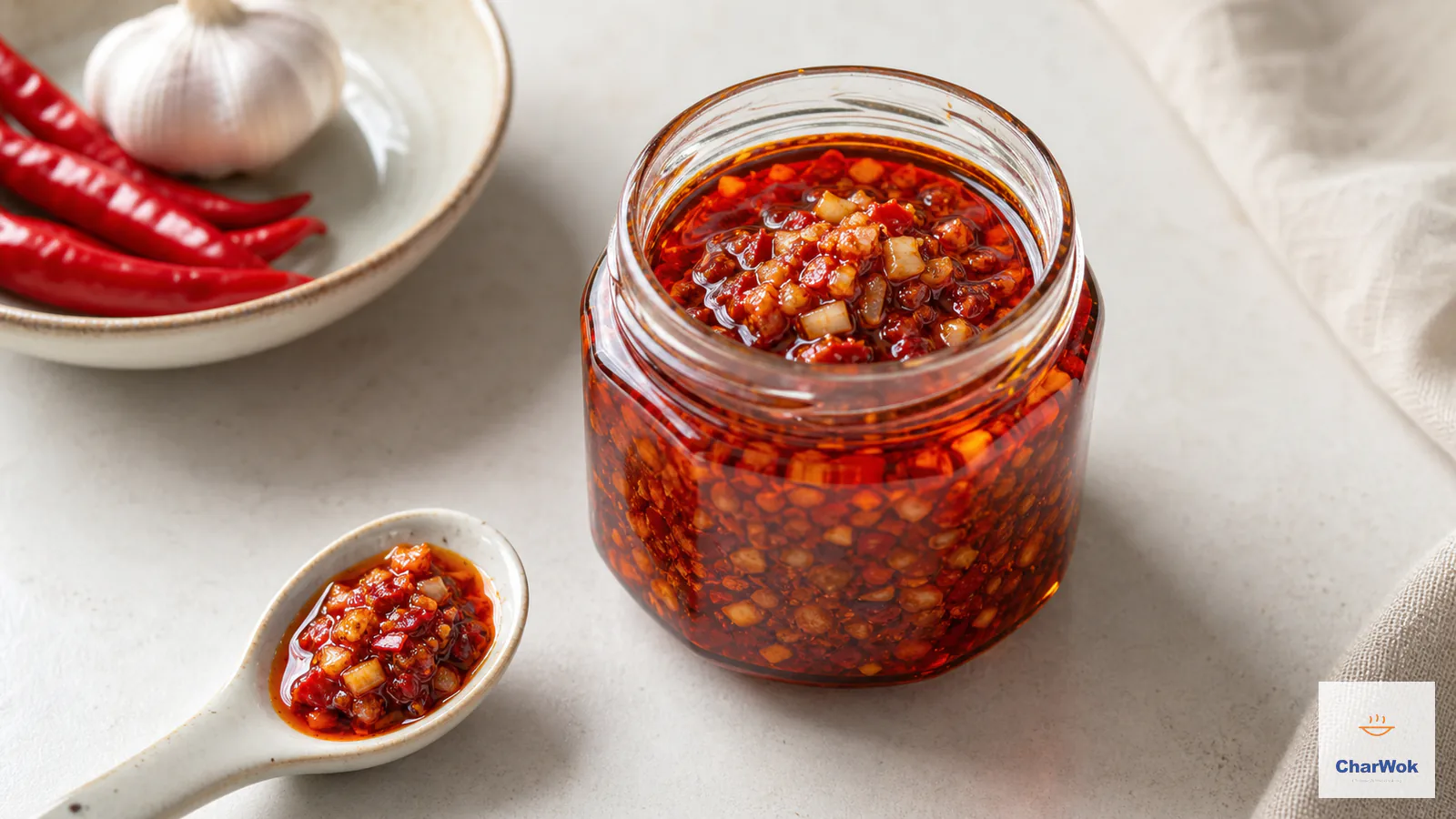
Duo jiao belongs to the chili-and-salt preserving tradition that runs through the southern Chinese provinces, Hunan, Sichuan, Guizhou, and Guangxi. Recipes and fermentation controls vary. The Hunan chopped style is a chunky, rust-red relish with the clean bite of fresh garlic and a low, fruity heat. Unlike chili oil, which is aromatics steeped in hot fat, or Chiu Chow chili oil, which cooks fresh aromatics in oil, this refrigerator version never sees a flame. Salt draws out enough liquid to bind the chopped ingredients into a spoonable relish, while the added acid brightens the flavor.
The measured salt keeps the flavor consistent, but it should not be treated as proof that harmful microbes are controlled. Spoon measures, pepper moisture, garlic weight, acid strength, temperature, and time all affect a ferment. Without a validated process and measured endpoint, this mixture remains perishable refrigerator food.
The ingredients, and what to swap
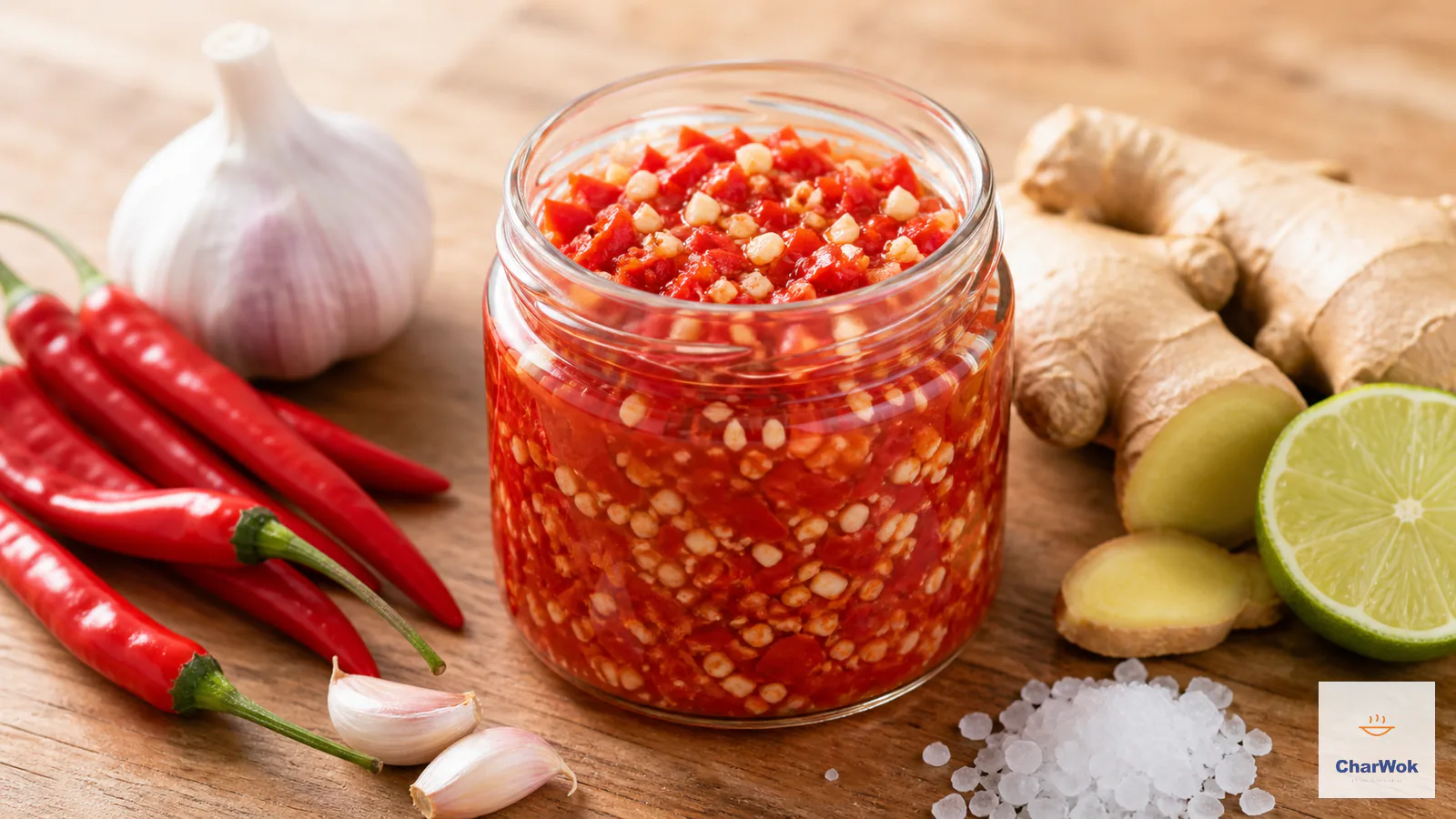
Six ingredients for pickled chili garlic sauce
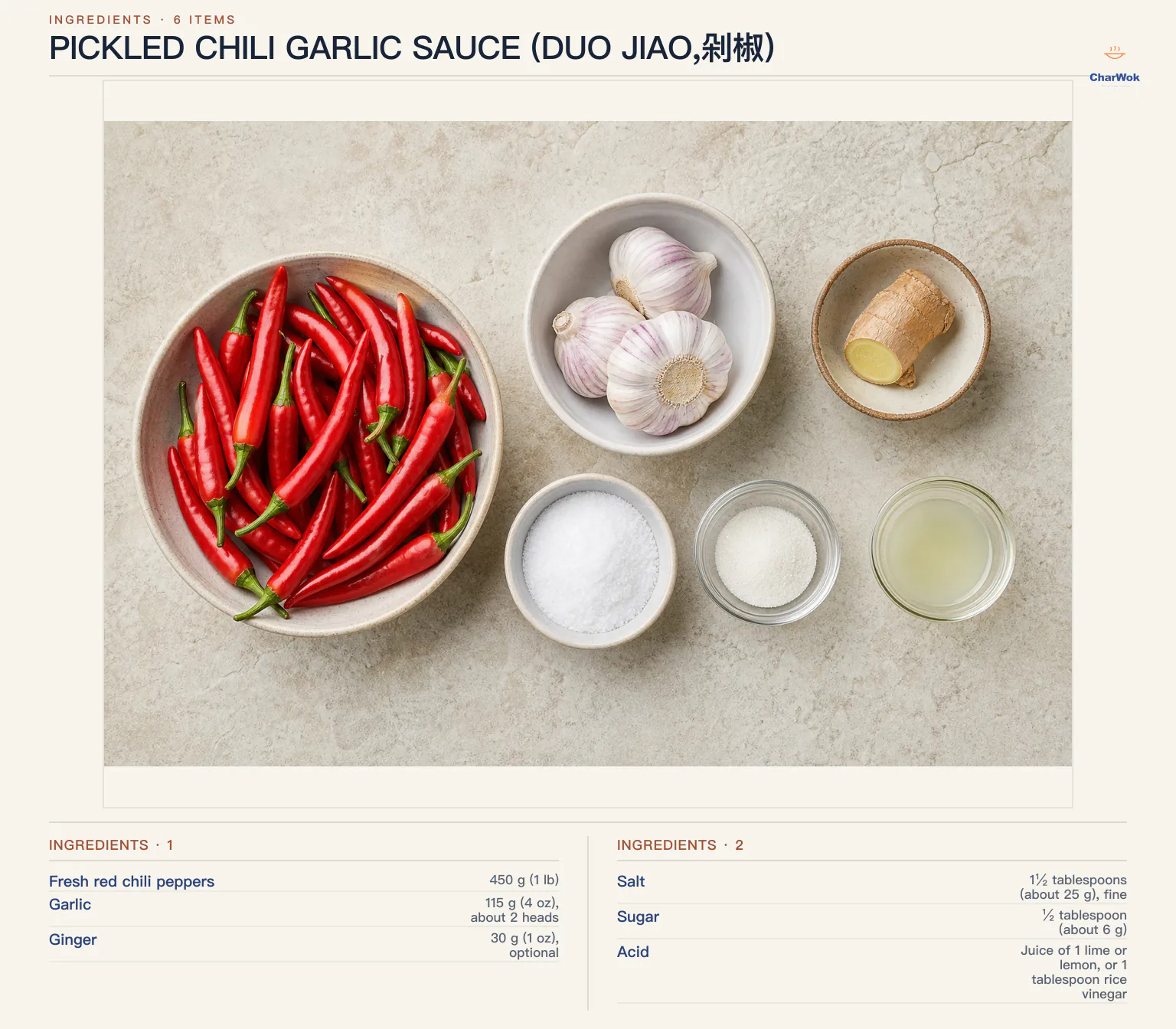
| Ingredient | Amount | Notes / substitute |
|---|---|---|
| Fresh red chili peppers | 450 g (1 lb) | Any red, fleshy chili. Fresno or red jalapeño for medium heat; add a handful of Thai (bird's eye) for fire. Cayenne works. See notes below on heat. |
| Garlic | 115 g (4 oz), about 2 heads | Fresh only. Avoid pre-minced jar garlic; it tastes flat. |
| Ginger | 30 g (1 oz), optional | Adds warmth and rounds the garlic. Peel it. |
| Salt | 1½ tablespoons (about 25 g), fine | For flavor and texture, not a shelf-stability guarantee. Kosher or sea salt works. |
| Sugar | ½ tablespoon (about 6 g) | White sugar or rock sugar. Softens the heat. |
| Acid | Juice of 1 lime or lemon, or 1 tablespoon rice vinegar | For flavor only; this amount does not make the sauce shelf-stable or safe for canning. |
Picking peppers and controlling the heat
The pepper is the whole recipe, so choose with intent. You want red, glossy, thick-fleshed chilies. Thin-walled dried-style peppers turn to mush. For a medium, family-friendly batch I lean on big, fleshy red chilies (Fresno or a medium supermarket red chili) and keep just a few hot bird's-eye chilies in the mix for backbone, enough that you feel the warmth but the fruity, fresh-chili flavor leads. Red jalapeños will do the job if that is what you have, though the flavor leans greener.
Heat lives mostly in the seeds and the white pith. The traditional Hunan version keeps them in. If you want the chili flavor without the burn, halve the peppers the long way and flick the seeds and ribs loose with your gloved fingertip or the back of the blade before you chop. Removing all the seeds drops the heat dramatically, often by half. Wear nitrile gloves for this. I have made the mistake of doing it bare-handed once, and the tingling lasts a full day.
The method, step by step
Before anything else, wash the cutting board, knife, food processor bowl and blade, spatula, mixing bowl, and containers with hot soapy water, then rinse and dry them. Clean equipment reduces cross-contamination, but it does not turn this recipe into a shelf-stable preserve.
- Wash with stems on. Rinse the peppers under running water while the stems are still attached. De-stemming them first turns each pepper into a little cup that traps rinse water and makes the finished relish unnecessarily watery.
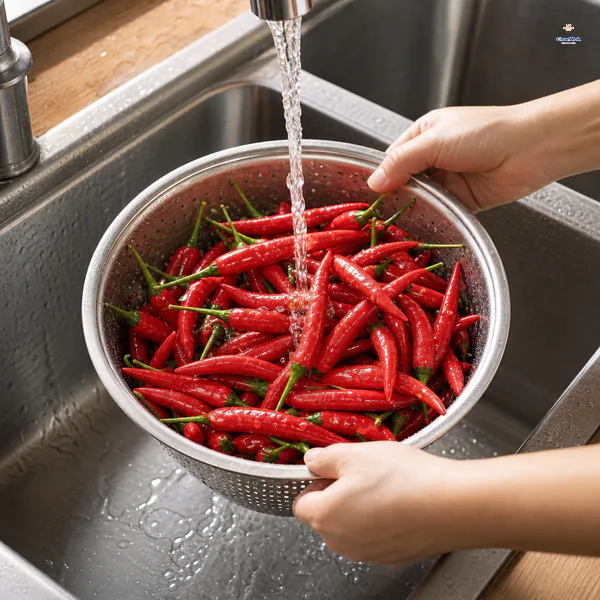
Wash the chilies thoroughly while the stems are still attached so water does not enter the cut ends.
- Dry them well. Pat the peppers with a clean towel, then spread them on a tray in a single layer until the surface is dry. This keeps the texture concentrated; it is not a preservation step.
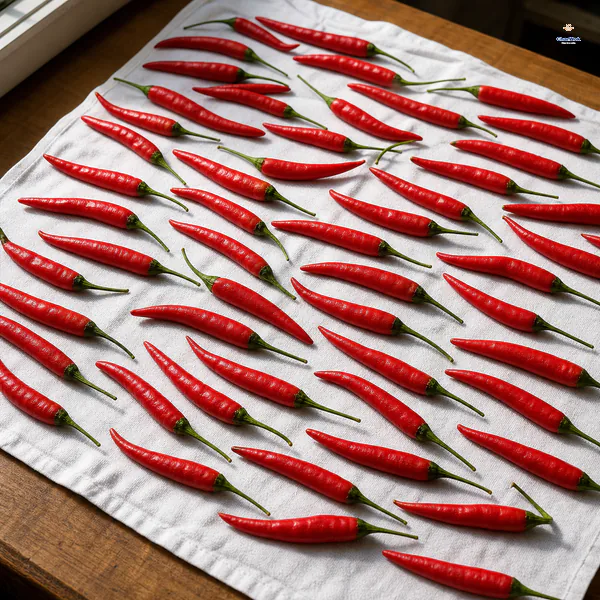
Spread the chilies in one layer and let every surface become bone-dry before cutting.
- Prep the aromatics. Peel the garlic and ginger, then crush each clove lightly with the flat of a knife. Crushing ruptures the cell walls so the garlic blends cleanly instead of chopping into uneven chunks. This is also where the garlic's sharp compounds form, so work fairly promptly.
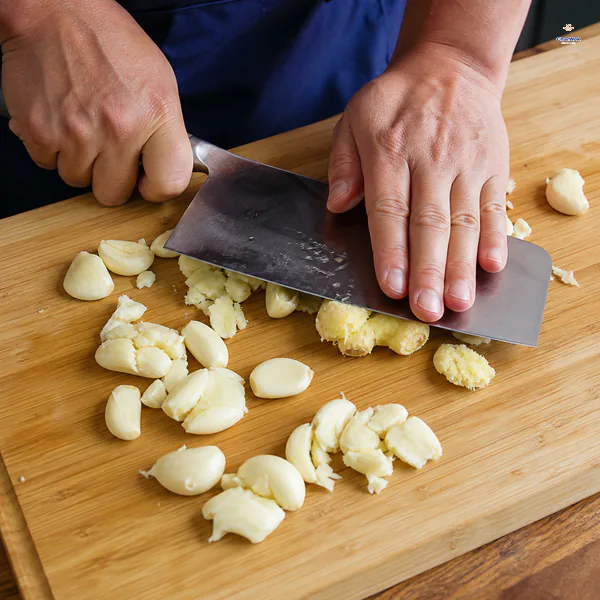
Peel and roughly crush the garlic and optional ginger before they go into the processor.
- Top and chop the peppers. Pull off the stems and trim any soft spots. Cut the peppers into rough chunks, about 2 cm (¾ inch). Wear gloves. If you are de-seeding, do it now.
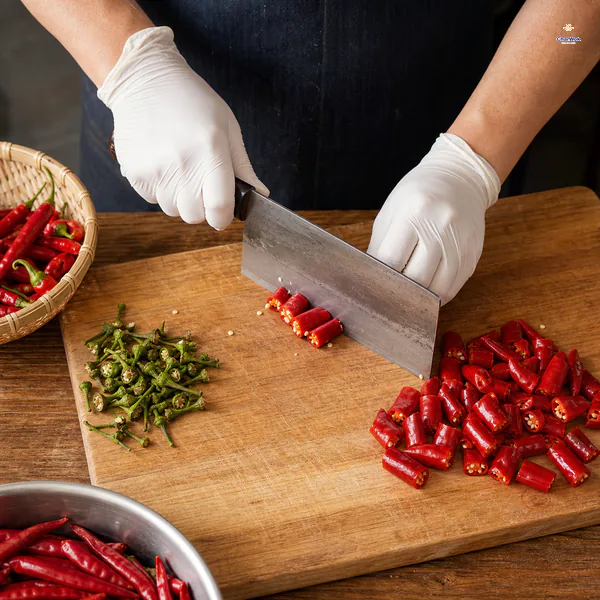
Wear gloves, remove the stems only after drying and cut the chilies into rough 2-centimetre pieces.
- Blend garlic and ginger to a paste first. Put the garlic and ginger in the food processor and run it on high until you have a rough paste. Doing the aromatics alone means they break down evenly, instead of staying in big sharp pieces among the peppers.
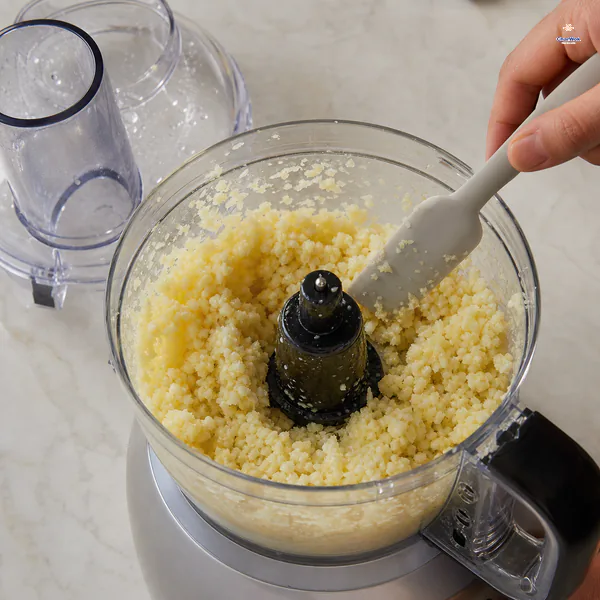
Pulse the garlic and ginger first, stopping at a rough moist paste rather than a perfectly smooth puree.
- Pulse the peppers in short bursts. Tip the chopped peppers into the processor with the garlic paste and work them in short, off-on bursts, stopping often to redistribute what has piled up against the blade. If your bowl will not hold all the peppers at once, do them in rounds and combine the batches by hand afterward. The texture you want is a coarse, wet relish with distinct flecks, somewhere between minced and roughly chopped. Push it toward a puree and the sauce turns cloudy and bitter as the cells give up too much water, so err on the side of chunky.
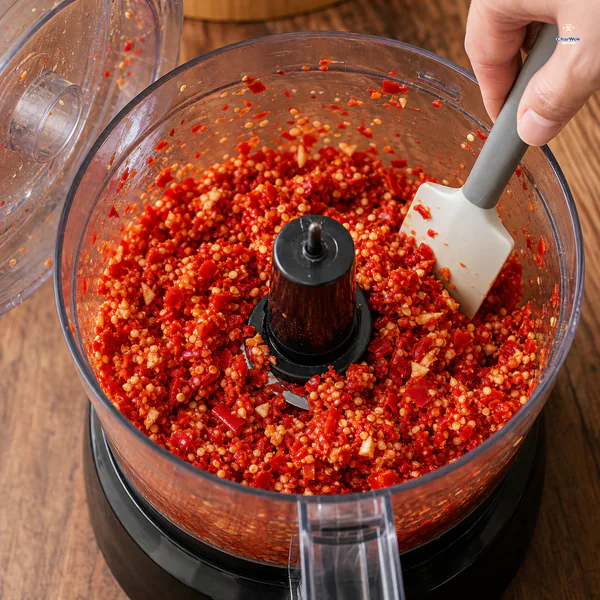
Add the chili pieces and pulse briefly, keeping uneven pieces and seeds visible instead of blending smooth.
- Season and mix. Tip everything into a clean, dry bowl. Add the salt, sugar, and lime juice, lemon juice, or rice vinegar. Stir well so the seasoning is evenly distributed. The peppers will start to release liquid almost immediately.
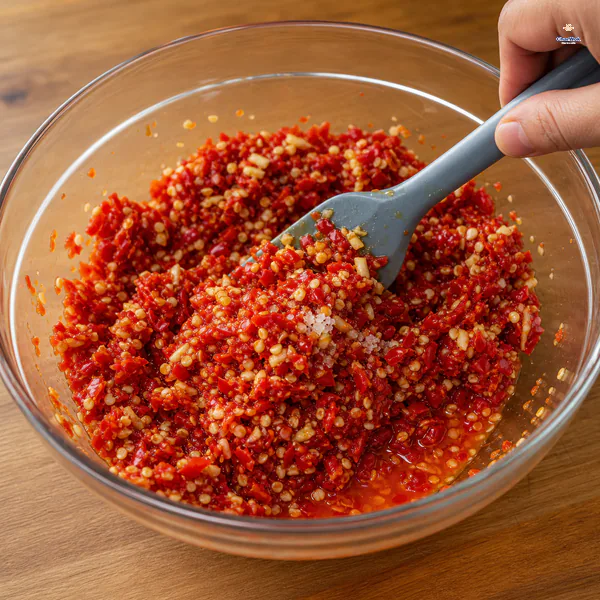
Mix in the salt and sugar until evenly distributed and the chopped chilies begin to release their own liquid.
- Pack and refrigerate immediately. Spoon the relish into clean containers, cover, label with the preparation date, and place it at 4°C/40°F or colder as soon as it is mixed. Do not leave this unvalidated formula on the counter to ferment.
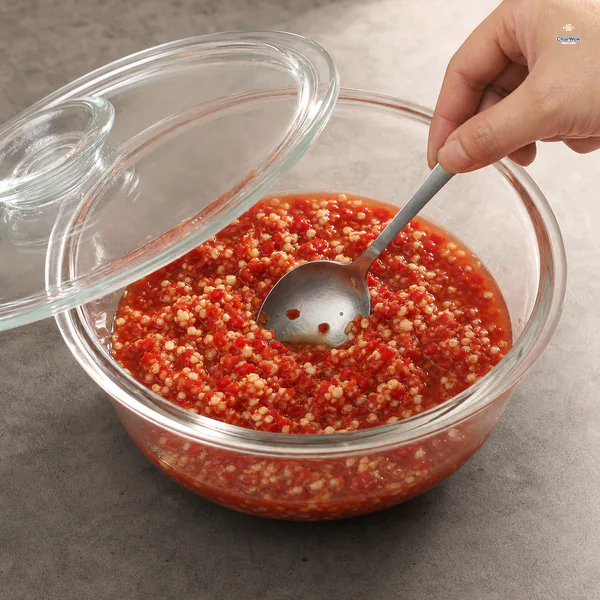
Cover loosely for the 48-hour counter ferment; after 24 hours, stir with a clean dry spoon and press every solid back into the brine.
- Use or freeze. The relish can be used once chilled. Use the refrigerated batch within 4 days, or freeze small portions promptly and thaw them in the refrigerator as needed.
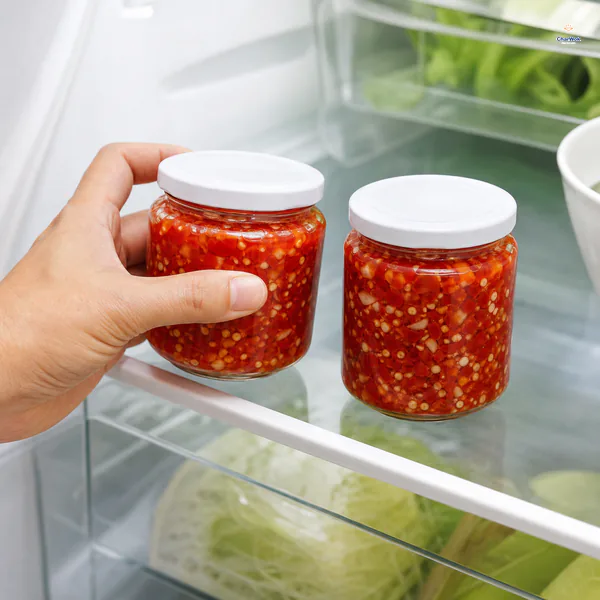
Pack into clean, dry, oil-free jars, keep the solids under their own liquid, seal and move directly to the refrigerator.
When a batch goes wrong
This is the section I wish I had read before my first attempt. Most failures come down to one of four things.
- White film, fuzzy mold, or colored growth appears. Discard the entire container without tasting it. A home cook cannot reliably identify a surface film by appearance, and removing the visible patch does not make the food underneath safe.
- The sauce tastes flat or too salty. Dilute only the portion you are about to cook with a little fresh chopped chili or sugar. Do not add raw ingredients to the storage container or leave it on the counter to adjust.
- The color turns brown instead of red. Browning usually means oxidation or over-processing. Pulse more gently next time and keep the container covered and cold. Color and a layer of liquid are quality cues, not evidence that the sauce is safe.
- Your hands burn for hours. Capsaicin is oil-soluble and water does not wash it off. Gloves are not optional. If you do get burned, rub vegetable oil on your skin first to dissolve the capsaicin, then wash with dish soap. Milk helps the mouth; it does nothing for your fingers.
Storage and shelf life
Keep the relish at 4°C/40°F or colder and use it within 4 days. Freeze small portions promptly for longer storage, then thaw them in the refrigerator. Take out only what you need with a clean spoon and return the container to the refrigerator immediately; a clean utensil reduces cross-contamination but does not extend the storage limit. Discard the whole container if it develops mold, slime, an off odor, or if you are unsure how long it has been warm.
How to use it
Duo jiao is a seasoning, not a dip, and a small spoonful carries a long way. The best way to understand it is by what job you are asking it to do.
As a built-in chili-and-garlic layer. Wherever a stir-fry or braise normally starts with chopped fresh chili and minced garlic, this does both at once with a bright, salty edge. That makes it a fast upgrade for the garlic-sauce family of dishes; a spoonful is enough to carry a quick Sichuan shredded pork or a garlic-sauce eggplant without building the aromatics from scratch. Stirred through a king oyster mushroom stir-fry, it stands in for the doubanjiang the recipe usually calls for, brighter and less beany.
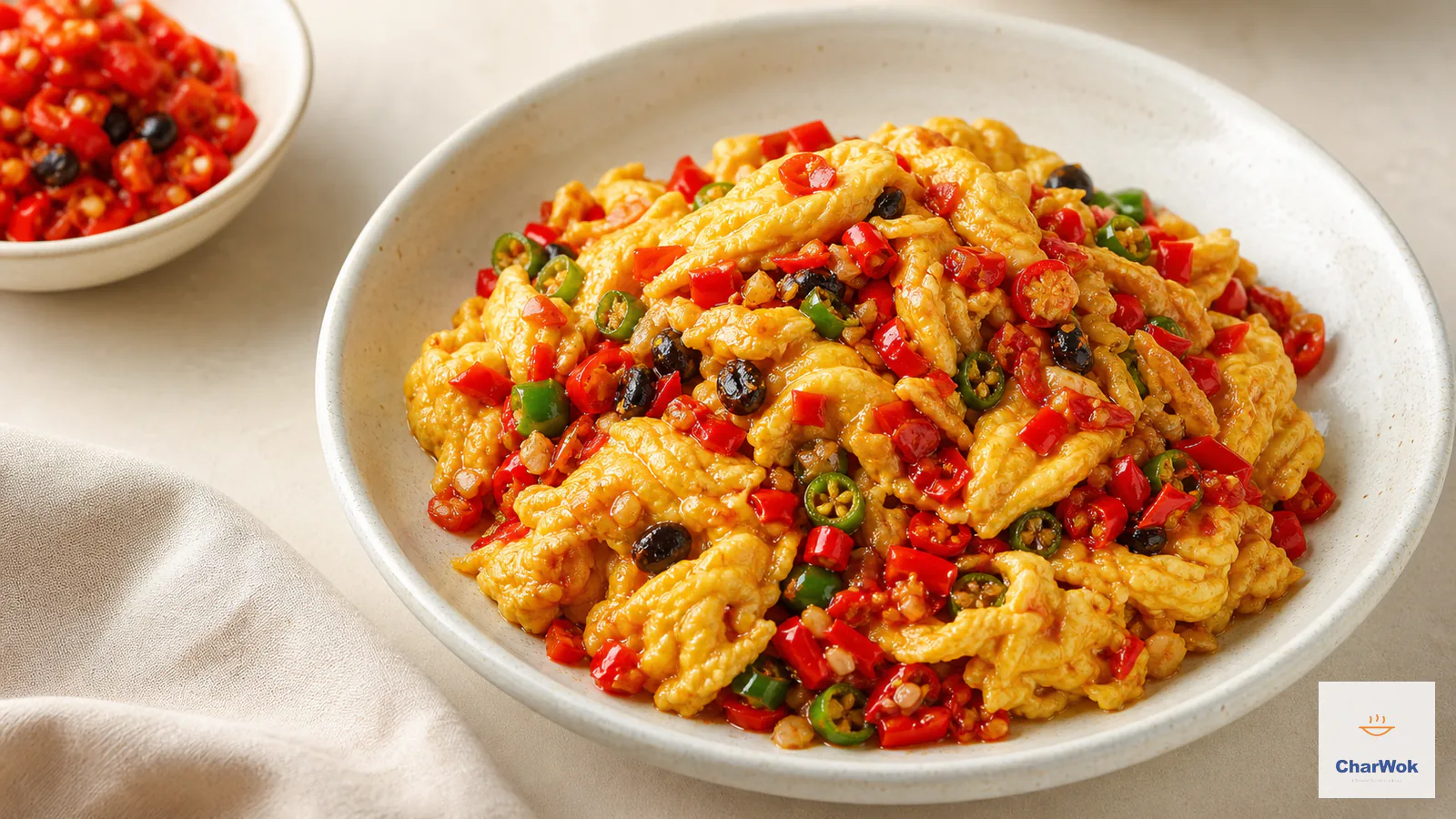
As a finishing condiment. This is where it shines on plain food that needs a kick: a dollop over cold silken or pan-fried tofu, a spoonful tucked under shrimp or fish before they hit the steamer (the shortcut behind a fast garlic steamed shrimp), or a thin smear on plain steamed rice. Folded into beaten eggs it becomes the five-minute Hunan classic, egg and pickled chili stir-fry, which is the dish that usually converts skeptical eaters.
As a bright heat booster. A teaspoon stirred into a dipping sauce or dressing gives the mixture a fresh, rounded heat that plain chili flakes do not. It lifts the chili-soy-vinegar mix in the six dumpling sauces guide, and it does the same trick mixed into mayonnaise for fried chicken or folded into the sauce for cold noodles. When a recipe calls for Sichuan chili bean paste and the jar is empty, this chili relish plus a splash of soy is a reasonable stand-in, lighter in color and brighter in tone.
Variations and pairings
The base ratio is forgiving, so play with it. A few directions worth trying:
- Smoky duo jiao. Substitute half the peppers with roasted red bell pepper or fire-roasted chilies. The smoke rounds the heat and pushes it toward a Hunan-meets-Latin flavor that is excellent on eggs and grilled corn.
- Ginger-forward. Double the ginger and add a teaspoon of finely julienned ginger at the jar stage. Pairs especially well with steamed fish or Hunan chicken.
- With black beans. Fold in a tablespoon of rinsed, chopped fermented black beans when you season. The beans add umami and push the sauce toward a ferociously savory condiment for plain rice or congee.
For pairings, think plain carriers that let the sauce lead. Spread it on warm mantou or smear it inside a folded jian bing in place of the usual chili sauce. It belongs on plain steamed rice, plain noodles dressed in spring onion oil, and next to black bean sauce dishes where bright chili and fermented black-bean flavors play off each other. A little goes a long way, so freeze part of a large batch rather than keeping one jar for weeks.
Frequently asked questions
These are the safety and technique questions that matter most for this refrigerator version.
Do I have to ferment it for 48 hours?
No. This exact salt-and-acid formula is not a validated fermentation process, so do not leave it on the counter for 24 or 48 hours. Refrigerate it immediately and treat it as a fresh condiment.
Is this safe to can in a boiling water bath?
No. This is not a tested canning recipe and its final pH has not been established. Do not water-bath can it or store it at room temperature. Refrigerate immediately, use within 4 days, or freeze portions promptly.
Can I make it without a food processor?
Yes, and the traditional method is by hand with a cleaver. For a small batch, chopping everything finely by hand gives a cleaner texture and is arguably better than the machine. Aim for reasonably even pieces so the finished relish has a consistent texture.
Why is my sauce bubbling on the counter?
Bubbling is not an expected step in this refrigerator recipe. Do not taste it or rely on smell to decide whether an uncontrolled fermentation is safe; discard the whole batch.
My jar smells sour after a month. Is it still good?
No. A month is far beyond the 4-day refrigerated limit for this unvalidated fresh condiment. Discard the whole jar without tasting it.