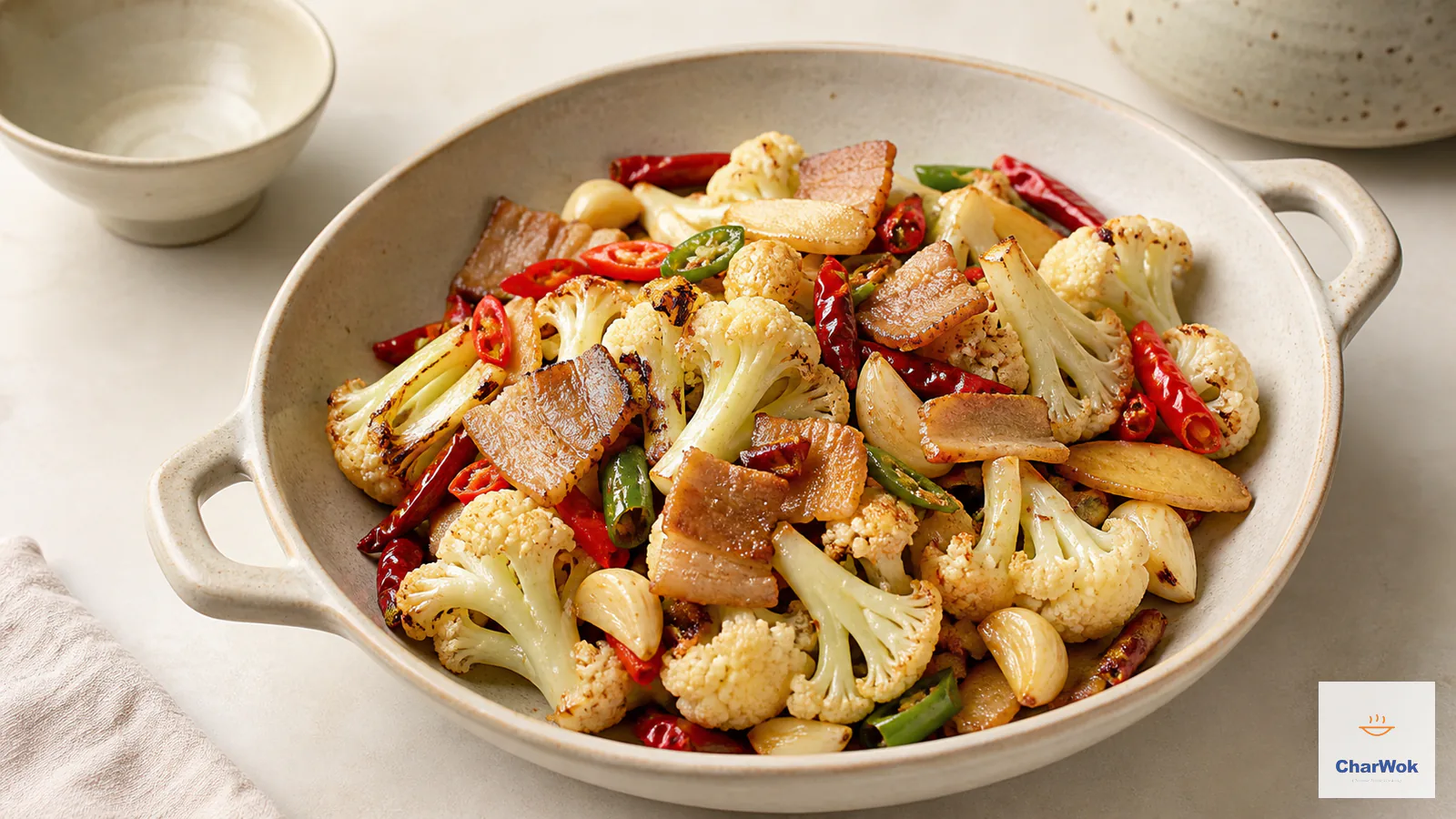
The first time I ordered dry pot cauliflower in a Hunan-Sichuan place, I assumed the kitchen was hiding something. Plain cauliflower does not taste like that: charred at the edges, glossy with pork fat, humming with chili. Then I tried to copy it at home and got a wet, pale mess. The gap between those two outcomes is exactly one technique, and it has almost nothing to do with seasoning. It is about heat, water, and the order you put things into the pan.
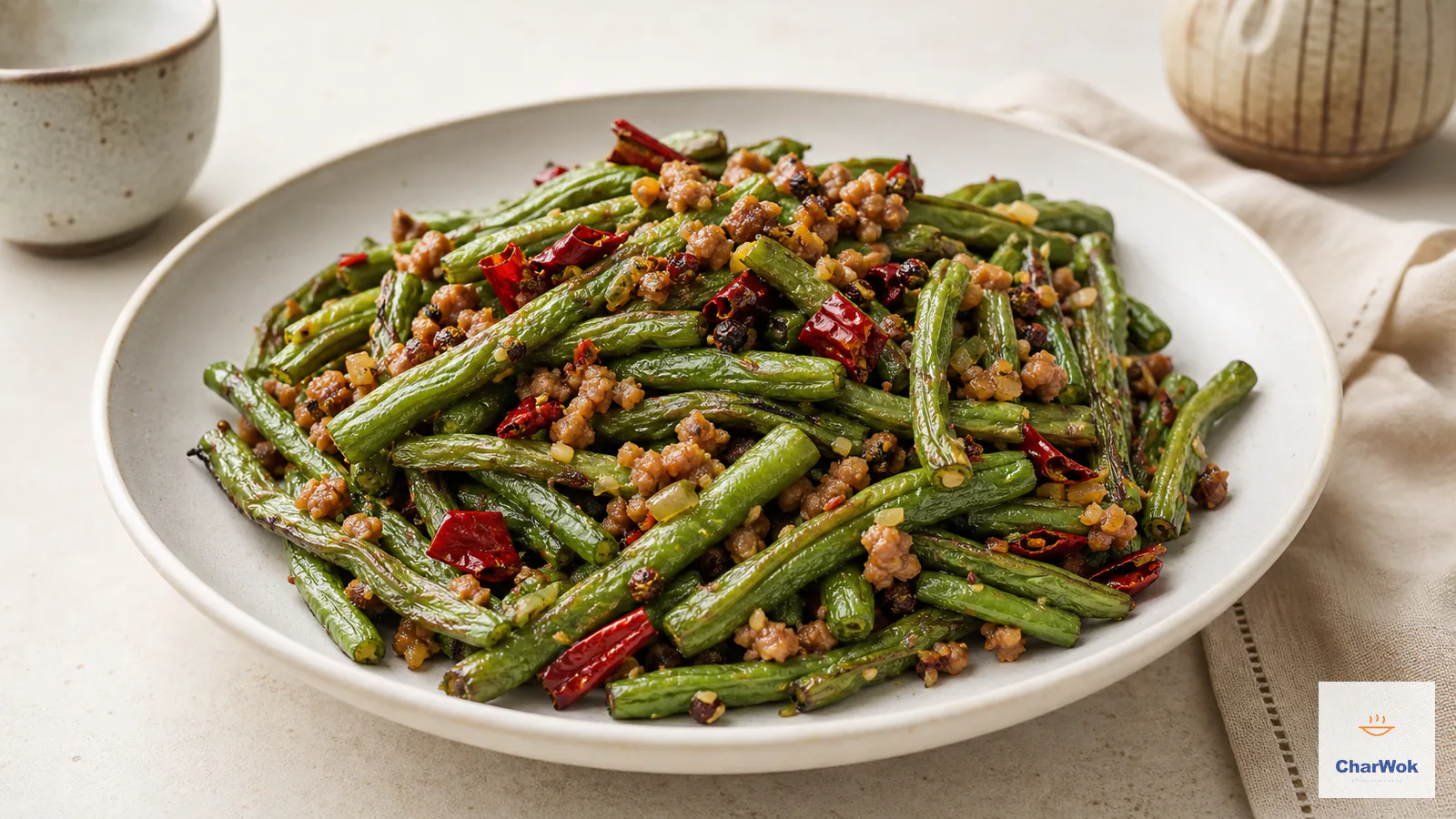
Dry pot (gan guo) is a modern Chinese service style: a small, shallow cast-iron or clay pot, usually set over a tea-light flame at the table, holding a dish that is saucy-looking only because every drop of liquid clinging to the food is concentrated. Cauliflower became one of its signature vehicles because its tight florets hold fat and aromatics in their nooks instead of releasing water the way leafy greens do. The same family of flavors drives Sichuan dry-fried green beans, but cauliflower gives you more char and more crunch.
At a glance: Blanch the florets 30 seconds (regular cauliflower, 2 minutes), drain bone-dry, then sear over the highest heat your wok can give you for about a minute. The dish lives or dies on two things: a smoking-hot wok and cauliflower with zero surface water. Five minutes in the pan, about 213 kcal per serving for two.
Why this dish is harder than it looks
Here is the failure most home cooks hit: the cauliflower goes into the wok wet and the heat is medium. Water pools, the temperature crashes below 100°C (212°F), and instead of browning you are now boiling the vegetable in its own juice. You get soft, gray, watery florets and a pork flavor that never lands. I have done this. The fix is not more oil or more soy sauce. It is a 30-second blanch followed by a thorough drain, and a wok that is visibly smoking before the oil goes in.
Maillard browning — the reaction that creates those dark, nutty, savory edges — barely happens below about 140°C (285°F). In a wet pan you will never get there. So the whole recipe is engineered to keep water out of the pan and heat in it.
Choosing the cauliflower
The restaurant version uses sweet sprouting cauliflower, also sold as Chinese cauliflower, flowering cauliflower, or fioretto. It has long thin greenish stems and loose pale-yellow florets, and it is sweeter and crisper than the standard tight white head. It also cooks through faster, which is why the blanch here is only 30 seconds.
If you cannot find it, standard supermarket cauliflower works well. You simply blanch it longer, about two minutes, so the stems lose their raw edge. Broccolini is a fine substitute too, being a hybrid of broccoli and Gai Lan. Do not bother chasing the specialty variety; the technique matters more than the cultivar. The same logic applies to other quick vegetable stir-fries like hot and sour napa cabbage or Di San Xian: match the cook time to the vegetable, not the other way around.
Ingredients
Ingredients at a glance
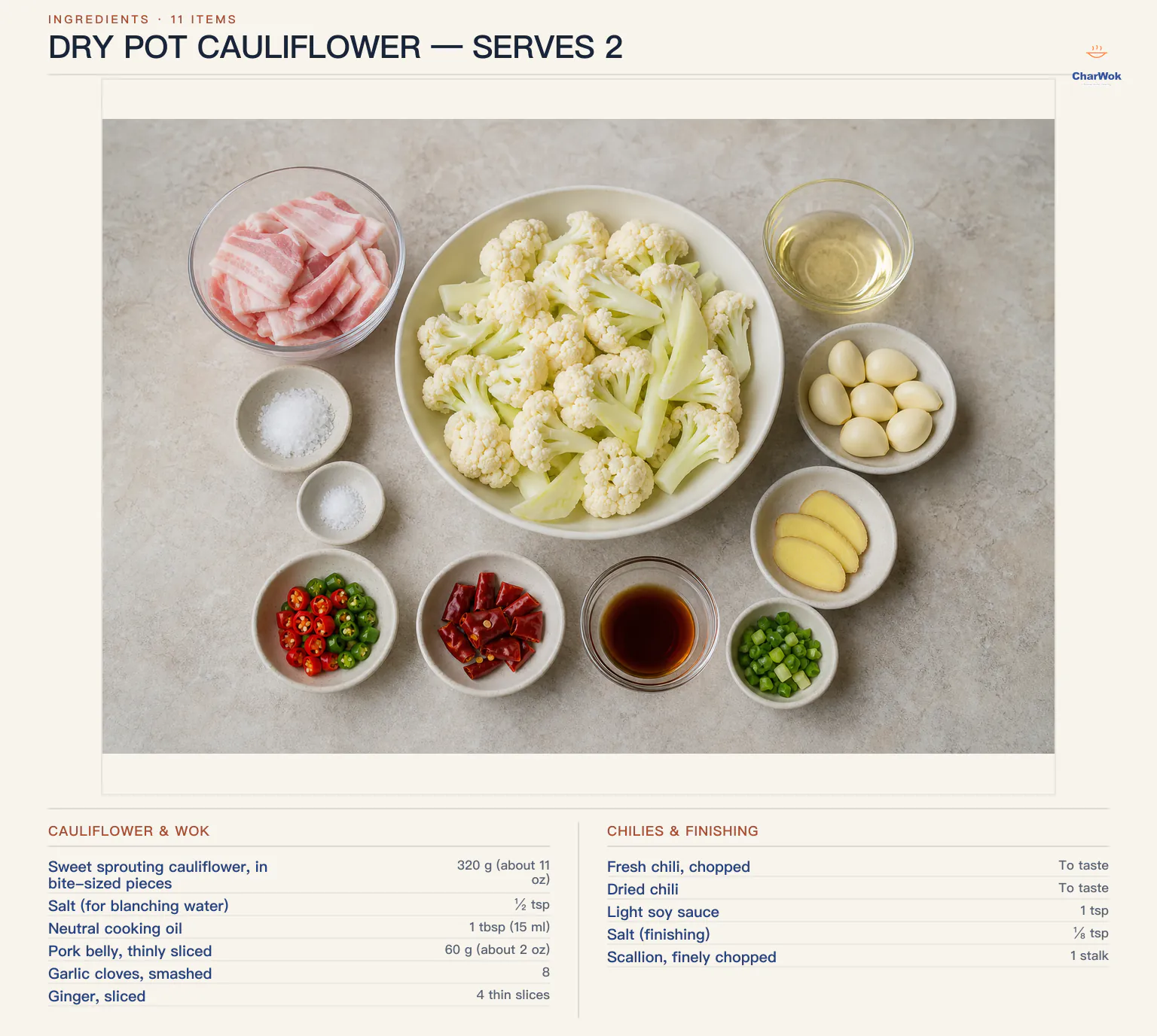
| Ingredient | Amount | Notes / substitute |
|---|---|---|
| Sweet sprouting cauliflower, in bite-sized pieces | 320 g (about 11 oz) | Regular cauliflower works; blanch longer. Broccolini also good. |
| Salt (for blanching water) | ½ tsp | Sea salt or kosher fine. |
| Neutral cooking oil | 1 tbsp (15 ml) | Peanut, canola, or avocado. Not olive oil. |
| Pork belly, thinly sliced | 60 g (about 2 oz) | Bacon, pancetta, or marbled pork shoulder all work. Cut salty cured meats a bit thinner. |
| Garlic cloves, smashed | 8 | Smash, do not mince. You want golden edges, not burnt specks. |
| Ginger, sliced | 4 thin slices | Smash them lightly to release oil. |
| Fresh chili, chopped | To taste | Serrano or red Fresno for manageable heat; Thai bird's-eye if you mean it. |
| Dried chili | To taste | Er jing tiao or facing-heaven for aroma with moderate heat. |
| Light soy sauce | 1 tsp | Light, not dark. See the light vs. dark soy sauce guide. |
| Salt (finishing) | ⅛ tsp | Halve this if using bacon or pancetta. |
| Scallion, finely chopped | 1 stalk | Added off-heat at the end so it stays bright. |
A note on the pork: a small amount of fatty meat does most of the flavor work here, the way it does in eggplant with garlic sauce. The fat renders, coats the florets, and carries the chili and garlic. If you want a vegetarian version, skip ahead to the variations.
Method
- Prep everything before the heat goes on. Cut the cauliflower, smash the garlic, slice the ginger, chop the chili and scallion, measure the soy and salt into small bowls. Once the wok is hot you will have roughly ninety seconds of cooking; there is no time to hunt for an ingredient.
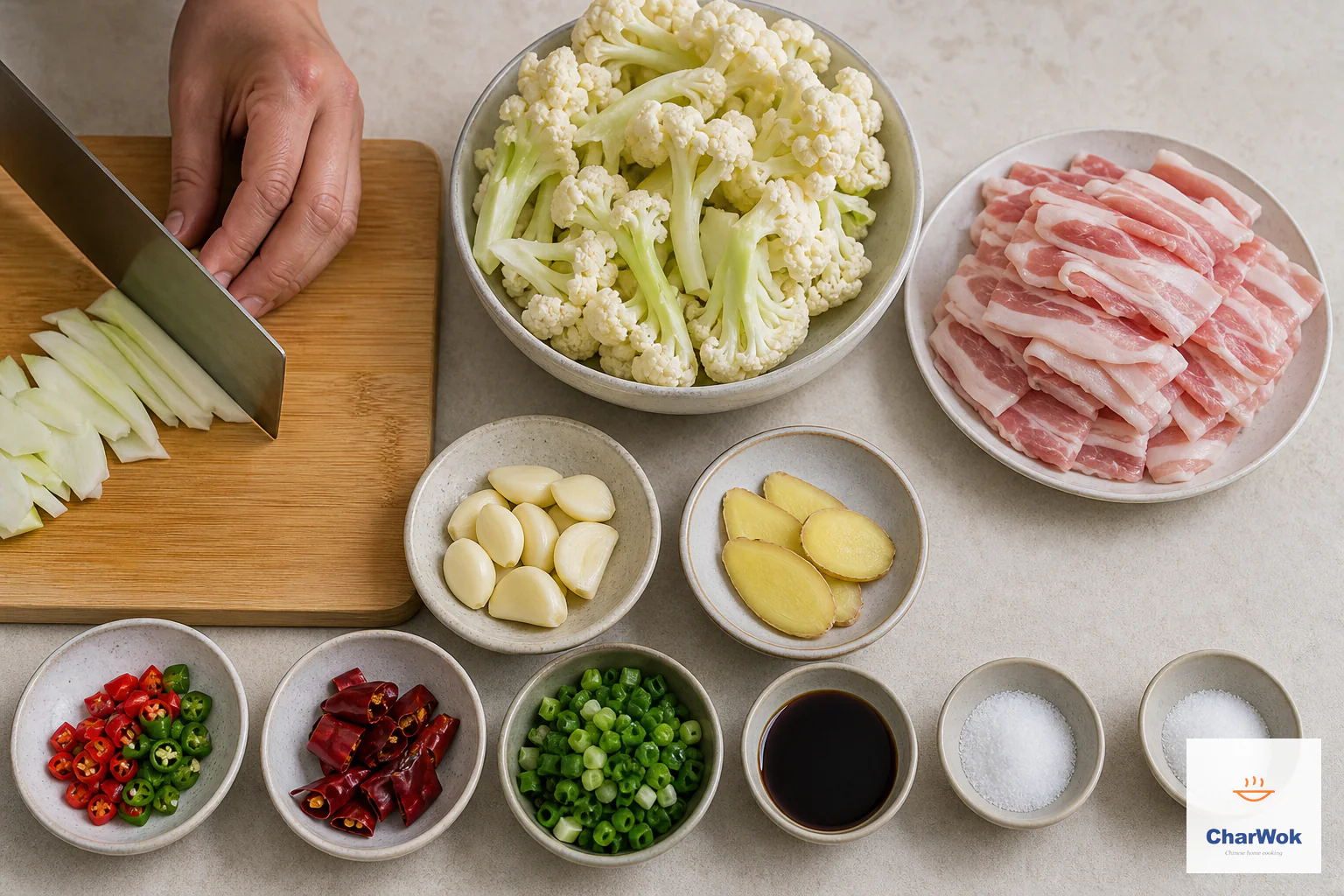
Cut and measure every ingredient before heating the wok because the stir-fry moves too quickly for mid-cook prep.
- Blanch and dry. Bring a generous pot of water to a rolling boil, add the ½ tsp salt, drop in the cauliflower, and press it under with a slotted spoon. Sprouting cauliflower needs 30 seconds; regular cauliflower needs about 2 minutes. Drain in a colander and shake hard. Spread it on a clean towel and pat the florets. Surface water is the enemy of char; this step is not optional.
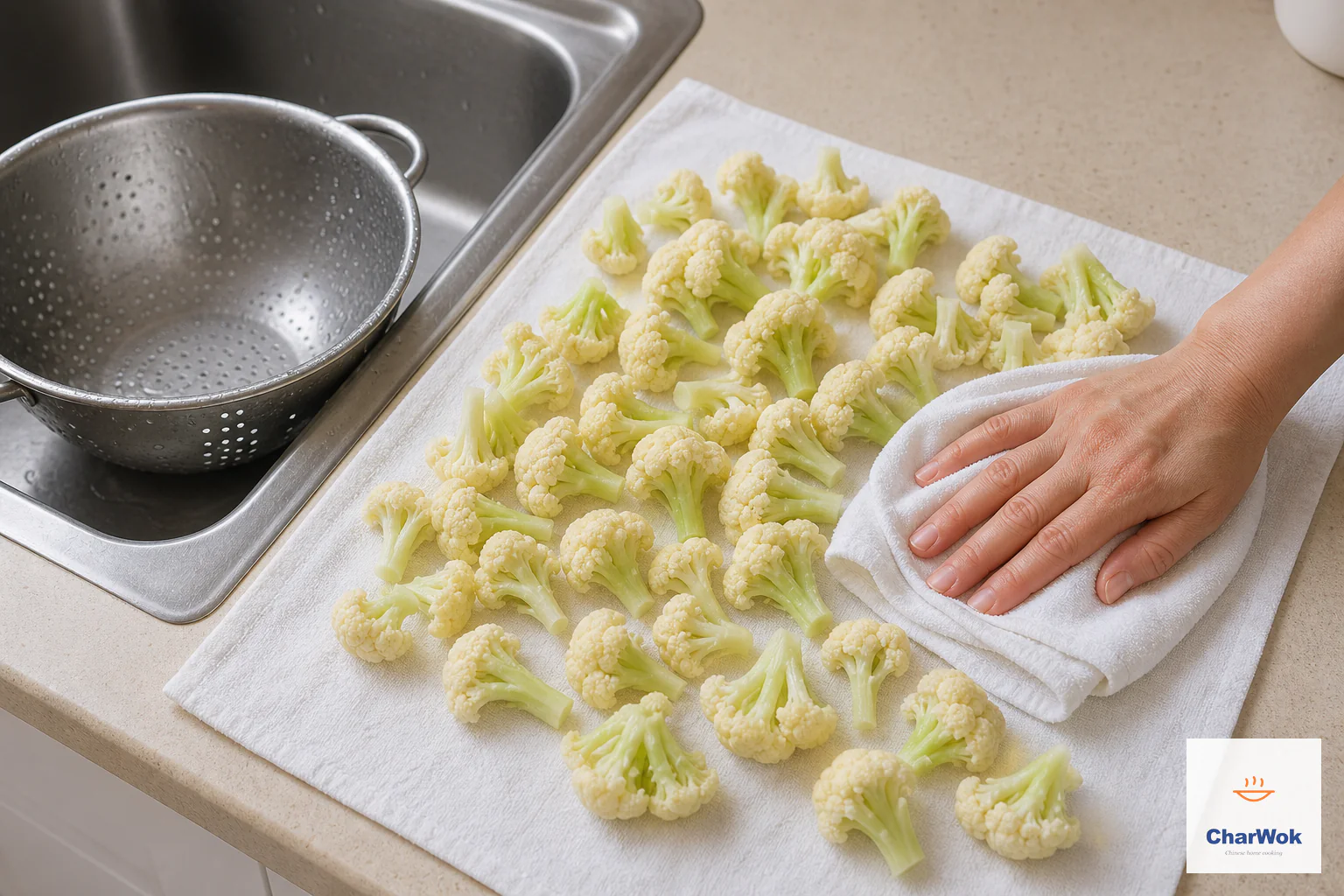
Blanch sprouting cauliflower for 30 seconds or regular cauliflower for about 2 minutes, then drain and pat every surface dry.
- Get the wok truly hot. Heat a dry carbon-steel wok over your highest burner until you see faint smoke rising from the metal. Only then add the oil and swirl to coat. This sequence, heat the metal and then add the oil, is how you get wok hei without the food sticking. If you are using a non-stick pan, reverse it: add the oil to the cold pan, then heat, so you do not destroy the coating.
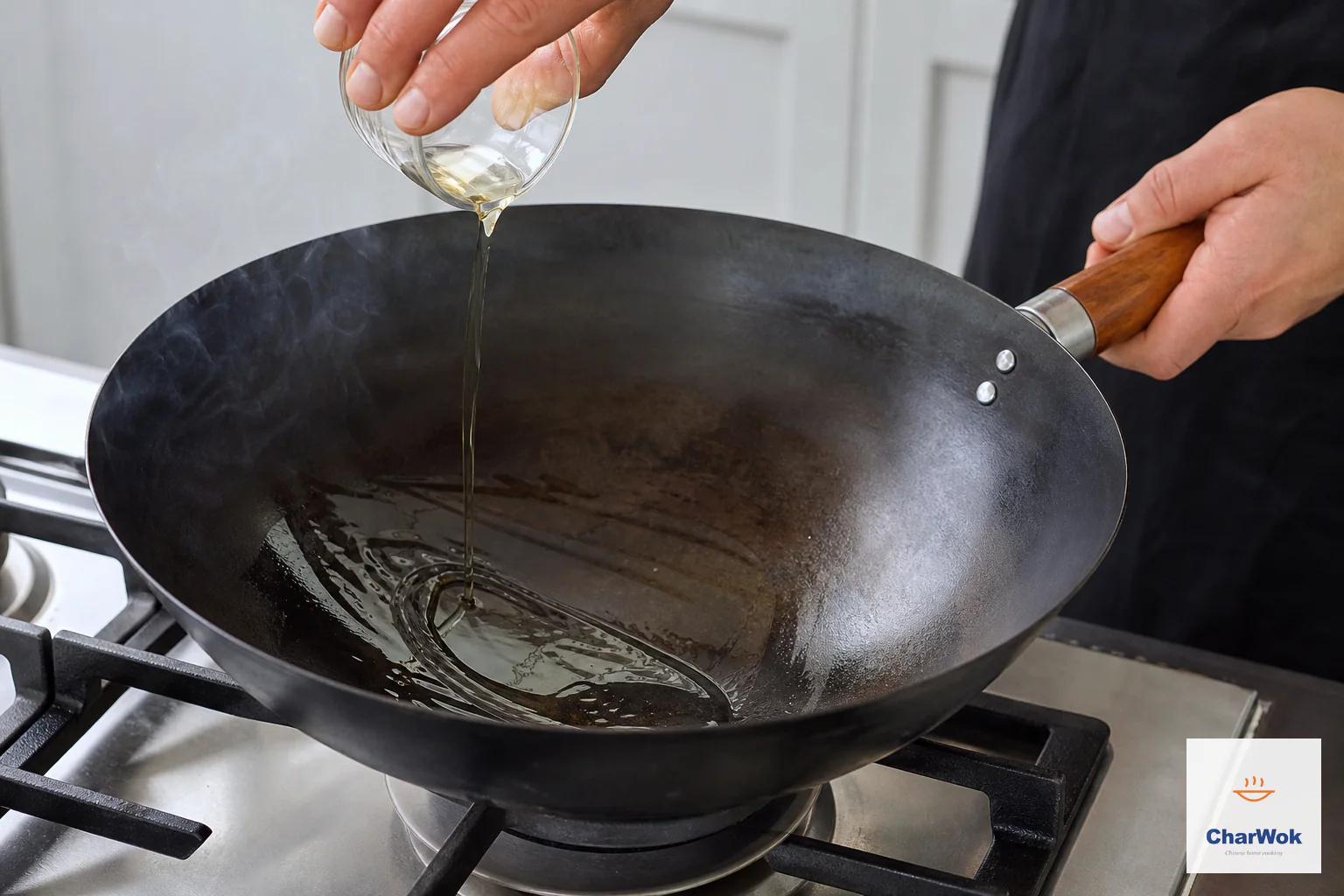
Heat the empty carbon-steel wok until faintly smoking, then add the oil and swirl it over the metal.
- Render the pork. Add the sliced belly in a single layer and let it sit for ten seconds before tossing. You want the edges to sear and the fat to run. The belly is ready when it has lost its raw pink and the edges have a little gold.
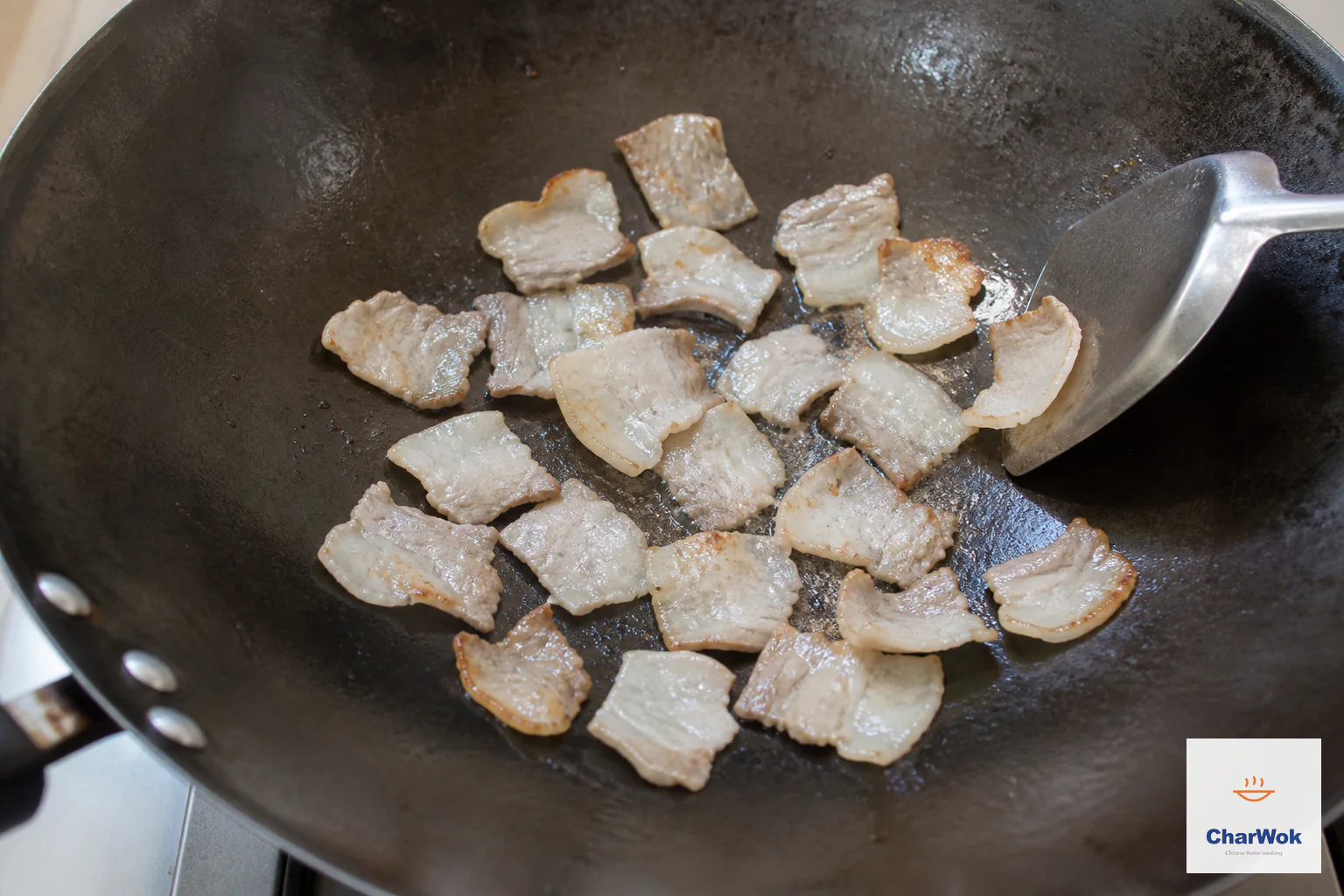
Leave the thin pork belly against the hot metal briefly, then turn it once the raw pink is gone and the edges are lightly golden.
- Bloom the aromatics. Add the smashed garlic, ginger, fresh chili, and dried chili. Keep the heat high and keep everything moving so the garlic toasts rather than burns. This stage smells like the dish: toasted chili oil, sweet garlic, rendered pork. It is done when the garlic and pork edges are light golden, about 20 to 30 seconds. Burnt garlic turns bitter fast, so do not walk away.
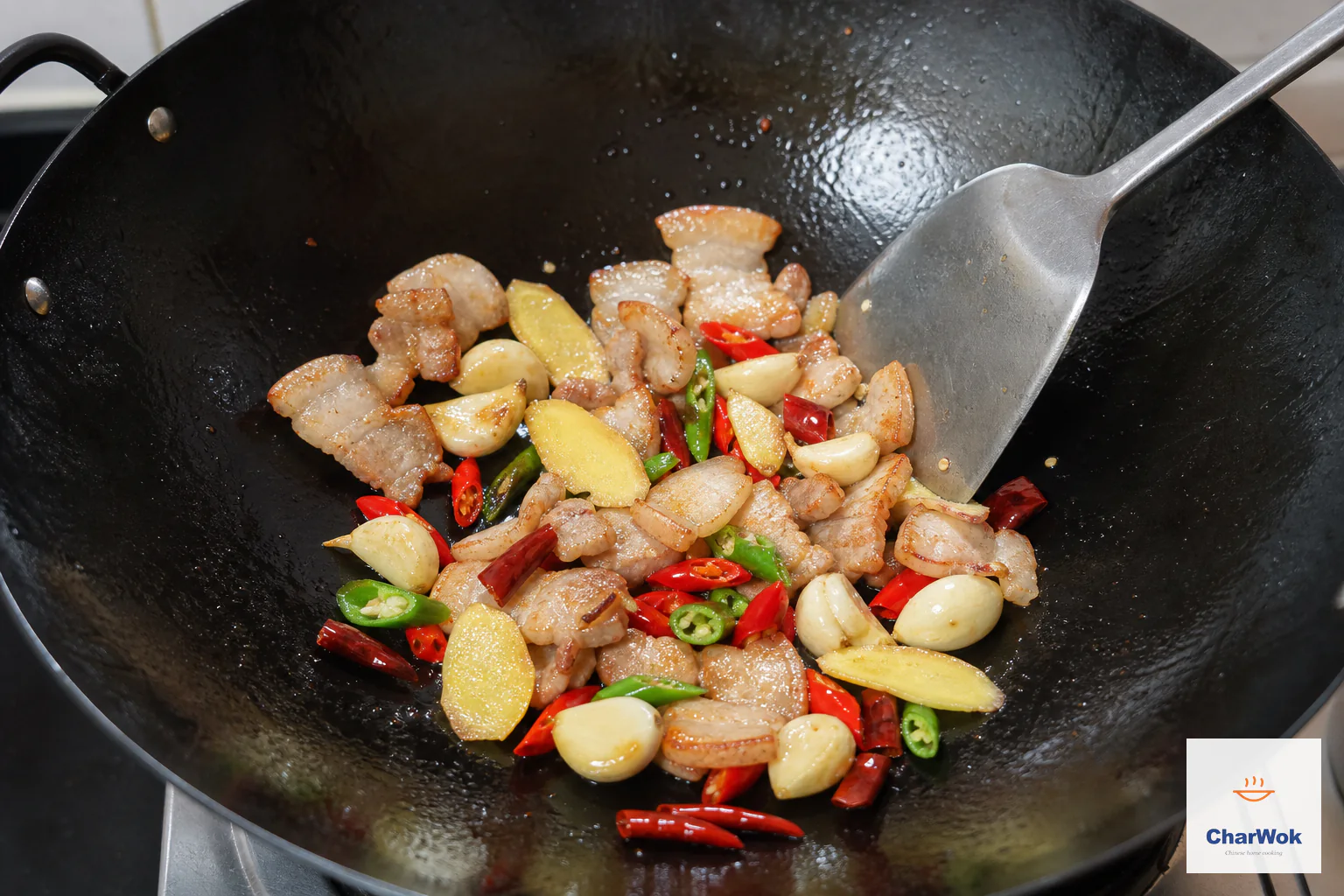
Stir the garlic, ginger and both chilies with the pork for 20 to 30 seconds, stopping before any garlic turns dark.
- Sear the cauliflower. Tip in the well-drained cauliflower and the teaspoon of light soy sauce. Toss to coat every floret in the flavored fat. Cook about one minute, tossing constantly, until the florets take on dark caramel patches. Resist the urge to add more liquid; a spoon of chili bean paste is welcome if you want it saucier, but the classic version is intentionally dry.
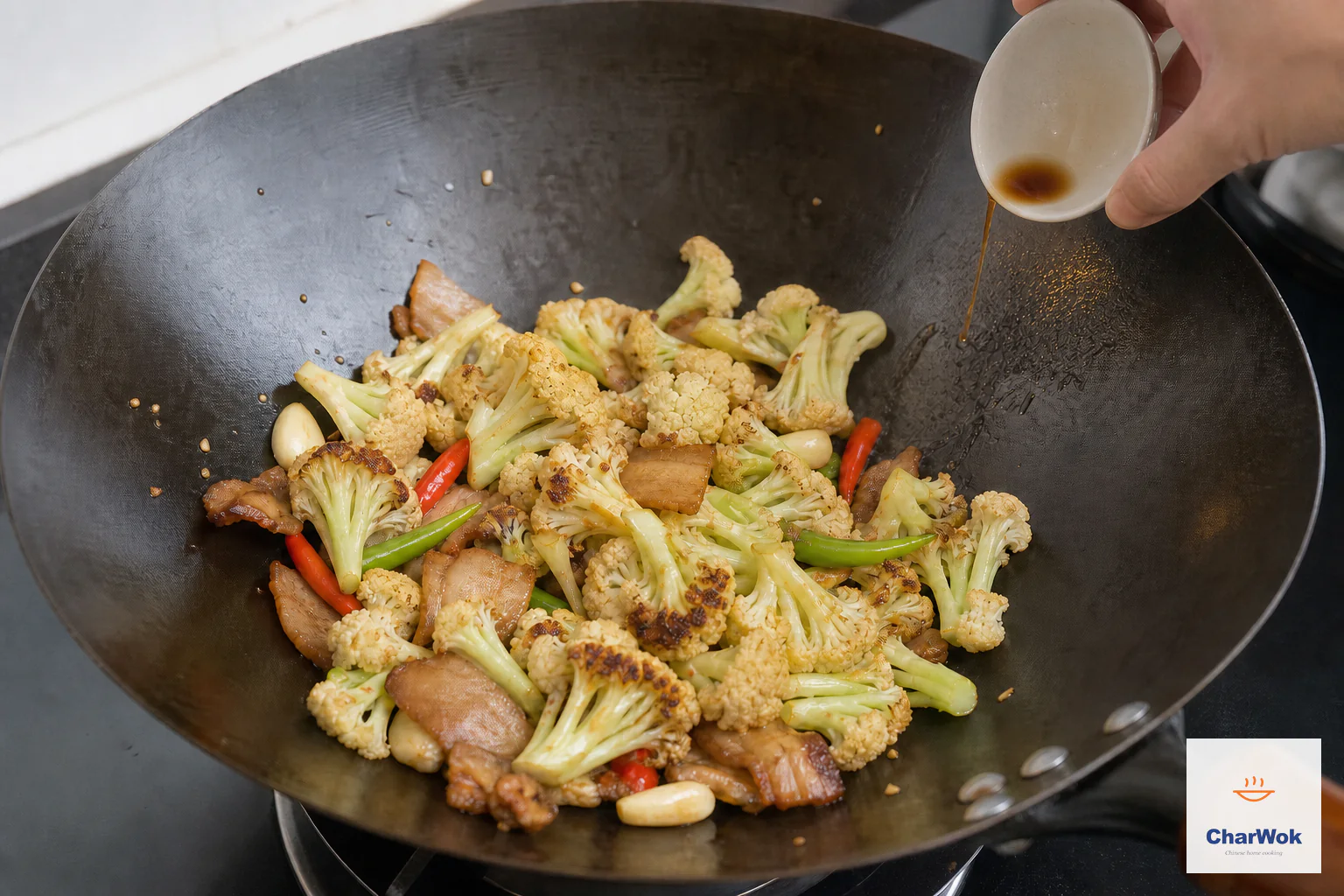
Pour the light soy against the hot wok wall and toss for about 1 minute until the dry florets pick up dark caramel patches.
- Finish and serve. Off the heat, sprinkle the ⅛ tsp salt (less if using cured pork), scatter the scallion, and toss once. The residual heat wilts the scallion without killing it. Serve immediately over freshly steamed jasmine rice.
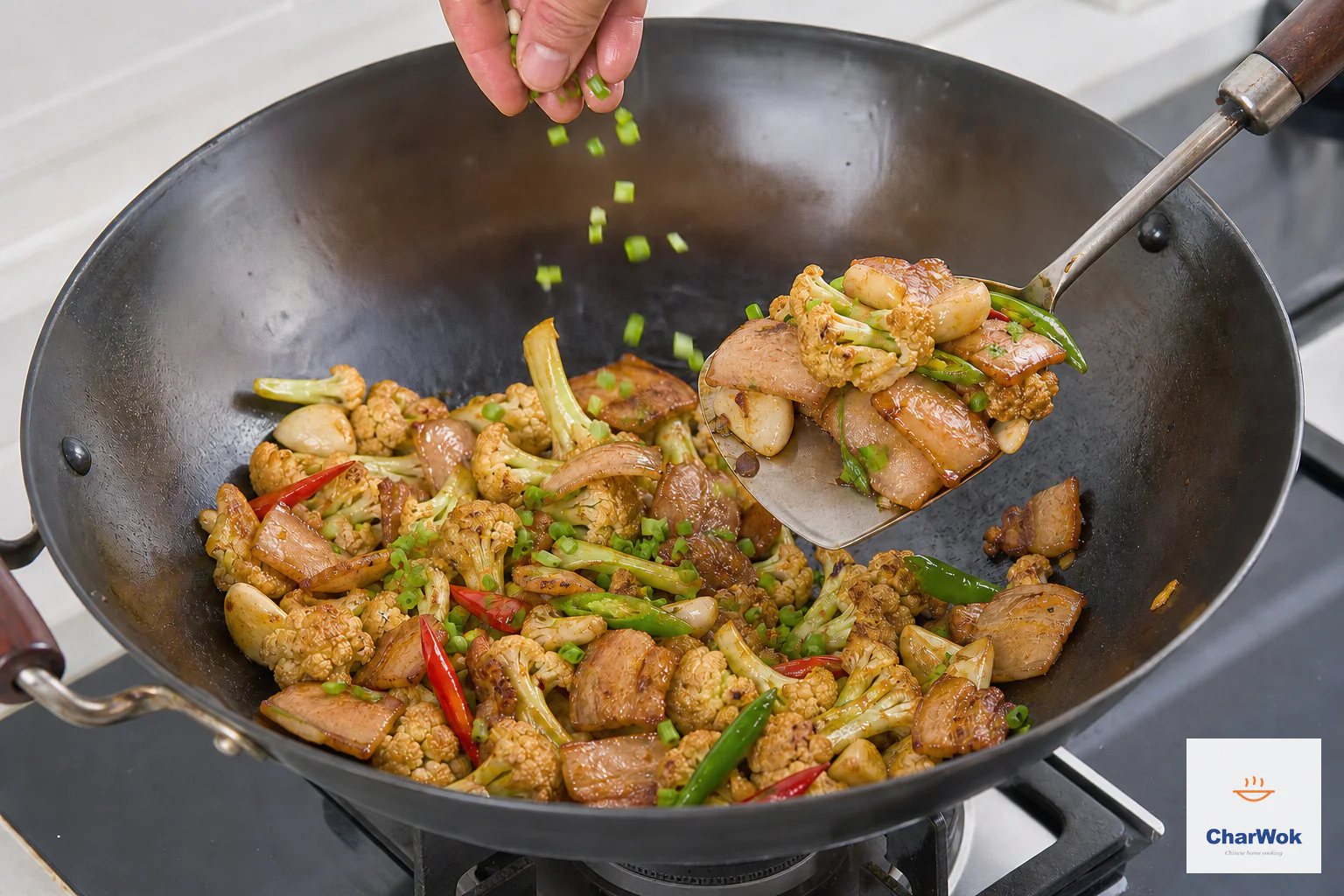
Switch off the heat, add the finishing salt and scallion, toss once, and serve immediately before the cauliflower softens.
When it goes wrong, and how to fix it
Soggy, pale florets. The pan lost its heat because the cauliflower was wet or you crowded it. Next time, dry more aggressively and cook in two batches if your wok is small. You can rescue a soggy batch by turning the heat to maximum and letting the water boil off, but the texture will be softer than ideal.
Bitter, blackened garlic. The garlic burned, usually because you left it in the pan too long before adding the cauliflower. Smashed cloves burn slower than minced, which is why the recipe specifies smashed. If your garlic is browning too fast, drop the heat for ten seconds, get the cauliflower in, then bring the heat back up.
Florets still raw in the thick stems. You under-blanched regular cauliflower. The blanch is not just for color; it partially cooks the dense stem so the high-heat sear can finish it. Two minutes, not thirty seconds, for the standard variety.
Dish tastes flat despite all that garlic and chili. Usually a salt problem. The finishing salt matters; without it the soy reads as one-note and the chili reads as pure heat. Taste a floret before serving and adjust. Tough, chewy pork. You used lean shoulder cut too thick. Slice it thin across the grain, or use belly, which stays tender no matter what.
Variations and what to serve alongside
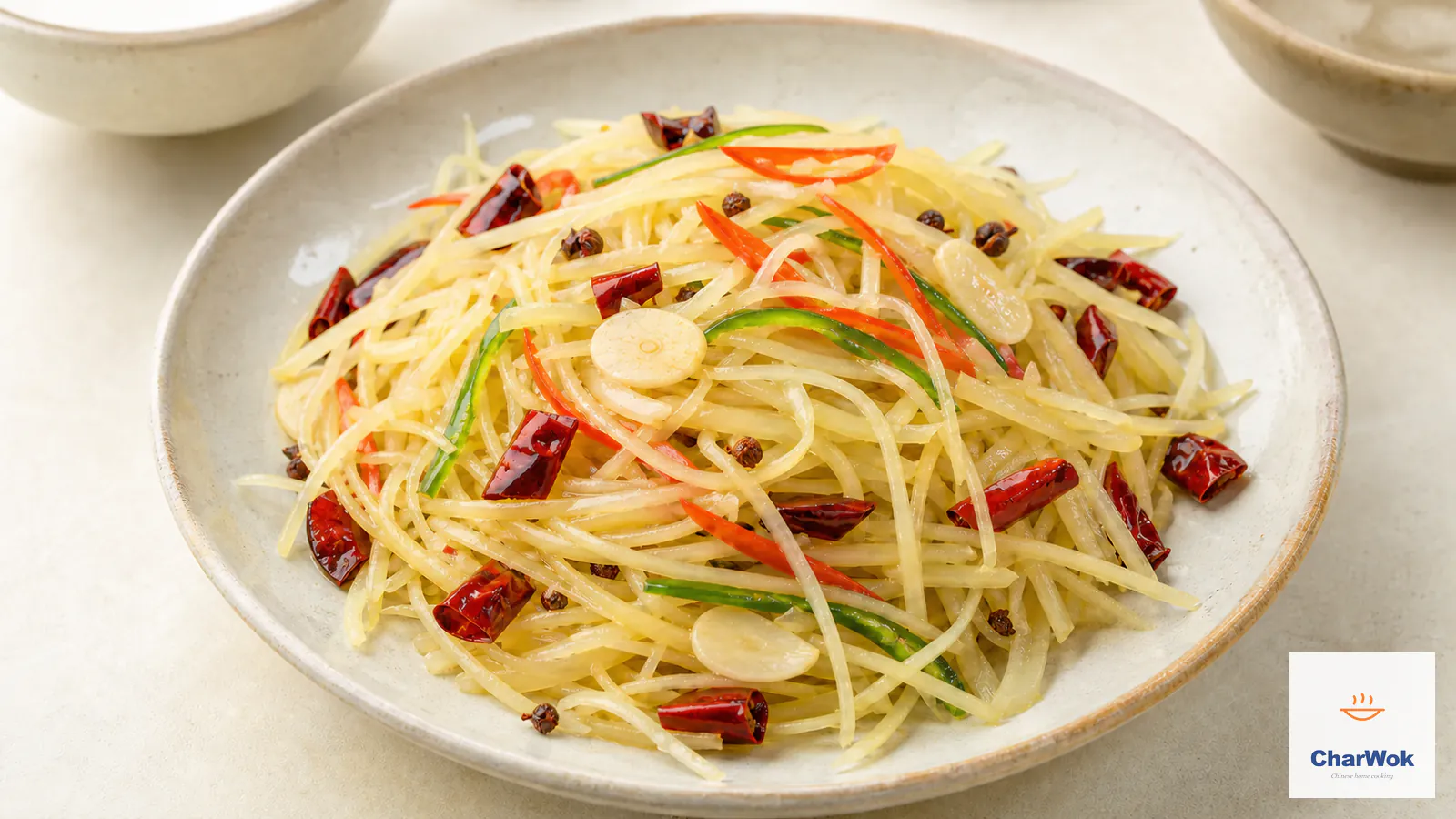
The dry-pot treatment is a template, not a single recipe. Once you have the blanch-and-sear rhythm, you can apply it to other vegetables that hold their shape under high heat. Spicy lotus root and sour-and-spicy potato both reward the same approach. If you want to lean more explicitly Sichuan, browse the top Sichuan recipes collection and borrow the chili-oil-and-Sichuan-peppercorn finishing from twice-cooked pork.
For a vegetarian version, drop the pork and start the oil with a tablespoon of shiitake or a small handful of soaked dried shrimp for umami, then proceed. Bacon or pancetta in place of belly gives you a smokier, more breakfast-leaning dish. Cut the finishing salt in half and you are set.
Pair it simply. This is a bold side, so let the rest of the table be gentle. Steamed rice, a clear soup, and one more vegetable like stir-fried mung bean sprouts make a complete weekday meal. If you are building a pork-forward spread, a small bowl of red-cooked pork belly alongside turns it into something closer to a feast.
Storage and reheating
Dry pot cauliflower is best the minute it leaves the wok. The crunch fades as it sits. If you must store it, keep it in an airtight container in the fridge for up to two days and reheat it hard: a dry skillet over high heat for a minute, not the microwave. Microwaving steams it and you lose whatever char you earned. I do not recommend freezing it; the texture goes woolly.
Frequently asked questions
Can I make this without a wok? A large cast-iron or carbon-steel skillet works almost as well because it holds heat. Avoid non-stick for the high-heat sear. Most non-stick coatings are not rated for smoking-hot pans, and you will not get the char that defines the dish.
Is dry pot cauliflower spicy? It can be, but the heat is yours to set. Dried chili gives a slow, aromatic warmth; fresh chili gives a sharper front-of-mouth bite. Leave both out and you still get a deeply savory dish from the pork, garlic, and soy.
Can I use frozen cauliflower? I would not. Frozen florets release far too much water on thawing and will steam rather than sear. Spend the two dollars on a fresh head.
What does "dry pot" actually mean? It is a serving style, not a cooking method: a shallow cast-iron or clay pot kept warm over a small flame at the table, holding a dish that looks glossy but has almost no pooled sauce. The intensity comes from concentration, not from a lot of liquid.