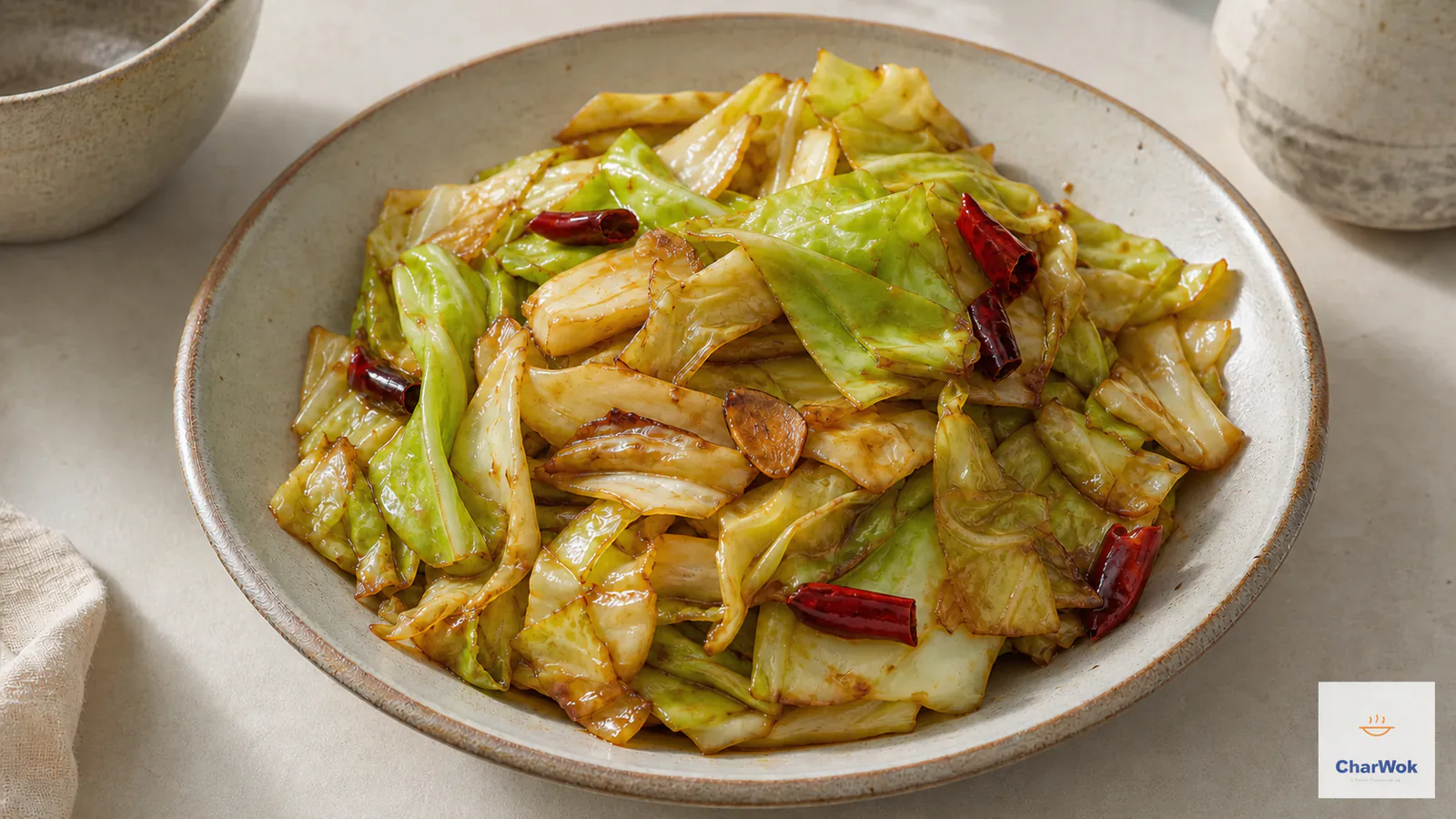
The whole dish lives or dies in about ninety seconds. You tear the leaves by hand, you heat the wok until it just begins to smoke, and you commit. Hesitate and you get a wet, gray pile. Move with conviction and you get cabbage that is glossy, browned at the edges, and still snaps when you bite it.
I have ruined this dish more times than I have nailed it, almost always for the same reason: I was afraid of the heat. Restaurant versions called shou si bao cai (手撕包菜, "hand-torn cabbage") have that slightly blistered, char-kissed look because the cook lets the leaves meet metal that is genuinely hot. The home-kitchen version, cooked on medium so nothing burns, comes out steamed and sad. The fix is not a secret ingredient. It is a hotter pan and a faster hand.
At a glance. Torn leaves, two flavor directions. The vegetarian one leans on Sichuan peppercorn and dried chile for a tingling, dry heat; the sausage one borrows rendered fat and sweetness from lap cheong. Either way: under 2 minutes over high heat, season only after the leaves wilt, and pull the pan off the fire the instant the sauce coats them. Overcooking by 30 seconds is the difference between crisp and collapsed.
Two ways to think about one vegetable
What restaurant menus call "Chinese cabbage stir-fry" is really a family of dishes, not one recipe. The thread that holds them together is the technique: hand-torn leaves, fierce heat, a short finish in a savory sauce. Everything else is a regional accent.
The two versions below sit at opposite ends of the spectrum. The first is northern-Sichuan in spirit, where a small amount of Sichuan peppercorn and dried chile do the heavy lifting and the cabbage stays the star. The second is the Cantonese instinct of letting a little cured meat flavor the greens, the way a cook might fold in a few slices of lap cheong or a strip of pork belly. Both are quick weeknight sides, and both scale up to a cheap, generous main if you add rice.
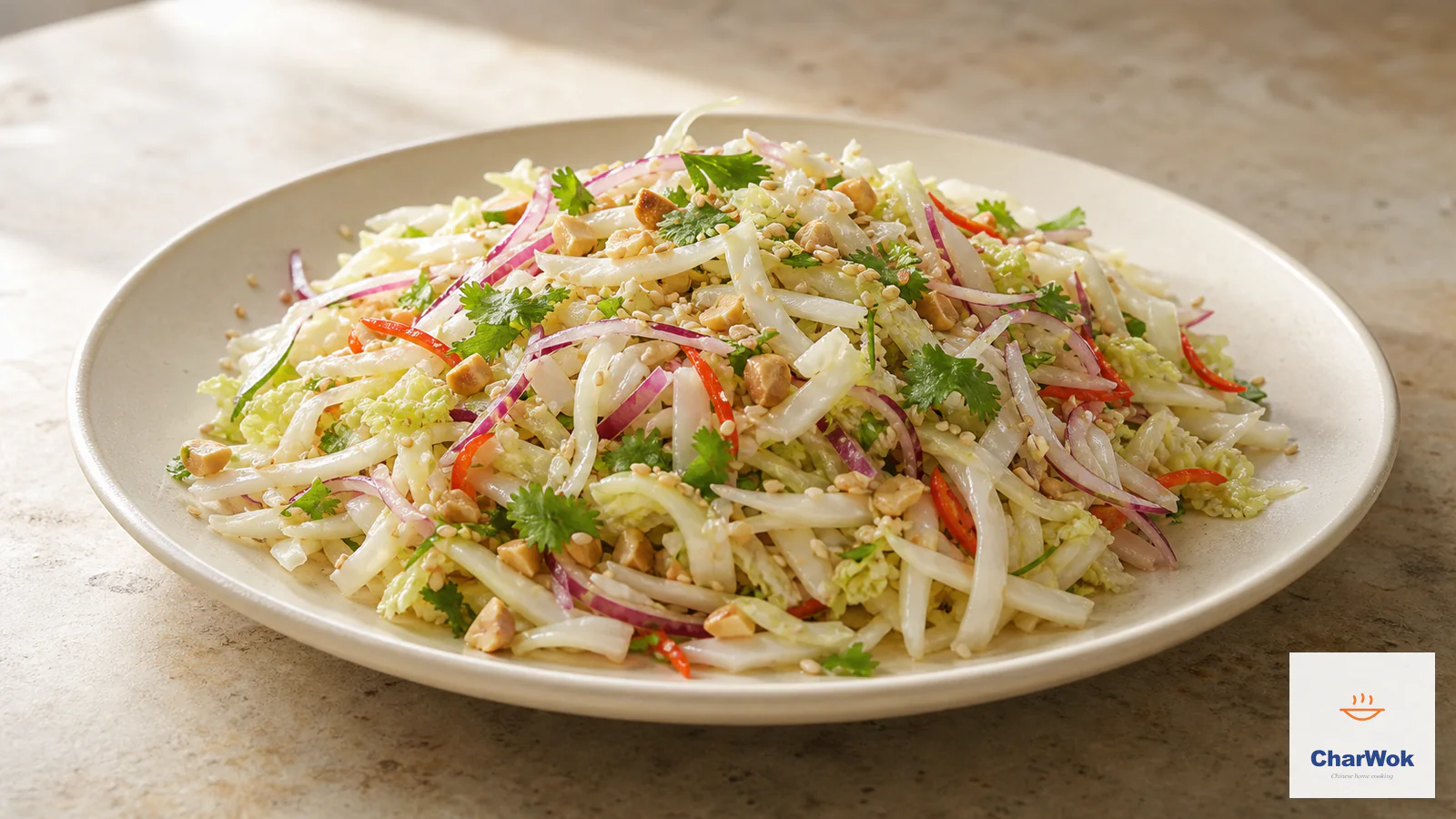
If you want a third direction that uses the same vegetable raw, a cold napa cabbage salad hits different textures entirely and is worth knowing for the same head of cabbage.
Picking the cabbage
The ideal cabbage for this is flat and loose-leafed, not the dense cannonball green cabbage that dominates American produce aisles. The flat Taiwanese-type cabbage (sometimes sold as "flat Dutch" or simply "Taiwanese cabbage") is squat and pumpkin-shaped, with leaves that separate easily and ribs that stay tender enough to cook through in a flash.
My reliable substitute is sweetheart cabbage, also called pointed or hispi cabbage: the cone-shaped green one. Its leaves are similarly thin and loosely layered, and it cooks to the same tender-crisp bite. Dense round green cabbage will work in a pinch, but you will fight it. The ribs stay tough while the leaves overcook, and the tightly packed layers trap water that turns the stir-fry soggy.
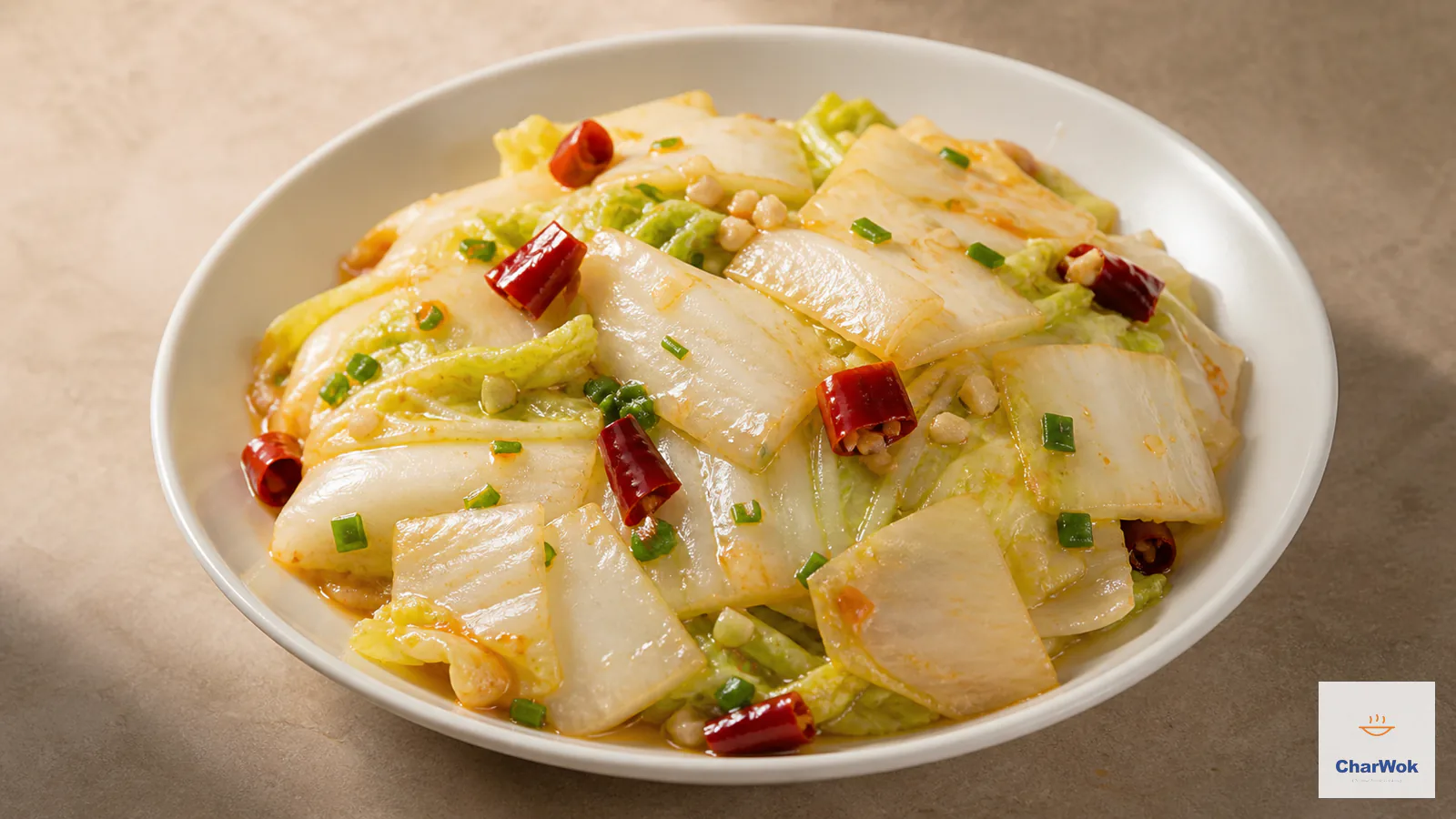
A related move worth knowing: stir-fried napa cabbage uses the same high-heat logic on a softer, wetter vegetable and comes out juicy rather than crisp. Different ingredient, different result, same principle of heat control.
Why tear the leaves instead of chopping?
I used to think the hand-torn rule was folklore with a nice story attached. Then I cooked the same cabbage two ways in the same pan on the same night, and the torn batch was plainly better. Three things explain it, and none of them are mystical.
- You can strip the thick rib. A knife chops rib and leaf together. In a 90-second stir-fry, that thick rib never softens while the thin leaf is already done, so you end up with crunchy shards in a tender pile. Tearing lets you pull the rib out of each leaf and either discard it or save it for a longer-cooked dish.
- Torn edges are ragged, and ragged edges brown. A clean knife cut is smooth and seals the cell wall; a tear ruptures it irregularly, exposing more surface to the hot oil. More exposed surface means more Maillard browning in the same short window.
- The leaves actually separate. A knife compresses several layers into a stack that sticks together in the wok, so some pieces steam while others char. Tearing forces the leaves apart as you go.
Tear into pieces roughly the size of your palm. Smaller and they vanish into mush; larger and the leaves fold over and trap steam. Aim for irregular, not uniform.
Ingredients
Ingredients at a glance
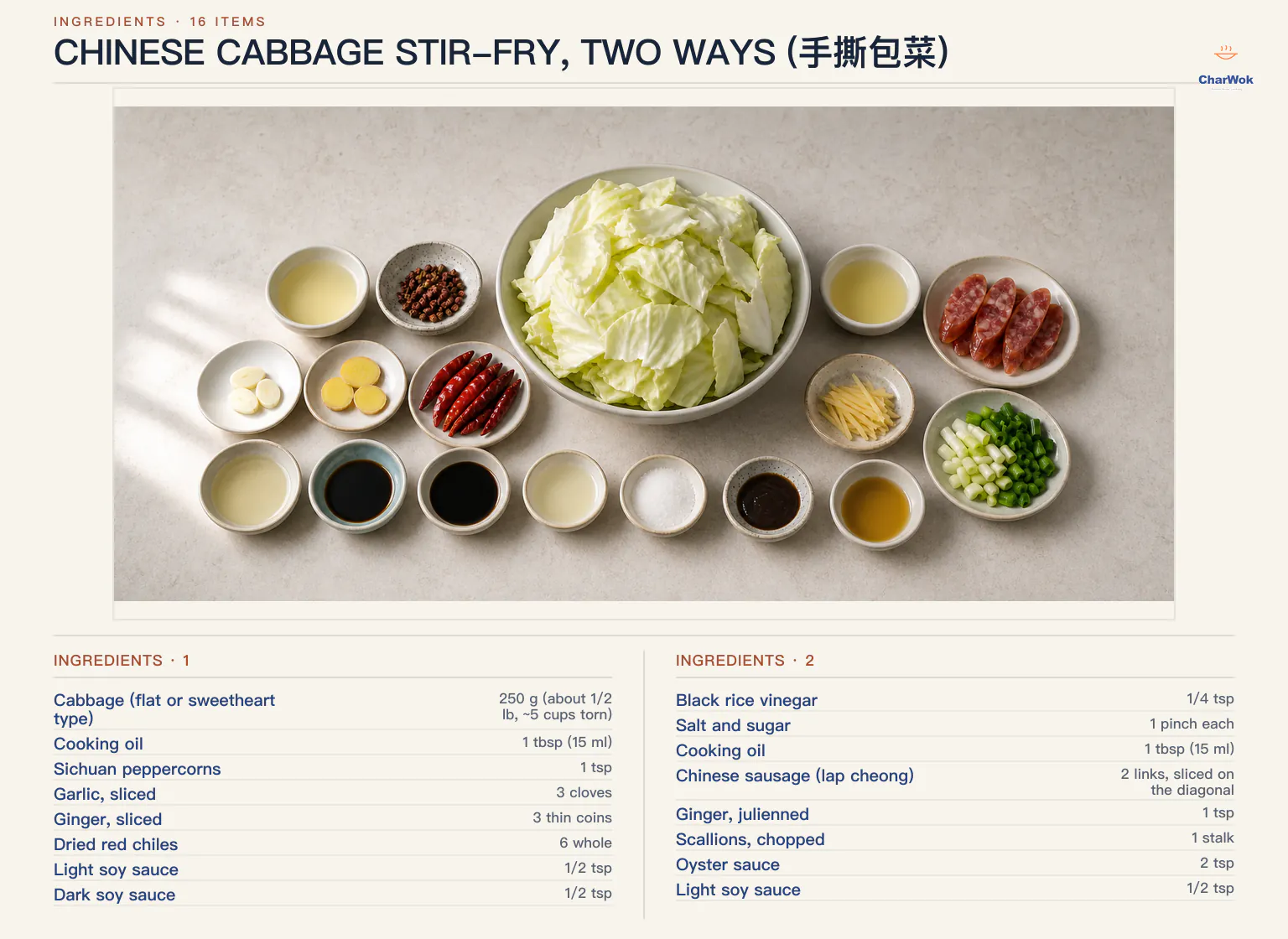
Two columns of seasonings, one shared ingredient. Pick one column per cooking session; do not run both at once unless you have two woks and four hands.
| Ingredient | Amount | Notes / substitute |
|---|---|---|
| Cabbage (flat or sweetheart type) | 250 g (about 1/2 lb, ~5 cups torn) | Torn by hand, ribs removed. Napa works but yields a softer, wetter dish. |
| Vegetarian (Sichuan-leaning) version | ||
| Cooking oil | 1 tbsp (15 ml) | Neutral, high-smoke-point: peanut, canola, avocado. |
| Sichuan peppercorns | 1 tsp | Red or green; toast in cold oil then scoop out (sourcing tips in the peppercorn guide). |
| Garlic, sliced | 3 cloves | Thin coins, not minced; minced burns in seconds. |
| Ginger, sliced | 3 thin coins | Smack each slice with the side of a knife to release flavor. |
| Dried red chiles | 6 whole | Er jing tiao or facing-heaven. Swap 1-2 fresh red chiles, sliced, if you lack dried. |
| Light soy sauce | 1/2 tsp | Salt and umami. Light vs. dark soy matters here. |
| Dark soy sauce | 1/2 tsp | For color only; do not increase or it turns bitter. |
| Black rice vinegar | 1/4 tsp | Chinkiang style. A few drops of black rice vinegar add depth without making it sour. |
| Salt and sugar | 1 pinch each | Sugar rounds the chile heat; salt is a final seasoning tweak. |
| Sausage (Cantonese-leaning) version | ||
| Cooking oil | 1 tbsp (15 ml) | You can drop to 2 tsp; the sausage releases its own fat. |
| Chinese sausage (lap cheong) | 2 links, sliced on the diagonal | Find it at any Chinese grocer. No lap cheong? See the pork belly swap below. |
| Ginger, julienned | 1 tsp | Fine matchsticks; they should almost melt into the oil. |
| Scallions, chopped | 1 stalk | White and pale green for the wok; save dark green to finish. |
| Oyster sauce | 2 tsp | The main seasoning; choose a brand with real oyster extract. |
| Light soy sauce | 1/2 tsp | Bumps the salt the oyster sauce lacks. |
The cook, step by step (vegetarian version)
- Set up everything within arm's reach. Torn cabbage in a bowl, aromatics on a saucer, sauces pre-measured in one small dish. Once the wok is hot you will not have ten seconds to hunt for the soy sauce. This mise en place is not optional for a 90-second dish.
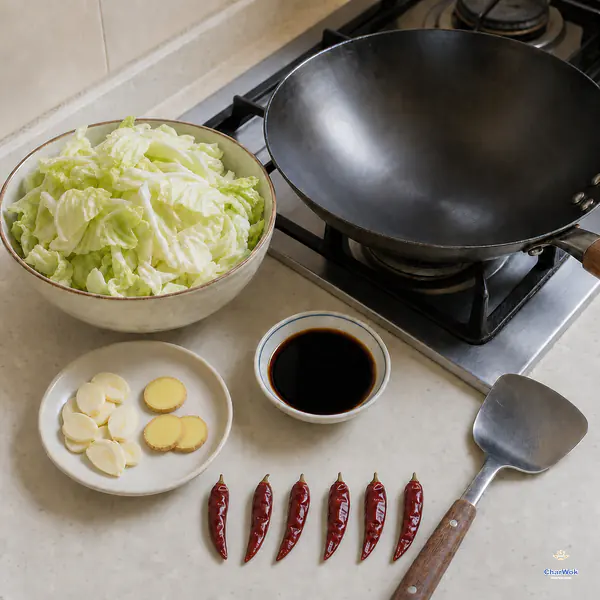
Before heating the wok, place the raw cabbage, six whole dried chillies, sliced garlic, three ginger coins, and measured soy-vinegar seasoning within immediate reach.
- Render the peppercorns in cold oil. Put the oil and whole Sichuan peppercorns into a cold wok, then set it over medium-high. Heating them gently extracts the citrusy, numbing fragrance into the fat without scorching the husks. The moment they smell intensely floral and the oil shimmers, fish them out with a spatula and discard. Burnt Sichuan peppercorn is genuinely bitter and will ruin the whole batch.
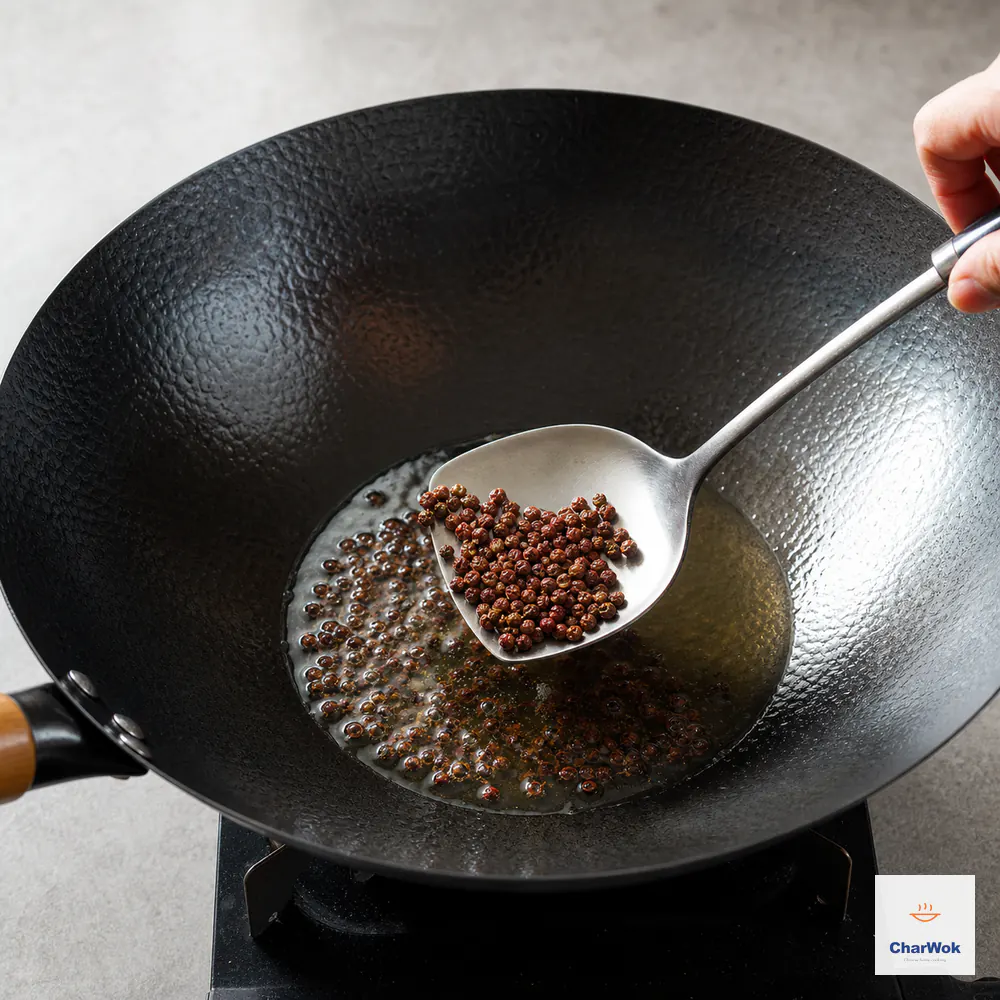
Start the peppercorns in cold oil and remove them as soon as tiny bubbles and a strong floral aroma appear, before they darken
- Crank the heat and bloom the aromatics. Turn the burner to high. Add the garlic, ginger, and dried chiles to the now-flavored oil and toss for 5 to 8 seconds, just until the garlic loses its raw edge. If the garlic starts coloring past pale gold, the pan is too hot for the next step; nudge it off the flame for a beat.
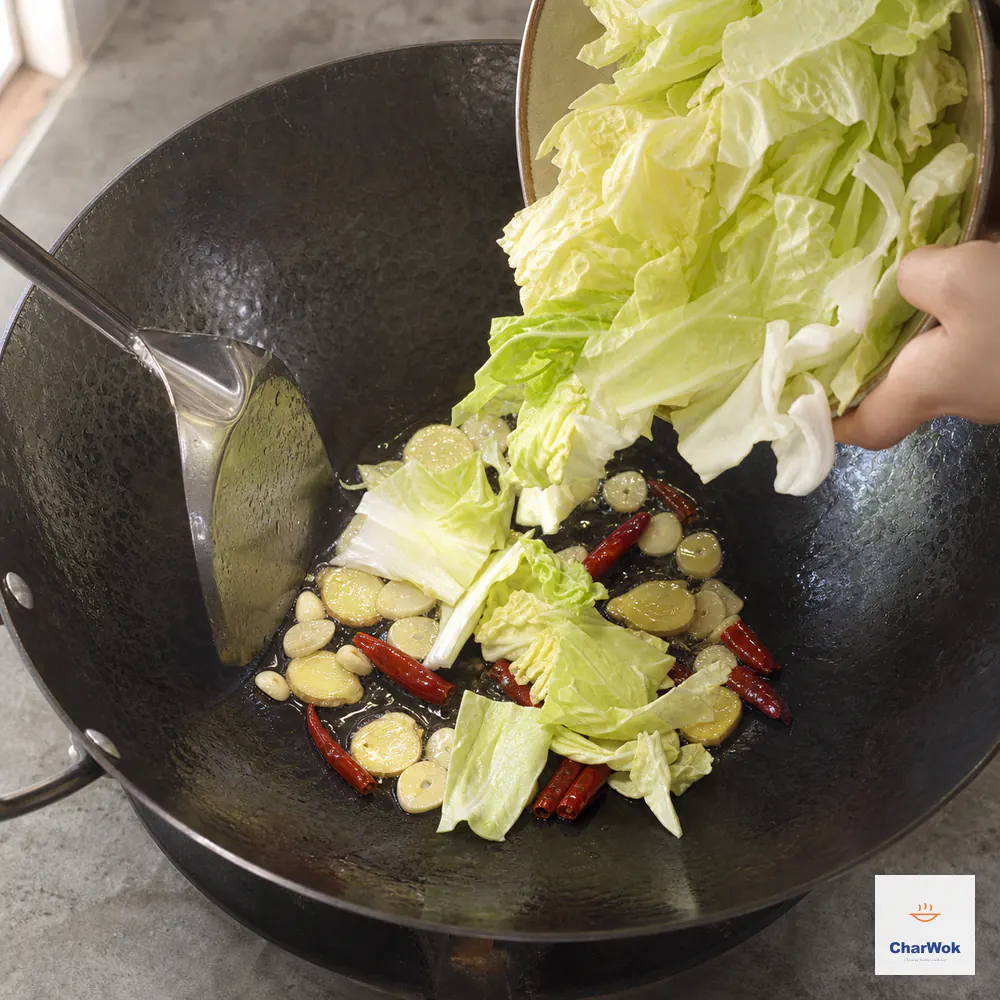
Bloom the garlic, ginger, and chillies for only a few seconds, then add the cabbage while the garlic is still pale gold
- Add the cabbage all at once and toss aggressively. Dump in the torn leaves and use a tossing or stirring motion to coat every piece in the aromatic oil. The leaves will look impossibly bulky for the first 20 seconds, then collapse dramatically. Keep them moving so the edges char a little while the centers barely wilt. This is the 60-second window where the texture is decided.
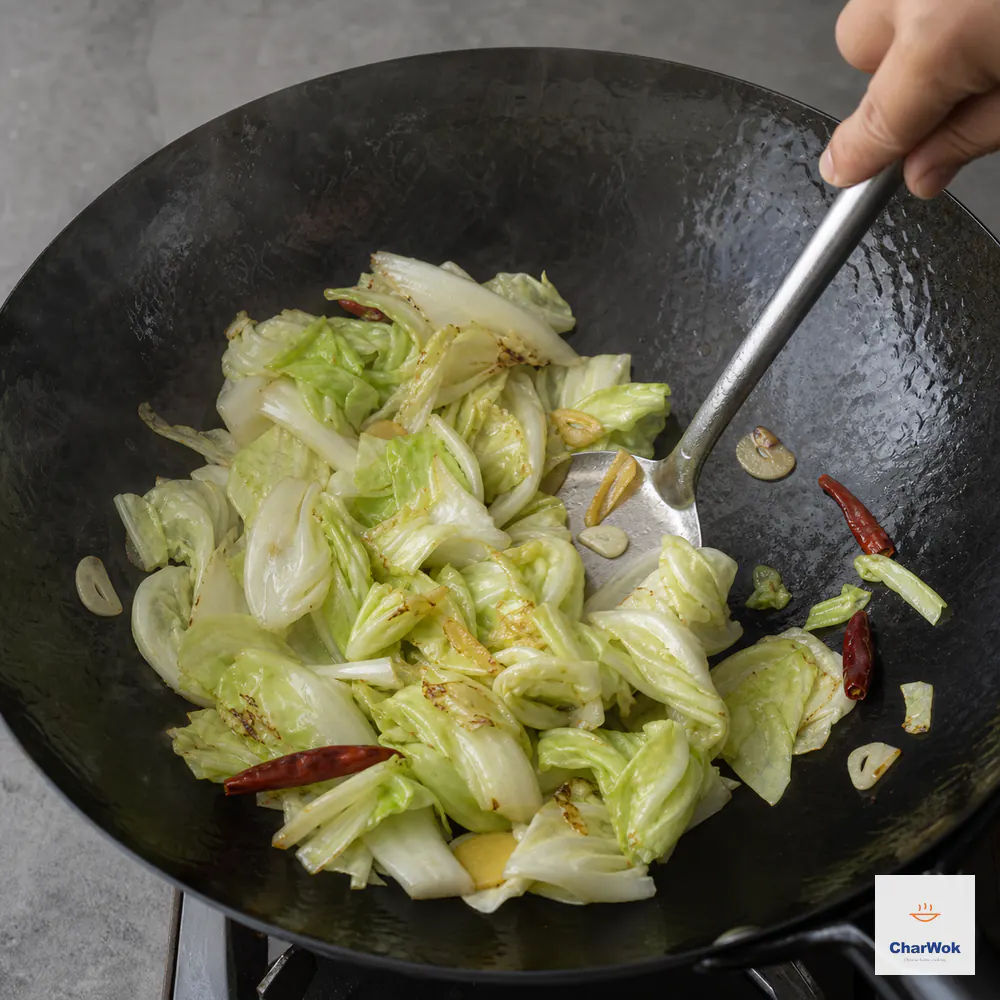
Keep the cabbage moving over high heat for the brief dehydration window, stopping while the centres remain crisp and only the edges char
- Season only after the leaves wilt. Once the cabbage has shrunk by roughly half and the edges begin to brown, add the light soy, dark soy, black rice vinegar, salt, and sugar together. Adding liquid earlier would steam the leaves; adding it now lets it glaze them. The dark soy is for color, so resist the urge to pour more.
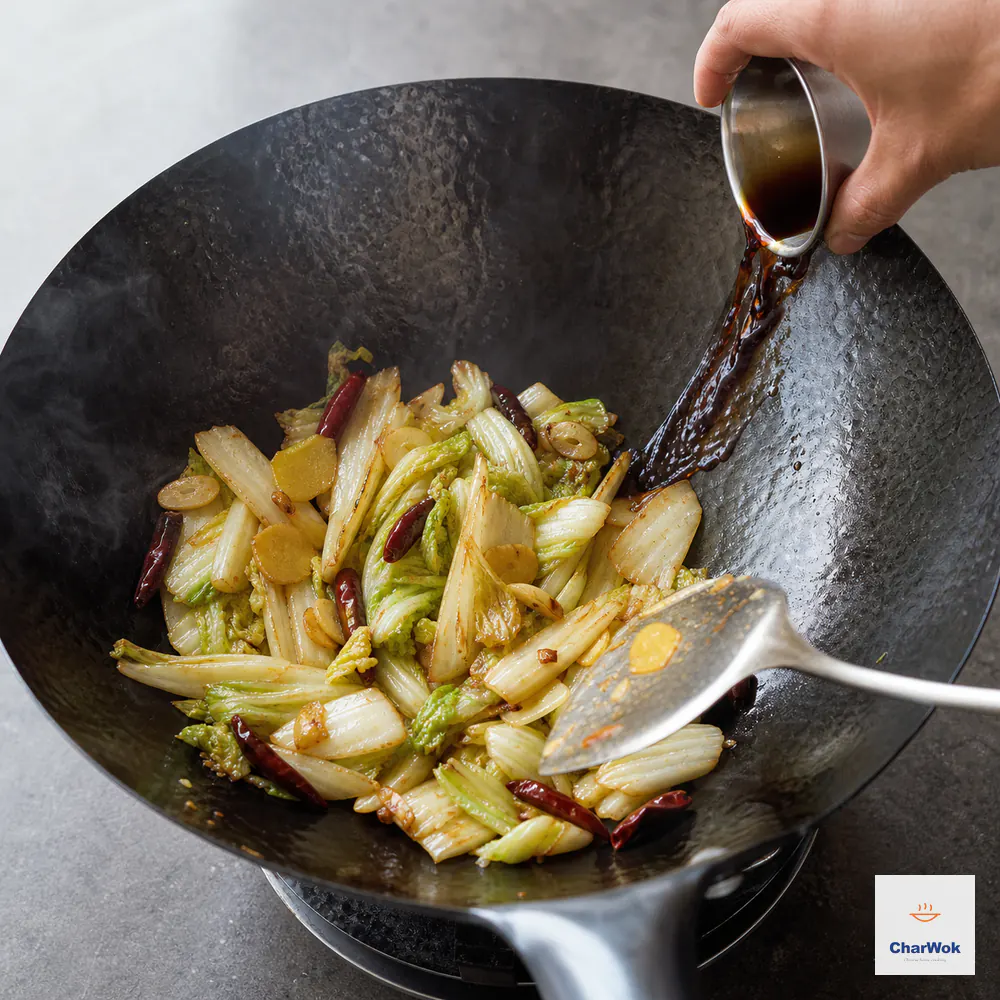
Wait until the cabbage wilts and browns at the edges, then pour the measured seasoning down the hot wok rim so it glazes without steaming
- Finish for 20 seconds and out.Toss to coat, then immediately slide everything onto a serving plate. Residual heat in the leaves keeps cooking them, so undercook by a hair in the pan and let the plate carry it the rest of the way.
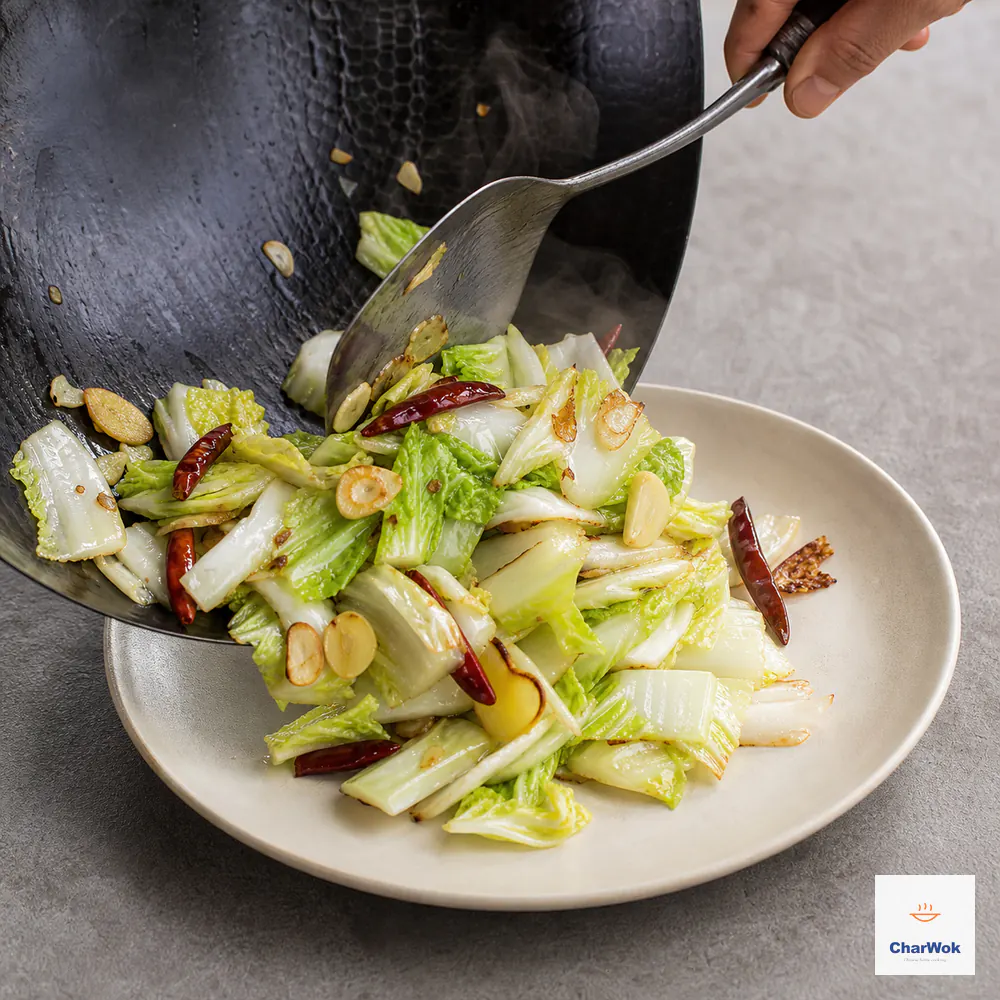
After the final 20-second toss, plate immediately while the cabbage is still slightly underdone for carryover heat
The cook, step by step (sausage version)
- Heat the empty wok until it just smokes. This is the classic hot wok, cold oil move: you preheat the metal so that when the oil and food go in, the pan has enough stored heat to recover fast. Wait for a faint wisp of smoke rising from the steel.
- Add oil, then sausage and ginger immediately. Pour in the oil and at once add the sliced lap cheong and julienned ginger. The sausage needs a head start on the cabbage so its fat renders and its sugars caramelize. You will see the slices curl at the edges and the oil turn orange-red; that colored fat is the flavor base for the whole dish. If you love that cured-sausage character, the Cantonese sausage rice pot uses it the same way.
- In with the cabbage and scallion whites. Once the sausage edges curl, add the torn cabbage and the white and pale-green scallion pieces. Toss to coat in the rendered fat. The leaves pick up a rosy tint and a sweet, smoky back-note that the vegetarian version cannot reach.
- Season when wilted. When the leaves collapse and the edges brown, add the oyster sauce and light soy. The oyster sauce is thick and wants to clump, so toss vigorously to thin it in the pan juices and coat evenly.
- 20-second finish, then plate and top with scallion greens.Pull off the heat, slide onto a plate, and scatter the dark green scallion tops for color and a sharp raw bite.
When things go wrong
Most failures here share one cause: too much water in the pan. Here is how to read the pan and rescue the dish.
- The cabbage steams instead of charring. Either the wok was not hot enough, you overloaded it (more than about 300 g in a home-sized wok drops the temperature past recovery), or the leaves were wet from washing. Dry the torn leaves in a salad spinner or on a towel, work in batches, and let the empty pan re-smoke between them.
- The garlic or ginger burns black. The aromatics went in before the oil was hot, or sat too long before the cabbage followed. Burnt garlic is acrid and cannot be hidden; start that batch over and add the aromatics last, right before the leaves.
- The dish tastes flat. Almost always under-salted, or the seasonings went in too early and got diluted by the cabbage water. Taste a leaf at the wilt stage before seasoning; the sauce should read just slightly too salty on its own, because the bland leaves will absorb it.
- The leaves collapse to mush. You cooked 30 seconds too long, or covered the pan (never cover a stir-fry). There is no fix; next time pull the pan off the heat the instant the sauce coats the leaves.
- Sichuan peppercorn tastes bitter, not tingly. The husks scorched. Next time start them in cold oil over medium-high and pull them the second the aroma peaks.
Variations and pairings
Once the technique is in your hands, the cabbage is a canvas. A few directions I cook regularly:
- Pork belly instead of sausage. Slice 80 g of skinless pork belly thin and marinate 10 minutes in a splash of light soy, a teaspoon of Shaoxing rice wine, a pinch of white pepper, a pinch of salt, and 1/2 tsp cornstarch. Render it like the sausage before the cabbage goes in. This is closer to the small-portion-meat-in-vegetables instinct you see in dishes like Hunan pork stir-fry.
- Add dried shrimp or fermented black beans. A teaspoon of either, bloomed in the oil with the aromatics, gives the vegetarian version a savory depth that partly stands in for meat.
- Throw in a handful of wood-ear mushroom or shredded carrot in the last 30 seconds for color and a different crunch.
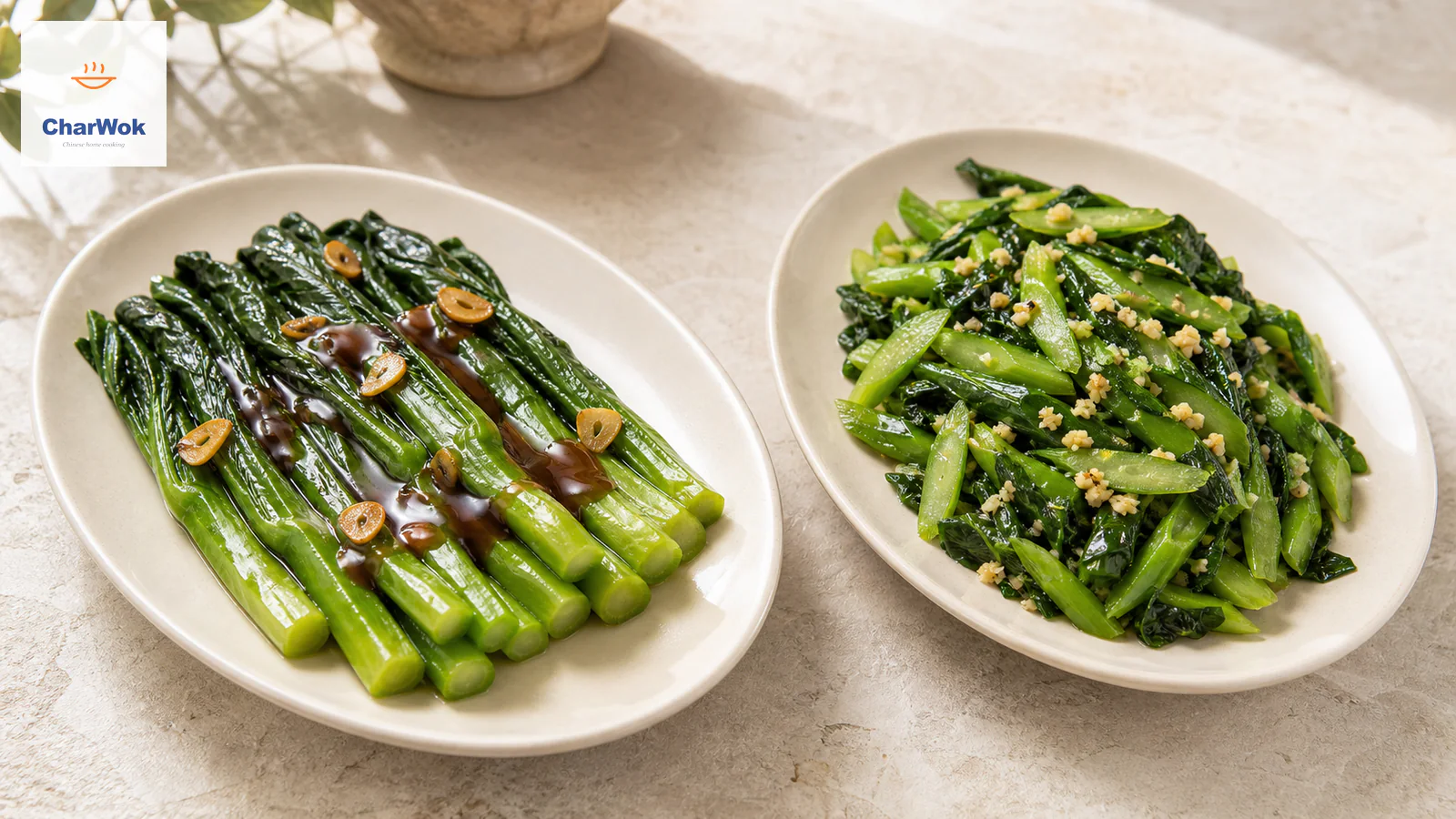
For the rest of the meal, this cabbage sits comfortably next to almost anything saucy. It cuts the richness of a braised meat and stands up to a spicy main. A few sides that share its quick, high-heat logic: garlic bok choy, Sichuan dry-fried green beans, dry pot cauliflower, or a cold plate of smashed cucumber salad to balance the heat. If you want a second vegetable with garlic in the same meal, broccoli with garlic sauce or king oyster mushrooms in garlic sauce keep the flavor family without repeating the texture.
On its own with rice it is a perfectly respectable light dinner; pair it with a bowl of lettuce in oyster sauce and you have two vegetable plates that share a sauce philosophy but contrast in crunch.
Equipment: do you need a wok?
A wok makes this easier because its deep curve contains the bulky raw leaves while you toss, and its thin carbon steel holds and recovers heat fast. I cook mine in a 14-inch carbon steel wok and would not trade it for this dish. If you do not own one, a 12-inch cast-iron or carbon-steel skillet works, with two adjustments: preheat it longer so the metal is fully soaked with heat, and stir with a spatula instead of tossing, since the shallow sides will throw leaves onto your stove.
Nonstick is the wrong tool. It cannot reach the temperature this dish wants, and the browning that makes the version taste restaurant-quality simply will not happen.
Storage and reheating
This is a dish to cook and eat immediately. Leftovers keep in the fridge for a day but lose the crispness that is the entire point; reheated cabbage is soft, slightly gray, and fine only folded into fried rice or noodles the next day. If you must prep ahead, wash and tear the leaves and stash them in a sealed bag up to two days, then cook fresh.
Frequently asked questions
A handful of questions that come up every time I teach this dish.
Can I use regular green cabbage?
Yes, with a caveat. Slice out the thick white rib from every leaf, salt the torn pieces lightly and let them sit 10 minutes, then squeeze out the excess water before stir-frying. This pre-salting pulls out the moisture that would otherwise steam the dish.
Why remove the Sichuan peppercorns?
Biting into a whole husk is unpleasantly gritty and overly numbing. You are using them to perfume the oil, not to eat them whole. If you like the tingle, leave them in, but warn your guests.
Is there a vegetarian substitute for oyster sauce?
Vegetarian oyster sauce, made from mushroom extract, is a near one-to-one swap and is widely stocked. Failing that, a mix of two teaspoons mushroom soy sauce and a pinch of sugar gets close.
My wok is not seasoned yet. Can I still make this?
Yes, but expect sticking. Use a touch more oil and a spatula rather than tossing, and accept that the first few batches on a new wok will not brown as deeply. The pan only gets better.
The one thing to remember
If you forget everything else, hold on to this: tear the leaves, dry them, and cook them hotter and faster than feels comfortable. The instinct to lower the heat so nothing burns is exactly what produces the limp, watery plate you are trying to avoid. Trust the pan, keep everything moving, and pull the dish when the leaves still look slightly underdone. They will finish on the plate.