The first few times I made braised shiitake over baby bok choy, the mushrooms came out tasty but thin. The sauce pooled at the bottom of the plate and the greens collapsed into a sad yellow heap underneath. The dish looked like the restaurant version and tasted nothing like it. It took me a while to understand that the gap was not the ingredients. It was three things I had skipped: a slow cold-water soak, a fast blanch in heavily salted water, and a deliberate reduction before the cornstarch went in.
Once those clicks land, Xiang Gu Cai Xin (香菇菜心, literally "shiitake over greens") becomes one of the most reliable vegetable sides in the Chinese home kitchen. It is a Cantonese banquet and dim sum staple that somehow earns a place on everyday tables because it turns two cheap things into something that eats like a main. The mushrooms do the heavy lifting on umami; the greens are mostly there for crunch and to catch the sauce.
At a glance: cold-soak 50 g dried shiitake overnight (8–12 hours), blanch 400 g baby bok choy for 40 seconds in well-salted water, then braise the mushrooms uncovered in 250 ml of the soaking liquid for 5 minutes before thickening. The make-or-break move is reducing the braising liquid before the slurry, never after. Serves 4 as a side.
What this dish actually is
Cai xin ("vegetable heart") is the tender flowering-stem type of Chinese greens, and in restaurants the dish is usually built on it. At home in the US, baby bok choy is the closest thing you can buy reliably, and it behaves better on the plate anyway: the white stems hold their crunch under hot sauce longer than the slender cai xin stems do. So I use baby bok choy, halved lengthwise so the leaves and stems stay attached and pretty.
The mushroom side of the equation is non-negotiable. This dish only works with dried shiitake. Fresh shiitake are fine in a stir-fry, but they carry roughly a tenth of the free glutamate that develops during the slow drying and rehydration process, and they will not give you that dark, meaty, almost-beefy broth to braise in. If you want the full picture of why dried shiitake behaves the way it does, my shiitake mushroom guide goes deep on grades, sourcing, and soaking theory.
Ingredients
Ingredients at a glance
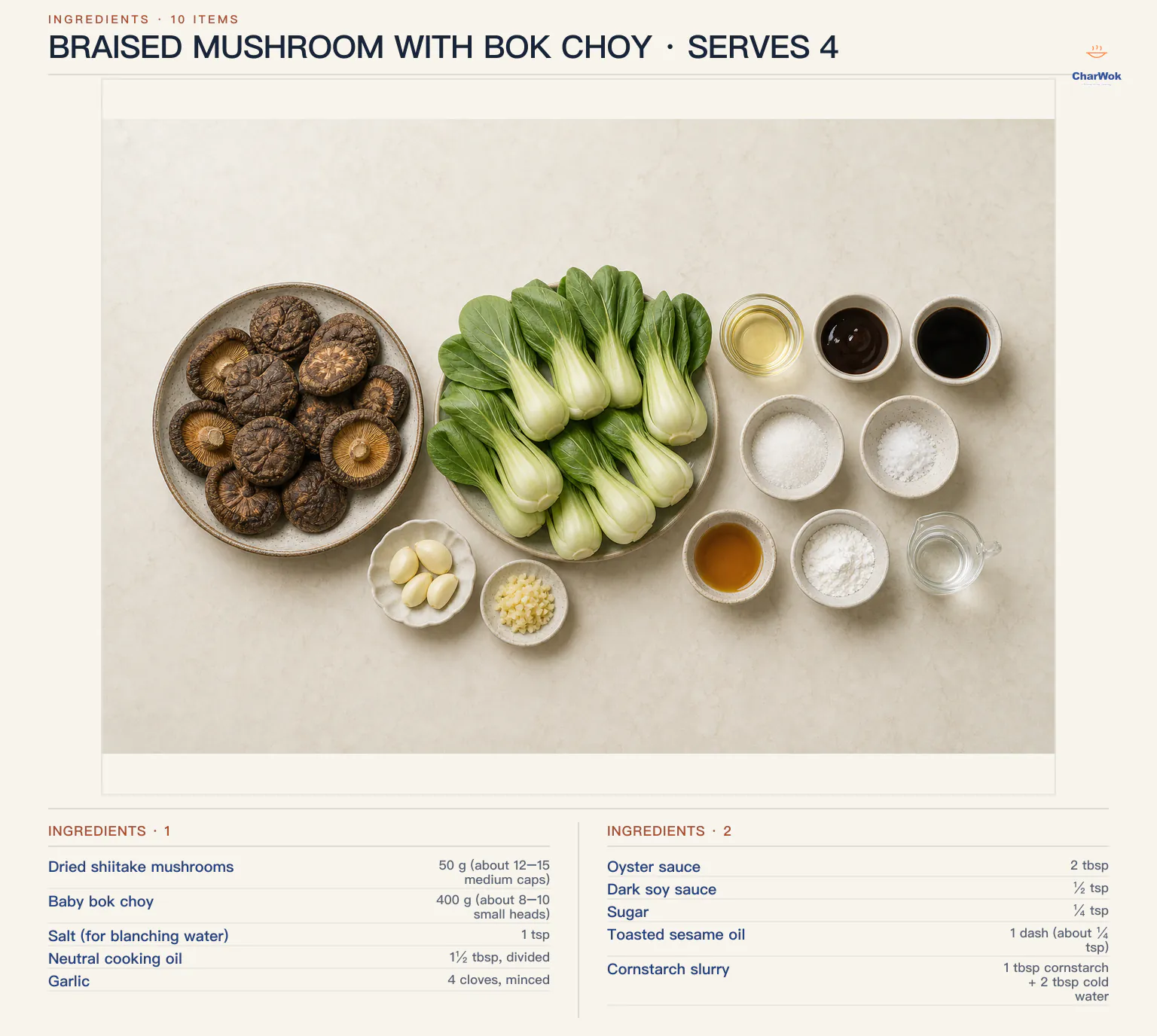
| Ingredient | Amount | Notes / substitute |
|---|---|---|
| Dried shiitake mushrooms | 50 g (about 12–15 medium caps) | Cold-soaked overnight for best flavor. Don't use fresh here. |
| Baby bok choy | 400 g (about 8–10 small heads) | Regular bok choy or choy sum work; halve larger heads. |
| Salt (for blanching water) | 1 tsp | Plus a large pot of water; the water should taste like the sea. |
| Neutral cooking oil | 1½ tbsp, divided | Grapeseed, canola, or avocado. Half tsp for the blanch, rest for the wok. |
| Garlic | 4 cloves, minced | Fine mince so it perfumes the oil without burning. |
| Oyster sauce | 2 tbsp | For vegan, use vegetarian mushroom stir-fry sauce. |
| Dark soy sauce | ½ tsp | For color, not salt. See my light vs. dark soy sauce breakdown. |
| Sugar | ¼ tsp | Rounds the salt; do not omit. |
| Toasted sesame oil | 1 dash (about ¼ tsp) | Added off-heat at the end so the aroma survives. |
| Cornstarch slurry | 1 tbsp cornstarch + 2 tbsp cold water | Stir right before pouring; it separates as it sits. |
The method, and why each step matters
- Rehydrate the mushrooms cold, not hot. Put the 50 g of dried shiitake in a bowl with 500 ml (about 2 cups) of cold water and leave them 8–12 hours in the fridge. Cold water extracts flavor slowly and keeps the caps firm and plump. Hot water gets you there in about an hour for small caps, but the texture turns mushy and the broth tastes flatter. I only reach for the hot method when I forgot to soak the night before. Once plump, lift the mushrooms out, squeeze them gently over the bowl to save every drop of liquid, then snip off the tough stems. Save every drop of that soaking water, it is the base of the sauce.
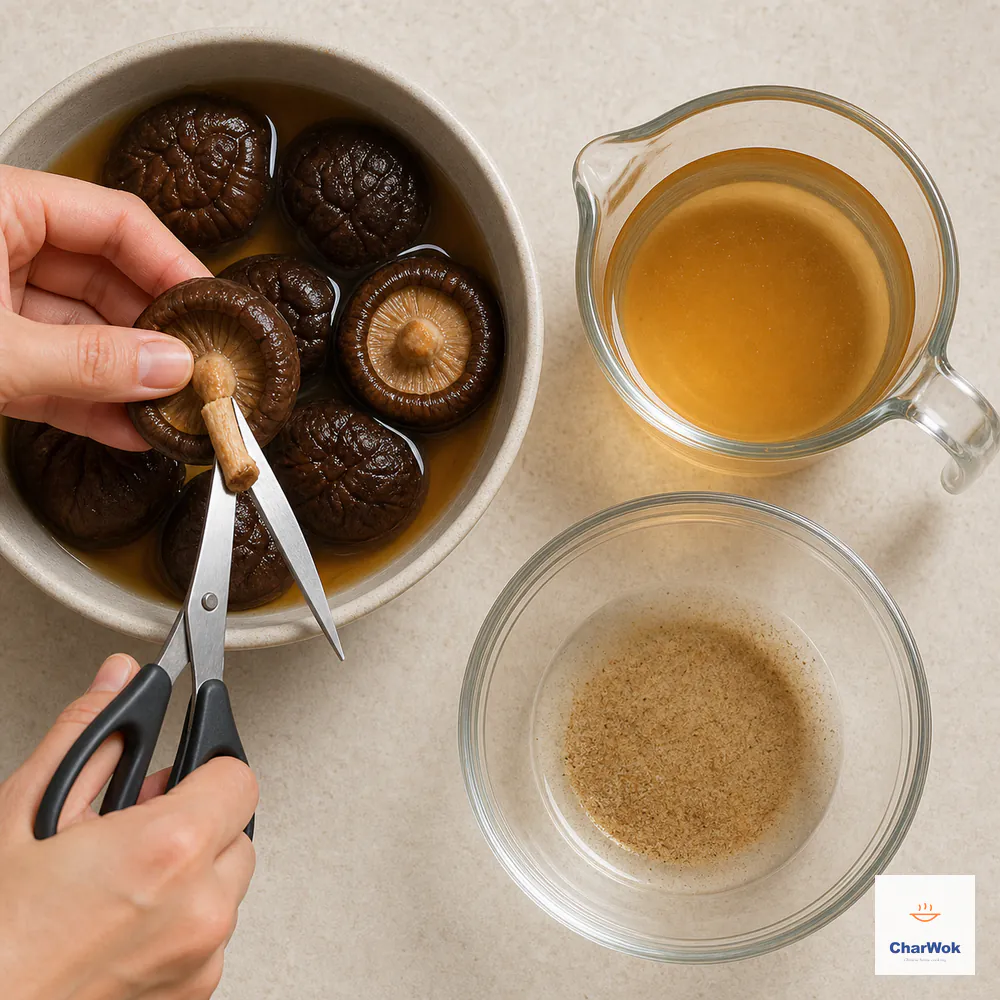
Cold-soak the dried caps until plump, squeeze gently, trim the tough stems, and reserve only the clear upper liquid so grit never reaches the sauce.
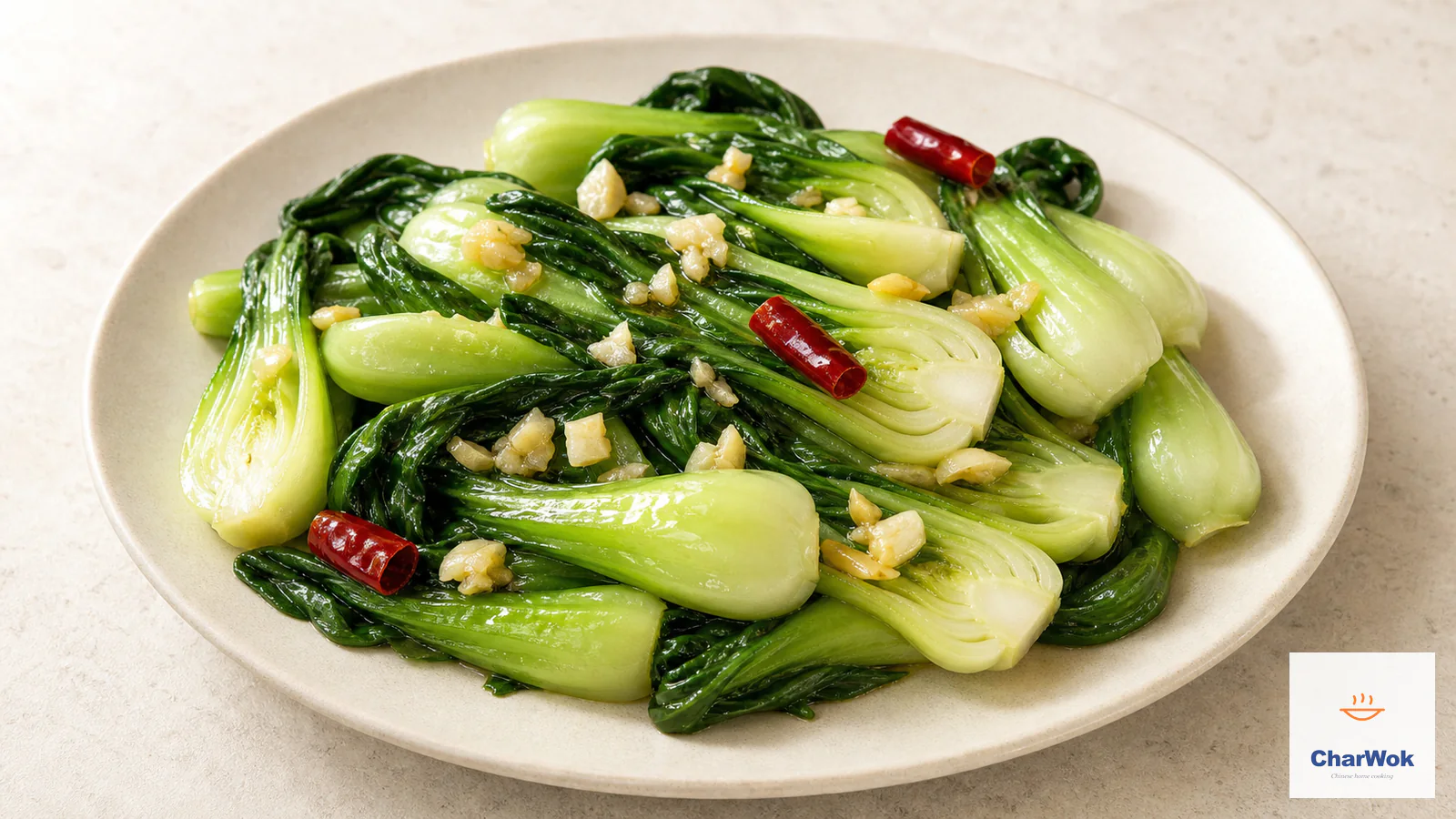
- Wash the bok choy whole, then halve. Rinse the heads under the tap before cutting so grit does not get pushed into the cut surfaces. Halve each head lengthwise through the root end so the leaves stay attached to the stem and the presentation holds together.
- Blanch hard and fast in heavily salted water. Bring a full pot of water to a rolling boil, add the 1 tsp salt and ½ tbsp oil, drop in the bok choy, and pull it out at 40 seconds. The salt seasons from the inside and the thin oil film gives the leaves a slight sheen that reads as "freshly cooked" rather than "leftover." Anything past a minute and the stems go limp and the leaves yellow. Drain cut-side down in a colander so they stop cooking in their own steam.
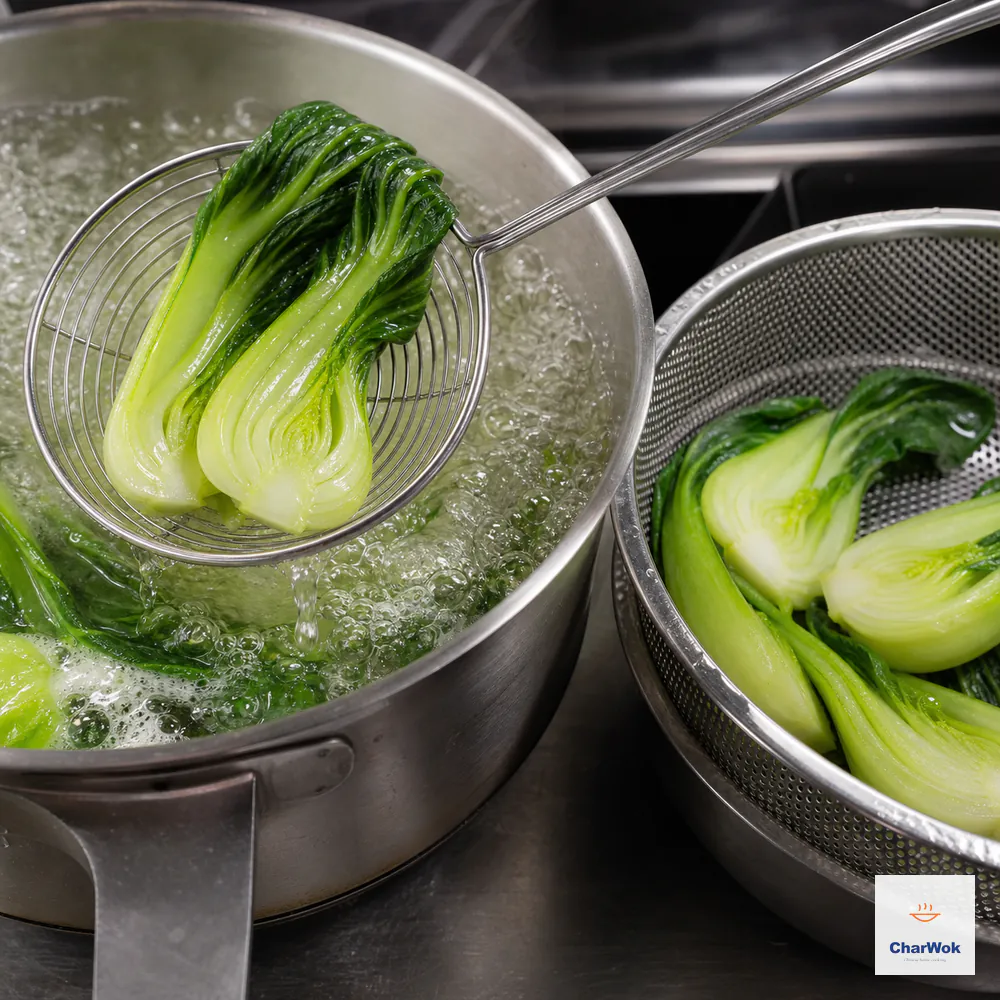
Blanch in fully boiling salted water with a little oil for only 40 seconds, then drain cut-side down before the stems soften or the leaves yellow.
- Bloom the garlic, then sear the mushrooms. Heat a wok (or a wide skillet) over medium-high, add the remaining 1 tbsp oil, and the garlic. As soon as it smells garlick but before it colors, add the drained mushrooms and stir-fry about 20 seconds. This brief sear drives off surface moisture so the mushrooms absorb sauce later instead of weeping into it.
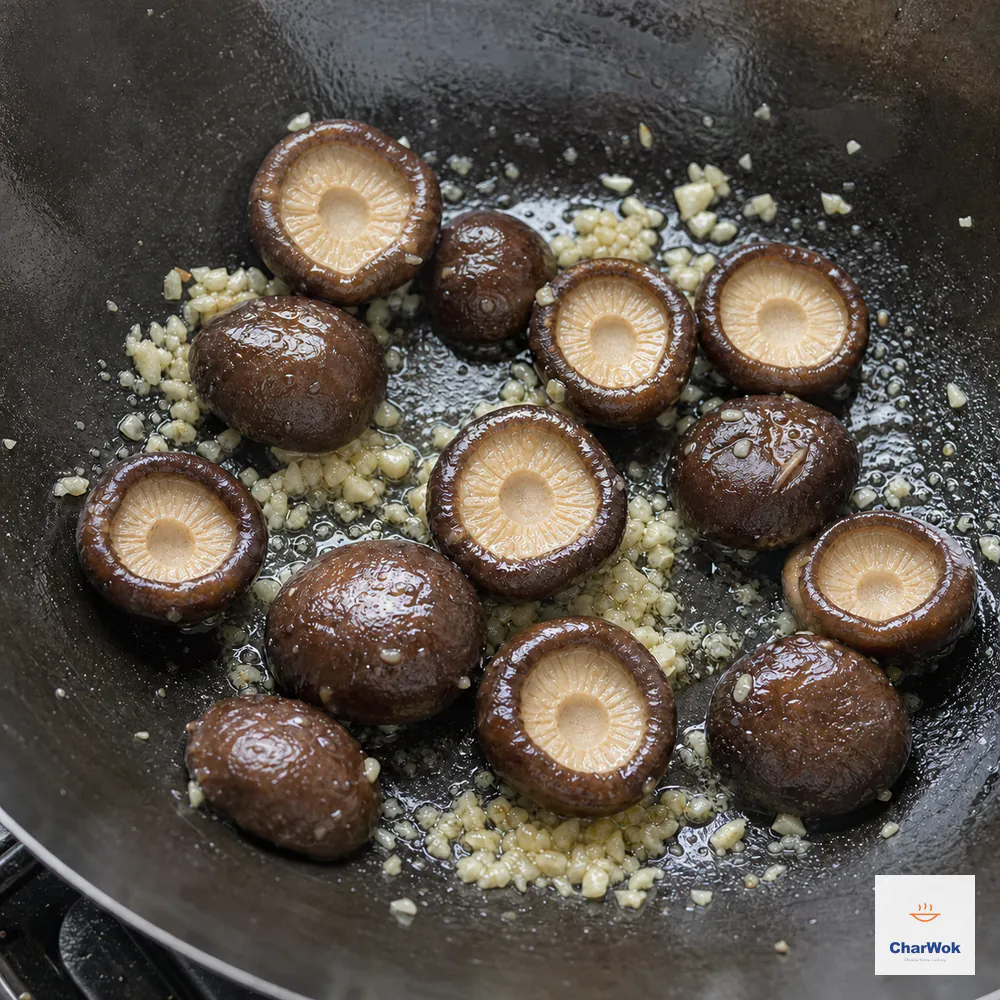
Bloom the garlic only until fragrant and still pale, then stir-fry the drained mushrooms for about 20 seconds to drive off surface moisture.
- Deglaze with the soaking liquid and season. Slowly pour in 250 ml (1 cup) of the mushroom water, leaving the sandy sediment in the bowl. Bring it to a boil, then add the oyster sauce, dark soy sauce, and sugar. Reduce the heat to medium-low and simmer uncovered for about 5 minutes. Uncovered matters: you want some evaporation so the flavor concentrates. A lid traps steam and dilutes the finished sauce.
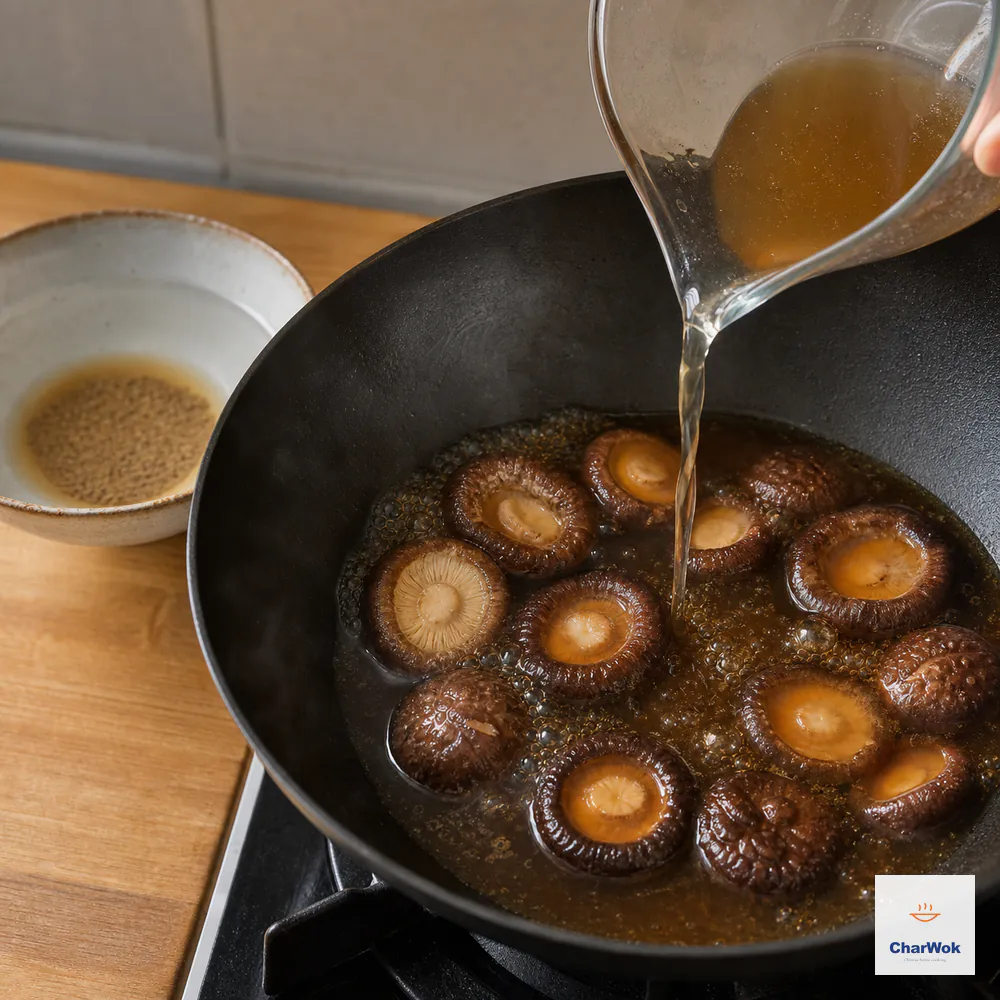
Pour 250 ml of clear soaking liquid slowly, leave the sediment behind, season, and simmer uncovered over medium-low heat for about 5 minutes.
- Thicken last, off the main heat. Stir the slurry until smooth, pour it in, and stir constantly while the sauce returns to a bare simmer. It should coat a spatula and cling to the mushrooms in a glossy sheet. Kill the heat, add the sesame oil, and stir. Finishing the sesame oil off-heat keeps its volatile aromatics intact; if it goes in over flame, you cook most of it away.
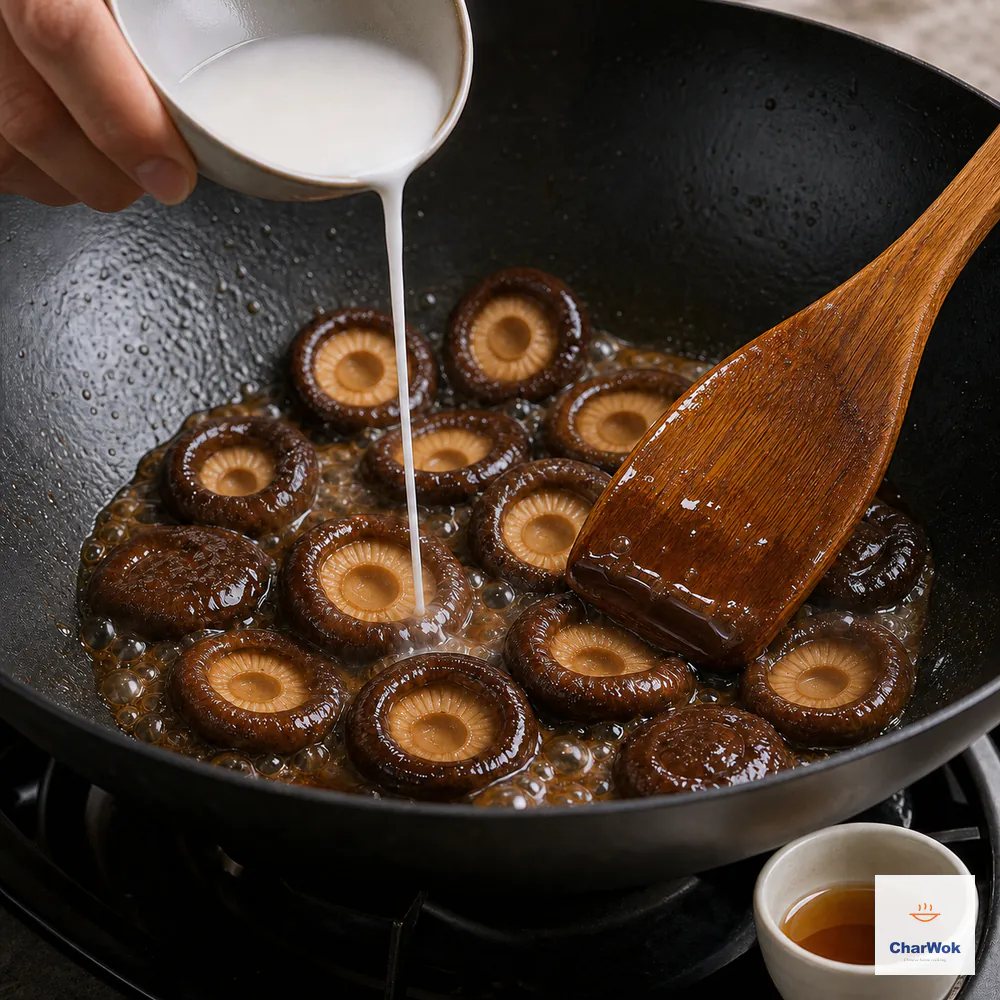
Re-stir the slurry, pour while stirring, and stop when the translucent sauce coats the spatula; finish with the sesame oil off the main heat.
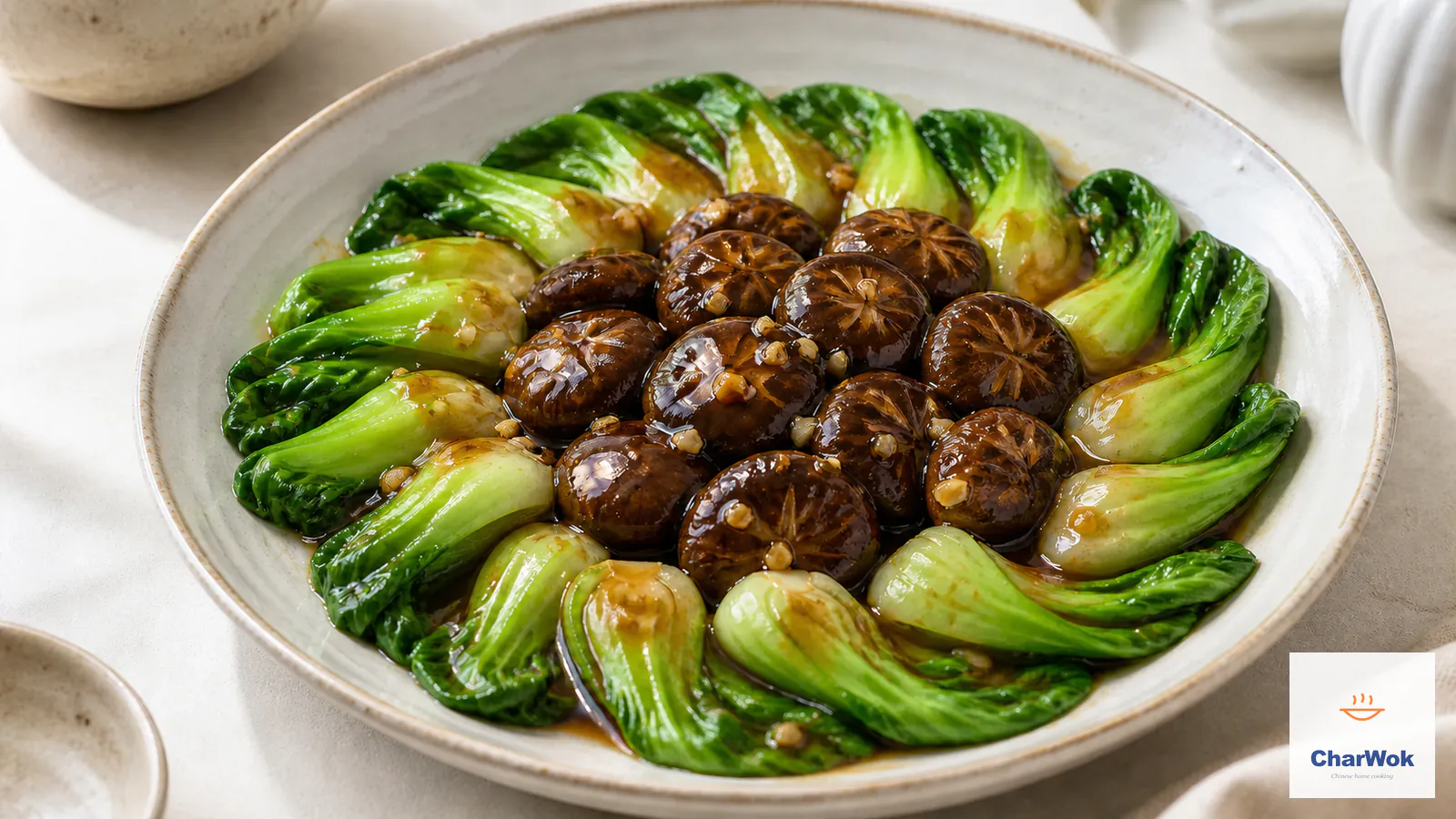
- Plate greens first, sauce second. Arrange the drained bok choy cut-side up on a serving plate and spoon the mushrooms and sauce over the top so the sauce runs down into the stems. Serve immediately over steamed jasmine rice.
When it goes wrong (and how to fix it)
I have ruined this dish in most of the ways it can be ruined, so here is the shortlist.
- Mushrooms are bland and rubbery. Almost always a hot-water soak. Switch to cold overnight and the difference is immediate. Also check that you trimmed the stems, they stay fibrous no matter how long you cook.
- Sauce is thin and watery even after the slurry. You did not reduce enough before thickening. Cornstarch thickens what is there; it does not concentrate flavor. Reduce the liquid by about a third first, then thicken. If the sauce is already on the plate and too thin, pour it back into the wok and reduce.
- Sauce turns gloppy or clumps. The slurry separated, or you poured it into a too-hot wok. Stir the slurry right before adding, pour it in a thin stream while stirring, and never let the sauce boil hard after thickening or it thins back out.
- Bok choy is soggy and yellow. Over-blanched or left to steam in the colander. Shock them in ice water if you are not plating within a couple of minutes. For a weeknight side I just drain them very well and plate immediately.
- Sauce tastes one-dimensional. You probably skipped the sugar. That quarter teaspoon is not for sweetness, it is what makes the salt read as savory instead of harsh. White pepper, a few drops of Shaoxing wine added with the garlic, or a tiny pinch of chicken bouillon also help if your oyster sauce is a thin brand.
Variations and pairings
The bones of this recipe, garlic, oyster sauce, dark soy, a cornstarch finish, are a template that travels. A few directions I cook often:
- Swap the greens. Choy sum, gai lan (Chinese broccoli, see two ways to cook it), or even lettuce in oyster sauce take the same sauce beautifully. Blanch times differ, so adjust.
- Swap the mushrooms. If you cannot find good dried shiitake, king oyster mushrooms sliced into planks are a credible stand-in, chewier but meaty. Use vegetable stock instead of soaking water.
- Make it a meal. Plate the dish over rice alongside a protein. It is classic next to soy sauce chicken, char siu pork, or black pepper beef. For a vegan spread, pair it with mapo tofu and call the meal done.
- Add the shiitake elsewhere. Leftover rehydrated mushrooms are gold in hot and sour soup or folded into a steamed chicken and shiitake dish the next night.
Storage and reheating
This dish is best the day it is made. If you must hold it, keep the mushrooms and sauce separate from the greens, the bok choy will not survive being stored under sauce. Refrigerate up to 2 days and reheat the mushroom mixture gently in a pan with a splash of water to loosen the sauce; re-blanch fresh greens when you serve. I do not recommend freezing, the cornstarch sauce breaks and the mushrooms turn spongy on thaw.
Frequently asked questions
A few things readers ask most, in plain terms.
Can I use fresh shiitake instead of dried? You can, but you lose the dish's whole point. Fresh shiitake lack the concentrated glutamate and the dark soaking liquid the sauce is built on. If you go fresh, use vegetable stock or water for the braise and expect a thinner, lighter result.
Is there a vegan version? Yes. Swap the oyster sauce for vegetarian mushroom stir-fry sauce and use a vegan sugar. Everything else, including the mushrooms and the technique, stays the same.
Why save the soaking water, and what about the grit? The soaking water holds most of the flavor that leached out of the mushrooms, so it is a free, intense broth. Pour it slowly and leave the last tablespoon in the bowl, that is where the sand settles. If you want it perfectly clear, strain it through a coffee filter.
Do I have to blanch the bok choy separately? I recommend it. Blanching seasons the greens and sets their color, and draining them first means the final sauce stays glossy instead of getting diluted by wet greens. It is one extra pot for a real payoff.