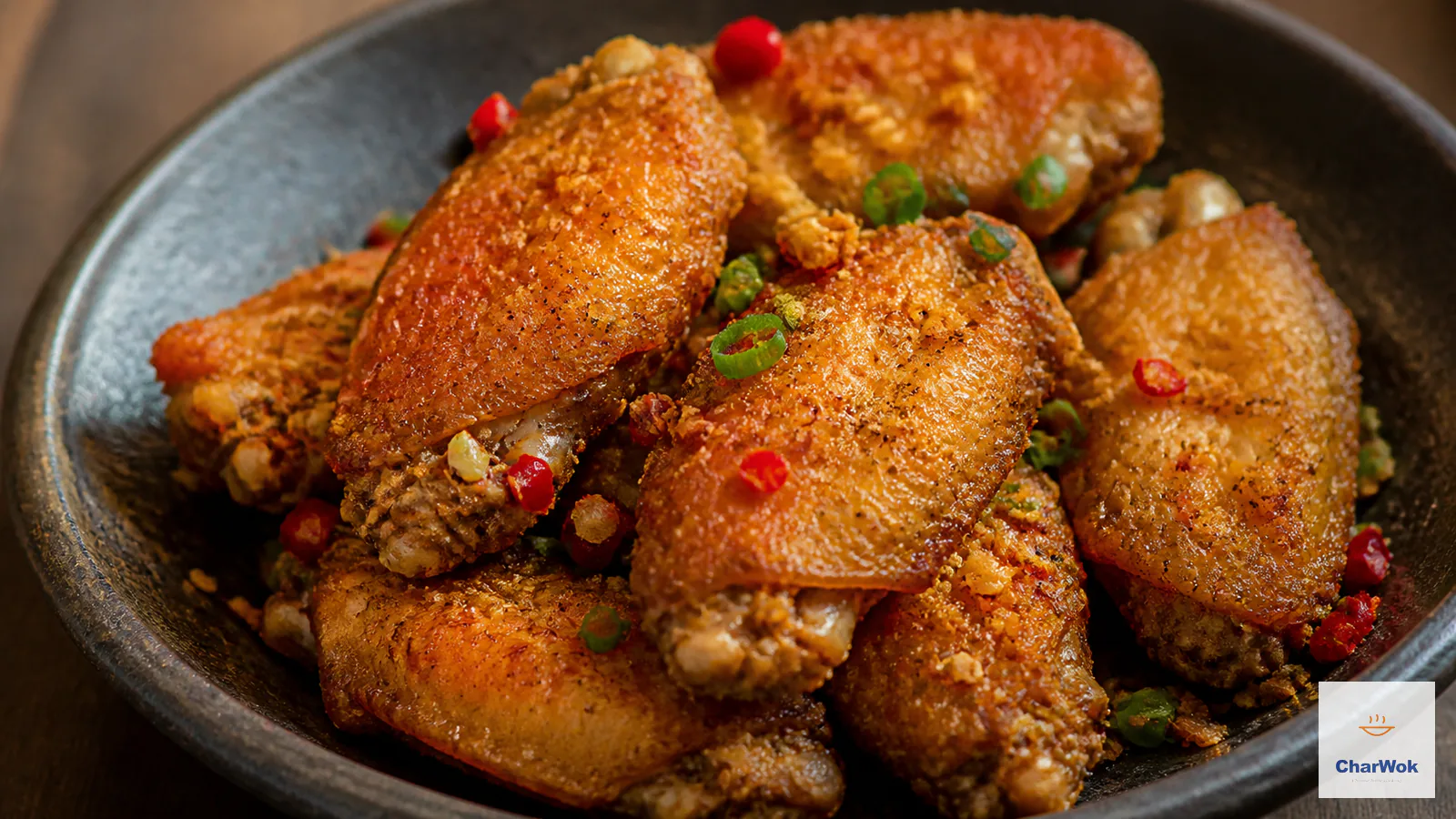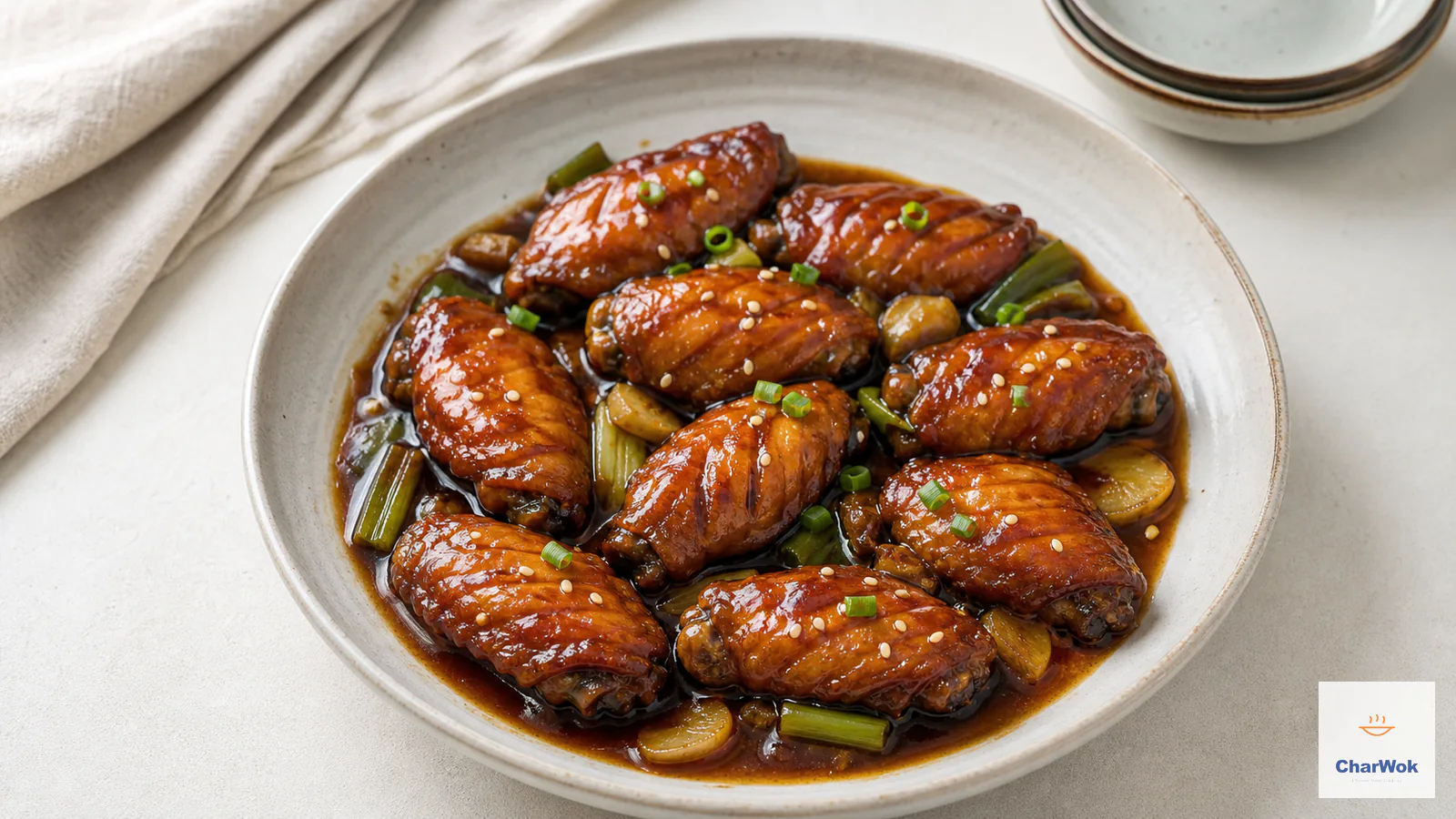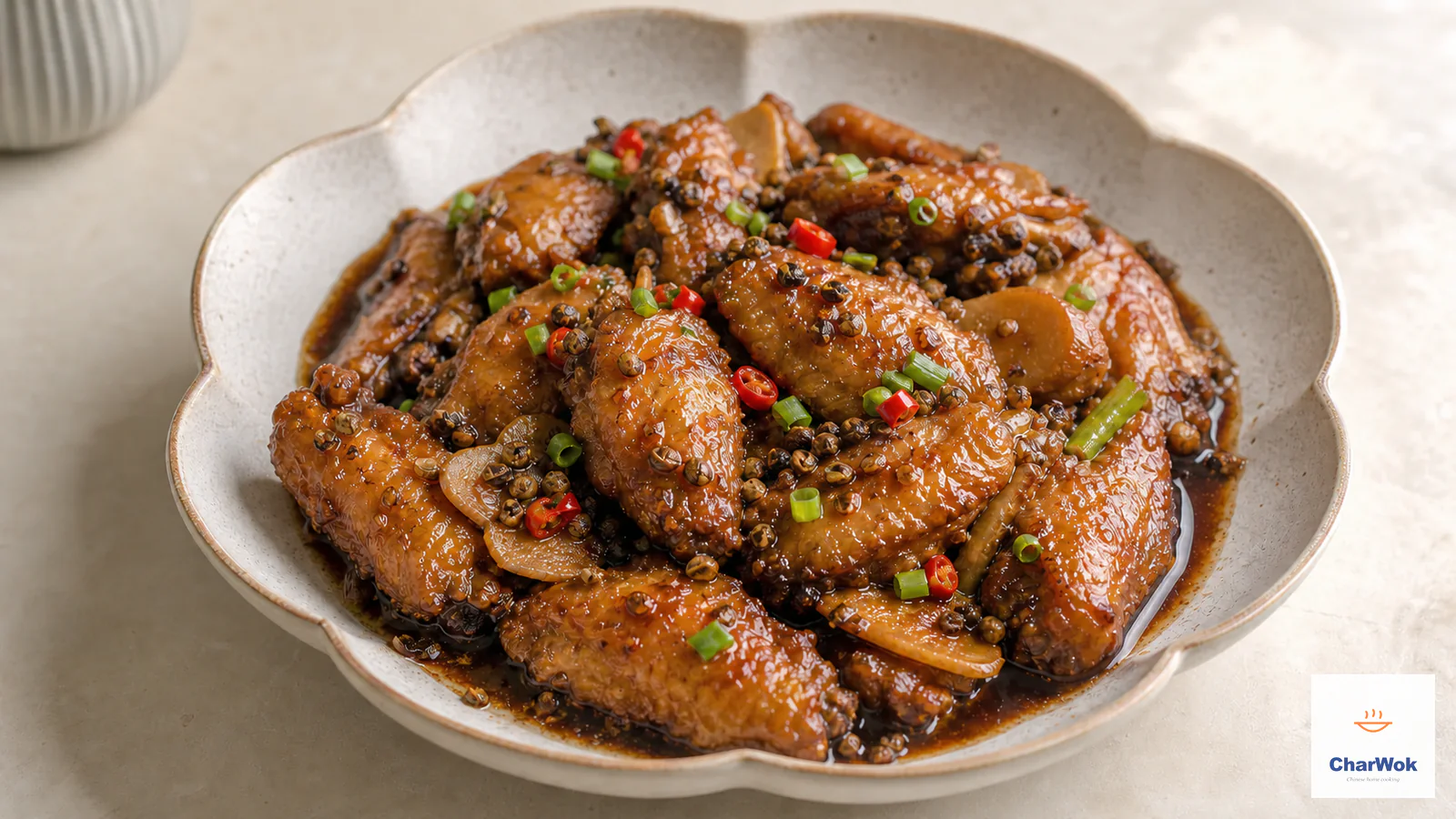
These braised chicken wings use cracked whole white peppercorns for a warm aroma without chilli heat. Browning builds the savoury base; a gentle covered simmer cooks the wings; the final uncovered stage concentrates the soy-and-ginger liquid into a glossy sauce.
Ground white pepper works well in soups and marinades, but not as a direct substitute here. Cracked whole peppercorns release their aroma gradually and are easier to remove from the heat before they scorch.
Brown 10 wings, add 300 ml water and 2 teaspoons dark soy, then simmer covered for about 25 minutes before reducing the sauce. Treat the time as a checkpoint: measure several meaty wing sections and cook every piece to 165°F (74°C).
What this dish is, and where it sits
This is a home-style lu braise, the everyday northern and Beijing family of dishes simmered briefly in a soy-based liquid rather than slow-cooked for hours in a dark master stock. Think of it as a quick cousin of red-cooked pork belly, or the wing-and-soy braise that lives next to Coca-Cola chicken wings on most family tables, minus the sugar. The peppercorns are the personality. White pepper in Chinese cooking usually arrives as a fine powder stirred into soups and marinades for a clean, slightly musty heat. Using whole berries instead is an older, restaurant-y trick: they perfume the oil the way Sichuan peppercorns perfume mapo dishes, but without the numbing bite, and they soften during the braise until you can almost chew them.
Browning the skin before adding liquid develops flavours that simmering alone cannot provide. Pat the wings dry and give them enough room in the pan; crowded, wet pieces steam instead of browning.
Ingredients
Ingredients at a glance
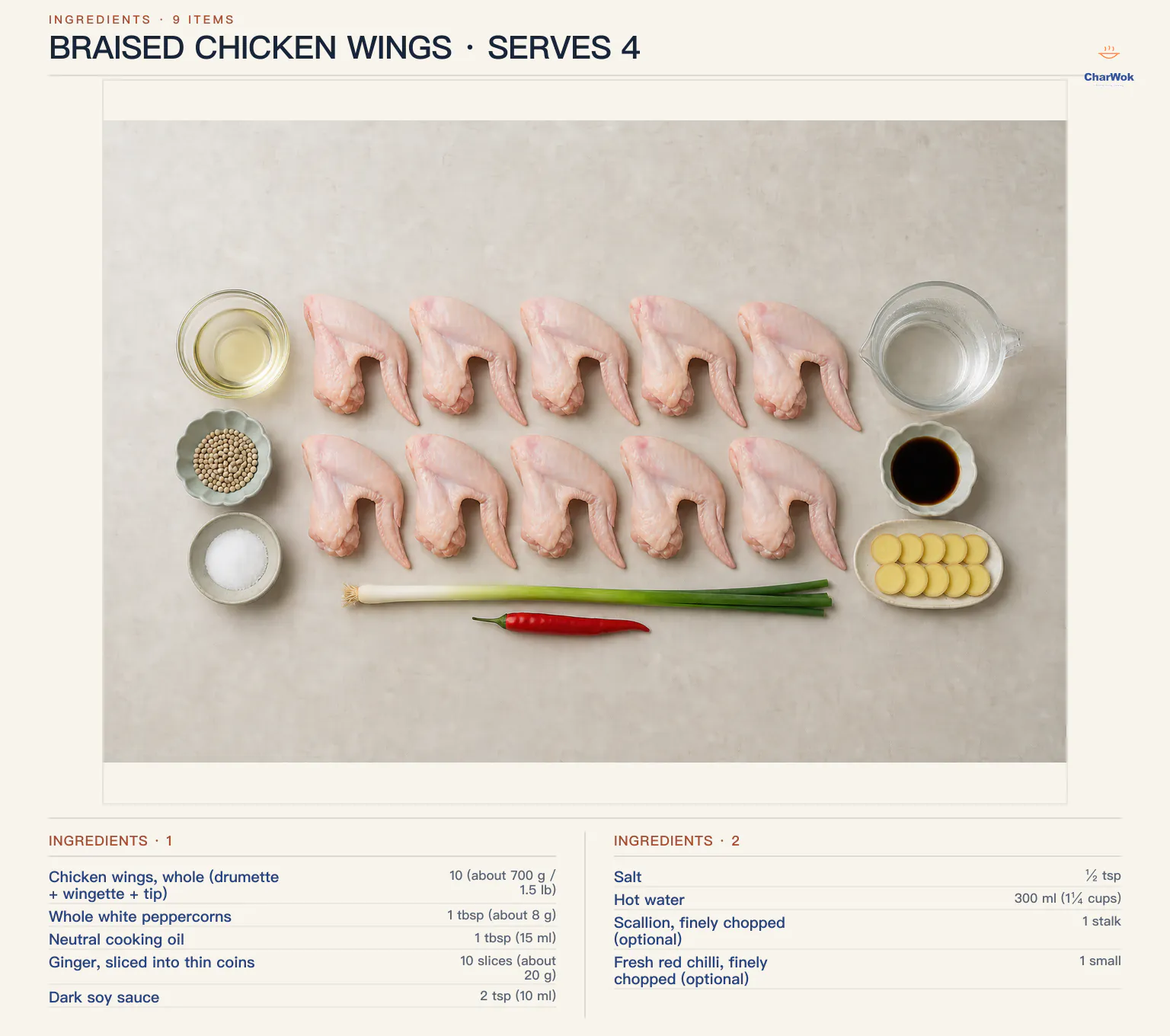
Four core ingredients plus salt and a garnish. Do not be tempted to add more. The point of this braise is restraint, and it is the same restraint that makes ginger chicken and scallion-oil chicken work: let two aromatics do the talking.
| Ingredient | Amount | Notes / substitute |
|---|---|---|
| Chicken wings, whole (drumette + wingette + tip) | 10 (about 700 g / 1.5 lb) | If buying pre-cut party wings with no tips, use roughly 20 pieces by count. |
| Whole white peppercorns | 1 tbsp (about 8 g) | Black peppercorns work and give a sharper heat. Ground pepper can scorch in the oil, so it is not a direct substitute. |
| Neutral cooking oil | 1 tbsp (15 ml) | Canola, grapeseed, or peanut oil. |
| Ginger, sliced into thin coins | 10 slices (about 20 g) | No need to peel if the skin is clean. |
| Dark soy sauce | 2 tsp (10 ml) | Provides colour. Light soy works but gives a paler, saltier result; see light vs. dark soy sauce. |
| Salt | ½ tsp | Use as a starting point because soy sauce salinity varies. |
| Hot water | 300 ml (1¼ cups) | Hot water returns the pan to a simmer faster. |
| Scallion, finely chopped (optional) | 1 stalk | Green parts only, for garnish. |
| Fresh red chilli, finely chopped (optional) | 1 small | Omit for a non-spicy version. |
The method, and why each step matters
- Cut each wing through the two joints. Find the soft gaps between the bones and cut through the joints rather than chopping through bone, which can leave splinters. Separate pieces cook more evenly and expose more surface to the sauce.
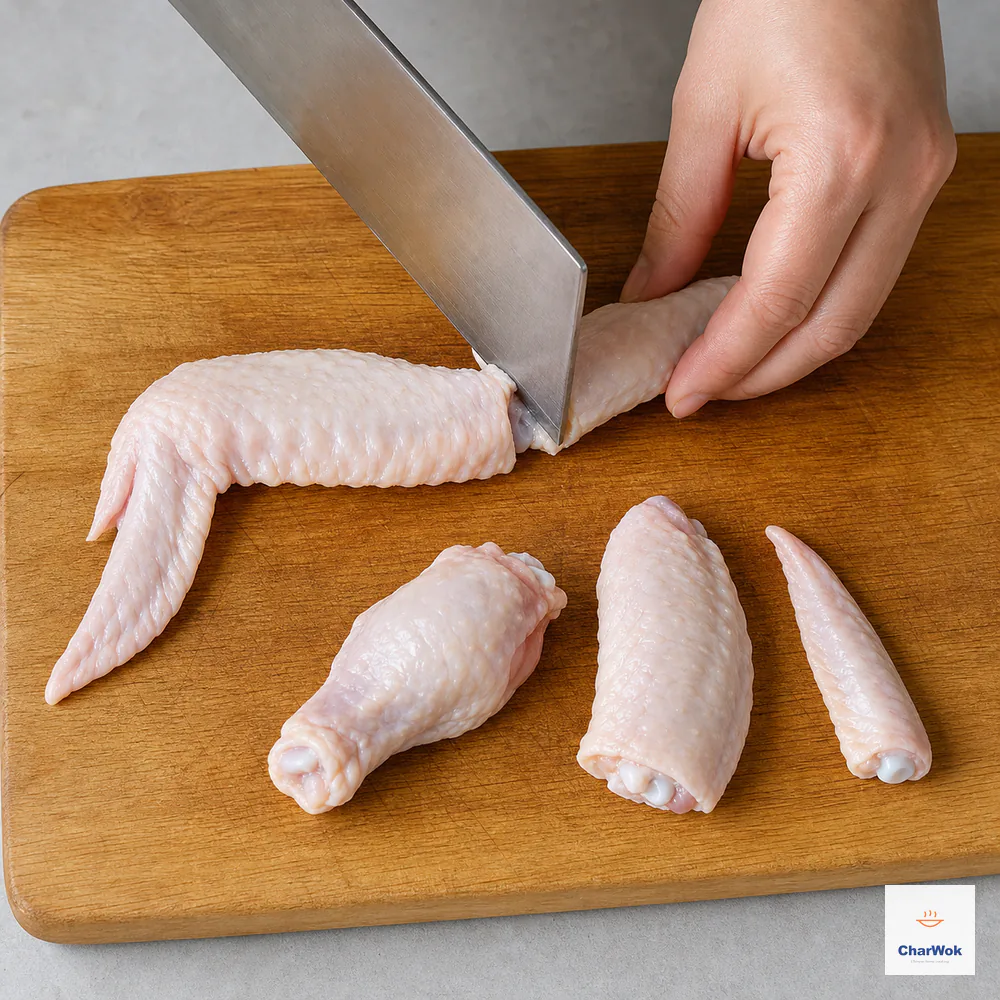
Find each soft joint and press straight through the cartilage; never force the blade through solid bone where it can splinter.
- Crack the peppercorns. Press them with the flat of a heavy knife until split but still recognisably whole. Do not grind them into powder.
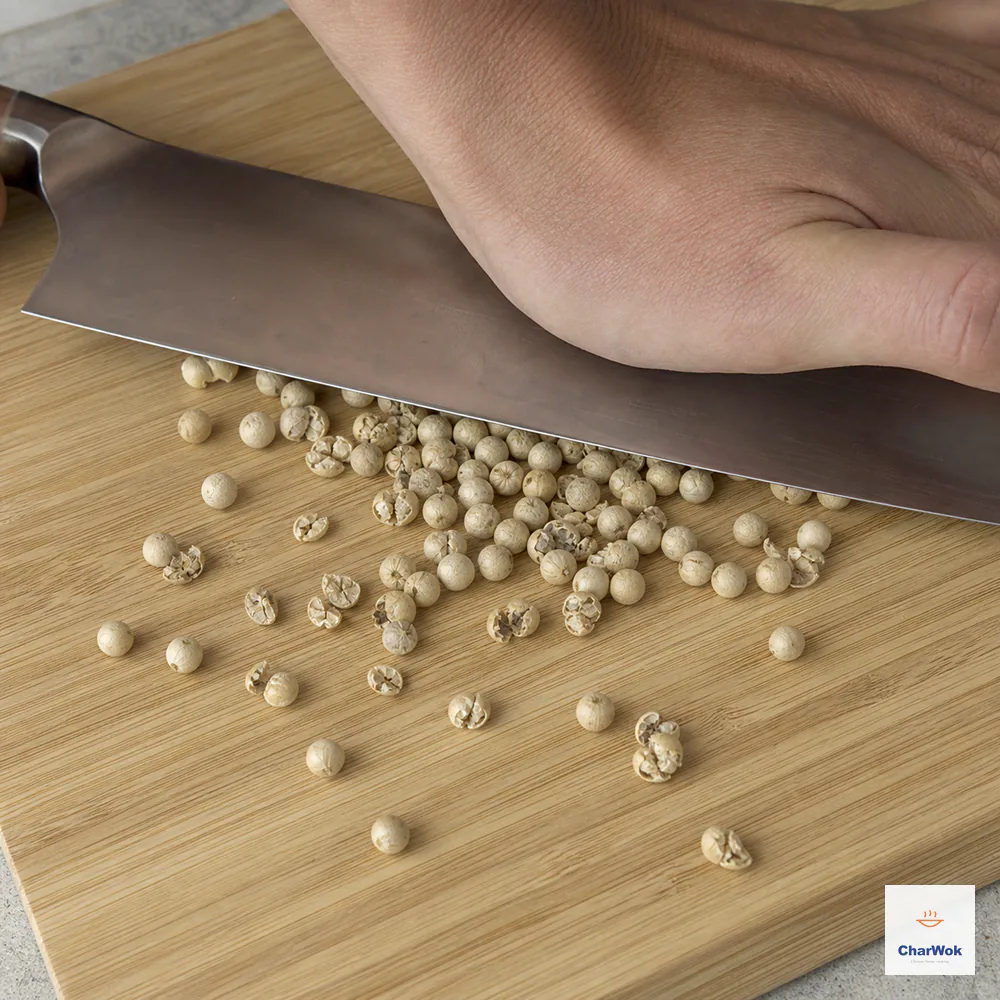
Bruise the peppercorn hulls just enough to release their oils while keeping coarse recognizable pieces; powder scorches almost immediately.
- Bloom the ginger and pepper. Add the oil, ginger and cracked peppercorns to a cold wok or wide skillet, then heat over medium-high. Once the oil sizzles and smells fragrant, cook for about 30 seconds and push the aromatics aside.
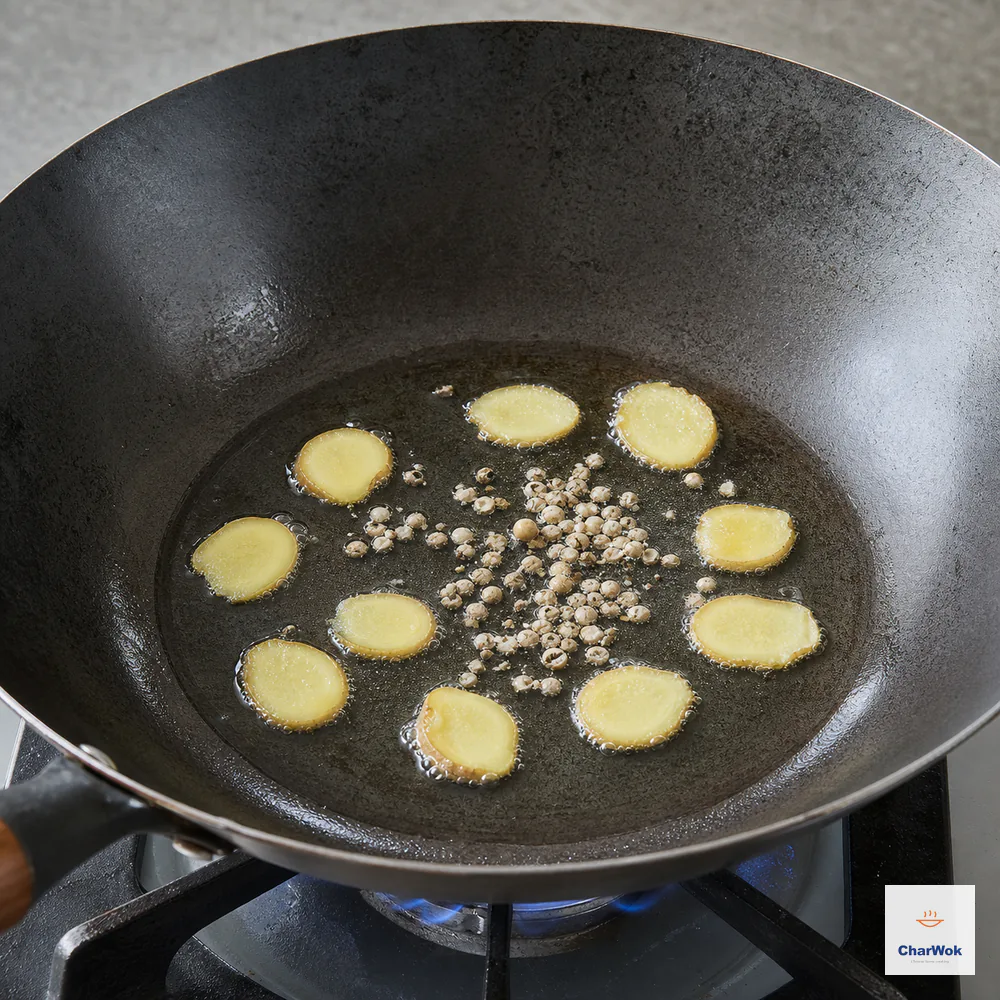
Start the ginger and cracked pepper in cold oil, then warm only until fragrant and the ginger edges begin to curl without scorching.
- Brown the wings in a single layer. Pat the pieces dry, place them skin-side down and leave them undisturbed for 2 to 3 minutes. Turn once the skin is golden and releases easily, then brown the other side.
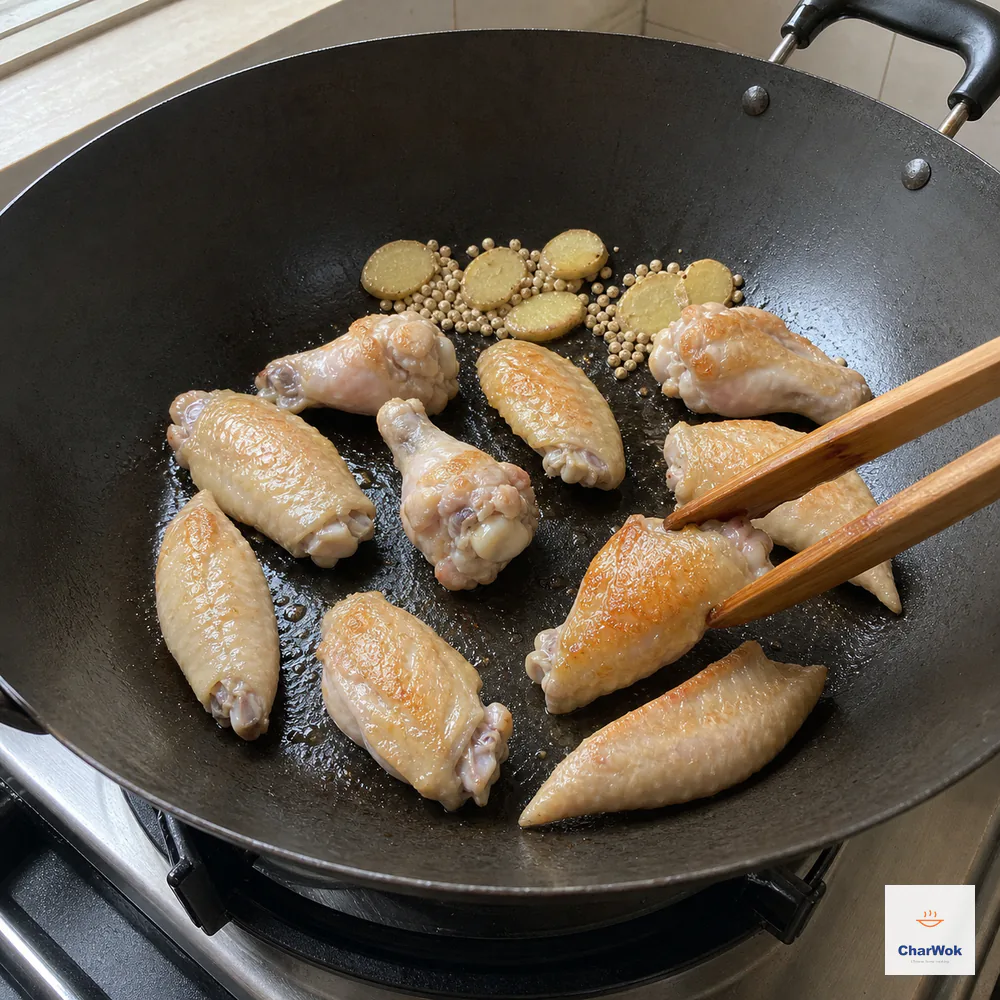
Pat the pieces dry, leave the skin against the pan until it turns golden and releases cleanly, then brown the second side without cooking through.
- Add the braising liquid. Pour in the hot water, scraping up the browned residue, then add the dark soy and salt. Bring back to a boil.
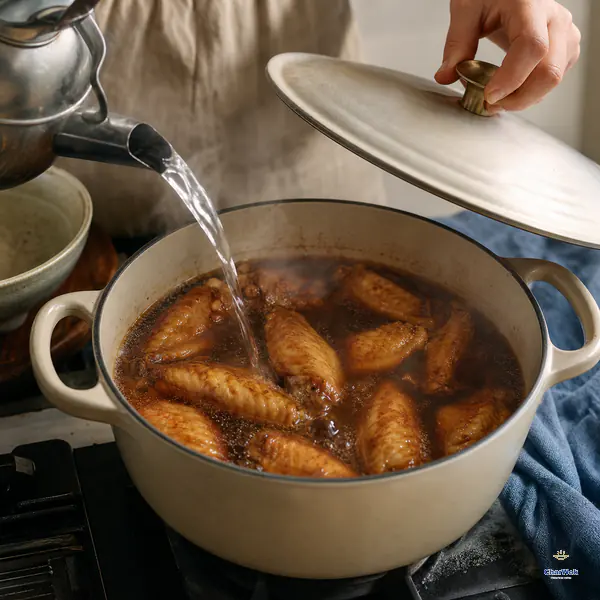
Pour in hot water with the dark soy and salt, return to a boil, then cover and simmer gently for about 25 minutes as the first temperature checkpoint.
- Cover and simmer for about 25 minutes. Lower the heat to a gentle simmer and turn the pieces once halfway through. The stated time is a checkpoint, not proof of doneness.
- Check the temperature, then reduce. Insert an instant-read thermometer into the meaty part of several drumettes and flats without touching bone. Every piece must reach 165°F (74°C). Move cooked wings to a clean plate while the sauce reduces for 3 to 5 minutes, then return them briefly to coat. If any piece is below temperature, keep it at a gentle simmer before reducing the sauce.
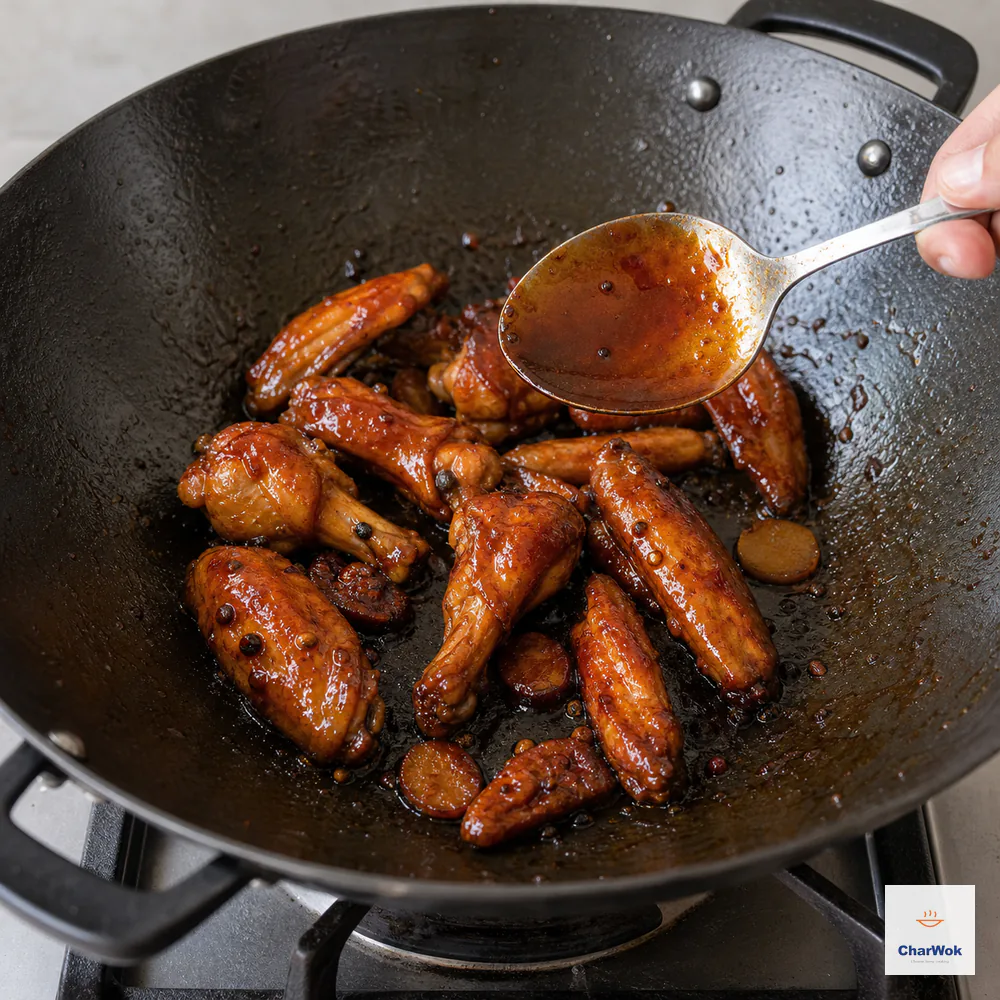
Once several meaty wing sections reach 165°F (74°C), move them to a clean plate, reduce the sauce until it coats a spoon, then return the wings briefly to glaze.
- Finish and serve. Add scallion and chilli if using, then serve with the sauce over rice or noodles.
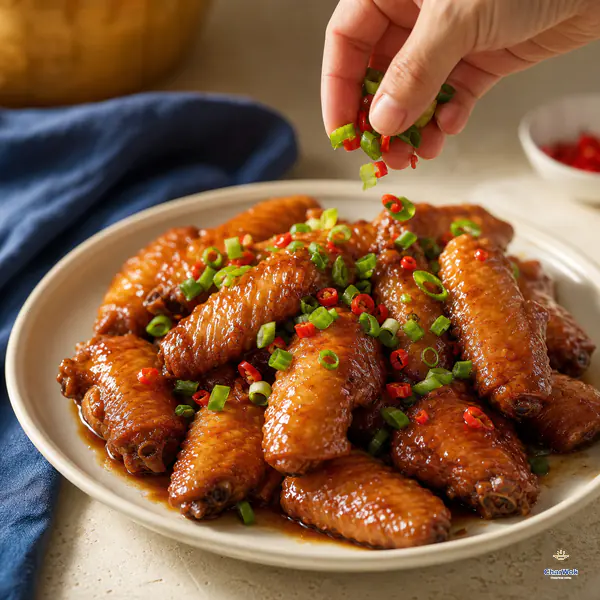
Transfer the lacquered wings to a plate, scatter with fresh scallion and chili if using, and serve immediately
Why this can go wrong (and how to fix it)
Most problems come from browning, heat control or reducing the sauce too far.
- The sauce is pale and thin. The wings may need more browning, or light soy may have replaced dark soy. Once the cooked wings are on a clean plate, reduce the sauce uncovered until it coats a spoon.
- The skin tore. It was probably turned before it released from the pan. Pat the skin dry and lift an edge to check before flipping.
- The pepper tastes bitter. Ground pepper or overheated cracked pepper can scorch. Start with cold oil and move on as soon as the aromatics smell fragrant.
- The meat is tough. A vigorous boil or cooking well past the safe temperature can tighten the meat. Keep a gentle simmer and measure several pieces rather than extending the time automatically.
- The sauce burned. Remove the cooked wings before the final reduction and keep a splash of hot water nearby. Stop when the sauce coats a spoon.
- The dish is too salty. Soy sauce salinity varies. Start with the listed salt, taste before reducing, and remember that the sauce becomes saltier as water evaporates.
Variations and what to serve it with
The skeleton of this recipe, brown-then-braise-then-reduce, carries other flavors well. A few directions worth taking:
- Black pepper version. Swap the white peppercorns for black. Sharper, more familiar to a Western palate, closer in spirit to black pepper chicken but as a braise rather than a stir-fry.
- Add rock sugar. A single small lump (about 10 g) dissolved into the braise rounds the salt and gives the glaze that restaurant sheen. This nudges it toward a char siu-adjacent sweetness without going all the way.
- Throw in aromatics. A smashed garlic clove, a star anise, or a stick of cinnamon turns it into something closer to oyster-sauce braised chicken territory. Add them with the ginger. I usually don't, because I like the peppercorn solo, but the door is open.
For serving, this is a rice dish first and a noodle dish second. Over steamed jasmine rice the glossy sauce is the point. Over noodles, choose something with bite, like the wheat strands in scallion oil noodles or plain fresh egg noodles, and spoon the sauce over both meat and carb. A sharp green vegetable cuts the richness; dry-fried green beans or a quick stir-fried greens are ideal. For a fuller Chinese chicken spread, it sits comfortably alongside three-cup chicken or as part of a wider chicken lineup.
Storing and reheating
Transfer the wings and sauce to shallow containers and refrigerate within two hours of cooking, or within one hour when the room is above 90°F (32°C). Use within three to four days. Reheat the meaty sections to 165°F (74°C) with a splash of water; do not leave cooked wings sitting at room temperature for serving. These limits follow USDA leftovers guidance. Leftover meat can top chicken and mushroom congee.
If you want a true weeknight rotation, this belongs in the same folder as your other fast weeknight recipes. Active time is under ten minutes; the rest is the stove doing the work while you make rice and blanch a vegetable.
A few questions I keep getting
The short answers to the things readers ask most often. The longer reasoning is in the sections above.
Can I use ground white pepper instead of whole peppercorns?
Not in the same step. Ground pepper can scorch in the oil; use cracked whole peppercorns, or add a smaller amount of ground pepper later in the braise.
Do I need to marinate the wings first?
No. The seasoning comes from the braising liquid and the reduced sauce.
How do I know the wings are safely cooked?
Measure several meaty drumettes and flats without touching bone. Every piece must reach 165°F (74°C); colour, tenderness and 25 minutes alone cannot confirm this. See the USDA thermometer guidance.
Why is my sauce pale and thin?
Brown the skin before adding liquid, use dark soy for colour, and reduce the sauce separately after the wings are safely cooked.
Can I make this in advance?
Yes. Refrigerate the wings in shallow containers within two hours, keep them for three to four days, and reheat the meaty sections to 165°F (74°C).
What if I only have pre-cut party wings?
Use roughly 20 drumettes and flats for the same total weight. Skip the cutting step and still check several pieces for temperature.
Brown the skin before adding liquid, keep the braise at a gentle simmer, and reduce the sauce only after every wing has reached 165°F (74°C). Those checkpoints keep the pepper aroma clear and the sauce glossy without relying on a fixed cooking time.