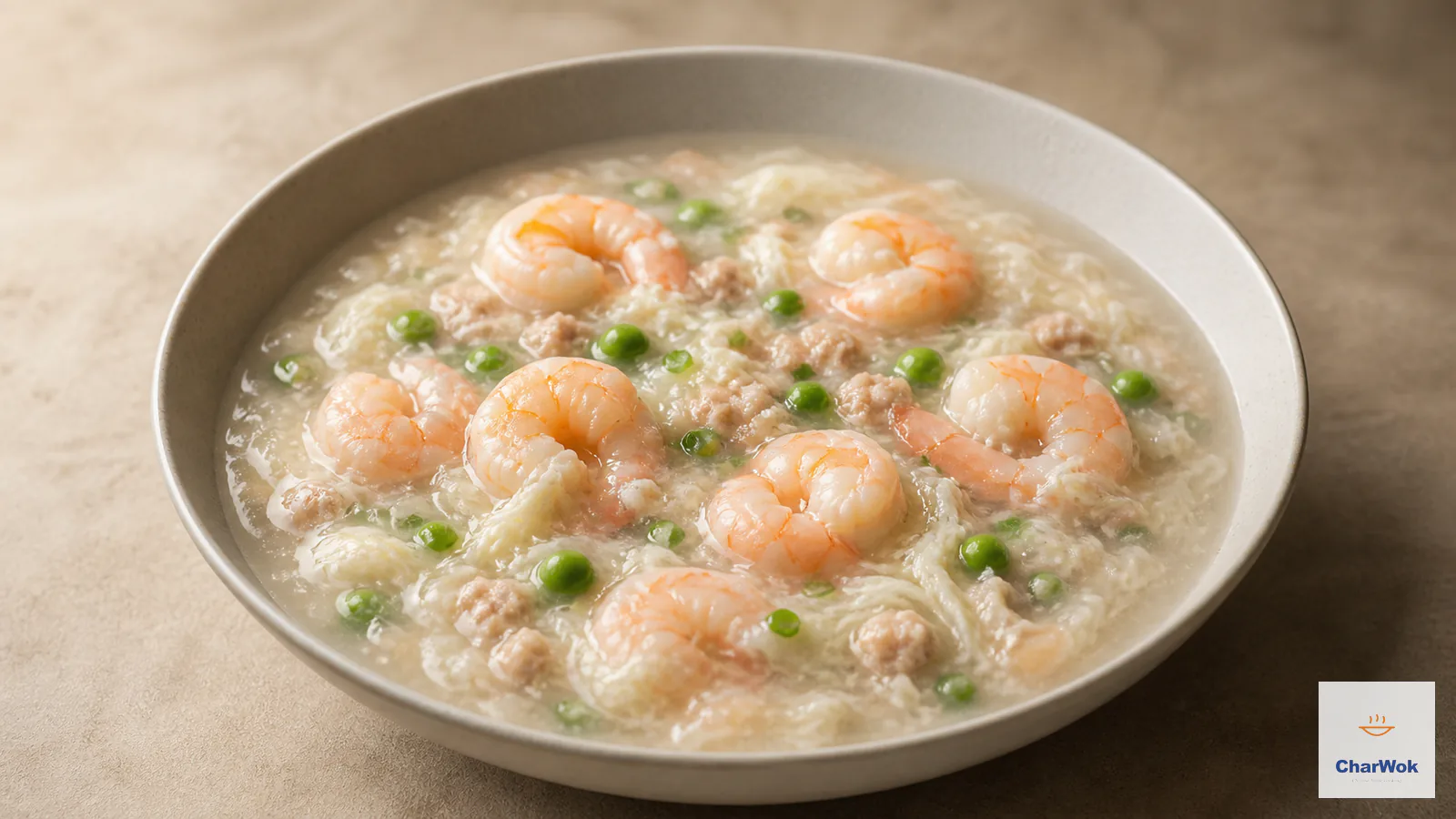
Order "shrimp with lobster sauce" from a Chinese-American takeout menu and you get a shallow tin of shrimp in a glossy, beige, cornstarch-thickened gravy flecked with ground pork and wisps of egg. The name is a lie. There is no lobster in it, and never was. The "lobster sauce" is a Cantonese sauce originally built for stir-fried lobster, then quietly borrowed for shrimp because shrimp is cheaper and the sauce still loves it. That borrowing is the whole story, and it is also the reason this dish is so easy to get wrong at home: most versions skip the things that make the sauce taste like more than cornstarch and water.
The dish I want to teach you is the one I finally landed on after years of ordering it, being disappointed, and cooking it badly myself a dozen times. The trap is treating it like a five-minute dump-and-thicken. It can be on the table in under ten minutes, yes, but only because the flavor was already built into your pantry. The real work happens in three small choices: how you treat the shrimp, how you build the ground-pork base, and how you stream in the egg white at the end. Get those three right and the sauce turns silky and savory instead of gummy and bland.
At a glance. The make-or-break move is the egg-white stream: pour it into a simmering, already-thickened sauce in a slow thin stream while you swirl the pan, and you get the cloud-like ribbons that define this dish. Use about 1½ tablespoons of cornstarch to 1 tablespoon of cold water for every cup (240 ml) of broth, and never let the sauce reach a hard boil once the starch is in. Two servings, start to finish in eight to ten minutes.
What this dish actually is (and where the name comes from)
The "lobster sauce" family is a Cantonese invention, and the original is a ginger-scallion-shaoxing sauce finished with a cornstarch slurry and egg white, designed to coat shellfish in a glossy, savory blanket without competing with the sweetness of the meat. When Cantonese cooks in North America applied that sauce to shrimp instead of lobster, the name stuck even though the namesake ingredient left the building. What remained is one of the quietest, most comforting dishes on any takeout menu, the kind of thing you order over plain rice when nothing else sounds right.
If you have ever had classic egg drop soup, you already know the texture we are chasing. The sauce here is essentially a richer, porky egg-drop broth clinging to shrimp. The same streaming-egg technique that gives egg-drop soup its ribbons is what gives this dish its signature look. I think of it as egg-drop soup's more substantial cousin.
Ingredients
Ingredients at a glance
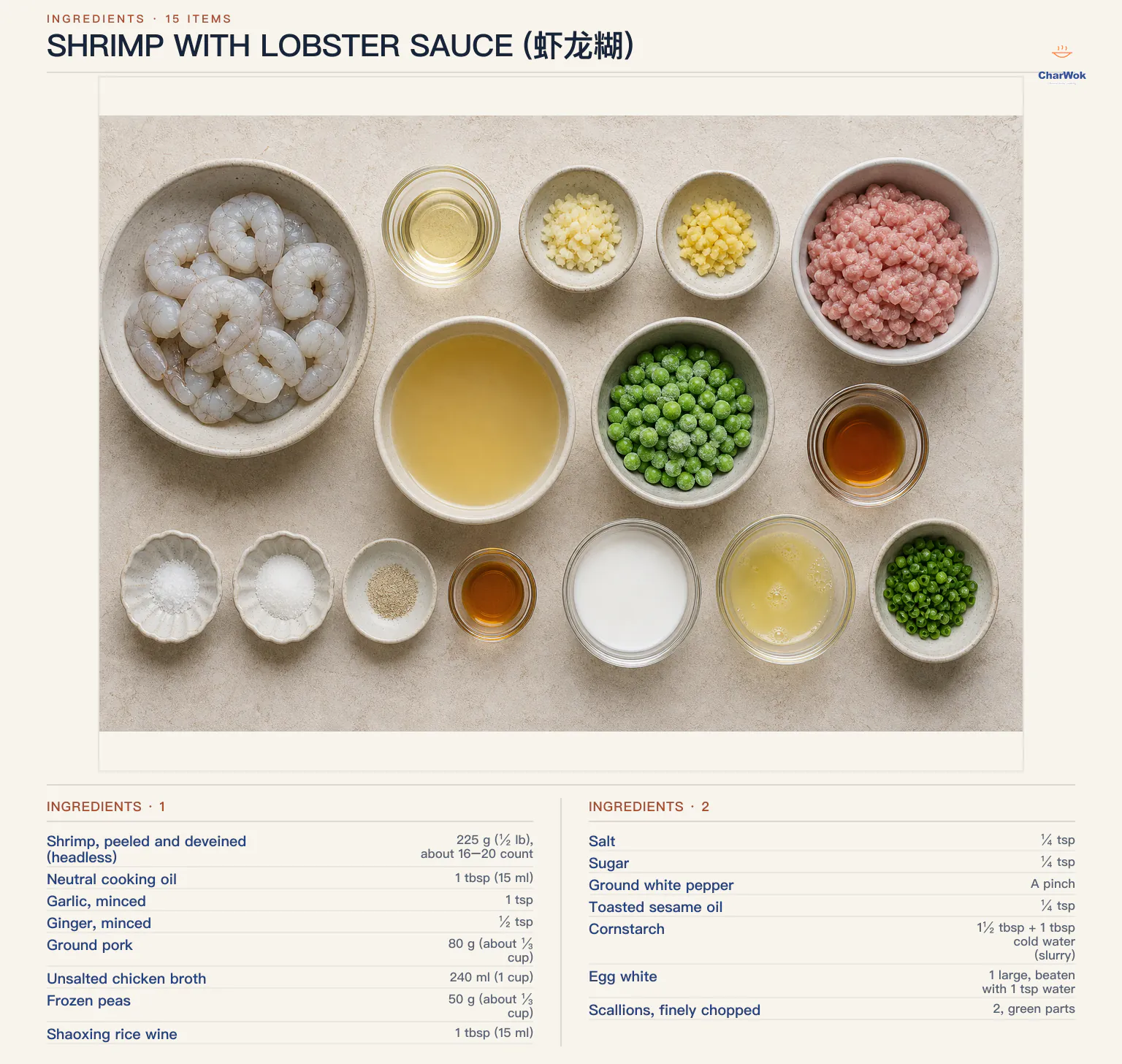
| Ingredient | Amount | Notes / substitute |
|---|---|---|
| Shrimp, peeled and deveined (headless) | 225 g (½ lb), about 16–20 count | Medium or large. Thawed if frozen. See shrimp section below. |
| Neutral cooking oil | 1 tbsp (15 ml) | Grapeseed, canola, or avocado. Not olive oil. |
| Garlic, minced | 1 tsp | About 2 cloves. Don't substitute garlic powder. |
| Ginger, minced | ½ tsp | Peel first. Fresh only. |
| Ground pork | 80 g (about ⅓ cup) | Ground chicken thigh works; chicken breast runs dry. See note. |
| Unsalted chicken broth | 240 ml (1 cup) | Homemade chicken stock is best; low-sodium boxed is fine. Avoid bouillon cubes, which are too salty and one-note. |
| Frozen peas | 50 g (about ⅓ cup) | Color and sweetness. Thawed edamame or diced water chestnut are good swaps. |
| Shaoxing rice wine | 1 tbsp (15 ml) | The real Shaoxing wine, not "cooking wine." Dry sherry is the closest substitute. |
| Salt | ¼ tsp | Adjust if your broth is salted. |
| Sugar | ¼ tsp | Balances the wine and salt; do not skip. |
| Ground white pepper | A pinch | White, not black. It keeps the sauce pale and adds a cleaner heat. |
| Toasted sesame oil | ¼ tsp | Stirred in at the end, off the heat. |
| Cornstarch | 1½ tbsp + 1 tbsp cold water (slurry) | Potato starch works and gives a slightly clearer, more tender set. |
| Egg white | 1 large, beaten with 1 tsp water | The water thins it so it streams into ribbons instead of clumping. |
| Scallions, finely chopped | 2, green parts | Garnish. Save a few rings for the very top. |
On the shrimp: peel them yourself
Shrimp sold as "peeled and deveined" in a bag has usually been sitting in its own meltwater, and the surface gets a faintly slick, soapy film that no amount of sauce can mask. This is the single biggest reason home versions taste flat. Rinse the shrimp under cold water, then pat them bone-dry with paper towels before they go anywhere near the wok. Wet shrimp means a grey, boiled look and zero browning on the pork.
If you can find head-on shell-on shrimp, buy them. Peeling yourself takes three minutes and the difference in texture is real. I would rather have medium shrimp I peeled myself than "jumbo" pre-peeled that has gone mealy. For a different shrimp treatment built around the same protein, my salt and pepper shrimp leans the other direction, shells on and crisp; here we want the shrimp naked and tender so the sauce is the whole point.
Why the ground pork matters more than the shrimp
Here is the part most recipes under-explain. The shrimp are the headline, but the flavor of the sauce comes from rendered pork fat and browned bits of ground pork. The broth is mostly water. If you rush the pork, fry it until just pale and move on, your sauce will taste like thicken broth. Give the pork a real few minutes alone in the hot oil so it releases fat and the edges take on color. That rendered fat is what carries the garlic and ginger into the rest of the dish.
I use a 70/30 or 80/20 ground pork. Too lean and the pan goes dry and the garlic burns; the small amount of fat is doing real work. Ground chicken thigh is an acceptable substitute; ground chicken breast is not, it dries to cotton before it flavors anything. If you want a meatless version, see the variations.
Method
- Prep everything first. This dish moves in under five minutes once the heat is on, so there is no time to mince ginger mid-stir. Have the slurry mixed in a small bowl, the egg white beaten with its teaspoon of water in another, the seasonings measured, and the broth poured. Stir the cornstarch slurry right before you use it, cornstarch settles fast and a settled slurry will give you lumps.
- Dry and rinse the shrimp. Run the shrimp under cold water to remove any surface film, drain, then press between paper towels until they are no longer damp. Set aside. This one step fixes more flavor problems than any other.
- Render and brown the pork. Heat the oil in a wok or a wide skillet over medium-high until it shimmers. Add the garlic and ginger and let them go for about ten seconds, just until you can smell them, do not let the garlic color. Add the ground pork and break it up. Now resist the urge to stir constantly. Let it sit for thirty seconds at a time so the undersides brown, then break it up again. You want small crumbles with some crisp, golden edges, about two minutes. The fat should be rendering and the kitchen should smell like cooked pork.
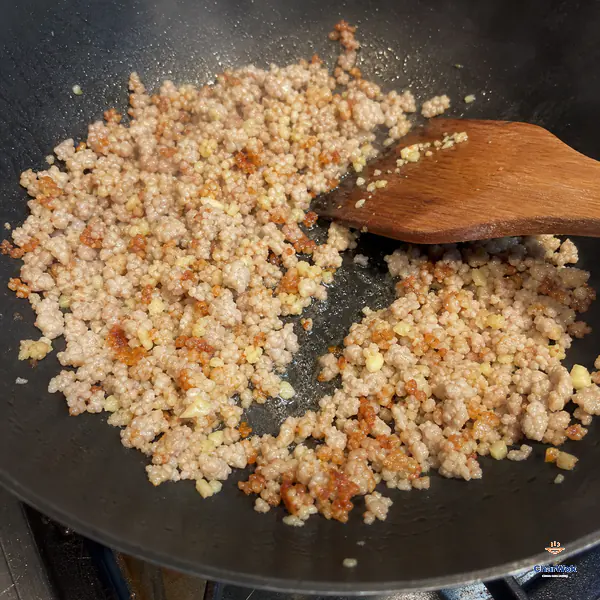
Let the pork sit briefly between stirs so the small crumbles develop golden-brown edges; that browning supplies the savoury base for the pale sauce.
- Sear the shrimp, briefly. Add the shrimp and toss to coat in the pork fat. The goal here is not to cook the shrimp through, it is to start them curling and pick up flavor. The moment they curl into a C and the edges go pink, about 45 seconds, move on. They will finish cooking gently in the broth, and that gentle finish is what keeps them tender. Overcooked shrimp is the most common failure in this dish.
- Deglaze and build the sauce. Pour in the broth, scraping up any browned bits stuck to the pan. Add the peas, Shaoxing wine, salt, sugar, white pepper, and sesame oil. Bring it to a full boil. That boil matters: cornstarch needs to come to temperature to fully gelatinize, and if you add the slurry to a merely warm liquid you get a chalky, half-set sauce.
- Thicken with the slurry. Turn the heat down to a gentle simmer. Stir the slurry one more time, then pour it in slowly in a thin stream while you keep the liquid moving with your spatula. Do not dump it all at once. Stop about two-thirds of the way through, let it come back to a simmer, and check the consistency. It should coat the back of a spoon and leave a clear trail when you run a finger through it. Add the rest only if it still looks loose. Cornstarch thickens more as it sits, and you can always add but you cannot take away.
- Stream in the egg white. This is the move that defines the dish. With the sauce at a gentle simmer, not a rolling boil, pour the thinned egg white in a slow, thin stream while you slowly swirl the pan or stir with your spatula in one direction. Slow pour plus slow swirl equals long, silky ribbons. Pour too fast and it clumps into a single mass; stir too hard and you get tiny shreds. Think of it as drawing ribbons, not scrambling eggs.
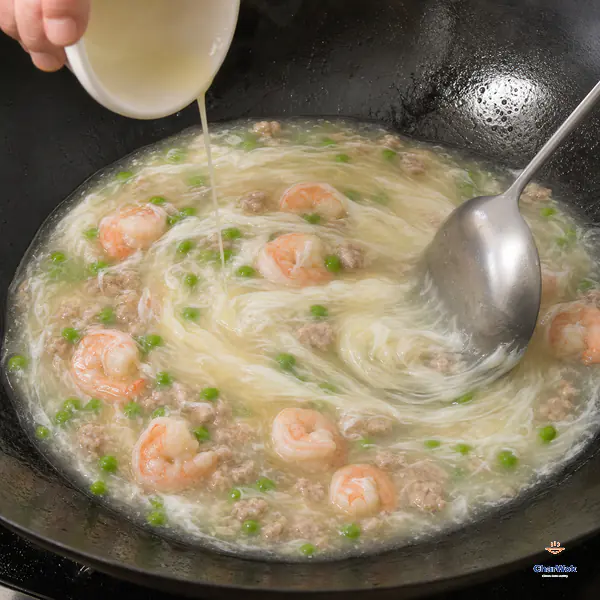
Once the thickened sauce returns to a gentle simmer, pour the egg white slowly in a thin stream and swirl in one direction to draw long ribbons without shredding them.
- Finish and serve. Off the heat. Taste and add a few more grains of salt if the broth was weak. Ladle over hot plain rice and scatter scallions on top. Eat immediately, this dish does not improve with sitting.
When it goes wrong (and how to fix it)
The sauce is gummy and translucent, almost jelly-like. Either you added too much cornstarch or you boiled it hard after adding it. Cornstarch thinned out by a hard boil goes thin and stringy; cornstarch cooked gently sets glossy. Next time measure the slurry precisely and keep the sauce at a simmer. To rescue a gummy batch, stir in a splash of hot broth and bring it just back to a bare simmer, nothing more.
The egg white turned into one solid clump. Two causes. You poured it in too fast, or the sauce was at a rolling boil when it hit. The egg cooked instantly and fused. The fix is always the same: lower the heat to a gentle simmer and pour in a very thin stream while swirling. If it has already clumped, fish the big lump out, chop it, and stir it back in. The dish will still taste right, it just won't look as pretty.
The shrimp are rubbery. They went in too early and cooked the whole time. Shrimp should spend about 45 seconds in the hot pan before the broth goes in, then finish gently in simmering liquid for another minute. If yours are still grey after that, the pan wasn't hot enough; if they're already pink and tight before the broth, they're already overcooked. You want to catch them at the C-curl.
The whole thing tastes bland. This is the most common complaint, and it almost always traces back to the pork. If you cooked the pork only until it lost its pink color, you didn't render enough fat to flavor the broth. Next time, give the pork another minute to brown at the edges. The other usual culprit is weak broth. Bouillon-cube broth tastes like salt water here; boxed low-sodium is better, and a spoonful of dried shrimp simmered into the broth for two minutes adds a deep, savory base that boxed broth alone can't match.
The garlic burned and tastes bitter. The pan was too hot or the garlic went in before the pork. Garlic goes in just before the pork, ten seconds ahead, never alone in a dry pan. If you smell burnt garlic, start over, the bitterness will not cook out.
Variations and pairings
Add water chestnuts or bamboo shoots. A small handful of drained, sliced water chestnuts added with the peas gives the soft sauce a crisp counterpoint that the original takeout version often has and home cooks leave out. It is a real upgrade, not a gimmick.
Make it seafood-forward. A few cleaned shrimp alone is fine, but if you want a richer dish, save the shrimp shells and simmer them in the broth for five minutes before straining. That shell broth turns a thin sauce into something with real depth, and it is the closest you will get at home to the lobster-bone stock the original sauce was built on.
Meatless version. Skip the pork entirely and add a teaspoon of fermented black beans rinsed and chopped, or a teaspoon of black bean sauce, to the garlic and ginger. The fermented beans give the broth the savory backbone the pork usually provides. Mushroom broth instead of chicken makes it vegetarian.
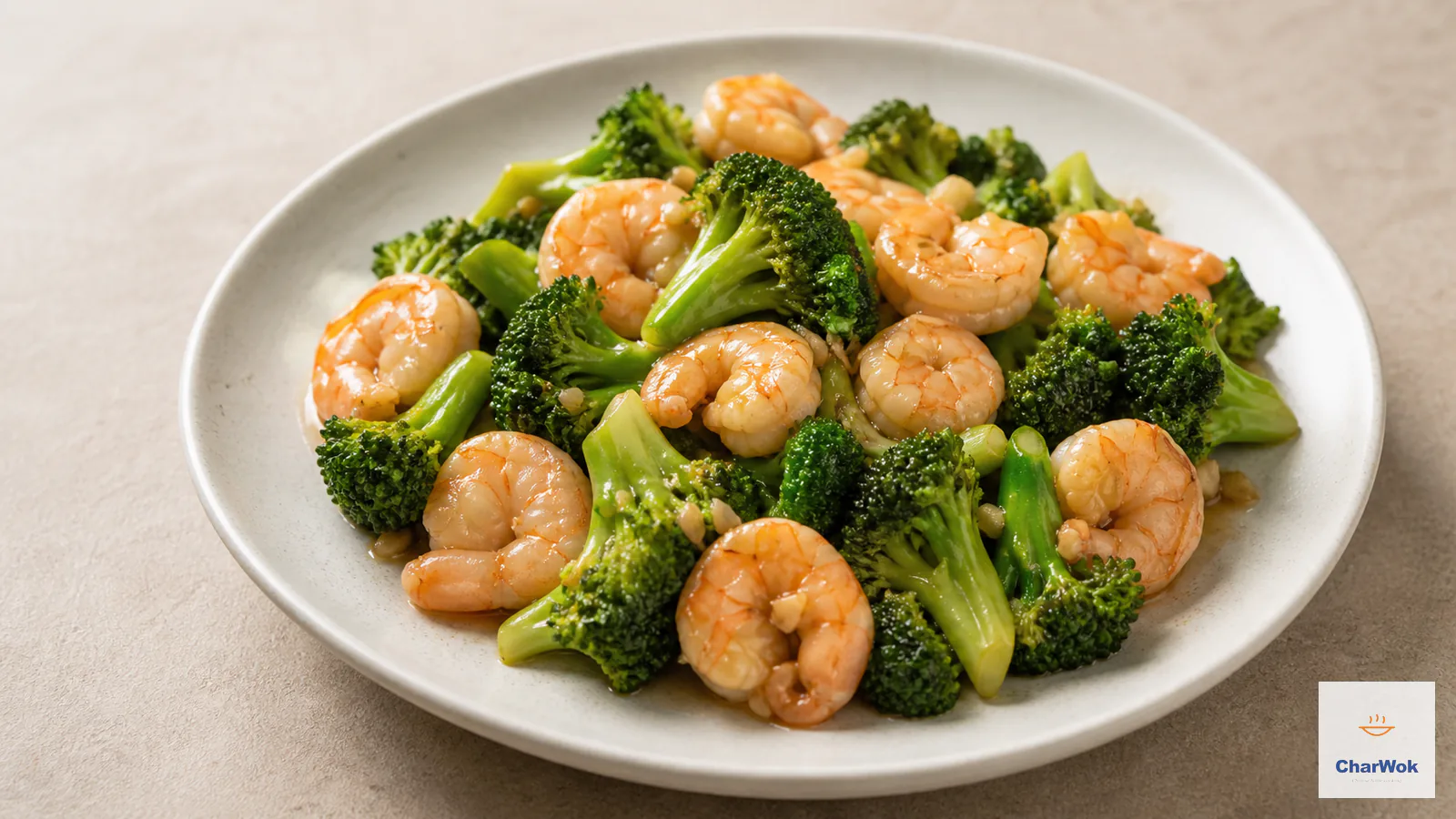
What to serve it with. This is a saucy dish, so it wants plain white rice and at least one dry dish to balance it. A plate of garlicky greens, like bok choy stir-fried with garlic or broccoli with garlic sauce, is the classic pairing. For a fuller takeout-style spread, it sits comfortably next to lo mein or a crispier seafood option like salt and pepper squid. On its own with rice it is a complete meal for two.
Storage and reheating
This dish is best eaten the moment it is made. The cornstarch sauce will thin and weep as it cools and the egg ribbons turn spongy in the fridge. If you must store it, refrigerate for up to one day and reheat gently in a saucepan over low heat with a tablespoon of water, just until warm, never to a boil. Reheating to a boil will break the sauce into a lumpy mess. Shrimp that has been reheated will be firmer than fresh; accept that as a tradeoff or cook only what you will eat.
Frequently asked questions
Is there really lobster in lobster sauce? No. The sauce was originally for lobster; here it is borrowed for shrimp. If you want actual lobster, swap the shrimp for chopped cooked lobster tail added at the very end just to warm through.
Can I use the whole egg instead of just the white? You can, and it will taste fine, but the sauce will be yellow and the ribbons denser. The white-only version is the traditional takeout look: pale sauce, delicate strands. Save the yolk for breakfast.
Why is my sauce thin even after I added all the slurry? Most likely the broth was salted and the starch was under-measured, or the sauce never came back to a full simmer after the slurry went in. Cornstarch only reaches full thickness near a boil. Mix another teaspoon of starch with a teaspoon of cold water and stir it in, then simmer for 20 seconds.
Can I make this ahead for a crowd? Cook the pork base and reduce the broth ahead, then hold. Reheat to a simmer, add the shrimp, thicken, and stream the egg at the very last minute. Do not thicken or add the egg in advance; both degrade as they sit.
What's a good non-alcoholic substitute for Shaoxing wine? An equal mix of dry sherry (the closest match) or, alcohol-free, chicken broth with a few drops of rice vinegar and a pinch of sugar. The wine is doing real flavor work, so don't just leave it out.
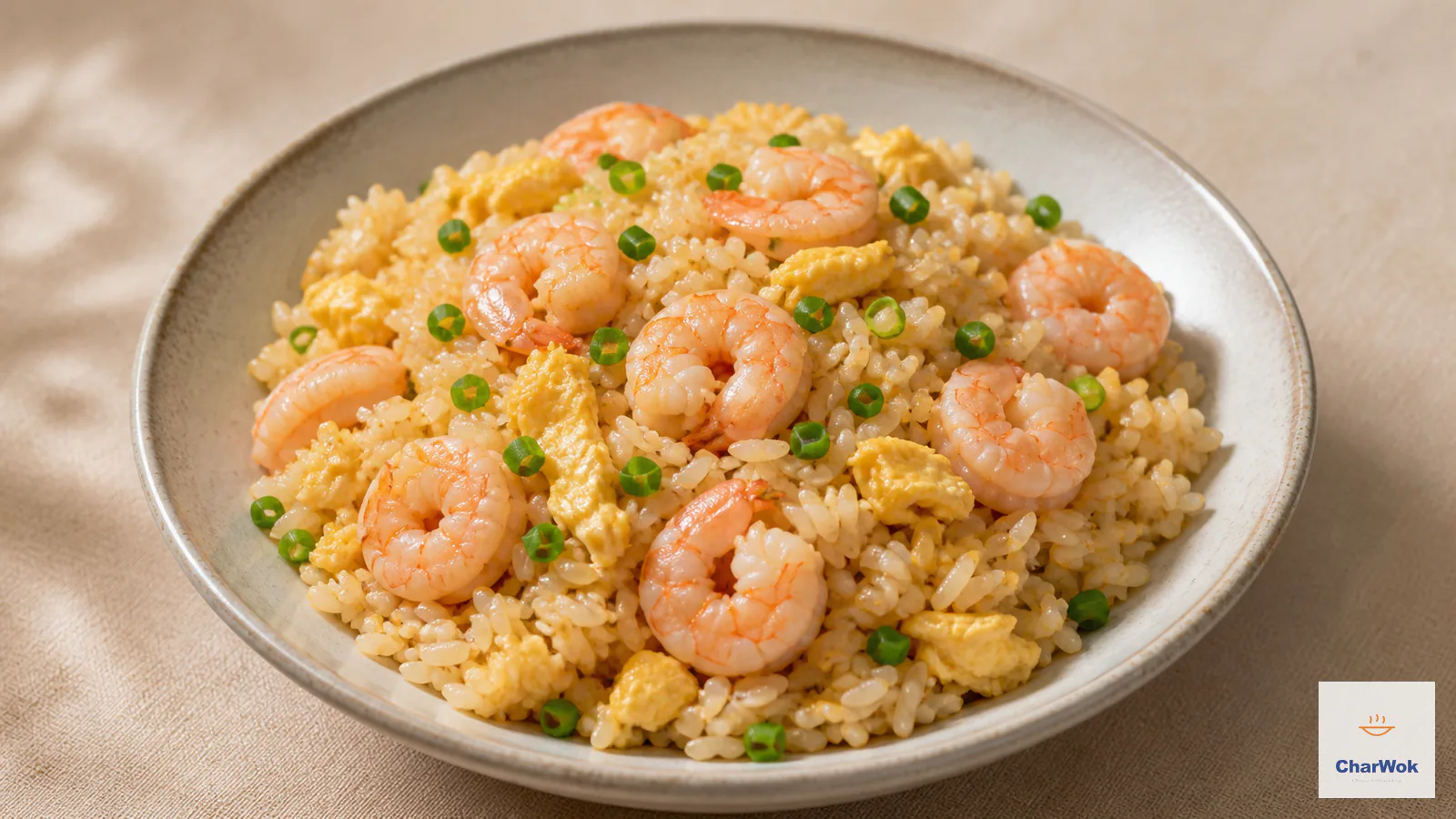
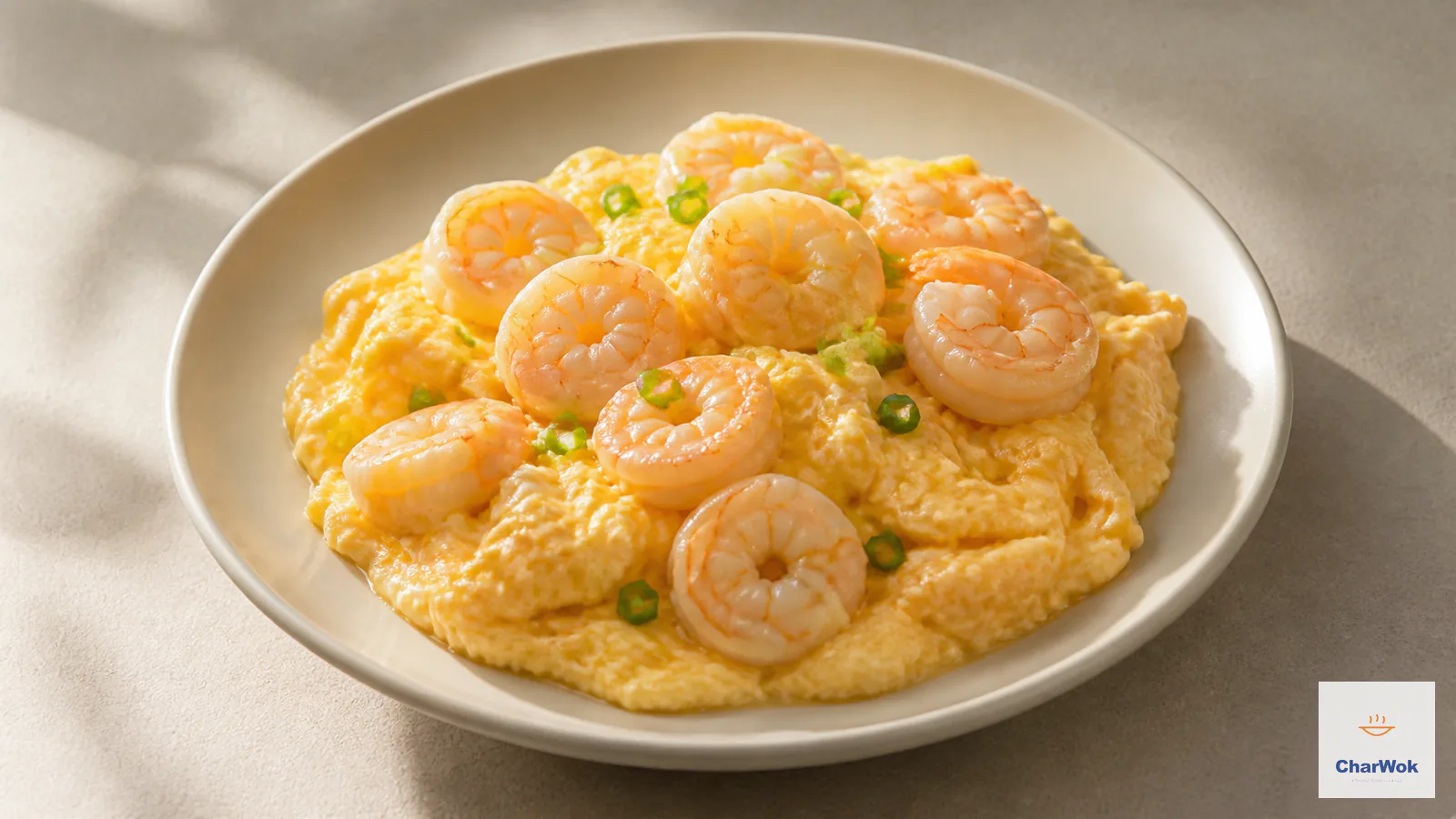
Want to round out the meal? This saucy shrimp pairs well with quick egg dishes like egg foo young or a bowl of chicken corn soup to start, and you can browse the full set of favorite takeout recipes if you are building a spread. For a different shrimp direction, kung pao shrimp brings heat where this dish brings comfort, and shrimp and egg stir-fry is the closest cousin, same two ingredients, completely different texture. It is also lovely folded into shrimp fried rice the next day if you have leftovers.