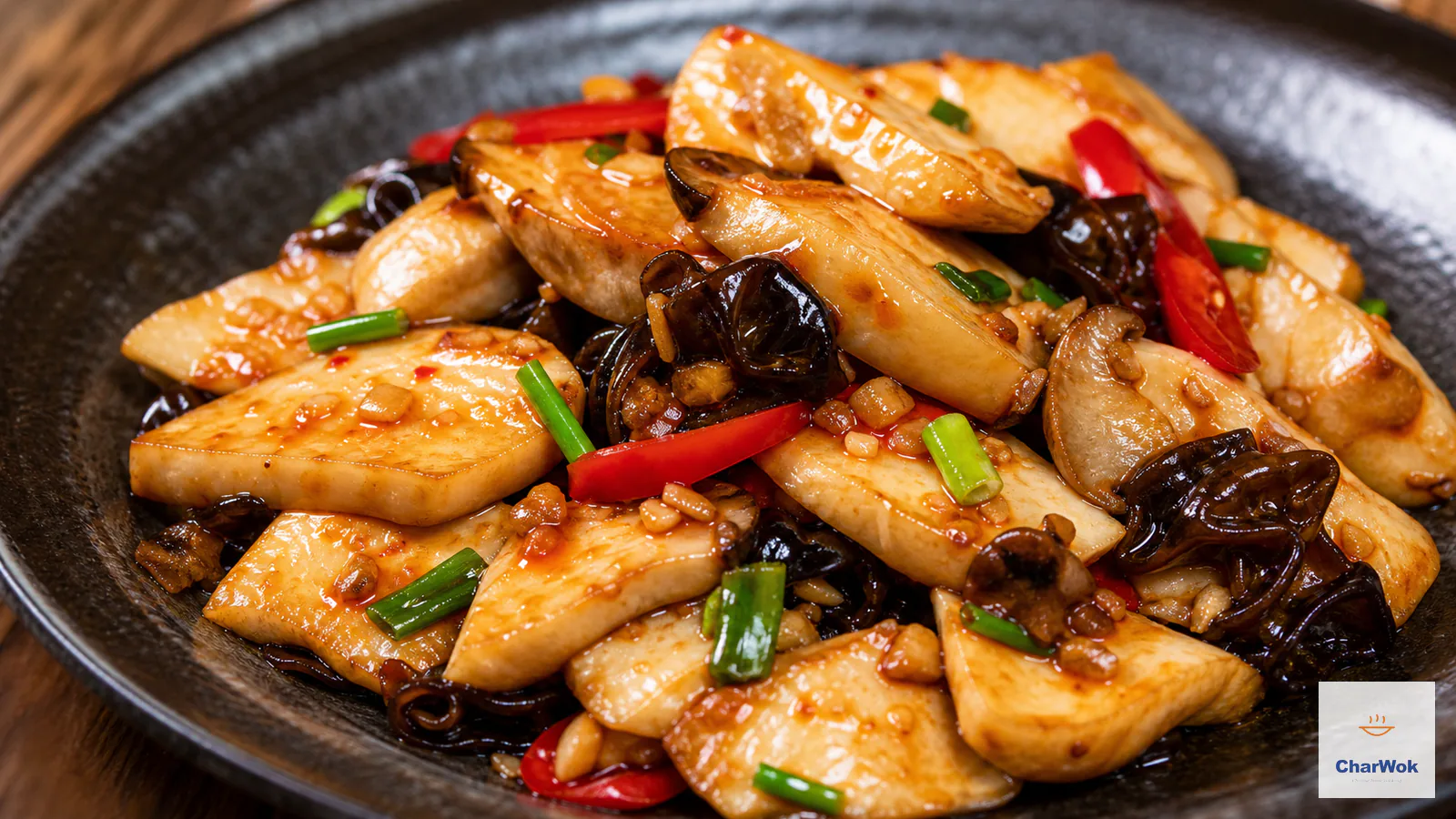
The trick to a great king oyster mushroom dish is not the sauce. The sauce is the easy part. The hard part is getting the mushroom itself to taste like something worth eating: browned on the edges, still springy in the middle, no raw dampness left in the center. Most home versions fail at that step, then drown the result in a generic stir-fry sauce to cover it up. This recipe fixes both problems, then finishes with a Sichuan garlic sauce that hits salty, sour, sweet, and spicy at the same time.
I have cooked this exact dish perhaps a hundred times, and I have served it to mushroom skeptics who came back for seconds. Done right, the texture is close to seared scallops; done wrong, it is a soggy disc in a puddle. The difference is two minutes of patience at the start.
At a glance. Six king oyster mushrooms (about 400 g / 14 oz), cut into thick rounds and pan-seared dry-ish until the edges are golden, then tossed with a pre-mixed garlic sauce that thickens in under thirty seconds. Start-to-finish cooking time is about three minutes once the wok is hot, so every ingredient must be prepped and within arm's reach before you turn on the stove. The make-or-break moment is letting the mushrooms brown without stirring them to death.
What "Yu Xiang" actually means
The dish's Chinese name, Yu Xiang Xing Bao Gu (鱼香杏鲍菇), reads as "fish-fragrant king oyster mushroom," which throws people the first time they hear it. The "fish-fragrant" label belongs to a family of Sichuan stir-fry seasonings, not to anything that swims: a measured blend of pickled chili, garlic, ginger, soy, black vinegar, and sugar, balanced so that sour, sweet, salty, and heat arrive almost together. Cooks in the region reached for this combination so often that it became a named flavor profile of its own, and it travels across ingredients well. The same seasoning seasons eggplant with garlic sauce, pan-fried tofu with garlic sauce, and the original shredded pork with garlic sauce (Yu Xiang Rou Si), each of which leans on the same backbone.
What makes the sauce work on mushrooms specifically is that king oyster mushroom carries a quiet, savory flavor rather than a loud one. It is a texture vehicle and a flavor sponge, so the sweet-sour-spicy seasoning reads loud and clean against it rather than fighting the ingredient.
Choosing and cutting the mushrooms
King oyster mushroom (Pleurotus eryngii) is built differently from the oyster mushrooms you usually see in a stir-fry. Those are wide, flat caps on thin stems, and you cook the cap. Here the proportions are reversed: a stubby little cap on a thick, club-shaped stem, and the stem is the whole point, dense and slightly bouncy, able to take a hard sear without collapsing. Chinese shoppers knew the value of that stem before the rest of us did; the market name, Xing Bao Gu, nods to its bite by borrowing the "bao" (鲍) that also stands for abalone. If you have only eaten shiitake or button mushrooms, the bite here will surprise you.
Buy firm, dry mushrooms with no dark wet patches at the base. Avoid any that feel spongy or smell sour. Store them uncovered in the fridge in a paper bag for up to a week; sealed plastic makes them weep water, and wet mushrooms will never brown.
For this dish, cut the stems into rounds about 1.5 cm (a generous ½ inch) thick. Thinner than that and they collapse into leathery chips. Thicker and the center stays raw while the edges burn. Score a shallow crosshatch on each round, about 2 mm deep: this gives the sauce somewhere to pool and helps the rounds release moisture faster in the pan. Do not peel them. The skin holds the cap together and takes color beautifully.
Ingredients
Ingredients at a glance
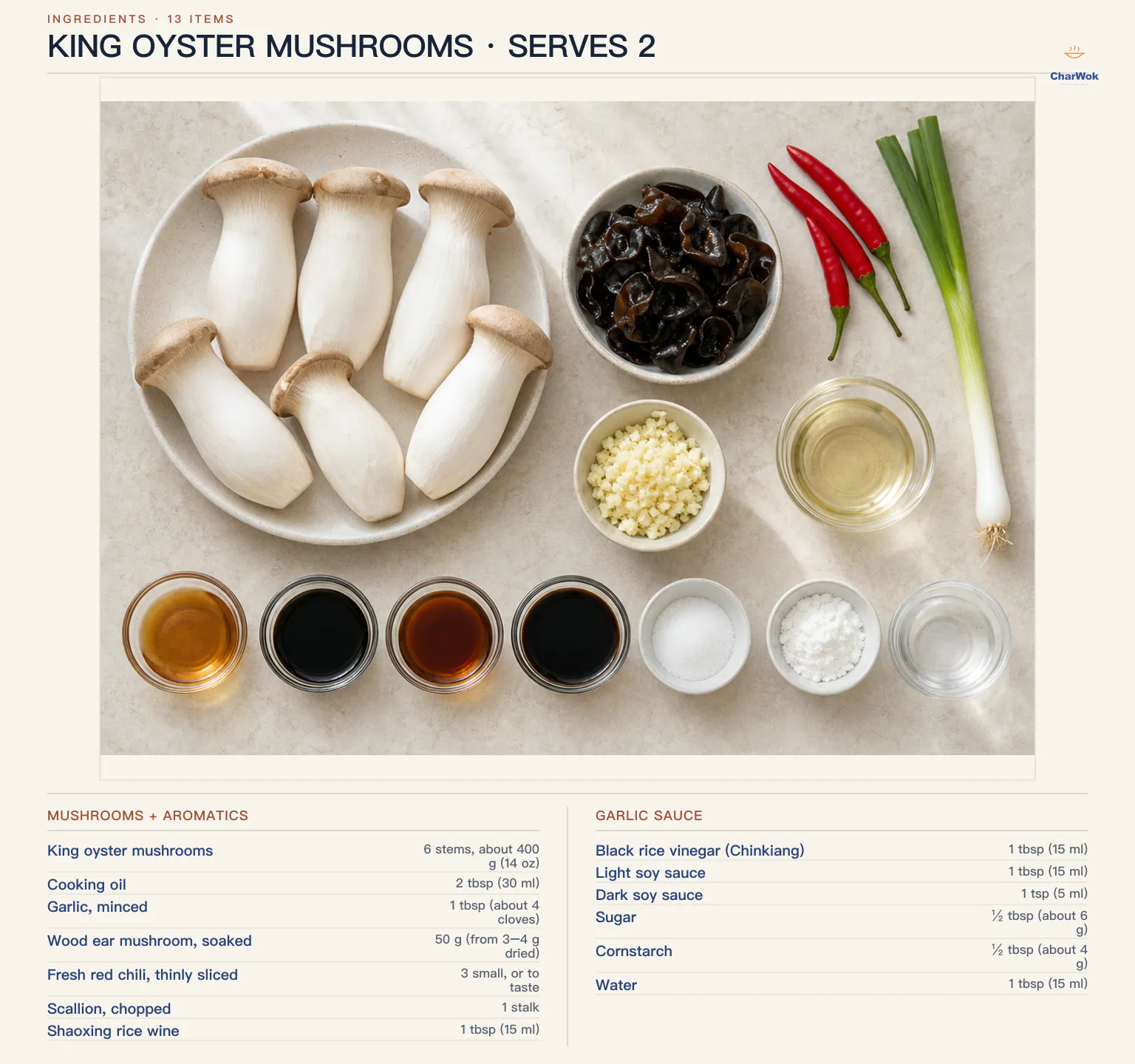
Serves 2 as a main with rice, or 4 as one of several dishes. Active cooking is fast, so measure the sauce into one bowl before you start the wok.
| Ingredient | Amount | Notes / substitute |
|---|---|---|
| King oyster mushrooms | 6 stems, about 400 g (14 oz) | Pick the thickest stems you can find. No substitute gives the same texture, though oyster mushrooms work in a pinch. |
| Cooking oil | 2 tbsp (30 ml) | Neutral, high-smoke-point: avocado, peanut, or canola. |
| Garlic, minced | 1 tbsp (about 4 cloves) | Mince fine; chunks burn in the hot oil. |
| Wood ear mushroom, soaked | 50 g (from 3–4 g dried) | Adds a crunchy contrast. See how to rehydrate wood ear mushroom. Omit if unavailable. |
| Fresh red chili, thinly sliced | 3 small, or to taste | Thai bird's-eye or Fresno. For deeper flavor, swap in ½ to 1 tbsp homemade pickled chili garlic sauce (duo jiao). |
| Scallion, chopped | 1 stalk | Green and white parts separated; whites fry, greens garnish. |
| Shaoxing rice wine | 1 tbsp (15 ml) | Dry sherry works. Read more on Shaoxing rice wine. |
| Black rice vinegar (Chinkiang) | 1 tbsp (15 ml) | The dish's sour backbone. See black rice vinegar. Balsamic is too sweet but usable at half the amount. |
| Light soy sauce | 1 tbsp (15 ml) | Provides salt and the fermented soy aroma. Light vs. dark explained in the soy sauce guide. |
| Dark soy sauce | 1 tsp (5 ml) | For color only; it is thicker and less salty than it looks. |
| Sugar | ½ tbsp (about 6 g) | Balances the vinegar. Rock sugar, crushed, melts cleaner. |
| Cornstarch | ½ tbsp (about 4 g) | Potato starch works and gives a glossier finish. |
| Water | 1 tbsp (15 ml) | To slack the starch. Stock is fine if you have it open. |
Method
- Prep everything first. Score and cut the mushrooms, soak and drain the wood ear, slice the chili, mince the garlic, chop the scallion, and stir the sauce ingredients together in a small bowl. The cornstarch will not stay suspended in the liquid, so plan to stir the sauce again right before you pour it.
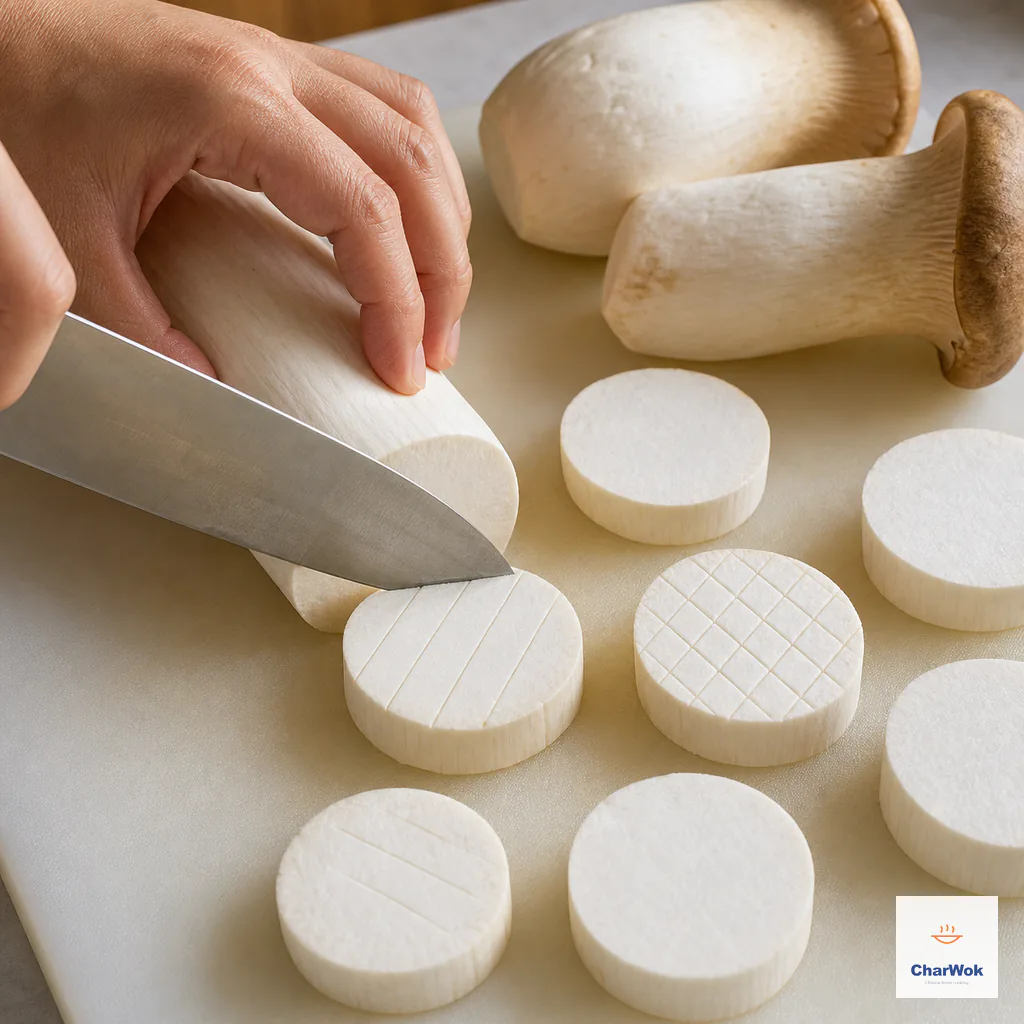
Cut thick scallop-like rounds and score shallow diamonds so the surface browns and catches sauce without falling apart.
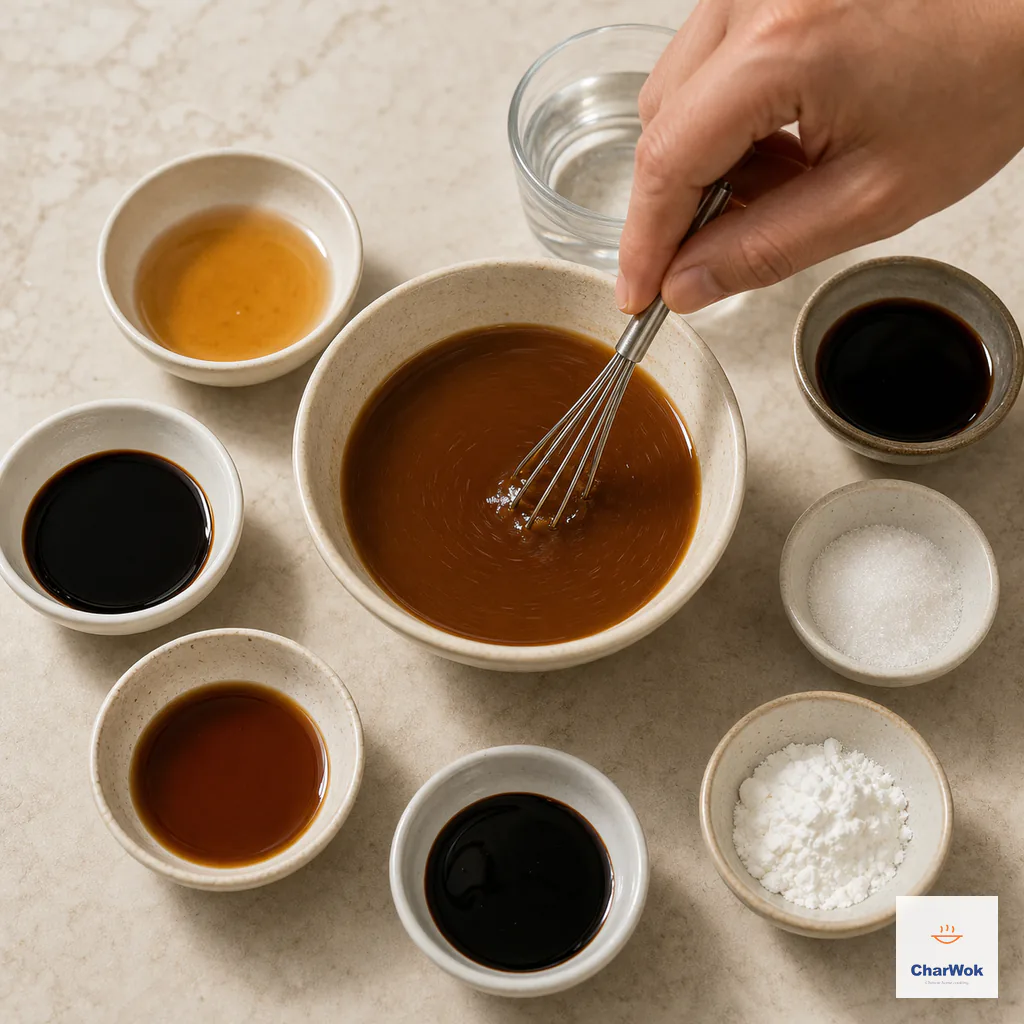
Whisk every sauce component smooth during prep, then remember that the cornstarch must be stirred up again just before pouring.
- Heat the wok, then add the oil. Get the wok smoking lightly before the oil goes in; this prevents sticking and starts the mushrooms on a hot surface. Swirl the oil to coat the sides.
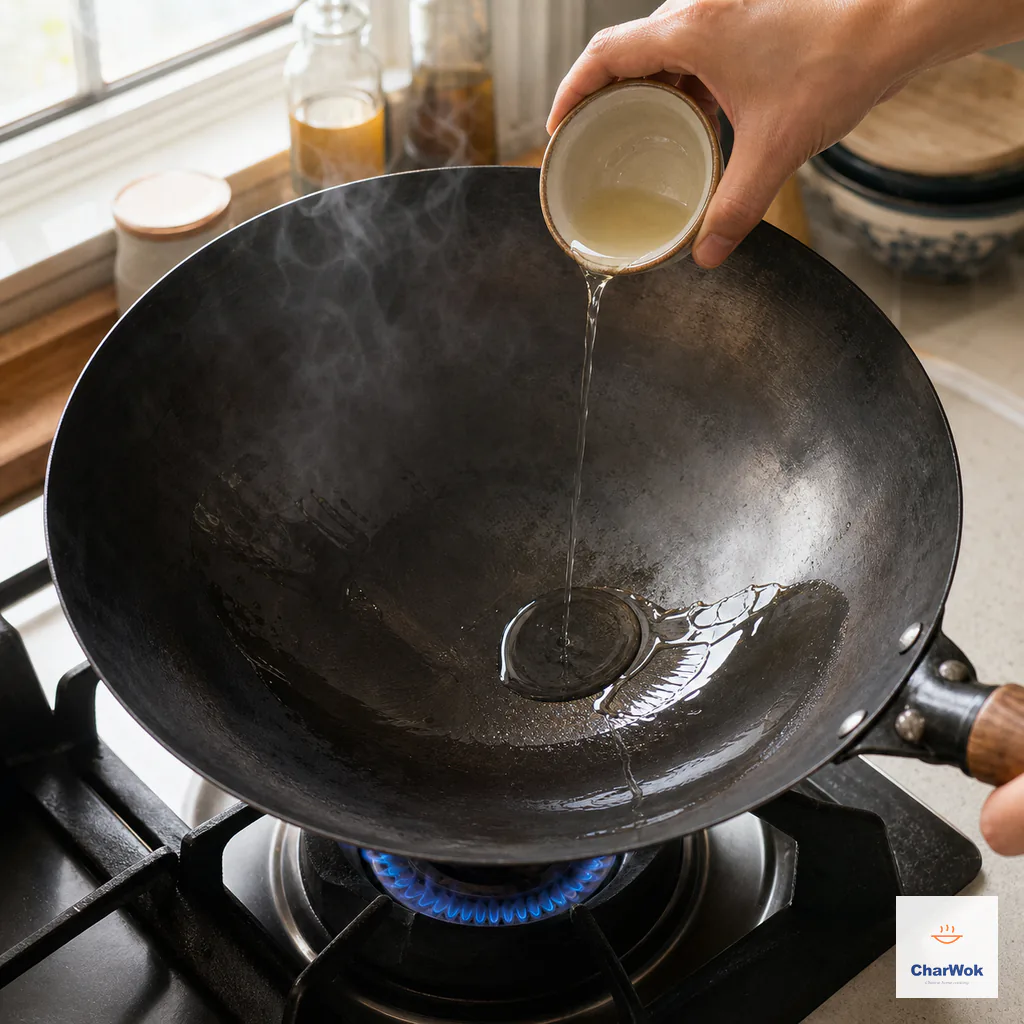
Heat the bare wok to a faint smoke first, then add and swirl a thin film of oil to reduce sticking.
- Bloom the garlic and scallion whites for ten seconds. Keep them moving. Garlic past golden is bitter, and that bitterness will haunt the whole dish. If your wok runs hot, drop the heat a notch before the garlic.
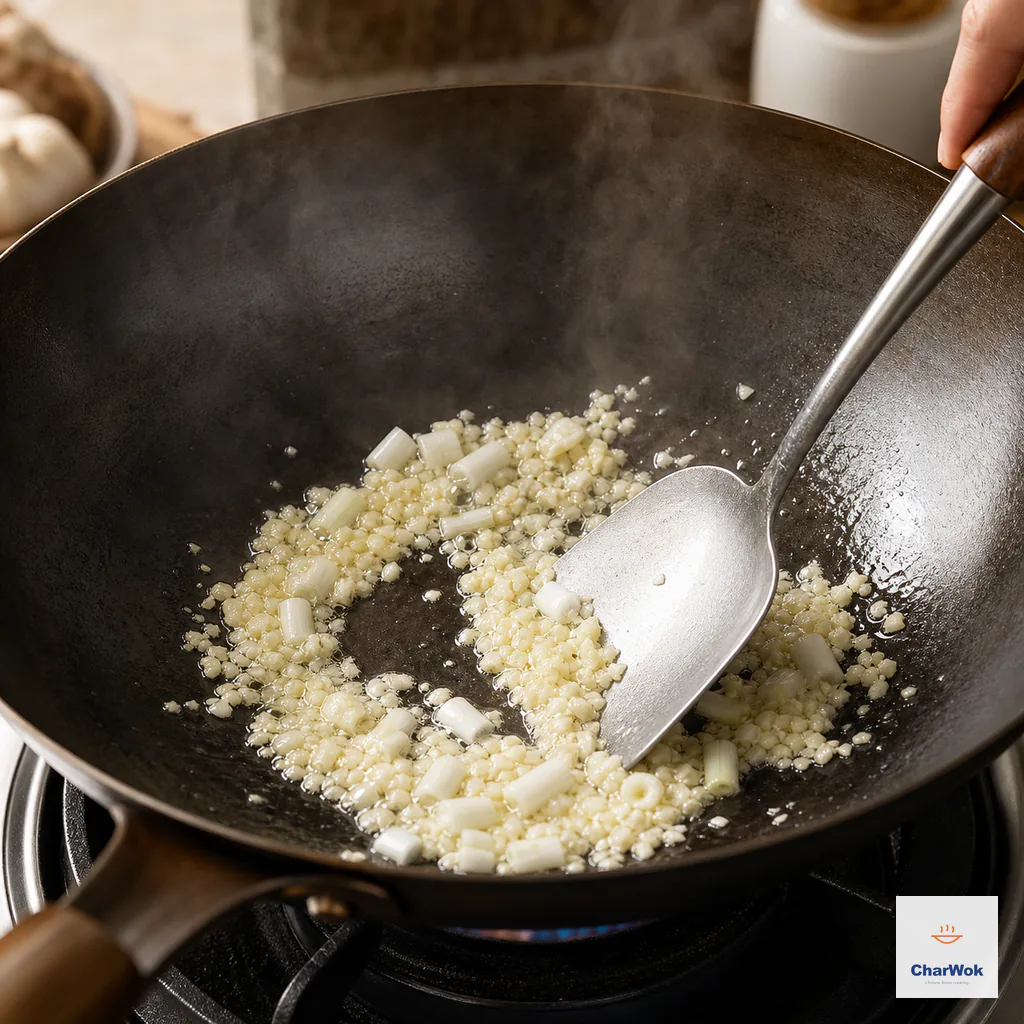
Keep the garlic and scallion whites moving for only 10 seconds; stop before any piece turns golden or bitter.
- Add the mushroom rounds in a single layer and leave them alone. This is the step everyone gets wrong. Let them sit for about 90 seconds so the cut faces develop a real crust. Two things have to happen here: the rounds need to lose their surface water, or all that liquid will bleed into the sauce later and thin it to nothing; and the dry heat has to coax a deep golden color out of the cut surface, which is where most of the roasted, savory flavor lives. Flip once the underside is golden and give the second side another minute.
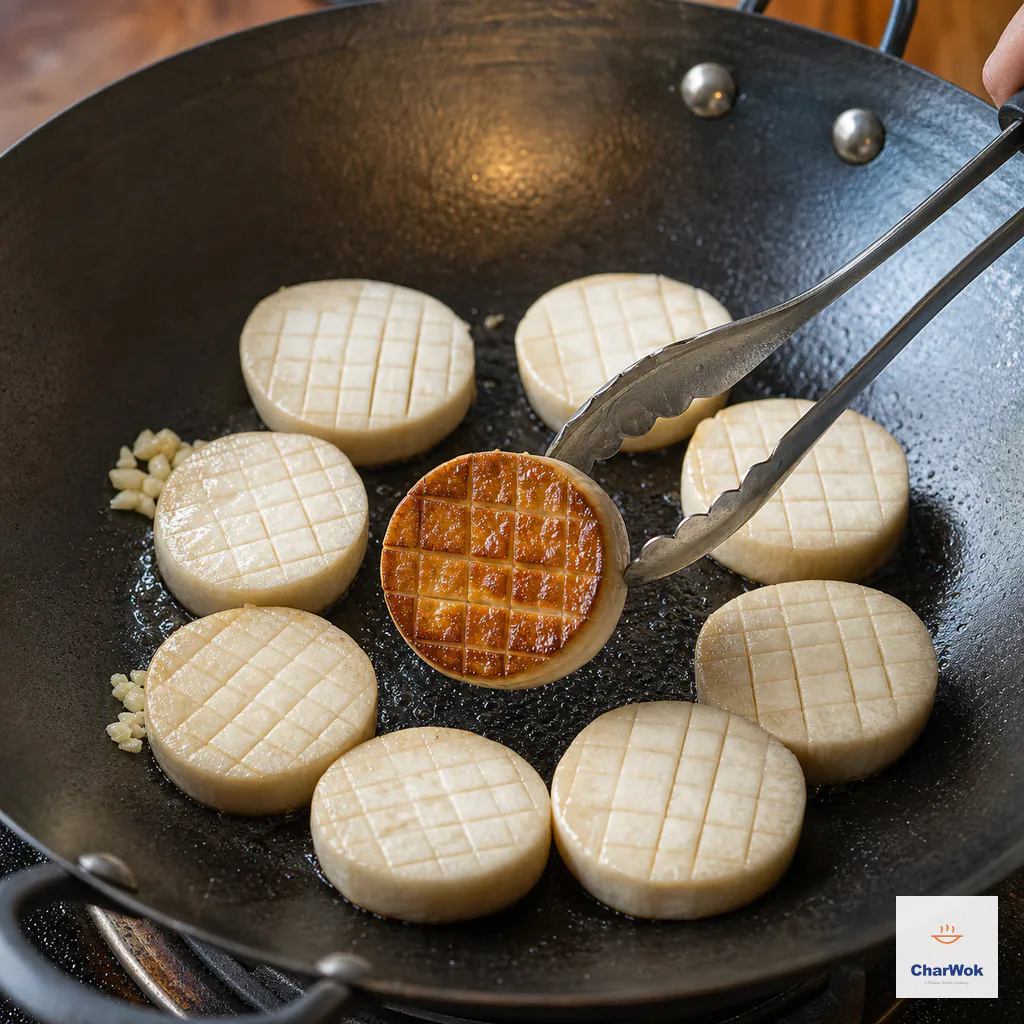
Leave the rounds undisturbed in one layer for about 90 seconds; flip only after the first face develops a real dry golden crust.
- Toss in the wood ear and chili. Stir-fry for 30 to 60 seconds. The wood ear is fully rehydrated from soaking but still needs a real turn in the hot pan to cook through; a brief stir-fry makes it glossy with oil and takes the raw edge off. The chili should soften slightly without losing its color.
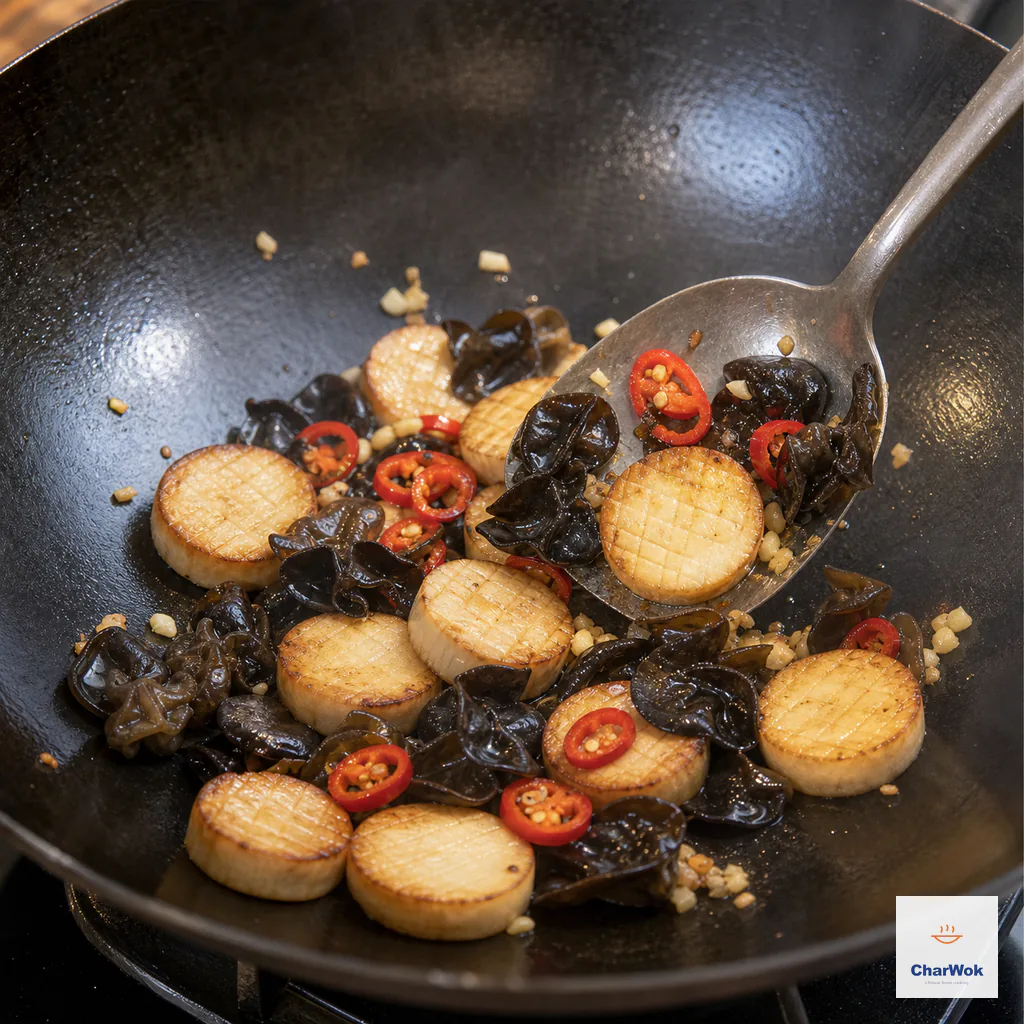
Stir-fry the soaked wood ear and chili briefly until glossy and just softened, with no water left pooling in the wok.
- Re-stir the sauce, then pour it around the edges of the wok. Hitting the hot metal first flash-cooks the wine and vinegar and deglazes the browned bits off the pan. Toss constantly. The cornstarch will thicken within 20 to 30 seconds, coating each mushroom round in a glossy glaze.
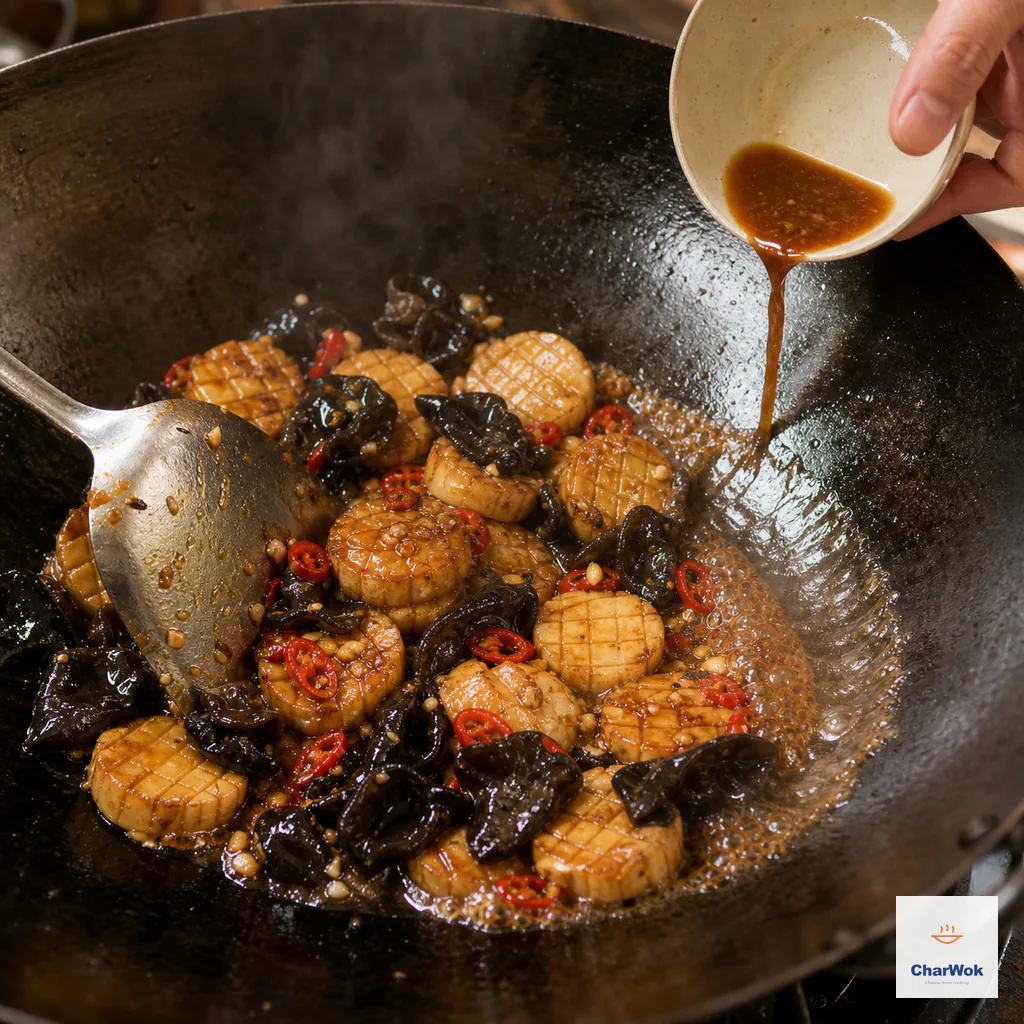
Re-stir the sauce, pour it around the hot edge and toss constantly until the starch turns clear and clings in a thin glaze.
- Kill the heat the moment the sauce tightens. Add the scallion greens off the heat so they stay bright. Overcooking at this stage turns the glaze gummy and dulls the vinegar's snap. Serve immediately over rice, or spoon it over noodles as a quick meal.
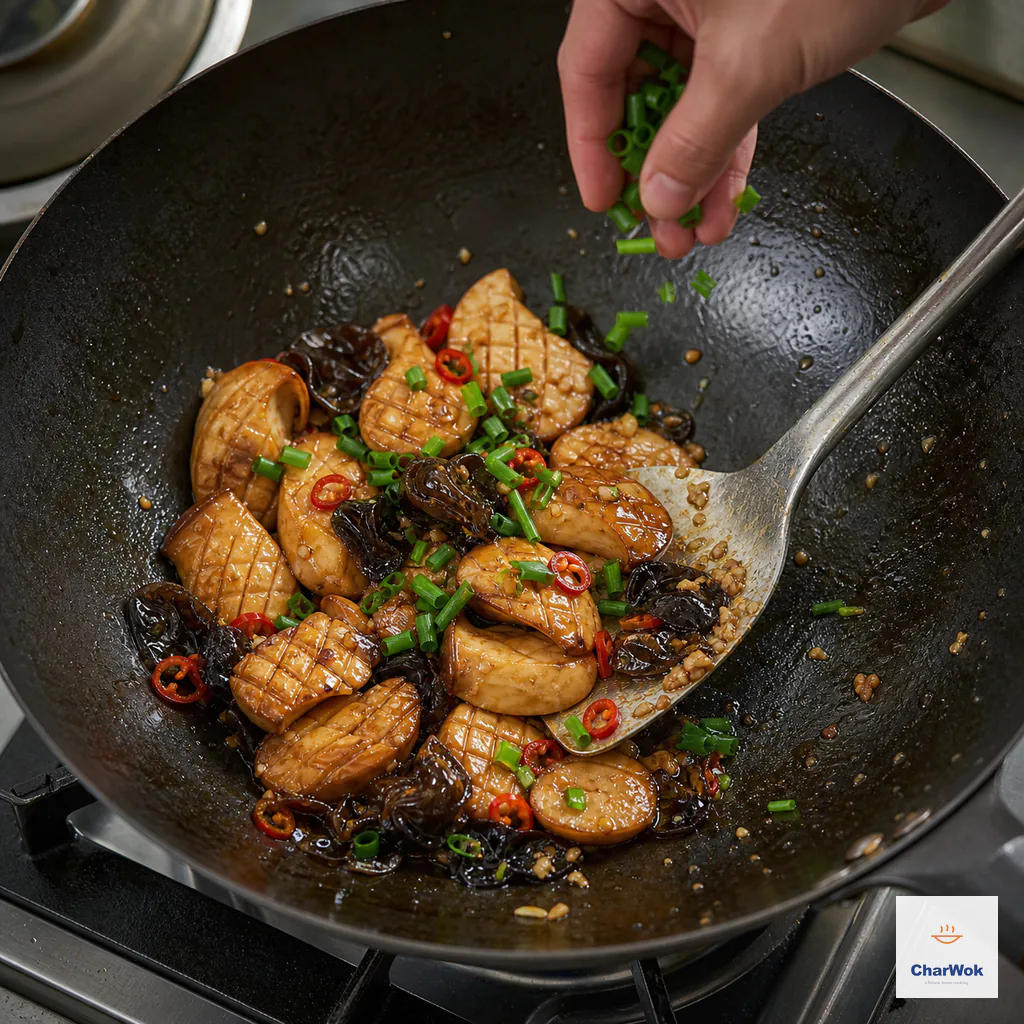
Kill the heat as soon as the glaze tightens, add scallion greens and fold twice so the vinegar stays sharp and the sauce does not turn gummy.
When it goes wrong, and how to fix it
The mushrooms are pale and steaming instead of browning. The pan was not hot enough, or you crowded it, or you stirred too early. Next time, heat the empty wok longer and cook in two batches if needed. For the pan already in front of you, pour off the liquid, raise the heat, and let the rounds sit undisturbed until color forms.
The sauce is watery and refuses to coat. Either the mushrooms were not dried before cooking, or the cornstarch settled in the bowl and never made it into the pan. Stir the sauce vigorously right before pouring. To rescue a thin sauce, push the mushrooms aside, let the liquid boil hard for 15 seconds, then toss again.
The sauce turned into a gluey lump. Too much cornstarch, or it cooked too long after thickening. Thin it with a tablespoon of hot water off the heat and toss fast. Measure the starch by spoon, not by eye.
The garlic burned and tastes bitter. You let it sit in smoking oil. There is no real rescue for burnt garlic; scoop out what you can, add a teaspoon of fresh oil, and start the garlic again on lower heat. I have done this and salvaged the dish, but the flavor is never quite as clean.
The dish tastes flat despite the long ingredient list. The balance is off, usually toward salt and away from sour. Add another half-teaspoon of black vinegar off the heat and taste. The sweet-sour-tart tension is what makes Yu Xiang read as Yu Xiang; if one note dominates, the dish collapses into a generic stir-fry.
Variations and what to serve it with
Make it a main. Add 100 g (3.5 oz) of ground pork after the garlic, break it up until it loses its pink color, then proceed. The rendered fat deepens the sauce. Or pan-fry some sliced pork belly separately and fold it in at the end.
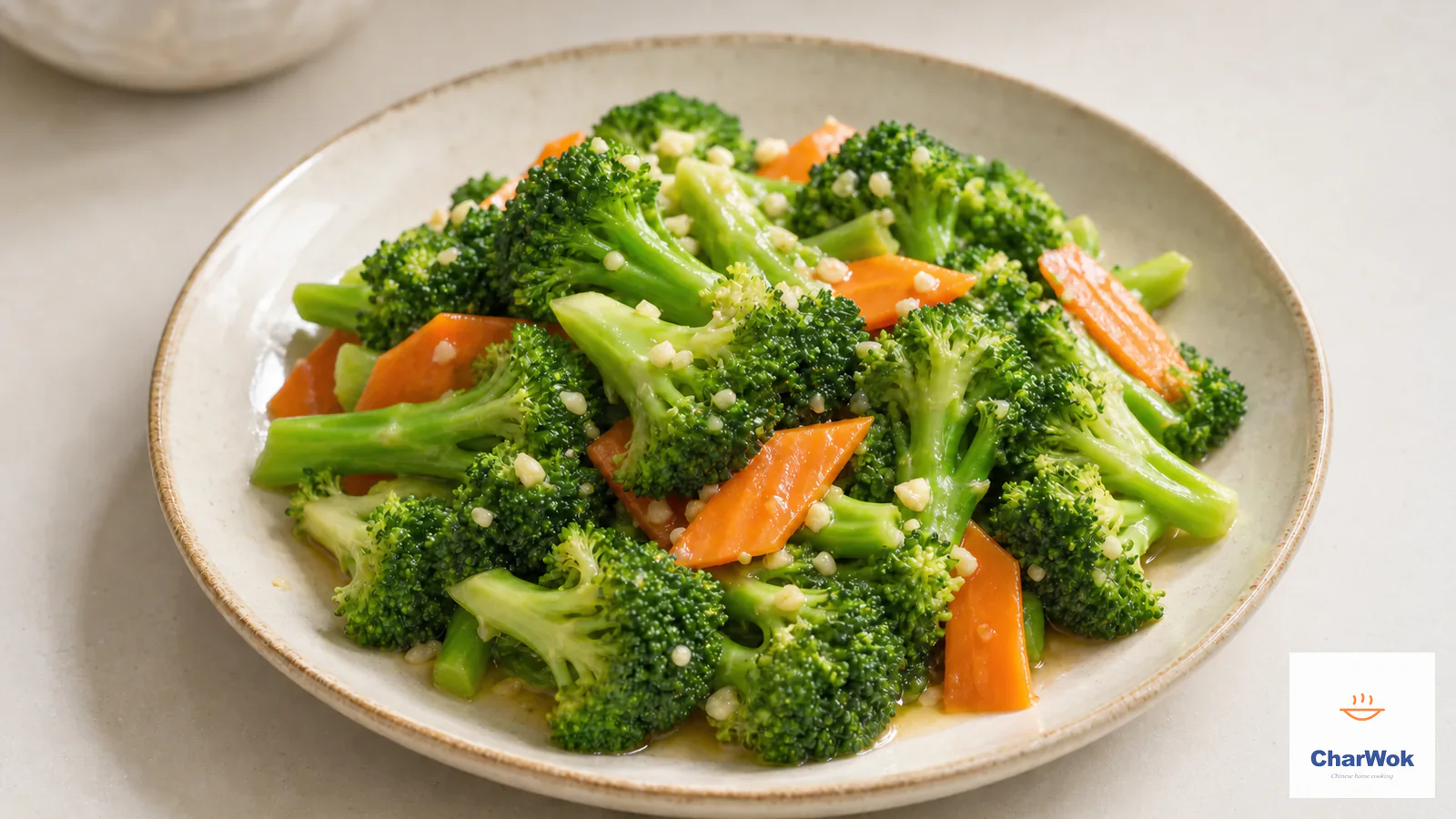
Swap the vegetable. The garlic sauce is a system, not a recipe locked to one ingredient. The same treatment works on broccoli with garlic sauce, on the eggplant version mentioned above, and on the classic Di San Xian (stir-fried eggplant, potato, and pepper) if you want a heartier vegetable plate.
Heat it up or cool it down. For a genuinely Sichuan-level burn, add a teaspoon of doubanjiang or a pinch of ground Sichuan pepper with the garlic. To tame it, seed the chilies or drop to one.
Build a meal. Serve over plain steamed rice (a reliable stovetop method is covered in the stovetop jasmine rice guide) alongside a clear soup and one green vegetable, the way a Chinese home dinner is structured. Good neighbors are dry-fried green beans, a simple hot-and-sour napa cabbage, or a bowl of egg drop soup. For a bigger spread, fold this dish into the lineup in our Sichuan recipes collection.
Use it differently. Leftover mushrooms and sauce make an excellent noodle topping. Reheat gently and spoon over scallion oil noodles or plain wheat noodles, with a splash more vinegar to wake it up.
Storage and reheating
This dish is best the minute it leaves the wok. The cornstarch glaze thins as it sits, and the mushrooms slowly release water on reheating. If you must hold it, refrigerate up to two days and reheat in a dry pan over high heat just until steaming, no longer. Microwaving makes the texture rubbery. I do not recommend freezing; king oyster mushroom turns spongy and weeps badly once thawed.
Common questions
A few things come up repeatedly, so here are short answers.
Can I use other mushrooms?
Yes, but the result is a different dish. Oyster and shiitake work; button mushrooms release too much water and turn soft. Cut whatever you use to a similar thickness so it cooks evenly.
Is this dish spicy?
Mildly. Three small fresh chilies give a gentle warmth. For real heat, use bird's-eye chilies or substitute pickled chili garlic sauce. Remove the seeds and membranes to keep it tame.
Why score the mushroom rounds?
The shallow crosshatch helps moisture escape during searing and gives the thickened sauce crevices to cling to, so each bite is seasoned all the way through instead of just coated on the surface.
Can I make it vegan?
It already is, as long as your soy sauce is. Skip the ground-pork variation and use sugar rather than honey. Shaoxing wine is grain-based and vegan-friendly.
The sauce mixture can be doubled and kept in the fridge for three days, ready for a faster weeknight version. The one thing I would never skip is the browning step. Everything else in this recipe is forgiving; that single minute of patience is what separates a restaurant-quality plate from a damp mushroom stir-fry.