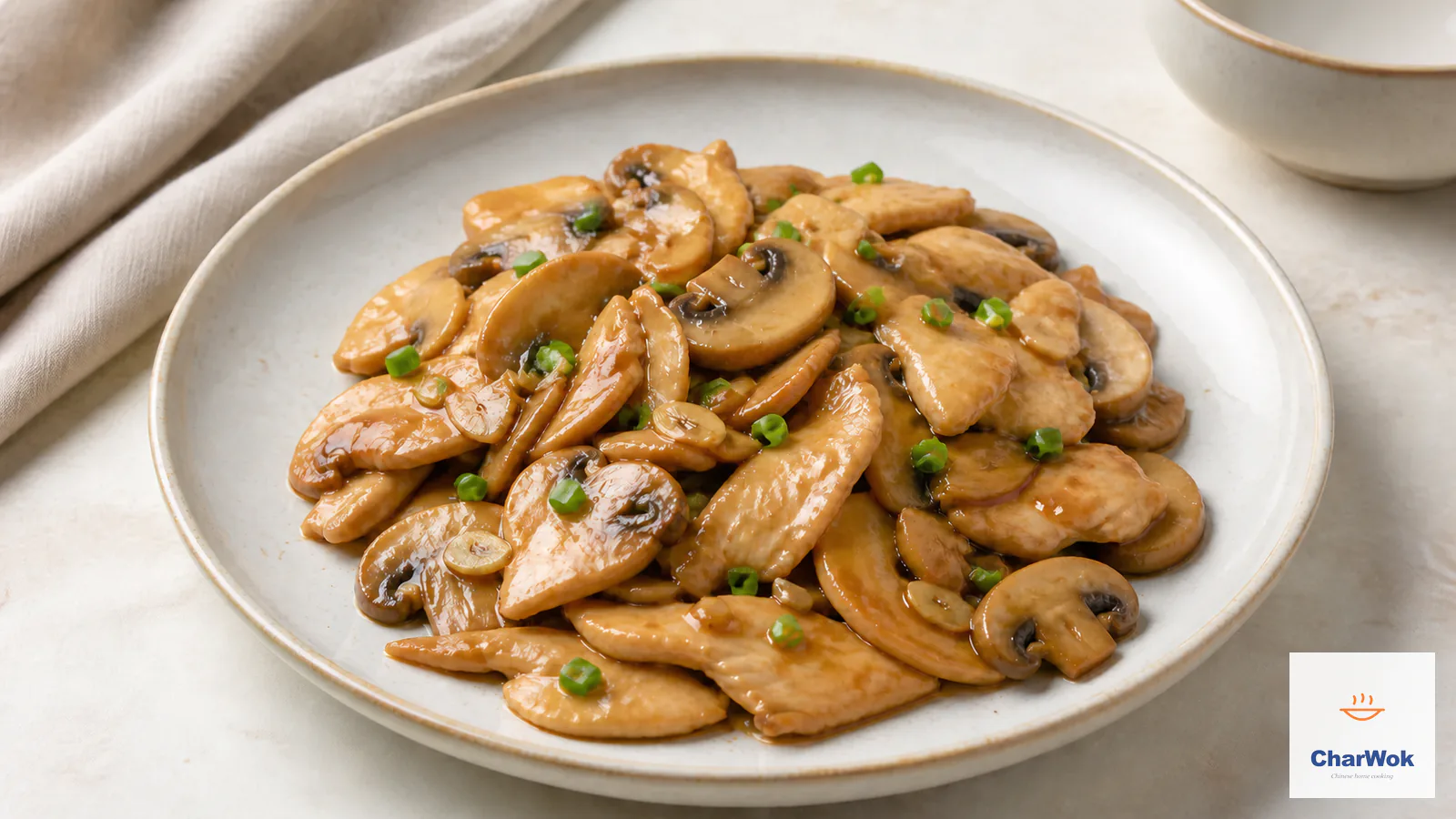
Chicken breast gets a bad reputation in stir-fries because most home cooks throw it into a hot wok naked and watch it turn dry and gray within a minute. The fix is older than the wok on your stove: a thin starch coating that traps moisture against the meat, and a pan hot enough to set that coating before the juices can escape. That single decision, plus mushrooms cooked until they actually taste like something, is the whole difference between a dish you order and a dish you avoid.
This chicken and mushroom stir-fry puts dinner on the table in under fifteen minutes without an overnight marinade or deep-frying. The method keeps the chicken juicy and the sauce clinging instead of pooling.
At a glance: Sliced chicken breast is velveted in cornstarch, water and a film of oil, given a brief first sear in shimmering oil that is not smoking, then finished with mushrooms and a cornstarch-thickened soy-oyster sauce. From raw chicken to plated, the whole thing runs about ten minutes. The first sear is only a texture step; cook the thickest slice to 165°F (74°C) during the final toss.
What this dish is, and where it sits in the cooking
Mushroom and chicken is a quiet workhorse of the Chinese home table, less flashy than Kung Pao chicken or three cup chicken, and flexible enough for whichever mushroom is in the fridge. Rehydrated dried shiitake bring deep, smoky, almost meaty flavor. Fresh shiitake are milder; common white button mushrooms are the most accessible choice in a standard American grocery and behave well in a quick stir-fry because they hold their shape and give up just enough liquid to help the sauce.
Two techniques do the heavy lifting here. The first is velveting: a light cornstarch-and-water coat plus a film of oil that seals the surface of the meat and stops it from seizing. The second is the thickened finishing sauce, which is a cornstarch slurry built directly into the sauce bowl rather than added at the end. If you want to go deeper on the underlying pantry that makes a dish like this come together, the light versus dark soy sauce breakdown matters more than people expect, and so does a bottle of Shaoxing rice wine if you keep one around.
Ingredients
Ingredients at a glance
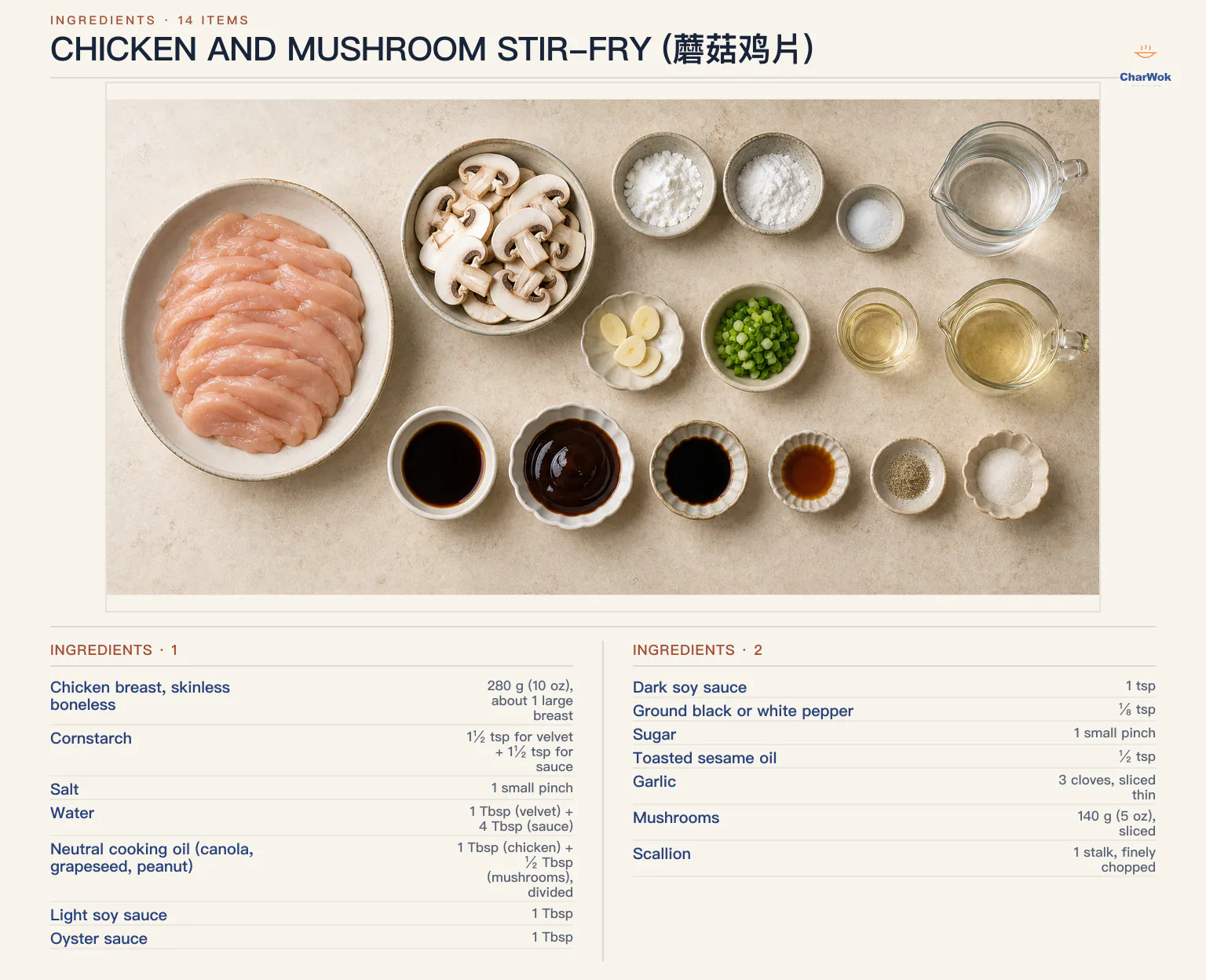
This serves two as a main with rice, or three to four as one of several dishes. The batch stays small because velveted chicken breast is best cooked and served fresh.
| Ingredient | Amount | Notes / substitute |
|---|---|---|
| Chicken breast, skinless boneless | 280 g (10 oz), about 1 large breast | Thigh works and stays even juicier; cut the same way. Slice across the grain into 3 mm (⅛") pieces. |
| Cornstarch | 1½ tsp for velvet + 1½ tsp for sauce | Potato starch is a fine swap and gives a slightly clearer gloss. |
| Salt | 1 small pinch | For the velvet only. |
| Water | 1 Tbsp (velvet) + 4 Tbsp (sauce) | Lukewarm dissolves the starch faster. |
| Neutral cooking oil (canola, grapeseed, peanut) | 1 Tbsp (chicken) + ½ Tbsp (mushrooms), divided | Peanut oil is well suited to high-heat stir-frying. |
| Light soy sauce | 1 Tbsp | The salty, savory backbone. Light soy sauce is not "low sodium." |
| Oyster sauce | 1 Tbsp | Gives the round, savory body. Mushroom-stirred "vegetarian oyster sauce" works for a meat-free version. |
| Dark soy sauce | 1 tsp | For color, not salt. Skip if you don't have it; the dish just stays paler. |
| Ground black or white pepper | ⅛ tsp | White pepper is more traditional and a touch sharper. Black pepper reads more familiar to an American palate. |
| Sugar | 1 small pinch | Balances the salt; do not taste it in the finished dish. |
| Toasted sesame oil | ½ tsp | Added off the heat so the aroma survives. A few words on choosing one are in the sesame oil guide. |
| Garlic | 3 cloves, sliced thin | Sliced, not minced, so it toasts instead of burns. |
| Mushrooms | 140 g (5 oz), sliced | White button, cremini, or fresh shiitake. Dried shiitake, soaked and sliced, is the most flavorful; see the shiitake mushroom guide for rehydrating. |
| Scallion | 1 stalk, finely chopped | Green and white parts both go in at the end. |
Step by step, with the reasoning
- Velvet the chicken first, and let it sit while you prep everything else. Toss the sliced breast with 1½ tsp cornstarch, the pinch of salt and 1 Tbsp water until each piece is coated and the bowl is no longer wet, then stir in a drop of neutral oil and mix again. The water rehydrates the lean meat a little, the cornstarch forms a gel barrier on the surface, and the oil keeps the slices from welding to each other in the wok. Give it five to ten minutes. This is the single step that separates juicy from chalky.
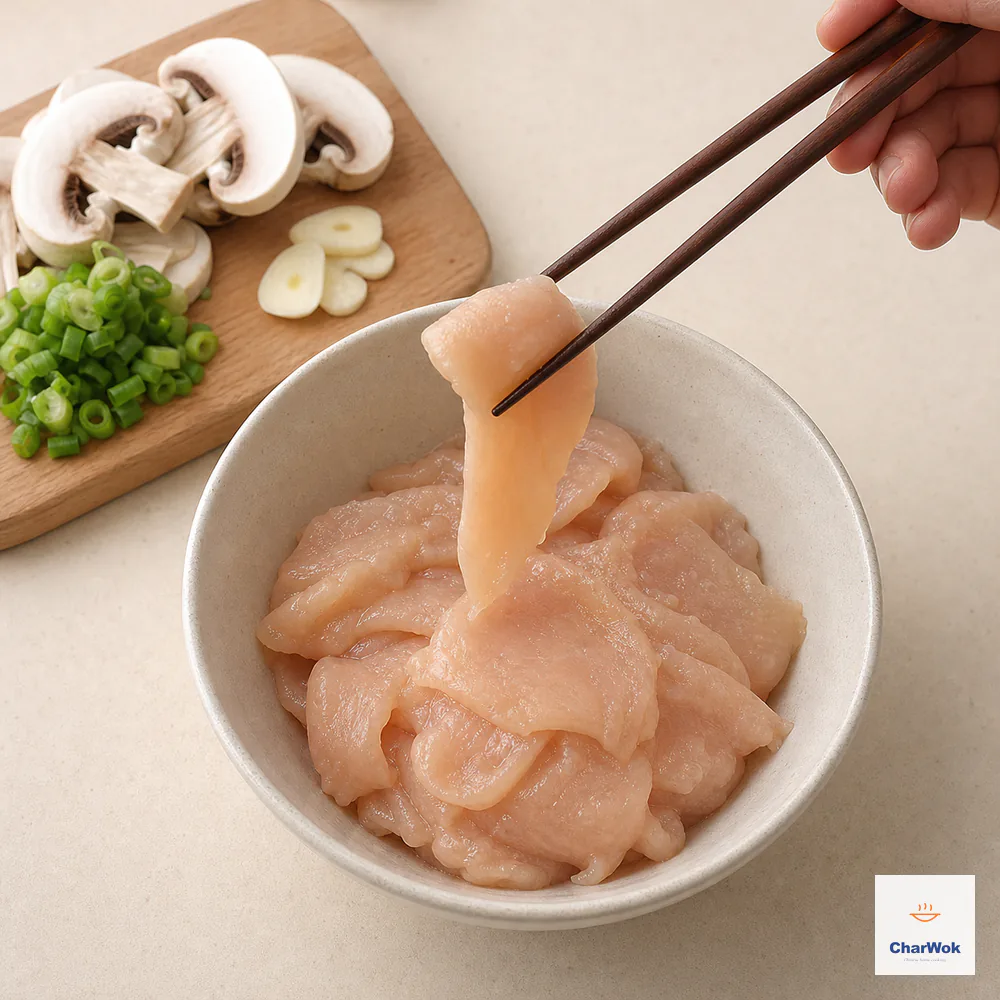
Massage the cornstarch, salt, and water into the thin chicken until the bowl looks dry, seal with a drop of oil, and rest for 5 to 10 minutes.
- Mix the sauce in one small bowl and set it beside the stove. Stir together the light soy, oyster sauce, dark soy, 1½ tsp cornstarch, pepper, sugar and 4 Tbsp water until smooth, then stir in the sesame oil. Mixing the starch into the sauce now, instead of adding a slurry later, means the thickening happens evenly and you never dump in a clump of raw cornstarch. Give it another stir right before you pour, because the starch settles.
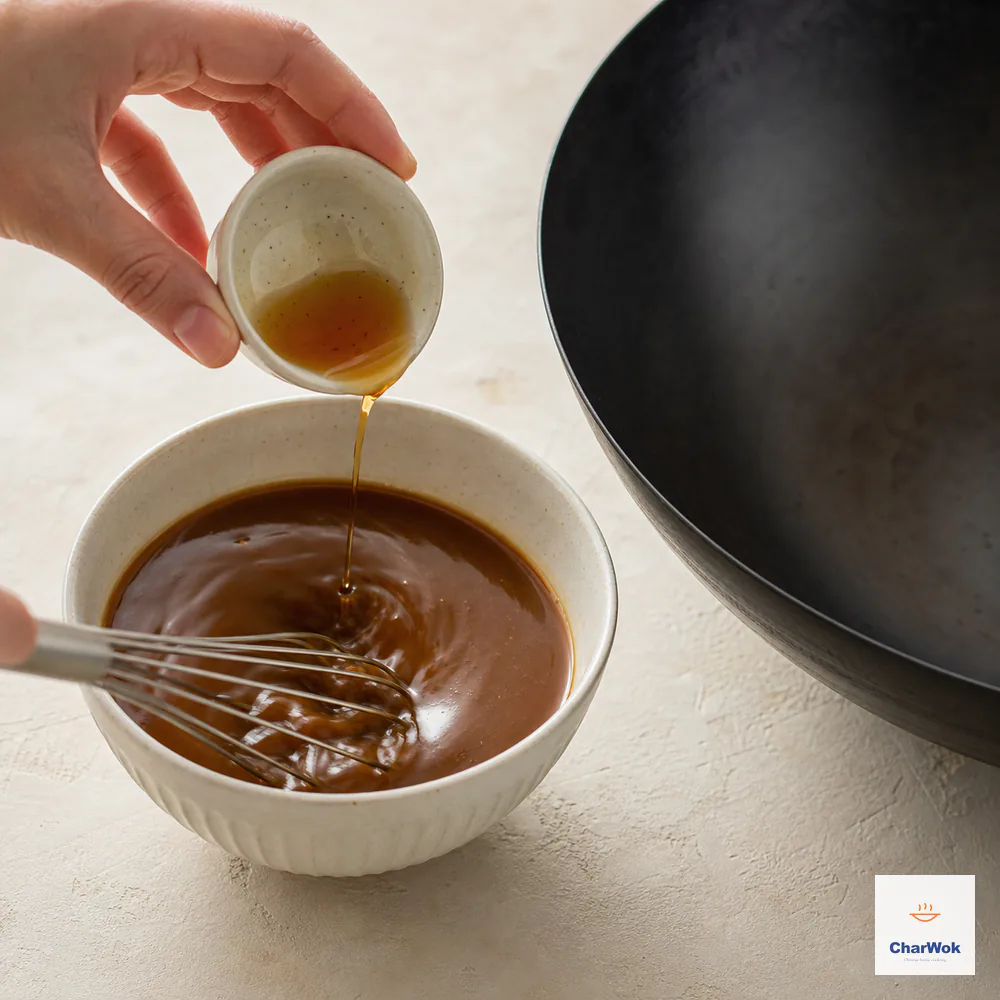
Whisk the sauce until no starch settles or clumps remain, add toasted sesame oil last, and stir again immediately before pouring.
- Preheat without chasing smoke. Heat a well-seasoned carbon-steel wok over medium-high until a water droplet beads and glides, then wipe the wok completely dry. Add 1 Tbsp oil and swirl; 350–355°F (175–180°C), when the oil shimmers but does not smoke, is hot enough. For nonstick, add the oil before heating and stay within the maker’s heat limit.
- Give the chicken a brief first sear. Spread the slices out and leave them for about 30 seconds so the underside sets and browns lightly, then flip and toss briefly. Transfer the still-undercooked chicken to a clean plate; surface color is not a doneness test, and the chicken must finish cooking in the sauce.
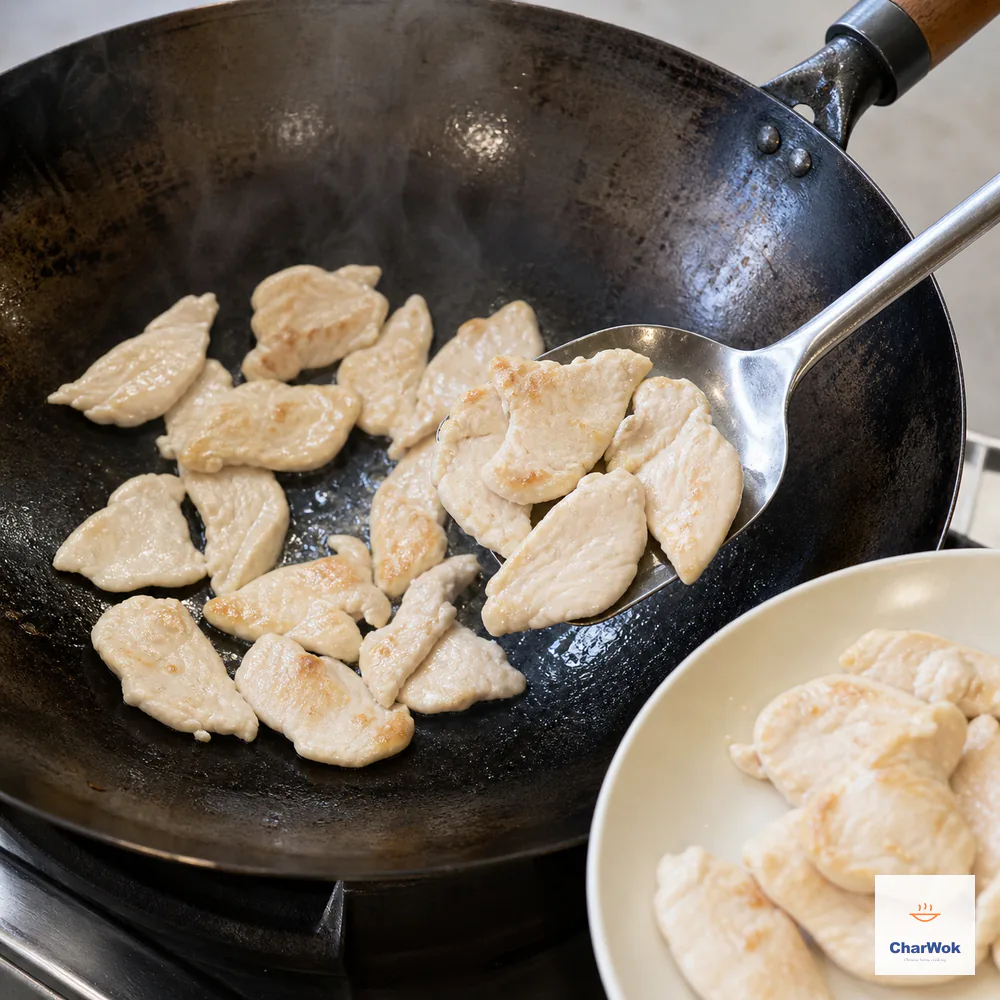
Leave the chicken spread out for about 30 seconds, toss briefly, then move the still-undercooked slices to a clean plate; surface color does not establish doneness.
- Cook the mushrooms in the same wok without wiping it. Add the remaining ½ Tbsp oil, then the sliced garlic, and let it toast for a few seconds, no more, so it colors but does not blacken. Add the mushrooms, keep the burner flat out, and keep them moving. You are looking for the first signs that they have softened and begun to sweat, about a minute or two for button mushrooms. Mushrooms added to a cool pan leach water and boil instead of fry.
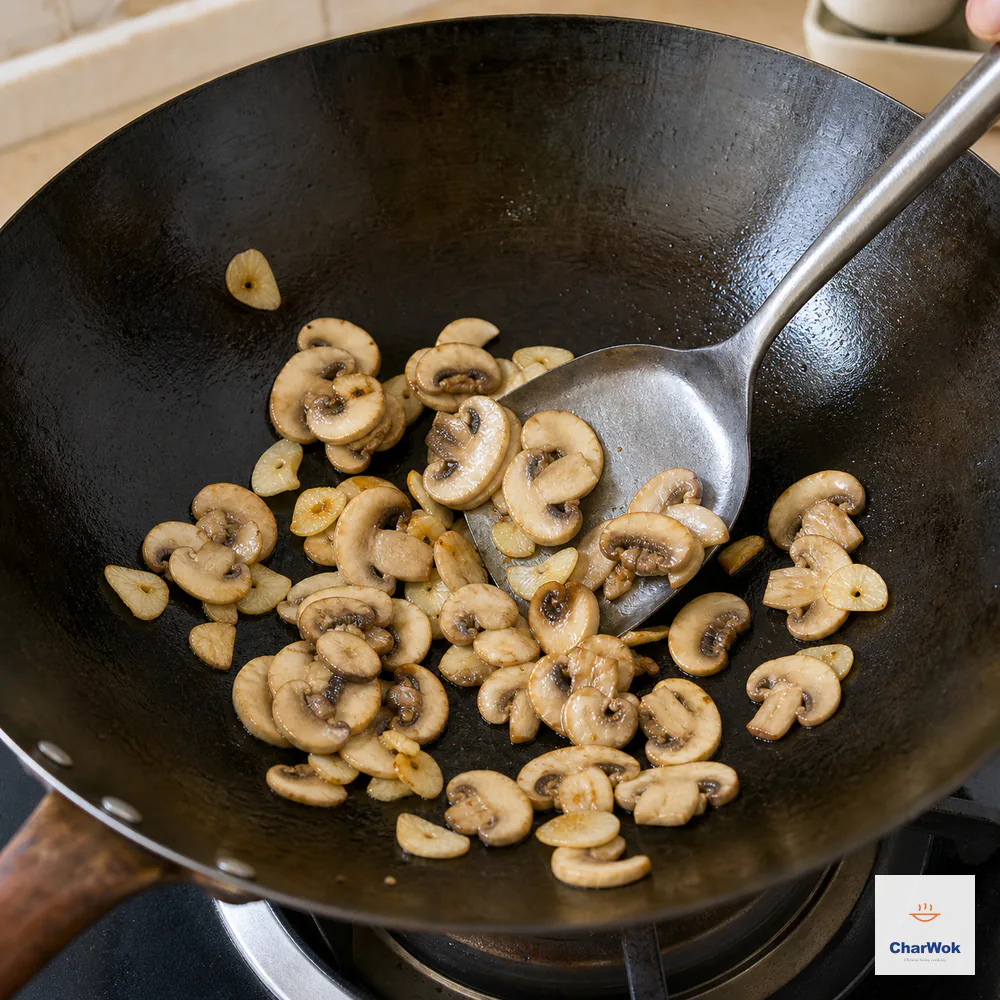
Sizzle the garlic briefly, then fry the mushrooms over high heat until their released water evaporates, the wok regains an oil sheen, and a few edges turn pale gold.
- Drop the heat to low, return the chicken, and pour in the sauce. Lowering the heat (or sliding the wok off the burner for a few seconds on a powerful gas ring) prevents the cornstarch from gelling into clumps the instant it hits the hot metal. Stir the sauce one more time, pour it over everything, and toss continuously until the thickest chicken slice reaches 165°F (74°C). If the sauce coats before the chicken reaches temperature, add 1 Tbsp water and keep tossing; sauce texture alone does not establish doneness.
- Finish with the scallions and serve immediately. Toss the chopped scallion through off the heat, so it wilts softly instead of cooking to gray. Plate it right away over freshly cooked jasmine rice. The window between perfect and merely good is short here.
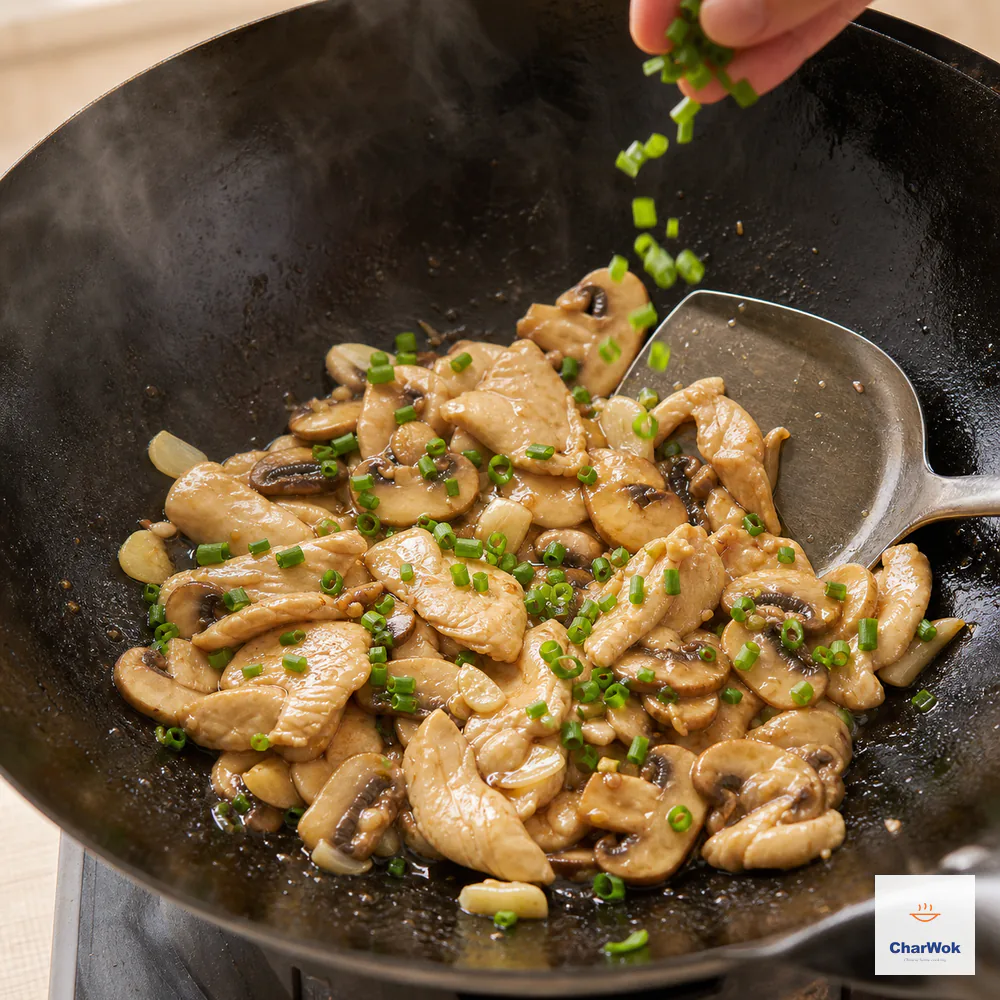
Return the chicken and sauce, then toss until the thickest slice reaches 165°F (74°C); add 1 tablespoon water if the glaze tightens before the chicken reaches temperature.
Food-safety sources: the U.S. Fire Administration cooking-fire guidance, the U.S. government’s safe minimum internal temperature chart, and FoodSafety.gov leftover guidance.
When things go wrong
Most failures trace back to one of two causes: heat that is too low, or too much going into the wok at once.
- Chicken is dry and rubbery. Either it was not velveted, the slices were too thick, or it cooked well beyond 165°F (74°C). Slice thinner next time, across the grain, keep the first sear brief, and use an instant-read thermometer on a thick piece during the final toss.
- The chicken sticks and shreds when you try to flip it. The pan or oil was not hot enough when the meat went in. Preheat carbon steel with the water-droplet check, wipe it fully dry, then add oil and cook before it smokes. Sticking can also signal a wok that needs reseasoning.
- Mushrooms give off a lake of liquid and turn gray. Two common reasons: the wok was crowded, or the heat dropped. Mushrooms need high heat and room. Cook them in a single layer, and if your burner is weak, do them in two batches, holding the first batch out while the second cooks.
- The sauce is watery and slides off. You forgot to re-stir the sauce before pouring, so the cornstarch stayed in the bowl, or the heat was too low for the starch to gel. Bring the wok back to a brief bubble and it will thicken in seconds. Never dump dry cornstarch straight into the wok; it forms lumps that no amount of stirring will dissolve.
- The sauce gelled into slimy clumps. The wok was too hot when the sauce hit it. Next time lower the heat, or slide the wok off the flame for a beat, before pouring. Stir constantly from the first second.
- The garlic burned and turned bitter. Garlic sliced thin scorches fast in hot oil. Add it right after the oil, let it just begin to color, and get the mushrooms in right behind to cool the pan. If your garlic habitually burns, add it together with the mushrooms instead of before them.
Variations and what to serve it with
The skeleton of this recipe, velveted protein plus a soy-oyster sauce with aromatics, is endlessly portable. Once you internalize the flow, you stop needing a recipe.
- Swap the protein. The same approach makes a superb beef and mushroom stir-fry with flank steak sliced thin against the grain, or a cashew chicken if you want crunch. Cubed firm tofu, pressed and velveted lightly, turns this into a vegetarian main.
- Swap the mushroom. Fresh shiitake are the upgrade, and rehydrated dried shiitake are the real prize for flavor. King oyster mushroom, sliced into planks, gives a satisfying bite, as in this king oyster mushroom with garlic sauce. For a more composed vegetable side built around cooked mushrooms, the classic braised mushroom with bok choy shows the same ingredient treated gently.
- Build it into a meal. For a gentler, slow-cooked cousin of the same pairing, steamed chicken with shiitake leans on the same flavors without the high-heat anxiety. If you are feeding a crowd, double the chicken and mushrooms and stretch it into a quick chicken and mushroom congee the next morning with the leftovers.
- Plate it on something starchy. Steamed rice is the default, but the sauce also does lovely things over noodles. Spoon it over chicken chow fun rice noodles, or keep it simple with plain rice and a cold cucumber salad on the side to cut the richness.
Storage and reheating
This dish is best eaten the moment it leaves the wok: the cornstarch sauce can weep after refrigeration, and chicken breast loses tenderness on reheating. Put leftovers in a shallow container and refrigerate within 2 hours, or within 1 hour when the room is hotter than 90°F (32°C). Keep for 3 to 4 days, then reheat the thickest chicken pieces to 165°F (74°C). A covered skillet with a teaspoon of water protects the sauce; a microwave also works when the food is stirred partway through for even heating.
If you are cooking for a crowd and want to get ahead, do everything except the stir-fry. Keep the sliced, velveted raw chicken covered and refrigerated on a low shelf, separate from the sauce, mushrooms, garlic, cooked food, and ready-to-eat ingredients. Prep up to a day ahead, then cook the full recipe in the last ten minutes before serving.
Common questions
The short version
If you take one thing from this, take the velvet. A teaspoon of cornstarch, a tablespoon of water, and a film of oil, given ten minutes to work, will change the texture of chicken breast from the wok. Cook the mushrooms until their water evaporates, build the cornstarch into the sauce, and finish the thickest chicken slice at 165°F (74°C). For more ideas in this quick-cooking lane, browse the weeknight recipes collection.