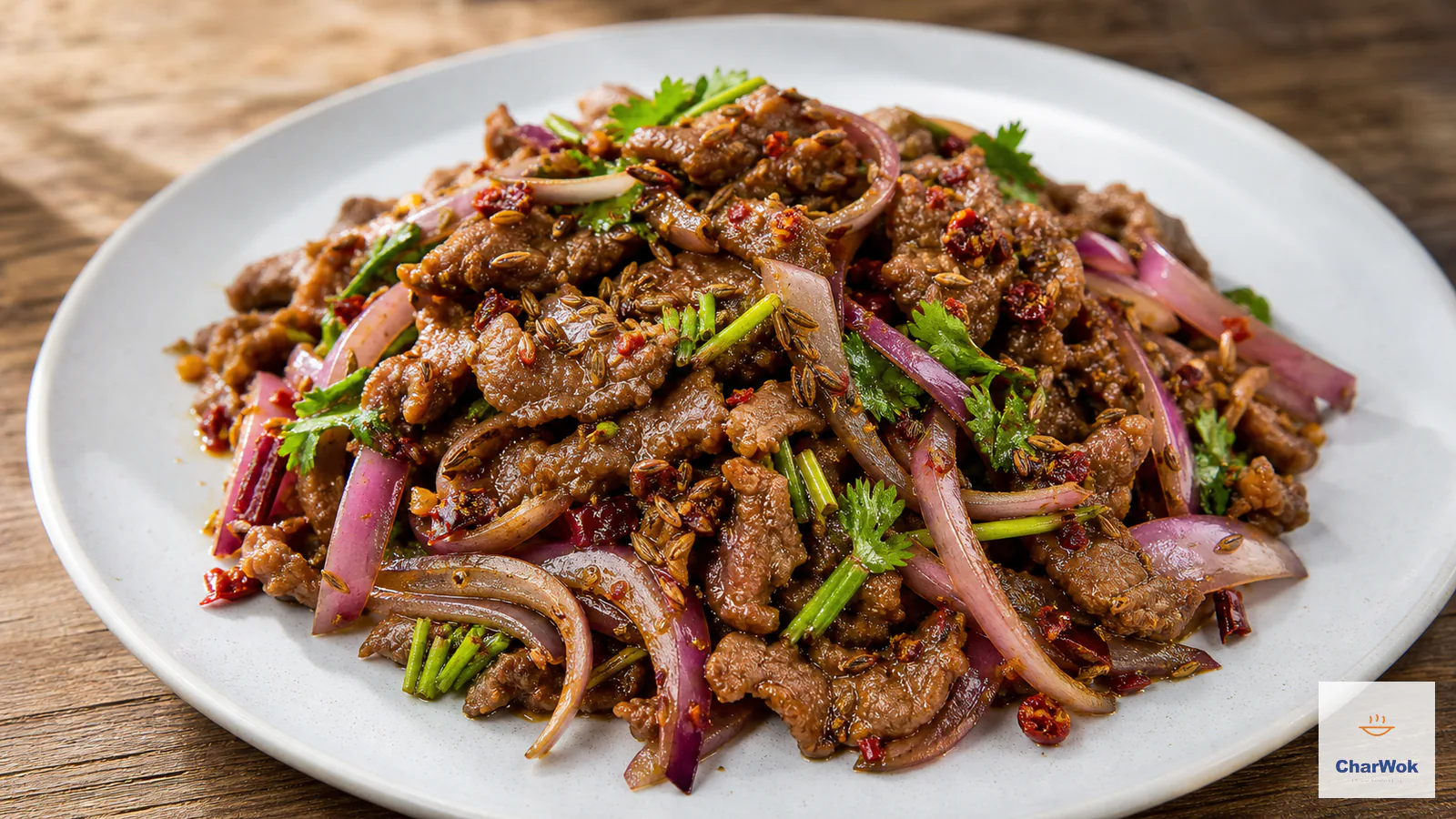
The first time I ordered cumin lamb in a Xinjiang-owned shop in Flushing, I spent ten minutes trying to figure out how the cook got those pale, gamey-smelling cubes of lamb to taste roasted, smoky, and almost charred at the edges in under five minutes of wok time. The answer turned out to be simpler than the result suggested: cut small, velvet the surface, then sear in a wok hot enough that the spices bloom in seconds rather than stew in their own juice. Get the heat right and the lamb stays pink and juicy inside while the cumin toasts on the outside. Get the heat wrong and you end up with a gray, watery mess that smells of boiled meat.
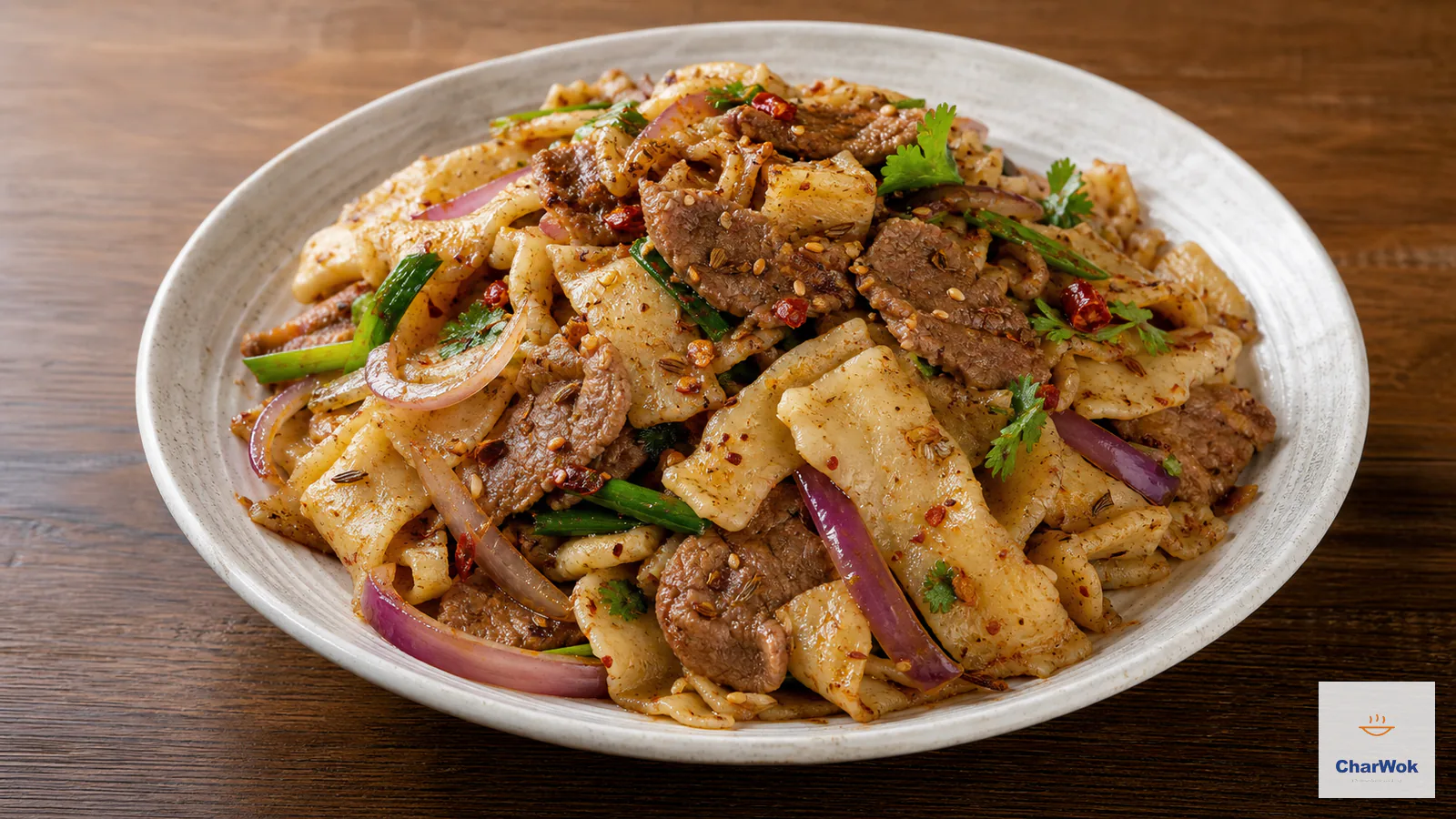
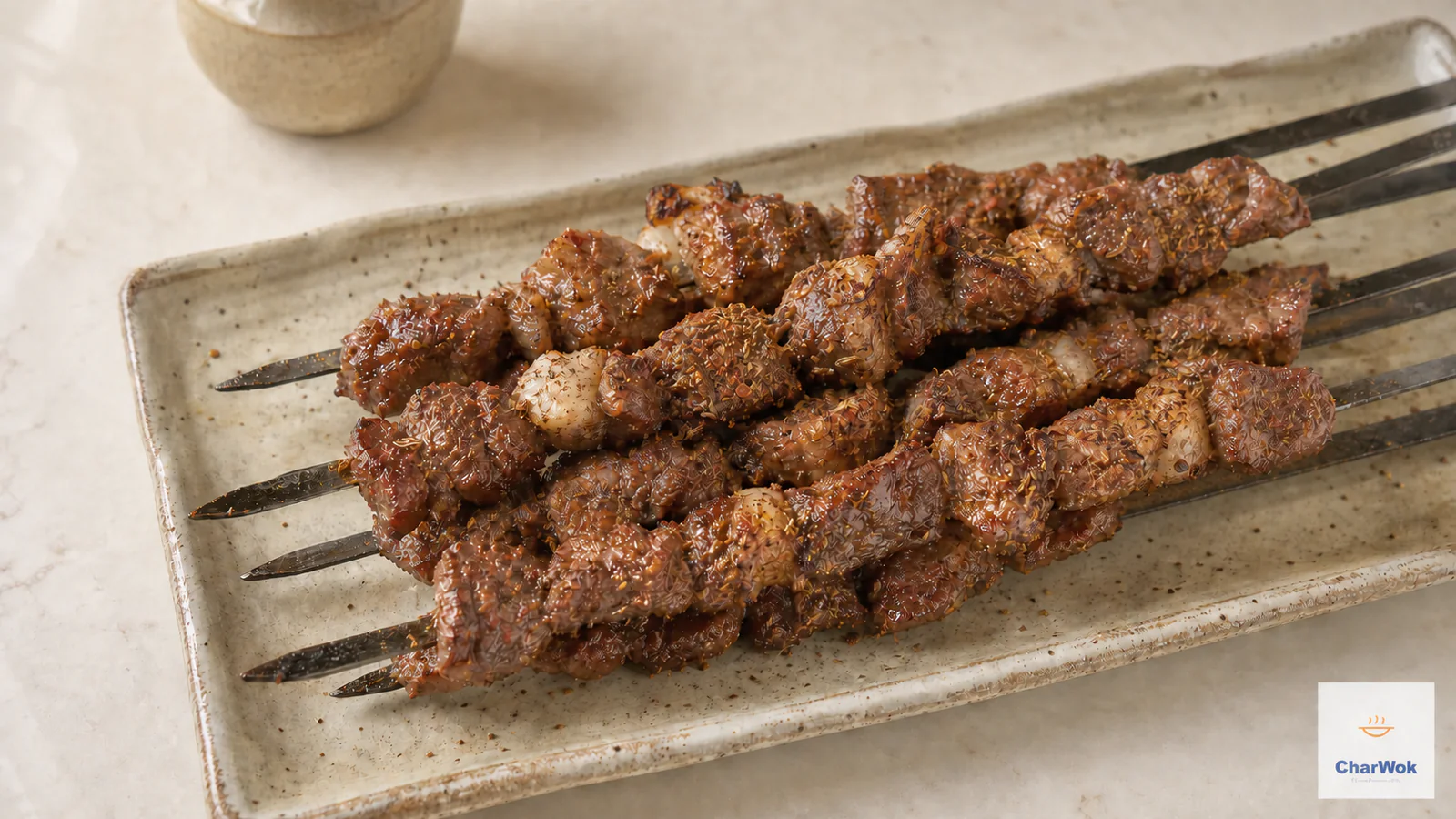
This is a northwest Chinese dish at heart, the kind of thing that grew up around lamb, dry-farming, and the spice caravans that carried cumin west out of Iran and east into Shaanxi and Xinjiang. It is cousin to the cumin-dusted lamb skewers (yang rou chuan'r) you find on every Beijing street corner in summer, and to the hand-torn noodle version cumin lamb noodles that turns the same flavors into a one-bowl meal. Once you understand the few decisions that matter, you can move freely between them.
Three servings, about twenty-five minutes start to finish, and the whole stir-fry takes under five minutes once the wok is hot. Cut the lamb into ¾-inch (2 cm) cubes, velvet with cornstarch and oil, sear in a screaming-hot wok in one layer, pull the meat out, bloom the cumin seeds and chili off the heat, toss everything back for under a minute. The number that decides whether this works is wok temperature: if the meat weeps liquid the moment it hits the pan, you are stir-boiling, not stir-frying.
What you are trying to achieve
Two things have to happen at once for cumin lamb to taste right. The cumin has to toast, not simmer. Whole cumin seeds dropped into hot oil release a wave of warm, savory aroma in about ten seconds; left in oil that is not hot enough, or dumped on top of wet meat, they sit there and smell of nothing. The lamb, meanwhile, has to brown on the outside and stay medium-rare inside, which is only possible if the surface moisture is under control and the pan is hot enough to sear before the juices run.
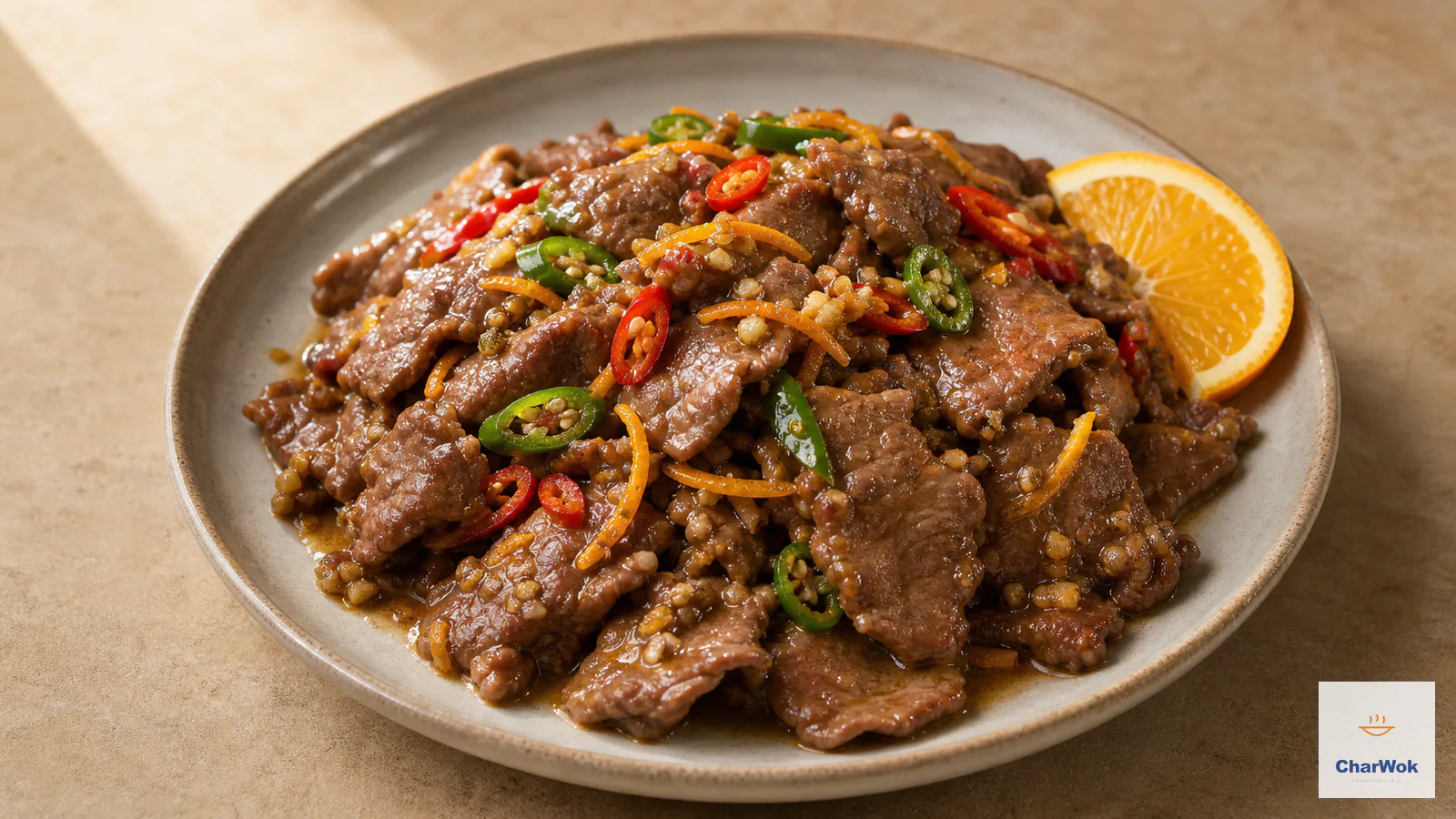
This is why nearly every problem with this dish is a moisture or heat problem, not a seasoning problem. The marinade does two jobs that are easy to miss. A thin cornstarch coating gelatinizes the instant it hits the oil, which buys you a crisp, browned crust before the interior overcooks; that is the same principle behind black pepper beef and most Cantonese takeout stir-fries. And a spoonful of oil mixed in at the end keeps each cube separate so the meat slides into the wok instead of sticking in a cold clump. Ten minutes is plenty for the rest, since the flavor comes from the spices, not from a long soak.
Ingredients
Ingredients at a glance
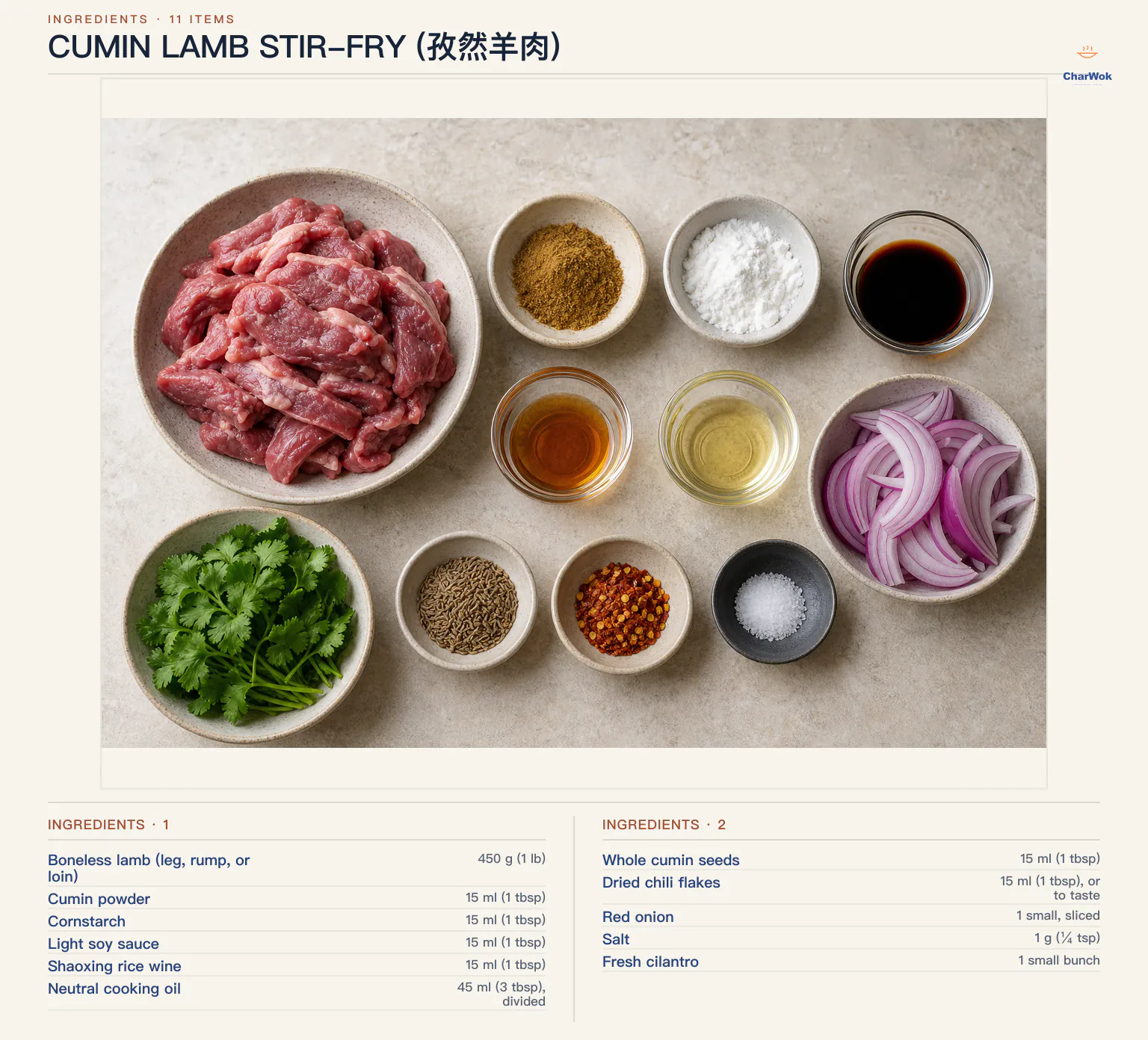
Lamb leg is my default. It is lean enough to sear cleanly, holds together in cubes, and is forgiving on a home stove. Loin or rump also work, and shoulder is delicious but fattier, so expect more splatter. If you cannot find lamb, this treatment works beautifully on boneless beef as well; pick a quick-cooking cut like sirloin or flank.
| Ingredient | Amount | Notes / substitute |
|---|---|---|
| Boneless lamb (leg, rump, or loin) | 450 g (1 lb) | Trim silver skin. Beef sirloin is a fine substitute. |
| Cumin powder | 15 ml (1 tbsp) | Toast whole seeds and grind for the best aroma. |
| Cornstarch | 15 ml (1 tbsp) | This is the velvet coat. Do not skip. |
| Light soy sauce | 15 ml (1 tbsp) | Usukuchi or standard Chinese light soy. |
| Shaoxing rice wine | 15 ml (1 tbsp) | Dry sherry works in a pinch. |
| Neutral cooking oil | 45 ml (3 tbsp), divided | Peanut, canola, or grapeseed; high smoke point. |
| Whole cumin seeds | 15 ml (1 tbsp) | The dish's backbone. Use whole, not ground, here. |
| Dried chili flakes | 15 ml (1 tbsp), or to taste | Aleppo or Tianjin flake. Adjust for your heat tolerance. |
| Red onion | 1 small, sliced | Shallot or white onion also fine. |
| Salt | 1 g (¼ tsp) | To finish. The soy already seasons the meat. |
| Fresh cilantro | 1 small bunch | Stems and leaves. Substitute scallion greens if you hate cilantro. |
How to make it
- Cut the lamb against the grain into even 2 cm (¾-inch) cubes. Even sizing matters more than precision. Pieces that vary wildly in size mean some dry out while others stay raw, and small cubes cook so fast that the margin for error disappears.
- Velvet and marinate. Toss the lamb with the cumin powder, cornstarch, light soy, and Shaoxing wine. Rub with your fingers until every cube is coated and the wet seasonings have disappeared into a thin paste. Then drizzle in 1 tablespoon of the oil and mix again. The oil seals the surface so the cubes slide apart in the wok. Let it rest 10 minutes at room temperature; you can hold it in the fridge for a few hours, but bring it back toward room temperature before cooking so it does not kill your pan heat.
- Heat the wok until it smokes. A flat-bottomed carbon-steel wok or a heavy cast-iron skillet is what you want. Get it hot enough that a drop of water dances and evaporates instantly, then add the remaining 2 tablespoons of oil and swirl. If you are using nonstick, reverse the order: add the oil first, then heat, because an empty nonstick pan on high will ruin the coating.
- Sear in a single layer. Spread the lamb across the pan and leave it alone for 15 to 20 seconds so a crust can form, then toss. Keep the cubes moving but do not fuss. As soon as the outside has lost its raw pinkness, scoop the meat out onto a plate and leave the oil behind. The inside should still be medium-rare; it will finish cooking later.
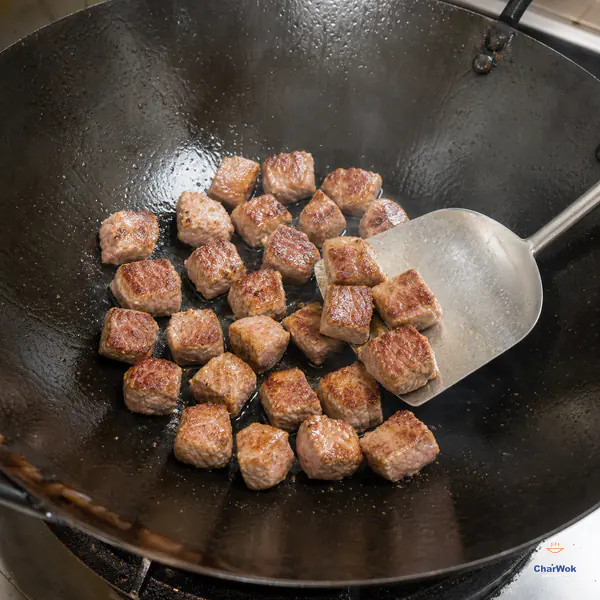
Sear the lamb in small batches with every cube touching the hot metal; once the outside loses its raw pinkness and the contact faces brown, lift it out immediately while leaving the oil in the wok.
- Bloom the spices off the heat. Pull the wok off the burner (or kill the flame on an electric coil) and add the cumin seeds and chili flakes to the residual oil. Toast for 5 to 10 seconds, swirling constantly. The cumin will darken by a shade and the chili will smell toasted rather than raw. The moment it smells good, stop. Burnt cumin turns bitter and there is no rescue.
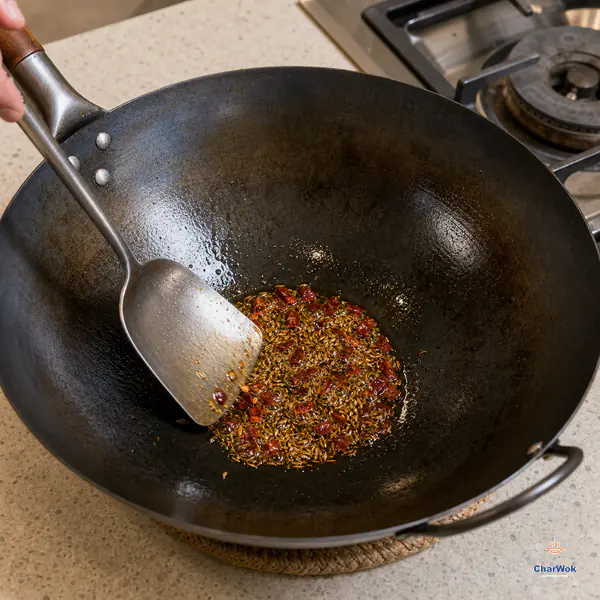
Take the wok off the burner before adding the cumin seeds and chilli flakes; swirl for only 5–10 seconds, stopping while the cumin is just one shade darker and the chilli is still brick red.
- Finish hot. Return the wok to high heat, add the lamb and the sliced onion, and stir-fry for 30 to 60 seconds. You want the onion to soften at the edges but still have bite, and the meat to be just cooked through. Take it a few seconds too far and the lamb goes from juicy to leather.
- Season and garnish. Kill the heat, sprinkle the salt over, add the cilantro, and toss once. The residual heat wilts the cilantro without turning it to mush. Serve immediately over steamed jasmine rice, or folded into hand-pulled noodles for the northwest version.
When things go wrong
I have made every mistake below at least once. The fixes are mostly about heat and batch size.
- A pool of gray liquid forms and the meat steams instead of browning. The pan was not hot enough, or you crowded it. Next time, get the wok genuinely smoking before the oil goes in, and cook in two batches if your pan is small. Pour off any liquid that accumulates rather than letting it thicken into a cornstarch gravy, which is the most common failure I see and exactly what turns this into a stodgy stew.
- The lamb is tough and chewy. Either you overcooked it or you cut with the grain. Slice against the grain so the muscle fibers are short, and pull the meat out while it is still a shade underdone, since it finishes in the final toss.
- The cumin tastes burnt and bitter. The pan was too hot when the seeds went in, or they sat too long. Always bloom off the heat and trust your nose. If it smells acrid, it already is; start the spice step over.
- Everything sticks and tears. The wok was not hot enough when the oil went in, or it is not well-seasoned. Preheat properly, and remember the cornstarch coating is what creates the brown crust, so a little sticking is fine and expected.
Variations and pairings
The cumin-lamb-chili trio is sturdy enough to bend in several directions. A spoonful of ground Sichuan peppercorn added with the chili flakes gives the dish a numbing edge that pushes it toward the Sichuan register; if you want to understand why that pairing works, the Sichuan pepper guide walks through the science of the ma sensation. For more smoky depth, a teaspoon of doubanjiang bloomed with the spices turns the dish darker and richer without making it a braised meat.
If you cook this for a crowd, double the lamb but sear it in two batches, holding the first batch warm on the plate. Trying to sear a doubled quantity in one go is the single most reliable way to ruin the dish, because the meat dumps liquid and the cornstarch turns the whole thing into paste.
On the side, plain rice is the obvious call, but the dish is even better folded into wide noodles; the biang biang ribbons hold the toasted cumin oil beautifully. A bright, crunchy vegetable cuts the richness: Sichuan dry-fried green beans or a simple garlic bok choy are my usual picks. For a cooler counterpoint, a northeast tiger salad of cucumber and cilantro does the job in five minutes.
Storage and reheating
Cumin lamb is best the day it is made. The crisp edges go soft overnight, and the chili heat dulls as it sits. If you must reheat, do it fast in a dry pan over high heat just until warmed through; the microwave turns the cornstarch coating gummy. Leftover lamb is good folded into fried rice or tucked into a flatbread the next day, where texture matters less.
Frequently asked questions
Can I use ground cumin instead of whole seeds? Use the powder only for the marinade. Whole seeds give the dish its signature crunch and toasted flavor when bloomed in oil; ground cumin in the hot oil scorches and turns bitter.
Can I skip the resting time? You can shorten it to five minutes. The rest is mostly so the cornstarch hydrates and the cubes come to room temperature, which protects your wok heat. Marinating overnight does not really improve the flavor here because the seasoning is on the surface, not soaked in.
Is the cornstarch really necessary? Yes. It gelatinizes into a thin crust that browns before the inside overcooks and keeps the meat juicy. Skip it and you get gray, dry cubes. If you are out, potato starch works the same way.
How spicy is this? With 1 tablespoon of standard chili flakes it is a solid medium. Cut it to 1 teaspoon for mild, or swap in fresh chopped red chilies and a spoonful of chili oil for a genuinely fiery version.
What if I do not eat lamb? The same method is excellent on beef sirloin or even chicken thigh, which is the basis of the cumin chicken version. Adjust the final cook time slightly so the meat is just done.