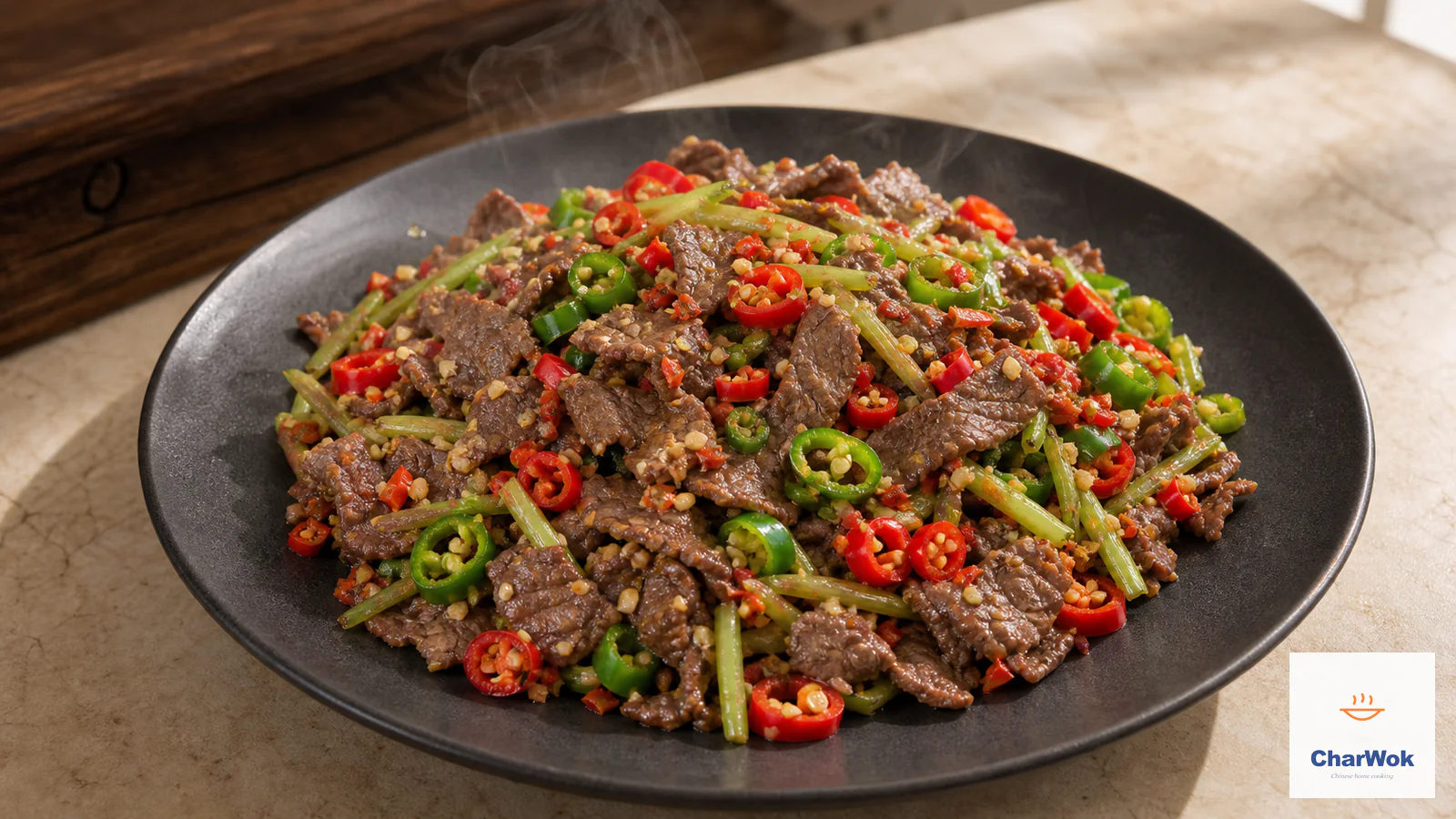
The soul of Hunan beef is fresh, dry heat. Not the numbing, oil-drowned heat of Sichuan — a brighter, sharper burn that comes from fresh chilies charred fast in a screaming wok, with very little sauce to hide behind. If you have ever ordered Xiao Chao Huang Niu Rou (小炒黄牛肉) at a Hunan restaurant and tried to copy it at home, you probably ended up with a puddle of gray juice and chewy strips of meat. That gap between the restaurant version and the home version is not about a secret ingredient. It is about two things almost every home cook gets wrong: how the beef is cut and marinated, and how hot the wok is when the meat hits it.
This recipe fixes both. It also adds the context the dish deserves — why Hunan cooks reach for two kinds of chilies, why celery shows up in the wok, and how to keep the beef tender when your stove is weaker than a restaurant burner.
Cook the beef in under 90 seconds once it touches the wok. Cut it 2 mm (about 1/16 inch) thick against the grain, marinate 10 minutes with cornstarch and oil, and sear on a smoking-hot surface. The dish succeeds or fails on heat and slice direction, not on the brand of oyster sauce.
What Hunan beef actually is, and where it sits in Chinese cooking
Hunan cuisine (Xiang 湘 cooking, from the western name for the province) is one of the eight great regional traditions of China, and it lives in the shadow of its more famous spicy neighbor, Sichuan. The two are constantly confused, and they are nothing alike. Sichuan food leans on mouth-numbing Sichuan peppercorns and chili bean paste (doubanjiang), often simmered in oil. Hunan food uses fresh and pickled chilies for a clean, dry, almost fruity heat, and it prefers quick high-heat stir-frying and braising over the slow oil-braising Sichuan favors.
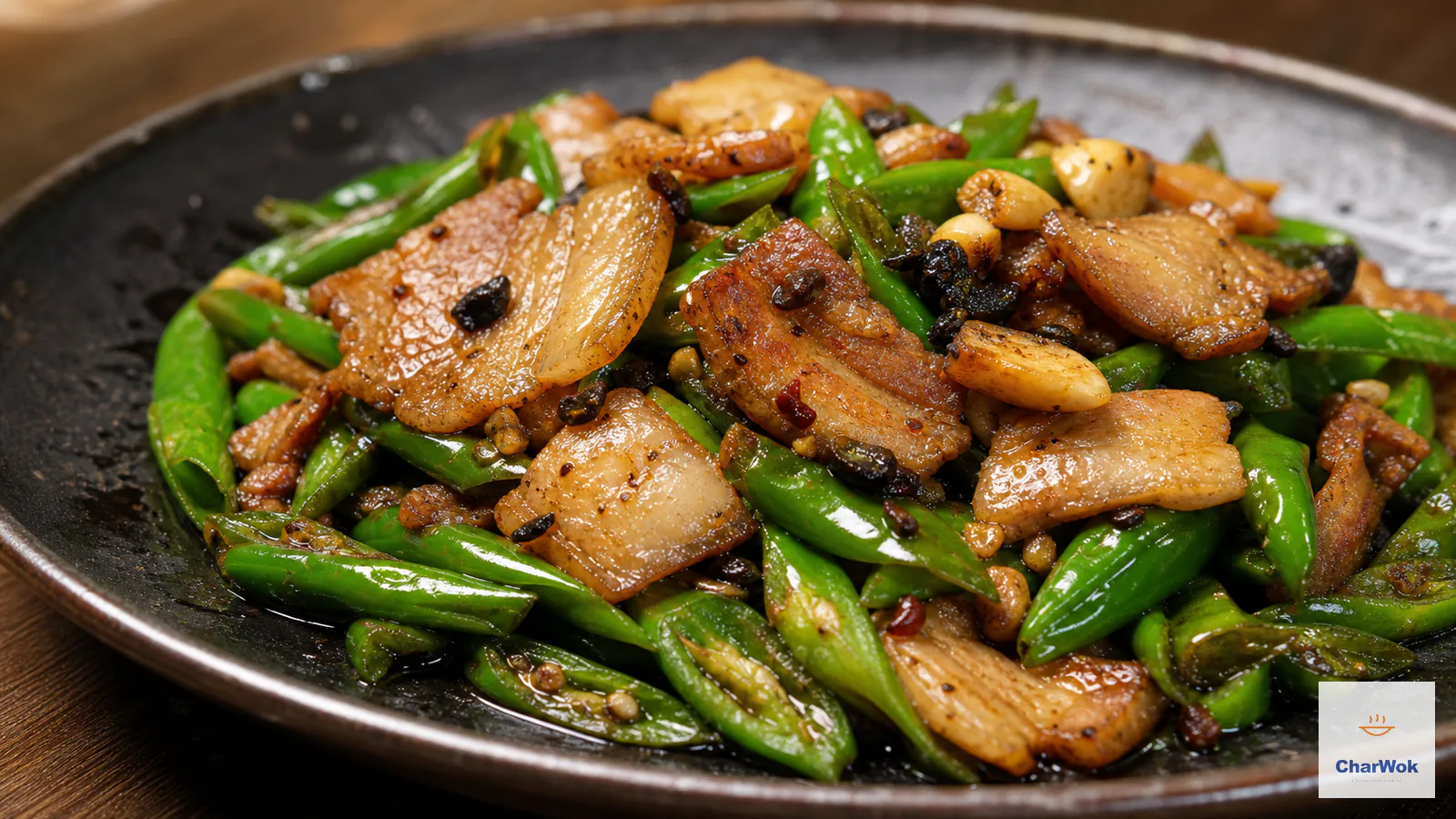
Xiao chao (小炒), meaning "small stir-fry," is the signature Hunan restaurant technique: a single portion cooked to order over fierce heat, finished fast, served sizzling. The most famous examples are this beef dish, stir-fried pork with green peppers, and the legendary duo jiao fish head. If you want to understand the family, the cumin-spiced lamb stir-fry in our cumin lamb recipe uses the same "small stir-fry" logic, just with northern Xinjiang seasonings.
The "yellow beef" in the Chinese name refers to yellow cattle, the traditional draft animal of southern China, leaner and more flavorful than the dairy breeds most Western supermarkets sell. You will not find true yellow beef abroad, but flank and skirt steak are excellent stand-ins because their tight grain takes a marinade well and slices cleanly.
The two things that decide whether your beef is tender
Before the ingredients, understand the physics. Restaurant Hunan beef is tender for three reasons, and seasoning is the least important of them.
1. Slice across the grain, paper-thin. Muscle fibers are long bundles. If you cut with the grain, each bite is a length of fiber you have to chew through. Cut across it and you shorten every fiber into a millimeter-long nub. This single act does more for tenderness than any marinade. Aim for 2 mm (1/16 inch). If the meat wobbles under your knife, slide it into the freezer for 30 to 45 minutes until it is firm but not frozen solid, firm enough that the blade passes through instead of sawing.
2. Velvet the surface. Cornstarch and a little oil coat each slice and form a thin gel when they hit the heat. That gel is the same principle behind classic beef and broccoli and beef with king mushroom; it slows moisture loss and keeps the outside of the meat from going tough. Do not skip the oil at the end of the marinade; it stops the slices from sticking together and to the wok.
3. Cook it hot and short. Muscle proteins squeeze out water as they cook past about 65°C / 150°F. The longer the beef sits in the pan, the more juice it loses and the tougher it gets. The whole stir-fry, from meat hitting wok to plating, should take under two minutes. If your home stove is modest, cook in two smaller batches rather than crowding the pan and dropping the temperature.
Ingredients
Ingredients at a glance
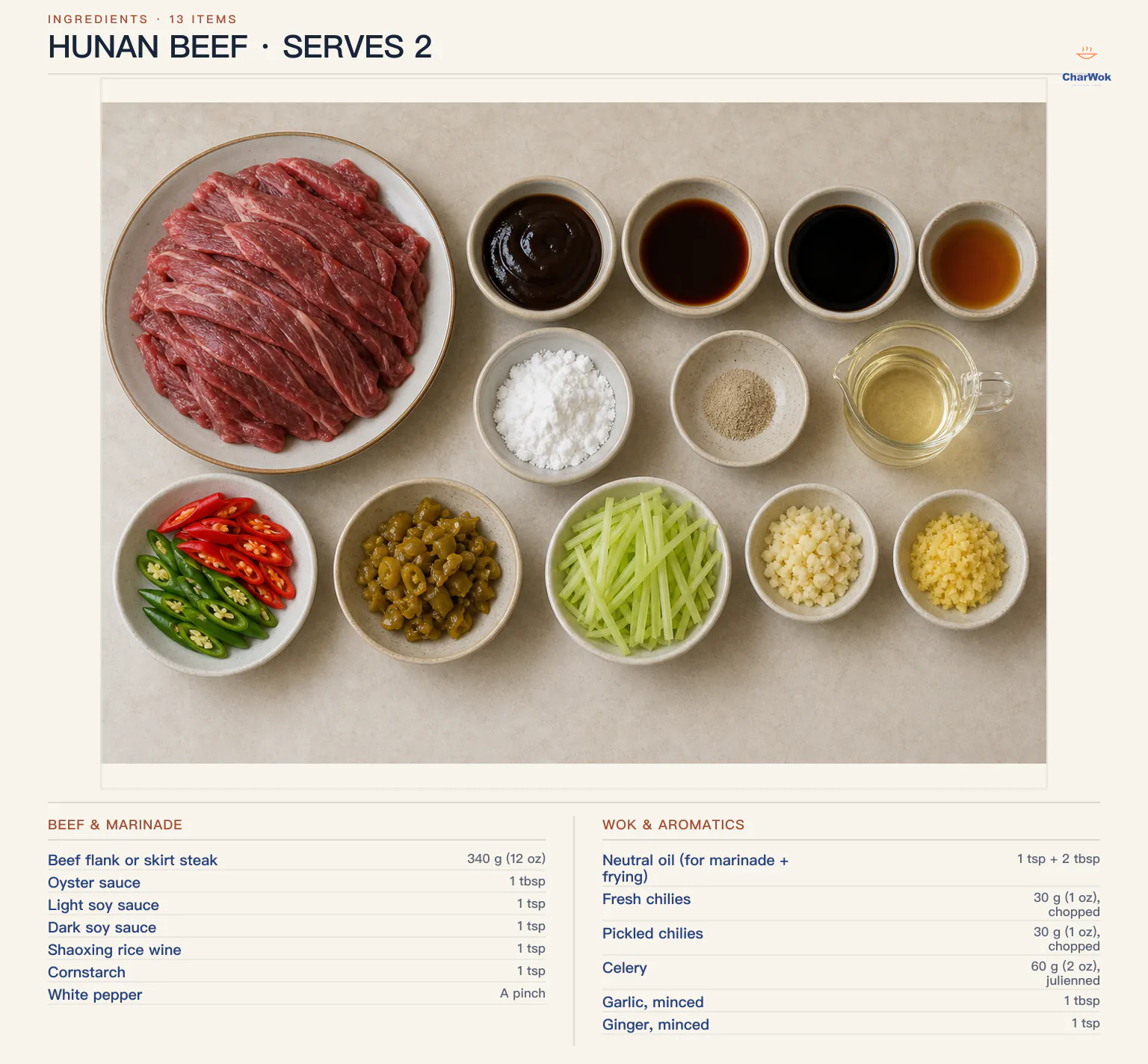
Serves 2 as a main with rice, or 3 to 4 as part of a multi-dish meal. Scaling up? Cook in batches, never pile more meat into the wok than covers the bottom in one layer.
| Ingredient | Amount | Notes / substitute |
|---|---|---|
| Beef flank or skirt steak | 340 g (12 oz) | Flank is the reliable choice; skirt is fattier and more flavorful. Sirloin works in a pinch. |
| Oyster sauce | 1 tbsp | The backbone of the marinade. A good Chinese pantry staple. |
| Light soy sauce | 1 tsp | For salt and savory depth. |
| Dark soy sauce | 1 tsp | For color. Omit if you only have light, and add an extra 1/2 tsp light. |
| Shaoxing rice wine | 1 tsp | Dry sherry is the standard substitute. Skip the salted "cooking wine." |
| Cornstarch | 1 tsp | Potato starch works; it gives a slightly glossier coat. |
| White pepper | A pinch | Black pepper is too aggressive here. |
| Neutral oil (for marinade + frying) | 1 tsp + 2 tbsp | Peanut, canola, or grapeseed. Not olive oil. |
| Fresh chilies | 30 g (1 oz), chopped | Thai bird's-eye for serious heat; serrano or jalapeño (deseeded) for a milder dish. |
| Pickled chilies | 30 g (1 oz), chopped | Hunan duo jiao or pickled jalapeño. This is the layer that makes the dish taste Hunan and not generic. |
| Celery | 60 g (2 oz), julienned | Replace with cilantro stems if you dislike celery. |
| Garlic, minced | 1 tbsp | Fresh only. Pre-minced jarred garlic tastes flat and sour. |
| Ginger, minced | 1 tsp | Peel it or don't. Your call, but mince it fine. |
How to make it
Read the whole method once before lighting the burner. Once the wok is hot, there is no time to chop the garlic.
- Prep the beef for clean slicing. If the steak is soft and hard to cut thinly, freeze it for 30 to 45 minutes until just firm. Identify the direction of the muscle fibers (they run in parallel lines), then slice 2 mm (1/16 inch) thick squarely across them. Uneven slices cook unevenly, so take the time to be consistent.
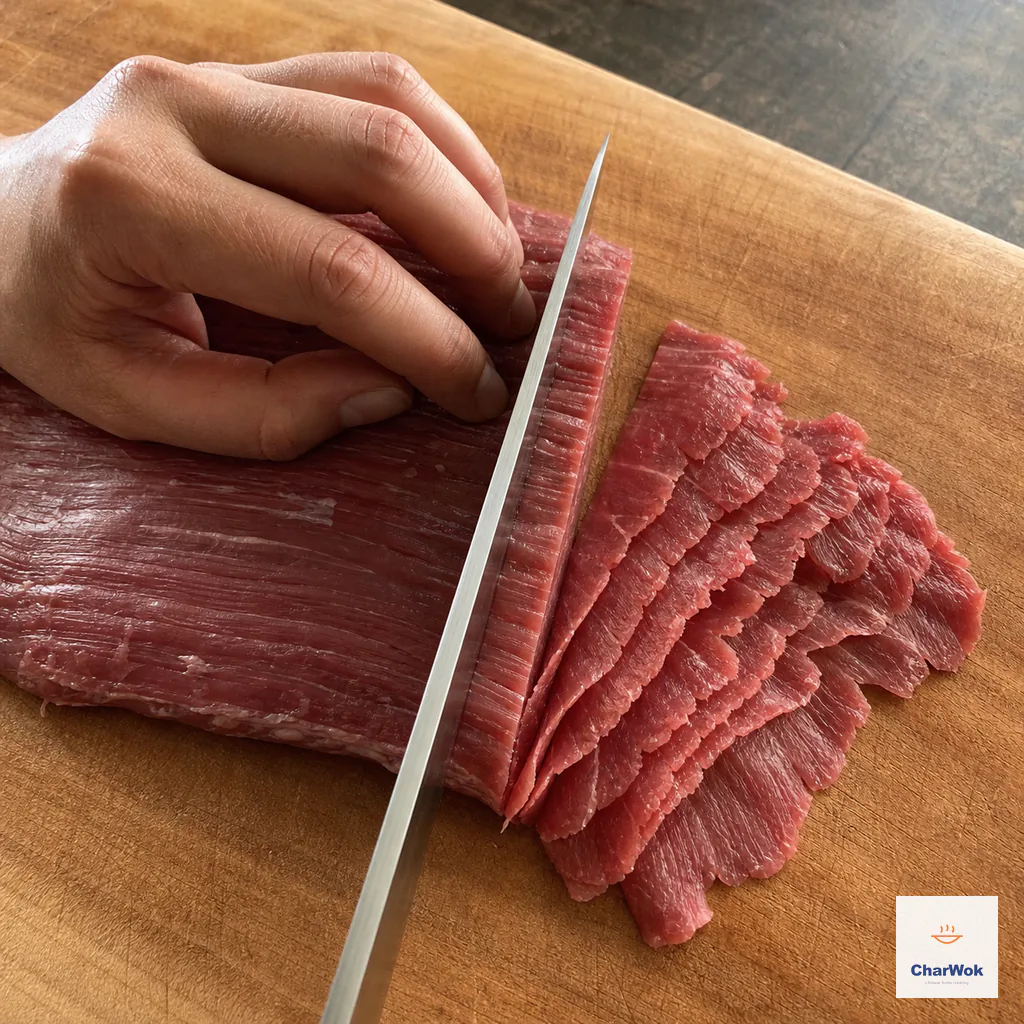
Firm the beef in the freezer if needed, then slice squarely across the grain to about 2 mm.
- Build the marinade. In a bowl, stir together the oyster sauce, light soy, dark soy, Shaoxing wine, cornstarch, and white pepper until smooth. Add the beef and massage with your fingers until every slice is coated and the liquid has been absorbed into the meat rather than pooled at the bottom, about 60 seconds of working it in. This is the same "rub until absorbed" step that powers sha cha beef and black pepper beef.
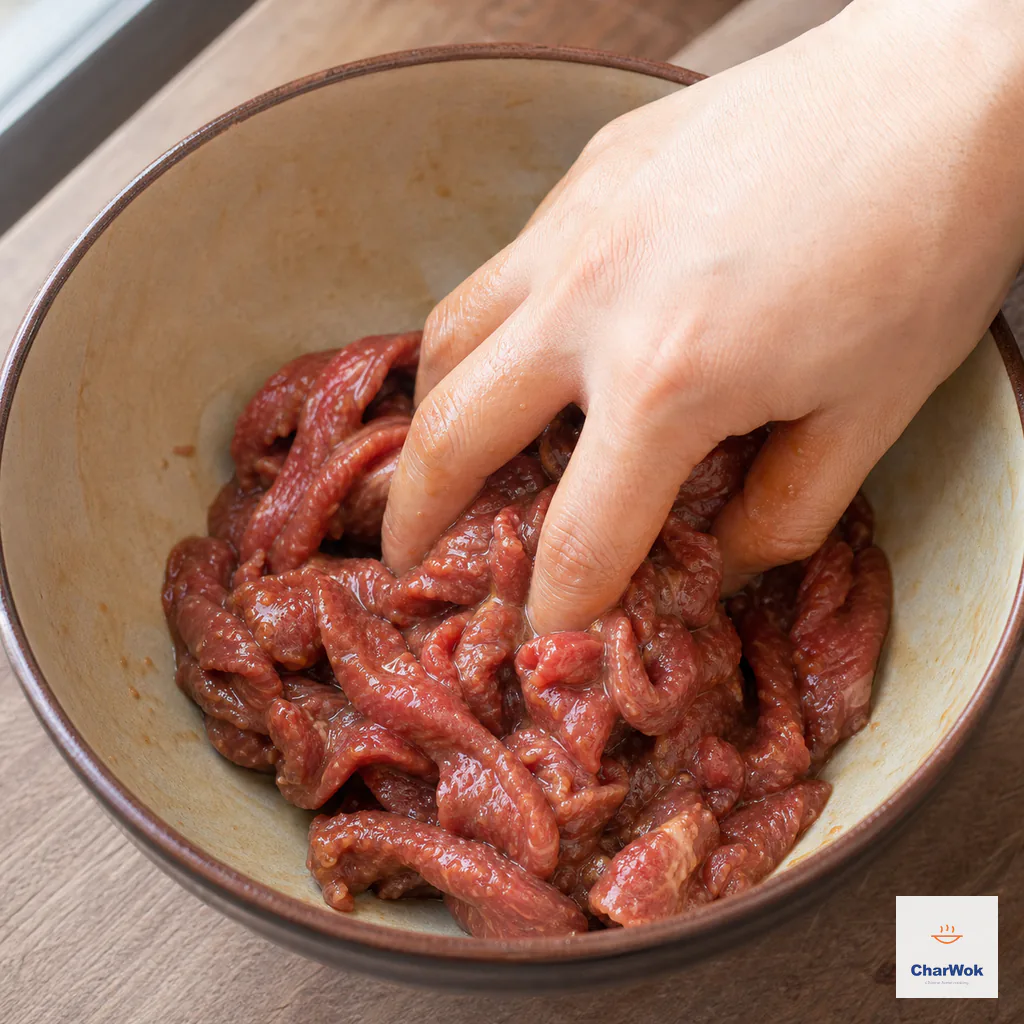
Rub the sauces, wine, starch and white pepper into the beef for about 60 seconds, until nothing pools below.
- Seal with oil and rest. Drizzle the 1 tsp neutral oil over the coated beef and toss so the slices separate. Rest 10 minutes at room temperature. The oil is not for flavor; it forms a film that prevents clumping and sticking.
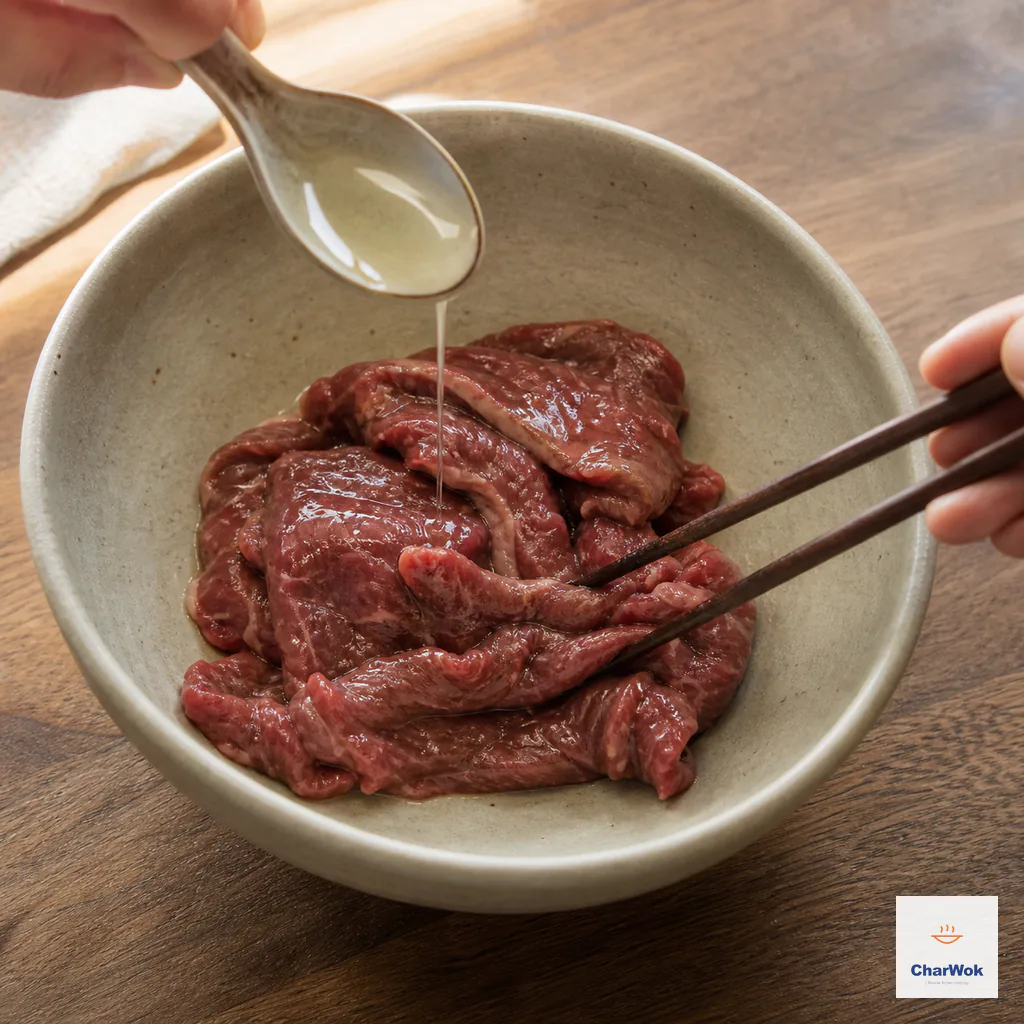
Add 1 teaspoon oil, separate the coated slices and rest them for 10 minutes.
- Heat the wok until it smokes. Set the wok over your highest flame for 1 to 2 minutes until a drop of water dances and evaporates on contact and the metal just begins to smoke. Add the 2 tbsp oil and swirl it up the sides to coat. This is plain wok technique. If you are still building a seasoned carbon-steel pan, expect some sticking on early runs; it improves with use. Avoid nonstick here if you can; it cannot take the heat this dish needs and will release fumes.
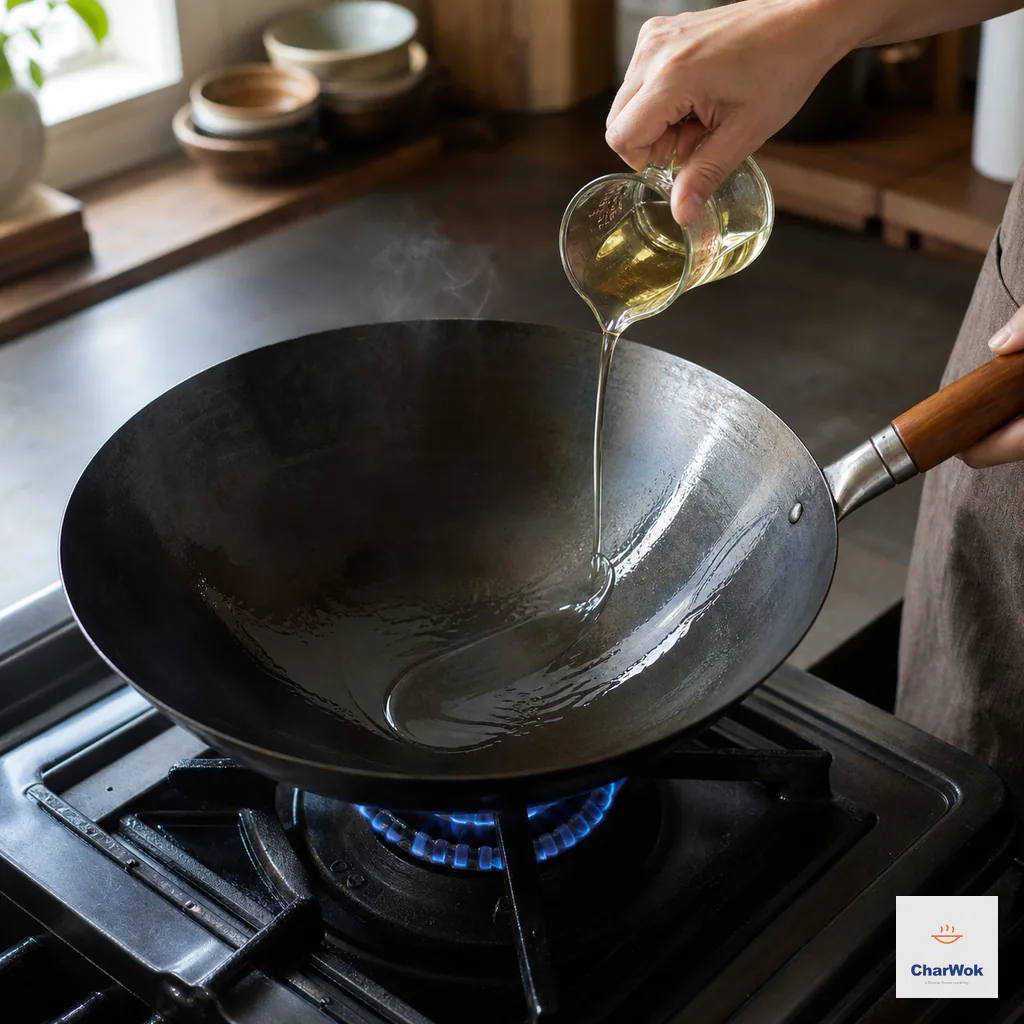
Heat the empty wok until it just smokes, then add 2 tablespoons oil and coat the curved sides.
- Sear the beef in one layer. Add the beef and immediately spread it out with chopsticks or a spatula so the slices lie flat against the metal. Let them sit for 10 to 15 seconds before you start tossing, so a crust can form. Then stir-fry, separating any slices that stuck together.
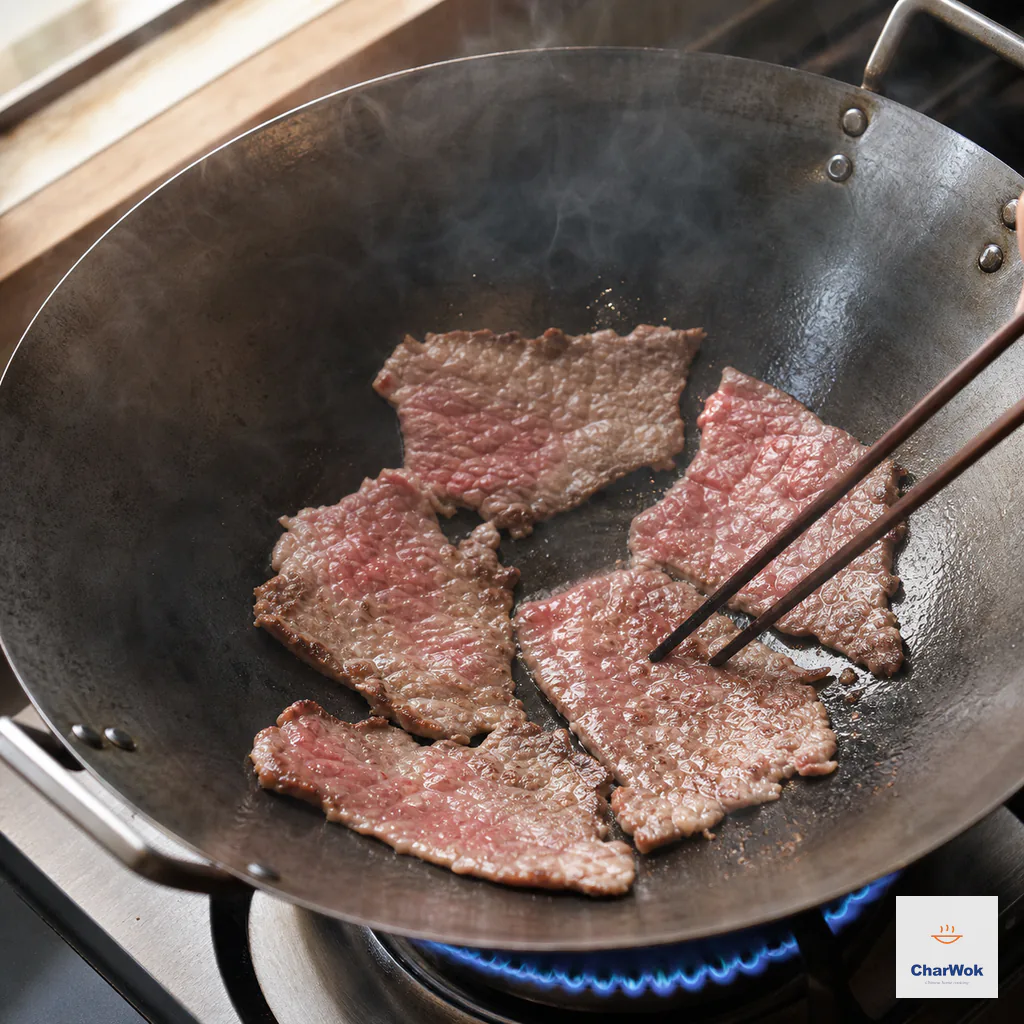
Spread the beef flat, leave it untouched for 10–15 seconds to form a crust, then separate and toss.
- Add aromatics and chilies the moment the pink fades. When most of the beef has changed color but a few slices are still slightly rosy (about 45 to 60 seconds in), add the fresh chilies, pickled chilies, celery, garlic, and ginger all at once. Keep the heat at maximum and toss constantly for another 45 to 60 seconds. You want the chilies blistered and the celery just barely wilted, not soft.
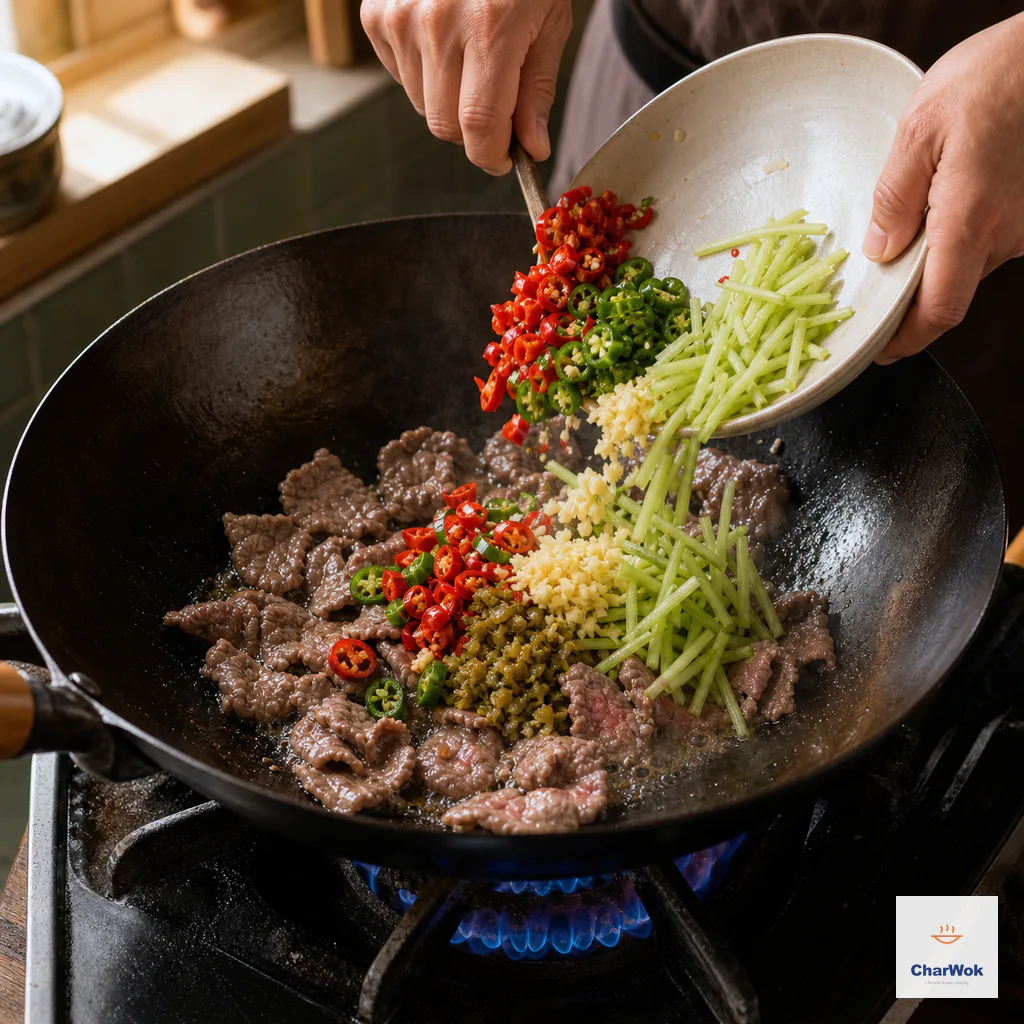
Add every aromatic as most pink disappears; toss at maximum heat until the chilies blister and celery barely wilts.
- Plate immediately. Tip everything out onto a serving dish the instant the celery brightens. Residual heat in the wok will keep cooking the beef after you stop stirring, so getting it out fast is how you protect the tenderness you built in steps 1 through 3. Serve with steamed rice.
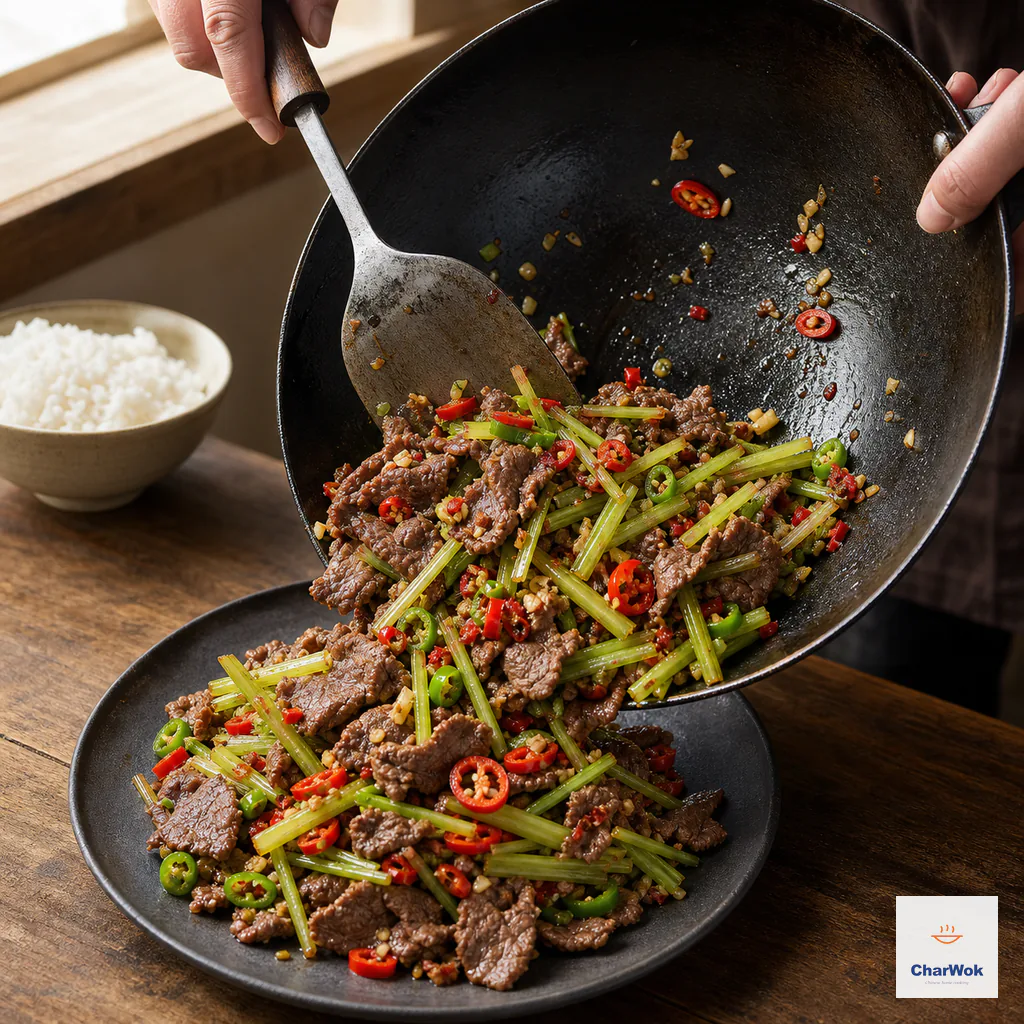
Tip the stir-fry out the instant the celery brightens and serve immediately with steamed rice.
When it goes wrong: troubleshooting
This is a 5-minute cook that punishes 5-minute mistakes. Here is what to check when the result disappoints.
- Tough, chewy beef. You either cut with the grain, sliced too thick, or overcooked it. Re-check slice direction first; it is the usual culprit. Next cook, pull the beef off the heat when it is still faintly pink; carryover finishes it on the plate.
- A pool of gray juice at the bottom. The wok was not hot enough or you crowded it. The meat should hiss the moment it lands, not simmer. For a weak burner, halve the recipe and cook two batches, recombining at the end off the heat.
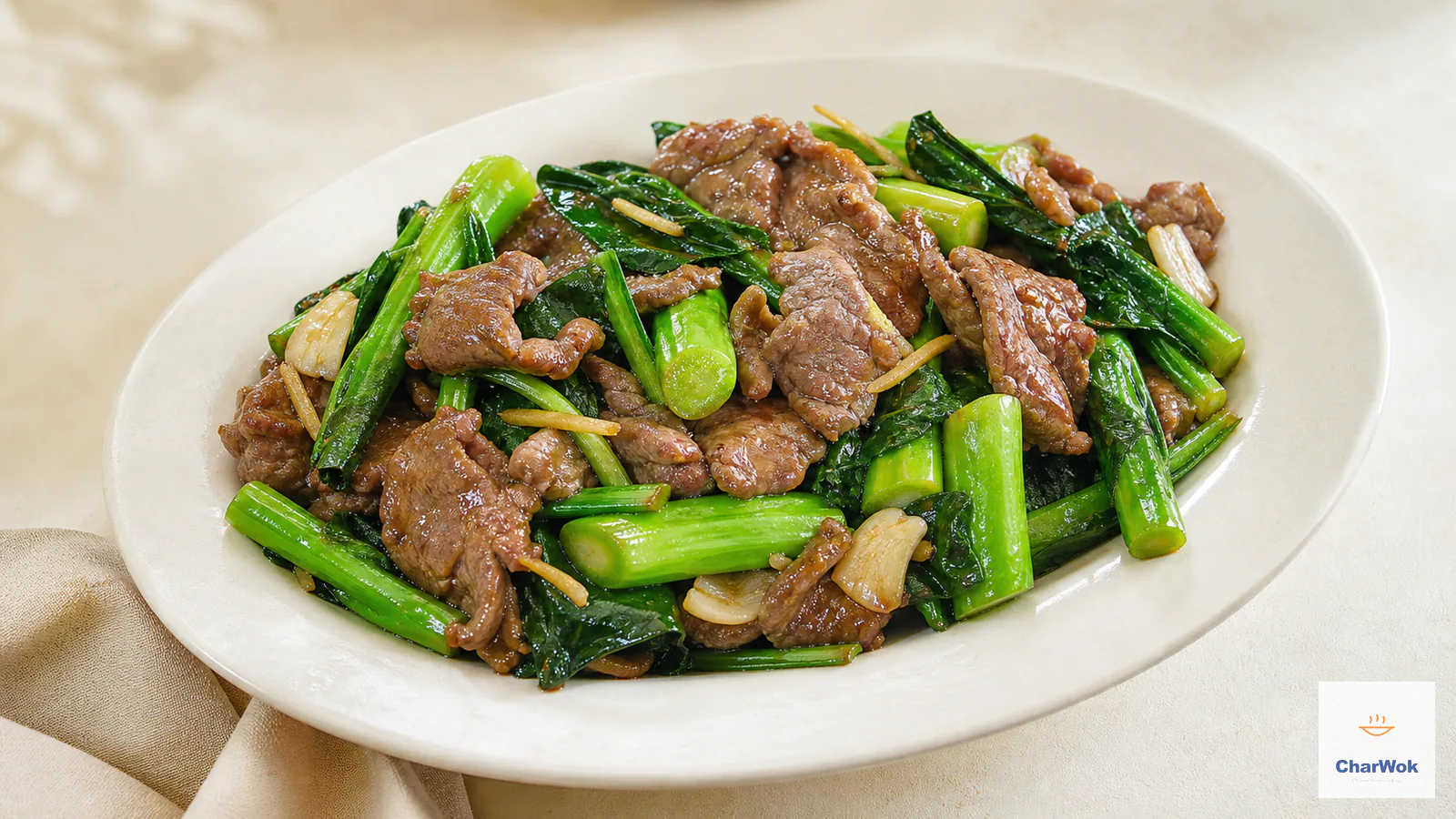
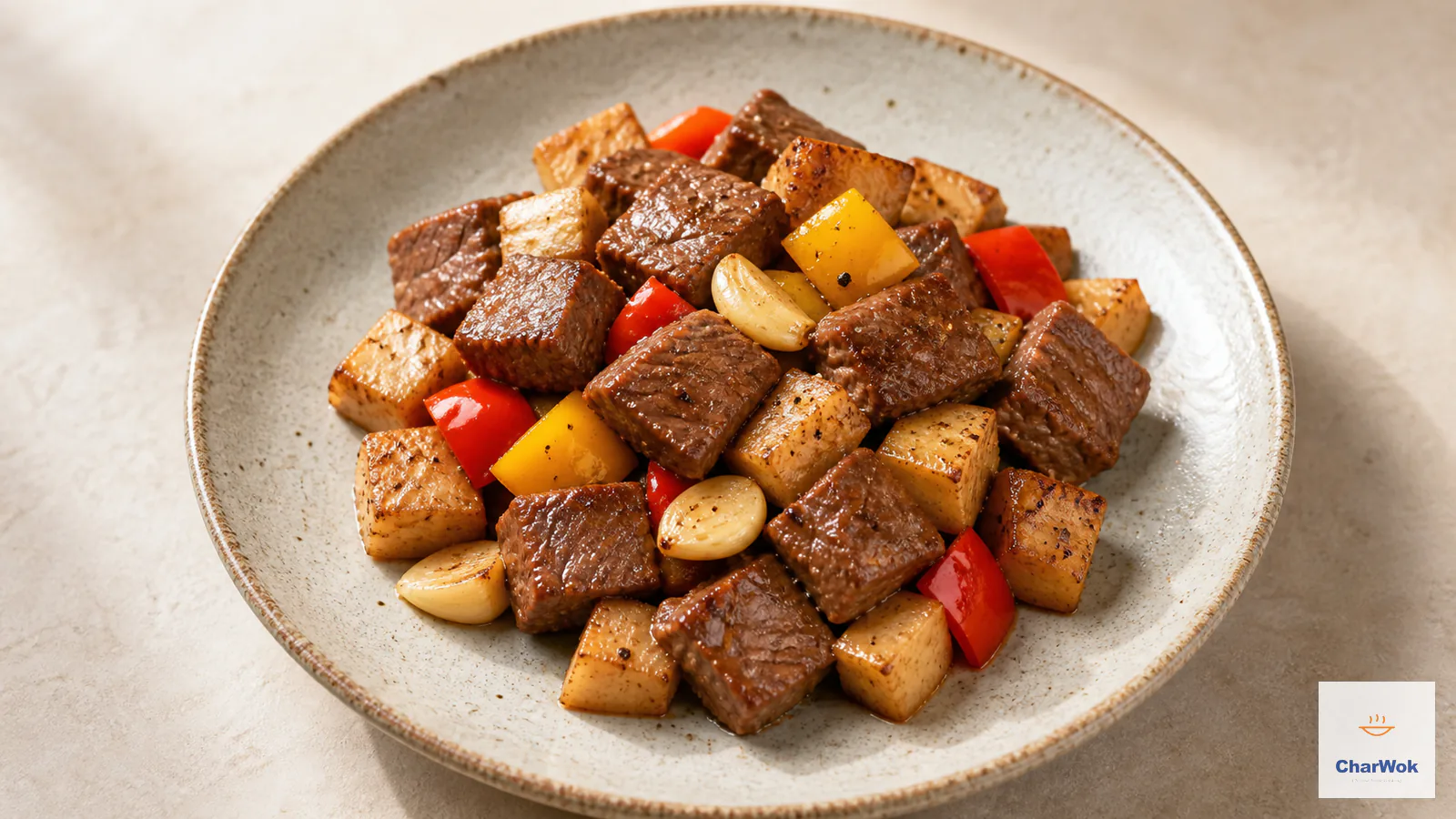
- Beef sticks and tears. Either the wok was not fully preheated, the oil was added before the metal was hot, or your carbon-steel pan is under-seasoned. Heat the dry wok first, add oil, swirl, then add beef. A well-maintained pan develops nonstick properties over time. See how beef with gai lan and pepper steak rely on the same seasoned surface.
- Not spicy enough, or tastes one-dimensional. The two-chili system is the fix: fresh chilies give bright front heat, pickled chilies give sour depth. Using only fresh chilies tastes generic. Using only pickled tastes flat and briny. You need both, and a heavier hand on the fresh ones turns the heat up without making the dish salty.
- Mushy, watery celery. Celery should retain a crisp snap. Either you cut it too thin, added it too early, or your heat dropped. Cut into matchsticks about 4 cm (1.5 inches) long and the thickness of a matchstick, and keep it in the wok under a minute.
- Everything tastes burnt. Your wok ran too hot for too long before the aromatics went in, or the garlic burned. Garlic and ginger go in with the chilies, not before, precisely because they scorch in seconds on a fully heated wok.
Variations and pairings
The skeleton of this recipe, velveted beef with fresh and pickled chilies over fast heat, is endlessly adaptable. A few directions worth taking.
- Swap the vegetable. Julienned bell pepper, leeks cut on a bias, or quartered shimeji mushrooms all work. Avoid anything wet (tomatoes, leafy greens); they dump water and kill the sear.
- Go hotter or smoky. A teaspoon of homemade chili oil stirred in at the end adds smoky depth without thinning the dish. For a deeper, drier spice, finish with toasted ground Sichuan peppercorn, which pushes it toward Sichuan boiled beef territory but keeps the dry stir-fry texture.
- Make it a noodle or rice plate. Pile the beef over plain jasmine rice, or fold it into beef chow fun noodles for a heartier one-bowl meal.
- Side dishes for a full spread. A cooling smacked cucumber salad balances the heat, and a plate of dry-fried green beans gives you a second vegetable without competing spicing. Steamed rice is non-negotiable; this dish is too intense on its own.
Storage and reheating
Hunan beef is at its best the second it leaves the wok, and it shows. Leftovers keep in an airtight container in the fridge for up to 2 days, but the beef will tighten and the celery will soften. To reheat, use a hot dry pan for 60 seconds, never the microwave, which turns the meat gray and rubbery. I do not recommend freezing; the texture of velveted beef degrades badly once frozen and thawed. If you want a beef dish that holds and freezes well, braised beef shank or beef stew with potatoes are the better choices for make-ahead cooking.
Frequently asked questions
Can I use a different cut of beef? Flank and skirt are the safe picks. Sirloin and top round also work if sliced thinly against the grain. Avoid stewing cuts like chuck. They need low, slow cooking and will be tough here.
Is Hunan beef the same as Sichuan beef? No. Hunan relies on fresh and pickled chilies for a clean, dry heat. Sichuan leans on doubanjiang and numbing peppercorns, often in more oil. The flavor and texture are clearly different.
I can't find pickled chilies. What now? Use pickled jalapeño, or quick-pickle fresh chilies in rice vinegar with a pinch of salt for an hour. Skipping them entirely loses the dish's signature sour depth.
How do I make it less spicy for kids? Deseed the fresh chilies and halve their amount, keep the pickled chilies, and serve extra rice. The pickled chilies carry flavor more than raw heat.
Do I really need a wok? A large cast-iron or carbon-steel skillet holds heat well enough. Nonstick will not get hot enough and is unsafe at these temperatures.
Make this once with attention to the two fundamentals, slice direction and wok heat, and the second time you will cook it from memory. That is the mark of a real weeknight dish in your rotation: fast, fiery, and forgiving once you know where the failures hide.