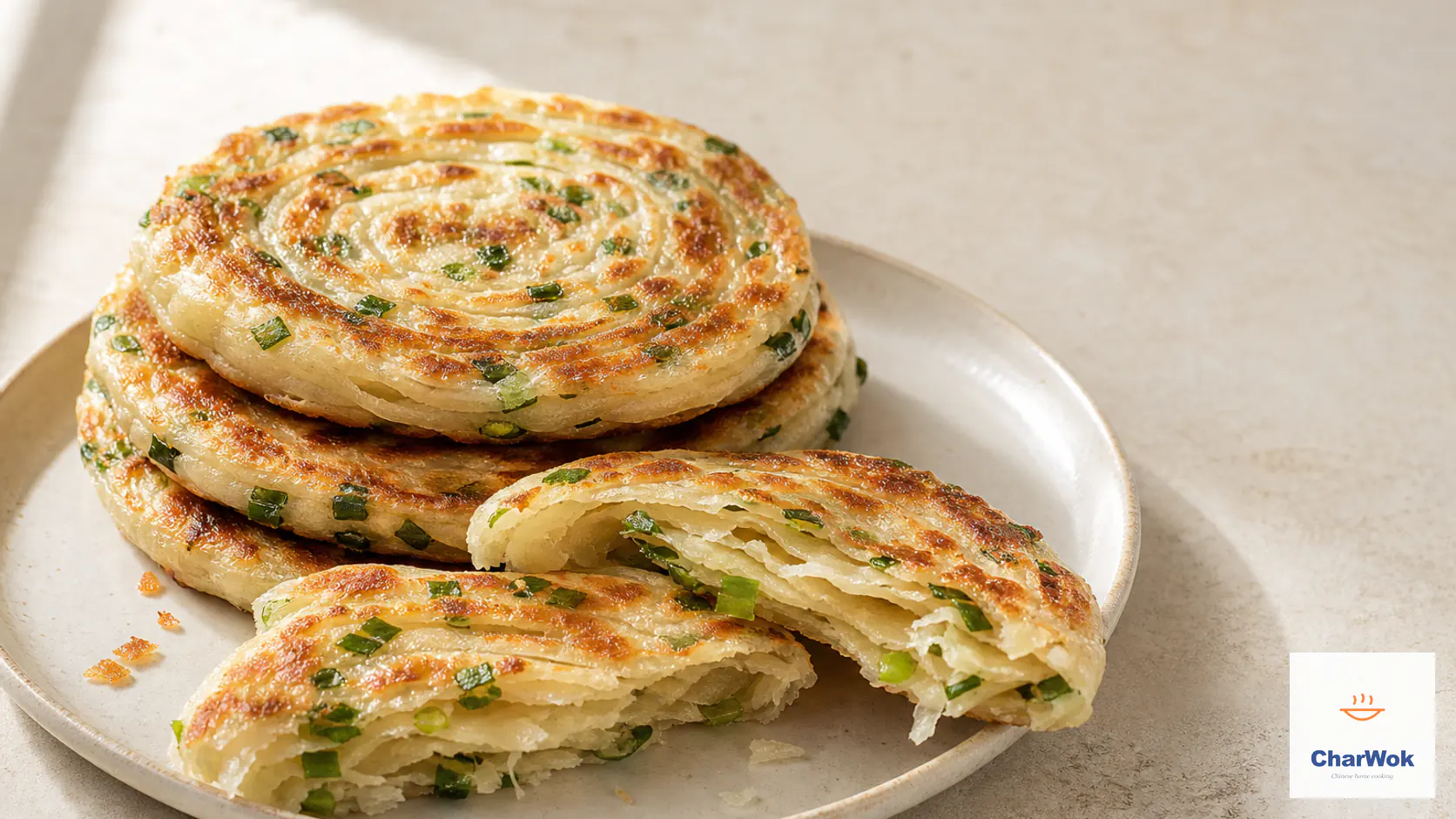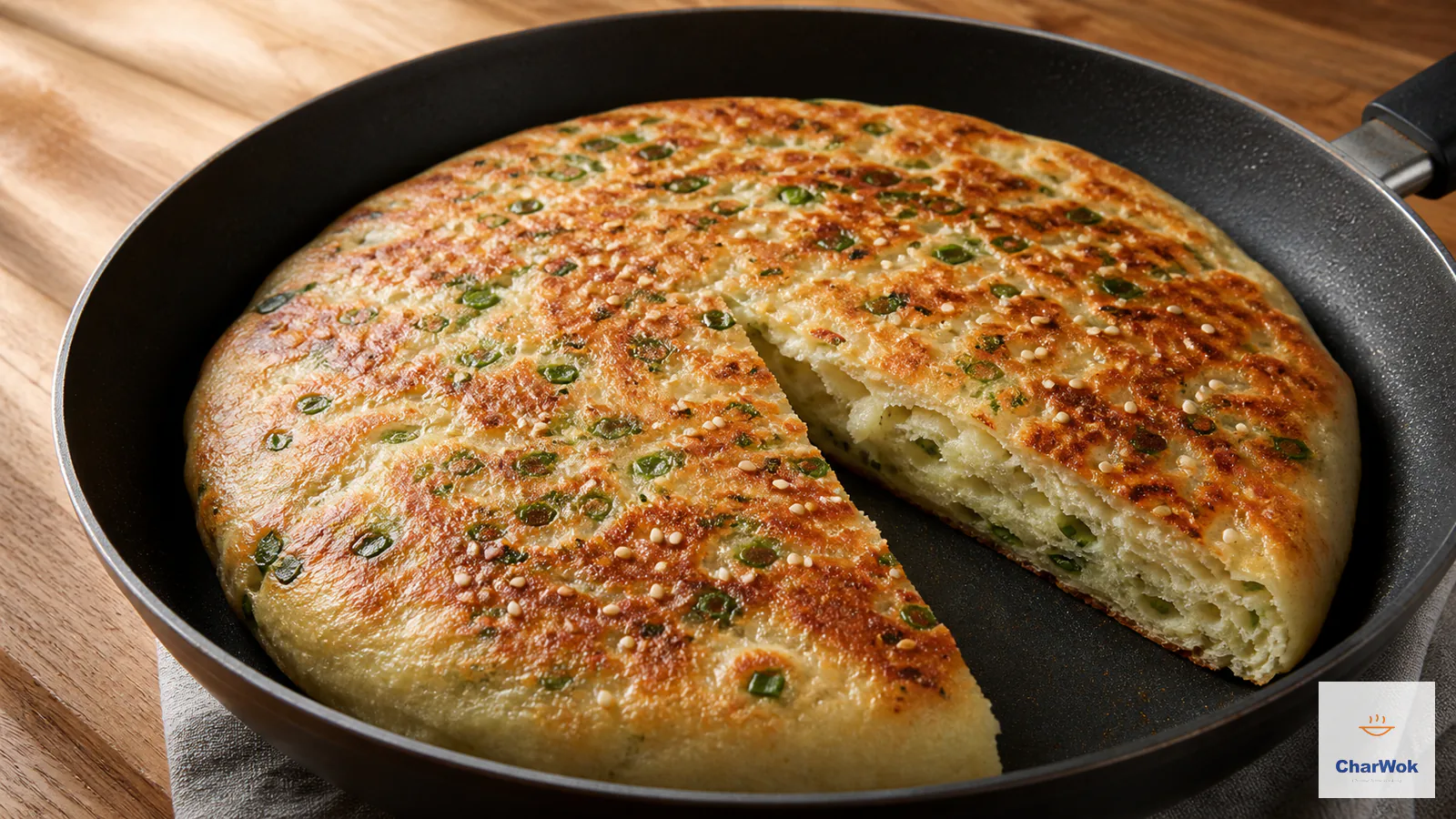
The first leavened scallion flatbread I made was dense and sad, somewhere between a hockey puck and a bathroom tile. The crust was pale, the crumb gummy, and the scallions had gone gray in the heat. I had assumed that because it was "just flatbread" it would be forgiving. It is not. But once I understood the two things that actually make this bread work, a soft, yeast-raised interior wrapped in a shatteringly crisp sesame crust, it became the bread I cook when I want to feed a table without turning on the oven.
Two moves decide everything: give the dough a real first rise, and cook it covered, over lower heat than you think. Skip the rise and you get a brick. Cook it hot and uncovered and the outside burns before the inside is even warm. This version sits in the same family as northern Chinese Lao Bing (pan-cooked bread), but it borrows the layered, scallion-stuffed logic of the unleavened scallion pancake (Cong You Bing) and gives it a softer, bread-like body.
At a glance: A 500 g batch with 260 ml water (about 52% hydration) makes one 26 cm (10-inch) bread, 8 wedges, in roughly 1 hour 50 minutes, most of it waiting on the dough. The make-or-break moment is the second rise: a 20-minute rest after shaping, before the dough ever touches the pan. Cook covered, medium-low, sesame side down first. If you remember nothing else, remember the lid.
What kind of bread this is, and where it comes from
Pan-cooked breads are the workhorses of the wheat-growing north and west of China, where home cooks historically had no oven. You either steamed dough, as in mantou, or you dry-cooked it on a flat surface, as in everything from these leavened flatbreads to the thin wheat wrappers used for Peking duck and the unleavened crispy stuffed guo kui.
Within that world there are two camps. Unleavened breads, like the classic flaky scallion pancake or the oven-baked version of Cong You Bing, are about layers and chew, the kind of crackle you get from stretched dough and oil. Leavened breads like this one trade some of that snap for a pillowy crumb. They are closer in spirit to Chinese pan-baked breads generally, and they are the ones I reach for at dinner, because a wedge of warm bread with a bowl of soup is a real meal in a way a crispy snack is not.
The shaping here is a deliberate hybrid. You roll the dough thin, paint it with oil and seasonings, then roll it into a rope and coil it into a disk, which is exactly how the famous street snack Jian Bing crepes and the layered scallion flower rolls (Hua Juan) build their interior structure. The coil gives you pull-apart layers even after the yeast does its work.
Ingredients, and why each one is here
Ingredients at a glance
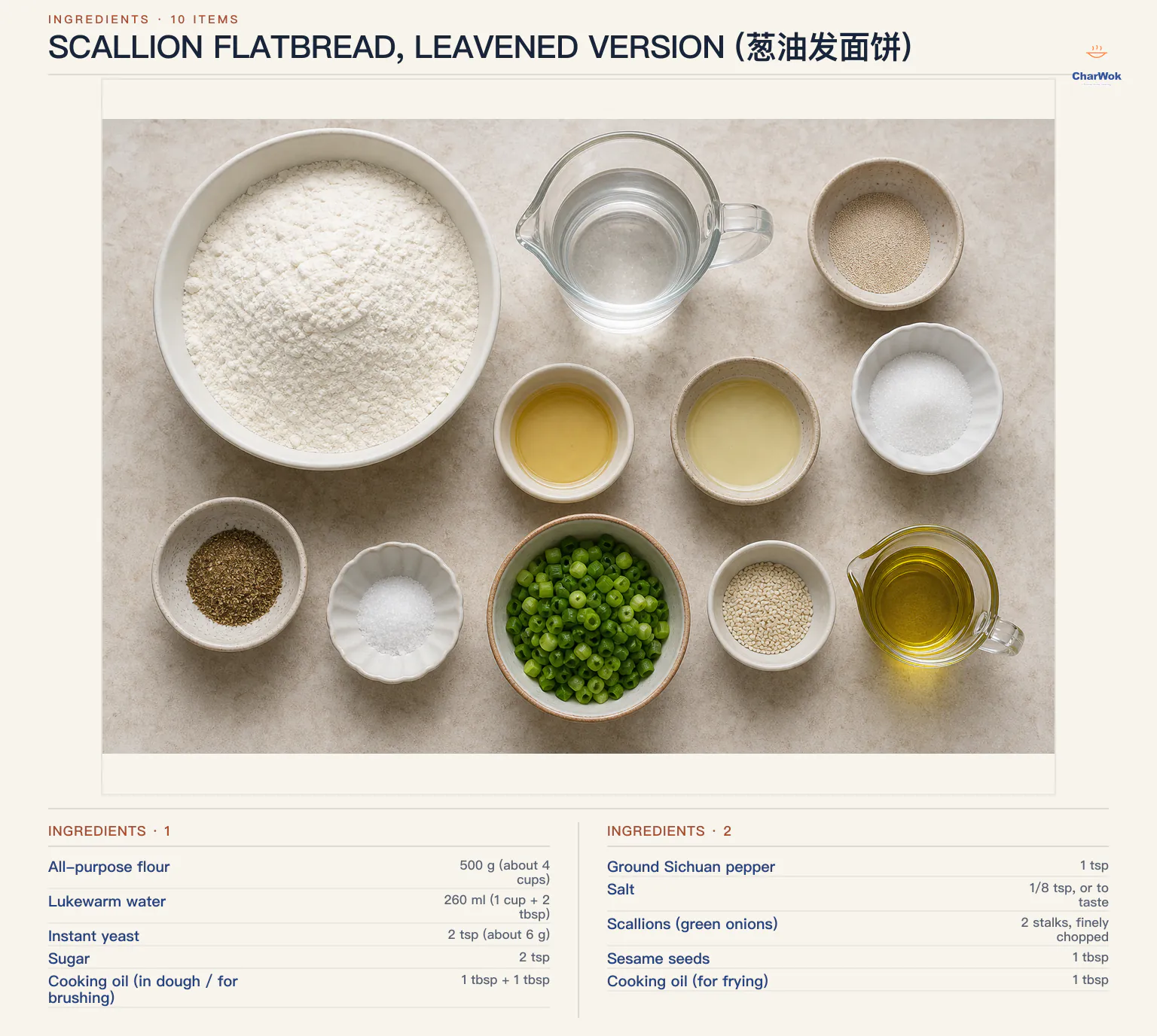
| Ingredient | Amount | Notes / substitute |
|---|---|---|
| All-purpose flour | 500 g (about 4 cups) | Plain AP flour, 10 to 11% protein. Bread flour makes it chewy; do not use cake flour, too weak to hold the layers. |
| Lukewarm water | 260 ml (1 cup + 2 tbsp) | About 35°C / 95°F, just warm to the finger. Cold water stalls yeast; hot water kills it. |
| Instant yeast | 2 tsp (about 6 g) | Instant or active-dry both work; if active-dry, proof it in the water 5 minutes first. |
| Sugar | 2 tsp | Feeds the yeast; not enough to taste sweet. |
| Cooking oil (in dough / for brushing) | 1 tbsp + 1 tbsp | Neutral oil like canola or peanut. The brushed oil is what creates the internal layers. |
| Ground Sichuan pepper | 1 tsp | The classic seasoning. No Sichuan pepper? Use Chinese five-spice powder instead; both are warm-aromatic rather than hot. |
| Salt | 1/8 tsp, or to taste | A little in the filling; flour itself already has none. |
| Scallions (green onions) | 2 stalks, finely chopped | Use mostly the green parts for color; white parts burn more easily in the pan. |
| Sesame seeds | 1 tbsp | White or toasted; press them in firmly or they fall off in the pan. |
| Cooking oil (for frying) | 1 tbsp | Just enough to film the pan, not shallow-fry. |
The method, step by step
- Mix and knead the dough. Combine the flour, yeast, and sugar in a wide bowl. Add the lukewarm water in a slow stream, stirring with chopsticks or a fork so the flour absorbs it gradually rather than forming wet lumps. Once it shags together, knead by hand for 6 to 8 minutes until the dough is smooth and springs back slowly when you press it. The point of kneading is to align the gluten so the dough can trap the gas the yeast makes; under-knead and the bread tears instead of stretching.
- First rise, until actually doubled. Cover the bowl with a damp towel and leave it somewhere warm. At about 28°C / 82°F this takes 40 to 50 minutes; in a cool kitchen it can take 90. Do not rush by feel or time. The reliable test is a finger poke: press in 1 cm, and if the dent fills back slowly and stays partly visible, it is ready. Cold kitchen? Warm the bowl with a minute in a low oven first, or set it near (not on) a warm stove.
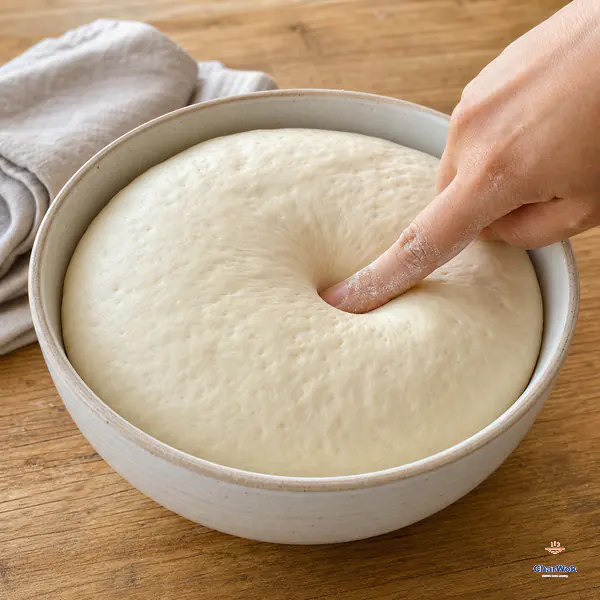
Let the dough genuinely double rather than relying on the clock: press in about 1 cm, and it is ready when the dent returns slowly and remains partly visible without the dough collapsing.
- Knock back and roll thin. Turn the dough onto a lightly floured surface and knead briefly to push out the big gas bubbles, otherwise they leave giant holes in the finished bread. Roll it into a large rectangle, as thin as you can without tearing, roughly 30 × 40 cm. Thin now means more layers later.
- Season and coil. Brush the surface evenly with the tablespoon of oil, then scatter the Sichuan pepper, salt, and chopped scallions. Roll the rectangle up tightly from the long edge into a rope, then coil the rope into a flat snail shape and tuck the end under. Let it rest 5 minutes, then roll the coil out gently into a 26 cm (10-inch) round. Rolling gently keeps the layers intact; mash it flat and you fuse them back together.
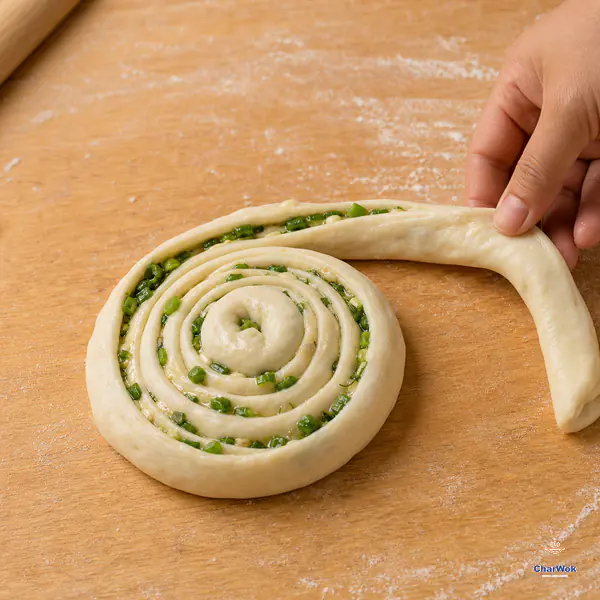
Roll the seasoned rectangle into a snug rope, coil it into a flat snail and tuck the tail underneath; keep the spiral coherent so gentle rolling can preserve the layers.
- Apply the sesame top. Dab the top with a little water, sprinkle the sesame seeds over it, and press them in with your palm so they stick. The water is just glue; without it the seeds slide off the moment the bread hits the pan.
- Second rise, the one people skip. Cover the round loosely with oiled plastic wrap and rest 20 minutes. This short proof is what separates bread from a tough disk. You will see the round puff slightly and lose its tight, rolled look.
- Cook, covered, sesame side down. Heat 1 tablespoon of oil in a heavy 28 cm (11-inch) pan over medium-low. Lay the bread in sesame side down and cover with a lid. The lid traps steam, which sets the top of the dough while the bottom browns, and it keeps the interior cooking evenly. Cook about 5 minutes until the bottom is deep gold, then flip, re-cover, and cook another 5 minutes. Flip once more for 30 seconds to re-crisp the first side.
- Rest, then cut. Move the bread to a board and let it sit 3 to 5 minutes before cutting. Cutting hot steam billows out and the crumb can gum up; a short rest lets it finish setting and makes cleaner wedges.
When the bread goes wrong: a field guide
Dense, heavy crumb
This is almost always an under-risen first proof. If the dough has not doubled, it has not built enough gas pockets to lift the bread, and no amount of pan time will fix it. The second most common cause is killing the yeast with water that is too hot. Water above about 45°C / 113°F cooks the yeast. Lukewarm means comfortable on your wrist, not steaming.
Burned outside, raw inside
Heat too high, or no lid. A thick leavened bread needs gentle heat and trapped steam to cook through before the crust overcolors. Drop to medium-low and keep the lid on for both sides. If you do not own a lid that fits the pan, tent loosely with foil, but a real lid is better.
Scallions turn gray and bitter
Two things help. Use mostly the green parts, which hold their color better than the whites under sustained heat, and chop them on the finer side so no big pieces sit against the hot pan. Some color change is normal and fine; if yours are going fully khaki, your pan is too hot.
Sesame seeds fall straight off
You skipped the water or did not press. The seeds have nothing to grab on a dry flour surface. A light water wipe and a firm palm-press fixes it. Cook sesame side down first, while the dough is firmest, so they set into the crust.
No visible layers when you tear it
Either the dough was rolled too thick before coiling, or you pressed too hard rolling the coil flat and fused the layers. Roll the initial rectangle genuinely thin, and when you roll out the coiled disk, use light even pressure. The oil layer between coils is what stops the dough from welding back together, so be generous and even with it.
Variations and pairings
Five-spice and sesame. Swap the Sichuan pepper for an equal amount of five-spice powder for a warmer, sweeter profile that pairs especially well with braises.
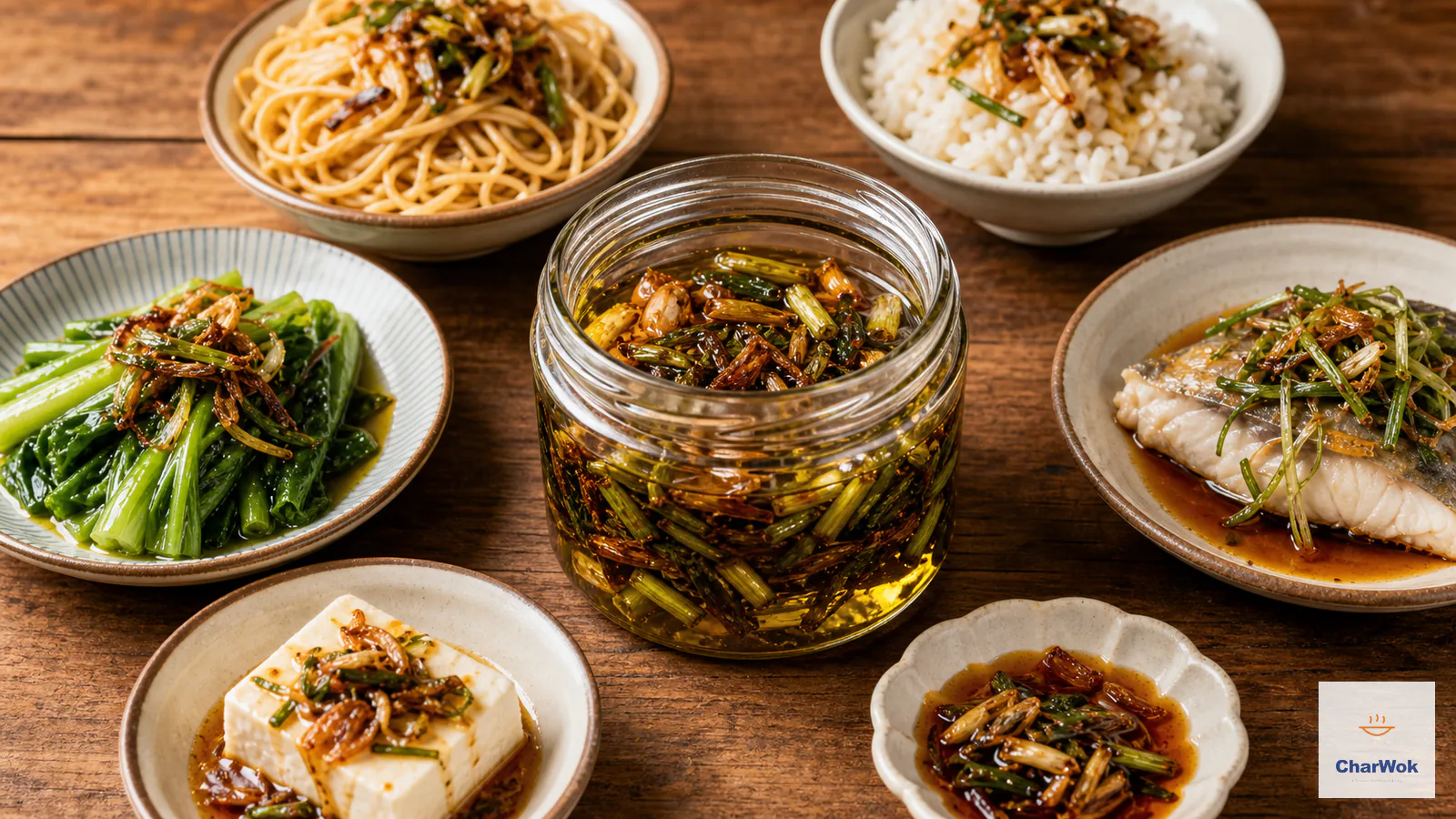
Scallion-oil version. Brush the dough with home-made scallion oil instead of neutral oil before coiling. It deepens the allium flavor without adding extra scallions that might scorch.
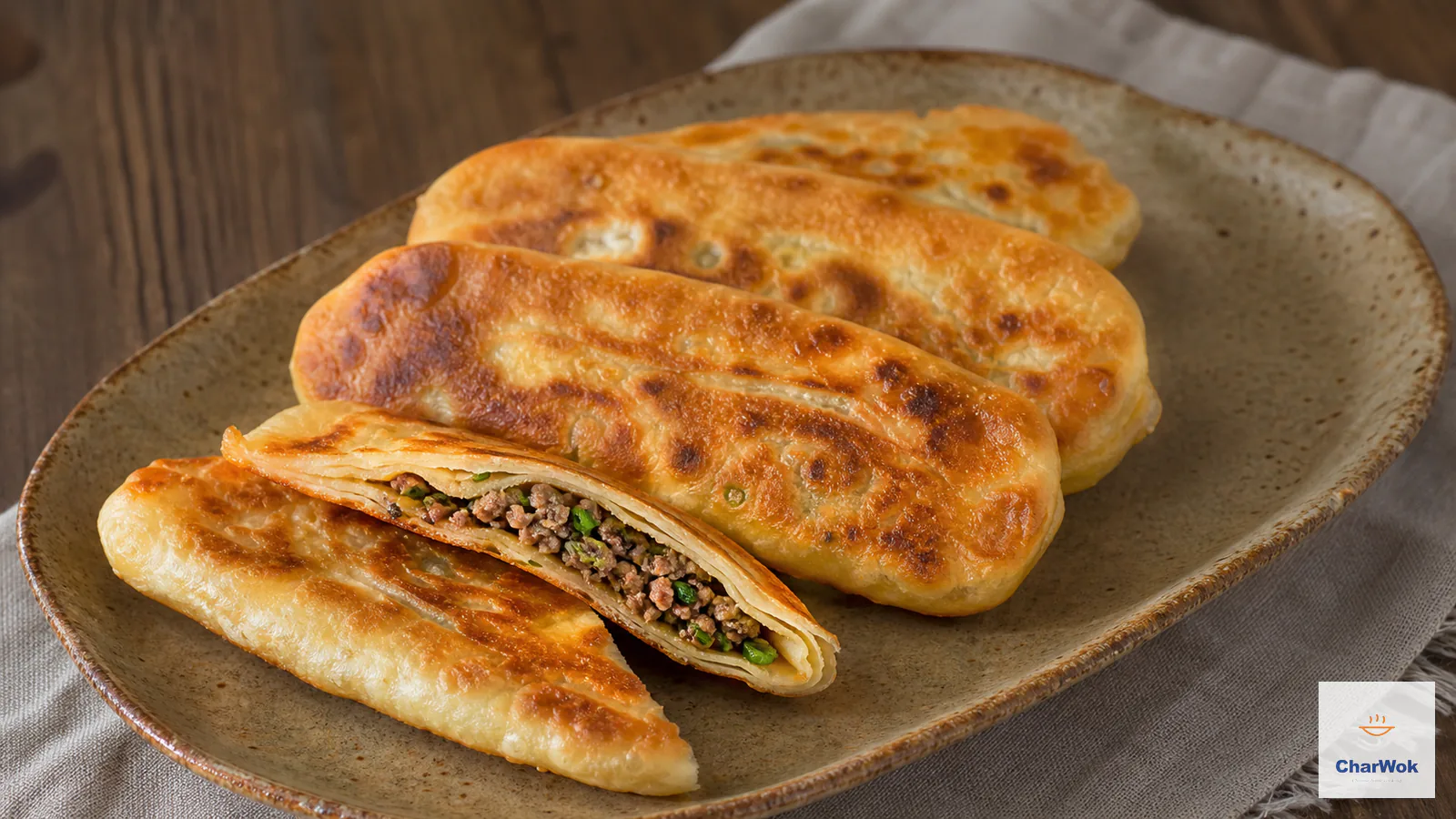
Stuffed, Xinjiang-style. Add a thin layer of seasoned ground lamb, cumin, and diced onion before coiling, then cook a little longer on lower heat. This nudges it toward a savory stuffed bread in the spirit of Rou Jia Mo, with the bread and filling cooked together.
Serving. Cut into 8 wedges and bring it to the table warm. It is a natural partner for a bowl of rice congee and a simple vegetable dish for a light supper, or alongside a braised meat where you want something to mop up the sauce. For breakfast it sits happily next to the kind of egg-and-scallion crepe you fold up and eat out of hand, or even torn and dunked into a wider Chinese breakfast spread.
Storage and reheating
The bread is best the day it is made, but it keeps reasonably well. Once fully cool, wrap it in foil and keep it at room temperature for up to a day, or freeze wedges in a sealed bag for a month. To bring back the crisp crust, reheat in a dry pan over medium-low, covered, about 3 minutes per side; the microwave will turn it rubbery and I do not recommend it for anything but the last resort.
Questions I get asked
A few things come up again and again, so here are direct answers.
Can I make the dough the night before?
Yes, and it is a great idea. Mix and knead as written, then let the dough rise overnight in the fridge instead of at room temperature. The cold slows the yeast, which deepens the flavor. Let it come to room temperature for about 30 minutes before shaping.
Do I have to use a stand mixer?
No. This is a soft, easy dough and hand-kneading takes only a few minutes. A mixer with a dough hook for about 8 minutes on low works too, but it is not required and adds no quality you can taste in the finished bread.
What if my pan is smaller than 26 cm?
Cut the recipe in half and make two smaller breads, or split the full dough into two rounds and cook them one after the other. A bread thicker than your pan can hold will brown badly at the edges while the center stays pale.
Can I bake this instead of pan-frying?
You can, at 200°C / 400°F for about 18 minutes, but the crust will be drier and less crisp than the pan version, and you lose the characteristic contrast that defines this bread. The oven route is really a different recipe. If you love the baked texture, the oven-baked Cong You Bing is built for it.
This bread rewards patience and punishes hurry, which is the only honest thing to say about most yeast doughs. Get the first rise right, keep the lid on, and the rest takes care of itself. Make it once and the second time you will not need the recipe.