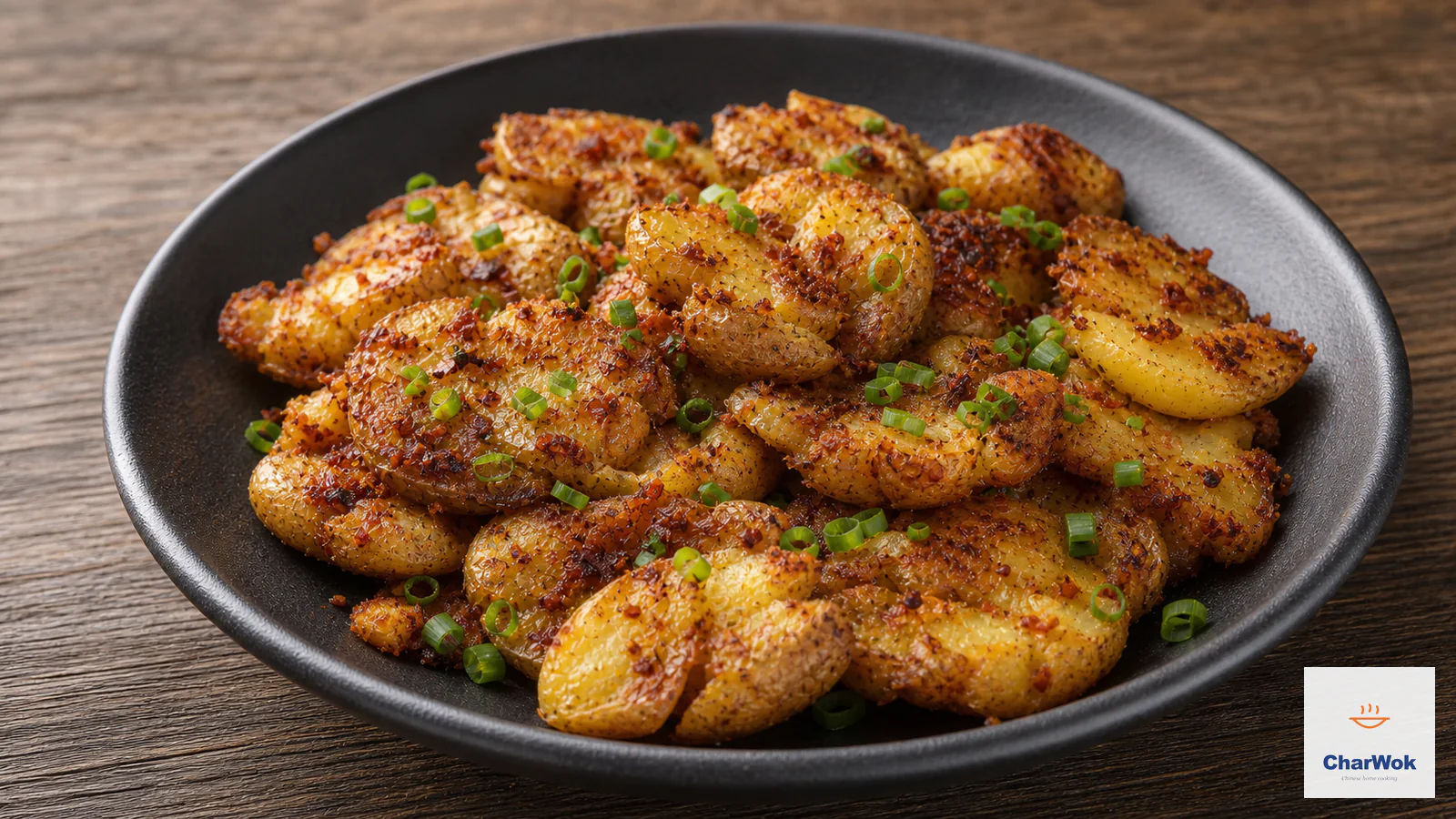
The best potato dish I know is also one of the laziest. You boil small potatoes until they barely yield, flatten each one until its skin splits, then fry it until the cut edges go glassy and amber. Finish with chili and toasted spice, and you have something that tastes like it came off a street cart in Xi'an rather than out of your weeknight skillet. The catch, such as it is, lives in two places: how long you boil, and how hard you press.
I have messed this up both ways. The first time I let the potatoes go soft, they disintegrated under the glass and turned into hash. The second time I undercooked them "for texture," and the centers stayed chalky no matter how long I fried. Five minutes of simmer for golf-ball-sized babies is the number I keep coming back to, and everything below is built around hitting that window.
At a glance. Boil 900 g baby potatoes until a fork meets slight resistance (about 5 minutes at a gentle simmer, not a rolling boil). Flatten each one with the bottom of a glass until it cracks open but holds together. Pan-fry in a thin film of oil over medium until both sides are deep gold. The whole thing is 12 minutes of cooking. The make-or-break call is pulling the potatoes at "almost done," because a potato that is fully tender in the pot has no structural integrity left to crisp.
What this dish is, and where the spice comes from
Five spice potatoes (五香土豆) belong to the northern and northwest Chinese school of potato cookery, the same family that gives us hot-and-sour shredded potatoes, the Yunnan dry-fried potato cake, and the potato leg of Di San Xian. If you grew up thinking potatoes were a Western ingredient, this is the dish that corrects you in one bite. In Gansu and the surrounding northwest, the potato is a daily starch, not an afterthought, and the regional instinct is to treat it the way Sichuan treats eggplant: hit it with a dry, fragrant spice blend and let the Maillard browning do the heavy lifting.
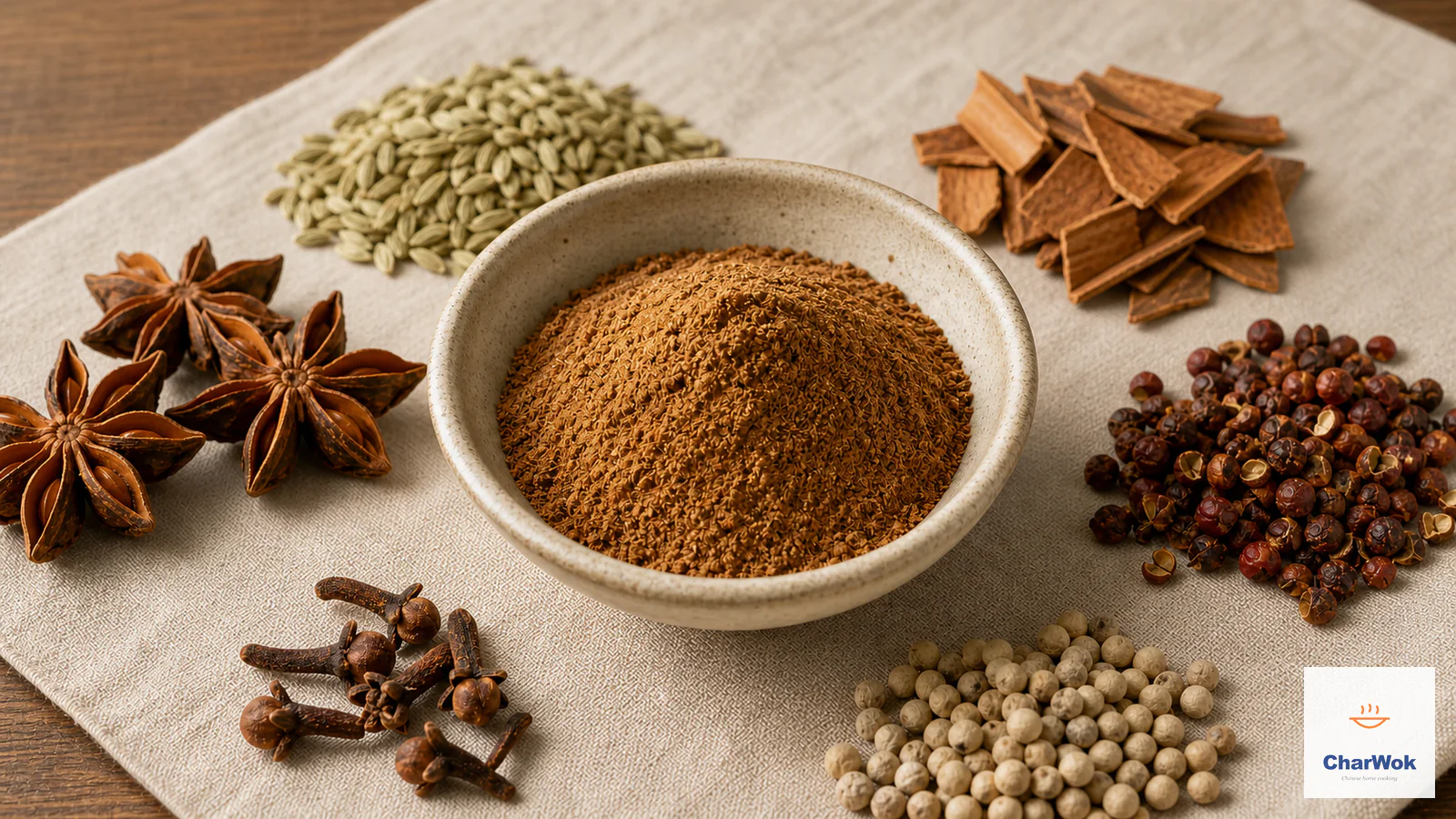
The spice matters more than the potato. The classic seasoning is a dry trio of chili flakes, five spice powder, and salt, applied after frying, never before. Two of those three can be swapped, and serious cooks often do. Ground Sichuan pepper adds the numbing ma you taste in Mapo Tofu and Dan Dan Noodles. Ground cumin takes the dish in a Xinjiang direction, the same flavor profile as Chinese lamb skewers or cumin lamb stir-fry. All three are correct. Pick by what is in your cabinet and what you are serving the potatoes with.
Ingredients
Ingredients at a glance
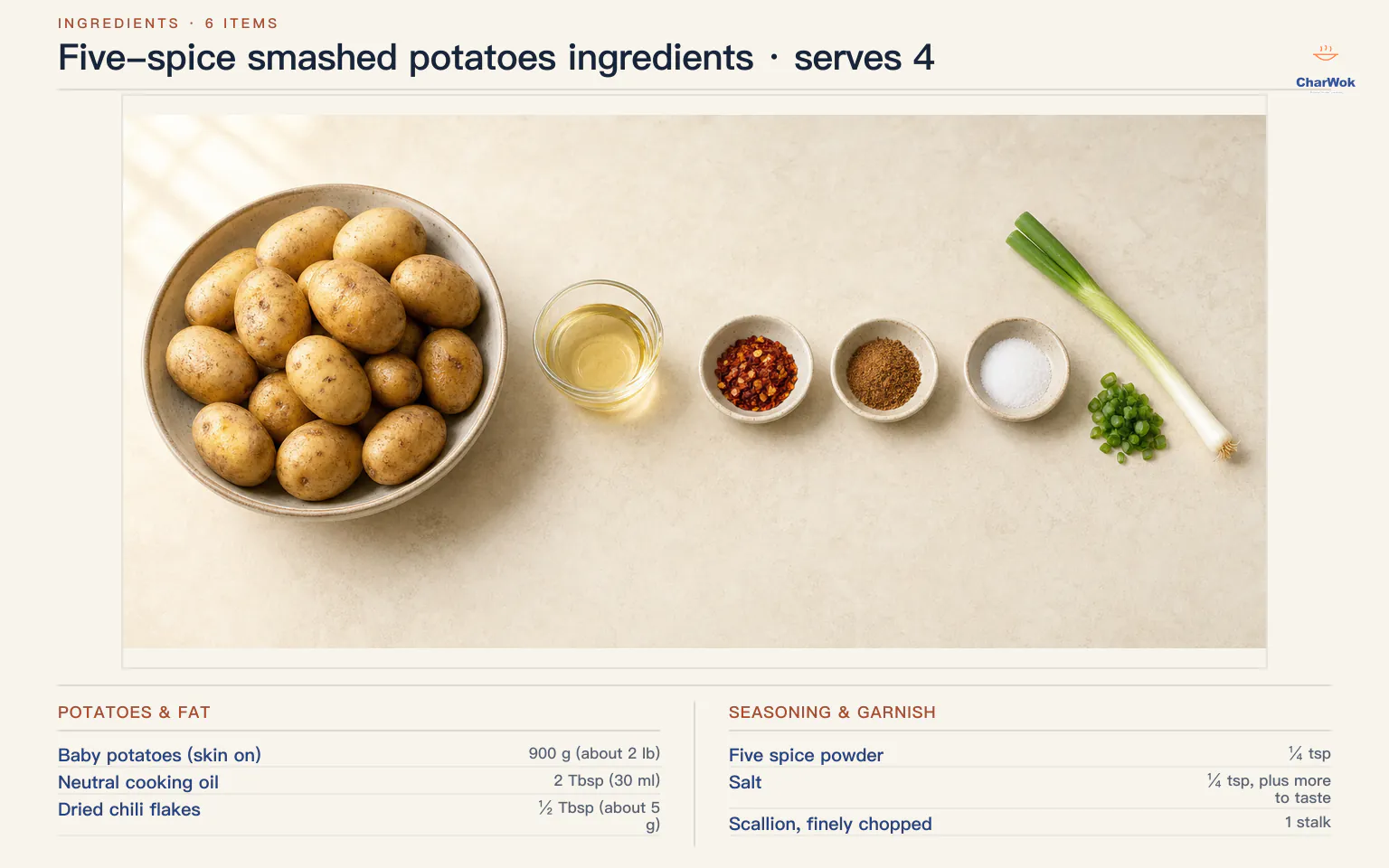
This is a six-ingredient dish, and the quality of two of them carries it. Use a chili flake you would eat raw off your finger, and grind the spice fresh if you can. Pre-ground five spice from a dusty tin will taste flat and slightly bitter; the homemade version is brighter and warmer.
| Ingredient | Amount | Notes / substitute |
|---|---|---|
| Baby potatoes (skin on) | 900 g (about 2 lb) | Fist-sized russets cut into 4-cm / 1½-in chunks work; thin-skinned creamers are best because the skin holds the potato together when you press. |
| Neutral cooking oil | 2 Tbsp (30 ml) | Grapeseed, canola, or peanut. Avoid olive oil, which fights the spice. |
| Dried chili flakes | ½ Tbsp (about 5 g) | Any flake you like the heat of. Aleppo or Tianjin flakes are gentler; standard red pepper flakes run hotter. Scale to taste. |
| Five spice powder | ¼ tsp | Swap 1:1 for ground Sichuan pepper (numbing) or ground cumin (warm, savory). Don't mix all three; pick one. |
| Salt | ¼ tsp, plus more to taste | Fine salt disperses better than flaky here. Taste at the end and add a pinch more if the potatoes taste flat. |
| Scallion, finely chopped | 1 stalk | Garnish. Cilantro or toasted sesame seeds are good alternatives; leave it off entirely if you don't care. |
The method, with the why at each step
- Cover the potatoes with cold water, then bring to a boil. Start cold so the outside and inside cook at roughly the same rate. If you drop them into already-boiling water, the skin sets before the center warms, and you get a potato that is overdone at the edge and raw in the middle. Once it reaches a full boil, drop the heat to low and cover the pot. You want a simmer, not a rolling boil, because violent water bashes the skins off.
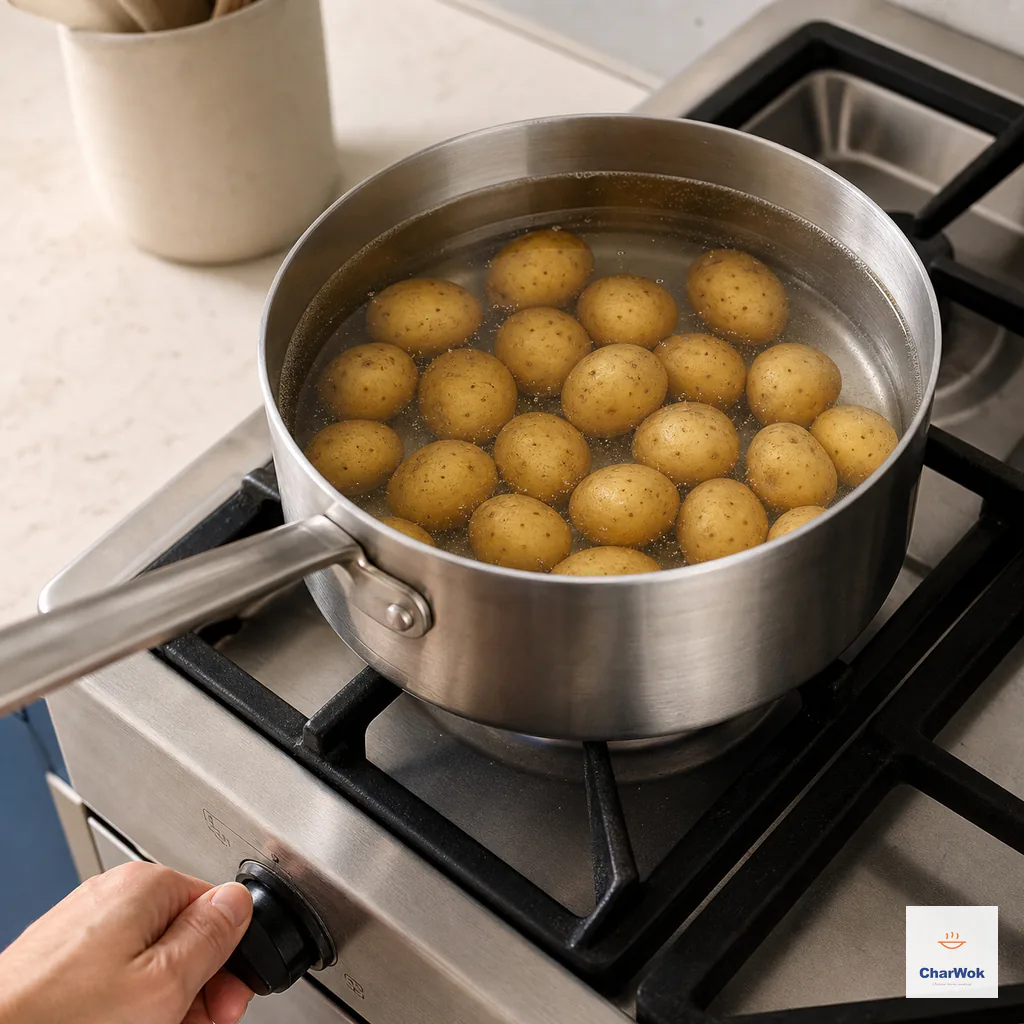
Start in cold water so the centers warm at the same pace as the skins
- Simmer about 5 minutes, then test the largest potato. Poke the biggest one in the pot with a fork. The target is "meets resistance": the tine slides in, but the center still pushes back. If it goes in clean, you went too far; rescue what you can. Undercooked is fixable in the pan, overcooked is not.
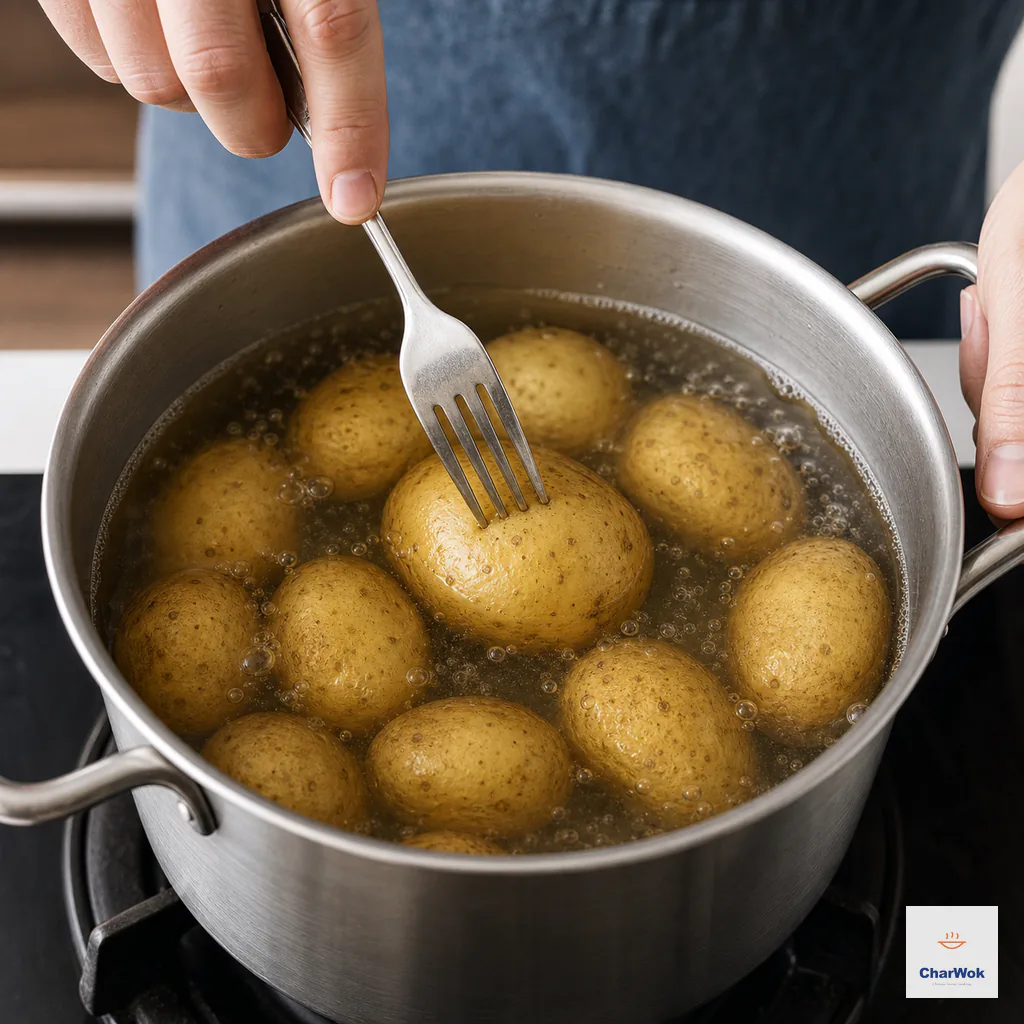
Pull the potatoes when the fork enters but the center still pushes back slightly
- Drain and let them steam dry for a minute. Surface moisture is the enemy of browning. A dry potato hits hot oil and crisps; a wet one steams and turns pale. Spread them in the colander and give them a shake.
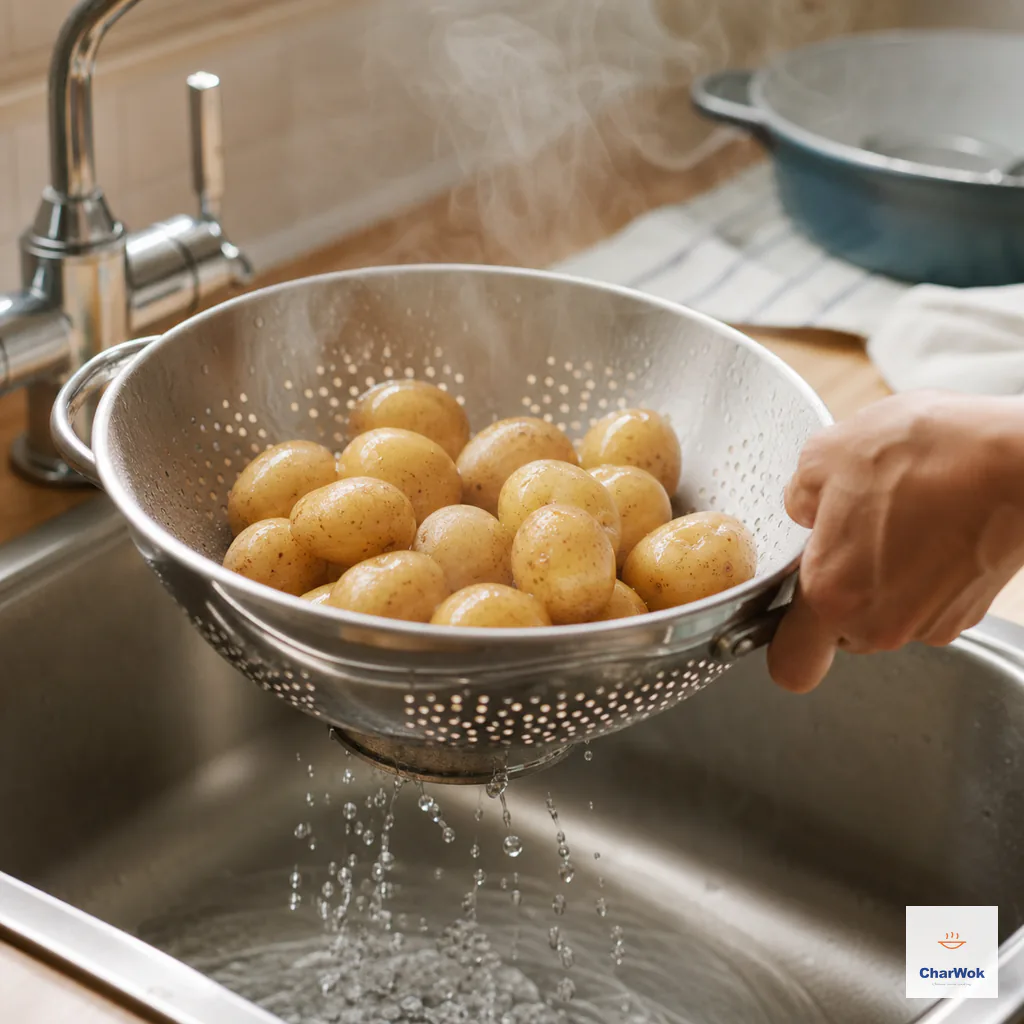
Drain and shake off surface water so the potatoes fry instead of steam
- Flatten each potato with the base of a glass or measuring cup. Press straight down until you hear and feel the skin crack and the flesh splits open, then stop. You want fissures, not mash. Those cracks are where the spice will lodge and where the crust forms. Press too hard and you have a pile of broken potato; too soft and you get a smooth disk that browns but never crisps. Err on the side of one firm, decisive press per potato.
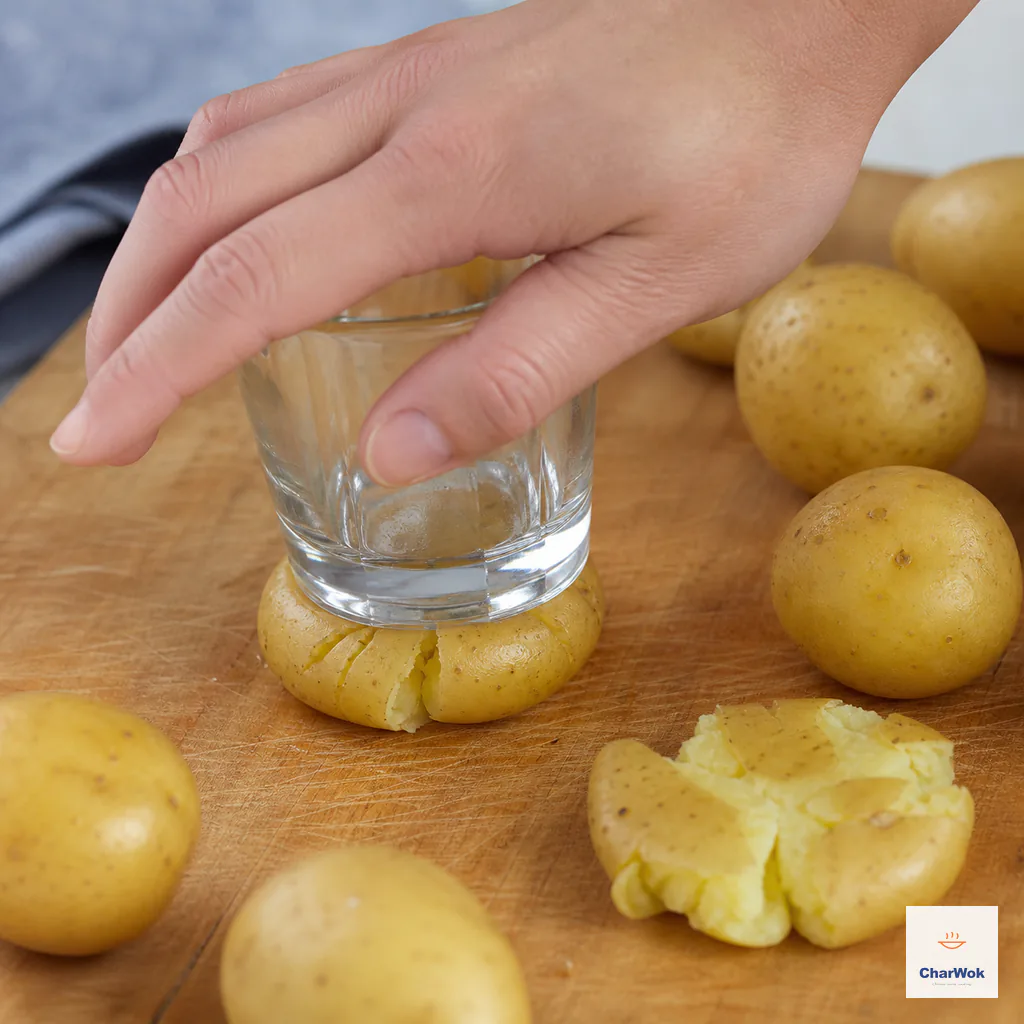
Stop as soon as the skin splits and fissures open; keep the potato in one piece
- Fry in a thin film of oil over medium heat. Use a wide pan so the potatoes sit in one layer; crowding drops the oil temperature and you get steaming instead of frying. Medium heat, not high. High burns the outside before the inside warms back through, and it scorches the skin. Let the first side alone for 3 to 4 minutes until it is genuinely amber, not just tinted. Flip and repeat. The patience here is the whole dish.
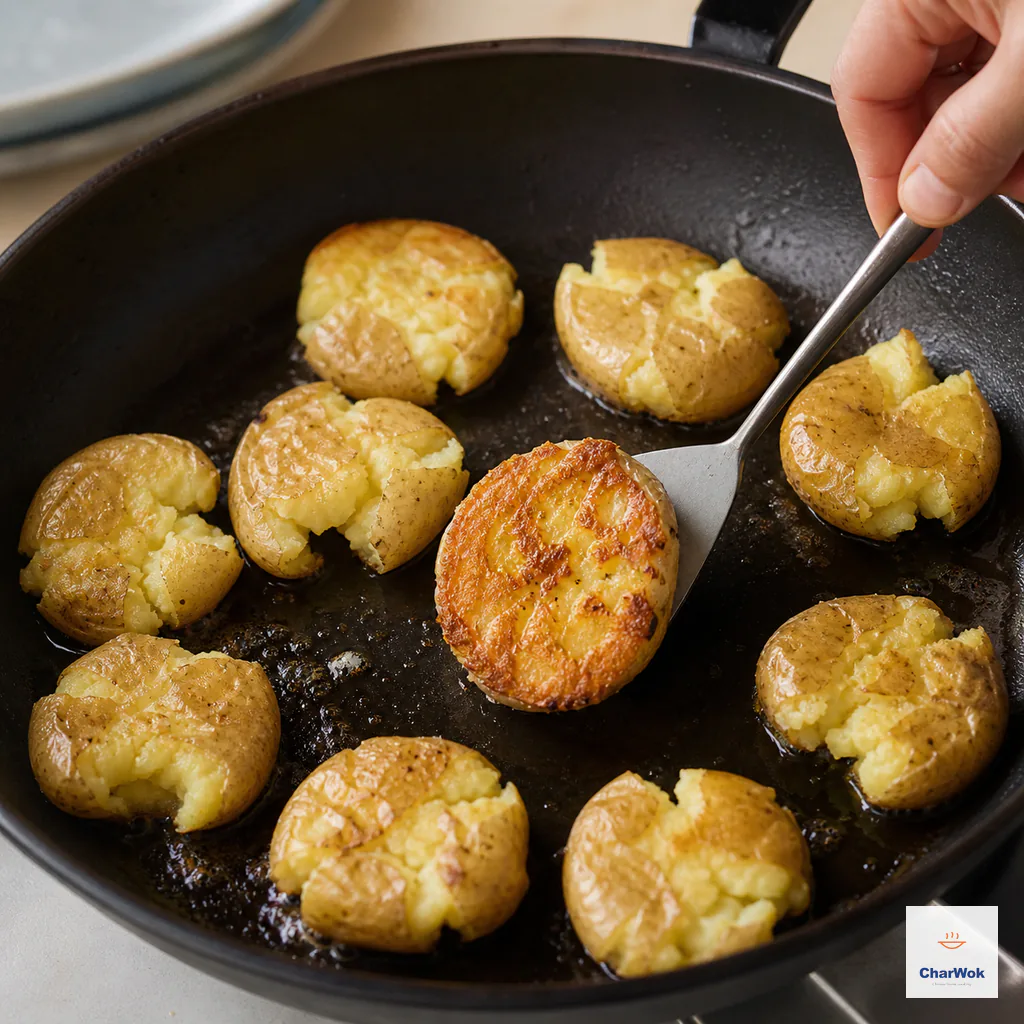
Leave each side undisturbed over medium heat until it is genuinely amber before flipping
- Off the heat, shower with the spice mixture. Combine the chili flakes, five spice (or Sichuan pepper, or cumin), and salt in a small bowl. Sprinkle it over the hot potatoes and toss so the cracks fill with seasoning. Do this after frying, not before. Spice in a hot dry pan burns and turns bitter within seconds. Scatter the scallion on top and serve right now, while the crust is still audibly crisp.
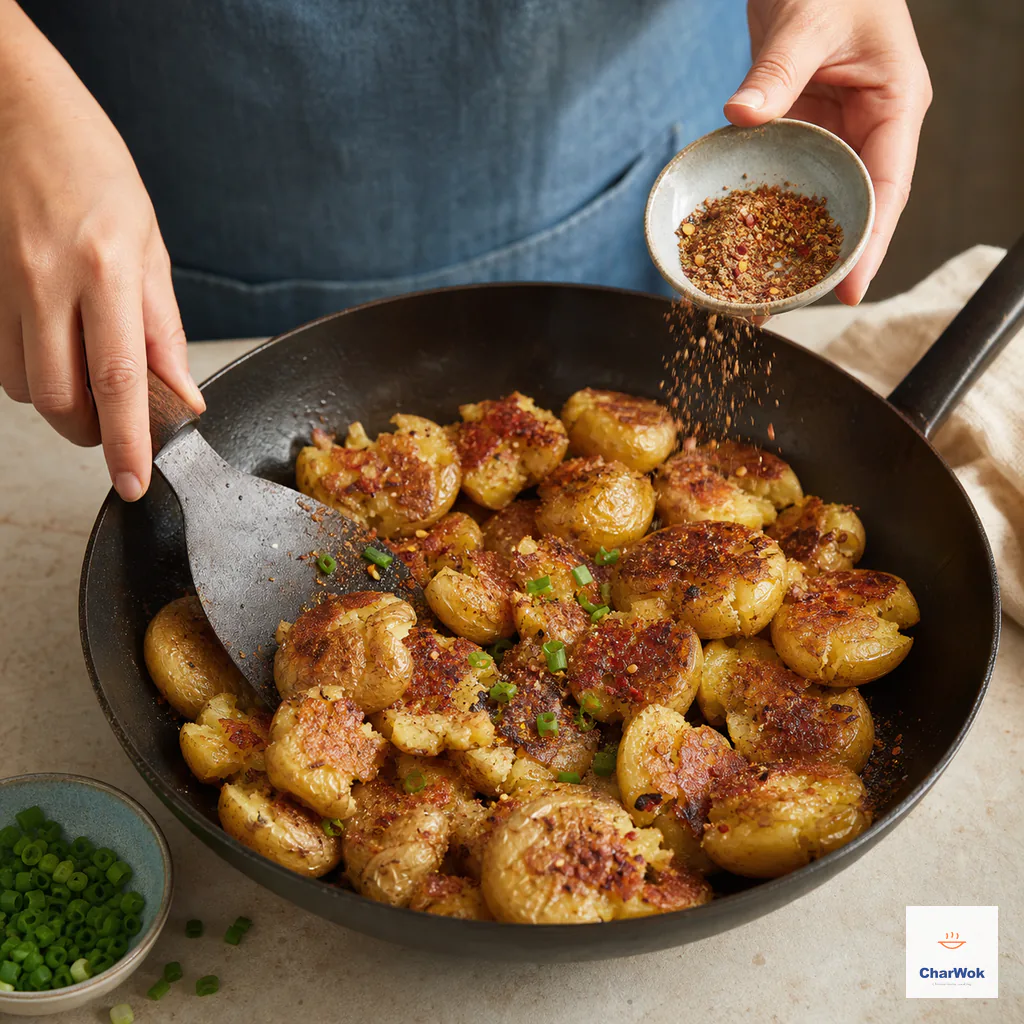
Season after frying so the dry spices stay fragrant instead of scorching
When it goes wrong, and how to fix it
The dish is simple, which means there is nowhere for a mistake to hide. Here are the failures I have earned, and what I do about them now.
The potatoes fell apart when I pressed them
They overcooked. Next time pull them 30 to 60 seconds sooner. To recover tonight, fry the broken pieces anyway — you will get something closer to crisp potato hash, which is still good, just not the dish you planned. Do not try to press the survivors harder to compensate; they are all the same doneness.
The centers are chalky and raw
Underboiled. Two fixes. One, after flattening, add two tablespoons of water to the pan, cover it, and steam for 2 minutes before you start frying. Two, lower the heat and fry slower so the interior has time to cook through before the outside burns. Either way, test doneness with a fork before the next batch.
Pale, soft, no crust
One of three things. The potatoes went into the pan wet, so dry them longer. The pan was crowded, so work in two batches. Or the heat was too low, so nudge it up and wait longer before flipping. Real browning needs the pan hot enough that the oil shimmers but does not smoke.
The spice tastes burnt and bitter
You added it during frying. Five spice and dried chili scorch almost instantly in a dry hot pan. Season off the heat, after the potatoes are out or the burner is off. If your five spice itself tastes bitter even raw, it is stale; replace it or make a fresh batch.
Bland, even with the spice
Almost always under-salted. The cracks absorb most of it, so the amount that looks right in the bowl is usually short. Add another pinch, toss, taste, repeat. A few drops of chili oil or a pinch of toasted sesame seeds at the end also wakes it up.
Variations and what to serve it with
The cumin version is my favorite for a lamb or beef main. Pair it with chili cumin chicken thighs or use it as the carb under red braised pork belly, letting the pork's sauce soak into the cracked potatoes. The Sichuan pepper version earns its place next to milder proteins like scallion oil chicken or soy sauce chicken, where the numbing tingle can lead.
For a full vegetarian plate, round it out with dry-fried green beans and a bowl of rice, or fold the leftover potatoes into a quick egg fried rice the next day. If you want to lean into the snack-stall feel, serve them alongside mala peanuts and a cold drink.
Make ahead and leftovers
Boil and flatten the potatoes hours ahead; leave them spread on a plate, uncovered, in the fridge so the surface dries further. Fry and season at the last minute. This is the move for a multi-course dinner, and it removes 90% of the last-minute stress.
Leftovers keep two days in the fridge but lose their crunch. Reheat in a dry skillet over medium heat to bring back some crust; the microwave will make them sad. Re-season lightly, because the spice dulls overnight.
Frequently asked questions
Can I use regular potatoes instead of babies? Yes. Cut peeled russets or Yukon Golds into 4-cm (1½-inch) chunks and follow the same steps. Adjust the simmer time; dense russets take a couple of minutes longer.
Do I need to peel the potatoes? No, and you should not. The skin is what holds a baby potato together through boiling and pressing, and it crisps beautifully. Peeled chunks are more likely to collapse.
Can I bake or air-fry instead of pan-fry? Air-fry at 200°C / 400°F for 12 to 15 minutes after flattening, shaking once. It works and uses less oil, but the crust is thinner and less glassy than a pan-fried one.
Is it spicy? Only mildly, from the chili flakes. Drop the chili to a pinch for heat-sensitive eaters, or replace the five spice with cumin and skip the chili entirely for a kid-friendly version.