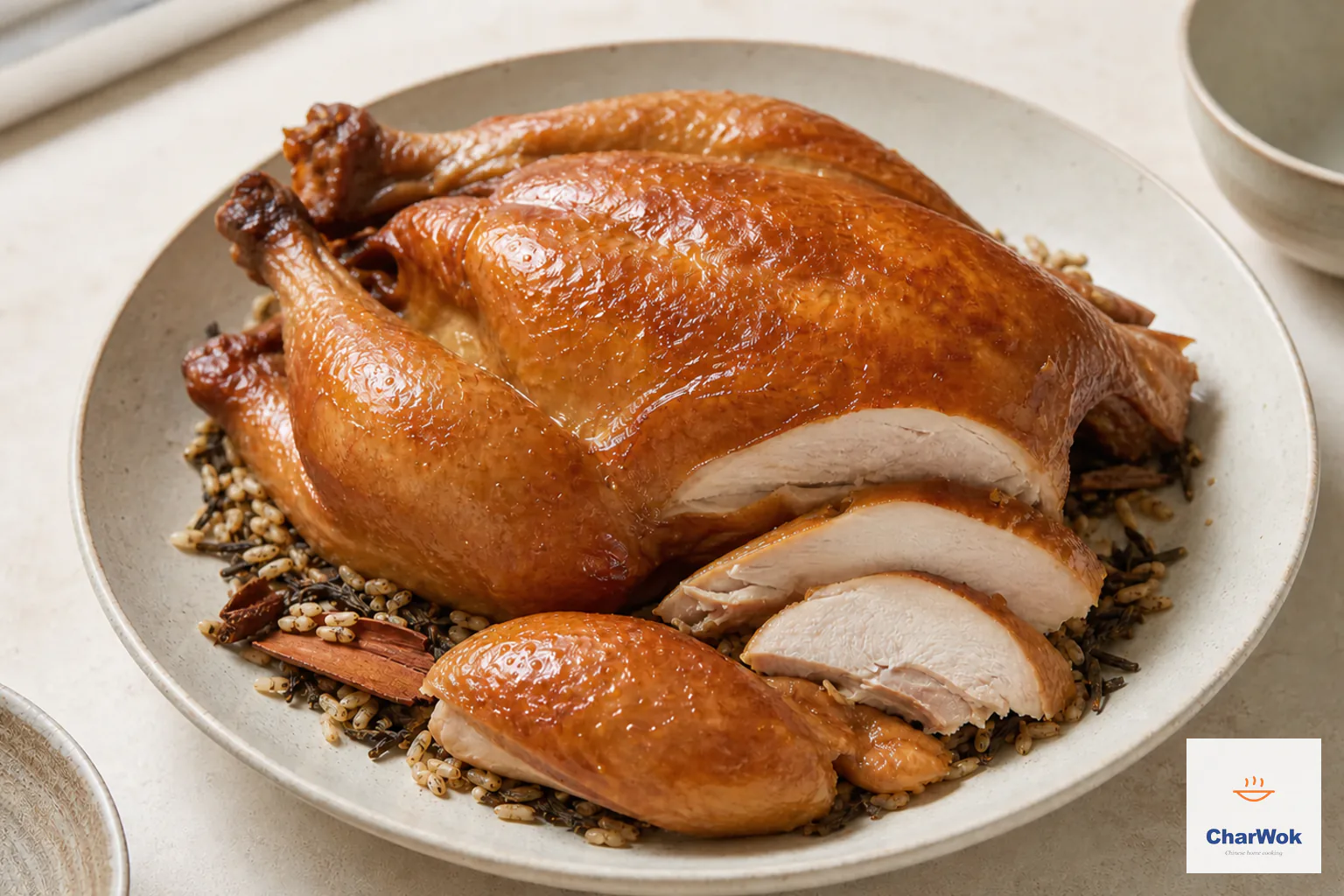
Chinese smoked chicken (熏鸡, xūn jī) is one of those dishes that seems to require a smokehouse and ends up needing nothing more than a wok, a handful of pantry spices, and about ten minutes of actual smoke. The trick most home cooks miss is that the smoke does not cook the bird. It perfumes a bird that is already cooked. Skip the steam-first step and you get rubbery skin wrapped around raw juice. Get the order right and you land on the thing that sells for a premium at every deli counter in northern China: cold, glossy, mahogany-skinned chicken that tears into juicy strands with a faint campfire sweetness.
My first attempt was a disaster. I cranked the heat under the tea-and-sugar mix, dropped the chicken in raw, and ten minutes later had a bird that was black on the outside and bloody at the bone. The lesson, learned the smelly-kitchen way, is the whole philosophy of this recipe in one line: steam to cook, smoke to finish. Once you accept that, the rest is details.
At a glance: Steam a 1.3–1.5 kg (3 lb) bird 40–45 minutes until a thigh reads 74°C / 165°F, brush on a soy-honey glaze, then cold-smoke it 8–10 minutes over tea leaves, brown sugar, and raw rice in a covered wok. The make-or-break judgment: never let the smoke mixture flame. You want a slow, visible trail of blue-grey smoke, not fire. Fire turns sugar to bitter char in seconds.
What this dish actually is
Xūn jī belongs to a family of tea-smoked cold dishes that run through northern and central Chinese cooking, cousins to tea-smoked duck and the Sichuan camphor-wood duck you see at banquet halls. The smoke there is not American BBQ smoke, slow and heavy for hours. It is a brief, fragrant wash from caramelizing sugar and toasting dry tea, rice, and spice. Think of it as finishing perfume rather than a cooking method. That is why the texture stays close to steamed chicken: tender, clean, faintly sweet, rather than the pulled, barky texture of a long-smoked brisket.
It is traditionally eaten cold or at room temperature, torn by hand rather than carved, and served as a cold appetizer (冷盘) alongside other small plates. That cold-service habit is worth respecting. Smoke flavor needs time to settle into the meat; a bird rested an hour and chilled briefly always tastes rounder than one sliced hot. If you have ever made Chinese tea eggs, you already understand the principle: the flavor deepens as it sits.
The equipment question, answered plainly
You do not need a dedicated smoker, but you do need a carbon-steel, cast-iron, or stainless vessel rated for the heat, a well-fitting lid, and a low rack that lifts the bird above the smoking bed. Never use non-stick cookware for this step. Do not improvise a seal with a towel near the burner; if the lid leaks smoke, stop and use a better-fitting vessel.
Safety boundary: make smoke only outdoors or beneath an effective hood that exhausts to the outside. Keep the setup attended, stop if smoke escapes or an alarm sounds, and never disable a smoke alarm. The U.S. Fire Administration smoke-alarm guidance is explicit about keeping alarms active while cooking.
A wok and rack are the same two tools you will reuse for steaming fish and silky steamed eggs, so the investment pays off across the cuisine rather than for one recipe. If you want a deeper look at the steam setup itself, the principles in the bamboo steamer guide carry over directly.
Ingredients
The recipe has three working parts: a dry rub for the marinade, a glaze brushed on before smoking, and the smoke bed itself. I've laid them out that way because each does a separate job and you can swap within a part without breaking the dish.
Dry rub (you'll use roughly half on the bird)
Ingredients at a glance
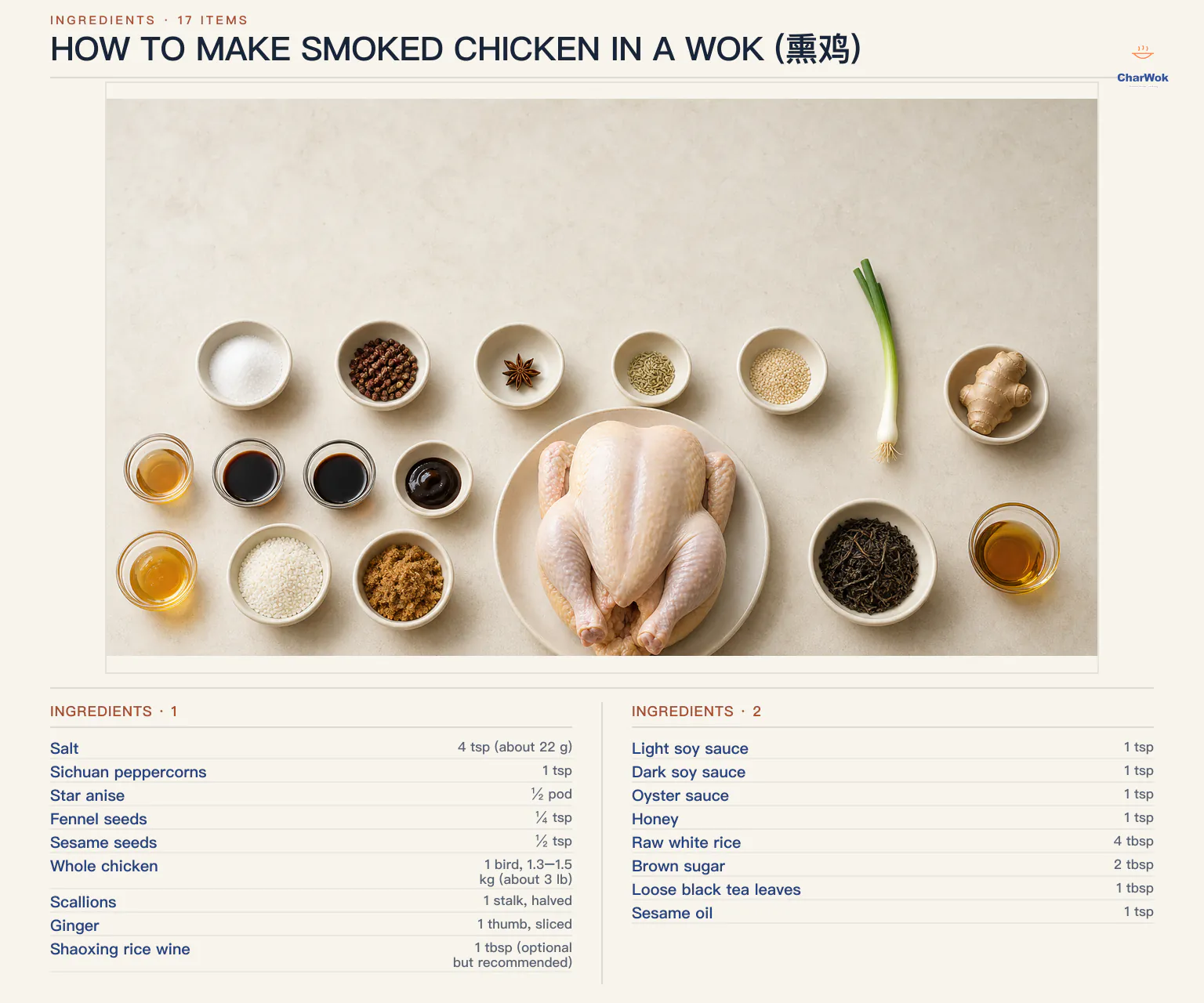
| Ingredient | Amount | Notes / substitute |
|---|---|---|
| Salt | 4 tsp (about 22 g) | Kosher or fine sea salt. Table salt works; halve the volume if using fine table salt because it packs denser. |
| Sichuan peppercorns | 1 tsp | Pick out any black seeds and stems first, since they're bitter. See the Sichuan pepper guide if this spice is new to you. |
| Star anise | ½ pod | Tap out the shiny seeds inside; toast only the woody petals. Ground anise is a weak substitute. |
| Fennel seeds | ¼ tsp | Whole seeds only. Adds the sweet, licorice back-note. |
| Sesame seeds | ½ tsp | Raw (white) seeds. If yours are already toasted, skip the toasting step and add them when grinding. |
The bird and the marinade aromatics
| Ingredient | Amount | Notes / substitute |
|---|---|---|
| Whole chicken | 1 bird, 1.3–1.5 kg (about 3 lb) | Go small. A bigger bird won't cook through in the steam time and won't fit most home woks. Free-range or air-chilled birds give firmer, more flavorful skin. |
| Scallions | 1 stalk, halved | Tucked inside the cavity. Leek greens work too. |
| Ginger | 1 thumb, sliced | Also goes inside the cavity. Smash the slices to release oil. |
| Shaoxing rice wine | 1 tbsp (optional but recommended) | A splash inside the cavity lifts the raw-poultry smell. If you don't keep Shaoxing wine on hand, dry sherry is the standard substitute. |
Glaze (brushed on before smoking, for color and a tacky surface the smoke can grab)
| Ingredient | Amount | Notes / substitute |
|---|---|---|
| Light soy sauce | 1 tsp | For salt and base flavor. The difference between light and dark soy sauce matters here. |
| Dark soy sauce | 1 tsp | For mahogany color. Molasses thinned with water can substitute for color only. |
| Oyster sauce | 1 tsp | For body and umami. Mushroom stir-fry sauce is the vegetarian swap. |
| Honey | 1 tsp | Sugar or maltose also work; maltose gives the glossiest, most deli-like sheen. |
Smoke bed (the part that does the perfuming)
| Ingredient | Amount | Notes / substitute |
|---|---|---|
| Raw white rice | 4 tbsp | Provides a slow, even heat bed and toasty aroma. Don't use cooked rice. |
| Brown sugar | 2 tbsp | Caramelizes first and creates most of the visible smoke. White sugar works but smokes hotter and faster. |
| Loose black tea leaves | 1 tbsp | Lapsang souchong is classic and smoky; plain black tea (Lipton-style) is fine. Avoid flavored or oiled teas. |
| Sesame oil | 1 tsp | Brushed on the finished bird, not in the smoke bed. For gloss and aroma. |
How to make it
- Toast and grind the dry rub. Put the Sichuan peppercorns, star anise petals, fennel seeds, sesame seeds, and salt into a cold dry pan over low heat. Stir for about 3 minutes, pull the pan off as soon as the salt takes on a faint ivory tint, cool briefly, then grind to a coarse powder.
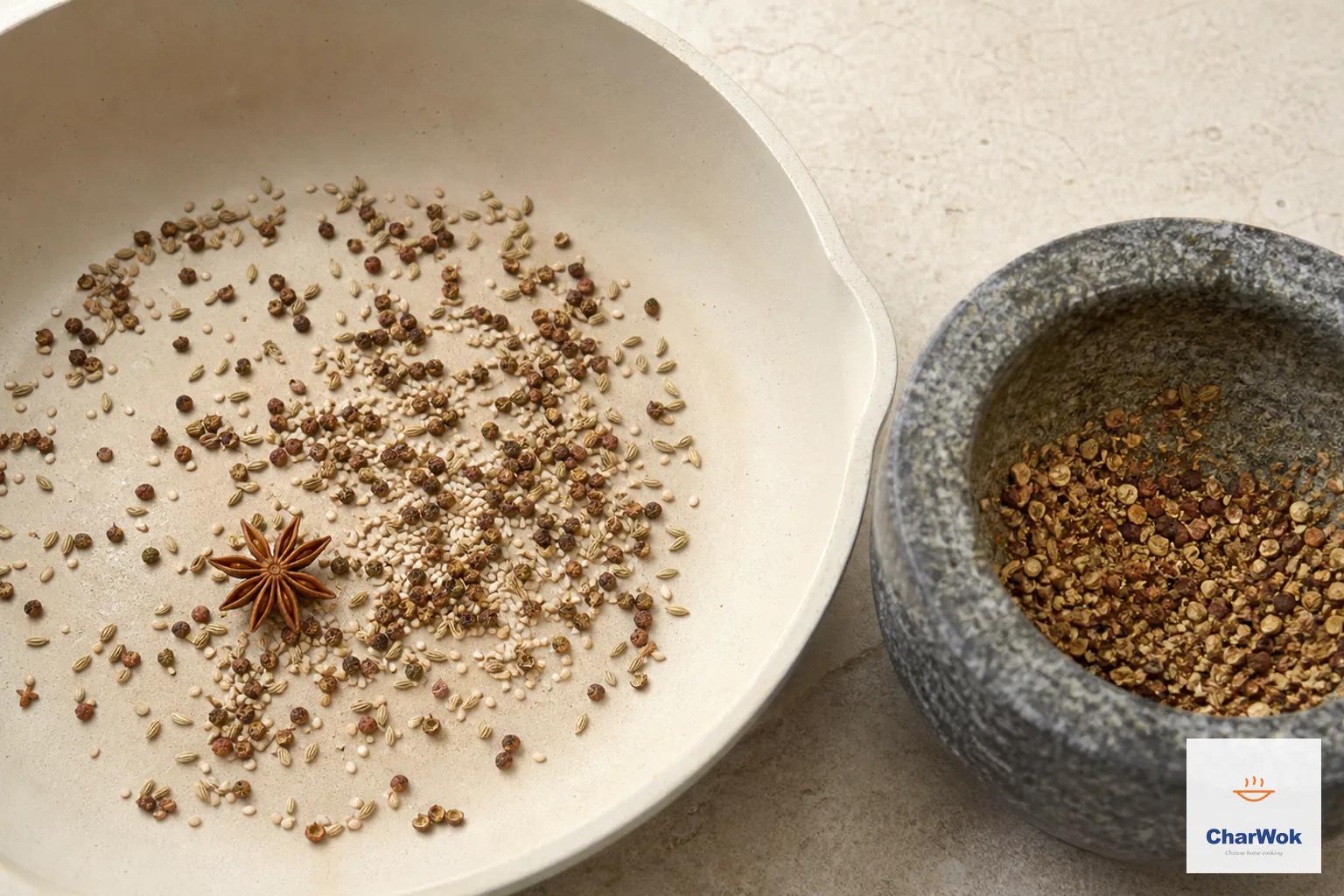
Cold-toast the spices with the salt for about three minutes, then crush them coarsely so cracked peppercorns and seed fragments remain visible.
- Season the bird, inside and out. Pat the chicken dry. Use roughly half the rub over the skin and cavity, add the scallion, ginger, and optional wine, then refrigerate uncovered for at least 4 hours and up to overnight. Keep the unused rub completely separate from hands or tools that touched raw chicken.
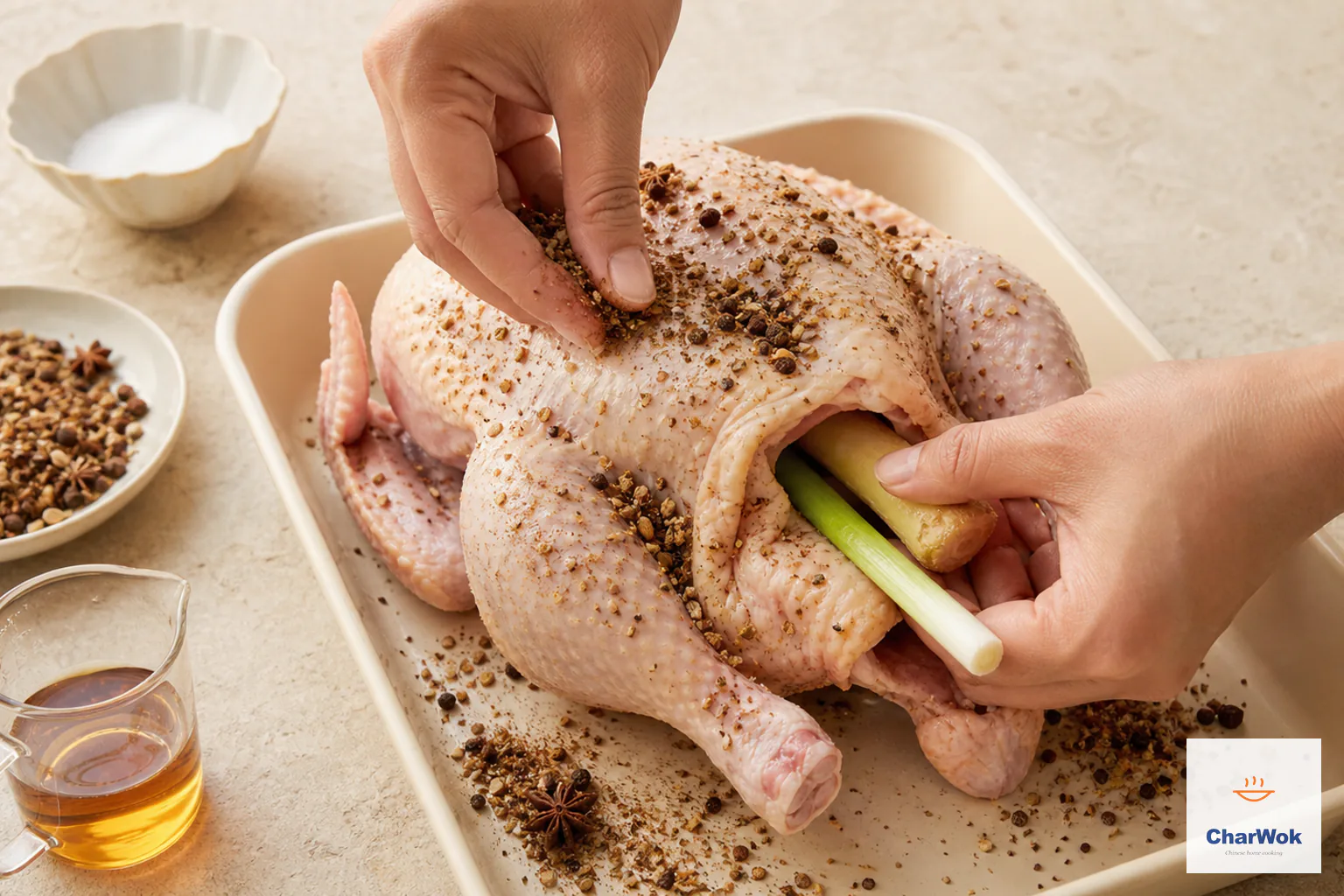
Pat the bird dry, rub half the coarse mixture inside and out, add one scallion, ginger and optional wine, then refrigerate uncovered for at least four hours.
- Steam until safely cooked. Set a rack over water in a wok or pot, bring the water to a boil, place the chicken breast-up on the rack, and cover with a well-fitting lid. Steam steadily for 40–45 minutes, checking the water near 25 minutes and adding only hot water if needed. Use a food thermometer in the thickest thigh without touching bone; the center must reach at least 74°C / 165°F. Do not substitute meat color or clear juices for a temperature reading. See the FoodSafety.gov minimum-temperature chart.
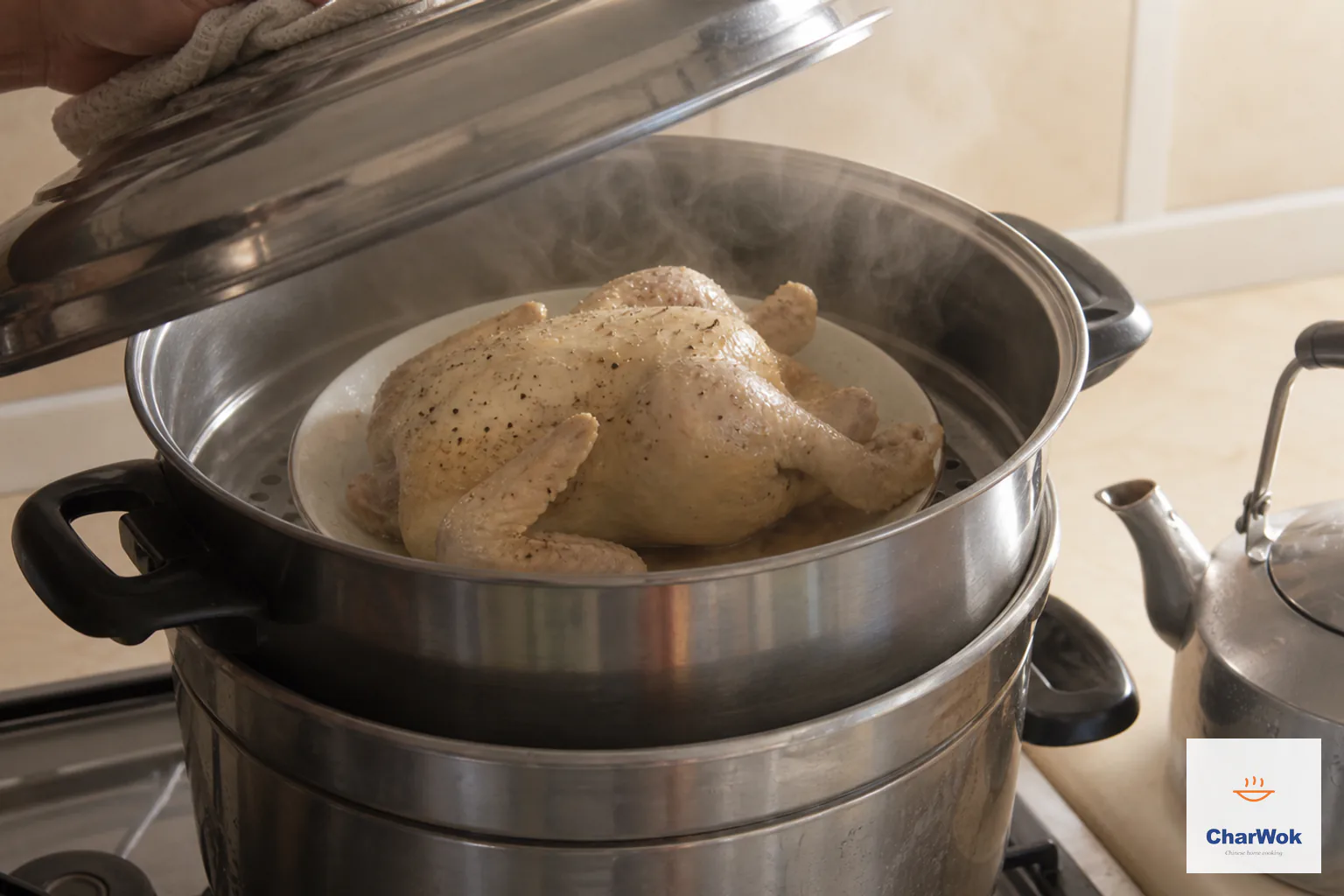
Steam breast-up for 40–45 minutes, check the water near 25 minutes and top up only with hot water; the thickest thigh must reach at least 74°C.
- Glaze while warm. Rest the chicken for 5 minutes, mix the light soy, dark soy, oyster sauce, and honey, then brush a thin layer over the surface.
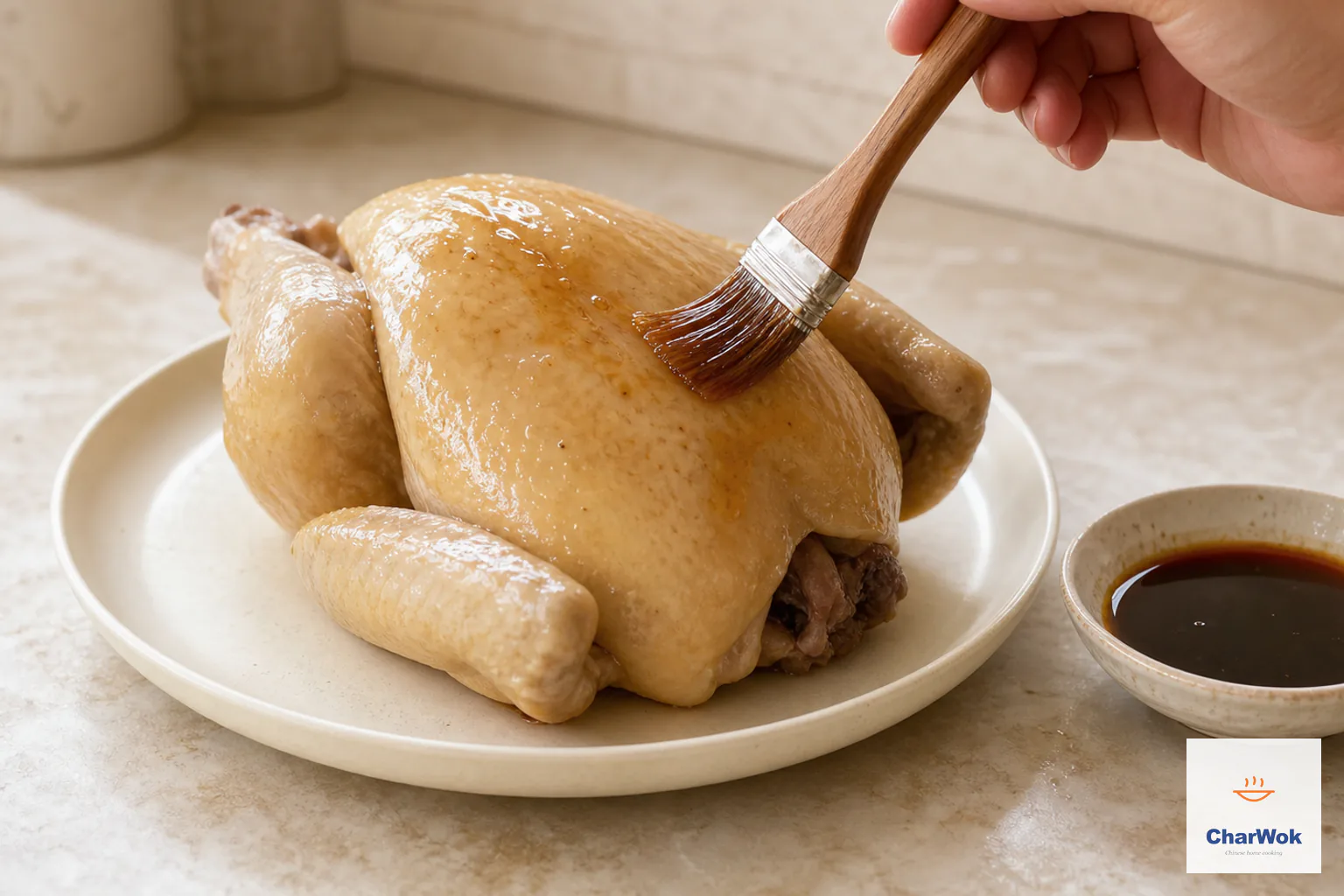
Rest the steamed bird for five minutes, then brush on a thin, even glaze rather than a heavy dark lacquer.
- Build the smoke bed only in a safe location. Outdoors or beneath effective exterior-vented extraction, line the cleaned, dried wok with foil and add the rice, brown sugar, and tea. Keep the setup attended and stop if smoke escapes or an alarm sounds.
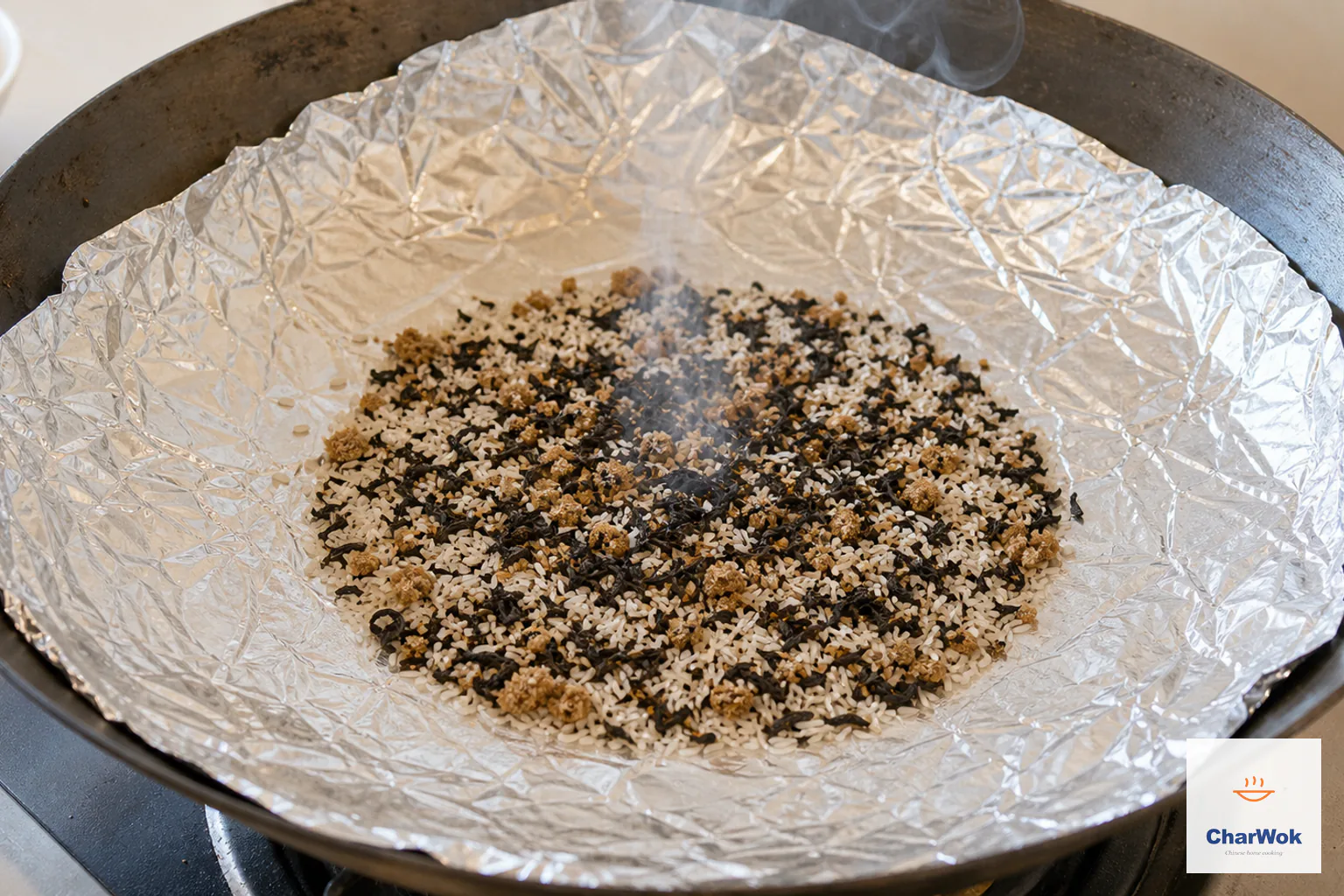
Use this smoke step only outdoors or beneath effective exterior-vented extraction, and stop if smoke escapes or an alarm activates; never disable a smoke alarm.
- Smoke, covered, 8–10 minutes. At the first thread of smoke, set the rack and glazed chicken in the wok and close the well-fitting lid. Lower the heat and keep the smoke thin. If the lid leaks, the smoke thickens, or the mixture smells acrid, turn off the heat; do not seal the rim with a towel.
- Vent and finish. Turn off the heat. Open the lid away from your face outdoors or beneath effective exterior extraction, then transfer the bird, brush with sesame oil, and rest for at least 10 minutes before serving.
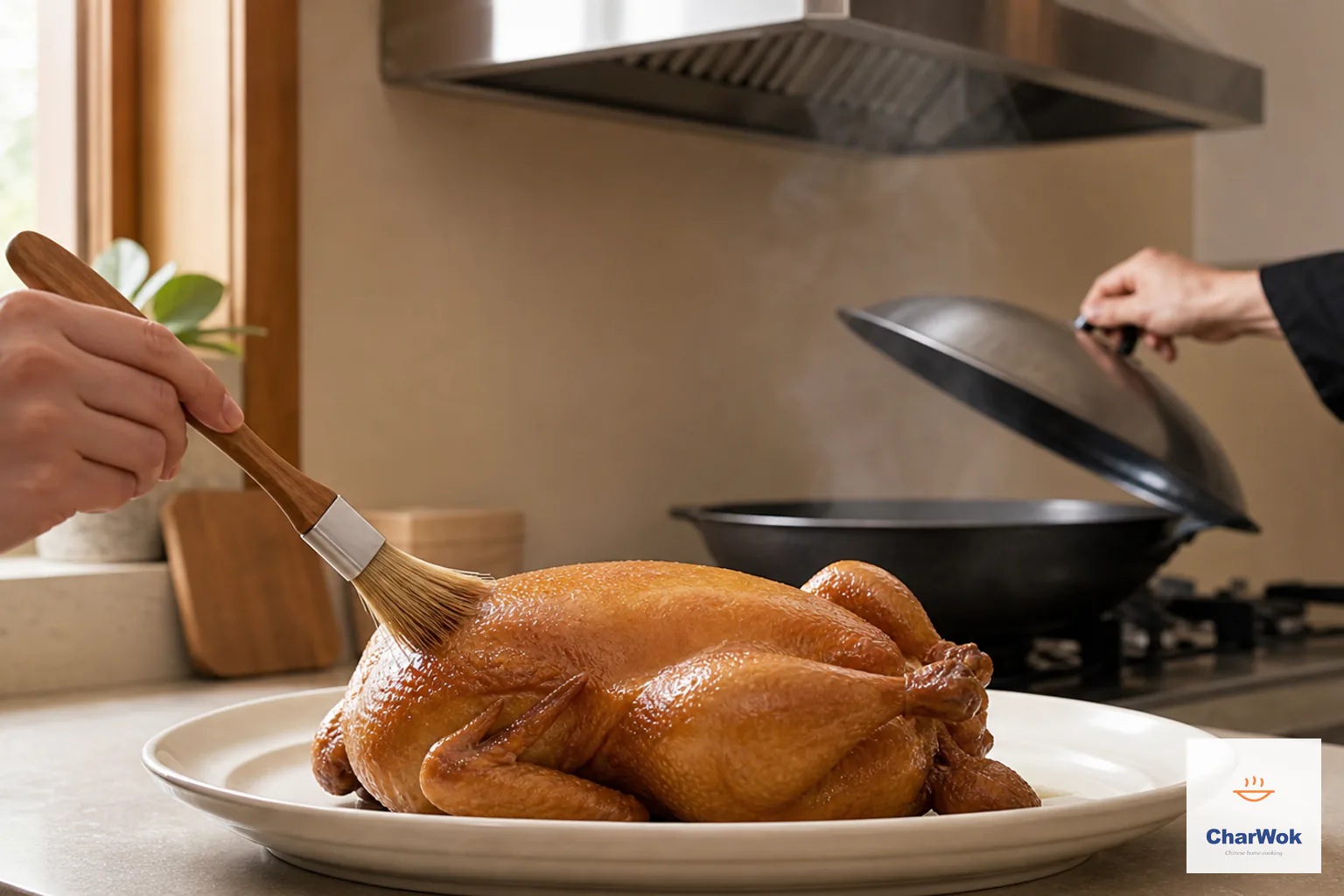
Turn off the heat and vent under effective exterior extraction or outdoors before opening fully, then brush with sesame oil and rest the chicken for ten minutes before carving.
When things go wrong
This recipe fails in predictable ways, and every one of them has a fix I've earned the hard way.
Bitter, acrid-tasting skin. The smoke bed flamed or the sugar scorched. The fix is purely heat control: keep it at a visible-smoke level and never at a rolling-smoke level. If you smell burnt sugar the moment you open the lid, you went too hot; next time drop the heat a notch lower once the lid is on. There is no rescuing an oversmoked bird, so err short on time.
The thermometer is still below 74°C / 165°F. The bird is undercooked. Keep steaming for another 5 minutes, then re-check the thickest thigh without touching bone. Trust the thermometer over the clock, meat color, or juice color.
Tough, stringy breast. Two usual causes: the bird was too large (over about 1.6 kg / 3.5 lb, the breast overcooks before the thigh finishes), or the steam was at a hard boil instead of a gentle one. Keep the steam at a steady, moderate pace and buy a smaller bird. I once tried to stretch the recipe with a 2 kg roaster and the breast came out like cardboard; the lesson stuck.
Pale, washed-out color after smoking. The glaze was too thin or applied to a wet surface. Pat the bird dry before brushing, and don't be stingy; the dark soy is what carries the mahogany. A second light brush right before smoking helps.
Smoke leaked out. Turn off the heat and ventilate the area. Do not improvise a seal with a towel near the burner. Use a better-fitting lid or vessel, and do the smoke step only outdoors or under effective exterior-vented extraction.
The smoke alarm sounds. Stop cooking and respond to the alarm; never remove its battery or disable it. Move the smoking step outdoors or improve exterior extraction before trying again.
Variations and pairings
Once the core technique is yours, the dish bends easily. Swap the black tea for lapsang souchong to lean smokier, or for jasmine tea to push it floral. Add a stick of cinnamon and a strip of dried tangerine peel to the smoke bed for a warmer, more autumnal perfume. A pinch of chili bean paste or a spoon of cracked black pepper in the rub nudges it toward a spicier profile.
The classic northern way to serve it is plain, torn by hand, with the leftover dry rub dusted over the pieces for anyone who wants more salt and spice. My preference is a scallion-ginger dipping oil: pile finely chopped scallion and minced ginger in a heatproof bowl, heat 1½ tbsp neutral oil until it just shimmers, pour it sizzling over the aromatics, then stir in 2 tbsp light soy sauce and ½ tbsp black rice vinegar. The same scallion-oil logic is what makes scallion oil chicken work, so the sauce earns its keep beyond this one dish.
For a full cold-plate spread, pair it with other make-ahead dishes that share the gentle, aromatic register: drunken chicken steeped in wine, mouth-watering chicken in its chili oil, or Bang Bang chicken with its sesame-chili sauce. A bowl of Hainanese-style chicken rice or a simple soy sauce fried rice turns the cold bird into a full meal, and the smoky leftovers are excellent folded into chicken fried rice the next day.
Storage and reheating
Smoked chicken is best cold or at room temperature and keeps, covered, in the fridge for up to 3 days. The smoke flavor actually rounds out overnight. I do not recommend microwaving, which toughens the breast and kills the delicate smokiness. If you want it warm, bring it to room temperature and give it a brief, gentle steam, or shred it into a stir-fry or soup at the end. The carcass makes an outstanding chicken stock with a faint smoky backbone; do not throw it out.
Common questions
Can I skip the steaming and just smoke a raw chicken?
No, not with this method. The smoke time is far too short to cook a whole bird, and you would end up with burnt skin over raw meat. Steam first, smoke second. That order is the entire point of the technique.
Can I use a regular pot instead of a wok?
Yes, any deep, lidded pot that fits the bird on a rack will work, provided it is not non-stick. Cast iron, enamel-coated Dutch ovens, and stainless stockpots are all fine. The wok just happens to be the traditional and most efficient shape.
What tea should I use?
Any plain loose black tea works. Lapsang souchong is the smokiest and most traditional choice. Avoid tea bags with added flavoring or oil, which can smell harsh when burned. Plain Lipton-style black tea is a perfectly good everyday option.
How smoky will my kitchen get?
It should not fill the kitchen with smoke. Use this method only outdoors or beneath effective exterior-vented extraction, open the lid away from your face, and stop immediately if smoke escapes or an alarm sounds.
Can I make it ahead for a gathering?
That is actually the ideal use. It tastes better after a night in the fridge, slices or tears cleanly when cold, and needs no last-minute work. Pull it out 20 minutes before serving to take the chill off.
If cold, aromatic chicken dishes are what you are after, this technique sits comfortably alongside salt-baked chicken and soy sauce chicken in the same make-ahead repertoire, each one a different route to the same goal of a flavorful bird you can pull from the fridge and serve. For a broader tour of the genre, the Chinese chicken recipes by cooking method collection is a good place to wander next.