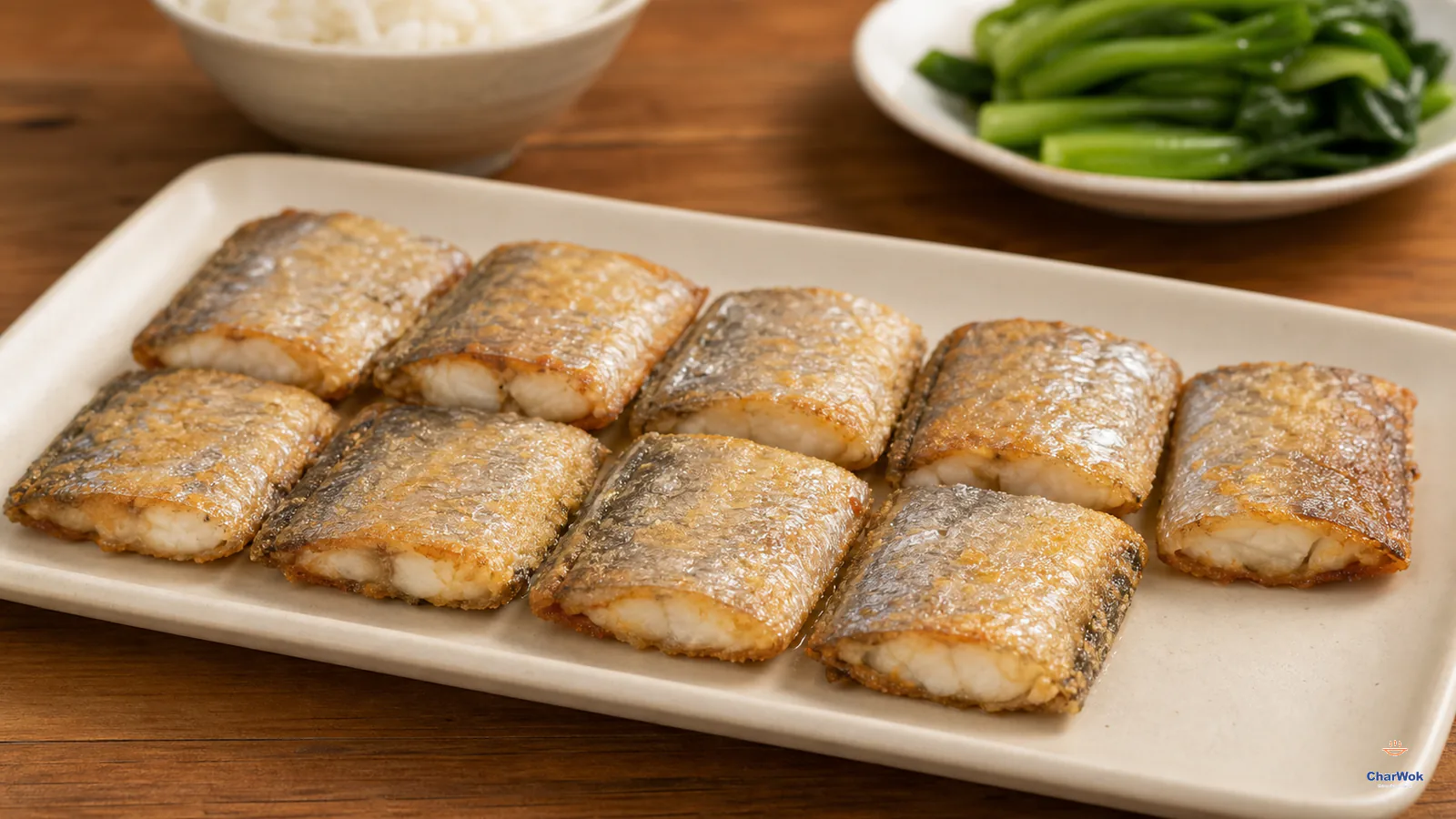
The smell of pan-fried belt fish in a hot skillet is what "coming home" smells like in a northern Chinese kitchen. A thin film of cornstarch turns the silver skin into a crackling golden crust, while the flesh underneath stays juicy and almost sweet. The dish takes under ten minutes on the stove, yet most first attempts end in one of two heartbreaks: the silver skin glues itself to the pan and tears, or the coating turns soggy the moment the fish hits oil.
Both failures are fixable, and they both come down to surface moisture. Belt fish (also called ribbonfish or hairtail) is a deep-water species with a fragile, iridescent membrane where other fish have scales. That membrane holds water, smells stronger than the flesh beneath it, and refuses to brown until it is dry. Once you understand that one fact, the rest of the recipe falls into place.
Remove the silver membrane, dry the fish until it is matte, dust on just enough cornstarch to kill the last shine, then let the pan do the work. Medium heat, oil shimmering but not smoking, and no touching for two to three minutes per side. That is the entire technique.
What is belt fish, and why cook it this way
Belt fish is a long, narrow, silvery sea fish caught across the western Pacific. It travels badly, so in Chinese groceries it is almost always sold frozen, often already cleaned and cut into segments. The flesh is lean, with large flakes and a clean, mild flavor that absorbs aromatics without fighting them. A central row of bones runs the length of the body, flanked by a soft cartilage ridge on each edge, so the eating requires a little attention but no special skill.
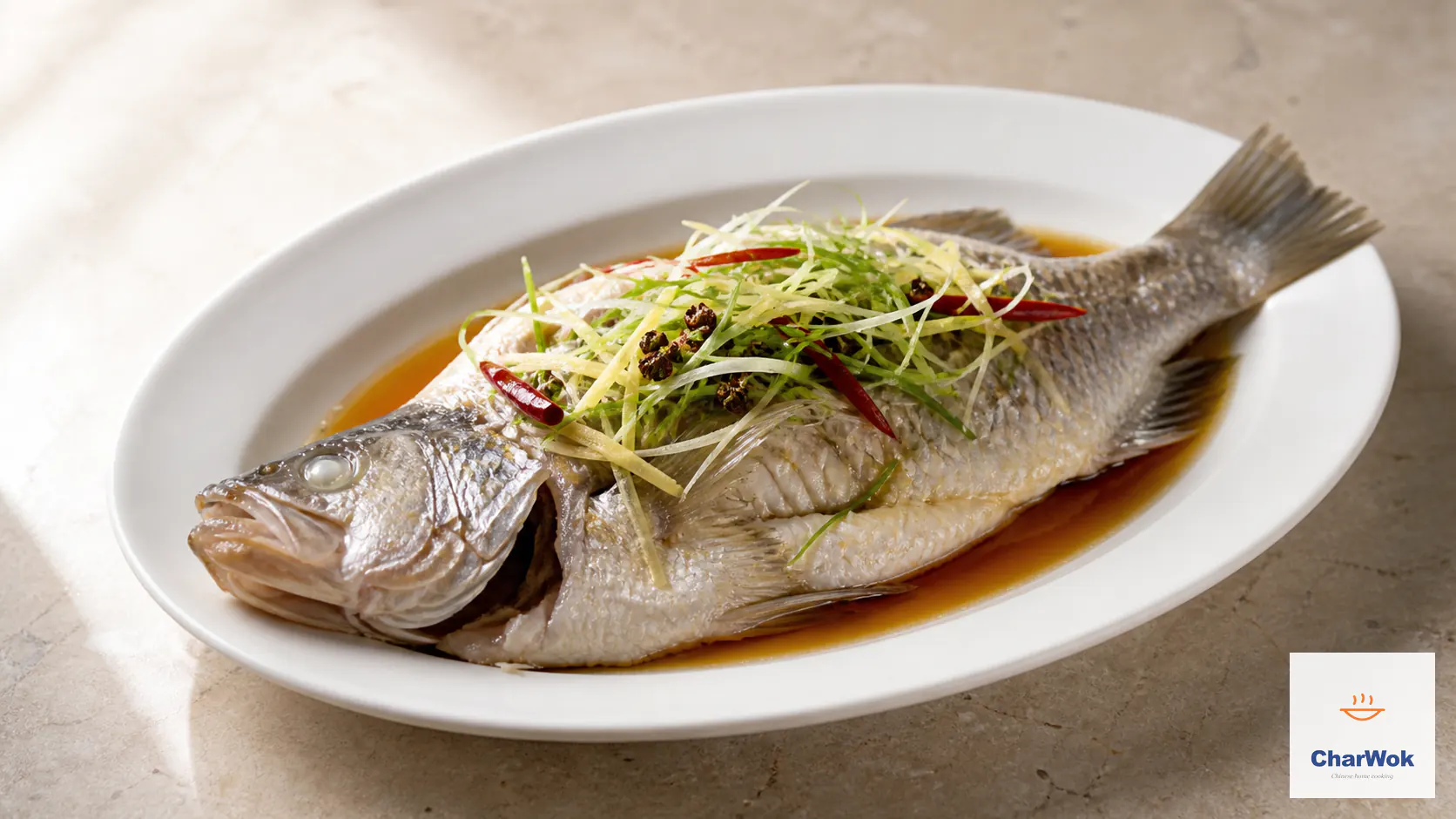
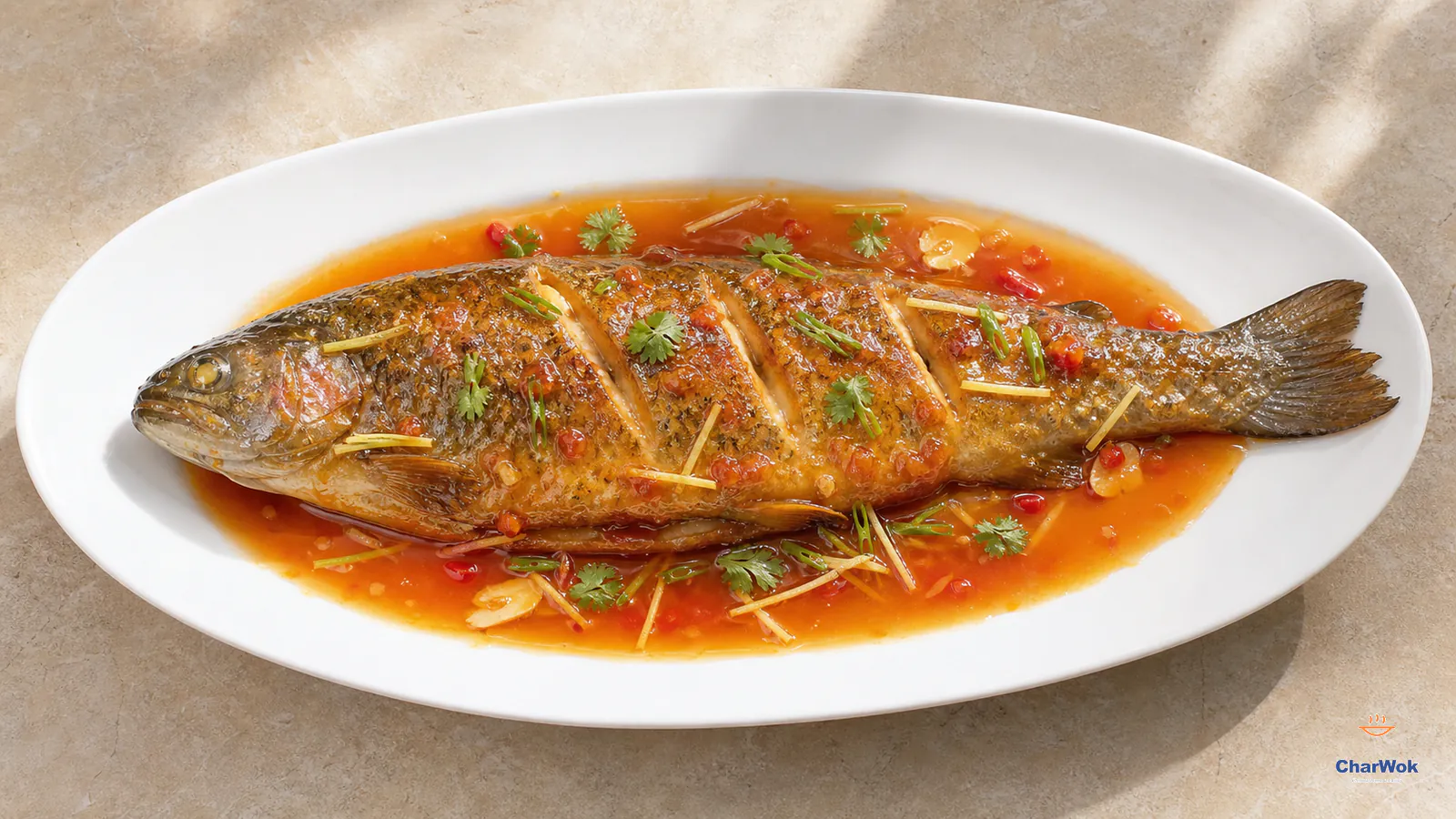
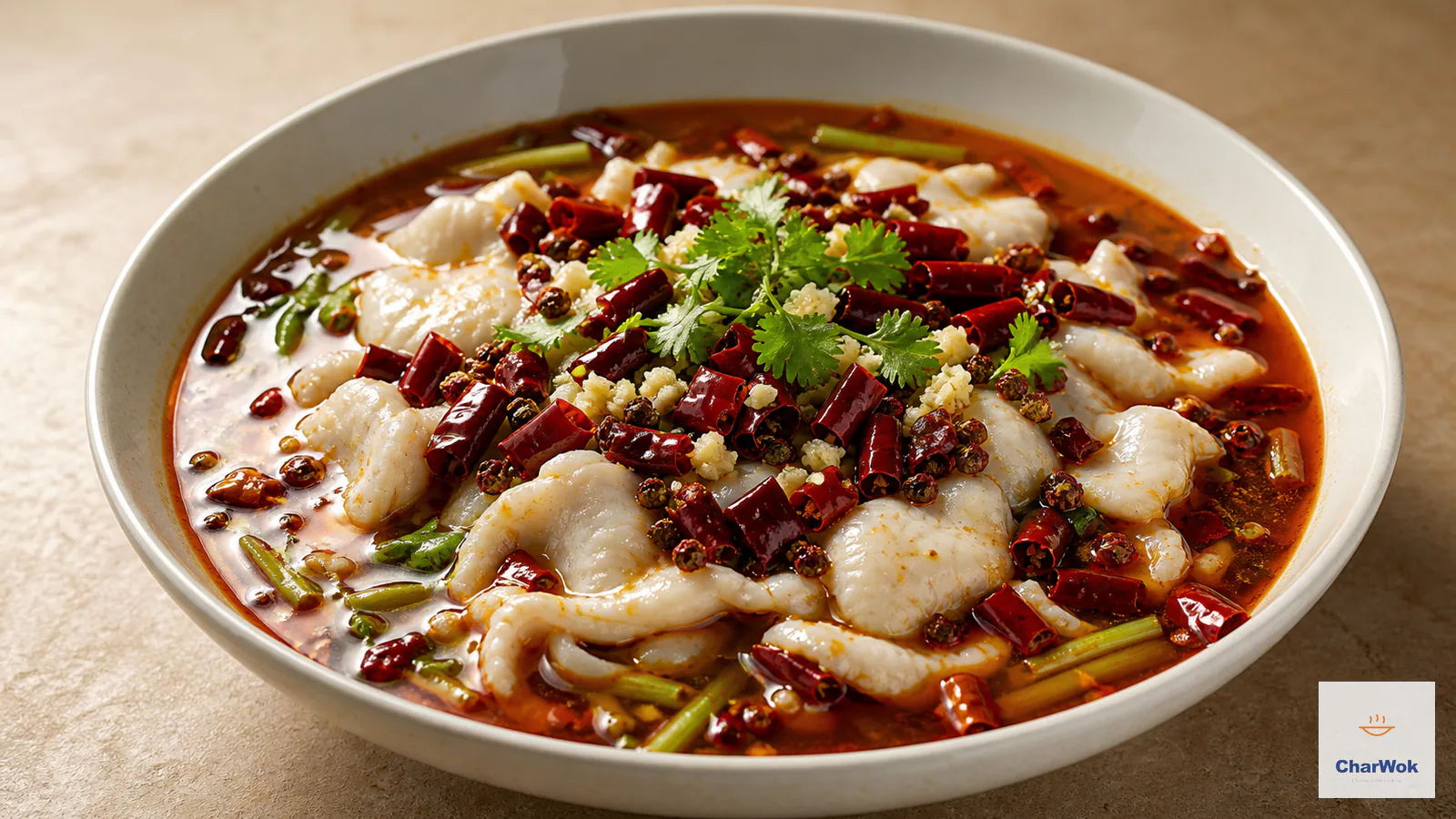
Pan-frying is the home-cook's method of choice because it asks for very little oil and brings out a Maillard crust that steaming cannot. If you want something lighter, the gentle route is whole steamed fish with scallion oil; if you want drama and sauce, Sichuan-style suan cai yu in sour vegetable broth or chili-oil shui zhu yu are the showpiece versions. For a weeknight, though, a quick pan-fry with rice and a vegetable is hard to beat.
Ingredients
Pan-fried belt fish ingredients at a glance
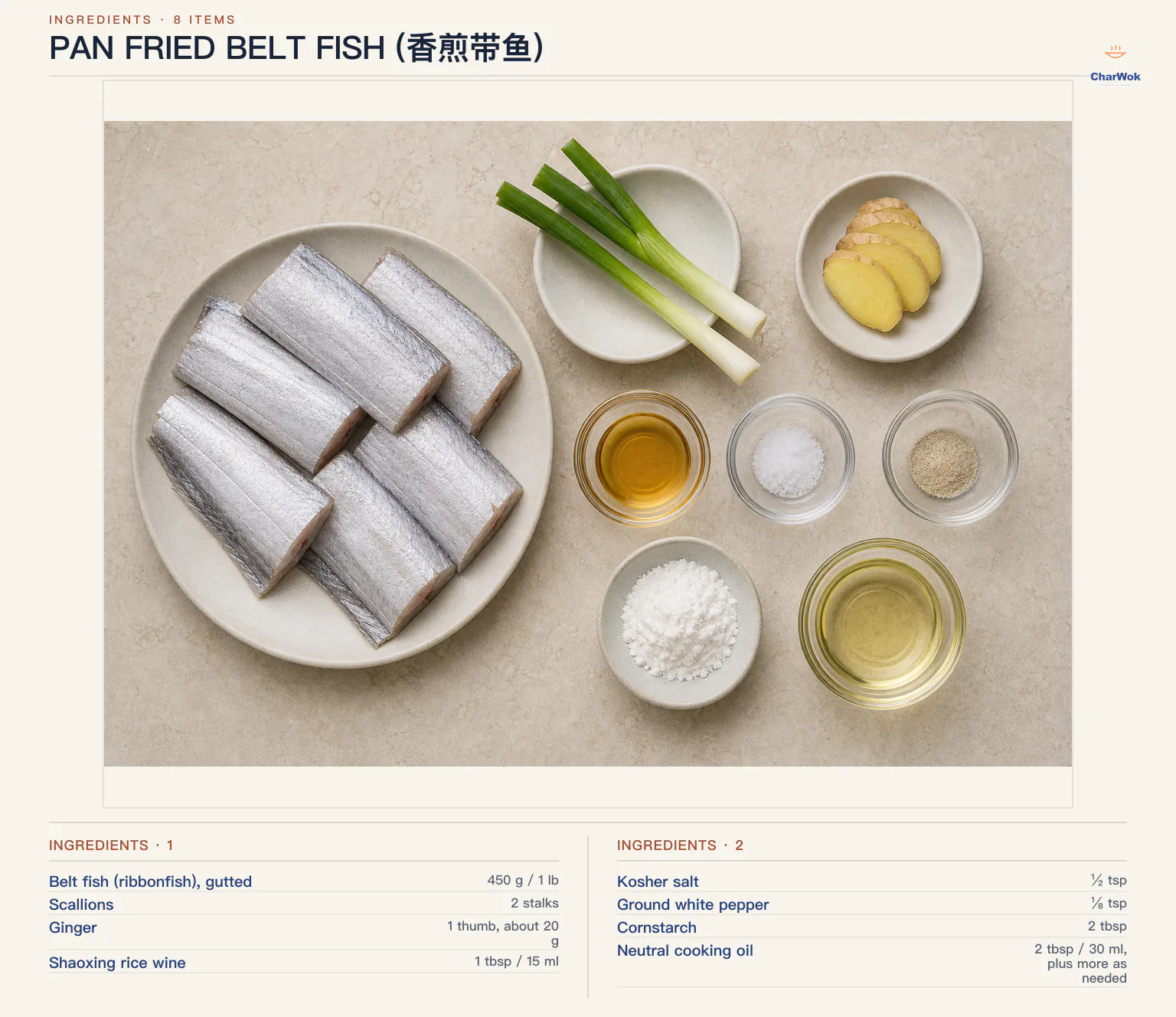
Serves 4 as one of several dishes, or 2 as a main with rice and greens.
| Ingredient | Amount | Notes / substitute |
|---|---|---|
| Belt fish (ribbonfish), gutted | 450 g / 1 lb | Frozen is fine; defrost overnight in the fridge. See the buying note below. |
| Scallions | 2 stalks | Cut into julienne for marinade; save green tops for garnish. |
| Ginger | 1 thumb, about 20 g | Cut into fine matchsticks. Ground ginger will not work here. |
| Shaoxing rice wine | 1 tbsp / 15 ml | Use dry sherry if you cannot find it; both dissolve the fishy note. See our Shaoxing rice wine guide. |
| Kosher salt | ½ tsp | Scale up slightly if using fine table salt. |
| Ground white pepper | ⅛ tsp | White stays invisible and is gentler than black. Black pepper is acceptable in a pinch. |
| Cornstarch | 2 tbsp | Potato starch or tapioca starch also work; all-purpose flour is the last resort and gives a heavier coat. |
| Neutral cooking oil | 2 tbsp / 30 ml, plus more as needed | Canola, sunflower, corn, or soybean. Avoid olive oil; its smoke point is too low and the flavor fights the fish. |
One buying note: most frozen belt fish in Asian markets is already gutted and cleaned. If yours still has the viscera, snip open the belly with scissors, pull out the innards, and scrape away the dark membrane lining the cavity, since that membrane is the main source of off flavors.
How to make it
- Strip the silver membrane. Hold a piece under cold running water and rub the skin with the rough side of a clean sponge, or scrape gently with the flat of a dull knife. The iridescent layer will slough off in gray streaks. You do not need to get every speck; aim for most of it gone from the skin side. This step is the difference between a clean-tasting fillet and one that tastes like low tide, because that membrane is where the strong-smelling trimethylamine concentrates.
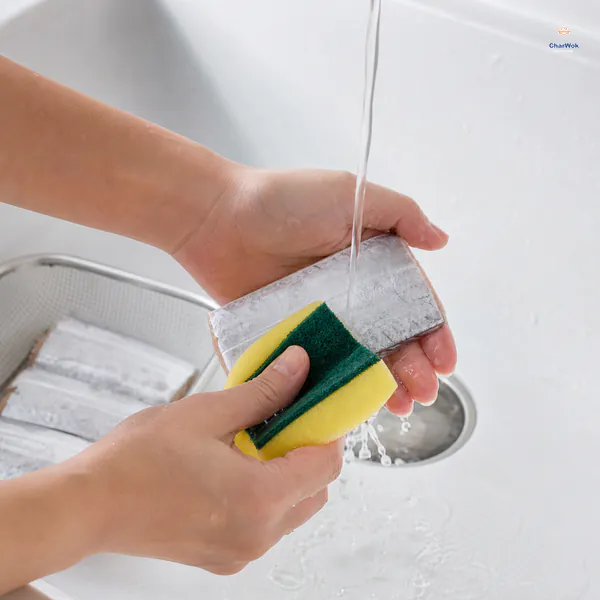
Rub off the loose silver membrane under running water, rinse the cavity clean, then dry the fish thoroughly so it will score and fry cleanly.
- Cut and score. Slice the cleaned fish into sections roughly 7 to 8 cm (3 inches) long, short enough to handle with chopsticks. With the tip of a knife, make two or three shallow diagonal cuts on each side of every piece, about 2 mm deep. The cuts give the salt and wine somewhere to go and let heat reach the center faster so the flesh does not overcook on its way to being done.
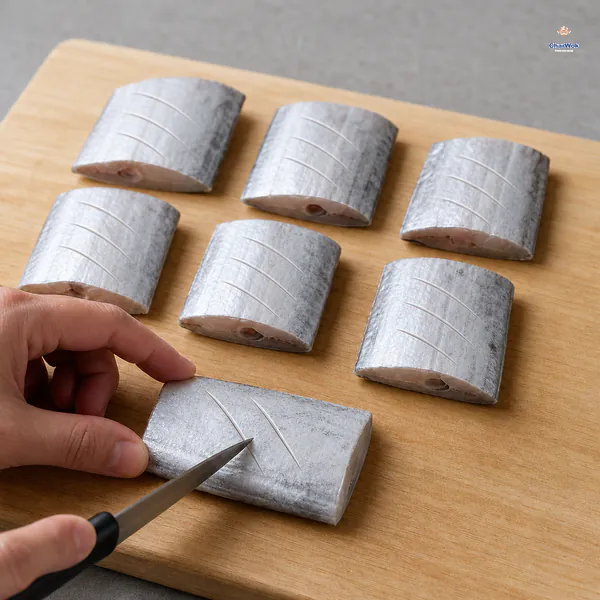
Cut the fish into seven- to eight-centimetre sections and make three shallow diagonal scores on each side without cutting through the bone.
- Marinate briefly. Pile the pieces into a bowl with the julienned scallion and ginger, the rice wine, salt, and white pepper. Toss with your hands so every surface is coated, then leave for ten minutes and no longer. A short marinade seasons the fish; a long one cures it and turns the texture cottony. Scallion-and-ginger marinades work the same way on salmon, by the way, if you want a crossover.
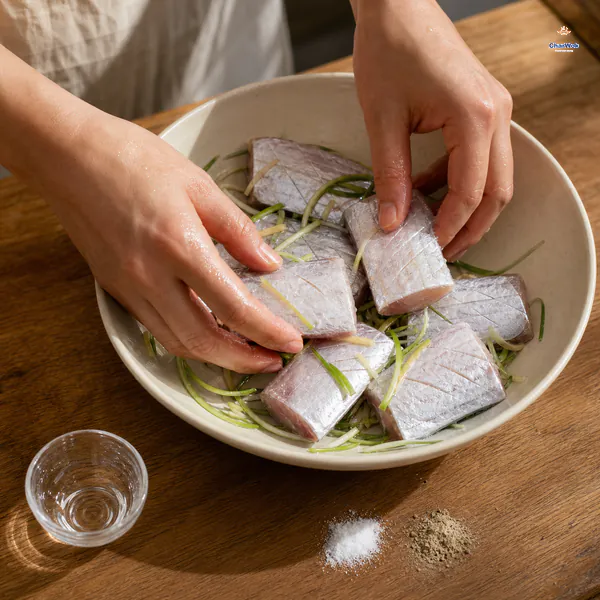
Marinate the scored fish with scallion, ginger, Shaoxing wine, salt and white pepper for exactly 10 minutes; longer soaking can soften the flesh.
- Dry, then dust. This is the step most recipes understate. Lift the fish out of the marinade, pick off and discard the aromatics, and blot every piece dry with paper towels. Pour off any liquid the bowl has accumulated, because that liquid will spit and steam the moment it hits oil. Sprinkle the cornstarch over both sides and rub it in, then tap off the excess. You want a thin, even film that leaves the surface looking matte, not a white crust. Too much starch turns gummy; too little and the skin sticks.
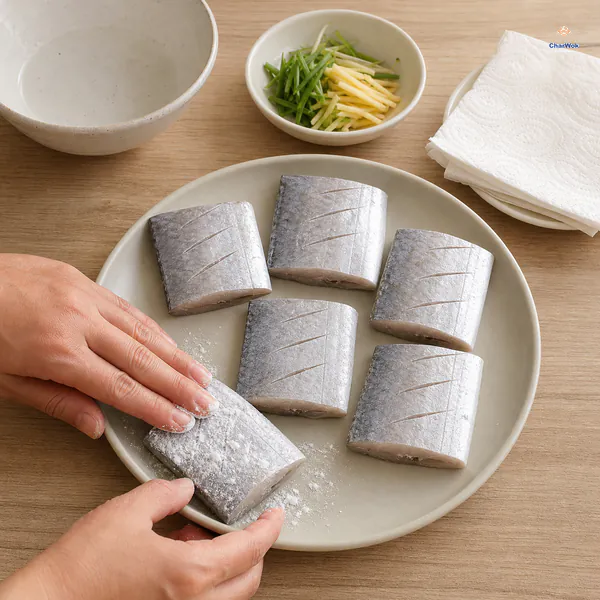
Discard the aromatics and liquid, blot every section dry, then apply only a whisper-thin coat of cornstarch and shake off every loose patch.
- Heat the pan properly. Use a wide nonstick or well-seasoned skillet and set it over medium heat. Add the oil and let it warm until it shimmers, about 180°C / 350°F. If you are using uncoated stainless or carbon steel, heat the empty pan first until a drop of water dances and evaporates, then add the oil and swirl to coat. That order, hot pan then cold oil, is the classic anti-stick move and it matters more for delicate fish than for almost anything else.
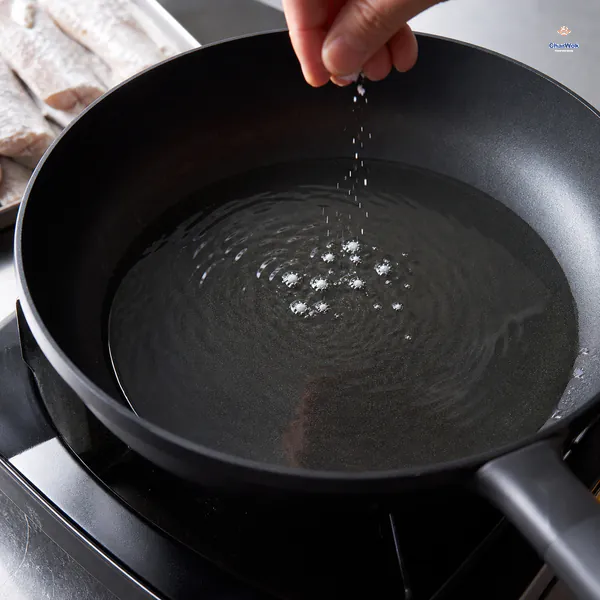
Heat the pan first, add the two tablespoons of oil and wait for a clear shimmer; a pinch of starch should bubble immediately without burning.
- Lay the fish in and do not touch it. Arrange the pieces in a single layer with space between them. Now leave it alone. The starch needs two to three minutes of uninterrupted contact to set into a crust; if you nudge or peek, that half-formed crust tears and sticks. You will know the first side is ready when the edges turn deep gold and the pieces release on their own when you lift a corner.
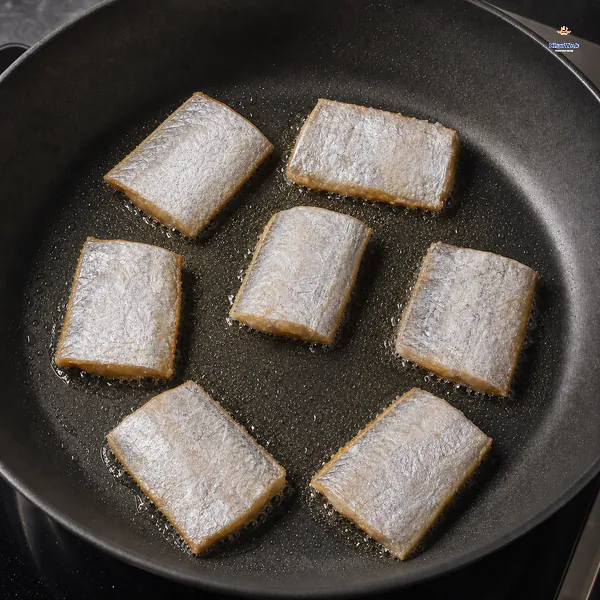
Lay all seven sections in one spaced layer and leave the first side completely undisturbed until the lower edges turn gold and release naturally.
- Flip once and finish. Turn each piece and cook the second side for two to three minutes more, until matched in color. Transfer to a plate lined with fresh paper to drain for a few seconds, and serve right away while the crust is still audible.
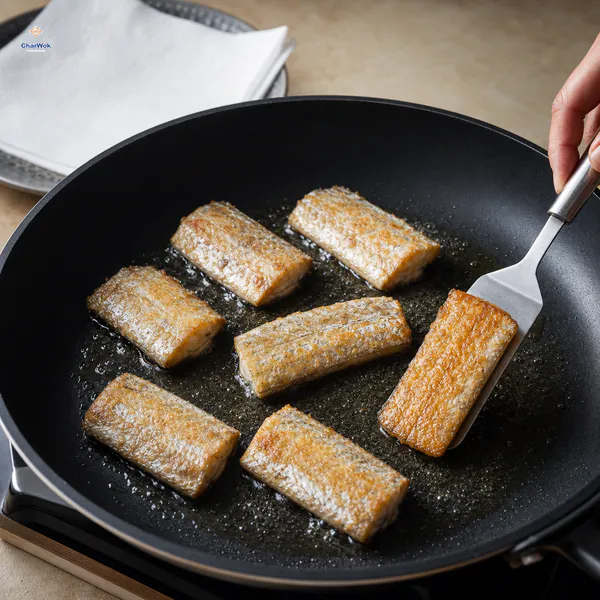
Flip each section only once, fry the second side to the same deep gold, then transfer immediately to the paper-lined plate to drain.
When things go wrong
This is a forgiving dish with three classic failure modes, and I have hit all of them at least once.
The skin fuses to the pan. Almost always means you flipped too early, the fish was not dry enough, or the pan was not hot when the oil went in. Patience fixes the first; more blotting fixes the second; the hot-pan-cold-oil trick fixes the third. A nonstick skillet hides all three errors and is a reasonable choice while you learn.
The coating turns pasty instead of crisp. Either there was too much cornstarch, the marinade was not drained off, or the heat was too low. The starch should be a film, not a batter, and the oil should be shimmering before the fish goes in. If your stove runs cool, nudge the heat up after the first minute so the crust actually sets.
The fish tastes fishy despite everything. You probably skipped or skimped on removing the silver membrane, or the fish was past its best. Smell the raw pieces before cooking: clean ocean, fine; sour or ammonia, throw it out. The toasted sesame oil some recipes add at the end is a cover-up, not a fix; deal with the membrane and you will not need it.
The flesh falls apart. You scored too deep, or the pieces were thin and you cooked them too long. Score only a couple of millimeters in, and pull the fish the instant the second side colors. Belt fish is lean, so it goes from perfect to dry in under a minute.
Variations and pairings
The plain version is the canonical one, but the technique welcomes a few twists. For salt-and-pepper belt fish, dust the just-fried pieces with a pinch of ground Sichuan pepper, toasted salt, and finely minced garlic and scallion off the heat; this is the same seasoning that makes salt and pepper squid and salt and pepper shrimp so addictive, and it lifts the fish without weighing it down. For a glossy red-braised version, after frying, glaze the pieces in a quick sauce of soy, a little rock sugar, ginger, and water and reduce until it clings.
For a full meal, build the table the way a Chinese household would: this fish as the savory centerpiece, a bowl of steamed jasmine rice, and a vegetable or two. A cooling steamed eggplant with chili garlic dressing or a quick stir-fried napa cabbage balances the richness of the fried fish, and a clear seaweed egg drop soup rounds it out. The fish is also excellent cold, eaten with your fingers, which is how most Chinese kids first learn to pick their way around the bones.
Storage and reheating
Pan-fried belt fish is best cooked to order. Leftovers keep in the fridge for a day, but the crust softens overnight and reheating never fully brings it back. To recrisp, lay the pieces in a dry nonstick skillet over medium-low heat for a couple of minutes per side rather than microwaving, which turns the coating rubbery. I do not recommend freezing cooked belt fish; the texture of the flesh suffers.
Frequently asked questions
A short round of the questions that come up most often, with the answers kept tight.
Do I really have to remove the silver skin?
Yes, if you want clean flavor and a crisp crust. The membrane holds the strongest smell and the most surface water, so leaving it makes the fish taste off and steams instead of fries.
Can I bake or air-fry it instead?
You can, but the result is drier and the crust is thinner than a true pan-fry. If you air-fry, brush the pieces lightly with oil and cook at 200°C / 400°F for about eight minutes, flipping once.
What if I can't find belt fish?
Look for it frozen in Chinese or Korean markets under "ribbonfish" or "hairtail." As a substitute for the same delicate texture, try the same coating and method with mackerel fillets or a firm white fish like cod.
How do I eat around the bones?
Strip the soft cartilage edges off both sides first, then flake the flesh from the ends toward the center. You will be left holding the central bone, which looks like a small double-sided comb.
The whole dish rests on one decision made before the fish ever sees the pan: get the surface dry and lightly starched, and the skillet does the rest. Cook it once with that in mind and you will not need this recipe a second time.