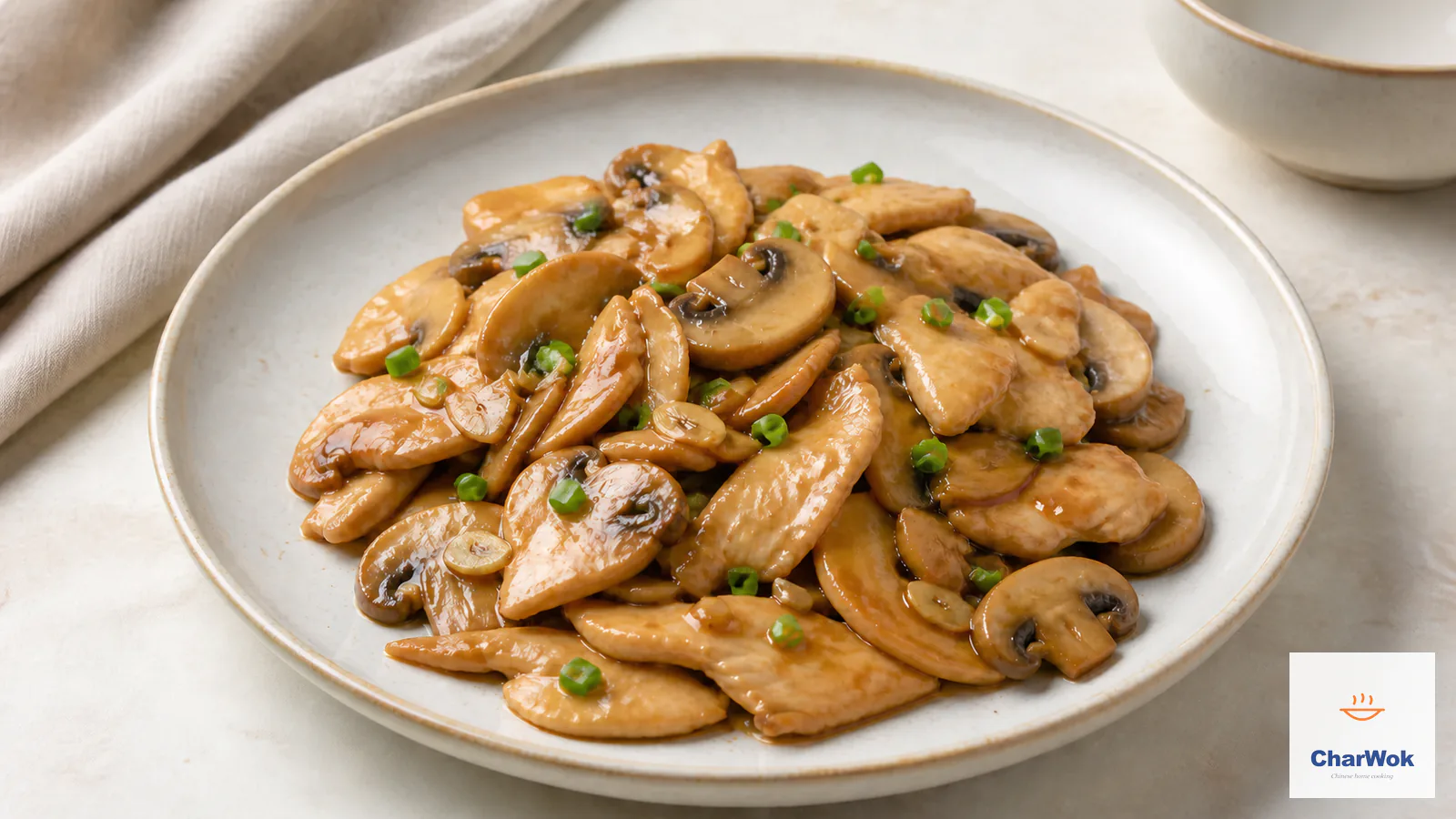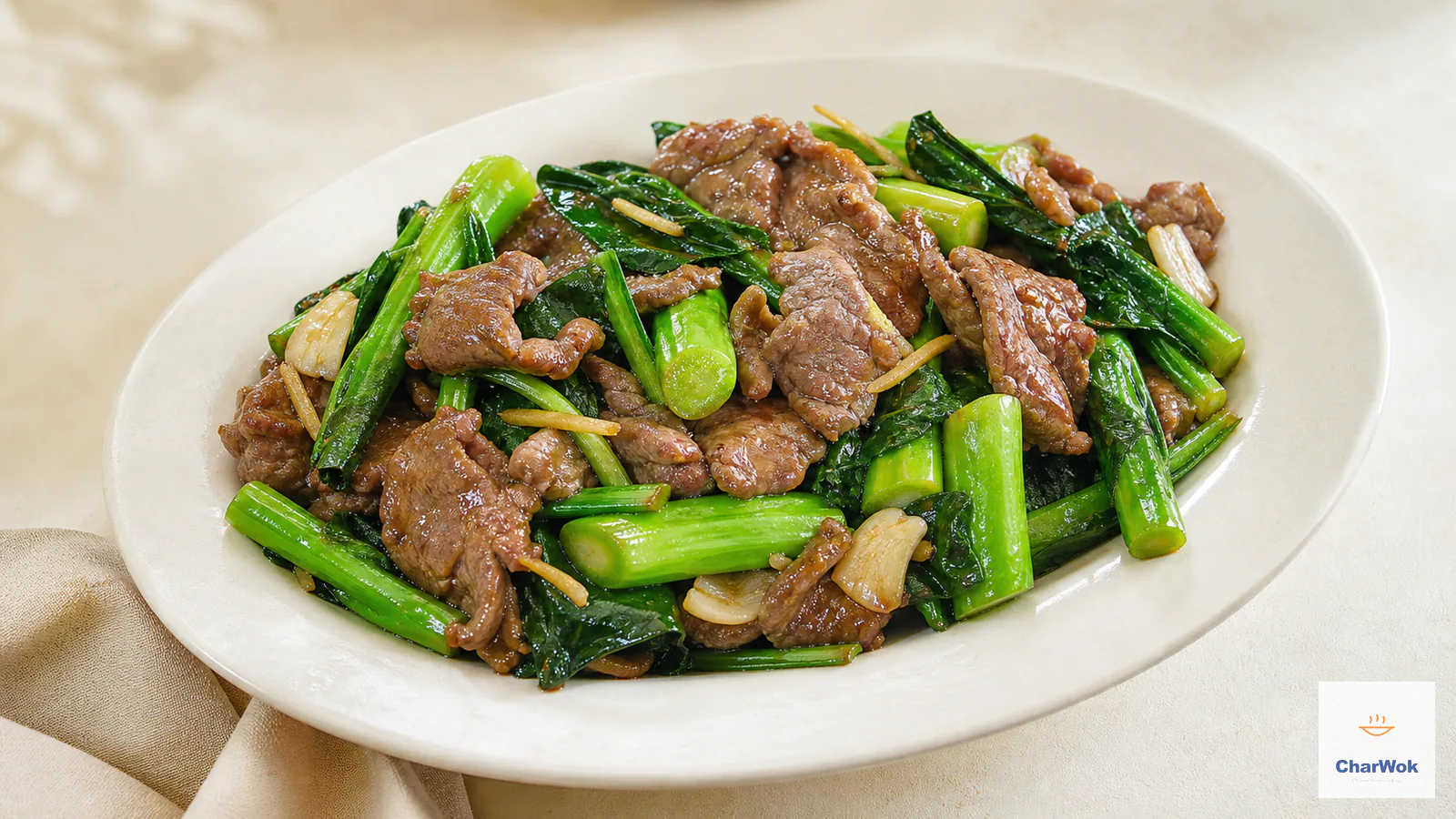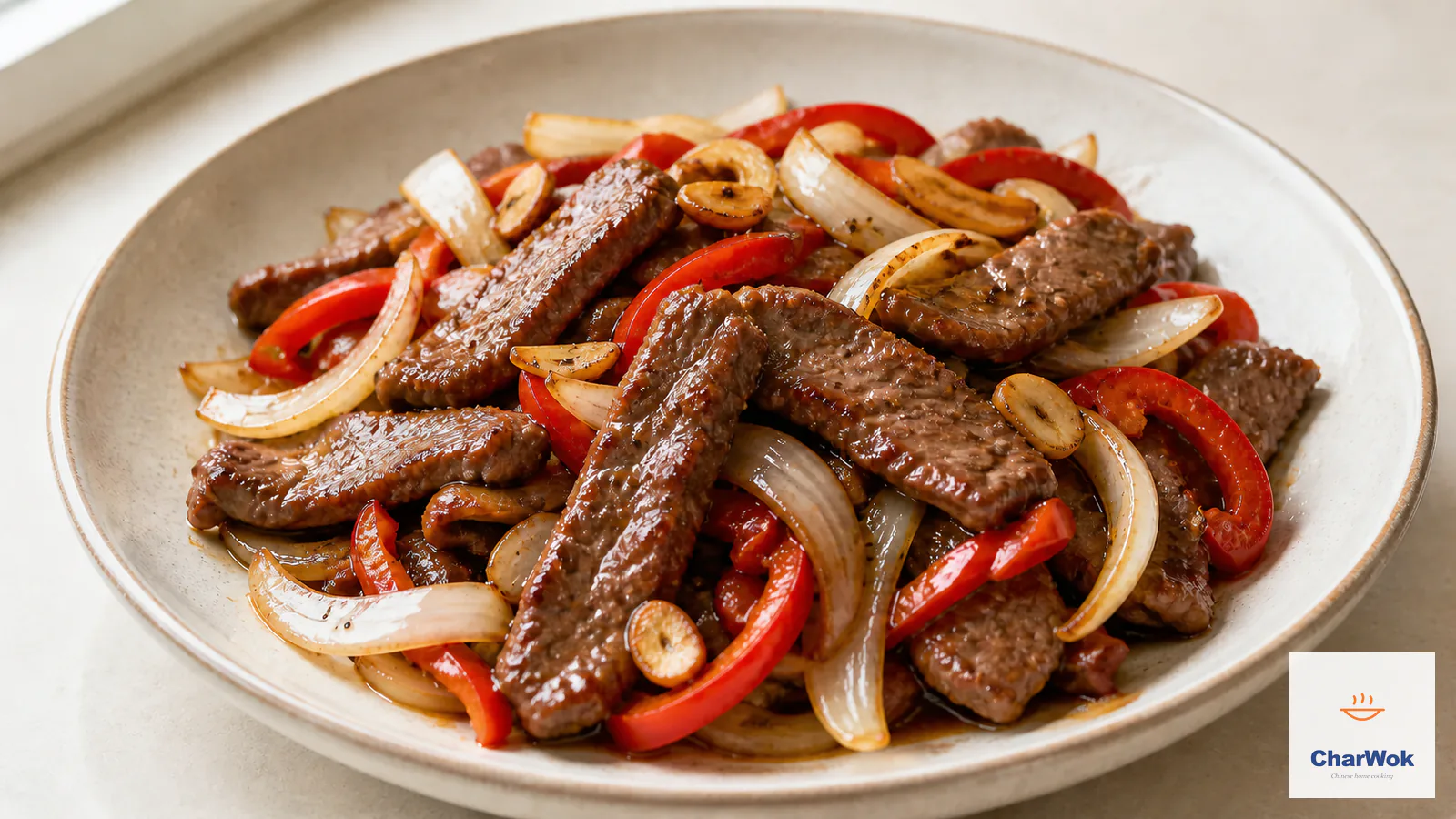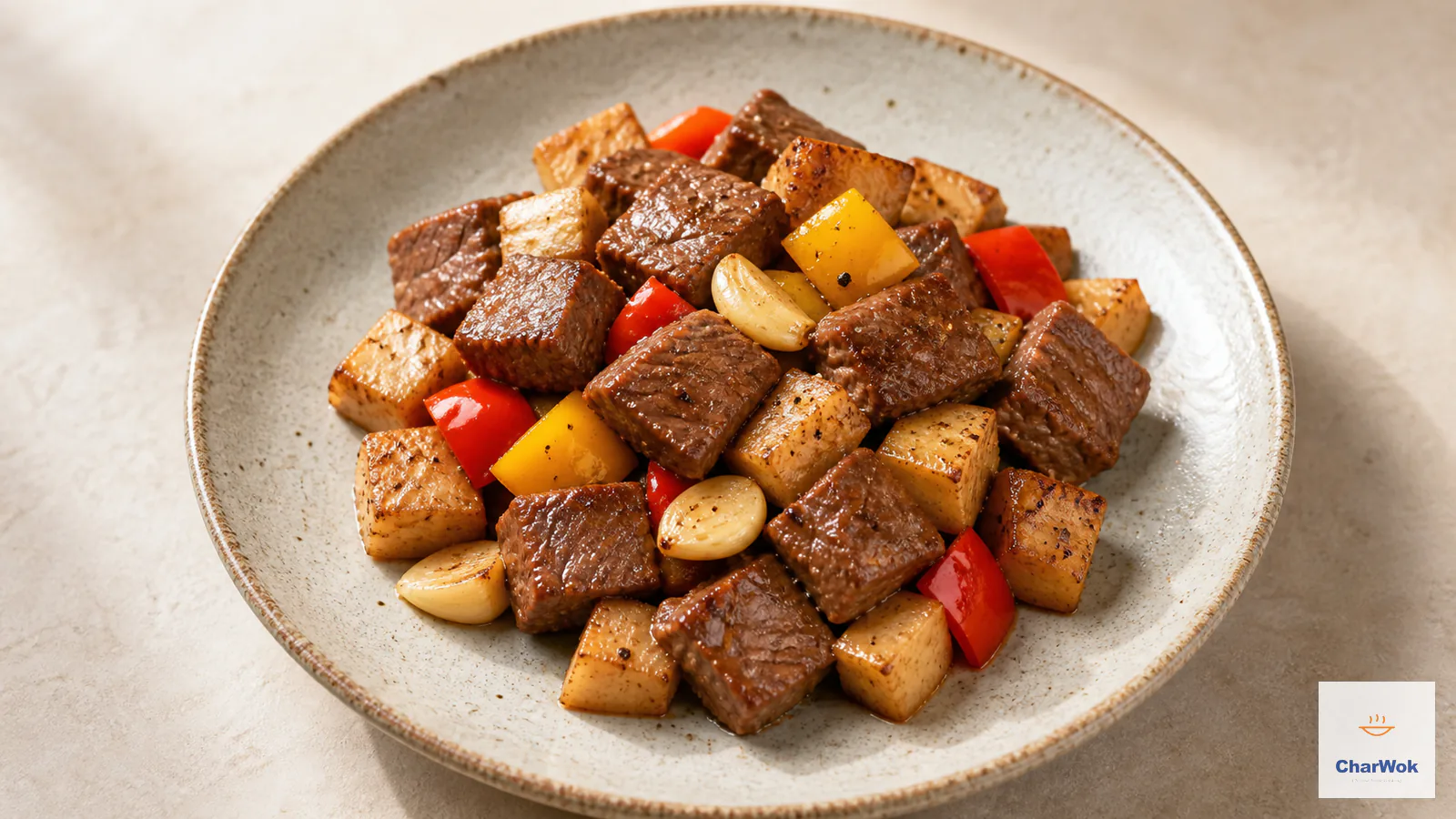
There is a kind of restaurant beef that haunts home cooks: a caramel-dark cube with a slight char on the corners, soft and almost custardy inside, sitting next to a chunk of mushroom that bites back with a clean snap. You try to make it at home and you get grey, weepy meat and rubbery mushrooms floating in thin brown liquid. The gap between the two is not a secret ingredient. It is two techniques done in the right order, and a willingness to pull the beef off the heat earlier than feels safe.
Beef and mushroom stir-fry, known in Chinese as xìng bào gū niú ròu lì (杏鲍菇牛肉粒, literally "king oyster mushroom with beef cubes"), is a modern bistro and home dish rather than a recipe with centuries behind it. It borrows the black-pepper posture of the older black pepper beef tradition and the velveted-cube logic of Cantonese steak cubes, then swaps the usual onion or green pepper for king oyster mushroom, which holds its shape and drinks in sauce the way onion never will. The reason it spread through Chinese restaurants in the last decade is simple: king oyster mushroom is cheap, looks luxurious on the plate, and has the chew people used to chase from premium cuts. Done right, the mushroom is not a filler next to the beef. It is a co-star.
Two-pan logic, one wok: sear the beef first and pull it before it's done, fry the aromatics and mushroom in the same pan, then reunite everything under a cornstarch-thickened black-pepper sauce. Total cooking time over heat is about five minutes; the sear takes ninety seconds, and pulling the beef at "no pink on the surface, still red inside" is the single judgment that decides whether you get restaurant texture or shoe leather.
Why the beef turns out tough (and how to stop it)
Most home beef stir-fries fail for the same reason: the cook treats beef the way they treat pork or chicken, expecting a uniform grey color to mean "safe." For cubes of a tender cut, that uniform grey means the proteins have already over-contracted and squeezed their moisture into the pan. You are not making the meat safer at that point. You are boiling it in its own juice.
There are three defenses, and together they are the whole technique. First, a cornstarch-and-water marinade coats each cube in a thin starch gel that gelatinizes in the hot oil and forms a buffer between the meat and the direct heat, the process Cantonese kitchens call velveting. Second, the oil coating added at the end of marinating keeps the cubes from clumping and sticking when they hit the wok, so each piece sears instead of steaming in a pile. Third, and most important, you pull the beef when the outside has colored but the inside is still visibly pink. Carryover heat finishes the cooking on the plate. This is the step I ruined for years by waiting "just a little longer to be sure," and every time the beef came out dry.
Picking the cut, and the flour
Use a tender cut. Filet mignon (beef tenderloin) is the classic choice for steak cubes because it has almost no connective tissue to fight you, and its mild flavor lets the black-pepper sauce do the talking. Sirloin is the realistic alternative, a little more beefy flavor at a much lower price. Both work as cubes. Flank and skirt steak are tempting because they are cheap, but their long muscle fibers make them wrong for cubes; if that is what you have, slice it thin across the grain the way you would for beef and broccoli or pepper steak instead, and skip the cube method.
For the starch, use cornstarch, not flour. Wheat flour has gluten and a cereal taste, and it turns gummy and paste-like at stir-fry heat. Cornstarch gelatinizes cleanly around 70°C (160°F), giving you a glossy, transparent coating that browns without toughening. Potato starch works too if that is what your pantry stocks; the result is slightly more delicate and a little more prone to burning if your wok runs very hot.
Ingredients
Ingredients at a glance
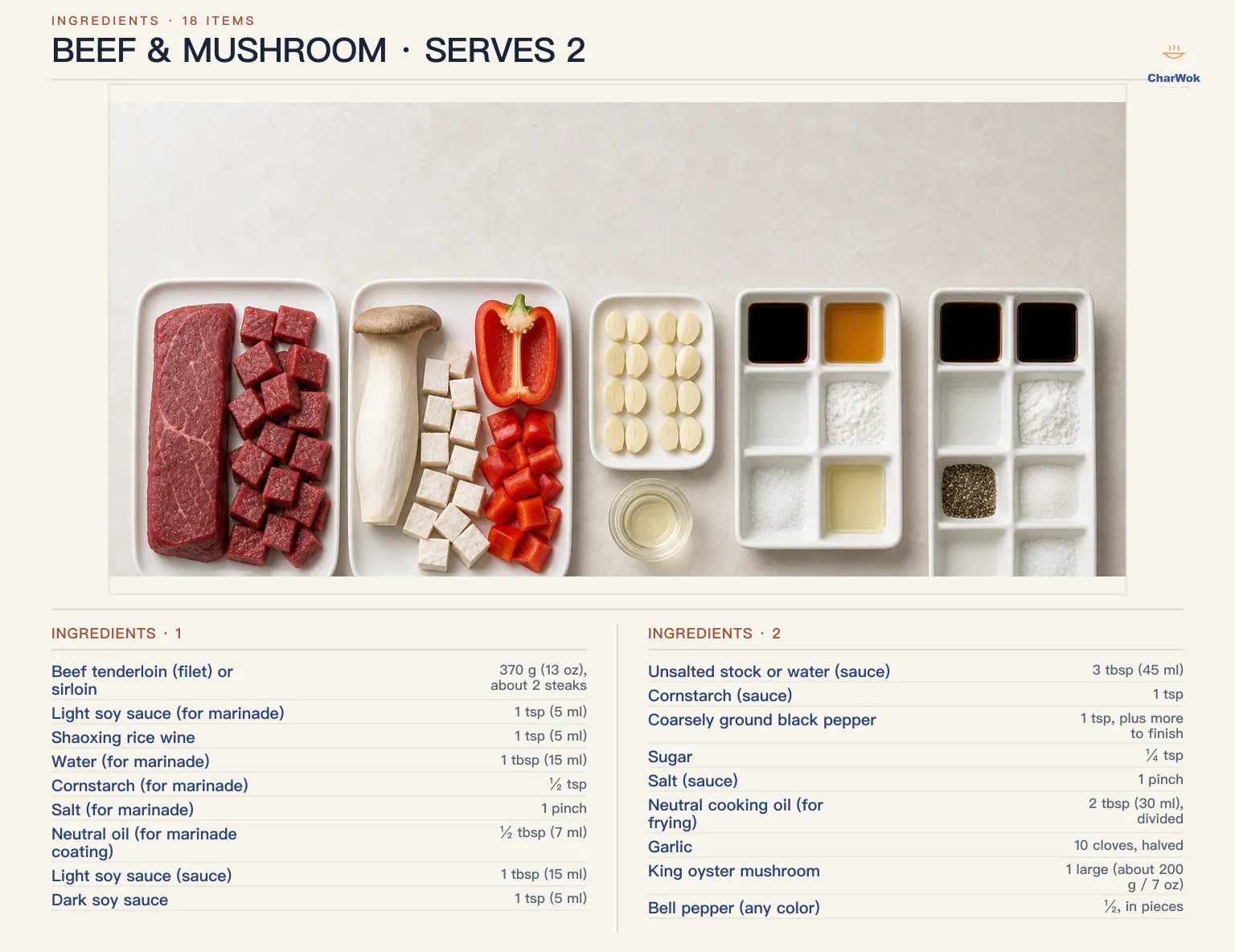
Serves 2 as a main with rice; doubles cleanly. Metric weights are primary, with US volume in parentheses where it is the household standard.
| Ingredient | Amount | Notes / substitute |
|---|---|---|
| Beef tenderloin (filet) or sirloin | 370 g (13 oz), about 2 steaks | Sirloin for budget; slice flank/skirt thin instead of cubing |
| Light soy sauce (for marinade) | 1 tsp (5 ml) | Saltier and lighter in color; see soy sauce guide |
| Shaoxing rice wine | 1 tsp (5 ml) | Dry sherry or omit for alcohol-free |
| Water (for marinade) | 1 tbsp (15 ml) | The hydration that cornstarch binds |
| Cornstarch (for marinade) | ½ tsp | Potato starch works |
| Salt (for marinade) | 1 pinch | |
| Neutral oil (for marinade coating) | ½ tbsp (7 ml) | Grapeseed, canola, avocado |
| Light soy sauce (sauce) | 1 tbsp (15 ml) | Base salt and umami |
| Dark soy sauce | 1 tsp (5 ml) | For color; molasses-thin regular soy if unavailable |
| Unsalted stock or water (sauce) | 3 tbsp (45 ml) | Chicken stock adds body; water is fine |
| Cornstarch (sauce) | 1 tsp | What thickens the glaze |
| Coarsely ground black pepper | 1 tsp, plus more to finish | Freshly cracked; this is the headline flavor |
| Sugar | ¼ tsp | Balances the soy; do not skip |
| Salt (sauce) | 1 pinch | Taste and adjust at the end |
| Neutral cooking oil (for frying) | 2 tbsp (30 ml), divided | 1 tbsp for beef, 1 tbsp for aromatics |
| Garlic | 10 cloves, halved | Yes, ten. It is an ingredient here, not a seasoning |
| King oyster mushroom | 1 large (about 200 g / 7 oz) | Cut into cubes matching the beef; more on this mushroom |
| Bell pepper (any color) | ½, in pieces | For color; add scallion segments or skip |
The method, step by step
Before you turn on the stove, mise en place everything. Stir-frying happens in five-minute windows; you will not have a free hand to measure soy sauce once the beef hits the pan. This is the most common reason a stir-fry goes wrong at home, and it has nothing to do with skill.
- Cube and marinate the beef. Cut the steaks into roughly 2 cm (¾ inch) cubes, erring slightly larger than you think; small cubes overcook in the time it takes to sear the outside. In a bowl, combine the beef with the light soy, Shaoxing wine, water, cornstarch, and salt. Mix with your hand, massaging and turning until every drop of liquid has disappeared into the meat, about 30 seconds. Then drizzle in the ½ tablespoon of oil and toss so each cube is coated. The oil is a physical separator; without it the starch-glazed cubes will weld themselves into a clump the moment they touch the hot wok. You do not need a long marinade. As long as it takes to cut the vegetables is enough.
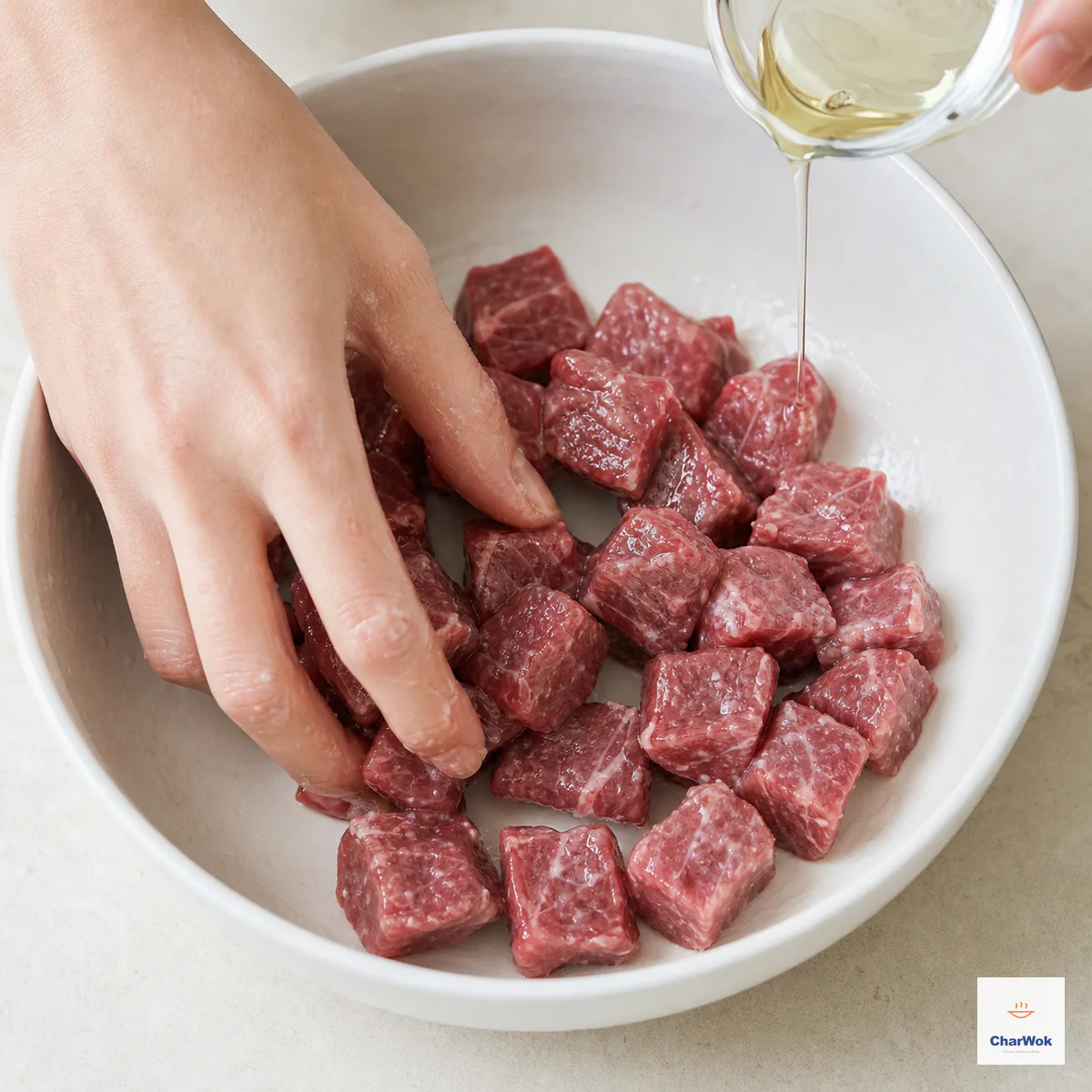
Rub until the soy, wine, water, cornstarch, and salt are absorbed; add the coating oil last so the cubes stay separate.
- Cut the vegetables and mix the sauce. Cut the king oyster mushroom into cubes the same size as the beef; if the stem is very thick, quarter it lengthwise first so the cubes are not absurdly tall. Cut the bell pepper into pieces roughly the same size. Halve the ten garlic cloves lengthwise and pick out any green germ. In a small bowl, stir together the light soy, dark soy, stock or water, cornstarch, black pepper, sugar, and salt. The cornstarch will settle, so give it one more hard stir right before you pour it in.
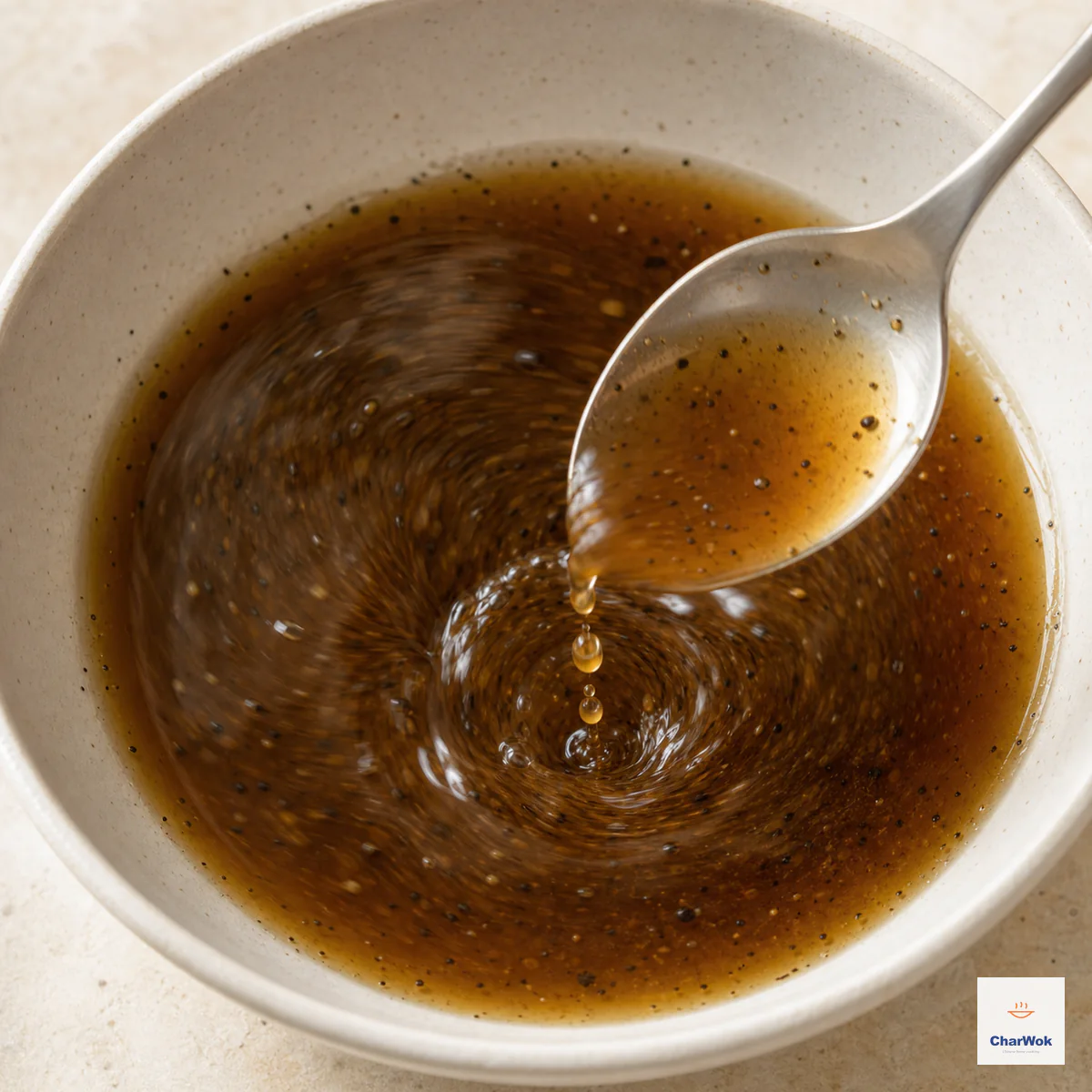
Stir the sauce immediately before cooking so the settled cornstarch is evenly resuspended.
- Sear the beef in a smoking-hot wok. Heat a carbon-steel wok (or a wide heavy skillet) over high heat until you see a faint haze of smoke rising from the surface. Pour in 1 tablespoon of oil and swirl to coat. Add the beef in a single layer with space between cubes; if your pan cannot hold them without touching, do two batches. A crowded pan drops in temperature, the cubes boil in their own juice instead of searing, and you lose the whole point. Let them sit undisturbed for about 30 seconds until the underside is browned, then toss to color the other sides. The moment no pink remains on the surface, while the inside is still clearly red, transfer the beef to a plate. This is the make-or-break moment of the dish; leave it another 30 seconds and the texture is gone.
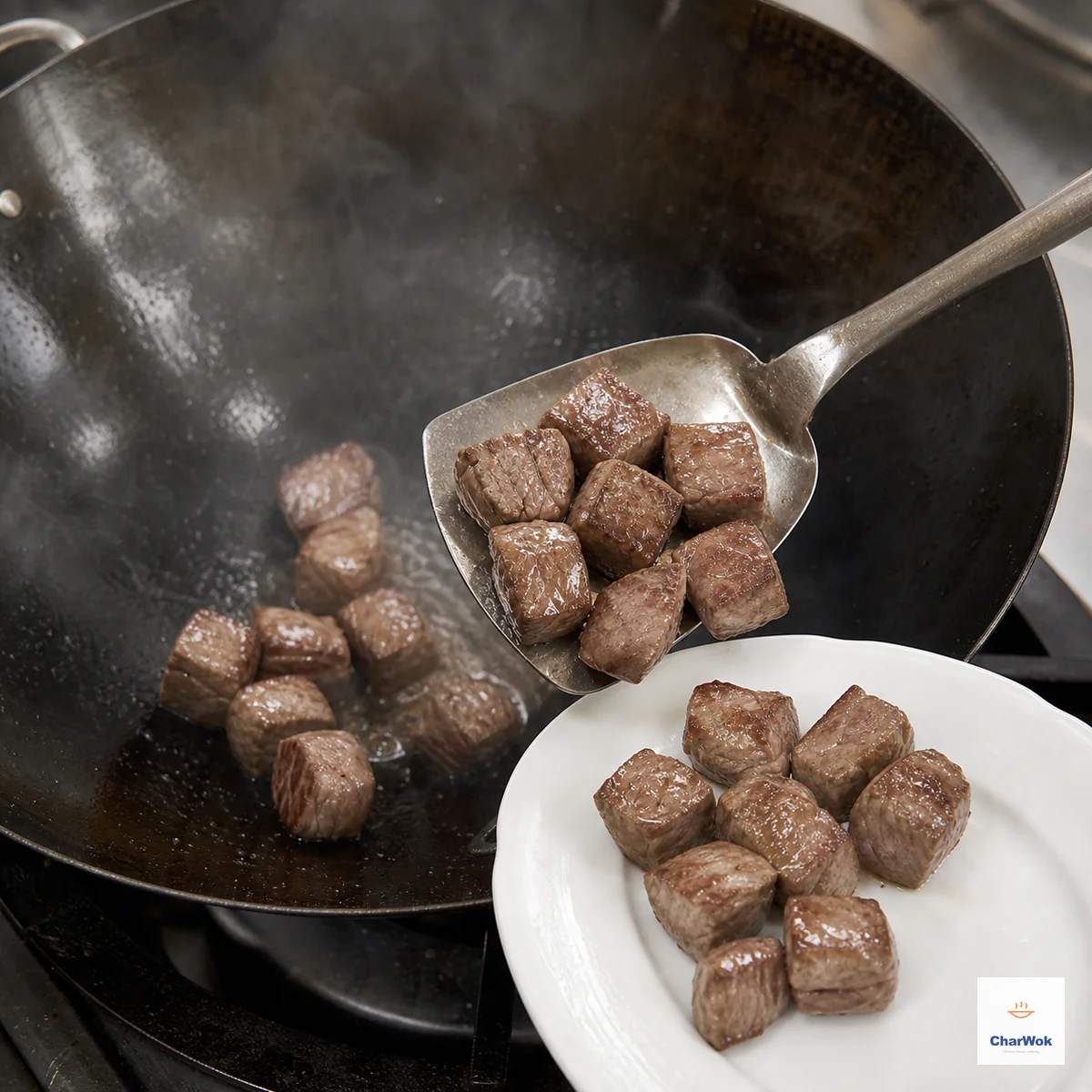
Remove the beef when every visible surface has lost its pink color; the centers can remain underdone for the final toss.
- Bloom the garlic, then fry the mushrooms. In the same wok, add the remaining 1 tablespoon of oil. Add the halved garlic and let it sizzle for 15 to 20 seconds, just until the edges turn pale gold. You want the garlic to release its sulfur compounds into the oil, which is what carries aroma through the whole dish. Do not let it blacken; burnt garlic is bitter and there is no rescuing it. Add the mushroom and bell pepper and toss over high heat for about 30 seconds. The mushroom will begin to sweat and its surface will start to take on color. Keep the heat high so the moisture evaporates rather than pooling.
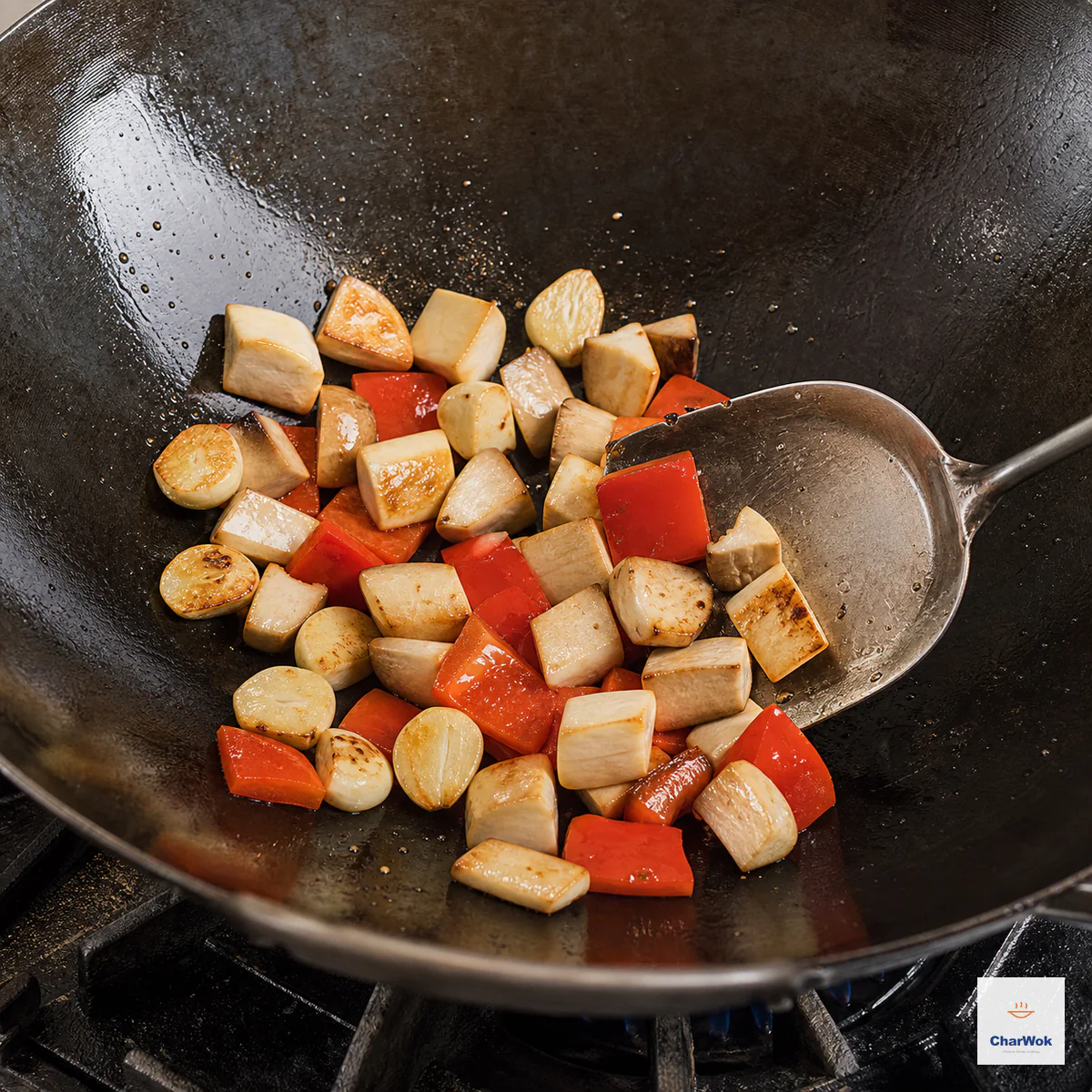
Fry the garlic to pale gold, then keep the wok hot so the mushroom edges color without releasing a pool of water.
- Reunite and glaze. Return the beef (and any juices on the plate) to the wok. Toss for about one minute, until the beef is just cooked through to your liking. Give the sauce bowl a final stir and pour it around the edges of the wok, not directly onto the meat, so it hits the hot metal and boils instantly. Toss continuously. Within 15 to 20 seconds the sauce will turn glossy and cling to every cube. Hit it with another crack of black pepper, taste, and dish out immediately. Residual heat will keep cooking the beef for another minute on the plate, which is why you pulled it early.
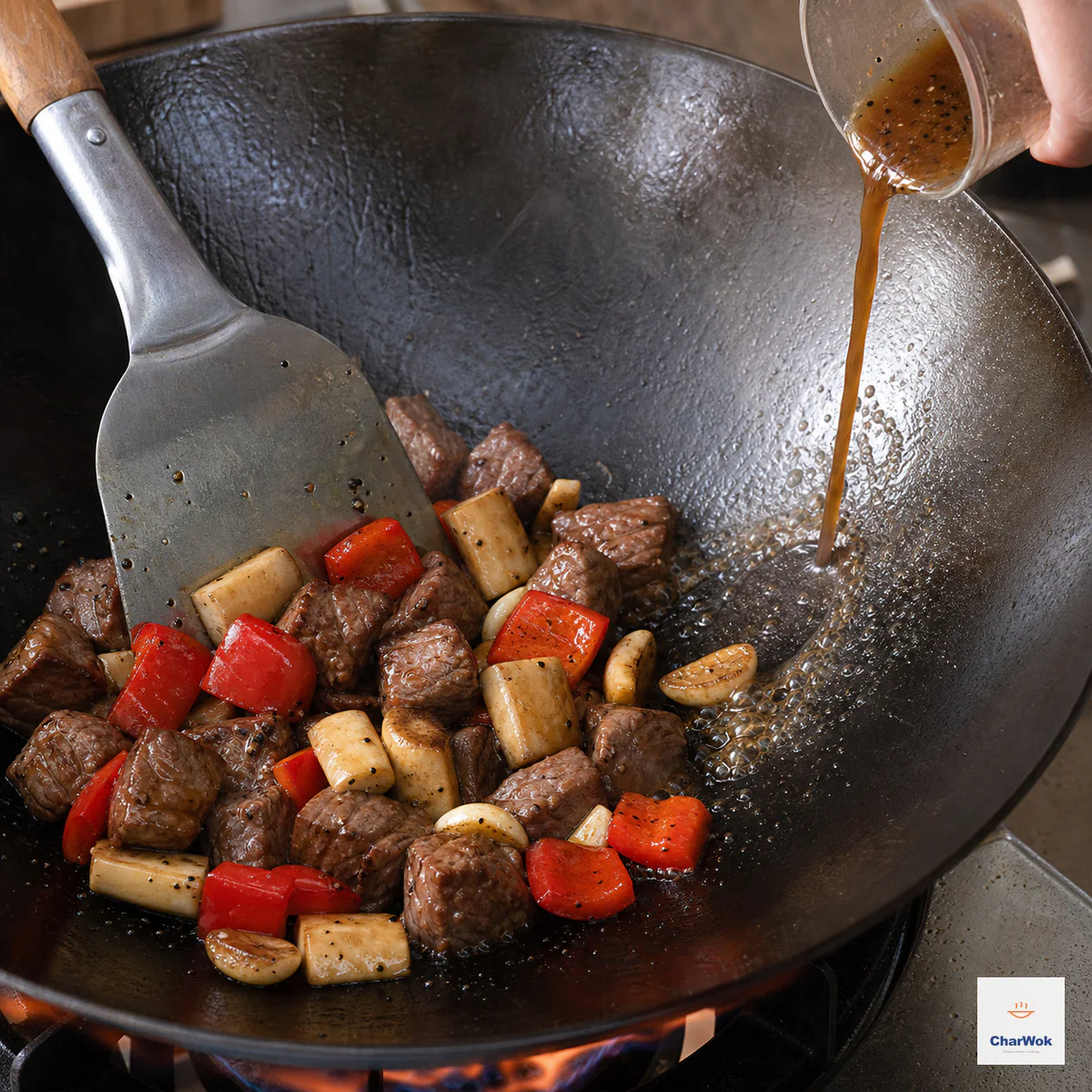
Restir the sauce, pour it around the hot wok edge, and toss for 15 to 20 seconds until a thin glossy coating clings.
When things go wrong
The beef is grey and rubbery, not brown. Either the pan was not hot enough when the meat went in, or the pan was crowded. Both cause steaming instead of searing. Preheat until you see smoke, and cook the beef in a single layer, in two batches if needed. A weak stove is a real limitation; if yours cannot hold a sear with a full pan of cold beef in it, batch it.
The beef cubes stuck together into a lump. You skipped the oil coating in the marinade, or you did not let the wok get hot enough before adding the meat. The cornstarch gel is sticky until it sets in hot oil; the oil coat and the screaming pan are what stop it from gluing the cubes to each other and to the wok.
The sauce is thin and watery, pooling at the bottom. The cornstarch settled and you poured mostly liquid off the top, or the wok was not hot enough for the starch to gelatinize. Always re-stir the sauce the instant before pouring, and pour it onto the hot side of the wok, not over the food. If it is still thin, let it boil five more seconds while tossing before you plate.
The mushroom is pale and soggy. You added it before the pan recovered its heat after the beef, or you crowded it. King oyster mushroom holds a lot of water, and the only way to get that clean, springy bite is to drive the moisture off fast over high heat. A pan that has dropped below high will give you boiled mushroom. This is also why you cook the beef and the vegetables in separate stages.
It tastes flat, not "restaurant." Nine times out of ten the black pepper was too fine. Pre-ground dust disappears into the sauce; you want coarse, freshly cracked pepper that you can actually see and feel, added at the end as well as in the sauce. A tiny pinch more salt and a few more drops of dark soy for color also help. If you are using a nonstick pan, note that you will not get the same wok-char no matter what you do, and the dish will taste correspondingly milder. That is the trade for easy cleanup.
Variations and pairings
The black-pepper-and-beef skeleton is forgiving. Swap the king oyster mushroom for shiitake (use fresh, not rehydrated, and expect more flavor but less crunch) or for oyster mushrooms torn into clusters, the way you might in a braised mushroom side. Add a big pinch of cumin seed with the garlic and you drift toward the spice register of cumin lamb territory. Replace the Shaoxing with a teaspoon of sha cha sauce blended into the marinade and you get something close to sha cha beef. A spoon of fermented black bean in the sauce leans toward Hunan-style heat and depth.
This is a textbook xià fàn cài, a "rice-killer" dish engineered to make you eat too much rice. Serve it spooned over freshly steamed jasmine rice, making sure every grain of sauce makes it onto the plate. For a noodle night, pile it onto pan-fried noodles or fold it into a bowl of scallion oil noodles, where the sauce doubles as the dressing. To build a multi-dish dinner, keep the protein to one and round it out with a vegetable side like broccoli with garlic sauce and a light soup such as egg drop soup. It slots easily into a weeknight rotation and is one of the more convincing takeout-style dishes you can actually beat at home.
Storage and reheating
This dish is best cooked to order, and I will not pretend otherwise. The beef continues to cook as it sits and the mushroom weeps water into the sauce, so by the next day the texture has softened and the glaze has thinned. If you must store it, refrigerate for up to two days and reheat in a hot dry pan for 60 to 90 seconds, just until steaming, rather than microwaving, which turns the beef gray and the mushroom spongy. Do not freeze; the cornstarch coating breaks and the mushroom turns to mush on thaw.
Frequently asked questions
Can I use pre-cut stir-fry beef from the supermarket? Only if it is a tender cut labeled as sirloin or tenderloin. Generic "stir-fry strips" are often round or chuck, which stay tough no matter how you velvet them. For those cuts, slice thin across the grain and follow a sliced-beef method instead of this cube method.
Do I really need a wok? No, but you need a wide pan that gets genuinely hot and holds the heat when cold food lands in it. A 12-inch cast-iron or carbon-steel skillet does the job; a thin nonstick skillet does not, and the dish will taste noticeably duller for it.
Why add oil to the marinade at the very end? It seals the cornstarch coating onto each cube and stops the pieces from sticking to one another and to the pan. Add it after the liquid has fully absorbed, otherwise it just floats on top and does nothing.
Can I make it without Shaoxing wine? Yes. Substitute an equal amount of dry sherry, or skip it entirely for an alcohol-free version; the dish loses a little complexity but the black pepper carries it fine.
How spicy is it? Not spicy at all; it is peppery, not chili-hot. Black pepper gives a sharp aromatic warmth without capsaicin heat. If you want real heat, add a chopped red bird's-eye chili with the garlic.