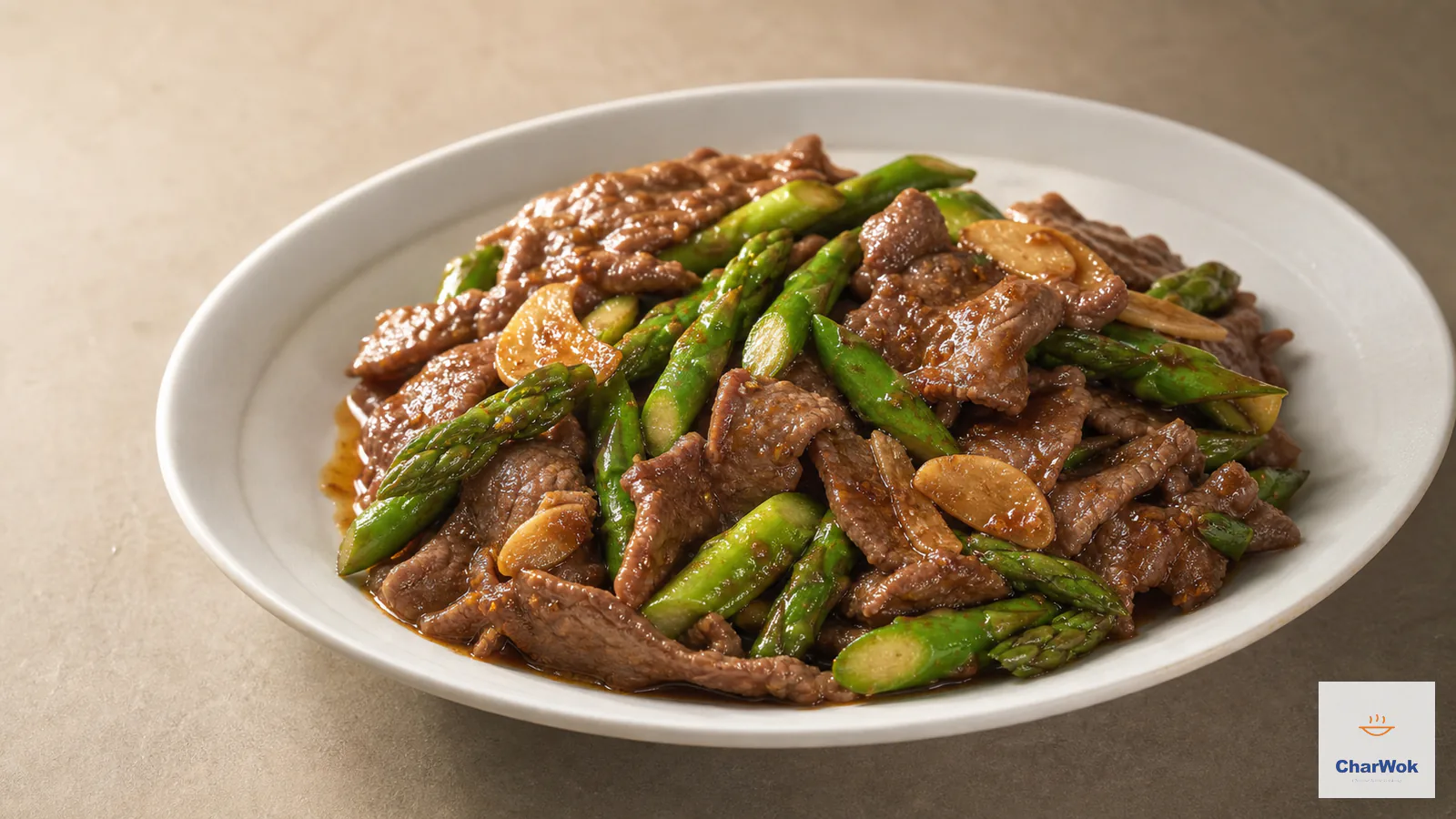
The reason most home-cooked sha cha beef turns out gray, weepy, and tough isn't the sauce. It's the beef. Specifically, it's the moment the meat hits the pan still leaking marinade juice into hot oil, which drops the temperature, boils off instead of searing, and turns a fifteen-second stir-fry into a five-minute braise. Get the velvet-sear right and the rest of the dish almost doesn't matter; the funky, roasted aroma of sha cha sauce does the heavy lifting.
Sha cha beef is a weeknight stir-fry from southern Fujian and Taiwan, built on a sauce whose closest Western cousin is a Thai massaman curry paste gone savory and dry: dried shrimp, flatfish, garlic, shallot, chile, sesame, all pounded and slowly fried in oil until dark. Spooned over quickly seared beef and a green vegetable, it produces a dish that smells like a night market and cooks in under three minutes once the wok is hot.
At a glance. Slice 450 g (1 lb) beef against the grain to 3 mm (⅛ inch). Soak it in a thin cornstarch-and-water slurry for 10 minutes, seal with oil, then sear over maximum heat for under a minute and finish with greens. Two non-negotiables: cut across the grain, and never crowd the pan. Skip either and the beef chews like a rubber band.
What sha cha sauce actually is (and why the brand matters)
Bull Head brand, in the blue-and-yellow tin, is the reference sha cha sauce for a reason: it is dense with dried flatfish and reads distinctly briny and sweet. The cheaper jarred versions lean heavily on soy and sugar and taste more like a sweet barbecue glaze. For this dish you want the fish-forward one. If you cannot find it, a Taiwanese or Chaozhou (Teochew) jar labeled sa cha jiang or shacha beats the mainland-style jars, which are often darker and more cumin-heavy.
This same sauce is the backbone of Chaozhou hot pot, and the cousin of Chiu Chow chili oil, which is essentially sha cha's spicy, oilier relative. Knowing that family tree matters: it tells you the sauce already carries garlic, shallot, dried seafood, and oil, so the dish does not need much extra aromatics or salt. Add too much soy and you bury the flatfish.
The single decision that decides the dish: the beef cut
Use a tender steak and you can almost ignore the technique. Use stew meat and no amount of velvet-searing will save you. My ranking, from most forgiving to least:
- Flap steak / bavette. My default. Beefy, loosely grained, tender when sliced thin, and cheap. A near-perfect match.
- Sirloin steak (top or center-cut). Clean flavor, slices cleanly, slightly leaner so it needs the full velvet treatment.
- Flat iron. The most tender of the affordable cuts; trim the central sinew or it will catch your teeth.
- Skirt or flank. Excellent flavor but tighter grain; slice aggressively thin (2 mm) or it gets chewy.
- Tenderloin. Wasteful here. The assertive sauce will mask what you paid for.
What you want is a cut that is reasonably tender, has visible grain you can see and cut across, and carries enough intramuscular fat to taste like beef rather than paper. The same cut logic applies across quick beef stir-fries; pick once, use everywhere.
Why velvet-searing works (and where it fails)
The classic Cantonese technique called velveting has two goals: keep the meat juicy, and give it a slippery, glossy surface. A thin coating of cornstarch plus a little water and oil does both. The starch gelatinizes the instant it meets heat, forming a film that seals in juice and stops the protein fibers from seizing and toughening. The oil coating physically separates the slices so they do not clump when they hit the wok.
Where it fails: people add too much starch (a pasty gummy crust), or skip the rest (no time for the starch to hydrate, so the slices bleed water into the pan), or use a low heat so the coating boils off instead of setting. Done correctly the surface should look glossy, almost lacquered, with no white powder visible. You can read more on the underlying method in the Shaoxing rice wine and light versus dark soy sauce guides, since both show up in the marinade.
Ingredients
Ingredients at a glance
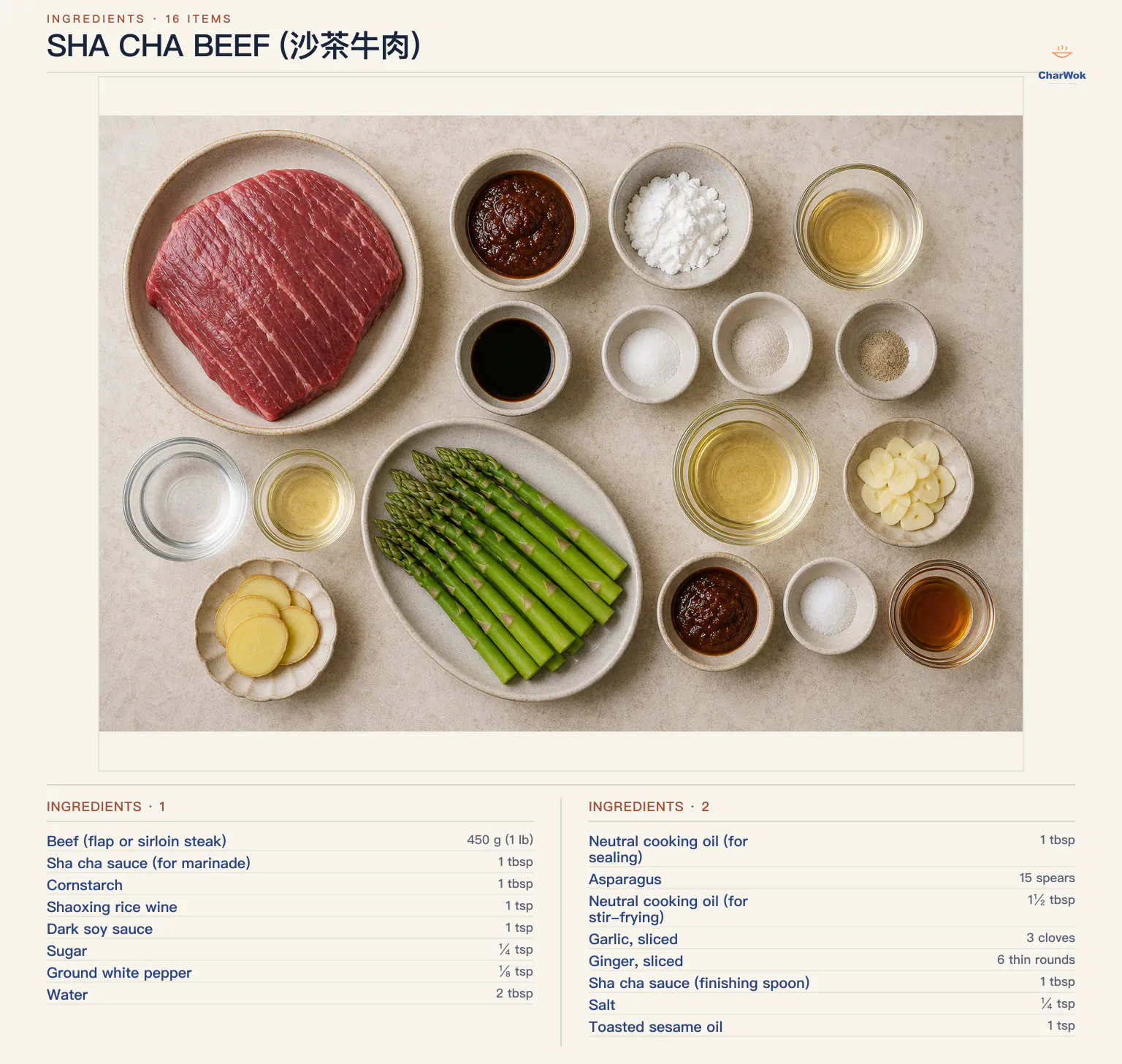
Serves 4. Active cooking is about 3 minutes; count on 15 to slice and marinate.
| Ingredient | Amount | Notes / substitute |
|---|---|---|
| Beef (flap or sirloin steak) | 450 g (1 lb) | Slice across the grain to 3 mm (⅛ inch) |
| Sha cha sauce (for marinade) | 1 tbsp | Bull Head brand preferred; see note above |
| Cornstarch | 1 tbsp | Potato starch works equally well |
| Shaoxing rice wine | 1 tsp | Dry sherry or a splash of gin in a pinch |
| Dark soy sauce | 1 tsp | Regular (light) soy if you want a paler sauce |
| Sugar | ¼ tsp | Balances the flatfish salt; do not omit |
| Ground white pepper | ⅛ tsp | Black pepper is too aggressive here |
| Water | 2 tbsp | Lukewarm; hydrates the starch |
| Neutral cooking oil (for sealing) | 1 tbsp | Peanut, canola, or grapeseed; smoke point matters |
| Asparagus | 15 spears | Gai lan, broccoli, or snap peas are excellent swaps |
| Neutral cooking oil (for stir-frying) | 1½ tbsp | Split between aromatics and searing |
| Garlic, sliced | 3 cloves | Don't mince; slices char prettily and don't burn as fast |
| Ginger, sliced | 6 thin rounds | Smashed slices release more flavor |
| Sha cha sauce (finishing spoon) | 1 tbsp | Added late so the aromatics stay bright |
| Salt | ¼ tsp | Taste the sauce first; brands vary wildly in salt |
| Toasted sesame oil | 1 tsp | Stirred in off the heat; heat kills its aroma |
A note on the vegetable: asparagus is the standard in Taiwanese home versions because it cooks in the same time as the beef. If you swap in something denser like broccoli or gai lan, blanch it for 60 seconds first, shock in cold water, and add it at the end only to coat. Trying to stir-fry raw broccoli to tenderness in this dish will overcook the beef every time.
Method
- Slice across the grain to 3 mm. Look at the steak and find the direction the muscle fibers run; cut perpendicular to them. This shortens the fibers so your teeth can separate them. With-grain slices are the number-one cause of chewy beef, regardless of how good your velveting is.
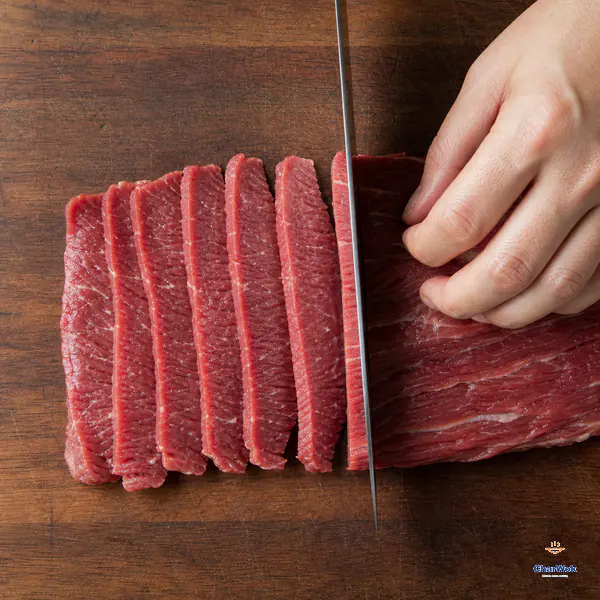
Find the long muscle fibres and cut across them into thin slices; the shortened fibres are what make the finished beef tender.
- Build the marinade as a slurry, then add the beef. Whisk the sha cha sauce, cornstarch, wine, soy, sugar, white pepper, and water in a bowl until smooth with no lumps. Add the beef and massage with your fingers until the liquid has fully disappeared into the meat; this takes about a minute and is the difference between velveting and marinating.
- Seal with oil, then rest 10 minutes. Drizzle the 1 tbsp neutral oil over the coated beef and toss so every slice is glossed. This coating keeps the slices from welding together in the pan. Let it sit at room temperature for 10 minutes so the starch fully hydrates; do not skip the rest.
- Prep the asparagus while you wait. Snap or trim the woody bottoms, then cut each spear on a sharp diagonal into 5 cm (2 inch) lengths. Diagonal cuts expose more surface area, so the asparagus picks up sauce and cooks faster. If using a denser green, blanch and shock it now (see note above).
- Heat the wok until it smokes lightly. A properly seasoned carbon-steel wok should be hot enough that a drop of water dances and vanishes in a second. Add the 1½ tbsp oil and swirl; if using nonstick, add oil to a cold pan and heat it together. Add ginger and garlic and let them sizzle for 5 seconds, no more, or they burn and turn bitter.
- Sear the beef in one layer. Spread the slices out and resist the urge to stir for 15 to 20 seconds. Let the underside set and brown, then use chopsticks or a spatula to quickly loosen and separate the pieces. Maximum heat is the whole game here; this stage takes under a minute.
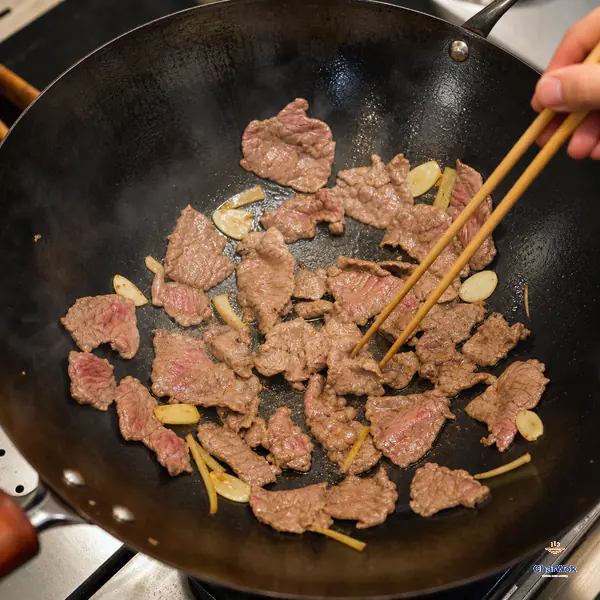
Spread the beef in one layer, let it sear, then loosen the slices only until they are mostly browned; they will finish cooking after the vegetables and sauce return.
- Add greens when the beef is mostly browned. As soon as the pink is gone from most slices (a few streaks of pink are fine; carryover heat will finish them), add the asparagus and the second tablespoon of sha cha sauce. Toss hard for 30 seconds so the sauce coats everything and the asparagus blisters slightly.
- Finish off the heat. Kill the burner, stir in the salt and toasted sesame oil, and taste. Adjust salt only now, because the sauce concentrates as it sits. Serve immediately over rice.
When it goes wrong: a troubleshooting chart
| Symptom | Likely cause | Fix |
|---|---|---|
| Beef is chewy and stringy | Sliced with the grain, or cut too thick | Re-slice across the grain to 2 to 3 mm; check grain direction before every cut |
| Meat leaked gray juice into the pan | Starch didn't hydrate; skipped the 10-minute rest, or heat too low | Always rest 10 minutes; preheat wok until smoking before adding oil |
| Slices clumped into one mass | Forgot the oil seal, or added too much water | Toss in 1 tbsp oil after coating; measure the water, don't pour freely |
| Gummy, paste-like surface | Too much cornstarch | 1 tbsp starch per 450 g beef is the ceiling; switch to potato starch for a cleaner coat |
| Sauce tastes flat or one-note salty | Cheap, soy-heavy sha cha brand | Switch to Bull Head or a Chaozhou jar; add the ¼ tsp sugar and a few drops of sesame oil |
| Garlic and ginger burned black | Left in oil too long before beef went in | 5 seconds of sizzle, then beef immediately; or add aromatics after the beef has seared |
| Asparagus still raw / beef overcooked | Dense green added raw | Blanch broccoli, gai lan, or snap peas for 60 seconds first; asparagus can go in raw |
I have personally made every one of those mistakes. The gummy-crust one haunted me for a year before I realized I was doubling the starch "for extra tenderness." Starch is not tenderness; it is a film. More film does not mean more tender meat, just more paste.
Variations and pairings
The beef-and-sha-cha combination is a chassis you can rebody endlessly. Drop the asparagus and you have the base for several other stir-fries on this site. A few directions worth trying:
- Greens swap. Replace asparagus with gai lan, broccoli florets, snow peas, or sliced king oyster mushroom. Each one turns the dish into something that reads differently even though the method is identical.
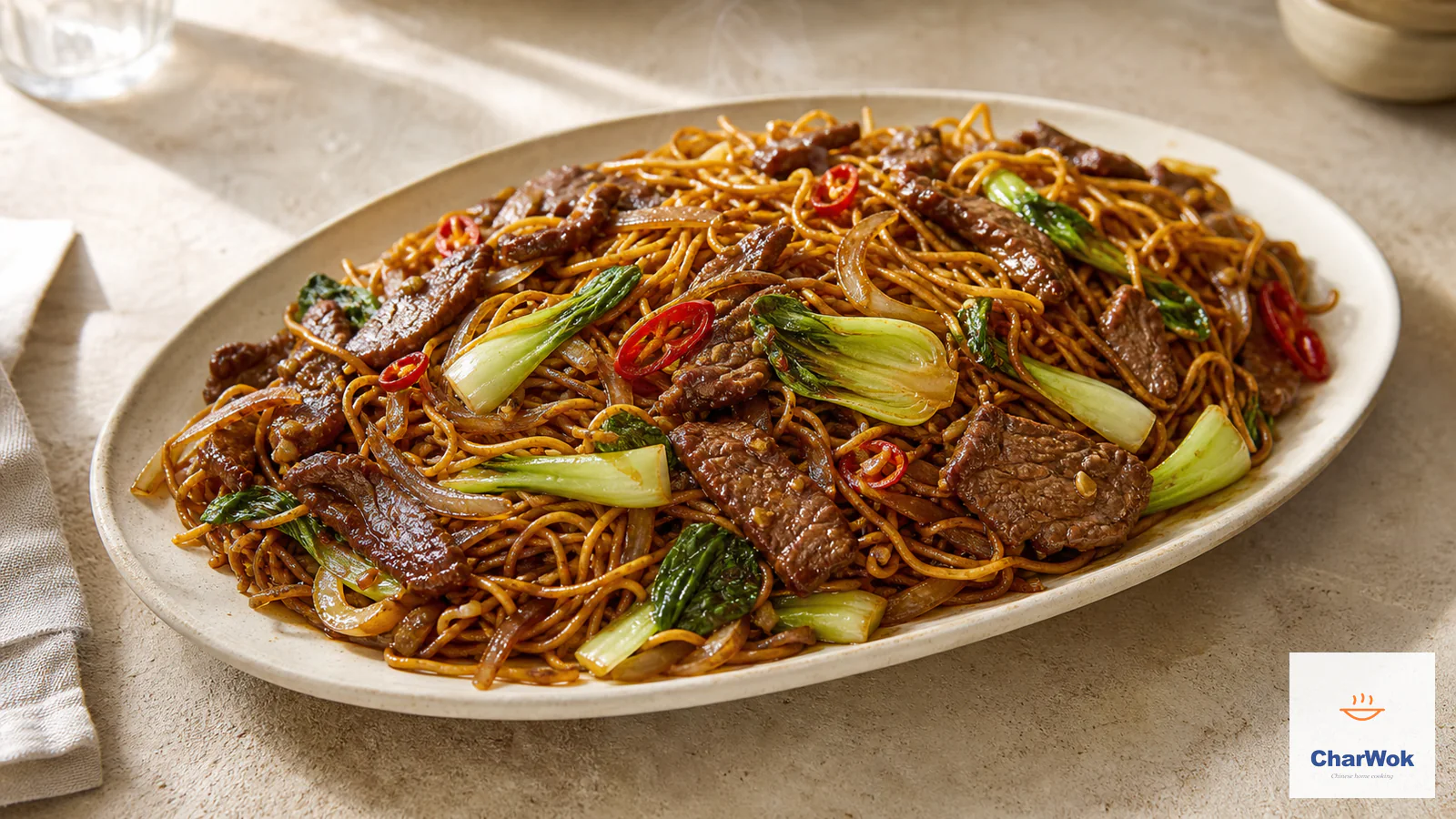
- Noodle version. Toss the finished beef with boiled chow mein noodles and an extra spoon of sauce thinned with noodle water. It is arguably the best thing you can do with leftovers, and a gateway to beef chow fun if you prefer wide rice noodles.
- Rice plate. Serve over plain jasmine rice and a side of garlic bok choy for a Taiwanese lunchbox. Add a soft fried egg on top and you have a meal.
- Spicy push. Stir in a teaspoon of Chiu Chow chili oil with the finishing sesame oil. The chili oil shares sha cha's DNA, so it deepens rather than fights the flavor.
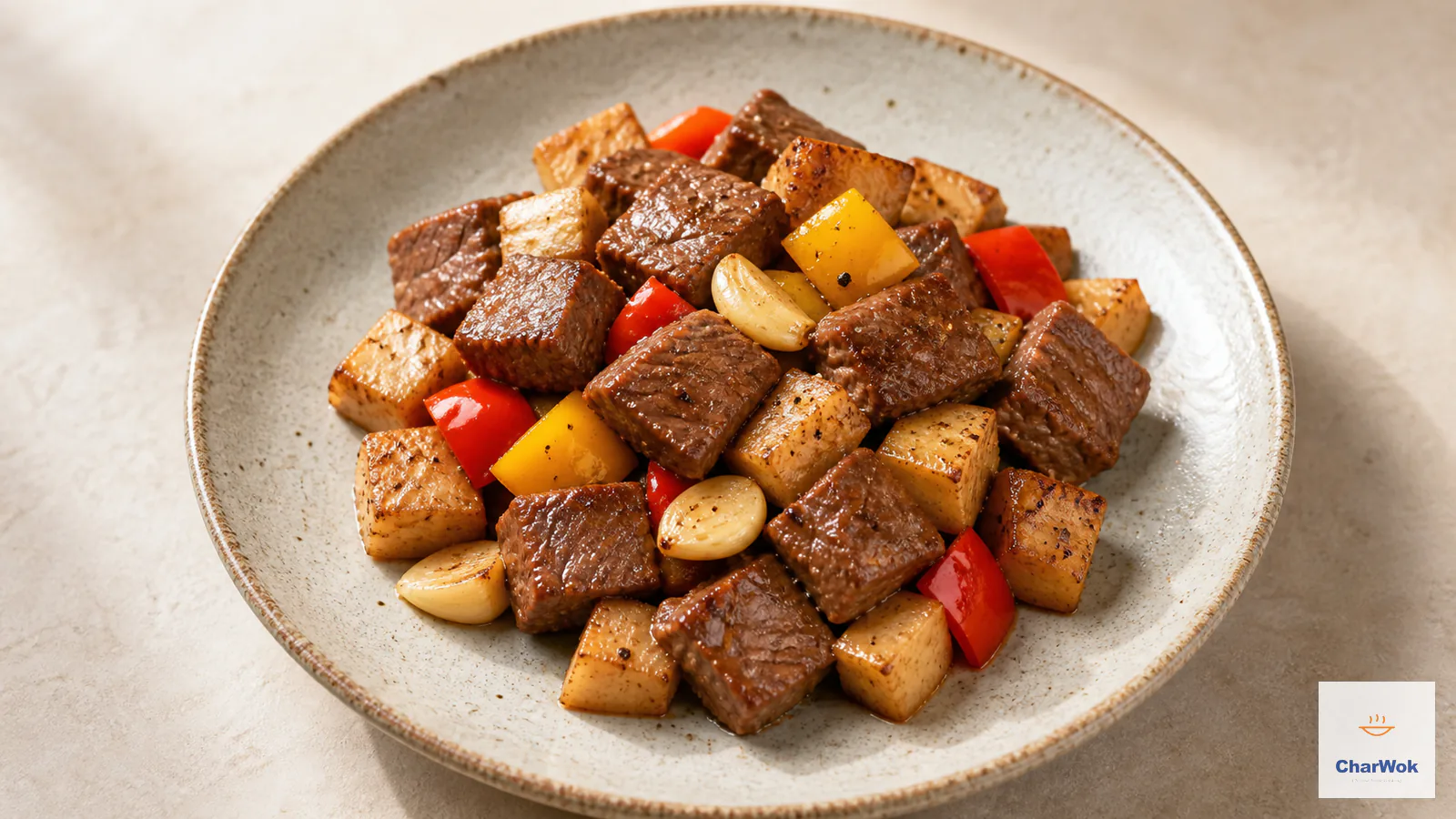
If you cook this often, the same velvet-and-sear method transfers directly to other quick beef dishes: black pepper beef, pepper steak, beef and broccoli, and beef with gai lan all use the same marinade logic with a different finishing sauce. Master it once and a dozen dinners open up.
Storage and reheating
This is a cook-to-order dish; the texture degrades fast. That said, leftovers keep in an airtight container in the fridge for up to two days. Reheat in a dry wok or skillet over high heat for 60 seconds, just until steaming; any longer and the beef turns stringy. Microwaving works but makes the asparagus soggy. I do not recommend freezing, because the starch coating weeps on thaw and the sear is lost.
If you want to prep ahead, slice and marinate the beef in the morning and refrigerate; bring it back to room temperature for 10 minutes before cooking so the sear is not shocked cold. The vegetable can be trimmed a day in advance and held in a damp paper towel.
Frequently asked questions
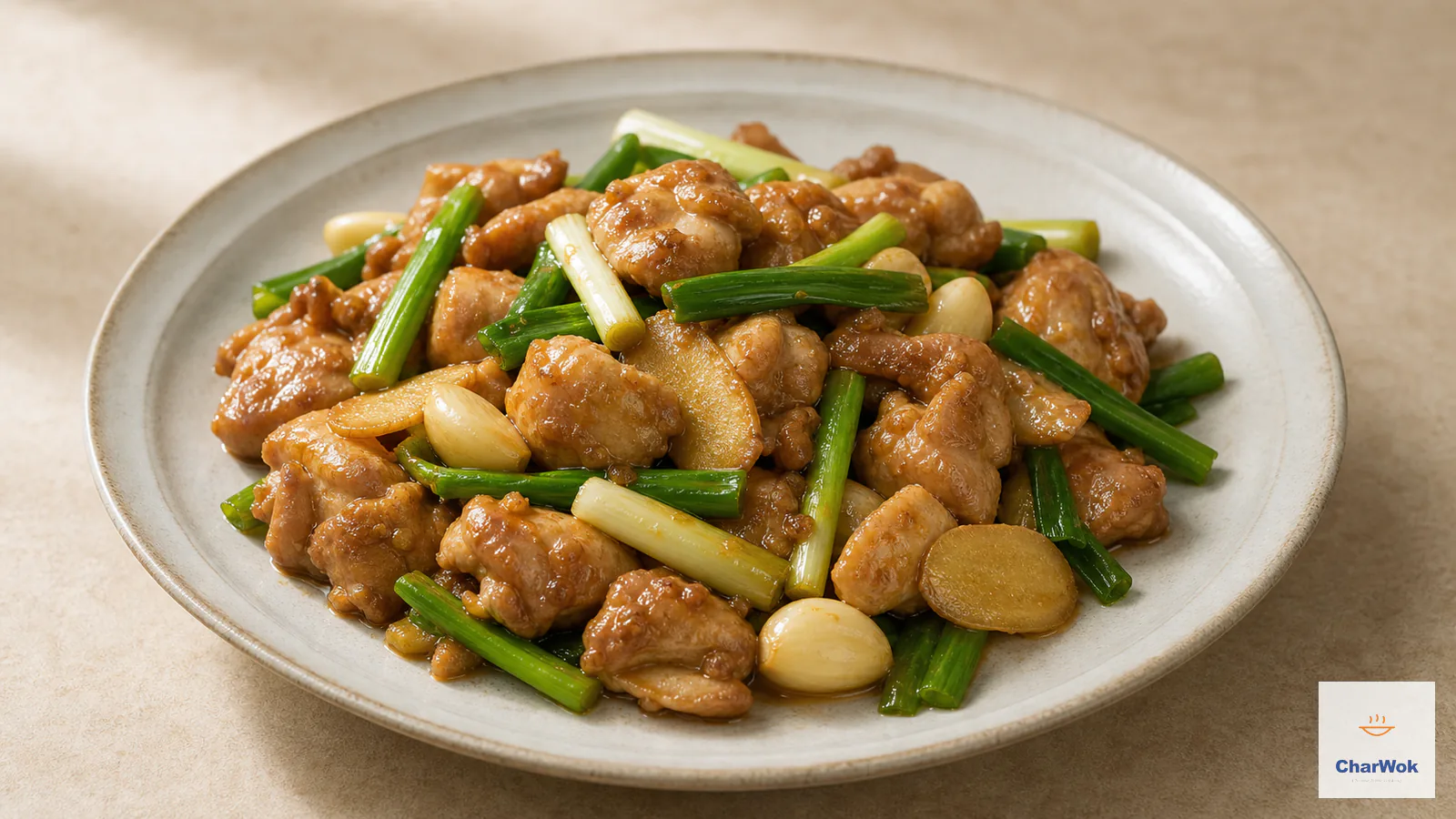
Can I use chicken or pork instead of beef? Yes. Boneless chicken thigh works with the same marinade and a slightly shorter sear (40 seconds). Lean pork loin is fine but tends to dry out; pork shoulder or collar is a better match.
Is sha cha sauce spicy? Mildly. Most jars carry a low background warmth from dried chiles, but the dominant notes are savory, sweet, and fishy rather than hot. If you want real heat, add chili oil at the end, not more sha cha.
I don't own a wok. Can I still make this? A large cast-iron or carbon-steel skillet works almost as well, because both hold heat the way a wok does. Avoid nonstick if possible; it cannot get hot enough to sear, which is the whole point. A stainless skillet is fine if you preheat it thoroughly and use the full amount of oil.
Do I really need to rest the marinated beef for 10 minutes? Yes. The cornstarch needs time to hydrate in the water, and the salt in the sauce needs time to penetrate. Without the rest, the coating sloughs off in the pan and the meat bleeds juice. Ten minutes is the floor; thirty is fine.
What's the difference between sha cha sauce and satay sauce? They are often confused. Sha cha is the southern Chinese, fish-and-shrimp-based sauce used here. Satay is the Southeast Asian, peanut-based sauce served on skewers. They are distant cousins, not the same product, and they are not interchangeable in this recipe.
Strip the dish down and it comes down to two things: slice across the grain, and sear hot and fast. Get those right and the sha cha does the storytelling. Overthink the marinade or baby the heat and you will taste the difference before the first bite is chewed.