The first time I tried to make Nian Gao the traditional way, I committed to a bamboo steamer and a two-hour clock, and somewhere around the 90-minute mark I understood why most people just buy it. The baked version of a Chinese sticky rice cake solves exactly that problem, and it does so without giving up the one thing you actually want from the dessert: that dense, chewy, almost-bouncy bite that comes from gelatinized glutinous rice starch. You pour a batter, you walk away for 25 minutes, and you end up with something that tastes like the steamed New Year cake you grew up with, only with a toasted top and none of the babysitting.
What trips people up here is not the method. It is the flour. Reach for the wrong bag and the cake either comes out like a rubber puck or collapses into paste. So before we get to the steps, the one decision that matters most: use glutinous rice flour (also labeled sweet rice flour or sticky rice flour), not regular rice flour and not mochiko unless you want a very different texture. The difference is amylopectin, the branched starch molecule that makes sticky rice sticky, and only glutinous rice has enough of it to set into that signature chew.
At a glance. A pourable batter of glutinous rice flour (230 g), coconut milk, eggs, oil, and sugar bakes at 170°C / 340°F for about 25 minutes into a dense, chewy, date-studded cake. The whole dish rests on one rule: do not substitute the flour, and do not overbake. Pull it when a toothpick still leaves the faintest moist crumb, because carryover heat finishes the center.
What this cake is, and what it is not
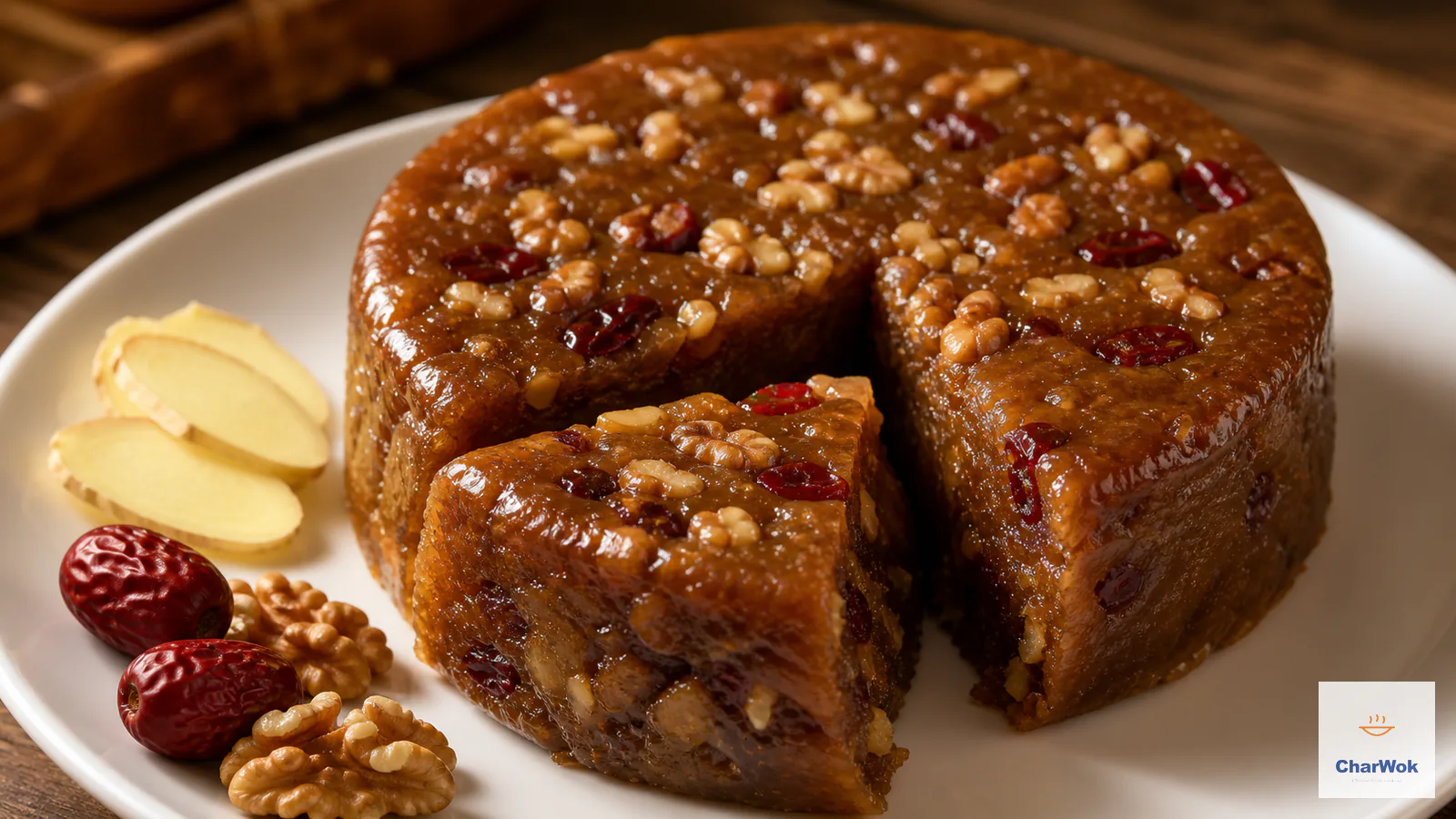
This is a relative of Nian Gao, the steamed Chinese New Year rice cake that symbolizes growth and a rising fortune for the year ahead. The classic version is a dense slab of glutinous rice flour, water, and sugar, steamed until it turns translucent and copper-brown, then sliced and often pan-fried in egg. The baked cousin takes the same starch foundation and treats it like a Western cake batter, which means it sets faster, develops a real crust, and is far more forgiving for a weeknight.
Where it diverges most is texture. Steamed Nian Gao is uniformly gelatinous and almost candy-like once cool. The baked version is chewy and slightly springy in the middle, with a soft, almost custardy top where the coconut milk and egg concentrate. It is closer in spirit to a mochi-style bar than a layered cake, and it does not pretend to be either. If you are expecting a fluffy slice, you will be surprised; if you want that signature glutinous rice chew in dessert-bar form, you are in the right place.
The science behind the chew
The texture comes from starch gelatinization, the same process that turns a raw noodle tender or a sauce thick. Glutinous rice flour is nearly pure amylopectin. When it meets hot liquid, the starch granules swell, burst, and form a continuous gel network. In a cake like this, that network replaces the gluten structure you would normally rely on in a wheat-flour bake. There is no gluten development to worry about, which is why you cannot overmix this batter; there is nothing to toughen. You can stir it aggressively, even leave a few small lumps, and the bake will smooth most of it out.
The egg and oil in the recipe do a quieter job. Egg proteins coagulate during baking to give the cake enough structure to hold a slice, since pure starch gel would weep and collapse. The oil keeps the crumb supple and delays staling; butter works too, but coconut oil or a neutral vegetable oil blends more cleanly into the coconut milk base. A half-tablespoon of baking powder gives a gentle lift so the cake is dense rather than leaden, no more. This is not a sponge, and you do not want it to behave like one.
Ingredients
Ingredients at a glance
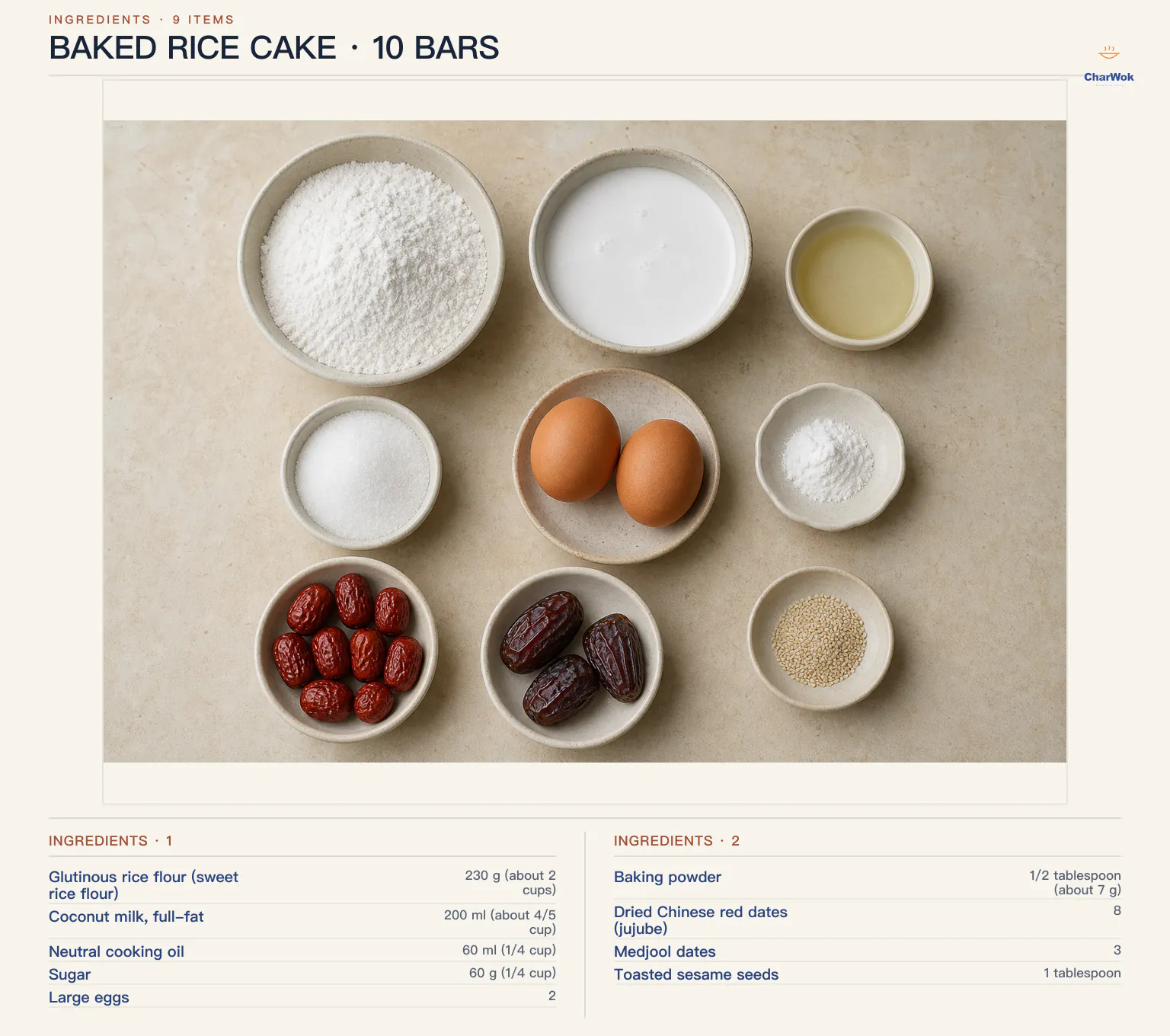
The recipe below yields about 10 bars in an 11 by 7 inch (28 by 18 cm) pan. A 9-inch (23 cm) square pan or a 10-inch (25 cm) round pan holds roughly the same volume and works just as well; a shallower pan simply bakes a few minutes faster. Weigh the flour if you can, since glutinous rice flour compacts and a scooped cup can be off by 15 percent.
| Ingredient | Amount | Notes / substitute |
|---|---|---|
| Glutinous rice flour (sweet rice flour) | 230 g (about 2 cups) | Non-negotiable. Do not swap regular rice flour. Mochiko works but gives a slightly tighter, more paste-like chew. |
| Coconut milk, full-fat | 200 ml (about 4/5 cup) | Whole milk works; the cake loses some fragrance. Avoid low-fat coconut milk, it makes the crumb dry. |
| Neutral cooking oil | 60 ml (1/4 cup) | Canola, sunflower, corn, or light vegetable oil. Melted coconut oil adds richness. |
| Sugar | 60 g (1/4 cup) | White for a cleaner flavor, light brown for caramel notes. Brown darkens the crumb. |
| Large eggs | 2 | About 100 g out of shell. Room temperature blends more evenly. |
| Baking powder | 1/2 tablespoon (about 7 g) | Aluminum-free. More than this makes the cake cakey rather than chewy. |
| Dried Chinese red dates (jujube) | 8 | Pitted and chopped. Honey-sweet with a warm, caramel depth. |
| Medjool dates | 3 | Pitted and chopped. Softer and juicier; balances the firmer jujube. |
| Toasted sesame seeds | 1 tablespoon | Optional but worth it. Toast your own for real aroma. |
How to make it
Heat the oven to 170°C / 340°F, or 150°C / 300°F on a fan-assisted (convection) setting, with a rack in the middle. Line your baking pan with parchment, pressing it into the corners and letting it come up the sides; the overhang is what lets you lift the whole cake out clean.
- Whisk the wet ingredients. Crack the eggs into a bowl and beat just until the yolks and whites are one color, no more. Pour in the coconut milk and oil and whisk until smooth. Over-beating at this stage adds nothing, since there is no gluten to develop and no air to hold; you are just combining fats and liquid.
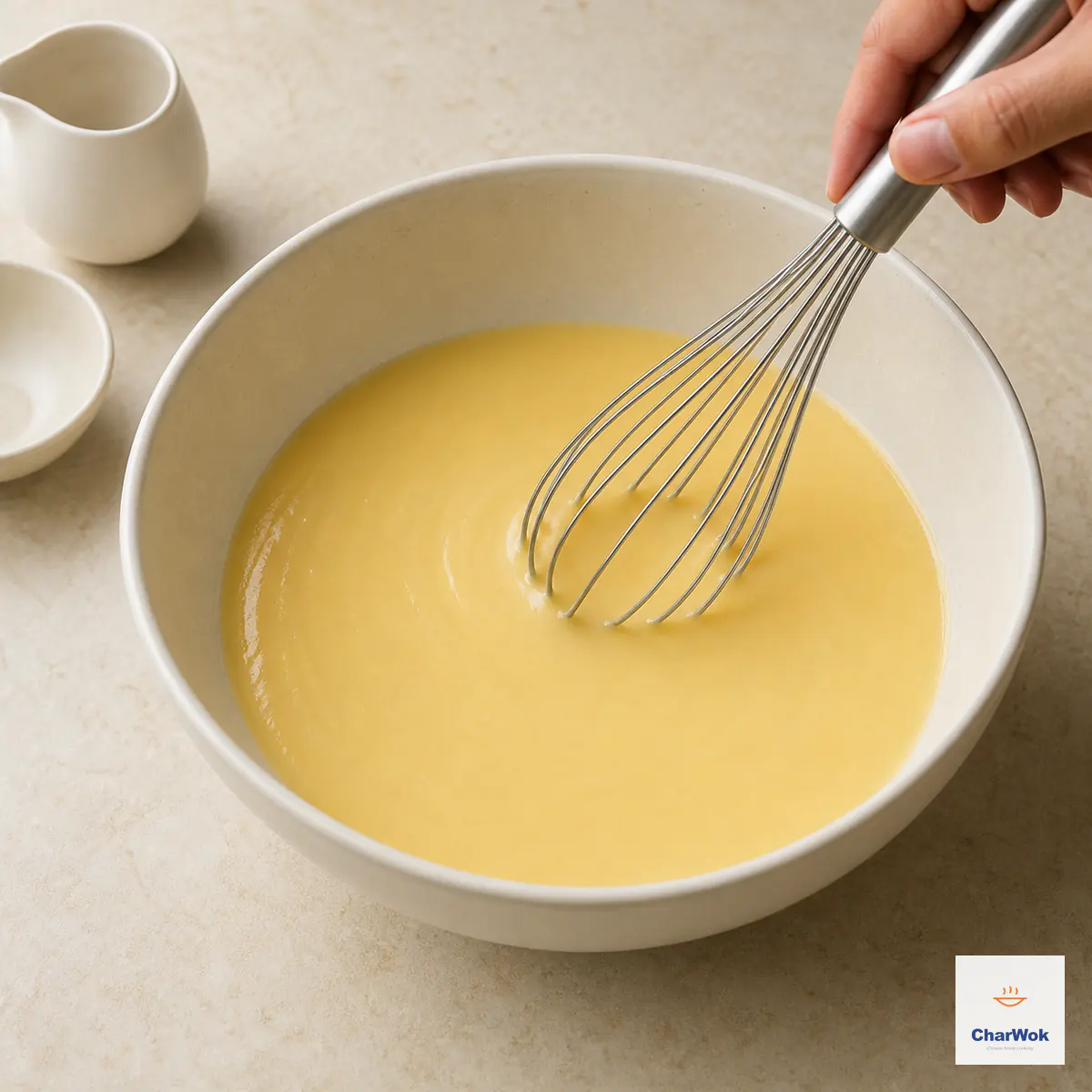
Whisk only until the eggs, coconut milk, and oil look completely uniform, with no oil streaks left on the surface
- Add the dry ingredients. Dump in the sugar, glutinous rice flour, and baking powder. Stir with a spatula or whisk until the batter is thick, glossy, and free of dry pockets. It will be heavier than a typical cake batter, somewhere between pancake batter and frosting. If you see a few small lumps, keep going for another 15 seconds and then stop.
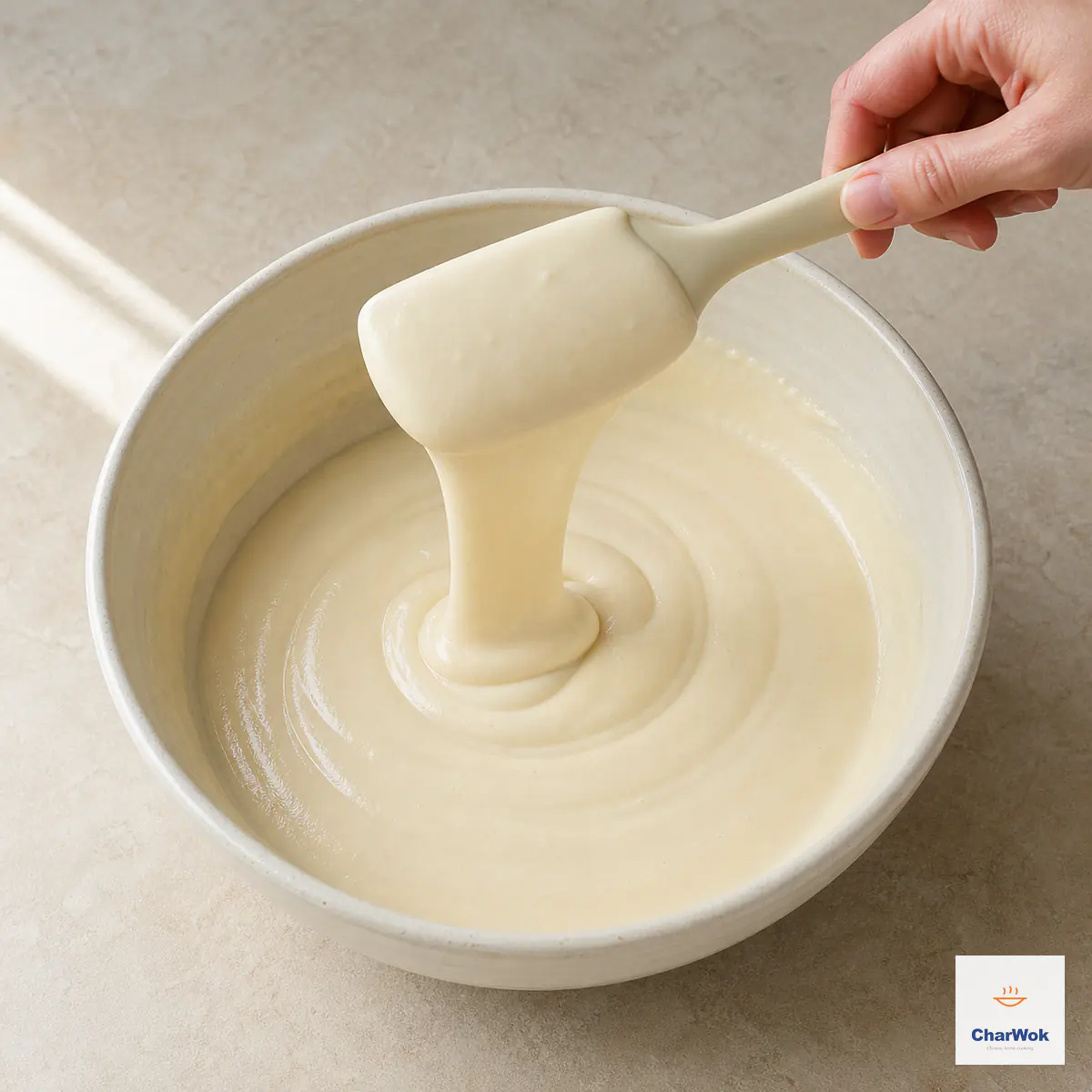
Stop mixing when the batter is thick, glossy, and smooth enough to fall in a slow ribbon without any dry pockets
- Prep the dates. Kitchen scissors do this faster and cleaner than a knife. Snip the Chinese dates and the Medjool dates into roughly pea-sized pieces, discarding any pits as you go (store-bought pitted dates still hide the occasional stone). Fold the pieces into the batter so they are evenly distributed, not clumped in one corner.
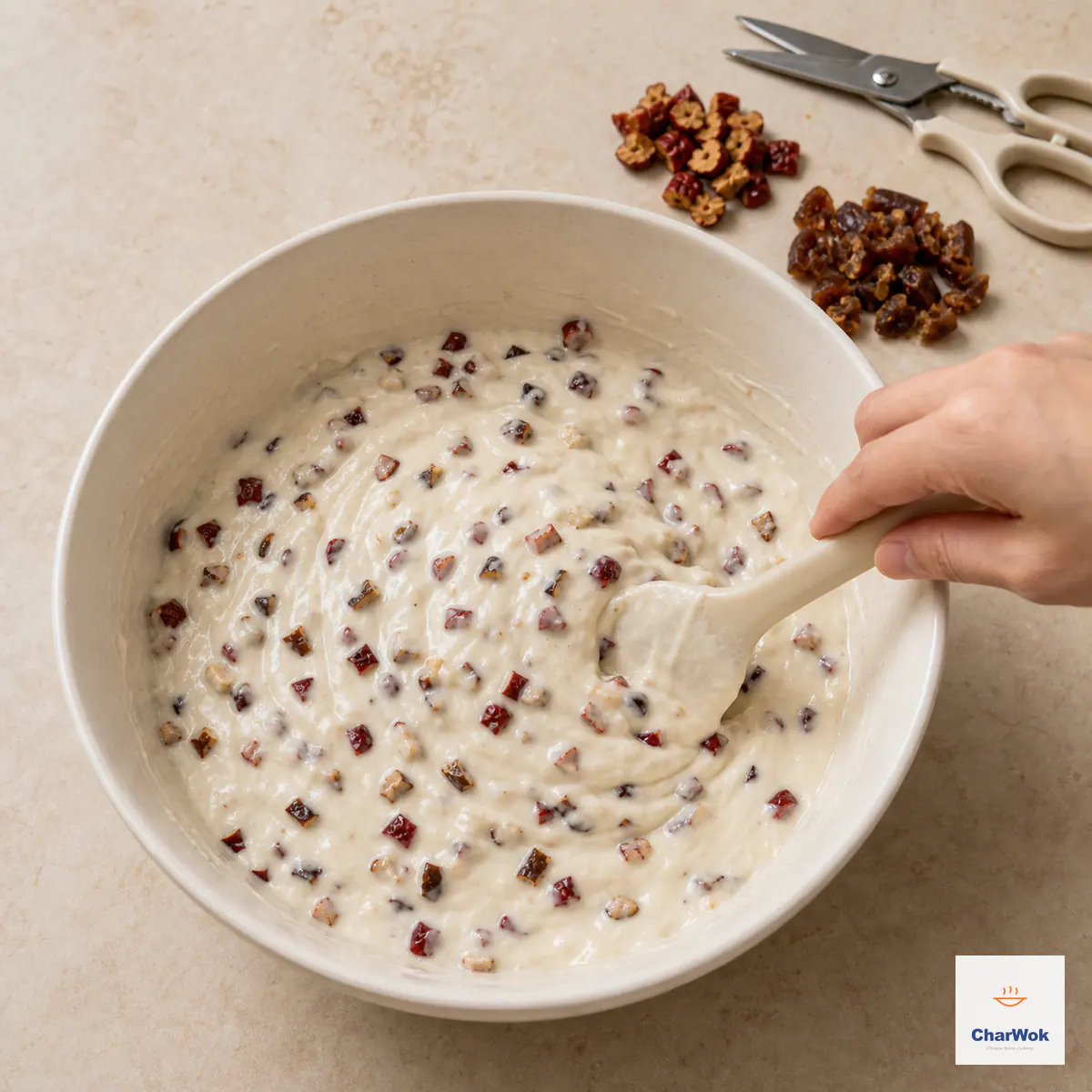
Snip both kinds of date into pea-sized pieces, discard every pit, and fold until the pieces are evenly dispersed
- Pan the batter. Pour it into the lined pan and spread it level with a spatula. Scatter the sesame seeds across the top, aiming for even coverage since they toast into the surface and you want every slice to get some.
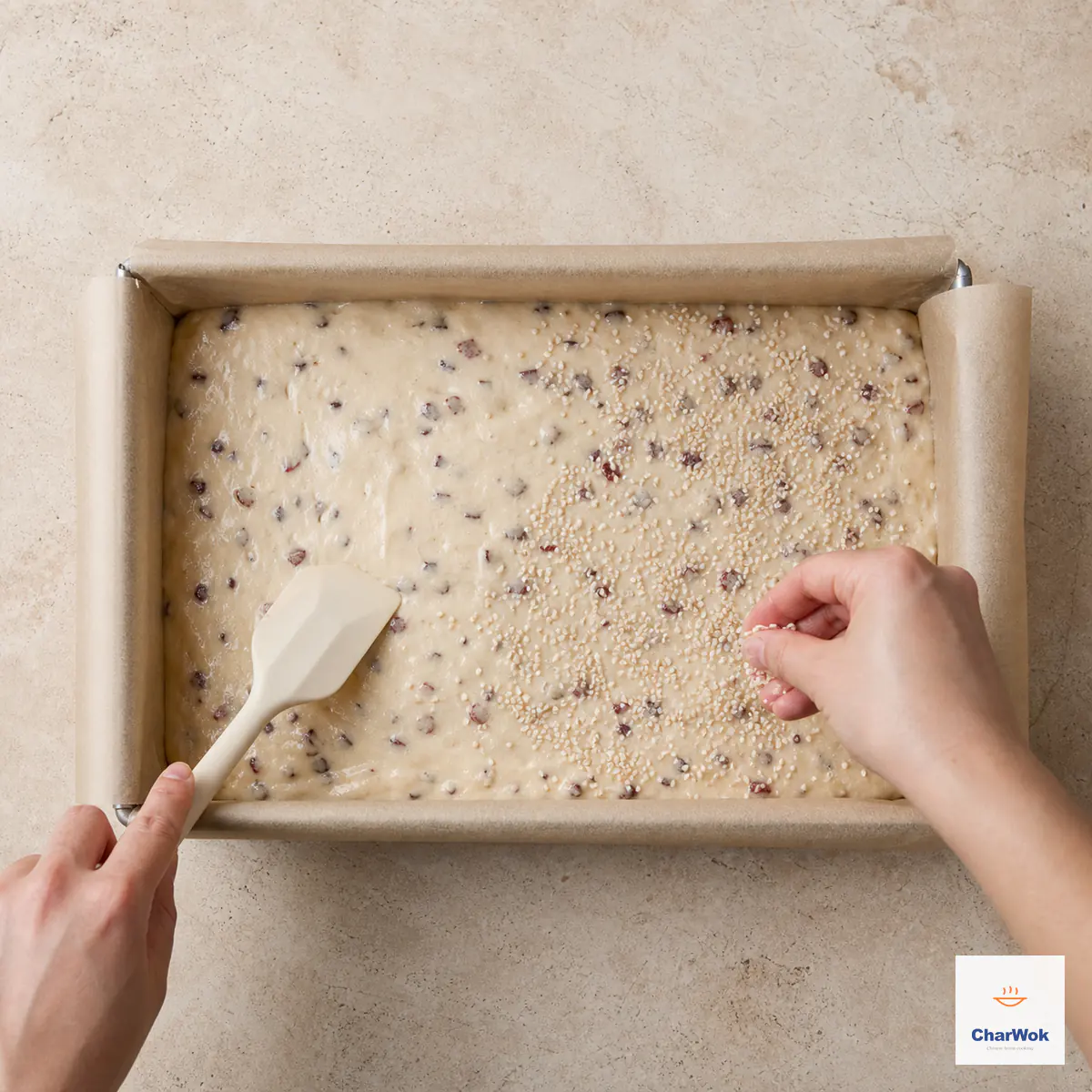
Spread the thick batter level in the lined pan, then scatter the sesame evenly so every finished bar gets some
- Bake. Slide the pan onto the middle rack and set a timer for 22 minutes. The cake is done when the top is light golden, the center is set but still has a slight give when pressed, and a toothpick comes out with a few moist crumbs clinging rather than wet batter. Add time in 2-minute increments if needed; my oven almost always lands at 24 to 25 minutes.
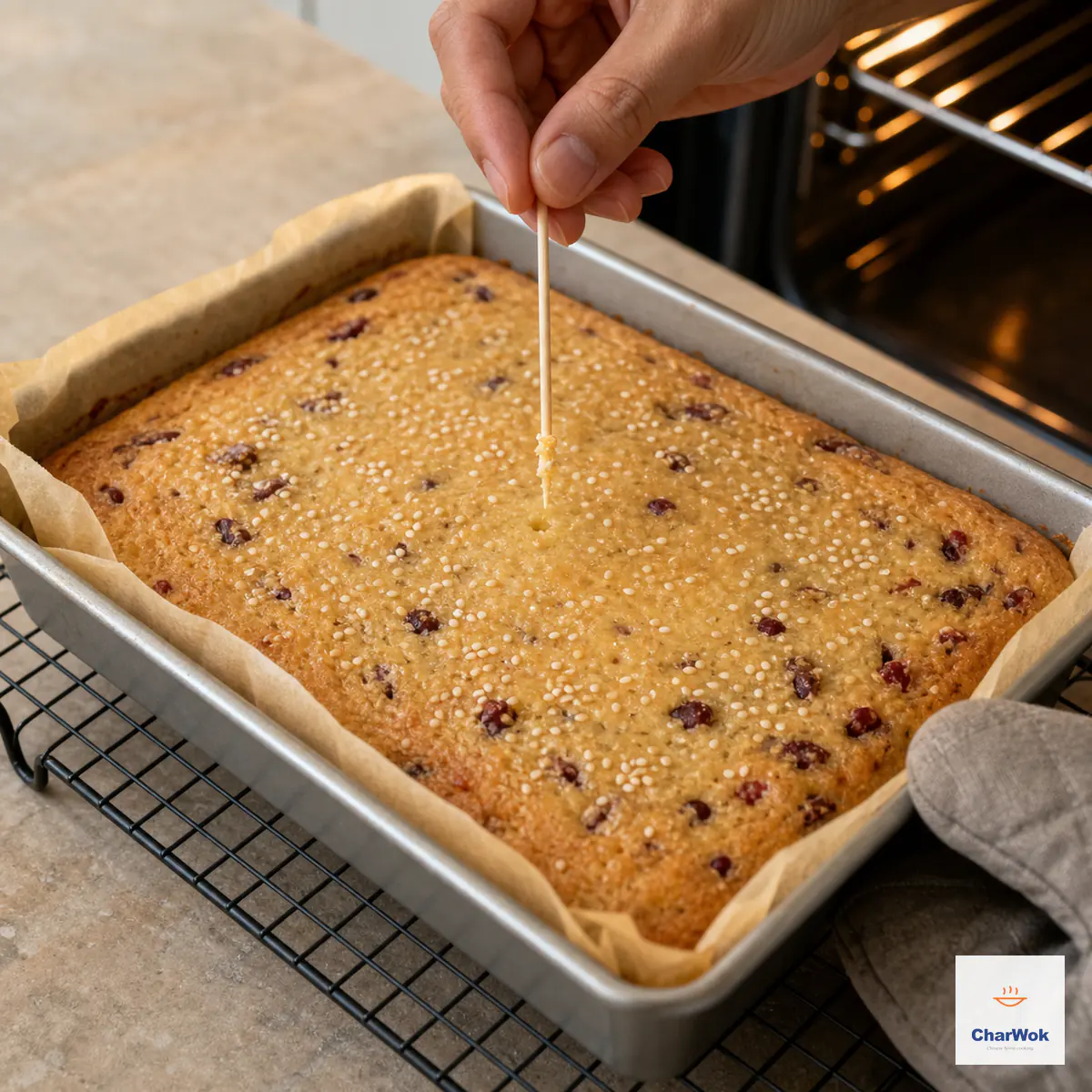
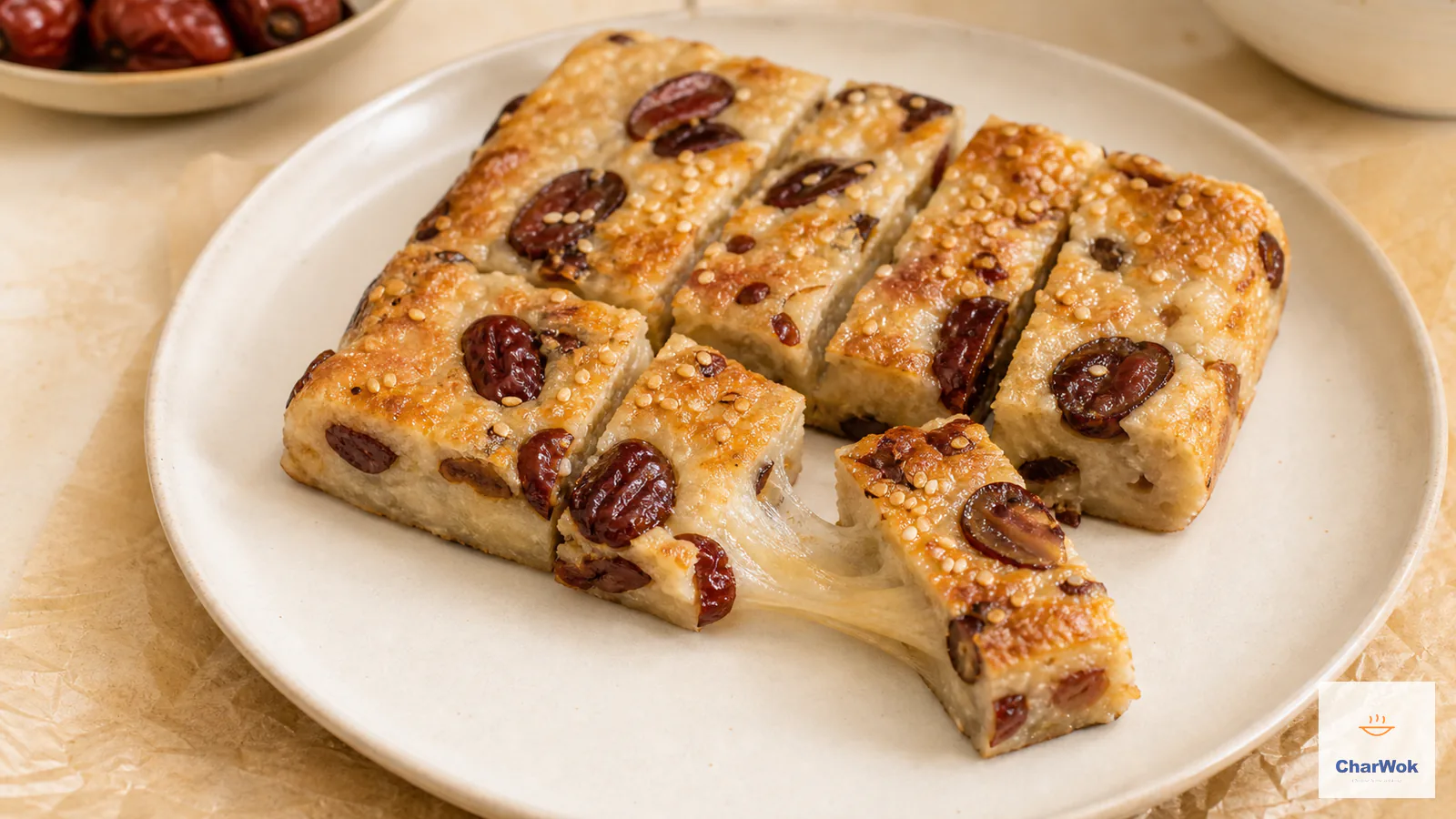
The cake is ready when the top is light golden, the center gives slightly, and the toothpick carries a few moist crumbs rather than wet batter
- Cool, then cut. Lift the cake out by the parchment overhang and set it on a rack. Let it sit at least 20 minutes before slicing; the starch gel continues to set as it cools, and a hot cake will tear under the knife. Cut into 10 bars with a sharp knife wiped clean between cuts.
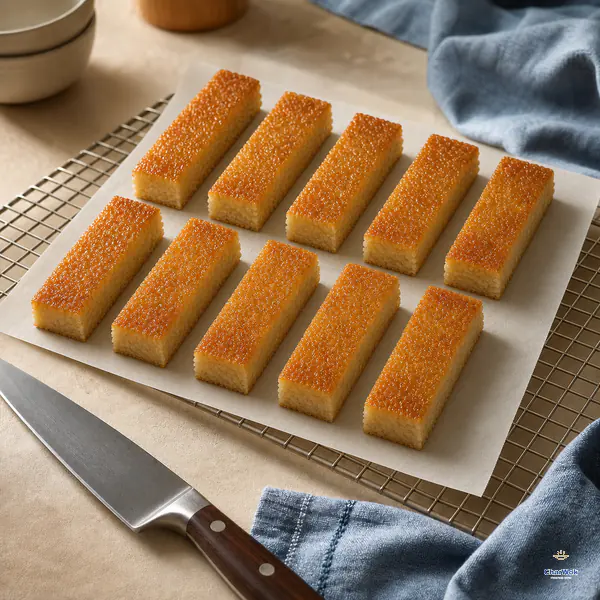
Cool the cake on a rack for at least 20 minutes, then use a clean sharp knife to cut exactly ten even bars without tearing the set chewy crumb.
When things go wrong
Raw, gummy center, golden top. The most common failure, and it is almost always an oven that runs hot. The top colors before the starch gel sets. Drop the temperature by 10 degrees next time, and lay a sheet of foil loosely over the pan for the last 10 minutes to shield the surface. Confirm doneness with a toothpick, not with color alone.
Tough, rubbery slab. You used regular rice flour instead of glutinous, or you measured the glutinous flour heavily packed. Recheck the bag label, spoon-and-level or weigh the flour, and add a tablespoon of milk if the batter looks dry.
Cake sinks in the middle. Either the baking powder was old and inactive in the first rise then collapsed, or the cake was pulled too early and the unset center could not hold its own weight. Test baking powder in hot water first; it should fizz vigorously. When in doubt, bake two minutes longer.
Dry, crumbly bars. Low-fat coconut milk or a thin substitute is usually the cause. The fat carries moisture into the starch gel; cut it and the cake dries out within a day. Use full-fat coconut milk, and do not reduce the oil.
Dates sink to the bottom. A light dusting of flour over the chopped dates before folding them in gives them enough texture to ride the batter instead of sinking. Chop them small; large chunks are heavier and drop faster.
Variations and pairings
The batter is a blank canvas for whatever you keep in the pantry. Swap the dates for a spoonful of red bean paste swirled through the top before baking, or fold in toasted black sesame for a cake that leans savory-sweet, the way a black sesame filling would. A handful of chopped dried apricot and a pinch of five-spice gives a more modern, almost Middle-Eastern note, and crushed toasted walnut turns it into something close to a sticky walnut bar.
For a savory contrast at the table, pair a slice with hot ginger milk curd or a small bowl of sweet red bean soup, where the warmth and mild bitterness balance the dense sweetness. On a summer afternoon, chilled mango sago alongside makes the cake feel lighter than it is. And if you are setting out a dessert spread for a holiday table, this sits comfortably next to Eight Treasure Rice, almond cookies, and sesame balls without competing for the same texture slot.
Storage and reheating
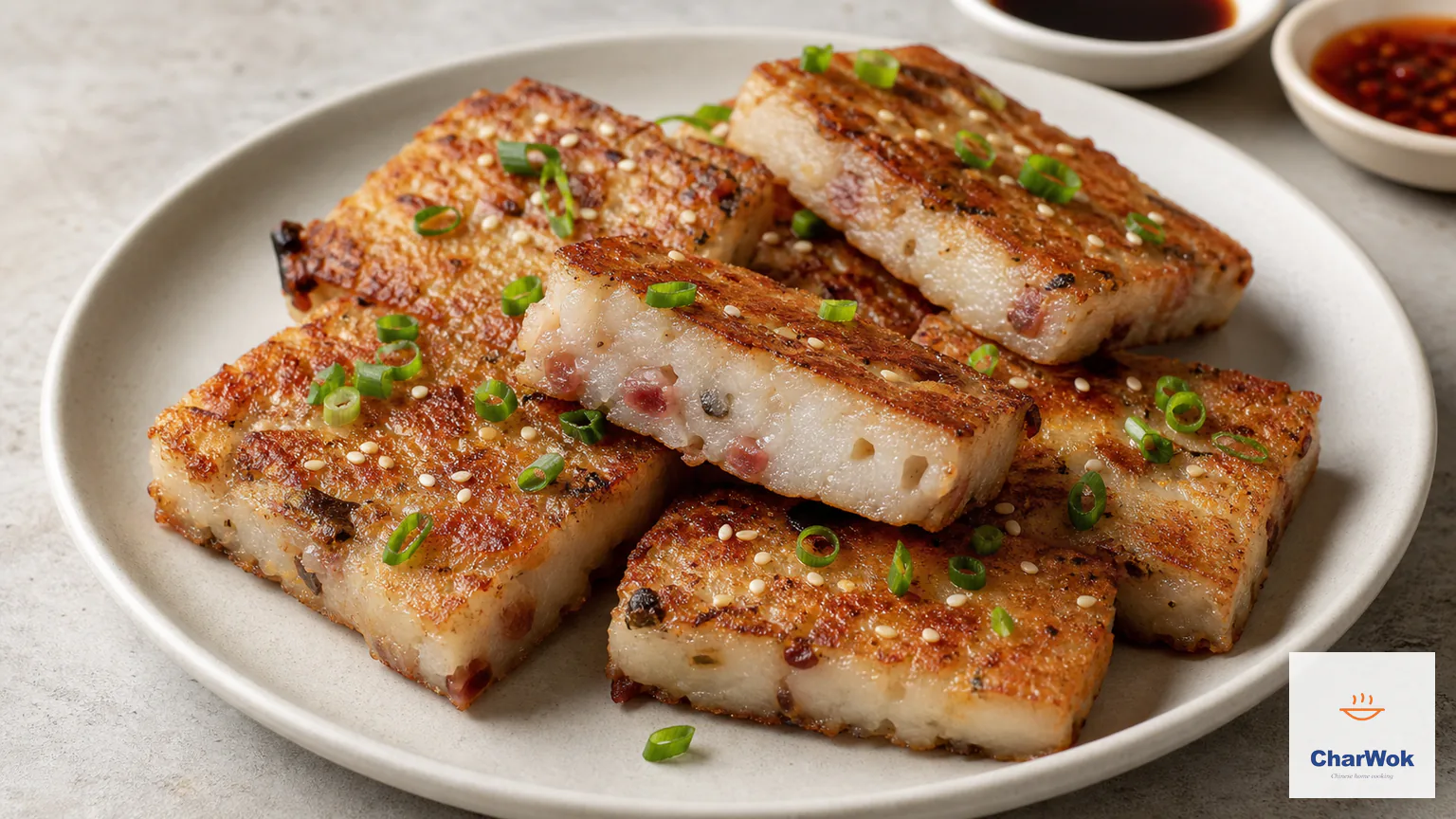
Let the bars cool fully, then store them in an airtight container at room temperature for one day or in the refrigerator for up to five. The texture firms up in the cold; that is normal, and a few seconds in the microwave brings the chew back. Reheat one bar at a time in 15-second bursts, no more than about 30 seconds total, since overheated glutinous rice turns hard and then leathery as it cools. You can also pan-fry a slice in a little oil, the way leftover sliced Nian Gao is traditionally revived, for a crisp crust and a molten center.
This cake also freezes well. Wrap individual bars tightly in plastic and freeze for up to two months. Thaw overnight in the fridge, then warm briefly before eating.
Frequently asked questions
Can I make this without eggs?
The egg supplies structure that the starch gel alone cannot. You can replace each egg with roughly 3 tablespoons of full-fat coconut yogurt or a flax egg (1 tablespoon ground flax plus 3 tablespoons water), but expect a slightly denser, less sliceable result. I have not found an egg-free version that holds a clean bar shape as well as the original.
Is glutinous rice flour the same as rice flour?
No, and confusing them is the main reason this recipe fails. Regular rice flour is made from non-sticky rice and will produce a dry, crumbly cake. Glutinous rice flour is made from sticky rice and is sometimes called sweet rice flour even though it contains no sugar. Always check the label for "glutinous" or "sweet rice."
Can I double the recipe?
Yes. Double everything and use a 9 by 13 inch (23 by 33 cm) pan, adding about 8 to 10 minutes to the bake time. Test the center with a toothpick before pulling it, since the deeper batter takes longer to set.
Do I need to peel or soak the Chinese dates?
No peeling or soaking. Dried Chinese red dates (jujubes) are ready to use; just pull out the pit and chop. If yours are very hard and dry, a 10-minute soak in warm water plumps them and makes chopping easier, but drain them well so you do not add water to the batter.
Can I pan-fry the leftovers like traditional Nian Gao?
Yes, and it is one of the best things you can do with day-old bars. Slice thinner, dip lightly in beaten egg, and pan-fry in a little oil over medium heat until both sides are crisp. The inside turns soft and stretchy, very close to fried sliced Nian Gao.
One honest note before you start. This cake is forgiving, but it rewards a calibrated oven. Mine runs 15 degrees hot on the left side, so I rotate the pan at the halfway mark. If your first bake comes out a touch gummy in the center, treat it as oven intel rather than a recipe failure, drop the temperature, shield the top, and the second batch will be the one you remember. After that, this is the kind of recipe you stop measuring and just make.
Looking for more festive Chinese sweets? Round out a holiday table with steamed red bean buns, a classic mooncake, or the no-bake snow skin mooncake. For a full New Year spread, the Chinese New Year recipe collection pulls the traditions together.