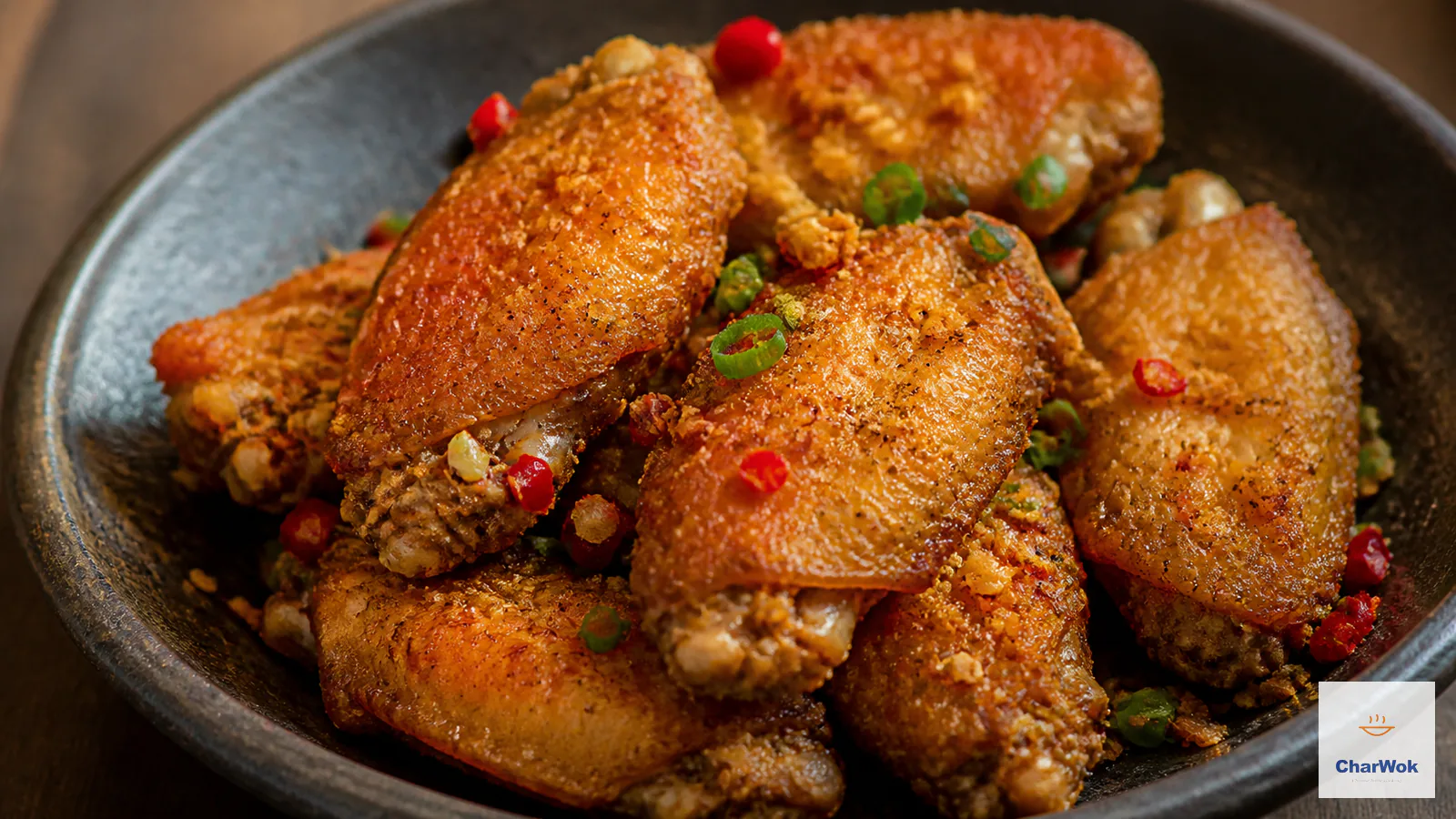
The best salt and pepper wings come down to one decision most home cooks get wrong: when to add the seasoning. Do it while the wings are still wet, or sprinkle it in too early, and the famous salty-aromatic crust dissolves into a soggy glaze. Hit them at the very end, off the heat, and you get crackly skin carrying a layer of toasted Sichuan pepper and salt that stays on your fingers. That is the whole dish. Everything else, the shallow fry, the cornstarch coat, the chili-garlic toss, exists to protect that finishing dust.
I have ruined these wings more ways than I care to admit. I have deep-fried them (unnecessary, and the splatter on a Tuesday night is not worth it). I have added the salt and pepper to the marinade (muddy and flat). I have skipped the cornstarch and ended up with pale, steamed-looking skin. The version below is the one I make on weeknights now, and it borrows the spirit of the Cantonese 椒盐 (jiao yan, "pepper-salt") family without the half-gallon of oil that salt and pepper shrimp or salt and pepper squid usually demand. The chicken renders its own fat, and that fat does half the frying for you.
At a glance: Score the skin, marinate 10 minutes in soy and salt, dust with cornstarch, then shallow-fry flats for about 8 minutes undisturbed per batch. Finish with a chili-garlic scallion toss and a half-teaspoon of ground Sichuan pepper mixed into salt. The two non-negotiables: a thin starch coat, and seasoning only after the wings leave the pan.
What the dish is, and where the "salt and pepper" comes from
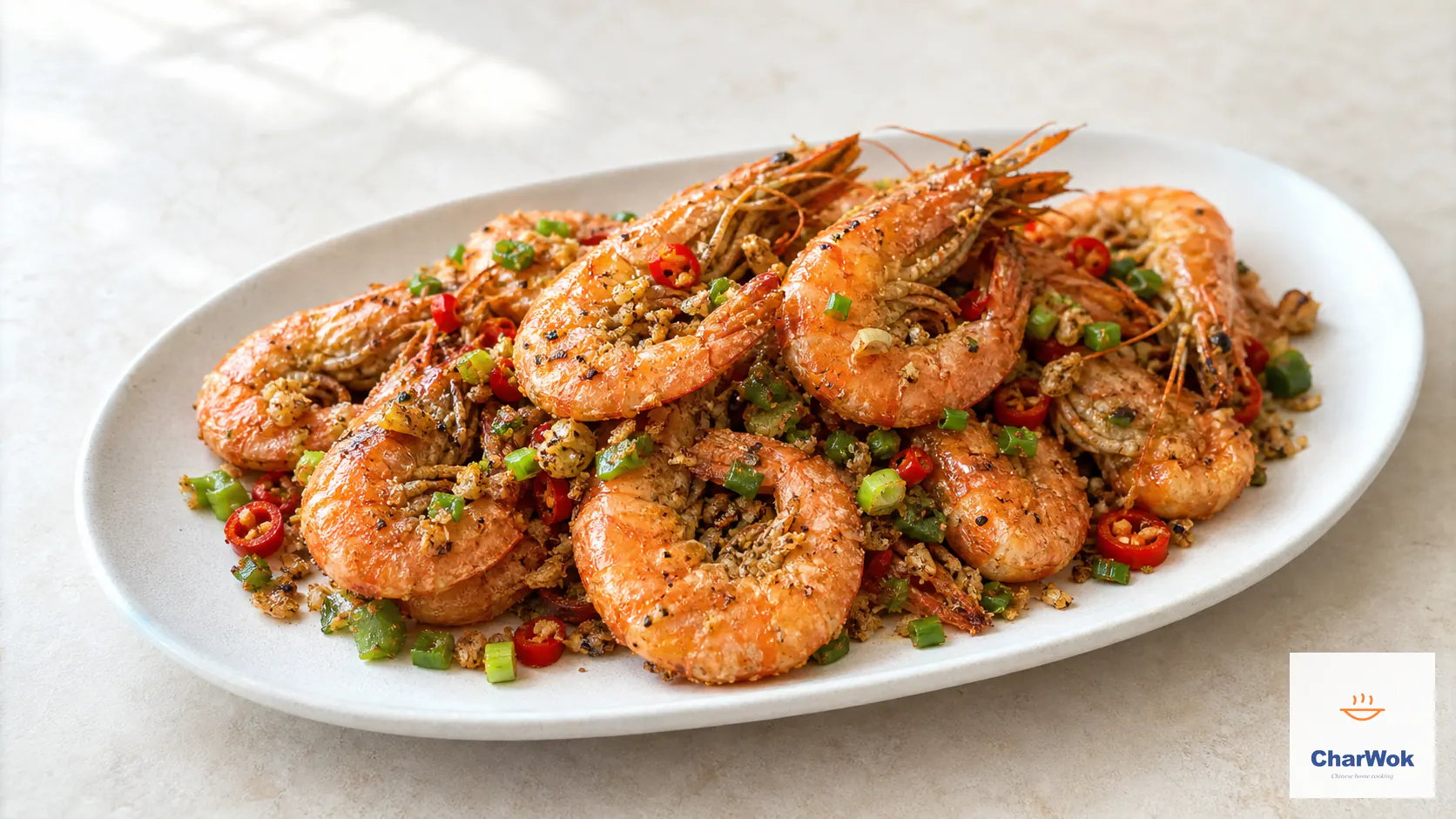
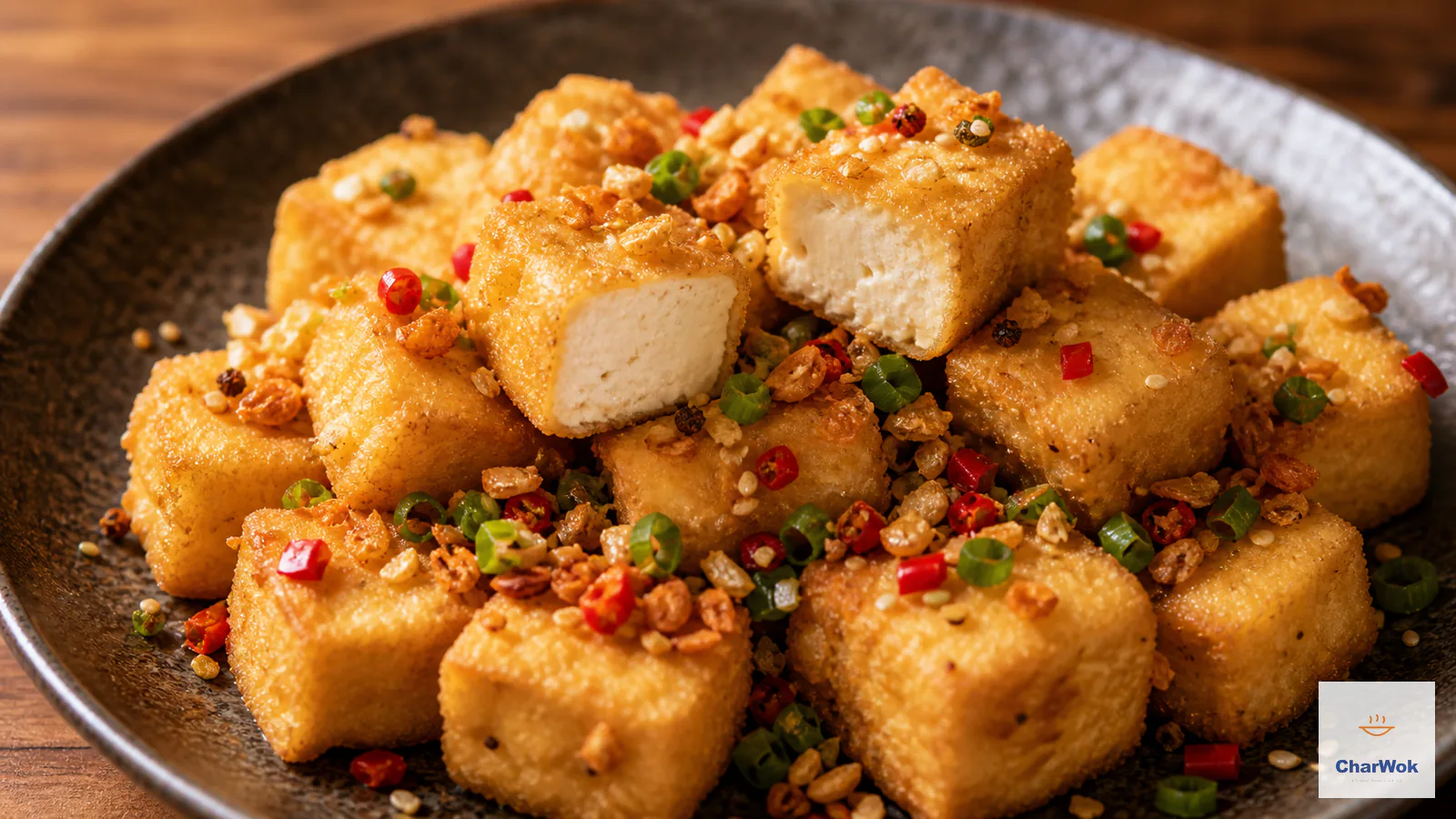
椒盐 is not table salt and black pepper. It is toasted salt ground with Sichuan peppercorns (and often a supporting cast of star anise, fennel, and sesame), giving a seasoning that is salty, faintly citric, and gently numbing all at once. You will find it on shrimp, squid, tofu, pork chops, and spare ribs across Cantonese restaurants and northern beer-and-skewer shops alike. Applied to chicken wings, it lands on rendered skin the way good finishing salt lands on a french fry, except here the pepper oils do the talking.
Wings are the natural canvas because of their skin-to-meat ratio. Thighs work, drumsticks work, but wings give you the most crisp surface per bite, which is the whole point. If you already love coca-cola chicken wings or char siu chicken, this is the savory, grown-up cousin: no sugar, no glaze, just fat and toasted spice.
Choosing the wings (and why flats beat drumettes here)
Use flats (the two-boned middle section, sometimes called mid-joints). They sit flat in a skillet, brown evenly on one broad side, and cook through in a predictable time. Drumettes are thicker at one end, so by the time the meaty end is done, the thin end is overcooked and the skin tears when you flip them. A mix is fine if that is what you have; just plan to give the drumettes two extra minutes and turn them a second time.
Leave the skin on and buy skin-on, bone-in wings, never the pre-trimmed "party wings" with the tips removed and the skin pulled back. If yours come whole, snip off the wing tip at the joint and save it in a bag in the freezer for stock. You can read more about handling whole wings in the guide to Chinese chicken recipes by cooking method, where this dish sits alongside braised, roasted, and steamed preparations.
Ingredients
Ingredients at a glance
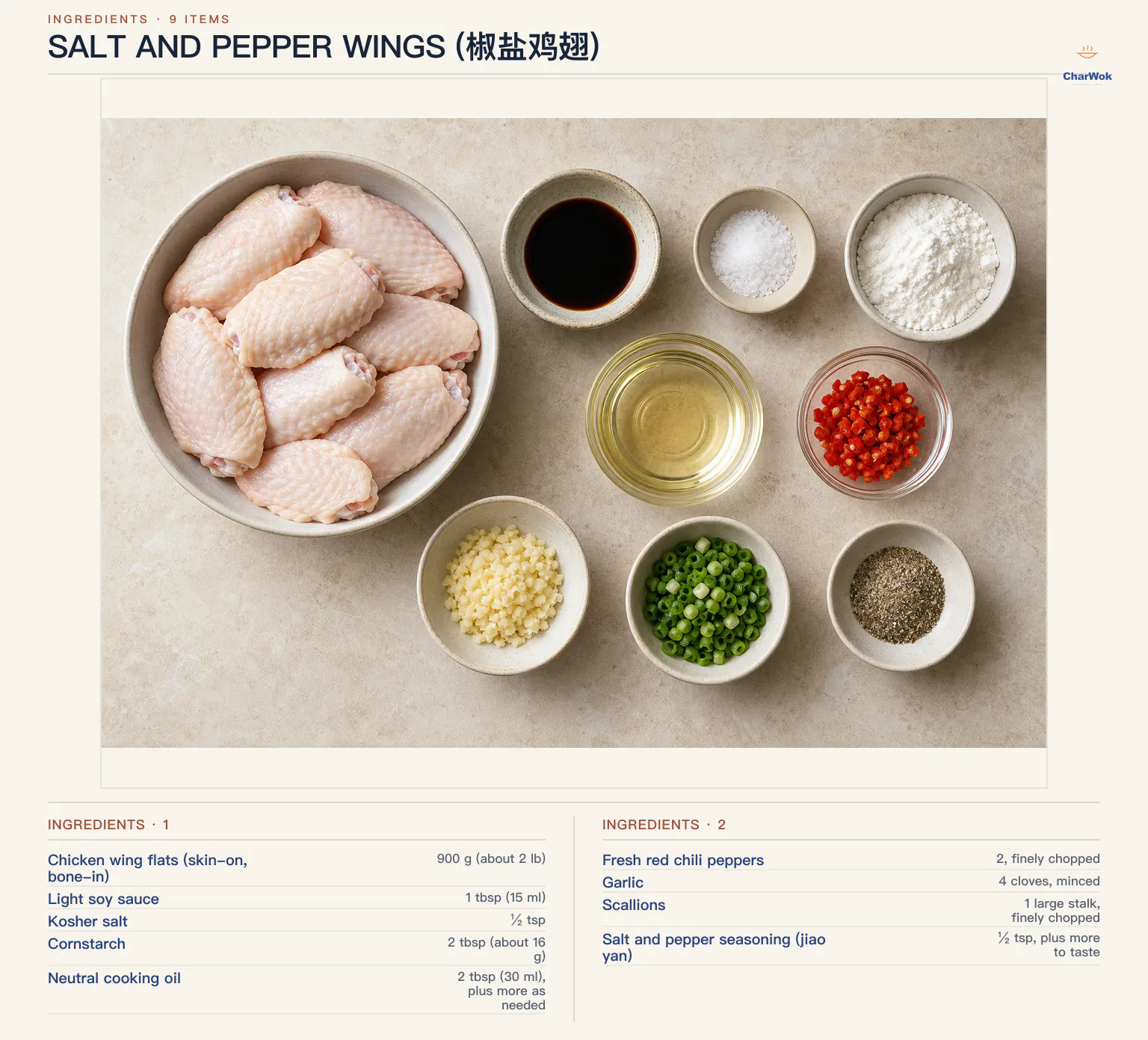
| Ingredient | Amount | Notes / substitute |
|---|---|---|
| Chicken wing flats (skin-on, bone-in) | 900 g (about 2 lb) | A mix of flats and drumettes is fine; give drumettes 2 extra minutes. Pat very dry before marinating. |
| Light soy sauce | 1 tbsp (15 ml) | Use light, not dark. Dark soy will stain the skin mahogany and taste flat; see the light vs. dark soy sauce guide. |
| Kosher salt | ½ tsp | This is for the marinade only. The finishing seasoning is separate. Diamond Crystal preferred; if using table salt, use a touch less. |
| Cornstarch | 2 tbsp (about 16 g) | Potato starch works. Do not use flour; it makes the skin dusty and heavy instead of glassy. |
| Neutral cooking oil | 2 tbsp (30 ml), plus more as needed | Peanut, canola, or grapeseed. The pan will need a thin film; you will likely add a little more after the first batch. |
| Fresh red chili peppers | 2, finely chopped | Thai bird's-eye for heat, Fresno or red jalapeño for milder. Remove seeds to dial back the burn. |
| Garlic | 4 cloves, minced | Mince just before cooking; pre-minced garlic in water will not brown properly. |
| Scallions | 1 large stalk, finely chopped | Split white and green parts. Use the whites in the pan, the greens as a raw finish. |
| Salt and pepper seasoning (jiao yan) | ½ tsp, plus more to taste | Store-bought is fine. To make your own, see the box below. |
Making the salt and pepper seasoning yourself
If you cannot find jiao yan at an Asian grocery, the five-second version is five parts fine salt to one part five-spice powder, or five parts salt to one part freshly ground Sichuan peppercorns. The better version is to toast whole Sichuan peppercorns with a star anise, a pinch of fennel seed, and sesame seeds in a dry pan until fragrant, grind that with toasted salt, and sift. The toasting matters: raw Sichuan pepper tastes resinous and bitter, and how you handle Sichuan pepper decides whether your seasoning numbs pleasantly or turns medicinal. Make a batch; it keeps for a month in a jar and is just as good on Taiwanese popcorn chicken or roasted nuts.
The method, step by step
- Dry the wings, then score them. Pat 900 g of flats thoroughly dry with paper towels; wet skin will not crisp. With a sharp paring knife, make two shallow slashes through the skin and into the meat of each flat, one along each side of the central bone. The slashes are not decoration: they let salt and soy reach the meat and, just as importantly, give the rendered fat somewhere to collect so the skin tightens rather than blistering unevenly.
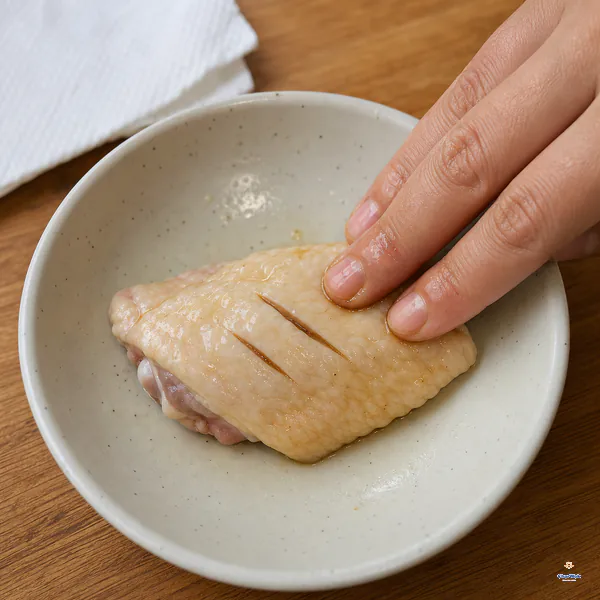
Pat the wings dry, make exactly two shallow scores in each flat, then coat with light soy sauce and salt and marinate for 10 minutes.
- Marinate 10 minutes (no longer than 30). Toss the wings with 1 tbsp light soy sauce and ½ tsp salt, rubbing to coat every surface. Ten minutes is enough for flavor to reach the scored meat; longer than half an hour and the salt starts pulling moisture out of the skin, which works against crisping. If you need to hold them, stop here, cover, and refrigerate, but do not add the starch yet.
- Dust with cornstarch only at the last moment. Right before frying, sprinkle 2 tbsp cornstarch over the wings and rub with your hands until each piece wears a thin, even, dry-feeling film. Shake off the excess. Why cornstarch and not flour: starch gelatinizes in hot oil into a glassy shell that stays crisp even after the final toss, while flour sets into a cake-y coating that goes soft the instant it hits garlic and chili. Add the starch too early and it turns to paste from the marinade's moisture; this is the single step most people flub.
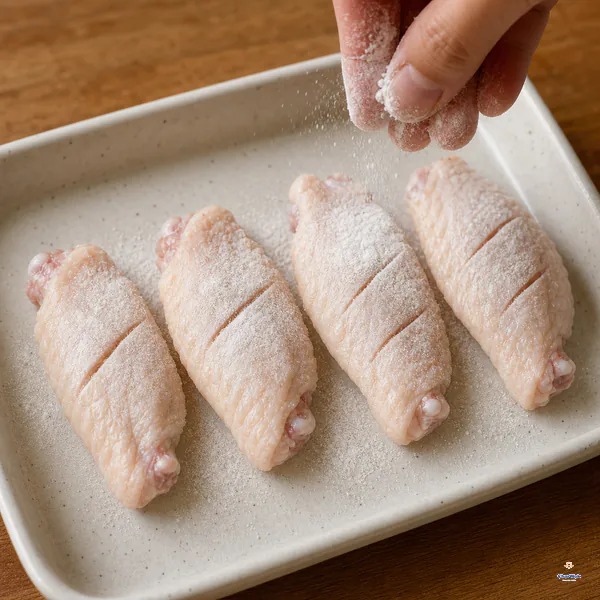
Add cornstarch only immediately before frying, rub it into a thin dry film and shake away loose excess.
- Heat the pan, then the oil. Set a large skillet (cast iron or carbon steel is ideal; nonstick works but will not brown as deeply) over medium heat for 90 seconds. Add 2 tbsp neutral oil and swirl to film the surface. You want a thin layer, not a pool; the wings will render their own fat within the first two minutes. Medium heat, not high: the goal is to render and crisp, not to sear. High heat burns the starch before the meat under the bone is done.
- Lay the wings down and do not touch them. Arrange the flats in a single layer, skin side down, with space between each. If your pan cannot fit them all, fry in two batches. Crowding drops the oil temperature and you get steamed, gray skin. Now leave them alone for 4 minutes. Resisting the urge to poke and flip is what builds the crust; moving them early tears the starch film off and you never recover it.
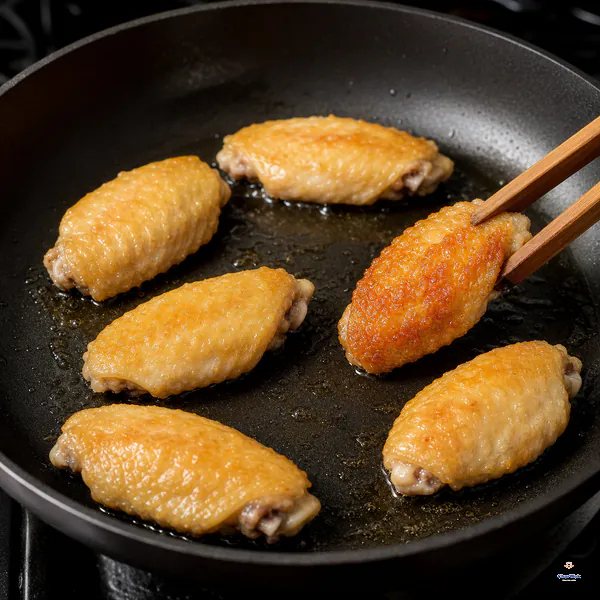
Fry in one uncrowded layer over medium heat without disturbing the first side; turn only after the crust sets and brown the second side evenly.
- Flip once, finish the second side. After 4 minutes the underside should be a deep, even golden brown. Flip every piece and cook another 3 to 4 minutes, until the second side matches and the meat at the bone is opaque. For 900 g of flats this is about 8 minutes total. If you are using drumettes, add 2 minutes and flip them a second time so the thick end faces down. A thermometer at the thickest part should read 74°C (165°F) when in doubt.
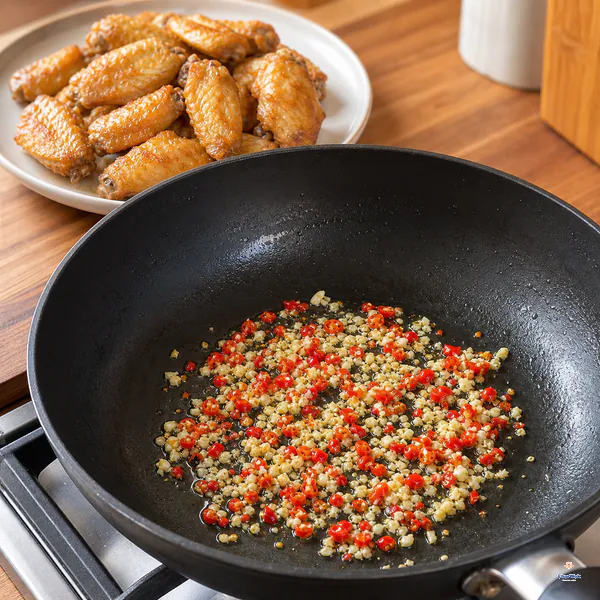
Remove the wings, pour off most of the rendered fat and bloom garlic and chili over medium-low heat just until the garlic edges turn pale gold.
- Drain the fat, then bloom the aromatics. Transfer the wings to a plate. Pour off the rendered fat until only about a tablespoon remains in the pan. There will be more than you started with, because chicken fat is generous. Return the pan to medium-low heat, add the chopped chili and minced garlic, and let them sizzle for 20 to 30 seconds. You are blooming the aromatics in chicken fat, not frying them crisp. The instant the garlic edges turn pale gold, stop. Brown garlic is bitter garlic, and there is no rescuing it.
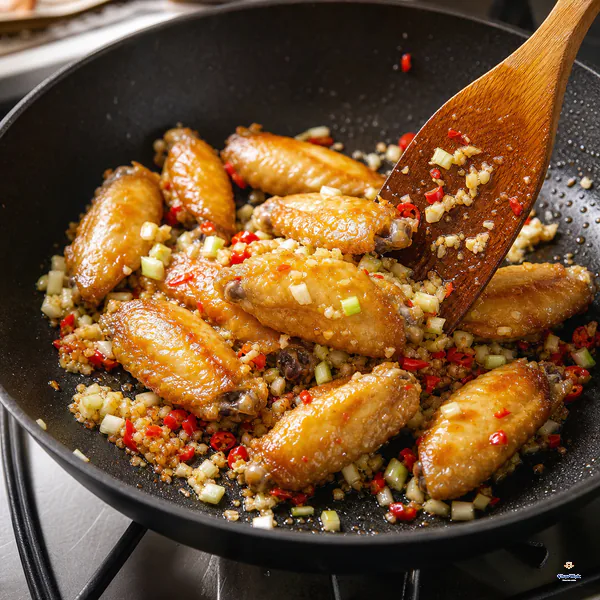
Return the wings with the scallion whites and toss for about 30 seconds so the chili-garlic oil coats every crisp skin.
- Return, toss, and season off the heat. Slide the wings back in along with the scallion whites. Toss for 30 seconds to coat everything in the chili-garlic oil. Now pull the pan off the burner entirely. Sprinkle ½ tsp of the salt and pepper seasoning over the wings and toss again so it sticks to the oil-filmed skin without dissolving. Taste a wing, add more seasoning in ¼-teaspoon increments if you want it punchier, scatter the scallion greens on top, and serve immediately.
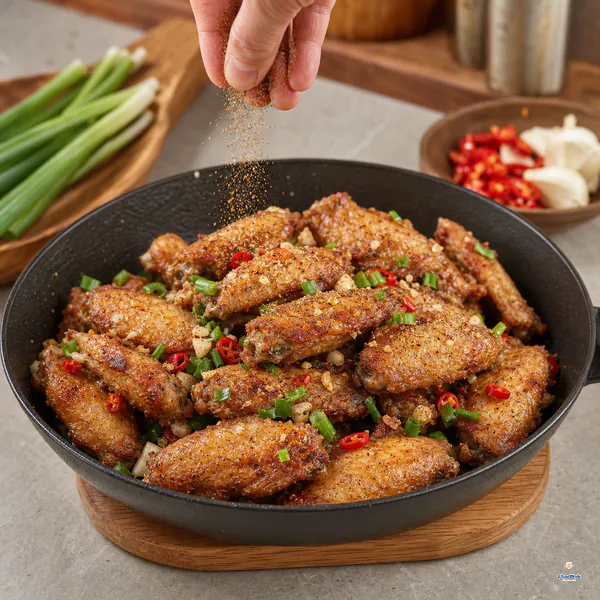
Move the pan completely off the heat, sprinkle the seasoning evenly, toss briefly, add the scallion greens and serve at once.
That last move — seasoning off the heat — is the difference between a dish that tastes like fried chicken and one that tastes like the version you remember from a restaurant. Heat drives off the volatile pepper oils you are trying to keep.
When things go wrong: a troubleshooting chart
| What happened | Why | The fix |
|---|---|---|
| Skin is pale and soft, not golden | Pan or oil not hot enough, or you overcrowded it and the temperature collapsed. | Preheat the pan 90 seconds before oil. Fry in two batches. Hear a steady sizzle, not a hiss, when the wings go in. |
| Starch flakes off in the pan | Wings were too wet when dusted, or you flipped before the crust set. | Pat completely dry before marinating. Apply starch at the very end. Wait the full 4 minutes before flipping; the crust releases on its own when ready. |
| Skin burns before meat is done | Heat too high, or drumettes mixed with flats. | Drop to medium. Cook drumettes separately and longer. Score deeply so heat penetrates the meat faster. |
| Garlic tastes bitter | Bloomed too long or too hot. | Medium-low, 20–30 seconds, off the heat the moment edges pale. You can always cook garlic more; you cannot un-cook it. |
| Final dish tastes flat despite seasoning | Seasoning was added over heat and the pepper oils volatilized, or you salted only the marinade. | Season off the heat. Remember the marinade salt and the finishing seasoning are two different jobs; keep both. |
| Wings are greasy | Rendered fat was not poured off before the aromatics. | Drain to about 1 tbsp of fat in the pan before the chili and garlic. The chicken has already given you all the oil you need. |
Variations and what to serve alongside
The chassis is sturdy, so you can push it in a few directions. For a cumin-and-chili northern skewer vibe, swap the Sichuan pepper seasoning for a mix of toasted cumin, chili flakes, and salt, finished the same way off the heat. For a Cantonese seafood note, add a teaspoon of ground Sichuan pepper and a few toasted white sesame seeds to the finishing dust. Want it milder for kids? Drop the fresh chili entirely and rely on the pepper seasoning alone; the wings are still excellent.
As a meal rather than a snack, balance the richness with something sharp and cold. Smashed cucumber salad is the classic counterpoint: its vinegar cuts the fried skin the way pickles cut fried chicken. A bowl of hot and sour stir-fried napa cabbage adds warm crunch and more acid, and plain steamed jasmine rice gives the salty seasoning somewhere to land. If you want a second protein on the table, a saucier dish like mapo tofu rounds the meal out without competing for the crispy-skin spotlight.
Storage and reheating
These wings are at their best in the first ten minutes, but they reheat surprisingly well if you avoid the microwave. Refrigerate leftovers uncovered on a plate (covering traps steam and softens the skin) for up to two days. To bring them back, an air fryer at 190°C (375°F) for 5 to 6 minutes restores the crust almost to fresh; a 230°C (450°F) oven on a rack for 8 minutes works too. Re-season with a tiny pinch of the salt and pepper blend after reheating, because the pepper oils fade overnight. I would not freeze them. The starch crust collapses on thaw and you are left with ordinary braised-tasting wings, which is a waste.
Frequently asked questions
Can I use an air fryer for the whole recipe? Yes. Toss the marinated, starched wings in a teaspoon of oil and air-fry at 200°C (400°F) for 16 to 18 minutes, shaking halfway, then do the chili-garlic toss in a small skillet on the stove and finish with the seasoning. The skin is slightly less glassy than pan-fried but the hands-off time is hard to beat.
Do I have to score the wings? It is strongly recommended. Scoring shortens the cook time, seasons the meat beneath the skin, and helps fat render evenly. Skip it only if your flats are very small.
Can I marinate overnight? Up to 24 hours for flavor, but hold the cornstarch until right before cooking, and know that a long salt cure will tighten the texture and pull moisture from the skin, so the crust is slightly less crisp.
Is there a substitute for Sichuan pepper? Toasted, finely ground black pepper mixed five-to-one with salt gives a respectable Western-style finish if you cannot find Sichuan pepper, though you lose the signature numbing tingle. Five-spice powder is the better shortcut because it already contains Sichuan pepper.
Why not deep-fry them like the shrimp and squid versions? You can, and deep-frying gives the most uniform crust. But wings carry enough skin fat that shallow frying renders a crisp result with a fraction of the oil and none of the cleanup, a fair trade for a weeknight.
If you take one thing from this, treat the salt and pepper seasoning like a finishing salt rather than a marinade ingredient. Get the skin dry, get the starch on at the last second, leave the wings alone while they fry, and keep the seasoning off the heat. Do that and the wings will disappear faster than you expect, which, around my table, is the only review that matters.