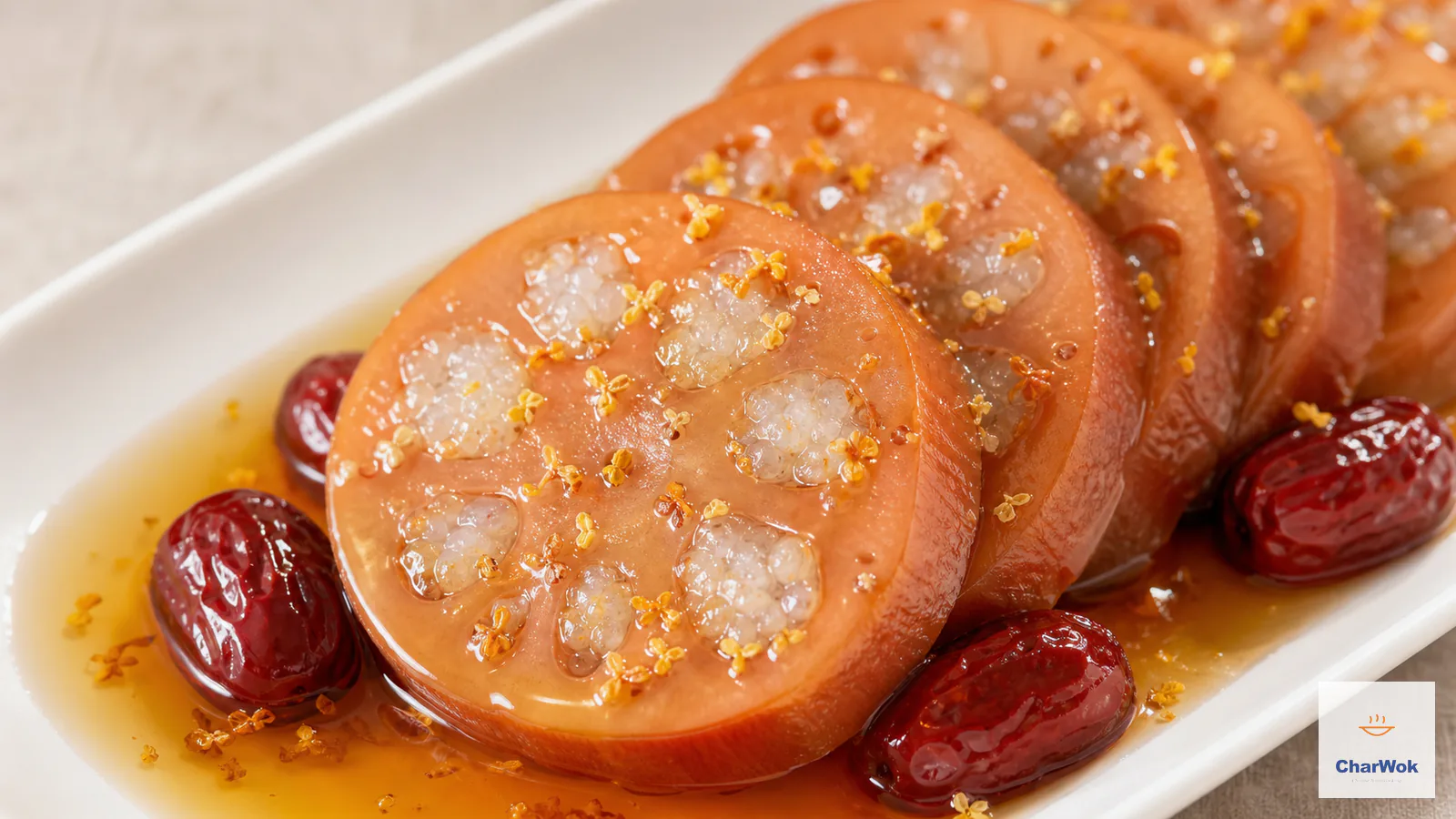
Lotus root is a vegetable with a split personality, and most home cooks only ever meet one half of it. Simmer it long and it collapses into something soft and starchy, the way it behaves in sweet lotus root stuffed with sticky rice. But hit it with a fast, hot stir-fry and you get the other side: pale coins with a clean, watery crunch that no other ingredient really copies. This recipe is about that second side. The problem most people run into is that "fast and hot" turns into "grey and rubbery" the moment the wok cools down or the slices sit in the pan too long. I have ruined plenty of batches exactly that way, usually because I threw cold, dripping slices into a pan that wasn't yet screaming hot.
The fix is not a secret ingredient. It is two mundane steps done on purpose: a short blanch to set the texture and rinse off surface starch, and a true high-heat wok that finishes the cooking in under two minutes. Add a spoonful of Sichuan chili bean paste for salt, funk, and color, and you have a vegetable side that punches well above its five-minute cook time.
At a glance. Blanch thin lotus root coins for about 2 minutes, drain bone-dry, then stir-fry over the highest heat your wok can hold for 90 seconds with doubanjiang and garlic. The whole dish lives or dies on two things: slices no thicker than 3 mm, and a wok that is smoking before the oil goes in. Skip the blanch and the slices turn grey; crowd the pan and they steam instead of fry.
What you are actually cooking: a rhizome, not a root
The name "lotus root" is misleading. It is the rhizome of the lotus plant, a fat underwater stem that grows horizontally through mud. Cut one crosswise and you see the reason cooks love it: a lacy wheel of seven or nine holes running the whole length of each segment. Those holes are air channels, and they are why a slice holds its shape and stays crunchy even after heat. Dense flesh plus air pockets means the center cooks through before the outside goes soft.
Two texture outcomes are possible from the exact same vegetable, and the only variable is time in liquid. A two-minute blanch followed by a fast fry keeps the cell walls intact, so you bite through a firm, slightly juicy slice. Twenty minutes in a braise and the starch gelatinizes the same way a potato does, and you end up with something tender enough to eat with a spoon. Neither is wrong. This recipe is firmly in the crunchy camp, so the timing discipline matters more than the seasoning.
Buying and storing
In a Chinese grocery you will see lotus root two ways: loose, mud-covered whole segments, and peeled, vacuum-bagged rounds. The loose ones have more flavor and keep their crunch better, but you have to peel them. For a weeknight, the vacuum bag is a reasonable shortcut and I use it without guilt.
Pick segments that feel heavy for their size with smooth, unbroken skin and no soft brown patches at the joints. A flabby, light segment has been sitting around losing water, and it will fry up cottony. Once home, keep whole unpeeled segments loose in the crisper for up to two weeks. Once peeled or sliced, the flesh oxidizes to a dull grey-brown within an hour in open air. That discoloration is harmless but ugly, so either peel right before cooking or hold peeled slices fully submerged in water with a splash of vinegar in the fridge for a day.
Ingredients
Ingredients at a glance
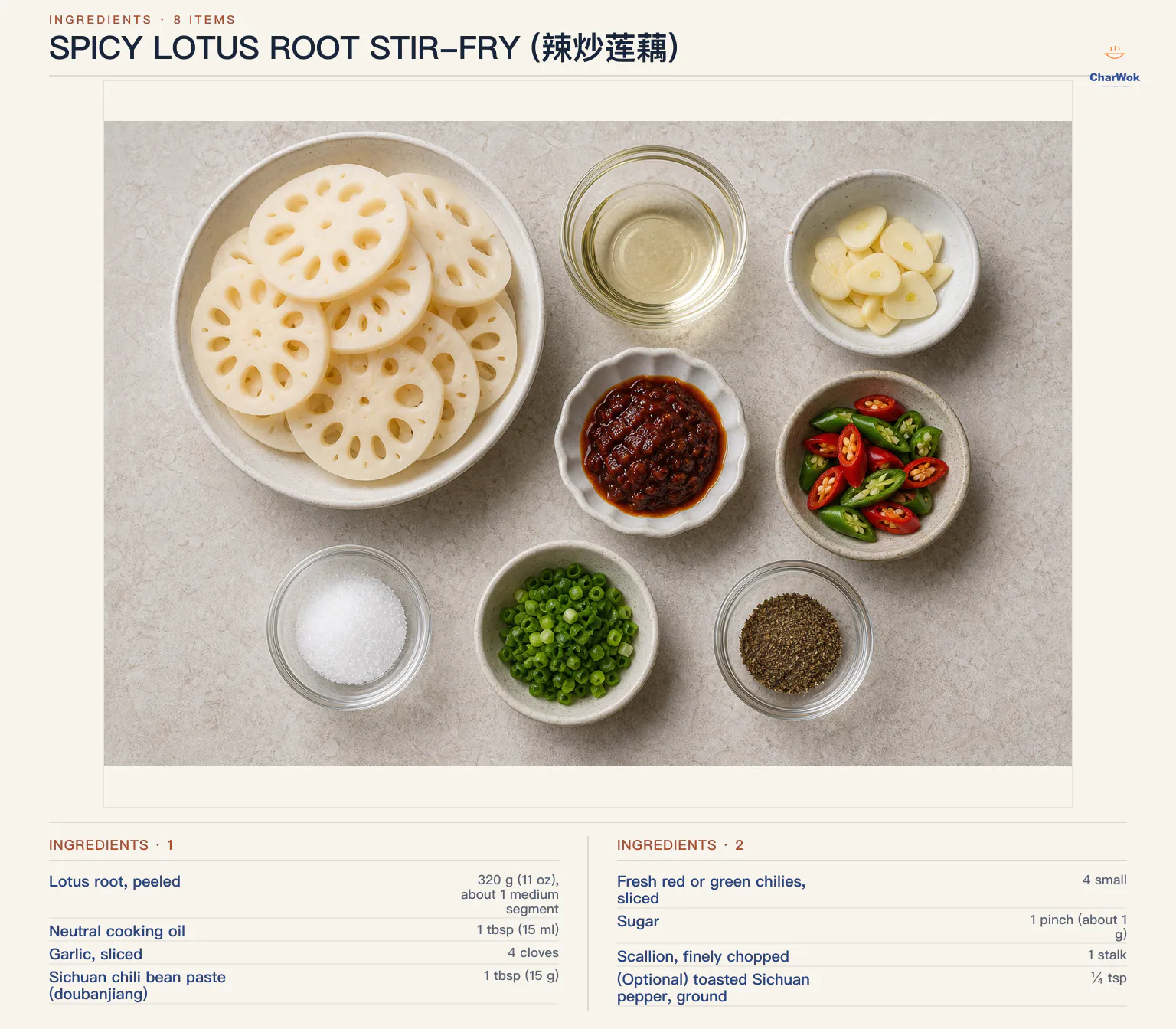
| Ingredient | Amount | Notes / substitute |
|---|---|---|
| Lotus root, peeled | 320 g (11 oz), about 1 medium segment | Vacuum-bagged pre-peeled works fine. Jicama is the closest crunch substitute; water chestnut is a smaller, sweeter fallback. |
| Neutral cooking oil | 1 tbsp (15 ml) | Peanut, canola, or grapeseed. Not olive oil. |
| Garlic, sliced | 4 cloves | Slice, don't mince. Minced garlic burns before the paste toasts. |
| Sichuan chili bean paste (doubanjiang) | 1 tbsp (15 g) | Use the chili-oil version labeled "hot broad bean paste" (红油豆瓣) for the red color and rounded heat. See note below. |
| Fresh red or green chilies, sliced | 4 small | Fresno or red jalapeño for visual pop and bright heat. Leave seeds in for more fire. |
| Sugar | 1 pinch (about 1 g) | Round off the salt and fermentation. Rock sugar crushed works; white sugar is fine. |
| Scallion, finely chopped | 1 stalk | Green part mostly, for finishing. |
| (Optional) toasted Sichuan pepper, ground | ¼ tsp | Adds the classic numbing edge. Omit for a cleaner, just-hot dish. |
On the chili bean paste
This is the one ingredient worth lingering on, because the jar you grab changes the dish more than anything else. Real Sichuan doubanjiang is fermented broad beans and chilies aged in earthenware, and it is the backbone of dishes like mapo tofu and Sichuan boiled beef. The labels are confusing on purpose across brands, so look for these tells: the characters 郫县豆瓣 (Pixian douban) mark the slow-fermented original, while 红油豆瓣 is the looser, oilier, ready-to-use version with extra chili oil stirred in. For a quick stir-fry I reach for the chili-oil version because it releases its color and flavor faster and you are not deglazing long enough to coax depth out of an aged, dry Pixian paste.
If you cannot find doubanjiang, do not substitute plain chili-garlic sauce. You will get heat but none of the fermented, beany depth that makes the dish taste Sichuan. A teaspoon of chili oil plus a half teaspoon of miso gets you closer in a pinch, but plan to buy the real thing.
Method
- Prep the root. Peel the segment with a vegetable peeler and trim the tough, discolored joint ends. Cut crosswise into rounds about 3 mm (just under ⅛ inch) thick. The crosswise cut is what shows off the hole pattern, and it gives every slice the same cook time. Drop the slices into a bowl of cold water as you go to stop oxidation.
- Blanch to set the crunch. Bring a pot of water to a full rolling boil. Drop in the slices and cook for 2 minutes, no longer. You are not trying to soften them; you are denaturing the surface enzymes that cause browning and rinsing off loose starch that would otherwise turn gummy in the wok. Drain and shake the colander hard. Wet slices will drop your wok temperature and steam instead of fry.
- Toast the flavor base. Set your wok over the highest heat until it is visibly smoking. Add the oil, swirl, then add the sliced garlic and the doubanjiang. Stir for 10 to 15 seconds. The paste should sizzle and its oil should run red. This is the only moment you have to build the dish's flavor, so do not rush it, but do not walk away: burnt doubanjiang is bitter and there is no rescuing it.
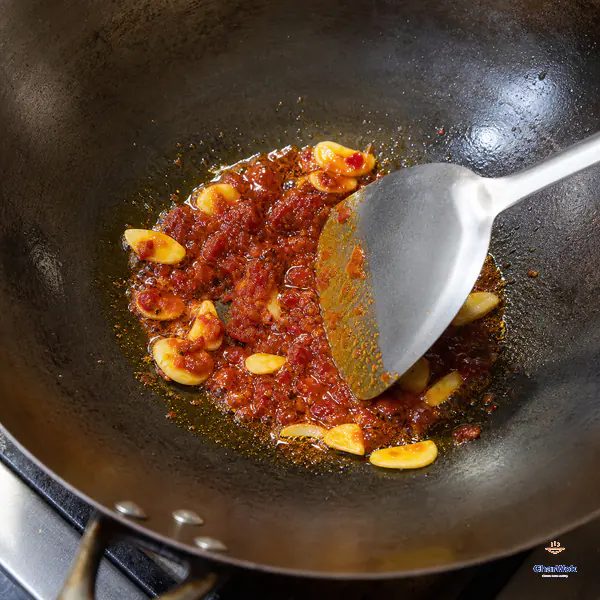
Keep the garlic and doubanjiang over controlled medium heat for 20–30 seconds, pressing the paste until clear red oil appears; stop before the paste darkens or the garlic moves beyond pale gold.
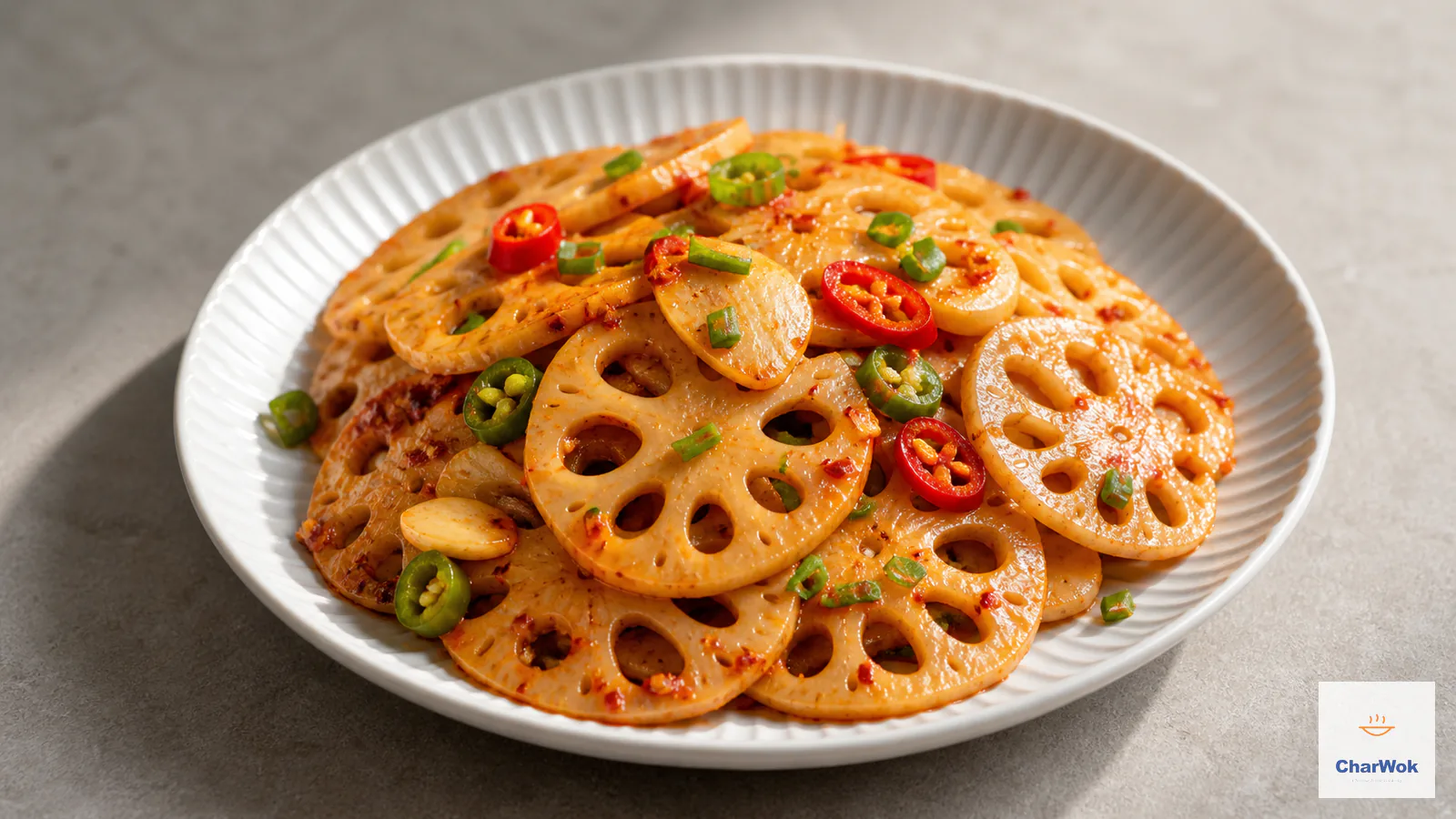
- Fry the lotus root. Add the drained slices and the fresh chilies. Toss continuously for 60 to 90 seconds, pressing the slices into the hot metal so they pick up color. Add the pinch of sugar and the optional ground Sichuan pepper. The dish is done when the slices are glossy, flecked red, and still snap when you bend one against the side of the wok.
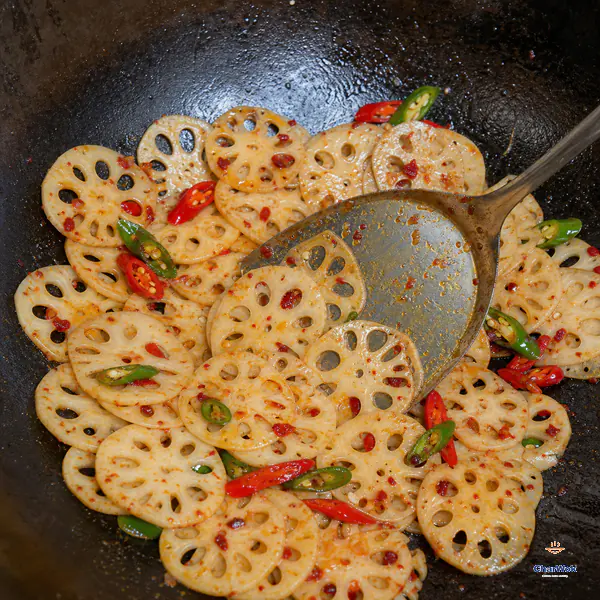
Add the thoroughly drained blanched lotus root and fresh chilli over high heat, tossing for about one minute until every slice is lightly glossy and red-flecked but remains pale, firm and crisp.
- Finish and serve. Kill the heat, scatter in the scallion, toss once, and plate immediately. Serve over freshly cooked jasmine rice. Every minute this dish sits, the crunch fades, so it goes from pan to table without a holding step.
When it goes wrong, and how to fix it
The slices turned grey or brown. Two usual causes: you skipped the blanch, or you left peeled slices sitting in air. The blanch sets the color; do not skip it even when you are in a hurry. Already-cooked grey slices are safe to eat but visually flat, so fold them into a noodle soup where looks matter less.
Soft, floppy texture instead of crunch. The blanch ran long, the wok was not hot enough, or you piled too many slices in at once and they steamed. Next time, blanch for a strict 2 minutes, heat the empty wok until it smokes, and cook in two batches if you doubled the recipe.
Bitter, dark flecks in the sauce. The doubanjiang or garlic burned while you were still prepping. Burnt paste cannot be fixed; start the flavor base over. Get everything mise-en-placed before the wok goes on the heat, because once doubanjiang hits hot oil you have roughly 15 seconds.
Too salty. Doubanjiang is aggressively salty by design. The fix is dilution, not more salt: add a tablespoon of water and a tiny extra pinch of sugar, toss, and serve over more rice. If you consistently find it too salty, drop to 2 teaspoons of paste next time.
Not spicy enough, or too one-dimensional. The fresh chilies carry bright heat, the paste carries deep heat. If only one is landing, boost the other. A pinch of ground Sichuan pepper adds the numbing side that makes the heat read as complex rather than just hot.
Variations and pairings
The seasoning here is a template, not a rule. Once the blanch-and-fry technique is in your hands, the lotus root will accept most Sichuan flavor profiles. For a drier, snackier dish, borrow the dry-pot treatment from dry pot cauliflower: finish with toasted peanuts and a splash of soy. For a brighter, more vegetal bent, finish like dry-fried green beans with preserved mustard greens and a little sugar.
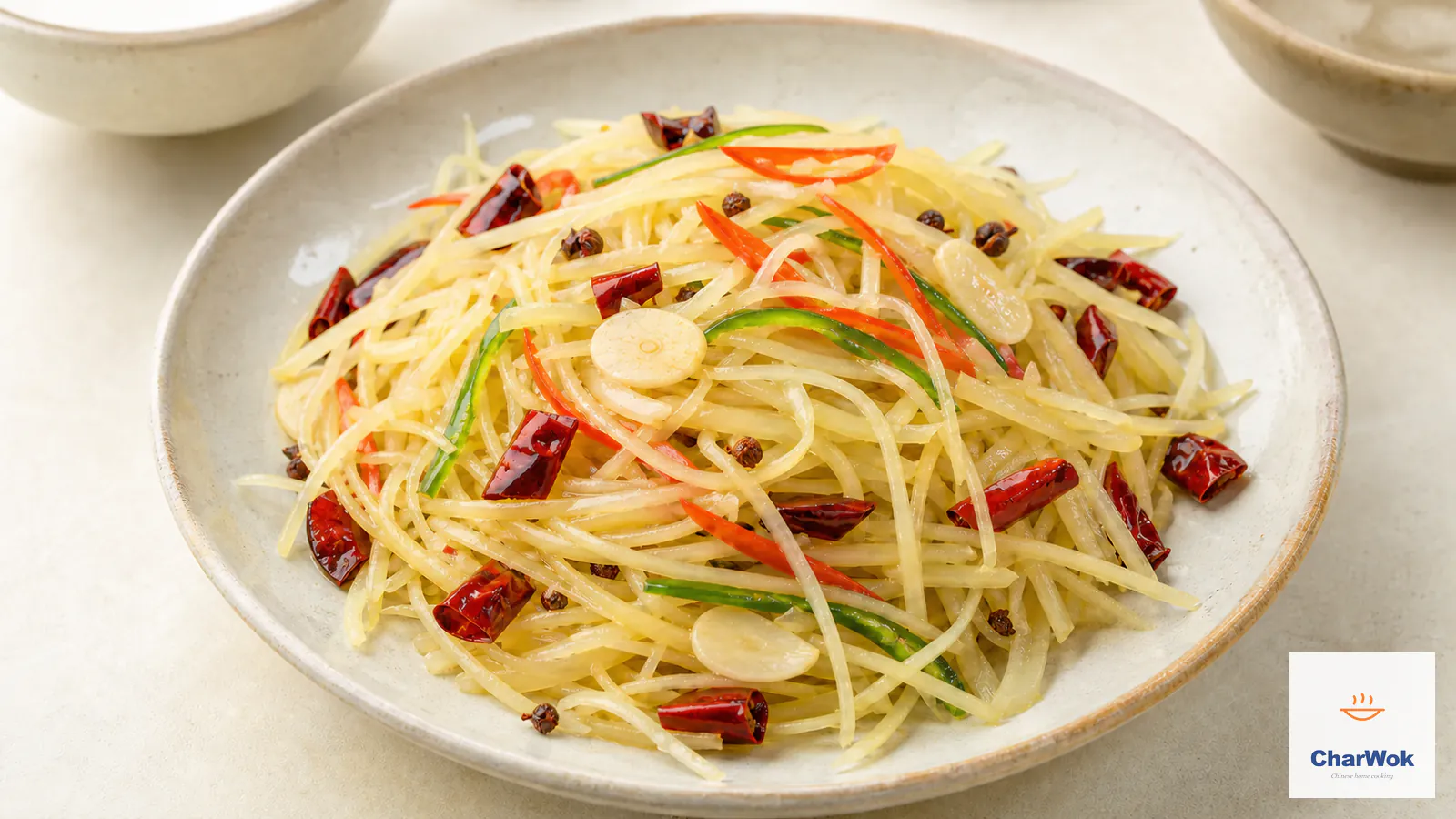
Chili lovers can lean into the heat with blistered tiger-skin peppers on the side, or pair the lotus root with hot-and-sour shredded potato for a double-crunch vegetable plate. On the protein side it sits happily next to twice-cooked pork or a simple steamed fish; the crunch does the work a soft vegetable cannot.
One combination I keep coming back to: this lotus root, a bowl of rice, and a bowl of soup. The dish is intense and salty enough that it carries a plain meal, and the soup cools the heat between bites. For a fully vegetarian spread, add a tofu dish and you have dinner.
Storage and reheating
This is a cook-to-order dish. Leftovers keep in the fridge for two days but lose the crunch, and no reheating method brings it back. If you must reheat, use a dry pan over high heat for thirty seconds per side just to warm through; the microwave will turn the slices rubbery. Raw, peeled lotus root freezes well for up to three months once sliced and blanched, so I sometimes blanch-and-freeze a batch specifically for fast weeknight stir-fries.
FAQ
Frequently asked questions
Do I have to blanch the lotus root first? Yes, for this recipe. The blanch sets the color, rinses surface starch, and starts the cook so the wok time stays short. Skip it and the slices go grey and need longer in the pan, which kills the crunch.
Can I use canned or frozen lotus root? Canned is too soft and I would not use it for a stir-fry. Frozen, peeled slices work if they are still firm; thaw, pat very dry, and shorten the blanch to one minute.
Is doubanjiang the same as doubanchi (black bean sauce)? No. Doubanjiang is fermented broad bean and chili; doubanchi is fermented black soybeans. They taste completely different and are not interchangeable here.
How do I cut the salt without losing flavor? Drop the paste to 2 teaspoons, add a teaspoon of water to the wok to loosen it, and lean a little harder on the sugar and Sichuan pepper to compensate.
Why are some slices crunchy and others soft? Uneven thickness. Slices thicker than about 4 mm will soften before the thin ones are done. Aim for a consistent 3 mm and the whole pan finishes together.